
1. Introduction to Taxonomic Characters and Procedures
The biological world contains an enormous diversity of organisms that differ in their external appearance, internal organisation, genetic composition, physiology and evolutionary history. To identify, compare and classify these organisms accurately, biologists use specific characteristics known as taxonomic characters and follow systematic methods of investigation called taxonomic procedures. Together, Taxonomic Characters and Procedures provide the practical foundation for recognising biological diversity and establishing relationships among organisms.
Taxonomic characters are the observable or measurable features of organisms that help distinguish one taxon from another. These include morphological structures, anatomical features, embryological patterns, chromosome characteristics, biochemical properties, ecological adaptations and molecular sequences. The selection and interpretation of these characters are essential for reliable identification and classification.
Taxonomic procedures involve a series of scientific activities, including specimen collection, preservation, examination, comparison, identification, description, nomenclature and classification. These activities ensure that biological specimens are studied systematically and that scientific information is recorded accurately.
Modern Taxonomic Characters and Procedures extend beyond traditional morphological examination. Researchers increasingly combine molecular techniques, DNA sequencing, digital imaging and computational analysis with classical taxonomic methods.
The study of Taxonomic Characters and Procedures is important in biodiversity documentation, species discovery, evolutionary research and conservation biology. Understanding these principles helps biologists recognise organisms, distinguish closely related species and develop reliable classifications based on scientific evidence.
Understanding the emergence of the first living systems provides the foundation for studying the subsequent evolution and diversification of organisms.
2. Meaning and Importance of Taxonomic Characters
Taxonomic characters are the observable, measurable or analysable features of organisms that are used for identification, comparison and classification. They provide the basic evidence through which biologists recognise similarities and differences among individuals, populations and species. The study of Taxonomic Characters and Procedures begins with understanding these characteristics because reliable classification depends on the careful selection and interpretation of biological features.
A taxonomic character may be a structural feature, physiological property, developmental pattern, ecological preference or molecular characteristic. For example, the presence of feathers distinguishes birds from other living vertebrate groups, while differences in chromosome number and DNA sequences may help distinguish closely related species.
2.1 Meaning of a Taxonomic Character
A taxonomic character refers to a particular feature that can be examined and compared among organisms. The different conditions or expressions of a character are called character states.
For example:
- Character: Presence or absence of wings.
- Character states: Wings present or wings absent.
- Character: Body covering.
- Character states: Hair, feathers, scales or other coverings.
The distinction between a character and its states is important when preparing taxonomic descriptions and analysing biological relationships.
2.2 Importance of Taxonomic Characters
Taxonomic characters perform several important functions in biological classification:
- Identification: Help recognise unknown organisms by comparing their characteristics with established descriptions.
- Species differentiation: Assist in distinguishing closely related species and identifying diagnostic features.
- Classification: Provide evidence for grouping organisms into appropriate taxonomic categories.
- Evolutionary interpretation: Help investigate common ancestry, divergence and evolutionary modifications.
- Species discovery: Support the recognition and description of previously unknown or cryptic species.
- Biodiversity documentation: Provide standardised information for biological inventories and scientific databases.
- Conservation research: Help identify distinct populations and evolutionary lineages requiring protection.
2.3 Role in Modern Taxonomy
Traditional classification relied heavily on external morphological features. Modern research combines morphological, anatomical, cytological, biochemical, ecological and molecular evidence to improve identification and classification.
The reliability of Taxonomic Characters and Procedures depends on selecting appropriate characters, examining sufficient specimens and interpreting variations carefully. Environmental influences, age, sex and developmental stages may cause differences that should not automatically be treated as evidence of separate species.
Therefore, taxonomic characters must be evaluated in their biological and evolutionary context rather than considered individually.
3. Types of Taxonomic Characters
Organisms possess numerous characteristics that can be used for identification, comparison and classification. These characteristics differ in their nature, expression and biological significance. Depending on the type of evidence they provide, taxonomic characters are classified into several major categories. The study of these categories is an important part of Taxonomic Characters and Procedures, as different types of evidence help scientists understand organismal diversity from different perspectives.
The major types of taxonomic characters include morphological, anatomical, embryological, cytological, physiological, biochemical, molecular, ecological and behavioural characters.
3.1 Morphological Characters
Morphological characters are based on the external form and structural features of organisms. They are among the most commonly used characteristics in traditional taxonomy.
Examples include:
- Body shape and size.
- Colour and body markings.
- Number and arrangement of appendages.
- Shape of wings, fins and limbs.
- Leaf arrangement and floral structure in plants.
- Body segmentation and external coverings.
For example, the presence of feathers, a beak and wings provides important morphological evidence for identifying birds.
3.2 Anatomical Characters
Anatomical characters involve the internal structural organisation of organisms. These include the arrangement of organs, tissues, skeletal elements and internal body systems.
Examples include the structure of the vertebral column, arrangement of muscles, organisation of the digestive tract and structure of reproductive organs. Anatomical characters are particularly useful when external similarities make species identification difficult.
3.3 Embryological Characters
Embryological characters are based on the patterns and processes of embryonic development. These include cleavage patterns, formation of germ layers, development of body cavities and organ formation.
Comparisons of embryological development can provide evidence of relationships among organisms and help distinguish major animal groups.
3.4 Cytological Characters
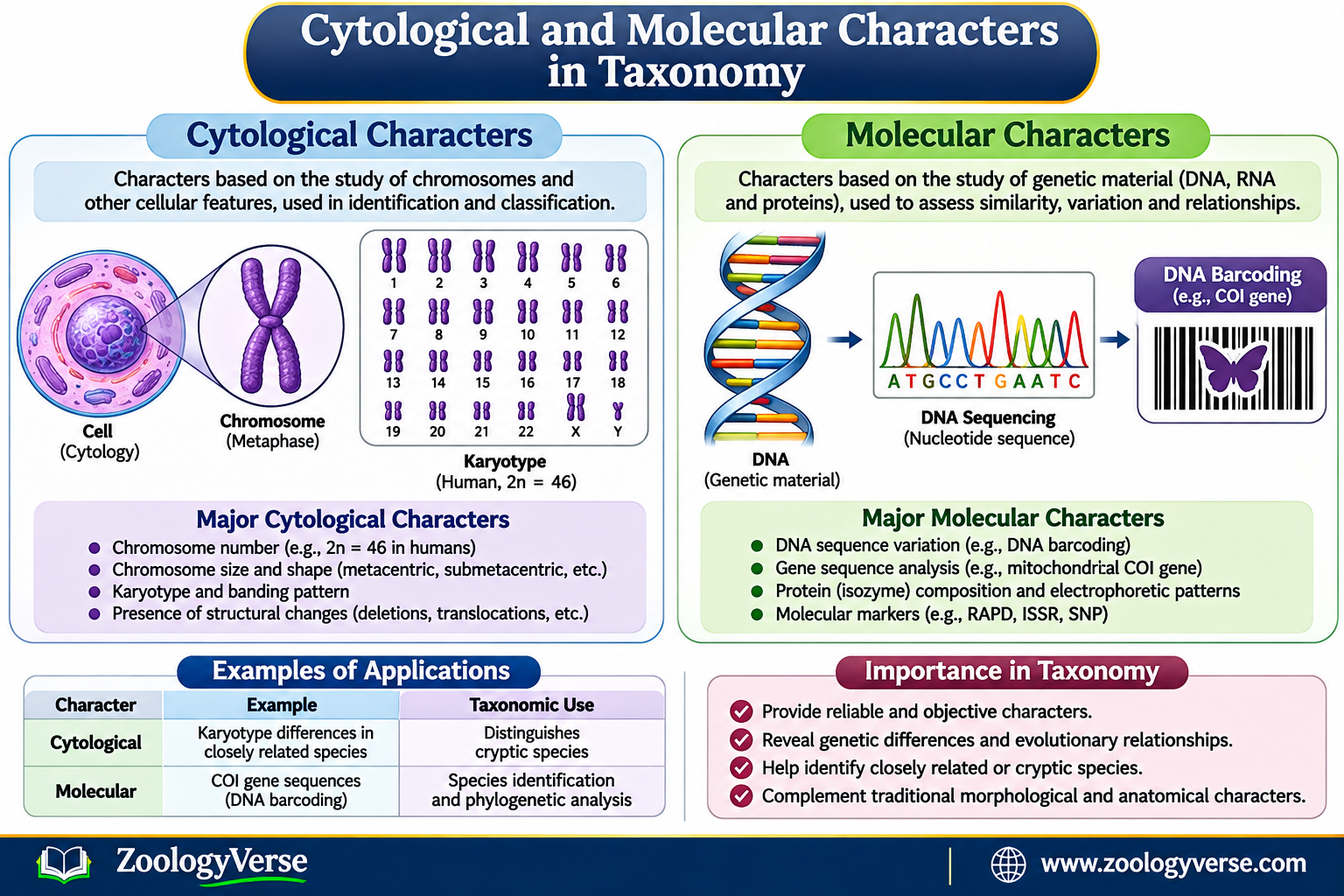
Cytological characters are based on cellular and chromosomal features. Important examples include chromosome number, chromosome size, karyotype, chromosome structure and meiotic behaviour.
These characters are useful for identifying genetic differences among closely related species and studying evolutionary changes such as polyploidy and chromosomal rearrangements.
3.5 Physiological Characters
Physiological characters involve the functional activities of organisms. These may include metabolic processes, respiratory mechanisms, osmoregulation, enzyme activity and temperature tolerance.
Such characteristics can help distinguish organisms that appear morphologically similar but differ in their physiological adaptations.
3.6 Biochemical Characters
Biochemical characters are based on the chemical composition and biological molecules present in organisms. Examples include proteins, enzymes, pigments, amino acids, lipids and secondary metabolites.
Comparisons of these substances can provide additional evidence for identifying and classifying organisms.
3.7 Molecular and Genetic Characters
Molecular characters involve variations in DNA, RNA and protein sequences. They are widely used in modern classification to investigate genetic similarities, evolutionary divergence and common ancestry.
Examples include DNA sequence variations, gene arrangements, genetic markers and differences in mitochondrial and nuclear genes.
3.8 Ecological Characters
Ecological characters include habitat preference, geographical distribution, feeding habits, ecological interactions and environmental adaptations.
For example, two closely related populations may occupy different habitats and show adaptations to different environmental conditions. Ecological evidence can help explain their differentiation and evolutionary history.
3.9 Behavioural Characters
Behavioural characters are based on the activities and behavioural patterns of organisms. These include courtship displays, mating behaviour, communication signals, feeding activities, nesting habits and territorial behaviour.
Behavioural differences may be particularly useful in distinguishing closely related animal species that have similar external appearances.
3.10 Comparative Overview of Taxonomic Characters
| Type | Main evidence | Example |
|---|---|---|
| Morphological | External structure | Body shape, wings and feathers |
| Anatomical | Internal organisation | Skeletal and organ structure |
| Embryological | Development | Cleavage and germ layers |
| Cytological | Cellular and chromosomal features | Chromosome number |
| Physiological | Functional activities | Respiration and metabolism |
| Biochemical | Chemical constituents | Proteins and enzymes |
| Molecular | Genetic sequences | DNA and RNA variations |
| Ecological | Environmental relationships | Habitat preference |
| Behavioural | Behavioural patterns | Courtship displays |
3.11 Integration of Different Taxonomic Characters
No single category of character is sufficient for solving every taxonomic problem. Morphological similarities may sometimes result from convergent evolution, while molecular differences may occur even among closely related populations.
Therefore, modern Taxonomic Characters and Procedures increasingly combine structural, developmental, genetic, ecological and behavioural evidence. This integrated approach improves species identification, supports the recognition of cryptic diversity and helps develop classifications that more accurately represent biological relationships.
4. Morphological and Anatomical Characters
Morphological and anatomical characters are among the most important sources of evidence used in biological identification and classification. Morphological characters describe the external form and visible structures of organisms, whereas anatomical characters deal with their internal organisation. Both provide essential information for comparing organisms and recognising similarities and differences among taxonomic groups.
In traditional Taxonomic Characters and Procedures, morphological and anatomical observations form the initial basis of specimen examination. Even in modern molecular taxonomy, these characteristics remain important because they provide direct information about organismal structure and help researchers interpret genetic and evolutionary evidence.
4.1 Morphological Characters
Morphological characters are based on the external appearance, form and structural features of organisms. They are widely used because many can be observed directly without specialised laboratory equipment.
Important morphological characters include:
1. Body shape and size: Organisms may differ in body length, width, proportions and general shape. These characteristics are useful in distinguishing many species, although body size may vary with age, nutrition and environmental conditions.
2. Body covering: The nature of the body covering is an important identification feature. Examples include scales in fishes and reptiles, feathers in birds, hair in mammals and chitinous exoskeletons in arthropods.
3. Appendages: The number, arrangement and structure of limbs, wings, antennae, fins and other appendages provide useful taxonomic information.
4. Colour and markings: Body colour, pigmentation, spots, stripes and other patterns may help distinguish organisms. However, colour can vary with age, sex, season and environmental conditions.
5. Reproductive structures: Flowers, reproductive organs, genital structures and other reproductive features can provide highly informative characters for distinguishing closely related organisms.
6. Plant morphology: In plants, important characters include root systems, stem structure, leaf arrangement, leaf venation, floral symmetry, inflorescence, fruit and seed characteristics.
4.2 Types of Morphological Characters
Morphological characters may be grouped according to the structures being examined.
- External characters: Features visible on the surface, such as body shape, colour, appendages and body coverings.
- Vegetative characters: Plant features such as roots, stems and leaves.
- Reproductive characters: Structures associated with reproduction, including flowers, fruits, seeds and reproductive organs.
- Meristic characters: Countable features such as the number of fin rays, scales, body segments or other repeated structures.
- Morphometric characters: Measurable features such as body length, head width, limb proportions and other dimensions.
Meristic and morphometric characters are especially useful in comparative studies of closely related organisms. Their interpretation requires standardised measurement methods and appropriate sample sizes.
4.3 Anatomical Characters
Anatomical characters refer to the internal structural organisation of organisms. They are studied through dissection, microscopy, histological examination and other anatomical techniques.
Important anatomical characters include:
- Skeletal structure: The arrangement and modification of bones, cartilage and other supporting structures.
- Muscular organisation: The arrangement and attachment of muscles and their relationship with locomotion.
- Digestive system: The structure and organisation of the digestive tract and associated glands.
- Respiratory system: The organisation of gills, lungs, tracheae and other respiratory structures.
- Circulatory system: The structure of the heart, blood vessels and circulatory pathways.
- Nervous system: The organisation of the brain, spinal cord, nerves and sensory structures.
- Reproductive system: The structure of reproductive organs and associated ducts.
For example, the structure of the vertebral column and the organisation of the heart can provide important comparative evidence for understanding relationships among vertebrate groups.
4.4 Homology and Analogy in Morphological and Anatomical Characters
The interpretation of structural similarities requires distinguishing homologous characters from analogous characters.
Homologous characters have a common evolutionary origin, although their functions may differ. For example, the forelimbs of humans, bats, whales and horses share a basic skeletal arrangement despite being adapted for different functions.
Analogous characters perform similar functions but have evolved independently in different evolutionary lineages. For example, the wings of birds and insects both enable flight, but their structural organisation and evolutionary origins differ.
Homologous structures are particularly valuable for reconstructing evolutionary relationships, whereas analogous similarities may result from convergent evolution.
4.5 Advantages of Morphological and Anatomical Characters
These characters offer several advantages in taxonomic research:
- They can often be examined directly in collected specimens.
- They help prepare detailed taxonomic descriptions.
- They are useful for identifying fossils and preserved specimens.
- They provide evidence for comparative anatomy and evolutionary studies.
- They allow researchers to distinguish many closely related organisms.
- They remain valuable when molecular material is unavailable.
4.6 Limitations of Morphological and Anatomical Characters
Despite their importance, morphological and anatomical characters have certain limitations.
- Environmental variation: Temperature, nutrition and habitat may influence the expression of some characteristics.
- Developmental variation: Juveniles and adults may show considerable structural differences.
- Sexual dimorphism: Males and females of the same species may differ in size, colour or external structures.
- Convergent evolution: Unrelated organisms may develop similar structures because of comparable environmental pressures.
- Cryptic species: Some distinct species may possess very similar external and internal morphology.
For these reasons, morphological and anatomical evidence should be evaluated alongside other biological characteristics. The combined use of different forms of evidence makes Taxonomic Characters and Procedures more reliable and helps produce classifications that better represent biological diversity.
5. Embryological and Cytological Characters
Embryological and cytological characters provide important evidence for identifying and comparing organisms. Embryological characters are based on developmental patterns and processes during the formation of an organism, whereas cytological characters involve the structure and organisation of cells and chromosomes. These characteristics help scientists investigate similarities, differences and evolutionary relationships that may not be apparent from external morphology alone.
In modern Taxonomic Characters and Procedures, embryological and cytological evidence is particularly useful for understanding developmental relationships, distinguishing closely related species and investigating evolutionary changes in chromosome organisation.
5.1 Embryological Characters
Embryological characters are features observed during the development of an organism from the fertilised egg to later developmental stages. Comparative embryology examines similarities and differences in developmental processes among organisms.
Important embryological characters include:
1. Cleavage pattern: Cleavage refers to the series of mitotic divisions of the fertilised egg. Different organisms exhibit different cleavage patterns, including radial, spiral, bilateral and rotational cleavage.
2. Germ layer formation: During gastrulation, primary germ layers are established. These include ectoderm, mesoderm and endoderm in triploblastic animals. Their development provides important comparative information.
3. Coelom formation: The mode of formation of the body cavity, or coelom, may provide useful developmental evidence. Major developmental patterns include schizocoely and enterocoely.
4. Embryonic membranes: In amniotes, the development of structures such as the amnion, chorion, allantois and yolk sac provides important comparative characters.
5. Organogenesis: The development of organs and organ systems can reveal similarities and differences among major animal groups.
5.2 Importance of Embryological Characters
Embryological characters are useful for:
- Comparing developmental patterns among organisms.
- Investigating evolutionary relationships.
- Understanding the origin and organisation of body structures.
- Distinguishing groups with similar adult morphology.
- Studying developmental modifications during evolution.
For example, comparisons of early embryonic development among vertebrates reveal several shared developmental features. These similarities provide evidence of common ancestry, although embryological similarities must be interpreted carefully because developmental stages can differ substantially among species.
5.3 Cytological Characters
Cytological characters are based on the structure, number, organisation and behaviour of cells and chromosomes. They are particularly valuable in distinguishing organisms that possess similar morphological characteristics but differ genetically.
Important cytological characters include:
1. Chromosome number: The number of chromosomes present in a cell is an important cytological feature. Closely related species may possess different chromosome numbers.
2. Karyotype: A karyotype represents the complete chromosome complement of an organism, arranged according to characteristics such as size, shape and centromere position.
3. Chromosome morphology: Chromosomes may be classified according to centromere position as metacentric, submetacentric, acrocentric or telocentric.
4. Chromosomal banding patterns: Special staining techniques reveal characteristic patterns along chromosomes, allowing comparisons among species and populations.
5. Meiotic behaviour: Chromosome pairing, crossing over and segregation during meiosis can provide information about genetic compatibility and reproductive relationships.
6. Polyploidy: Polyploid organisms possess more than two complete sets of chromosomes. Polyploidy is especially important in plant evolution and may contribute to the formation of new species.
5.4 Karyotaxonomy
Karyotaxonomy is the use of chromosome characteristics in taxonomic identification and classification. It examines chromosome number, size, shape, structure and arrangement to investigate similarities and differences among organisms.
Karyotypic comparisons are particularly useful in plant taxonomy, where chromosome number and polyploidy have played significant roles in diversification.
For example, cultivated bread wheat (Triticum aestivum) is a hexaploid species with six sets of chromosomes (2n = 6x = 42). Its complex genomic constitution provides an important example of the role of polyploidy in plant evolution.
5.5 Comparison of Embryological and Cytological Characters
| Basis | Embryological characters | Cytological characters |
|---|---|---|
| Main focus | Development of the embryo | Cells and chromosomes |
| Important features | Cleavage, gastrulation and organogenesis | Chromosome number and structure |
| Methods | Embryological observation and microscopy | Cytological preparation and chromosome analysis |
| Main applications | Developmental and evolutionary comparisons | Species differentiation and chromosomal studies |
| Example | Germ layer formation | Karyotype analysis |
5.6 Advantages and Limitations
Embryological and cytological characters provide valuable information that may not be available through external morphological examination. They help investigate developmental similarities, chromosome evolution, polyploidy and reproductive relationships.
However, their application may require specialised laboratory facilities and suitable developmental material. Embryonic stages may be difficult to obtain, while chromosome preparation and interpretation require technical expertise. In addition, chromosome number alone is not sufficient to establish evolutionary relationships.
Therefore, these characters should be combined with morphological, molecular and ecological evidence. Such integration improves the reliability of Taxonomic Characters and Procedures and provides a more comprehensive understanding of organismal diversity.
6. Physiological and Biochemical Characters
Physiological and biochemical characters provide information about the functioning and chemical composition of organisms. Unlike morphological characters, which are based mainly on visible structures, these characters reveal differences in metabolic activities, enzymes, proteins and other biochemical components. They are especially useful when organisms show similar external features but differ in their internal functioning or molecular composition.
In Taxonomic Characters and Procedures, physiological and biochemical evidence helps distinguish closely related organisms and provides additional information about their evolutionary relationships.
6.1 Physiological Characters
Physiological characters are based on the functions and activities of living organisms. These include metabolic processes, respiration, excretion, osmoregulation, temperature regulation and responses to environmental conditions.
Important physiological characters include:
- Respiratory pattern: Differences in respiratory mechanisms, oxygen requirements and metabolic rates may help distinguish certain organisms.
- Reproductive physiology: Variations in reproductive cycles, breeding seasons, hormone activity and reproductive mechanisms can provide useful taxonomic information.
- Thermoregulation: Organisms may differ in their ability to regulate body temperature. For example, birds and mammals are generally endothermic, whereas most fishes, amphibians and reptiles are ectothermic.
- Osmoregulation: Differences in maintaining water and salt balance can help distinguish organisms adapted to freshwater, marine and terrestrial environments.
- Metabolic characteristics: Variations in metabolic pathways and energy requirements may provide additional evidence for comparing species.
6.2 Biochemical Characters
Biochemical characters are based on the chemical substances and reactions occurring within organisms. They include the composition and activity of enzymes, proteins, carbohydrates, lipids and other cellular compounds.
Important biochemical characters include:
- Enzyme composition: Differences in enzyme types, structure and activity can help identify and compare organisms.
- Protein profiles: Comparisons of protein composition and structure may reveal biochemical similarities and differences.
- Haemoglobin and other proteins: Variations in protein sequences can provide evidence of evolutionary relationships.
- Metabolic products: The presence or absence of particular biochemical compounds may help distinguish certain groups.
- Serological reactions: Antigen–antibody reactions have historically been used to compare proteins and investigate relationships among organisms.
6.3 Biochemical Techniques Used in Taxonomy
Several laboratory techniques are used to study biochemical differences:
- Electrophoresis: Separates proteins or enzymes according to their electrical charge and molecular properties.
- Chromatography: Separates chemical compounds in a mixture and helps identify differences in biochemical composition.
- Immunological techniques: Use antigen–antibody reactions to compare proteins and other antigens.
- Enzyme analysis: Examines the presence, activity and variation of enzymes among organisms.
These techniques support Taxonomic Characters and Procedures by providing measurable evidence that can be compared across species and populations.
6.4 Importance and Limitations
Physiological and biochemical characters are valuable for identifying organisms, distinguishing closely related species and investigating evolutionary relationships. They are particularly useful when morphological differences are small or when organisms exhibit considerable variation in external appearance.
However, physiological characteristics may change with age, environmental conditions, nutrition and seasonal factors. Biochemical measurements may also be influenced by the tissue examined and the experimental method used. Therefore, biochemical and physiological evidence should be interpreted alongside morphological, cytological and molecular data.
The combined use of these approaches makes Taxonomic Characters and Procedures more reliable and helps develop a comprehensive understanding of biological diversity.
7. Molecular and Genetic Characters
Molecular and genetic characters are based on the structure, composition and variation of DNA, RNA and proteins. They provide evidence about hereditary relationships and are particularly valuable when organisms have similar external features or when morphological characters are insufficient to distinguish closely related species. Modern Taxonomic Characters and Procedures increasingly incorporate molecular data because genetic information can be compared across organisms using standardised laboratory and computational methods.
7.1 Molecular Characters
Molecular characters include variations in nucleotide sequences, gene organisation, protein sequences and other molecular features. DNA is especially useful because it stores hereditary information and is transmitted from one generation to the next.
Important molecular characters include:
- DNA sequence variation: Differences in the order of nucleotides (adenine, thymine, guanine and cytosine) can be used to compare populations and species.
- RNA sequence variation: Comparisons of ribosomal RNA and other RNA molecules can help investigate relationships, particularly among microorganisms.
- Protein sequence variation: Differences in the amino acid sequences of proteins can provide evidence of evolutionary divergence.
- Gene arrangement: The presence, absence, order and organisation of genes may provide additional information for comparing genomes.
- Molecular markers: Specific regions of DNA that show variation among individuals or groups can be used in identification and population studies.
7.2 Genetic Characters
Genetic characters refer to heritable features associated with genes, alleles and patterns of inheritance. They include differences in gene variants, chromosome-linked traits and genetic markers.
Genetic variation may occur through mutation, recombination, gene duplication and other evolutionary processes. Such variation can distinguish populations, reveal genetic diversity and help identify lineages that are difficult to separate using external morphology.
In Taxonomic Characters and Procedures, genetic evidence is particularly important for detecting cryptic species. These are distinct evolutionary lineages that are very similar in appearance and may have been treated as a single species on morphological grounds.
7.3 Molecular Techniques Used in Taxonomy
Several techniques are used to obtain and compare molecular data:
- DNA sequencing: Determines the nucleotide sequence of selected DNA regions or entire genomes.
- DNA barcoding: Uses a standardised, relatively short DNA region to support species identification. The mitochondrial COI gene is widely used for many animal groups.
- Polymerase chain reaction (PCR): Amplifies selected DNA regions so that sufficient material is available for analysis.
- Restriction fragment analysis: Compares DNA fragments produced by restriction enzymes.
- Molecular phylogenetic analysis: Uses sequence data and evolutionary models to infer relationships among organisms.
These methods have transformed Taxonomic Characters and Procedures by allowing comparisons that are difficult or impossible to make from external structures alone.
7.4 Applications of Molecular and Genetic Characters
Molecular and genetic evidence is used to identify unknown specimens, distinguish closely related species, detect cryptic diversity, investigate population relationships and reconstruct evolutionary history. It can also help test classifications based on morphology and identify cases where organisms traditionally grouped together do not share a recent common ancestor.
For example, DNA barcoding using the mitochondrial cytochrome c oxidase subunit I (COI) gene is widely applied in animal identification. However, a barcode match should not automatically be treated as definitive proof of species identity; reference database quality, geographic sampling and variation within species must also be considered.
7.5 Advantages and Limitations
Molecular and genetic characters can provide highly detailed evidence and are useful for comparing organisms at different evolutionary distances. They can reveal hidden variation, support the identification of life stages that are difficult to identify morphologically and help resolve relationships among closely related taxa.
Read also: Modern Synthetic Theory, Microevolution and Macroevolution
Nevertheless, molecular results depend on appropriate gene selection, reliable reference sequences, adequate sampling and suitable analytical methods. Different genes may produce different evolutionary signals, while hybridisation, incomplete lineage sorting and horizontal gene transfer can complicate interpretation.
Therefore, molecular evidence should be evaluated together with morphological, anatomical, embryological, cytological, ecological and behavioural information. Integrating these sources produces more robust Taxonomic Characters and Procedures and helps ensure that classifications reflect the evolutionary history of organisms.
8. Ecological and Behavioural Characters
Ecological and behavioural characters provide additional evidence for identifying, comparing and classifying organisms. Ecological characters describe the relationship of organisms with their environment, whereas behavioural characters involve their activities, responses and patterns of interaction. These features are particularly useful when morphological and anatomical similarities make it difficult to distinguish closely related species.
In modern Taxonomic Characters and Procedures, ecological and behavioural evidence complements structural, physiological and molecular information, helping taxonomists understand how organisms differ in their natural habitats and patterns of life.
8.1 Ecological Characters
Ecological characters are based on the habitat, environmental requirements and ecological relationships of organisms. They may reflect adaptations to particular environmental conditions and can help distinguish species occupying different ecological niches.
Important ecological characters include:
- Habitat preference: Organisms may be terrestrial, aquatic, arboreal, fossorial or aerial. Their habitat preferences can provide useful information for identification and comparison.
- Food and feeding habits: Differences in diet and feeding strategies may help distinguish organisms. For example, herbivores, carnivores, omnivores and specialised feeders occupy different ecological roles.
- Geographical distribution: The geographical range of a species, including its occurrence in particular regions or habitats, may provide supporting taxonomic evidence.
- Environmental tolerance: Differences in tolerance to temperature, salinity, moisture, pH and other environmental conditions may help explain the distribution of species.
- Ecological niche: The ecological role of an organism, including its resource use and interactions with other organisms, can provide additional information about its biology.
8.2 Behavioural Characters
Behavioural characters are based on the activities and responses of organisms. These characters may be inherited, influenced by environmental conditions or produced through interactions between genetic and environmental factors.
Important behavioural characters include:
- Courtship behaviour: Differences in mating displays, courtship signals and mate-selection patterns can help distinguish related species.
- Feeding behaviour: Organisms may show characteristic methods of capturing, selecting and consuming food.
- Social behaviour: Patterns of group formation, cooperation, territoriality and dominance may vary among species.
- Communication: Visual signals, sounds, chemical signals and other forms of communication may provide useful comparative information.
- Reproductive behaviour: Nest building, parental care, mating systems and breeding activities can differ among related organisms.
- Migration and movement: Seasonal migration, movement patterns and orientation may provide additional behavioural evidence.
8.3 Examples of Ecological and Behavioural Characters
Ecological and behavioural differences are particularly useful in studying closely related species and populations.
For example, differences in courtship songs and mating calls can help distinguish certain closely related frog species. Similarly, host preferences in parasitic organisms may provide useful information about ecological specialisation. Differences in feeding behaviour and habitat selection may also help researchers investigate variation among related animal populations.
However, a single behavioural difference should not automatically be treated as proof that two populations represent separate species. Behaviour may vary with age, season, learning, environmental conditions and individual experience.
8.4 Importance and Limitations
Ecological and behavioural characters provide information about the natural history and adaptive differences of organisms. They are useful for field identification, ecological classification, studying reproductive isolation and investigating evolutionary adaptations.
Their limitations include environmental influence, behavioural flexibility and the difficulty of observing some activities under natural conditions. Similar ecological adaptations may also evolve independently in unrelated groups, making it necessary to interpret such similarities carefully.
Consequently, ecological and behavioural evidence should be combined with morphological, anatomical, cytological and molecular data. This integrated approach strengthens Taxonomic Characters and Procedures and helps distinguish inherited evolutionary differences from temporary or environmentally induced variation.
9. Qualitative and Quantitative Characters
Taxonomic characters can also be classified according to the nature of their variation and the way they are recorded or measured. On this basis, they are broadly divided into qualitative and quantitative characters. Both categories are important in identifying organisms, comparing populations and establishing relationships among different taxa.
In Taxonomic Characters and Procedures, the distinction between qualitative and quantitative characters helps taxonomists select suitable features for observation, measurement and comparison.
9.1 Qualitative Characters
Qualitative characters are features that are described according to their observable qualities or categories rather than expressed primarily as numerical measurements. They generally represent distinct states that can be recognised through observation.
Examples include:
- Body colour: The presence of different colour patterns, such as black, white, brown or spotted markings.
- Body shape: Organisms may have elongated, flattened, spherical or cylindrical body forms.
- Type of appendages: The presence or absence of wings, antennae, fins or specialised limbs.
- Nature of body covering: Organisms may possess scales, feathers, hair, shells or an exoskeleton.
- Floral characters: In plants, flower symmetry, petal arrangement and the presence of particular floral structures are qualitative features.
Qualitative characters are widely used in conventional identification because many can be observed directly with the naked eye or under a microscope.
9.2 Quantitative Characters
Quantitative characters are features that can be measured numerically. They are usually expressed as continuous measurements or counts and allow objective comparisons among individuals and populations.
Examples include:
- Body length and body weight.
- Number of vertebrae or fin rays.
- Wing span and tail length.
- Number of petals, stamens or other floral structures.
- Skull measurements and the dimensions of particular bones.
- Egg diameter and other measurable reproductive features.
Quantitative characters can be analysed using statistical methods to evaluate variation within and between populations.
9.3 Types of Quantitative Variation
Quantitative characters may show different patterns of variation:
1. Continuous variation: A character may exhibit a continuous range of values without clearly separated categories. Body length, body weight and wing span are common examples.
2. Discontinuous variation: A character may occur in distinct states or categories. The number of certain structural units, such as vertebrae, may be recorded as whole-number counts.
Although qualitative and quantitative characters are often treated separately, some features can be recorded in different ways depending on the purpose of a study. For example, body size can be described generally as small or large, or measured precisely in centimetres.
9.4 Comparison Between Qualitative and Quantitative Characters
| Basis | Qualitative characters | Quantitative characters |
|---|---|---|
| Nature | Descriptive | Numerical |
| Observation | Recorded as categories or states | Recorded through measurement or counting |
| Variation | Often expressed in distinct categories | May be continuous or discontinuous |
| Analysis | Mainly comparative and categorical | Often involves statistical analysis |
| Examples | Colour, body shape and type of covering | Length, weight and number of structures |
| Common methods | Visual observation and microscopy | Measuring instruments and statistical methods |
9.5 Importance in Taxonomy
Qualitative and quantitative characters complement one another in taxonomic studies. Qualitative features are useful for recognising distinctive structural characteristics, while quantitative measurements help evaluate the extent of variation among individuals, populations and species.
For example, two closely related fish species may have similar body shapes and colour patterns but differ consistently in the number of fin rays or in particular body proportions. Combining descriptive and numerical evidence can therefore improve identification.
However, quantitative characters may be influenced by age, sex, nutrition and environmental conditions. Qualitative characters may also vary within a species, particularly when colour or body form changes during development or across geographical regions.
For reliable Taxonomic Characters and Procedures, both types of evidence should be evaluated using adequate specimens and consistent observation methods. Their combined application improves the accuracy of identification and supports a more objective comparison of biological diversity.
10. Homologous, Analogous, Primitive and Derived Characters
The evolutionary interpretation of taxonomic characters is essential for understanding relationships among organisms. Similarities between organisms do not always indicate close evolutionary relationships because certain features may have originated independently or may have been inherited from a common ancestor. Therefore, taxonomists distinguish between different categories of characters according to their evolutionary origin and history.
In Taxonomic Characters and Procedures, the distinction between homologous, analogous, primitive and derived characters is particularly important in determining evolutionary relationships and constructing phylogenetic classifications.
10.1 Homologous Characters
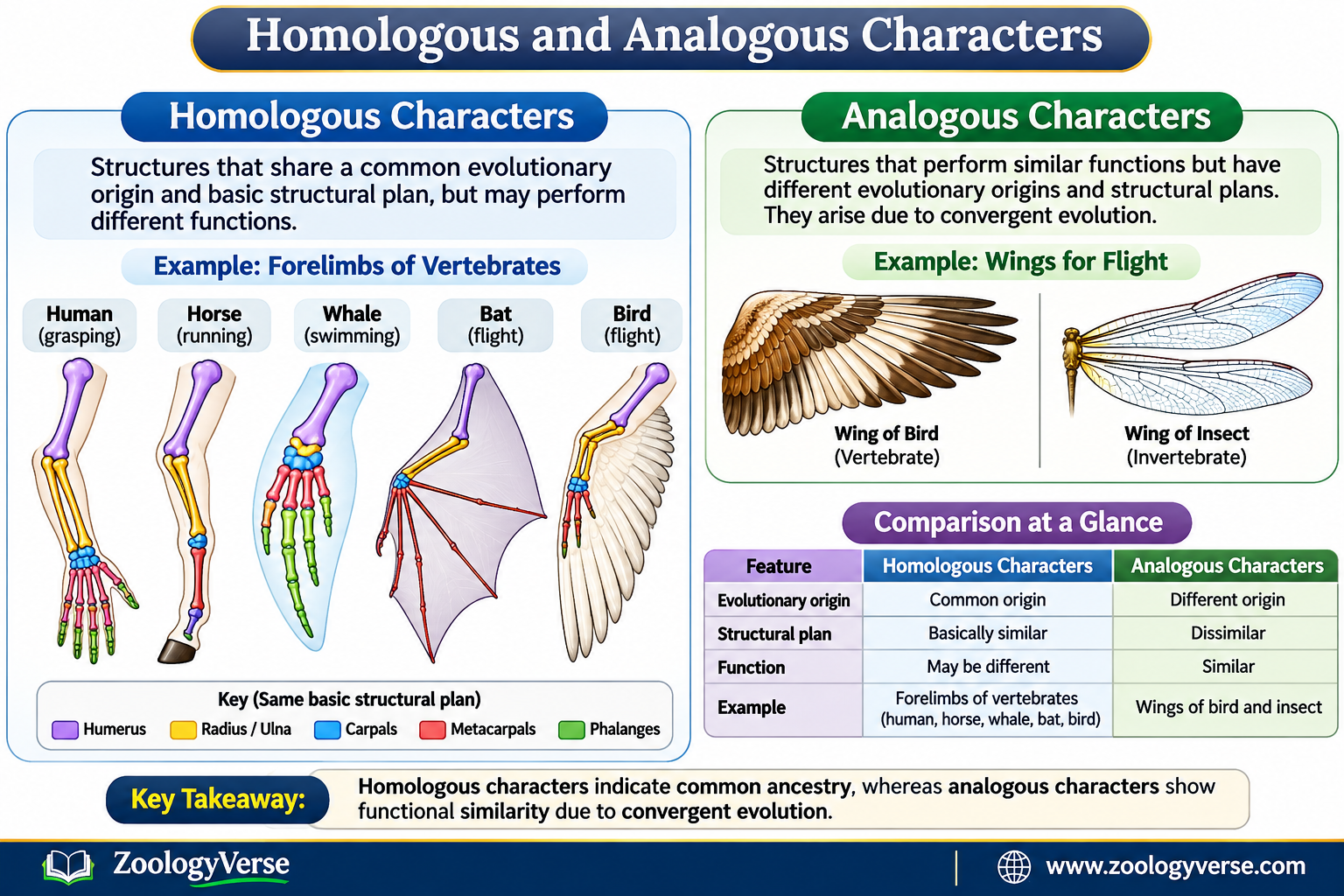
Homologous characters are features that share a common evolutionary origin, even when they perform different functions or have different appearances in present-day organisms.
These structures are inherited from a common ancestor and may undergo modifications during evolution.
Example: Forelimbs of Vertebrates
The forelimbs of humans, whales, bats and horses share a basic skeletal organisation. They contain corresponding bones, including the humerus, radius, ulna, carpals, metacarpals and phalanges. However, their functions differ:
- Human forelimbs are adapted for grasping and manipulation.
- Whale forelimbs are modified into flippers for swimming.
- Bat forelimbs support wings used for flight.
- Horse forelimbs are adapted for running.
These structures are homologous because they share a common evolutionary origin despite their different functions.
Read also: Evidences of Evolution: Types, Examples and Importance
10.2 Analogous Characters
Analogous characters are features that perform similar functions but have evolved independently in different evolutionary lineages. Their similarity is generally the result of convergent evolution rather than inheritance from a recent common ancestor possessing the same specialised structure.
Example: Wings of Birds and Insects
The wings of birds and insects perform the same general function of flight, but they differ considerably in their structure and evolutionary origin. Bird wings are modified vertebrate forelimbs containing bones, whereas insect wings are extensions of the body wall.
Therefore, these wings are analogous as flight structures, not homologous as complete anatomical organs.
Analogous characters must be distinguished from homologous characters because functional similarity alone does not establish evolutionary relatedness.
Read also: Theories of Evolution: Lamarckism, Darwinism and More
10.3 Primitive Characters
Primitive characters, also called ancestral characters or plesiomorphic characters, are features that were already present in an ancestor of the group being studied.
Such characters may be shared by several related groups because they were inherited from an earlier common ancestor.
For example, the presence of a vertebral column is an ancestral feature when comparing mammals, birds and reptiles within the broader vertebrate lineage. It was present before these groups diversified.
A primitive character is not necessarily simple or poorly developed. The term refers to its evolutionary history rather than its structural complexity.
10.4 Derived Characters
Derived characters, also known as apomorphic characters, are evolutionary features that originated or became modified from an ancestral condition within a particular lineage.
A derived character may help distinguish one evolutionary group from another.
For example, hair and mammary glands are derived features characteristic of mammals. Their presence helps distinguish mammals from other vertebrate groups.
When a derived character is shared by two or more taxa because it was inherited from their most recent common ancestor, it is called a shared derived character or synapomorphy. Synapomorphies are especially important in cladistic classification because they provide evidence for identifying monophyletic groups.
10.5 Comparison of Homologous, Analogous, Primitive and Derived Characters
| Character type | Meaning | Evolutionary basis | Example |
|---|---|---|---|
| Homologous | Similar features with a common evolutionary origin | Common ancestry | Forelimbs of humans, whales and bats |
| Analogous | Similar functions arising independently | Convergent evolution | Wings of birds and insects |
| Primitive | Ancestral feature retained from an earlier ancestor | Ancestral inheritance | Vertebral column in major vertebrate groups |
| Derived | Feature that originated or became modified within a lineage | Evolutionary modification | Hair and mammary glands in mammals |
10.6 Importance in Phylogenetic Classification
The distinction between these character types is fundamental to evolutionary classification. Homologous characters help identify features inherited from common ancestors, whereas analogous characters must be treated carefully because independent evolution can produce misleading similarities.
Primitive characters may be useful for understanding ancestral conditions, but shared primitive characters alone generally cannot establish a close evolutionary relationship among taxa. Shared derived characters are more informative for identifying groups that share a relatively recent common ancestor.
For example, the presence of feathers is a derived character that helps identify birds and their evolutionary relationships with other theropod dinosaurs. Its significance becomes clearer when interpreted alongside other anatomical and fossil evidence.
Modern Taxonomic Characters and Procedures therefore require careful evaluation of character origin, evolutionary transformations and patterns of inheritance. This prevents unrelated organisms from being grouped together merely because they possess similar adaptations and helps produce classifications that better reflect evolutionary history.
11. Character Selection and Evaluation
The accuracy of taxonomic identification and classification depends not only on the number of characters examined but also on their reliability and evolutionary significance. Taxonomists must carefully select, observe, compare and evaluate characters before using them to establish relationships among organisms.
In Taxonomic Characters and Procedures, character selection is an important step because unsuitable or incorrectly interpreted features may lead to misleading classifications. A reliable taxonomic study therefore considers the nature, consistency, variation and evolutionary importance of the characters being examined.
11.1 Criteria for Selecting Taxonomic Characters
Several criteria are considered when selecting suitable characters for taxonomic studies.
1. Reliability: A useful character should be consistently observable and should provide dependable information. Characters that change considerably due to temporary environmental conditions should be interpreted cautiously.
2. Heritability: Characters with a genetic basis are particularly valuable because they can reflect evolutionary relationships. However, environmental influences and developmental effects must also be considered.
3. Variation: A character should provide sufficient variation to distinguish the organisms being compared. A feature that is identical in all members of a study group may have limited value for distinguishing closely related taxa.
4. Stability: Characters that remain relatively stable throughout the life of an organism are often useful for identification. However, developmental changes must be considered when comparing different life stages.
5. Homology: Characters should be compared according to their evolutionary origin. Homologous features are generally more informative for reconstructing evolutionary relationships than similarities produced independently through convergent evolution.
6. Ease of observation and measurement: Characters that can be examined accurately and repeatedly are useful in practical identification and comparative studies.
11.2 Character Variation and Its Sources
Variation among organisms may arise through several biological and environmental processes. Understanding these sources is necessary before interpreting a character taxonomically.
Important sources include:
- Genetic variation: Differences in alleles and genetic combinations may produce variations in morphological, physiological and molecular features.
- Environmental variation: Temperature, nutrition, humidity and other environmental conditions may influence the expression of characters.
- Developmental variation: Organisms may show different features at embryonic, juvenile and adult stages.
- Sexual dimorphism: Males and females of the same species may differ in size, colour, body structures or other characteristics.
- Geographical variation: Populations occupying different geographical regions may show variations in their physical or genetic characteristics.
Taxonomists must distinguish genuine taxonomic differences from ordinary variation within a species.
11.3 Character Coding and Comparison
Before characters can be analysed systematically, they must be recorded in a consistent format. In numerical or computer-based studies, character states are often represented using codes.
For example, a simple hypothetical character matrix may be prepared as follows:
| Organism | Character 1: Wings | Character 2: Antennae | Character 3: Body covering |
|---|---|---|---|
| Organism A | Present | Present | Hard exoskeleton |
| Organism B | Absent | Present | Hard exoskeleton |
| Organism C | Present | Absent | Soft body covering |
In a phylogenetic analysis, character states may be coded numerically or symbolically according to a defined method. The coding system must be clearly explained so that the data can be interpreted correctly.
11.4 Evaluation of Character Significance
Not all characters provide the same amount of information. Some may be useful for distinguishing species, whereas others may be more suitable for identifying relationships among larger taxonomic groups.
Character evaluation may involve:
- Comparing the distribution of character states among organisms.
- Identifying similarities and differences.
- Determining whether similarities are homologous or analogous.
- Examining variation within populations and between species.
- Assessing whether characters are independent or correlated.
- Combining evidence from different sources to reach a reliable interpretation.
In phylogenetic studies, the evolutionary polarity of characters may also be investigated to determine which states are ancestral and which are derived. Outgroup comparison is one method used to help establish this distinction.
Read also: Trends in Evolution: Types, Examples and Mechanisms
11.5 Importance of Multiple Character Evidence
Classification based on a single character can be misleading because one feature may be influenced by environmental conditions, developmental changes or convergent evolution. Therefore, taxonomists generally examine multiple independent characters whenever possible.
For example, the classification of two closely related animal species may involve external morphology, skeletal structure, reproductive features, chromosome characteristics and DNA sequence comparisons. Agreement among different sources of evidence increases confidence in the proposed relationship.
Modern Taxonomic Characters and Procedures therefore emphasise an integrated approach in which characters are selected and evaluated according to their reliability, biological significance and evolutionary interpretation. This makes taxonomic identification more objective and helps produce classifications supported by multiple lines of evidence.
12. Taxonomic Procedures: Collection and Preservation of Specimens
Taxonomic studies require properly collected, documented and preserved biological specimens. Specimens provide physical evidence for examining morphological, anatomical, cytological and other characters. Their accurate collection and preservation are essential for identification, comparison, description and long-term scientific reference.
The collection and preservation of specimens form an important part of Taxonomic Characters and Procedures because poorly collected or damaged material may lose important diagnostic features. Standardised methods help maintain specimen quality and ensure that researchers can examine the same material in future investigations.
12.1 Collection of Specimens
Specimen collection involves obtaining representative organisms or biological materials from their natural habitats or authorised collections. The method used depends on the organism, its habitat, size and the purpose of the investigation.
Important steps include:
1. Selection of collection sites: Suitable locations are selected according to the distribution, habitat and ecological requirements of the organisms being studied.
2. Selection of collection methods: Different methods are used for different groups. Insects may be collected using sweep nets or light traps, whereas aquatic organisms may be sampled using appropriate nets and other authorised equipment.
3. Collection of representative specimens: Specimens should represent the relevant range of variation, including different developmental stages or sexes when necessary.
4. Avoiding specimen damage: Care should be taken to prevent damage to delicate structures such as wings, antennae, fins, appendages and reproductive organs.
5. Ethical and legal considerations: Collection must follow applicable wildlife protection laws, institutional guidelines and research permissions. Protected or threatened species should not be collected without the required authorisation.

12.2 Field Documentation
Each specimen should be accompanied by accurate field information. This information is essential because the scientific value of a specimen depends not only on its physical condition but also on its collection history.
Important field data include:
- Scientific or provisional identification.
- Date and time of collection.
- Geographical location and coordinates, where appropriate.
- Habitat and environmental conditions.
- Collector’s name.
- Collection method.
- Sex, developmental stage and other observable details.
A unique specimen number should be assigned to each sample or collection unit. This number links the physical specimen to its field notes, photographs and laboratory records.
12.3 Preservation of Specimens
Preservation prevents or reduces physical, chemical and biological deterioration. The method depends on the nature of the organism and the characters that need to be examined.
1. Dry preservation: Many insects, shells, bones, feathers and plant specimens can be preserved in a dry condition. Insects may be pinned and stored in protective insect boxes, while plant materials are commonly pressed and dried for herbarium collections.
2. Wet preservation: Soft-bodied organisms and many aquatic specimens may be preserved in suitable liquid preservatives. Ethanol is widely used for many zoological specimens, although the appropriate concentration depends on the specimen and the intended analysis.
3. Formalin preservation: Buffered formalin solutions have historically been used for preserving many anatomical specimens. However, formalin can damage DNA and may interfere with some molecular investigations, so it is not suitable for every research purpose.
4. Slide preparation: Microscopic organisms, tissues and small anatomical structures may be preserved as permanent or temporary microscope slides using appropriate preparation techniques.
5. Cryopreservation: Biological materials such as tissues, cells and genetic samples may be stored at very low temperatures to maintain their molecular and cellular integrity.
12.4 Labelling and Storage
Proper labelling is essential for preventing confusion and loss of specimen information. Labels should be durable, legible and linked to the specimen’s unique identification number.
Storage conditions depend on the preservation method. Dry specimens require protection from moisture, pests and excessive light. Wet specimens must be stored in properly sealed containers with suitable preservatives. Molecular samples may require controlled temperature conditions to minimise degradation.
Museum collections, herbarium repositories and recognised research institutions maintain specimens under standardised storage systems. These collections serve as long-term scientific resources for taxonomic research.
12.5 Voucher Specimens and Type Material
A voucher specimen is a preserved specimen retained as physical evidence of an organism used in a scientific study. It allows other researchers to verify the identification and examine the material on which a study was based.
Type specimens have a more specific nomenclatural role. Under the International Code of Zoological Nomenclature (ICZN), a holotype is the single specimen designated as the name-bearing type of a newly established species-group taxon. Other categories of type material include paratypes and syntypes, depending on the circumstances of the original description.
Type specimens are especially important because they provide the permanent reference for applying scientific names.
12.6 Importance of Collection and Preservation in Taxonomy
Proper collection and preservation make it possible to examine specimens repeatedly and compare them with newly collected material. They support species identification, taxonomic revision, biodiversity surveys, ecological research and molecular investigations.
However, preservation methods can alter certain characters. For example, chemical preservatives may change body colour, cause shrinkage or affect DNA quality. Therefore, the preservation method must be selected according to the intended study.
Accurate documentation, ethical collection, suitable preservation and reliable storage ensure that specimens remain scientifically useful. These practices form a fundamental part of Taxonomic Characters and Procedures and provide the material foundation for systematic biological research.
13. Examination, Comparison and Identification
After collection and preservation, biological specimens are examined and compared to determine their identity and taxonomic position. This stage involves the systematic observation of morphological, anatomical, physiological, cytological, biochemical and molecular features. Accurate examination is essential because the identification of an organism depends on recognising its diagnostic characters and comparing them with reliable taxonomic information.
In Taxonomic Characters and Procedures, examination and comparison connect the study of biological characters with the practical process of identifying organisms and assigning them to appropriate taxonomic groups.
13.1 Examination of Specimens
Specimen examination involves observing external and internal features using suitable instruments and techniques. The type of examination depends on the organism and the characters required for identification.
Important methods include:
1. External examination: External structures such as body shape, colour, appendages, scales, wings, fins and other visible features are observed and recorded.
2. Microscopic examination: Microscopes are used to study small structures such as cells, tissues, surface patterns, reproductive structures and microscopic diagnostic features.
3. Anatomical examination: Internal structures, including skeletal elements, organs and organ systems, are examined when they provide useful diagnostic information.
4. Morphometric analysis: Measurements such as body length, skull dimensions, wing span and the proportions of different body regions are recorded for comparison.
5. Molecular examination: DNA or other molecular material may be analysed when morphological characters are insufficient or when genetic relationships need to be investigated.
13.2 Comparison with Reference Material
Once the specimen has been examined, its characters are compared with those of previously described organisms. Reference material may include taxonomic descriptions, identification keys, scientific illustrations, museum specimens, herbarium collections and authenticated molecular databases.
Important steps include:
- Comparing observable characters with published descriptions.
- Examining differences between closely related species.
- Checking geographical distribution and habitat information.
- Comparing specimens with authenticated reference collections.
- Reviewing previous taxonomic studies and relevant scientific literature.
Reliable identification requires the use of appropriate and updated references. Older descriptions may contain outdated classifications or names that have subsequently been revised.
13.3 Taxonomic Identification
Taxonomic identification is the process of determining the scientific identity of an organism by comparing its characters with established descriptions and identification resources.
The identification process generally involves:
- Recording the important observable characters.
- Selecting characters that distinguish the specimen from related organisms.
- Comparing these features with taxonomic descriptions and identification keys.
- Checking the accepted scientific names and relevant nomenclatural information.
- Confirming the identification using additional evidence when necessary.
For example, an unknown insect may initially be recognised through its body division, number of legs, antennae and wing characteristics. More detailed examination of wing venation, mouthparts and reproductive structures may be necessary to determine its family or species.
13.4 Use of Taxonomic Literature and Databases
Taxonomic literature and online databases provide essential information for checking identifications and scientific names.
Important resources include:
- Scientific monographs: Detailed publications dealing with particular taxonomic groups.
- Taxonomic revisions: Studies that reassess the classification, identity and relationships of previously described taxa.
- Identification manuals: Publications containing descriptions, illustrations and identification keys.
- Museum and herbarium catalogues: Records of preserved specimens and their collection information.
- Biodiversity databases: Digital resources containing taxonomic names, distribution records and other biological information.
Examples of widely used resources include the Catalogue of Life, World Register of Marine Species (WoRMS), GBIF and the Integrated Taxonomic Information System (ITIS). Their coverage and taxonomic updates may differ, so important identifications should be checked against authoritative specialist literature whenever possible.
13.5 Confirmation and Documentation of Identification
A taxonomic identification should be documented so that it can be checked or repeated by other researchers. The record should include the specimen number, diagnostic characters, identification method, references consulted and the name of the person who performed the identification.
When uncertainty remains, the specimen may be recorded at a higher taxonomic level, such as genus or family, rather than assigning an unsupported species name. Difficult cases may require examination by a specialist or additional molecular analysis.
13.6 Importance of Accurate Identification
Accurate identification provides the foundation for biodiversity studies, ecological research, conservation planning, evolutionary investigations and biological classification. Errors in identification can affect scientific conclusions, species distribution records and conservation decisions.
Therefore, examination, comparison and confirmation must be carried out carefully. The integration of reliable reference material with morphological and molecular evidence strengthens Taxonomic Characters and Procedures and improves the accuracy and reproducibility of taxonomic research.
14. Taxonomic Keys and Their Construction
Taxonomic keys are practical tools used to identify unknown organisms by comparing their observable characters with a series of alternative statements. They guide the user through a sequence of choices until the specimen is assigned to an appropriate taxonomic group or identified by its scientific name.
Taxonomic keys are widely used in zoology, botany, ecology, biodiversity surveys and biological education. They simplify the identification process by arranging diagnostic characters in a systematic manner. In Taxonomic Characters and Procedures, identification keys connect the observation of taxonomic characters with their practical application.
14.1 Meaning of Taxonomic Keys
A taxonomic key is an identification tool consisting of a sequence of contrasting statements based on the characteristics of organisms. Each choice directs the user to another pair of statements or to the name of a taxon.
The statements generally describe easily recognisable differences, such as the presence or absence of wings, body segmentation, number of legs, leaf arrangement or other diagnostic features.
For example, an elementary key for distinguishing three hypothetical animal groups may begin with the presence or absence of a vertebral column and then use additional characters to separate the groups.
14.2 Types of Taxonomic Keys
Taxonomic keys can be classified according to the way in which their alternatives are arranged and presented.
1. Dichotomous Keys
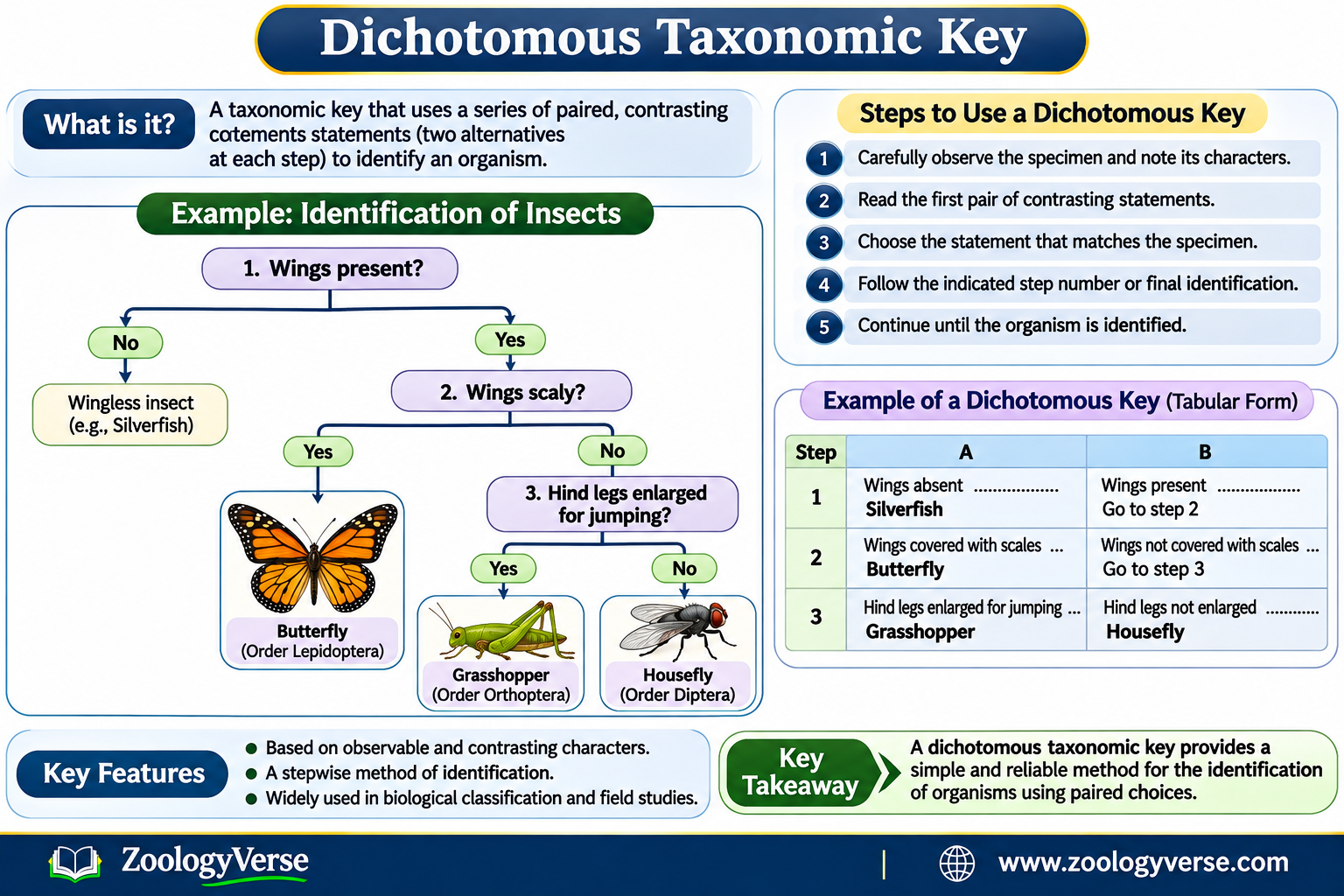
A dichotomous key consists of a series of paired, contrasting statements called couplets. Each statement within a couplet is known as a lead. The user selects the lead that best matches the specimen and follows its direction to the next couplet or identification.
Dichotomous keys are among the most commonly used identification tools.
2. Indented Keys
In an indented key, the alternative statements are arranged at progressively different indentation levels. Each choice leads the user to a more specific identification step.
This format makes the sequence of decisions visually clear.
3. Bracketed Keys
In a bracketed key, the paired statements are numbered, and each lead directs the user to another numbered couplet or to the name of the organism. Both alternatives are usually placed together, making the key relatively compact.
4. Polyclave or Multi-access Keys
A polyclave key allows identification through several characters selected in different orders. Instead of following a single fixed sequence, the user can choose whichever observable features are most convenient.
Digital identification systems commonly use multi-access approaches because they allow users to enter multiple characters and narrow down possible identifications.
14.3 Structure of a Dichotomous Key
A dichotomous key is organised into couplets, each containing two contrasting leads. The leads should describe clearly distinguishable character states.
An example of a simplified dichotomous key is given below:
Dichotomous Key for Three Hypothetical Animal Groups
1a. Vertebral column absent …………………………………. Go to 2
1b. Vertebral column present ……………………………….. Vertebrate group
2a. Body divided into distinct segments ………………… Segmented invertebrate group
2b. Body not divided into distinct segments ………….. Non-segmented invertebrate group
This example demonstrates how an organism can be identified through a series of contrasting choices. Actual keys use more precise diagnostic characters and are designed for a defined group of organisms.
14.4 Construction of Taxonomic Keys
The construction of a reliable identification key requires careful selection and arrangement of diagnostic characters.
The main steps include:
1. Selection of organisms: The taxonomic group to be covered by the key must be clearly defined. The organisms included should be identified using reliable taxonomic information.
2. Selection of diagnostic characters: Characters should be chosen according to their reliability, visibility and ability to distinguish the included taxa.
3. Identification of contrasting states: Each couplet should contain two clearly contrasting alternatives. For example, wings present versus wings absent.
4. Arrangement of couplets: Characters should be arranged logically, often beginning with easily observable features and progressing towards more specific characteristics.
5. Preparation of leads: Each lead should be concise, precise and preferably describe one character or a closely related set of character states.
6. Testing the key: The key should be tested using known specimens to determine whether it consistently leads to the correct identification.
7. Revision and updating: The key should be revised when new taxonomic information becomes available or when errors and ambiguities are identified.
14.5 Characteristics of a Good Taxonomic Key
A well-constructed taxonomic key should possess the following features:
- Clarity: Statements should be written in simple and unambiguous language.
- Accuracy: Character descriptions must agree with the actual features of the organisms.
- Contrasting alternatives: The two leads of a dichotomous couplet should be clearly distinguishable.
- Reliability: The key should lead to correct identifications when used with suitable specimens.
- Consistency: Similar characters should be described using consistent terminology and measurement standards.
- Practicality: Characters should be observable without unnecessarily complicated procedures whenever possible.
14.6 Advantages and Limitations of Taxonomic Keys
Taxonomic keys make identification easier by providing an organised sequence of decisions. They are useful in field studies, laboratory practicals, biodiversity surveys and educational activities. They also help standardise the identification process among different researchers.
However, keys have certain limitations. A specimen that is damaged, immature or missing important structures may be difficult to identify. Some characters may vary within a species, and a key prepared for one geographical region may not include organisms found elsewhere. In addition, outdated keys may contain obsolete scientific names or classifications.
Therefore, identification results should be checked against current taxonomic descriptions and reference material whenever possible.
Taxonomic keys remain essential tools in Taxonomic Characters and Procedures because they convert observed differences into a practical and systematic method of organism identification.
15. Description, Naming and Classification of New Taxa
The discovery of previously unrecognised biological diversity is an important part of taxonomic research. When researchers identify an organism that represents a previously undescribed taxon, they must examine its characteristics, compare it with known organisms, prepare a formal description and follow the appropriate rules of biological nomenclature.
The description, naming and classification of new taxa are essential components of Taxonomic Characters and Procedures because they establish a scientific basis for recognising biodiversity and communicating taxonomic discoveries.
15.1 Discovery of a New Taxon
A potential new taxon may be discovered during field surveys, museum studies, ecological investigations or examination of previously collected specimens. However, an organism that appears different does not automatically represent a new species.
Researchers must first determine whether its differences are sufficiently distinct and whether the organism has already been described under another scientific name.
The preliminary investigation generally includes:
- Collection or examination of suitable specimens.
- Detailed observation of morphological and anatomical features.
- Comparison with descriptions of related taxa.
- Examination of relevant museum or herbarium material.
- Molecular and genetic analysis, where appropriate.
- Evaluation of geographical distribution and biological variation.
This comparative approach helps establish whether the specimen represents a genuinely distinct taxon.
15.2 Preparation of a Taxonomic Description
A taxonomic description provides a scientific account of the characteristics that distinguish a newly recognised taxon. It should be sufficiently detailed to allow other researchers to recognise and compare the organism.
A formal species description may include:
- Accepted scientific name and proposed new name.
- Diagnostic characters that distinguish the species.
- Detailed morphological description.
- Measurements and other quantitative characteristics.
- Information about habitat and geographical distribution.
- Comparisons with closely related species.
- Illustrations, photographs or diagrams where useful.
- Information about the type specimen and its repository.
- Relevant molecular or ecological evidence, when available.
The diagnosis is particularly important because it identifies the characters that distinguish the proposed taxon from related taxa. A description provides a fuller account of its features.
15.3 Type Specimens
Type specimens provide permanent reference material for the application of scientific names. They are especially important in zoological and botanical nomenclature.
Important categories of type specimens include:
1. Holotype: A single specimen designated as the name-bearing type when a new species-group taxon is established.
2. Paratype: Additional specimens included in the original description alongside the holotype. They provide supplementary information about variation within the species but are not themselves name-bearing types.
3. Syntypes: Specimens that collectively form the name-bearing type series when no holotype was designated in the original description.
4. Lectotype: A specimen later selected from the original type series to serve as the single name-bearing type when the original description was based on syntypes.
5. Neotype: A specimen designated as a replacement name-bearing type when the original name-bearing type material is considered lost or destroyed and the relevant nomenclatural requirements are met.
The terminology and requirements for type designation differ between nomenclatural codes. For zoological names, the International Code of Zoological Nomenclature (ICZN) provides the relevant rules.
15.4 Scientific Naming of New Taxa
Scientific naming follows internationally recognised nomenclatural codes. Zoological names are governed by the International Code of Zoological Nomenclature, while botanical, algal and fungal names are governed by the International Code of Nomenclature for algae, fungi, and plants.
In zoological nomenclature, species names generally follow binomial nomenclature, consisting of two words:
- The first word represents the genus and begins with a capital letter.
- The second word is the specific name and begins with a lowercase letter.
- Both words are conventionally written in italics.
For example, Panthera leo is the scientific name of the lion.
The establishment of a new zoological species name requires compliance with the applicable provisions of the ICZN, including the requirements for availability of the name and its publication.
15.5 Classification of New Taxa
After a taxon has been recognised and described, it is placed within the appropriate classification system. Classification involves comparing its characters with those of related organisms and determining its position in the taxonomic hierarchy.
For example, a newly described animal species may be assigned to a genus, family, order, class, phylum and kingdom based on its diagnostic features and evolutionary relationships.
Modern classification increasingly combines morphological and molecular evidence. This helps researchers determine whether the proposed taxon belongs to an existing evolutionary group or represents a distinct lineage.
15.6 Publication and Documentation
The scientific description of a new taxon must be made available through a publication that satisfies the relevant nomenclatural requirements. The publication should provide the necessary description or diagnosis, information about the name-bearing type and other required details.
For zoological nomenclature, the ICZN regulates the availability of scientific names. Depending on the circumstances, additional requirements may apply, including the designation of type material, indication of the type repository and compliance with publication provisions.
Researchers should also ensure that specimens are deposited in recognised institutional collections, where they can be examined by future investigators.
15.7 Importance of Describing New Taxa
The description and classification of new taxa improve our understanding of biodiversity and provide a foundation for biological research. They help identify previously unrecognised species, document geographical distributions, support conservation assessments and clarify evolutionary relationships.
Accurate descriptions also prevent confusion caused by duplicate naming, incorrect identification and poorly documented discoveries.
Thus, the recognition, description, naming and classification of new taxa represent an important stage in Taxonomic Characters and Procedures. By following scientific and nomenclatural standards, taxonomists ensure that newly recognised organisms become part of a stable and internationally communicable classification system.
16. Conclusion
Taxonomic characters and procedures form the scientific foundation for the identification, description, comparison and classification of organisms. The study of biological diversity requires the careful examination of several types of characters, including morphological, anatomical, embryological, cytological, physiological, biochemical, molecular, ecological and behavioural features. Each category provides a different perspective on the organisation, variation and evolutionary history of living organisms.
The classification of characters into qualitative and quantitative categories, together with the distinction between homologous, analogous, primitive and derived features, helps taxonomists interpret biological similarities and differences more accurately. Appropriate character selection and evaluation are equally important because environmental influences, developmental changes, sexual dimorphism and convergent evolution can sometimes produce misleading similarities.
The practical procedures of taxonomy begin with the ethical collection, documentation and preservation of specimens. These are followed by detailed examination, comparison with reference material and identification through taxonomic descriptions, databases and identification keys. When previously undescribed taxa are recognised, their scientific description, naming, type designation and classification must follow the relevant nomenclatural rules.
Modern taxonomy increasingly integrates traditional morphological evidence with cytological, biochemical and molecular techniques. This combined approach improves identification, reveals cryptic diversity and provides stronger evidence for reconstructing evolutionary relationships. Consequently, the systematic application of taxonomic characters and procedures remains essential for understanding biodiversity, maintaining accurate biological classification and supporting research in evolution, ecology, conservation and other areas of life science.
17. Frequently Asked Questions (FAQs)
What are taxonomic characters?
What are the major types of taxonomic characters?
What is the importance of taxonomic characters?
What are morphological characters?
What is the difference between qualitative and quantitative characters?
What are homologous and analogous characters?
What is karyotaxonomy?
What is DNA barcoding?
What are taxonomic keys?
What is a voucher specimen?
What is a holotype?
Why are molecular characters important in modern taxonomy?
What is the difference between taxonomic identification and classification?
Why should multiple taxonomic characters be used?
18. References
Books and Academic Textbooks
- Mayr, E., & Ashlock, P. D. (1991). Principles of Systematic Zoology (2nd ed.). McGraw-Hill.
- Simpson, M. G. (2010). Plant Systematics (2nd ed.). Academic Press, Elsevier.
- Kapoor, V. C. (2008). Theory and Practice of Animal Taxonomy (6th ed.). Oxford & IBH Publishing Co. Ltd.
Official Scientific and Taxonomic Resources
- International Commission on Zoological Nomenclature (ICZN). International Code of Zoological Nomenclature (4th ed.). Read the online Code.
- International Commission on Zoological Nomenclature. Frequently Asked Questions: Type Specimens and Zoological Nomenclature. Read the official guidance.
- National Center for Biotechnology Information (NCBI). GenBank: Barcode of Life. DNA barcoding resources.
- Global Biodiversity Information Facility (GBIF). Taxonomy Interpretation: Technical Documentation. Read the documentation.
- Integrated Taxonomic Information System (ITIS). Integrated Taxonomic Information System. Explore the taxonomic database.
- International Barcode of Life Consortium. DNA Barcoding. Read about DNA barcoding and specimen identification.
University Study Resources
- Indira Gandhi National Open University (IGNOU). Unit 6: Tools of a Taxonomist. Access the study material.
- University of Kota. M.Sc. Zoology Syllabus: Animal Taxonomy. Access the syllabus.
Discover more from Zoologyverse
Subscribe to get the latest posts sent to your email.