
The cells of the immune system are specialized cells that protect the body against microorganisms, abnormal cells, toxins and other potentially harmful substances. They work together to recognize threats, destroy pathogens, regulate inflammation, remove damaged cells and establish immunological memory.
Most immune cells originate from hematopoietic stem cells in the bone marrow. These cells give rise to different blood-cell lineages, including myeloid and lymphoid cells. As immune cells mature, they acquire specialized structures, receptors and functions that allow them to participate in innate immunity, adaptive immunity or both.
The major cells involved in immune defense include neutrophils, monocytes, macrophages, dendritic cells, eosinophils, basophils, mast cells, natural killer (NK) cells, B lymphocytes and T lymphocytes.
Understanding the cells of the immune system is essential for studying innate immunity, adaptive immunity, antigen recognition and immune responses.
What Are the Cells of the Immune System?
The cells of the immune system are mainly specialized leukocytes and related tissue-resident cells that participate in immune defense.
They can be broadly grouped according to their developmental lineage and major functions:
- Myeloid cells
- Lymphoid cells
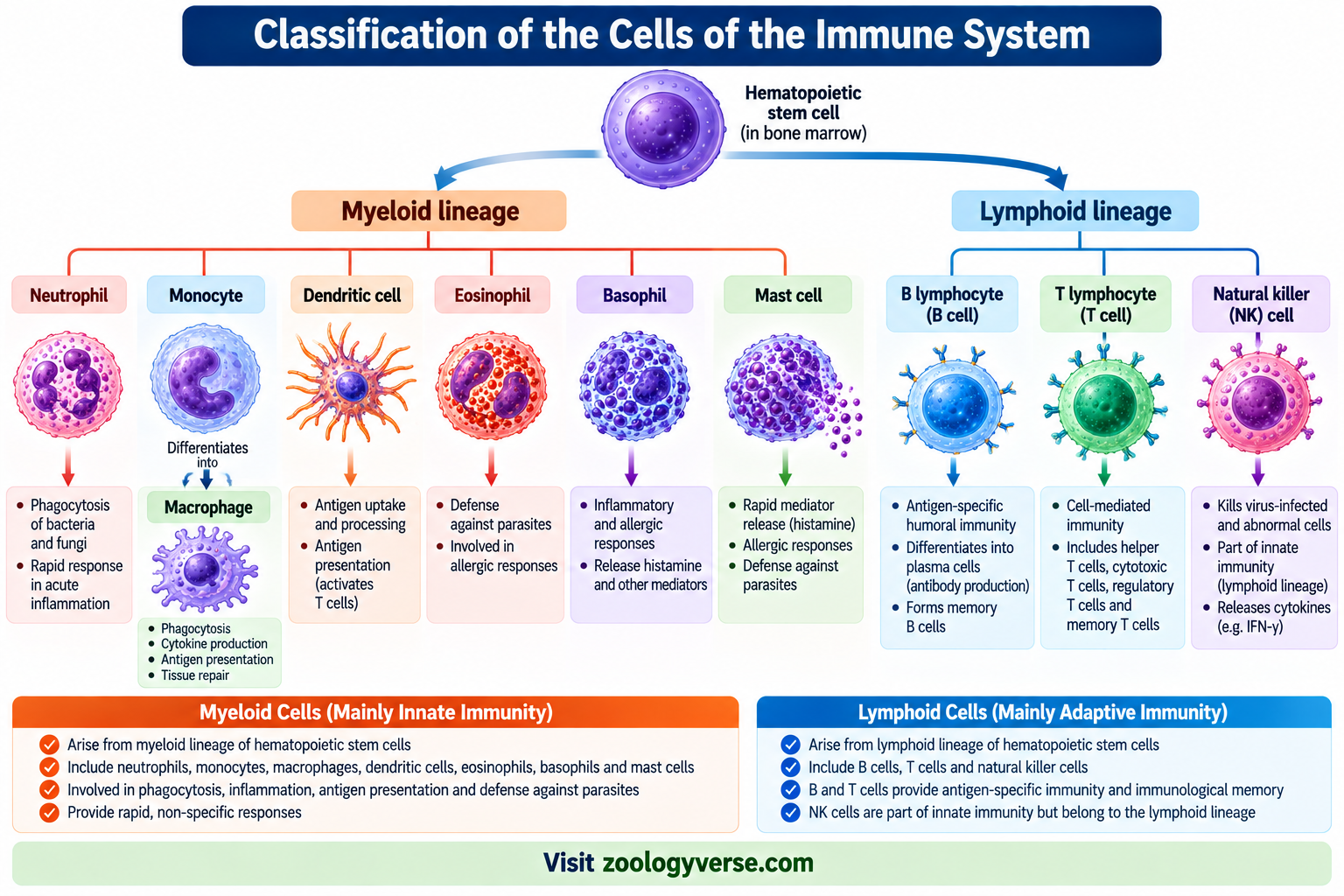
Myeloid-lineage cells include neutrophils, monocytes, macrophages, many dendritic cells, eosinophils, basophils and mast cells. Lymphoid-lineage cells include B cells, T cells and natural killer cells, along with other innate lymphoid cells.
This classification is useful because cell lineage and immune function are related but not identical. For example, NK cells belong to the lymphoid lineage but perform important innate immune functions.
Classification of the Cells of the Immune System
| Group | Major Cells | Major Role |
|---|---|---|
| Myeloid cells | Neutrophils | Rapid phagocytosis and killing of microbes |
| Myeloid cells | Monocytes | Circulating precursors and immune surveillance |
| Myeloid cells | Macrophages | Phagocytosis, inflammation, tissue maintenance and antigen presentation |
| Myeloid cells | Dendritic cells | Antigen uptake and presentation; activation of naïve T cells |
| Myeloid cells | Eosinophils | Defense against parasites and participation in allergy |
| Myeloid cells | Basophils | Inflammatory and allergic responses |
| Tissue immune cells | Mast cells | Rapid mediator release, allergy and parasite defense |
| Lymphoid cells | B lymphocytes | Antigen-specific humoral immunity and antibody production |
| Lymphoid cells | T lymphocytes | Cell-mediated immunity, immune regulation and coordination |
| Lymphoid cells | NK cells | Killing of certain infected and abnormal cells as part of innate immunity |
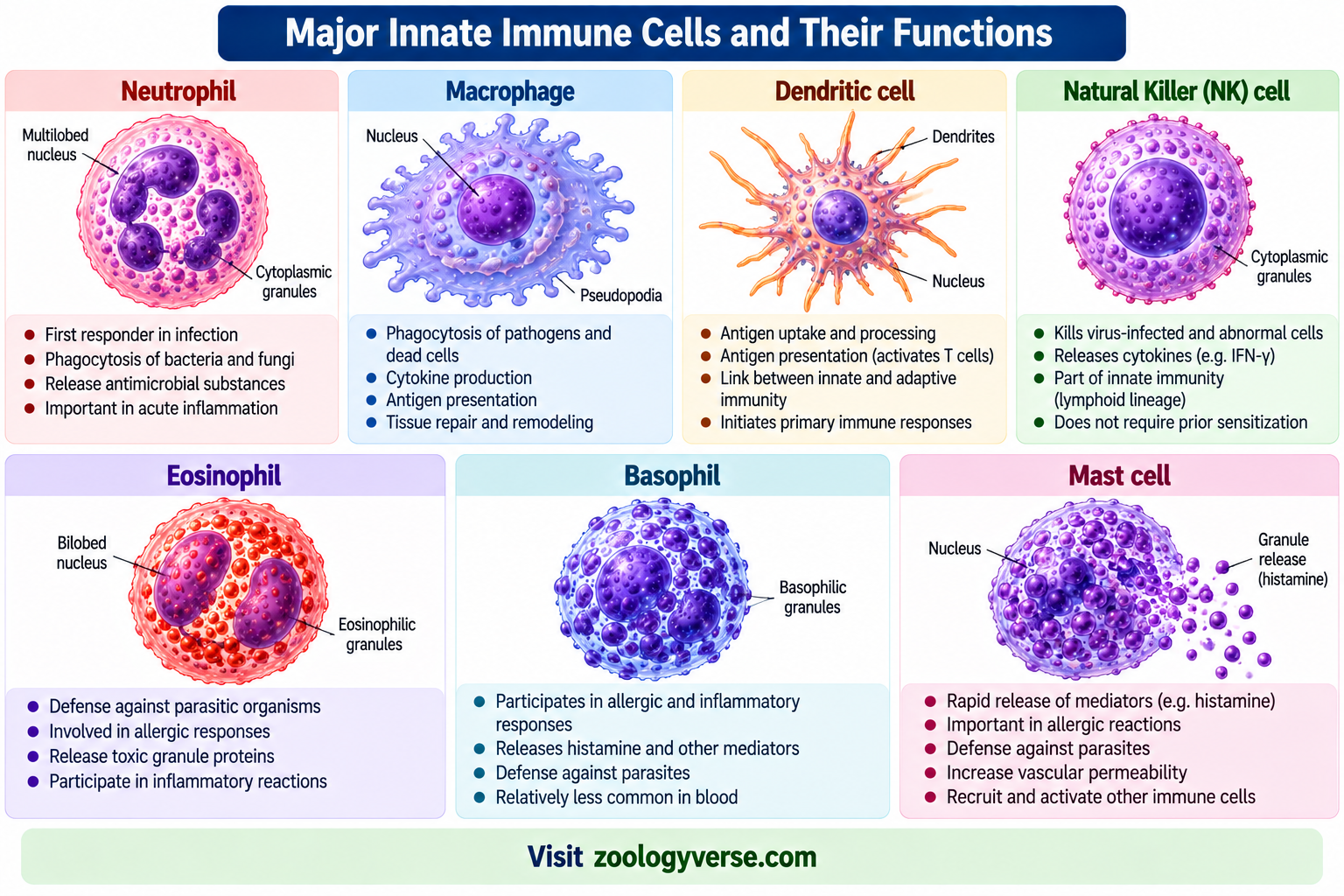
Neutrophils
Neutrophils are abundant granulocytic white blood cells and important effector cells of innate immunity.
They circulate in the blood and are rapidly recruited to sites of infection or tissue injury. Their main function is phagocytosis and destruction of microorganisms, particularly bacteria and fungi.
Major Functions of Neutrophils
- Phagocytose microorganisms.
- Release antimicrobial granule contents.
- Generate reactive oxygen species that help destroy engulfed pathogens.
- Participate in acute inflammation.
- Respond rapidly to chemotactic signals.
Neutrophils are generally short-lived compared with macrophages and many lymphocytes. Their rapid recruitment makes them particularly important during acute inflammatory responses.
Monocytes
Monocytes are circulating myeloid cells that can migrate from the bloodstream into tissues.
After entering tissues, monocytes can differentiate into macrophages or certain dendritic-cell populations depending on the tissue and inflammatory environment.
Major Functions of Monocytes
- Circulate in the blood and participate in immune surveillance.
- Migrate into tissues during inflammation.
- Give rise to macrophage populations in appropriate contexts.
- Contribute to inflammatory responses.
- Participate in phagocytosis and antigen presentation after differentiation.
Monocytes therefore provide an important connection between circulating blood cells and tissue immune responses.
Macrophages
Macrophages are large phagocytic cells found in many tissues. They ingest microorganisms, dead cells, cellular debris and other particles through phagocytosis.
Macrophages also produce cytokines and other mediators that influence inflammation. Depending on their activation environment, macrophages can participate in antimicrobial defense, resolution of inflammation and tissue repair.
Major Functions of Macrophages
- Phagocytosis of microorganisms.
- Removal of dead and damaged cells.
- Production of cytokines and inflammatory mediators.
- Contribution to tissue repair and remodeling.
- Antigen presentation to T cells.
- Coordination of local immune responses.
Macrophages are therefore important not only in killing pathogens but also in maintaining tissue homeostasis.
Dendritic Cells
Dendritic cells are specialized immune cells that are particularly important for connecting innate and adaptive immunity.
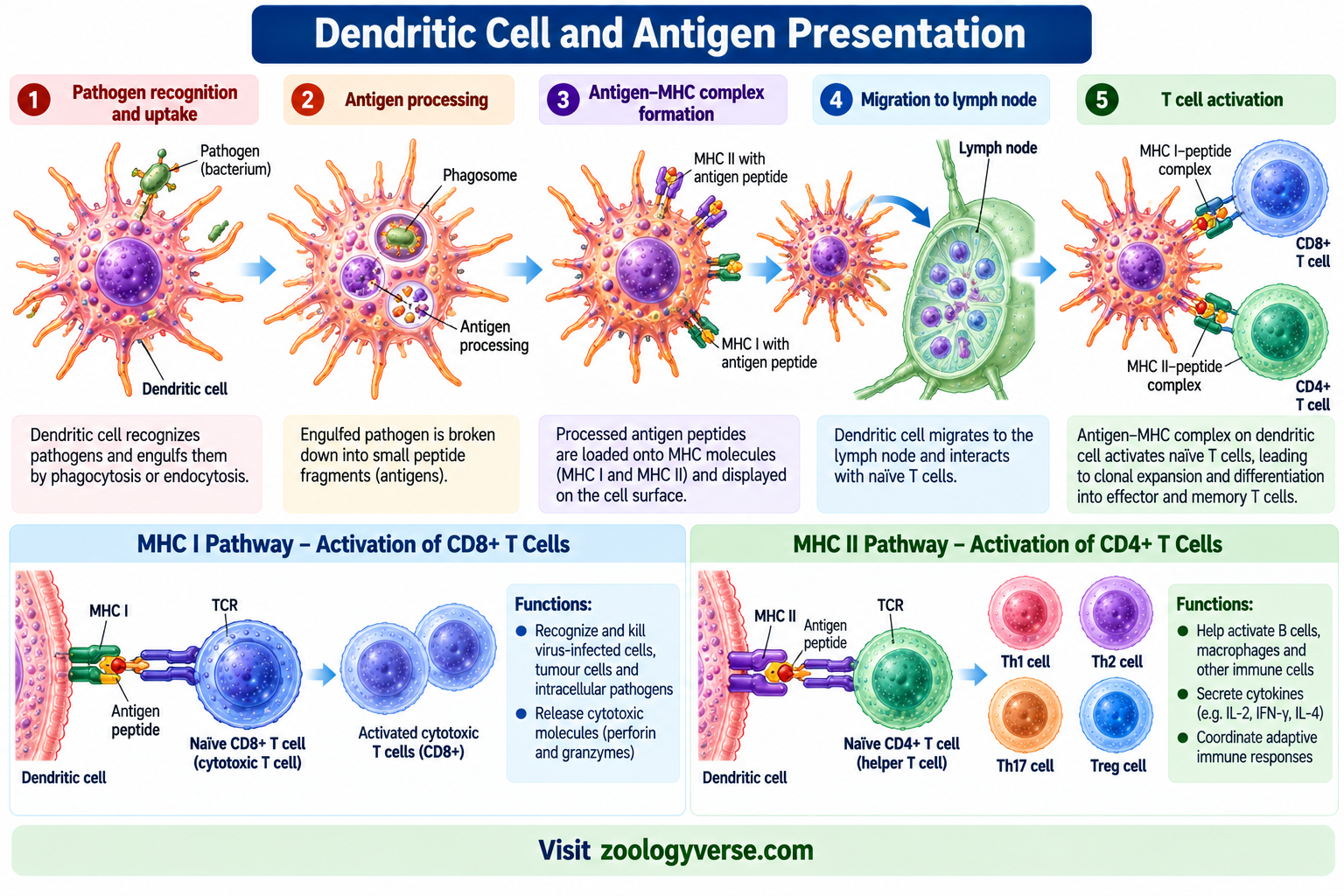
They capture and process antigens in peripheral tissues and can migrate to lymphoid organs. There they present antigen-derived peptides to T cells.
Dendritic cells are especially important for initiating primary immune responses by activating naïve T lymphocytes.
Major Functions of Dendritic Cells
- Capture and process antigens.
- Detect microbial and danger signals.
- Migrate to lymphoid tissues after activation.
- Present antigen-derived peptides through MHC molecules.
- Activate naïve T cells.
- Help shape the type of adaptive immune response.
Because of these functions, dendritic cells are often described as an important bridge between innate immune recognition and adaptive immune activation.
Natural Killer Cells
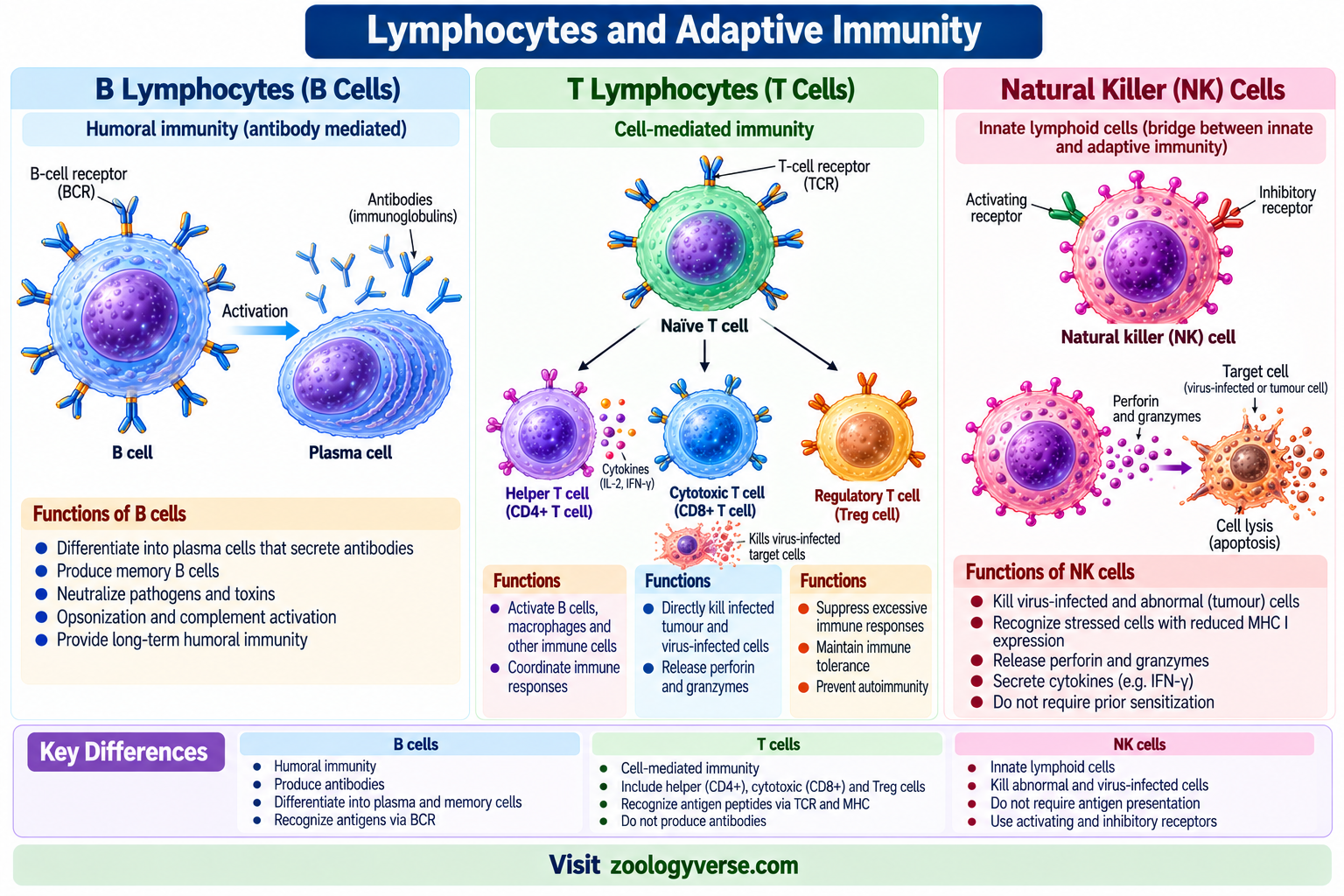
Natural killer (NK) cells are lymphoid-lineage cells that perform important functions in innate immunity.
Unlike B and T lymphocytes, conventional NK cells do not use clonally rearranged antigen-specific receptors in the same way as adaptive lymphocytes. They use a collection of activating and inhibitory receptors to detect cellular abnormalities.
NK cells can kill certain virus-infected cells and tumor cells without requiring prior antigen-specific sensitization.
Major Functions of NK Cells
- Kill certain virus-infected cells.
- Kill some abnormal or tumor cells.
- Release cytokines such as interferon-gamma.
- Participate in early defense against intracellular pathogens.
- Contribute to regulation of immune responses.
NK cells demonstrate why immune-cell classification should consider both lineage and function.
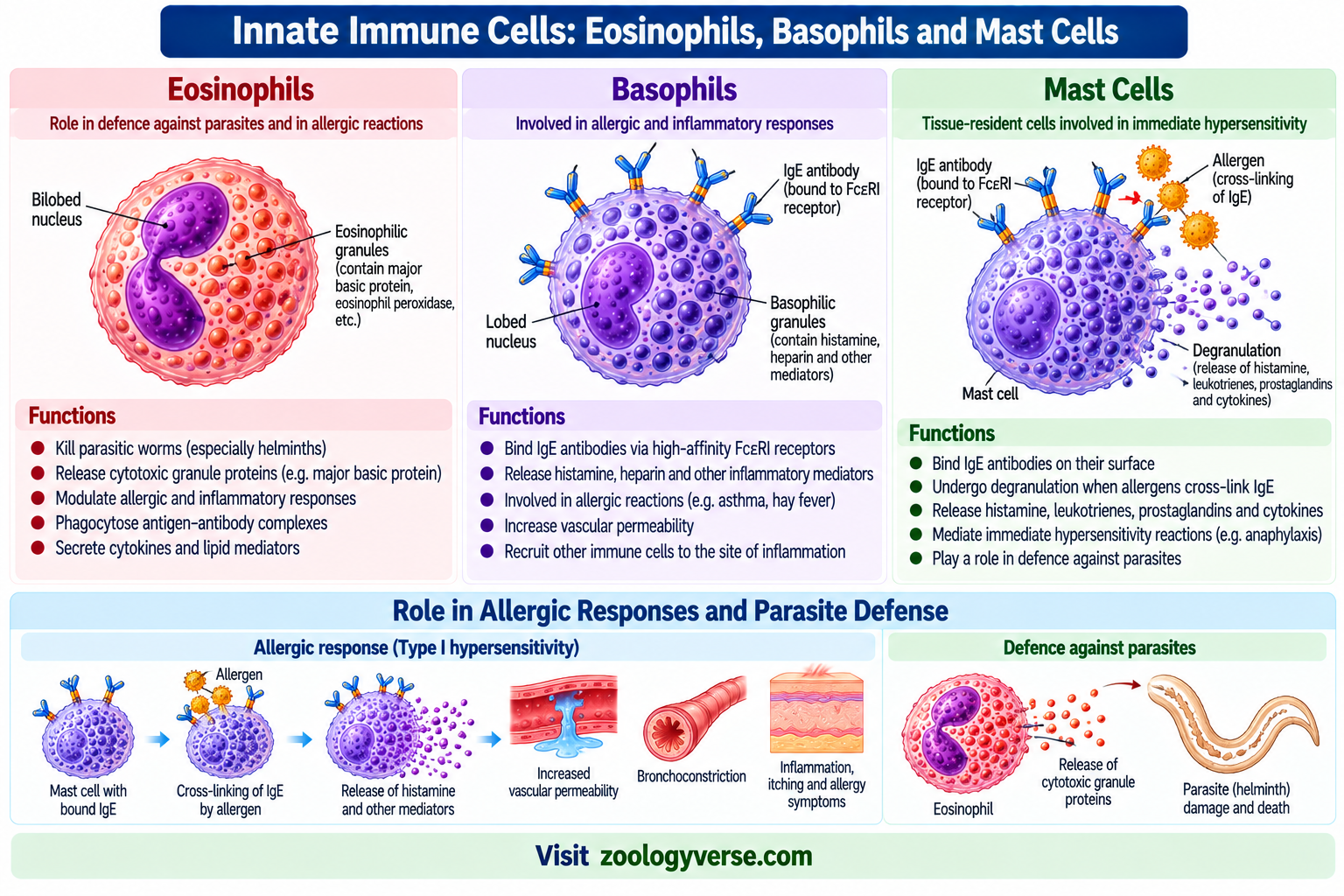
Eosinophils
Eosinophils are granulocytes involved particularly in defense against parasitic organisms and in allergic and inflammatory responses.
They contain cytoplasmic granules containing proteins and other mediators that can damage parasites and influence surrounding tissues.
Major Functions of Eosinophils
- Participate in defense against parasites.
- Release granule proteins and inflammatory mediators.
- Contribute to allergic inflammation.
- Interact with other immune cells during inflammatory responses.
Eosinophils are especially associated with helminth infections and certain allergic disorders.
Basophils
Basophils are circulating granulocytes that participate in inflammatory and allergic responses.
They contain granules rich in biologically active mediators and can release substances such as histamine after activation.
Major Functions of Basophils
- Participate in allergic reactions.
- Release inflammatory mediators.
- Contribute to immune responses against parasites.
- Interact with other cells involved in type 2 immune responses.
Although basophils are relatively uncommon in peripheral blood, they can have important effects during particular immune reactions.
Mast Cells
Mast cells are tissue-resident immune cells that are especially common near blood vessels and at environmental interfaces.
They contain granules filled with mediators such as histamine. When activated, mast cells can rapidly release these substances and contribute to inflammation.
Major Functions of Mast Cells
- Initiate rapid inflammatory reactions.
- Participate in allergic responses.
- Contribute to defense against parasites.
- Influence vascular permeability.
- Recruit and activate other immune cells.
Mast cells are particularly important in immediate hypersensitivity reactions.
B Lymphocytes
B lymphocytes, or B cells, are major cells of adaptive immunity.
B cells develop and mature in the bone marrow. Each mature B cell expresses a specific B-cell receptor (BCR) that can recognize particular antigenic structures.
After appropriate activation, B cells can differentiate into plasma cells, which produce antibodies, and memory B cells, which contribute to long-term immune protection.
Major Functions of B Cells
- Recognize specific antigens through B-cell receptors.
- Differentiate into antibody-secreting plasma cells.
- Generate memory B cells.
- Participate in humoral immunity.
- Present antigen to T cells under appropriate conditions.
- Contribute to long-term immune protection.
The antibody-producing function of B cells makes them central to humoral immunity.
T Lymphocytes
T lymphocytes, or T cells, are major cells of adaptive immunity.
T cells mature in the thymus and express antigen-specific T-cell receptors (TCRs).
Unlike B-cell receptors, conventional T-cell receptors generally recognize antigen-derived peptides presented by major histocompatibility complex (MHC) molecules.
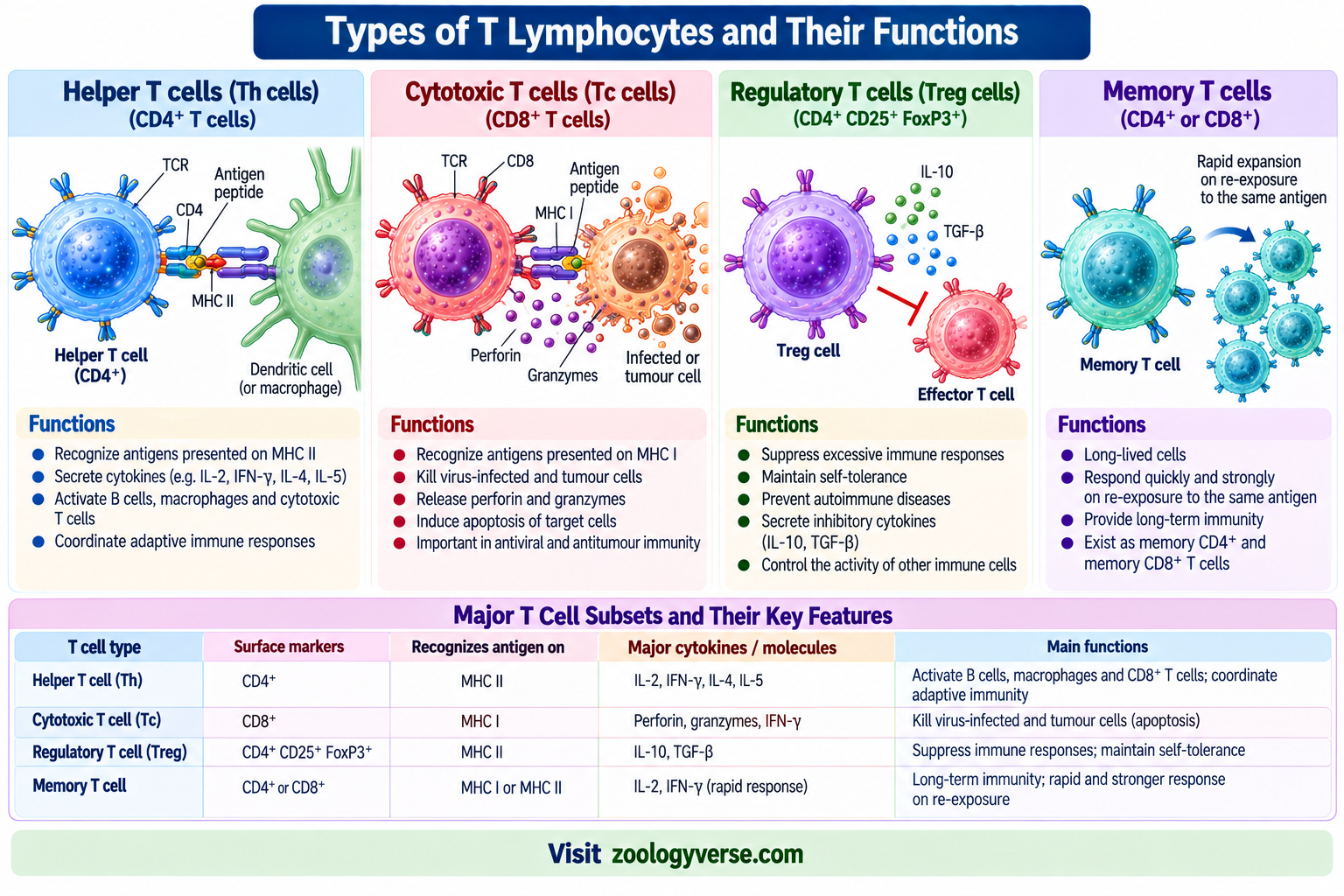
T cells can be divided into several functionally important populations.
Helper T Cells
Helper T cells are generally CD4-positive (CD4+) T cells.
They coordinate immune responses by releasing cytokines and interacting with other immune cells.
Their functions may include:
- Helping B cells produce antibodies.
- Activating and regulating macrophages.
- Supporting other immune-cell responses.
- Coordinating adaptive immune responses.
Cytotoxic T Cells
Cytotoxic T cells are generally CD8-positive (CD8+) T cells.
They recognize appropriate peptide-MHC class I complexes and can kill infected or abnormal cells.
Regulatory T Cells
Regulatory T cells help maintain immune tolerance and limit excessive immune responses.
They are important for preventing inappropriate or excessive immune activation.
Memory T Cells
Some activated T cells develop into memory populations that can respond more rapidly when the same antigen is encountered again.
B Cells vs T Cells
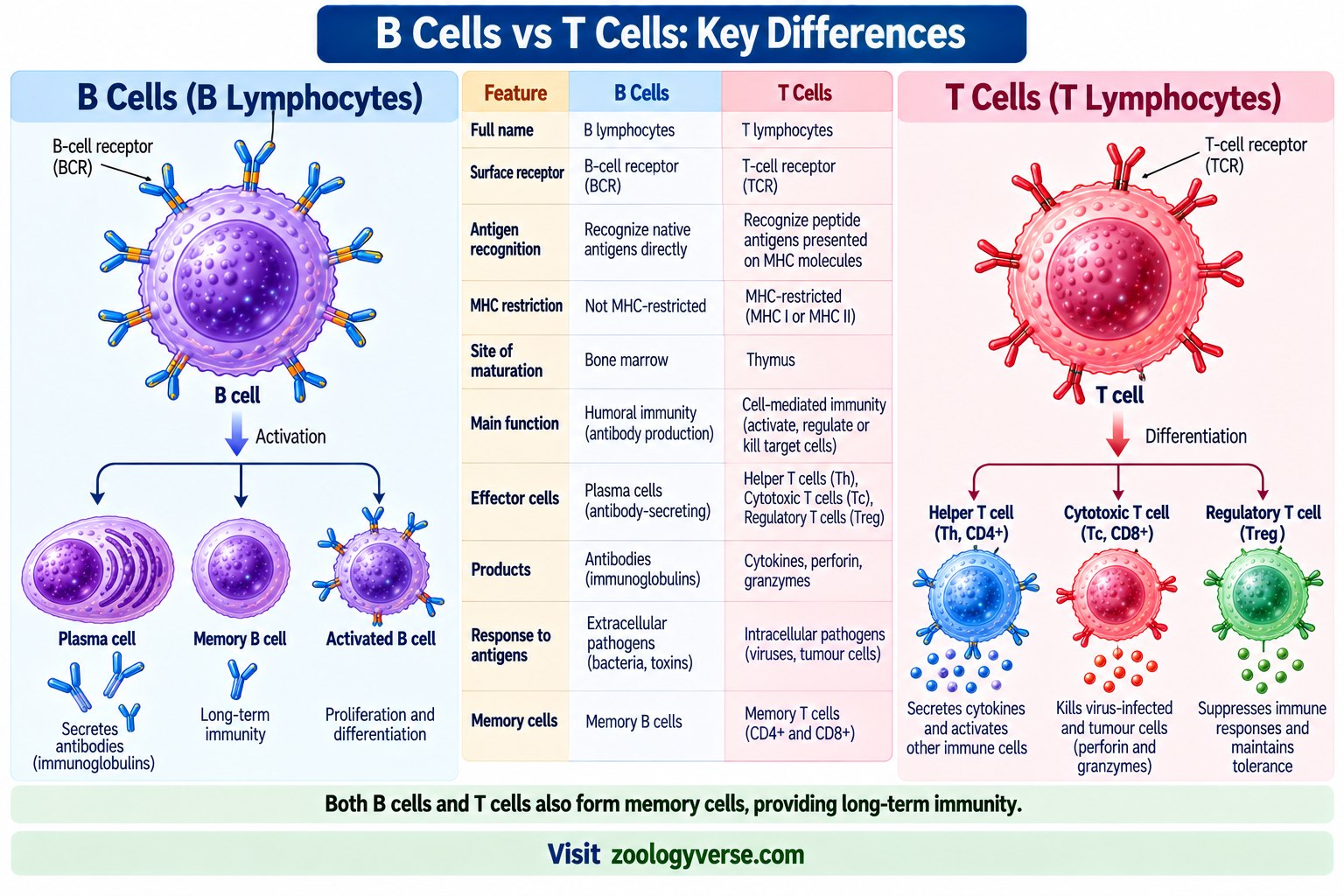
| Feature | B Cells | T Cells |
|---|---|---|
| Main role | Humoral immunity | Cell-mediated immunity and immune regulation |
| Maturation | Bone marrow | Thymus |
| Main receptor | BCR | TCR |
| Antigen recognition | BCR can recognize native antigenic structures | Conventional TCRs recognize peptide-MHC complexes |
| Major effector forms | Plasma cells and memory B cells | Helper, cytotoxic, regulatory and memory T cells |
| Antibodies | Produce antibodies through plasma-cell differentiation | Do not produce antibodies |
| Memory | Memory B cells | Memory T cells |
Antigen-Presenting Cells
Antigen-presenting cells (APCs) are immune cells that process antigen-derived material and present peptides using MHC molecules.
Important professional APCs include:
- Dendritic cells
- Macrophages
- B cells
Dendritic cells are particularly effective at activating naïve T cells.
MHC Class I
MHC class I molecules are expressed on almost all nucleated cells and present intracellularly derived peptides to CD8-positive T cells.
This pathway is important for immune surveillance of cells infected with viruses and other intracellular pathogens.
MHC Class II
MHC class II molecules are expressed mainly by professional antigen-presenting cells and present peptides derived from extracellular material to CD4-positive T cells.
This pathway is important for coordinating adaptive immune responses.
Phagocytic Cells
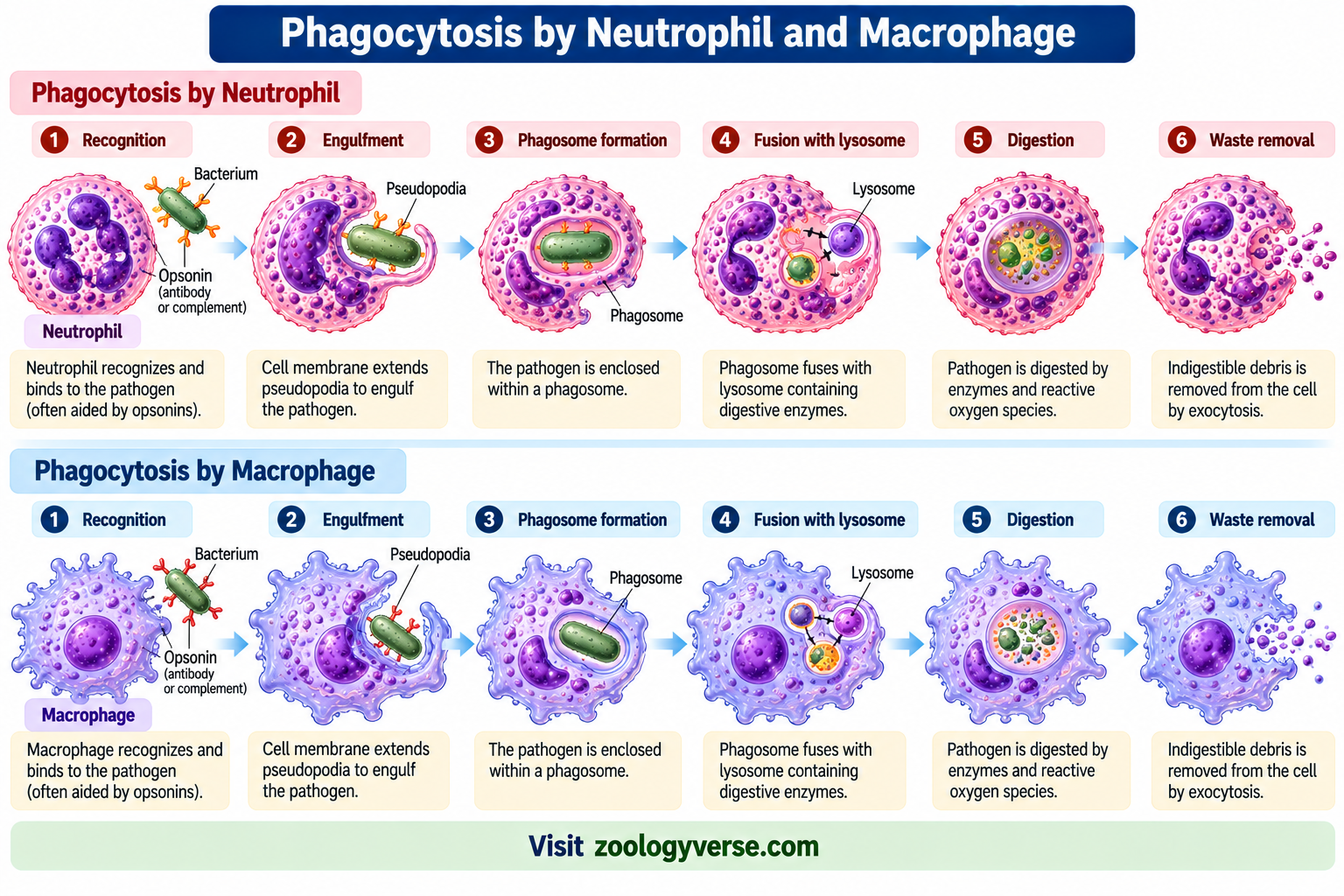
Phagocytosis is the process by which a cell engulfs and internalizes microorganisms, dead cells or cellular debris.
Important phagocytic immune cells include:
- Neutrophils
- Macrophages
- Monocytes and monocyte-derived cells
- Certain dendritic cells
Phagocytes recognize targets through innate receptors and can also be aided by opsonization, in which molecules such as antibodies or complement components coat the target and promote its uptake.
Granulocytes
Granulocytes are white blood cells characterized by prominent cytoplasmic granules.
The major granulocytes are:
- Neutrophils
- Eosinophils
- Basophils
Their functions differ considerably.
| Granulocyte | Major Function |
|---|---|
| Neutrophil | Phagocytosis and rapid antimicrobial defense |
| Eosinophil | Parasite defense and allergic inflammation |
| Basophil | Allergic and inflammatory responses |
Mast cells also contain prominent granules but are tissue-resident cells and are not usually classified as circulating granulocytes.
Lymphocytes
Lymphocytes are a major group of immune cells with important roles in adaptive and innate immunity.
The major lymphocyte populations include:
- B lymphocytes
- T lymphocytes
- Natural killer cells
- Other innate lymphoid cells
B and T lymphocytes possess antigen-specific receptors generated through gene rearrangement. NK cells belong to the lymphoid lineage but function primarily as innate immune effectors.
How Different Immune Cells Work Together?
Immune cells rarely work in isolation.
For example, during a bacterial infection:
Neutrophils and macrophages can rapidly recognize and engulf microorganisms.
Dendritic cells can capture microbial antigens and migrate to lymphoid tissues, where they help activate naïve T cells.
Helper T cells can support B-cell responses and activate other immune cells.
B cells can differentiate into plasma cells and produce antibodies.
Complement proteins can enhance microbial clearance and cooperate with antibodies and phagocytes.
This coordinated activity demonstrates the close relationship between innate and adaptive immunity.
Innate Immune Cells vs Adaptive Immune Cells
| Feature | Mainly Innate Immune Cells | Mainly Adaptive Immune Cells |
|---|---|---|
| Major cells | Neutrophils, macrophages, NK cells, dendritic cells, eosinophils, basophils and mast cells | B cells and T cells |
| Recognition | Pattern-based and other innate receptor mechanisms | Antigen-specific BCRs and TCRs |
| Response | Usually rapid | Primary response usually slower |
| Main functions | Early defense, inflammation and pathogen elimination | Specific immune responses and immunological memory |
| Classical memory | Not a defining feature | Major characteristic |
| Examples of effectors | Phagocytosis, complement cooperation, cytokine release, cytotoxicity | Antibodies and antigen-specific lymphocyte responses |
This division is useful for study, but it is not absolute. Some cells participate in both innate and adaptive immune processes, particularly through antigen presentation and cytokine signaling.
Importance of the Cells of the Immune System
The cells of the immune system perform several essential functions:
- Detect microorganisms and tissue damage.
- Prevent and control infections.
- Destroy infected or abnormal cells.
- Remove dead and damaged cells.
- Produce antibodies.
- Coordinate inflammation.
- Present antigens to lymphocytes.
- Regulate immune responses.
- Establish immunological memory.
- Maintain immune tolerance and tissue homeostasis.
The immune system therefore depends on coordinated interactions among many different cell types rather than on a single type of immune cell.
Key Differences Between Major Immune Cells
| Cell | Immune Branch | Main Function |
|---|---|---|
| Neutrophil | Innate | Rapid phagocytosis and antimicrobial activity |
| Monocyte | Innate-associated | Circulation, migration and differentiation |
| Macrophage | Innate and adaptive interface | Phagocytosis, cytokines and antigen presentation |
| Dendritic cell | Innate and adaptive interface | Antigen presentation and T-cell activation |
| NK cell | Innate | Cytotoxicity against certain infected and abnormal cells |
| Eosinophil | Innate | Parasite defense and allergy |
| Basophil | Innate | Allergy and inflammation |
| Mast cell | Innate | Immediate inflammation, allergy and parasite defense |
| B cell | Adaptive | Antibody-mediated immunity |
| Helper T cell | Adaptive | Immune coordination |
| Cytotoxic T cell | Adaptive | Killing infected or abnormal cells |
| Regulatory T cell | Adaptive | Immune regulation and tolerance |
| Memory B/T cells | Adaptive | Faster response to previously encountered antigens |
Frequently Asked Questions
What are the main cells of the immune system?
Which cells produce antibodies?
Which cells kill virus-infected cells?
Which immune cells perform phagocytosis?
Which immune cells present antigens?
Are NK cells part of innate or adaptive immunity?
Where do immune cells originate?
Conclusion
The cells of the immune system form a highly coordinated network responsible for recognizing and eliminating pathogens, controlling inflammation, maintaining tissue health and generating immune memory.
Innate immune cells such as neutrophils, macrophages, dendritic cells and NK cells provide rapid defense, while adaptive lymphocytes—especially B cells and T cells—provide antigen-specific responses and immunological memory.
Understanding the structure and functions of individual immune cells provides the foundation for studying immune responses, antigen recognition, antibodies, lymphoid organs, hypersensitivity, autoimmunity and immunological techniques.
References
- Merck Manual Professional Edition. Cellular Components of the Immune System.
- Merck Manual Professional Edition. Overview of the Immune System.
- NCBI Bookshelf. Immunobiology: The Immune System in Health and Disease — The Components of the Immune System.
- NCBI Bookshelf. Medical Microbiology — Immunology Overview.
Discover more from Zoologyverse
Subscribe to get the latest posts sent to your email.