Molecular Biology

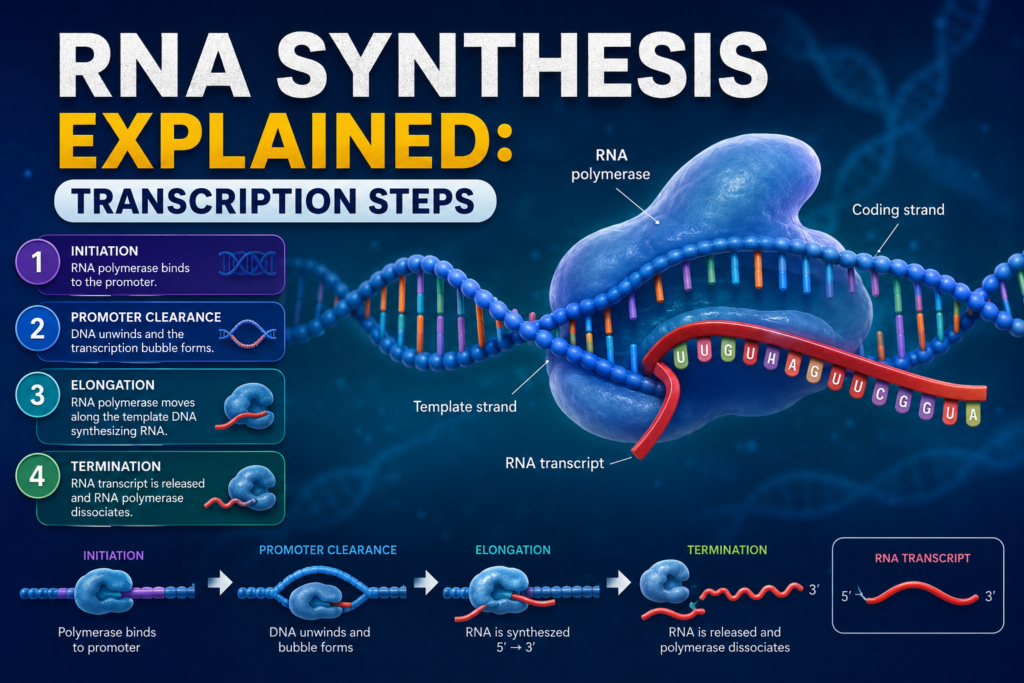
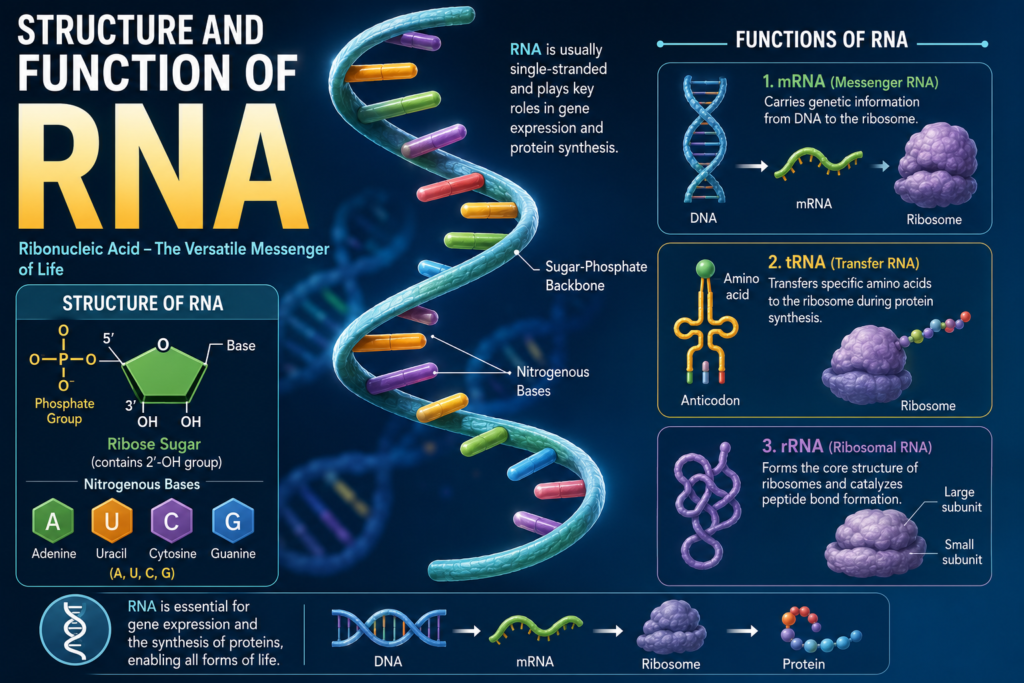
Topic notes on DNA structure, replication, recombination, repair, RNA synthesis, RNA splicing, and protein synthesis, explained with diagrams.

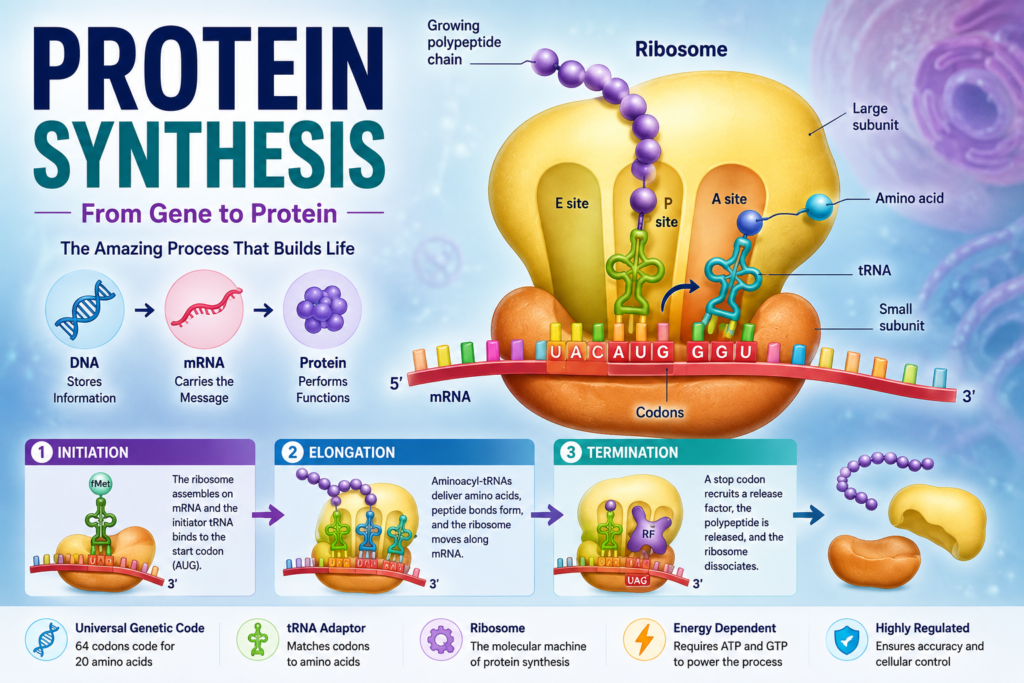
Protein synthesis diagram showing DNA to mRNA, ribosome-mediated translation, tRNA, amino acids, initiation, elongation, and termination

Protein Synthesis: Steps, Process, Genetic Code and Translation

Protein synthesis is the biological process through which cells use genetic information to produce proteins. It is one of the most important processes in molecular biology because proteins perform a huge variety of functions, including catalysis, transport, structural support, signaling, defense, movement, and regulation. The information required to make a protein is stored in DNA. […]

Protein Synthesis: Steps, Process, Genetic Code and Translation Read More »
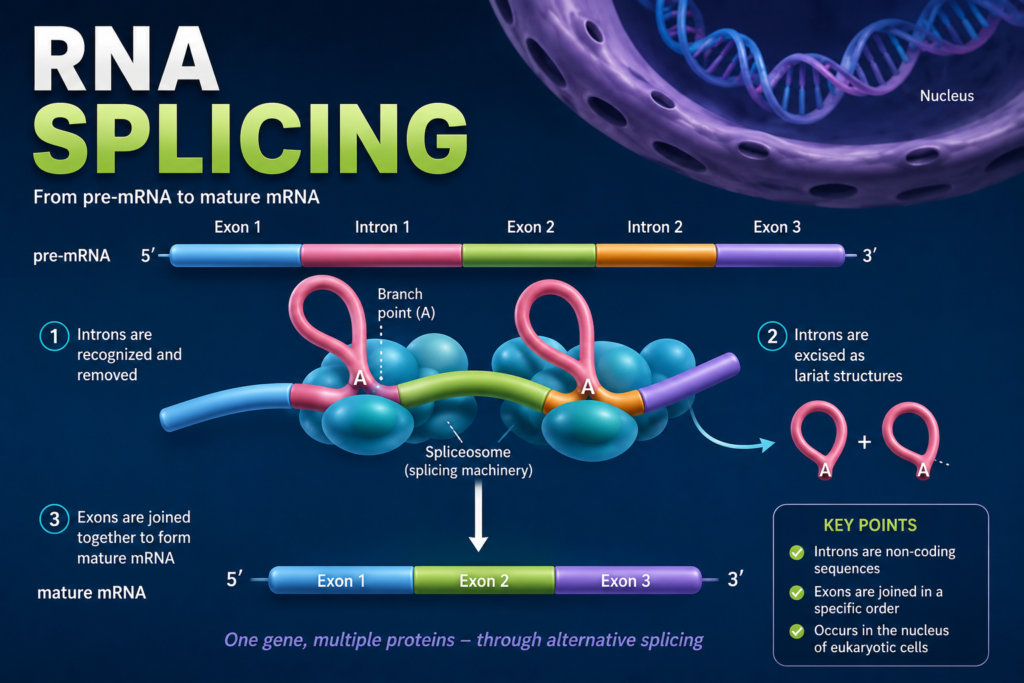
rna splicing

RNA Splicing: The Process, Mechanism, and Types Explained

RNA Splicing Explained: Process, Mechanism & Types RNA Splicing: The Process, Mechanism, and Types Explained Genetic information doesn’t leave the nucleus exactly as it was transcribed. Before a eukaryotic messenger RNA is ready to direct protein synthesis, large internal chunks of the transcript are cut out, and the remaining pieces are stitched back together. This

RNA Splicing: The Process, Mechanism, and Types Explained Read More »

DNA REPAIR 7

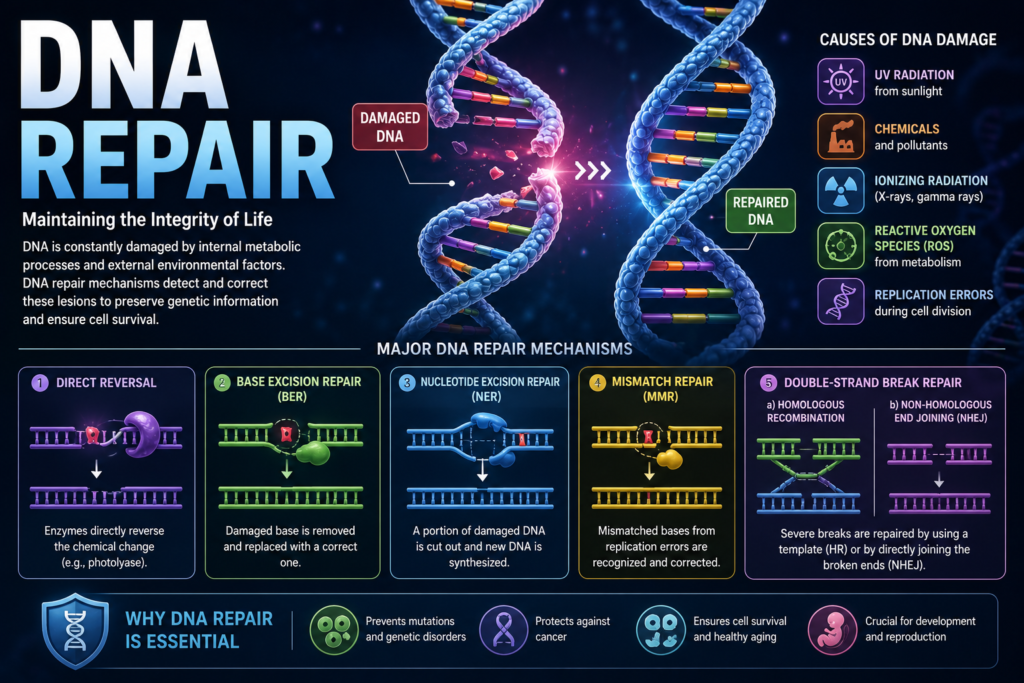
DNA REPAIR

DNA REPAIR DNA REPAIR :- Mutations include almost every conceivable permanent change in DNA sequence. The simplest mutations are switches of one base for another. There are two kinds: transitions, which are pyrimidine-to-pyrimidine and purine-to-purine substitutions, such as T to C and A to G; and transversions, which are pyrimidine-to-purine and purine-to-pyrimidine substitutions, such as

DNA REPAIR Read More »

DNA RECOMBINATION 3

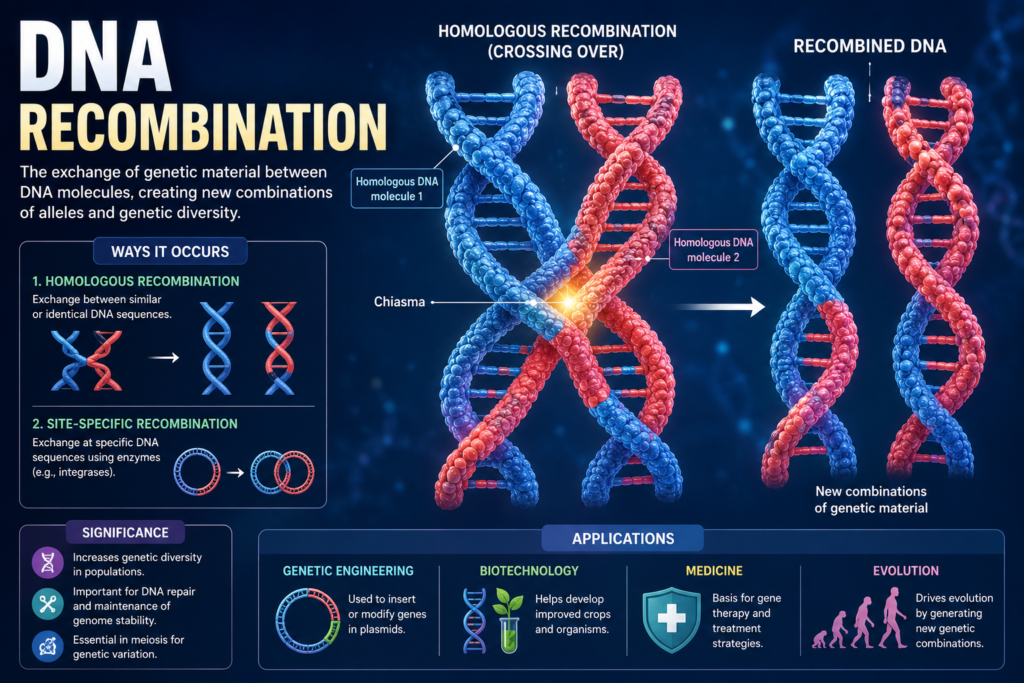
DNA RECOMBINATION

DNA RECOMBINATION DNA RECOMBINATION:- Genetic exchange works constantly to blend and rearrange chromosomes, most obviously during meiosis, when homologous chromosomes pair before the first nuclear division. During this pairing, genetic exchange between the chromosomes occurs. This exchange, classically termed crossing over, is one of the results of homologous recombination. Recombination involves the physical exchange of

DNA RECOMBINATION Read More »

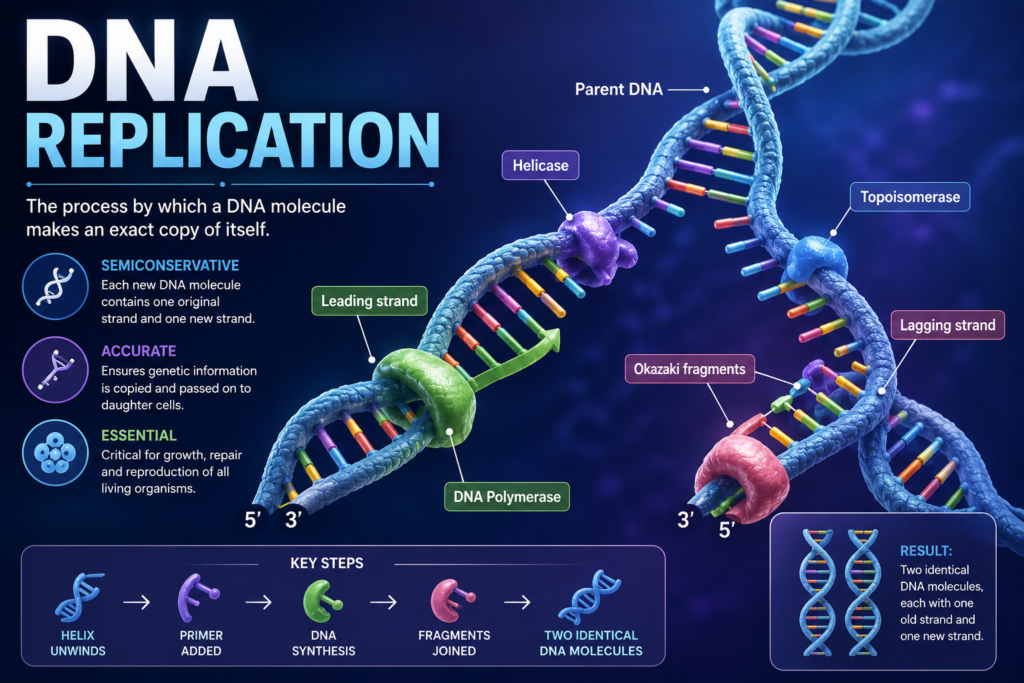
DNA REPLICATION

DNA REPLICATION

DNA REPLICATION The ability of a cell to survive and proliferate in a chaotic environment depends on the accurate duplication of the vast quantity of genetic information carried in its DNA. This duplication process, called DNA replication, must occur before a cell can divide to produce two genetically identical daughter cells. Maintaining order in a

DNA REPLICATION Read More »