
1. Introduction
Evidences of Evolution provide scientific support for the gradual transformation of living organisms over successive generations and the diversification of life on Earth. Evolution is a fundamental concept in biology that explains the similarities, differences and relationships observed among organisms. It describes how populations change over time through processes such as genetic variation, natural selection, mutation, genetic drift and gene flow.
The study of Evidences of Evolution helps scientists understand how present-day organisms originated from ancestral populations and how different groups of organisms became adapted to their environments. These evidences are obtained from several branches of biology, including palaeontology, comparative anatomy, embryology, biogeography, biochemistry and molecular biology.
One of the strongest sources of evolutionary information is the fossil record. Fossils preserve remains, impressions or traces of ancient organisms and provide information about the history of life through geological time. The comparison of anatomical structures also reveals evolutionary relationships. For example, homologous organs such as the forelimbs of humans, whales, bats and horses have a similar basic structural plan but perform different functions. Such similarities indicate descent from common ancestors.
Embryological Evidence of Evolution is obtained by comparing the developmental stages of different organisms. Similarities in early development among related animal groups can provide information about their evolutionary relationships. Likewise, the geographical distribution of organisms, known as biogeography, helps explain how isolation, migration and environmental changes influence evolutionary diversification.
Modern biological research has further strengthened the understanding of evolution through biochemical and molecular comparisons. Similarities in DNA sequences, RNA, proteins and genetic codes provide evidence of common ancestry. Molecular techniques also allow scientists to reconstruct evolutionary relationships and investigate how organisms have diverged from shared ancestral populations.
The different Evidences of Evolution do not operate independently. Instead, fossil discoveries, anatomical comparisons, embryological observations, geographical patterns and molecular data complement one another. Together, they provide a comprehensive scientific explanation of the origin, diversification and evolutionary relationships of organisms.
Through the study of these evidences, evolutionary biology establishes how life has changed over geological time and provides a framework for understanding the biological diversity observed in the modern world.
2. Concept and Significance of Evolutionary Evidence
Evolutionary evidence refers to the scientific observations, biological structures, preserved remains and molecular similarities that help explain the evolutionary history of organisms. These observations provide information about how living organisms have changed over generations, how different species are related and how biological diversity has developed over geological time.
The study of Evidences of Evolution involves examining similarities and differences among organisms at different levels of biological organization, from external morphology and internal anatomy to embryonic development and molecular composition.
2.1 Concept of Evolutionary Evidence
Evolutionary evidence is based on the principle that present-day organisms have evolved from ancestral populations through inherited changes accumulated over successive generations. These changes may result from mutations, genetic recombination, natural selection, genetic drift and other evolutionary mechanisms.
Scientists investigate evolutionary relationships by comparing different characteristics of organisms. For example:
- Similarities in basic anatomical structures may indicate common ancestry.
- Differences in homologous organs may reflect adaptation to different environmental conditions.
- Fossil remains provide information about extinct organisms and changes in life forms through geological periods.
- Similarities in embryonic development may reveal evolutionary relationships among animal groups.
- Similarities in DNA and protein sequences provide molecular evidence of shared ancestry.
No single observation is sufficient to explain the complete evolutionary history of life. Instead, different forms of evidence are examined together to establish evolutionary relationships and reconstruct the history of organisms.
2.2 Historical Development of the Study of Evolutionary Evidence
The scientific understanding of evolution developed gradually through contributions from naturalists, anatomists, geologists and biologists.
| Scientist | Major contribution |
|---|---|
| Carl Linnaeus | Developed a systematic classification system that helped organize biological diversity. |
| Georges Cuvier | Established the importance of fossils and comparative anatomy in studying extinct organisms. |
| Jean-Baptiste Lamarck | Proposed an early evolutionary theory emphasizing adaptation and use and disuse of organs. |
| Charles Darwin | Explained evolution through natural selection and presented extensive observations supporting common descent. |
| Alfred Russel Wallace | Independently developed the principle of natural selection and contributed to biogeography. |
| Ernst Haeckel | Contributed to comparative embryology and evolutionary studies. |
| Theodosius Dobzhansky | Helped integrate genetics with evolutionary theory through population genetics. |
The development of genetics, molecular biology and modern analytical techniques later provided additional methods for investigating evolutionary relationships.
2.3 Major Sources of Evolutionary Evidence
The Evidences of Evolution can be classified into several major categories according to the type of biological information they provide.
| Type of evidence | Basis of study | Major significance |
|---|---|---|
| Fossil evidence | Preserved remains and traces of ancient organisms | Reveals the history of life and extinct forms. |
| Anatomical evidence | Comparative study of body structures | Helps identify structural similarities and evolutionary modifications. |
| Embryological evidence | Comparison of embryonic development | Provides information about developmental similarities and relationships. |
| Biogeographical evidence | Geographical distribution of organisms | Explains the influence of isolation, migration and continental history. |
| Biochemical evidence | Comparison of proteins, enzymes and other biomolecules | Reveals similarities in cellular chemistry. |
| Molecular evidence | Comparison of DNA, RNA and genetic sequences | Helps determine genetic relationships and common ancestry. |
These categories are interconnected. For example, anatomical similarities observed in living organisms can be compared with fossil structures, while molecular comparisons can help clarify relationships suggested by morphology.
2.4 Significance of Studying Evolutionary Evidence
The study of evolutionary evidence is important because it provides a scientific basis for understanding the origin and diversification of organisms.
1. Understanding common ancestry
Similarities in anatomical structures, developmental patterns and molecular sequences help establish relationships among organisms and provide evidence of descent from common ancestors.
2. Reconstruction of evolutionary history
Fossils and geological information help scientists reconstruct the sequence of biological changes that occurred during different geological periods.
3. Explanation of adaptation
Comparative studies reveal how organisms develop structural, physiological and behavioural adaptations in response to environmental conditions.
4. Understanding biodiversity
Evolutionary evidence explains how new species originate, how populations diverge and how different groups of organisms contribute to biological diversity.
5. Classification of organisms
Evolutionary relationships provide an important foundation for modern classification. Organisms can be grouped according to their evolutionary history rather than relying exclusively on superficial similarities.
6. Applications in modern biological research
Molecular and genetic evidence is useful in evolutionary genetics, conservation biology, epidemiology, comparative genomics and the study of emerging diseases.
2.5 Integration of Different Types of Evidence
Modern evolutionary biology uses multiple independent sources of information to investigate the relationships among organisms. When fossil, anatomical, embryological, biogeographical and molecular evidence support the same evolutionary relationship, confidence in that interpretation becomes stronger.
For example, the evolutionary relationship between whales and other mammals is supported by several lines of evidence:
- Fossil discoveries document transitional stages in whale evolution.
- Anatomical studies identify mammalian characteristics and modified skeletal structures.
- Molecular comparisons reveal genetic relationships with other mammals.
- Developmental observations provide additional information about mammalian characteristics.
Thus, the combined study of different biological characteristics provides a more reliable understanding of evolutionary history than any single source of evidence.
The following sections examine these major sources individually, beginning with the fossil record and its importance in understanding the history of life.
3. Fossil Evidence of Evolution
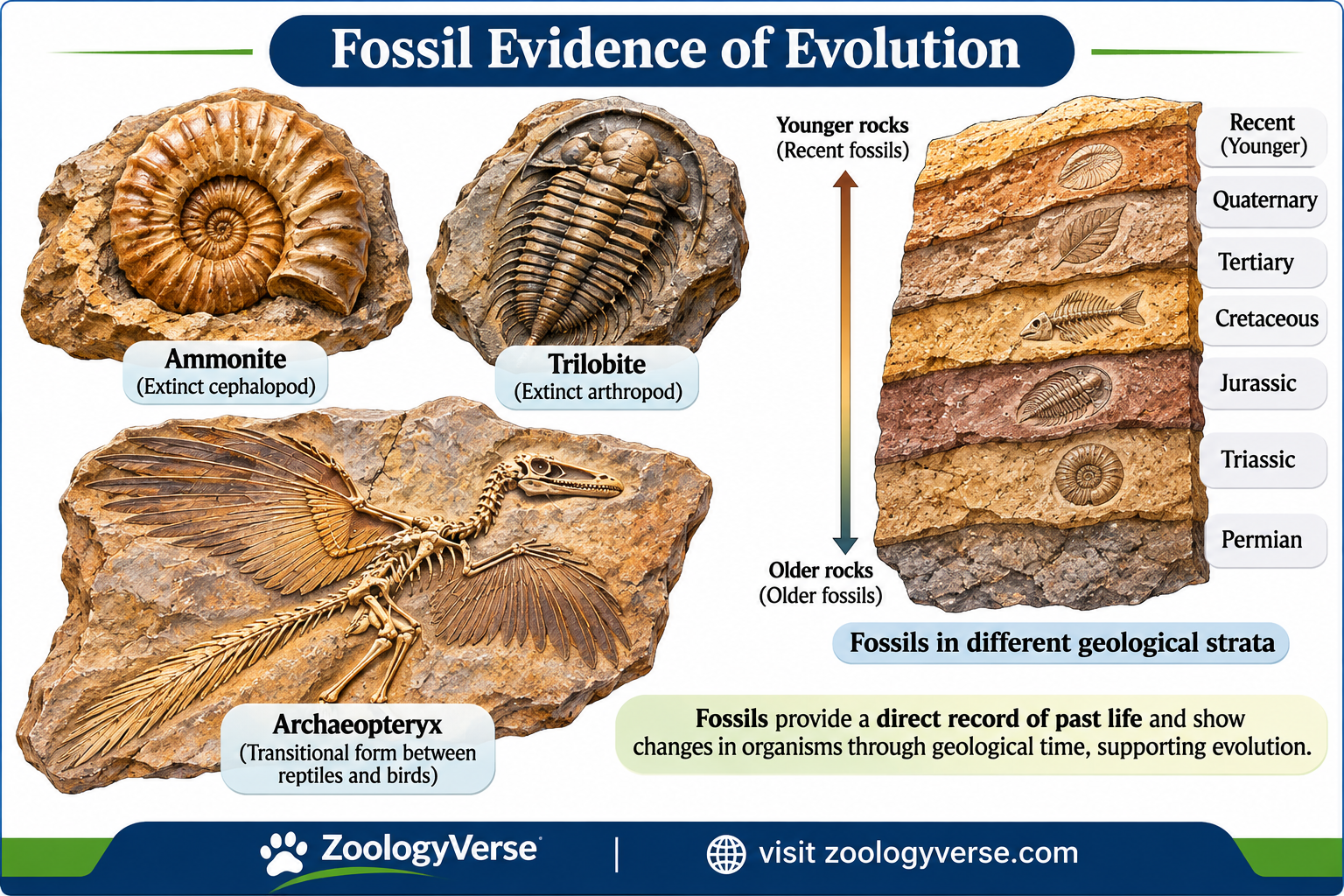
Fossil evidence is one of the most important sources of information for understanding the evolutionary history of life. Fossils provide a record of organisms that lived during earlier geological periods and reveal how biological forms have changed over millions of years. The study of fossils, known as palaeontology, helps scientists investigate extinct organisms, evolutionary transitions and the appearance of major groups of plants and animals.
Fossil Evidence of Evolution supports the concept that life on Earth has undergone continuous change throughout geological history. Fossils preserve information about the structure, diversity, distribution and environmental adaptations of ancient organisms. By examining fossils from different geological strata, scientists can identify changes in biological characteristics and reconstruct the evolutionary history of organisms.
3.1 Definition of Fossils
Fossils are the preserved remains, impressions, moulds, casts or traces of organisms that lived during past geological periods. They are generally preserved in sedimentary rocks, although certain fossils may also occur in amber, ice, tar deposits and other natural materials.
Fossils may represent complete organisms, isolated body parts or indirect evidence of biological activities. They provide valuable information about the morphology, anatomy, habitat and evolutionary relationships of extinct organisms.
Examples include:
- Bones and teeth of extinct vertebrates.
- Shells of ancient molluscs.
- Impressions of leaves and other plant structures.
- Footprints and trackways of dinosaurs.
- Insects preserved in amber.
- Burrows and other traces of ancient organisms.
3.2 Process of Fossil Formation
Fossil formation is a natural process known as fossilization. It usually begins when an organism dies and its remains become buried under sediments. Over geological time, physical and chemical processes may preserve the remains or their impressions.
The major stages involved in fossil formation are described below.
1. Death of the organism
An organism dies due to natural causes, predation, disease or environmental changes. Its remains may become available for fossilization.
2. Burial by sediments
The remains become covered by sediments such as sand, mud or silt. Rapid burial reduces exposure to scavengers, physical damage and decomposition.
3. Decomposition of soft tissues
Soft tissues generally decompose more rapidly than hard structures. Bones, teeth, shells and other resistant parts have a greater probability of preservation.
4. Mineralization
Mineral-rich groundwater may enter the remains and deposit minerals within their pores. In some cases, original organic material is gradually replaced by minerals.
5. Compaction and lithification
Over time, accumulating sediments become compacted and cemented into sedimentary rocks. The fossil becomes preserved within the rock layers.
6. Exposure and discovery
Geological processes such as erosion, uplift and weathering may expose fossil-bearing rocks at the surface. Palaeontologists subsequently discover, excavate and study these fossils.
Figure: Major stages involved in the formation and preservation of fossils.
Not all organisms become fossilized. Fossilization depends on factors such as the nature of the organism, burial conditions, sediment composition, oxygen availability and geological processes.
3.3 Types of Fossils
Fossils are classified according to their mode of preservation and the type of biological information they provide.
3.3.1 Petrified Fossils
Petrified fossils are formed when mineral substances replace or fill the original tissues of an organism. This process preserves the structural details of the organism in a stone-like form.
Minerals such as silica, calcite and iron compounds may participate in fossilization.
Examples:
- Petrified wood.
- Mineralized bones of extinct vertebrates.
- Fossilized plant stems.
3.3.2 Moulds and Casts
Moulds and casts are formed when the original body parts of an organism become buried in sediment and subsequently dissolve or decay.
- Mould: A hollow impression left in the surrounding sediment after the original organism or its hard parts disappear.
- Cast: A solid replica formed when minerals or sediments fill the mould and later harden.
Fossil shells of molluscs are common examples of moulds and casts.
3.3.3 Impression Fossils
Impression fossils are formed when an organism leaves an imprint on soft sediment. The original organic material may disappear, while the impression becomes preserved after the sediment hardens.
Examples:
- Leaf impressions.
- Feather impressions.
- Imprints of delicate plant structures.
3.3.4 Compression Fossils
Compression fossils are formed when organisms are buried under sediments and subjected to pressure. The remains become flattened, sometimes preserving thin carbon-rich films and external structural details.
They are particularly common among fossil plants.
3.3.5 Trace Fossils
Trace fossils are indirect evidence of the activities of ancient organisms rather than preserved body parts.
They provide information about the behaviour and movement of extinct organisms.
Examples:
- Dinosaur footprints.
- Burrows made by ancient invertebrates.
- Feeding marks.
- Fossilized trackways.
3.3.6 Amber Fossils
Amber fossils are formed when small organisms become trapped in sticky tree resin. The resin hardens and may eventually become amber, preserving delicate structures.
Examples:
- Ancient insects.
- Spiders.
- Small plant fragments.
3.4 Geological Distribution of Fossils
Fossils occur in different geological strata and provide a chronological record of biological changes. The arrangement of fossils in rock layers helps scientists understand the relative ages of organisms and the sequence in which different groups appeared.
The principle of superposition states that in an undisturbed sequence of sedimentary rocks, lower layers are generally older than the layers above them. Therefore, fossils found in deeper strata are usually older than those found in overlying strata.
However, geological processes such as folding, faulting and overturning can disturb this arrangement. Radiometric dating and other geological methods are used alongside stratigraphic observations to establish more precise ages.
The fossil record reveals several broad patterns:
- Earlier geological strata contain evidence of ancient microbial life and relatively simple organisms.
- Later strata preserve increasingly diverse groups of marine invertebrates and vertebrates.
- Fossils from different periods document the appearance and diversification of major plant and animal groups.
- Some fossils show combinations of characteristics that help scientists investigate evolutionary transitions.
3.5 Fossils as Evidence of Evolution
Fossils provide important evidence of evolutionary change because they preserve organisms from different geological periods. Their comparison reveals modifications in body structure, functional adaptations and patterns of diversification.
The major contributions of fossils to evolutionary biology include the following.
1. Evidence of extinct organisms
Fossils demonstrate that many organisms that once existed are no longer present on Earth. Examples include trilobites, ammonites and non-avian dinosaurs.
Their remains provide information about ancient biological diversity and the evolutionary history of extinct groups.
2. Evidence of evolutionary succession
Fossils found in different geological strata reveal changes in the composition of biological communities over time. Certain groups appear in older strata, become more abundant in later periods and may eventually disappear.
This succession provides a historical framework for studying evolutionary diversification and extinction.
3. Evidence of transitional forms
Some fossils possess a combination of characteristics associated with different biological groups. These fossils help scientists understand evolutionary transitions.
For example, Archaeopteryx possesses both reptilian and avian characteristics, including teeth, clawed fingers and feathers. It provides important evidence concerning the evolutionary history of birds and their relationship with theropod dinosaurs.
4. Evidence of structural modifications
Fossil series sometimes reveal gradual modifications in anatomical features across geological periods. Such changes can be studied in the evolution of vertebrate limbs, teeth, skulls and other skeletal structures.
5. Evidence of adaptive radiation
Fossil records may reveal the diversification of an ancestral group into multiple forms adapted to different ecological conditions. Such patterns help explain the development of biological diversity.
3.6 Important Examples of Fossil Evidence of Evolution
Several fossil discoveries have contributed significantly to the understanding of evolutionary history.
3.6.1 Archaeopteryx
Archaeopteryx is an extinct genus of early bird-like theropod dinosaur from the Late Jurassic period, approximately 150 million years ago.
It is particularly important because it exhibits a combination of avian and non-avian theropod characteristics.
| Avian characteristics | Reptilian or non-avian theropod characteristics |
|---|---|
| Well-developed feathers | Jaws with teeth |
| Feathered wings | Three clawed fingers |
| Asymmetrical flight feathers | Long bony tail |
| Furcula (wishbone) | Several unfused skeletal features |
Archaeopteryx provides important evidence for the evolutionary origin of birds from theropod dinosaurs. It should not be interpreted as a direct ancestor of modern birds; rather, it represents an early branch of bird-line evolution.
3.6.2 Evolution of the Horse
Horse evolution is one of the classical examples used to demonstrate evolutionary modifications in the fossil record.
The evolutionary history of horses includes changes in body size, limb structure, teeth and feeding adaptations. Early members of the horse lineage were generally smaller and possessed several toes, whereas modern horses have large bodies and a single functional hoof on each foot.
Important fossil genera include:
| Fossil genus | General characteristics |
|---|---|
| Hyracotherium | Small early horse relative with multiple toes and low-crowned teeth. |
| Mesohippus | Larger body and three functional toes on each foot. |
| Merychippus | Development of high-crowned teeth associated with grazing. |
| Pliohippus | More specialized limbs with a dominant central digit. |
| Equus | Modern horse lineage with a single functional hoof on each foot. |
The horse fossil record illustrates evolutionary changes associated with locomotion and dietary adaptation. However, horse evolution was branching rather than a simple, straight-line progression.
3.6.3 Evolution of Whales
The fossil record of whales provides valuable evidence of the transition from terrestrial to fully aquatic mammals.
Early whale relatives possessed limbs suitable for movement on land, whereas later forms developed increasingly specialized aquatic adaptations.
Important fossil genera include:
- Pakicetus – An early whale relative with a largely terrestrial body form.
- Ambulocetus – A semi-aquatic mammal with adaptations for movement in water and on land.
- Rodhocetus – A more aquatic form with modifications of the limbs and vertebral column.
- Basilosaurus – A fully aquatic early whale with elongated body proportions and reduced hind limbs.
These fossils document major anatomical modifications, including changes in the forelimbs, hind limbs, pelvis, skull and hearing apparatus, during the evolution of whales.
3.6.4 Evolution of Humans
The human fossil record provides evidence of evolutionary changes within the hominin lineage. Fossils reveal modifications in skull shape, brain size, teeth, jaw structure, posture and locomotion.
Important fossil hominins include:
- Australopithecus afarensis – An early hominin associated with habitual bipedal locomotion.
- Homo habilis – An early member of the genus Homo, associated with relatively larger brains and early stone-tool traditions.
- Homo erectus – Characterized by a larger braincase, more human-like body proportions and a widespread geographical distribution.
- Homo neanderthalensis – A closely related human species with distinctive cranial and skeletal characteristics.
- Homo sapiens – Modern humans, characterized by a high rounded cranial vault and a relatively reduced face.
Human evolution was a branching process involving multiple hominin species, some of which coexisted. Modern humans did not evolve from any of these listed species in a simple linear sequence.
3.7 Limitations of Fossil Evidence
Although fossils provide valuable information about evolutionary history, the fossil record is incomplete and has certain limitations.
- Incomplete preservation: Most organisms do not become fossilized, particularly those with soft bodies.
- Destruction of fossils: Geological processes such as erosion, metamorphism and tectonic activity may destroy or alter fossils.
- Uneven distribution: Fossils are not equally distributed across geological periods and geographical regions.
- Preservation bias: Organisms with hard body parts are more likely to be preserved than organisms with delicate or soft tissues.
- Difficulty in interpretation: Fragmentary fossils may make it difficult to reconstruct the complete anatomy and lifestyle of extinct organisms.
- Gaps in evolutionary sequences: Some transitional stages may not have been preserved or discovered.
Despite these limitations, the fossil record remains an essential source of evolutionary information. When interpreted together with anatomical, embryological and molecular data, it provides a powerful framework for reconstructing the history of life.
3.8 Importance of Fossil Evidence in Evolutionary Biology
Fossil evidence contributes to evolutionary biology in several important ways:
- It establishes a chronological record of ancient life.
- It documents extinct organisms and past biodiversity.
- It provides evidence of evolutionary transitions.
- It helps reconstruct the origin and diversification of major biological groups.
- It reveals changes in morphology and adaptation through geological time.
- It provides information about ancient environments and ecological relationships.
- It helps investigate mass extinction events and their effects on biological diversity.
The fossil record therefore provides a historical dimension to the study of evolution, allowing scientists to examine biological changes that cannot be observed directly within a human lifetime.
4. Anatomical Evidences of Evolution
Anatomical evidence is one of the major sources of information used to understand evolutionary relationships among organisms. It is obtained through the comparative study of external morphology and internal body structures, including bones, muscles, organs and organ systems.
The comparative study of anatomy reveals that organisms may possess similar structural arrangements despite differences in their functions, appearance and habitats. These similarities and differences provide important information about common ancestry, evolutionary modifications and adaptations to different environmental conditions.
Anatomical Evidence of Evolution is mainly studied through homologous organs, analogous organs, vestigial organs and atavistic structures. These categories help explain divergent evolution, convergent evolution and the evolutionary modification of ancestral structures.
4.1 Comparative Anatomy and Evolution
Comparative anatomy is the branch of biology concerned with studying similarities and differences in the body structures of different organisms. It helps identify structural relationships and provides clues about their evolutionary history.
During evolution, inherited structures may undergo modifications in response to different environmental conditions and functional requirements. As a result, organisms that share a common ancestry may develop different anatomical features, while unrelated organisms may independently develop similar structures because they perform similar functions.
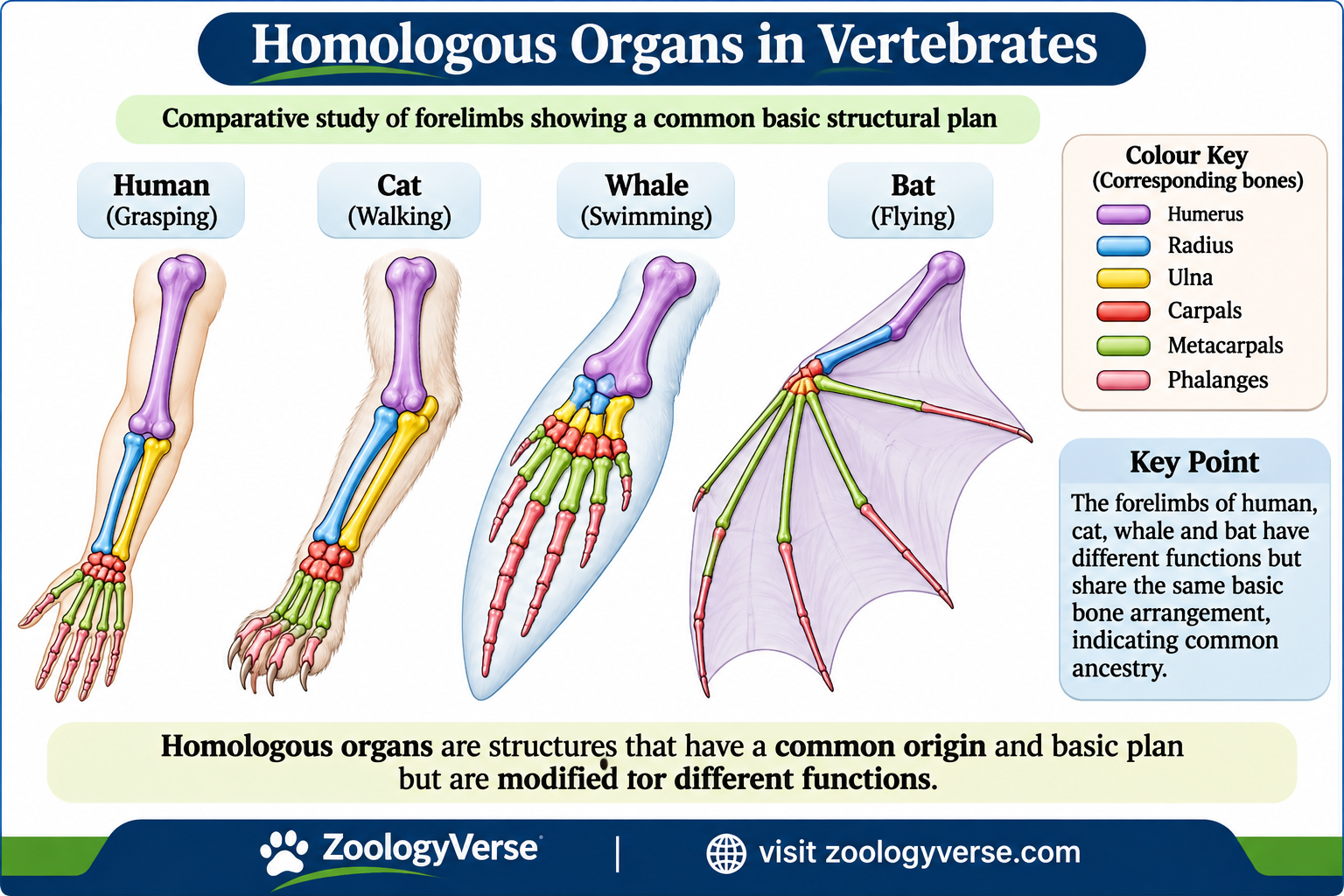
For example, the forelimbs of humans, bats, whales and horses have a similar basic skeletal organization, although they are adapted for different activities such as grasping, flying, swimming and running.
Comparative anatomy therefore provides two important types of information:
- Structural similarities: These may indicate common ancestry and inheritance from ancestral organisms.
- Structural differences: These may indicate evolutionary modifications and adaptations to different environmental conditions.
4.2 Homologous Organs
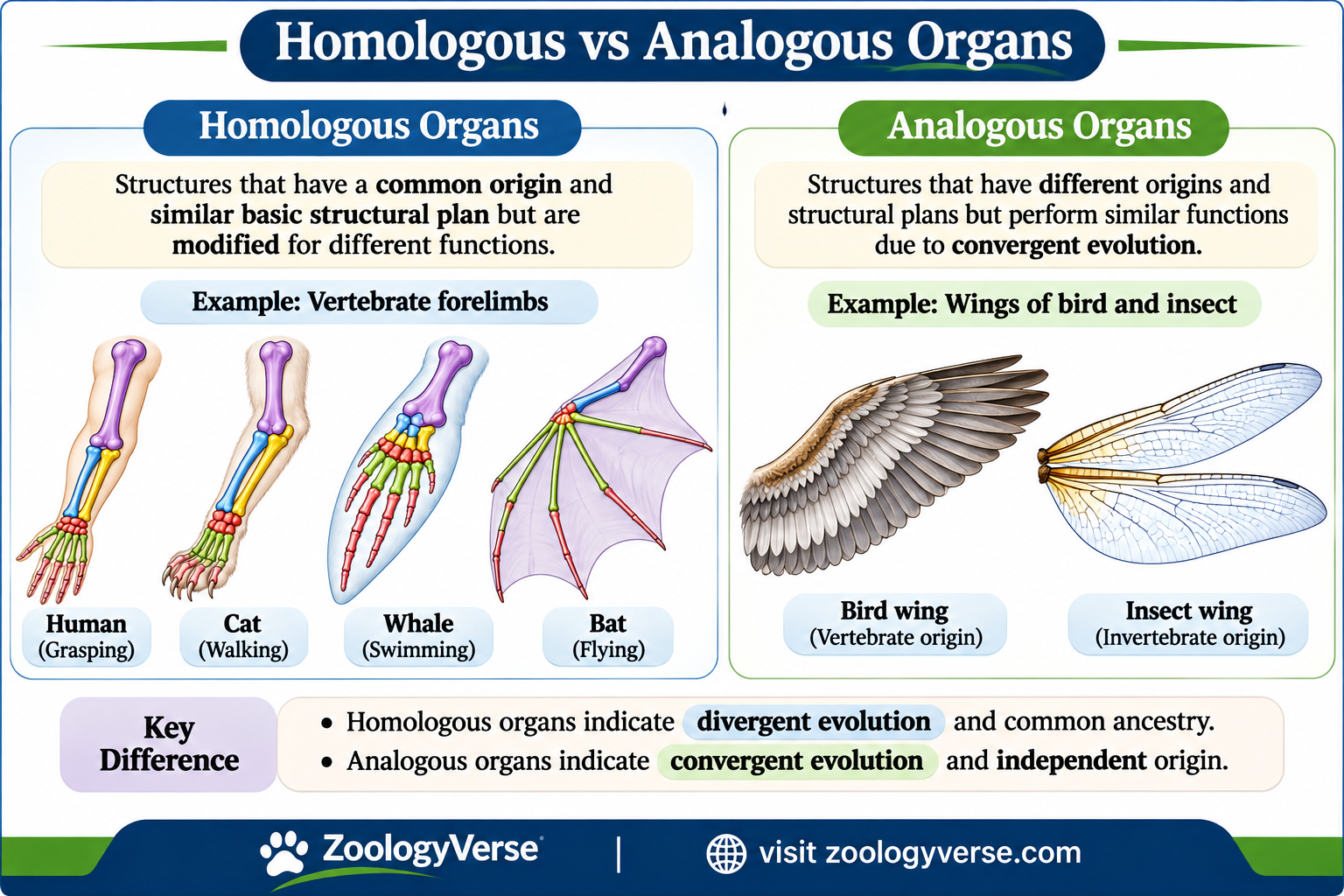
Homologous organs are organs that have the same basic structural organization and evolutionary origin but may perform different functions in different organisms.
They develop from corresponding structures in a common ancestor and undergo modifications during evolution according to the requirements of different environments.
The occurrence of homologous organs provides evidence of common ancestry and is associated with divergent evolution.
4.2.1 Characteristics of Homologous Organs
The major characteristics of homologous organs include:
- They have a similar basic structural organization.
- They share a common evolutionary origin.
- Their developmental and anatomical patterns show corresponding features.
- They may perform different functions in different organisms.
- They indicate descent from a common ancestral structure.
- They provide evidence of divergent evolution.
4.2.2 Examples of Homologous Organs
1. Forelimbs of vertebrates
The forelimbs of humans, bats, whales and horses are classical examples of homologous organs. Although these limbs perform different functions, their basic skeletal arrangement is similar.
| Organism | Function | Structural modification |
|---|---|---|
| Human | Grasping and manipulation | Flexible hand with opposable thumb. |
| Bat | Flight | Forelimb modified into a wing with elongated digits supporting the flight membrane. |
| Whale | Swimming | Forelimb modified into a broad flipper with shortened and modified skeletal elements. |
| Horse | Running | Forelimb elongated with a dominant functional third digit. |
The presence of corresponding skeletal elements in these animals indicates that their forelimbs originated from a common ancestral structure.
2. Mouthparts of insects
The mouthparts of different insects also demonstrate homology. They share a common basic structural origin but are modified for different feeding habits.
Examples include:
- Cockroach – Biting and chewing mouthparts.
- Butterfly – Siphoning mouthparts.
- Mosquito – Piercing and sucking mouthparts.
- Housefly – Sponging mouthparts.
These modifications reflect adaptation to different food sources while retaining corresponding structural components.
3. Vertebrate jaw bones and ear ossicles
Comparative studies of vertebrate anatomy and fossil evidence reveal evolutionary relationships between certain jaw elements of ancestral vertebrates and the middle-ear ossicles of mammals.
In mammals, the malleus and incus are evolutionarily related to the articular and quadrate elements of the ancestral jaw joint, respectively. This transformation provides important evidence of evolutionary modification in vertebrate skeletal structures.
4.2.3 Evolutionary Significance of Homologous Organs
Homologous organs are particularly important because they demonstrate how a common ancestral structure can become modified into different forms.
For example, the forelimbs of a human, bat, whale and horse perform different functions, but their underlying skeletal arrangement remains comparable. This indicates that the structures have been inherited from a common ancestor and modified through evolutionary processes.
Such modifications are explained through divergent evolution, in which related organisms develop different characteristics as they adapt to different ecological conditions.
4.3 Analogous Organs
Analogous organs are organs that perform similar functions but differ in their basic structural organization and evolutionary origin.
They develop independently in different evolutionary lineages as a result of adaptation to similar environmental conditions or functional requirements.
The development of analogous organs is associated with convergent evolution.
4.3.1 Characteristics of Analogous Organs
The major characteristics of analogous organs include:
- They perform similar or identical functions.
- They have different evolutionary origins.
- Their basic internal structural organization differs.
- They develop independently in unrelated evolutionary groups.
- They often show similarities in external appearance due to similar environmental pressures.
- They provide evidence of convergent evolution.
4.3.2 Examples of Analogous Organs
1. Wings of birds and insects
The wings of birds and insects perform the same general function of flight but differ considerably in their structural organization and evolutionary origin.
| Feature | Bird wing | Insect wing |
|---|---|---|
| Origin | Modified vertebrate forelimb | Outgrowth of the insect exoskeleton. |
| Internal structure | Contains bones, muscles, blood vessels and feathers. | Supported by veins within a thin chitinous membrane. |
| Basic organization | Endoskeletal structure | Exoskeletal structure |
| Function | Flight | Flight |
Although both structures enable flight, they evolved independently and are therefore analogous as flight organs.
2. Wings of birds and bats
Bird and bat wings are another useful example of convergent evolution when considered as aerodynamic flight structures. However, their underlying forelimbs are homologous because both retain the basic vertebrate forelimb organization.
This distinction is important: structures can be homologous at one anatomical level and analogous in a particular functional adaptation.
3. Eyes of vertebrates and cephalopods
The camera-type eyes of vertebrates and cephalopods, such as octopuses, show similarities in their overall optical function and organization. However, they evolved independently in their respective lineages.
Their similarities are associated with convergent evolution rather than inheritance of an identical camera-type eye from a recent common ancestor.
4.3.3 Evolutionary Significance of Analogous Organs
Analogous organs demonstrate that unrelated organisms may independently develop similar adaptations when exposed to comparable environmental conditions.
This phenomenon is called convergent evolution. It shows that similar functional requirements can produce comparable adaptations even when the organisms have different evolutionary histories.
4.4 Differences Between Homologous and Analogous Organs
Homologous and analogous organs are important concepts in comparative anatomy, but they represent different evolutionary relationships.
| Basis | Homologous organs | Analogous organs |
|---|---|---|
| Evolutionary origin | Common evolutionary origin | Independent evolutionary origin |
| Basic structure | Similar | Different |
| Function | May be different | Usually similar |
| Development | Derived from corresponding ancestral structures | Develop independently in different lineages |
| Evolutionary pattern | Divergent evolution | Convergent evolution |
| Significance | Indicates common ancestry | Indicates independent adaptation to similar functional demands |
| Example | Forelimbs of human, bat, whale and horse | Wings of birds and insects |
4.5 Vestigial Organs
Vestigial organs are reduced or modified structures that have lost all or most of their original functions during the course of evolution.
These structures are inherited from ancestral organisms in which they were more developed or performed important functions.
Vestigial organs may retain limited functions, so they should not always be considered completely useless.
4.5.1 Characteristics of Vestigial Organs
- They are generally reduced in size or complexity.
- They are inherited from ancestral structures.
- Their original functions are lost or greatly reduced.
- Some may retain secondary or modified functions.
- They provide information about the evolutionary history of organisms.
- Their presence may indicate changes in lifestyle, habitat or functional requirements.
4.5.2 Examples of Vestigial Organs
1. Vermiform appendix in humans
The human vermiform appendix is a small, narrow, blind-ended projection attached to the caecum. It is often discussed as a reduced structure in comparison with the larger caecal fermentation systems of many herbivorous mammals.
However, the human appendix is not entirely functionless. It contains lymphoid tissue and may contribute to immune functions and the maintenance of gut microbial populations.
2. Coccyx in humans
The coccyx, commonly known as the tailbone, is located at the terminal end of the vertebral column. It consists of fused or partially fused vertebrae and represents a reduced remnant of the ancestral tail structure.
Although humans do not possess an external functional tail, the coccyx provides attachment for certain muscles and ligaments.
3. Pelvic bones in whales
Modern whales possess greatly reduced pelvic elements that are no longer used for supporting hind limbs during terrestrial locomotion.
These structures are evolutionary remnants associated with the hind-limb-bearing ancestors of whales. They also provide attachment points for muscles involved in reproduction.
4. Hind-limb remnants in pythons and boas
Some snakes, particularly pythons and boas, possess small pelvic remnants and external claw-like structures known as pelvic spurs.
These structures are associated with the hind-limb-bearing ancestors of snakes and provide evidence of their evolutionary history.
5. Wings of flightless birds
In certain flightless birds, such as ostriches, wings are reduced relative to those of flying birds and are not used for powered flight. However, they retain other functions, including display and balance.
These examples illustrate how ancestral structures may become reduced or modified when their original functions are no longer required.
4.6 Atavism
Atavism refers to the occasional reappearance of an ancestral characteristic that is normally absent or greatly reduced in the individuals of a particular species.
It occurs when ancestral developmental features are expressed due to changes in the regulation or development of inherited genetic pathways.
Atavism provides evidence that certain ancestral developmental capacities may remain partly preserved within the genetic and developmental systems of modern organisms.
4.6.1 Characteristics of Atavism
- It involves the reappearance of an ancestral characteristic.
- It occurs occasionally rather than being a normal feature of the entire species.
- It may result from changes in developmental gene regulation.
- It indicates the persistence of ancestral genetic or developmental information.
- It provides clues about evolutionary history.
4.6.2 Examples of Atavism
1. Tail-like structures in humans
Rarely, human infants may be born with a tail-like projection in the lower back region. Such structures require careful medical classification because many are not true evolutionary tails and may arise from developmental abnormalities.
2. Hind-limb development in cetaceans
Occasional reports of whales and dolphins possessing external hind-limb-like structures are discussed in relation to the reactivation or abnormal expression of ancestral developmental pathways.
3. Extra toes in horses
Rare developmental abnormalities may produce additional digits or digit-like structures in horses. Such cases should be distinguished from ordinary anatomical variation and do not necessarily represent true atavism.
4.7 Difference Between Vestigial Organs and Atavism
Vestigial organs and atavism are related to ancestral characteristics, but they describe different phenomena.
| Basis | Vestigial organs | Atavism |
|---|---|---|
| Meaning | Reduced ancestral structures retained in modern organisms | Occasional reappearance of an ancestral characteristic |
| Occurrence | Generally present as a normal feature of a species | Usually rare and occasional |
| Development | Represents an inherited reduction or modification | Involves unusual expression of ancestral developmental features |
| Functional condition | Original function is lost or reduced | Function depends on the reappearing structure |
| Example | Human coccyx | Rare tail-like projection in humans |
4.8 Divergent and Convergent Evolution
The study of homologous and analogous organs helps explain two important patterns of evolutionary change.
4.8.1 Divergent Evolution
Divergent evolution occurs when organisms derived from a common ancestor develop different characteristics as they adapt to different environments or ecological conditions.
It is commonly associated with the development of homologous structures.
Example: The forelimbs of humans, bats, whales and horses have a common basic skeletal plan but are modified for different functions.
4.8.2 Convergent Evolution
Convergent evolution occurs when organisms belonging to different evolutionary lineages independently develop similar adaptations in response to comparable environmental conditions.
It is commonly associated with the development of analogous structures.
Example: Wings of birds and insects perform similar functions but have different structural organizations and evolutionary origins.
4.9 Significance of Anatomical Evidence in Evolution
Anatomical evidence contributes to the understanding of evolutionary relationships in several important ways:
- Identification of common ancestry: Homologous structures help identify organisms that share ancestral anatomical features.
- Understanding evolutionary modifications: Comparative anatomy reveals how ancestral structures become modified through evolutionary processes.
- Explanation of adaptation: Structural modifications demonstrate how organisms become adapted to different habitats and lifestyles.
- Recognition of convergent evolution: Analogous structures show how similar functional adaptations may evolve independently.
- Reconstruction of evolutionary history: Vestigial organs and atavistic features provide information about ancestral characteristics.
- Support for classification: Anatomical similarities and differences contribute to the identification of evolutionary relationships among organisms.
The comparative study of body structures therefore provides an important foundation for understanding the evolutionary history of organisms. When combined with fossil, embryological and molecular evidence, anatomical observations help build a more comprehensive picture of common ancestry and biological diversification.
5. Embryological Evidence of Evolution
Embryological evidence is obtained through the comparative study of embryonic development in different organisms. Embryology is the branch of biology concerned with the formation and development of an organism from the fertilized egg to the later stages of development.
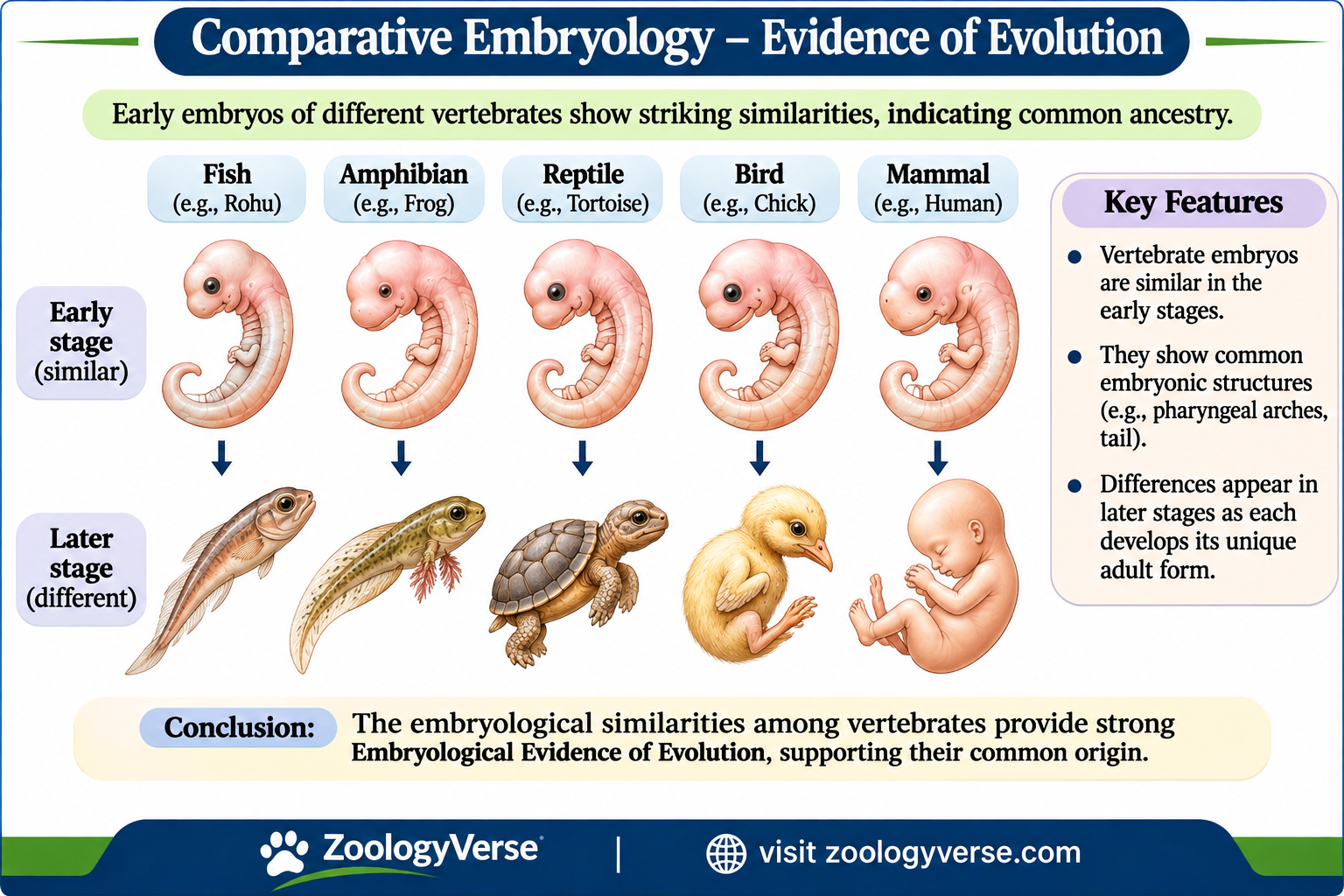
The study of similarities and differences in embryonic development provides important information about evolutionary relationships. Many organisms belonging to related groups show similarities during their early developmental stages, although their adult forms may differ considerably.
Embryological Evidence of Evolution supports the concept of common ancestry by demonstrating that related organisms may retain similar developmental patterns inherited from ancestral forms. These similarities are particularly significant among vertebrates, where early embryos show several corresponding anatomical features.
Comparative embryology was historically an important source of evidence for evolutionary theory. Modern developmental biology has further strengthened this field by investigating the genetic and molecular mechanisms responsible for the development of different animal groups.
5.1 Concept of Comparative Embryology
Comparative embryology is the study of similarities and differences in embryonic development among different organisms. It involves examining developmental stages, embryonic structures, tissue formation and organ development.
During evolution, organisms inherit developmental mechanisms from their ancestors. These mechanisms may be modified over successive generations, resulting in differences in embryonic development and adult body organization.
However, certain developmental characteristics may remain conserved among related organisms. Such similarities provide information about evolutionary relationships.
For example, embryos of fish, amphibians, reptiles, birds and mammals show several corresponding features during early development, including:
- A notochord or its developmental precursor.
- A dorsal hollow nerve cord.
- Pharyngeal arches.
- Somites arranged along the body axis.
- A post-anal tail.
These features reflect the shared basic developmental organization of chordates.
5.2 Similarities in Early Embryonic Development of Vertebrates
One of the classical observations in comparative embryology is the presence of similarities among the early embryos of different vertebrate groups.
Although adult vertebrates differ in their body forms, habitats and modes of life, their early embryonic stages exhibit several common developmental features.
The major similarities are described below.
1. Notochord
The notochord is a flexible, rod-like supporting structure that develops along the dorsal side of the embryo in chordates.
It provides mechanical support and plays an important role in the organization of the developing body axis. In most vertebrates, it is later surrounded or largely replaced by the developing vertebral column.
2. Dorsal hollow nerve cord
The dorsal hollow nerve cord develops from ectodermal tissue through the process of neurulation.
In vertebrates, its anterior region develops into the brain, while the posterior region forms the spinal cord.
3. Pharyngeal arches
Pharyngeal arches are paired embryonic structures that develop in the region of the pharynx.
Their derivatives differ among vertebrate groups. In fishes, they contribute to structures associated with the gill apparatus, whereas in tetrapods they contribute to several structures of the head and neck, including parts of the jaws, middle ear and associated tissues.
4. Somites
Somites are paired blocks of mesoderm arranged along both sides of the developing neural tube.
They contribute to the formation of skeletal muscles, vertebrae, ribs and parts of the dermis.
5. Post-anal tail
A post-anal tail is a body extension located behind the anal opening. It is present during embryonic development in vertebrates, although its final development and function differ among groups.
These similarities indicate that vertebrates share important developmental characteristics inherited from common ancestors.
5.3 Comparative Embryology of Different Vertebrate Groups
The embryos of different vertebrate groups show similarities during early development but become increasingly distinct as development proceeds.
The following comparison describes some major developmental features.
| Vertebrate group | Important embryonic features |
|---|---|
| Fishes | Development of notochord, neural tube, somites and pharyngeal arches associated with aquatic adaptations. |
| Amphibians | Development of notochord, neural tube, somites and structures associated with larval and adult body organization. |
| Reptiles | Development of embryonic membranes, including the amnion, chorion and allantois. |
| Birds | Development of extra-embryonic membranes and specialized structures associated with development within the egg. |
| Mammals | Development of extra-embryonic membranes, with placental development in most mammals. |
Although these groups show corresponding developmental structures, their embryos do not pass through identical stages. Differences in developmental timing, structure and organ formation are also important in understanding vertebrate evolution.
5.4 Embryonic Pharyngeal Arches in Vertebrates
The development of pharyngeal arches is an important example of embryological similarities among vertebrates.
In early vertebrate embryos, a series of paired pharyngeal arches develops on either side of the pharyngeal region. These arches are associated with the development of several structures in the head and neck.
Their developmental derivatives differ among vertebrate groups.
| Vertebrate group | Fate of pharyngeal arches |
|---|---|
| Fishes | Contribute to the jaw and branchial skeletal apparatus. |
| Amphibians | Contribute to jaw, hyoid and other head structures. |
| Reptiles | Contribute to elements of the jaws, middle ear and associated structures. |
| Birds | Contribute to jaw and middle-ear structures, including the development of the single middle-ear ossicle. |
| Mammals | Contribute to parts of the jaws, middle ear, hyoid apparatus and associated structures. |
In mammals, the first pharyngeal arch contributes to the formation of the maxillary and mandibular components, while the second arch contributes to structures including the stapes and parts of the hyoid apparatus.
The developmental similarity of these structures provides information about the evolutionary relationships of vertebrates.
It is important to understand that the pharyngeal arches of human embryos are not functional gills. They are embryonic structures that develop into various components of the head and neck.
5.5 Contributions of Ernst Haeckel to Comparative Embryology
Ernst Haeckel was a German biologist who made important contributions to evolutionary biology and comparative embryology during the nineteenth century.
He proposed the biogenetic law, commonly expressed as:
Ontogeny recapitulates phylogeny.
According to this historical proposal, the development of an individual organism (ontogeny) repeats the evolutionary history of its species (phylogeny).
Haeckel suggested that embryonic development preserves characteristics representing the evolutionary history of organisms.
His illustrations of vertebrate embryos emphasized similarities among different groups and influenced early comparative embryological studies.
However, the biogenetic law in its strict form is not accepted by modern evolutionary developmental biology. Embryos do not pass through the adult stages of their evolutionary ancestors.
Modern biology recognizes that embryonic development may retain ancestral characteristics, but these characteristics are modified through evolutionary changes in developmental genes, timing and regulatory mechanisms.
5.6 Von Baer’s Laws of Embryology
Karl Ernst von Baer was an important embryologist who formulated principles describing patterns of embryonic development.
His observations emphasized that embryos of different animals belonging to related groups show general similarities during early development and gradually acquire specialized characteristics.
The major principles associated with von Baer are:
1. General characters appear before specialized characters.
During embryonic development, broad structural characteristics generally develop before highly specialized features.
2. Specialized structures develop from more general structures.
The general developmental organization becomes progressively modified into structures characteristic of particular groups.
3. Embryos of different animals become increasingly dissimilar during development.
Related embryos may show similarities in early stages, but their differences become more pronounced as development proceeds.
4. The embryo of a higher animal does not pass through the adult stages of lower animals.
An organism does not reproduce the adult forms of other species during its embryonic development.
Von Baer’s principles contributed significantly to comparative embryology and provide a more appropriate developmental framework than the strict interpretation of Haeckel’s biogenetic law.
5.7 Evolutionary Significance of Embryological Evidence
Embryological evidence contributes to the study of evolution in several important ways.
1. Evidence of common ancestry
Similar developmental structures among related organisms suggest that they have inherited important developmental characteristics from common ancestors.
2. Understanding vertebrate relationships
Comparative embryology helps identify developmental similarities among fishes, amphibians, reptiles, birds and mammals.
3. Identification of conserved developmental mechanisms
Certain developmental genes and regulatory pathways are conserved among different animal groups. Their comparison provides information about the evolutionary history of developmental processes.
4. Explanation of evolutionary modifications
Differences in embryonic development reveal how developmental processes have changed during evolution, resulting in the formation of different anatomical structures.
5. Understanding organ development
Comparative embryology helps explain how similar embryonic tissues may develop into different organs or structures in different animal groups.
6. Support for evolutionary classification
Developmental similarities can provide additional evidence for establishing evolutionary relationships and reconstructing phylogenetic histories.
5.8 Modern Evolutionary Developmental Biology (Evo-Devo)
Evolutionary developmental biology, commonly known as Evo-Devo, is a modern branch of biology that investigates how evolutionary changes influence embryonic development and how modifications in developmental processes contribute to biological diversity.
It combines evolutionary biology, embryology, genetics, molecular biology and developmental biology.
Evo-Devo examines how changes in developmental genes and their regulatory mechanisms produce differences in body structures among organisms.
Important areas of study include:
1. Homeotic genes
Homeotic genes regulate the identity and development of particular body regions and structures. Changes in their expression may influence the organization of body segments and appendages.
2. Hox genes
Hox genes are a group of regulatory genes involved in determining the anterior-posterior organization of the developing body.
They are found in many animal groups and provide important evidence of conserved developmental mechanisms.
3. Gene regulation
Changes in the timing, location and intensity of gene expression can produce significant modifications in the development of body structures.
4. Developmental pathways
Signalling pathways such as Hedgehog, Wnt and BMP regulate important developmental processes. Their conservation and modification help explain similarities and differences among animal groups.
5. Evolution of body plans
Comparative studies of developmental mechanisms help scientists understand how different animal body plans originated and diversified.
Evo-Devo has expanded the scope of Embryological Evidence of Evolution by demonstrating that evolutionary changes may occur not only through modifications in adult structures but also through changes in the developmental processes that produce those structures.
5.9 Limitations of Embryological Evidence
Although embryological evidence is important for understanding evolutionary relationships, it has certain limitations.
- Embryonic development is not identical: Related organisms may show differences in developmental timing and embryonic organization.
- Not all similarities indicate close ancestry: Some developmental similarities may result from shared functional or structural requirements.
- Developmental processes can evolve: Embryonic structures and developmental pathways may undergo significant modifications during evolution.
- Historical interpretations may be misleading: Haeckel’s strict biogenetic law is not supported by modern developmental biology.
- Developmental stages may be difficult to compare: Different organisms may develop at different rates, making direct comparisons challenging.
- Additional evidence is necessary: Embryological observations are most reliable when examined alongside fossil, anatomical and molecular evidence.
Despite these limitations, comparative embryology remains an important field for investigating evolutionary relationships and understanding the development of animal diversity.
5.10 Importance of Embryological Evidence in Evolutionary Biology
Embryological evidence provides valuable information about the evolutionary relationships and developmental history of organisms. Similarities in early embryonic structures, conserved developmental genes and shared regulatory mechanisms support the concept of common ancestry.
The integration of comparative embryology with molecular genetics has further strengthened evolutionary studies. Modern evolutionary developmental biology explains how changes in developmental processes contribute to the evolution of different body structures and biological forms.
Thus, embryological evidence complements fossil and anatomical observations and provides an additional approach to understanding the evolutionary history of life.
6. Biogeographical Evidence of Evolution
Biogeographical evidence is obtained through the study of the geographical distribution of organisms across different regions of the Earth. Biogeography is the branch of biology that investigates the distribution of plants and animals in relation to geographical, geological, climatic and evolutionary factors.
The geographical distribution of organisms is not random. Closely related species may occur in different geographical regions, while unrelated organisms living in similar environments may develop comparable adaptations. These patterns can be explained through evolutionary processes such as common ancestry, geographical isolation, migration, natural selection and speciation.
Evidences of Evolution obtained from biogeography demonstrate how geographical barriers, continental movements and environmental changes influence the diversification of organisms. The distribution of island species, endemic organisms and related species on separated continents provides important information about evolutionary history.
6.1 Concept of Biogeography
Biogeography deals with the distribution of organisms across geographical regions and the factors responsible for their occurrence.
The geographical distribution of organisms is influenced by several factors:
- Continental drift: Movement of continental plates changes the geographical distribution and isolation of populations.
- Geographical barriers: Mountains, oceans, rivers and deserts may restrict the movement of organisms.
- Climate: Temperature, rainfall and seasonal changes influence the survival and distribution of species.
- Migration: Organisms may spread from one geographical region to another.
- Evolutionary history: Ancestral relationships influence the distribution of related organisms.
- Natural selection: Environmental conditions favour adaptations that improve survival and reproduction.
The study of these factors helps scientists understand why particular organisms occur in specific geographical regions and how their distribution has changed over evolutionary time.
6.2 Types of Biogeography
Biogeography is broadly divided into two major branches.
1. Historical Biogeography
Historical biogeography investigates the geographical distribution of organisms in relation to their evolutionary and geological history.
It examines how continental movements, geographical isolation, extinction and speciation have influenced the distribution of organisms over geological time.
For example, the distribution of marsupials in Australia provides important information about the evolutionary history and geographical isolation of this group.
2. Ecological Biogeography
Ecological biogeography studies the present-day distribution of organisms in relation to environmental conditions and ecological factors.
It investigates how temperature, rainfall, soil conditions, food availability, competition and habitat characteristics influence species distribution.
For example, polar bears are distributed in Arctic regions because they possess adaptations suitable for cold environments.
6.3 Major Patterns of Geographical Distribution
The geographical distribution of organisms reveals several patterns that help explain evolutionary relationships.
6.3.1 Cosmopolitan Distribution
Cosmopolitan organisms are species or groups that occur across a wide range of geographical regions.
Their broad distribution may result from high dispersal ability, environmental tolerance or association with habitats occurring across different regions.
Examples include:
- Houseflies (Musca domestica).
- Humans (Homo sapiens).
- Certain widely distributed marine organisms.
Cosmopolitan distribution demonstrates how some organisms successfully occupy different geographical environments.
6.3.2 Endemic Distribution
Endemic organisms are restricted naturally to a particular geographical region and are not native to other regions.
Endemism commonly develops through geographical isolation, limited dispersal and independent evolutionary diversification.
Examples include:
- Lemurs of Madagascar.
- Kangaroos and koalas of Australia.
- Many island birds and reptiles.
Endemic species are particularly important in evolutionary studies because their restricted distribution may reflect long periods of geographical isolation and independent evolution.
6.3.3 Discontinuous Distribution
Discontinuous distribution occurs when related organisms are found in widely separated geographical regions, with their distribution interrupted by large geographical gaps.
Such patterns may result from continental drift, extinction in intermediate regions, historical migration or geographical isolation.
For example, related plant and animal groups occurring in different southern continents may reflect ancient geographical connections associated with Gondwana.
6.3.4 Regional Distribution
Regional distribution refers to the occurrence of particular organisms within a defined geographical region.
Species may be restricted to particular climatic zones, ecological regions or biogeographical areas because of environmental conditions and historical factors.
For example, many marsupials are especially diverse in Australia, whereas lemurs are characteristic of Madagascar.
6.4 Important Examples of Biogeographical Evidence of Evolution
Several geographical distribution patterns provide important evidence of evolutionary relationships and common ancestry.
6.4.1 Australian Marsupials
Australia provides one of the most important examples of geographical isolation influencing evolutionary diversification.
Marsupials are mammals that generally give birth to relatively underdeveloped young, which continue their development attached to the mother’s teat, commonly within a pouch.
Australia possesses a remarkable diversity of marsupials, including:
- Kangaroos.
- Koalas.
- Wombats.
- Tasmanian devils.
- Bandicoots.
The geographical isolation of Australia for a prolonged period allowed marsupial lineages to diversify into different ecological roles.
The presence of different marsupial forms adapted to herbivorous, insectivorous and carnivorous lifestyles illustrates adaptive radiation.
Australia also contains some placental mammals, including bats and rodents, demonstrating that its mammalian fauna is not exclusively marsupial.
6.4.2 Darwin’s Finches of the Galápagos Islands
Darwin’s finches are a classical example of adaptive radiation and geographical diversification.
These birds are native to the Galápagos Islands and are closely related to finches found in mainland South America.
Different species of Darwin’s finches possess different beak shapes and sizes associated with their feeding habits.
Examples include:
- Ground finches with relatively strong beaks adapted for feeding on seeds.
- Cactus finches with elongated beaks suited to feeding on cactus flowers and fruits.
- Warbler finches with slender beaks adapted for capturing insects.
The differences in beak morphology reflect adaptation to different food resources and ecological conditions.
The diversification of these finches demonstrates how an ancestral population can give rise to several species through geographical isolation, ecological specialization and natural selection.
6.4.3 Lemurs of Madagascar
Madagascar is an island with a high proportion of endemic animal species.
Lemurs are primates naturally restricted to Madagascar and represent an important example of geographical isolation and evolutionary diversification.
Different lemur species show adaptations associated with different ecological niches.
Examples include:
- Ring-tailed lemur.
- Indri.
- Aye-aye.
- Mouse lemurs.
The isolation of Madagascar and the evolutionary diversification of its ancestral lemur populations contributed to the development of this distinctive primate fauna.
6.4.4 Ratites and Gondwanan Distribution
Ratites are a group of large, mostly flightless birds that include ostriches, emus, rheas, cassowaries and kiwis.
Their distribution across different southern continents has historically been discussed in relation to the breakup of the ancient supercontinent Gondwana.
The distribution of these birds provides an opportunity to investigate the relationship between geological history and biological evolution.
However, modern molecular studies indicate a more complex evolutionary history involving dispersal and lineage divergence. Their present distribution cannot be explained entirely by continental fragmentation.
6.5 Island Biogeography and Evolution
Islands provide valuable natural settings for studying evolution because geographical isolation can restrict gene flow between populations.
When a small population becomes isolated on an island, it may undergo evolutionary changes due to mutation, natural selection, genetic drift and restricted gene flow.
Over generations, isolated populations may become sufficiently different to form new species.
Important evolutionary patterns observed on islands include:
1. Adaptive radiation
An ancestral species may diversify into several species adapted to different ecological niches.
Example: Darwin’s finches of the Galápagos Islands.
2. Endemism
Island isolation may result in the evolution of species that occur naturally nowhere else.
Example: Many lemur species of Madagascar.
3. Evolutionary changes in body size
Some island organisms show changes in body size compared with their mainland relatives.
These patterns include island gigantism and island dwarfism, although the direction and extent of change depend on ecological conditions and evolutionary history.
4. Reduced predation and competition
In some island ecosystems, the absence or reduced abundance of particular predators and competitors may influence the evolution of unusual ecological adaptations.
6.6 Continental Drift and Evolutionary Distribution
Continental drift is the movement of continental landmasses over geological time due to the movement of tectonic plates.
The theory of plate tectonics explains how continents have changed their positions and how their movements have influenced the distribution and isolation of organisms.
The ancient supercontinent Pangaea existed during the late Palaeozoic and early Mesozoic eras. It later fragmented into major landmasses, including Laurasia and Gondwana.
The separation of continents created geographical barriers that influenced the distribution, isolation and diversification of organisms.
For example:
- The isolation of Australia contributed to the diversification of its distinctive mammalian fauna.
- The breakup of Gondwana influenced the geographical distribution of several plant and animal groups.
- The separation of South America and Africa produced distinct evolutionary histories in their terrestrial faunas.
Continental drift therefore provides an important geological explanation for many patterns observed in the geographical distribution of organisms.
6.7 Wallace’s Contribution to Biogeography
Alfred Russel Wallace made important contributions to the development of biogeography and evolutionary biology.
During his investigations in the Malay Archipelago, Wallace observed that the distribution of animals differed significantly between neighbouring geographical regions.
He identified a major faunal boundary between the Asian and Australian regions, now known as the Wallace Line.
The Wallace Line separates regions with predominantly Asian fauna from those with predominantly Australasian fauna.
Animals found west of the line include several Asian mammals, while the eastern region contains many animals characteristic of Australia and nearby islands.
The distribution pattern reflects the historical separation of landmasses, geographical barriers and differences in evolutionary history.
Wallace’s observations demonstrated that geographical distribution could provide important information about the origin and evolutionary relationships of organisms.
6.8 Wallace’s Line and Its Significance
Wallace’s Line is an imaginary biogeographical boundary passing through the Indonesian archipelago.
It separates two major faunal regions:
- The Asian region, characterized by organisms such as primates, deer and many Asian mammals.
- The Australasian region, characterized by marsupials and other organisms with Australasian evolutionary affinities.
The boundary is associated with deep-water channels that remained barriers to the movement of many terrestrial animals even during periods of lower sea levels.
Its significance includes:
- Demonstrating the influence of geographical barriers on animal distribution.
- Explaining differences between Asian and Australasian faunal communities.
- Providing evidence of historical geographical isolation.
- Supporting the study of speciation and evolutionary diversification.
- Highlighting the importance of geographical history in determining species distribution.
6.9 Limitations of Biogeographical Evidence
Although biogeographical patterns provide valuable information about evolution, they must be interpreted carefully.
- Migration: Organisms may move between geographical regions, making present-day distribution different from their original distribution.
- Extinction: Species that once occurred in intermediate regions may become extinct, producing discontinuous distribution patterns.
- Continental movement: Geological changes can alter geographical relationships over millions of years.
- Human influence: Human activities have introduced organisms into regions outside their natural distribution.
- Environmental changes: Climate change and habitat modification can influence the geographical range of species.
- Multiple evolutionary explanations: Similar distribution patterns may result from different processes, including dispersal, vicariance and extinction.
Therefore, geographical distribution alone may not establish the complete evolutionary history of a species. It is most informative when examined alongside fossil, anatomical and molecular evidence.
6.10 Significance of Biogeographical Evidence in Evolutionary Biology
Biogeographical evidence helps explain how geographical and environmental factors influence evolutionary diversification.
Its major contributions include:
- Explaining the geographical distribution of living and extinct organisms.
- Providing evidence of evolutionary isolation and speciation.
- Demonstrating the influence of continental drift on biological distribution.
- Helping identify patterns of adaptive radiation.
- Explaining the occurrence of endemic species.
- Revealing relationships between geographical barriers and genetic divergence.
- Supporting the reconstruction of evolutionary and geological history.
The study of biogeography demonstrates that the distribution of organisms is closely connected with their evolutionary history. It provides an important link between evolutionary biology, ecology, geology and palaeontology.
7. Biochemical Evidence of Evolution
Biochemical evidence is obtained through the comparative study of chemical substances and biochemical processes occurring in living organisms. All living organisms are composed of similar basic chemical substances, including carbohydrates, proteins, lipids, nucleic acids, water and mineral salts. They also perform several fundamental metabolic activities through comparable biochemical pathways.
The similarities in the chemical composition and metabolic activities of organisms provide important information about their evolutionary relationships. Organisms that share common ancestry often possess similar proteins, enzymes, cellular components and metabolic mechanisms because these characteristics have been inherited from ancestral populations.
Evidences of Evolution obtained through biochemical comparisons demonstrate that life forms share fundamental chemical and metabolic characteristics. Differences in these characteristics also help scientists investigate evolutionary divergence and the relationships among different groups of organisms.
7.1 Concept of Biochemical Evidence
Biochemical evidence refers to the similarities and differences in the chemical composition, molecular structures and metabolic processes of different organisms.
All living organisms depend on a common set of biochemical molecules for maintaining cellular organization and performing essential life activities. These include:
- Proteins that perform structural, catalytic and regulatory functions.
- Nucleic acids that store and transmit genetic information.
- Carbohydrates that provide energy and participate in cellular recognition.
- Lipids that form biological membranes and store energy.
- Enzymes that regulate biochemical reactions.
- ATP that functions as the primary energy-carrying molecule in most cellular processes.
The presence of these fundamental biochemical components across diverse organisms suggests that major features of cellular life have been conserved during evolution.
Comparative biochemical studies examine the structures, functions and sequences of these molecules to understand evolutionary relationships.
7.2 Similarities in the Chemical Composition of Living Organisms
Living organisms belonging to different taxonomic groups possess several common chemical constituents.
Although the relative proportions of these substances differ among organisms, their fundamental chemical nature and biological functions are remarkably similar.
| Biochemical component | Major function | Evolutionary significance |
|---|---|---|
| Proteins | Structural support, catalysis and regulation | Similarities in protein structures indicate conserved biological functions. |
| Nucleic acids | Storage and transmission of genetic information | DNA and RNA provide information about genetic relationships. |
| Carbohydrates | Energy supply and structural functions | Common metabolic pathways indicate biochemical conservation. |
| Lipids | Membrane formation and energy storage | Similar membrane components reflect fundamental cellular organization. |
| ATP | Energy transfer within cells | Widespread use indicates conservation of energy metabolism. |
| Enzymes | Catalysis of biochemical reactions | Similar enzymes and pathways reveal evolutionary relationships. |
These similarities indicate that organisms share fundamental biochemical characteristics inherited through evolutionary history.
7.3 Similarities in Proteins
Proteins are essential biological molecules composed of amino acids linked together through peptide bonds. They perform numerous functions, including enzymatic catalysis, structural support, transport, defence and regulation.
The amino acid sequences and three-dimensional structures of proteins can be compared among different organisms to investigate evolutionary relationships.
Organisms that are closely related generally show greater similarities in corresponding protein sequences than organisms that are distantly related, although the degree of conservation varies among proteins.
Examples of important proteins used in evolutionary studies include:
7.3.1 Haemoglobin
Haemoglobin is an oxygen-transporting protein present in the red blood cells of many vertebrates.
It consists of globin polypeptide chains associated with haem groups containing iron. The globin chains differ among vertebrate groups, but they retain important structural and functional similarities.
Comparative studies of haemoglobin amino acid sequences have been used to investigate evolutionary relationships among vertebrates.
For example, differences in haemoglobin sequences can be examined among humans, chimpanzees, gorillas and other mammals.
The degree of sequence similarity generally reflects evolutionary relatedness, although interpretation also depends on the particular globin chain and its evolutionary history.
7.3.2 Cytochrome c
Cytochrome c is a small haem-containing protein involved in electron transport during aerobic cellular respiration.
It is located in the mitochondrial intermembrane space and transfers electrons between respiratory chain complexes.
Cytochrome c is particularly useful in evolutionary studies because it is present in many eukaryotic organisms and performs a highly conserved function.
The amino acid sequences of cytochrome c can be compared among organisms to identify similarities and differences.
Greater sequence similarity generally indicates a closer evolutionary relationship, whereas larger differences may reflect longer periods of evolutionary divergence.
7.3.3 Insulin
Insulin is a peptide hormone that regulates blood glucose levels and plays an important role in carbohydrate, lipid and protein metabolism.
It is produced by pancreatic beta cells in vertebrates.
Insulin molecules from different vertebrate species show similarities in their amino acid sequences and overall structure, although certain amino acid substitutions occur during evolution.
Comparative studies of insulin provide information about molecular conservation and evolutionary relationships among vertebrates.
7.4 Enzymes as Evidence of Evolution
Enzymes are biological catalysts that accelerate biochemical reactions without being consumed during the reactions.
Most enzymes are proteins, although certain RNA molecules also possess catalytic activity.
Many metabolic enzymes are conserved across different organisms because they perform essential biochemical functions.
Comparative studies of enzyme structure, amino acid sequence and catalytic activity help investigate evolutionary relationships.
Important examples include:
1. Lactate dehydrogenase
Lactate dehydrogenase is an enzyme involved in the interconversion of pyruvate and lactate. It plays an important role in anaerobic metabolism and the regeneration of NAD⁺.
Different organisms possess related forms of this enzyme, and comparisons can provide information about molecular evolution.
2. ATP synthase
ATP synthase is a membrane-associated enzyme complex responsible for ATP production using an electrochemical proton gradient.
It occurs in mitochondria, chloroplasts and bacterial plasma membranes.
Its widespread distribution and conserved catalytic mechanism demonstrate fundamental similarities in energy metabolism across living organisms.
3. Cytochrome oxidase
Cytochrome c oxidase is a major enzyme complex of the mitochondrial electron transport chain. It catalyses the transfer of electrons to molecular oxygen during aerobic respiration.
Related respiratory complexes are also found in bacteria, reflecting the evolutionary conservation of important energy-conversion mechanisms.
The similarities in enzymes and their metabolic functions provide evidence of conserved biochemical mechanisms throughout the history of life.
7.5 Similarities in Metabolic Pathways
Metabolic pathways are organized sequences of biochemical reactions through which cells synthesize, degrade and transform different substances.
Many fundamental metabolic pathways are shared by organisms belonging to widely different evolutionary groups.
These similarities suggest that important biochemical mechanisms originated early in evolutionary history and were inherited by descendant organisms.
Important examples include:
7.5.1 Glycolysis
Glycolysis is a metabolic pathway through which glucose is broken down into pyruvate through a series of enzyme-catalysed reactions.
It occurs in the cytoplasm of cells and is found in a wide range of organisms, including bacteria, plants and animals.
The conservation of glycolytic enzymes and reaction sequences provides evidence of the ancient evolutionary origin of this pathway.
7.5.2 Krebs Cycle
The Krebs cycle, also known as the citric acid cycle or tricarboxylic acid cycle, is an important metabolic pathway involved in aerobic energy production.
It oxidizes acetyl-CoA and produces reduced coenzymes, including NADH and FADH₂, which supply electrons to the electron transport chain.
The presence of related versions of this pathway in different organisms demonstrates the conservation of important metabolic processes.
7.5.3 Electron Transport Chain
The electron transport chain consists of a series of membrane-associated protein complexes and electron carriers involved in energy conversion.
In eukaryotes, it occurs in the inner mitochondrial membrane, whereas in bacteria it generally occurs in the plasma membrane.
Although the organization and components vary among organisms, fundamental principles of electron transfer and proton-gradient formation are conserved.
7.5.4 ATP Production
ATP is the primary energy currency of most living cells.
It is used in several cellular activities, including:
- Active transport across membranes.
- Muscle contraction.
- Biosynthesis of cellular components.
- Cell division.
- Movement of cilia and flagella.
The widespread use of ATP for cellular energy transfer indicates the conservation of fundamental biochemical mechanisms during evolution.
7.6 Universal Nature of the Genetic Code
The genetic code describes the relationship between nucleotide triplets, known as codons, and amino acids during protein synthesis.
In nearly all organisms, the same codons specify the same amino acids. For example, AUG generally codes for methionine and functions as the principal initiation codon in standard translation systems.
The near-universal nature of the genetic code is an important biochemical and molecular indication of common ancestry.
If organisms had originated independently through entirely unrelated biochemical systems, such extensive conservation of the genetic code would be difficult to explain.
However, the genetic code is not absolutely universal. Certain variations occur in mitochondrial genomes and some microorganisms. These exceptions are consistent with evolutionary modification of an ancestral genetic system.
7.7 Similarities in Cellular Organization
All cellular organisms share several fundamental features of cellular organization.
These include:
- A plasma membrane separating the cell from its environment.
- Genetic material containing hereditary information.
- Ribosomes involved in protein synthesis.
- Enzymes responsible for biochemical reactions.
- ATP-based energy transfer.
- Mechanisms for maintaining cellular homeostasis.
The basic mechanisms of DNA replication, transcription and translation are also broadly conserved across living organisms.
Although prokaryotic and eukaryotic cells differ considerably in their internal organization, their fundamental biochemical processes reveal important evolutionary similarities.
7.8 Biochemical Similarities and Evolutionary Relationships
Comparative biochemical studies help determine evolutionary relationships by examining the degree of similarity in proteins, enzymes and metabolic pathways.
For example, the comparison of cytochrome c sequences among different organisms can reveal differences in amino acid composition.
Organisms with fewer sequence differences generally show closer molecular similarity, although evolutionary relationships must be established using suitable comparisons and appropriate phylogenetic methods.
The following general relationship illustrates how biochemical similarities are interpreted:
| Biochemical observation | Evolutionary interpretation |
|---|---|
| Similar protein sequences | May indicate common ancestry. |
| Conserved enzyme structures | Suggest preservation of essential biochemical functions. |
| Shared metabolic pathways | Indicate conservation of fundamental cellular processes. |
| Similar genetic code | Supports common ancestry of modern cellular life. |
| Differences in amino acid sequences | May reflect evolutionary divergence. |
| Changes in metabolic regulation | May indicate adaptation to different environments. |
Biochemical evidence is especially useful when morphological characteristics alone are insufficient to establish evolutionary relationships.
7.9 Limitations of Biochemical Evidence
Although biochemical comparisons provide important information about evolutionary history, they have certain limitations.
- Conservation of essential molecules: Some proteins and enzymes remain highly conserved because of functional constraints, so their similarities may not always distinguish closely related organisms.
- Variation in evolutionary rates: Different proteins and biochemical pathways evolve at different rates, making comparisons dependent on the selected molecule.
- Convergent biochemical adaptations: Similar environmental conditions may independently favour comparable biochemical properties in unrelated organisms.
- Horizontal gene transfer: In microorganisms, genetic material may be transferred between unrelated lineages, complicating the reconstruction of evolutionary relationships.
- Limited information from individual molecules: A single protein or enzyme may not accurately represent the evolutionary history of an entire organism.
- Changes in metabolic pathways: Different organisms may modify or lose particular metabolic pathways according to their ecological and physiological requirements.
For reliable conclusions, biochemical comparisons should therefore be supported by multiple molecular markers, anatomical observations, fossil records and other independent sources of evolutionary evidence.
7.10 Significance of Biochemical Evidence in Evolutionary Biology
Biochemical evidence has considerably expanded the understanding of evolutionary relationships among organisms.
Its major contributions include:
- Demonstrating the conservation of fundamental chemical components in living organisms.
- Identifying similarities in protein and enzyme structures.
- Providing information about molecular divergence.
- Revealing the evolutionary conservation of metabolic pathways.
- Supporting the concept of common ancestry through the near-universal genetic code.
- Helping establish relationships among organisms that show few obvious anatomical similarities.
- Providing a foundation for modern molecular evolutionary studies.
The comparative study of biochemical components demonstrates that living organisms share fundamental chemical and metabolic characteristics. These similarities provide important evidence of evolutionary relationships and form the basis for more detailed investigations using DNA, RNA and genome comparisons.
8. Molecular Evidence of Evolution
Molecular evidence is obtained through the comparative study of genetic material and molecular structures in different organisms. It provides information about evolutionary relationships by examining similarities and differences in DNA, RNA, genes, proteins and genomes.
All cellular organisms use nucleic acids to store and transmit hereditary information. Although organisms differ considerably in their morphology, physiology and behaviour, their genetic systems share several fundamental characteristics. These similarities indicate that living organisms have inherited important molecular features from common ancestral populations.
Molecular Evidence of Evolution is particularly important in modern evolutionary biology because it allows scientists to investigate relationships at the genetic level. Molecular comparisons can identify evolutionary similarities that may not be apparent through external morphology or anatomical examination.
Modern molecular techniques, including DNA sequencing, genome analysis and molecular phylogenetics, have significantly improved our understanding of evolutionary history and biological diversity.
Comparative molecular studies examine DNA, RNA and protein sequences to identify evolutionary relationships. Understanding RNA synthesis and transcription and genetic recombination also helps explain the molecular processes responsible for genetic variation.
8.1 Concept of Molecular Evolution
Molecular evolution refers to changes in DNA, RNA and protein sequences over successive generations. These changes arise through processes such as mutation, recombination, natural selection, genetic drift and gene duplication.
During evolution, genetic changes accumulate in populations and may eventually produce measurable differences between species.
Molecular evolutionary studies examine these changes to understand:
- The genetic similarities and differences among organisms.
- The evolutionary relationships between different species.
- The origin and divergence of genes.
- The development of new genetic functions.
- The evolutionary history of populations and species.
Closely related organisms generally share a greater proportion of their genetic sequences than distantly related organisms, although the degree of similarity depends on the genes or genomic regions being compared.
8.2 DNA as Evidence of Evolution
DNA (deoxyribonucleic acid) is the primary hereditary material in most organisms. It stores genetic information in the form of nucleotide sequences and provides instructions for the synthesis and regulation of cellular components.
The comparison of DNA sequences among different organisms is one of the strongest methods for investigating evolutionary relationships.
DNA sequences contain information about mutations and other genetic changes accumulated during evolutionary history. By comparing corresponding DNA regions, scientists can estimate the genetic relatedness of organisms and reconstruct their evolutionary relationships.
8.2.1 Similarities in DNA Sequences
Organisms that share a recent common ancestor generally possess more similar DNA sequences than organisms whose evolutionary lineages separated much earlier.
For example, humans and chimpanzees show extensive similarities in their nuclear DNA sequences, reflecting their relatively recent common ancestry among living primates.
DNA sequence comparisons are useful for:
- Identifying similarities between related species.
- Determining genetic differences among populations.
- Investigating the origin of particular genes.
- Reconstructing evolutionary relationships.
- Studying the divergence of species over geological time.
8.2.2 Mutations and Molecular Divergence
Mutations are changes in the nucleotide sequence of genetic material. They provide the ultimate source of new genetic variation.
Mutations may involve:
- Substitution of one nucleotide by another.
- Insertion of additional nucleotides.
- Deletion of nucleotides.
- Duplication of DNA segments.
- Rearrangement of genetic material.
When populations become separated, mutations may accumulate independently in their respective genetic lineages.
Over time, these accumulated changes contribute to molecular divergence. The comparison of genetic sequences therefore helps scientists investigate the evolutionary separation of species.
8.3 RNA as Evidence of Evolution
RNA (ribonucleic acid) is involved in several essential biological processes, including protein synthesis, gene regulation and the transfer of genetic information.
RNA molecules are present in all cellular organisms and perform important functions in maintaining cellular activities.
Certain RNA molecules are particularly useful for evolutionary studies because their sequences contain both conserved and variable regions.
Important examples include:
1. Ribosomal RNA (rRNA)
Ribosomal RNA is a major component of ribosomes and participates in protein synthesis.
The genes encoding rRNA are widely distributed among cellular organisms and contain regions that evolve at different rates.
For example:
- 16S rRNA is commonly used to investigate evolutionary relationships among bacteria and archaea.
- 18S rRNA is widely used in evolutionary studies of eukaryotes.
Because rRNA contains conserved regions as well as variable regions, it is useful for comparing organisms across different evolutionary distances.
2. Transfer RNA (tRNA)
Transfer RNA carries specific amino acids to ribosomes during protein synthesis. It contains conserved structural features required for its function.
Comparative studies of tRNA sequences and structures provide information about the evolutionary conservation of the translation system.
3. Messenger RNA (mRNA)
Messenger RNA carries genetic information from DNA to ribosomes, where it is translated into proteins.
Comparisons of corresponding mRNA sequences can reveal similarities and differences in gene expression and protein-coding regions.
RNA-based comparisons therefore provide additional information about genetic conservation and evolutionary divergence.
8.4 Comparative Genomics
Comparative genomics is the study of similarities and differences among the complete genomes of different organisms.
A genome includes the entire genetic material of an organism, including protein-coding genes, regulatory regions and non-coding DNA sequences.
Comparative genomics provides a broader understanding of evolutionary relationships than the analysis of individual genes.
It helps scientists identify:
- Conserved genes shared by different organisms.
- Gene duplications and gene losses.
- Chromosomal rearrangements.
- Changes in genome organization.
- Evolution of gene families.
- Genetic adaptations associated with particular environments.
For example, comparisons of human and other primate genomes reveal extensive similarities in gene sequences and chromosome organization, providing evidence of common ancestry.
Comparative genomics is also useful for understanding the evolution of vertebrates, insects, plants and microorganisms.
8.5 DNA Hybridization
DNA hybridization is a molecular technique based on the ability of complementary DNA strands to pair with one another.
It has historically been used to investigate genetic similarities between different organisms.
The basic principle involves separating double-stranded DNA into single strands and allowing DNA strands from different organisms to combine under suitable conditions.
The extent of hybridization and the stability of the resulting DNA duplex provide information about sequence similarity.
8.5.1 Principle of DNA Hybridization
The technique involves the following steps:
- DNA is isolated from the organisms being compared.
- The double-stranded DNA molecules are separated into single strands by heating.
- Single-stranded DNA from different organisms is mixed together.
- The mixture is cooled under controlled conditions to allow complementary sequences to pair.
- The stability of the resulting hybrid DNA is examined.
Greater sequence similarity generally produces more stable hybrid DNA, whereas greater sequence differences reduce the stability of the hybrid.
8.5.2 Evolutionary Significance of DNA Hybridization
DNA hybridization has been used to compare genetic similarities between organisms and investigate their evolutionary relationships.
Historically, DNA-DNA hybridization contributed to the classification and evolutionary study of several animal groups.
However, modern DNA sequencing and comparative genomics have largely replaced classical DNA-DNA hybridization for detailed molecular comparisons.
8.6 Molecular Clock
The molecular clock is a method used to estimate the time of evolutionary divergence between organisms by examining the accumulation of molecular changes in DNA or protein sequences.
The concept is based on the observation that certain genetic sequences accumulate substitutions over evolutionary time.
If the rate of molecular change is sufficiently regular for a particular gene or protein over the period being studied, the number of sequence differences can be used to estimate the time since two lineages shared a common ancestor.
8.6.1 Principle of the Molecular Clock
The molecular clock is based on the accumulation of genetic substitutions in evolutionary lineages.
After two populations become separated, mutations may accumulate independently in their genetic material.
The number of differences between corresponding sequences can provide information about the time elapsed since their divergence.
However, molecular evolutionary rates are not identical across all genes, organisms or periods.
8.6.2 Calibration of Molecular Clocks
Molecular clock estimates require calibration using independent evidence.
Common calibration sources include:
- Fossils with reliable geological ages.
- Geological events associated with population separation.
- Biogeographical information.
- Previously established divergence estimates.
Fossil calibration is particularly important because it connects molecular changes with the geological timescale.
8.6.3 Applications of Molecular Clocks
Molecular clocks are used to:
- Estimate divergence times between species.
- Investigate the evolutionary history of populations.
- Study the origin and diversification of major groups.
- Estimate the timing of evolutionary events.
- Reconstruct the evolutionary history of genes and genomes.
8.6.4 Limitations of Molecular Clocks
Molecular clocks have certain limitations:
- Mutation and substitution rates vary among genes.
- Natural selection may influence the rate of molecular evolution.
- Genetic changes may accumulate at different rates in different lineages.
- Fossil calibration points may be incomplete or uncertain.
- Changes in population size and generation time may influence evolutionary rates.
Therefore, molecular clock estimates are generally expressed as ranges with associated uncertainty rather than exact dates.
8.7 Molecular Phylogeny
Molecular phylogeny is the reconstruction of evolutionary relationships among organisms using molecular data, particularly DNA, RNA and protein sequences.
It helps determine how different organisms are related and how their evolutionary lineages have diverged from common ancestors.
Molecular phylogenetic studies are based on the comparison of homologous molecular sequences.
8.7.1 Basic Steps in Molecular Phylogenetic Analysis
The major steps include:
1. Selection of organisms
The organisms to be compared are selected according to the research objective.
2. Selection of molecular markers
Suitable genes or genetic regions are selected for comparison. These may include mitochondrial genes, nuclear genes or ribosomal RNA genes.
3. DNA or RNA extraction
Genetic material is isolated from the selected organisms.
4. DNA sequencing
The nucleotide sequences of the selected genetic regions are determined.
5. Sequence alignment
Corresponding nucleotide or amino acid sequences are arranged to identify matching positions and evolutionary differences.
6. Phylogenetic tree construction
The aligned sequences are analysed using suitable computational methods to reconstruct evolutionary relationships.
7. Interpretation
The resulting tree is examined to identify shared ancestry, evolutionary divergence and relationships among the organisms.
8.8 Phylogenetic Trees and Molecular Relationships
A phylogenetic tree is a branching diagram that represents hypothesized evolutionary relationships among organisms or genetic sequences.
It consists of branches and nodes that indicate patterns of common ancestry and divergence.
Important components include:
- Root: Represents the inferred common ancestor of the organisms included in the tree.
- Branches: Represent evolutionary lineages.
- Nodes: Represent common ancestral points where lineages diverged.
- Tips or terminal taxa: Represent the organisms or sequences being compared.
- Clade: A group consisting of a common ancestor and all its descendants.
Molecular phylogenetic trees are constructed using sequence data and statistical or computational methods.
The interpretation of these trees depends on the quality of the sequences, selection of molecular markers and analytical methods.
8.9 DNA Barcoding
DNA barcoding is a molecular identification technique that uses a short, standardized DNA sequence to identify species.
It is particularly useful when organisms cannot be identified reliably through external morphological characteristics alone.
A commonly used DNA barcode in animals is a region of the mitochondrial cytochrome c oxidase subunit I gene, known as COI or COX1.
In plants, different regions, including rbcL and matK, are commonly used for DNA barcoding.
8.9.1 Principle of DNA Barcoding
DNA barcoding is based on the presence of characteristic sequence differences among species.
The process generally involves:
- Collection of a biological sample.
- Extraction of DNA.
- Amplification of the selected barcode region using polymerase chain reaction (PCR).
- Sequencing of the amplified DNA fragment.
- Comparison of the obtained sequence with reference databases.
- Identification of the organism based on sequence similarity and taxonomic information.
8.9.2 Applications of DNA Barcoding
DNA barcoding is used in:
- Identification of morphologically similar species.
- Detection of cryptic species.
- Wildlife conservation and biodiversity assessment.
- Identification of animal products and biological materials.
- Monitoring of endangered species.
- Investigation of illegal wildlife trade.
- Identification of immature or damaged specimens.
DNA barcoding is a useful identification tool, but it does not always establish complete evolutionary relationships. Closely related species may share similar barcode sequences, and hybridization or incomplete lineage sorting may complicate identification.
8.10 Molecular Evidence and Common Ancestry
Molecular comparisons provide strong evidence for common ancestry because organisms share fundamental features of genetic organization and molecular function.
Important examples include:
1. Similarities in the genetic code
The near-universal genetic code indicates that most cellular organisms use the same basic system for translating nucleotide sequences into proteins.
2. Conserved genes
Many organisms possess homologous genes that perform similar biological functions. These genes may have been inherited from common ancestors.
3. Similarities in protein sequences
Comparisons of proteins such as cytochrome c and haemoglobin reveal molecular similarities that can be used to investigate evolutionary relationships.
4. Conserved ribosomal RNA
The presence of related ribosomal RNA sequences across cellular organisms provides information about their evolutionary relationships.
5. Shared molecular mechanisms
Processes such as DNA replication, transcription and translation are fundamentally conserved across cellular life.
Together, these observations support the evolutionary relationship of organisms through shared molecular ancestry.
8.11 Limitations of Molecular Evidence
Although molecular evidence has greatly improved evolutionary research, it has certain limitations.
- Different evolutionary rates: Molecular sequences evolve at different rates, making comparisons dependent on the selected genes.
- Horizontal gene transfer: Genetic material may move between unrelated organisms, particularly among microorganisms.
- Gene duplication: Duplicated genes may evolve independently and produce misleading relationships if incorrectly compared.
- Incomplete lineage sorting: Different genes may show evolutionary histories that differ from the species history.
- Hybridization: Interbreeding between species may produce genetic patterns that complicate phylogenetic reconstruction.
- Sequence alignment difficulties: Highly divergent sequences may be difficult to align accurately.
- Limited sampling: Inadequate sampling of species and genetic markers may produce incomplete evolutionary interpretations.
For reliable conclusions, molecular results should be interpreted alongside fossil, anatomical, embryological and biogeographical evidence.
8.12 Significance of Molecular Evidence in Evolutionary Biology
Molecular evidence has become one of the most powerful approaches for investigating evolutionary relationships.
Its major contributions include:
- Establishing genetic similarities among organisms.
- Identifying common ancestral genes and proteins.
- Investigating evolutionary divergence at the DNA and RNA levels.
- Estimating evolutionary divergence times through molecular clocks.
- Reconstructing phylogenetic relationships.
- Identifying species through DNA barcoding.
- Understanding the evolution of genes and genomes.
- Supporting modern classification based on evolutionary relationships.
Molecular biology has expanded the study of evolution beyond observable anatomical characteristics and has provided detailed information about the genetic changes responsible for biological diversification.
9. Connecting Links and Transitional Forms
Connecting links and transitional forms are important sources of information for understanding evolutionary relationships among different groups of organisms. They provide evidence of evolutionary changes by displaying combinations of characteristics associated with different taxonomic groups.
A connecting link is an organism that possesses characteristics associated with two or more taxonomic groups. Such organisms help demonstrate structural and evolutionary relationships between groups that may appear considerably different.
A transitional form is an organism, generally known from the fossil record, that exhibits a combination of ancestral and derived characteristics. Transitional fossils are particularly important because they provide information about evolutionary changes occurring within particular lineages.
Evidences of Evolution obtained from connecting links and transitional forms help scientists understand how major biological groups originated, diversified and developed their characteristic features.
9.1 Concept of Connecting Links
Connecting links are organisms that possess anatomical, morphological or developmental characteristics associated with two different taxonomic groups.
They demonstrate that certain biological characteristics are shared across groups and may reflect evolutionary relationships.
Connecting links are particularly useful for understanding the relationships between major animal groups because they exhibit combinations of features that help explain similarities and differences among organisms.
Major characteristics of connecting links:
- They possess features associated with more than one taxonomic group.
- They demonstrate similarities between different biological groups.
- They help identify evolutionary relationships.
- They provide information about the modification of ancestral characteristics.
- They are useful in comparative anatomy and evolutionary classification.
It is important to note that an organism described as a connecting link is not necessarily the direct ancestor of the groups it connects. It may represent a related evolutionary branch that retains a combination of ancestral and derived characteristics.
Comparative studies of deuterostomes, including the characteristics of Hemichordata and the anatomy of Balanoglossus, help explain evolutionary relationships among major animal groups.
9.2 Concept of Transitional Forms
Transitional forms are organisms that exhibit a combination of ancestral characteristics and newly evolved features associated with a particular evolutionary lineage.
They are especially important in palaeontology because fossils may preserve anatomical changes that occurred during evolutionary transitions.
Transitional forms provide information about the gradual modification of biological structures over geological time.
Major characteristics of transitional forms:
- They possess a combination of ancestral and derived characteristics.
- They provide information about evolutionary changes within a lineage.
- They may be represented by fossil organisms.
- They help reconstruct evolutionary relationships.
- They demonstrate that major anatomical modifications occurred through evolutionary processes.
Transitional forms should not be interpreted as incomplete or inferior organisms. They were organisms adapted to their respective environments and represent particular stages or branches in evolutionary history.
9.3 Important Examples of Connecting Links
Several living and extinct organisms have historically been discussed as connecting links because they exhibit combinations of characteristics associated with different biological groups.
9.3.1 Peripatus – Connecting Link Between Annelids and Arthropods
Peripatus is a terrestrial invertebrate belonging to the phylum Onychophora. It is commonly called the velvet worm.
It has historically been described as a connecting link between annelids and arthropods because it possesses certain characteristics resembling both groups.
Annelid-like characteristics:
- Elongated and worm-like body.
- Soft and flexible body wall.
- Unjointed lobopodial appendages.
- Segmental arrangement of certain internal structures.
- Nephridial excretory organs.
Arthropod-like characteristics:
- Chitinous cuticle.
- Haemocoelomic body organization.
- Tracheal respiratory system.
- Paired appendages with claws.
- Dorsal tubular heart.
The combination of these characteristics makes Peripatus important in understanding the evolutionary relationships among major groups of protostome invertebrates.
However, modern phylogenetic classification places Onychophora within Panarthropoda, together with Arthropoda and Tardigrada, rather than treating Peripatus as a direct evolutionary intermediate between annelids and arthropods.
9.3.2 Neopilina – Connecting Link Between Annelids and Molluscs
Neopilina is a marine mollusc belonging to the class Monoplacophora.
It became particularly important in zoology following the discovery of living specimens in 1952, because its internal organization revealed repeated arrangements of several organ systems.
Annelid-like characteristics:
- Repetition of certain internal organs.
- Serial arrangement of some muscles.
- Repeated pairs of nephridia.
- Repetition of certain structures along the body axis.
Molluscan characteristics:
- Presence of a mantle.
- Single cap-like shell.
- Broad muscular foot.
- Radula used in feeding.
- Typical molluscan organization of several organ systems.
The combination of repeated internal structures and typical molluscan characteristics made Neopilina important in comparative zoology.
It is now classified within Mollusca, and its repeated organ arrangement is understood as a feature of its own evolutionary history rather than proof that it is a direct ancestor of annelids.
9.3.3 Balanoglossus – Historically Discussed as a Connecting Link Between Non-chordates and Chordates
Balanoglossus is a marine, worm-like animal belonging to the phylum Hemichordata.
It possesses certain characteristics that were historically compared with those of chordates, making it important in discussions of deuterostome evolution.
Non-chordate characteristics:
- Absence of a true notochord.
- Absence of a typical dorsal hollow nerve cord throughout the body.
- Worm-like body organization.
- Presence of an open circulatory system.
Chordate-like characteristics:
- Presence of pharyngeal gill slits.
- Dorsal position of certain nervous structures.
- Deuterostome development.
- Similarities in some embryological features.
An important structure in Balanoglossus is the stomochord, a buccal diverticulum that was historically mistaken for a notochord.
Modern studies establish that the stomochord is not homologous to the chordate notochord. Hemichordates and chordates are related deuterostomes, but Balanoglossus is not considered a direct connecting ancestor of chordates.
9.3.4 Lungfish – Connecting Link Between Fishes and Amphibians
Lungfishes are freshwater vertebrates belonging to the subclass Dipnoi.
They possess several characteristics associated with aquatic fishes as well as adaptations that allow them to breathe atmospheric air.
Fish-like characteristics:
- Aquatic habitat.
- Presence of paired fins.
- Scales in several species.
- Fish-like body organization.
- Gills used in respiration.
Tetrapod-like or amphibian-like characteristics:
- Presence of functional lungs.
- Ability to breathe atmospheric oxygen.
- Internal nostrils in lungfishes.
- Certain physiological adaptations associated with survival in oxygen-poor waters.
Lungfishes are important for understanding the evolutionary history of vertebrate air breathing and the origin of tetrapod-related adaptations.
However, they are not direct ancestors of modern amphibians. Modern evolutionary studies place lungfishes as the closest living relatives of tetrapods among fishes.
9.3.5 Ornithorhynchus – Connecting Link Between Reptiles and Mammals
Ornithorhynchus anatinus is commonly known as the platypus. It belongs to the order Monotremata and is one of the few living egg-laying mammals.
It is traditionally discussed as a connecting link between reptiles and mammals because it possesses certain reproductive features resembling those of reptiles while retaining important mammalian characteristics.
Reptile-like characteristics:
- Lays eggs.
- Possesses a cloaca.
- Has a relatively low body temperature compared with many other mammals.
Mammalian characteristics:
- Body covered with hair.
- Possesses mammary glands.
- Feeds its young with milk.
- Has a four-chambered heart.
- Possesses three middle-ear ossicles.
The platypus demonstrates that egg-laying reproduction is an ancestral mammalian characteristic retained by monotremes. It is a specialized modern mammal, not a direct evolutionary intermediate between reptiles and other mammals.
9.3.6 Echidna – Connecting Link Between Reptiles and Mammals
Tachyglossus aculeatus is commonly known as the short-beaked echidna.
Like the platypus, it belongs to the order Monotremata and reproduces by laying eggs.
Reptile-like characteristics:
- Oviparous reproduction.
- Presence of a cloaca.
- Certain ancestral reproductive features.
Mammalian characteristics:
- Body covered with hair and spines.
- Presence of mammary glands.
- Milk production for feeding young.
- Endothermic physiology.
- Mammalian skeletal and auditory characteristics.
The echidna provides another example of the retention of ancestral reproductive characteristics within a specialized mammalian lineage.
9.4 Important Transitional Fossils
Transitional fossils provide direct palaeontological information about evolutionary changes within particular groups.
They often exhibit a mixture of ancestral and derived characteristics and help scientists understand how major anatomical modifications occurred.
9.4.1 Archaeopteryx – Transition Between Non-avian Dinosaurs and Birds
Archaeopteryx lithographica is one of the most famous transitional fossils in evolutionary biology.
It lived during the Late Jurassic period, approximately 150 million years ago.
It possessed several characteristics associated with modern birds as well as features typical of non-avian theropod dinosaurs.
Bird-like characteristics:
- Well-developed feathers.
- Feathered wings.
- Asymmetrical flight feathers.
- Furcula or wishbone.
Non-avian theropod characteristics:
- Jaws containing teeth.
- Three clawed fingers.
- Long bony tail.
- Certain ancestral skeletal features.
The combination of these characteristics provides important evidence concerning the evolutionary origin of birds from theropod dinosaurs.
9.4.2 Tiktaalik – Transition Between Fishes and Early Tetrapods
Tiktaalik roseae is an extinct lobe-finned vertebrate discovered in Devonian rocks of the Canadian Arctic.
It lived approximately 375 million years ago and possesses a combination of fish-like and tetrapod-related characteristics.
Fish-like characteristics:
- Scales covering the body.
- Fin rays.
- Gills.
- Aquatic body organization.
Tetrapod-related characteristics:
- A mobile neck region.
- Strong ribs.
- Flattened skull.
- Fins containing bones corresponding to elements found in tetrapod limbs.
- A robust internal skeleton supporting movement in shallow-water environments.
Tiktaalik provides important evidence about anatomical changes associated with the evolutionary transition from aquatic vertebrates toward early tetrapods.
9.4.3 Acanthostega – Early Tetrapod with Aquatic Adaptations
Acanthostega is an extinct Devonian vertebrate that possessed limbs with digits but retained several adaptations associated with aquatic life.
Its major characteristics include:
- Eight digits on each forelimb.
- Internal gills.
- A tail fin.
- Aquatic adaptations.
- Limbs that were not fully suited to ordinary terrestrial locomotion.
Acanthostega demonstrates that the development of digits preceded the complete adaptation of early tetrapods to terrestrial environments.
It is particularly important because it shows that the evolutionary origin of limbs and digits was not necessarily associated with an immediate transition to life on land.
9.4.4 Pakicetus – Early Stage in Whale Evolution
Pakicetus is an extinct early whale relative from the Eocene epoch.
It possessed a largely terrestrial body form but showed distinctive anatomical characteristics associated with early cetacean evolution.
Important features include:
- A terrestrial mammalian body organization.
- Limbs adapted primarily for movement on land.
- Distinctive auditory structures associated with cetaceans.
- Skeletal features indicating its relationship with early whales.
Pakicetus provides evidence that the ancestors of modern whales were terrestrial mammals and that cetacean evolution involved a gradual transition toward aquatic life.
9.4.5 Ambulocetus – Transitional Form in Whale Evolution
Ambulocetus natans is an extinct early cetacean that lived during the Eocene epoch.
It is commonly called the walking whale because it possessed anatomical adaptations for movement both on land and in water.
Important characteristics include:
- Strong limbs.
- A long body.
- Powerful tail and vertebral musculature.
- Adaptations for swimming.
- Skeletal characteristics associated with early cetaceans.
Ambulocetus provides important evidence about the development of aquatic adaptations during whale evolution.
9.5 Difference Between Connecting Links and Transitional Forms
Although the terms connecting link and transitional form are sometimes used interchangeably in elementary zoology, they describe different aspects of evolutionary relationships.
| Basis | Connecting links | Transitional forms |
|---|---|---|
| Meaning | Organisms showing characteristics associated with two or more groups | Organisms showing a combination of ancestral and derived characteristics |
| Main emphasis | Comparison between taxonomic groups | Evolutionary changes within a lineage |
| Common examples | Peripatus, Neopilina, monotremes | Archaeopteryx, Tiktaalik, Ambulocetus |
| Evidence | Morphological and anatomical characteristics | Particularly important in the fossil record |
| Evolutionary interpretation | Helps explain relationships among groups | Helps reconstruct evolutionary transitions |
| Direct ancestry | Not necessarily a direct ancestor | Not necessarily a direct ancestor |
9.6 Evolutionary Significance of Connecting Links and Transitional Forms
Connecting links and transitional fossils contribute significantly to the study of evolutionary history.
Their major contributions include:
- Understanding evolutionary relationships: They demonstrate combinations of characteristics shared among different biological groups.
- Reconstructing evolutionary transitions: Transitional fossils provide information about anatomical changes occurring through geological time.
- Supporting common ancestry: Shared structural characteristics help establish relationships between related groups.
- Understanding adaptation: They reveal how anatomical structures become modified in response to changing environmental conditions.
- Explaining the origin of major groups: Transitional fossils help investigate the evolutionary origin of birds, tetrapods, whales and other major groups.
- Improving evolutionary classification: Their anatomical and molecular characteristics contribute to the reconstruction of phylogenetic relationships.
9.7 Limitations in the Interpretation of Connecting Links and Transitional Forms
Although connecting links and transitional fossils are important sources of evolutionary information, their interpretation requires scientific care.
- Not all transitional organisms are direct ancestors: Many represent extinct evolutionary branches rather than direct ancestors of modern groups.
- Incomplete fossil preservation: Fossils may preserve only a limited number of anatomical features.
- Complex evolutionary branching: Evolution does not generally proceed through a single straight sequence of organisms.
- Taxonomic interpretation: Some organisms historically described as connecting links have been reclassified following modern anatomical and molecular studies.
- Convergent evolution: Similar anatomical features may sometimes evolve independently in unrelated lineages.
Therefore, connecting links and transitional forms should be studied using comparative anatomy, fossil chronology and molecular phylogenetic evidence rather than relying on superficial similarities alone.
10. Direct and Indirect Evidence of Evolution
Evolutionary evidence can be classified into direct and indirect evidence according to the nature of the observations and the information they provide about evolutionary changes.
Direct evidence is obtained from preserved biological remains, geological records and observable evolutionary changes in populations. Indirect evidence is obtained by comparing the anatomical, embryological, biochemical, molecular and geographical characteristics of organisms.
Both types of evidence contribute to understanding evolutionary history. Direct evidence provides information about organisms and changes observed through time, whereas indirect evidence helps reconstruct evolutionary relationships using similarities and differences among living and extinct organisms.
10.1 Direct Evidence of Evolution
Direct evidence refers to observations and records that provide relatively immediate information about organisms from different periods or evolutionary changes occurring in populations.
The fossil record is a major source of direct historical evidence because it preserves remains and traces of organisms that lived during earlier geological periods.
Important sources of direct evidence include:
1. Fossil records
Fossils preserve the remains and traces of ancient organisms. Their occurrence in different geological strata provides information about the appearance, diversification and extinction of biological groups.
Examples include:
- Fossils of trilobites.
- Fossils of dinosaurs.
- Fossils of early horses.
- Transitional fossils such as Archaeopteryx and Tiktaalik.
2. Transitional fossil forms
Certain fossils possess a combination of ancestral and derived characteristics. They provide information about evolutionary transitions within particular lineages.
Examples include Archaeopteryx, Tiktaalik and Ambulocetus.
3. Observed evolutionary changes in populations
Evolutionary changes can also be observed directly in living populations over relatively short periods.
Examples include:
- Development of antibiotic resistance in bacteria.
- Evolution of insecticide resistance in insect populations.
- Changes in beak characteristics of Galápagos finches in response to environmental conditions.
- Changes in the frequency of pesticide-resistance genes in insect populations.
These observations demonstrate that heritable characteristics can change in populations over successive generations.
4. Experimental evolution
Experimental evolution involves studying evolutionary changes in organisms under controlled laboratory conditions.
For example, long-term experiments using Escherichia coli have demonstrated changes in bacterial populations over thousands of generations, including the evolution of new metabolic capabilities under particular experimental conditions.
Such experiments provide direct observations of evolutionary processes and their consequences.
10.2 Indirect Evidence of Evolution
Indirect evidence is obtained by comparing different biological characteristics of organisms to identify similarities, differences and evolutionary relationships.
It provides information about common ancestry and evolutionary divergence even when direct fossil records are unavailable.
The major sources include:
1. Anatomical evidence
Comparative anatomy reveals similarities and differences in body structures.
Homologous organs, such as the forelimbs of humans, bats, whales and horses, indicate common ancestry, while analogous organs demonstrate independent adaptations to similar functional requirements.
2. Embryological evidence
Similarities in embryonic development among related organisms provide information about shared developmental characteristics and evolutionary relationships.
For example, vertebrate embryos show corresponding developmental features, including the notochord, dorsal hollow nerve cord and pharyngeal arches.
3. Biogeographical evidence
The geographical distribution of organisms helps explain the influence of isolation, migration, continental drift and environmental conditions on evolutionary diversification.
Examples include the marsupial diversity of Australia and the endemic lemur fauna of Madagascar.
4. Biochemical evidence
Comparisons of proteins, enzymes and metabolic pathways reveal similarities in the fundamental chemical organization of organisms.
Examples include comparative studies of cytochrome c, haemoglobin and conserved metabolic pathways.
5. Molecular evidence
Comparative studies of DNA, RNA and protein sequences provide information about genetic relationships and evolutionary divergence.
Examples include DNA sequencing, comparative genomics, molecular clocks and molecular phylogenetic analysis.
10.3 Differences Between Direct and Indirect Evidence of Evolution
| Basis | Direct evidence | Indirect evidence |
|---|---|---|
| Meaning | Evidence obtained from preserved records or observable evolutionary changes | Evidence obtained through comparative biological studies |
| Main sources | Fossils, transitional forms and observed population changes | Anatomy, embryology, biogeography, biochemistry and molecular biology |
| Nature | Provides historical records or direct observations of change | Provides evidence through similarities and differences |
| Major contribution | Documents biological changes across time | Helps establish evolutionary relationships and common ancestry |
| Examples | Fossil record and antibiotic resistance | Homologous organs and DNA sequence comparisons |
10.4 Importance of Combining Direct and Indirect Evidence
Direct and indirect evidence provide complementary information about evolutionary history.
For example, the fossil record documents the anatomical changes associated with whale evolution, while comparative anatomy and molecular studies establish relationships between whales and other mammals.
Similarly, the evolutionary history of birds is supported by transitional fossils such as Archaeopteryx, anatomical comparisons and molecular evidence linking birds with theropod dinosaurs.
Combining different sources of evidence helps scientists:
- Reconstruct evolutionary relationships.
- Identify common ancestors and evolutionary lineages.
- Understand the origin of major biological groups.
- Investigate evolutionary adaptations.
- Establish more reliable phylogenetic classifications.
- Explain the diversification of organisms over geological time.
Thus, direct and indirect evidence together provide a comprehensive scientific understanding of evolutionary processes and the history of life.
11. Importance of Evolutionary Evidence in Modern Biology
The study of evolutionary evidence is fundamental to modern biology because it explains the origin, diversification and relationships of living organisms. It provides a scientific framework for understanding biological similarities, structural differences, genetic variation and adaptation.
The combined study of fossil, anatomical, embryological, biogeographical, biochemical and molecular evidence has transformed the understanding of evolutionary history.
11.1 Understanding Common Ancestry
Evolutionary evidence helps establish relationships among organisms by identifying inherited similarities.
Homologous structures, conserved genes, similar protein sequences and shared developmental mechanisms provide information about common ancestry.
These observations explain why organisms belonging to different groups may share fundamental biological characteristics despite having different appearances and lifestyles.
11.2 Reconstruction of Evolutionary History
Fossil records and molecular phylogenetic studies help reconstruct the evolutionary history of organisms.
They provide information about:
- The origin of major biological groups.
- The appearance and extinction of species.
- Evolutionary transitions.
- Diversification of ancestral populations.
- Relationships among extinct and living organisms.
This information helps scientists understand how biological diversity developed through geological time.
11.3 Understanding Adaptation and Natural Selection
Comparative studies of organisms reveal how structural, physiological and genetic characteristics become modified in response to environmental conditions.
For example, differences in the beak structures of Darwin’s finches demonstrate adaptations associated with different feeding habits.
Similarly, antibiotic resistance in bacteria demonstrates how natural selection can change the genetic composition of populations.
11.4 Modern Classification and Systematics
Modern biological classification increasingly emphasizes evolutionary relationships rather than relying exclusively on external similarities.
Molecular evidence, comparative anatomy and fossil discoveries contribute to the reconstruction of phylogenetic relationships.
These methods help scientists identify evolutionary lineages and classify organisms according to their common ancestry.
11.5 Conservation Biology
Evolutionary evidence is important for biodiversity conservation because it helps identify genetically distinct populations and evolutionarily significant lineages.
Molecular techniques can be used to assess genetic diversity, identify endangered species and investigate population relationships.
Understanding evolutionary history also helps establish conservation priorities for species that represent unique evolutionary lineages.
11.6 Medical and Agricultural Applications
Evolutionary principles have important applications in medicine and agriculture.
In medicine, evolutionary studies help scientists understand:
- The development of antibiotic resistance.
- The evolution of viruses and other pathogens.
- Genetic variation in disease-causing organisms.
- The emergence of drug-resistant populations.
In agriculture, evolutionary principles are applied to:
- Understanding pesticide resistance.
- Improving crop and livestock breeding.
- Managing agricultural pests.
- Developing strategies to maintain genetic diversity.
11.7 Understanding Human Evolution
Fossil discoveries, comparative anatomy and molecular genetics provide information about the evolutionary history of humans.
These studies help reconstruct relationships among extinct hominins and modern humans and explain the development of important characteristics such as bipedal locomotion, changes in cranial structure and modifications in dentition.
The integration of different forms of evolutionary evidence provides a more reliable understanding of human evolutionary history.
12. Conclusion
The Evidences of Evolution provide a comprehensive scientific explanation of the origin, diversification and evolutionary relationships of living organisms. Different branches of biology contribute to this understanding through the study of fossils, anatomical structures, embryonic development, geographical distribution, biochemical similarities and molecular characteristics.
Fossil evidence provides a historical record of ancient life and documents evolutionary transitions, while comparative anatomy reveals structural similarities and modifications among organisms. Embryological and biogeographical studies provide additional information about common ancestry, developmental relationships and geographical isolation.
Biochemical and molecular studies have further strengthened evolutionary biology by identifying similarities in proteins, enzymes, DNA, RNA and fundamental metabolic processes. Modern techniques such as comparative genomics, DNA sequencing and molecular phylogenetics allow scientists to investigate evolutionary relationships with considerable detail.
Connecting links and transitional fossils provide valuable information about changes in biological structures and the evolutionary history of major groups. However, evolutionary relationships are best understood by combining multiple independent sources of evidence rather than relying on a single observation.
Together, these findings establish evolution as the fundamental framework for understanding biological diversity, common ancestry, adaptation and the history of life on Earth.
13. References
The following academic and educational sources provide reliable information for the topics covered in this article, including fossil evidence, comparative anatomy, embryology, biogeography, biochemical similarities and molecular evolution.
1. OpenStax. Concepts of Biology – Section 11.3: Evidence of Evolution. Rice University.
Read the chapter.
2. OpenStax. Biology 2e – Section 18.1: Understanding Evolution. Rice University.
Read the chapter.
3. Smithsonian Institution. Human Evolution Evidence. Smithsonian National Museum of Natural History, Human Origins Program.
Explore the evidence.
4. Smithsonian Institution. Human Fossils. Smithsonian National Museum of Natural History.
Explore the fossil evidence.
5. Khan Academy. Evidence for Evolution: Anatomy, Molecular Biology, Biogeography and Fossils.
Read the educational resource.
6. Biology LibreTexts. Evidence of Evolution. Based on OpenStax biology materials.
Read the chapter.
7. Smithsonian Institution. How Do We Know Humans Evolved? Human Origins Program.
Explore the resource.
Discover more from Zoologyverse
Subscribe to get the latest posts sent to your email.