Metabolism

Topic notes on glycolysis, the citric acid cycle, oxidative phosphorylation, and fatty acid beta-oxidation, with diagrams and ATP yields.

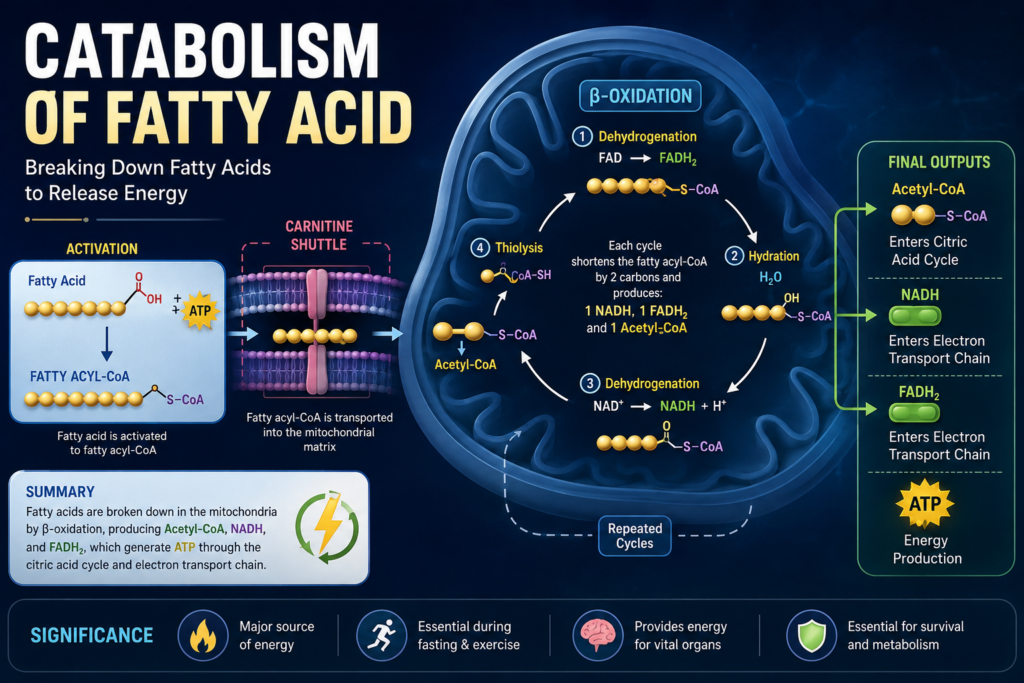
CATABOLISM OF FATTY ACID

Fatty Acid Catabolism: Beta-Oxidation & ATP Yield Explained

What Is Fatty Acid Catabolism? Fat is the body’s densest energy reserve, and breaking it down for fuel is one of the most important jobs mitochondria perform. In heart and liver tissue especially, fatty acid breakdown can supply the large majority of the cell’s energy needs — even when other fuel sources are scarce. The […]

Fatty Acid Catabolism: Beta-Oxidation & ATP Yield Explained Read More »
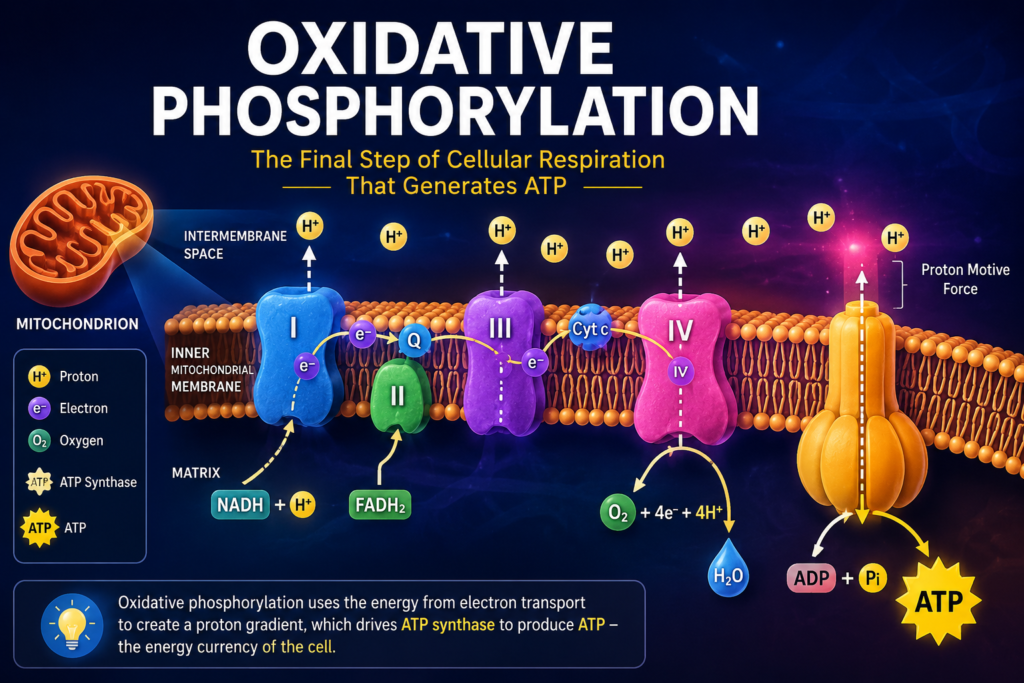
OXIDATIVE PHOSPHORYLATION

Oxidative Phosphorylation: How Mitochondria Make ATP

WHAT IS OXIDATIVE PHOSPHORYLATION Every cell needs a steady supply of usable energy, and for most living things, that energy comes packaged as ATP. Oxidative phosphorylation is the final stage of this energy-harvesting process — the point where the electrons stripped from food molecules during earlier metabolic steps get funneled through a chain of proteins,

Oxidative Phosphorylation: How Mitochondria Make ATP Read More »

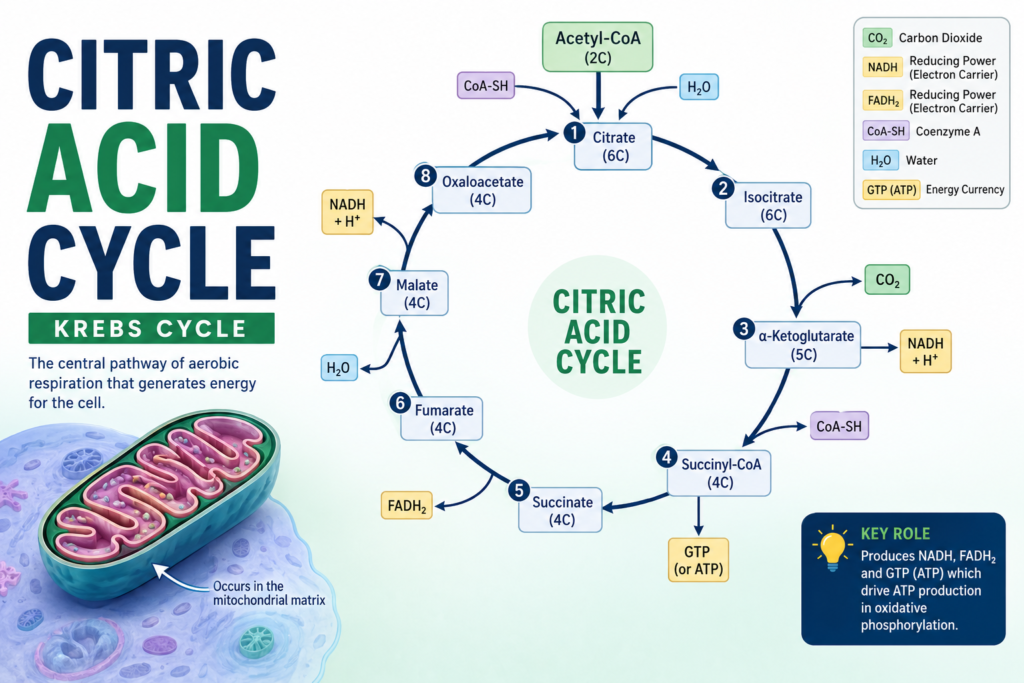
Citric Acid Cycle: Steps, Diagram & Energy Yield Explained

Citric Acid Cycle: 8 Steps, Diagram & Energy Yield Explained

What Is the Citric Acid Cycle? Some cells obtain energy (ATP) by fermentation, breaking down glucose in the absence of oxygen. For most eukaryotic cells and many bacteria, which live under aerobic conditions and oxidize their organic fuels to carbon dioxide and water, glycolysis is but the first stage in the complete oxidation of glucose.

Citric Acid Cycle: 8 Steps, Diagram & Energy Yield Explained Read More »

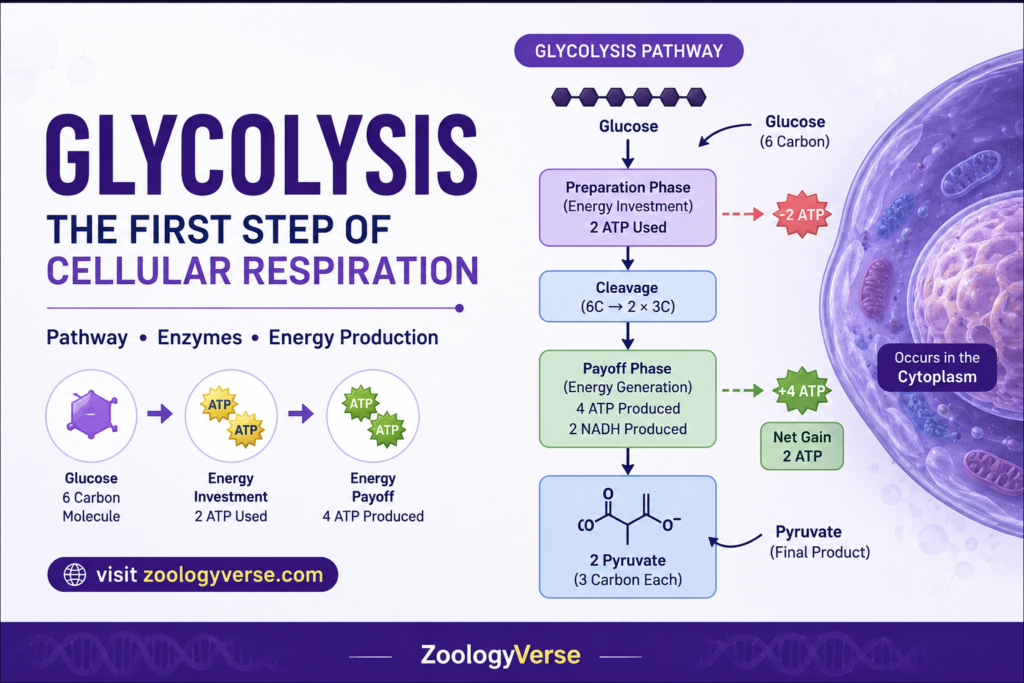
Glycolysis pathway showing glucose breakdown into pyruvate, ATP production, NADH formation, and energy investment and payoff phases

Glycolysis: Steps, Reactions, Phases & Regulation

GLYCOLYSIS Glucose occupies a central position in the metabolism of plants, animals, and many microorganisms. It is relatively rich in potential energy, and thus a good fuel; the complete oxidation of glucose to carbon dioxide and water proceeds with a standard free-energy change of −2,840 kJ/mol. By storing glucose as a high molecular weight polymer

Glycolysis: Steps, Reactions, Phases & Regulation Read More »