
Ecological factors are broadly classified into two major categories: biotic factors and abiotic factors. Biotic factors include living organisms, such as plants, animals, fungi, and microorganisms, along with their interactions. Abiotic factors include non-living environmental conditions and resources, such as sunlight, temperature, water, air, soil, and minerals.
Ecological factors are the living and non-living components of the environment that influence the growth, survival, reproduction, distribution, and behaviour of organisms. Every organism lives within an environment where it interacts with other organisms and responds to physical and chemical conditions such as temperature, light, water, soil, and humidity.
These factors rarely act independently. For example, sunlight and temperature influence plant growth, while plants provide food and shelter for animals. Similarly, water availability affects the distribution of vegetation, which in turn influences the organisms that depend on it.
Understanding ecological factors helps explain why organisms thrive in particular habitats, how species interact, and how environmental changes affect ecosystems. The study of these factors is therefore fundamental to understanding biodiversity, ecosystem functioning, and environmental conservation.
Definition of Ecological Factors
Ecological factors are the biotic and abiotic components of the environment that influence the life processes, survival, growth, reproduction, behaviour, and distribution of organisms.
These factors determine the environmental conditions under which organisms live and interact. They include living components, such as plants, animals, and microorganisms, as well as non-living components, such as light, temperature, water, air, soil, and nutrients.
Ecological factors may act individually or interact with one another to influence organisms. For example, temperature and water availability affect plant growth, while competition and predation influence the survival and distribution of animal populations.
Thus, ecological factors help determine the structure, composition, and functioning of ecosystems.
Classification of Ecological Factors
Ecological factors are broadly classified into two major categories: biotic factors and abiotic factors. Biotic factors include living organisms and their interactions, whereas abiotic factors consist of the physical and chemical conditions of the environment.
1. Biotic Factors
Biotic factors are the living components of an ecosystem that influence the survival, growth, reproduction, and distribution of other organisms.
They include plants, animals, fungi, bacteria, algae, and other microorganisms. Their effects occur through interactions such as competition, predation, parasitism, mutualism, and herbivory.
For example, plants provide food and shelter for many animals, predators regulate prey populations, and decomposers break down dead organic matter.
2. Abiotic Factors
Abiotic factors are the non-living physical and chemical components of the environment that influence organisms and ecosystem processes.
Important examples include sunlight, temperature, water, humidity, rainfall, air, soil, salinity, pH, and mineral nutrients. These factors affect physiological processes, resource availability, and the types of organisms that can survive in a habitat.
For example, sunlight influences photosynthesis, temperature affects metabolic activity, and water availability determines which plants and animals can thrive in a particular environment.
Comparison Between Biotic and Abiotic Factors
| Feature | Biotic Factors | Abiotic Factors |
|---|---|---|
| Nature | Living components and their biological interactions | Non-living physical and chemical components |
| Examples | Plants, animals, fungi, bacteria | Light, temperature, water, soil, minerals |
| Main influence | Feeding relationships, competition, reproduction, and other interactions | Environmental conditions, resource availability, and physiological limits |
| Relationship | Organisms affect one another and modify their environment | Conditions influence the survival and activities of organisms |
| Example | Predation between a snake and a mouse | Temperature affecting the activity of a reptile |
Both categories interact continuously. Abiotic conditions influence which organisms can live in an ecosystem, while organisms can also modify abiotic conditions. For example, vegetation reduces soil erosion, provides shade, and influences soil moisture. Understanding both categories is essential for explaining the distribution of organisms and the functioning of ecosystems
Types and Examples of Biotic Factors
Biotic factors include all living organisms within an ecosystem and the interactions through which they influence one another. These factors affect food availability, population size, reproduction, competition, and the distribution of species.
Biotic components are commonly grouped according to their ecological roles as producers, consumers, decomposers, and detritivores.
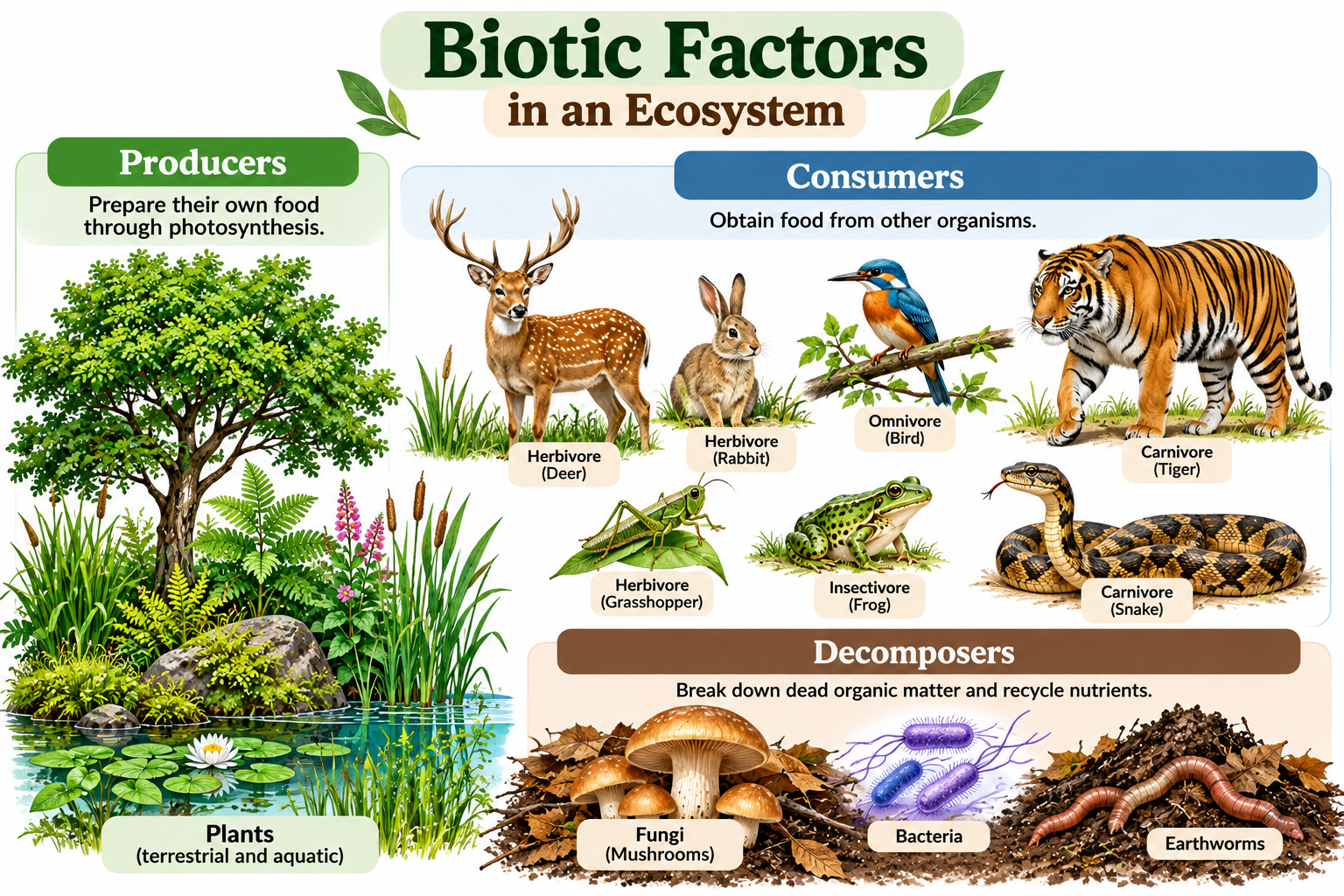
1. Producers
Producers are organisms that manufacture organic compounds from inorganic substances using an external energy source. Most terrestrial plants and many algae use sunlight for photosynthesis, while some microorganisms produce organic matter through chemosynthesis.
Examples: Green plants, grasses, trees, phytoplankton, and certain bacteria.
Ecological role: Producers form the foundation of most food webs by supplying organic matter and chemical energy to consumers. They also influence oxygen and carbon dioxide levels through photosynthesis and respiration.
2. Consumers
Consumers are organisms that obtain energy and nutrients by feeding on other organisms or organic matter. They depend directly or indirectly on producers for the organic compounds needed to survive.
Consumers can be classified according to their feeding habits.
- Herbivores: Feed primarily on plants or algae, such as deer, rabbits, and grasshoppers.
- Carnivores: Feed mainly on other animals, such as lions, snakes, and eagles.
- Omnivores: Consume both plant and animal material, such as bears, crows, and humans.
- Parasites: Obtain resources from host organisms, often harming them in the process, such as ticks and tapeworms.
Ecological role: Consumers transfer nutrients and energy through food webs and influence the abundance and distribution of other organisms.
3. Decomposers
Decomposers are organisms that chemically break down dead organic matter and release simpler substances into the environment. Bacteria and fungi are the principal decomposers in many ecosystems.
Examples: Soil bacteria, moulds, and saprotrophic fungi.
Ecological role: Decomposers help recycle nutrients, contribute to soil formation and organic matter turnover, and make some nutrients available for reuse by producers.
Feeding relationships among producers and consumers form food chains and food webs, which illustrate how energy passes through an ecosystem.
4. Detritivores
Detritivores feed on detritus, which includes dead plant material, animal remains, and organic waste. They fragment this material into smaller particles, supporting further decomposition by microorganisms.
Examples: Earthworms, millipedes, woodlice, and many detritus-feeding insects.
Ecological role: Detritivores help process dead organic matter and support nutrient recycling in terrestrial and aquatic food webs.
5. Biotic Interactions
In addition to their functional roles, organisms influence one another through ecological interactions. These relationships may benefit, harm, or have little measurable effect on the interacting species.
Important examples include:
- Competition: Organisms compete for limited resources, such as food, water, light, or nesting sites.
- Predation: One organism captures and consumes another.
- Parasitism: A parasite benefits by obtaining resources from a host, usually causing harm.
- Mutualism: Both interacting species benefit, as in many plant–pollinator relationships.
- Commensalism: One species benefits while the other experiences no substantial effect under the conditions considered.
- Herbivory: Animals consume plant or algal material, influencing producer growth and distribution.
These interactions help shape community structure, population dynamics, and biodiversity.
Biotic factors influence ecosystems through the roles organisms perform and the relationships they establish. Their effects are closely linked with abiotic conditions, which determine resource availability and the environmental limits within which organisms survive.
Types and Examples of Abiotic Factors
Abiotic factors are the non-living physical and chemical components of the environment that influence the survival, growth, reproduction, behaviour, and distribution of organisms. They determine the environmental conditions and resources available to living communities.
The major abiotic factors include light, temperature, water, humidity, rainfall, soil, air, salinity, pH, and mineral nutrients.
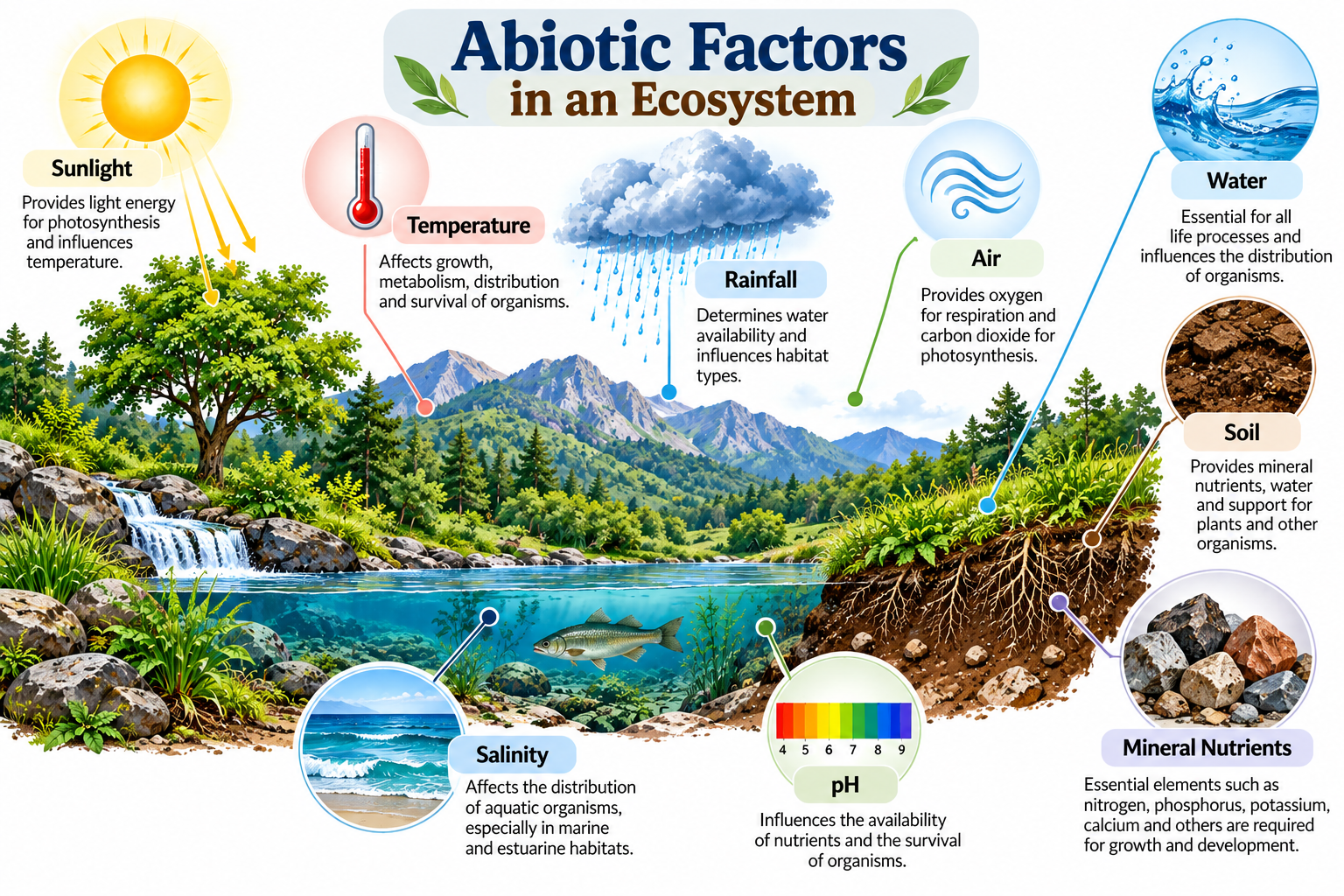
1. Light
Light is an important source of energy for most ecosystems because it drives photosynthesis in plants, algae, and certain bacteria. Light intensity, duration, and wavelength can influence plant growth, flowering, animal activity, and seasonal behaviour.
Examples: Sunlight in forests, light availability in grasslands, and light penetration into aquatic environments.
Ecological importance: Light influences primary productivity, the distribution of vegetation, and daily or seasonal activity patterns in many organisms.
2. Temperature
Temperature affects enzyme activity, metabolism, growth, reproduction, and other physiological processes. Each species has a range of temperatures within which it can function effectively, as well as limits beyond which survival becomes difficult.
Examples: High temperatures in deserts, seasonal temperature changes in temperate forests, and low temperatures in polar habitats.
Ecological importance: Temperature influences species distribution, breeding seasons, migration, hibernation, and the rate of biological processes such as decomposition.
3. Water
Water is essential for cellular processes, nutrient transport, photosynthesis, and the maintenance of internal water balance. Its availability varies among habitats and strongly affects which organisms can survive there.
Examples: Rainfall in tropical forests, limited water in deserts, and freshwater availability in ponds and rivers.
Ecological importance: Water availability influences plant productivity, animal survival, population distribution, and the structure of terrestrial and aquatic ecosystems.
4. Humidity
Humidity refers to the amount of water vapour present in the air. It affects evaporation and transpiration and can influence water loss from organisms.
Examples: High humidity in tropical rainforests and lower humidity in many arid environments.
Ecological importance: Humidity influences the activity of moisture-sensitive organisms, the risk of dehydration, and the growth of some fungi and microorganisms.
5. Rainfall and Precipitation
Rainfall supplies water to soil, vegetation, rivers, lakes, and groundwater. The amount, intensity, and seasonal distribution of precipitation influence ecosystem productivity and the availability of freshwater.
Examples: Heavy seasonal rainfall in monsoon forests and low annual rainfall in deserts.
Ecological importance: Precipitation patterns influence vegetation types, soil moisture, erosion, flooding, and the distribution of organisms.
6. Soil
Soil provides physical support, water, air spaces, and mineral nutrients for many terrestrial organisms. Its properties include texture, structure, depth, organic matter content, and drainage.
Examples: Sandy desert soils, clay-rich soils, and organic-rich forest soils.
Ecological importance: Soil properties affect plant rooting, water retention, nutrient availability, and the communities of microorganisms and soil animals.
7. Air and Atmospheric Gases
Air contains gases essential for biological processes. Oxygen is used in aerobic respiration, carbon dioxide is used in photosynthesis, and nitrogen is an important component of biological molecules after being converted into usable forms.
Examples: Atmospheric oxygen, carbon dioxide, and nitrogen.
Ecological importance: Gas availability influences respiration, photosynthesis, nitrogen cycling, and the functioning of terrestrial and aquatic ecosystems.
8. Salinity
Salinity refers to the concentration of dissolved salts in water or soil. Organisms differ in their ability to tolerate changes in salt concentration, which affects their water balance and distribution.
Examples: High salinity in marine environments, lower salinity in freshwater lakes, and variable salinity in estuaries.
Ecological importance: Salinity influences osmoregulation, species composition, and the distribution of aquatic and salt-tolerant organisms.
9. pH
pH indicates how acidic or alkaline a substance is. Soil and water pH influence chemical reactions, nutrient availability, and the activity of microorganisms.
Examples: Acidic soils in some forest ecosystems and alkaline conditions in certain lakes or arid-region soils.
Ecological importance: pH can determine which organisms thrive in a habitat and influence the availability or toxicity of particular chemical substances.
10. Mineral Nutrients
Mineral nutrients such as nitrogen, phosphorus, potassium, calcium, and magnesium are required for growth and metabolism. They enter ecosystems through processes such as rock weathering, atmospheric deposition, decomposition, and biological transformations.
Examples: Nitrate and phosphate in soil, dissolved nutrients in freshwater, and minerals released from weathered rocks.
Ecological importance: Nutrient availability influences plant growth, primary productivity, soil fertility, and the productivity of aquatic ecosystems.
11. Wind
Wind is the movement of air from areas of higher pressure to areas of lower pressure. It influences evaporation, transpiration, temperature, and the movement of pollen, seeds, and some organisms.
Examples: Strong winds in coastal areas and dry winds in arid environments.
Ecological importance: Wind can affect plant form, seed dispersal, pollination, and the physical conditions experienced by organisms.
12. Topography and Elevation
Topography includes the shape, slope, and physical features of the land, while elevation describes height above sea level. These factors influence sunlight exposure, drainage, temperature, and soil development.
Examples: Mountain slopes, valleys, plateaus, and low-lying floodplains.
Ecological importance: Differences in elevation and terrain can create distinct microclimates and habitats, resulting in changes in vegetation and species distribution.
Abiotic factors determine the physical and chemical conditions under which organisms live. Their effects often interact; for example, temperature and rainfall together influence soil moisture and vegetation, while salinity and temperature can jointly affect aquatic organisms.
Interaction Between Biotic and Abiotic Factors
Biotic and abiotic factors interact continuously to determine the structure, functioning, and productivity of ecosystems. Abiotic conditions influence the growth and survival of living organisms, while organisms can modify the physical and chemical conditions of their surroundings.
These interactions connect living communities with their environment and help explain why different ecosystems support different organisms.
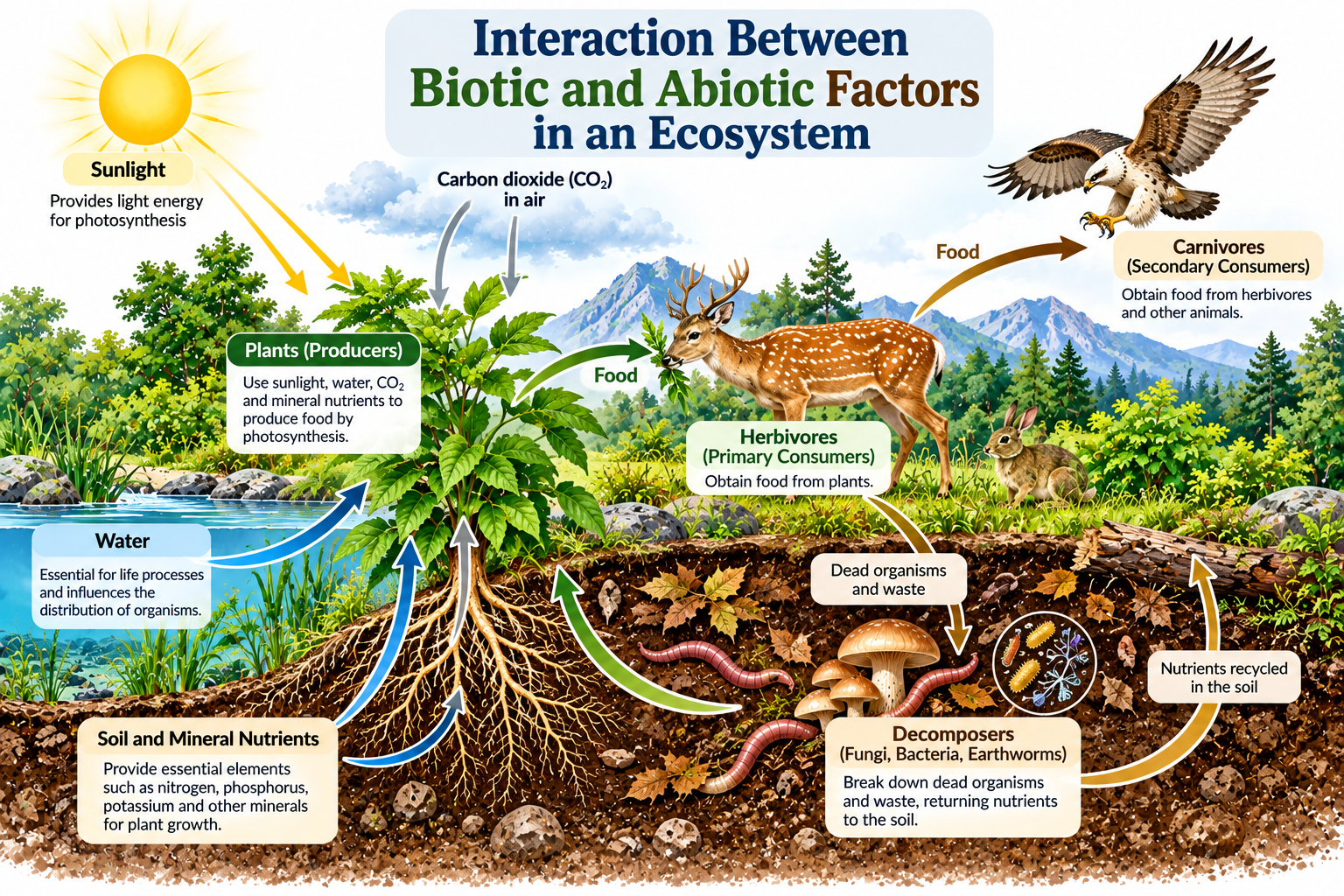
1. Sunlight and Plant Growth
Sunlight is an abiotic factor that supplies energy for photosynthesis. Plants use this energy to convert carbon dioxide and water into organic compounds, supporting their growth and providing food for consumers.
At the same time, plants influence their surroundings by providing shade, reducing ground temperature, and changing light availability for other organisms.
2. Temperature and Animal Activity
Temperature affects the metabolic activity, movement, growth, and reproduction of animals. For example, many reptiles depend on external heat sources to regulate their body temperature and may become less active in cold conditions.
Animals can also influence local environmental conditions. Burrowing organisms may alter soil structure, while large groups of animals can affect vegetation and ground cover.
3. Water Availability and Vegetation
Water availability influences seed germination, plant growth, nutrient transport, and photosynthesis. Plants in dry environments often have adaptations that reduce water loss, whereas many aquatic plants are adapted to living in water-saturated conditions.
Vegetation, in turn, influences the water cycle by intercepting rainfall, promoting infiltration through root systems, and releasing water vapour through transpiration.
4. Soil and Soil Organisms
Soil provides nutrients, water, and physical support for plants. Its texture, pH, moisture, and oxygen availability influence the types of organisms that can live in it.
Roots, earthworms, fungi, and bacteria also modify soil conditions. Earthworms mix organic matter into the soil, plant roots help stabilize it, and microorganisms transform organic materials and nutrients.
5. Nutrient Availability and Ecosystem Productivity
Abiotic nutrient availability influences the growth of plants and algae. When essential nutrients are scarce, primary productivity may decline, limiting the food available to consumers.
Living organisms also affect nutrient availability through feeding, waste production, death, and decomposition. Decomposers release nutrients from organic matter, allowing them to be reused by producers.
6. Salinity and Aquatic Organisms
Salinity affects the movement of water into and out of cells, making it an important abiotic factor for aquatic organisms. Freshwater, marine, and estuarine species have different adaptations to salt concentration.
Organisms can also influence local aquatic conditions. For example, aquatic plants and algae alter dissolved oxygen and carbon dioxide concentrations through photosynthesis and respiration.
7. Wind, Pollination, and Seed Dispersal
Wind is an abiotic factor that can transfer pollen between plants and disperse seeds over considerable distances. These processes influence plant reproduction and distribution.
Vegetation can also alter wind speed near the ground. Forests and hedgerows create shelter, reducing wind exposure for smaller plants and animals.
8. Combined Effects of Biotic and Abiotic Factors
In natural ecosystems, multiple factors often act together rather than independently. For example, plant growth depends on light, temperature, water, soil nutrients, and interactions with herbivores, pollinators, and microorganisms.
A change in one factor can therefore affect several others. A prolonged drought may reduce plant growth, decrease food availability for herbivores, and subsequently affect predator populations.
These examples demonstrate that ecosystems function through continuous interactions between living organisms and their physical environment. Understanding these relationships is essential for explaining ecological balance, species distribution, and ecosystem responses to environmental change.
Effects of Ecological Factors on Organisms
Ecological factors influence where organisms live, how they grow, when they reproduce, and how they respond to environmental changes. Each species has particular environmental requirements and tolerances, which determine its ability to survive and reproduce under different conditions.
1. Influence on Growth and Development
Abiotic factors such as light, temperature, water, and nutrient availability affect the growth and development of organisms. Plants require suitable light and mineral nutrients for growth, while animals depend on appropriate environmental conditions and sufficient food.
When essential resources are limited, growth may slow, development may be delayed, and overall productivity may decline.
2. Influence on Survival
Organisms survive within environmental conditions they can tolerate. Extreme temperatures, insufficient water, unsuitable pH, or excessive salinity can cause physiological stress and increase mortality.
Biotic factors also influence survival. Predation, competition, parasitism, and disease can reduce the survival of individuals, while mutualistic relationships may improve access to resources or protection.
3. Influence on Reproduction
Ecological factors affect reproductive timing, success, and offspring survival. Temperature, rainfall, photoperiod, and food availability can act as environmental cues that trigger breeding, flowering, or migration.
For example, seasonal rainfall stimulates breeding in many amphibians, while changes in day length influence flowering in certain plant species.
4. Influence on Distribution of Organisms
The distribution of a species depends partly on whether environmental conditions and resources meet its requirements. Temperature, water availability, soil properties, salinity, and other abiotic factors can limit the areas where an organism survives.
Biotic interactions can further restrict distribution. A species may be unable to establish itself in an otherwise suitable habitat because of competition, predation, or the absence of a necessary mutualistic partner.
5. Influence on Adaptations
Ecological factors can favor adaptations that improve survival and reproduction under particular environmental conditions.
Examples include:
- Desert plants: Many have reduced leaves, water-storing tissues, or specialized photosynthetic pathways that help conserve water.
- Aquatic animals: Many possess gills or other adaptations for obtaining oxygen in water.
- Cold-adapted animals: Some have thick fur, insulating fat, or seasonal behaviours that reduce heat loss.
- Shade-tolerant plants: These can maintain growth under lower light levels than many sun-adapted species.
Over generations, natural selection can increase the frequency of inherited traits that improve reproductive success in a particular environment.
6. Influence on Population Size
Ecological factors affect population size by influencing birth rates, death rates, immigration, and emigration. Limited food or water can reduce population growth, while disease, predation, and competition may increase mortality or reduce reproduction.
Environmental conditions can also change carrying capacity, which is the population size an environment can sustain over time under particular conditions.
7. Influence on Ecosystem Structure
Ecological factors influence which species dominate a community and how organisms interact. For example, water availability helps determine whether an area supports desert vegetation, grassland, or forest. Nutrient availability and light penetration influence the composition of aquatic communities.
Changes in ecological factors can therefore alter species composition, food webs, productivity, and ecosystem functioning.
Ecological factors influence organisms at multiple levels, from individual physiology and behaviour to population dynamics and community structure. Their combined effects determine how organisms survive, reproduce, and interact within ecosystems.
Importance of Ecological Factors in Ecosystems
Ecological factors are essential for understanding how ecosystems develop, function, and respond to environmental changes. Biotic and abiotic components interact to regulate the availability of resources, the distribution of organisms, and the relationships that maintain ecological communities.
1. Maintain Ecosystem Functioning
Ecological factors influence the biological and physical processes that occur within ecosystems. Sunlight supports photosynthesis, water enables essential physiological processes, and suitable temperatures allow organisms to function effectively.
Living organisms also contribute through feeding, pollination, decomposition, and other ecological processes.
2. Determine Species Distribution
Environmental conditions determine which organisms can survive in a particular habitat. Temperature, rainfall, soil type, salinity, and water availability influence the distribution of plants and animals.
Biotic interactions, including competition and predation, may further affect where species can establish populations.
3. Regulate Population Growth
Resource availability, environmental conditions, and biological interactions influence population growth. Food shortages, extreme temperatures, disease, and predation can limit population size, whereas favourable conditions may support population expansion.
These influences help shape population dynamics and the relationships among species.
4. Support Biodiversity
Different habitats provide different combinations of environmental conditions and resources. Forests, grasslands, wetlands, deserts, and oceans support distinct communities of organisms adapted to their conditions.
Variation in ecological factors therefore contributes to habitat diversity and can support biodiversity at the ecosystem, community, and species levels.
5. Support Food Webs and Ecological Relationships
Biotic factors determine feeding relationships, competition, predation, parasitism, and mutualism. Abiotic factors influence the resources and conditions required for these relationships to occur.
Together, they shape food webs and the movement of energy and nutrients through ecosystems.
6. Influence Nutrient Cycling and Productivity
Light, water, temperature, and mineral nutrients influence primary productivity, while decomposers and other organisms help recycle nutrients. These interactions determine how effectively essential materials are reused and how much organic matter an ecosystem can produce.
Changes in ecological factors may increase or decrease productivity depending on the species and conditions involved.
7. Promote Adaptation and Evolution
Environmental conditions and biological interactions create selection pressures that can favour particular inherited traits. Over many generations, natural selection can lead to adaptations that improve survival and reproductive success in specific environments.
Examples include drought tolerance in desert plants and specialized feeding structures in animals occupying different ecological niches.
8. Help Predict Environmental Change
Understanding ecological factors helps scientists evaluate the effects of climate change, habitat destruction, pollution, invasive species, and other disturbances. Monitoring temperature, water quality, soil conditions, and species populations can reveal changes in ecosystem health.
This knowledge supports conservation planning, habitat restoration, and sustainable management of natural resources.
9. Support Environmental Conservation
Conservation measures are more effective when they account for both biotic and abiotic requirements. Protecting a species may require suitable food sources, breeding sites, water availability, soil conditions, and relationships with other organisms.
For example, wetland conservation must consider water levels and water quality as well as the plants, animals, and microorganisms that depend on the habitat.
The relationships among trophic levels can be represented using ecological pyramids, which illustrate the distribution of numbers, biomass, or energy within an ecosystem.
Overall, ecological factors form the foundation of ecosystem structure and functioning. Understanding their effects and interactions is essential for conserving biodiversity, managing natural resources, and maintaining healthy ecosystems.
Limiting Factors and the Law of Tolerance
Not all organisms can survive under every environmental condition. Each species has a range of tolerance for factors such as temperature, moisture, salinity, light, and pH. When an ecological factor becomes too scarce or exceeds the organism’s tolerance limits, it can restrict growth, reproduction, survival, or distribution.
1. Limiting Factors
A limiting factor is an environmental condition or resource that restricts the growth, abundance, reproduction, or distribution of an organism or population.
Limiting factors may be abiotic, such as water, temperature, light, and mineral nutrients, or biotic, such as competition, predation, disease, and food availability.
For example, water scarcity can limit plant growth in a desert, while low light can restrict the growth of plants beneath a dense forest canopy.
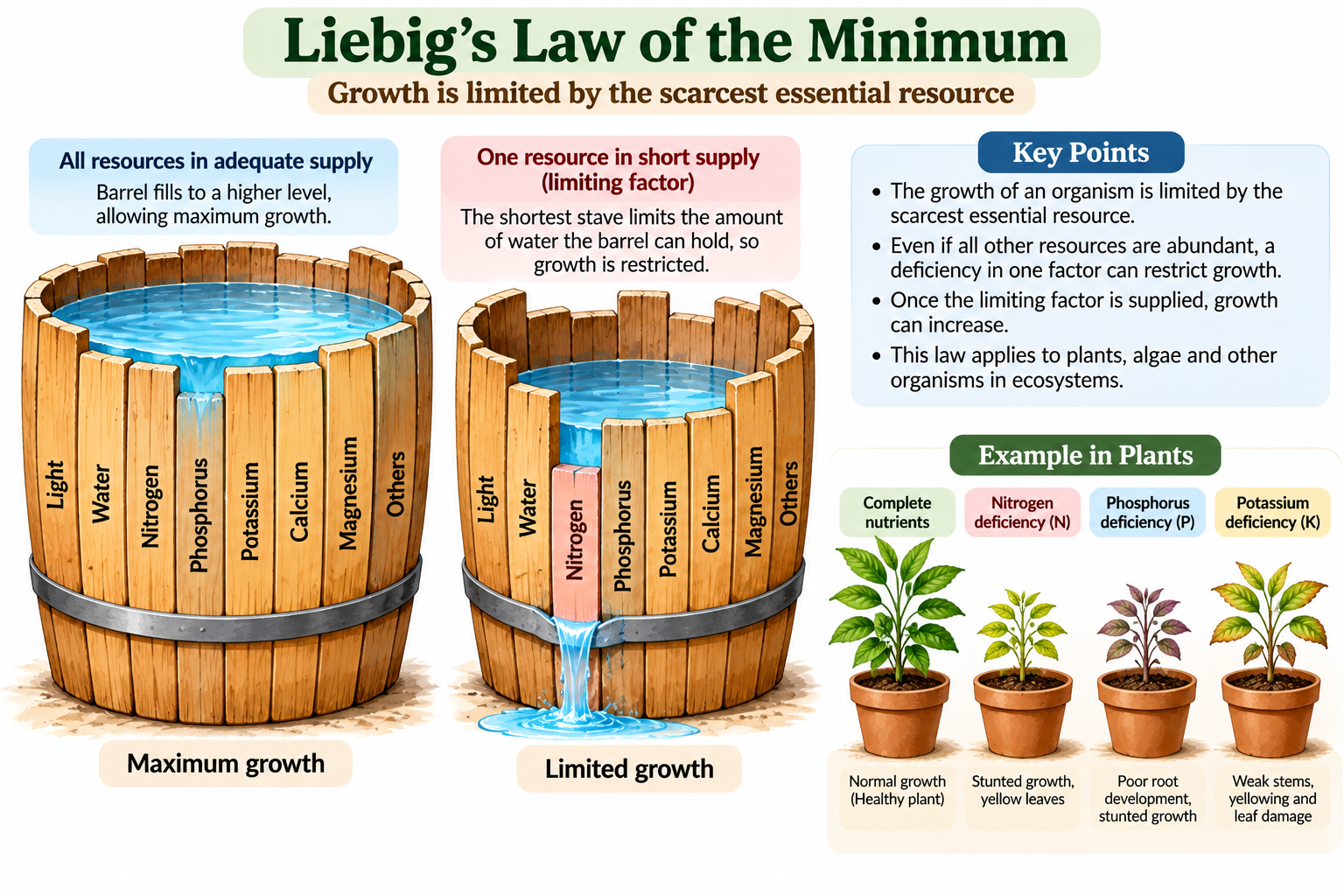
2. Liebig’s Law of the Minimum
Liebig’s Law of the Minimum states that the growth of an organism is limited by the essential resource that is in shortest supply relative to its requirement, provided other necessary conditions are suitable.
For example, a plant may receive sufficient sunlight and water but still show poor growth if an essential mineral nutrient is severely deficient.
The law is particularly useful for understanding nutrient limitation in plants and primary producers. In natural ecosystems, several factors may interact to limit growth.
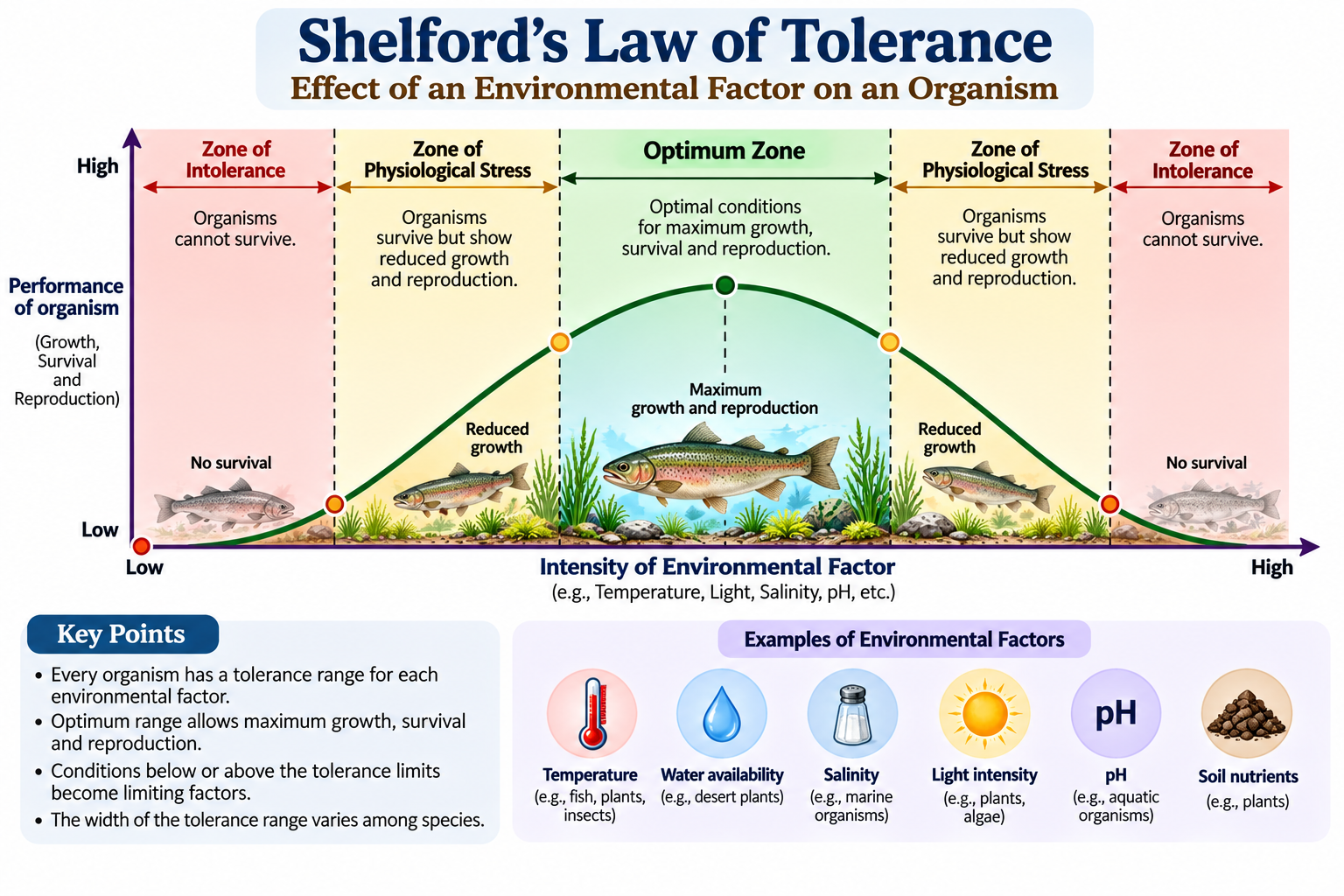
3. Shelford’s Law of Tolerance
Shelford’s Law of Tolerance states that the distribution and success of an organism depend on its ability to tolerate the range of environmental conditions in which it lives.
For each environmental factor, an organism may have:
- Minimum limit: The lowest level it can tolerate.
- Optimum range: The conditions under which it performs most effectively.
- Maximum limit: The highest level it can tolerate.
Conditions near either limit may cause physiological stress, while conditions beyond the tolerance range may prevent survival or successful reproduction.
4. Zones of Tolerance
The tolerance range of a species can be understood through three general zones:
- Optimum zone: Conditions are favourable for growth, survival, and reproduction.
- Zones of physiological stress: Organisms may survive, but growth or reproduction is reduced.
- Zones of intolerance: Conditions are unsuitable for survival, so the species cannot maintain a population there.
The exact limits vary among species and may change with age, life stage, acclimation, and interactions with other environmental factors.
5. Examples of Limiting Factors
- Temperature: Extreme heat or cold may limit the distribution of plants and animals.
- Water: Insufficient rainfall restricts the growth of many plants in arid environments.
- Light: Low light can limit photosynthesis in shaded forests and deep aquatic habitats.
- Salinity: Many freshwater organisms cannot tolerate the high salt concentrations found in seawater.
- Nutrients: Nitrogen or phosphorus deficiency can limit primary productivity in terrestrial and aquatic ecosystems.
- Competition: Competition for food, territory, nesting sites, or light may restrict a species even when physical conditions are suitable.
6. Importance of Limiting Factors
Limiting factors help explain why species occupy particular habitats, why populations fluctuate, and why environmental changes can alter ecosystem composition. Understanding tolerance ranges and resource limitations is important in agriculture, wildlife conservation, habitat restoration, and predicting the effects of climate change.
In summary, the distribution and success of organisms depend not only on favourable conditions but also on whether essential resources and environmental conditions remain within their tolerance limits.
Frequently Asked Questions About Ecological Factors
What are ecological factors?
What are the two main types of ecological factors?
What are biotic factors? Give examples.
What are abiotic factors? Give examples.
How do biotic and abiotic factors interact?
What is a limiting factor in ecology?
What is the difference between Liebig’s Law of the Minimum and Shelford’s Law of Tolerance?
How do ecological factors affect the distribution of organisms?
Why are ecological factors important for maintaining ecosystem balance?
Can human activities change ecological factors?
Conclusion
Ecological factors are essential components of every ecosystem because they influence the survival, growth, reproduction, distribution, and interactions of organisms. These factors are broadly classified into biotic factors, which include living organisms and their interactions, and abiotic factors, which include non-living conditions such as sunlight, temperature, water, soil, and nutrients.
The effects of ecological factors depend on the requirements and tolerance limits of individual organisms. When a necessary resource becomes scarce or an environmental condition exceeds an organism’s tolerance range, it can act as a limiting factor and influence population growth and distribution.
Understanding ecological factors helps explain species adaptations, biodiversity, ecosystem functioning, and the consequences of environmental changes. It also provides a scientific basis for habitat conservation, sustainable resource management, and protecting the ecological balance of natural environments.
References
- OpenStax. (2018). Biology 2e: The Scope of Ecology. Rice University. https://openstax.org/books/biology-2e/pages/44-1-the-scope-of-ecology
- OpenStax. (2018). Biology 2e: Chapter 44 Summary. Rice University. https://openstax.org/books/biology-2e/pages/44-chapter-summary
- OpenStax. (2018). Biology 2e: Ecology of Ecosystems. Rice University. https://openstax.org/books/biology-2e/pages/46-1-ecology-of-ecosystems
- National Geographic Society. Ecosystem. National Geographic Education. https://education.nationalgeographic.org/resource/ecosystem/
- Hatfield, J. L., & Prueger, J. H. (2021). Plant hormesis and Shelford’s tolerance law curve. Journal of Forestry Research. https://link.springer.com/article/10.1007/s11676-021-01312-0
Discover more from Zoologyverse
Subscribe to get the latest posts sent to your email.