Biosynthesis

Topic notes on lipid, amino acid, and de novo purine and pyrimidine nucleotide biosynthesis pathways.

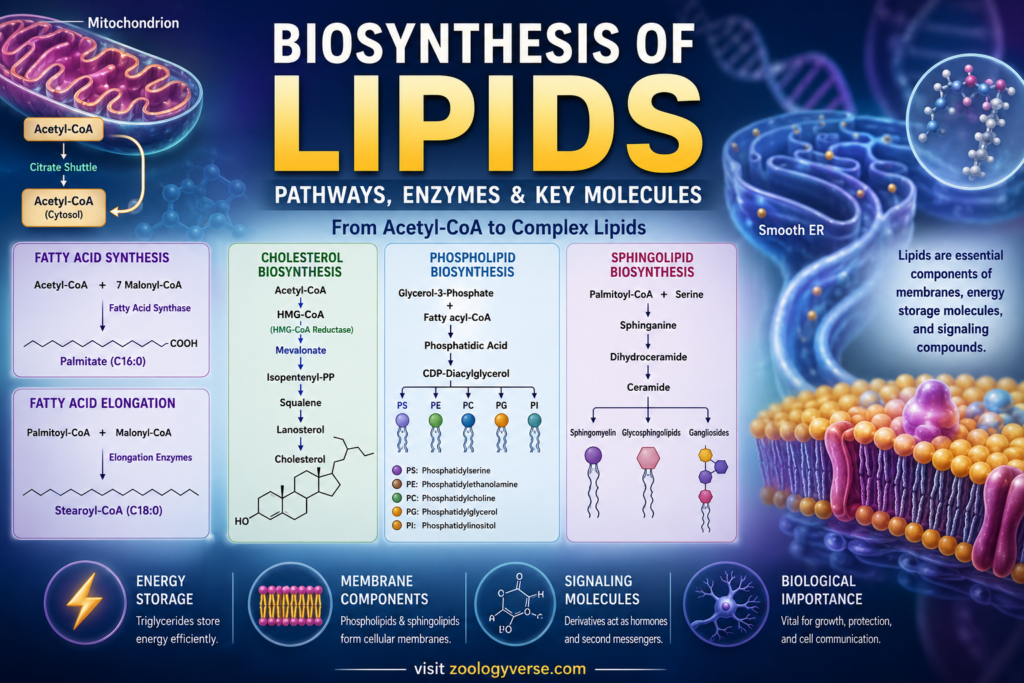
Lipid biosynthesis pathways showing fatty acid, cholesterol, phospholipid and sphingolipid synthesis from acetyl-CoA

Lipid Biosynthesis: Fatty Acid, Cholesterol and Membrane Lipid Synthesis

Lipid biosynthesis is the process by which cells build fatty acids, cholesterol, phospholipids, and other important lipids from smaller precursors. This guide explains the major pathways, enzymes, cellular locations, regulation, and biological significance of lipid synthesis. Introduction to Lipid Biosynthesis Lipids are much more than simple energy-storage molecules. They form an essential part of biological […]

Lipid Biosynthesis: Fatty Acid, Cholesterol and Membrane Lipid Synthesis Read More »
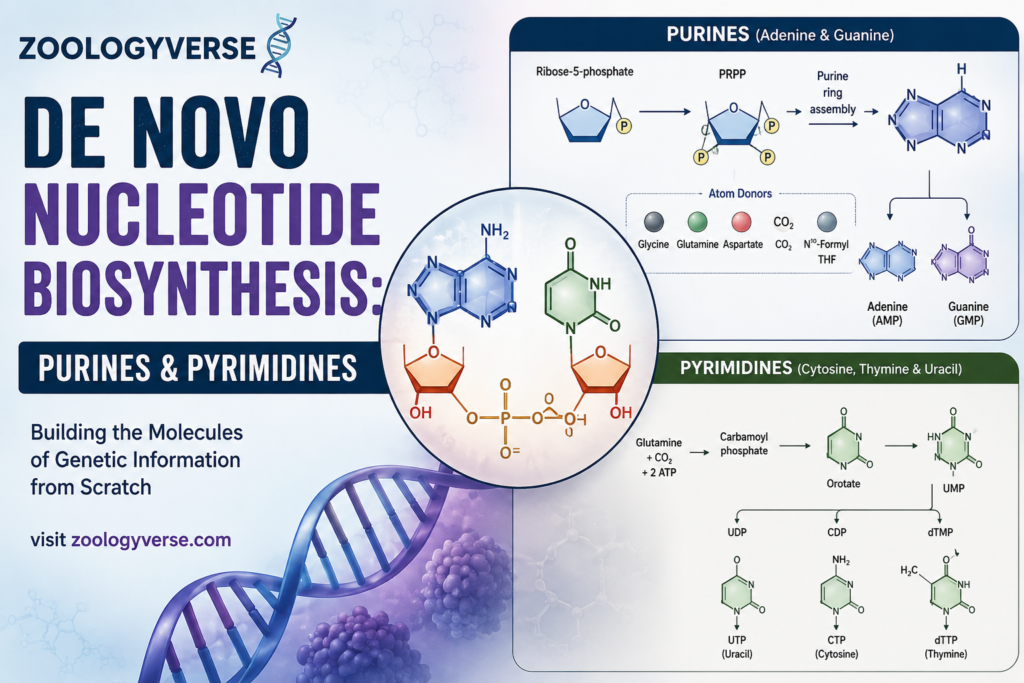
De Novo Nucleotide Biosynthesis Purines & Pyrimidines

De Novo Nucleotide Biosynthesis: Purines & Pyrimidines

De Novo Nucleotide Biosynthesis: Purines & Pyrimidines De Novo Nucleotide Biosynthesis: How Cells Build Purines and Pyrimidines From Scratch Every time a cell divides, it needs enough new DNA and RNA building blocks to duplicate its entire genome. Nucleotides do far more than spell out genetic sequences, though — they’re the energy currency of the

De Novo Nucleotide Biosynthesis: Purines & Pyrimidines Read More »

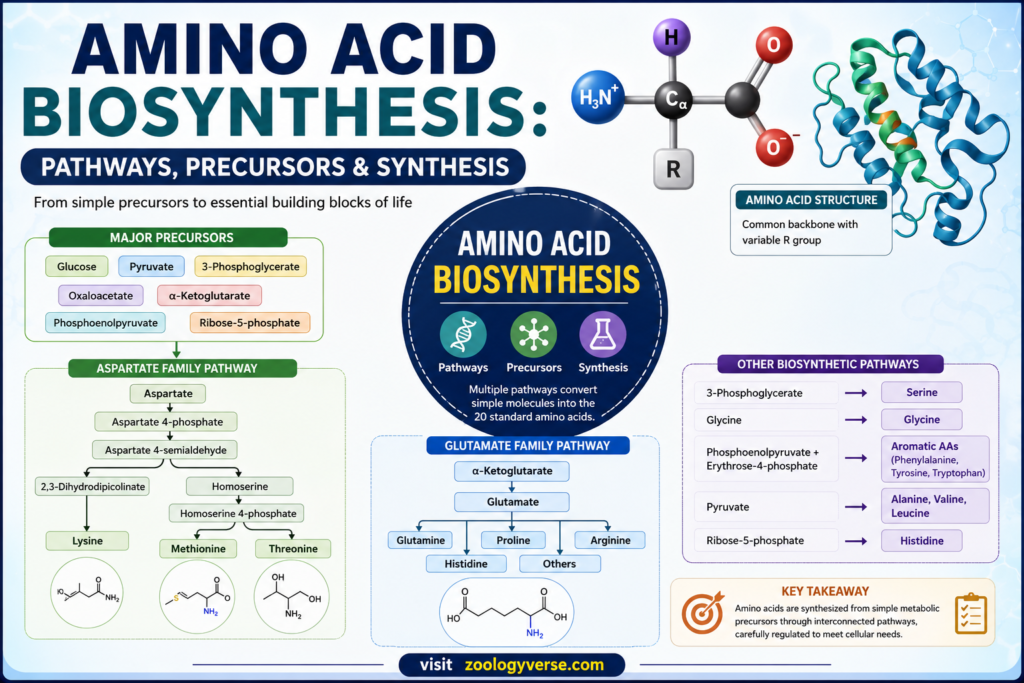
AMINO ACID BIOSYNTHESIS 1 1024x683

Amino Acid Biosynthesis: Pathways, Precursors and Synthesis

Amino acid biosynthesis is the process by which organisms synthesize amino acids from metabolic precursors such as α-ketoglutarate, oxaloacetate, pyruvate, and 3-phosphoglycerate. Amino acids are the fundamental building blocks of proteins, but their importance extends far beyond protein synthesis. They also participate in nitrogen metabolism, formation of nucleotides and other biomolecules, energy metabolism, and numerous

Amino Acid Biosynthesis: Pathways, Precursors and Synthesis Read More »