Study of Bones

LOWER JAWS OR MANDIBLES IN VERTEBRATE

LOWER JAWS OR MANDIBLES IN VERTEBRATE

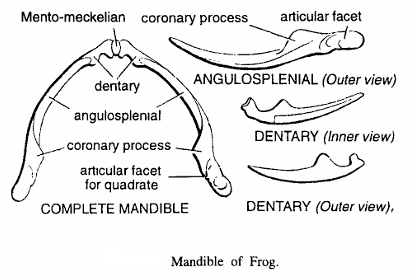
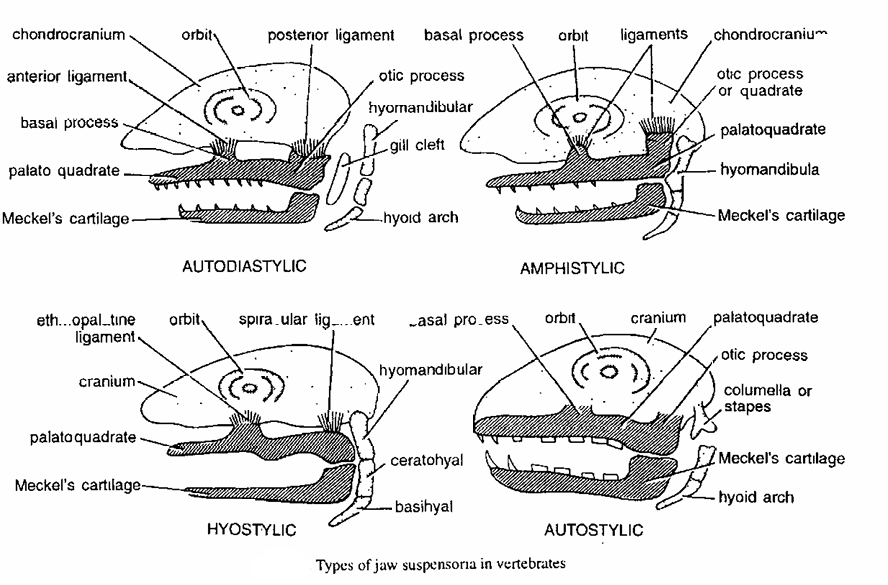
Overview of the Mandibles A comparative study of the lower jaw or mandibles in vertebrates explores the evolutionary adaptations, structural variations, and functional modifications of this critical skeletal element across different vertebrate groups. Here’s an overview of key aspects to consider: Evolutionary Development Comparative Anatomy in Vertebrate Groups Cartilaginous Fishes (Chondrichthyes): Bony Fishes (Osteichthyes): Lower […]
LOWER JAWS OR MANDIBLES IN VERTEBRATE Read More »

BONES OF VERTEBRAL COLUMN

BONES OF VERTEBRAL COLUMN

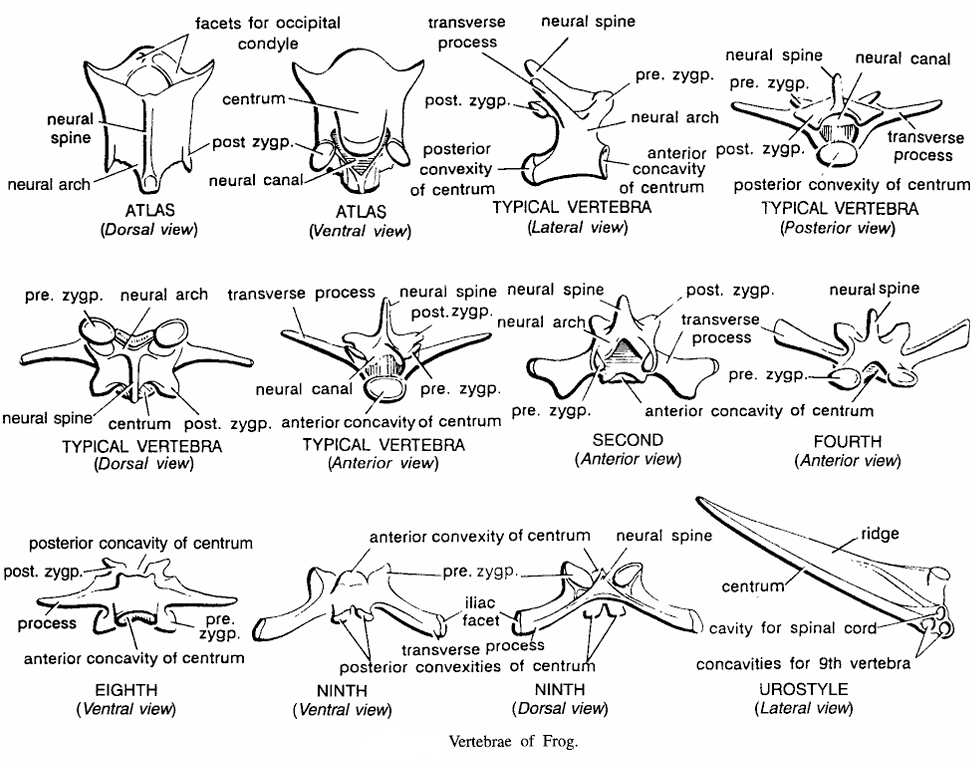
Comparative study of Vertebral Column Comparative studies of the Vertebral Column have shown that although the basic structural patterns (cervical, thoracic, lumbar, sacral, caudal) are conserved among vertebrates, regional specialization reflects locomotion, posture, and adaptation to environmental demands.Vertebrae mark an evolutionary transition from simple, rigid structures in fishes to complex, intertwined, curved columns in tetrapods. Scoliodon : Vertebral Column Comments : In Scoliodon Vertebral Column of 130 vertebrae divided into trunk and caudal regions.

BONES OF VERTEBRAL COLUMN Read More »

PELVIC GIRDLES IN VERTEBRATES

PELVIC GIRDLES IN VERTEBRATES

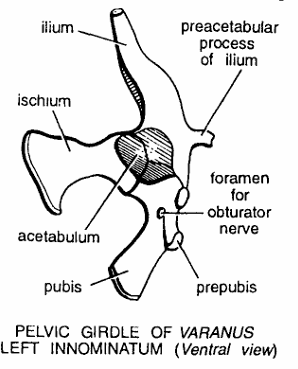
Comparative study of Pelvic Girdles of vertebrate The vertebrate pelvic girdles is a robust paired structure (ossa innominata) consisting of the ilium, ischium, and pubic bone that connects the hind limbs to the axial skeleton for locomotion and support. It has evolved from the simple cartilage structure of fish to the robust fusion structure of quadrupeds that supports body weight, making it highly adaptable to bipedal locomotion, jumping, and walking

PELVIC GIRDLES IN VERTEBRATES Read More »

FORELIMB BONES OF VERTEBRATES

FORELIMB BONES OF VERTEBRATES

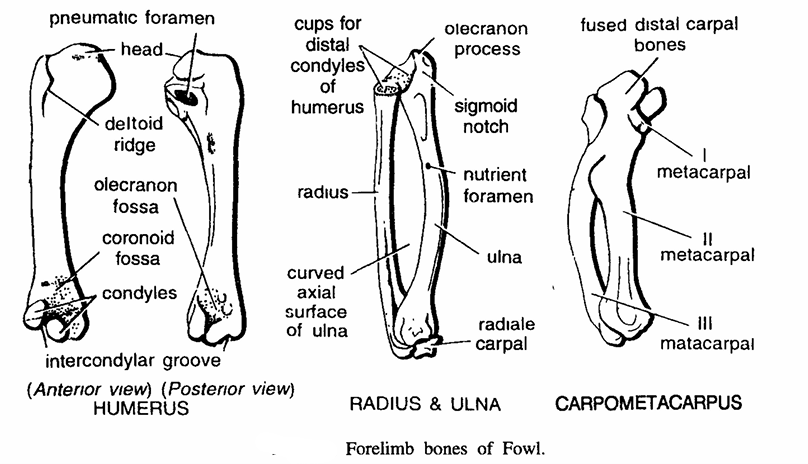
Comparative study of Forelimb bones of vertebrate The forelimb bones of vertebrates have homologous structures (humerus, radius, ulna, carpals, metacarpals, phalanges) adapted to different functions such as flight, running, swimming or grasping, derived from a common ancestor. Although the basic structure is pentadactyl (five fingers), evolution has modified, fused, or reduced these bones to meet

FORELIMB BONES OF VERTEBRATES Read More »

Comparative study of Hind limb bones of vertebrate

HIND LIMB BONES

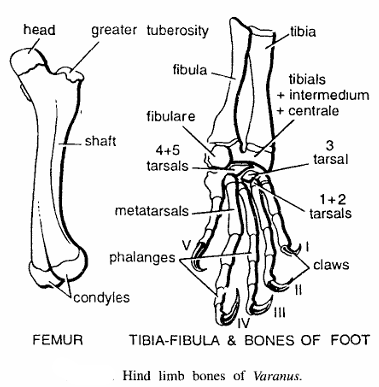
Comparative study of Hind limb bones of vertebrate The hind limb of vertebrates have a homologous five-toed plan – femur, tibia/fibula, tarsus, metatarsals and phalanges – adapted to specific modes of locomotion. Structural variations exist: running mammals (horses) have reduced toes (cannon bones) to increase speed, birds have a fused tibia, while tetrapods like salamanders

HIND LIMB BONES Read More »