
Lymnaea: Taxonomy, Ecology, and Identification
Lymnaea, is a genus of air-breathing freshwater snails known for their ecological importance in freshwater habitats worldwide. These pond snails play a critical role in aquatic food webs, serve as bioindicators of water quality, and are of considerable medical and veterinary significance as intermediate hosts for parasitic flukes. Species display notable variation in shell form, habitat preference, and feeding strategies, making them a prominent subject of malacological and ecological research.
Classification of Lymnaea
| Rank | Name | Key Diagnostic Characteristic |
|---|---|---|
| Domain | Eukaryota | Cells with membrane-bound nuclei |
| Kingdom | Animalia | Multicellular heterotrophs |
| Phylum | Mollusca | Soft body, unsegmented, many with shells |
| Class | Gastropoda | Muscular foot, head with sensory tentacles |
| Order | Basommatophora | Freshwater pulmonates with contractile tentacles |
| Family | Lymnaeidae | Thin-shelled pond snails, aquatic pulmonates |
| Genus | Lymnaea | Freshwater snails with tall spired shells |
- One-line diagnosis: Lymnaea are medium to large freshwater snails with right-handed spiral shells, broad triangular tentacles, and a global distribution in lentic and slow-flowing aquatic habitats.
Habit and Habitat
Species inhabit a wide range of freshwater environments, including ponds, lakes, slow rivers, marshes, and ditches. They are typically associated with areas rich in aquatic vegetation and thrive in waters of moderate to high mineral content. These snails can tolerate variable conditions, including fluctuations in water oxygen, salinity, and temperature. Most species crawl on submerged plants, mud, or detritus, occasionally surfacing to breathe air via a vascularized mantle cavity acting as a lung.
Geographical Distribution
Lymnaea are distributed worldwide, with high species diversity in northern temperate regions such as North America and Eurasia. They are present on all continents except Antarctica, and some species, like L. stagnalis (the Great Pond Snail), are found across Europe and North America. Lymnaea thrive particularly in nutrient-rich, slow-moving or still bodies of water, often become dominant gastropods in these settings.
Characteristics of Lymnaea
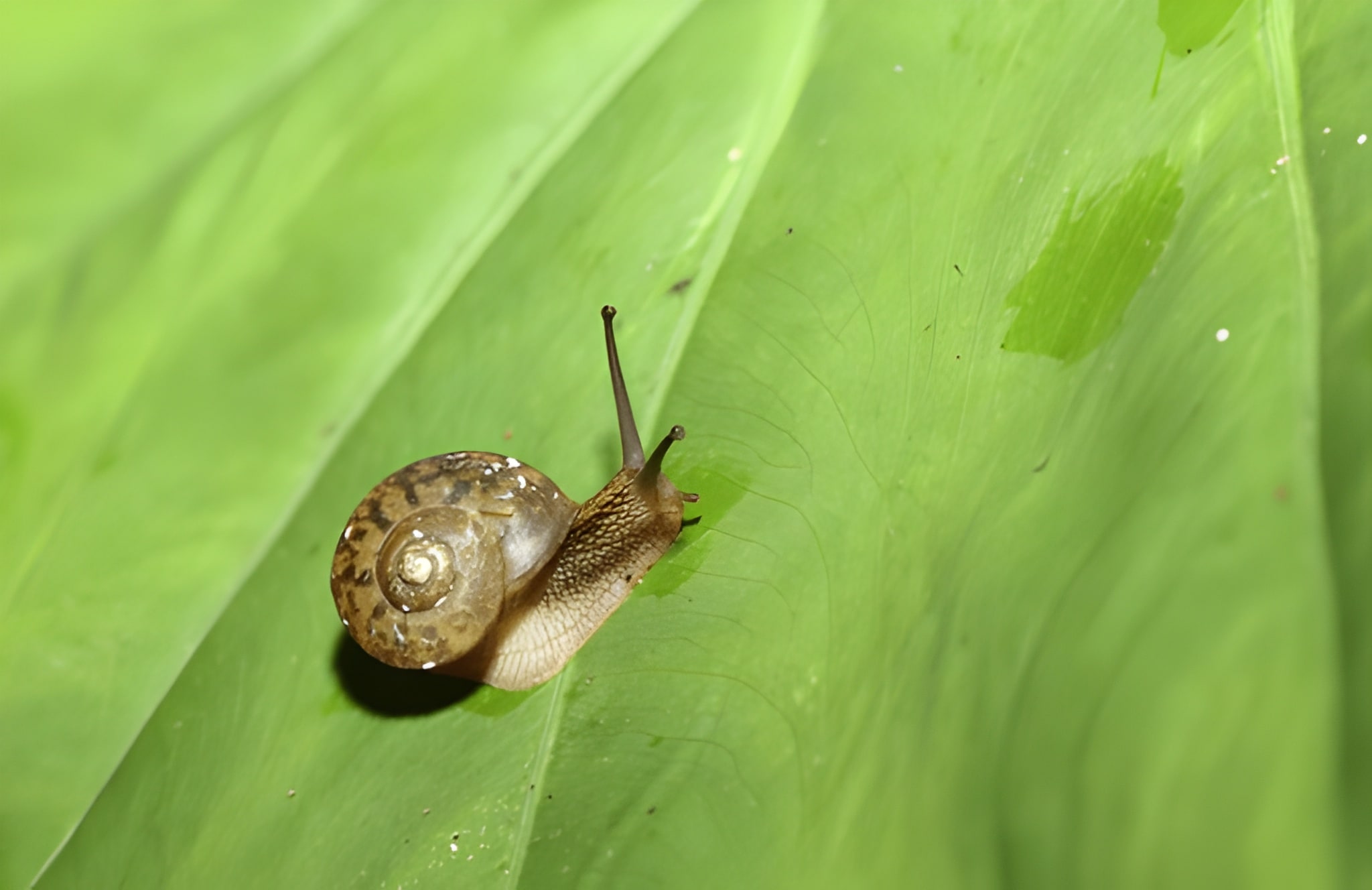
- Commonly called as pond snail.
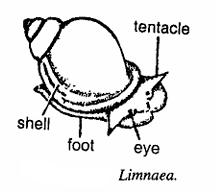
- Shell is thin, horny and fragile with a sharply elongated spire.
- Body whorl is the largest, while the penultimate whorl and apex are smaller.
- Body whorl opens by a wide aperture which is covered by operculum.
- Eyes are placed at the base of the single pair of flattened tentacles.
- The tentacles cannot be invaginated. Foot is rounded behind. Species of Limnaea are quite resistant to freezing. They can survive for several weeks in ice.
- Limnaea truncatula serves as intermediate host for the larval stages of the liver fluke.
- Sporocyst and redia stages of Fasciola hepatica are found in L. truncatula.
- The pond snail and miracidium larva of F. hepatica exhibit strong host specificity.
- Shell Morphology: Shell shape ranges from tall, narrow spires (Lymnaea stagnalis) to more rounded or conical forms, always spiraling to the right (dextral).
- Size: Body and shell size varies greatly, from under 1 cm to more than 7 cm in height in the largest species.
- Head and Tentacles: Flat, wide, triangular tentacles; head divided into two lateral lobes, each with an eye at the base.
- Pulmonate Respiration: Air-breathing via a lung-like cavity, occasionally surfacing to replenish air or, in some species, filling the cavity with water.
- Feeding: Primarily herbivorous, scraping algae, biofilm, and plant matter from submerged surfaces using a radula with large, simple teeth.
- Reproduction: Hermaphroditic; lay jelly-like egg masses attached to vegetation or hard surfaces; exhibit cross-fertilization.
Special Features of Lymnaea
- Medical Importance: Many Lymnaea species are intermediate hosts for parasitic liver flukes including Fasciola hepatica and F. gigantica, which cause fascioliasis in humans and livestock.
- Habitat Adaptability: Exhibits strong plasticity in shell morphology and ecological tolerances—an adaptation to diverse and changing aquatic habitats.
- Role as Bioindicators: The presence, diversity, and population changes of Lymnaea snails serve as indicators of water quality, nutrient enrichment, and ecosystem health in freshwater systems.
Identification
To identify Lymnaea in the field:
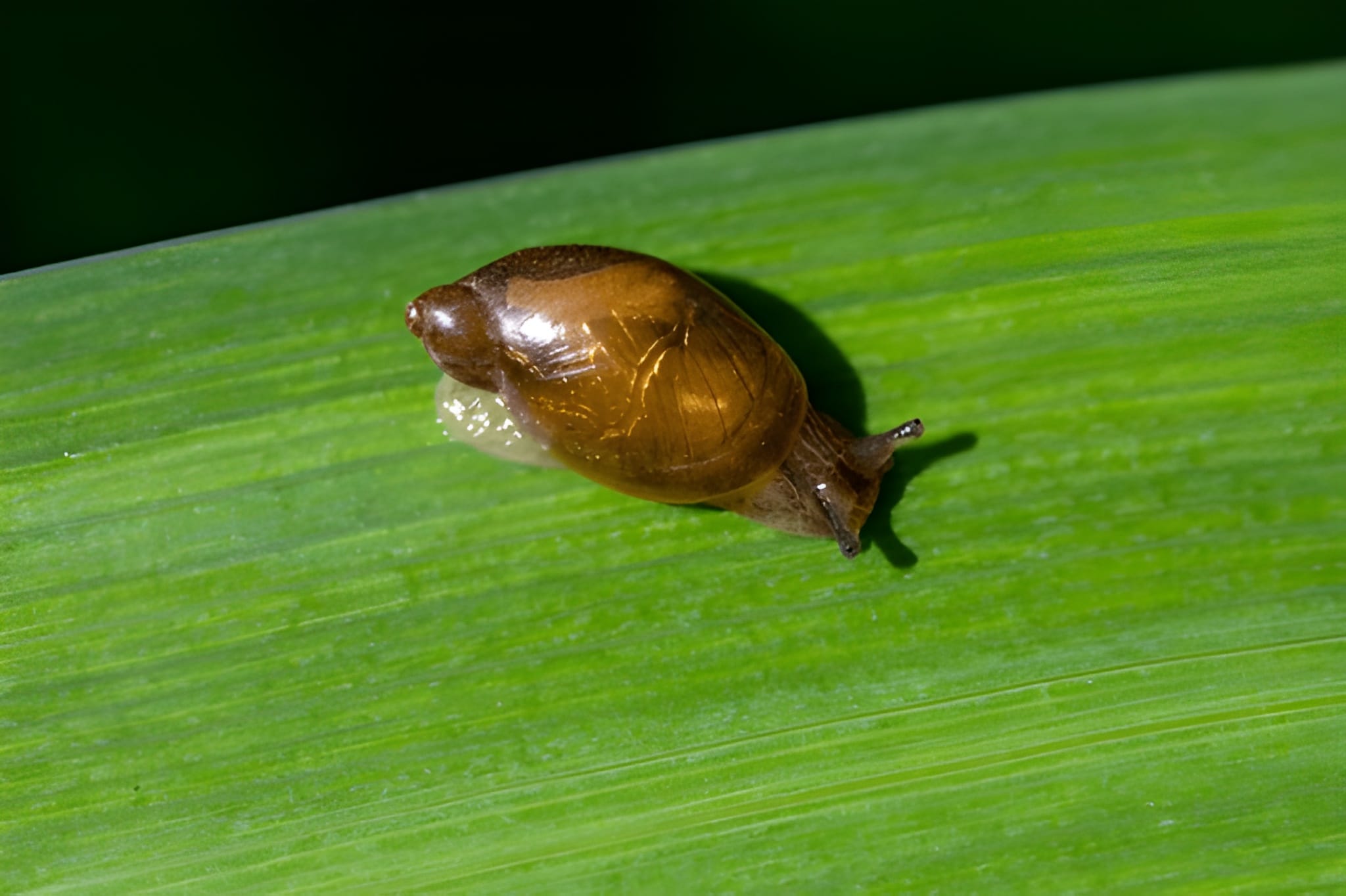
- Shell Direction: Always right-handed (dextral) spiral.
- Tentacles: Broad, flat, and triangular—distinct from the filamentous tentacles of other snail groups.
- Shell Shape: Typically tall-spired but variable; aperture large and oval, columella may be straight or twisted.
- Behavior: Frequently crawl on vegetation or mud; periodically ascend to air-water interface to breathe.
- Color: Shell color varies with species and habitat; usually light brown to greenish or translucent.
Microscopic examination of the radula and reproductive system, as well as molecular markers, may be needed for species-level identification due to phenotypic plasticity.
References
- Lymnaea – Wikipedia
- Lymnaeidae – Animal Diversity Web
- Morphological and Molecular Characterization of Lymnaeid Snails
- Lymnaeidae – Overview, ScienceDirect
- Lymnaea stagnalis – Lucid Key
Discover more from Zoologyverse
Subscribe to get the latest posts sent to your email.