
Introduction
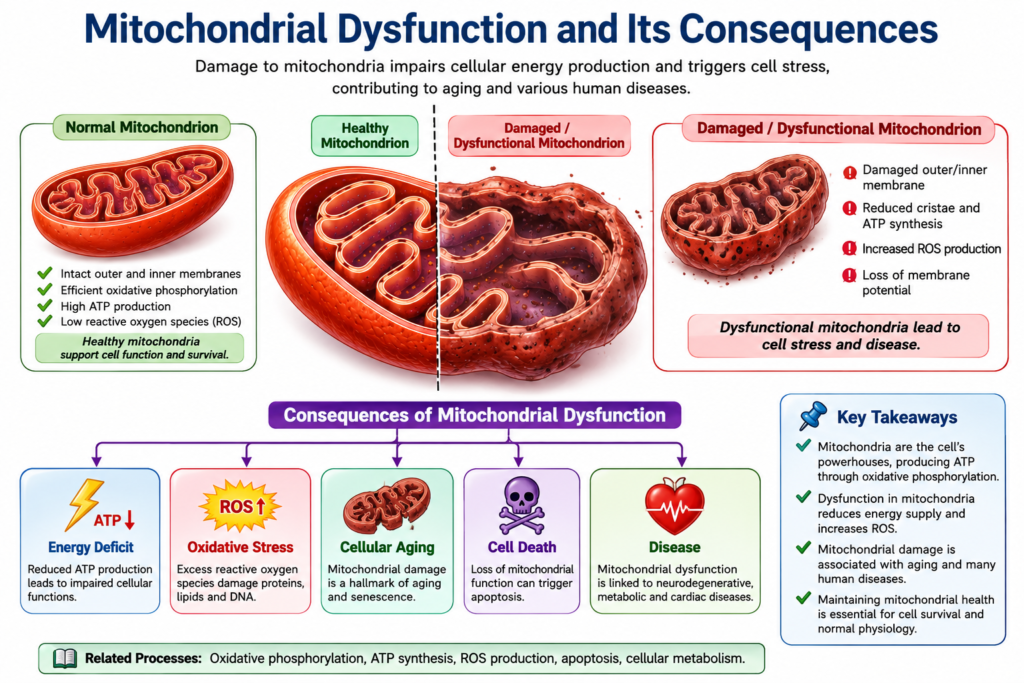
Mitochondria are among the most important organelles in eukaryotic cells. They are often called the “powerhouses of the cell” because they generate much of the ATP used to power cellular activities. However, their role is much broader than simply producing energy.
Mitochondria are involved in several metabolic and regulatory processes, including the oxidation of carbohydrates and fatty acids, calcium homeostasis, programmed cell death, and cellular signaling. Their structure is closely related to these functions. The highly folded inner membrane, for example, provides the specialized surface on which the electron transport chain and ATP synthase operate.
The number and organization of mitochondria can vary between cell types. Cells with high energy demands, such as cardiac and skeletal muscle cells, generally contain many mitochondria because they require large amounts of ATP.
Key Takeaways
- Mitochondria are double-membrane-bound organelles found in most eukaryotic cells.
- They are best known for producing ATP through oxidative phosphorylation.
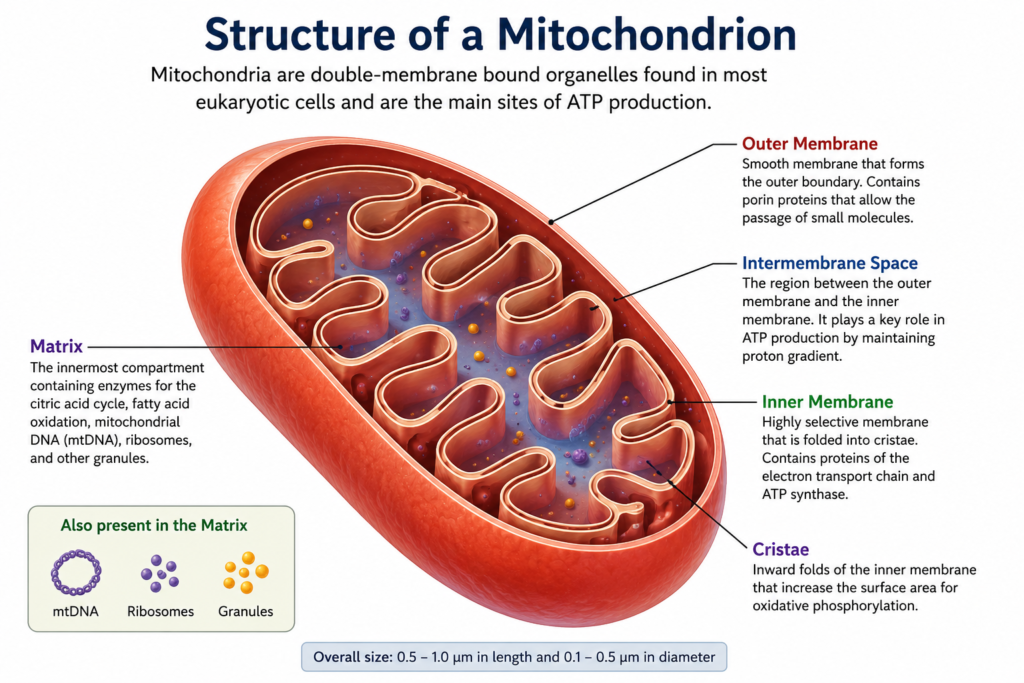
- A mitochondrion has an outer membrane, intermembrane space, inner membrane, cristae, and matrix.
- The folds of the inner membrane are called cristae and provide a large surface area for energy-producing reactions.
- The matrix contains enzymes involved in the citric acid cycle, fatty acid metabolism, mitochondrial DNA, and mitochondrial ribosomes.
- Mitochondria contain their own DNA, although most mitochondrial proteins are encoded by nuclear genes.
- Besides ATP production, mitochondria are involved in metabolism, calcium regulation, apoptosis, heat production in specialized tissues, and cellular signaling.
Structure of Mitochondria
A typical mitochondrion is surrounded by two membranes. These membranes create different compartments within the organelle, allowing different biochemical reactions to occur in specific locations. The major structural components are the outer membrane, intermembrane space, inner membrane, cristae, and matrix.
1. Outer Mitochondrial Membrane
The outer mitochondrial membrane forms the outer boundary of the organelle.
Like the plasma membrane, the mitochondrial membrane contains lipids and proteins that help control interactions between compartments.
It contains proteins called porins, which form channels that allow many small molecules and ions to pass through.
Compared with the inner membrane, the outer membrane is relatively permeable to small molecules. It also contains proteins involved in the recognition and import of proteins produced from nuclear genes.
The outer membrane therefore acts as both a protective boundary and an important interface between the mitochondrion and the surrounding cytoplasm.
2. Intermembrane Space
The intermembrane space is the region between the outer and inner mitochondrial membranes.
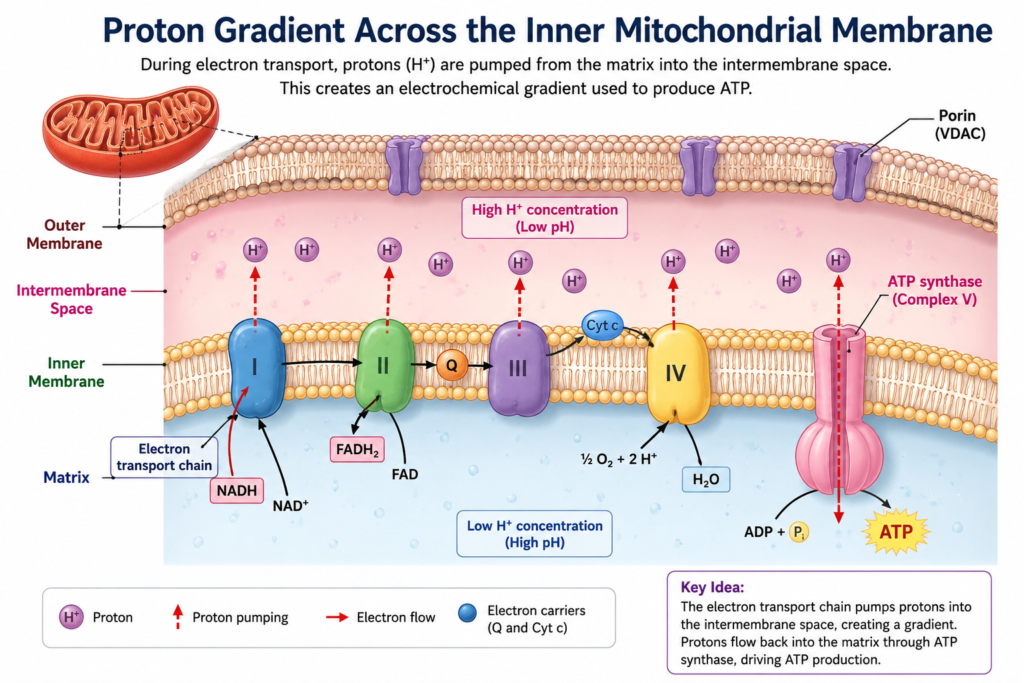
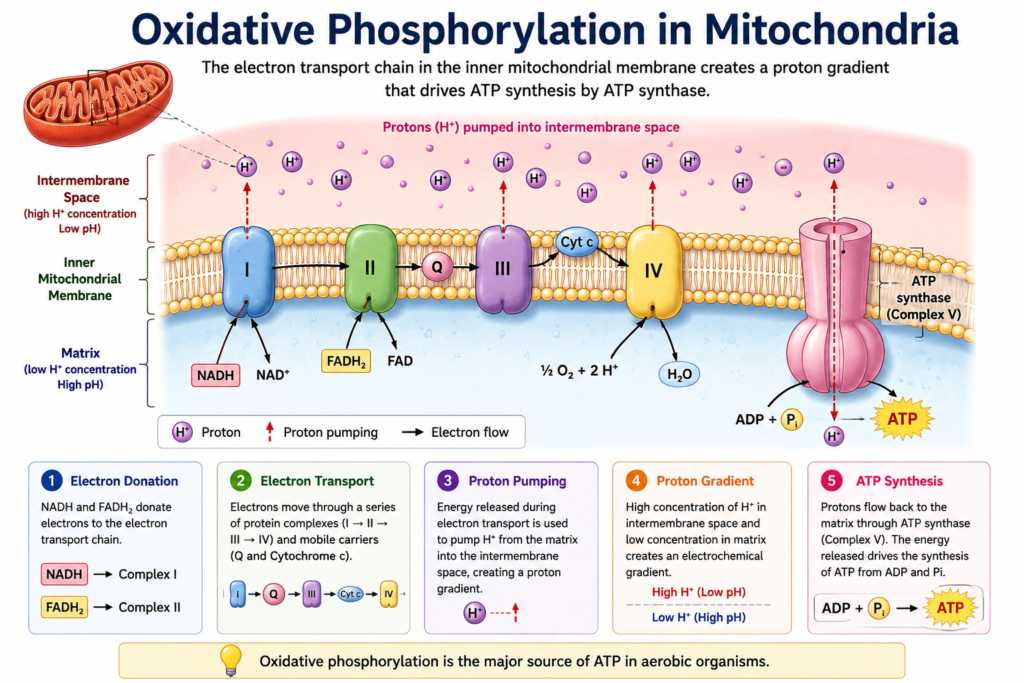
This compartment is particularly important during oxidative phosphorylation. As electrons move through the electron transport chain, several respiratory complexes pump protons from the matrix across the inner membrane into the intermembrane space. This produces a proton gradient that is later used to drive ATP synthesis.
3. Inner Mitochondrial Membrane
The inner mitochondrial membrane is highly specialized and contains many proteins involved in energy metabolism.
Unlike the outer membrane, it is highly selective and is largely impermeable to ions. This property is essential because mitochondria must maintain a proton gradient across this membrane for ATP production.
The electron transport chain and ATP synthase are located in the inner membrane, particularly within the cristae. The inner membrane also contains transport proteins that control the movement of metabolites and ions into and out of the matrix.
The inner membrane contains a distinctive phospholipid called cardiolipin, which contributes to its specialized properties and organization.
4. Cristae
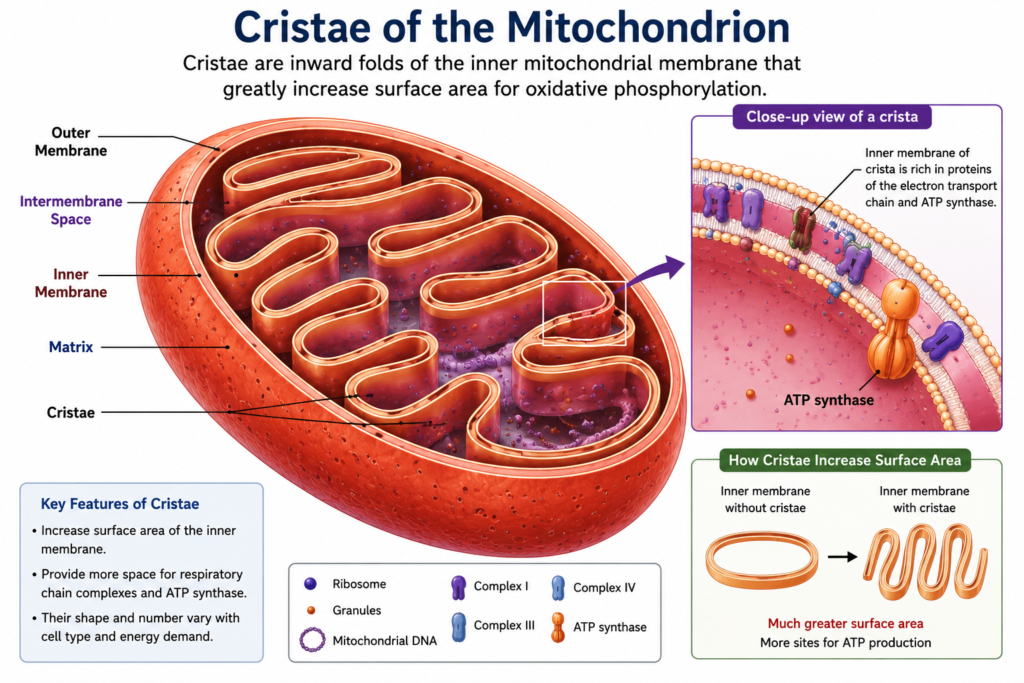
The inward folds of the inner mitochondrial membrane are called cristae.
Cristae greatly increase the available surface area of the inner membrane. This provides more space for respiratory-chain complexes and ATP synthase, supporting efficient oxidative phosphorylation.
Cristae are not simply random folds. Modern microscopy shows that they form specialized membrane compartments connected to the inner boundary membrane through narrow structures called crista junctions. Their shape and organization can vary between tissues and can change in response to cellular conditions.
5. Mitochondrial Matrix
The matrix is the innermost compartment enclosed by the inner mitochondrial membrane.
It contains enzymes involved in several important metabolic pathways, including most reactions of the citric acid cycle and important steps of fatty acid oxidation. The matrix also contains mitochondrial DNA, mitochondrial ribosomes, RNA molecules, and other components required for mitochondrial gene expression.
The matrix is therefore not simply an empty internal space. It is a metabolically active compartment where numerous biochemical reactions occur.
6. Mitochondrial DNA
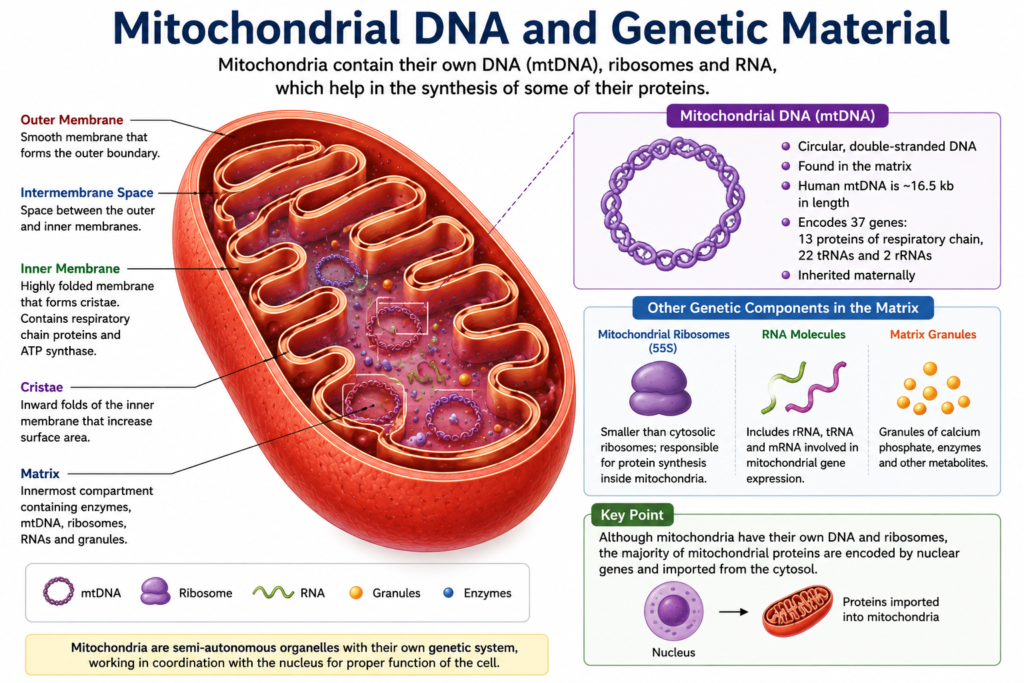
One unusual feature of mitochondria is that they contain their own genetic material, known as mitochondrial DNA (mtDNA).
Mitochondrial DNA encodes some RNAs and a limited number of proteins required for mitochondrial function. However, most proteins found in mitochondria are encoded by genes in the nuclear genome and are produced in the cytoplasm before being transported into the mitochondria.
In humans, mitochondrial DNA is generally inherited through the maternal line.
Functions of Mitochondria
The structure of mitochondria allows them to perform several essential functions. Their most well-known function is ATP production, but they also participate in many other cellular processes.
1. ATP Production
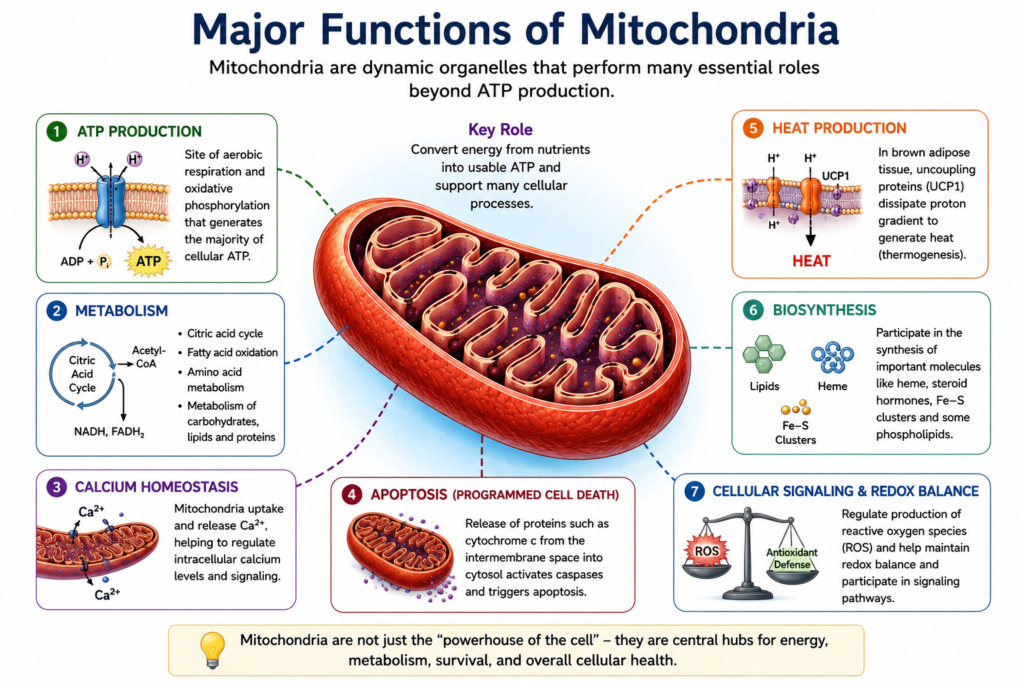
The primary function of mitochondria in most animal cells is the production of ATP through oxidative phosphorylation.
The process depends on the electron transport chain located in the inner mitochondrial membrane. Electrons are transferred through a series of protein complexes, and the energy released is used to pump protons across the inner membrane.
This creates an electrochemical proton gradient. Protons then flow back toward the matrix through ATP synthase. The energy released by this movement drives the formation of ATP from ADP and inorganic phosphate.
A simplified sequence is:
Nutrients → NADH/FADH₂ → Electron transport chain → Proton gradient → ATP synthase → ATP
2. Citric Acid Cycle
The mitochondrial matrix contains enzymes required for most reactions of the citric acid cycle, also known as the Krebs cycle or TCA cycle.
The cycle oxidizes acetyl-CoA and produces carbon dioxide along with reduced electron carriers such as NADH and FADH₂. These electron carriers transfer high-energy electrons to the electron transport chain, helping drive oxidative phosphorylation.
It is important to remember that glycolysis does not occur inside mitochondria. Glycolysis takes place in the cytosol, producing pyruvate, which can subsequently be transported into mitochondria and used for further energy metabolism.
3. Fatty Acid Oxidation
Mitochondria are important sites for the oxidation of fatty acids.
During β-oxidation, fatty acids are broken down into acetyl-CoA units. These molecules can enter the citric acid cycle, while the resulting NADH and FADH₂ contribute electrons to oxidative phosphorylation.
This makes mitochondria particularly important in cells that rely heavily on fatty acids as an energy source.
4. Regulation of Programmed Cell Death
Mitochondria also have an important role in apoptosis, or programmed cell death.
Changes in mitochondrial membrane permeability can contribute to the release of proteins such as cytochrome c into the cytosol. Cytochrome c can participate in the molecular pathway that activates caspases and ultimately leads to controlled cell death.
Therefore, mitochondria are involved not only in keeping cells alive but also in regulating their programmed removal.
5. Calcium Homeostasis
Mitochondria can take up and release calcium ions (Ca²⁺) and therefore contribute to the regulation of intracellular calcium.
Calcium signaling is important for processes such as muscle contraction, metabolism, secretion, and other cellular responses. Mitochondria help connect calcium signals with cellular energy metabolism.
6. Heat Production
In specialized tissues such as brown adipose tissue, mitochondria can contribute to heat production.
A mitochondrial protein called uncoupling protein 1 (UCP1) allows protons to return to the matrix without directly driving ATP synthesis. The stored energy of the proton gradient is instead released largely as heat.
This process is known as non-shivering thermogenesis.
7. Metabolic and Biosynthetic Functions
Mitochondria participate in several metabolic pathways beyond energy production. Depending on the cell type, mitochondrial reactions contribute to the metabolism or synthesis of molecules such as amino acids, lipids, and other important cellular compounds.
Why Is the Structure of Mitochondria Important?
The structure of mitochondria is closely connected to their functions.
The double membrane creates separate compartments. The inner membrane provides a controlled barrier across which a proton gradient can be established. The cristae increase the membrane area available for respiratory complexes and ATP synthase. The intermembrane space serves as an important region for proton accumulation, while the matrix contains enzymes required for several metabolic pathways.
This organization allows different reactions to occur in the correct location and helps mitochondria efficiently convert energy from nutrients into a form that cells can use.
In simple terms:
Structure → Compartmentalization → Efficient metabolism → ATP production and cellular regulation
Mitochondria and Energy-Demanding Cells
The number and organization of mitochondria vary according to the energy requirements of different cells.
For example, cardiac muscle cells have a particularly high demand for ATP because the heart contracts continuously. Consequently, their mitochondria are abundant and have highly developed internal membrane systems.
This illustrates an important biological principle: cell structure is closely adapted to cell function.
Cells that require large amounts of energy generally have a greater capacity for mitochondrial ATP production.
Mitochondria: Quick Revision
| Structure | Main role |
|---|---|
| Outer membrane | Forms the outer boundary and allows passage of many small molecules |
| Intermembrane space | Region where protons accumulate during electron transport |
| Inner membrane | Contains electron transport complexes and ATP synthase |
| Cristae | Increase inner membrane area and organize oxidative phosphorylation machinery |
| Matrix | Contains metabolic enzymes, mtDNA, and mitochondrial ribosomes |
| Mitochondrial DNA | Encodes a limited set of mitochondrial RNAs and proteins |
Flow of Mitochondrial Energy Production
Glucose/Fatty acids
↓
Acetyl-CoA and reducing equivalents
↓
Citric acid cycle + β-oxidation
↓
NADH + FADH₂
↓
Electron transport chain
↓
Proton gradient
↓
ATP synthase
↓
ATP
Conclusion
Mitochondria are highly organized organelles whose structure is directly connected to their many functions. Their outer membrane, intermembrane space, inner membrane, cristae, and matrix create specialized compartments for different biochemical activities.
Their best-known role is the production of ATP through oxidative phosphorylation, but mitochondria also contribute to fatty acid oxidation, the citric acid cycle, calcium homeostasis, apoptosis, heat production, and other metabolic processes.
The presence of mitochondrial DNA and ribosomes also makes mitochondria unusual among eukaryotic organelles. At the same time, mitochondria depend heavily on proteins encoded by nuclear genes, showing that their function requires close cooperation between the mitochondrial and nuclear genetic systems.
Understanding the structure and functions of mitochondria is therefore essential for understanding how eukaryotic cells obtain energy, regulate metabolism, and respond to cellular signals.
Frequently Asked Questions
1. What are mitochondria?
Mitochondria are double-membrane-bound organelles found in most eukaryotic cells. They are major sites of ATP production and also perform several metabolic and regulatory functions.
2. Why are mitochondria called the powerhouse of the cell?
Mitochondria are called the powerhouse of the cell because they produce large amounts of ATP through oxidative phosphorylation. ATP provides usable chemical energy for many cellular processes.
3. What are the main parts of a mitochondrion?
The main structural parts are the outer membrane, intermembrane space, inner membrane, cristae, and matrix. Mitochondria also contain mitochondrial DNA and ribosomes.
4. What are cristae?
Cristae are folds or specialized invaginations of the inner mitochondrial membrane. They increase the available membrane area and contain many of the protein complexes involved in oxidative phosphorylation.
5. What is the function of the mitochondrial matrix?
The matrix contains enzymes involved in the citric acid cycle and other metabolic pathways. It also contains mitochondrial DNA, ribosomes, RNA, and other molecules involved in mitochondrial function.
6. Do mitochondria have their own DNA?
Yes. Mitochondria contain their own DNA, called mitochondrial DNA or mtDNA. However, most proteins required by mitochondria are encoded by nuclear genes.
7. Where does ATP production occur in mitochondria?
The major ATP-producing machinery is located in the inner mitochondrial membrane, especially in the cristae. ATP synthase uses the proton gradient generated by the electron transport chain to produce ATP.
8. Does glycolysis occur inside mitochondria?
No. Glycolysis occurs in the cytosol, not inside mitochondria. The products of glycolysis can subsequently enter mitochondrial metabolic pathways.
9. What is the difference between the matrix and intermembrane space?
The matrix is the innermost mitochondrial compartment and contains many metabolic enzymes and mitochondrial genetic material. The intermembrane space lies between the outer and inner membranes and is important for the proton gradient used during oxidative phosphorylation.
10. Why do muscle cells contain many mitochondria?
Muscle cells, particularly cardiac muscle cells, have high energy requirements. They therefore contain many mitochondria to support the large amount of ATP needed for continuous muscle activity.
References
- Cooper GM. Mitochondria. The Cell: A Molecular Approach.
- Alberts B, et al. Molecular Biology of the Cell — The Mitochondrion.
- National Human Genome Research Institute. Mitochondria — Genetics Glossary.
- Davies KM, et al. Structure and function of mitochondrial membrane protein complexes.
- Cogliati S, Enriquez JA, Scorrano L. Mitochondrial cristae: where beauty meets functionality.
- Biochemistry, Oxidative Phosphorylation.
Discover more from Zoologyverse
Subscribe to get the latest posts sent to your email.