
Lipid biosynthesis is the process by which cells build fatty acids, cholesterol, phospholipids, and other important lipids from smaller precursors. This guide explains the major pathways, enzymes, cellular locations, regulation, and biological significance of lipid synthesis.
Introduction to Lipid Biosynthesis
Lipids are much more than simple energy-storage molecules. They form an essential part of biological membranes and participate in numerous cellular processes. Fatty acids can be incorporated into triacylglycerols and membrane phospholipids, while cholesterol contributes to membrane organization and serves as a precursor for several biologically important molecules.
Specialized lipids also function as hormones, signaling molecules, pigments, cofactors, detergents, and membrane anchors. Because of these diverse functions, cells must continuously synthesize and remodel different types of lipids.
Lipid biosynthesis refers to the collection of anabolic pathways through which cells produce fatty acids, cholesterol, phospholipids, sphingolipids, and related compounds. These pathways generally require an input of metabolic energy and reducing power. ATP supplies energy for several biosynthetic reactions, whereas NADPH commonly provides the reducing equivalents needed for reductive steps.
In eukaryotic cells, different lipid pathways are associated with different cellular compartments. Fatty acid synthesis primarily occurs in the cytosol, whereas many membrane-lipid reactions take place on or within the endoplasmic reticulum. Cholesterol synthesis involves enzymes located in both the cytosol and endoplasmic reticulum.
Understanding lipid biosynthesis is therefore important for studying cellular metabolism, membrane structure, energy storage, and biochemical regulation.
Major Pathways of Lipid Biosynthesis
The major pathways discussed in lipid biosynthesis include:
- Fatty acid synthesis
- Elongation and modification of fatty acids
- Cholesterol biosynthesis
- Glycerophospholipid synthesis
- Sphingolipid biosynthesis
Although these pathways produce different molecules, they are closely interconnected through common precursors such as acetyl-CoA and activated fatty acyl groups.
Fatty Acid Biosynthesis
Fatty acid synthesis is an anabolic pathway in which cells build fatty acid chains from smaller carbon-containing molecules.
In animals and fungi, the principal fatty acid synthesis machinery operates in the cytosol. In plants, de novo fatty acid synthesis mainly occurs in chloroplasts.
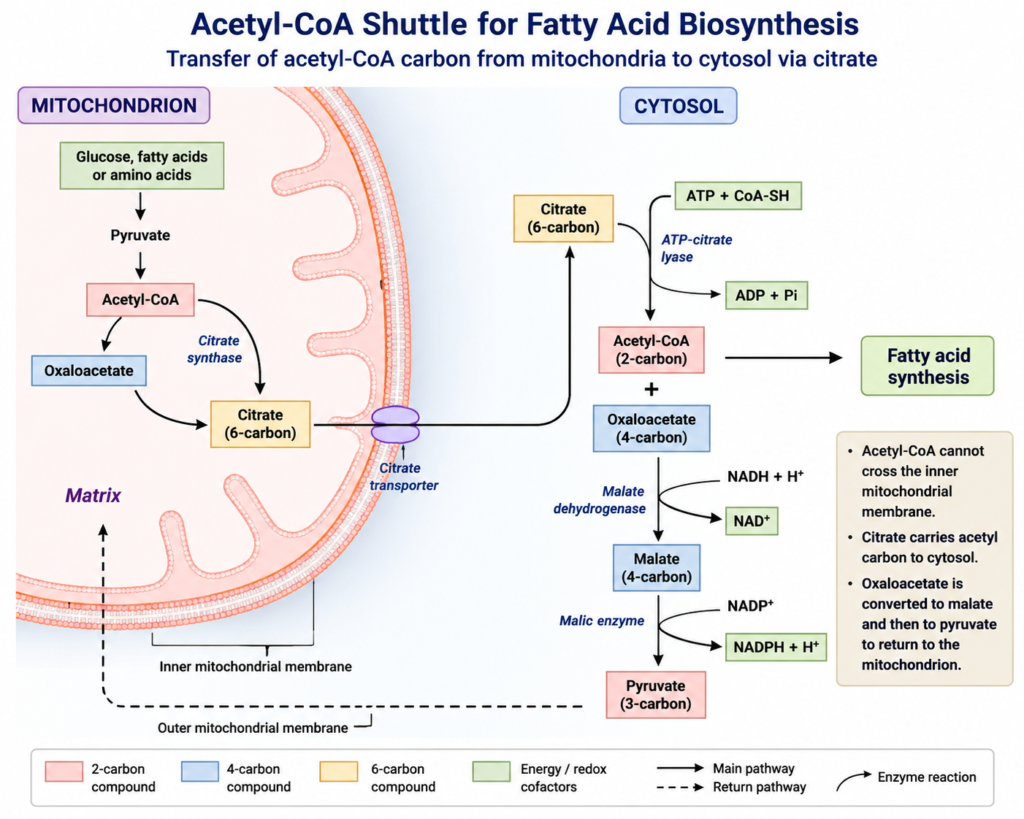
The basic carbon source is acetyl-CoA. However, mitochondrial acetyl-CoA cannot directly cross the inner mitochondrial membrane. In animal cells, its carbon skeleton is therefore transported to the cytosol largely through the citrate shuttle.
Transport of Acetyl-CoA to the Cytosol
Acetyl-CoA generated inside mitochondria combines with oxaloacetate to form citrate. Citrate can then be transported across the mitochondrial membrane into the cytosol.
Once in the cytosol, citrate is cleaved by ATP-citrate lyase, producing acetyl-CoA and oxaloacetate.
Oxaloacetate can be converted into malate. Malate may subsequently be converted to pyruvate, which can return to the mitochondrion. This series of reactions helps transfer carbon from mitochondrial acetyl-CoA into the cytosol for fatty acid synthesis.
Formation of Malonyl-CoA
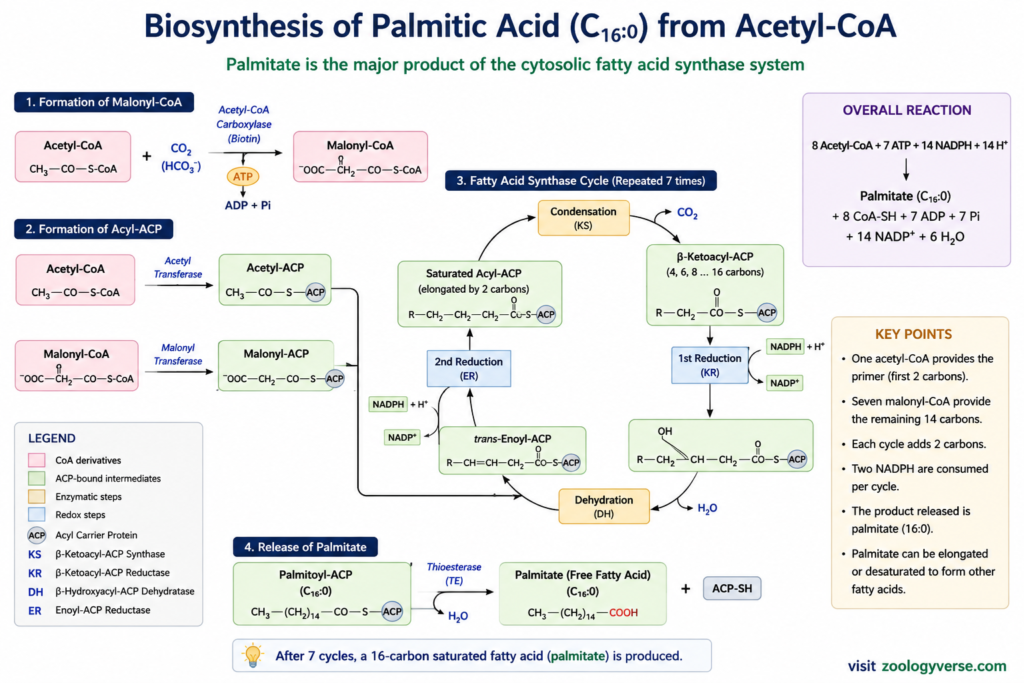
The first major committed step of fatty acid synthesis is the conversion of acetyl-CoA into malonyl-CoA.
This reaction is catalyzed by acetyl-CoA carboxylase (ACC) and requires ATP and bicarbonate-derived carbon dioxide. ACC contains a biotin-dependent carboxylation system.
The reaction can be represented as:
Acetyl-CoA + CO₂ + ATP → Malonyl-CoA + ADP + Pi
Malonyl-CoA is particularly important because it provides the two-carbon units that are incorporated into the growing fatty acid chain.
Acetyl-CoA carboxylase is also an important regulatory enzyme. Its activity responds to cellular metabolic conditions, allowing the cell to coordinate fatty acid production with its energy status.
Formation of Acetyl-ACP and Malonyl-ACP
Before the fatty acid chain can be elongated, the activated carbon units are transferred to acyl carrier protein (ACP).
Acetyl-CoA is converted into acetyl-ACP, while malonyl-CoA is converted into malonyl-ACP.
The growing fatty acyl intermediates remain attached to the sulfhydryl group of the phosphopantetheine component of ACP.
This arrangement allows the intermediates to move between the different catalytic sites involved in fatty acid synthesis.
The Four-Step Fatty Acid Elongation Cycle
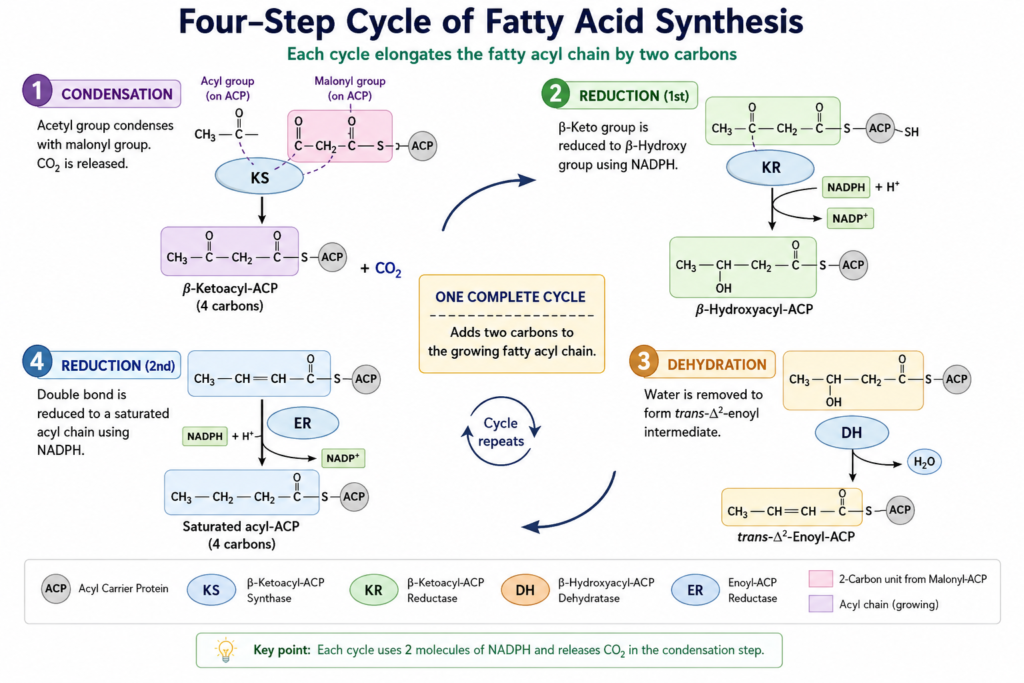
The fatty acid synthase cycle consists of four recurring reactions:
1. Condensation :- An acetyl group and a malonyl-derived group undergo condensation. Carbon dioxide is released during this reaction, helping drive the reaction forward.
2. Reduction :- The resulting β-keto group is reduced using NADPH as the reducing agent.
3. Dehydration :- Water is removed from the intermediate, producing an unsaturated fatty acyl compound.
4. Reduction :- A second NADPH-dependent reduction converts the double bond into a saturated acyl chain.
The completed cycle increases the fatty acid chain by two carbon atoms.
Synthesis of Palmitic Acid
The major product of the mammalian cytosolic fatty acid synthase system is palmitate (palmitic acid), a saturated fatty acid containing 16 carbon atoms.
The synthesis requires an initial acetyl-CoA molecule followed by repeated use of malonyl-CoA units. The fatty acid synthase cycle is repeated until the growing chain reaches the appropriate length.
The overall process can be simplified as:
Acetyl-CoA → Malonyl-CoA → Acyl-ACP intermediates → Palmitoyl-ACP → Palmitate
Palmitate is then available for further metabolic reactions. It can be incorporated into complex lipids, elongated to produce longer fatty acids, or desaturated to produce unsaturated fatty acids.
Fatty Acid Synthase
The reactions involved in fatty acid synthesis are organized through the fatty acid synthase (FAS) system.
Two broad organizational types are recognized:
- FAS I: a multifunctional enzyme system characteristic of vertebrates and fungi.
- FAS II: a system composed of separate enzymes, commonly found in bacteria and plants.
Both systems use carrier-bound intermediates during fatty acid formation.
The growing fatty acyl chain is transferred between catalytic sites until the appropriate chain length is reached.
Elongation of Fatty Acids
Fatty acid synthesis does not necessarily end with palmitate.
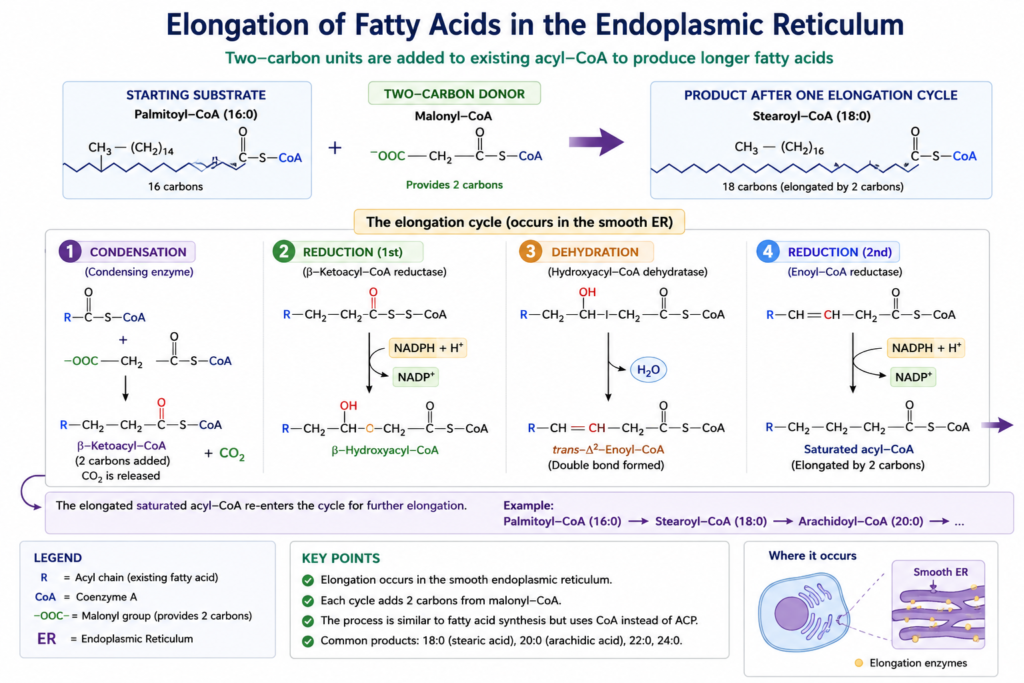
Longer fatty acids can be produced through fatty acid elongation. In eukaryotic cells, important elongation reactions occur in the endoplasmic reticulum.
During elongation, two-carbon units are added to an existing fatty acyl chain. Stearate (18:0) is an important product formed by elongation of palmitate.
Fatty acids can also undergo desaturation, introducing double bonds into the hydrocarbon chain. These modifications produce a wide variety of fatty acids needed for membrane lipids and signaling molecules.
Cholesterol Biosynthesis
Cholesterol is a major sterol found in animal cell membranes. It helps regulate membrane properties and also serves as a precursor for biologically important molecules, including steroid hormones and bile acids.
Like fatty acids, cholesterol is ultimately synthesized from acetyl-CoA, but the pathway is considerably more complex.
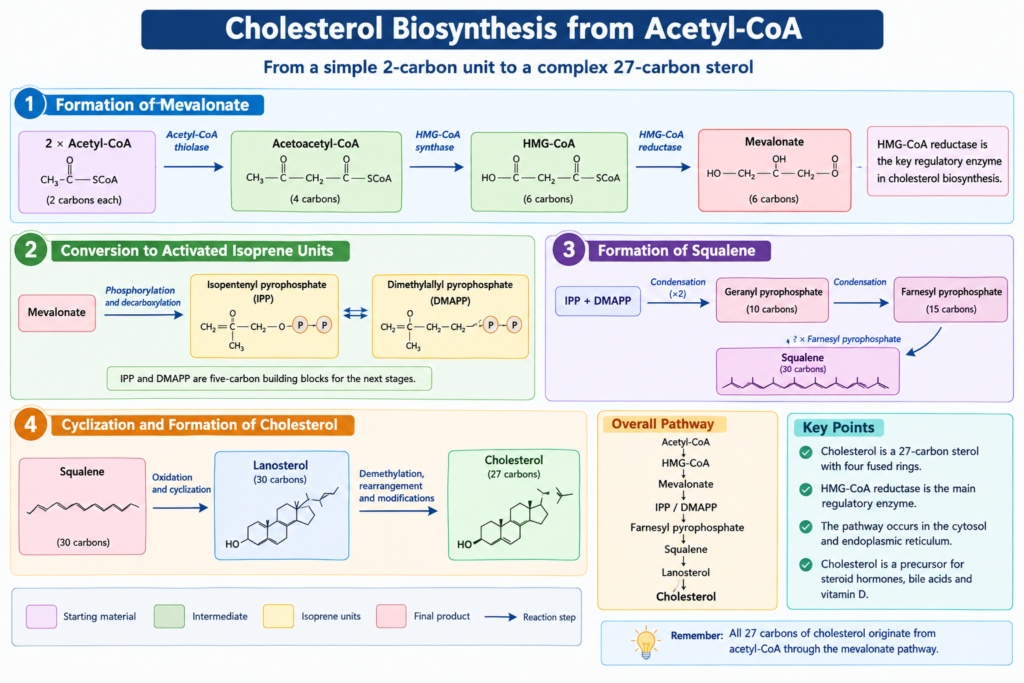
Cholesterol biosynthesis can be divided into four broad stages:
- Formation of mevalonate
- Formation of activated isoprene units
- Formation of squalene
- Cyclization and conversion into cholesterol
Formation of Mevalonate
The pathway begins with acetyl-CoA.
Two acetyl-CoA molecules condense to form acetoacetyl-CoA. A third acetyl-CoA is then added, producing 3-hydroxy-3-methylglutaryl-CoA (HMG-CoA).
HMG-CoA is subsequently reduced to mevalonate by HMG-CoA reductase. HMG-CoA reductase is a major regulatory enzyme of cholesterol biosynthesis and is associated with the endoplasmic reticulum.
Conversion of Mevalonate to Activated Isoprene Units
Mevalonate undergoes a series of phosphorylation and decarboxylation reactions.
These reactions produce activated five-carbon isoprenoid units, particularly:
- Isopentenyl pyrophosphate (IPP)
- Dimethylallyl pyrophosphate (DMAPP)
These five-carbon molecules act as building blocks for the later stages of cholesterol synthesis.
Formation of Squalene
Activated isoprene units undergo successive condensation reactions.
IPP and DMAPP participate in the formation of larger prenyl compounds, including:
Geranyl pyrophosphate → Farnesyl pyrophosphate
Two molecules of farnesyl pyrophosphate then combine to form squalene, a 30-carbon linear hydrocarbon.
Cyclization of Squalene and Formation of Cholesterol
Squalene undergoes oxidation and cyclization to produce a sterol intermediate, ultimately leading to lanosterol.
Lanosterol then undergoes several enzymatic modifications, including removal of methyl groups and rearrangement of the sterol structure.
These reactions finally produce cholesterol, a 27-carbon sterol.
Thus, the overall pathway can be summarized as:
Acetyl-CoA → HMG-CoA → Mevalonate → IPP/DMAPP → Farnesyl pyrophosphate → Squalene → Lanosterol → Cholesterol
This pathway demonstrates how a simple two-carbon precursor can be transformed into a complex four-ring sterol structure.
Biosynthesis of Membrane Lipids
Membrane lipids are essential components of cellular membranes.
Major membrane lipids include:
- Phosphatidylcholine
- Phosphatidylethanolamine
- Phosphatidylserine
- Phosphatidylglycerol
- Cardiolipin
- Phosphatidylinositol
- Sphingomyelin
- Glycosphingolipids
Many glycerophospholipids are assembled from diacylglycerol-containing intermediates, while sphingolipids use a different structural backbone.
In eukaryotic cells, the endoplasmic reticulum plays a central role in the synthesis of many membrane lipids.
Phosphatidylserine, Phosphatidylethanolamine and Phosphatidylglycerol
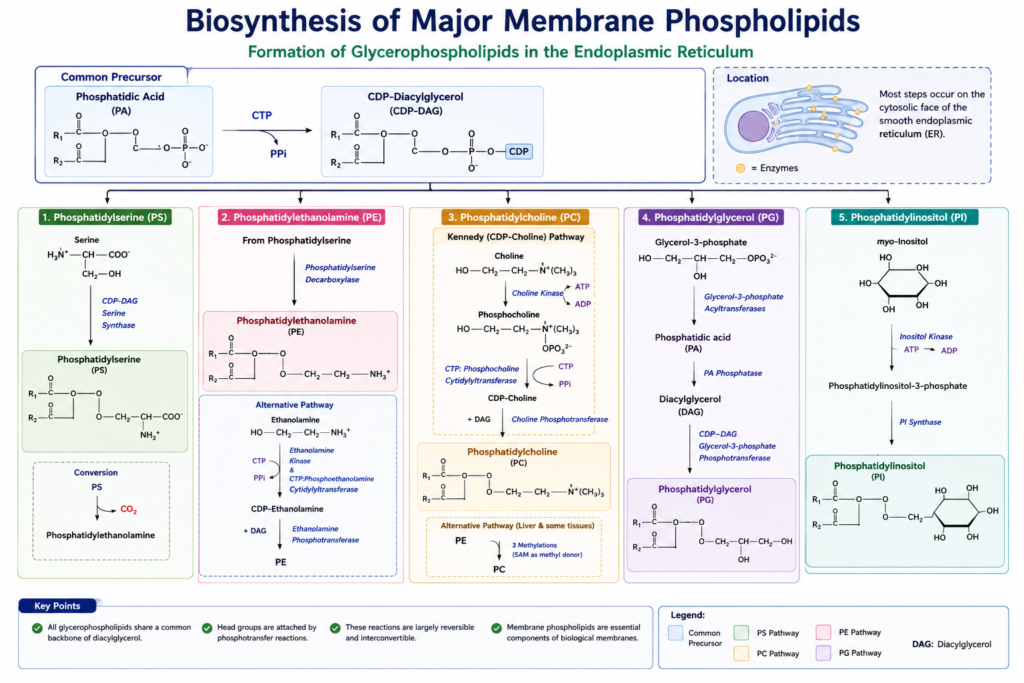
One important strategy for phospholipid synthesis involves activation of phosphatidic acid to form CDP-diacylglycerol.
The activated intermediate can react with suitable head-group precursors.
In bacteria, for example, CDP-diacylglycerol can react with serine to form phosphatidylserine.
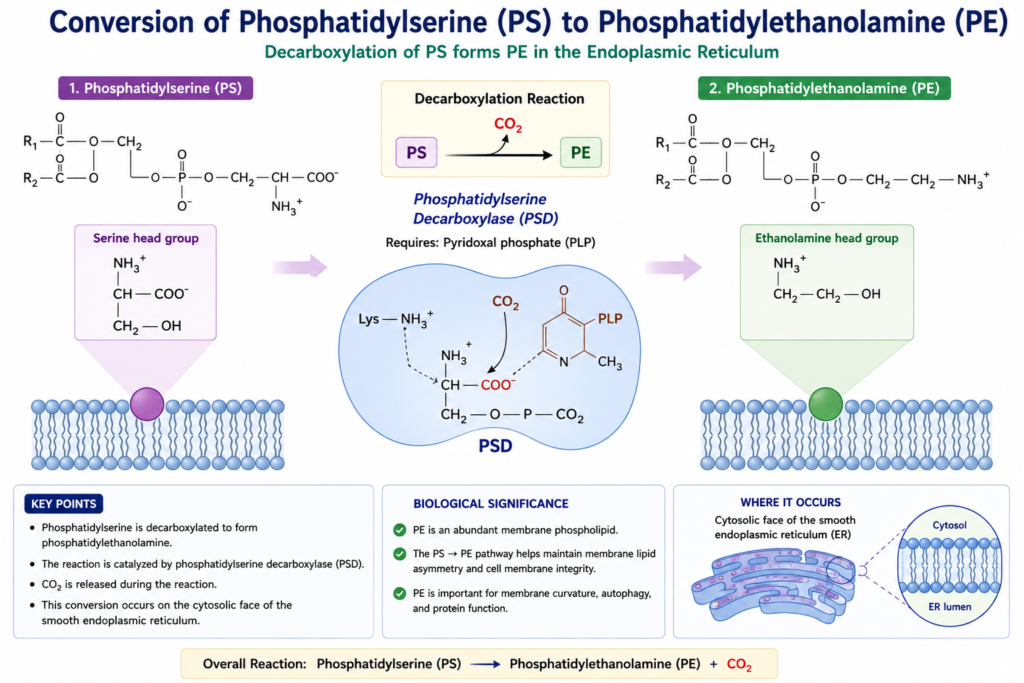
Phosphatidylserine can subsequently undergo decarboxylation to produce phosphatidylethanolamine.
Another pathway uses glycerol-3-phosphate to produce phosphatidylglycerol phosphate, which is subsequently converted into phosphatidylglycerol.
Phosphatidylcholine Biosynthesis
Phosphatidylcholine is one of the most abundant phospholipids in many eukaryotic membranes.
In mammals, an important route is the Kennedy pathway.
In this pathway, choline is phosphorylated to form phosphocholine. Phosphocholine then reacts with CTP to form CDP-choline.
Finally, CDP-choline reacts with diacylglycerol to produce phosphatidylcholine.
Phosphatidylethanolamine can also be methylated to form phosphatidylcholine in certain tissues, particularly the liver.
Phosphatidylserine and Phosphatidylethanolamine
Phosphatidylserine is an important negatively charged membrane phospholipid.
In mammals, phosphatidylserine can be produced through head-group exchange reactions involving phosphatidylcholine or phosphatidylethanolamine.
Phosphatidylserine can also serve as a precursor for phosphatidylethanolamine through decarboxylation.
These interconnected reactions allow cells to maintain the appropriate composition of their membranes.
Sphingolipid Biosynthesis
Sphingolipids are another major class of membrane lipids. Unlike glycerophospholipids, they contain a sphingoid backbone rather than a glycerol backbone.
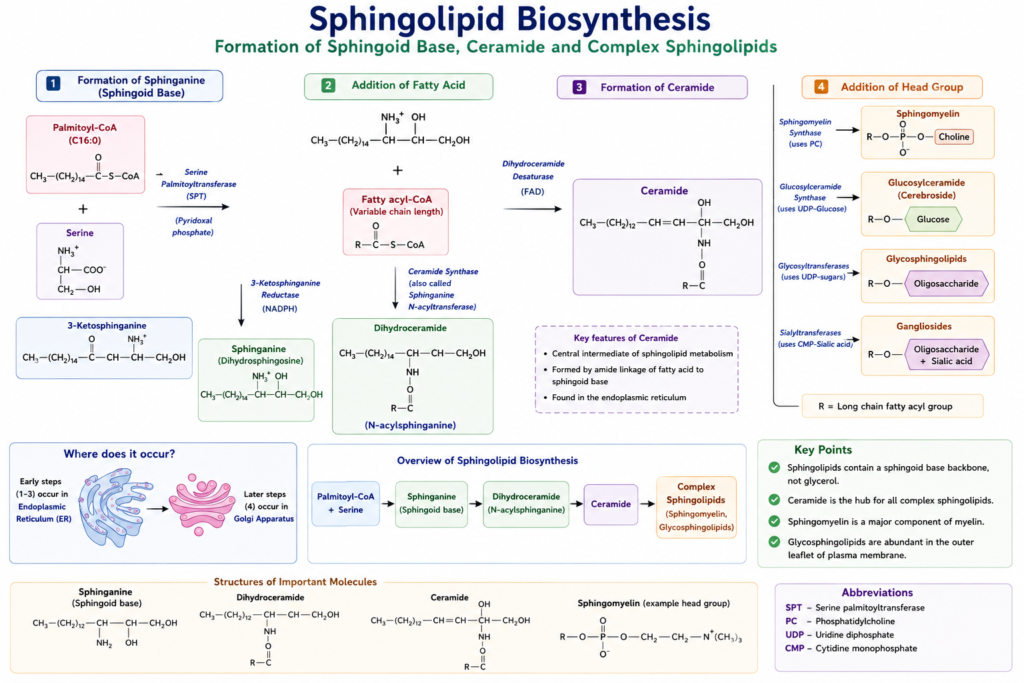
The biosynthesis of sphingolipids can be broadly divided into four stages:
- Formation of sphinganine
- Addition of a fatty acid
- Formation of ceramide
- Addition of a polar or carbohydrate head group
The pathway begins with palmitoyl-CoA and serine.
These molecules combine to initiate the formation of the sphingoid backbone.
Formation of Ceramide
After sphinganine formation, a fatty acid is attached through an amide linkage. The resulting molecule undergoes desaturation to produce ceramide.
Ceramide occupies a central position in sphingolipid metabolism because it can serve as a precursor for several different sphingolipids.
The attachment of different head groups produces compounds such as:
- Sphingomyelin
- Cerebrosides
- Gangliosides
The early steps of sphingolipid synthesis occur in the endoplasmic reticulum, while many head-group modification reactions occur in the Golgi apparatus.
Regulation of Lipid Biosynthesis
Lipid biosynthesis must be carefully controlled because excessive lipid production can disturb cellular energy balance and membrane composition.
Several enzymes act as important regulatory points.
Regulation of Fatty Acid Synthesis
Acetyl-CoA carboxylase is a major regulatory enzyme in fatty acid synthesis.
Its activity responds to metabolic signals that indicate whether the cell has sufficient resources for lipid production.
Citrate can promote activation of the enzyme, whereas long-chain fatty acyl-CoA products can provide feedback inhibition.
The phosphorylation state of the enzyme also influences its activity.
Regulation of Cholesterol Synthesis
The key regulatory enzyme of cholesterol biosynthesis is HMG-CoA reductase.
Because cholesterol synthesis is energetically expensive, cells regulate this pathway at several levels, including enzyme activity, phosphorylation, degradation and transcriptional control. This regulation helps maintain cholesterol homeostasis.
Fatty Acid Synthesis vs Fatty Acid Breakdown
Fatty acid synthesis and fatty acid oxidation are related to the same overall metabolic network, but they are not simply the same pathway operating in reverse.
| Feature | Fatty Acid Synthesis | Fatty Acid Breakdown |
|---|---|---|
| Main purpose | Builds fatty acids | Breaks down fatty acids |
| Nature | Anabolic | Catabolic |
| Major carbon carrier | ACP | CoA |
| Important reducing/electron carrier | NADPH | NAD⁺ and FAD |
| Major product/intermediate | Palmitate | Acetyl-CoA |
| Main location in animals | Cytosol | Mitochondria |
| Major two-carbon process | Addition | Removal |
This distinction is important when studying lipid metabolism because synthesis and degradation use different enzymes, carriers and cellular compartments. For a detailed explanation of the opposite process, see [fatty acid breakdown and β-oxidation].
Biological Importance of Lipid Biosynthesis
Lipid biosynthesis is essential for maintaining cellular structure and energy balance.
1. Energy Storage
Fatty acids can be incorporated into triacylglycerols, which serve as concentrated energy stores.
2. Membrane Formation
Phospholipids, cholesterol and sphingolipids are major structural components of biological membranes.
3. Cell Signaling
Several lipid-derived molecules act as intracellular or extracellular signaling molecules.
4. Hormone Production
Cholesterol serves as a precursor for steroid hormones.
5. Bile Acid Formation
Cholesterol-derived bile acids contribute to lipid digestion and absorption.
6. Membrane Regulation
Cholesterol and phospholipids influence membrane fluidity, organization and protein function.
7. Formation of Specialized Lipids
Fatty acids can be elongated, desaturated or incorporated into more complex lipids with specialized biological functions.
Connection Between Carbohydrate and Lipid Metabolism
Lipid biosynthesis is closely connected with carbohydrate metabolism.
Glucose can be metabolized to pyruvate and subsequently to acetyl-CoA. This makes glycolysis and glucose metabolism an important connection between carbohydrate metabolism and lipid biosynthesis.. When cellular energy and carbon supplies are sufficient, acetyl-CoA can contribute to fatty acid synthesis.
This makes central metabolic pathways highly interconnected.
Lipid Biosynthesis and Cellular Energy
Biosynthetic reactions require energy and reducing equivalents.
Fatty acid synthesis particularly depends on ATP and NADPH. ATP supports activation reactions, while NADPH supplies electrons for reductive steps during fatty acid chain formation.
This is different from oxidative metabolism, where NADH and FADH₂ are major electron carriers used for ATP production through oxidative phosphorylation and cellular energy production.
Key Enzymes Involved in Lipid Biosynthesis
Some important enzymes associated with lipid biosynthesis include:
- Acetyl-CoA carboxylase – forms malonyl-CoA
- Fatty acid synthase – carries out repeated fatty acid elongation cycles
- HMG-CoA synthase – participates in cholesterol precursor formation
- HMG-CoA reductase – major regulatory enzyme in cholesterol synthesis
- Phosphatidylserine decarboxylase – converts phosphatidylserine into phosphatidylethanolamine
- Fatty acid elongation enzymes – extend existing fatty acid chains
- Desaturases – introduce double bonds into fatty acids
- Sphingolipid biosynthetic enzymes – participate in sphinganine and ceramide formation
The activity of these enzymes is carefully controlled through different regulatory mechanisms. For a broader explanation of how enzymes are controlled in biological pathways, see [regulation of enzyme activity].
Lipid Biosynthesis: Quick Revision
For examination preparation, the major pathways can be remembered as follows:
Fatty acid synthesis:
Acetyl-CoA
↓
Malonyl-CoA
↓
Fatty acid synthase
↓
Palmitate
↓
Elongation / Desaturation
Cholesterol synthesis:
Acetyl-CoA
↓
HMG-CoA
↓
Mevalonate
↓
IPP + DMAPP
↓
Farnesyl pyrophosphate
↓
Squalene
↓
Lanosterol
↓
Cholesterol
Sphingolipid synthesis:
Palmitoyl-CoA + Serine
↓
Sphinganine
↓
N-acylsphinganine
↓
Ceramide
↓
Sphingomyelin / Glycosphingolipids
Frequently Asked Questions
What is lipid biosynthesis?
Lipid biosynthesis is the group of anabolic pathways through which cells synthesize fatty acids, cholesterol, phospholipids, sphingolipids and other lipid molecules.
Where does fatty acid synthesis occur?
In animal cells, de novo fatty acid synthesis mainly occurs in the cytosol. In plants, fatty acid synthesis mainly occurs in chloroplasts.
What is the main product of fatty acid synthase?
The principal product of the mammalian fatty acid synthase system is palmitate, a saturated 16-carbon fatty acid.
What is the role of malonyl-CoA in fatty acid synthesis?
Malonyl-CoA supplies the two-carbon units used to extend the growing fatty acid chain during fatty acid synthesis.
Which enzyme is important in cholesterol biosynthesis?
HMG-CoA reductase is a major regulatory enzyme and an important control point in cholesterol biosynthesis.
What is the precursor of cholesterol?
All of the carbon atoms of cholesterol ultimately originate from acetyl-CoA through the mevalonate pathway.
What is ceramide?
Ceramide is a central sphingolipid intermediate that serves as a precursor for sphingomyelin and several glycosphingolipids.
Why is NADPH important in lipid biosynthesis?
NADPH provides reducing power for several reductive reactions involved in fatty acid and other lipid biosynthetic pathways.
Conclusion
Lipid biosynthesis is a coordinated network of anabolic pathways that allows cells to produce the lipids required for energy storage, membrane formation, signaling and regulation.
Fatty acid synthesis begins with acetyl-CoA and proceeds through malonyl-CoA and repeated fatty acid synthase cycles to produce palmitate. Longer fatty acids can then be produced through elongation and modified through desaturation.
Cholesterol biosynthesis follows a different pathway in which acetyl-CoA is converted into HMG-CoA, mevalonate, activated isoprene units and eventually squalene and cholesterol.
Membrane-lipid synthesis produces phospholipids such as phosphatidylcholine, phosphatidylethanolamine and phosphatidylserine, while sphingolipid synthesis proceeds through sphinganine and ceramide intermediates.
Together, these pathways demonstrate how cells transform relatively simple metabolic precursors into structurally diverse lipids with essential biological functions. A clear understanding of lipid biosynthesis is therefore fundamental to the study of biochemistry, cell biology, animal physiology and metabolism.
References
- NCBI Bookshelf – The Biosynthesis of Cell Constituents: covers lipid synthesis, acetyl-CoA, fatty acid biosynthesis, ATP/NADPH requirements and membrane lipids.
- NCBI Bookshelf – Lipid Biosynthesis: useful for fatty acid synthesis, cholesterol synthesis, malonyl-CoA, NADPH and elongation.
- NCBI Bookshelf – Brain Lipid Biosynthesis: detailed explanation of HMG-CoA, mevalonate, squalene and cholesterol formation.
- NCBI Bookshelf – Biochemistry: Cholesterol: explains the role of the ER in phospholipid and membrane-lipid synthesis.
- NCBI Bookshelf – Smooth ER and Lipid Synthesis Reactome – Cholesterol Biosynthesis: a curated human cholesterol-biosynthesis pathway.
- Reactome – Cholesterol Biosynthesis Reactome – Phosphatidylcholine Synthesis: useful for the Kennedy pathway and phosphatidylcholine formation.
- Reactome – Phosphatidylcholine Synthesis OpenStax – Cell Membrane Components: useful background reference for phospholipids and cholesterol as membrane components.
- OpenStax – Components and Structure
Discover more from Zoologyverse
Subscribe to get the latest posts sent to your email.