
The genus Forficula belongs to the family of earwigs. Carl Linnaeus, a Swedish biologist, initially defined Forficulidae in the 10th edition of Systema Naturae in 1758. Earwigs, once tiny pinchers, are known by the Latin name Forficula. The genus is native to Afro-Eurasia, mainly Europe, and is found on every continent except Antarctica. Forficula auricularia is the most well-known species and a frequent nuisance in homes.
Classification of Forficula (Earwig)
Phylum – Arthropoda (Jointed Appendages)
Class – Insecta (3 pairs of legs.)
Sub-class – Pterygota (Winged insects.)
Division – Exopterygota (Wings develop externally.)
Order – Dermaptera (Straight wings.)
Genus – Forficula (Earwig)
Habit and habitat
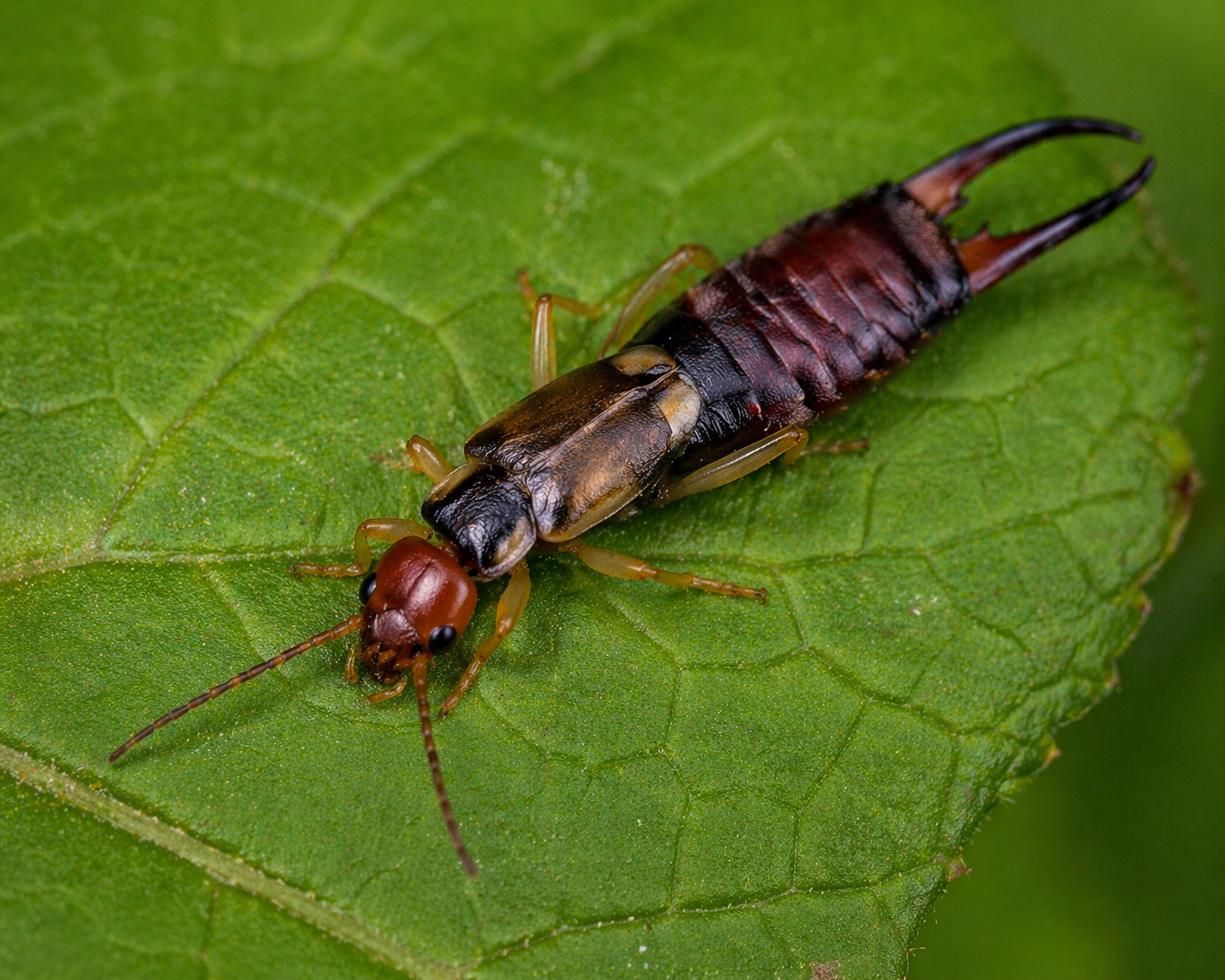
Earwigs are nocturnal, omnivorous, predaceous. active at night feeding actively on decaying vegetation or occasionally on plant tissues. During day they hide under bark and board, in the soil, in cracks and crevices of every sort.
Distribution
It is abundantly found throughout Europe and in Palaearctic region and also in North America. The group is chiefly tropical but is also found in Mexico, Asia, Africa and on the coasts of South Pacific and Indian ocean.
Comments on Forficula (Earwig)
- Commonly called as Earwig.
- Earwigs are medium-sized insects rarely exceeding half an inch in length.
- The term earwig possibly took its origin from the fact that these insects have been known to use human ear for purposes of concealment.
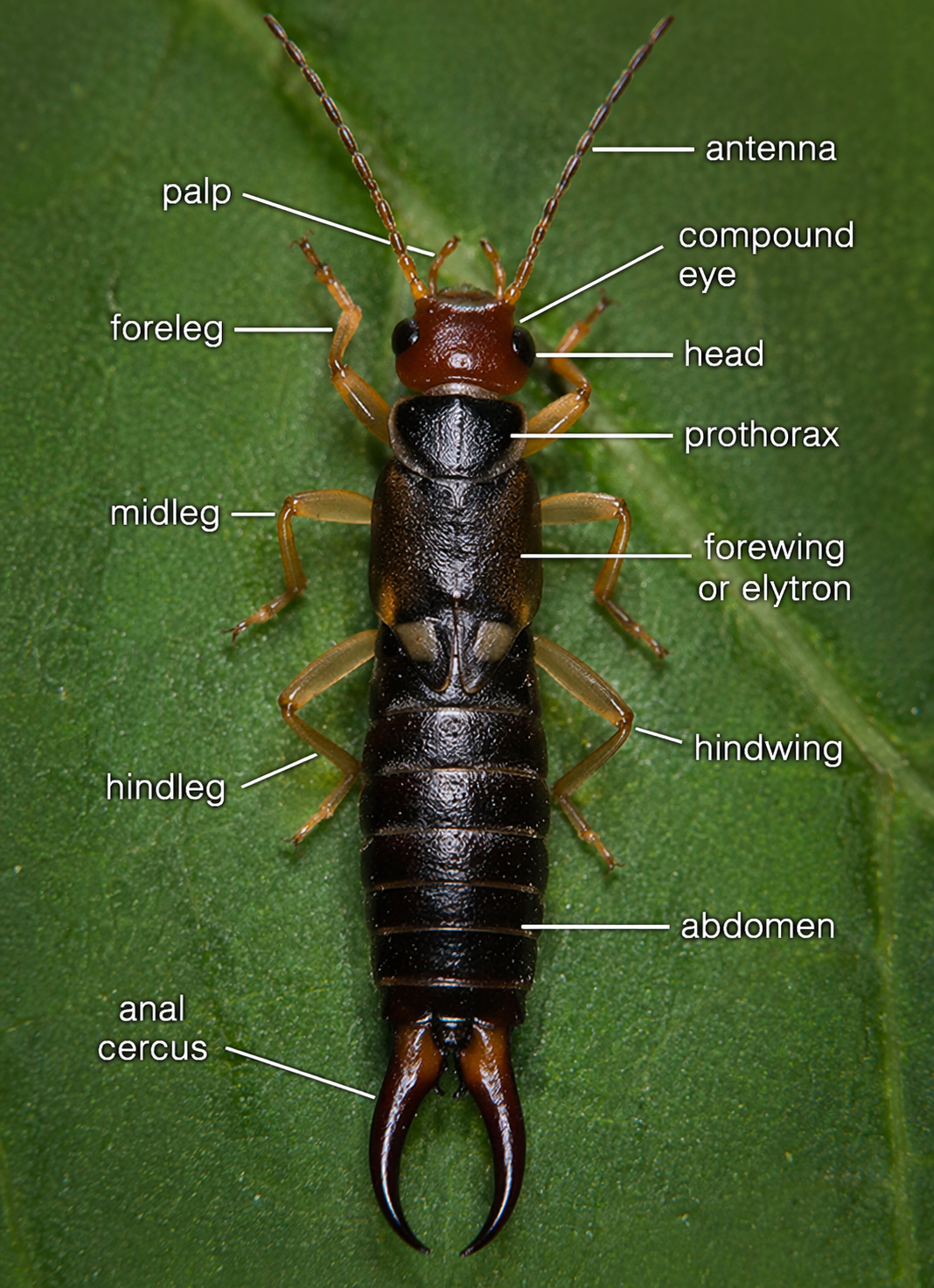
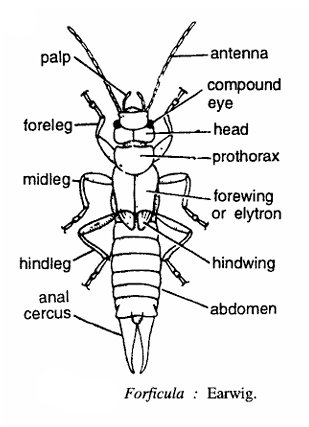
- It can be easily recognized by the forceps-like appendages or anal cercii on the end of the abdomen.
- Body is divided into head, thorax and abdomen.
- Head contains eyes and a pair of long and filiform antennae.
- Pronotum is large and Tarsi 3 jointed. Anal cercii are unjointed and almost modified to form horny forceps.
- Maxillary palps are small in size. Mouth parts are of biting and chewing type. Prothorax is fused with head.
- Thorax contains 3 pairs of walking legs and peculiar hind wings.
- First pair of wings form hard veinless truncated wing covers or elytra below which the second pair is fan-shaped with peculiar venation.
- When not in flight, it is folded into compact complicated mass, covered entirely by wing covers or elytra.
- When disturbed or alarmed or molested, the extremity of the abdomen is often upraised and the forceps widely opened in a threatening manner.
- Ovipositer absent. Metamorphosis gradual.
Economic Status
Harmful insect. Earwig is frequently destructive to ornamental plants and mainly a feeder around garden and home. It destroys roses, dahlias and other flowers eating off the petals at the base and causing them to drop. Earwig shows parental care for its eggs and young ones.
Identification
Since the insect contains forceps like anal cercii and all above features, hence it is Earwig.
See other posts also
- Schistocerca (Locust)
- Melanoplus (Grasshopper)
- Periplaneta americana (Cockroach)
- Carausius (Stick Insect)
- Larval Forms of Crustaceans
Discover more from Zoologyverse
Subscribe to get the latest posts sent to your email.