
Primary Productivity vs Secondary Productivity is an important topic in ecology because it explains how organic matter is produced by producers and subsequently converted into biomass by consumers. Productivity determines the rate at which living organisms generate new biomass and helps scientists understand energy transfer, food availability, and ecosystem functioning.
Green plants, algae, and certain bacteria capture energy from sunlight or chemical reactions to synthesize organic compounds. This process contributes to primary productivity. Animals and other consumers obtain organic matter by feeding on producers or other organisms and use part of the assimilated energy and nutrients to produce new biomass, contributing to secondary productivity.
Although both processes involve biomass production, they differ in the organisms responsible, the sources of organic matter, and the way productivity is measured. Understanding these differences is essential for studying food chains, ecosystem energy flow, population growth, and biological production in terrestrial and aquatic environments.
Understanding energy flow in ecosystems helps explain how primary production supports consumers and how energy is transferred across trophic levels.
Definition of Productivity in an Ecosystem
Productivity in an ecosystem refers to the rate at which living organisms produce new organic matter or biomass over a specific period. It is an important ecological parameter because it indicates how efficiently energy and resources are converted into biological material.
Productivity is generally expressed as the amount of biomass or energy produced per unit area or volume per unit time. For example, terrestrial productivity may be measured in grams of dry biomass per square metre per year (g/m²/year), whereas aquatic productivity may be measured per cubic metre or square metre per year, depending on the method used.
Ecosystem productivity is broadly classified into two major types:
- Primary productivity: The rate at which autotrophs, such as green plants, algae, and certain bacteria, produce organic matter from inorganic substances using light energy or chemical energy.
- Secondary productivity: The rate at which heterotrophic organisms, such as animals, produce new biomass from the organic matter they consume and assimilate.
Primary productivity provides the organic material that supports most food chains, while secondary productivity represents the formation of new consumer biomass. Together, these processes help explain the biological production and transfer of energy within ecosystems.
Primary Productivity
Primary productivity is the rate at which autotrophic organisms produce organic matter from inorganic substances using an external energy source. These organisms include green plants, algae, cyanobacteria, and certain chemosynthetic bacteria. Primary productivity forms the foundation of most ecosystems because it supplies the organic matter that supports consumers and decomposers.
In most ecosystems, primary productivity occurs through photosynthesis, during which producers use light energy to convert carbon dioxide and water into organic compounds. In some environments, such as deep-sea hydrothermal vents, certain microorganisms produce organic matter through chemosynthesis, using energy released by chemical reactions.
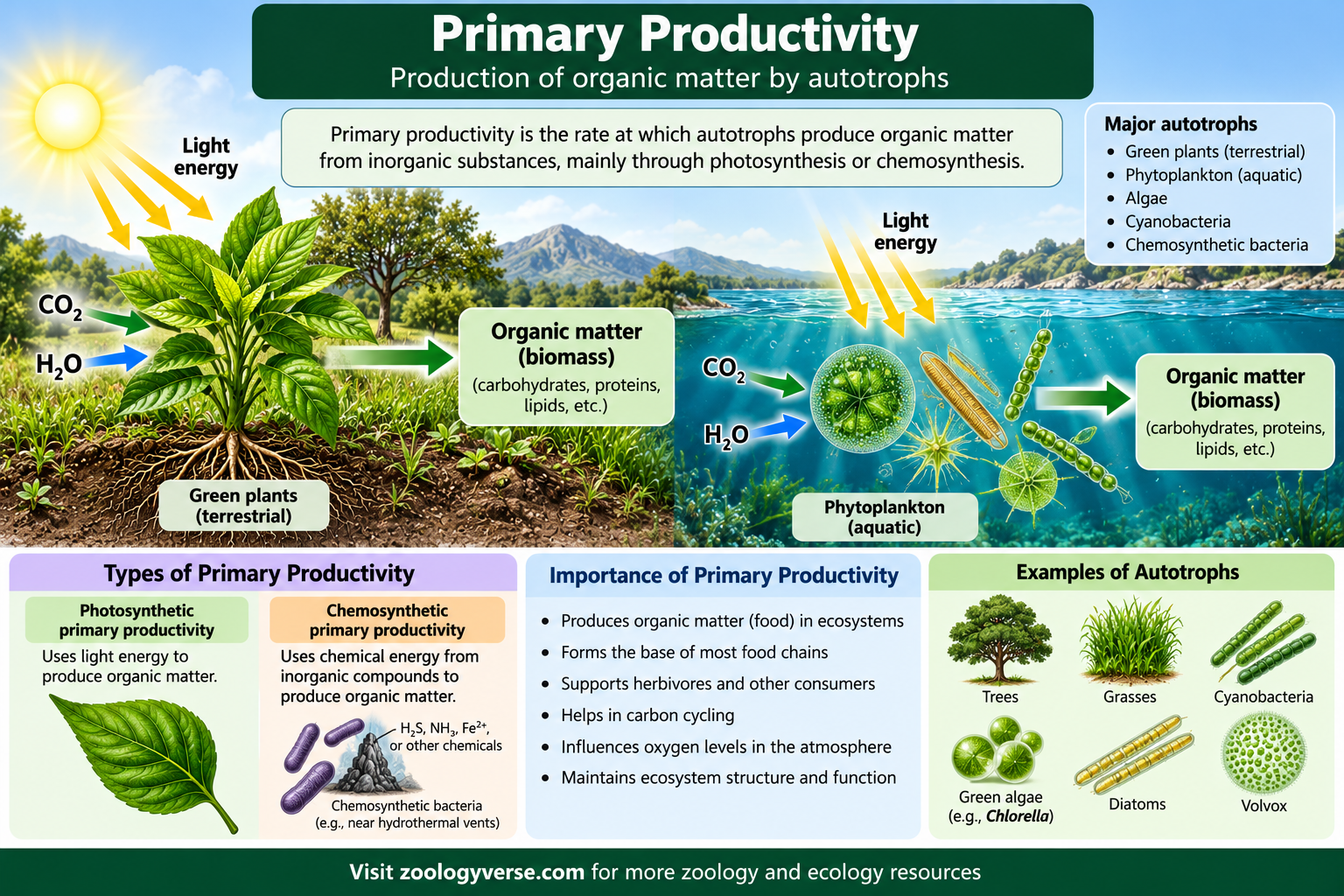
Primary productivity is commonly divided into two types:
1. Gross Primary Productivity (GPP)
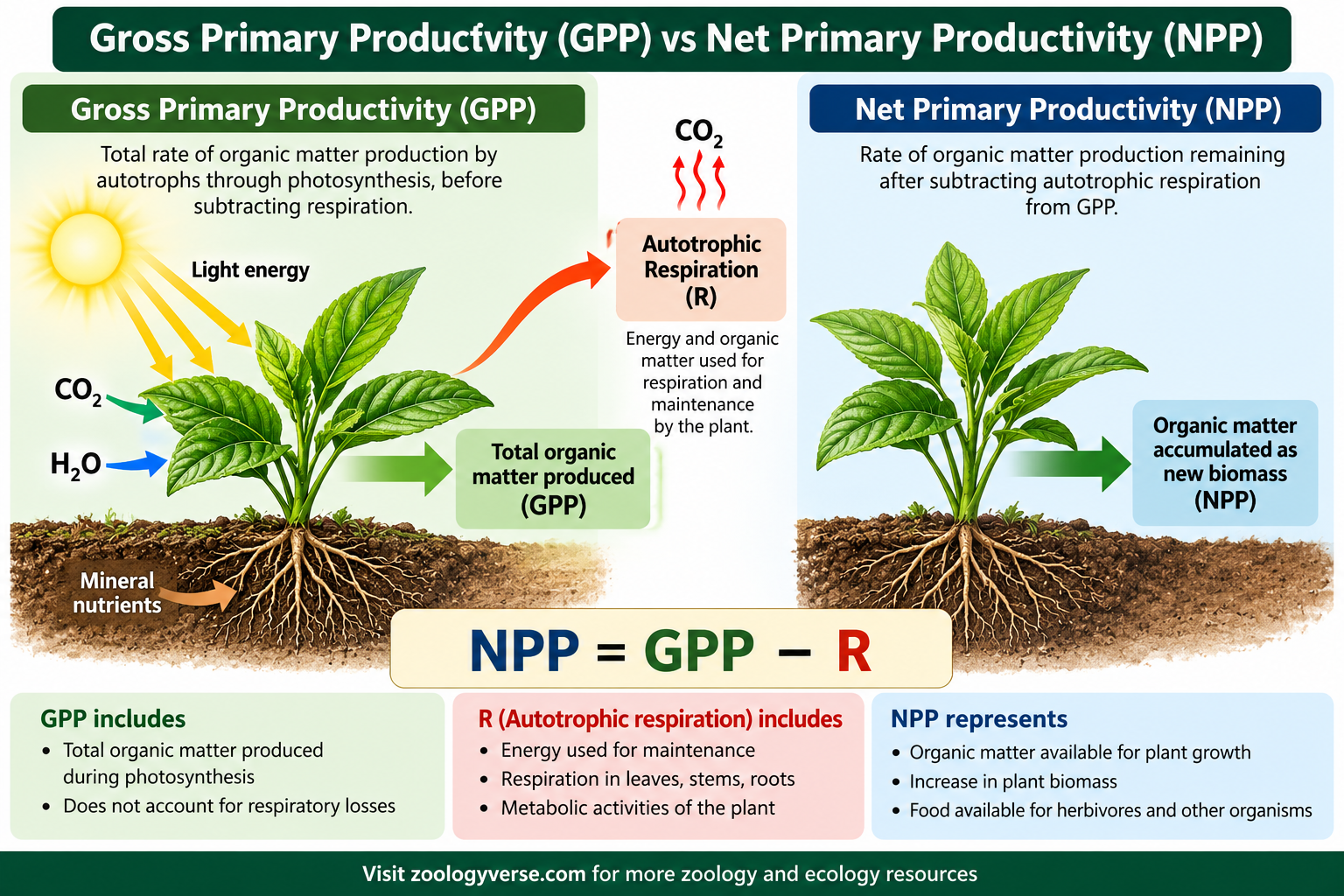
Gross Primary Productivity is the total rate at which producers capture energy and convert it into organic matter through photosynthesis or other primary production processes, before accounting for their own metabolic energy expenditure.
It represents the total biological production by autotrophs over a given area or volume and time.
2. Net Primary Productivity (NPP)
Net Primary Productivity is the rate at which producers accumulate organic matter after subtracting the energy or organic matter used in their own respiration from gross primary productivity.
The relationship is expressed as:
NPP = GPP – R
Where:
- NPP = Net Primary Productivity
- GPP = Gross Primary Productivity
- R = Respiratory energy expenditure by primary producers
Net primary productivity is particularly important because it represents the organic material available for plant growth, herbivores, and other organisms in the food web.
Examples of Primary Productivity
- Forests: Trees and other plants produce organic matter through photosynthesis.
- Grasslands: Grasses convert sunlight into chemical energy stored in plant tissues.
- Ponds and lakes: Algae and phytoplankton contribute to primary productivity.
- Marine ecosystems: Phytoplankton produce organic matter that supports aquatic food webs.
- Hydrothermal vent ecosystems: Chemosynthetic microorganisms use chemical energy to produce organic matter.
Thus, primary productivity determines the rate at which organic material enters an ecosystem and influences its capacity to support consumers and maintain biological activity.
Gross Primary Productivity (GPP)
Gross Primary Productivity (GPP) is the total rate at which primary producers capture energy and convert it into organic compounds through photosynthesis or chemosynthesis, before subtracting the energy used in their own respiration. It represents the total primary production of an ecosystem over a specified area or volume and period.
In photosynthetic ecosystems, plants, algae, and cyanobacteria absorb light energy and use it to synthesize organic compounds from carbon dioxide and water. A portion of the energy captured is subsequently used by these organisms for cellular respiration, growth, maintenance, and other metabolic activities.
Characteristics of Gross Primary Productivity
- Total production: GPP represents the total organic production by autotrophs before respiratory losses are deducted.
- Energy capture: In photosynthetic ecosystems, it reflects the rate at which light energy is converted into chemical energy stored in organic compounds.
- Ecosystem variation: GPP differs among forests, grasslands, deserts, lakes, and oceans because environmental conditions and producer communities vary.
- Measurement: GPP can be estimated using methods such as gas exchange, carbon dioxide uptake, oxygen production, and ecosystem carbon-flux measurements.
- Relationship with NPP: GPP includes the organic production used in producer respiration as well as the portion retained as new biomass.
Formula for Gross Primary Productivity
Gross Primary Productivity is related to Net Primary Productivity and autotrophic respiration through the following equation:
GPP = NPP + R
Where:
- GPP = Gross Primary Productivity
- NPP = Net Primary Productivity
- R = Respiration by primary producers
Example of Gross Primary Productivity
Suppose a grassland produces 1,800 grams of organic matter per square metre per year, and the plants use the equivalent of 600 grams per square metre per year in respiration.
The net primary productivity is:
NPP = GPP − R
NPP = 1,800 − 600 = 1,200 g/m²/year
In this example, GPP is 1,800 g/m²/year, while NPP is 1,200 g/m²/year.
Gross Primary Productivity is important because it indicates the total rate of organic matter production by autotrophs and helps ecologists assess ecosystem functioning and carbon uptake.
Net Primary Productivity (NPP)
Net Primary Productivity (NPP) is the rate at which primary producers accumulate organic matter after accounting for the organic matter used in their own respiration. It represents the portion of primary production retained as new plant or microbial biomass and is a major source of food and energy for consumers in most ecosystems.
During photosynthesis, producers convert carbon dioxide and water into organic compounds using light energy. However, some of the energy captured is used for cellular respiration, maintenance, and other metabolic processes. The remaining production contributes to the formation of new leaves, stems, roots, seeds, and other tissues.
Characteristics of Net Primary Productivity
- Biomass accumulation: NPP represents the rate of new organic matter production remaining after autotrophic respiration.
- Food availability: It provides organic material that can support herbivores and, indirectly, higher trophic levels.
- Ecosystem variation: NPP differs according to sunlight, temperature, water availability, nutrient supply, and the characteristics of producer communities.
- Measurement: It can be estimated from changes in plant biomass, plant growth measurements, and carbon-flux methods.
- Carbon storage: NPP contributes to carbon accumulation in vegetation and, through litter and root inputs, can also contribute to soil organic matter.
Formula for Net Primary Productivity
The relationship between gross and net primary productivity is:
NPP = GPP − R
Where:
- NPP = Net Primary Productivity
- GPP = Gross Primary Productivity
- R = Respiration by primary producers
Example of Net Primary Productivity
Suppose a forest has a gross primary productivity of 2,500 g/m²/year, while the producers use 900 g/m²/year for respiration.
Net primary productivity is calculated as follows:
NPP = GPP − R
NPP = 2,500 − 900 = 1,600 g/m²/year
Therefore, the net primary productivity is 1,600 g/m²/year. This represents the net rate of organic matter production available for plant growth and potential transfer to consumers, although not all of it is necessarily consumed by herbivores.
Ecological Importance of Net Primary Productivity
- Supports food webs: NPP supplies the organic matter that supports herbivores and the consumers that feed on them.
- Indicates ecosystem productivity: It helps ecologists compare biological production among forests, grasslands, agricultural systems, and aquatic ecosystems.
- Contributes to carbon storage: Carbon fixed into new biomass can remain in vegetation and may enter soil through roots and dead organic matter.
- Helps assess environmental change: Changes in NPP can reveal the effects of drought, temperature shifts, nutrient availability, land-use change, and other environmental conditions.
- Supports ecosystem management: NPP estimates help inform forest management, grassland assessment, agriculture, and studies of ecosystem responses to climate change.
Net Primary Productivity is therefore a key measure of the organic matter that producers add to an ecosystem after meeting their own respiratory requirements.
Secondary Productivity
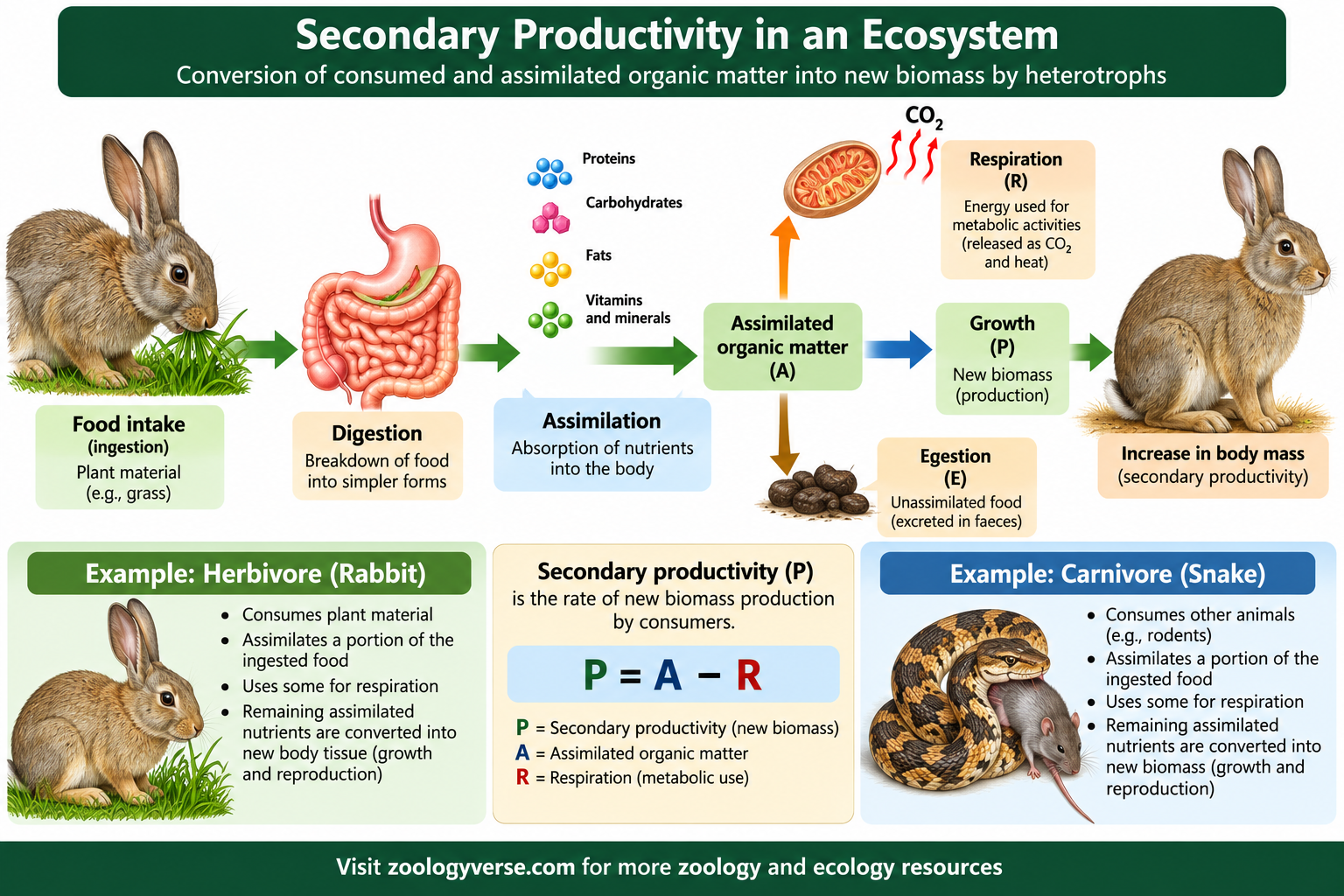
Secondary productivity is the rate at which heterotrophic organisms produce new biomass from the organic matter they consume and assimilate. Unlike primary producers, which synthesize organic matter from inorganic substances, consumers obtain organic nutrients by feeding on plants, animals, or other organic material.
Secondary productivity occurs in herbivores, carnivores, omnivores, and other heterotrophs. For example, a grasshopper converts part of the food obtained from plants into new body tissue, while a fish uses assimilated nutrients to support growth and tissue formation.
Not all the food consumed by an organism becomes new biomass. Some remains undigested and is eliminated as waste, while some of the assimilated material is used in respiration, movement, maintenance, and other metabolic activities. Only the portion retained as new biomass contributes to secondary production.
Characteristics of Secondary Productivity
- Occurs in heterotrophs: Secondary productivity takes place in consumers and other heterotrophic organisms.
- Depends on food availability: The amount and quality of available food influence the rate of biomass production.
- Involves assimilation: Consumed organic matter must be digested and assimilated before it can contribute to growth and other biological production.
- Includes biomass formation: Growth and the production of new tissues contribute to secondary productivity; reproduction may also contribute when offspring biomass is included in the population-level measurement.
- Varies among organisms: Productivity differs with species, body size, metabolic rate, temperature, food quality, and environmental conditions.
Examples of Secondary Productivity
- Herbivores: Deer convert plant material into new body tissue.
- Carnivores: Tigers use assimilated nutrients from prey to support growth and tissue replacement.
- Aquatic consumers: Fish and zooplankton convert consumed organic matter into new biomass.
- Insects: Grasshoppers use nutrients obtained from leaves to grow and develop.
- Detritivores: Earthworms produce new biomass by consuming and assimilating organic matter in soil.
How Secondary Productivity Is Measured
Secondary productivity is commonly estimated by measuring the increase in consumer biomass over a specified period and accounting for relevant population processes, such as births, deaths, and biomass losses, depending on the study design.
For an individual organism, growth measurements can help estimate production. At the population level, ecologists may use repeated biomass sampling, growth rates, production-to-biomass ratios, or energy-budget methods.
Secondary productivity is usually expressed as biomass or energy produced per unit area or volume per unit time, such as g/m²/year or kJ/m²/year.
Important distinction: The amount of food consumed is not the same as secondary productivity. Productivity refers to new biomass produced, not simply the total food eaten or energy assimilated.
Secondary productivity is important because it indicates how efficiently consumers convert available organic matter into new biomass and helps explain the transfer of biological production through food webs.
Types and Measurement of Productivity
Productivity in ecology can be classified according to the organisms producing biomass and the rate at which biological material is formed. Primary productivity describes organic matter production by autotrophs, whereas secondary productivity describes new biomass production by heterotrophs. Both can be measured using biomass or energy units over a defined area or volume and time.
1. Types of Primary Productivity
Primary productivity is divided into two main categories:
- Gross Primary Productivity (GPP): The total rate of organic matter production by autotrophs before subtracting their own respiration.
- Net Primary Productivity (NPP): The rate of organic matter accumulation by autotrophs after accounting for their respiration.
The relationship is:
NPP = GPP − R
Here, R represents respiration by primary producers.
2. Types of Secondary Productivity
Secondary productivity is often described in relation to the stages of food processing in heterotrophs.
- Assimilated energy or material: The portion of consumed food that is absorbed and used by the organism, after accounting for unassimilated losses.
- Net secondary production: The portion of assimilated material retained as new consumer biomass after subtracting metabolic losses, particularly respiration.
For an energy budget, the simplified relationship is:
Net secondary production = Assimilated energy − Respiratory energy losses
This relationship assumes that other relevant energy-budget terms, such as excretion or secretion, have already been accounted for in the definition of assimilated energy. Exact calculations depend on the method and accounting boundaries used.
3. Measurement of Primary Productivity
Primary productivity can be measured using different methods depending on the ecosystem and the research objective.
a. Biomass method
Researchers measure changes in plant or algal biomass over a defined period. This method is useful in grasslands, agricultural fields, and some aquatic systems. Harvest-based measurements usually estimate net production rather than gross production unless respiratory losses are also estimated.
b. Gas-exchange method
Photosynthetic carbon dioxide uptake and oxygen release can be measured to estimate primary production. To estimate gross production, researchers must distinguish photosynthetic uptake from respiratory carbon losses.
c. Carbon-flux method
Eddy covariance and related techniques measure exchanges of carbon dioxide between ecosystems and the atmosphere. Combined with appropriate models and respiration estimates, these measurements can be used to estimate gross and net ecosystem production.
d. Aquatic productivity methods
In aquatic environments, oxygen-based light-and-dark bottle experiments and carbon-uptake methods can be used to estimate primary production by phytoplankton and other aquatic producers.
4. Measurement of Secondary Productivity
Secondary productivity can be estimated by measuring the formation of new consumer biomass over time.
Common approaches include:
- Growth measurements: Recording increases in body mass or length and converting these changes into biomass production estimates.
- Population sampling: Measuring changes in population biomass while accounting for births, deaths, immigration, and emigration where relevant.
- Production-to-biomass ratios: Estimating production from standing biomass and an appropriate production-to-biomass ratio.
- Energy-budget methods: Estimating consumption, assimilation, respiration, and other losses to determine the energy retained as new biomass.
5. Units of Productivity
Productivity is expressed as a rate, not simply as the total amount of biomass present.
Common units include:
- Biomass-based units: g/m²/year or kg/ha/year.
- Carbon-based units: g C/m²/year.
- Energy-based units: kJ/m²/year.
In aquatic ecosystems, productivity may be expressed per unit surface area or per unit volume, depending on the measurement method.
Remember: Standing biomass is the amount of living material present at a particular time, whereas productivity is the rate at which new material is produced. A system with relatively low standing biomass may still have high productivity if organisms grow and are replaced rapidly.
Primary Productivity vs Secondary Productivity
Primary productivity and secondary productivity are two essential processes that determine the production of organic matter in an ecosystem. The main difference is that primary productivity occurs in autotrophs, which produce organic compounds from inorganic substances, whereas secondary productivity occurs in heterotrophs, which convert consumed and assimilated organic matter into new biomass.
Difference Between Primary Productivity Vs Secondary Productivity
| Basis of comparison | Primary Productivity | Secondary Productivity |
|---|---|---|
| Definition | Rate of organic matter production by autotrophs | Rate of new biomass production by heterotrophs |
| Organisms involved | Plants, algae, cyanobacteria, and other autotrophs | Animals and other heterotrophs |
| Source of organic matter | Synthesized from inorganic substances | Obtained by consuming organic matter |
| Energy source | Light energy or chemical energy | Chemical energy stored in food |
| Main processes | Photosynthesis or chemosynthesis | Feeding, digestion, assimilation, and biomass formation |
| Main categories | Gross primary productivity and net primary productivity | Biomass production by consumers after metabolic losses |
| Respiration | NPP is calculated after subtracting autotrophic respiration from GPP | Net production is estimated after accounting for relevant metabolic losses |
| Measurement | Biomass change, gas exchange, and carbon-flux methods | Growth measurements, population biomass, and energy-budget methods |
| Ecological role | Introduces newly produced organic matter into most food webs | Transfers biological production into consumer biomass |
| Examples | Grass growth, forest production, and phytoplankton production | Growth of deer, fish, grasshoppers, and zooplankton |
Key Differences Primary Productivity Vs Secondary Productivity Explained
1. Difference in organisms: Primary productivity is associated with autotrophs, which synthesize organic matter from inorganic substances. Secondary productivity occurs in heterotrophs that depend on organic matter produced by other organisms.
2. Difference in energy use: Primary producers capture light energy or use chemical energy to produce organic compounds. Consumers obtain chemical energy by feeding on organic material.
3. Difference in biomass production: Primary productivity contributes to the formation of producer biomass. Secondary productivity represents the formation of new biomass in consumers and other heterotrophs.
4. Difference in ecological role: Primary productivity provides the organic foundation for most food webs. Secondary productivity contributes to consumer growth, population production, and the transfer of biological material across trophic levels.
5. Difference in measurement: Primary productivity may be estimated through photosynthetic measurements, carbon exchange, or changes in producer biomass. Secondary productivity is commonly estimated from consumer growth, population biomass changes, or energy budgets.
Similarities Between Primary Productivity vs Secondary Productivity
Despite their differences, both processes share several features:
- Both represent rates of biological production over time.
- Both contribute to the formation of new biomass.
- Both depend on environmental conditions and the availability of necessary resources.
- Both can be measured using biomass-based or energy-based units.
- Both are important for understanding ecosystem functioning and energy transfer.
In summary, primary productivity produces organic matter through autotrophic activity, whereas secondary productivity converts consumed and assimilated organic matter into new heterotrophic biomass. Together, they help determine how biological material is produced and transferred within ecosystems.
Factors Affecting Primary Productivity Vs Secondary Productivity
Primary productivity vs secondary productivity is influenced by environmental conditions, resource availability, and the biological characteristics of organisms. Although both processes depend on ecosystem conditions, the factors that directly control producer growth may differ from those that regulate consumer biomass production.
Nutrient availability influences producer growth, while decomposition supports nutrient cycling in ecosystems by returning essential elements to the environment.
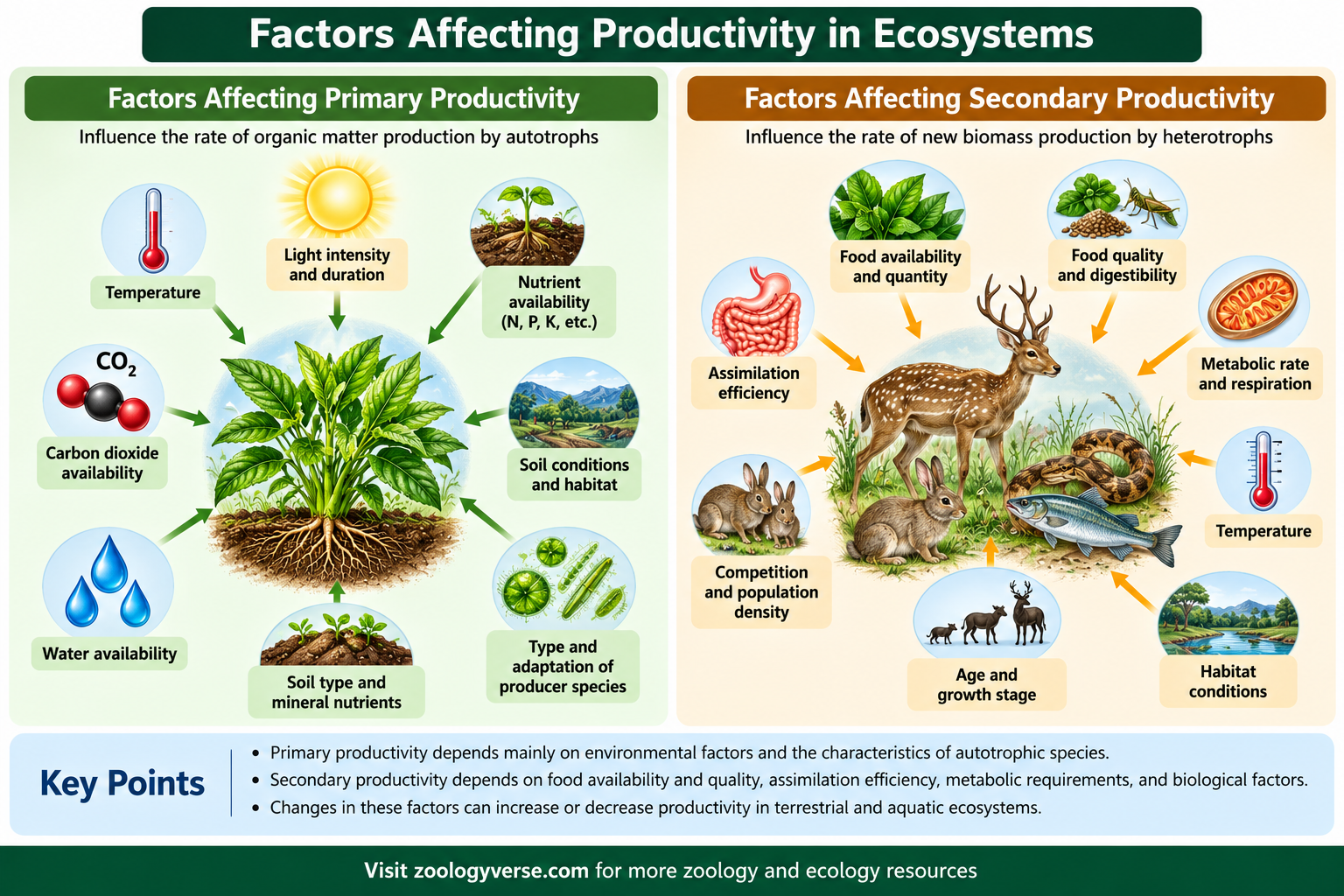
1. Factors Affecting Primary Productivity
Primary productivity depends on the availability of energy and essential resources required by autotrophs.
a. Light intensity and duration
Light provides the energy required for photosynthesis. Increasing light intensity generally increases photosynthetic activity up to a saturation point. Extremely intense light may cause photoinhibition, while insufficient light limits production. Day length also influences the total time available for photosynthesis.
b. Temperature
Temperature affects the enzymes involved in photosynthesis and other metabolic processes. Productivity often increases within a suitable temperature range but may decline when temperatures become too high or too low.
c. Water availability
Water is essential for photosynthesis, nutrient transport, and maintaining cell structure. Water shortages reduce plant growth and may cause stomatal closure, limiting carbon dioxide uptake. Consequently, primary productivity is often low in arid environments.
d. Nutrient availability
Nitrogen, phosphorus, and other mineral nutrients are necessary for the formation of proteins, nucleic acids, chlorophyll, and other cellular components. Nutrient deficiency can restrict primary productivity even when sunlight and water are abundant.
e. Carbon dioxide availability
Carbon dioxide is a major raw material for photosynthesis. Its availability can limit photosynthetic activity in some environments, although the response depends on plant species, temperature, water supply, and nutrient availability.
f. Soil conditions
Soil texture, pH, aeration, moisture, and nutrient content influence root growth and the uptake of water and minerals. Suitable soil conditions generally support higher terrestrial productivity.
g. Producer characteristics
Plant species, leaf area, photosynthetic pathways, growth stage, and canopy structure influence how efficiently producers capture resources and accumulate biomass.
2. Factors Affecting Secondary Productivity
Secondary productivity depends on the ability of heterotrophs to obtain, assimilate, and convert food into new biomass.
a. Food availability
The quantity of available food influences consumer growth and reproduction. A shortage of food can reduce biomass production, while abundant food may support faster growth if other requirements are met.
b. Food quality and digestibility
Food containing suitable proportions of proteins, carbohydrates, fats, minerals, and vitamins generally supports growth more effectively than food lacking essential nutrients. Digestibility also determines how much consumed material can be assimilated.
c. Assimilation efficiency
Assimilation efficiency refers to the proportion of ingested food energy or material that is absorbed rather than lost in faeces. It varies among organisms and food types. Highly digestible food generally allows a greater proportion of ingested material to be assimilated.
d. Temperature
Temperature affects metabolism, digestion, feeding, and growth. In ectothermic animals, suitable temperature conditions can strongly influence secondary productivity. Temperatures outside an organism’s optimal range may reduce feeding and growth.
e. Population density and competition
High population density can increase competition for food, space, and other resources. This may reduce individual growth rates and limit population-level production, although the outcome depends on the species and environmental conditions.
f. Predation and disease
Predation, parasites, and diseases can reduce consumer populations or alter their energy allocation. These effects may influence the total biomass produced by a population over time.
g. Age, body size, and life history
Growth rates vary with age, body size, developmental stage, and reproductive strategy. Juvenile organisms may allocate a larger share of assimilated energy to growth, while mature individuals may allocate more to reproduction or maintenance.
3. Differences in the Factors Affecting Primary Productivity Vs Secondary Productivity
| Factor | Effect on primary productivity | Effect on secondary productivity |
|---|---|---|
| Light | Directly supplies energy for photosynthesis | Usually affects consumers indirectly through food availability |
| Nutrients | Support producer growth and photosynthetic machinery | Support consumer growth through food quality |
| Water | Influences photosynthesis and plant growth | Influences hydration, metabolism, and habitat suitability |
| Temperature | Affects photosynthesis and producer metabolism | Affects feeding, digestion, metabolism, and growth |
| Food availability | Producers require inorganic resources and an energy source | Food quantity and quality directly affect biomass production |
| Species characteristics | Influence resource capture and biomass accumulation | Influence assimilation, growth, and energy allocation |
Primary productivity determines the rate at which autotrophs generate organic matter, while secondary productivity depends on how heterotrophs use available organic resources to produce new biomass. Understanding the factors affecting both processes helps explain differences in productivity among forests, grasslands, lakes, oceans, and other ecosystems.
Ecological Importance of Primary Productivity vs Secondary Productivity
Primary productivity vs secondary productivity is an important comparison in ecology because both processes determine how biological material is produced, transferred, and maintained within ecosystems. Primary productivity supplies newly formed organic matter, while secondary productivity describes how heterotrophs convert consumed and assimilated organic material into new biomass.
The distribution of biomass and energy across trophic levels can be illustrated using ecological pyramids, which help explain differences in ecosystem production.
1. Supports Food Chains and Food Webs
Primary productivity provides the organic matter that supports most food chains. Plants, algae, and other autotrophs form the producer level, supplying food to herbivores. Carnivores and omnivores obtain energy and nutrients by consuming other organisms.
Secondary productivity contributes to the formation of consumer biomass, allowing energy and organic matter to pass from one trophic level to another.
2. Determines Ecosystem Productivity
The rates of primary and secondary production help ecologists assess the biological productivity of an ecosystem. Highly productive forests, wetlands, and some aquatic environments can support substantial biological activity when resources and environmental conditions are favourable.
However, high primary productivity does not always result in equally high secondary productivity because food quality, consumption rates, assimilation efficiency, and other ecological factors affect consumer production.
3. Contributes to Carbon Cycling
Primary producers remove carbon dioxide from the atmosphere or surrounding water and incorporate carbon into organic compounds. Some of this carbon becomes part of plant and algal biomass.
Consumers transfer organic carbon through food webs by feeding and producing new biomass. Respiration, excretion, and decomposition subsequently return carbon to the environment, where it can be reused by producers or enter other carbon pools.
Organic matter produced by autotrophs contributes to carbon movement through ecosystems, linking biological production with biogeochemical cycles.
4. Influences Population Growth
Secondary productivity is closely related to the production of new consumer biomass. When food is abundant and environmental conditions are suitable, organisms may grow and reproduce more successfully.
Conversely, low food availability or poor food quality can reduce growth and reproduction, influencing population size and the structure of ecological communities.
5. Supports Biodiversity
Productivity influences the resources available to different species. Primary production supplies food and habitat resources, while secondary production contributes to the biomass of herbivores, predators, and other consumers.
The relationship between productivity and biodiversity is complex. Extremely low productivity can limit resources, while excessive nutrient enrichment may favour a small number of species and reduce biodiversity in some ecosystems.
6. Helps Explain Energy Transfer Between Trophic Levels
Primary productivity represents the entry of newly produced organic matter into most food webs. Secondary productivity represents the formation of new biomass by consumers.
At each trophic level, some consumed material remains unassimilated, and some assimilated energy is used in respiration and other metabolic processes. Therefore, only a portion of the production at one level is transferred into new biomass at the next.
7. Important for Agriculture, Forestry, and Fisheries
Knowledge of primary productivity helps assess crop growth, forest biomass accumulation, pasture production, and phytoplankton production in aquatic systems.
Secondary productivity is relevant to livestock growth, aquaculture, fisheries, and wildlife population management. Together, these measurements can help guide resource management and improve the sustainability of food production.
8. Helps Assess Environmental Change
Changes in productivity can reveal the effects of drought, warming, pollution, nutrient enrichment, land-use change, and other environmental pressures.
For example, drought may reduce plant production and subsequently decrease food availability for herbivores. Nutrient enrichment may increase algal production in a lake, but excessive growth can lead to oxygen depletion when organic matter decomposes.
In conclusion, primary and secondary productivity are complementary processes that help determine ecosystem functioning, food availability, carbon cycling, and the production of biomass across trophic levels.
Examples of Primary Primary Productivity vs Secondary Productivity
Primary productivity and secondary productivity can be observed in terrestrial and aquatic ecosystems. Primary productivity occurs when autotrophs produce organic matter, while secondary productivity occurs when heterotrophs convert consumed and assimilated organic matter into new biomass.
1. Primary Productivity in Terrestrial Ecosystems
Forests: Trees, shrubs, and other plants produce organic matter through photosynthesis. Their productivity supports herbivores such as deer and insects and contributes to carbon storage in vegetation.
Grasslands: Grasses and herbs convert sunlight, water, and carbon dioxide into organic compounds. The resulting plant production supports grazing animals such as cattle, antelopes, and grasshoppers.
Deserts: Desert plants, including cacti and drought-resistant shrubs, carry out photosynthesis under conditions of limited water availability. Primary productivity is often constrained by rainfall and may increase temporarily after rain.
Agricultural ecosystems: Crops such as wheat, rice, and maize produce biomass through photosynthesis. Their productivity depends on factors such as light, temperature, water, soil fertility, and agricultural management.
2. Primary Productivity in Aquatic Ecosystems
Ponds and lakes: Phytoplankton, algae, and aquatic plants produce organic matter through photosynthesis. Their productivity supports zooplankton, aquatic insects, fish, and other consumers.
Oceans: Marine phytoplankton carry out a large proportion of oceanic photosynthesis. Their production supports marine food webs, from zooplankton to fish and large marine animals.
Coral reefs: Algae, including photosynthetic symbionts living within coral tissues, contribute to primary production and support the productivity of reef communities.
Hydrothermal vent ecosystems: Certain chemosynthetic microorganisms use energy from chemical reactions to produce organic matter without sunlight. This is an example of primary production driven by chemical energy rather than photosynthesis.
3. Secondary Productivity in Terrestrial Ecosystems
Herbivores in grasslands: A deer feeding on grass assimilates some of the consumed organic matter and uses it to produce new body tissue. This increase in consumer biomass contributes to secondary productivity.
Insects feeding on plants: A grasshopper converts assimilated nutrients from leaves into new tissues as it grows and develops.
Predators in forests: A tiger obtains organic matter by consuming prey. The assimilated nutrients support maintenance, growth, and reproduction, although only the fraction retained as new biomass contributes to secondary production.
Soil detritivores: Earthworms consume dead organic material and produce new biomass from the fraction they assimilate. They also contribute to decomposition and nutrient cycling.
4. Secondary Productivity in Aquatic Ecosystems
Zooplankton in lakes: Zooplankton feed on phytoplankton and other food sources and convert assimilated organic matter into new biomass. They serve as important food for fish and other aquatic consumers.
Fish in rivers and oceans: Fish consume algae, plankton, invertebrates, or other fish, depending on the species. The fraction of assimilated material retained as new tissue contributes to secondary productivity.
Aquaculture systems: Farmed fish and shrimp convert feed into new biomass. Their production depends on feed quality, feeding rates, water temperature, dissolved oxygen, health, and other conditions.
Marine food webs: Zooplankton and small fish consume organisms at lower trophic levels and produce new biomass that supports larger fish, seabirds, and marine mammals.
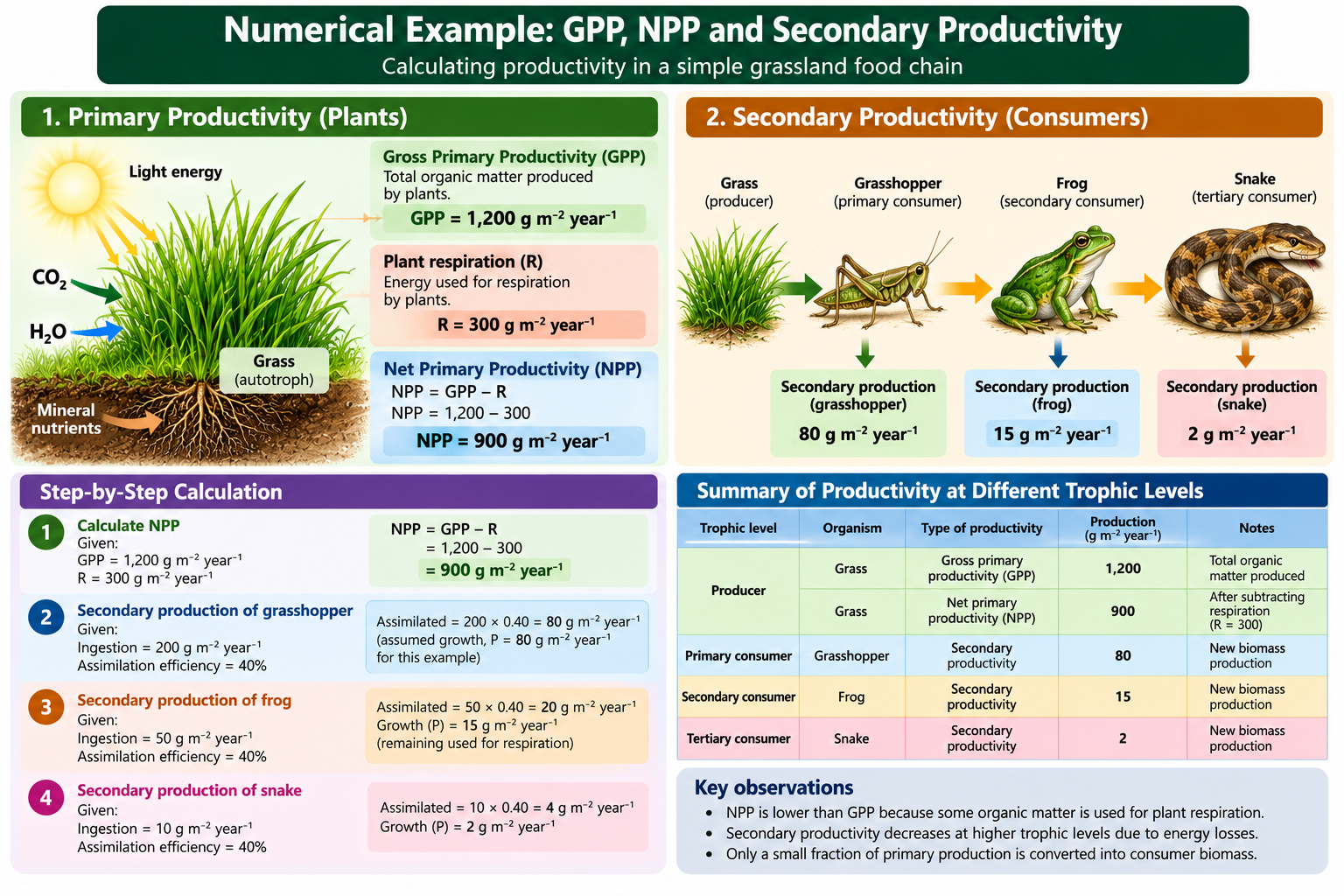
5. An Integrated Example: Grassland Food Chain
Consider the following food chain:
Grass → Grasshopper → Frog → Snake
- Grass: Produces organic matter through photosynthesis, contributing to primary productivity.
- Grasshopper: Consumes grass and converts assimilated organic matter into new biomass.
- Frog: Feeds on grasshoppers and produces new biomass from assimilated nutrients.
- Snake: Feeds on frogs and uses assimilated organic matter for maintenance, growth, and reproduction.
The grass contributes to primary productivity, while the grasshopper, frog, and snake contribute to secondary productivity. At each transfer, some energy is used in metabolism or lost in unassimilated material, so not all production at one level becomes new biomass at the next.
These examples show how primary productivity establishes the organic foundation of most food webs and secondary productivity contributes to biomass formation among consumers.
Frequently Asked Questions (FAQs)
What is the difference between primary productivity and secondary productivity?
What are GPP and NPP?
NPP = GPP − R
Here, R represents respiration by primary producers.
Why is net primary productivity important?
What is secondary productivity in ecology?
Can secondary productivity occur without primary productivity?
Which factors affect primary productivity?
Which factors affect secondary productivity?
How is primary productivity measured?
How is secondary productivity measured?
What is the relationship between primary productivity and food chains?
Is standing biomass the same as productivity?
Why is productivity important in ecosystem studies?
Conclusion
Primary productivity vs secondary productivity explains two complementary processes responsible for biological production in ecosystems. Primary productivity is the rate at which autotrophs, such as plants, algae, and certain bacteria, produce organic matter from inorganic substances using light or chemical energy. Secondary productivity is the rate at which heterotrophs convert consumed and assimilated organic matter into new biomass.
Gross Primary Productivity (GPP) represents total primary production, whereas Net Primary Productivity (NPP) accounts for the respiratory losses of primary producers. Secondary productivity, in contrast, depends on food availability, assimilation efficiency, metabolic requirements, and consumer growth.
Both processes are essential for understanding food chains, ecosystem functioning, carbon cycling, and the transfer of biological material across trophic levels. Studying them helps ecologists compare ecosystem productivity and understand how environmental changes influence biological communities.
References
- National Council of Educational Research and Training (NCERT). Biology, Class XII: Ecosystem — Productivity.
https://ncert.gov.in/textbook/pdf/lebo112.pdf - OpenStax. Biology 2e: Ecology of Ecosystems. Rice University.
https://openstax.org/books/biology-2e/pages/46-1-ecology-of-ecosystems - OpenStax. Biology 2e: Energy Flow Through Ecosystems. Rice University.
https://openstax.org/books/biology-2e/pages/46-2-energy-flow-through-ecosystems - OpenStax. Concepts of Biology: Energy Flow Through Ecosystems. Rice University.
https://openstax.org/books/concepts-biology/pages/20-1-energy-flow-through-ecosystems - Jørgensen, S. E., & Fath, B. D. (Eds.). Fundamentals of Ecosystem Science: Secondary Production and Consumer Energetics. Elsevier, 2021.
https://doi.org/10.1016/B978-0-12-812762-9.00003-4
Discover more from Zoologyverse
Subscribe to get the latest posts sent to your email.