
Biogeochemical cycles are natural processes through which essential chemical elements and compounds move between living organisms and the non-living components of the environment, including air, water, and soil. These cycles maintain the availability of nutrients required for growth, reproduction, and the normal functioning of ecosystems.
Organisms need elements such as carbon, nitrogen, oxygen, phosphorus, and hydrogen to build important biological molecules, including carbohydrates, proteins, lipids, and nucleic acids. Because these materials are continuously used, transformed, and released, nutrients must move through ecosystems and become available for reuse.
Biogeochemical cycles connect biological, geological, and chemical processes. For example, plants absorb carbon dioxide during photosynthesis, animals obtain carbon by feeding, and respiration and decomposition return carbon to the environment. Similarly, the nitrogen cycle transforms atmospheric nitrogen into forms that plants can use and eventually returns nitrogen to the atmosphere through microbial processes.
The major biogeochemical cycles include the water cycle, carbon cycle, nitrogen cycle, oxygen cycle, and phosphorus cycle. Understanding these cycles helps explain nutrient availability, ecosystem productivity, soil fertility, and the effects of human activities on the environment.
Definition of Biogeochemical Cycles
Biogeochemical cycles are natural pathways through which chemical elements and compounds circulate between living organisms and the non-living environment through biological, geological, and chemical processes.
The term biogeochemical consists of three components:
- Bio: Refers to living organisms, such as plants, animals, and microorganisms.
- Geo: Refers to the Earth, including soil, rocks, sediments, and water.
- Chemical: Refers to the elements and compounds that undergo transformations during the cycles.
For example, in the carbon cycle, plants absorb carbon dioxide from the atmosphere during photosynthesis. Carbon passes to animals through feeding and returns to the environment through respiration, decomposition, and other processes.
Similarly, in the nitrogen cycle, microorganisms convert nitrogen into different chemical forms that plants can absorb and use to produce proteins and nucleic acids.
Key Characteristics of Biogeochemical Cycles
- Continuous movement: Elements move between organisms and environmental reservoirs.
- Nutrient reuse: Elements released through respiration, excretion, and decomposition can become available for reuse.
- Biological involvement: Plants, animals, and microorganisms participate in nutrient transfer and transformation.
- Environmental exchange: Air, water, soil, rocks, and sediments act as reservoirs of essential elements.
- Ecosystem maintenance: These cycles help sustain nutrient availability and biological productivity.
Biogeochemical cycles do not mean that matter is recycled in exactly the same form. Elements are continually transformed into different chemical compounds as they move through ecosystems.
Types of Biogeochemical Cycles
Biogeochemical cycles are commonly classified according to the main reservoir of the element and the pathways through which it circulates. The two broad categories are gaseous cycles and sedimentary cycles. The water cycle is also studied as a major natural cycle because water transports substances through the environment and living organisms.
1. Gaseous Cycles
In gaseous cycles, the atmosphere or oceans serve as important reservoirs of the element. These cycles generally allow elements to circulate relatively rapidly between organisms and the environment.
Examples include:
- Carbon cycle: Carbon moves among the atmosphere, living organisms, oceans, soil, and rocks.
- Nitrogen cycle: Nitrogen moves between the atmosphere, soil, water, and organisms through processes such as nitrogen fixation, nitrification, assimilation, and denitrification.
- Oxygen cycle: Oxygen circulates through the atmosphere, water, organisms, and Earth’s crust through processes including photosynthesis, respiration, and oxidation.
2. Sedimentary Cycles
In sedimentary cycles, rocks, soil, and sediments are major reservoirs of the element. Release from these reservoirs often occurs through weathering, erosion, and related geological processes.
Example: Phosphorus cycle
Phosphorus is released from phosphate-containing rocks through weathering. Plants absorb phosphate from soil or water, and animals obtain it by feeding. Decomposition returns phosphorus to the environment, while some eventually becomes buried in sediments and may form rock over geological timescales.
Unlike carbon and nitrogen, phosphorus has no major gaseous phase under ordinary natural conditions.
3. The Water Cycle
The water cycle describes the continuous movement of water among the atmosphere, land, oceans, and living organisms. Its major processes include evaporation, transpiration, condensation, precipitation, infiltration, and runoff.
Although it is often discussed alongside biogeochemical cycles, the water cycle is a hydrological cycle rather than a cycle of a chemical element in the same sense as carbon or nitrogen.
Comparison of Major Cycle Categories
| Feature | Gaseous Cycles | Sedimentary Cycles |
|---|---|---|
| Main reservoir | Atmosphere and oceans | Rocks, soil, and sediments |
| Main processes | Biological exchange and atmospheric or aquatic transport | Weathering, erosion, biological uptake, sedimentation |
| Typical examples | Carbon and nitrogen cycles | Phosphorus cycle |
| General circulation | Often relatively rapid | Often slower, with long geological timescales |
These categories describe the dominant reservoirs, not completely separate systems. For example, carbon occurs in both atmospheric and sedimentary reservoirs, and the carbon cycle connects them.
The Water Cycle
The water cycle, also called the hydrological cycle, is the continuous movement of water between the Earth’s surface, atmosphere, underground reservoirs, and living organisms. Solar energy drives evaporation, while gravity causes precipitation and the movement of water downhill.
Water is essential for life because it acts as a solvent, transports nutrients, supports metabolic reactions, and helps regulate temperature in organisms and ecosystems.
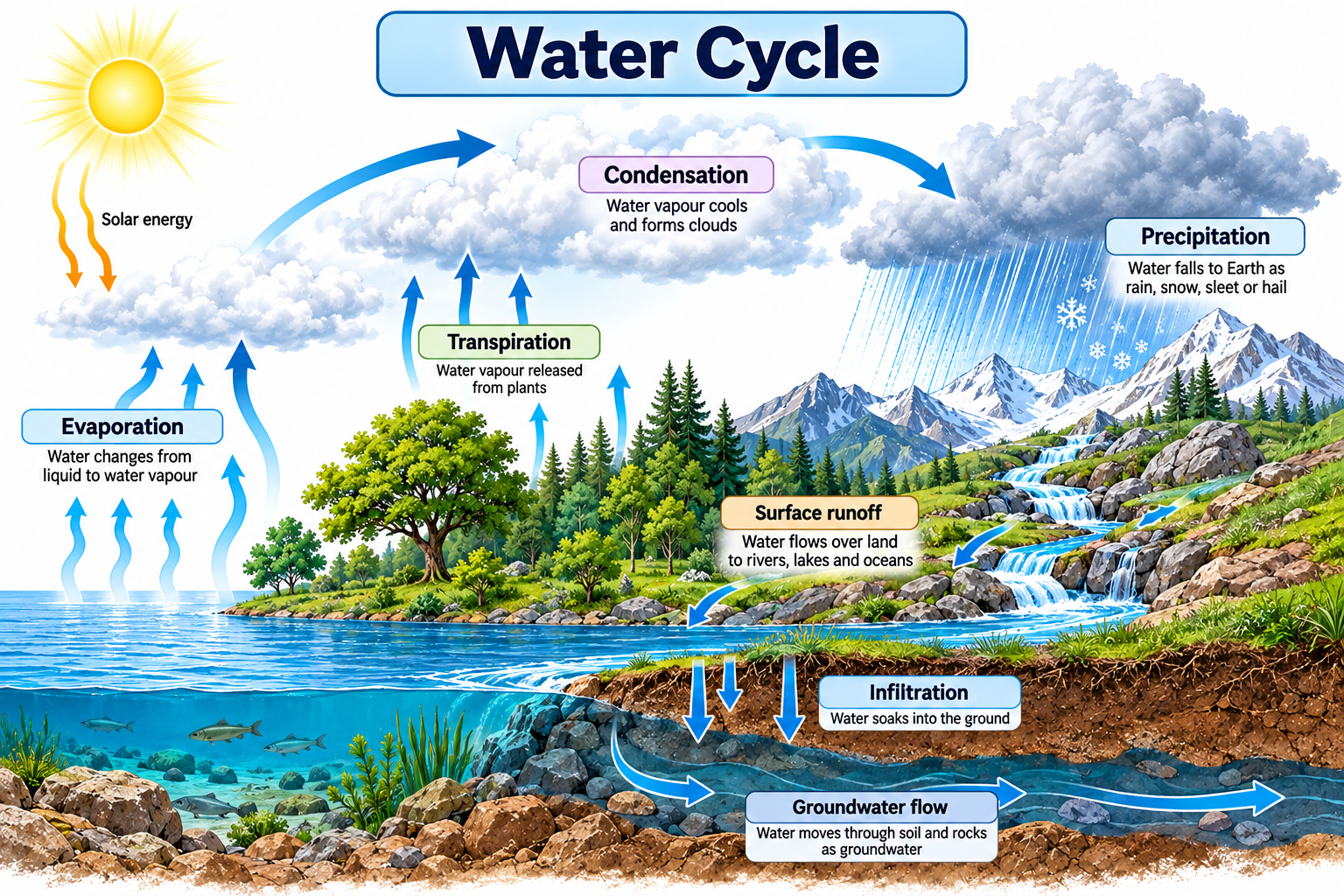
Major Processes of the Water Cycle
1. Evaporation
Evaporation is the conversion of liquid water into water vapour due to heat energy. It occurs mainly from oceans, lakes, rivers, and other exposed water surfaces.
The Sun provides most of the energy that drives evaporation in the natural water cycle.
2. Transpiration
Transpiration is the loss of water vapour from plants, primarily through stomata in their leaves. Water absorbed by roots moves through the plant and evaporates from leaf surfaces.
Together, evaporation from surfaces and transpiration from plants contribute to evapotranspiration.
3. Condensation
Condensation occurs when water vapour cools and changes into tiny liquid droplets or ice crystals. These droplets and crystals contribute to cloud formation under suitable atmospheric conditions.
4. Precipitation
Precipitation occurs when water falls from the atmosphere to the Earth’s surface as rain, snow, sleet, or hail. It returns water to terrestrial and aquatic environments.
5. Infiltration and Percolation
Infiltration is the entry of water into the soil surface. Percolation is the downward movement of water through soil and porous geological materials.
Some infiltrated water replenishes groundwater, while some may be taken up by plant roots.
6. Runoff
Runoff is water that flows over the land surface into streams, rivers, lakes, and eventually the oceans. It becomes more significant when rainfall exceeds the soil’s infiltration capacity or when the ground is saturated.
7. Groundwater Flow
Groundwater moves through pores and fractures in soil and rock. It may emerge through springs, feed rivers, or discharge into lakes and oceans.
Groundwater can remain underground for periods ranging from days to thousands of years, depending on local geological conditions.
8. Uptake and Release by Organisms
Plants absorb water through their roots, and animals obtain it through drinking and food. Organisms return water to the environment through transpiration, respiration, excretion, and decomposition.
Importance of the Water Cycle
- Maintains water availability for terrestrial and aquatic organisms.
- Replenishes rivers, lakes, soil moisture, and groundwater.
- Helps regulate weather, climate, and temperature.
- Transports dissolved nutrients and influences soil fertility.
- Supports agriculture and freshwater ecosystems.
The water cycle connects the atmosphere, land, oceans, groundwater, and living organisms through continuous movement. Human activities such as deforestation, groundwater extraction, urbanization, and dam construction can alter local water movement and availability.
The Carbon Cycle
The carbon cycle is the biogeochemical cycle through which carbon moves among the atmosphere, living organisms, oceans, soil, and geological reservoirs. Carbon is essential for life because it forms the structural framework of carbohydrates, proteins, lipids, and nucleic acids.
Carbon exists in the atmosphere mainly as carbon dioxide (CO₂), in organisms as organic compounds, in oceans as dissolved carbon species, and in rocks and sediments as carbonates and other forms.
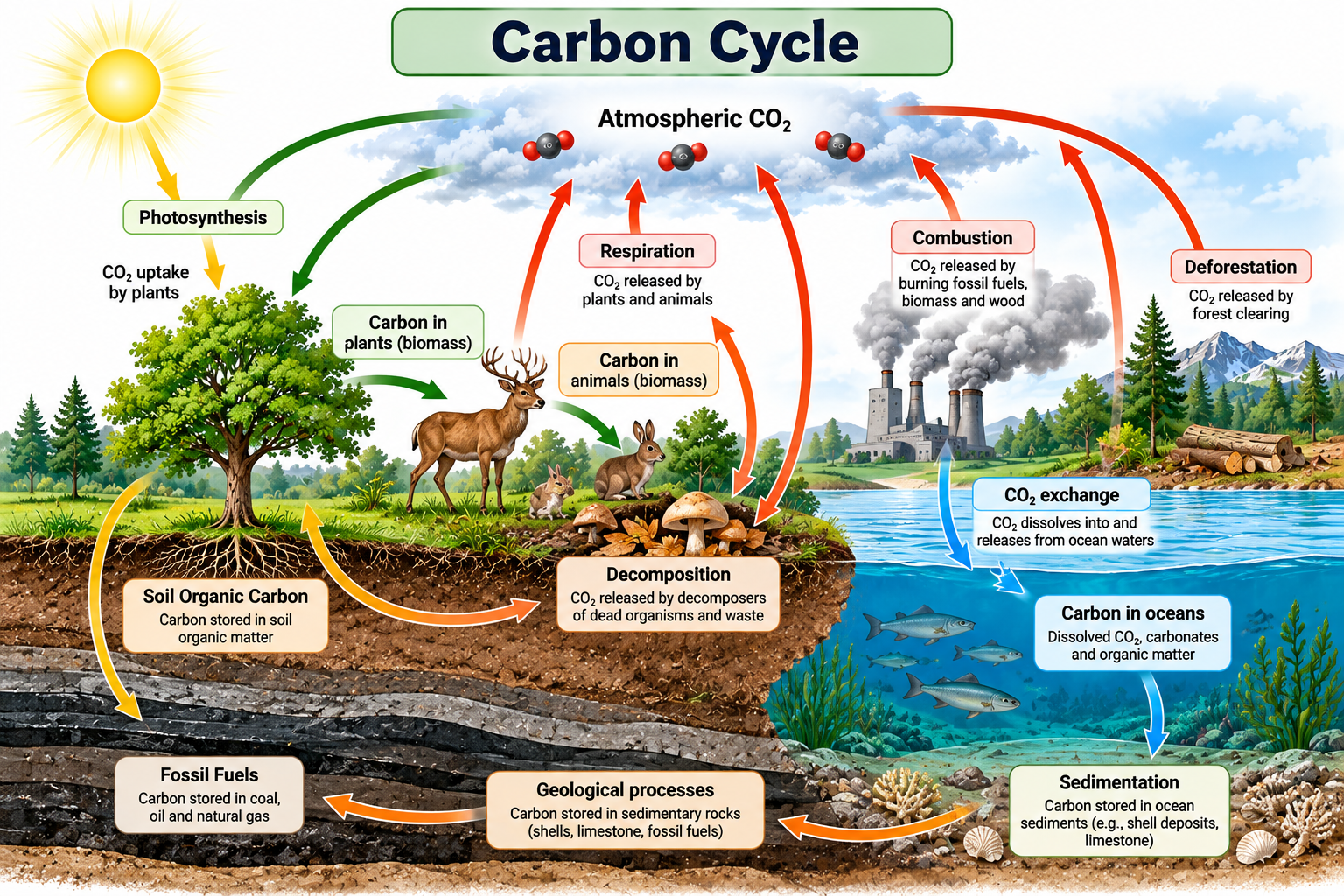
Major Processes of the Carbon Cycle
1. Photosynthesis
Green plants, algae, and cyanobacteria absorb carbon dioxide and use light energy to produce organic compounds during photosynthesis. This process transfers carbon from the atmosphere or water into living biomass.
[ 6CO2 + 6H2O -> C6H12O6 + 6O2 ]
2. Feeding
Carbon passes from producers to consumers when animals eat plants or other animals. It becomes part of their tissues and supports growth, reproduction, and metabolism.
For example, carbon fixed by grass may pass to a grasshopper, then to a frog and a snake through feeding relationships.
3. Respiration
Plants, animals, and microorganisms release carbon dioxide during cellular respiration as they break down organic molecules to obtain energy. This returns carbon to the atmosphere or surrounding water.
4. Decomposition
Decomposers, including fungi and bacteria, break down dead organisms and organic waste. During decomposition, carbon is released as carbon dioxide under aerobic conditions. In oxygen-poor environments, microbial processes can also produce methane.
Some carbon remains in soil organic matter for extended periods.
5. Exchange Between Oceans and Atmosphere
Carbon dioxide continually moves between the atmosphere and ocean surfaces. Oceans absorb carbon dioxide from the air and can also release it, depending on factors such as temperature, circulation, and the difference in carbon dioxide concentrations.
Marine organisms use dissolved carbon to build organic matter and, in some cases, calcium carbonate shells or skeletons.
6. Sedimentation and Fossil Fuel Formation
Some carbon becomes buried in marine sediments and may eventually form carbonate rocks. Under particular geological conditions, buried organic matter can contribute to the formation of coal, petroleum, and natural gas over millions of years.
These processes transfer carbon into long-term geological reservoirs.
7. Combustion
Combustion of wood, coal, petroleum, and natural gas releases carbon stored in organic matter or fossil fuels, primarily as carbon dioxide. Wildfires also release carbon from vegetation and soil organic matter.
Human combustion of fossil fuels has increased atmospheric carbon dioxide concentrations and contributed to global warming.
Simplified Flow of the Carbon Cycle
Atmospheric CO₂ → Photosynthesis → Plants → Animals → Respiration and decomposition → CO₂
Some carbon also enters oceans, soils, sediments, and geological reservoirs, where it may remain for periods ranging from days to millions of years.
Importance of the Carbon Cycle
- Supplies carbon needed to build organic molecules.
- Supports food webs by transferring carbon through organisms.
- Helps regulate atmospheric carbon dioxide and Earth’s climate.
- Connects terrestrial ecosystems, oceans, and geological reservoirs.
- Helps explain how human activities influence climate change.
The carbon cycle continuously transfers carbon between living organisms and the environment. Photosynthesis removes carbon dioxide from the atmosphere or water, while respiration, decomposition, and combustion return carbon to the environment.
The Nitrogen Cycle
The nitrogen cycle is the biogeochemical cycle through which nitrogen moves between the atmosphere, soil, water, and living organisms. Nitrogen is essential for life because it forms part of amino acids, proteins, nucleic acids such as DNA and RNA, and several other biological compounds.
Although atmospheric nitrogen gas (N₂) makes up about 78% of Earth’s atmosphere, most plants cannot use it directly. Nitrogen must first be converted into biologically available forms, mainly ammonium (NH₄⁺) and nitrate (NO₃⁻), through natural and microbial processes.
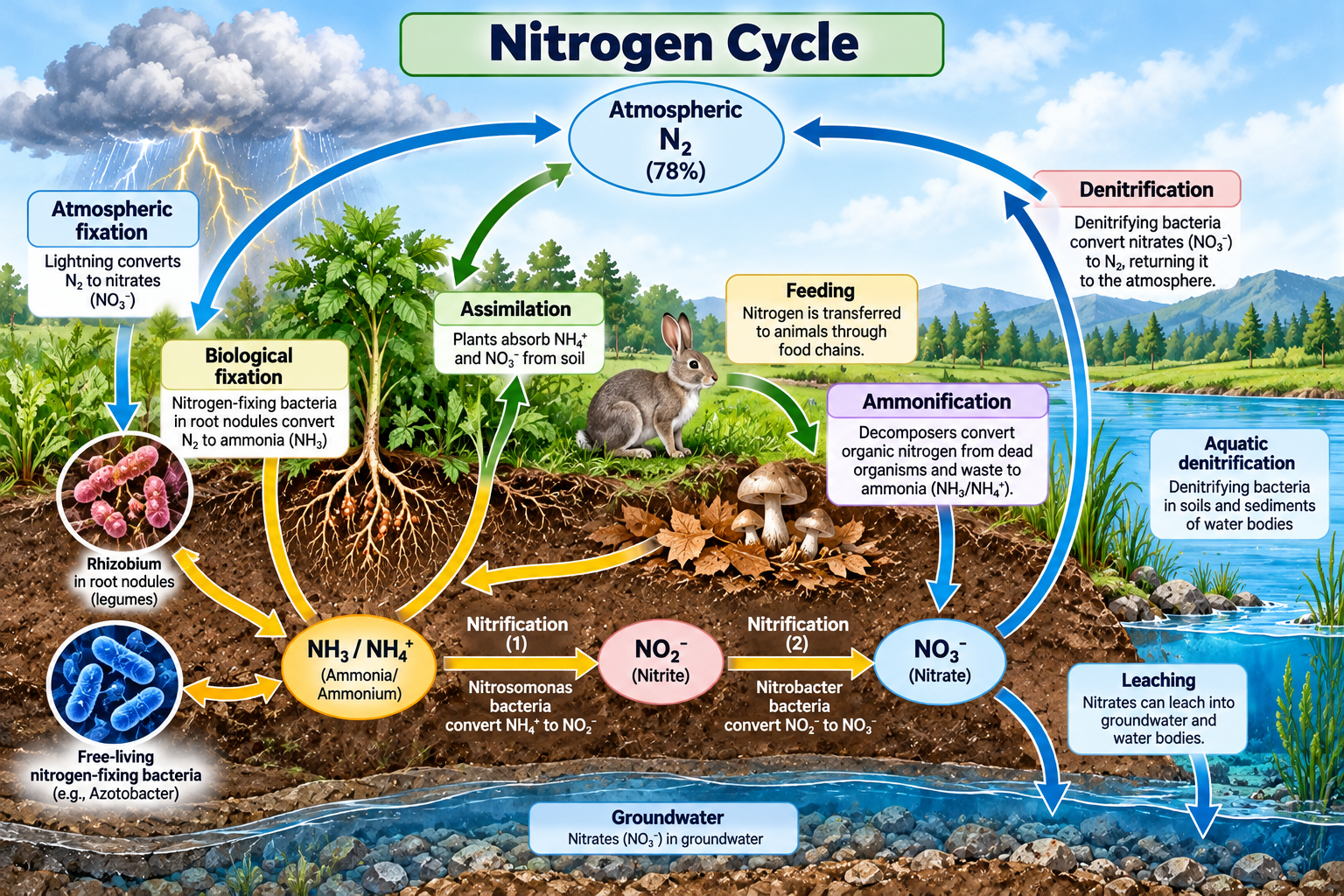
Major Processes of the Nitrogen Cycle
1. Nitrogen Fixation
Nitrogen fixation is the conversion of atmospheric nitrogen gas into compounds that can enter biological and chemical pathways.
It occurs through several processes:
- Biological nitrogen fixation: Certain bacteria and archaea convert atmospheric nitrogen into ammonia. Examples include Rhizobium, which forms nitrogen-fixing associations with leguminous plants, and free-living nitrogen-fixing microorganisms.
- Atmospheric fixation: Lightning can convert atmospheric nitrogen into nitrogen oxides that eventually enter soil through precipitation.
- Industrial fixation: The Haber–Bosch process converts atmospheric nitrogen into ammonia for fertilizer production.
Nitrogen fixation introduces reactive nitrogen into ecosystems.
2. Nitrification
Nitrification is the microbial oxidation of ammonium into nitrite and then nitrate, usually in oxygen-rich environments.
It occurs in two main steps:
- Ammonium to nitrite: Ammonia-oxidizing microorganisms convert ammonia or ammonium into nitrite.
- Nitrite to nitrate: Nitrite-oxidizing microorganisms convert nitrite into nitrate.
Nitrate is readily absorbed by many plants, although plants can also use ammonium.
3. Assimilation
Assimilation is the absorption and incorporation of inorganic nitrogen into organic compounds.
Plants absorb ammonium or nitrate from the soil. Nitrate must generally be reduced before its nitrogen can be incorporated into amino acids and other organic molecules.
Animals obtain nitrogen by feeding on plants or other animals, transferring nitrogen through food chains and food webs.
4. Ammonification
Ammonification, also called nitrogen mineralization in this context, occurs when decomposers break down nitrogen-containing organic matter from dead organisms and waste.
Microorganisms convert organic nitrogen into ammonia or ammonium, returning nitrogen to the soil or water in a form that can be used again by plants or microorganisms.
5. Denitrification
Denitrification is a microbial process in which nitrate or nitrite is reduced to gaseous nitrogen compounds, ultimately including nitrogen gas (N₂). It commonly occurs in oxygen-poor environments, such as waterlogged soils and sediments.
Denitrification returns nitrogen to the atmosphere and completes an important part of the nitrogen cycle.
6. Anammox
Anaerobic ammonium oxidation, or anammox, is a microbial process in which ammonium reacts with nitrite under oxygen-free conditions to produce nitrogen gas.
It is particularly important in some aquatic environments and oxygen-poor sediments, where it contributes to the removal of fixed nitrogen.
Simplified Flow of the Nitrogen Cycle
Atmospheric nitrogen (N₂) → Nitrogen fixation → Ammonia or ammonium → Nitrification → Nitrite and nitrate → Plant assimilation → Animals → Waste and dead organisms → Ammonification
Nitrate can also undergo denitrification, returning nitrogen gas to the atmosphere.
Importance of the Nitrogen Cycle
- Supplies nitrogen for proteins, DNA, RNA, and other essential biological molecules.
- Maintains soil fertility and supports plant growth.
- Sustains productivity in terrestrial and aquatic ecosystems.
- Depends on microbial activity that transforms nitrogen between different chemical forms.
- Helps explain environmental problems such as nitrate pollution, eutrophication, and excessive nitrogen emissions.
The nitrogen cycle depends heavily on microorganisms that transform nitrogen between atmospheric, inorganic, and organic forms. Nitrogen fixation makes atmospheric nitrogen available to biological systems, while denitrification and anammox return nitrogen to the atmosphere.
The Oxygen Cycle
The oxygen cycle is the biogeochemical cycle through which oxygen moves among the atmosphere, living organisms, water, and Earth’s crust. Oxygen is essential for most organisms because it is used in aerobic cellular respiration, which releases energy from organic molecules.
Oxygen occurs in several forms, including molecular oxygen (O₂) in the atmosphere and dissolved oxygen in water. It is also chemically bound in water, carbon dioxide, organic compounds, and minerals.
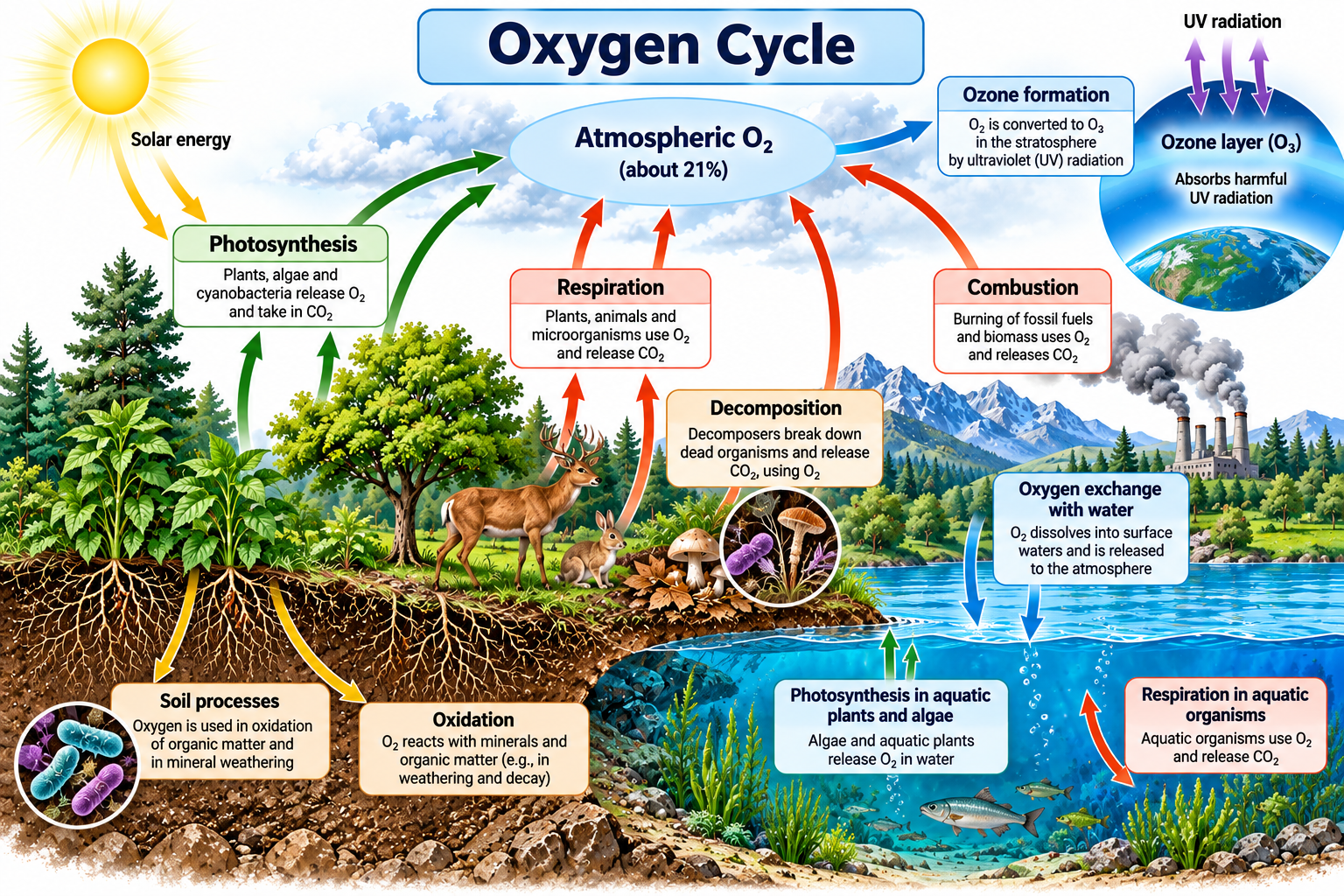
Major Processes of the Oxygen Cycle
1. Photosynthesis
Photosynthesis is the major biological process that releases molecular oxygen into the atmosphere and aquatic environments. Green plants, algae, and cyanobacteria use light energy to convert carbon dioxide and water into organic compounds, releasing oxygen.
A simplified equation is:
[6CO2 + 6H2O -> C6H12O6 + 6O2]
The oxygen released during oxygenic photosynthesis comes from water molecules.
2. Cellular Respiration
Most plants, animals, fungi, and many microorganisms use oxygen during aerobic cellular respiration to obtain energy from organic compounds.
During this process, oxygen is consumed, and carbon dioxide and water are produced. These products can participate in other environmental cycles, including the carbon and water cycles.
3. Decomposition
Decomposers such as bacteria and fungi break down dead organisms and organic waste. Under aerobic conditions, decomposition consumes oxygen as microorganisms carry out respiration.
In water bodies, excessive decomposition of organic matter can reduce dissolved oxygen concentrations and harm aquatic organisms.
4. Combustion
Combustion is the reaction of a substance with oxygen, usually releasing heat and often light. Burning wood and fossil fuels consumes atmospheric oxygen and produces products such as carbon dioxide and water.
Large-scale combustion contributes to changes in atmospheric carbon dioxide and influences the balance between oxygen-producing and oxygen-consuming processes.
5. Oxidation and Weathering
Oxygen reacts chemically with many substances in Earth’s crust. For example, iron-bearing minerals can oxidize when exposed to oxygen and water, forming iron oxides.
Chemical oxidation consumes oxygen and connects the oxygen cycle with geological processes.
6. Exchange Between the Atmosphere and Water
Oxygen dissolves in water through exchange with the atmosphere. Photosynthesis by aquatic plants, algae, and cyanobacteria also produces oxygen within water bodies.
Dissolved oxygen levels vary with temperature, water movement, photosynthetic activity, and the rate at which organisms and decomposers consume oxygen.
Simplified Flow of the Oxygen Cycle
Photosynthesis → Oxygen released into air and water → Respiration, decomposition, combustion, and oxidation → Oxygen consumed
This simplified pathway shows major processes, but oxygen also circulates through water, rocks, minerals, and many chemical reactions.
Importance of the Oxygen Cycle
- Maintains oxygen availability for aerobic respiration.
- Supports aquatic and terrestrial ecosystems.
- Connects photosynthesis with respiration and decomposition.
- Influences the chemistry of water, soil, and rocks.
- Interacts with the carbon cycle through photosynthesis, respiration, and combustion.
The oxygen cycle maintains the movement and transformation of oxygen among the atmosphere, organisms, water, and geological materials. Photosynthesis releases molecular oxygen, while respiration, decomposition, combustion, and oxidation consume it.
The Phosphorus Cycle
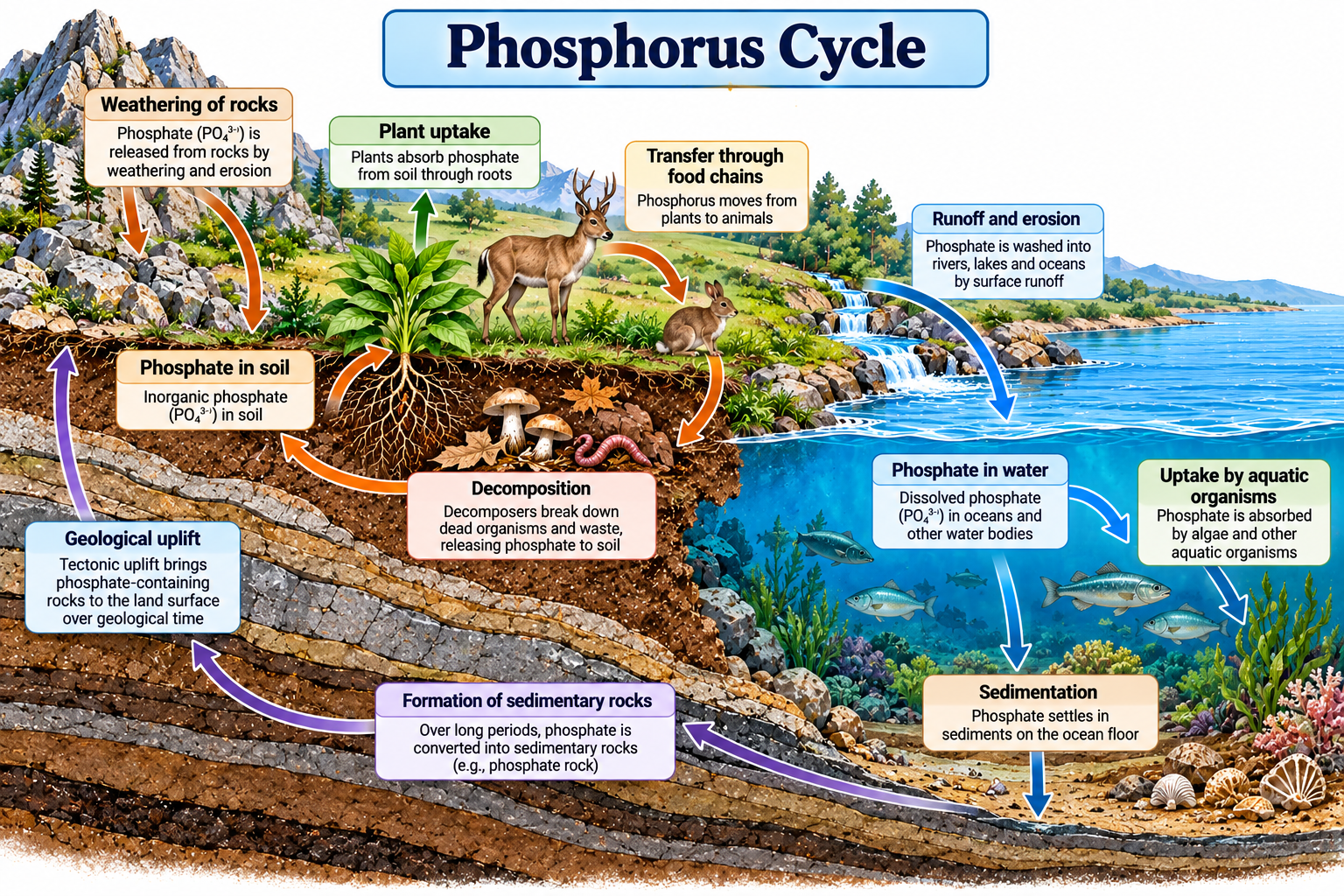
The phosphorus cycle is the biogeochemical cycle through which phosphorus moves among rocks, soil, water, and living organisms. Phosphorus is essential for life because it forms part of DNA, RNA, ATP, phospholipids in cell membranes, and mineral structures such as bones and teeth.
Unlike carbon and nitrogen, phosphorus has no major gaseous phase under ordinary natural conditions. Its movement therefore depends largely on geological processes, water transport, biological uptake, and decomposition.
Major Processes of the Phosphorus Cycle
1. Weathering of Phosphate Rocks
Phosphorus is stored in phosphate-containing rocks and sediments. Weathering gradually releases phosphate ions into soil and water.
Physical weathering breaks rocks into smaller particles, while chemical weathering helps release phosphate from minerals. These processes make some phosphorus available for biological uptake.
2. Absorption by Plants
Plants absorb inorganic phosphate from the soil through their roots. They use phosphorus to produce essential biological molecules, including ATP, nucleic acids, and phospholipids.
Phosphorus availability can limit plant growth in many ecosystems, especially where soils contain little accessible phosphate.
3. Transfer Through Food Chains
Animals obtain phosphorus by consuming plants or other animals. It becomes part of their tissues and supports cellular metabolism, skeletal development, and other biological functions.
In this way, phosphorus moves through food chains and food webs.
4. Excretion and Decomposition
Animals release phosphorus in waste products, while dead organisms contain phosphorus in their tissues. Decomposers break down organic matter, returning phosphorus to soil and water in forms that may be reused by plants and microorganisms.
This process is an important link between living organisms and environmental phosphorus reservoirs.
5. Runoff and Leaching
Rainwater can transport dissolved phosphate and phosphorus-containing soil particles into streams, rivers, lakes, and oceans. Some phosphorus also moves downward through soil with percolating water.
Excessive runoff from agricultural land, sewage, and other sources can introduce large amounts of phosphorus into freshwater ecosystems.
6. Sedimentation
In aquatic environments, phosphorus may settle with organic matter and mineral particles to form sediments. Some phosphorus becomes buried and stored for long periods.
Over geological timescales, sedimentary processes can contribute to the formation of phosphate-rich rocks.
7. Geological Uplift
Geological processes may eventually expose phosphate-bearing rocks at Earth’s surface. Weathering then releases phosphorus again, allowing it to re-enter the cycle.
This geological return can take millions of years, making the phosphorus cycle relatively slow compared with many biological processes.
Simplified Flow of the Phosphorus Cycle
Phosphate rocks → Weathering → Phosphate in soil and water → Plants → Animals → Waste and dead organisms → Decomposition → Phosphate returned to soil and water
Some phosphorus is transported to aquatic sediments, where it may remain for extended periods before geological processes make it available again.
Importance of the Phosphorus Cycle
- Supplies phosphorus for DNA, RNA, ATP, and cell membranes.
- Supports plant growth and agricultural productivity.
- Contributes to bone and tooth formation in vertebrates.
- Maintains nutrient availability in terrestrial and aquatic ecosystems.
- Helps explain eutrophication caused by excessive phosphorus entering water bodies.
The phosphorus cycle connects geological reservoirs with soil, water, and living organisms. Weathering releases phosphate, biological uptake transfers it through food webs, and decomposition returns it to the environment. Unlike gaseous cycles, its long-term circulation depends heavily on sedimentation and geological processes.
The Sulfur Cycle
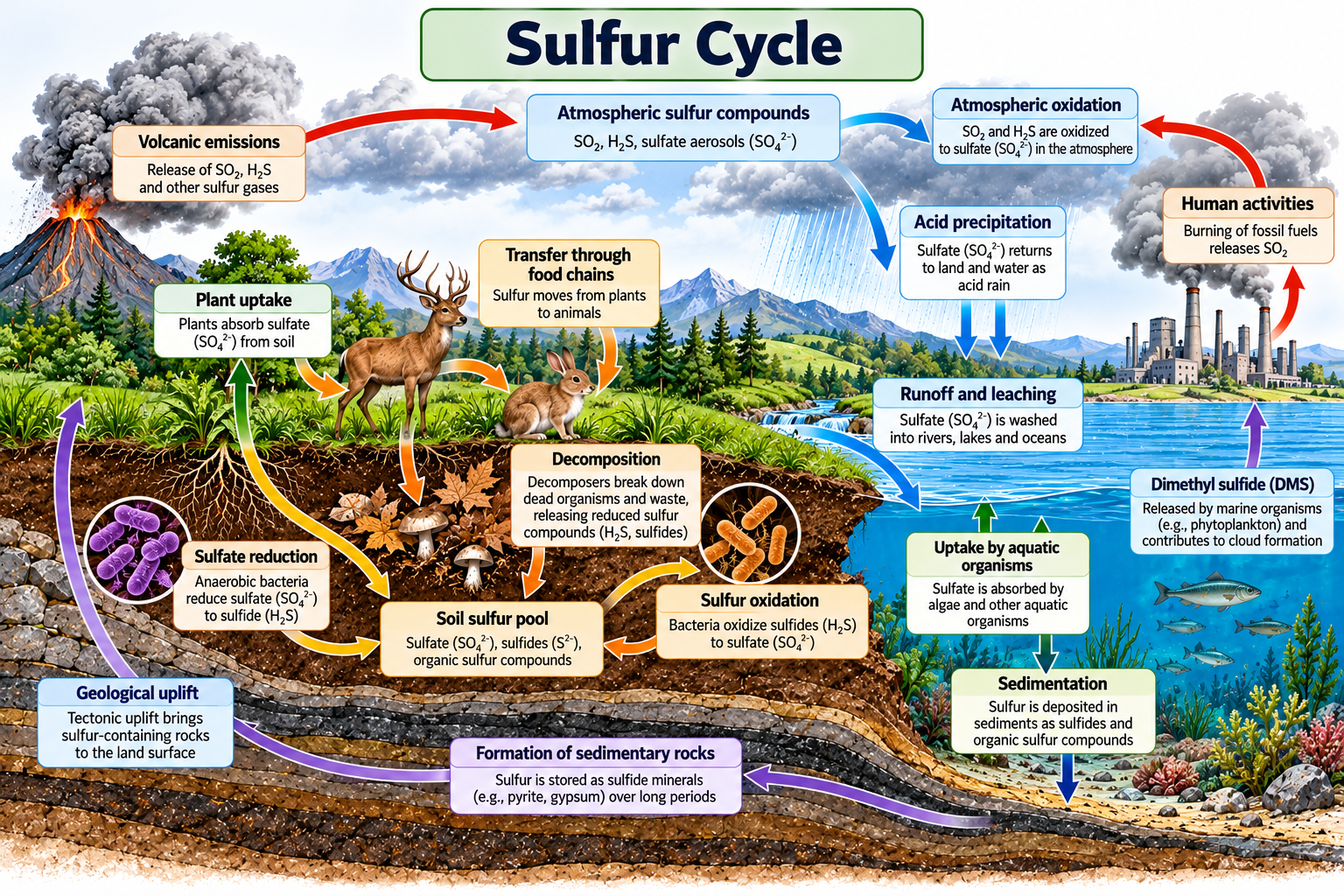
The sulfur cycle is the biogeochemical cycle through which sulfur moves among rocks, soil, water, the atmosphere, and living organisms. Sulfur is essential for life because it forms part of certain amino acids, including cysteine and methionine, and contributes to the structure and function of proteins and enzymes.
Sulfur occurs in several chemical forms, including sulfates in soil and water, sulfides in minerals, and sulfur-containing organic compounds in organisms. Microorganisms play an important role in transforming sulfur between these forms.
Major Processes of the Sulfur Cycle
1. Weathering of Rocks
Sulfur is stored in rocks and minerals, including sulfate minerals and metal sulfides. Weathering releases sulfur-containing compounds into soil and water, where they may become available to plants and microorganisms.
2. Absorption by Plants
Plants mainly absorb sulfur through their roots in the form of sulfate ions (SO₄²⁻). They use sulfur to synthesize sulfur-containing amino acids, proteins, and other essential compounds.
3. Transfer Through Food Chains
Animals obtain sulfur by eating plants or other animals. Sulfur becomes part of their proteins and other biological molecules and moves through food webs as organisms consume one another.
4. Decomposition
When organisms die or produce waste, decomposers break down their organic matter. This releases sulfur-containing compounds into soil and water, where microorganisms may transform them into other chemical forms.
5. Microbial Sulfur Transformations
Microorganisms carry out several important reactions in the sulfur cycle.
- Sulfate reduction: Certain microorganisms reduce sulfate to sulfide under oxygen-poor conditions.
- Sulfur oxidation: Some bacteria oxidize sulfide or elemental sulfur into sulfate, often in the presence of oxygen or other suitable electron acceptors.
- Organic sulfur transformation: Microbial decomposition converts sulfur-containing organic compounds into inorganic forms.
These processes help regulate sulfur availability in sediments, wetlands, soils, and aquatic environments.
6. Atmospheric Release and Deposition
Sulfur enters the atmosphere through natural sources, including volcanic activity and the release of sulfur compounds from oceans and wetlands. Human activities, particularly the burning of sulfur-containing fossil fuels and some industrial processes, also release sulfur dioxide.
Atmospheric sulfur compounds can be transformed chemically and returned to the Earth’s surface through wet or dry deposition. Sulfur dioxide emissions can contribute to acid deposition, which may damage ecosystems.
7. Sedimentation and Geological Storage
Sulfur can accumulate in sediments and become stored in minerals over long periods. Geological processes may later expose sulfur-containing rocks to weathering, allowing sulfur to re-enter soil and water.
Simplified Flow of the Sulfur Cycle
Sulfur-containing rocks → Weathering → Sulfate in soil and water → Plant uptake → Animals → Waste and dead organisms → Decomposition → Microbial transformations
Sulfur also moves through atmospheric processes and geological reservoirs, connecting local ecosystems with the wider environment.
Importance of the Sulfur Cycle
- Supplies sulfur for essential amino acids and proteins.
- Supports plant growth and microbial metabolism.
- Connects geological, atmospheric, aquatic, and biological processes.
- Influences soil chemistry and nutrient availability.
- Helps explain the ecological effects of sulfur dioxide emissions and acid deposition.
The sulfur cycle transfers sulfur between the environment and living organisms through weathering, biological uptake, decomposition, microbial transformations, atmospheric processes, and sedimentation.
Importance of Biogeochemical Cycles
Biogeochemical cycles are essential for maintaining ecosystem function because they circulate the chemical elements required by living organisms. These cycles connect biological activity with the atmosphere, water, soil, and geological materials, helping sustain life and regulate environmental conditions.
1. Recycling of Essential Nutrients
Biogeochemical cycles make essential elements available for repeated use. Carbon, nitrogen, phosphorus, and sulfur move between organisms and environmental reservoirs through processes such as photosynthesis, nutrient uptake, excretion, and decomposition.
Without these processes, essential elements could become less available for biological use in particular environments.
Unlike nutrients, which are continuously recycled, energy moves through ecosystems in one direction, a process explained in our article on energy flow in an ecosystem.
2. Maintenance of Soil Fertility
Nutrient cycling helps maintain soil fertility by returning elements to the soil through decomposition and other natural processes. Microorganisms transform organic matter into forms that plants can absorb.
The nitrogen and phosphorus cycles are particularly important for plant growth and agricultural productivity.
3. Support for Ecosystem Productivity
Plants require water, carbon dioxide, nitrogen, phosphorus, and other nutrients to grow. These resources support primary production, which provides organic matter and energy for consumers throughout food webs.
The availability of nutrients can limit ecosystem productivity when one or more essential elements are scarce.
4. Maintenance of Atmospheric Composition
The carbon, oxygen, and nitrogen cycles influence the movement and chemical forms of gases in the atmosphere.
Photosynthesis removes carbon dioxide and releases oxygen, while respiration and decomposition consume oxygen and return carbon dioxide. Nitrogen-fixing and nitrogen-transforming microorganisms influence the availability of reactive nitrogen compounds.
5. Regulation of Climate
The carbon cycle helps regulate Earth’s climate by controlling the movement of carbon dioxide and other carbon-containing compounds between the atmosphere, oceans, organisms, and geological reservoirs.
Changes in carbon storage and release, especially those caused by fossil fuel combustion and deforestation, affect atmospheric greenhouse gas concentrations and global temperatures.
6. Maintenance of Aquatic Ecosystems
Biogeochemical cycles influence the chemical composition of lakes, rivers, wetlands, and oceans. The cycling of carbon, nitrogen, phosphorus, and oxygen affects nutrient availability and aquatic food webs.
Excessive inputs of nitrogen and phosphorus can cause eutrophication, leading to algal blooms and oxygen depletion that may harm aquatic organisms.
7. Support for Biodiversity
Nutrient availability and environmental chemistry influence which organisms can survive in a habitat. Biogeochemical cycles help sustain plant growth, microbial activity, and the food resources on which animals depend.
Changes in nutrient cycling can alter species composition and ecosystem structure.
8. Decomposition and Waste Breakdown
Decomposers, including bacteria and fungi, break down dead organisms and organic waste. This releases nutrients back into soil and water, where they can be reused by plants and microorganisms.
Decomposition is therefore an important connection between the biological and non-living components of ecosystems.
9. Understanding Environmental Problems
Knowledge of biogeochemical cycles helps scientists explain environmental problems such as climate change, acid deposition, nutrient pollution, and soil degradation.
It also supports conservation planning, sustainable agriculture, wastewater management, and the responsible use of natural resources.
Biogeochemical cycles sustain life by recycling essential elements, maintaining nutrient availability, supporting ecosystem productivity, and regulating environmental conditions. Human activities can alter these cycles, making their study important for environmental protection and sustainable resource management.
The availability of essential nutrients also influences the structure and productivity of ecosystems, which can be understood further by studying ecological pyramids and their types.
Human Impact on Biogeochemical Cycles
Human activities have significantly altered the natural movement of carbon, nitrogen, phosphorus, sulfur, and water through ecosystems. These changes can affect atmospheric composition, soil fertility, water quality, biodiversity, and climate.
1. Human Impact on the Carbon Cycle
The burning of fossil fuels, deforestation, cement production, and some agricultural practices release carbon dioxide or reduce the amount of carbon stored in vegetation and soils.
- Fossil fuel combustion: Coal, petroleum, and natural gas release carbon that was stored underground for millions of years.
- Deforestation: Removing forests reduces carbon storage in vegetation and may release carbon from biomass and soils.
- Land-use change: Converting forests and wetlands into agricultural or urban land can alter carbon storage and decomposition rates.
- Ocean uptake: Oceans absorb some of the additional atmospheric carbon dioxide, contributing to ocean acidification.
These changes increase atmospheric greenhouse gas concentrations and contribute to global climate change.
2. Human Impact on the Nitrogen Cycle
Industrial fertilizer production, intensive agriculture, fossil fuel combustion, and livestock farming increase the amount of reactive nitrogen entering the environment.
- Excess fertilizer use: Nitrate can leach into groundwater or run off into rivers and lakes.
- Nitrogen oxide emissions: Combustion in vehicles, power plants, and industries releases nitrogen oxides that contribute to air pollution and acid deposition.
- Livestock and manure: Animal waste and agricultural activities release ammonia and nitrous oxide.
- Eutrophication: Excess nitrogen can promote excessive algal growth and contribute to oxygen depletion in water bodies.
Improved fertilizer management and treatment of agricultural and urban waste can reduce these effects.
3. Human Impact on the Phosphorus Cycle
Phosphorus is widely used in agricultural fertilizers and is also present in sewage and detergents in some regions. Human activities can accelerate the movement of phosphorus from land into aquatic environments.
- Agricultural runoff: Rainwater transports phosphorus-containing fertilizers and soil particles into streams and lakes.
- Soil erosion: Removing vegetation increases the movement of phosphorus-rich soil into waterways.
- Wastewater discharge: Untreated or inadequately treated sewage can add phosphorus to aquatic ecosystems.
- Eutrophication: Excess phosphorus can stimulate algal blooms, sometimes causing severe oxygen depletion and fish deaths.
Soil conservation, appropriate fertilizer application, and effective wastewater treatment help limit phosphorus pollution.
Excessive nutrient enrichment can disrupt aquatic ecosystems, affecting organisms at different trophic levels and altering food chains and food webs.
4. Human Impact on the Sulfur Cycle
The burning of sulfur-containing fossil fuels and certain industrial processes release sulfur dioxide into the atmosphere.
- Acid deposition: Sulfur dioxide can be converted into acidic compounds that return to land and water through wet or dry deposition.
- Soil changes: Acid deposition may remove essential nutrients from soil and increase the mobility of certain toxic metals.
- Aquatic effects: Acidification can harm fish, invertebrates, and other organisms in sensitive freshwater ecosystems.
- Industrial pollution: Mining and metal processing can expose sulfur-containing minerals, sometimes generating acidic drainage.
Cleaner fuels, industrial emission controls, and pollution regulations can reduce these impacts.
5. Human Impact on the Water Cycle
Urbanization, deforestation, dam construction, irrigation, and groundwater extraction can alter how water moves through the environment.
- Deforestation: Removing vegetation changes transpiration, infiltration, and runoff.
- Urbanization: Roads and buildings reduce infiltration and can increase surface runoff and flood risk.
- Groundwater extraction: Excessive pumping can lower water tables and reduce water availability for ecosystems and communities.
- Dams and river diversion: These alter river flow, sediment transport, and the movement of nutrients.
- Climate change: Changes in temperature and precipitation affect evaporation, snowmelt, drought, and flood patterns.
Sustainable water management and the protection of forests, wetlands, and watersheds can help maintain the natural functioning of the water cycle.
Measures to Reduce Human Impacts
- Reduce fossil fuel consumption and expand low-emission energy sources.
- Protect forests, wetlands, and other carbon-storing ecosystems.
- Apply fertilizers according to crop needs and soil conditions.
- Prevent soil erosion through vegetation cover and appropriate land management.
- Improve sewage treatment and control agricultural runoff.
- Reduce industrial emissions and monitor air and water quality.
- Use groundwater and surface water sustainably.
Human activities can disrupt biogeochemical cycles by accelerating the release of stored elements, increasing nutrient inputs, and changing the movement of water. Reducing pollution and managing natural resources responsibly can help maintain balanced ecosystem processes.
Frequently Asked Questions About Biogeochemical Cycles
What are biogeochemical cycles?
What are the main types of biogeochemical cycles?
What are the major biogeochemical cycles?
Why are biogeochemical cycles important?
What is the difference between gaseous and sedimentary cycles?
Why is the phosphorus cycle considered a sedimentary cycle?
What role do microorganisms play in biogeochemical cycles?
How does the carbon cycle help regulate climate?
What is the role of decomposers in nutrient cycling?
How do humans affect biogeochemical cycles?
What is eutrophication?
What is the relationship between biogeochemical cycles and food webs?
Is energy recycled in biogeochemical cycles?
How can biogeochemical cycles be protected?
Conclusion
Biogeochemical cycles are essential natural processes that circulate chemical elements between living organisms and the non-living environment. The water, carbon, nitrogen, oxygen, phosphorus, and sulfur cycles maintain the availability of resources required for growth, metabolism, reproduction, and ecosystem functioning.
Each cycle involves different biological, chemical, and geological processes. Photosynthesis, respiration, decomposition, weathering, microbial transformations, and sedimentation help move elements between environmental reservoirs and living organisms.
Human activities such as fossil fuel combustion, deforestation, excessive fertilizer use, and industrial pollution can disrupt these cycles, contributing to climate change, eutrophication, acid deposition, and declining environmental quality.
Understanding biogeochemical cycles helps explain how ecosystems function and why responsible resource management is necessary. Protecting forests, maintaining soil health, reducing pollution, and managing water and nutrients sustainably can help preserve the natural cycling of essential elements.
References
- OpenStax. Biology 2e: Biogeochemical Cycles. Covers the water, carbon, nitrogen, phosphorus, and sulfur cycles, including human impacts on nutrient cycling.
https://openstax.org/books/biology-2e/pages/46-3-biogeochemical-cycles - OpenStax. Concepts of Biology: Biogeochemical Cycles. An introductory explanation of nutrient cycling and the interactions between organisms and the environment.
https://openstax.org/books/concepts-biology/pages/20-2-biogeochemical-cycles - U.S. Geological Survey (USGS). What Is the Earth’s Water Cycle? Explains water storage, movement, and the processes driving the hydrological cycle.
https://www.usgs.gov/faqs/what-earths-water-cycle - OpenStax. Biology for AP® Courses: Biogeochemical Cycles. Reviews the major nutrient cycles and the environmental consequences of human activities.
https://openstax.org/books/biology-ap-courses/pages/37-3-biogeochemical-cycles - OpenStax. Biology 2e: Chapter Summary—Ecology of Ecosystems and Biogeochemical Cycles. Summarizes how matter is recycled and how nutrient cycles support ecosystem functioning.
https://openstax.org/books/biology-2e/pages/46-chapter-summary
Discover more from Zoologyverse
Subscribe to get the latest posts sent to your email.