
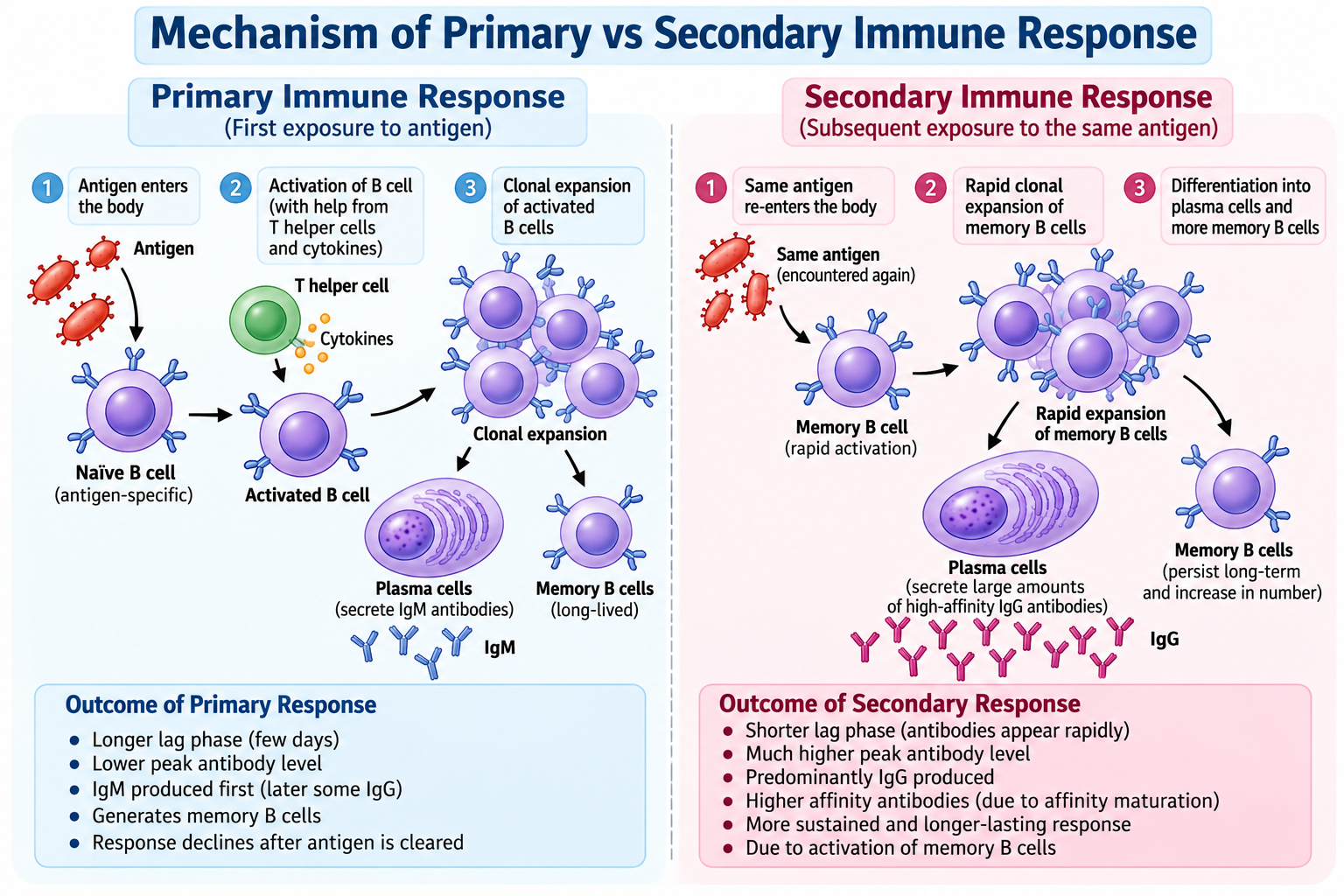
The primary vs secondary immune response comparison explains how the immune system reacts during its first and subsequent exposures to the same antigen. The primary immune response occurs when the body encounters an antigen for the first time. It develops relatively slowly because antigen-specific B and T lymphocytes must first recognize the antigen and become activated. During this response, antibodies are produced, and memory cells may form.
The immune system protects the body against pathogens such as bacteria, viruses, fungi, and other foreign substances. One of the most important features of adaptive immunity is its ability to recognize a specific antigen and respond more efficiently when the same antigen enters the body again. This ability is known as immunological memory.
In contrast, the secondary immune response occurs when the immune system encounters the same antigen again. Memory lymphocytes respond more rapidly, generally producing a stronger and more sustained response. In many T-dependent antibody responses, immunoglobulin G (IgG) is produced more rapidly and in greater amounts than during the primary response, although the exact antibody pattern depends on the antigen and immune context.
Understanding the differences between primary and secondary immune responses is essential for studying antibody production, immunological memory, and the scientific basis of vaccination. These responses demonstrate how adaptive immunity can improve protection against previously encountered pathogens.
What Is an Immune Response?
An immune response is the coordinated reaction of the immune system against an antigen or other foreign substance. It involves the recognition of potentially harmful agents, activation of immune cells, production of defensive molecules, and elimination or control of the threat.
The immune response is broadly classified into two major types: innate immunity and adaptive immunity.
1. Innate Immune Response
Innate immunity provides the body’s immediate, non-specific defence against pathogens. It is present from birth and responds rapidly to infection.
Its major components include:
- Physical barriers: Skin and mucous membranes prevent pathogens from entering the body.
- Phagocytic cells: Neutrophils and macrophages engulf and destroy microorganisms.
- Natural killer (NK) cells: These cells help eliminate infected and abnormal cells.
- Complement system: A group of proteins that assists in pathogen destruction and inflammation.
- Inflammatory response: Helps recruit immune cells to sites of infection or tissue damage.
Innate immunity does not usually develop the same antigen-specific memory characteristic of adaptive immunity.
2. Adaptive Immune Response
Adaptive immunity is a specific defence mechanism that develops in response to particular antigens. It involves lymphocytes and provides immunological memory, allowing the body to respond more efficiently to previously encountered antigens.
The adaptive immune response has two major components:
A. Humoral immunity
Humoral immunity is primarily mediated by B lymphocytes. When activated, B cells can differentiate into plasma cells that secrete antibodies. These antibodies bind to specific antigens and help neutralize pathogens or facilitate their elimination.
B. Cell-mediated immunity
Cell-mediated immunity is mainly mediated by T lymphocytes. Helper T cells coordinate immune activities, while cytotoxic T cells can destroy infected or abnormal cells.
How Does an Immune Response Develop?
The development of an adaptive immune response generally involves the following steps:
- Antigen recognition: Specific lymphocytes recognize the antigen.
- Lymphocyte activation: Appropriate B and T cells become activated, often with additional signals from other immune cells.
- Clonal expansion: Activated antigen-specific lymphocytes multiply.
- Effector response: Effector cells and antibodies act to control or eliminate the threat.
- Memory formation: Some activated lymphocytes become memory cells that can respond to future exposure.
These steps help explain the difference between the primary and secondary immune responses. During the first exposure, the immune system must activate and expand suitable lymphocytes. During a later exposure to the same antigen, memory cells can support a faster and often stronger response.
Primary Immune Response
The primary immune response is the adaptive immune response that occurs when the body encounters a particular antigen for the first time. During this initial exposure, antigen-specific B and T lymphocytes must recognize the antigen, become activated, and multiply before an effective response develops.
Because these activation and expansion processes take time, the primary immune response generally develops more slowly than the secondary immune response. It leads to antibody production and may generate memory B cells and memory T cells that contribute to long-term immunological memory.
Characteristics of the Primary Immune Response
The major characteristics of the primary immune response are:
- First exposure to an antigen: It begins when the immune system encounters a previously unrecognized antigen.
- Longer lag phase: Antigen-specific lymphocytes require time for activation and clonal expansion before a substantial antibody response develops.
- Initial antibody production: IgM is commonly the first antibody class detected in a primary antibody response. IgG or other antibody classes may appear later, depending on the antigen and immune conditions.
- Relatively low antibody concentration: The initial antibody response is often smaller than the response following subsequent exposure to the same antigen.
- Lower average antibody affinity initially: Early antibodies may have lower affinity for the antigen. Affinity can improve as B cells undergo affinity maturation in germinal centres.
- Formation of memory cells: Some activated B and T lymphocytes differentiate into memory cells, preparing the immune system for future exposure.
- Limited initial duration: Antibody levels generally rise, reach a peak, and subsequently decline, although some antibody-secreting cells may survive for long periods.
Stages of the Primary Immune Response
The primary antibody response can be divided into four broad stages:
1. Lag phase
This is the period between the first exposure to an antigen and the detection of a measurable increase in specific antibodies. During this phase, antigen recognition, lymphocyte activation, and clonal expansion take place.
2. Log or exponential phase
Antibody concentrations increase as activated B cells differentiate into antibody-secreting plasma cells. The rate and magnitude of antibody production depend on the antigen and the type of immune response.
3. Plateau phase
Antibody concentrations reach a relatively stable peak or remain elevated for a period. Antibody production and removal from circulation influence the level observed during this stage.
4. Decline phase
When the antigen is controlled or eliminated, antibody concentrations usually decrease. Some plasma cells and memory cells persist, allowing continued protection or a more effective response upon re-exposure.
Example of a Primary Immune Response
Consider a person receiving a vaccine containing a particular antigen for the first time. Antigen-specific B cells are activated, and some differentiate into plasma cells that produce antibodies. IgM commonly appears early, followed by IgG or other antibody classes when class switching occurs. Memory B cells may also develop.
If the same antigen enters the body again, these memory cells can contribute to a faster and stronger antibody response. This difference between initial and subsequent exposure is the basis of immunological memory and an important principle behind many vaccination schedules.
Stages of the Primary Immune Response
The primary immune response develops through a series of coordinated events after the first encounter with an antigen. These events include antigen recognition, activation of antigen-specific lymphocytes, clonal expansion, differentiation into effector cells, antibody secretion, and memory-cell formation.
Understanding these stages helps explain why the primary immune response takes longer to develop than a secondary response.
1. Antigen Recognition and Presentation
When an antigen enters the body, antigen-presenting cells (APCs), particularly dendritic cells, can capture and process it. These cells display antigen-derived peptides on major histocompatibility complex (MHC) molecules for recognition by T lymphocytes.
- MHC class II molecules present peptides to CD4⁺ helper T cells.
- MHC class I molecules present peptides to CD8⁺ T cells.
- B cells can recognize specific, intact antigens through their B-cell receptors (BCRs).
Antigen recognition initiates the adaptive immune response, but lymphocyte activation also requires additional signals appropriate to the cell type and antigen.
2. Activation of B and T Lymphocytes
After antigen recognition, suitable lymphocytes become activated. In a typical T-dependent antibody response, an antigen-specific B cell processes the antigen and presents peptide fragments to a helper T cell. Interactions between the two cells, together with cytokines and other signals, support B-cell activation.
Activated T cells also differentiate into functional subsets. Some helper T cells assist B cells, while cytotoxic T cells can target infected cells.
3. Clonal Expansion
Once activated, antigen-specific lymphocytes undergo repeated cell division. This process is called clonal expansion.
The newly formed cells share antigen specificity but may develop different functions. Some become effector cells that act during the current immune response, while others become memory cells that persist for future encounters.
Clonal expansion is an important reason the primary response has a lag phase: the body must increase the number of lymphocytes capable of recognizing the specific antigen.
4. Differentiation of B Cells into Plasma Cells
Activated B cells can differentiate into plasma cells, which are specialized for antibody secretion.
During a typical primary antibody response, IgM is commonly produced first. Some B cells subsequently undergo class-switch recombination and produce antibodies such as IgG, IgA, or IgE, depending on the signals they receive.
In germinal centres, activated B cells may also undergo somatic hypermutation and affinity maturation, helping produce antibodies that bind the antigen more effectively.
5. Antibody Secretion and Antigen Elimination
Antibodies bind to their specific antigens and help control or eliminate pathogens through several mechanisms, including:
- Neutralization: Blocking pathogens or toxins from interacting with host cells.
- Opsonization: Marking pathogens for easier recognition and engulfment by phagocytes.
- Complement activation: Certain antibodies activate the classical complement pathway, supporting pathogen clearance.
The effectiveness of these mechanisms depends on the antibody class, antigen, and surrounding immune conditions.
6. Formation of Memory Cells
As the primary response develops, some activated B and T lymphocytes become long-lived memory cells. These cells remain capable of responding to the same antigen in the future.
Memory B cells can rapidly differentiate into antibody-secreting cells following re-exposure, while memory T cells can respond more efficiently to previously encountered antigens. Long-lived plasma cells may also continue secreting antibodies after the initial infection or vaccination.
Thus, the primary immune response does more than control the first exposure: it can establish immunological memory, enabling a faster and often stronger response when the same antigen is encountered again.
Secondary Immune Response
The secondary immune response is the adaptive immune response that occurs when the body encounters the same antigen for a second or subsequent time. It is also called the anamnestic response or memory response because it depends largely on immunological memory established during an earlier exposure.
Compared with the primary response, the secondary immune response is generally faster, stronger, and more sustained. This improvement occurs because antigen-specific memory B and T lymphocytes have already been generated. These cells can recognize the antigen and respond without repeating all the steps required to establish the initial response from naïve lymphocytes.
Characteristics of the Secondary Immune Response
The major characteristics of the secondary immune response are:
- Subsequent exposure to the same antigen: It occurs when the immune system encounters an antigen previously experienced through infection, vaccination, or another exposure.
- Shorter lag phase: Memory lymphocytes can respond more rapidly than naïve lymphocytes, allowing the response to develop sooner.
- Higher antibody concentration: In many T-dependent antibody responses, the amount of antigen-specific antibody produced is greater than during the primary response.
- Predominance of class-switched antibodies: IgG commonly predominates in secondary systemic antibody responses, although IgA or IgE may be important in particular immune settings. IgM can also be produced.
- Higher antibody affinity: Memory B cells selected during earlier immune responses often produce antibodies with improved affinity for the antigen.
- Longer-lasting response: Antibody concentrations may remain elevated for longer, depending on the antigen, immune history, and persistence of antibody-secreting cells.
- Rapid memory-cell activation: Memory B cells can rapidly proliferate and differentiate into antibody-secreting cells. Memory T cells can also contribute to an enhanced cellular response.
How Does the Secondary Immune Response Occur?
The secondary response develops through the following major events:
1. Re-entry of the antigen
The previously encountered antigen enters the body again. The immune system recognizes it through antigen-specific receptors on B and T lymphocytes.
2. Activation of memory lymphocytes
Memory B cells and memory T cells respond to the antigen. Memory B cells can recognize intact antigens, while memory T cells recognize antigen-derived peptides presented by MHC molecules.
3. Rapid clonal expansion
Activated memory cells multiply and produce a population of antigen-specific cells. Because these cells have already undergone prior activation and selection, the response can develop more quickly.
4. Increased antibody production
Memory B cells differentiate into plasma cells, which secrete antibodies. In many responses, class-switched antibodies such as IgG are produced rapidly and reach higher concentrations than during the first exposure.
5. Effective antigen clearance
Antibodies and effector T cells help control or eliminate the antigen. The resulting response is often more effective because of the quantity, affinity, and functional properties of the antibodies and the activity of memory cells.
Example of a Secondary Immune Response
Suppose a person receives an initial dose of a vaccine against a particular pathogen. The first exposure activates naïve lymphocytes and generates antigen-specific memory cells.
When a later vaccine dose introduces the same antigen, these memory cells can respond rapidly. Memory B cells may produce large amounts of high-affinity antibodies, while memory T cells can strengthen the cellular response when relevant.
This principle explains why booster doses of many vaccines can enhance or restore protection. The magnitude and duration of this improvement vary according to the vaccine, antigen, time between doses, and the person’s immune status.
The secondary immune response is not simply a larger version of the primary response. It reflects changes in the immune system following previous exposure, including the presence of memory lymphocytes and, in many antibody responses, improved antibody affinity and class switching.
Role of Memory B Cells and Plasma Cells
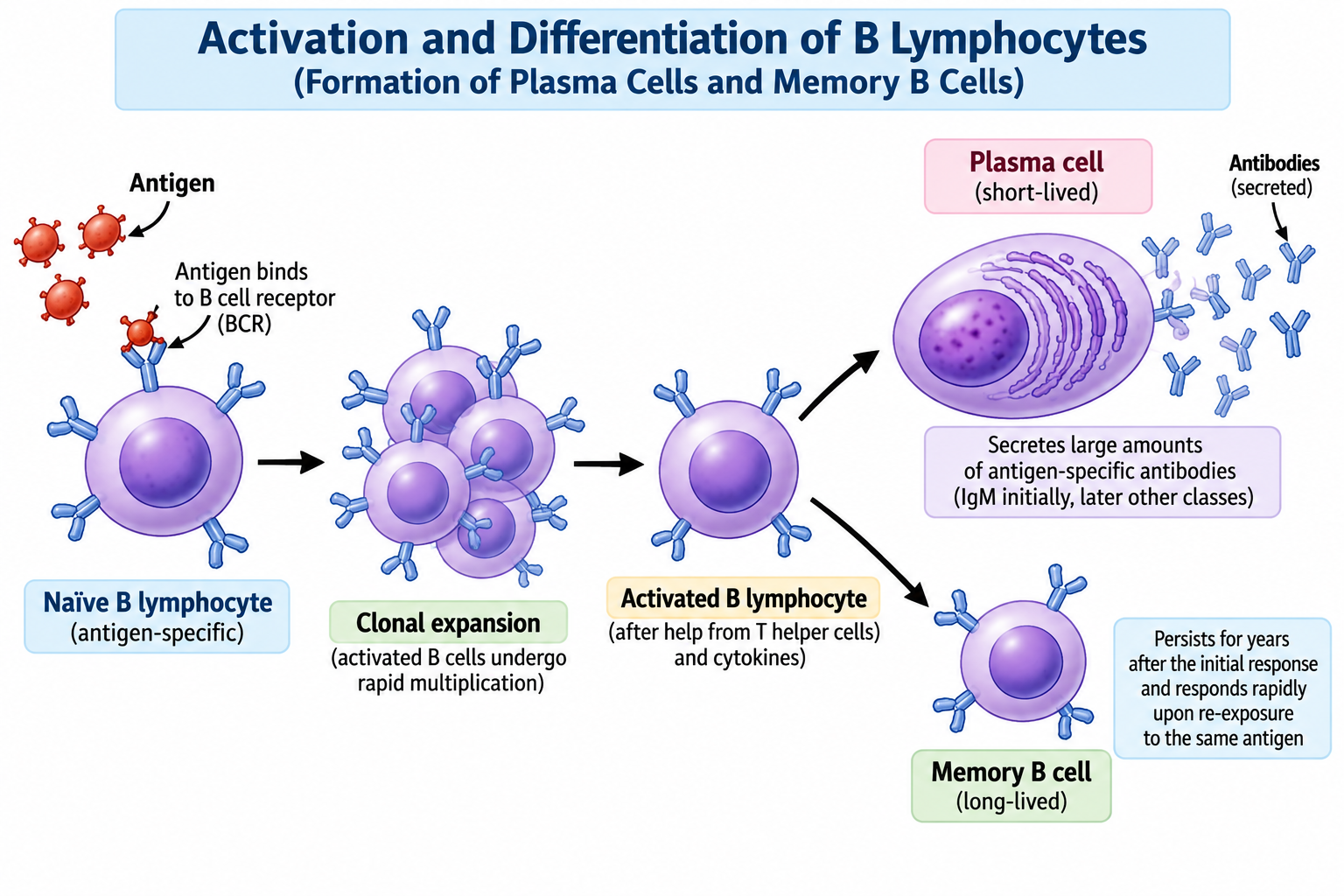
Memory B cells and plasma cells are important components of humoral immunity. Both develop from activated B lymphocytes, but they perform different functions. Memory B cells provide the capacity for a rapid response to future antigen exposure, whereas plasma cells are specialized for producing and secreting antibodies.
Their complementary roles help explain why the secondary immune response is generally faster and stronger than the primary response.
1. Memory B Cells
Memory B cells are long-lived, antigen-specific B lymphocytes formed during an earlier immune response. They can persist after the original infection has been controlled or after vaccination.
Their major functions include:
- Antigen-specific recognition: Memory B cells retain B-cell receptors that recognize the antigen encountered previously.
- Rapid activation: On re-exposure, suitable memory B cells can respond more quickly than naïve B cells.
- Clonal expansion: Activated memory B cells multiply to increase the number of antigen-specific cells.
- Differentiation into plasma cells: Many activated memory B cells develop into antibody-secreting plasma cells.
- Improved antibody responses: Memory B cells generated through germinal-centre reactions may produce antibodies with higher affinity for the antigen.
Memory B cells do not all behave identically. Their response depends on the antigen, the type of memory cell, and the signals received during re-exposure.
2. Plasma Cells
Plasma cells are differentiated B lymphocytes whose primary function is antibody secretion. They develop after B-cell activation and can produce large quantities of antigen-specific immunoglobulins.
Plasma cells contribute to immunity in two important ways:
- Short-lived plasma cells: These cells produce antibodies during an active immune response but usually survive for a relatively limited period.
- Long-lived plasma cells: These cells can persist, particularly in survival niches such as the bone marrow, and continue secreting antibodies for extended periods.
Long-lived plasma cells help maintain circulating antibody levels even when the antigen is no longer present. This is distinct from the role of memory B cells, which can be activated to generate new antibody-secreting cells after re-exposure.
3. Memory B Cells vs Plasma Cells
| Feature | Memory B Cells | Plasma Cells |
|---|---|---|
| Main function | Provide a rapid response to future antigen exposure | Secrete antibodies |
| Antigen recognition | Recognize specific antigens through B-cell receptors | Primarily specialized for antibody secretion |
| Antibody secretion | Usually limited compared with plasma cells | High, depending on the cell and its state |
| Response to re-exposure | Can activate, multiply, and differentiate | Existing plasma cells may continue antibody secretion |
| Longevity | Often long-lived | May be short-lived or long-lived |
| Role in secondary response | Generate additional antibody-producing cells | Produce antibodies that help control the antigen |
4. How These Cells Strengthen the Secondary Immune Response
During the primary immune response, activated B cells can form both plasma cells and memory B cells. Plasma cells produce antibodies that help control the initial antigen exposure, while memory B cells provide a reservoir of antigen-specific cells for future encounters.
When the same antigen enters the body again, memory B cells can activate and differentiate into plasma cells. These plasma cells then secrete antigen-specific antibodies, often producing a faster and more substantial antibody response than the initial exposure.
At the same time, long-lived plasma cells formed during the earlier response may already be maintaining antibodies in the circulation. This pre-existing antibody protection can help the body respond before a new wave of plasma cells has fully developed.
Therefore, memory B cells and plasma cells work together: memory B cells support an enhanced response upon re-exposure, while plasma cells provide the antibodies that directly participate in humoral defence.
Antibody Production: IgM and IgG
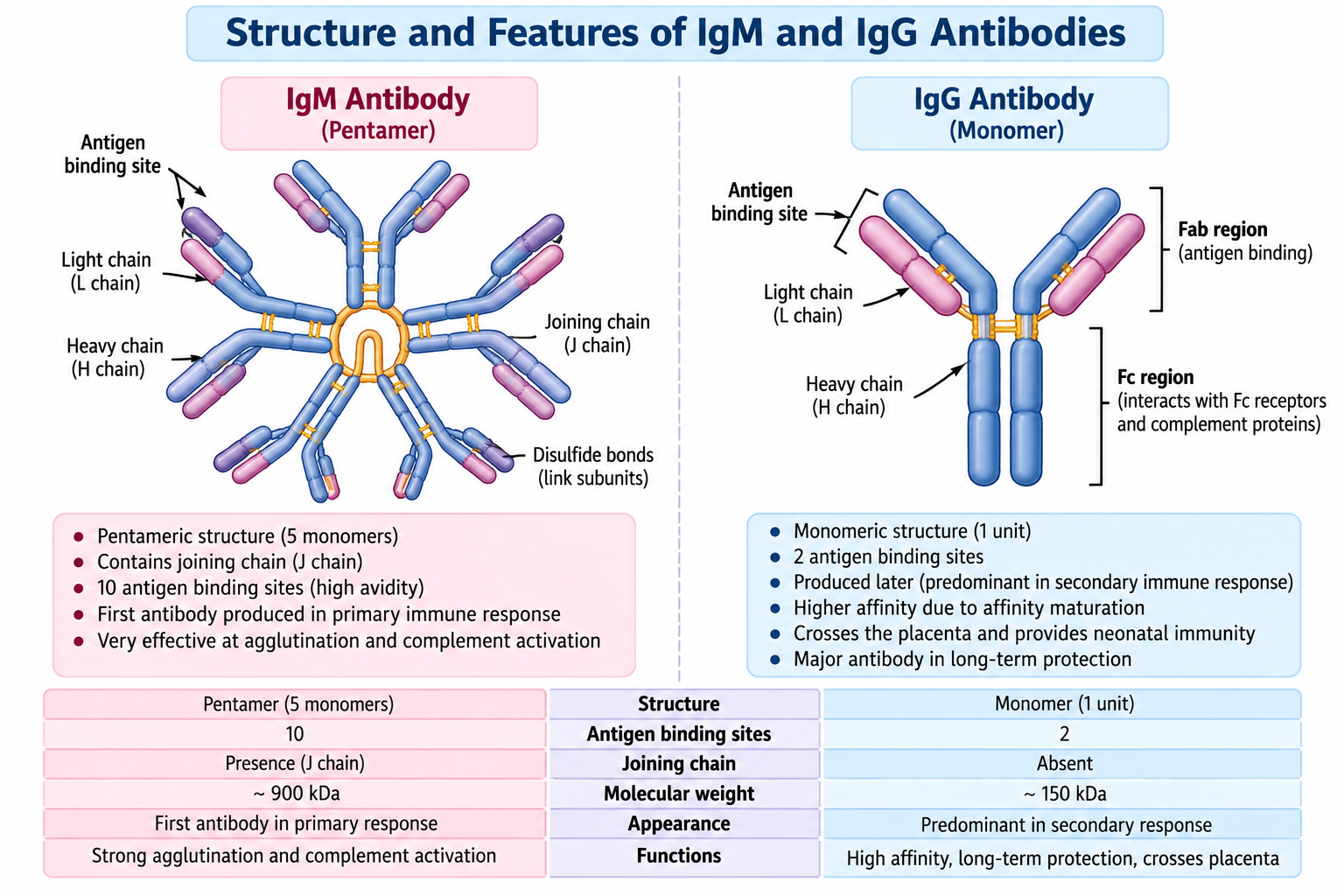
Antibodies, also known as immunoglobulins, are proteins produced by plasma cells in response to specific antigens. They bind to their corresponding antigens and help the immune system neutralize pathogens, promote phagocytosis, and activate other immune mechanisms.
The production patterns of immunoglobulin M (IgM) and immunoglobulin G (IgG) are important for understanding the primary vs secondary immune response. IgM is commonly the first antibody class produced during a primary antibody response, whereas IgG often becomes the predominant antibody class during subsequent responses to many protein antigens.
1. IgM in the Primary Immune Response
Immunoglobulin M (IgM) is generally the first antibody class secreted in a typical primary response to a newly encountered antigen.
Its important characteristics include:
- Early production: IgM usually appears before substantial quantities of other antibody classes during a primary response.
- Pentameric structure: Secreted IgM generally consists of five antibody units joined together, making it effective at agglutination and complement activation.
- Complement activation: IgM is particularly effective at activating the classical complement pathway when bound to an appropriate antigen.
- Lower initial abundance of other classes: Early antibody production may be dominated by IgM, although the pattern varies with the antigen and immune conditions.
- Limited persistence compared with some antibody-mediated protection: Serum IgM has a relatively short half-life, but the duration of its production depends on the response.
IgM is also present as a monomer on the surface of naïve B cells, where it functions as part of the B-cell antigen receptor.
2. IgG in the Secondary Immune Response
Immunoglobulin G (IgG) is a major antibody class in blood and extracellular fluid. In many secondary responses to protein antigens, IgG production increases rapidly because memory B cells can differentiate into plasma cells.
Its major characteristics include:
- Rapid production after re-exposure: Memory B cells can generate IgG-secreting plasma cells more quickly than a response relying only on naïve B cells.
- High serum abundance: IgG is the most abundant immunoglobulin class in normal human serum.
- Neutralization: IgG can block pathogens or toxins from interacting with host cells.
- Opsonization: It can help phagocytes recognize and engulf antibody-coated pathogens.
- Complement activation: Some IgG subclasses activate the classical complement pathway.
- Longer serum half-life: IgG generally persists in the circulation longer than IgM.
- Affinity maturation: IgG produced during many secondary responses may bind the antigen with greater affinity because of selection and maturation during earlier immune responses.
IgG is not exclusive to secondary responses. It can also be produced during a primary response after B cells undergo class-switch recombination.
3. IgM vs IgG
| Feature | IgM | IgG |
|---|---|---|
| Typical timing | Usually appears early in a primary antibody response | Often rises substantially during later primary and secondary responses |
| Structure in secretion | Usually pentameric | Monomeric |
| Main location | Blood and lymph; also expressed on naïve B cells as a monomer | Blood and extracellular fluids |
| Complement activation | Highly effective | Depends on the IgG subclass |
| Neutralization | Can neutralize some pathogens and toxins | Important in neutralization |
| Serum half-life | Approximately 5 days | Approximately 21 days, varying by subclass and conditions |
| Role in immune memory | Often prominent early in a primary response | Frequently prominent in secondary responses to protein antigens |
4. Why Is IgG Often Higher During a Secondary Response?
During the primary response, naïve B cells are activated and may initially produce IgM. Some activated B cells then undergo class-switch recombination, allowing them to produce IgG or another antibody class while retaining the same antigen specificity.
Germinal-centre reactions can also support affinity maturation, selecting B cells that produce antibodies with improved antigen binding. Memory B cells formed during the initial response can subsequently respond rapidly when the same antigen is encountered again.
As a result, the secondary response often produces IgG more rapidly and in greater amounts than the primary response. However, the antibody class that predominates depends on the antigen, route of exposure, immune environment, and previous immune history.
IgM is commonly the first antibody produced in a primary response, while IgG often predominates in secondary responses to protein antigens. This is a general pattern rather than an absolute rule.
Primary vs Secondary Immune Response — Comparison Table
The primary and secondary immune responses differ in their timing, antibody production, magnitude, and dependence on immunological memory. The primary response develops after the first exposure to an antigen, whereas the secondary response occurs following subsequent exposure to the same antigen.
The following table summarizes the major differences between them.
| Basis of Comparison | Primary Immune Response | Secondary Immune Response |
|---|---|---|
| Antigen exposure | First exposure to a specific antigen | Subsequent exposure to the same antigen |
| Main responding cells | Primarily naïve B and T lymphocytes | Memory B and T lymphocytes, along with other responding cells |
| Lag phase | Relatively long | Usually shorter |
| Speed of response | Develops comparatively slowly | Develops more rapidly |
| Antibody concentration | Usually lower | Often higher |
| Initial antibody class | IgM commonly appears first | Class-switched antibodies, particularly IgG in many systemic responses, may predominate |
| Antibody affinity | Often lower initially | Often higher because of affinity maturation and selection during earlier responses |
| Clonal expansion | Begins from antigen-specific naïve lymphocytes | Memory lymphocytes can expand rapidly |
| Plasma-cell formation | Generates initial antibody-secreting cells | Can rapidly generate additional antibody-secreting cells |
| Memory-cell formation | Establishes antigen-specific memory cells | Activates existing memory cells and may generate additional memory cells |
| Duration | Antibody levels often decline after the peak | Antibody levels may remain elevated for longer |
| Antigen clearance | May take longer to develop an effective response | Often more efficient |
| Biological significance | Establishes the initial adaptive response and immunological memory | Provides an enhanced response to previously encountered antigens |
| Example | First exposure to a vaccine antigen | Response to a subsequent dose containing the same antigen |
Major Differences Explained
1. Difference in response time
The primary immune response takes longer because antigen-specific naïve lymphocytes must be activated and undergo clonal expansion. During a secondary response, existing memory cells can respond more quickly.
2. Difference in antibody concentration
The primary response generally produces a lower peak antibody concentration. In many secondary responses, rapid activation of memory B cells results in a substantially higher concentration of antigen-specific antibodies.
3. Difference in antibody type
IgM is commonly the first antibody class detected during a primary response. During many secondary responses to protein antigens, IgG becomes prominent because class-switched memory B cells can rapidly produce IgG-secreting plasma cells. However, the predominant antibody class varies with the antigen and site of exposure.
4. Difference in antibody affinity
The first response can begin with antibodies of relatively low affinity. Subsequent responses often involve antibodies with higher affinity because germinal-centre reactions select B cells whose antibodies bind the antigen more effectively.
5. Difference in immunological memory
The primary response establishes immunological memory. The secondary response uses this existing memory to provide more efficient protection against a previously encountered antigen.
The central difference is that the primary immune response establishes antigen-specific immunity, whereas the secondary immune response benefits from immunological memory to provide a faster and often stronger defense.
Graph of Antibody Concentration Over Time
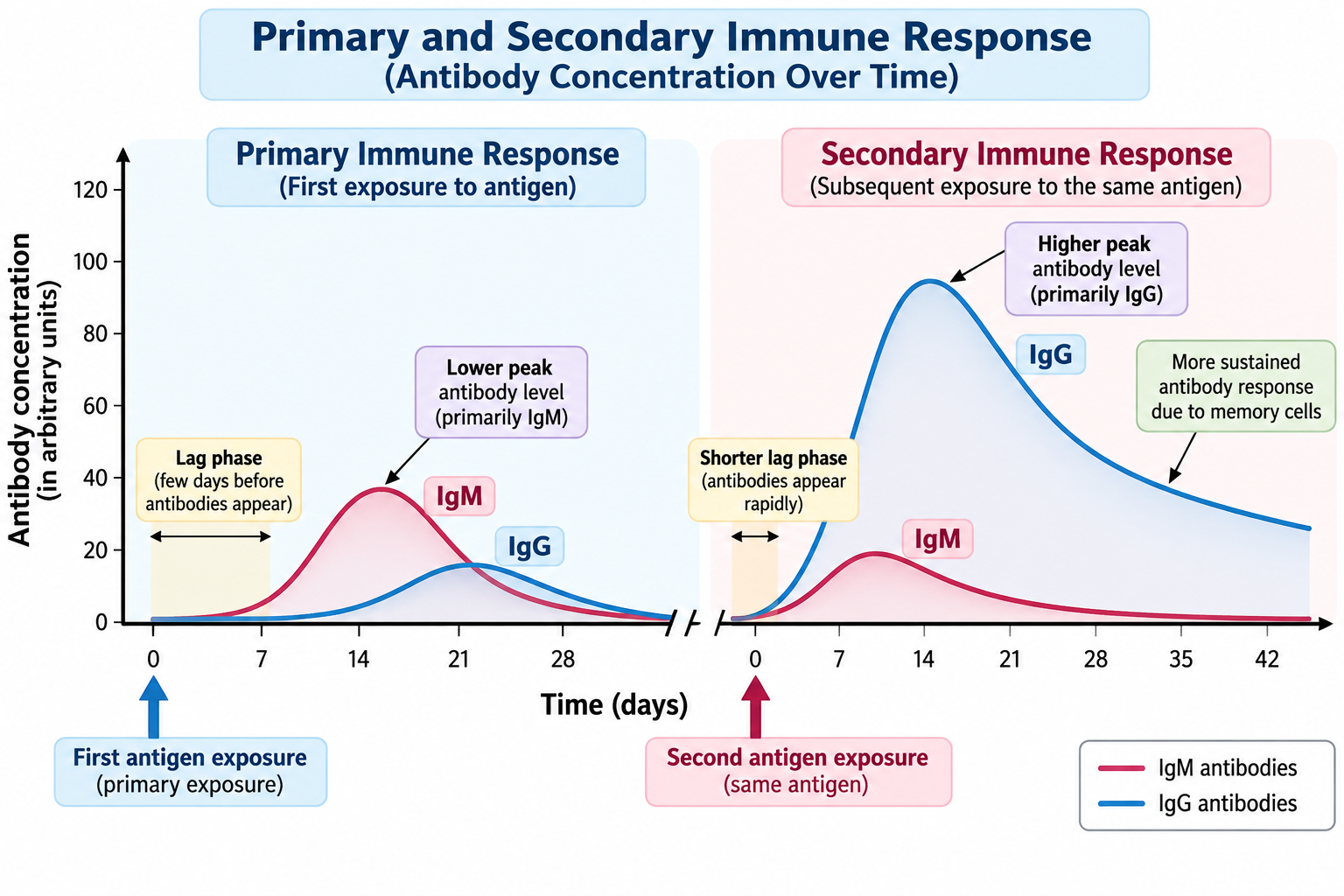
The primary and secondary immune responses can be compared by studying changes in antibody concentration following exposure to the same antigen. The primary response usually develops after a longer delay and produces a lower peak antibody concentration. In contrast, the secondary response generally begins more rapidly and reaches a higher antibody concentration because of immunological memory.
Interpretation of the Antibody Response Graph
A typical antibody-response graph plots antibody concentration on the Y-axis against time after antigen exposure on the X-axis. It shows the changes in antibody levels following the first and subsequent exposures to the same antigen.
The graph demonstrates the following features:
- Primary response: After the first antigen exposure, there is a lag phase during which antibody levels remain low. Antibody concentration then rises gradually, reaches a relatively modest peak, and eventually declines.
- Secondary response: After a subsequent exposure to the same antigen, antibody production begins more rapidly. Antibody concentration generally reaches a much higher peak and may remain elevated for longer.
- Immunological memory: The enhanced secondary response results largely from the presence of antigen-specific memory B cells and, where relevant, memory T cells.
- Antibody classes: IgM commonly appears early in the primary response, while IgG often predominates in secondary systemic responses to protein antigens.
Important Features to Label in the Graph
When drawing this graph for an examination, include the following labels:
- X-axis: Time after antigen exposure
- Y-axis: Antibody concentration
- First antigen exposure: Before the primary response
- Primary response: Delayed, smaller antibody peak
- Second antigen exposure: Before the secondary response
- Secondary response: Faster, larger antibody peak
The most important observation is that the secondary response has a shorter lag phase and a higher antibody concentration than the primary response. These differences illustrate the principle of immunological memory.
Note: A typical textbook graph is schematic. The actual antibody concentration, timing, and predominant immunoglobulin class vary according to the antigen, vaccine or infection, route of exposure, and immune status.
Factors Affecting Primary and Secondary Immune Responses
The magnitude, speed, and duration of an immune response vary depending on several biological and environmental factors. Although secondary immune responses are generally faster and stronger than primary responses, the extent of this advantage differs between individuals and types of antigens.
The major factors affecting primary and secondary immune responses are described below.
1. Nature of the Antigen
The chemical composition, complexity, and immunogenicity of an antigen influence the immune response it produces. Protein antigens commonly stimulate T-cell-dependent B-cell responses, which can generate class switching, affinity maturation, and immunological memory.
Some antigens, such as certain polysaccharides, produce different patterns of B-cell activation and may generate weaker or less conventional memory responses.
2. Dose of the Antigen
The amount of antigen encountered can influence lymphocyte activation and antibody production. An appropriate antigen dose may stimulate an effective response, whereas very low or very high doses can produce different outcomes depending on the antigen and immune context.
The relationship between antigen dose and immune response is complex and is not always directly proportional.
3. Route of Antigen Entry
The route through which an antigen enters the body influences which immune tissues and cells encounter it first.
For example:
- Intramuscular exposure: Commonly used for many vaccines and can stimulate systemic antibody responses.
- Mucosal exposure: Can stimulate immune responses at surfaces such as the respiratory or intestinal tract, including local IgA responses.
- Skin exposure: Can involve specialised antigen-presenting cells and local immune mechanisms.
The route of exposure can influence the location and type of immunity generated.
4. Number and Function of Memory Cells
The availability and functional quality of antigen-specific memory B and T cells are major determinants of the secondary response. A larger or more responsive memory-cell population can contribute to faster recognition, clonal expansion, and effector-cell production.
Memory-cell quantity and quality can vary according to the initial exposure, the type of antigen, vaccination history, and the time elapsed since exposure.
5. Time Between Antigen Exposures
The interval between the primary and subsequent exposures can affect the response. Memory-cell populations and antibody concentrations change over time, so the timing of a booster dose can influence the magnitude and quality of the resulting immune response.
An appropriate interval depends on the particular vaccine or antigen rather than a single universal rule.
6. Age and General Health
Age and overall health can influence immune function. Immune responses may differ in infants, older adults, and individuals experiencing nutritional deficiencies or certain illnesses.
These factors can affect the activation of lymphocytes, antibody production, and the development or maintenance of immunological memory.
7. Vaccination History
Previous vaccination can establish antigen-specific memory cells and circulating antibodies. A subsequent dose containing the same or a closely related antigen may stimulate a rapid recall response.
However, the strength of this response depends on the vaccine, the interval between doses, previous immune responses, and individual characteristics.
8. Genetic and Individual Variation
Genetic differences, including variation in genes involved in antigen presentation and immune regulation, can influence how individuals respond to the same antigen. Differences in immune-cell populations and prior exposure history also contribute to variation.
Primary and secondary immune responses are influenced by the antigen, route of exposure, antigen dose, memory-cell population, time between exposures, and individual health. These factors help explain why the same antigen may produce different antibody levels and response patterns in different individuals.
Importance of Primary and Secondary Immune Responses in Vaccination and Immunological Memory
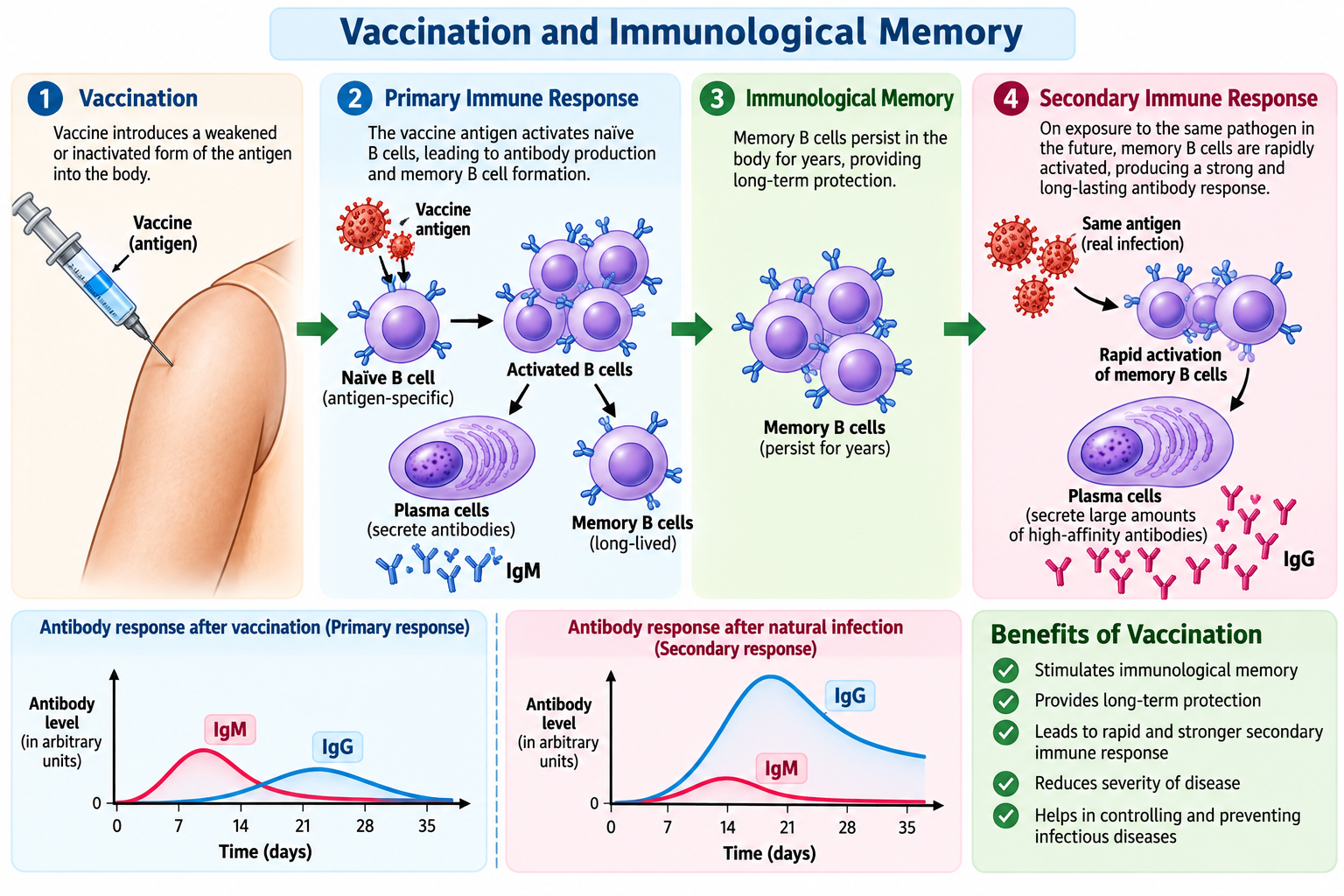
The primary and secondary immune responses are fundamental to understanding how vaccination protects the body against infectious diseases. Many vaccines expose the immune system to a harmless form of an antigen, an inactivated pathogen, a component of a pathogen, or instructions for producing a specific antigen. This exposure stimulates an adaptive immune response without requiring the person to experience the corresponding natural infection.
The initial response can establish antigen-specific memory, while subsequent exposure through a booster dose may strengthen or restore protection.
1. Role of the Primary Immune Response in Vaccination
When a person receives a vaccine for the first time, the immune system recognises the vaccine antigen and activates appropriate B and T lymphocytes.
The primary immune response contributes to vaccination in several ways:
- Antigen recognition: The immune system identifies the vaccine antigen as a target for a specific response.
- Antibody production: Activated B cells differentiate into plasma cells that secrete antigen-specific antibodies.
- T-cell activation: Depending on the vaccine, T cells help coordinate the immune response or develop into cells capable of recognising infected cells.
- Memory-cell formation: Some activated B and T lymphocytes become memory cells.
- Initial protection: Antibodies and other immune mechanisms may provide protection after sufficient time has passed for immunity to develop.
The speed and strength of this response depend on the vaccine type, antigen, and individual immune status.
2. Role of the Secondary Immune Response in Booster Doses
A booster dose introduces the relevant antigen again after an earlier vaccination. Existing antigen-specific memory cells can respond rapidly, producing an enhanced immune response.
The secondary response may provide the following benefits:
- Faster antibody production: Memory B cells can rapidly differentiate into antibody-secreting plasma cells.
- Higher antibody levels: Antigen-specific antibody concentrations may increase substantially.
- Improved antibody quality: In many T-dependent responses, affinity maturation can result in antibodies that bind the antigen more effectively.
- Strengthened immune memory: Further antigen exposure can reinforce or modify the memory-cell population.
- Restoration of declining protection: Booster doses can raise antibody levels when they have decreased over time.
Not every vaccine follows the same schedule or produces identical responses. Booster requirements depend on the vaccine, the disease, the duration of protection, and public-health recommendations.
3. Immunological Memory
Immunological memory is the ability of the adaptive immune system to respond more efficiently to an antigen encountered previously.
It is established through the formation and persistence of antigen-specific memory B cells, memory T cells, and, in many cases, long-lived plasma cells.
Immunological memory is important because:
- Memory cells can recognise previously encountered antigens.
- They can respond more rapidly than naïve lymphocytes in many situations.
- Memory B cells can generate new waves of antibody-secreting plasma cells.
- Long-lived plasma cells may maintain circulating antibodies even when the antigen is absent.
- Memory T cells can contribute to a faster cellular response when the relevant antigen is encountered again.
The degree and duration of memory vary with the antigen, vaccine, and individual.
4. Examples of Vaccination and Immune Memory
Vaccination illustrates how the primary and secondary immune responses work together.
| Example | Role of the Primary Response | Role of Subsequent Exposure |
|---|---|---|
| Hepatitis B vaccination | Stimulates antigen-specific antibodies and immune memory | Additional doses can improve the response when required by the schedule |
| Tetanus vaccination | Establishes an initial protective antibody response | Booster doses help maintain protection over time |
| Measles vaccination | Generates antibodies and adaptive immune memory | A subsequent dose, when recommended, helps ensure adequate protection |
| COVID-19 vaccination | Stimulates antibody and cellular responses, depending on the vaccine | Additional doses may restore or broaden protection according to the vaccine and recommendations |
These examples demonstrate the general principle of immune memory. The exact response and vaccination schedule differ by vaccine and individual circumstances.
5. Why Are Booster Doses Sometimes Necessary?
Antibody concentrations may decline over time, even when memory B and T cells persist. Some pathogens can cause serious disease before a recall response develops sufficiently, so maintaining adequate circulating antibodies can be important.
Booster doses may therefore help by increasing antibody levels, improving aspects of antibody quality, and reinforcing immune memory. The need for boosters varies because different vaccines generate different levels and durations of protection.
The primary immune response establishes antigen-specific immunity, while subsequent exposure can activate immunological memory and strengthen protection. This principle is one of the central foundations of modern vaccination.
Clinical Significance of Primary and Secondary Immune Responses
The primary and secondary immune responses have considerable clinical importance in the prevention, diagnosis, and management of infectious diseases. Understanding these responses helps explain vaccine effectiveness, antibody testing, immunological memory, and the body’s ability to respond to repeated exposure to pathogens.
1. Diagnosis of Recent and Previous Infections
Antibody testing can help assess whether a person has developed an immune response to a particular pathogen. The interpretation depends on the pathogen, the test used, the timing of sample collection, and the person’s vaccination and infection history.
- IgM antibodies: Their detection may support a recent infection in some diseases, but IgM can persist, appear in reinfections, or produce false-positive results.
- IgG antibodies: Their presence may indicate previous infection, vaccination, or a later stage of an infection.
- Paired serum samples: Comparing antibody levels in samples collected at different times can provide evidence of a developing immune response in certain infections.
Therefore, IgM and IgG results should not be interpreted alone as definitive proof of the timing of an infection.
2. Evaluation of Vaccine-Induced Immunity
Antibody measurements can be used to assess immune responses to certain vaccines. In selected circumstances, testing helps determine whether an individual has developed an adequate antibody response.
The primary response provides an initial assessment of how the immune system reacts to a vaccine antigen. A subsequent dose may produce a stronger antibody response because of immunological memory.
However, antibody concentration is not a complete measure of immunity in every disease. Cellular immunity, antibody function, and other factors may also contribute to protection.
3. Recurrent Infections and Immunological Memory
Immunological memory often allows the body to respond more efficiently when it encounters a previously recognised pathogen. Nevertheless, previous exposure does not always prevent reinfection.
Some pathogens change their surface antigens, evade immune recognition, or establish infections despite existing immune memory. In such cases, protection may be incomplete or may decrease over time.
4. Immunodeficiency Disorders
In certain immunodeficiency disorders, the body cannot produce normal antibody responses or establish effective immune memory.
Affected individuals may have difficulty responding to infections or vaccines. Clinical evaluation may include measurements of immunoglobulin concentrations, assessment of antibody responses to selected antigens, and other investigations based on the suspected disorder.
The results help healthcare professionals assess humoral immune function and determine whether further evaluation or treatment is needed.
5. Autoimmune Diseases and Immune Dysregulation
Autoimmune diseases occur when immune responses are directed against the body’s own tissues. Although immunological memory normally supports protective immunity, abnormal immune regulation can contribute to persistent or recurrent harmful responses.
The relationship between memory lymphocytes and autoimmune disease is complex and varies between disorders. Understanding B-cell and T-cell activation helps researchers investigate the development and treatment of these conditions.
6. Passive Immunity and Antibody-Based Treatment
Passive immunity occurs when a person receives antibodies produced elsewhere rather than generating them through their own adaptive immune response.
Examples include certain immunoglobulin preparations and pathogen-specific monoclonal antibodies. These treatments can provide immediate, targeted antibody activity in appropriate clinical situations, but they do not establish immunological memory in the same way as an active immune response.
Their duration of protection and clinical use depend on the specific antibody product and disease.
The primary and secondary immune responses are important for interpreting antibody tests, assessing vaccine responses, understanding reinfection, and evaluating immune disorders. However, the significance of any antibody result depends on the clinical context and should be assessed using appropriate diagnostic criteria.
Frequently Asked Questions (FAQs)
What is the primary immune response?
What is the secondary immune response?
What is the main difference between primary and secondary immune responses?
Which antibody is produced first during the primary immune response?
Which antibody predominates during the secondary immune response?
Why is the secondary immune response faster?
What is immunological memory?
What is the role of memory B cells?
Why are booster doses of vaccines sometimes necessary?
Is the secondary immune response always stronger than the primary response?
What is the lag phase of an immune response?
What is the significance of the primary and secondary immune responses?
Key Takeaways
- Primary immune response occurs when the body encounters a specific antigen for the first time.
- Secondary immune response occurs after subsequent exposure to the same antigen.
- The primary response generally has a longer lag phase and develops more slowly.
- The secondary response is usually faster, stronger, and often more sustained.
- IgM is commonly the first antibody class produced during a primary antibody response.
- IgG often predominates during secondary systemic responses to many protein antigens.
- Memory B cells and memory T cells are important for immunological memory.
- Plasma cells are specialised cells that secrete antibodies.
- Clonal expansion increases the number of antigen-specific lymphocytes.
- Affinity maturation can improve antibody binding during germinal-centre reactions.
- Immunological memory is an important basis of vaccine-induced protection.
- Booster doses can enhance or restore immunity, depending on the vaccine and individual.
- Antibody concentration typically rises and then declines during a response; the pattern varies with the antigen and immune conditions.
- The secondary response does not always prevent reinfection, particularly when pathogens undergo antigenic variation.
Conclusion
The primary vs secondary immune response comparison demonstrates the remarkable ability of the adaptive immune system to develop immunological memory. The primary immune response occurs during the first exposure to an antigen and involves the activation of naïve lymphocytes, antibody production, and the formation of memory cells. It generally develops more slowly and produces a lower peak antibody concentration.
In contrast, the secondary immune response occurs when the same antigen is encountered again. Memory B and T lymphocytes enable a more rapid and often stronger response. In many systemic antibody responses, IgG is produced rapidly and may reach higher concentrations, while memory B cells and long-lived plasma cells contribute to improved and sustained antibody-mediated protection.
These differences are fundamental to understanding vaccination, booster doses, antibody production, and protection against infectious diseases. Thus, immunological memory allows the body to respond more efficiently to previously encountered antigens and forms a central principle of adaptive immunity.
References
- Janeway, C. A. Jr., Travers, P., Walport, M., et al. Immunobiology: The Immune System in Health and Disease. 5th edition. Garland Science, 2001. Chapter: Immunological Memory.
https://www.ncbi.nlm.nih.gov/books/NBK27158/ - Centers for Disease Control and Prevention (CDC). Chapter 1: Principles of Vaccination. Epidemiology and Prevention of Vaccine-Preventable Diseases (Pink Book).
https://www.cdc.gov/pinkbook/hcp/table-of-contents/chapter-1-principles-of-vaccination.html - Aziz, M., Iheanacho, F., and Hashmi, M. F. Physiology, Antibody. StatPearls. NCBI Bookshelf.
https://www.ncbi.nlm.nih.gov/books/NBK546670/ - National Center for Biotechnology Information (NCBI). B Cells and Antibodies. Molecular Biology of the Cell.
https://www.ncbi.nlm.nih.gov/books/NBK26884/ - National Center for Biotechnology Information (NCBI). Immunology Overview. Medical Microbiology.
https://www.ncbi.nlm.nih.gov/books/NBK7795/ - Centers for Disease Control and Prevention (CDC). Explaining How Vaccines Work. Vaccines & Immunizations.
https://www.cdc.gov/vaccines/basics/explaining-how-vaccines-work.html
Discover more from Zoologyverse
Subscribe to get the latest posts sent to your email.