
Immunity is the ability of the body to recognize and defend itself against potentially harmful microorganisms, foreign substances, and abnormal cells. The immune system uses a highly coordinated network of cells, tissues, organs, proteins, and signaling molecules to protect the body from infection and maintain tissue homeostasis.
Immunity can be understood in two complementary ways. Based on the type of immune response, it is broadly divided into:
- Innate immunity
- Adaptive immunity
Based on how protection is acquired, immunity can also be classified as:
- Active immunity
- Passive immunity
Innate and adaptive immunity are not independent systems. Innate immune mechanisms provide rapid defense and help initiate and shape adaptive immune responses, while adaptive immune mechanisms can enhance several innate effector processes.
What Is Immunity?
Immunity is the state of protection or resistance against a particular infectious agent or other biological threat.
The immune system must recognize potentially harmful structures while maintaining tolerance toward the body’s own tissues. This recognition involves specialized receptors, immune cells, antibodies, complement proteins, cytokines, and other molecular mechanisms.
An important concept is that immunity is not synonymous with antibodies alone. Antibodies are an important component of many immune responses, but cellular immunity and innate defense mechanisms are also essential.
Classification of Immunity
The following table summarizes the major classifications:
| Basis of classification | Types |
|---|---|
| Type of immune response | Innate immunity and adaptive immunity |
| How immunity is acquired | Active immunity and passive immunity |
| Source of acquisition | Natural or vaccine/medically induced, depending on the context |
The terms innate/adaptive and active/passive describe different aspects of immunity and should not be treated as interchangeable classifications.
Innate Immunity
Innate immunity is the body’s rapid defense system that responds to microorganisms and tissue disturbances without requiring prior exposure to a particular pathogen.
Innate immune recognition depends largely on germline-encoded receptors, including pattern-recognition receptors (PRRs), which detect conserved molecular features associated with microorganisms or tissue damage.
Innate immunity includes:
- Epithelial and physical barriers
- Chemical defenses
- Phagocytic cells
- Natural killer (NK) cells
- Dendritic cells
- Complement proteins
- Cytokines and chemokines
- Inflammatory responses
- Antiviral mechanisms
Unlike adaptive immunity, innate immunity does not rely on the enormous antigen-specific receptor diversity generated by somatic gene rearrangement in B and T lymphocytes.
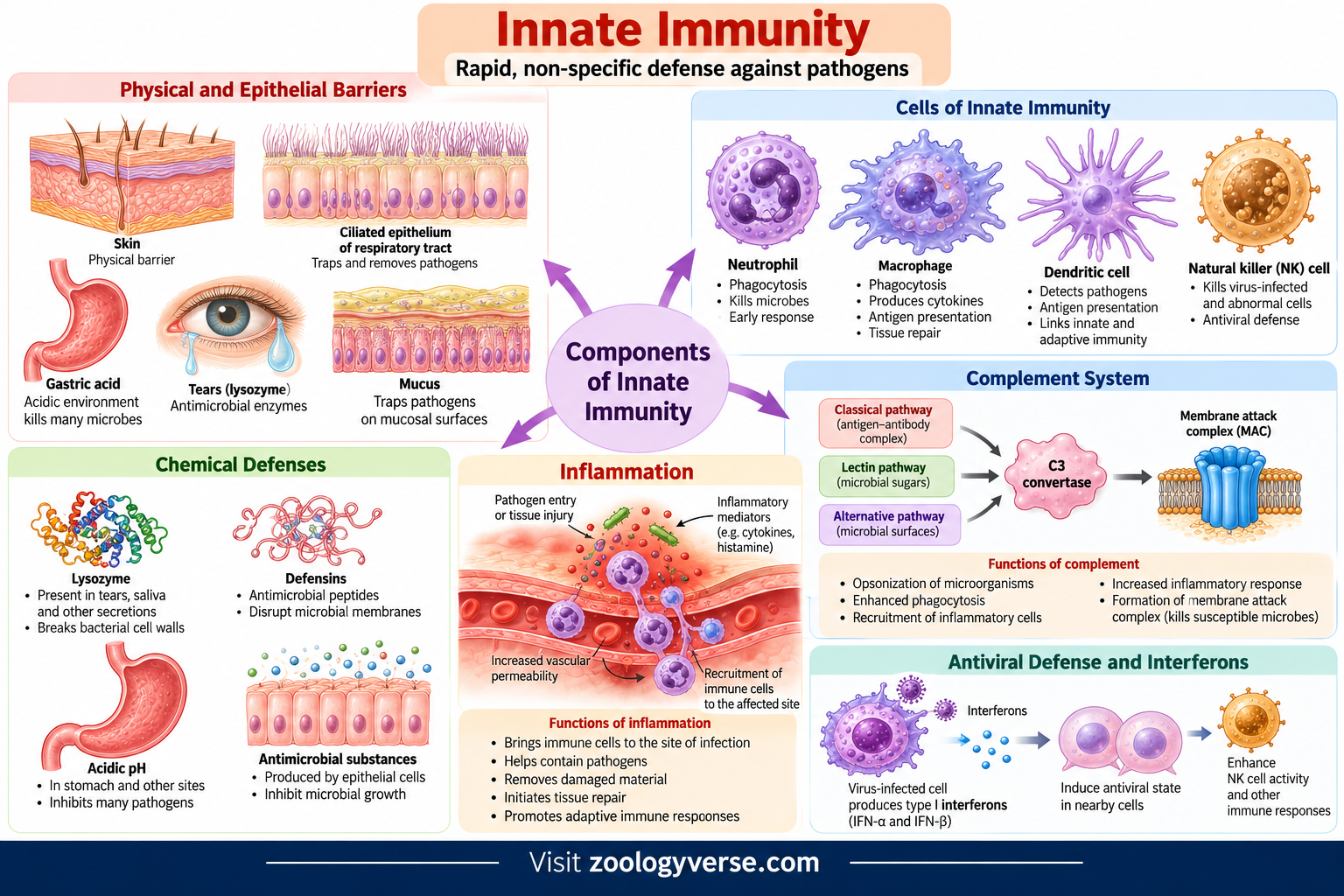
Physical and Epithelial Barriers
The body’s epithelial surfaces provide the first major physical interface between the internal environment and the outside world.
Skin
The skin forms a protective physical barrier that prevents many microorganisms from entering deeper tissues.
Its structure, relatively dry surface, continuous shedding, and chemical environment contribute to antimicrobial defense.
Mucous Membranes
Mucosal surfaces line areas such as the respiratory, gastrointestinal, and genitourinary tracts.
Mucus can trap microorganisms and particles, helping prevent their attachment to epithelial cells.
Respiratory Cilia
In the respiratory tract, coordinated movement of cilia helps transport mucus and trapped particles toward the pharynx, where they can be removed or swallowed.
Chemical Barriers
Various body secretions and local chemical conditions also contribute to innate defense.
Examples include:
- Lysozyme in tears and other secretions
- Antimicrobial peptides
- Acidic conditions in the stomach
- Antimicrobial substances produced by epithelial cells
These mechanisms help inhibit or eliminate microorganisms before they establish infection.
Cellular Components of Innate Immunity
Several immune cells contribute to innate defense.
Neutrophils
Neutrophils are abundant circulating leukocytes that can rapidly migrate to sites of infection or tissue injury.
Their functions include:
- Phagocytosis
- Production of reactive oxygen species
- Release of antimicrobial substances
- Participation in inflammatory responses
Neutrophils are particularly important in early responses to many bacterial and fungal infections.
Macrophages
Macrophages are phagocytic cells located in tissues.
They can:
- Engulf microorganisms
- Remove dead and damaged cells
- Produce cytokines and other inflammatory mediators
- Contribute to tissue repair
- Present antigen-derived peptides to T cells under appropriate conditions
Macrophages therefore participate in both innate defense and communication with adaptive immunity.
Dendritic Cells
Dendritic cells are important immune sentinels.
They can detect microbial signals, capture antigens, and process them for presentation to T lymphocytes.
Activated dendritic cells can migrate to lymphoid tissues, where they help initiate antigen-specific T-cell responses.
For this reason, dendritic cells form an important functional link between innate immune recognition and adaptive immunity.
Natural Killer Cells
Natural killer (NK) cells are lymphocytes that contribute to innate immune defense.
They can recognize and kill certain virus-infected and abnormal cells through mechanisms that differ from conventional antigen-specific T-cell recognition.
NK cells are particularly important in antiviral defense and immune surveillance.
Inflammation
Inflammation is a coordinated protective response to infection, tissue injury, or other forms of cellular stress.
Inflammatory mediators can produce changes in local blood vessels and promote the recruitment of leukocytes to affected tissues.
Inflammation can help:
- Recruit immune cells
- Increase access of plasma proteins to affected tissues
- Contain invading microorganisms
- Remove damaged material
- Initiate tissue repair
- Promote subsequent adaptive immune responses
However, excessive or uncontrolled inflammation can itself cause tissue damage.
Complement System
The complement system is a collection of plasma and cell-associated proteins that participate in immune defense.
Complement can be activated through three major pathways:
- Classical pathway
- Lectin pathway
- Alternative pathway
The classical pathway can be activated by antigen-antibody complexes, whereas the lectin and alternative pathways can be activated without antibodies and therefore contribute strongly to innate defense.
Complement activation can result in:
- Opsonization of microorganisms
- Enhanced phagocytosis
- Recruitment and activation of inflammatory cells
- Increased inflammatory responses
- Formation of the membrane attack complex (MAC)
Complement therefore provides an important connection between innate and adaptive immunity.
Cells infected with viruses can produce type I interferons, particularly interferon-α and interferon-β.
These cytokines help establish an antiviral state in neighboring cells and contribute to the activation and coordination of antiviral immune responses.
They can also enhance aspects of natural killer cell activity.
Characteristics of Innate Immunity
Important characteristics include:
- Rapid response
- Recognition of conserved molecular patterns
- Use of germline-encoded recognition receptors
- Presence of physical, chemical, cellular, and soluble defenses
- Does not require prior exposure to the specific pathogen
- Important role in initiating and shaping adaptive immunity
- Does not possess the classical antigen-specific memory characteristic of adaptive immunity
Note: Modern immunology recognizes phenomena such as trained immunity, in which certain innate immune cells or their progenitors can display altered responses after previous stimulation. Therefore, it is more precise to say that classical antigen-specific immunological memory is a defining feature of adaptive immunity, rather than saying that innate immune cells can never show any memory-like behavior.
Adaptive Immunity
Adaptive immunity, also called acquired or specific immunity, is an antigen-specific immune response mediated primarily by B and T lymphocytes.
Adaptive immune cells possess highly diverse antigen receptors generated through gene rearrangement during lymphocyte development.
When an appropriate lymphocyte recognizes its antigen and receives the necessary activation signals, it can undergo clonal expansion and differentiate into effector and memory cells.
The major characteristics of adaptive immunity are:
- High specificity
- Extensive receptor diversity
- Clonal expansion
- Immunological memory
- Enhanced responses to subsequent exposure
During a primary adaptive response, several days may be required for antigen-specific lymphocytes to expand and differentiate into effector cells.
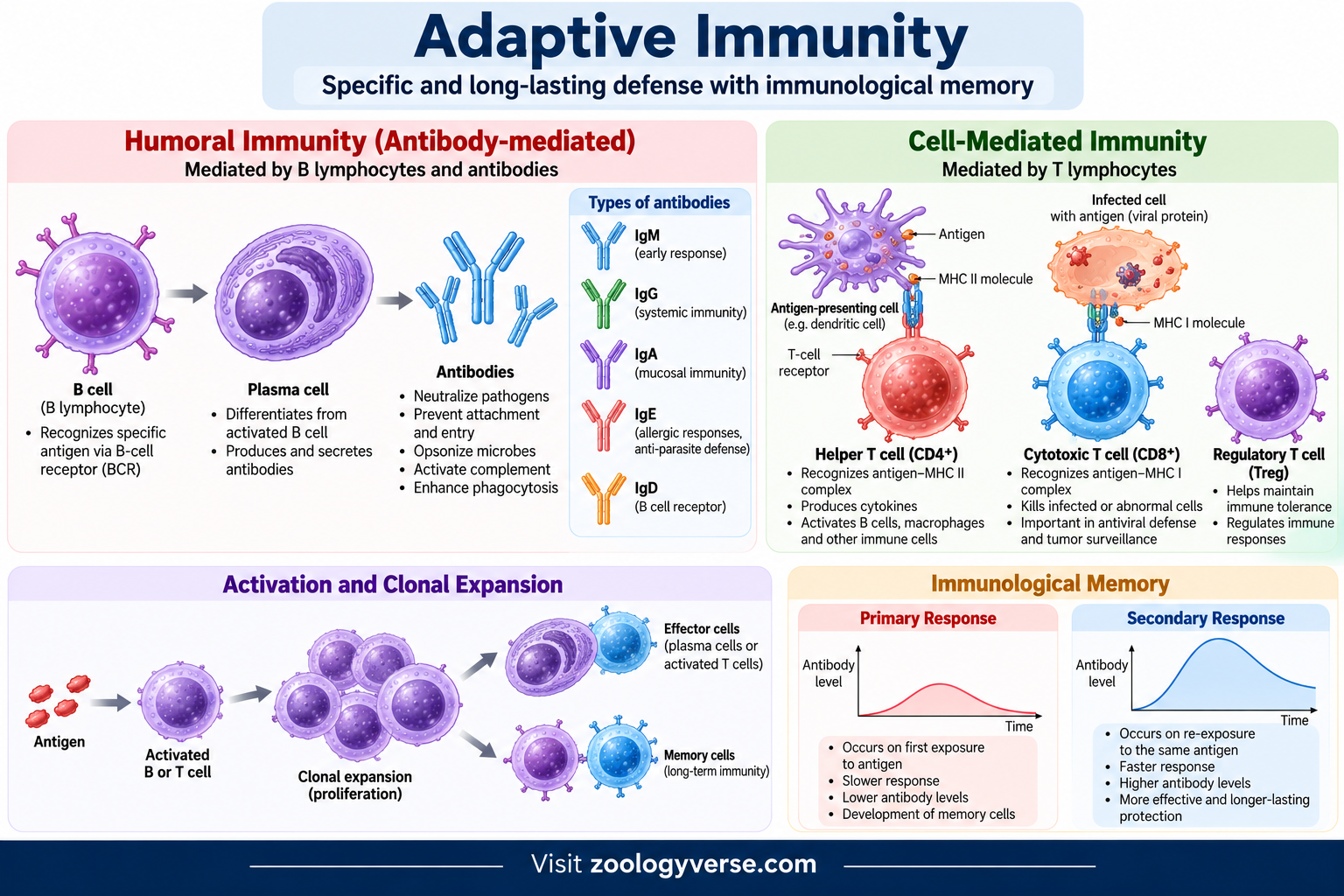
B Lymphocytes
B lymphocytes, or B cells, are major cells of adaptive immunity.
B cells possess B-cell receptors (BCRs) that can recognize specific antigenic structures.
Following appropriate activation, B cells can differentiate into:
- Plasma cells, which secrete antibodies
- Memory B cells, which contribute to long-term immunological memory
B cells are therefore central to humoral immunity.
T Lymphocytes
T lymphocytes, or T cells, are central to cell-mediated adaptive immunity and also help regulate other immune responses.
Major functional populations include:
- CD4⁺ helper T cells
- CD8⁺ cytotoxic T cells
- Regulatory T cells
- Memory T cells
Unlike antibodies and B-cell receptors, conventional T-cell receptors generally recognize peptide antigens presented by MHC molecules on cells.
Humoral Immunity
Humoral immunity is the antibody-mediated component of adaptive immunity.
After appropriate activation, B cells can differentiate into plasma cells that secrete antibodies.
Antibodies can:
- Neutralize toxins and pathogens
- Prevent attachment or entry of some pathogens
- Opsonize microorganisms
- Promote phagocytic clearance
- Activate complement through appropriate antibody classes
- Facilitate other immune effector mechanisms
Humoral immunity is particularly important in defense against many extracellular pathogens and their products.
Cell-Mediated Immunity
Cell-mediated immunity primarily involves T lymphocytes.
It is especially important in controlling pathogens that reside within host cells.
Helper T Cells
CD4⁺ helper T cells coordinate immune responses through cell-cell interactions and cytokine production.
Different helper T-cell subsets can perform different functions, including:
- Supporting B-cell responses
- Activating macrophages
- Recruiting other immune cells
- Regulating inflammation
Cytotoxic T Cells
CD8⁺ cytotoxic T lymphocytes can recognize appropriate antigenic peptides presented on MHC class I molecules.
They can kill infected or abnormal cells through mechanisms involving cytotoxic granules and programmed cell-death pathways.
Immunological Memory
Immunological memory is one of the defining characteristics of adaptive immunity.
During a primary immune response, antigen-specific B and T lymphocytes undergo expansion and differentiation.
After the antigen has been controlled, most effector cells decline, but some antigen-specific cells persist as memory cells.
When the same or sufficiently similar antigen is encountered again, memory cells can produce a response that is generally:
- Faster
- Stronger
- More effective
than the primary response.
The secondary antibody response can also involve antibodies with increased affinity for the antigen as a result of processes occurring during B-cell responses.
Primary and Secondary Immune Responses
Primary Immune Response
A primary immune response occurs when the immune system encounters an antigen for the first time.
The general sequence is:
Antigen recognition → lymphocyte activation → clonal expansion → differentiation → effector response → memory-cell formation
Because antigen-specific lymphocytes must be activated and expand, the response takes time to develop.
Secondary Immune Response
A secondary immune response occurs after subsequent exposure to the same antigen.
Memory B and T cells allow the immune system to respond more rapidly and effectively than during the primary response.
This principle is one of the biological foundations of vaccination and booster immunization.
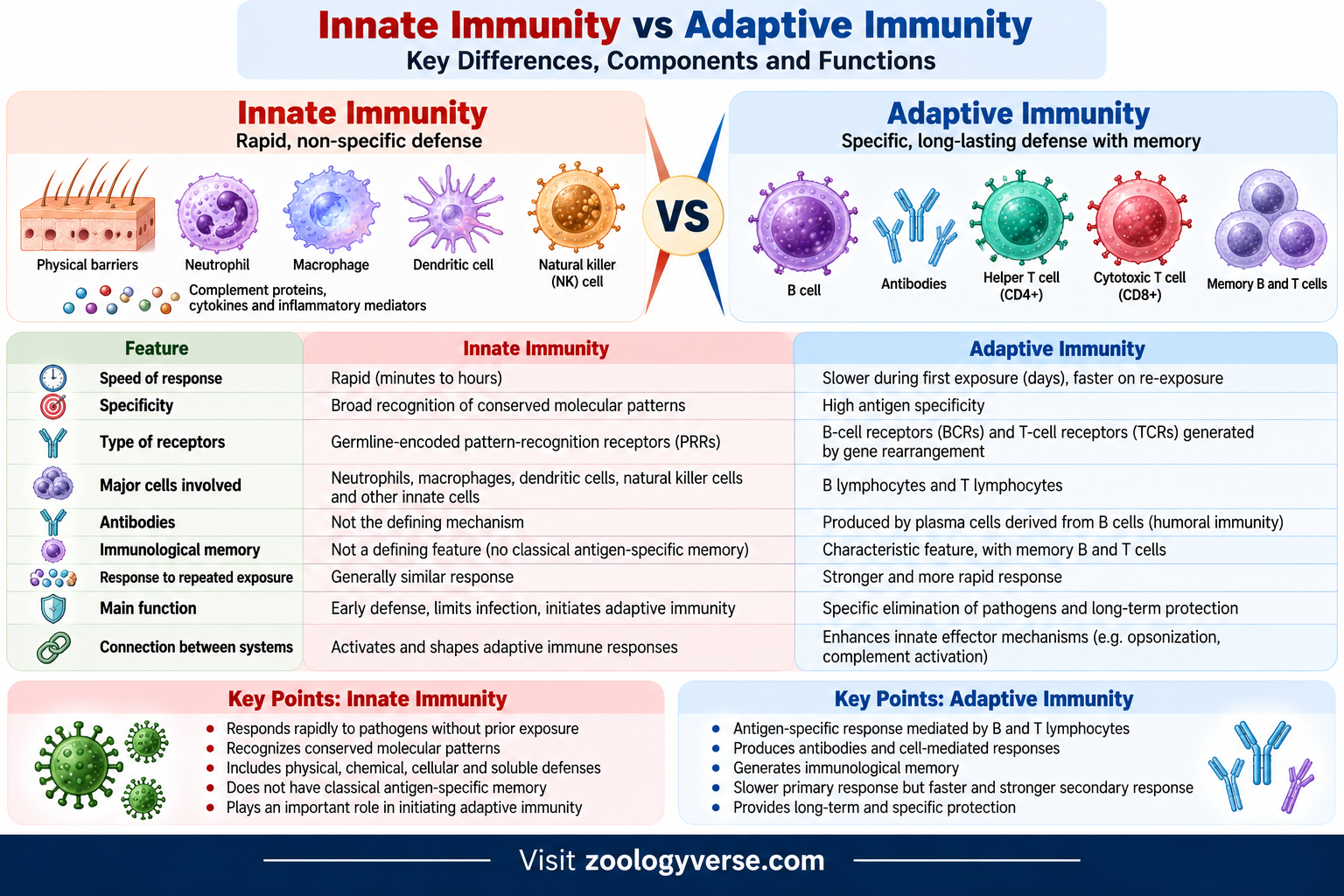
Innate Immunity vs Adaptive Immunity
| Feature | Innate Immunity | Adaptive Immunity |
|---|---|---|
| General nature | Rapid, broad defense | Specific, antigen-directed defense |
| Recognition | Conserved molecular patterns | Specific antigens/epitopes |
| Main receptors | Germline-encoded receptors | BCRs and TCRs generated through gene rearrangement |
| Response to first exposure | Rapid | Requires time for activation and clonal expansion |
| Major cells | Neutrophils, macrophages, dendritic cells, NK cells and others | B cells and T cells |
| Antibodies | Not the defining mechanism | Major component of humoral immunity |
| Specificity | Broad pattern recognition | High antigen specificity |
| Classical immunological memory | Not a defining feature | Characteristic feature |
| Major role | Early defense and initiation of immune responses | Specific elimination and long-term immune memory |
Innate and adaptive immunity should therefore be viewed as interacting components of one integrated immune system, not as completely separate systems.
Active and Passive Immunity
The terms active and passive describe how protective immunity is acquired.
Active Immunity
Active immunity occurs when a person’s own immune system is stimulated by an antigen and develops an immune response.
It can result from:
- Natural infection
- Vaccination
Active immunity involves the individual’s own immune response and can generate immunological memory. Protection can be long-lasting, although its duration varies depending on the infection, vaccine, antigen, and individual.
Natural Active Immunity
Natural active immunity develops following exposure to an infectious organism.
The immune system responds to the pathogen and may develop antigen-specific immune memory after the infection.
Importantly, natural active immunity does not necessarily mean that the infection was symptomatic; an immune response can develop following asymptomatic infection as well.
Artificial Active Immunity
Artificial active immunity develops following vaccination.
A vaccine presents the immune system with an antigen or antigen-producing information in a form designed to stimulate protective immunity without requiring the person to undergo the natural disease.
Depending on the vaccine, the antigen may be supplied as an attenuated organism, inactivated organism, purified or recombinant component, toxoid, or other vaccine platform.
Vaccination can generate both antibody-mediated and cellular immune responses and can establish immune memory.
Passive Immunity
Passive immunity occurs when preformed antibodies are transferred to an individual rather than being produced by that individual’s own immune system.
Its main advantages are:
- Rapid availability of protection
- No requirement for the recipient to mount a primary antibody response
Its major limitation is that protection is generally temporary, because transferred antibodies gradually decline.
Passive immunity usually does not generate the antigen-specific immune memory associated with active immunization.
Natural Passive Immunity
Natural passive immunity occurs through maternal transfer of antibodies.
Placental transfer
IgG antibodies can cross the placenta from mother to fetus, particularly during late pregnancy.
These maternal antibodies can provide temporary systemic protection to the newborn.
Breast milk
Breast milk, especially colostrum, contains immunologically important factors including secretory IgA.
Secretory IgA contributes primarily to protection at mucosal surfaces in the infant.
Therefore, placental IgG and breast-milk IgA should not be described as exactly the same process: they provide passive protection through different routes and antibody distributions.
Artificial Passive Immunity
Artificial passive immunity occurs when antibody-containing products are administered to a person.
Examples include:
- Immune globulin preparations
- Certain antitoxin preparations
- Some monoclonal antibody products
- Other specific antibody preparations used for prevention or treatment
Because antibodies are already available, passive immunization can provide protection more rapidly than active immunization.
However, the protection generally decreases as the transferred antibodies are eliminated from the body.
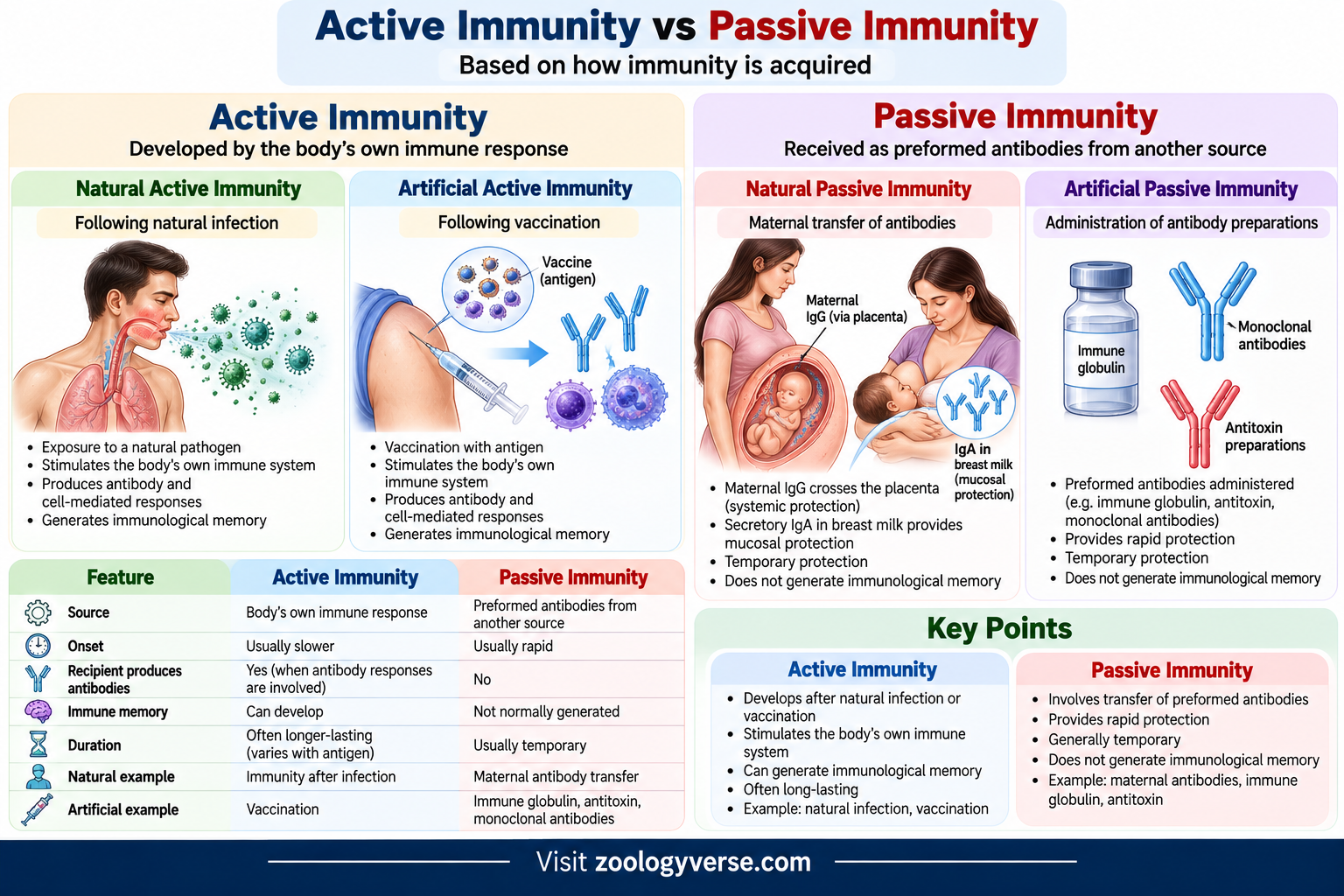
Active Immunity vs Passive Immunity
| Feature | Active Immunity | Passive Immunity |
|---|---|---|
| Source | Recipient’s own immune response | Antibodies received from another source |
| Onset | Usually slower | Usually rapid |
| Recipient produces antibodies | Yes, when antibody responses are involved | No |
| Immune memory | Can develop | Not normally generated by transferred antibodies |
| Duration | Often longer-lasting | Usually temporary |
| Natural example | Immunity following infection | Maternal antibody transfer |
| Artificial example | Vaccination | Immune globulin or certain monoclonal antibodies |
Natural and Artificial Immunity
The terms natural and artificial describe how immunity or immune protection is acquired.
| Type | Example |
|---|---|
| Natural active | Immune response following infection |
| Artificial active | Immune response following vaccination |
| Natural passive | Maternal antibody transfer |
| Artificial passive | Administration of antibody-containing products |
This four-part framework is useful for examination purposes, but remember that innate/adaptive and active/passive answer different questions.
- Innate vs adaptive: What kind of immune response is involved?
- Active vs passive: Where does the protective immune response or antibody come from?
- Natural vs artificial: How was that immunity or immune protection acquired?
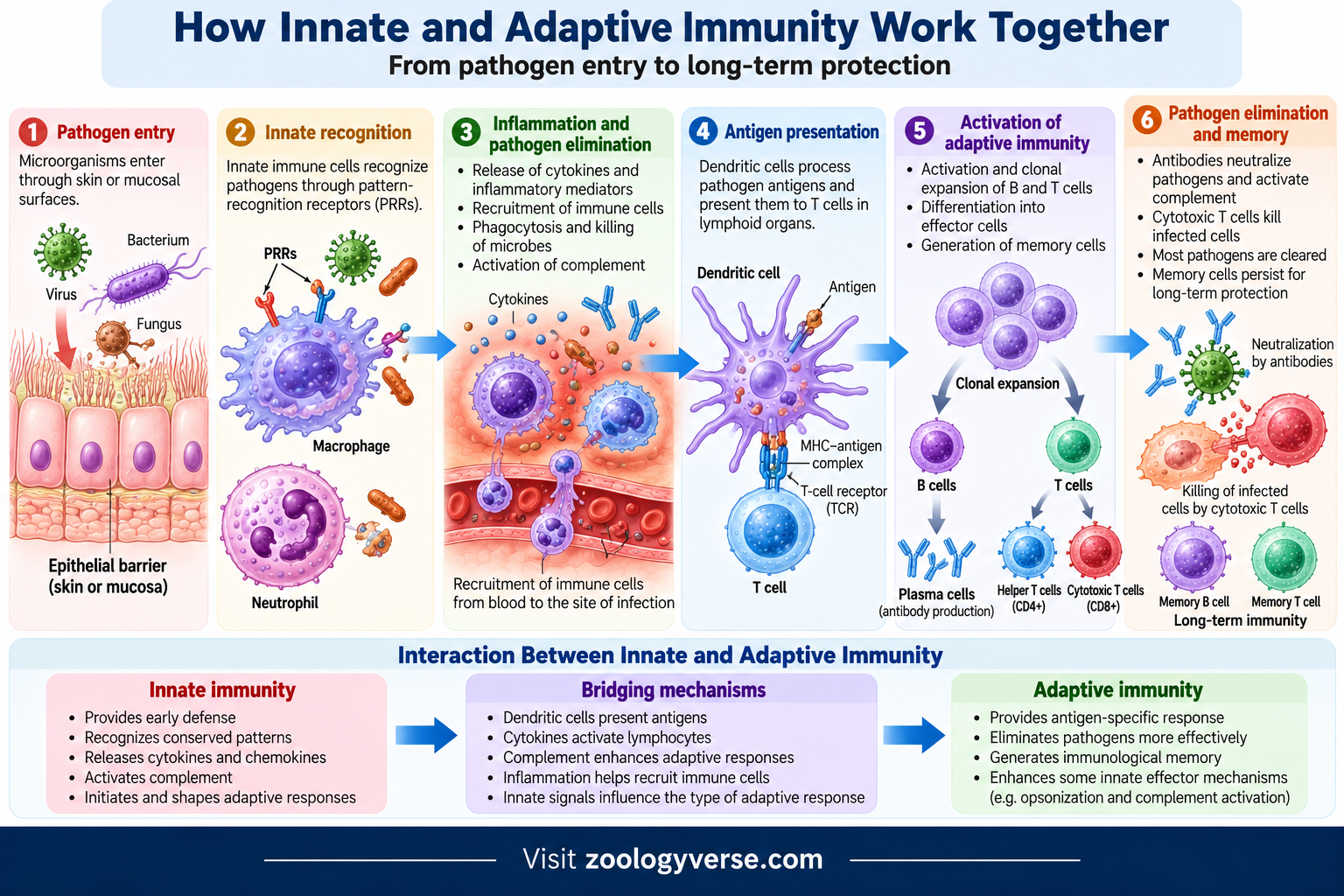
How Innate and Adaptive Immunity Work Together
The immune response is an integrated process.
When a pathogen enters the body, innate immune mechanisms can recognize conserved microbial features.
Dendritic cells and other antigen-presenting cells can then process microbial antigens and help activate antigen-specific T cells.
Activated T cells can support B-cell responses and other immune effector mechanisms.
Antibodies generated by adaptive immunity can subsequently enhance innate effector mechanisms, including opsonization and complement activation.
Thus:
Pathogen → Innate recognition → Inflammation and antigen presentation → Adaptive activation → Antibodies and T-cell responses → Enhanced pathogen elimination
Innate immune activation is therefore an important prerequisite for the development of many adaptive immune responses.
Importance of Immunity
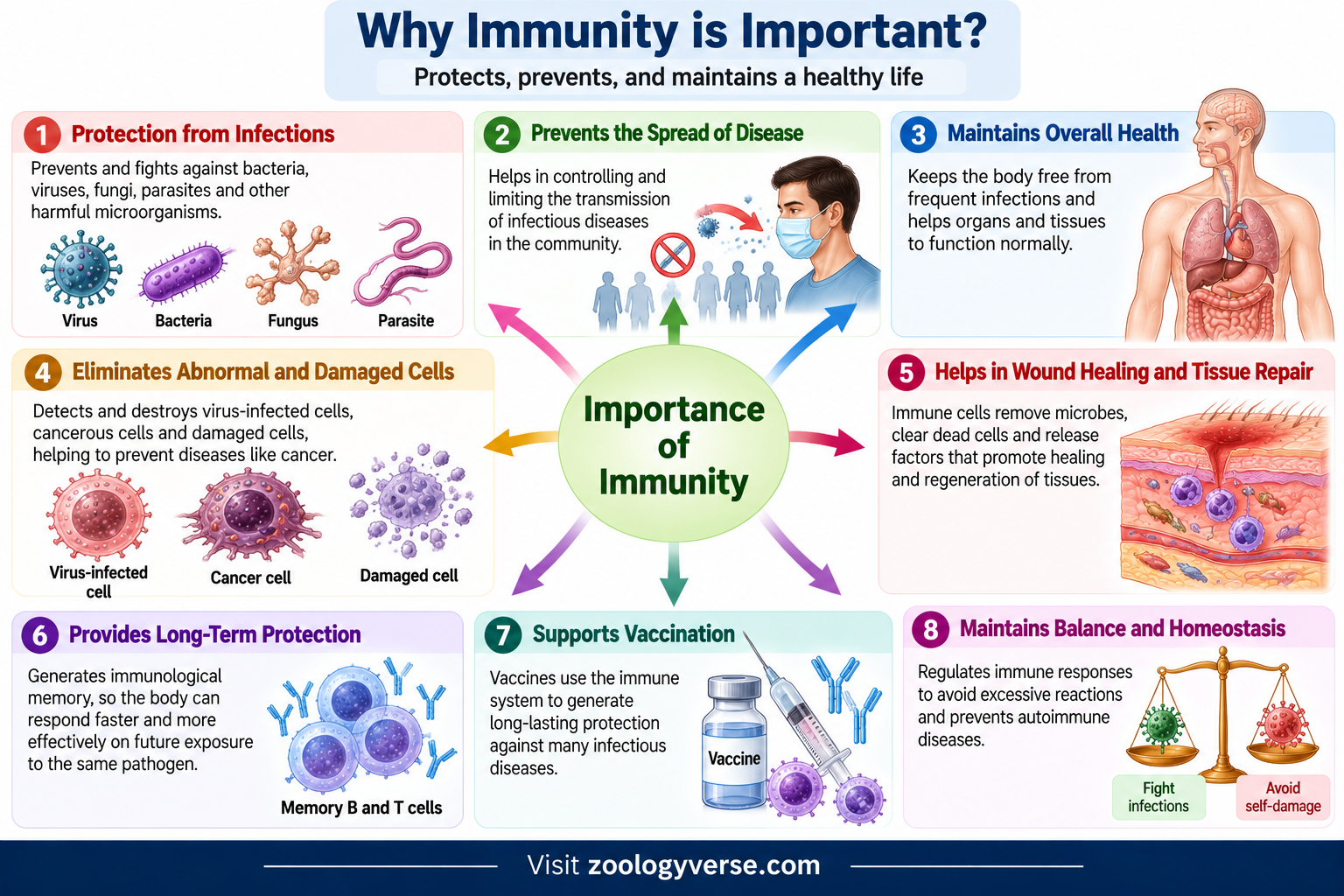
The immune system helps the body:
- Prevent or limit infection
- Recognize invading microorganisms
- Eliminate pathogens
- Neutralize microbial toxins
- Remove infected cells
- Remove damaged or abnormal cells
- Establish immunological memory
- Provide enhanced protection during subsequent exposure
At the same time, immune responses must be tightly regulated. An insufficient immune response can increase susceptibility to infection, whereas excessive or misdirected immune activity can contribute to tissue damage, allergy, autoimmunity, or other immune-mediated disorders.
Key Takeaways
- Immunity is the body’s capacity to defend against infectious agents and other biological threats.
- The two major components of immunity are innate immunity and adaptive immunity.
- Innate immunity provides rapid defense and recognizes conserved molecular patterns.
- Adaptive immunity is highly antigen-specific.
- B lymphocytes are central to antibody-mediated humoral immunity.
- T lymphocytes are central to cell-mediated immunity and immune regulation.
- Humoral immunity is primarily associated with antibodies produced by B-cell-derived plasma cells.
- Cell-mediated immunity primarily involves T lymphocytes.
- Classical antigen-specific immunological memory is a defining characteristic of adaptive immunity.
- Active immunity results from activation of the person’s own immune system.
- Passive immunity results from receiving preformed antibodies.
- Vaccination generally produces artificial active immunity.
- Maternal antibody transfer produces natural passive immunity.
- Immune globulin administration produces artificial passive immunity.
- Innate and adaptive immunity work together during an immune response.
- Complement is an important bridge between innate and adaptive immune mechanisms.
Frequently Asked Questions
What are the two main types of immunity?
The two major components of the immune response are innate immunity and adaptive immunity.
What is innate immunity?
Innate immunity is the rapid defense system that uses barriers, pattern-recognition receptors, immune cells, soluble proteins, inflammation, and other mechanisms to respond to threats without requiring prior exposure to a specific pathogen.
What is adaptive immunity?
Adaptive immunity is an antigen-specific immune response mediated primarily by B and T lymphocytes. It is characterized by receptor diversity, specificity, clonal expansion, and immunological memory.
What are the two types of immunity based on how immunity is acquired?
They are active immunity and passive immunity.
What is active immunity?
Active immunity develops when a person’s own immune system responds to an antigen, such as after infection or vaccination.
What is passive immunity?
Passive immunity occurs when preformed antibodies are transferred to a person from another source.
Which type of immunity produces immunological memory?
Adaptive immunity produces classical antigen-specific immunological memory.
Is vaccination active or passive immunity?
Vaccination generally produces artificial active immunity because it stimulates the recipient’s own immune system.
Is maternal immunity active or passive?
Maternal antibody-mediated protection is passive immunity because the antibodies originate from the mother rather than being produced by the infant.
Which is faster, innate or adaptive immunity?
Innate immunity generally acts more rapidly. A primary adaptive immune response requires time for antigen-specific lymphocytes to become activated, expand, and differentiate. Subsequent adaptive responses can be much faster because of immunological memory.
Conclusion
Immunity is a complex and coordinated defense system involving innate and adaptive mechanisms.
Innate immunity provides rapid protection through epithelial barriers, antimicrobial substances, phagocytes, natural killer cells, complement, inflammation, and other mechanisms. It recognizes broad molecular patterns rather than relying on the highly diverse antigen-specific receptors of adaptive lymphocytes.
Adaptive immunity is mediated primarily by B and T lymphocytes. It provides highly specific responses and can generate immunological memory, allowing the immune system to respond more rapidly and effectively to subsequent exposure to the same antigen.
Immunity can also be classified according to how it is acquired. Active immunity develops through activation of the individual’s own immune system, whereas passive immunity results from the transfer of preformed antibodies.
Understanding these fundamental concepts provides the foundation for studying immune cells, lymphoid organs, antigens, antibodies, complement pathways, hypersensitivity, autoimmunity, vaccines, and immunological techniques.
References
- NCBI Bookshelf – Principles of Innate and Adaptive Immunity
- CDC – Immunity Types
- CDC Pink Book – Principles of Vaccination
- WHO – How Vaccines Work
- NCBI Bookshelf – Immunological Memory
- NCBI Bookshelf – Adaptive Immunity to Infection
Discover more from Zoologyverse
Subscribe to get the latest posts sent to your email.