
An antigen is a substance or molecular structure that can be specifically recognized and bound by components of the adaptive immune system, particularly antibodies, B-cell receptors (BCRs), or T-cell receptors (TCRs). Antigens are central to immunology because immune recognition begins when the immune system detects particular molecular features on or derived from a substance.
Antigens may be associated with bacteria, viruses, parasites, fungi, toxins, transplanted tissues, allergens, tumor cells, or even the body’s own molecules. The immune response generated against an antigen depends on several factors, including its molecular structure, route of exposure, dose, ability to be processed, and the immune status of the host.
A particularly important distinction is that antigenicity and immunogenicity are not identical. A molecule may be recognized by an antibody or antigen receptor without being capable, by itself, of inducing an adaptive immune response. Such a molecule is an antigen but may not be a complete immunogen.
Antigen recognition also differs between B cells and T cells. B-cell receptors and antibodies can recognize molecular structures on intact antigens, whereas conventional T-cell receptors generally recognize peptide fragments displayed by major histocompatibility complex (MHC) molecules.
Understanding the concept of antigen provides the foundation for studying antibodies, antigen presentation, immune responses, vaccines, hypersensitivity, autoimmunity, and immunological techniques.
What Is an Antigen?
An antigen is a molecule or molecular structure that is specifically recognized by an immune receptor or antibody.
The term antigen is commonly used for substances that interact specifically with components of adaptive immunity. These substances may be proteins, polysaccharides, nucleic-acid-associated structures, lipids, small chemicals, or other molecular structures, depending on the immune receptor involved.
In practical immunology, an antigen may therefore be thought of as:
A substance containing one or more specific molecular determinants that can be recognized by an antibody or antigen receptor.
The portion of an antigen that is specifically recognized is called an epitope or antigenic determinant.
For example, a bacterial surface protein may contain several different epitopes. Different antibodies or B-cell receptors may recognize different regions of the same protein.
An antigen does not necessarily have to produce an immune response by itself.
This distinction is important when comparing an antigen with an immunogen.
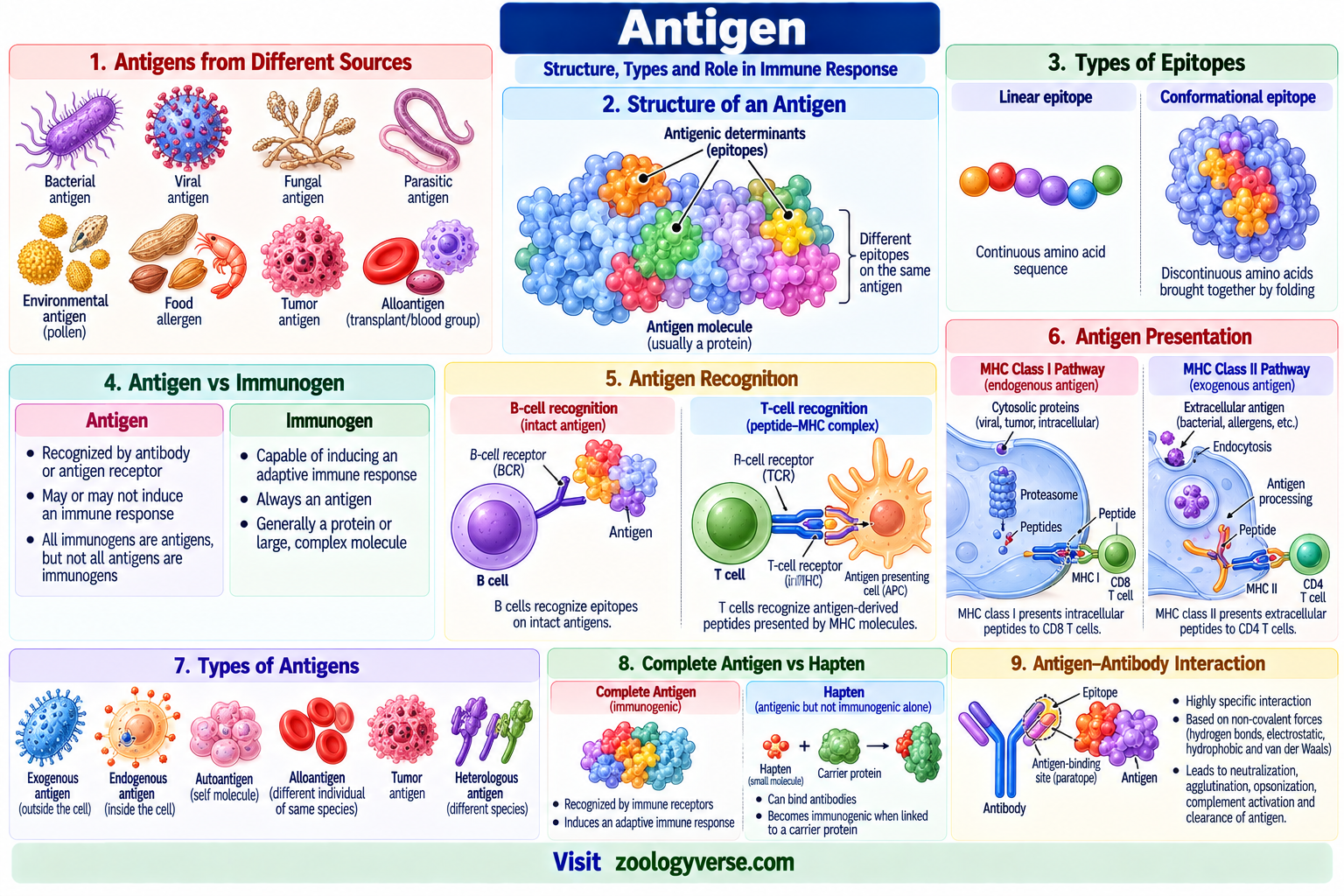
Definition of Antigen
Antigen definition: An antigen is a substance or molecular structure that can specifically bind to an antibody, B-cell receptor, or T-cell receptor. However, the precise type of recognition depends on the receptor involved.
- B-cell receptors and antibodies can recognize specific molecular structures on intact antigens.
- T-cell receptors generally recognize peptide fragments derived from protein antigens when these peptides are presented by MHC molecules.
- The specific portion recognized by an immune receptor is called an epitope.
Therefore, antigen recognition is highly specific but is not identical for B cells and T cells.
Antigen vs Immunogen
The terms antigen and immunogen are related but should not be used as exact synonyms.
An antigen is capable of specific recognition or binding by an immune receptor or antibody.
An immunogen is a substance capable of inducing an adaptive immune response under appropriate conditions.
Thus:
All immunogens are antigens, but not all antigens are necessarily immunogens.
This distinction becomes particularly important with haptens.
A hapten may bind specifically to an antibody and therefore have antigenic properties, but it generally cannot induce a strong antibody response by itself. When attached to an appropriate carrier protein, however, the hapten-carrier complex can become immunogenic.
| Feature | Antigen | Immunogen |
|---|---|---|
| Specific recognition | Yes | Yes |
| Can bind an antibody or immune receptor | Yes | Yes |
| Necessarily induces an adaptive immune response | No | Yes, under appropriate conditions |
| Example | Hapten | Immunogenic protein |
This distinction is one of the most important concepts in basic immunology.
Antigenicity and Immunogenicity
Antigenicity
Antigenicity refers to the ability of a substance to specifically interact with an antibody or antigen receptor.
A molecule with antigenicity contains structures that can be recognized by the immune system.
Immunogenicity
Immunogenicity refers to the ability of a substance to induce an adaptive immune response.
An immunogenic substance can stimulate appropriate lymphocytes and initiate an immune response under suitable conditions.
Difference between antigenicity and immunogenicity
| Antigenicity | Immunogenicity |
|---|---|
| Ability to be specifically recognized or bound | Ability to induce an adaptive immune response |
| Concerns recognition | Concerns induction of response |
| Antigens possess antigenic properties | Immunogens possess immunogenic properties |
| A molecule may be antigenic without being strongly immunogenic | An immunogen is also an antigen |
The distinction is especially useful when explaining why a small molecule such as a hapten may be recognized by antibodies but fail to induce a complete antibody response on its own.
Characteristics of an Effective Antigen
The ability of a substance to act as an antigen or immunogen depends on its molecular and biological properties.
Foreignness
Foreign molecules are generally more likely to be recognized as non-self.
The degree of difference between the molecule and the host’s own molecules can influence the immune response. However, foreignness alone does not guarantee strong immunogenicity.
Molecular Size
In general, larger and more complex molecules are more likely to be strongly immunogenic than very small molecules.
Many small molecules require association with a larger carrier to induce a strong adaptive response.
Chemical Complexity
Molecular complexity can influence immune recognition.
Proteins are particularly important immunogens because they contain diverse structures and can generate peptides capable of presentation to T cells.
Complex polysaccharides can also contain multiple antigenic determinants.
Structural Stability
The physical and chemical properties of an antigen influence how it is processed and recognized.
Stable molecular structures may persist sufficiently for immune recognition, whereas excessively unstable substances may be rapidly degraded.
Accessibility of Epitopes
An immune receptor cannot efficiently recognize a molecular determinant that is physically inaccessible.
The location and three-dimensional arrangement of epitopes therefore influence antigen recognition.
Ability to Be Processed
For conventional T-cell responses, protein antigens generally need to be processed into peptides that can associate with MHC molecules.
Therefore, antigen processing is an important part of T-cell recognition.
Types of Antigens
Antigens can be classified in several ways depending on their origin, location, genetic relationship with the host, or biological nature.
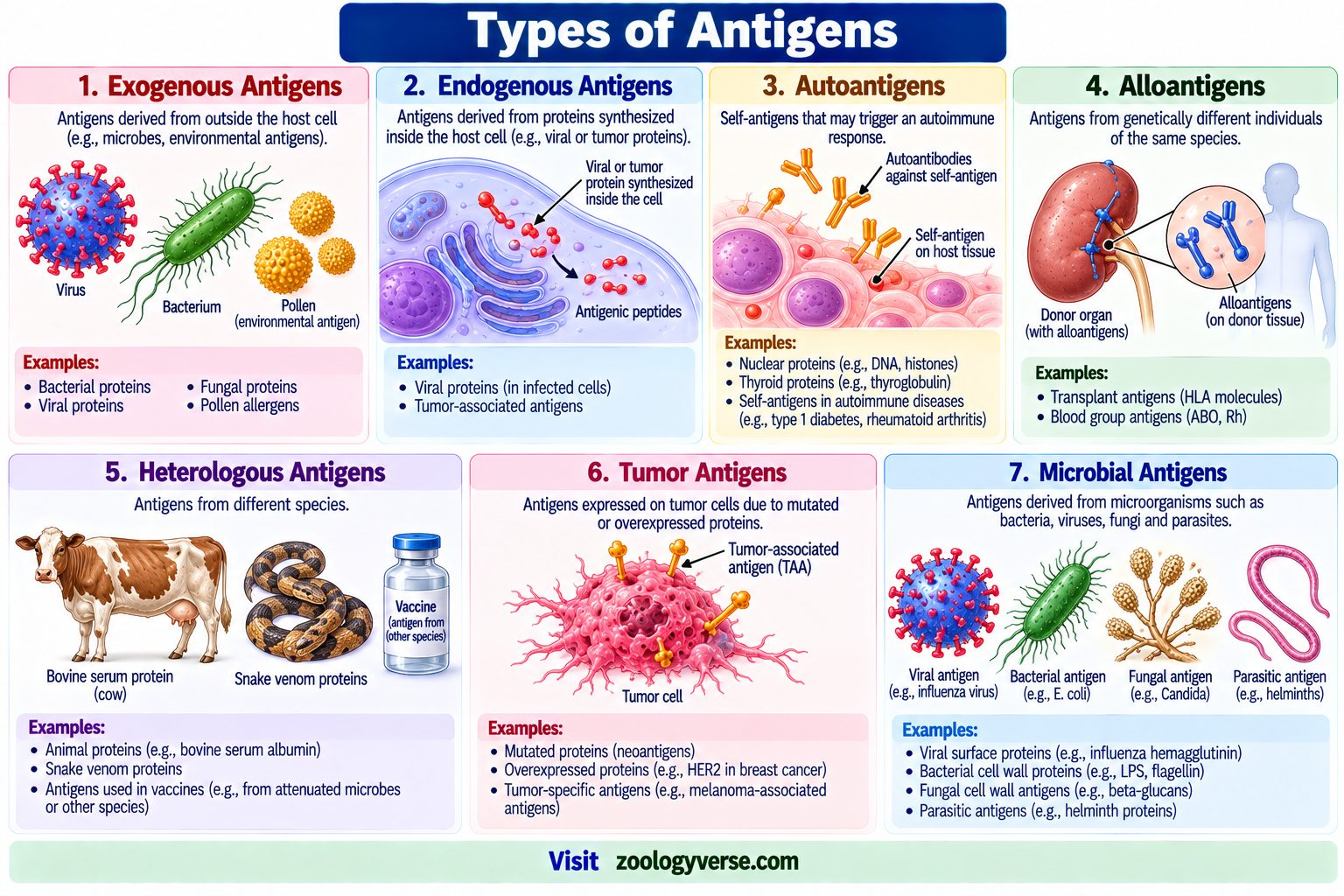
Exogenous Antigens
Exogenous antigens originate outside the cells of the host.
Examples include:
- Bacterial proteins
- Bacterial toxins
- Extracellular microbial products
- Environmental proteins
- Inhaled allergens
- Food-derived proteins
Exogenous proteins may be taken up by antigen-presenting cells and processed for presentation through MHC class II pathways.
Endogenous Antigens
Endogenous antigens arise within host cells.
They may include proteins produced by:
- Viruses replicating inside cells
- Intracellular microorganisms
- Abnormal or mutated cells
- Tumor cells
Protein-derived peptides generated in the cytosol can enter the MHC class I presentation pathway and become recognized by CD8 T cells.
Autoantigens
Autoantigens are the body’s own molecules that can become targets of an autoimmune response.
Under normal conditions, immune tolerance prevents harmful responses against most self-components.
When immune tolerance is disrupted, self molecules may be recognized as targets, contributing to autoimmune disease.
Examples include self proteins targeted in diseases such as systemic autoimmune disorders and organ-specific autoimmune diseases.
Alloantigens
Alloantigens are antigens that differ between individuals of the same species.
They are particularly important in:
- Blood-group incompatibility
- Organ transplantation
- Tissue transplantation
- Transfusion reactions
Differences in major histocompatibility complex molecules are especially important in transplantation immunology.
Heterologous or Heteroantigens
Heterologous antigens are antigenic structures associated with organisms or biological sources different from the host.
They may occur in microorganisms, animal tissues, or other biologically distinct sources.
Tumor Antigens
Tumor antigens are molecules associated with malignant or transformed cells.
They may result from:
- Mutated proteins
- Abnormally expressed proteins
- Overexpressed cellular proteins
- Viral proteins in virus-associated cancers
Tumor-associated antigens can be recognized by components of the immune system and are important in cancer immunology.
Microbial Antigens
Microbial antigens are molecular structures associated with microorganisms.
They may originate from:
- Bacteria
- Viruses
- Fungi
- Protozoa
- Helminths
Microbial antigens stimulate immune recognition and contribute to the development of pathogen-specific immune responses.
Antigenic Determinants and Epitopes
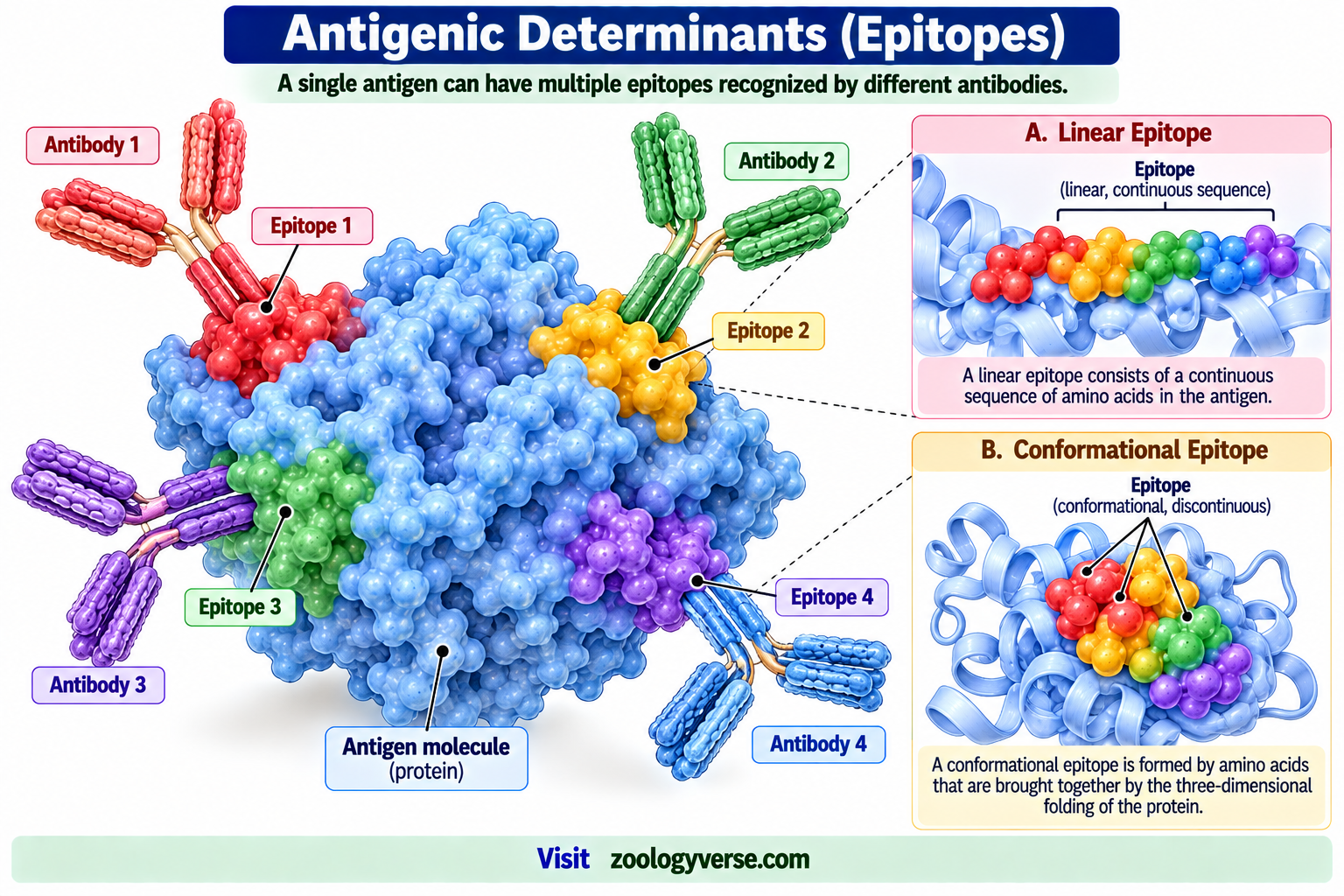
An epitope, also called an antigenic determinant, is the specific part of an antigen recognized by an antibody or antigen receptor.
A single antigen may contain multiple epitopes.
This means that different antibodies can recognize different regions of the same antigen.
B-Cell Epitopes
B-cell receptors and antibodies can recognize epitopes on intact antigens.
These epitopes may be:
- Linear
- Conformational
B-cell recognition may involve proteins, polysaccharides, lipids, or other molecular structures depending on the receptor and antibody.
T-Cell Epitopes
Conventional T cells generally recognize peptide epitopes displayed by MHC molecules.
The T-cell receptor recognizes a combined molecular structure involving:
Peptide + MHC molecule
Therefore, a T-cell epitope is not simply equivalent to the surface structure recognized directly by an antibody.
Linear Epitopes
A linear epitope consists of a continuous sequence of residues in a molecule.
In proteins, the recognized region may correspond to a continuous segment of the amino-acid sequence.
Conformational Epitopes
A conformational epitope is formed by residues that may be separated in the primary sequence but become close together after the protein folds into its three-dimensional structure.
Many antibodies recognize conformational structures on intact proteins.
Therefore, changes in protein folding can affect antibody recognition.
Antigen Recognition
Antigen recognition is a fundamental event in adaptive immunity.
The mechanism differs significantly between B cells and T cells.
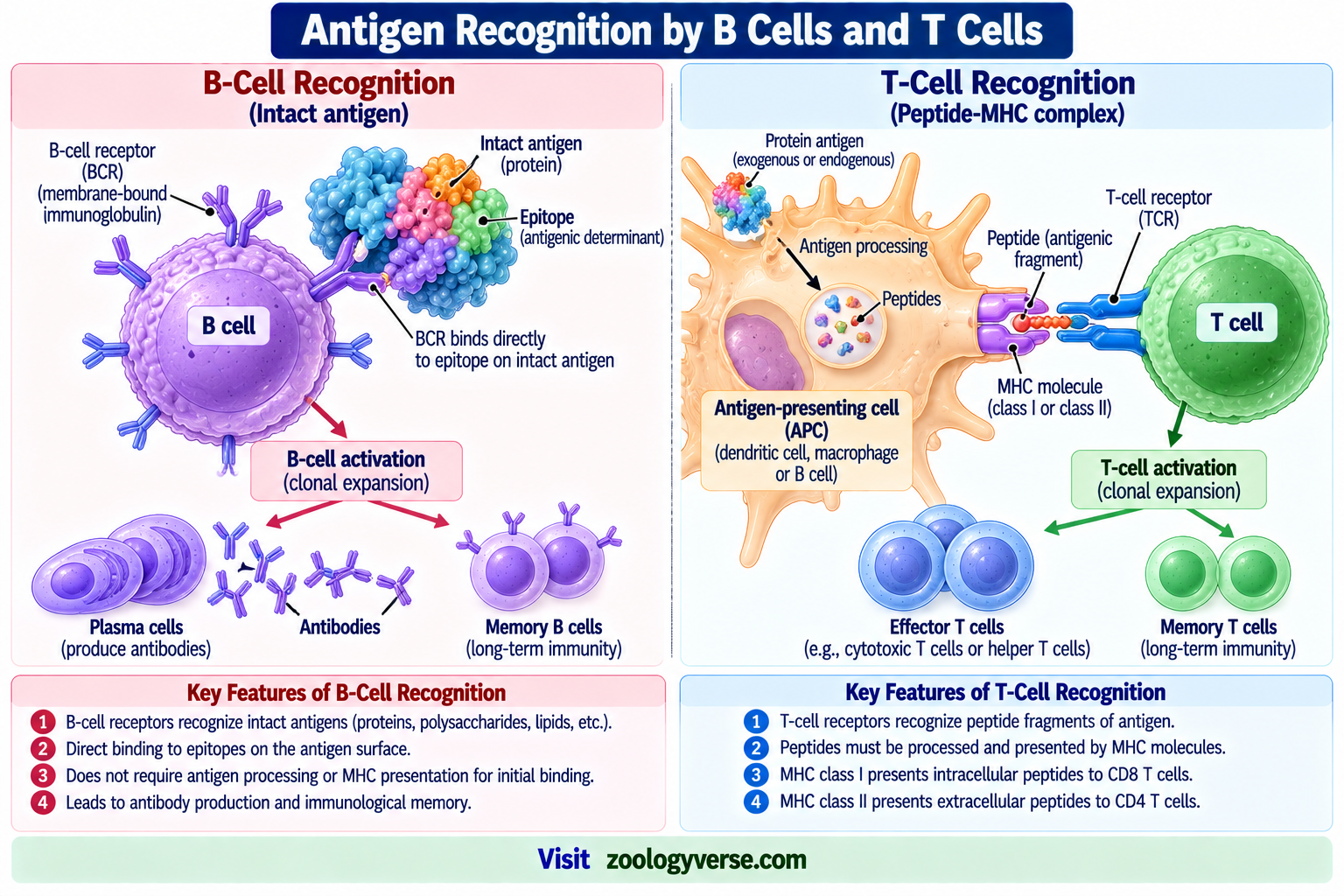
Recognition by B Cells
B cells express B-cell receptors (BCRs) on their surfaces.
The BCR is membrane-bound immunoglobulin capable of recognizing specific molecular structures on an antigen.
After appropriate activation, B cells can differentiate into plasma cells that produce antibodies with the same antigen specificity.
Thus:
BCR → antigen recognition → B-cell activation → plasma cell → antibody production
B-cell recognition does not generally require an antigen to be presented by MHC molecules in order for the BCR to bind the antigen.
Recognition by T Cells
T cells use T-cell receptors (TCRs).
Unlike antibodies and BCRs, conventional TCRs generally do not recognize intact free antigen directly.
Instead, they recognize peptide fragments associated with MHC molecules on cell surfaces.
For example:
Protein antigen → antigen processing → peptide → MHC → TCR recognition
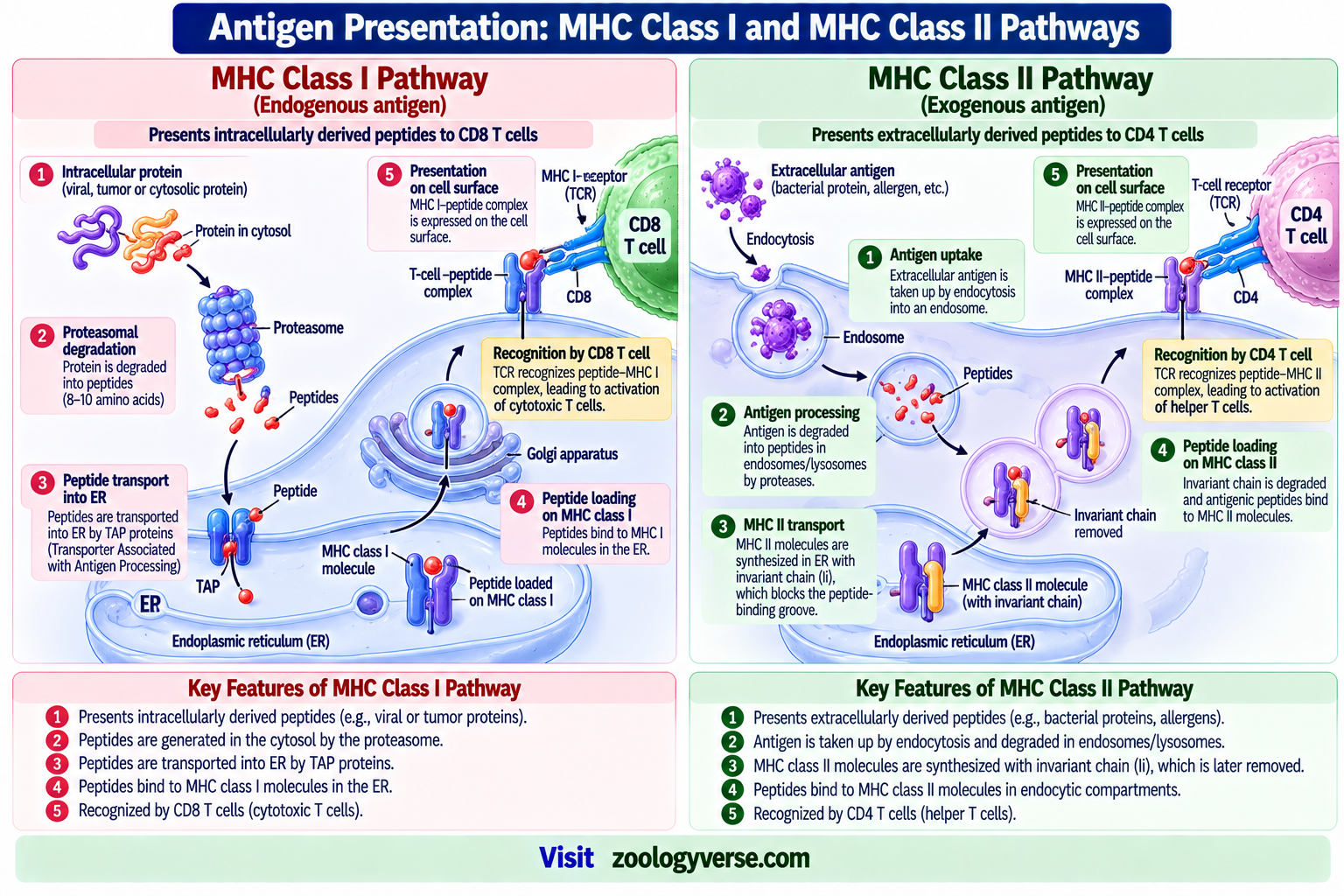
MHC class I molecules generally present peptides derived from proteins processed in the cytosolic pathway to CD8 T cells.
MHC class II molecules generally present peptides derived from proteins processed in endocytic compartments to CD4 T cells.
This distinction is fundamental to understanding adaptive immunity.
Antigen Presentation
Antigen presentation is the process by which antigen-derived peptides are displayed on the surface of cells in association with MHC molecules for recognition by T cells.
Antigen-presenting cells are particularly important in initiating T-cell responses.
Major professional antigen-presenting cells include:
- Dendritic cells
- Macrophages
- B cells
Dendritic cells are especially important for activating naïve T cells.
MHC Class I
MHC class I molecules are expressed by most nucleated cells.
They generally present peptides derived from proteins processed in the cytosol.
The peptide-MHC class I complex is recognized by CD8 cytotoxic T cells.
Simplified pathway:
Intracellular protein → peptide generation → MHC I → CD8 T cell
This pathway is particularly important for detecting cells containing intracellular pathogens such as viruses.
MHC Class II
MHC class II molecules are primarily expressed by professional antigen-presenting cells.
They generally present peptides derived from proteins taken up into endocytic compartments.
The peptide-MHC class II complex is recognized by CD4 helper T cells.
Simplified pathway:
Extracellular antigen → uptake and processing → MHC II → CD4 T cell
Antigen presentation therefore provides an important connection between antigen capture and adaptive immune activation.
For a broader understanding of the cells involved, see our article on Cells of the Immune System.
Antigen-Antibody Interaction
An antigen can interact specifically with an antibody through its epitope and the antibody’s antigen-binding site.
The interaction is generally based on non-covalent forces, including:
- Hydrogen bonds
- Electrostatic interactions
- Hydrophobic interactions
- Van der Waals forces
The antibody does not usually bind randomly to the entire antigen. Instead, it recognizes a particular molecular region.
Antigen-antibody interaction can result in:
- Neutralization
- Agglutination
- Precipitation
- Opsonization
- Complement activation
- Facilitation of antigen removal
The strength and specificity of antigen-antibody binding depend on the structural complementarity between the antigenic epitope and antibody-binding site.
Antigen and Immune Response
Antigens initiate or participate in adaptive immune responses when they are presented in an appropriate immunogenic context.
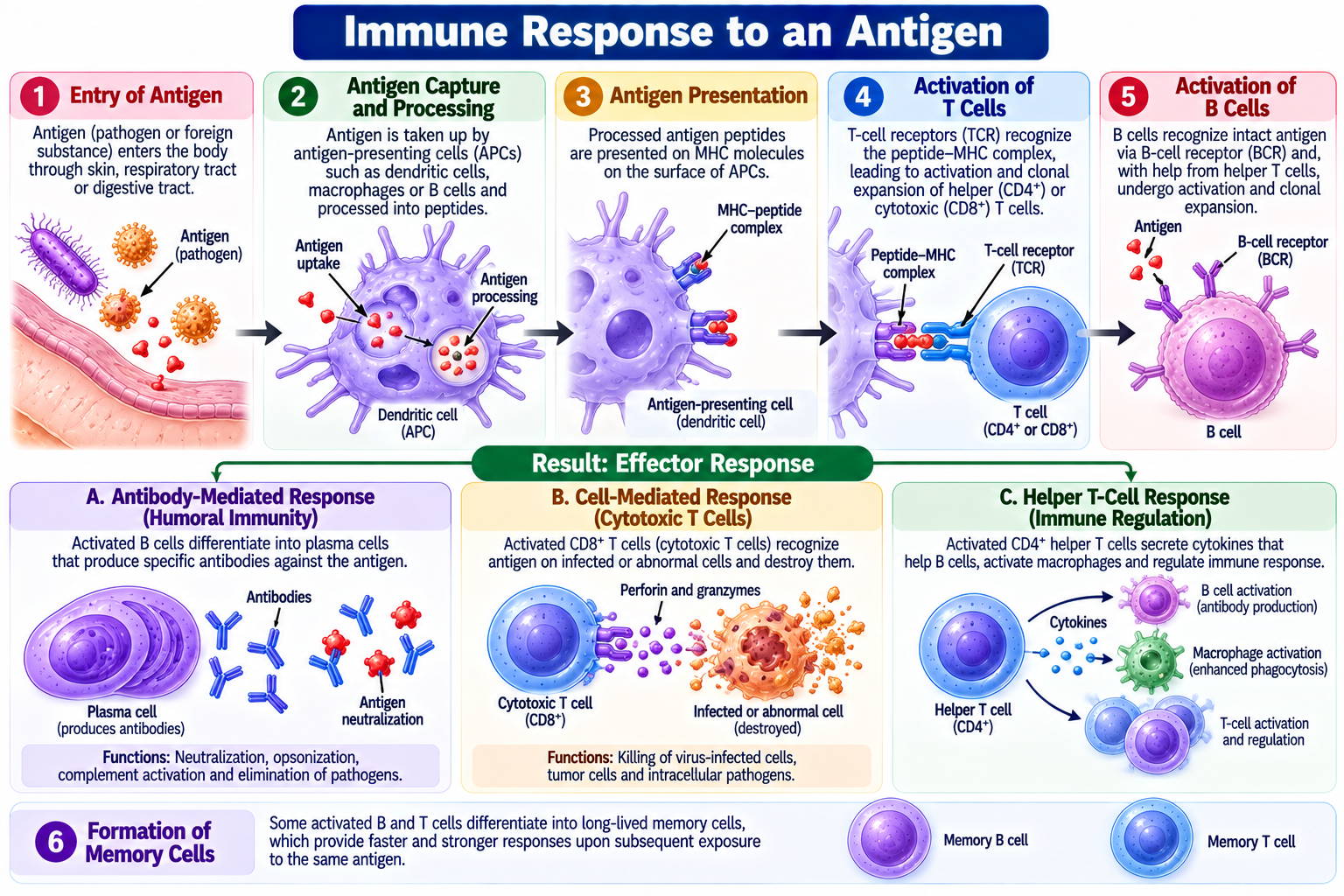
A simplified sequence is:
Antigen entry → antigen capture → processing/presentation or direct BCR recognition → lymphocyte activation → clonal expansion → effector response → memory formation
The exact pathway depends on the type of antigen and the immune response involved.
For example, an extracellular bacterial protein may be recognized by B cells, processed by antigen-presenting cells, presented to CD4 T cells, and ultimately promote antibody production.
An intracellular viral protein may generate peptides presented by MHC class I molecules, allowing recognition by CD8 T cells.
The relationship between antigen recognition and the wider immune response is easier to understand when studied alongside Innate Immunity vs Adaptive Immunity.
Factors Affecting Immunogenicity
Several factors influence whether an antigen will induce a strong adaptive immune response.
Important factors include:
- Molecular size
- Chemical complexity
- Degree of foreignness
- Structural properties
- Epitope accessibility
- Dose
- Route of exposure
- Antigen processing
- Presence of innate immune activation
- Host genetic factors
- Age and physiological condition
- Previous exposure to the antigen
The route and form in which an antigen enters the body can substantially influence the resulting immune response.
The immune system therefore does not respond to an antigen based only on its molecular identity. The surrounding biological context is also important.
Complete Antigen vs Hapten
A complete antigen can both:
- Be specifically recognized by immune receptors or antibodies, and
- Act as an immunogen under appropriate conditions.
A hapten is a small molecule that can be specifically recognized but generally cannot induce a complete adaptive immune response by itself.
When a hapten is chemically linked to an appropriate carrier protein, the resulting complex can become immunogenic.
Hapten-carrier concept
Hapten + carrier protein → immunogenic complex → adaptive immune response
This concept is important in understanding antibody production against small chemical molecules.
Examples of hapten-like substances include certain small chemical groups and some drug-related molecules.
The hapten concept demonstrates why antigenicity and immunogenicity are not identical properties.
Antigen vs Antibody
Antigens and antibodies have opposite but complementary roles in immune recognition.
| Feature | Antigen | Antibody |
|---|---|---|
| Basic nature | Recognized molecular structure/substance | Immunoglobulin protein |
| Role | Target of immune recognition | Molecule that recognizes antigen |
| Produced by | May originate from pathogens, altered cells, environment or self | Produced by plasma cells |
| Specificity | Contains specific epitopes | Contains antigen-binding sites |
| Main interaction | Provides target | Binds target |
| Example | Viral surface protein | Antibody against that viral protein |
The interaction between an antigen and antibody is highly specific but may show cross-reactivity when structurally related epitopes are recognized.
Antigen vs Immunogen vs Hapten
| Feature | Antigen | Immunogen | Hapten |
|---|---|---|---|
| Can be specifically recognized | Yes | Yes | Yes |
| Can bind antibody | Yes | Yes | Yes |
| Can induce adaptive response by itself | Not necessarily | Yes, under appropriate conditions | Generally no |
| Usually requires carrier | No | No | Yes, to become strongly immunogenic |
| Typical example | Microbial antigen | Immunogenic protein | Small chemical molecule |
Examples of Common Antigens
Examples of antigens include:
Bacterial antigens
- Surface proteins
- Capsule components
- Flagellar proteins
- Bacterial toxins
Viral antigens
- Viral envelope proteins
- Capsid proteins
- Virus-derived intracellular proteins
Parasitic antigens
- Surface molecules
- Secreted proteins
- Metabolic products
Fungal antigens
- Cell-wall components
- Secreted proteins
- Surface molecules
Environmental antigens
- Pollen proteins
- Dust-mite proteins
- Animal-derived proteins
Self-antigens
- Normal host proteins that become targets during autoimmune reactions
Tumor-associated antigens
- Mutated proteins
- Abnormally expressed proteins
- Certain viral proteins in virus-associated tumors
These examples demonstrate that antigens can originate from many different biological and environmental sources.
Importance of Antigens in Immunology
Antigens are fundamental to almost every major area of adaptive immunology.
- Antigen Recognition: Antigens provide the molecular targets recognized by B-cell and T-cell receptors.
- Antibody Production: Antigens stimulate antigen-specific B-cell responses that can result in plasma-cell differentiation and antibody production.
- T-Cell Activation: Processed antigen-derived peptides presented by MHC molecules are essential for conventional T-cell recognition.
- Vaccination: Vaccines expose the immune system to antigenic material in a form designed to generate protective adaptive immunity and immunological memory.
- Diagnosis: Antigen detection is used in many laboratory and clinical tests.Examples include assays designed to detect microbial or disease-associated antigens.
- Transplantation: Alloantigens contribute to recognition of genetically different tissues and are important in transplantation.
- Autoimmunity: Self-antigens can become targets when immune tolerance fails.
- Allergy and Hypersensitivity: Environmental antigens can participate in allergic and hypersensitivity reactions.
- Cancer Immunology: Tumor-associated and tumor-specific antigens can become targets of immune surveillance and immunotherapy. Thus, the concept of antigen connects basic immune recognition with many applied areas of immunology.
What is an antigen?
What is an antigenic determinant?
What is the difference between antigen and immunogen?
Are all antigens immunogens?
What is a hapten?
How do B cells recognize antigens?
How do T cells recognize antigens?
What is an epitope?
What are MHC class I and MHC class II?
Why are antigens important?
Key Takeaways
- An antigen is specifically recognized by an antibody or antigen receptor.
- The specific region recognized is called an epitope or antigenic determinant.
- Antigenicity refers to specific recognition.
- Immunogenicity refers to the ability to induce an adaptive immune response.
- An immunogen is an antigen capable of inducing an adaptive immune response.
- Not every antigen is necessarily a complete immunogen.
- Haptens are small antigenic molecules that generally require a carrier to become immunogenic.
- B cells recognize antigen through the B-cell receptor (BCR).
- Conventional T cells recognize peptide-MHC complexes through the T-cell receptor (TCR).
- MHC class I generally presents intracellularly derived peptides to CD8 T cells.
- MHC class II generally presents peptides from endocytic pathways to CD4 T cells.
- Antigen-presenting cells include dendritic cells, macrophages and B cells.
- A single antigen may contain multiple epitopes.
- Epitopes may be linear or conformational.
- Antigens are important in infection, vaccination, transplantation, autoimmunity, allergy and cancer immunology.
Conclusion
An antigen is a central concept in immunology because it provides the molecular target through which adaptive immune recognition occurs. Antigens may originate from microorganisms, environmental substances, altered host cells, transplanted tissues, or the host itself.
The most important distinction is between antigenicity and immunogenicity. Antigenicity refers to specific recognition, whereas immunogenicity refers to the ability to induce an adaptive immune response. Haptens demonstrate this distinction particularly well because they can be antigenic without being sufficiently immunogenic on their own.
Antigen recognition also differs between lymphocyte populations. B cells can recognize structures on intact antigens through their B-cell receptors, while conventional T cells generally recognize antigen-derived peptides presented by MHC molecules.
Understanding antigens therefore provides the foundation for studying antibodies, antigen presentation, immune responses, vaccines, hypersensitivity, autoimmunity and immunological techniques.
References
- Janeway CA Jr, Travers P, Walport M, Shlomchik MJ. Immunobiology: The Immune System in Health and Disease.
- Immunobiology.
- Antigen Recognition by B-cell and T-cell Receptors.
- Antigen Presentation to T Lymphocytes.
- The Interaction of the Antibody Molecule with Specific Antigen.
- Haptens.
Discover more from Zoologyverse
Subscribe to get the latest posts sent to your email.