
1. Overview of the Estrous Cycle
The reproductive process in female mammals is regulated by a series of cyclic physiological and hormonal changes that prepare the reproductive system for fertilisation and pregnancy. One of the important reproductive patterns observed in mammals is the Estrous Cycle in Mammals, which involves regular changes in the ovaries, uterus and reproductive behaviour.
The Estrous Cycle in Mammals is closely associated with ovarian follicular development, ovulation and the formation and regression of the corpus luteum. These events are controlled by reproductive hormones secreted by the hypothalamus, pituitary gland and ovaries. The coordinated activity of these organs ensures that female animals become reproductively receptive at suitable stages of the cycle.
Unlike humans and some other primates, which generally experience a menstrual cycle, most non-primate female mammals undergo an estrous cycle. During this cycle, females usually show a period of sexual receptivity known as estrus or heat. This is the stage when mating is most likely to occur.
The duration and pattern of the Estrous Cycle in Mammals vary considerably among animal species. For example, the estrous cycle of a cow lasts approximately 21 days, while that of a sheep is around 17 days. Dogs generally have a much longer reproductive cycle, and rodents such as rats have relatively short cycles.
The Estrous Cycle in Mammals is not limited to changes in reproductive organs. It also involves behavioural modifications, including increased sexual receptivity, changes in activity and the release of chemical signals that may attract males. These responses are influenced by fluctuations in ovarian hormones, particularly oestrogen and progesterone.
The study of the Estrous Cycle in Mammals is important in zoology, reproductive physiology, veterinary science and animal husbandry. Understanding its stages helps explain reproductive timing, mating behaviour, ovulation and fertility. It also provides a scientific basis for managing breeding programmes in domestic and economically important animals.
The following sections examine the definition, major phases, hormonal regulation and species-specific variations of the estrous cycle.
2. Definition and General Characteristics
The Estrous Cycle in Mammals is defined as the recurring series of reproductive, physiological and behavioural changes in the reproductive system of non-primate female mammals. These changes occur between successive periods of sexual receptivity and prepare the female body for ovulation, fertilisation and possible pregnancy.
The term oestrus refers to the period during which a female becomes sexually receptive and generally allows mating. It is commonly called the heat period. The complete reproductive cycle includes several stages, each characterised by specific hormonal and structural changes in the ovaries and reproductive tract.
General Characteristics
The major characteristics of the Estrous Cycle in Mammals are described below:
- Cyclic reproductive changes: The reproductive organs undergo repeated changes involving ovarian follicular development, ovulation and corpus luteum formation. These events occur in a species-specific pattern.
- Period of sexual receptivity: Females generally show sexual receptivity during estrus. This period is associated with increased oestrogen secretion and behavioural changes that facilitate mating.
- Hormonal regulation: The cycle is controlled by interactions among the hypothalamus, anterior pituitary gland and ovaries. Important hormones include gonadotropin-releasing hormone (GnRH), follicle-stimulating hormone (FSH), luteinising hormone (LH), oestrogen and progesterone.
- Ovarian activity: Developing ovarian follicles produce oestrogen, while the corpus luteum secretes progesterone after ovulation. These hormones regulate changes in the reproductive tract and influence subsequent reproductive events.
- Species-specific duration: The length of the Estrous Cycle in Mammals differs among species. Cattle generally have a cycle of about 21 days, sheep approximately 17 days, and rats around 4–5 days.
- Absence of regular menstrual bleeding: Unlike the menstrual cycle, the Estrous Cycle in Mammals generally does not involve the regular shedding of the uterine lining with visible menstrual bleeding. Uterine changes are mainly associated with preparation for pregnancy and subsequent tissue remodelling.
- Seasonal and environmental influences: In some mammals, reproductive activity is influenced by photoperiod, temperature, nutrition and environmental conditions. This may result in seasonal breeding or periods of reproductive inactivity.
The Estrous Cycle in Mammals therefore represents a coordinated reproductive rhythm involving hormonal secretion, ovarian development, uterine preparation and changes in sexual behaviour. Its specific characteristics differ according to the reproductive biology of each species.
3. Difference Between Estrous and Menstrual Cycles
The estrous cycle and menstrual cycle are two reproductive patterns found in female mammals. Both involve periodic hormonal changes, ovarian activity and preparation of the uterus for possible pregnancy. However, they differ in the way the uterine lining changes, the timing of sexual receptivity and the reproductive events occurring during each cycle.
The Estrous Cycle in Mammals is commonly observed in non-primate mammals, whereas the menstrual cycle occurs in humans and certain other primates. Understanding these differences is important for studying comparative reproductive physiology.
3.1 Major Differences Between Estrous and Menstrual Cycles
| Basis of comparison | Estrous cycle | Menstrual cycle |
|---|---|---|
| Occurrence | Common in most non-primate female mammals | Common in humans and certain other primates |
| Sexual receptivity | Usually restricted mainly to the estrus period | Not restricted to a particular phase of the cycle |
| Uterine changes | Endometrium undergoes changes associated with preparation for pregnancy and subsequent remodelling | Endometrium develops and is shed during menstruation if pregnancy does not occur |
| Shedding of endometrium | Usually reabsorbed or remodelled rather than regularly shed as menstrual bleeding | Regular shedding occurs during menstruation when pregnancy does not occur |
| Visible bleeding | Generally absent as a regular menstrual event, although bleeding may occur in some species | Menstrual bleeding is a characteristic feature |
| Reproductive terminology | The sexually receptive period is called estrus or heat | The cycle includes menstrual, proliferative and secretory phases |
| Ovulation | May be spontaneous or induced, depending on the species | Generally spontaneous |
| Hormonal regulation | Mainly regulated by GnRH, FSH, LH, oestrogen and progesterone | Regulated by the same major reproductive hormones |
| Reproductive behaviour | Sexual receptivity is commonly associated with estrus | Sexual receptivity may occur throughout the cycle |
| Examples | Cows, sheep, goats, dogs and rats | Humans, chimpanzees and other selected primates |
3.2 Differences in Sexual Receptivity
In the Estrous Cycle in Mammals, sexual receptivity is generally concentrated around estrus, when the female is physiologically prepared for mating. Rising oestrogen levels during follicular development contribute to the behavioural and physiological changes associated with this stage.
In contrast, females experiencing a menstrual cycle are not normally restricted to a specific period of sexual receptivity. Sexual activity can occur during different phases of the cycle.
3.3 Differences in Uterine Changes
A major distinction between the two reproductive patterns involves the fate of the uterine endometrium.
During the menstrual cycle, the functional layer of the endometrium is shed when pregnancy does not occur, producing menstrual bleeding. In most mammals with an estrous cycle, the endometrium is remodelled or reabsorbed rather than undergoing regular menstrual shedding.
3.4 Similarities Between the Two Cycles
Despite their differences, both reproductive patterns share several important features:
- Both involve periodic changes in ovarian activity.
- Follicular development and ovulation are important reproductive events.
- Oestrogen and progesterone regulate changes in the reproductive tract.
- The hypothalamus and pituitary gland coordinate hormonal secretion.
- The uterus undergoes changes that prepare it for possible implantation and pregnancy.
The Estrous Cycle in Mammals and the menstrual cycle therefore represent different reproductive adaptations based on a broadly similar hormonal system. Their comparison helps explain the diversity of reproductive strategies among mammals.
4. Phases of the Estrous Cycle
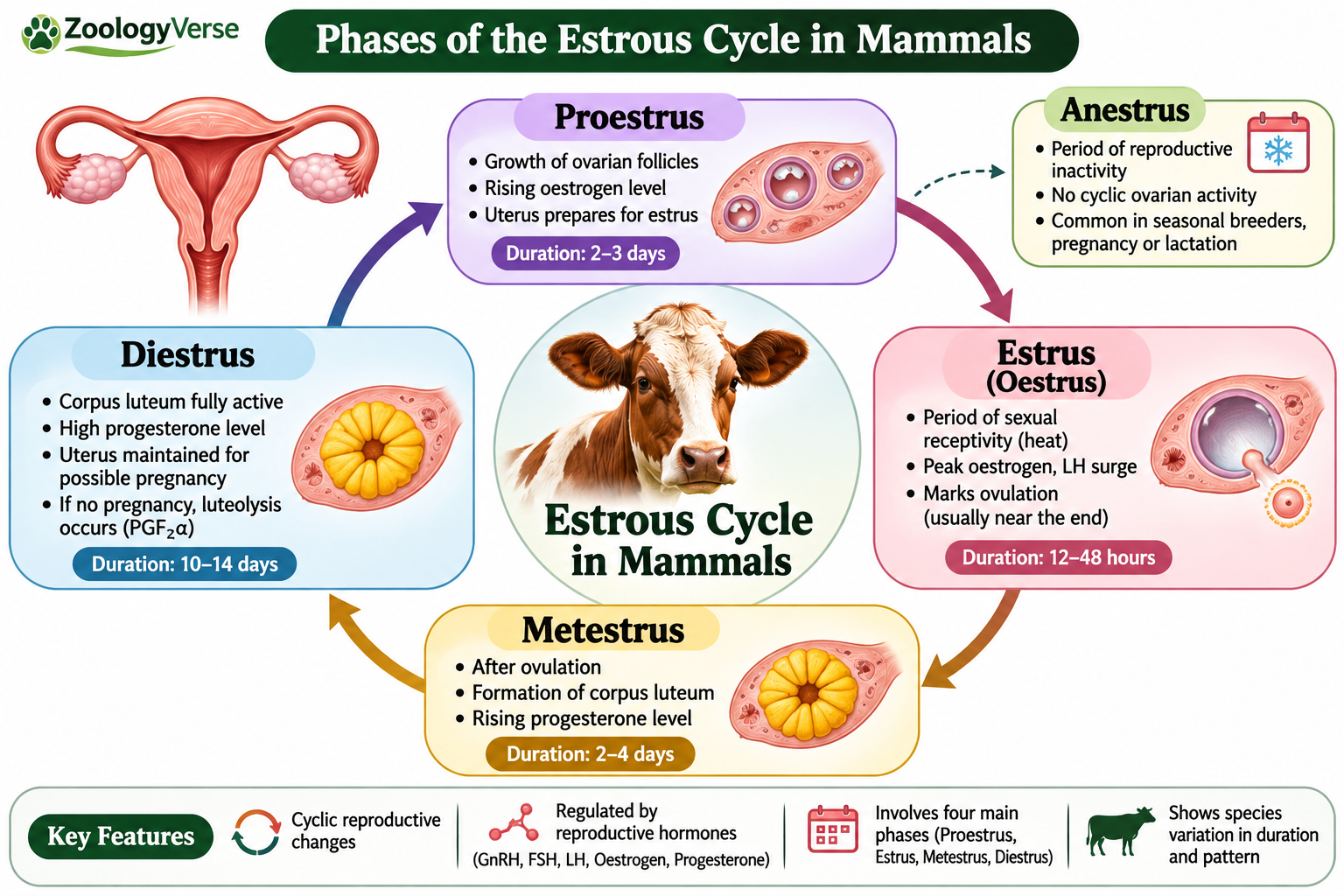
The Estrous Cycle in Mammals is divided into recurring stages based on ovarian activity, hormonal secretion and changes in the reproductive tract. The four commonly recognised phases are proestrus, estrus, metestrus and diestrus. Some species also experience an extended period of reproductive inactivity called anestrus. The duration and characteristics of these stages vary among mammals.
4.1 Proestrus
Proestrus is the preparatory stage that occurs before sexual receptivity. During this phase, ovarian follicles grow and develop under the influence of follicle-stimulating hormone (FSH). The developing follicles secrete increasing amounts of oestrogen.
In the Estrous Cycle in Mammals, rising oestrogen levels stimulate changes in the reproductive tract, including increased blood supply and growth of the uterine lining. Females may show early behavioural changes, but full sexual receptivity has generally not yet developed. This stage prepares the female reproductive system for the upcoming estrus.
4.2 Estrus
Estrus is the period of sexual receptivity, commonly known as heat. It is a major stage of the Estrous Cycle in Mammals, during which the female usually accepts the male for mating.
High oestrogen concentrations produced by mature ovarian follicles contribute to the behavioural signs of heat. In many species, the oestrogen rise also helps trigger the preovulatory surge of luteinising hormone (LH), which leads to ovulation. The timing of ovulation in relation to estrus differs among species.
4.3 Metestrus
Metestrus follows estrus and is associated with the development of the corpus luteum from the ruptured ovarian follicle. This structure begins secreting progesterone, which prepares and maintains the uterine environment for possible pregnancy.
During this phase of the Estrous Cycle in Mammals, oestrogen levels generally decline while progesterone secretion increases. The female usually becomes less receptive to mating. The developing corpus luteum becomes an important source of progesterone during the subsequent stage.
4.4 Diestrus
Diestrus is the period of active corpus luteum function. Progesterone is the dominant ovarian hormone during this stage. It supports the uterine lining and reduces the likelihood of another ovulation during the same cycle.
If fertilisation and pregnancy do not occur, the corpus luteum regresses in many species. Progesterone levels then fall, allowing a new cycle to begin. In the Estrous Cycle in Mammals, the duration of diestrus depends on the species and its reproductive physiology.
4.5 Anestrus
Anestrus is a period of reproductive inactivity in which ovarian cyclic activity is greatly reduced or temporarily absent. It may occur seasonally, during pregnancy, lactation or under particular environmental and physiological conditions.
Anestrus is especially important in seasonal breeders, such as sheep and goats, whose reproductive activity is influenced by changes in day length. It is not necessarily considered a phase of every individual cycle, but rather an interval between periods of cyclic activity.
The sequence and duration of these phases form the basic pattern of the Estrous Cycle in Mammals. Their precise timing differs across species, and some animals show variations in the expression or duration of individual stages.
5.1 Role of the Hypothalamus and GnRH
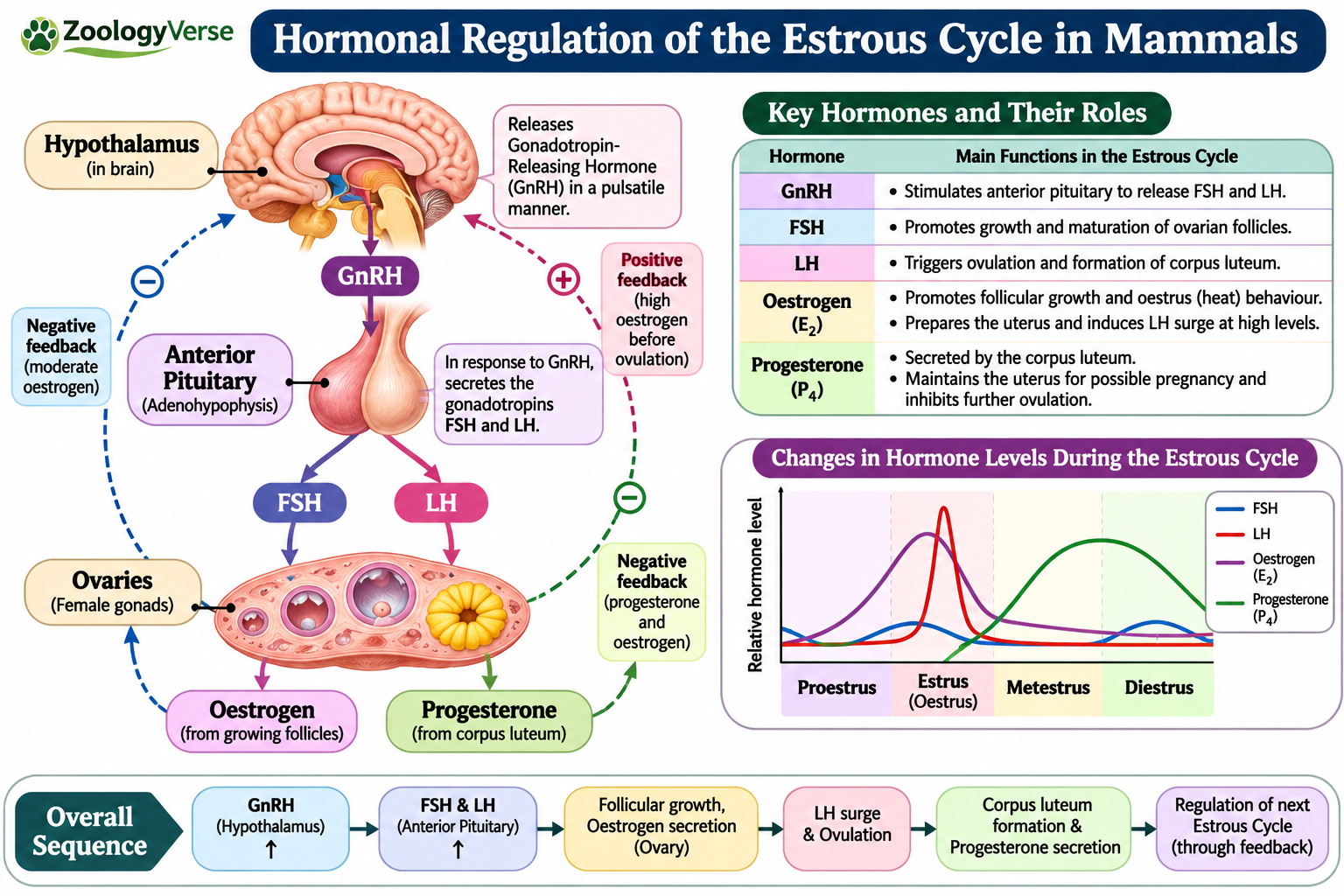
The hypothalamus initiates hormonal regulation by releasing gonadotropin-releasing hormone (GnRH) in a pulsatile manner. GnRH reaches the anterior pituitary through the hypophyseal portal blood system and stimulates the secretion of FSH and LH.
In the Estrous Cycle in Mammals, the frequency and amplitude of GnRH pulses influence gonadotropin secretion. These changes help regulate follicular growth and ovarian activity.
5.2 Role of Follicle-Stimulating Hormone (FSH)
During the Estrous Cycle in Mammals, FSH is secreted by the anterior pituitary gland and promotes the growth and development of ovarian follicles. It supports the proliferation of granulosa cells and stimulates the production of oestrogen by developing follicles.
As follicles mature, they release oestrogen and inhibin. Inhibin selectively reduces FSH secretion, helping regulate the number of follicles that continue developing. This feedback contributes to the orderly progression of the reproductive cycle.
5.3 Role of Luteinising Hormone (LH)
In the Estrous Cycle in Mammals, LH is another gonadotropin released by the anterior pituitary gland. It supports ovarian steroid production and plays a central role in triggering ovulation.
When oestrogen levels remain sufficiently high before ovulation, positive feedback stimulates a surge of LH. This surge causes the mature follicle to rupture and release the oocyte. After ovulation, LH also supports the formation and function of the corpus luteum.
5.4 Role of Oestrogen
During the Estrous Cycle in Mammals, oestrogen is mainly secreted by developing ovarian follicles. Its concentration increases during the follicular phase and contributes to the growth of the reproductive tract, development of the uterine lining and expression of sexual receptivity.
At moderate concentrations, oestrogen generally exerts negative feedback on the hypothalamus and pituitary. However, sustained high concentrations before ovulation produce positive feedback, leading to the LH surge. This change is essential for normal progression of the cycle.
5.5 Role of Progesterone
During the Estrous Cycle in Mammals, progesterone is primarily secreted by the corpus luteum after ovulation. It prepares the uterus for possible pregnancy, supports the endometrium and reduces uterine contractility in many mammals.
Progesterone usually exerts negative feedback on GnRH and gonadotropin secretion. If pregnancy does not occur, the corpus luteum regresses in response to species-specific luteolytic signals, commonly involving prostaglandin F2 alpha (PGF2α) from the uterus in many domestic mammals. Progesterone levels then decline, allowing a new cycle to begin.
5.6 Feedback Mechanisms
Hormonal regulation depends on both negative and positive feedback. Negative feedback by oestrogen, progesterone and inhibin helps prevent excessive hormone secretion and coordinates follicular development. Positive feedback occurs when sustained high oestrogen levels stimulate the preovulatory LH surge.
The balance between these feedback mechanisms controls the timing of ovulation and the transition between ovarian phases. Therefore, the Estrous Cycle in Mammals depends on precise hormonal communication between the brain, pituitary gland and ovaries.
The relative importance and timing of individual hormones vary among species. For example, the duration of follicular and luteal activity differs between cattle, sheep, dogs and rodents. Despite these differences, the HPO axis provides the fundamental framework for hormonal control of mammalian reproduction.
6. Ovarian Changes During the Estrous Cycle
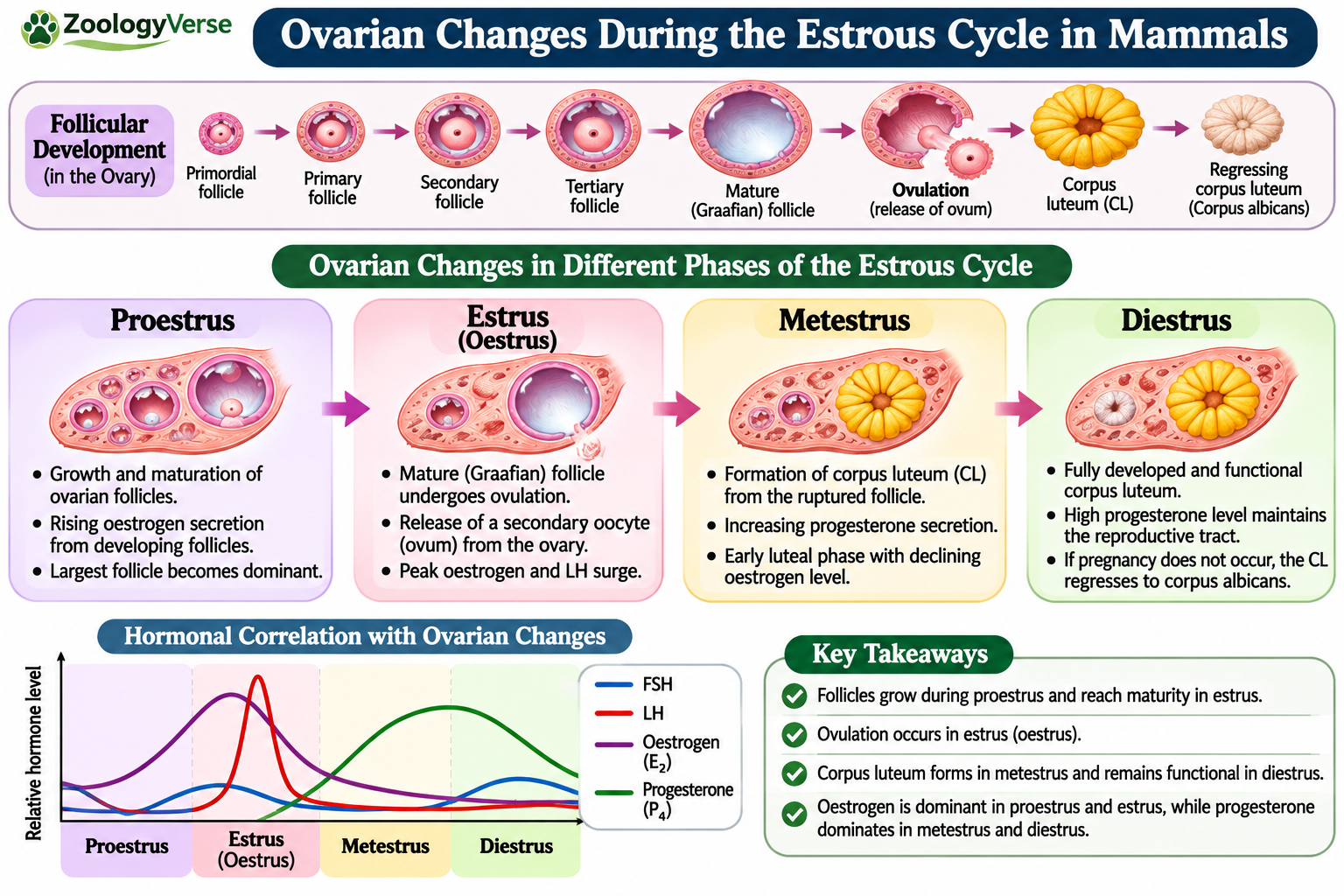
The ovaries undergo a sequence of structural and functional changes during the Estrous Cycle in Mammals. These changes include the growth and maturation of ovarian follicles, release of the oocyte during ovulation, formation of the corpus luteum and its eventual regression when pregnancy does not occur.
These ovarian events are closely controlled by FSH, LH, oestrogen and progesterone. The stages of follicular and luteal development are coordinated with the phases of the reproductive cycle.
6.1 Follicular Development
Follicular development is an important event in the Estrous Cycle in Mammals. Under the influence of FSH, a group of ovarian follicles begins to grow. Each developing follicle contains an immature oocyte surrounded by follicular cells.
During follicular growth, the granulosa cells multiply and the theca layers develop around the follicle. The granulosa cells produce oestrogen, which contributes to the growth of the reproductive tract and the development of sexual receptivity.
As development continues, one or more follicles may become dominant, depending on the species. The mature follicle contains the oocyte and is prepared for ovulation.
6.2 Ovulation
Ovulation is the process by which a mature ovarian follicle ruptures and releases an oocyte. It is generally triggered by a preovulatory surge of LH from the anterior pituitary gland.
In the Estrous Cycle in Mammals, the timing of ovulation varies among species. In cattle and sheep, ovulation generally occurs after the onset of estrus, whereas in some other mammals it occurs at a different point in relation to sexual receptivity.
After release, the oocyte is collected by the infundibulum of the oviduct, where fertilisation may occur if viable sperm are present.
6.3 Formation of the Corpus Luteum
Following ovulation, the ruptured follicle undergoes structural and cellular changes known as luteinisation. The remaining follicular cells transform into luteal cells, forming a temporary endocrine structure called the corpus luteum.
The corpus luteum secretes progesterone, which prepares the uterine lining for possible implantation and helps maintain conditions suitable for early pregnancy. Its development marks the beginning of the luteal phase of the Estrous Cycle in Mammals.
6.4 Function of the Corpus Luteum
The corpus luteum is essential for maintaining progesterone secretion after ovulation. This hormone suppresses further follicular development and supports the reproductive tract during the period when pregnancy may become established.
If fertilisation and pregnancy occur, the corpus luteum is maintained for a species-dependent period or throughout pregnancy in certain mammals. If pregnancy does not occur, it eventually undergoes regression.
6.5 Regression of the Corpus Luteum
When pregnancy does not occur, the corpus luteum loses its functional activity through a process called luteolysis. In many domestic mammals, prostaglandin F2 alpha (PGF2α), released mainly by the uterus, plays an important role in initiating this regression.
As the corpus luteum regresses, progesterone secretion decreases. This reduction removes the inhibitory influence on the reproductive axis and allows new ovarian follicles to develop.
6.6 Summary of Ovarian Changes
| Stage | Major ovarian event | Important hormonal influence |
|---|---|---|
| Follicular development | Growth and maturation of follicles | FSH and LH |
| Ovulation | Rupture of mature follicle and release of oocyte | LH surge |
| Luteinisation | Transformation of follicular cells into luteal cells | LH |
| Luteal activity | Progesterone secretion by corpus luteum | LH and other species-dependent luteotropic signals |
| Luteolysis | Regression of corpus luteum | PGF2α in many domestic mammals |
The sequence of follicular development, ovulation and luteal activity forms the ovarian basis of the Estrous Cycle in Mammals. These changes ensure that an oocyte is released and the reproductive tract is hormonally prepared for possible fertilisation and pregnancy.
7. Uterine Changes During the Estrous Cycle
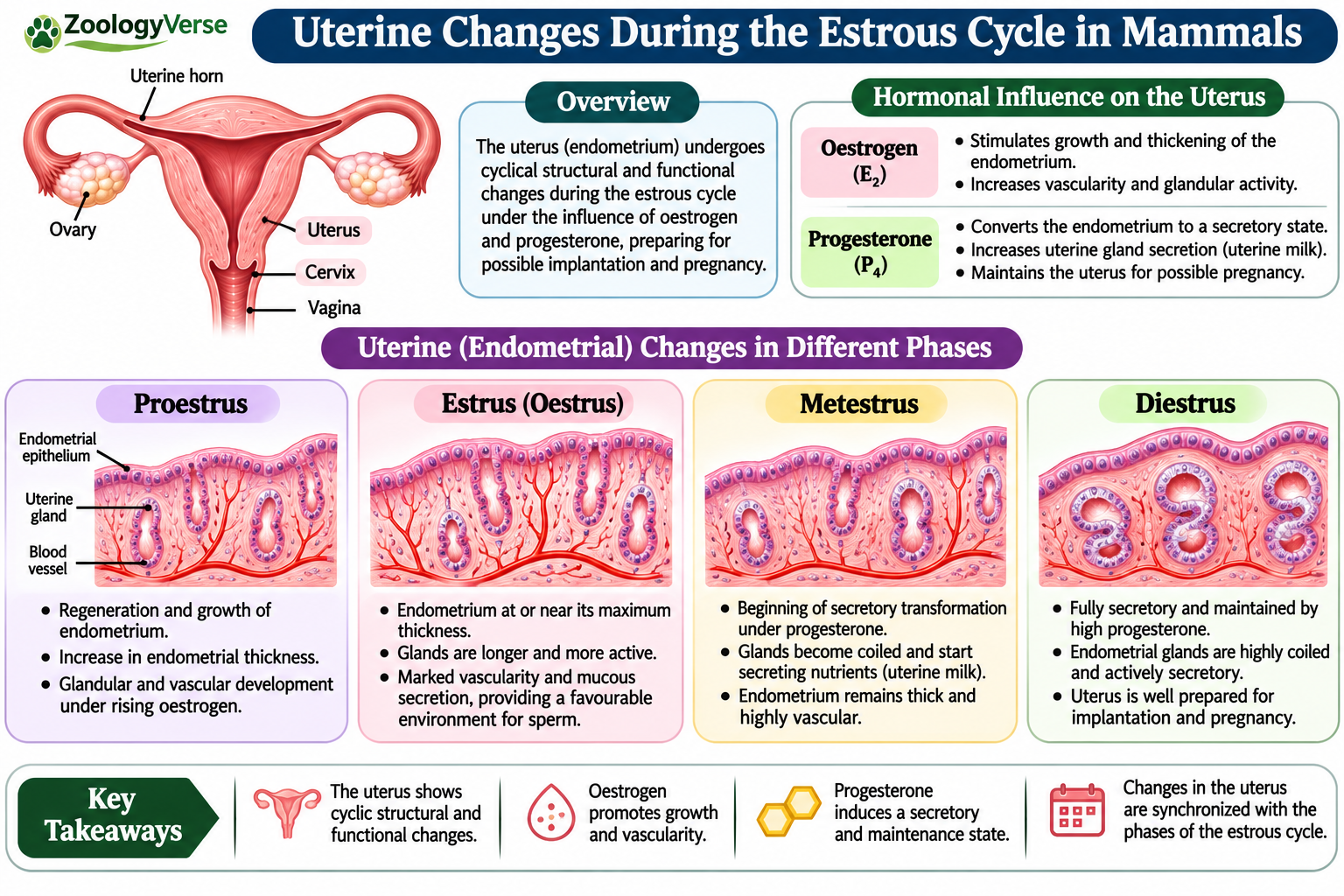
The uterus undergoes several structural and functional changes during the Estrous Cycle in Mammals. These changes prepare the uterine environment for the possible arrival of a fertilised egg and support early embryonic development.
The uterine lining, known as the endometrium, responds mainly to fluctuations in oestrogen and progesterone. The changes in its thickness, glandular activity, blood supply and muscular activity are coordinated with ovarian events.
7.1 Uterine Changes During Proestrus
During proestrus, developing ovarian follicles secrete increasing amounts of oestrogen. This hormone stimulates the growth and development of the endometrium.
The uterine lining becomes thicker, its blood supply increases, and the uterine glands begin developing greater secretory activity. These changes prepare the uterus for the possibility of fertilisation and subsequent embryo development.
7.2 Uterine Changes During Estrus
During estrus, oestrogen levels are generally high because of the activity of mature ovarian follicles. The endometrium remains under oestrogenic influence, and the reproductive tract shows changes that facilitate mating and the movement of sperm.
In the Estrous Cycle in Mammals, the condition of the uterus during estrus varies among species. Cervical secretions may become more abundant and less viscous, helping sperm pass through the reproductive tract.
7.3 Uterine Changes During Metestrus
Metestrus begins after ovulation, when the ruptured ovarian follicle develops into the corpus luteum. Progesterone secretion gradually increases during this stage.
Under progesterone influence, the endometrium becomes increasingly secretory. Uterine glands develop greater activity and produce substances that help establish a suitable environment for early embryonic development.
7.4 Uterine Changes During Diestrus
Diestrus is characterised by active corpus luteum function and relatively high progesterone concentrations. The hormone maintains the endometrium and supports uterine conditions suitable for possible pregnancy.
During this stage, uterine glands show increased secretory activity. These secretions provide nutrients and other substances that support the early embryo before and during its establishment in the uterus.
If pregnancy does not occur, the corpus luteum regresses in many mammals. Progesterone levels decrease, resulting in changes in the endometrium and preparing the reproductive tract for another cycle.
7.5 Endometrial Remodelling
Endometrial remodelling is an important feature of the Estrous Cycle in Mammals. The uterine lining repeatedly undergoes growth, differentiation and regression in response to changing ovarian hormones.
Unlike the menstrual cycle in humans, most mammals with an estrous cycle do not regularly shed the functional endometrium through menstrual bleeding. Instead, the tissue is generally remodelled or reabsorbed when pregnancy does not occur.
7.6 Summary of Uterine Changes
| Phase | Hormonal influence | Major uterine changes |
|---|---|---|
| Proestrus | Increasing oestrogen | Endometrial growth and increased blood supply |
| Estrus | High oestrogen | Changes in cervical secretions and reproductive tract conditions |
| Metestrus | Increasing progesterone | Development of secretory activity in uterine glands |
| Diestrus | High progesterone | Maintenance of endometrium and uterine secretions |
| Return to proestrus | Declining progesterone after luteolysis | Regression and remodelling of the endometrium |
The coordinated uterine changes are essential for reproductive success. Through hormonal interactions, the Estrous Cycle in Mammals synchronises ovarian activity with the preparation of the uterus, ensuring that the reproductive tract is appropriately conditioned when fertilisation and pregnancy occur.
8. Behavioural and Physiological Changes During Estrus
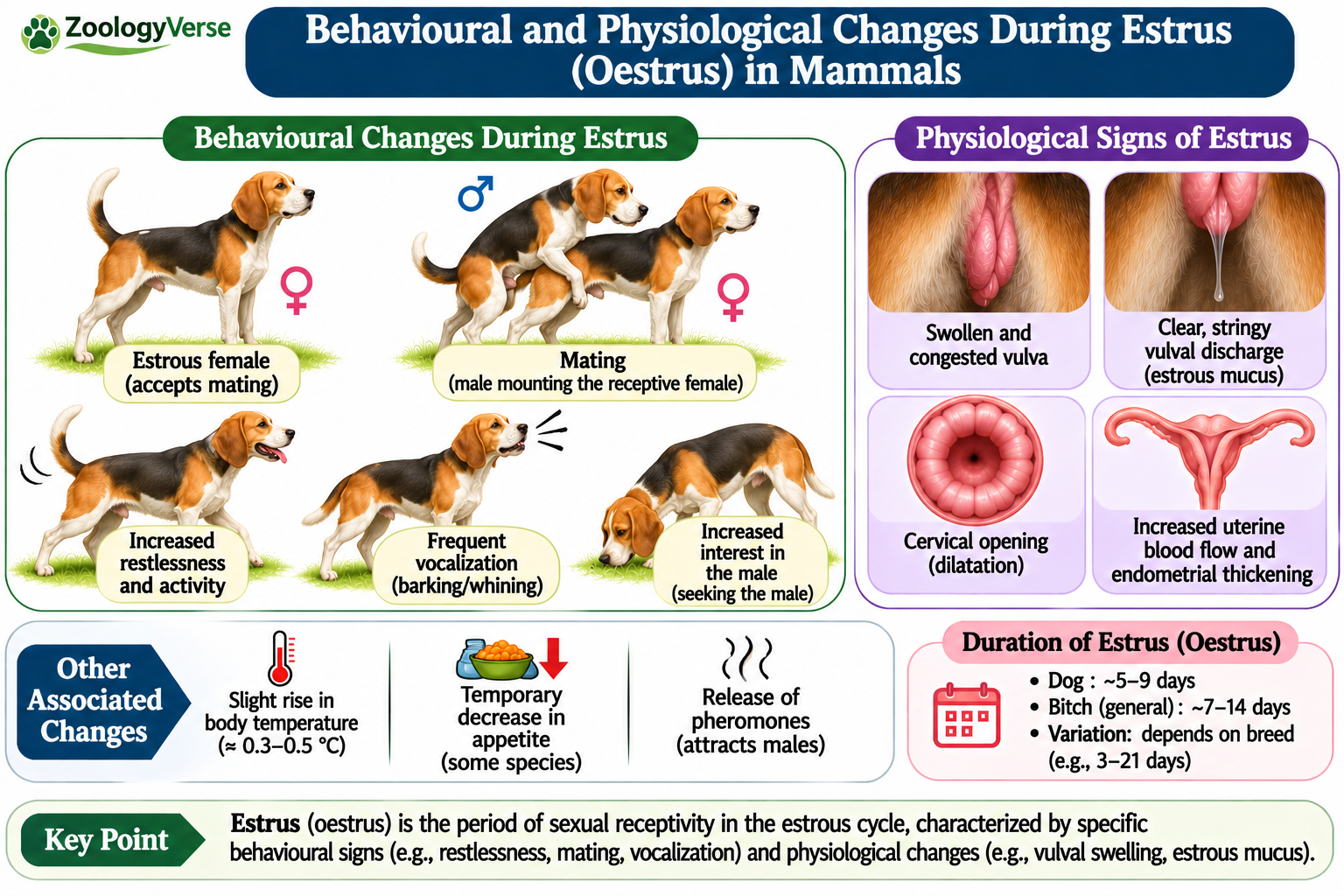
Estrus, commonly known as heat, is the period when a female mammal becomes sexually receptive and is generally willing to mate. During this stage of the Estrous Cycle in Mammals, rising oestrogen levels influence both reproductive organs and behaviour.
The changes associated with estrus help coordinate mating with the period of reproductive readiness. Although the basic hormonal mechanism is similar, the visible signs and intensity of these changes differ among mammalian species.
8.1 Behavioural Changes During Estrus
The behavioural signs of estrus are mainly associated with increased oestrogen secretion by developing ovarian follicles. Common behavioural changes include:
- Increased sexual receptivity: The female actively accepts the male and may stand still during mounting.
- Restlessness: Some females become more active, restless or vocal during the heat period.
- Mounting behaviour: Females may attempt to mount other animals or allow other females to mount them.
- Increased interest in males: The female may approach males, remain near them and show increased responsiveness to their presence.
- Changes in activity: Feeding, movement and general activity patterns may change during this stage.
These behavioural responses are important indicators of reproductive readiness in the Estrous Cycle in Mammals. Their intensity varies with species, age, individual physiology and environmental conditions.
8.2 Physiological Changes During Estrus
Several physiological changes occur alongside behavioural signs. These changes are associated with hormonal fluctuations and prepare the reproductive tract for mating and possible fertilisation.
- Vulval swelling: In several domestic mammals, the vulva becomes swollen and may appear reddened due to increased blood flow.
- Vaginal discharge: Mucus secretion may increase. In cattle, clear and stringy cervical mucus is a common sign of estrus.
- Changes in the cervix: Cervical mucus generally becomes more favourable for sperm movement during the receptive period.
- Changes in the reproductive tract: Increased blood supply and oestrogenic activity influence the reproductive tissues.
- Ovulation-related changes: The LH surge initiates the final events leading to ovulation, although its timing relative to visible heat differs among species.
These physiological responses help identify the fertile period and are useful in understanding the Estrous Cycle in Mammals.
8.3 Signs of Estrus in Different Mammals
The external signs of heat are not identical in all mammals. Some species show clear behavioural changes, while others display relatively subtle signs.
| Animal | Common signs of estrus |
|---|---|
| Cow | Standing to be mounted, restlessness, increased activity and clear mucus discharge |
| Buffalo | Increased activity, mounting behaviour and mucus discharge; signs may be less pronounced |
| Ewe (sheep) | Seeking the ram, standing for mating and increased sexual receptivity |
| Doe (goat) | Tail wagging, bleating, restlessness and seeking the male |
| Mare (horse) | Frequent urination, tail raising, squatting and acceptance of the stallion |
| Female dog | Vulval swelling, bloody vaginal discharge and increased receptivity during the appropriate stage |
| Rat | Increased sexual receptivity and characteristic changes in reproductive behaviour |
8.4 Importance of Recognising Estrus
Recognising the signs of heat is important in animal breeding and reproductive management. Farmers and veterinarians use behavioural and physiological indicators to identify suitable mating or artificial insemination periods.
Accurate heat detection improves the timing of breeding and helps reduce missed reproductive opportunities. Therefore, understanding these changes provides practical knowledge of the Estrous Cycle in Mammals and supports efficient livestock reproduction.
9. Types of Estrous Cycles in Mammals
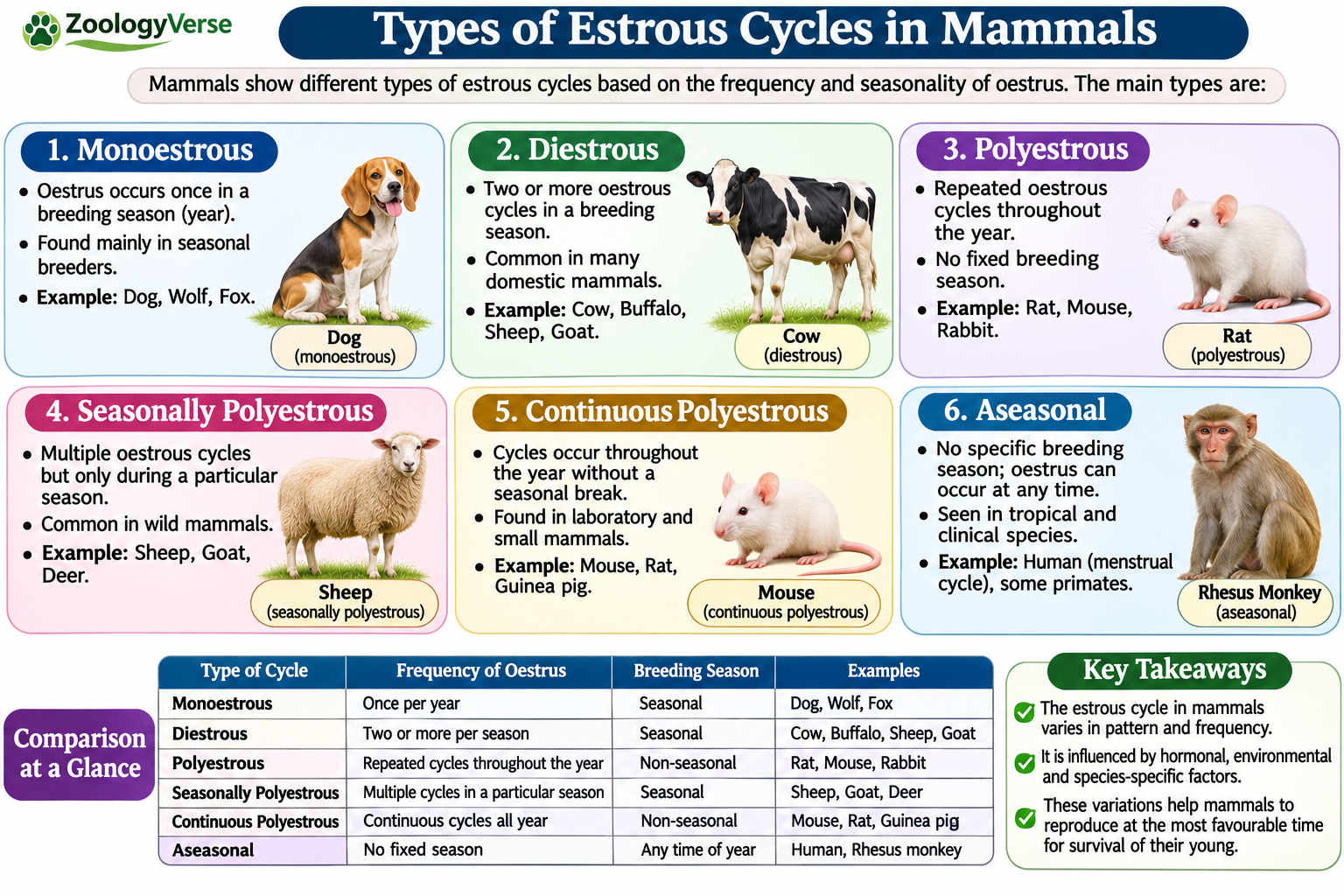
Mammals differ in the frequency and seasonal pattern of their reproductive activity. Based on how often females experience periods of estrus and whether these periods occur throughout the year or during particular seasons, the Estrous Cycle in Mammals can be classified into several broad types. The main categories are polyestrous, seasonally polyestrous and monoestrous cycles.
The Estrous Cycle in Mammals therefore shows considerable variation in the timing and frequency of reproductive receptivity.
9.1 Polyestrous Cycle
In a polyestrous cycle, females undergo repeated estrous cycles throughout the year, provided they are not pregnant or otherwise reproductively inactive. There is generally no distinct breeding season, although nutrition, health and environmental conditions can influence reproductive activity.
Examples include cattle, pigs and laboratory rats. These differences are important when comparing the Estrous Cycle in Mammals across domestic and wild species. Cows usually show an estrous cycle of approximately 21 days, while pigs have a cycle of about 21 days. In these animals, repeated ovarian cycles allow mating and conception at different times of the year.
The Estrous Cycle in Mammals of polyestrous species is useful in livestock production because breeding can be managed throughout much of the year. In this group, the Estrous Cycle in Mammals repeats without a strict seasonal restriction.
9.2 Seasonally Polyestrous Cycle
Seasonally polyestrous animals experience repeated cycles only during a particular breeding season. Outside that season, females enter a period of reproductive inactivity called seasonal anestrus.
Environmental cues can determine when the Estrous Cycle in Mammals becomes active in seasonal breeders. Seasonal breeding is commonly influenced by photoperiod, which refers to the duration of daylight. Changes in day length affect melatonin secretion by the pineal gland and influence hypothalamic reproductive activity. The response differs among species.
Such timing allows the Estrous Cycle in Mammals to be aligned with favourable conditions for reproduction. Seasonally polyestrous mammals are commonly divided into two groups:
9.2.1 Short-Day Breeders
Short-day breeders become reproductively active when day length decreases. Their breeding season generally occurs during autumn or winter.
Examples include sheep, goats and deer. In these animals, shortening daylight is associated with changes in melatonin signalling that promote reproductive activity.
9.2.2 Long-Day Breeders
Long-day breeders become reproductively active when day length increases. Their breeding season generally occurs during spring or summer.
Examples include horses and some rodents. Increasing daylight influences neuroendocrine activity and supports the return of ovarian cycles.
Photoperiod is therefore a major regulator of the Estrous Cycle in Mammals in these species. The seasonal pattern of the Estrous Cycle in Mammals helps synchronise births with environmental conditions that may favour offspring survival.
9.3 Monoestrous Cycle
Monoestrous animals generally experience one estrous cycle during a breeding season, followed by a prolonged period of reproductive inactivity. If mating does not result in pregnancy, another cycle may not occur until the next breeding season.
The Estrous Cycle in Mammals of monoestrous species is associated with a relatively long interval between periods of sexual receptivity. The domestic dog is a commonly cited example, although dogs may show more than one cycle per year depending on breed and individual variation. Wolves and some wild canids also show seasonal monoestrous patterns.
In monoestrous species, the Estrous Cycle in Mammals is often linked to seasonal breeding and the timing of offspring birth.
9.4 Comparison of the Main Types
The classification of the Estrous Cycle in Mammals also helps explain differences in breeding strategies. It provides a framework for comparing how the Estrous Cycle in Mammals is timed in different species.
| Type | Reproductive pattern | Examples |
|---|---|---|
| Polyestrous | Repeated cycles throughout the year | Cattle, pigs, rats |
| Seasonally polyestrous | Repeated cycles during a defined breeding season | Sheep, goats, horses, deer |
| Monoestrous | Usually one cycle during a breeding season, followed by a long inactive period | Dogs and some wild canids |
These categories provide a broad comparison of reproductive patterns. The Estrous Cycle in Mammals may show variation even within a broad reproductive category. Actual cycle frequency can vary with species, breed, age, nutrition, health and environmental conditions. Therefore, the Estrous Cycle in Mammals should be understood in relation to the reproductive ecology of each species rather than as a single fixed pattern.
10. Estrous Cycle in Different Mammals
The duration, hormonal pattern and behavioural signs of the Estrous Cycle in Mammals vary considerably among species. These differences are related to reproductive strategies, environmental conditions, breeding seasons and the physiology of individual animals.
Studying different mammals helps explain how the basic stages of the estrous cycle are adapted to the reproductive requirements of each species.
10.1 Estrous Cycle in Cattle
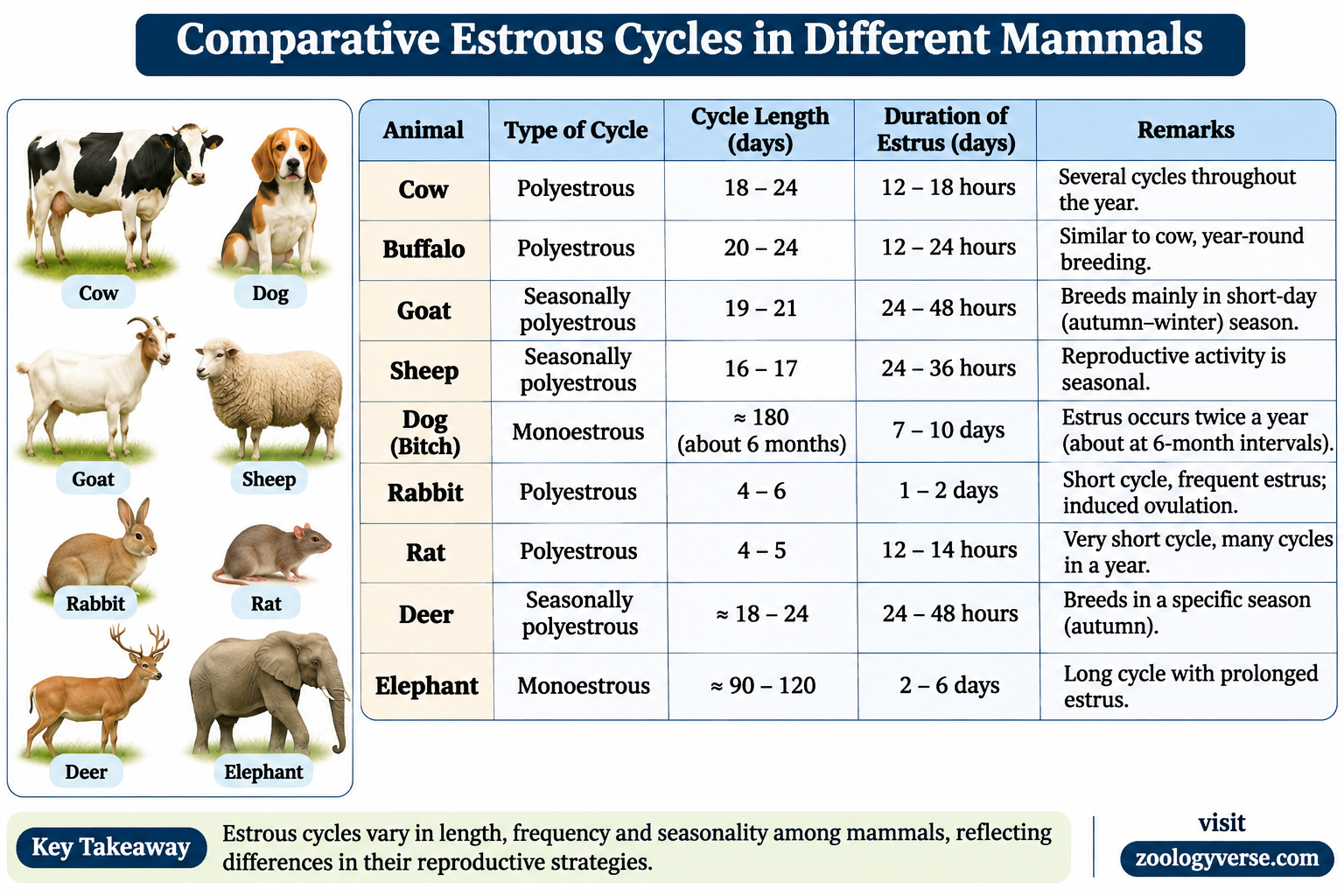
Cattle are polyestrous animals that can undergo reproductive cycles throughout the year. The average cycle lasts approximately 21 days, although individual variation occurs.
The Estrous Cycle in Mammals of cattle includes proestrus, estrus, metestrus and diestrus. Estrus generally lasts around 12–18 hours. Ovulation usually occurs approximately 10–12 hours after the end of standing heat.
During estrus, cows commonly show standing behaviour, increased activity, mounting attempts and clear cervical mucus discharge. These signs are important for detecting the appropriate time for artificial insemination.
10.2 Estrous Cycle in Buffalo
Buffaloes generally have an average estrous cycle of approximately 21 days. Their reproductive activity is influenced by nutrition, climate and seasonal conditions.
In buffaloes, signs of estrus may be less pronounced than in cattle. Reduced activity, silent heat and difficulty in detecting standing behaviour can create challenges in reproductive management.
The Estrous Cycle in Mammals of buffaloes follows the same general ovarian pattern, involving follicular development, ovulation and corpus luteum formation.
10.3 Estrous Cycle in Sheep
Sheep are generally short-day seasonal breeders. Their reproductive activity increases when day length decreases, and their breeding season commonly occurs during autumn.
The average estrous cycle lasts approximately 17 days. Estrus generally lasts about 24–36 hours, although this varies with breed and other factors.
The seasonal nature of the Estrous Cycle in Mammals in sheep allows lambing to occur during periods that may provide favourable environmental conditions and food availability.
10.4 Estrous Cycle in Goats
Goats are also commonly short-day seasonal breeders, particularly in temperate regions. Their average estrous cycle lasts approximately 21 days, while the heat period usually continues for about 24–48 hours.
Common signs include bleating, tail wagging, restlessness, increased urination and attraction towards males. The timing of reproductive activity can vary according to breed, latitude and environmental conditions.
10.5 Estrous Cycle in Horses
Mares are seasonally polyestrous and generally show reproductive activity during longer days, particularly in spring and summer. Their average estrous cycle lasts approximately 21–22 days.
The estrus period commonly lasts around 5–7 days. Mares may display frequent urination, tail raising, squatting and acceptance of a stallion.
10.6 Estrous Cycle in Dogs
Female dogs are generally classified as seasonally monoestrous or non-seasonally monoestrous, depending on the classification system used. They usually experience one or two estrous cycles annually, with considerable variation among breeds.
The interval between successive cycles is commonly around six to seven months. Proestrus is associated with vulval swelling and bloody vaginal discharge, while behavioural receptivity generally develops during estrus.
10.7 Estrous Cycle in Rats
Rats are polyestrous animals with a short estrous cycle, generally lasting approximately 4–5 days under suitable laboratory conditions.
Their reproductive cycle is commonly divided into proestrus, estrus, metestrus and diestrus. Vaginal cytology is frequently used in laboratory studies to identify these stages.
10.8 Comparative Overview
| Mammal | Type of reproductive pattern | Approximate cycle duration |
|---|---|---|
| Cattle | Polyestrous | 21 days |
| Buffalo | Polyestrous | 21 days |
| Sheep | Seasonally polyestrous | 17 days |
| Goat | Seasonally polyestrous | 21 days |
| Horse | Seasonally polyestrous | 21–22 days |
| Dog | Monoestrous pattern | Interval between cycles: about 6–7 months |
| Rat | Polyestrous | 4–5 days |
The Estrous Cycle in Mammals demonstrates considerable diversity in reproductive timing. While cattle and buffalo can cycle throughout the year, sheep and goats generally show seasonal reproductive activity. Dogs have relatively long intervals between cycles, whereas rats undergo frequent reproductive cycles.
These species-specific differences are important in comparative zoology, veterinary science and animal breeding. Understanding the Estrous Cycle in Mammals helps in identifying reproductive stages, planning mating and improving breeding management.
11. Factors Affecting the Estrous Cycle
The Estrous Cycle in Mammals is influenced by several internal and external factors. These factors affect the activity of the hypothalamus, pituitary gland and ovaries, and may alter the timing of ovulation, the expression of heat and the regularity of reproductive cycles. Their effects differ among species and individuals.
The normal functioning of the Estrous Cycle in Mammals depends on the interaction of nutrition, age, hormonal activity, environmental conditions and general health. Disturbances in any of these factors may affect reproductive performance.
11.1 Nutrition and Body Condition
Adequate nutrition is essential for normal reproductive function. Insufficient energy or protein intake can reduce hypothalamic and pituitary activity, disturb gonadotropin secretion and delay the return of ovarian cycles after birth.
In the Estrous Cycle in Mammals, poor body condition may be associated with weak or silent estrus, delayed puberty and reduced conception rates. Excessive body condition can also negatively affect reproductive health in some animals. Balanced feeding therefore supports normal ovarian function and fertility.
11.2 Age and Physiological Condition
Age influences reproductive activity throughout an animal’s life. Young females may require time to reach puberty and establish regular ovarian cycles. In older animals, reproductive performance may decline because of changes in ovarian reserve, hormonal function or general health.
Pregnancy and lactation also influence the Estrous Cycle in Mammals. During pregnancy, ovarian cyclic activity is usually suppressed. After parturition, the time required for cycles to resume depends on species, nutrition, suckling intensity and maternal condition.
11.3 Photoperiod and Seasonal Changes
Photoperiod, or the duration of daylight, is an important regulator of seasonal reproduction. Changes in day length influence melatonin secretion by the pineal gland, which can affect hypothalamic reproductive pathways.
The Estrous Cycle in Mammals of seasonal breeders is therefore linked to environmental timing. Sheep and goats commonly show increased reproductive activity as days become shorter, whereas mares generally become reproductively active as days grow longer. The response depends on species and breed.
Seasonal changes influence the Estrous Cycle in Mammals by modifying the timing of reproductive hormone secretion. This adaptation helps many animals coordinate mating and offspring production with favourable environmental conditions.
11.4 Temperature and Environmental Stress
High environmental temperatures can impair reproductive performance, particularly in animals exposed to prolonged heat stress. Heat may affect follicular development, oocyte quality, hormone secretion and early embryonic survival.
Severe cold, transport, overcrowding and sudden environmental changes may also act as stressors. Such conditions can disturb the Estrous Cycle in Mammals, reduce visible signs of heat or contribute to irregular cycles.
11.5 Disease and General Health
Reproductive and systemic diseases can interfere with normal ovarian activity. Conditions affecting the ovaries, uterus or endocrine organs may disrupt follicular development, ovulation or corpus luteum function.
Infections, parasitic diseases and chronic illness may also reduce fertility through inflammation, poor body condition or altered hormonal regulation. Maintaining good health is therefore important for a normal Estrous Cycle in Mammals.
The effects of disease on the Estrous Cycle in Mammals may include delayed ovulation, failure to show normal estrus and reduced conception rates. Early diagnosis and appropriate veterinary care help protect reproductive health.
11.6 Hormonal and Endocrine Factors
Normal reproductive cycling depends on coordinated secretion of GnRH, FSH, LH, oestrogen and progesterone. Disruption of this hormonal communication may delay ovulation, prevent normal follicular development or interfere with luteal function.
For example, inadequate gonadotropin secretion can impair follicular growth, while abnormal progesterone patterns may affect the timing of the next cycle. The Estrous Cycle in Mammals is consequently sensitive to endocrine disturbances.
11.7 Suckling and Management Practices
In some mammals, suckling can suppress reproductive activity after parturition through neuroendocrine mechanisms that reduce GnRH and gonadotropin secretion. The strength of this effect varies among species and individuals.
Management practices such as feeding schedules, housing, handling, breeding methods and herd health programmes can also influence reproductive performance. Good management supports the normal functioning of the Estrous Cycle in Mammals and helps improve breeding outcomes.
11.8 Summary of Influencing Factors
| Factor | Possible effect on reproduction |
|---|---|
| Nutrition | Influences puberty, ovarian activity and fertility |
| Age | Determines onset and later decline of reproductive function |
| Photoperiod | Regulates seasonal breeding in some species |
| Temperature | Heat stress may impair follicular and embryonic development |
| Disease | Can disrupt ovarian and endocrine function |
| Hormonal imbalance | May interfere with follicular development and ovulation |
| Suckling | May delay the return of ovarian cycles after birth |
| Management | Influences heat detection, mating and reproductive efficiency |
The Estrous Cycle in Mammals is therefore shaped by the interaction of endocrine, nutritional, physiological and environmental influences. Recognising these factors is important for understanding variation in reproductive activity and for managing the fertility of domestic animals.
12. Biological Significance of the Estrous Cycle
The Estrous Cycle in Mammals is biologically important because it coordinates ovarian activity, sexual receptivity and preparation of the reproductive tract for possible pregnancy. The Estrous Cycle in Mammals also helps ensure that reproductive events occur in a coordinated sequence. Its recurring hormonal changes help ensure that ovulation and mating occur at appropriate times. It reflects reproductive adaptations that differ among species and environments.
12.1 Coordination of Reproductive Events
One major function of the Estrous Cycle in Mammals is the coordination of follicular development, ovulation and changes in the uterus. Hormonal communication between the hypothalamus, pituitary gland and ovaries synchronises these events. This coordination increases the likelihood that viable sperm will be present when an oocyte is released.
12.2 Timing of Sexual Receptivity and Mating
The Estrous Cycle in Mammals establishes a period of sexual receptivity known as estrus. During this stage, behavioural and physiological changes encourage mating when the female is approaching ovulation. In many species, this timing improves the chances of fertilisation.
The cycle therefore links reproductive behaviour with ovarian function. The timing and duration of receptivity vary among species, reflecting differences in mating systems and reproductive strategies.
12.3 Preparation of the Uterus for Pregnancy
Oestrogen and progesterone produce cyclic changes in the endometrium and uterine glands. These changes help prepare the reproductive tract to support fertilisation, embryo transport and early development. If pregnancy does not occur, the reproductive tissues undergo remodelling before another cycle begins.
Through these hormonal changes, the Estrous Cycle in Mammals prepares the uterus for a possible pregnancy while allowing the reproductive system to return to a new cycle when conception does not occur.
12.4 Regulation of Seasonal Reproduction
In seasonal breeders, reproductive cycling is coordinated with environmental conditions such as day length. This timing can help offspring be born when food availability, temperature and other conditions are more favourable. Sheep, goats and horses provide examples of mammals in which seasonal changes influence reproductive activity.
The Estrous Cycle in Mammals thus contributes to reproductive synchronisation with the environment. This adaptation can improve offspring survival and reduce the energetic costs of reproduction during unfavourable periods.
12.5 Importance in Animal Breeding and Veterinary Science
Knowledge of the Estrous Cycle in Mammals is essential for recognising heat, selecting suitable mating times and planning artificial insemination. It also helps veterinarians investigate reproductive disorders, irregular cycles, infertility and failure to ovulate.
In livestock production, understanding the Estrous Cycle in Mammals supports breeding management, pregnancy planning and improved reproductive efficiency. Accurate identification of estrus can reduce missed breeding opportunities and help optimise herd productivity.
12.6 Understanding Mammalian Reproductive Diversity
Studying the Estrous Cycle in Mammals and comparing reproductive cycles across mammals reveals how reproductive physiology is adapted to different ecological and evolutionary conditions. Some species cycle throughout the year, while others breed seasonally or have long intervals between periods of receptivity.
The Estrous Cycle in Mammals is therefore an important concept in comparative zoology. Its study helps explain variation in reproductive timing, mating behaviour and strategies for successful offspring production.
Overall, the biological significance of the cycle lies in coordinating hormonal activity, ovarian events, reproductive behaviour and uterine preparation. These processes work together to support successful reproduction and species continuity.
13. Conclusion
The Estrous Cycle in Mammals is a coordinated reproductive process involving recurring changes in the ovaries, uterus and behaviour of female mammals. Its main phases—proestrus, estrus, metestrus and diestrus—are regulated by interactions among the hypothalamus, pituitary gland and ovaries. Some species also experience an extended period of reproductive inactivity called anestrus.
Hormones such as GnRH, FSH, LH, oestrogen and progesterone regulate follicular development, ovulation, corpus luteum activity and preparation of the uterus for possible pregnancy. These hormonal changes also influence sexual receptivity and other signs of heat. The timing and duration of each phase differ among species.
The Estrous Cycle in Mammals may occur throughout the year or be restricted to particular breeding seasons. Differences among cattle, sheep, goats, horses, dogs and rodents demonstrate the diversity of mammalian reproductive strategies. Nutrition, age, health, photoperiod and environmental stress can further influence reproductive activity.
Understanding the Estrous Cycle in Mammals is important in zoology, reproductive physiology and veterinary science. It helps explain the relationship between hormones and reproductive behaviour, supports the identification of fertile periods and guides animal breeding practices. The Estrous Cycle in Mammals also illustrates how reproductive physiology is adapted to different ecological conditions. Overall, the Estrous Cycle in Mammals is an essential biological mechanism that coordinates reproductive events and contributes to successful continuation of mammalian species.
14. Frequently Asked Questions (FAQs)
What is the estrous cycle in mammals?
What are the four main phases of the estrous cycle?
What is estrus?
Which hormones regulate the estrous cycle?
What is the difference between an estrous cycle and a menstrual cycle?
Which animals have an estrous cycle?
How long does the estrous cycle last?
What is anestrus?
Why is understanding the estrous cycle important?
Do all mammals show the same estrous cycle?
15. References
- Merck Veterinary Manual. (2026). Characteristics of the Estrous Cycle in Common Domestic Species.
https://www.merckvetmanual.com/multimedia/table/characteristics-of-the-estrous-cycle-in-common-domestic-species - Merck Veterinary Manual. (2026). Overview of Hormonal Control of the Estrous Cycle in Animals.
https://www.merckvetmanual.com/reproductive-system/hormonal-control-of-the-estrous-cycle/overview-of-hormonal-control-of-the-estrous-cycle-in-animals - Cunningham, J. G., & Klein, B. G. (2019). Cunningham’s Textbook of Veterinary Physiology (6th ed.). Elsevier.
- Hafez, E. S. E., & Hafez, B. (Eds.). (2000). Reproduction in Farm Animals (7th ed.). Lippincott Williams & Wilkins.
- Garverick, H. A., & Smith, M. F. (1993). Female reproductive physiology and endocrinology of cattle. Veterinary Clinics of North America: Food Animal Practice, 9(2), 223–247.
https://doi.org/10.1016/S0749-0720(15)30643-5 - Cushman, R. A., Rosasco, S. L., McCarthy, K. L., Snider, A. P., Perry, G. A., & Lents, C. A. (2025). Advances in our understanding of the estrous cycle and applications for improving targeted reproductive management in livestock. Domestic Animal Endocrinology, 91, 106912.
https://doi.org/10.1016/j.domaniend.2025.106912 - Biology and Diseases of Ruminants (Sheep, Goats, and Cattle). (2015). National Center for Biotechnology Information.
https://pmc.ncbi.nlm.nih.gov/articles/PMC7149867/ - Hormones and Reproduction of Vertebrates, Volume 5: Mammals. (2024). Chapter 16: Hormones and Reproductive Cycles in Ungulates. Elsevier.
https://doi.org/10.1016/B978-0-443-15986-2.00018-6 - Merck Veterinary Manual. Features of the Reproductive Cycle.
https://www.merckvetmanual.com/multimedia/table/features-of-the-reproductive-cycle - Merck Veterinary Manual. Hormonal Control of the Estrous Cycle in Goats and Sheep.
https://www.msdvetmanual.com/reproductive-system/hormonal-control-of-the-estrous-cycle/hormonal-control-of-the-estrous-cycle-in-goats-and-sheep
Discover more from Zoologyverse
Subscribe to get the latest posts sent to your email.