
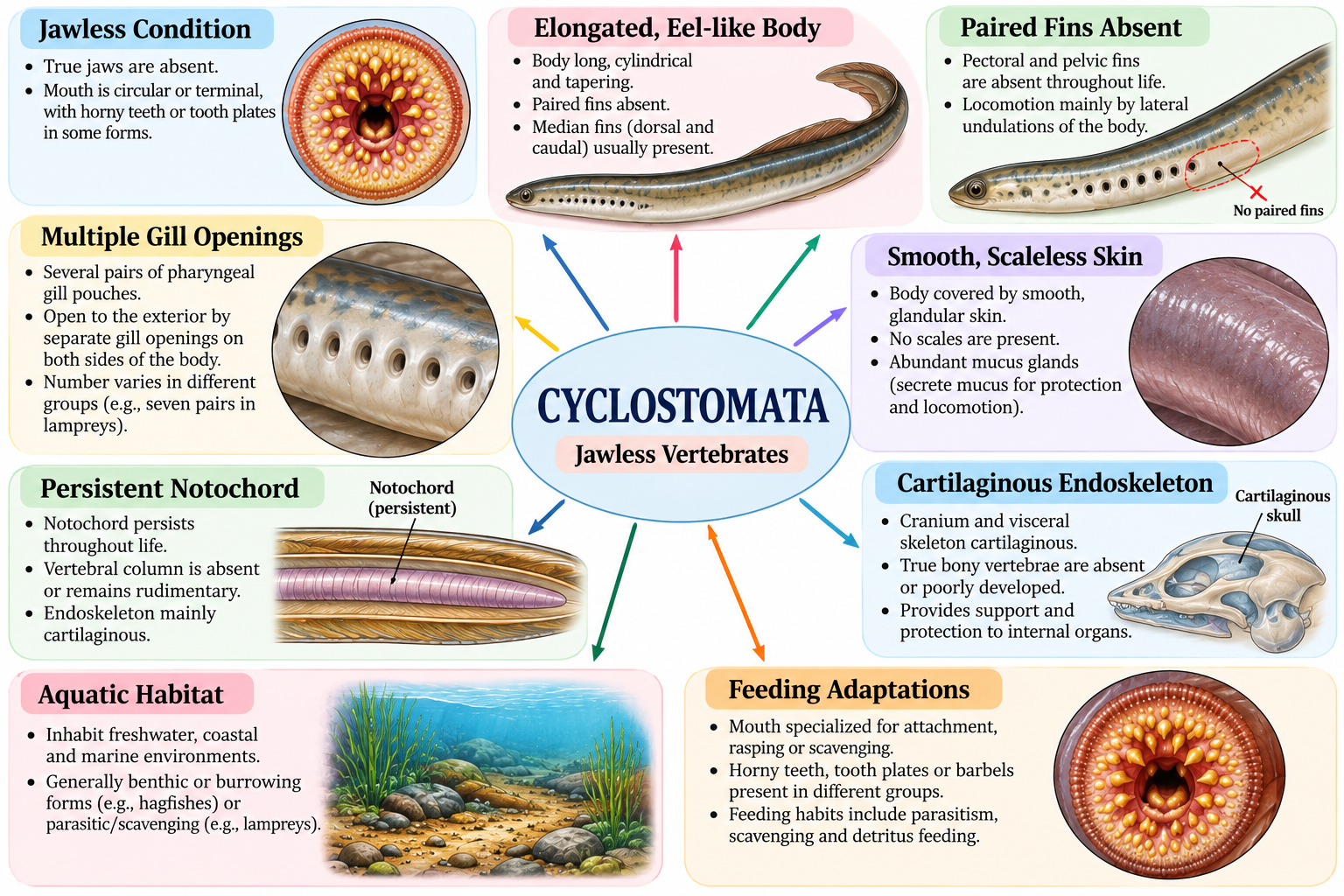
Cyclostomata is a group of jawless vertebrates characterized by a circular, suctorial mouth and an elongated, eel-like body. The name Cyclostomata is derived from the Greek words kyklos, meaning “circle,” and stoma, meaning “mouth,” referring to their circular oral opening. Cyclostomes lack paired fins and jaws and possess a largely cartilaginous internal skeleton.
Living Cyclostomata are represented mainly by lampreys and hagfishes. Lampreys, such as Petromyzon, are known for their circular oral disc and, in many species, a parasitic feeding habit. Hagfishes, such as Myxine, are marine animals that commonly feed on dead or dying organisms and are notable for their ability to produce large amounts of slime.
What is Cyclostomata?
Cyclostomata is a traditional zoological group of jawless vertebrates that includes lampreys and hagfishes. They are distinguished from jawed vertebrates by the absence of true jaws and paired appendages. Their primitive-looking body organization has made them important in the study of vertebrate evolution.
Cyclostomata are generally characterized by:
- A jawless, circular mouth
- An elongated, cylindrical body
- Absence of paired fins
- A cartilaginous endoskeleton
- A persistent notochord
- Multiple gill openings or gill pouches
- Absence of true scales
- A single median olfactory opening in the head region
- Ectothermic body temperature regulation
- Aquatic habitat
Why Are Cyclostomata Important?
Cyclostomata are important in zoology because they possess several anatomical features that differ markedly from those of jawed vertebrates. Cyclostomata’s structure, development, feeding mechanisms, and sensory systems provide valuable information for understanding the early evolution and diversification of vertebrates.
The two major living groups of Cyclostomata —lampreys and hagfishes—also show important differences in their anatomy and biology. Therefore, Cyclostomata provides a useful foundation for studying the transition from early jawless vertebrates to the more diverse jawed vertebrates.
In simple terms: Cyclostomata are jawless aquatic vertebrates, mainly represented by lampreys and hagfishes, with a circular mouth, elongated body, and distinctive primitive vertebrate features.
What Are Cyclostomes?
Cyclostomes are jawless aquatic vertebrates belonging to the traditional group Cyclostomata. The term Cyclostomata refers to animals with a distinctive circular or rounded mouth rather than the hinged jaws found in most other vertebrates.
The living forms are represented by two major lineages:
- Lampreys – represented by genera such as Petromyzon and Lampetra
- Hagfishes – represented by genera such as Myxine and Eptatretus
Although lampreys and hagfishes share the absence of jaws, they differ considerably in body organization, feeding behavior, development, and several anatomical features.
Important Features of Cyclostomes
Some features commonly used to recognize these animals include:
- No true jaws – the mouth is not supported by movable jaws.
- Circular mouth – particularly conspicuous in lampreys, where it forms an oral sucking disc.
- Paired appendages absent – they do not possess pectoral and pelvic fins.
- Notochord persistent – the notochord remains an important axial support throughout life.
- Cartilaginous support – much of the internal skeleton is composed of cartilage.
- Aquatic lifestyle – living representatives occur in marine or freshwater environments.
- Specialized feeding mechanisms – lampreys may attach to hosts, whereas hagfishes commonly consume carrion and soft tissues.
The term Cyclostomata is therefore useful for identifying this distinctive assemblage of jawless vertebrates and for discussing their structural differences from jawed vertebrates.
Classification of Cyclostomata
The classification of Cyclostomata has changed as knowledge of vertebrate relationships has developed. In traditional zoological textbooks, lampreys and hagfishes were commonly grouped together because both lack jaws and paired fins. Modern classifications generally recognize them as separate evolutionary lineages within the jawless vertebrates.
Traditional Classification
A commonly used textbook classification is:
Phylum: Chordata
→ Subphylum: Vertebrata
→ Group: Agnatha
→ Class: Cyclostomata
The traditional class was broadly divided into two subclasses or groups:
| Group | Common name | Examples |
|---|---|---|
| Petromyzontia | Lampreys | Petromyzon, Lampetra |
| Myxini | Hagfishes | Myxine, Eptatretus |
Modern Classification of Cyclostomata
Modern zoology generally treats lampreys and hagfishes as distinct groups rather than placing them in a single natural class. Lampreys are commonly placed in Petromyzontida, while hagfishes are placed in Myxini.
This distinction is important because similarities such as the absence of jaws do not necessarily mean that all shared features arose from a single recent common ancestor. Comparative anatomy, development, and molecular studies have provided a more detailed picture of their evolutionary relationships.
Representative Genera
Some important genera associated with the traditional study of Cyclostomata are:
- Petromyzon – sea lamprey
- Lampetra – lampreys
- Myxine – hagfishes
- Eptatretus – hagfishes
The classification is particularly useful for zoology students because Petromyzon and Myxine are frequently used as representative examples when studying the anatomy and biology of jawless vertebrates.
General Characteristics of Cyclostomata
The members traditionally included under Cyclostomata show a distinctive combination of structural and biological features. These characteristics help distinguish them from jawed vertebrates and are especially useful for practical examinations.
- Body form: The body is generally elongated, cylindrical, and eel-like, with a distinct head and trunk but no paired appendages.
- Jaws absent: True jaws are absent. The mouth is adapted for specialized feeding rather than biting with hinged jaws.
- Mouth: The oral opening is generally circular and surrounded by specialized structures. In lampreys, it forms a prominent suctorial disc.
- Paired fins absent: Pectoral and pelvic fins are not present. Median fins may occur along the dorsal and caudal regions.
- Skin: The skin is soft and glandular, usually without scales. Mucous secretions help protect the body surface.
- Endoskeleton: The supporting framework is predominantly cartilaginous. The notochord persists throughout life and provides axial support.
- Respiration: Respiration takes place through specialized pharyngeal gill pouches. The arrangement of these respiratory structures differs between lampreys and hagfishes.
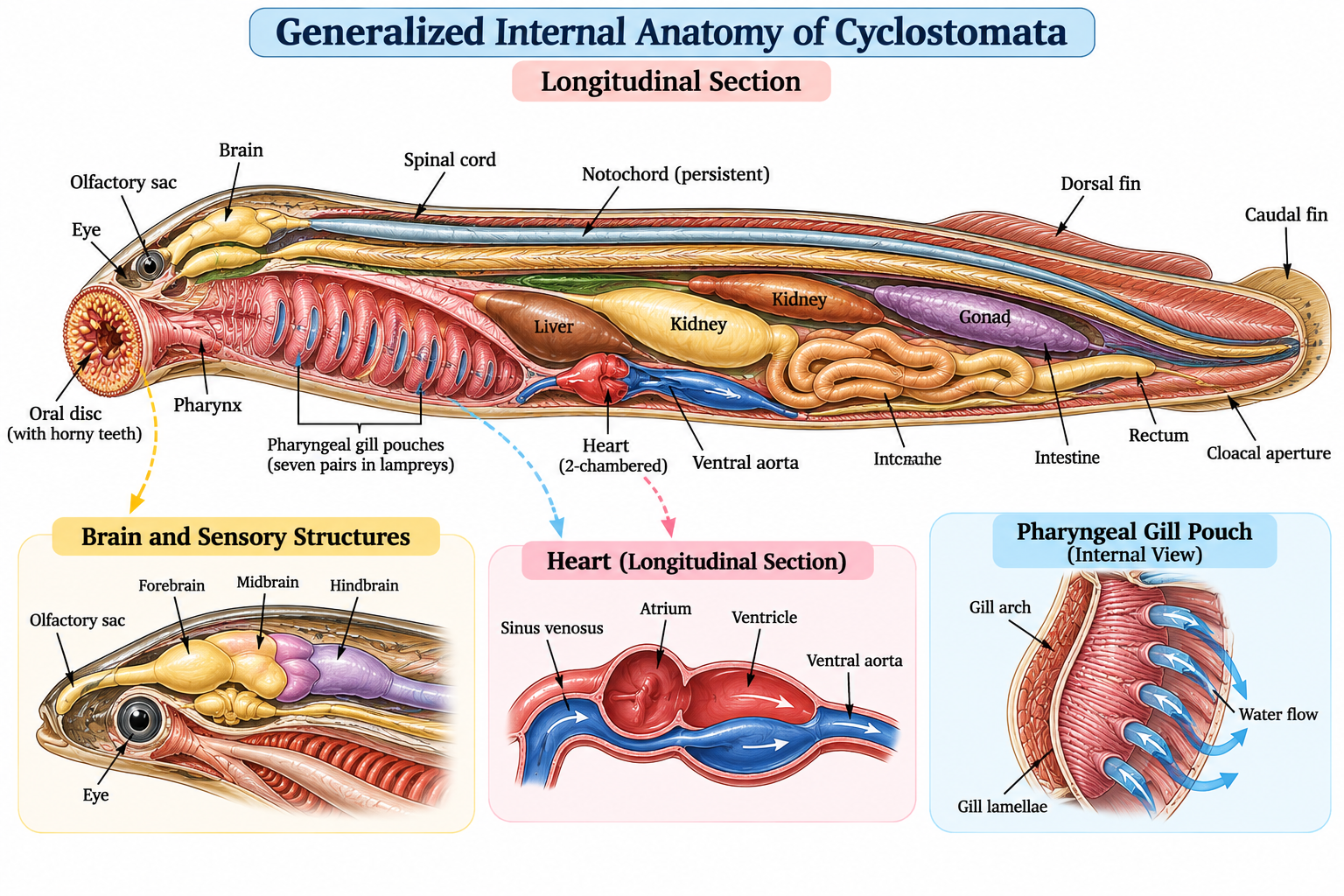
- Circulation: They possess a closed circulatory system with a ventral heart and a single main circulation through the body.
- Digestive tract: The alimentary canal is relatively simple. Feeding adaptations vary considerably between lampreys and hagfishes.
- Excretion: Paired kidneys perform the principal functions of nitrogenous waste removal and regulation of the internal water and salt balance.
- Nervous system: A well-developed brain and spinal cord are present, together with specialized sensory organs.
- Reproduction: Sexes are generally separate, and reproduction is sexual. In lampreys, fertilization occurs externally and development includes a distinctive larval stage.
- Habitat: Living representatives occur in marine and freshwater environments. Some species migrate between these habitats during their life cycle.
- Temperature regulation: They are ectothermic animals, so their body temperature largely follows the surrounding environment.
- Evolutionary significance: Their jawless condition and other distinctive anatomical features make them important subjects in the study of early vertebrate evolution.
External Features of Cyclostomata
The external body structure of cyclostomes is adapted to an aquatic lifestyle and specialized feeding. Although lampreys and hagfishes differ in several details, their general appearance is elongated and lacks the paired appendages seen in most fishes.
Body Shape
The body is long, slender, and approximately cylindrical. It can be divided broadly into a head, trunk, and tail region. The body tapers toward the posterior end, which assists movement through water.
Mouth
The mouth is a prominent feature. In lampreys, it is surrounded by a circular oral disc containing horny teeth and structures used to attach firmly to a host. Hagfishes have a different mouth arrangement with sensory barbels around the oral region.
Eyes
Lampreys possess relatively well-developed eyes. Hagfishes have highly reduced eyes that are largely covered by the skin, reflecting their adaptation to dim marine environments.
Gill Openings
Several external openings are present on the lateral sides of the pharyngeal region. These openings communicate with internal gill pouches and are involved in respiration.
Fins
Paired fins are absent. Lampreys possess median dorsal and caudal fins, whereas hagfishes have a reduced fin arrangement. The absence of paired fins is one of the easily recognizable features of these animals.
Skin
The skin is smooth, soft, and generally lacks scales. Numerous mucous glands produce a slippery secretion that protects the body and reduces friction in water. Hagfishes are particularly well known for producing abundant slime.
Tail
The posterior region forms a laterally compressed tail that contributes to swimming. The caudal fin is not supported by the bony fin rays characteristic of many jawed fishes.
These external adaptations provide the basic structural framework for understanding the specialized feeding, respiration, and locomotion of lampreys and hagfishes.
Body Wall and Skin of Cyclostomata
The body wall of cyclostomes is relatively simple compared with that of many jawed vertebrates. Their skin is adapted for protection, movement through water, and interaction with the surrounding environment.
Structure of the Skin
The skin consists of two principal layers:
- Epidermis: The outer cellular layer, which contains numerous mucous-secreting cells.
- Dermis: The underlying connective-tissue layer that provides mechanical support and contains blood vessels and other structures.
Unlike most typical fishes, the skin does not bear scales. This gives the body a smooth and flexible surface.
Mucous Glands
Mucous glands are an important component of the body surface. Their secretions form a slippery coating over the animal.
The mucus serves several functions:
- Protects the skin from mechanical injury
- Helps reduce friction during swimming
- Prevents excessive loss of water and salts
- Provides a barrier against potentially harmful microorganisms
In hagfishes, mucus production is especially pronounced. When disturbed, they can release large quantities of slime into the surrounding water. This unusual defense mechanism can interfere with the feeding apparatus of potential predators.
Skin Coloration
The coloration varies among species and is influenced by habitat and environmental conditions. Lampreys may show darker dorsal surfaces with lighter ventral regions, providing a degree of camouflage in aquatic environments.
Functional Significance
The skin therefore performs more than a protective role. Its flexibility, glandular nature, and mucus production contribute to defense, locomotion, and maintenance of the body’s internal environment.
Skeletal System of Cyclostomata
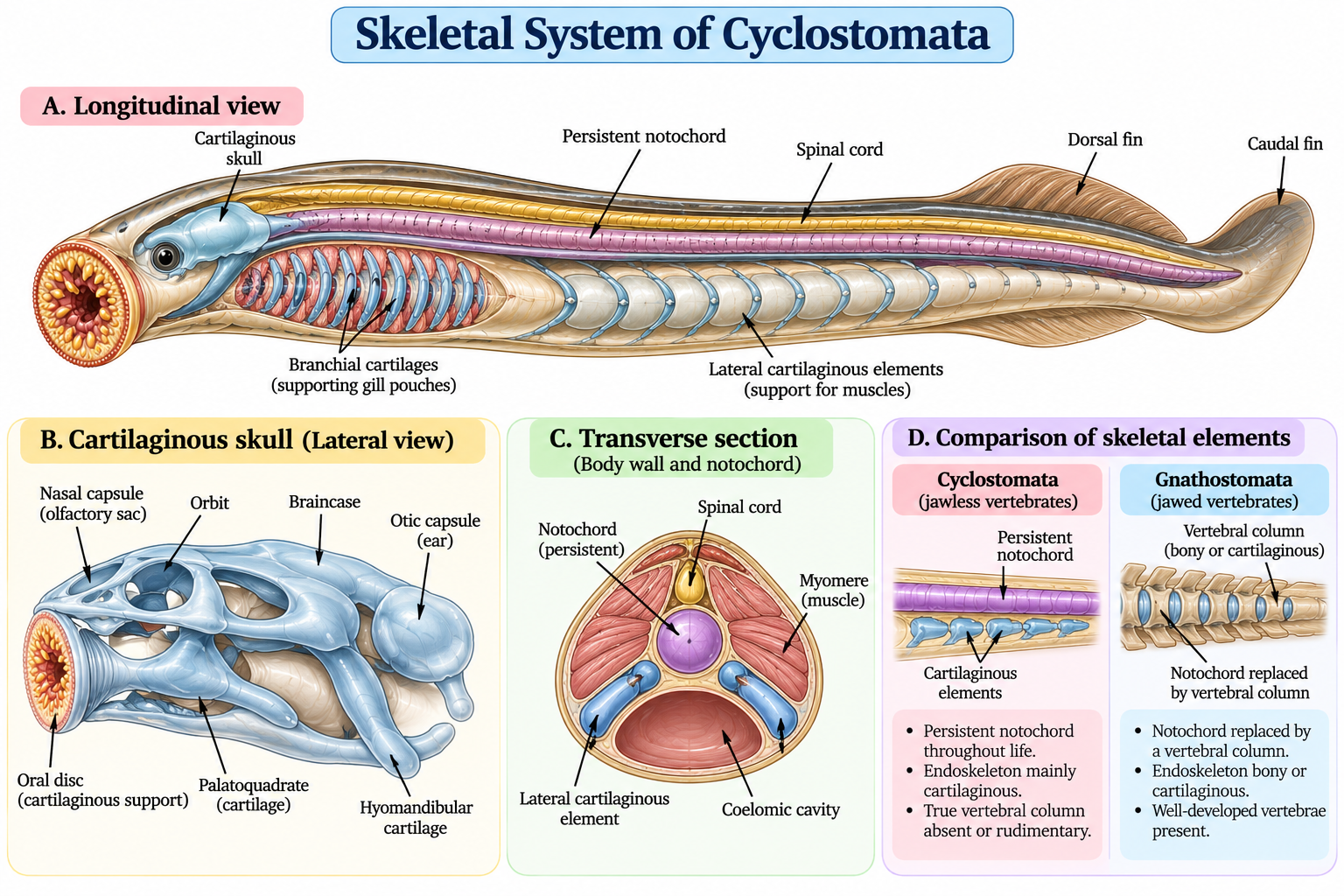
The skeletal system provides support and protection while allowing the flexible body to move through water. Unlike most jawed vertebrates, cyclostomes do not possess a heavily ossified vertebral column.
Endoskeleton
The endoskeleton is primarily cartilaginous. A persistent notochord forms the main axial supporting structure and extends through much of the body.
The major components include:
- Notochord
- Cranial cartilage
- Visceral or branchial cartilages
- Supporting cartilage associated with the fins and oral structures
Notochord
The notochord remains prominent throughout life. It is a flexible rod-like structure composed of specialized tissue and provides longitudinal support to the body.
In lampreys, small cartilaginous structures associated with the notochord represent an early form of vertebral support. The vertebral column is therefore much less developed than in typical jawed vertebrates.
Skull
The skull is largely cartilaginous and protects the brain. It also provides support for structures associated with the mouth, pharynx, and respiratory apparatus.
The cranial skeleton is relatively simple but highly specialized for the animal’s particular mode of feeding and respiration.
Visceral Skeleton
Cartilaginous elements surrounding the pharyngeal region support the gill pouches and associated tissues. In lampreys, additional cartilage supports the complex oral and attachment apparatus.
Significance of the Skeleton
The flexible cartilaginous framework is well suited to an elongated body that moves primarily through lateral undulation. The persistence of the notochord and the limited development of vertebral elements are also important features when studying the structural organization of early vertebrate groups.
Digestive System of Cyclostomata
The digestive system is adapted to the contrasting feeding habits of lampreys and hagfishes. Although both lack jaws, their feeding mechanisms are highly specialized.
Mouth and Buccal Region
The mouth forms the entrance to the alimentary canal. In lampreys, the oral disc acts as a powerful attachment structure. It contains horny teeth and a rasping tongue that can remove tissue from a host.
Hagfishes have a different feeding apparatus. Their mouth contains keratinous tooth-like structures associated with a muscular feeding mechanism that helps them grasp and consume soft tissues.
Pharynx
The pharynx is an important region because it is closely associated with the respiratory apparatus. In lampreys, the respiratory passages are arranged separately from the food passage, allowing respiration to continue while the animal is attached to a host.
In hagfishes, the pharyngeal arrangement is different and includes specialized channels associated with both feeding and respiration.
Oesophagus and Intestine
Food passes from the pharyngeal region into the oesophagus and then into the intestine. The intestinal tract is comparatively simple and lacks the complex stomach arrangement found in many jawed vertebrates.
A longitudinal typhlosole is present in lampreys and increases the absorptive surface of the intestine.
Digestive Glands
The digestive tract is associated with glands that produce substances involved in digestion. The liver contributes to digestive and metabolic functions, while other secretions help break down food into absorbable nutrients.
Feeding Habits
Feeding varies between the major groups:
- Lampreys: Many species attach to fish and feed on body fluids and tissues. Some species are non-parasitic as adults.
- Hagfishes: Primarily marine scavengers, they commonly feed on dead or dying animals and can enter carcasses to consume internal tissues.
Thus, the digestive system reflects the diverse feeding strategies found among these jawless vertebrates.
Respiratory System of Cyclostomata
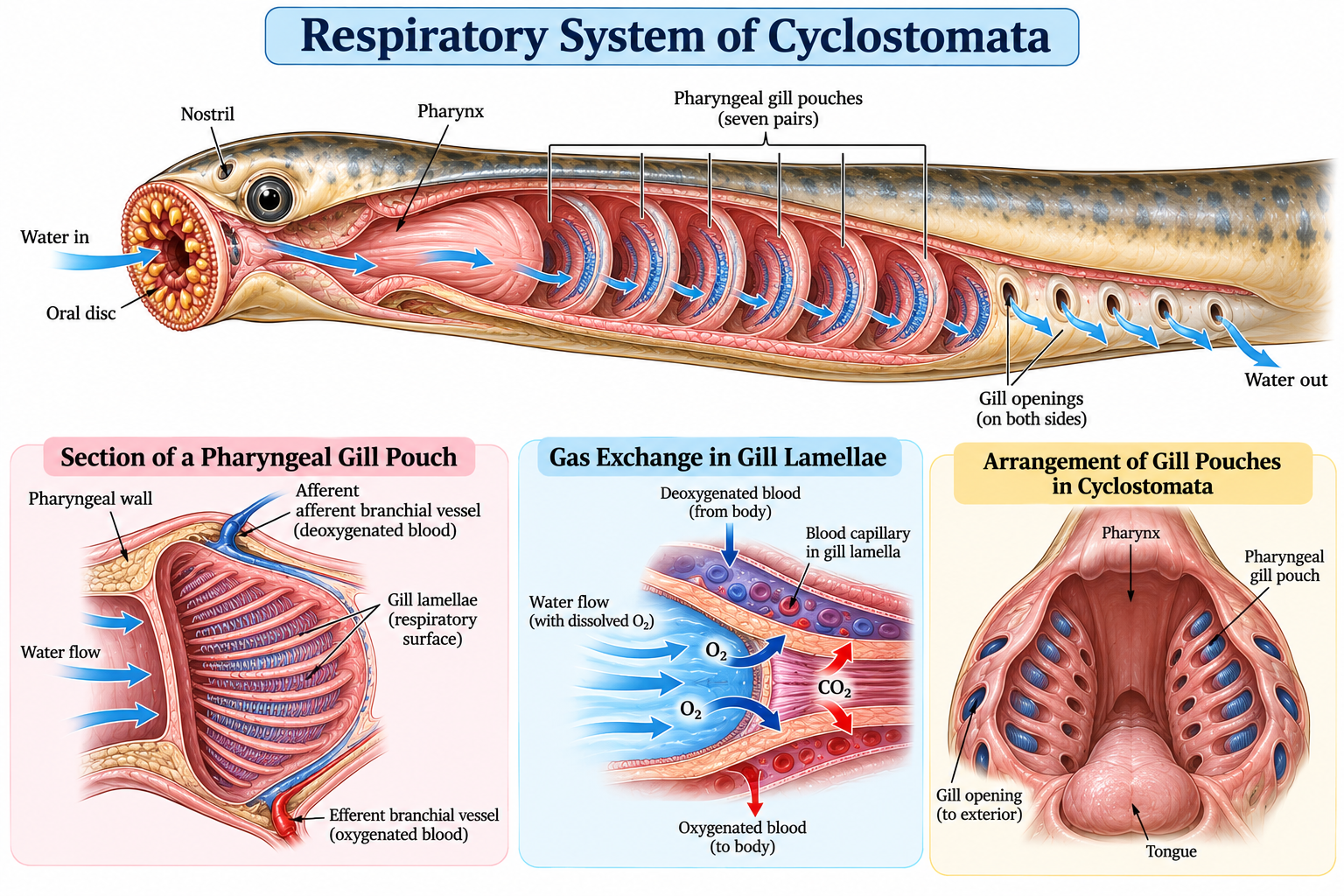
Respiration takes place through a series of specialized gill pouches located in the pharyngeal region. These structures are particularly important because the respiratory arrangement differs from that of typical jawed fishes.
Gill Pouches
The respiratory system contains several sac-like gill pouches opening toward the exterior through separate openings. Their walls contain numerous blood vessels, providing a large surface for gaseous exchange.
Oxygen dissolved in water passes across the respiratory surface into the blood, while carbon dioxide moves in the opposite direction.
Respiratory Mechanism in Lampreys
Lampreys have a series of gill pouches connected with the pharyngeal region. When a lamprey is freely swimming, water can enter through the mouth and pass through the pharyngeal region.
During attachment to a host, however, the mouth may remain occupied for feeding. Water can then move through the gill openings, allowing respiration to continue without requiring the animal to release its attachment.
Respiratory Mechanism in Hagfishes
Hagfishes possess multiple gill pouches, but their respiratory organization differs from that of lampreys. Water enters through the mouth or a specialized external opening and passes through the pharyngeal respiratory structures.
Some hagfish species can also absorb oxygen through the skin, which may be useful when they are inside the body cavities of prey or scavenged animals.
Functions of the Respiratory System
The gill apparatus performs several important functions:
- Absorbs oxygen from water
- Removes carbon dioxide
- Supports aerobic metabolism
- Permits respiration during specialized feeding activities
Respiratory Adaptations
The arrangement of separate respiratory openings and highly vascularized gill surfaces allows these animals to maintain effective gas exchange despite their unusual feeding mechanisms. This is particularly significant in lampreys, where respiration can continue while the animal remains firmly attached to a host.
Circulatory System of Cyclostomata
The circulatory system is a closed vascular system in which blood remains within blood vessels. It transports oxygen, nutrients, hormones, and metabolic wastes throughout the body.
Heart
The heart is located in the anterior part of the body and is enclosed within a pericardial region. It consists of:
- Sinus venosus
- Atrium
- Ventricle
- Conus or bulbus region
Blood returning from the body enters the sinus venosus and passes through the atrium into the ventricle. From there, it is pumped toward the gill region.
Circulation Through the Gills
Deoxygenated blood is carried to the respiratory surfaces of the gill pouches. After gaseous exchange, oxygenated blood enters the systemic circulation and is distributed to the tissues.
Thus, the major sequence can be summarized as:
Heart → gills → body tissues → heart
This represents a single circulation, characteristic of the basic circulatory organization of these animals.
Blood Vessels
The vascular system includes:
- Arteries carrying blood away from the heart
- Veins returning blood toward the heart
- Capillaries where exchange occurs between blood and tissues
The major arterial and venous vessels are associated with the gills and body wall.
Accessory Hearts
Hagfishes possess several accessory pumping structures associated with their venous system. These help maintain blood flow in different regions of the body, particularly where venous pressure is relatively low.
Functional Significance
The circulatory system efficiently connects the respiratory surfaces with metabolically active tissues. Its organization also provides useful comparative information when studying the evolution of circulation among vertebrates.
Excretory System of Cyclostomata
The excretory system of Cyclostomata removes metabolic wastes from the body and helps maintain the balance of water and dissolved salts. The kidneys are the principal excretory organs.
Kidneys
The kidneys are elongated organs situated along the dorsal region of the body cavity. They contain numerous nephrons, which filter the blood and form urine.
The basic functions of the kidneys include:
- Removal of nitrogenous metabolic wastes
- Regulation of water balance
- Regulation of ionic composition of body fluids
- Maintenance of internal physiological conditions
Nitrogenous Waste
Nitrogenous compounds produced during protein metabolism must be eliminated from the body. Depending on the species and environmental conditions, nitrogenous waste is primarily eliminated in forms such as ammonia and other nitrogen-containing compounds.
Because aquatic animals are surrounded by water, the elimination of ammonia can occur efficiently through the gills and other permeable surfaces in addition to renal excretion.
Osmoregulation
The kidneys work together with the gills and body surface to maintain the appropriate concentration of salts and water within the body.
Freshwater and marine species face different osmotic conditions:
- Freshwater forms tend to gain water from their surroundings and therefore need to eliminate excess water.
- Marine forms experience a greater tendency for water loss and must regulate salt and water intake carefully.
Urinary Passage
Urine produced by the kidneys passes through urinary ducts and is eventually discharged to the exterior. The precise arrangement of these ducts varies between lampreys and hagfishes.
Overall, the excretory system is closely integrated with osmoregulation, allowing these animals to maintain stable internal conditions in their aquatic environments.
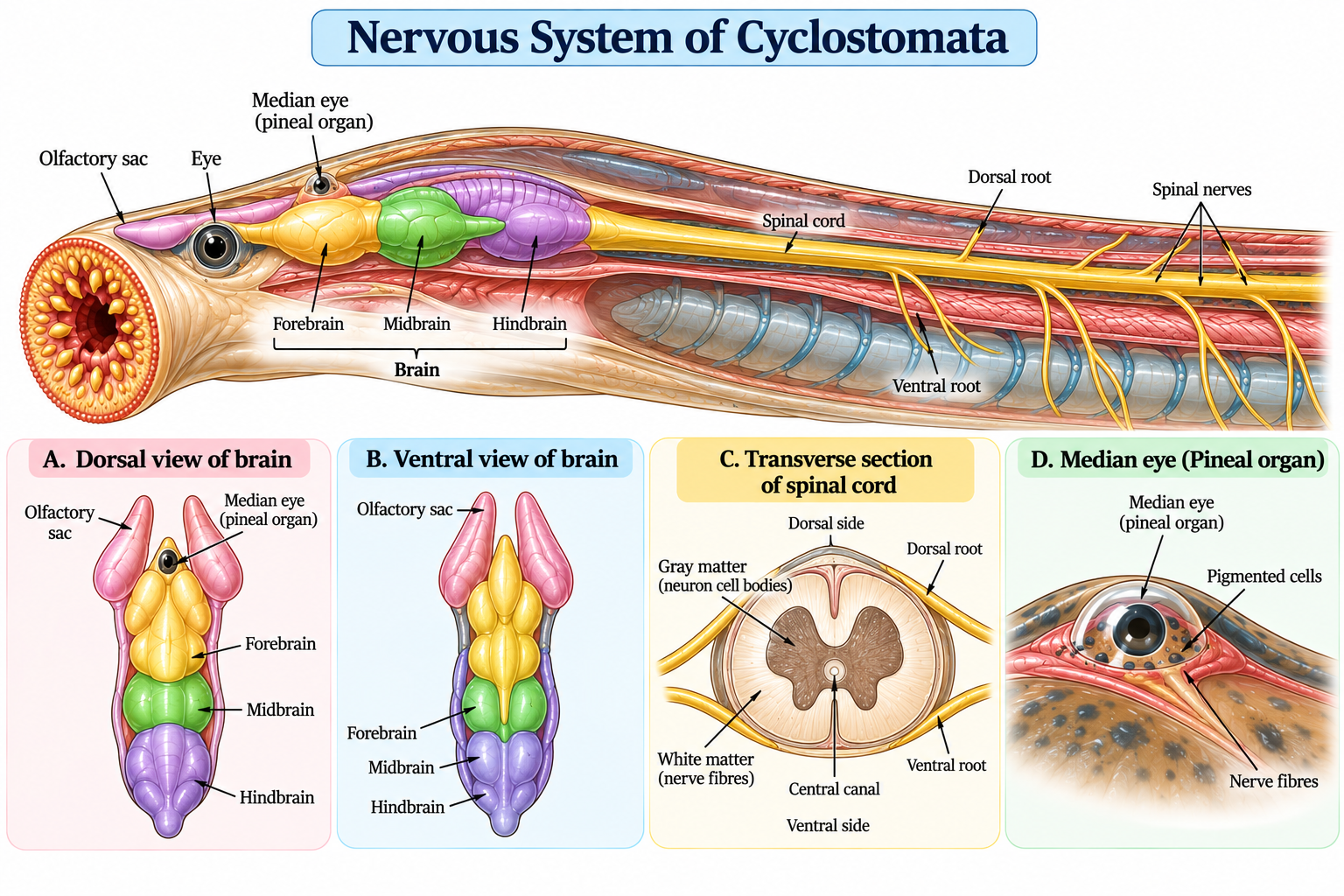
Nervous System and Sense Organs
The nervous system coordinates movement, feeding, respiration, sensory perception, and responses to environmental changes. Although the overall organization is relatively simple compared with that of many jawed vertebrates, it contains the basic components of a vertebrate nervous system.
Central Nervous System
The central nervous system consists of the brain and spinal cord.
The brain is divided into several regions, including:
- Forebrain
- Midbrain
- Hindbrain
The spinal cord extends posteriorly from the brain and runs along the dorsal side of the body.
Peripheral Nervous System
Nerves arising from the brain and spinal cord form the peripheral nervous system. These nerves connect the central nervous system with muscles, sensory organs, and other tissues.
Eyes
Lampreys possess functional eyes capable of detecting light and forming images. Their visual system is useful for orientation and locating suitable habitats or hosts.
In hagfishes, the eyes are highly reduced. They are situated beneath the skin and have limited visual capability. This reduction is associated with their predominantly deep-water lifestyle.
Olfactory Organ
A distinctive feature is the presence of a single median olfactory opening on the dorsal surface of the head. The associated olfactory system plays an important role in detecting chemical signals in the surrounding water.
Other Sensory Structures
The skin contains sensory receptors that detect mechanical and chemical stimuli. These receptors help the animal respond to changes in water movement, touch, and nearby organisms.
Hagfishes also possess specialized sensory structures around the head and mouth that assist in locating food in dark marine environments.
Functional Importance
The combination of visual, olfactory, and tactile senses allows these animals to locate food, detect environmental changes, navigate through their habitat, and respond to potential threats.
Reproduction in Cyclostomata
Reproduction is sexual, with important differences in reproductive biology between lampreys and hagfishes. Their reproductive systems are relatively simple, and the life history of lampreys includes a distinctive larval stage.
Sexes
Lampreys are generally dioecious, meaning that male and female reproductive organs occur in separate individuals. The gonads develop within the body cavity.
Hagfishes have a different reproductive organization, and reproductive biology varies among species. Their gonads are also located within the body cavity.
Gonads
The reproductive organs are not connected to specialized ducts in the same way as in many jawed vertebrates. Mature reproductive cells are released into the body cavity and eventually reach the exterior through openings associated with the renal and reproductive passages.
Fertilization
In lampreys, fertilization is external. During spawning, eggs and sperm are released into the water, where fertilization takes place.
A female may deposit eggs in a prepared nest, while the male releases sperm over them. After fertilization, the developing embryo remains in the aquatic environment.
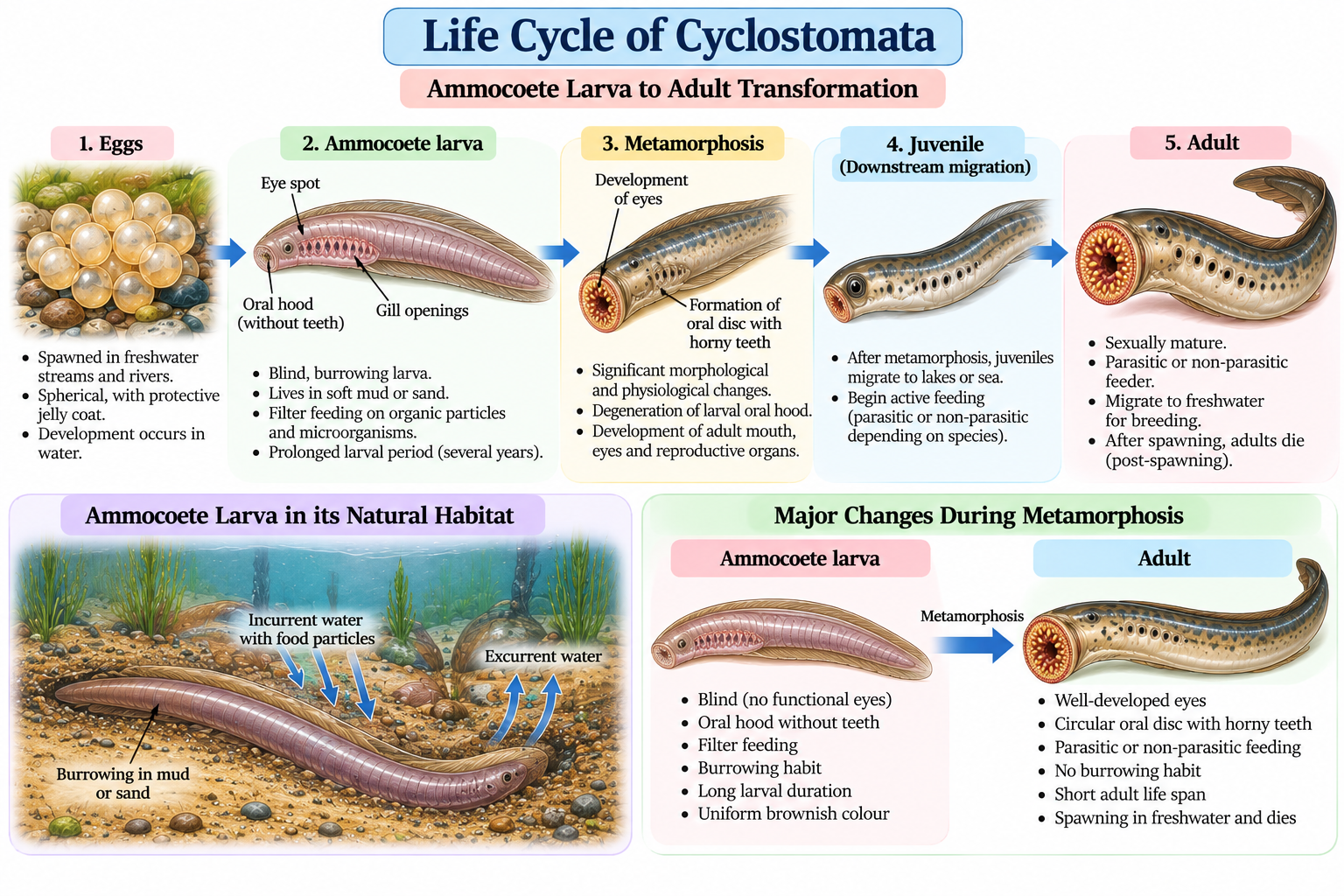
Development in Lampreys
Lampreys have a characteristic larval stage called the ammocoete larva. The larva differs markedly from the adult in appearance and feeding behavior.
The general sequence is:
Egg → Ammocoete larva → Metamorphosis → Juvenile → Adult
The larva spends a considerable period in freshwater before undergoing metamorphosis into the adult form.
Reproductive Features of Hagfishes
Hagfish reproduction differs from that of lampreys. They produce relatively large, yolk-rich eggs with a tough outer covering. The eggs possess attachment structures that help them remain together or attached to surfaces.
Reproductive Significance
The reproductive cycle, particularly the development of the ammocoete larva, is an important feature in the biology of lampreys. It also provides a useful basis for understanding the developmental diversity of early vertebrate lineages.
Feeding and Nutrition in Cyclostomata
Feeding habits vary considerably between lampreys and hagfishes. Their specialized oral structures allow them to obtain food despite the absence of jaws.
Feeding in Lampreys
Many adult lampreys are ectoparasitic. They attach themselves to the surface of a fish using their oral disc and use their keratinized teeth and rasping tongue to damage the host’s tissues.
Salivary secretions help maintain feeding by preventing rapid clotting of blood. The lamprey can then ingest blood and tissue fluids from the wound.
However, not all lampreys feed parasitically as adults. Some species have reduced feeding during the adult stage and reproduce without an extended feeding period.
Feeding in Lamprey Larvae
Ammocoete larvae have a different feeding strategy from adults. They generally live partially buried in sediment and obtain microscopic food particles from the surrounding water.
Their feeding involves:
- Mucus trapping of suspended particles
- Ciliary movement
- Ingestion of microorganisms and organic matter
This difference between larval and adult feeding is one of the most notable features of the lamprey life cycle.
Feeding in Hagfishes
Hagfishes are mainly marine scavengers. They commonly feed on dead or weakened animals and are capable of entering body cavities through small openings.
Their muscular feeding apparatus and keratinous tooth-like structures help them tear and ingest soft tissues.
Feeding Adaptations
Important adaptations include:
- Circular oral structures
- Keratinous teeth or tooth-like elements
- Strong muscular feeding apparatus
- Mucus production
- Specialized tongue or rasping structures
- Flexible body for accessing food sources
These feeding mechanisms demonstrate how jawless vertebrates have evolved effective strategies for obtaining food without the hinged jaws characteristic of most other vertebrates.
Habitat and Distribution of Cyclostomata
Cyclostomes are exclusively aquatic and occur in both marine and freshwater environments. Their distribution is closely related to the life history and ecological requirements of individual species.
Freshwater Habitat
Many lampreys spend an important part of their life in freshwater. Streams and rivers may serve as breeding and larval habitats.
Ammocoete larvae generally prefer areas with:
- Fine sediment
- Slow-moving or gently flowing water
- Suitable organic material
- Adequate oxygen availability
After metamorphosis, some species migrate from freshwater into larger rivers, lakes, or coastal waters.
Marine Habitat
Hagfishes are predominantly marine animals. They are commonly associated with the seafloor, where they locate carrion and other food resources.
Marine lampreys may also spend part of their adult life in coastal or open marine waters before returning to freshwater for reproduction.
Migration
Some lampreys exhibit anadromous migration, moving from marine environments into freshwater to reproduce. Others complete their entire life cycle in freshwater.
Migration is therefore closely associated with feeding and reproduction rather than representing a single pattern shared by every species.
Geographical Distribution
Living species occur in several regions of the Northern and Southern Hemispheres. Their distribution includes parts of:
- North America
- South America
- Europe
- Asia
- Australia and surrounding regions
The precise distribution varies substantially among species.
Ecological Adaptations
Different habitats have selected for specialized adaptations. Burrowing larvae are suited to sediment-rich freshwater environments, while adult lampreys may possess structures suited for attachment and feeding. Hagfishes are adapted to dark, marine bottom environments where chemical and tactile senses are particularly important. Thus, habitat and distribution among cyclostomes reflect differences in life cycle, feeding strategy, reproduction, and environmental adaptation.
Examples of Cyclostomata
The living jawless vertebrates traditionally included under Cyclostomata are mainly represented by lampreys and hagfishes. Important examples include Petromyzon, Lampetra, Myxine, Bdellostoma, and Eptatretus.
1. Petromyzon – Lamprey
Petromyzon is a well-known lamprey genus characterized by an elongated body, circular oral disc, and several external gill openings.
Important features:
- Jawless mouth
- Circular oral disc
- Horny teeth
- Elongated body
- Multiple gill openings
- Median fins
- Cartilaginous skeleton
2. Lampetra – Lamprey
Lampetra includes lamprey species found in freshwater and coastal environments. Depending on the species, adults may have parasitic or non-parasitic feeding habits.
Important features:
- Slender, elongated body
- Circular oral disc
- Well-developed eyes
- Several gill openings
- Absence of paired fins
3. Myxine – Hagfish
Myxine is a representative hagfish genus found in marine environments. It is particularly notable for its ability to produce large quantities of protective slime.
Important features:
- Marine habitat
- Elongated body
- Reduced eyes
- Barbels around the mouth
- Multiple gill openings
- Slime-producing glands
- Scavenging habit
4. Bdellostoma – Hagfish
Bdellostoma is a traditional and important example of a hagfish. It is a marine jawless vertebrate associated with deep-water environments and is known for its elongated body and slime-producing glands.
Important features:
- Marine habitat
- Jawless mouth
- Elongated, eel-like body
- Multiple gill openings
- Slime-producing glands
- Scavenging feeding habit
5. Eptatretus – Hagfish
Eptatretus contains numerous species of marine hagfishes. They possess a highly flexible body and specialized feeding structures.
Important features:
- Marine habitat
- Jawless feeding apparatus
- Multiple gill openings
- Slime production
- Scavenging lifestyle
Cyclostomata vs Fishes
Cyclostomata and fishes are both aquatic vertebrates, but they differ markedly in their body organization, feeding structures, skeleton, fins, and other anatomical features. The comparison is particularly useful for understanding the distinctive features of jawless vertebrates.
Difference Between Cyclostomata and Fishes
| Feature | Cyclostomata | Fishes |
|---|---|---|
| Jaws | Absent | Usually present |
| Mouth | Generally circular and specialized | Usually terminal or ventral, with jaws |
| Paired fins | Absent | Usually present |
| Skeleton | Mainly cartilaginous | Cartilaginous or bony |
| Notochord | Persistent throughout life | Usually replaced or surrounded by vertebrae |
| Scales | Absent | Usually present in many groups |
| Gill openings | Multiple separate openings | Usually fewer openings covered by an operculum in bony fishes |
| Skin | Soft and glandular | Often covered with scales or modified dermal structures |
| Feeding | Suctorial, rasping, or scavenging | Usually biting, grasping, suction, or filter feeding |
| Body appendages | Median fins; paired fins absent | Paired and median fins generally present |
| Examples | Petromyzon, Myxine, Bdellostoma | Rohu, catfish, sharks, rays |
Major Distinction
The most fundamental difference is the absence of jaws and paired fins in cyclostomes. Their persistent notochord and specialized cartilaginous structures also distinguish them from most modern jawed fishes.
However, not every feature is unique to one group. For example, some fishes have cartilaginous skeletons, while others have reduced or modified scales. Therefore, identification should be based on the overall combination of characters rather than a single feature.
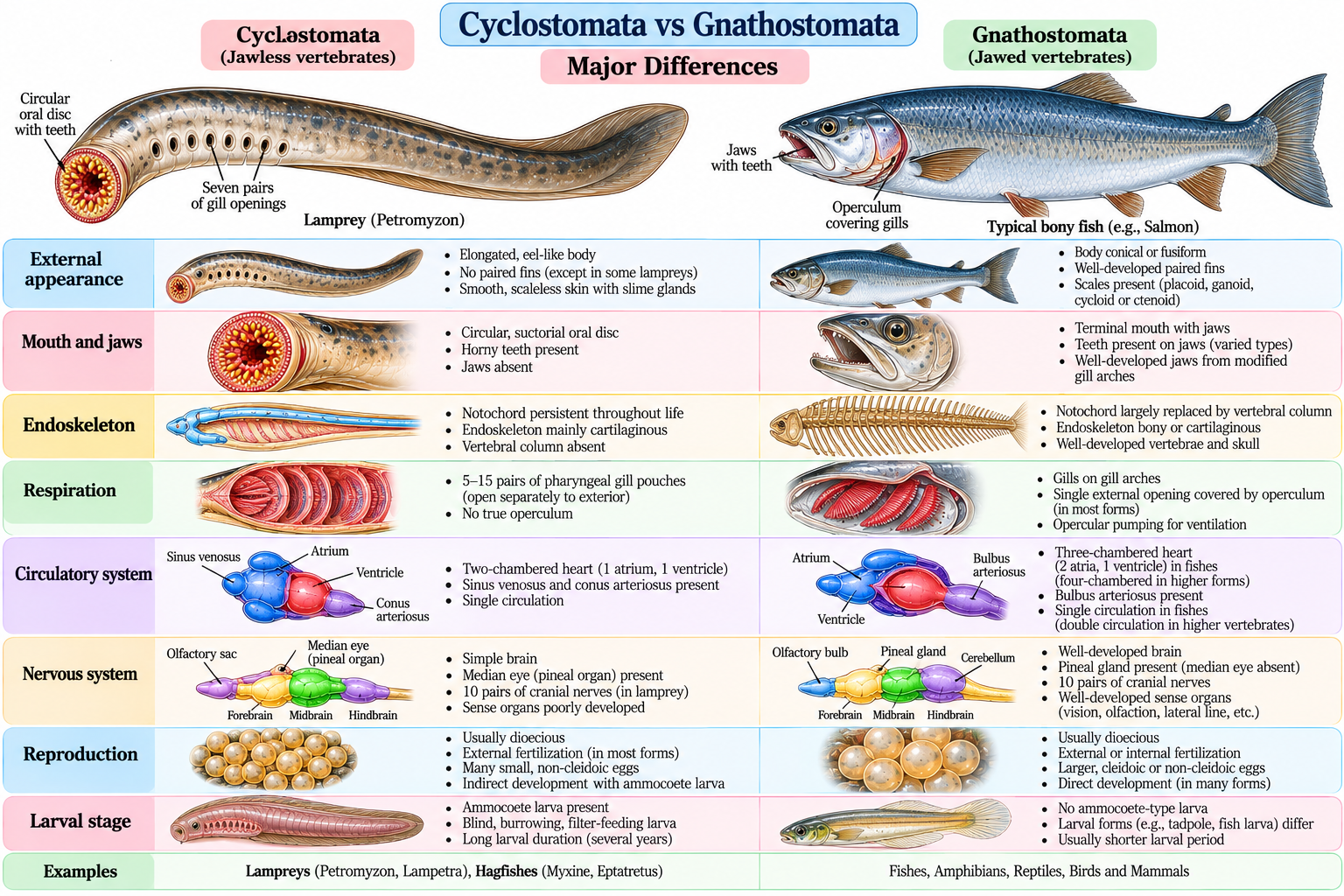
Cyclostomata vs Gnathostomata
Cyclostomes represent jawless vertebrates, whereas Gnathostomata includes vertebrates with true jaws. This distinction is fundamental in vertebrate zoology and helps explain the major structural differences between these two groups.
Difference Between Cyclostomata and Gnathostomata
| Feature | Cyclostomata | Gnathostomata |
|---|---|---|
| Jaws | Absent | Present |
| Mouth | Generally circular and specialized | Supported by upper and lower jaws |
| Paired appendages | Absent | Present |
| Skeleton | Mainly cartilaginous | Cartilaginous or bony |
| Notochord | Persistent throughout life | Usually associated with a vertebral column |
| Vertebrae | Rudimentary or poorly developed | Well-developed vertebral elements |
| Gill openings | Multiple separate openings | Usually fewer, with more complex supporting structures |
| Pectoral and pelvic regions | Absent | Present |
| Feeding apparatus | Specialized for suction, rasping, or scavenging | Jaws provide grasping, biting, and manipulation |
| Examples | Petromyzon, Myxine, Bdellostoma | Fishes, amphibians, reptiles, birds, and mammals |
Evolutionary Significance
The appearance of jaws was a major innovation in vertebrate evolution. Jaws provided greater control over food capture and processing and became associated with extensive diversification of jawed vertebrates.
Cyclostomata retain several distinctive anatomical characteristics that differ from those of jawed vertebrates. Their comparison with Gnathostomata therefore helps students understand the major structural changes associated with the evolution of jawed vertebrates.
Evolutionary Significance of Cyclostomata
Cyclostomata are important in evolutionary zoology because they represent living lineages of jawless vertebrates and possess a combination of features that provide insight into vertebrate organization.
1. Jawless Vertebrate Condition
The absence of true jaws is their most prominent feature. Their specialized feeding structures demonstrate that vertebrates can obtain and process food without the hinged jaw apparatus characteristic of Gnathostomata.
2. Persistence of the Notochord
The notochord remains an important supporting structure throughout life. This contrasts with the more extensive development of vertebral elements seen in most jawed vertebrates.
3. Cartilaginous Supporting Structures
Much of the internal supporting framework is composed of cartilage. This provides flexibility while maintaining the body shape required for swimming and specialized feeding.
4. Specialized Gill Apparatus
The presence of multiple pharyngeal gill pouches illustrates an unusual respiratory arrangement. Their organization is particularly interesting for comparative studies of vertebrate respiratory structures.
5. Developmental Importance of Lampreys
The ammocoete larva of lampreys has been especially valuable in developmental and evolutionary studies. Its transformation during metamorphosis demonstrates substantial changes in the nervous, sensory, feeding, and respiratory systems.
6. Insights Into Early Vertebrate Evolution
Comparative studies of lampreys and hagfishes contribute to understanding how major vertebrate characteristics evolved. Their anatomy is particularly useful when examining the origins of jaws, paired appendages, vertebral structures, and other features of jawed vertebrates.
7. Modern Evolutionary Perspective
Although cyclostomes were traditionally treated as a single group because of their shared jawless condition, modern evolutionary studies recognize important differences between lampreys and hagfishes. Their relationships continue to be examined using anatomical, developmental, and molecular evidence.
Overall, cyclostomes are significant not because they are simply “primitive fishes,” but because their distinctive biology provides an important comparative framework for studying vertebrate evolution and diversification.
Economic and Ecological Importance of Cyclostomata
Cyclostomata occupy specific ecological roles in aquatic ecosystems, while some species also have significance for fisheries, food webs, and biological research.
Ecological Importance
1. Role in Food Webs
Lampreys and hagfishes form part of aquatic food webs. They may serve as predators, scavengers, prey, or consumers of organic material, depending on the species and life stage.
2. Nutrient Cycling
Hagfishes contribute to the breakdown and consumption of animal remains on the seafloor. By feeding on carcasses, they help return organic matter and nutrients to marine ecosystems.
3. Regulation of Fish Populations
Parasitic lampreys attach to fish and consume blood and tissue fluids. In some ecosystems, high lamprey abundance can influence the survival and population structure of their host species.
Economic Importance
1. Fisheries
Lampreys have been used as food in some regions and are associated with local fisheries and traditional culinary practices. Their economic importance varies considerably by species and geographical region.
2. Impact on Fisheries
Some parasitic lampreys can cause significant mortality in commercially or ecologically important fish populations. This has made lamprey management an important issue in certain freshwater fisheries.
3. Research Importance
Lampreys are valuable research organisms because of their distinctive anatomy, development, nervous system, and evolutionary position. Their embryos and larvae have contributed to studies of vertebrate development.
Importance of Hagfishes
Hagfishes are particularly important as marine scavengers. Their feeding activity contributes to the removal of animal remains from the seafloor. Their unusual slime-producing system has also attracted scientific interest because of its unique biological properties.
Conservation Considerations
The conservation status of Cyclostomata varies among species. Habitat modification, migration barriers, pollution, changes in water conditions, and interactions with fisheries can affect particular lamprey populations. Therefore, conservation measures need to be considered at the species and ecosystem level rather than treating all cyclostomes as a single ecological group.
Adaptations of Cyclostomata
The body organization of cyclostomes reflects adaptations for aquatic life, specialized feeding, respiration, locomotion, and survival in different environments. These adaptations differ between lampreys and hagfishes.
1. Feeding Adaptations
Their jawless condition is accompanied by specialized feeding structures.
- Lampreys possess a circular oral disc for attachment.
- Horny teeth help them grip or rasp tissues.
- A muscular tongue assists in feeding.
- Hagfishes possess specialized keratinous tooth-like structures for tearing soft tissues.
- Hagfish feeding is supported by a highly flexible body that allows access to animal carcasses.
2. Respiratory Adaptations
Multiple pharyngeal gill pouches provide extensive respiratory surfaces.
Lampreys can maintain gas exchange through their gill openings even while attached to a host. This allows feeding and respiration to occur simultaneously.
3. Locomotory Adaptations
The elongated, flexible body and median fins support lateral undulatory swimming. The absence of paired fins allows considerable flexibility of the body during movement.
4. Protective Adaptations
The skin contains numerous mucous glands. The mucus forms a protective coating and reduces friction.
Hagfishes possess a particularly effective defense mechanism: when disturbed, they can release large quantities of slime into the surrounding water.
5. Sensory Adaptations
Different sensory systems support survival in their respective habitats.
- Lampreys have functional eyes for detecting visual information.
- Hagfishes have reduced eyes but rely strongly on chemical and tactile senses.
- Sensory structures around the mouth help detect potential food sources.
6. Reproductive Adaptations
Lampreys migrate to suitable freshwater habitats for spawning. Their eggs develop in nests, while the larvae occupy sediment-rich habitats.
The ammocoete larva is adapted for a burrowing lifestyle and suspension feeding before undergoing metamorphosis.
7. Osmoregulatory Adaptations
The kidneys, gills, and body surface work together to maintain water and ion balance. These mechanisms allow different species to survive under freshwater or marine conditions.
Overall, the adaptations of cyclostomes demonstrate how jawless vertebrates have developed specialized solutions for feeding, respiration, locomotion, defense, reproduction, and environmental regulation.
Key Takeaways
- Cyclostomata traditionally includes jawless vertebrates, mainly lampreys and hagfishes.
- The most characteristic feature is the absence of true jaws.
- The body is generally elongated, cylindrical, and adapted for aquatic life.
- Paired fins are absent, although median fins may be present.
- The skin is smooth, glandular, and lacks typical scales.
- The notochord persists throughout life and forms an important axial support.
- The endoskeleton is predominantly cartilaginous.
- Respiration occurs through specialized pharyngeal gill pouches.
- Lampreys commonly possess a circular oral disc with horny teeth.
- Hagfishes possess specialized feeding structures and are famous for their slime-producing ability.
- Lamprey development includes the characteristic ammocoete larva.
- Lampreys and hagfishes are now generally treated as separate evolutionary lineages rather than simply as one natural group.
- Important traditional examples include Petromyzon, Lampetra, Myxine, Bdellostoma, and Eptatretus.
- Cyclostomes are important for understanding the evolution and diversification of vertebrates.
Frequently Asked Questions
What is Cyclostomata?
Cyclostomata is a traditional zoological group of jawless vertebrates that includes lampreys and hagfishes. They are characterized by the absence of true jaws and paired fins.
Why are they called cyclostomes?
The name refers to their characteristic circular or rounded mouth. It is derived from Greek words meaning “circle” and “mouth.”
What are the main examples of Cyclostomata?
Important traditional examples include Petromyzon, Lampetra, Myxine, Bdellostoma, and Eptatretus.
Do cyclostomes have jaws?
No. True jaws are absent. Their feeding apparatus is specialized for activities such as attachment, rasping, scavenging, or grasping.
Do cyclostomes have paired fins?
No. Paired fins are absent. Some members possess median fins that assist in swimming.
What is an ammocoete larva?
An ammocoete is the distinctive larval stage of a lamprey. It differs considerably from the adult and generally lives partially buried in freshwater sediment, where it feeds on suspended microscopic material.
What is the difference between lampreys and hagfishes?
Lampreys generally have a circular oral disc, relatively well-developed eyes, and an ammocoete larval stage. Hagfishes are mainly marine, possess sensory barbels, have highly reduced eyes, and are well known for producing large quantities of slime.
Why are Cyclostomata important in zoology?
They are important for comparative anatomy, developmental biology, and studies of vertebrate evolution because they retain a distinctive jawless organization while possessing several fundamental vertebrate characteristics.
Conclusion
Cyclostomata represents a distinctive group of jawless vertebrates traditionally comprising lampreys and hagfishes. Their elongated bodies, absence of jaws and paired fins, persistent notochord, cartilaginous supporting structures, and specialized respiratory and feeding systems distinguish them from jawed vertebrates.
Lampreys such as Petromyzon are particularly recognized for their circular oral disc and characteristic ammocoete larva, whereas hagfishes such as Myxine and Bdellostoma are known for their marine scavenging lifestyle and remarkable slime-producing ability.
The study of these animals is important in zoology because their anatomy, development, and evolutionary relationships provide valuable comparative information about vertebrate organization and evolution. Although lampreys and hagfishes were traditionally grouped together, modern classifications recognize important evolutionary distinctions between them.
Overall, the study of Cyclostomata provides a useful foundation for understanding the diversity of jawless vertebrates and the major structural innovations that characterize later vertebrate lineages.
Recommended Study Resource
The Vertebrate Body
by Alfred Sherwood Romer (Author), Thomas S. Parsons (Author), Thomas Parsons
Vertebrates: Comparative Anatomy, Function, Evolution
by Kenneth Kardong (Author)
As an Amazon Associate I earn from qualifying purchases.
References
- Romer, A. S. & Parsons, T. S. The Vertebrate Body. Saunders College Publishing.
- Kardong, K. V. Vertebrates: Comparative Anatomy, Function, Evolution. McGraw-Hill.
- Pough, F. H., Janis, C. M. & Heiser, J. B. Vertebrate Life. Pearson.
- Hildebrand, M. & Goslow, G. E. Analysis of Vertebrate Structure. Wiley.
- Nelson, J. S., Grande, T. C. & Wilson, M. V. H. Fishes of the World. Wiley.
- Encyclopaedia Britannica. Entries on lampreys, hagfishes, and jawless fishes.
- Animal Diversity Web, University of Michigan. Species accounts and taxonomic information for lampreys and hagfishes.
- Integrated Taxonomic Information System (ITIS). Taxonomic information for representative cyclostome genera.
Discover more from Zoologyverse
Subscribe to get the latest posts sent to your email.