
Introduction to Plasma Membrane
Every living cell needs a boundary that separates its internal environment from the surrounding medium. This boundary is the plasma membrane, also called the cell membrane. It is a thin, flexible and selectively permeable membrane that surrounds the cytoplasm of almost every cell.
The plasma membrane is much more than a simple covering. It controls the movement of substances into and out of the cell, receives signals from the external environment, helps cells recognize one another, provides attachment sites for the cytoskeleton and participates in processes such as endocytosis and exocytosis.
At the molecular level, the plasma membrane is mainly composed of lipids, proteins and carbohydrates. These components are arranged in a dynamic organization commonly explained by the fluid mosaic model proposed by Singer and Nicolson in 1972. The model describes the membrane as a fluid phospholipid bilayer containing different proteins and other molecules that can move within the membrane.
Key Takeaways
- The plasma membrane forms the boundary between the cell and its surroundings.
- Its basic framework is a phospholipid bilayer.
- The membrane also contains proteins, cholesterol and carbohydrates.
- The fluid mosaic model explains its dynamic organization.
- Phospholipids provide the basic barrier, while membrane proteins perform many specialized functions.
- Cholesterol helps regulate membrane fluidity and stability in animal cells.
- Carbohydrates attached to lipids and proteins participate in cell recognition and communication.
- The membrane is selectively permeable, allowing some substances to cross more readily than others.
- Transport may occur through diffusion, facilitated diffusion, active transport, endocytosis or exocytosis.
- Membrane receptors allow cells to detect and respond to external signals.
What is the Plasma Membrane?
The plasma membrane is the thin, living membrane that surrounds the cytoplasm of a cell. It separates the intracellular environment from the extracellular environment while allowing controlled exchange of materials between them.
All cells possess a plasma membrane. In eukaryotic cells, the membrane surrounds the cytoplasm and works together with internal membranes to maintain the organization of the cell.
The plasma membrane is not a rigid structure. Its components are arranged dynamically, allowing the membrane to bend, fuse, move and repair itself. The membrane is generally around 5–10 nm thick, making it far too thin to be resolved clearly by an ordinary light microscope.
Structure of the Plasma Membrane
The basic structural framework of the plasma membrane is the phospholipid bilayer. Embedded within or associated with this bilayer are proteins, cholesterol and carbohydrates.
The major components are:
- Phospholipids
- Membrane proteins
- Cholesterol
- Carbohydrates
Together, these components produce a membrane that is both stable and flexible.
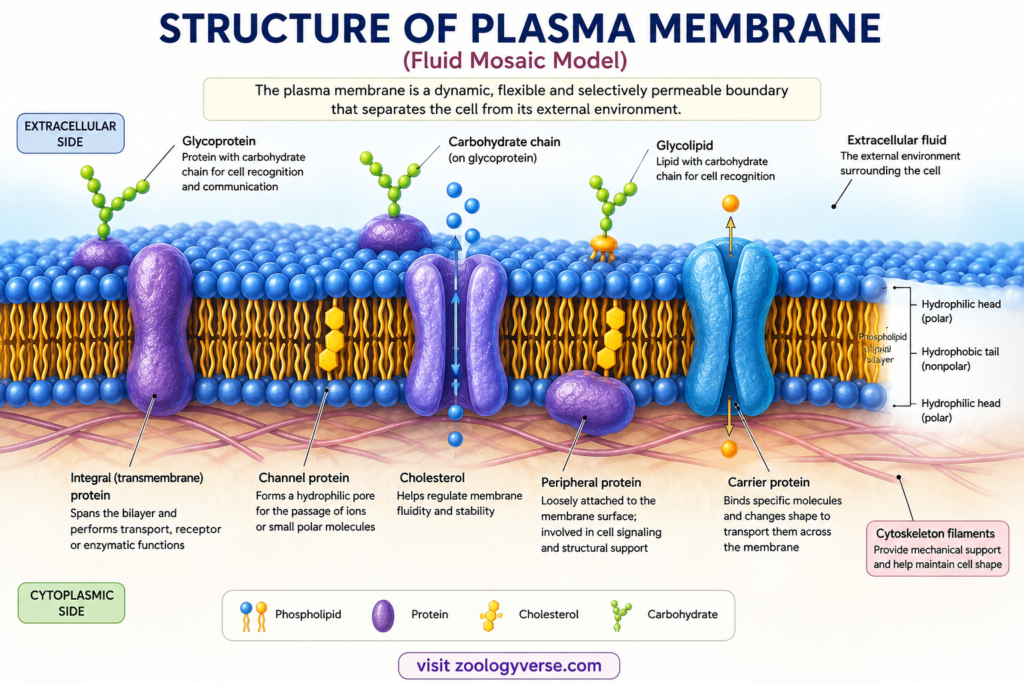
Fluid Mosaic Model
The currently accepted general description of plasma membrane organization is the fluid mosaic model, proposed by S. J. Singer and Garth L. Nicolson in 1972.
The term “fluid mosaic” describes two important characteristics of the membrane.
Fluid :- The membrane is called fluid because many phospholipids and membrane proteins can move laterally within the membrane. The membrane therefore behaves more like a dynamic two-dimensional layer than a rigid structure.
Mosaic
- The membrane is called a mosaic because it contains a variety of molecules, particularly different types of proteins, embedded within the phospholipid bilayer.
- The model has been refined over time, but it remains a useful framework for understanding membrane structure and function.
Factors Affecting Membrane Fluidity
Membrane fluidity is influenced by:
- Temperature
- Fatty acid composition
- Degree of fatty acid saturation
- Cholesterol concentration
- Distribution of membrane proteins
Unsaturated fatty acid tails contain double bonds that introduce bends into the hydrocarbon chains, reducing tight packing and generally increasing fluidity. Cholesterol acts as a regulator of membrane fluidity, helping prevent excessive fluidity at higher temperatures and excessive rigidity at lower temperatures.
Phospholipids
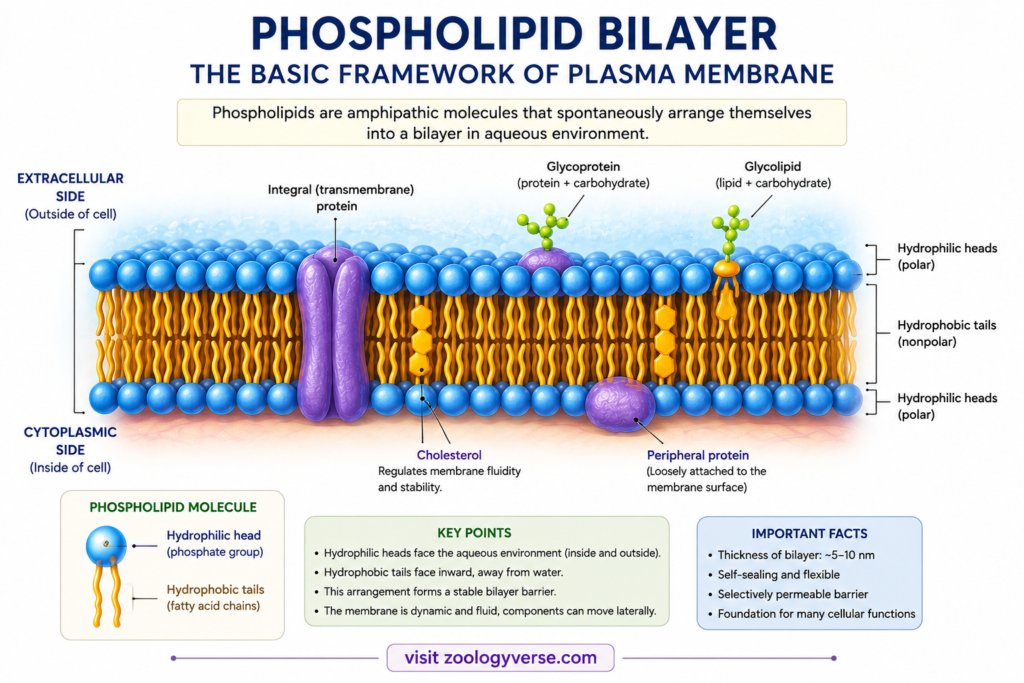
Phospholipids form the basic structural framework of the plasma membrane.
A typical phospholipid has:
- A hydrophilic head
- Two hydrophobic fatty acid tails
The hydrophilic head interacts readily with water, whereas the hydrophobic tails tend to avoid water.
Because the cell’s interior and exterior are aqueous environments, phospholipids spontaneously arrange themselves into two layers. The hydrophilic heads face the aqueous environments, while the hydrophobic tails face inward toward each other.
This arrangement creates the phospholipid bilayer. The hydrophobic interior of the bilayer acts as an important barrier, particularly against ions and many polar molecules.
Membrane Proteins
Proteins are responsible for many of the specialized functions of the plasma membrane.
They can be broadly classified into integral proteins and peripheral proteins.
Integral Membrane Proteins
Integral proteins are embedded within the phospholipid bilayer. Many extend across the entire membrane and are called transmembrane proteins.
They may function as:
- Channels
- Carriers
- Pumps
- Receptors
- Enzymes
- Cell-adhesion molecules
Transport proteins are particularly important because many ions and polar molecules cannot readily cross the hydrophobic core of the phospholipid bilayer.
Peripheral Membrane Proteins
Peripheral proteins are associated with the surface of the membrane rather than being deeply embedded within the lipid bilayer.
They may interact with:
- Integral membrane proteins
- Phospholipid head groups
- Cytoskeletal elements
- Extracellular structures
They contribute to membrane organization, cell shape, signaling and other cellular activities.
Cholesterol
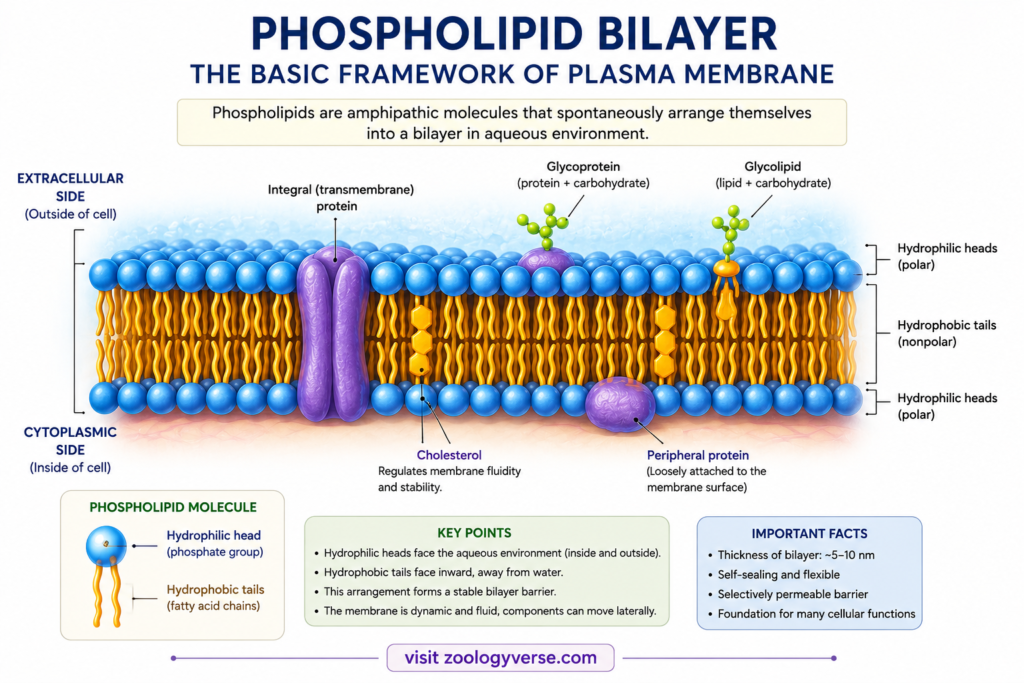
In animal cells, cholesterol is an important component of the plasma membrane.
Cholesterol molecules are positioned between phospholipids. Their hydrophobic region interacts with the fatty acid tails of phospholipids, while the hydroxyl group is positioned near the polar region.
Cholesterol helps:
- Maintain membrane stability
- Regulate membrane fluidity
- Reduce excessive movement of phospholipids at higher temperatures
- Prevent excessive packing of phospholipids at lower temperatures
- Contribute to specialized membrane regions such as lipid rafts
Therefore, cholesterol does not simply make the membrane “more fluid.” Its major role is to buffer changes in fluidity caused by temperature and other factors.
Membrane Carbohydrates
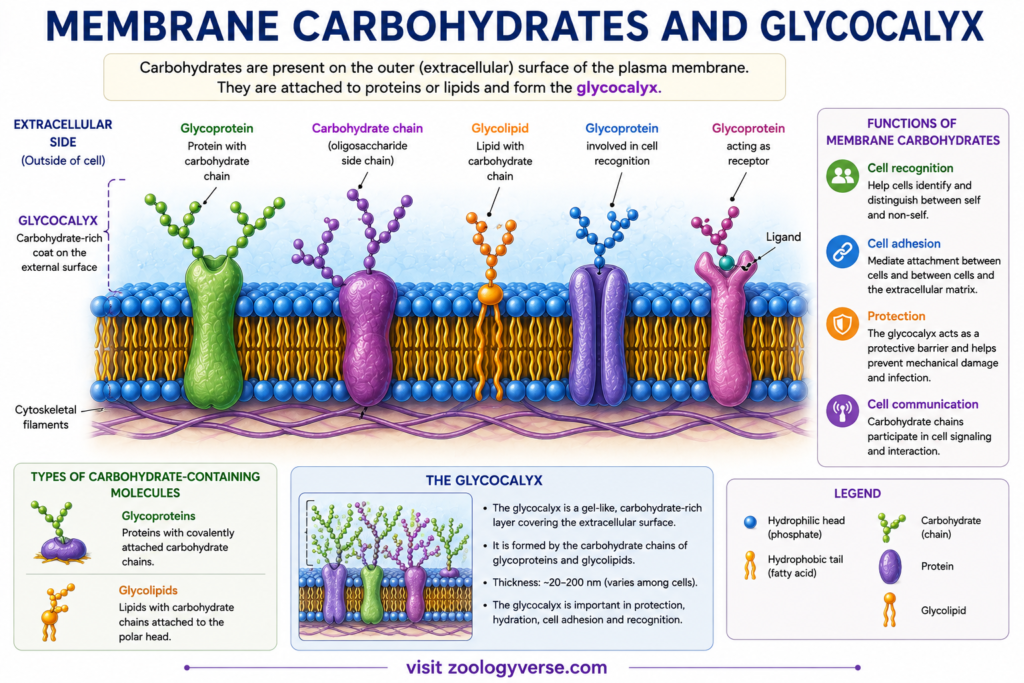
Carbohydrates are found mainly on the external surface of the plasma membrane.
They are usually attached to:
- Proteins, forming glycoproteins
- Lipids, forming glycolipids
Together, these carbohydrate-containing molecules contribute to the glycocalyx, a carbohydrate-rich layer on the external surface of many cells.
Membrane carbohydrates have important roles in:
- Cell recognition
- Cell-to-cell interactions
- Cell adhesion
- Immune recognition
- Protection of the cell surface
For example, surface carbohydrate patterns help cells distinguish between different cell types and contribute to recognition of self and non-self.
Functions of the Plasma Membrane
The plasma membrane performs numerous functions that are essential for cellular survival.
Protection and Boundary Formation
- The plasma membrane surrounds the cell and separates the cytoplasm from the external environment.
- It helps protect cellular components while maintaining a distinct intracellular environment.
- However, it should not be considered an absolute barrier. The membrane is selectively permeable and allows controlled exchange with the surroundings.
Selective Transport
- One of the most important functions of the plasma membrane is controlling the movement of substances into and out of the cell.
- Small nonpolar molecules can pass through the lipid bilayer relatively easily, whereas ions and many polar molecules generally require specific transport proteins.
- Transport proteins include channels and carriers, each with specific transport properties.
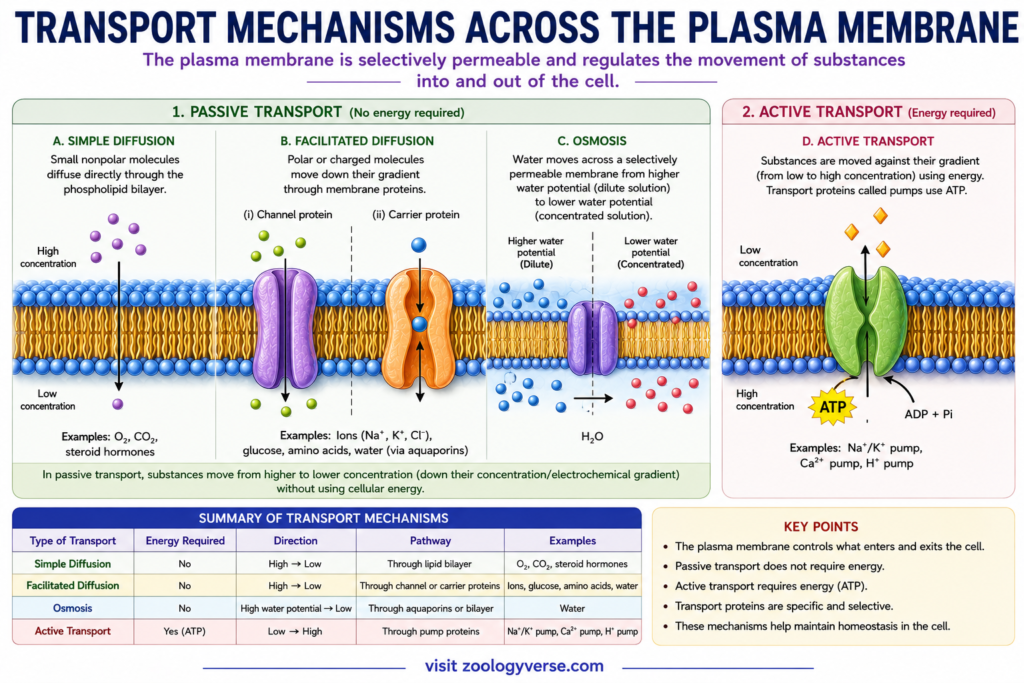
Passive Transport
Passive transport occurs without direct expenditure of cellular metabolic energy.
It includes:
Simple Diffusion
- Molecules move from a region of higher concentration toward a region of lower concentration.
- Examples include the movement of gases such as oxygen and carbon dioxide across suitable membranes.
Facilitated Diffusion
- Some molecules cannot cross the lipid bilayer efficiently on their own. They can move down their concentration or electrochemical gradient through membrane proteins.
- Examples include transport of certain sugars and ions.
- Carrier proteins bind specific molecules and undergo conformational changes that move the molecules across the membrane.
Osmosis
Osmosis refers to the movement of water across a selectively permeable membrane in response to differences in water potential or solute concentration.
Active Transport
- Active transport moves substances against their electrochemical gradient and requires an energy source.
- A classic example is the sodium-potassium pump (Na⁺/K⁺-ATPase).
- Transport proteins involved in active transport are often called pumps. They use energy, directly or indirectly, to move substances in a direction that would not occur through simple diffusion.
Endocytosis
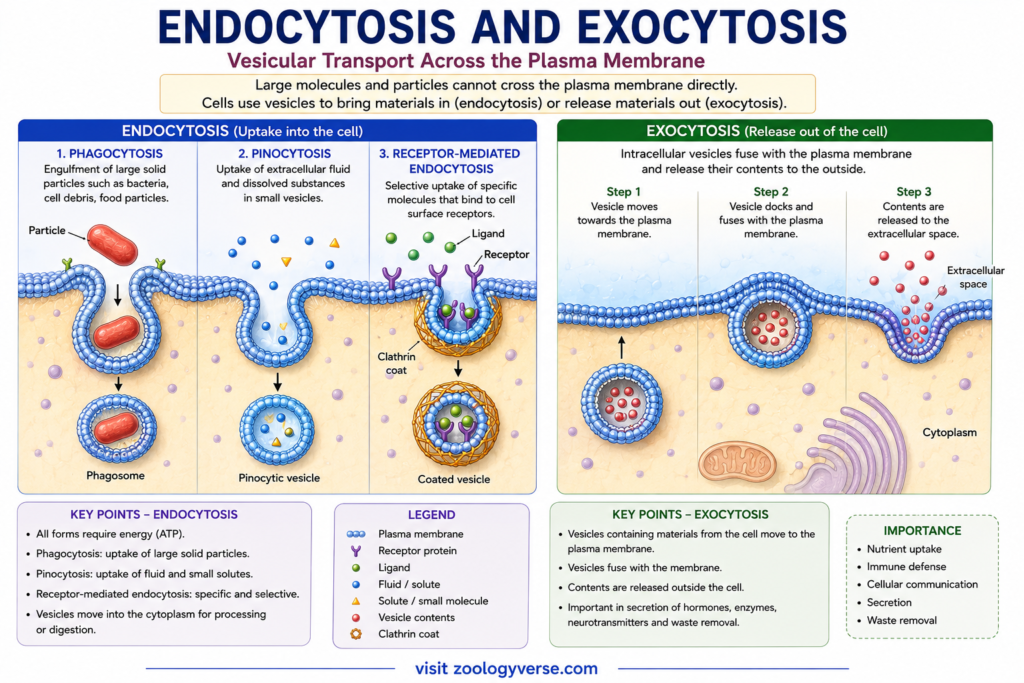
The plasma membrane can take materials into the cell by forming membrane-bound vesicles. This process is known as endocytosis.
Major forms include:
- Phagocytosis – uptake of large particles or cells
- Pinocytosis – uptake of extracellular fluid and dissolved substances
- Receptor-mediated endocytosis – selective uptake of specific molecules through membrane receptors
Endocytosis allows cells to internalize substances that are too large to cross the membrane through conventional transport proteins.
Exocytosis
Exocytosis is the process by which materials are released from the cell.
A vesicle containing cellular material moves toward the plasma membrane and fuses with it. The contents of the vesicle are then released into the extracellular environment.
Exocytosis is important in:
- Secretion of hormones
- Release of neurotransmitters
- Secretion of digestive enzymes
- Removal of certain cellular materials
Cell Signaling
The plasma membrane acts as an important communication interface between the cell and its environment.
Specific membrane proteins function as receptors. When a signaling molecule such as a hormone or growth factor binds to its receptor, the receptor can initiate intracellular signaling pathways.
In this way, the plasma membrane allows the cell to detect and respond to changes outside the cell.
Cell Recognition
The carbohydrate molecules present on the outer surface of the membrane contribute to cellular recognition.
Cells can identify and interact with other cells partly through molecular markers present on their surfaces.
This is particularly important in:
- Tissue formation
- Immune responses
- Cell adhesion
- Development
- Cell-cell communication
Cell Adhesion
Membrane proteins participate in interactions between neighboring cells and between cells and the extracellular matrix.
These interactions help maintain the organization and structural integrity of tissues.
Some membrane proteins act as attachment points that connect the plasma membrane with the cytoskeleton or extracellular structures.
Maintaining Electrochemical Gradients
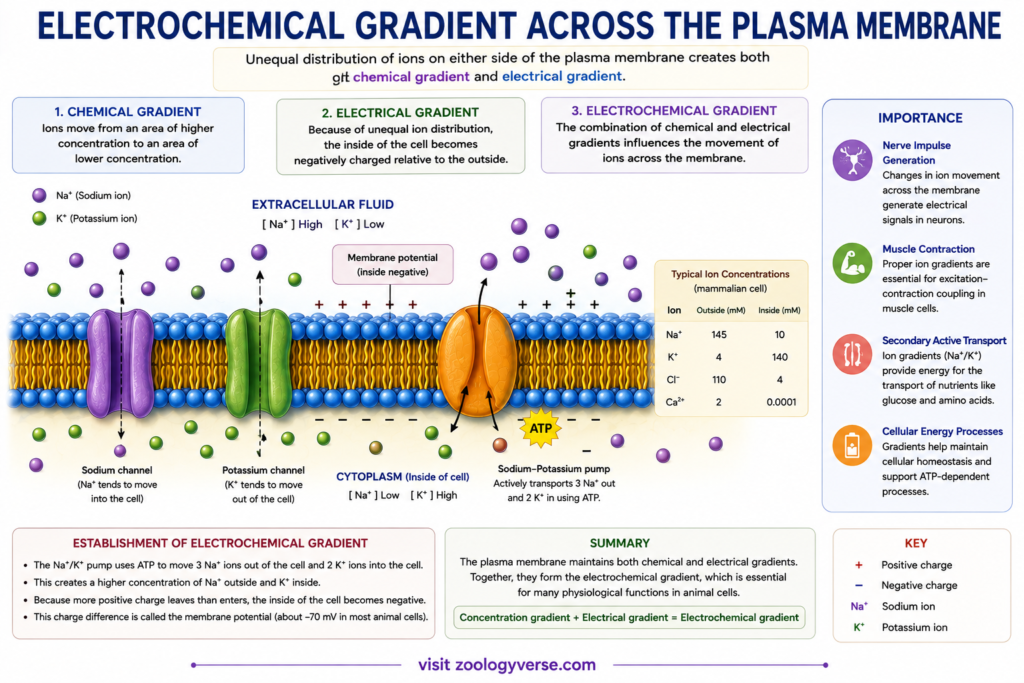
The plasma membrane helps maintain differences in ion concentration between the cytoplasm and extracellular fluid.
These concentration differences, together with differences in electrical charge across the membrane, produce electrochemical gradients.
Such gradients are essential for:
- Nerve impulse generation
- Muscle contraction
- Secondary active transport
- Cellular energy processes
Membrane transport proteins are central to establishing and maintaining these gradients.
Selective Permeability of the Plasma Membrane
- The plasma membrane is described as selectively permeable because it allows some substances to cross more easily than others.
- The lipid bilayer is relatively permeable to many small nonpolar molecules but presents a significant barrier to ions and most large polar molecules.
- The cell therefore relies heavily on transport proteins to regulate the movement of substances.
- This selective permeability allows the cell to maintain a relatively stable internal environment, known as homeostasis.
Asymmetry of the Plasma Membrane
The two sides of the plasma membrane are not chemically identical.
The distribution of:
- Phospholipids
- Proteins
- Cholesterol
- Carbohydrates
is different between the cytoplasmic and extracellular sides.
For example, membrane carbohydrates are predominantly associated with the extracellular surface, contributing to cell recognition and interaction.
This asymmetry is important because different sides of the membrane perform different functions.
Plasma Membrane and Cytoskeleton
The plasma membrane is closely associated with the cytoskeleton.
Cytoskeletal elements can interact with membrane proteins and help maintain:
- Cell shape
- Membrane organization
- Cell movement
- Positioning of membrane proteins
- Mechanical stability
The connection between membrane proteins and the cytoskeleton also allows forces and signals to be transmitted between the extracellular environment and the interior of the cell.
Summary of Plasma Membrane Components and Functions
| Component | Major structural role | Important functions |
|---|---|---|
| Phospholipids | Form bilayer | Selective barrier and membrane fluidity |
| Cholesterol | Located between phospholipids | Regulates fluidity and stability |
| Integral proteins | Embedded in bilayer | Transport, receptors, enzymes and adhesion |
| Peripheral proteins | Associated with membrane surface | Signaling, structural support and enzymatic functions |
| Glycoproteins | Proteins with carbohydrate chains | Cell recognition and signaling |
| Glycolipids | Lipids with carbohydrate chains | Recognition and membrane organization |
| Carbohydrates | Mainly on extracellular surface | Recognition, adhesion and protection |
Importance of the Plasma Membrane in Animal Cells
The plasma membrane is particularly important because its functions are directly connected with the physiology of animal cells.
- Neurons depend on ion gradients across the plasma membrane for electrical signaling.
- Muscle cells use membrane-associated ion gradients during excitation and contraction.
- Intestinal epithelial cells use membrane transport proteins to absorb nutrients.
- Red blood cells depend on membrane flexibility and transport mechanisms to survive in the circulation.
- Immune cells use membrane receptors for recognition and communication.
- Secretory cells use exocytosis to release hormones, enzymes and other substances.
Thus, the plasma membrane is both a structural boundary and a highly active functional system.
Why the Plasma Membrane is Called a Dynamic Structure
The plasma membrane continuously undergoes changes.
Lipids and many proteins can move laterally, membrane vesicles can fuse with or bud from the membrane, and membrane proteins can interact with signaling molecules and cytoskeletal components.
This dynamic nature allows the cell to:
- Change shape
- Communicate with its environment
- Import substances
- Export substances
- Repair membrane damage
- Move through tissues
- Respond rapidly to external signals
Therefore, describing the plasma membrane simply as a “covering” would underestimate its biological importance.
Frequently Asked Questions
What is the plasma membrane?
The plasma membrane is a thin, selectively permeable membrane surrounding the cell. It separates the intracellular environment from the extracellular environment and regulates exchange between them.
What is the main component of the plasma membrane?
The fundamental structural component is the phospholipid bilayer, although proteins, cholesterol and carbohydrates are also important components.
What is the fluid mosaic model?
The fluid mosaic model describes the plasma membrane as a dynamic phospholipid bilayer containing proteins and other molecules that are distributed in a mosaic-like arrangement.
What are the major functions of the plasma membrane?
Major functions include selective transport, protection, cell signaling, cell recognition, cell adhesion, maintenance of electrochemical gradients, endocytosis and exocytosis.
Why is cholesterol present in the plasma membrane?
Cholesterol helps regulate membrane fluidity and contributes to membrane stability, particularly by buffering the effects of temperature on membrane organization.
What is selective permeability?
Selective permeability is the ability of the plasma membrane to allow certain substances to cross more readily than others.
Conclusion
The plasma membrane is a highly organized and dynamic structure that is essential for cellular life. Its basic framework is a phospholipid bilayer, but its biological activities depend on the coordinated action of phospholipids, proteins, cholesterol and carbohydrates.
The fluid mosaic model provides a useful explanation of how these components are organized within the membrane. While phospholipids create the fundamental permeability barrier, proteins provide specialized functions such as transport, signaling, enzymatic activity and cell adhesion. Cholesterol contributes to membrane stability and fluidity, whereas carbohydrates participate in cell recognition and communication.
Most importantly, the plasma membrane allows a cell to maintain a controlled internal environment while continuously interacting with its surroundings. Its ability to regulate transport, receive signals, recognize other cells and exchange materials makes it one of the most important structures in cell biology.
Quick Revision Points
- Plasma membrane surrounds the cytoplasm.
- Its basic structure is a phospholipid bilayer.
- The fluid mosaic model was proposed by Singer and Nicolson in 1972.
- Major membrane components are phospholipids, proteins, cholesterol and carbohydrates.
- Phospholipid heads are hydrophilic and tails are hydrophobic.
- Integral proteins are embedded within the lipid bilayer.
- Peripheral proteins are associated with the membrane surface.
- Cholesterol regulates membrane fluidity in animal cells.
- Glycoproteins and glycolipids contribute to cell recognition.
- Membrane proteins facilitate transport of ions and polar molecules.
- Passive transport does not require direct metabolic energy.
- Active transport requires an energy source.
- Endocytosis brings materials into the cell.
- Exocytosis releases materials from the cell.
- Plasma membrane receptors participate in cell signaling.
- Selective permeability helps maintain cellular homeostasis.
References and Further Reading
- Components and Structure of Cell Membranes :- the fluid mosaic model, phospholipids, membrane proteins, cholesterol, carbohydrates and membrane fluidity.
- The Cell Membrane :- membrane structure, fluidity and the functions of membrane components.
- Cell Membranes, The Cell: A Molecular Approach :- Molecular-level discussion of membrane structure and membrane proteins.
- The Cell Surface :- Discusses the plasma membrane as a selective barrier, membrane transport and cell-environment interactions.
- Principles of Membrane Transport :- Detailed resource on channels, carriers, active transport and electrochemical gradients.
- Membrane Structure
Discover more from Zoologyverse
Subscribe to get the latest posts sent to your email.