
Classification of Serpula
Serpula is a genus of sessile, marine annelid tube worms that are members of the Serpulidae family. It is often referred to as calcareous tubeworm, serpulid tubeworm, fanworm, or plume worm. The only difference between serpulid worms and tube worms of the closely related sabellid family is that the former have a cartilaginous operculum that blocks the entrance to their protective tube once the animal has retreated inside. The multicolored fan-shaped “crown” is the most distinguishing characteristic of worms belonging to the genus Serpula. Scuba divers and other casual spectators most frequently notice the crown, which these animals use for breathing and feeding.
Kingdom :- Animalia (Multicellular eukaryotic organisms)
Phylum :- Annelida (Segmented worms with true coelom and metamerism)
Class :- Polychaeta (Marine bristle worms with parapodia)
Order :- Sabellida (Tubicolous, sedentary and proboscis not-protrusible, without jaws or teeth)
Genus :- Serpula
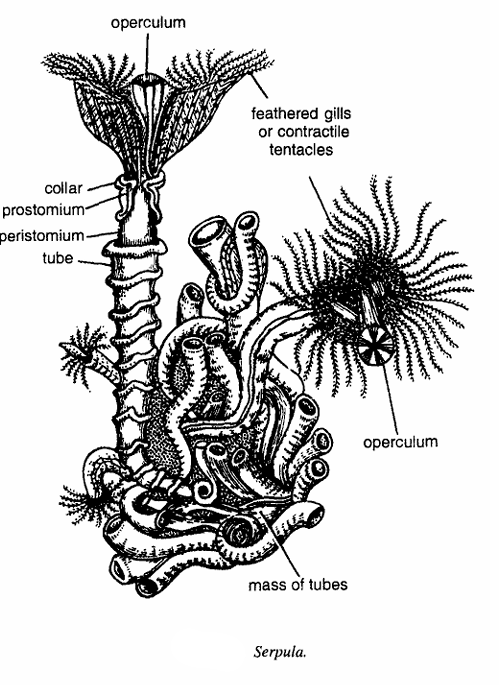
Habit and habitat of Serpula
Serpula lives in a hard, shelly, calcareous and twisted tube, attached to shells and other marine objects. Several animals live together.
Distribution
It is found in Europe and U.S.A
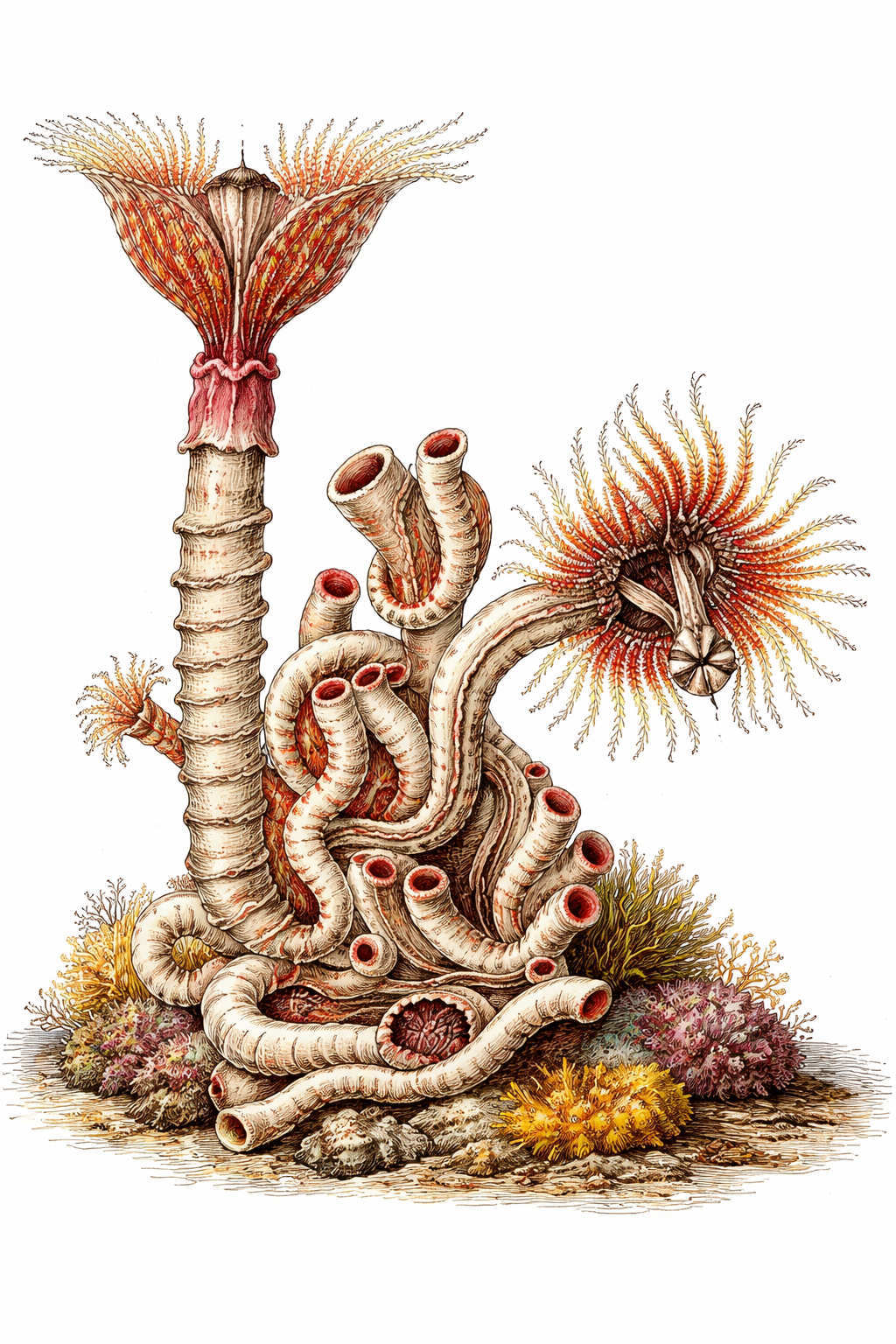
Comments of Serpula
- Body is elongated and cylindrical but contractile.
- Anterior end forms head consisting of prostomium and peristomium.
- Posterior end remains attached with mass of calcareous tubes.
- Prostomium contains a pair of incomplete circlets of feathered gills or branchian which are branched.
- Gills are elongated and pinnately modified palps, sometimes supported by cartilaginous skeleton and are richly supplied with blood and besides respiration serve to collect microscopic food particles.
- Each gill consists of an elongated branch, having two rows of short filaments.
- Tip of one of the dorsal filaments enlarges to form stopper or operculum, often armed with plates and spines for the closure of the tube in which the annelid lives.
- Peristome is extended forward as paired membrane to form a collar which is employed in smoothing the inside of the shell.
- Nephridia of posterior segments act as genital ducts.
Identification
Since the animal contains a pair of feathered gill and all above characters, hence it is Serpula.
See other posts also
- Larval Forms in Echinodermata
- PRIMITIVE NERVOUS SYSTEM OF COELeNTERATES AND ECHINODERMS
- EXCRETION IN HIGHER AQUATIC INVERTEBRATES
- OSMOREGULATION OF FRESHWATER AND MARINE INVERTEBRATES
- PATTERN OF FEEDING AND DIGESTION IN HIGHER INVERTEBRATES
Discover more from Zoologyverse
Subscribe to get the latest posts sent to your email.