
Introduction
The cell is the fundamental structural and functional unit of life. Every living organism, whether it consists of a single cell or billions of cells, depends on cellular activities for survival. Although cells share several basic features, they are not all organized in the same way.
On the basis of their internal organization, cells are broadly divided into prokaryotic cells and eukaryotic cells. Prokaryotic cells have a relatively simple internal organization and do not possess a membrane-bound nucleus. Eukaryotic cells, in contrast, contain a distinct nucleus surrounded by a nuclear envelope and possess several membrane-bound organelles.
Bacteria and Archaea are classified as prokaryotes, whereas animals, plants, fungi and protists are eukaryotes. Despite their differences in size and complexity, both cell types contain some fundamental components, including DNA, ribosomes, cytoplasm and a plasma membrane.
Understanding the concept of prokaryotic and eukaryotic cells is essential in cell biology because many important biological processes—including genetic information flow, energy production, protein synthesis and cell division—are organized differently in the two cell types.
What Is a Cell?
A cell is the smallest unit capable of carrying out the basic processes associated with life. Cellular activities include obtaining nutrients, producing energy, synthesizing molecules, responding to environmental changes and reproducing.
The modern cell theory recognizes the cell as the basic structural and functional unit of living organisms. Organisms may be unicellular, such as many bacteria and protozoans, or multicellular, such as plants and animals.
Although cells vary greatly in shape and function, all cells share a basic molecular framework. They possess genetic material, a plasma membrane, cytoplasm and ribosomes. The major difference between the two broad cell categories lies in how their genetic material and internal structures are organized.
Concept of Prokaryotic Cells
The term prokaryotic is derived from the words pro, meaning “before,” and karyon, meaning “nucleus.” Prokaryotic cells are cells in which the genetic material is not enclosed within a membrane-bound nucleus.
Instead of a true nucleus, their chromosome is located in a relatively concentrated region of the cytoplasm called the nucleoid.
Prokaryotes are generally unicellular organisms and include the two major domains:
- Bacteria
- Archaea
A prokaryotic cell is structurally simpler than a typical eukaryotic cell, but this simplicity should not be confused with biological unimportance. Prokaryotes display remarkable metabolic diversity and can survive in environments ranging from ordinary soil and water to highly acidic, saline or extremely hot habitats.
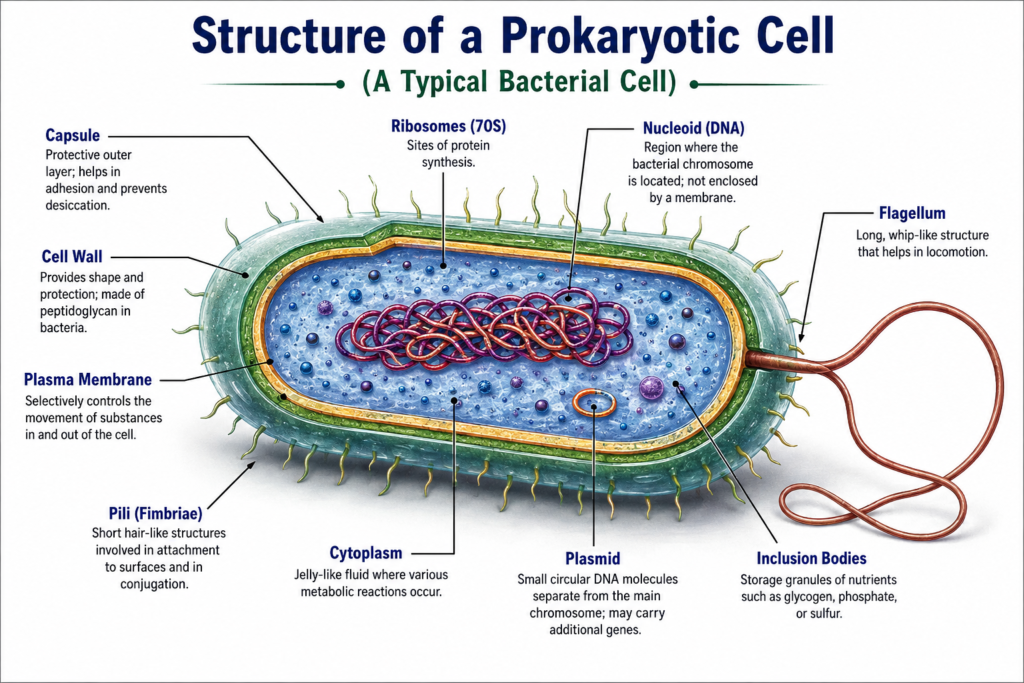
Structure of Prokaryotic Cells
Although prokaryotic cells are relatively small and structurally simple, they contain all the components required for independent cellular activity.
Plasma Membrane :- The plasma membrane forms the boundary between the cell and its external environment. It regulates the movement of substances into and out of the cell and is involved in several important cellular processes.
Like eukaryotic plasma membranes, prokaryotic plasma membranes are primarily composed of lipids and proteins.
Cytoplasm :- The cytoplasm is the region inside the plasma membrane in which many metabolic reactions take place. It contains the cytosol, ribosomes, genetic material and other cellular components.
Unlike eukaryotic cells, the cytoplasm of a typical prokaryote does not contain membrane-bound organelles such as mitochondria, Golgi apparatus or endoplasmic reticulum.
Nucleoid :- The nucleoid is the region containing the main chromosome of a prokaryotic cell. It is not surrounded by a nuclear membrane.
In many bacteria, the principal chromosome is a single circular DNA molecule, although prokaryotic genomes are more diverse than this simplified description suggests.
Ribosomes :- Ribosomes are responsible for protein synthesis. Prokaryotic ribosomes are smaller than the cytoplasmic ribosomes of eukaryotic cells and are commonly described as 70S ribosomes.
Cell Wall :- Many prokaryotes possess a cell wall outside the plasma membrane. In bacteria, the cell wall commonly contains peptidoglycan, which provides structural support and helps maintain cell shape.
However, not all prokaryotes have identical cell-wall structures. Archaea, for example, do not possess bacterial-type peptidoglycan.
Capsule :- Some bacteria possess an additional outer layer called a capsule. It may help protect the cell from environmental stresses and can assist in attachment to surfaces.
Flagella :- Certain prokaryotes possess flagella, which can help them move through their surroundings.
Pili and Fimbriae :- Pili and fimbriae are hair-like surface structures found in some bacteria. Fimbriae commonly help bacteria attach to surfaces, while specialized pili can participate in processes such as bacterial conjugation.
The exact combination of surface structures varies among different prokaryotic organisms.
Characteristics of Prokaryotic Cells
The important characteristics of prokaryotic cells can be summarized as follows:
- They are generally unicellular.
- They lack a membrane-bound nucleus.
- Their DNA is located in the nucleoid region.
- Membrane-bound organelles are absent.
- Ribosomes are present and are typically 70S.
- Most bacteria possess a cell wall.
- They are generally smaller than eukaryotic cells.
- Their cellular organization is relatively simple.
- Some possess capsules, pili, fimbriae or flagella.
- Cell division generally occurs by binary fission.
- They exhibit extensive metabolic diversity.
Prokaryotic cells are typically much smaller than eukaryotic cells. OpenStax gives an approximate diameter range of 0.1–5.0 μm for prokaryotic cells, compared with approximately 10–100 μm for many eukaryotic cells. These are general ranges rather than absolute limits.
Examples of Prokaryotic Organisms
Important examples include:
- Escherichia coli
- Bacillus subtilis
- Staphylococcus species
- Cyanobacteria such as Anabaena
- Methanogenic archaea
- Halophilic archaea
- Thermophilic archaea
Thus, prokaryotes are not restricted to disease-causing bacteria. Many are harmless or beneficial and play essential roles in nutrient cycling, decomposition, biotechnology and ecosystem functioning.
Concept of Eukaryotic Cells
The word eukaryotic comes from eu, meaning “true,” and karyon, meaning “nucleus.” A eukaryotic cell possesses a membrane-bound nucleus that separates most of the cell’s genetic material from the surrounding cytoplasm.
Eukaryotic cells also contain a variety of membrane-bound organelles. These organelles create specialized compartments where different cellular processes can occur.
Animals, plants, fungi and protists are composed of eukaryotic cells. Some eukaryotic organisms are unicellular, while others are multicellular.
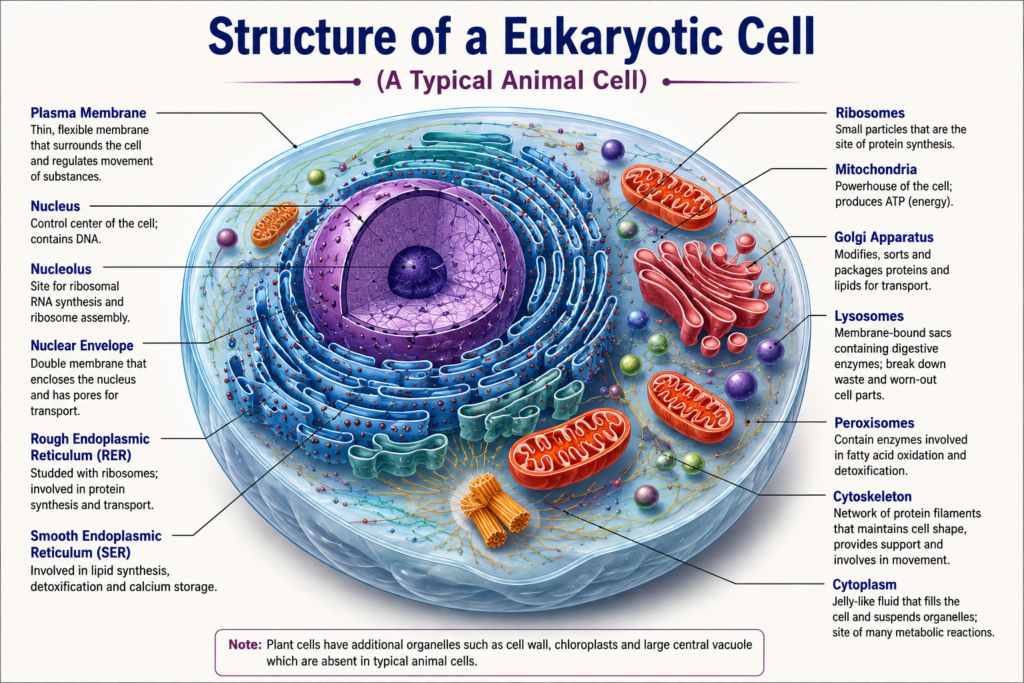
Structure of Eukaryotic Cells
Eukaryotic cells have a compartmentalized organization. Their major structures include the following.
Nucleus
- The nucleus is the most characteristic feature of a eukaryotic cell. It is enclosed by a double membrane called the nuclear envelope.
- The nucleus contains most of the cell’s DNA. Within the nucleus, DNA is associated with proteins to form chromatin.
- The nucleolus, a distinct region within the nucleus, is involved in ribosomal RNA production and ribosome assembly.
Mitochondria
- Mitochondria are membrane-bound organelles involved in cellular respiration and ATP production.
- Mitochondria are also closely associated with several pathways involved in cellular energy metabolism, including the breakdown of fatty acids.
- They possess their own DNA and ribosomes and are therefore of particular interest when studying the evolutionary origin of eukaryotic cells.
Endoplasmic Reticulum
The endoplasmic reticulum (ER) forms an extensive membrane network.
It occurs in two major forms:
- Rough endoplasmic reticulum, which bears ribosomes and is associated with protein synthesis.
- Smooth endoplasmic reticulum, which participates in lipid synthesis and other metabolic functions.
Golgi Apparatus
- The Golgi apparatus modifies, sorts and packages various proteins and lipids. It is particularly important in the processing and transport of cellular products.
Lysosomes
- Lysosomes contain hydrolytic enzymes and are involved in the digestion and recycling of cellular materials. They are particularly prominent in many animal cells.
Peroxisomes
- Peroxisomes contain enzymes involved in several oxidative reactions, including processes associated with fatty-acid metabolism and the breakdown of certain toxic compounds.
Ribosomes
- Eukaryotic cells contain ribosomes for protein synthesis. Cytoplasmic ribosomes are generally described as 80S, while ribosomes within mitochondria and chloroplasts have prokaryote-like characteristics.
Cytoskeleton
- The eukaryotic cytoskeleton is a network of protein filaments that contributes to cell shape, intracellular movement, organelle positioning and cell division.
Chloroplasts
- Plant cells and many algae contain chloroplasts, where photosynthesis takes place.
- Like mitochondria, chloroplasts contain their own genetic material and ribosomes.
Characteristics of Eukaryotic Cells
Major characteristics of eukaryotic cells include:
- A membrane-bound nucleus is present.
- Membrane-bound organelles are generally present.
- DNA is mainly organized into linear chromosomes.
- The cells are generally larger than prokaryotic cells.
- Cytoplasmic compartmentalization is highly developed.
- Ribosomes are generally 80S in the cytoplasm.
- A cytoskeleton is present.
- Cell division occurs through mitosis and, in sexually reproducing organisms, meiosis.
- Both unicellular and multicellular eukaryotes exist.
- Plants, animals, fungi and protists are eukaryotic groups.
The presence of specialized organelles allows eukaryotic cells to divide cellular activities among different compartments. This compartmentalization contributes greatly to their structural and functional complexity.
Examples of Eukaryotic Organisms
Examples include:
Animals
- Human beings
- Earthworms
- Insects
- Fish
- Mammals
Plants
- Mosses
- Ferns
- Flowering plants
- Trees
Fungi
- Yeast
- Mushrooms
- Molds
Protists
- Amoeba
- Paramecium
- Many algae
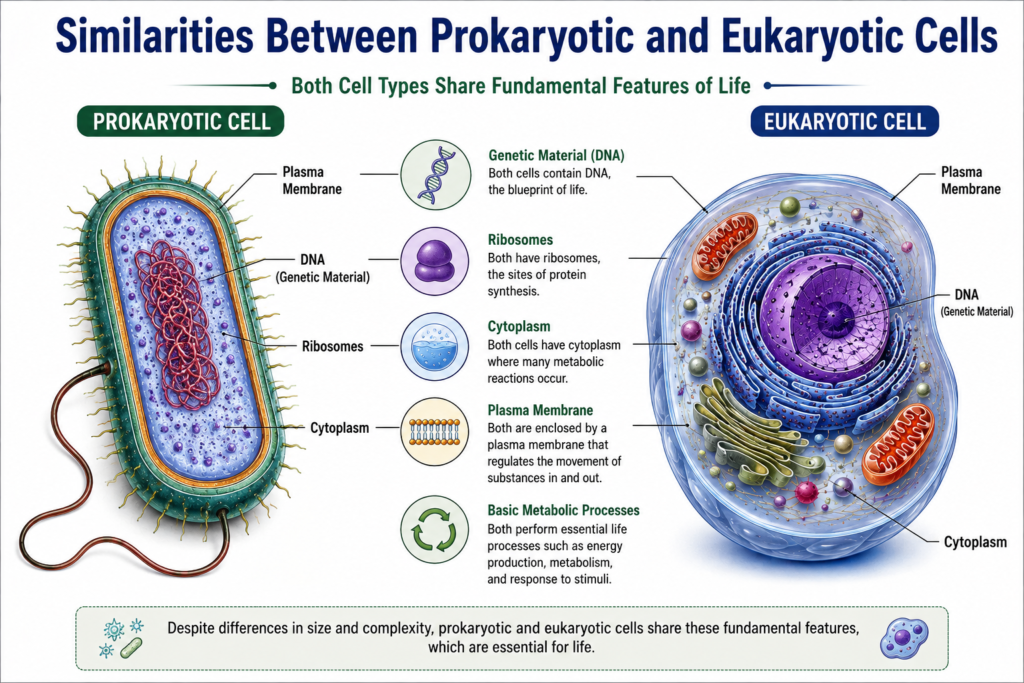
Similarities Between Prokaryotic and Eukaryotic Cells
Although their internal organization differs considerably, prokaryotic and eukaryotic cells share several fundamental characteristics.
Both contain:
- DNA as genetic material
- Ribosomes for protein synthesis
- Cytoplasm
- Plasma membrane
- Enzymes and metabolic pathways
- Basic mechanisms for storing and expressing genetic information
This common cellular foundation is important from an evolutionary perspective. Despite their differences, both groups use many of the same fundamental molecular mechanisms.
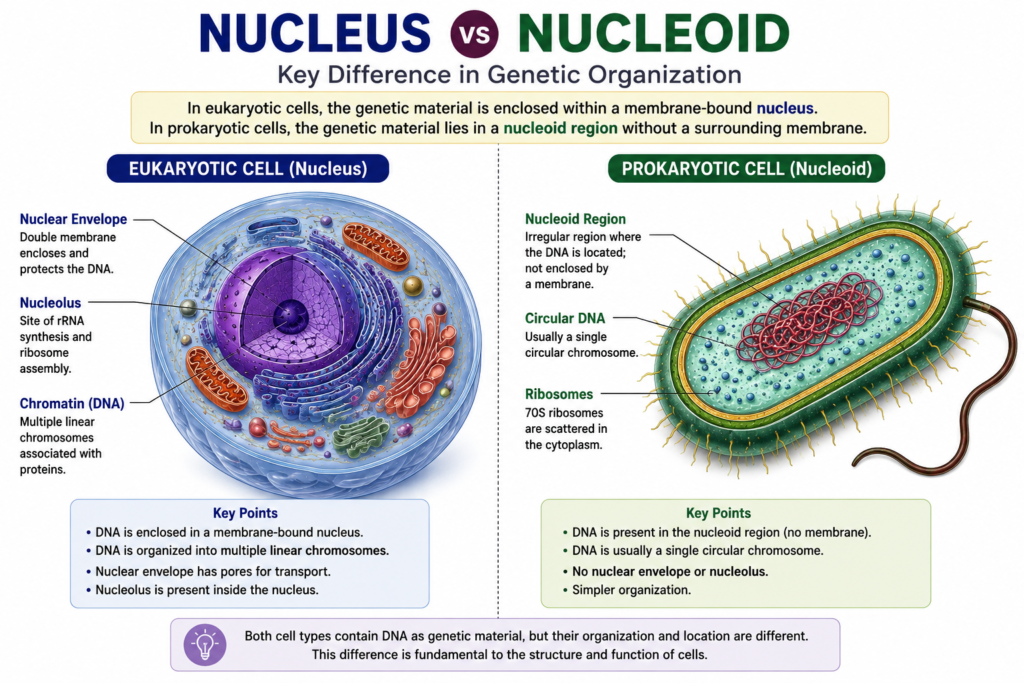
Difference Between Prokaryotic and Eukaryotic Cells
The most important difference between prokaryotic and eukaryotic cells is the organization of genetic material.
In prokaryotes, DNA is located in a nucleoid and is not enclosed by a nuclear membrane. In eukaryotes, most DNA is enclosed within a membrane-bound nucleus.
However, the difference goes beyond the nucleus. Eukaryotic cells possess a highly developed system of membrane-bound organelles, while typical prokaryotic cells lack these organelles.
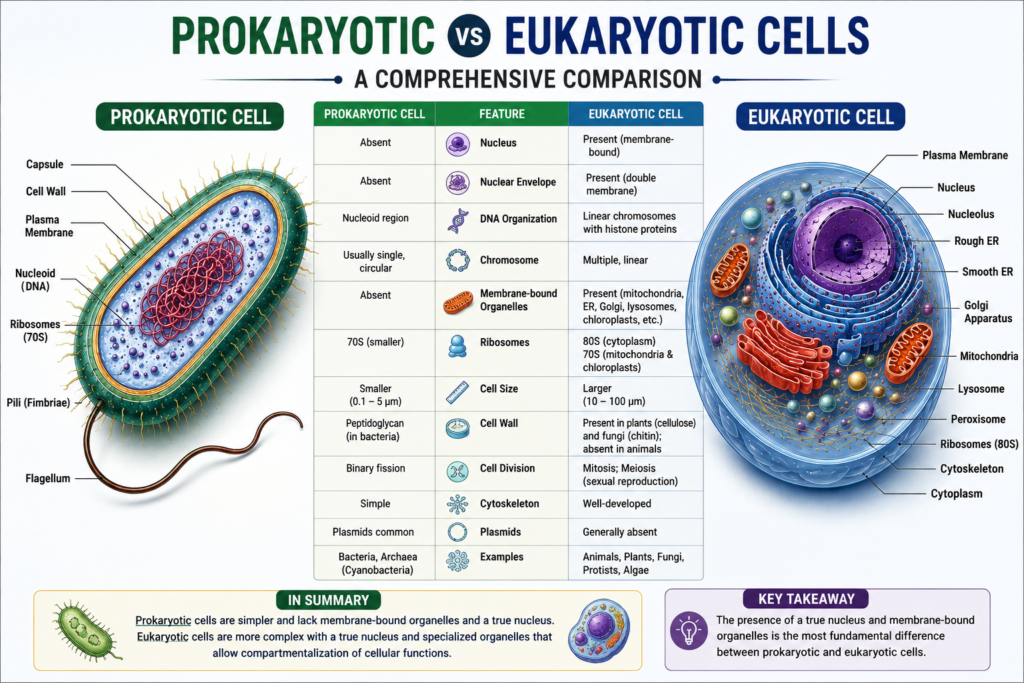
Prokaryotic vs Eukaryotic Cells: Comparison Table
| Feature | Prokaryotic Cells | Eukaryotic Cells |
|---|---|---|
| Nucleus | Absent | Present |
| Nuclear envelope | Absent | Present |
| DNA location | Nucleoid | Mainly nucleus |
| DNA form | Usually circular chromosome | Mainly linear chromosomes |
| Cell size | Generally smaller | Generally larger |
| Ribosomes | Usually 70S | Usually 80S in cytoplasm |
| Cell wall | Common in bacteria; composition varies | Present in plants and fungi, absent in animal cells |
| Mitochondria | Absent | Present in most eukaryotic cells |
| Chloroplasts | Absent | Present in plants and many algae |
| Endoplasmic reticulum | Absent | Present |
| Lysosomes | Absent as membrane-bound organelles | Present in many eukaryotic cells |
| Cytoskeleton | Simpler and structurally different | Well-developed |
| Cell division | Usually binary fission | Mitosis and meiosis |
| Organization | Generally simpler | More complex and compartmentalized |
| Examples | Bacteria and Archaea | Animals, plants, fungi and protists |
Biological Significance of Prokaryotic and Eukaryotic Cells
The distinction between prokaryotic and eukaryotic cells is not merely a classification system. It helps explain how cellular organization influences biological functions.
Prokaryotes and Their Importance
Prokaryotes are essential components of ecosystems. They participate in:
- Decomposition
- Carbon cycling
- Nitrogen cycling
- Nutrient recycling
- Fermentation
- Food production
- Biotechnology
- Environmental cleanup
- Symbiotic relationships
Some bacteria are also pathogenic and cause diseases, but pathogenic bacteria represent only a small part of the enormous diversity of prokaryotic life. These cellular activities depend on carefully regulated enzyme-mediated reactions.
Eukaryotes and Their Importance
Eukaryotic organization allows cells to perform specialized functions within complex organisms.
For example, in animals, different cells become specialized for functions such as:
- Movement
- Nervous coordination
- Digestion
- Immunity
- Reproduction
In plants, cellular specialization allows roots, leaves, stems and reproductive structures to perform different roles.
The compartmentalization provided by organelles is therefore closely connected with the functional complexity of eukaryotic cells.
Evolutionary Significance
The differences between prokaryotic and eukaryotic cells also provide important clues about the history of life.
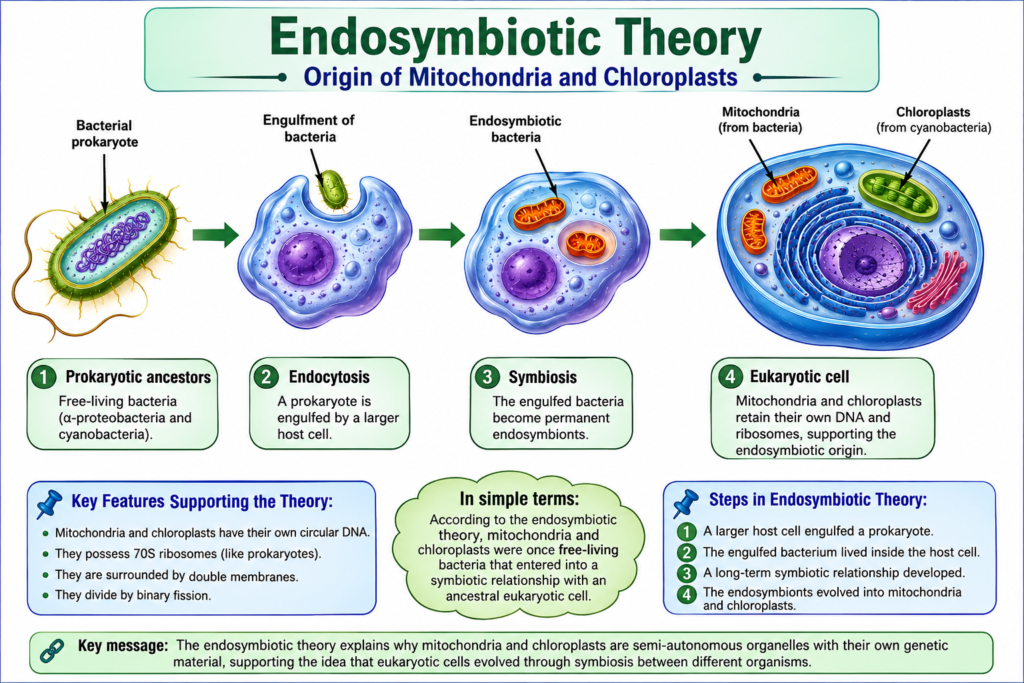
The origin of eukaryotic cells is associated with major evolutionary changes in cellular organization. One influential explanation is the endosymbiotic theory, which proposes that mitochondria and chloroplasts originated from bacterial ancestors that entered into long-term symbiotic relationships with ancestral eukaryotic cells.
Several characteristics of these organelles support this idea, including their own DNA, bacterial-like ribosomes and double-membrane organization.
The evolutionary relationship between the two cell types is therefore more interesting than simply saying that one is “simple” and the other is “complex.” Both represent successful cellular strategies that have persisted for billions of years.
Why Are Prokaryotic Cells Smaller?
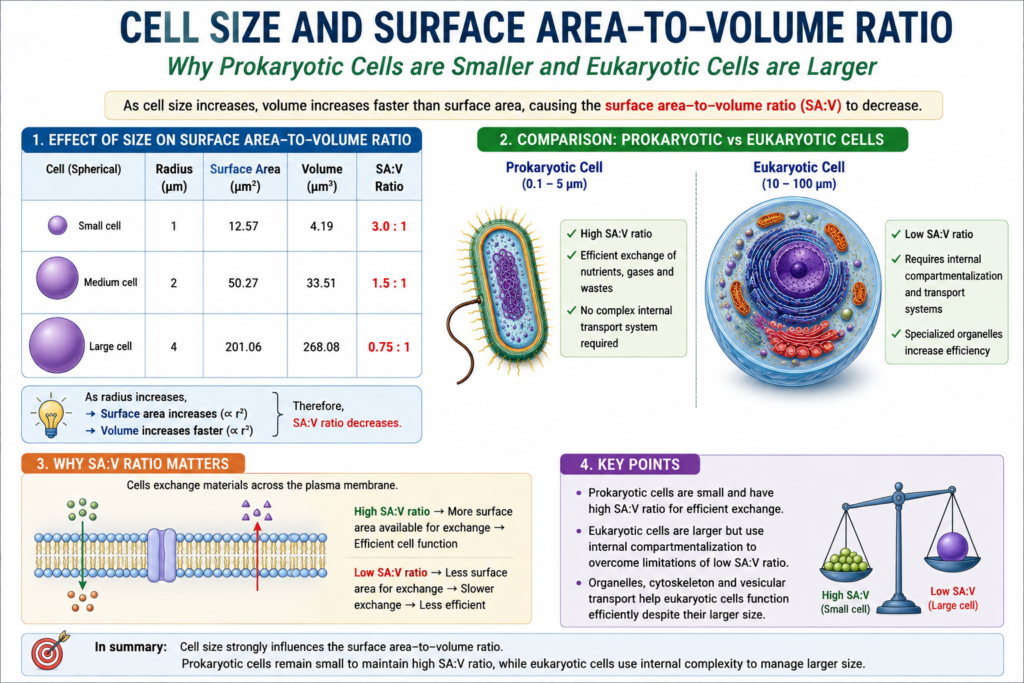
The small size of most prokaryotic cells is closely related to their surface-area-to-volume ratio.
As a cell becomes larger, its volume increases faster than its surface area. This can make the exchange of nutrients, gases and waste products across the plasma membrane less efficient.
The relatively small size of prokaryotic cells allows substances to move efficiently over short intracellular distances.
Eukaryotic cells overcome some of the limitations associated with larger size through internal compartmentalization and specialized structures that support intracellular transport.
Conclusion
Prokaryotic and eukaryotic cells represent the two major patterns of cellular organization found in living organisms. Prokaryotic cells, represented by Bacteria and Archaea, generally have a simpler organization without a membrane-bound nucleus or membrane-bound organelles. Their genetic material is located in the nucleoid region.
Eukaryotic cells possess a membrane-bound nucleus and a variety of specialized organelles. This internal compartmentalization allows different cellular processes to occur in distinct regions of the cell and supports the complex organization seen in animals, plants, fungi and protists. The difference between prokaryotic and eukaryotic cells is therefore not limited to the presence or absence of a nucleus. Differences in genome organization, cell size, organelles, ribosomes, cell division and internal compartmentalization all contribute to the distinct characteristics of these two cell types.
Frequently Asked Questions
What is a prokaryotic cell?
A prokaryotic cell is a cell that lacks a membrane-bound nucleus and membrane-bound organelles. Bacteria and Archaea are the major groups of prokaryotic organisms.
What is a eukaryotic cell?
A eukaryotic cell contains a membrane-bound nucleus and generally possesses several membrane-bound organelles. Animals, plants, fungi and protists have eukaryotic cells.
What is the main difference between prokaryotic and eukaryotic cells?
The main distinction is that prokaryotic cells lack a membrane-bound nucleus, whereas eukaryotic cells possess one.
Are bacteria prokaryotic or eukaryotic?
Bacteria are prokaryotic organisms.
Are plant and animal cells eukaryotic?
Yes. Both plant and animal cells are eukaryotic.
Do prokaryotic cells have DNA?
Yes. Prokaryotic cells contain DNA, which is generally located in a nucleoid rather than inside a membrane-bound nucleus.
Do prokaryotic cells have ribosomes?
Yes. Ribosomes are present in prokaryotic cells and are essential for protein synthesis.
Which cell is larger: prokaryotic or eukaryotic?
Eukaryotic cells are generally larger than prokaryotic cells, although size varies considerably among individual organisms and cell types.
References
- Prokaryotic Cells
- Eukaryotic Cells
- Concepts of Biology — Comparing Prokaryotic and Eukaryotic Cells
- NCBI Bookshelf — The Cell: A Molecular Approach, The Origin and Evolution of Cells
- NCBI Bookshelf — Genome Anatomies
Discover more from Zoologyverse
Subscribe to get the latest posts sent to your email.