
Introduction
An ecological niche describes the ecological role of a species, including its resource requirements, environmental tolerances, feeding habits, interactions with other organisms, and contribution to ecosystem functioning. For example, a honeybee obtains nectar and pollen from flowers while helping flowering plants reproduce through pollination. Its niche therefore involves both resource use and its ecological interactions.
Every organism occupies a particular position within an ecosystem and interacts with its surrounding environment in specific ways. The availability of food, water, shelter, light, nutrients, and suitable breeding sites influences where an organism can survive and reproduce. However, simply identifying where an organism lives does not fully explain its role in the ecosystem. To understand these relationships, ecologists use the concept of an ecological niche.
The concept of the ecological niche is important for understanding competition, coexistence, adaptation, and the distribution of organisms. Species living in the same habitat may occupy different niches by using different food resources, feeding at different times, or occupying different microhabitats. These differences can reduce competition and allow multiple species to coexist.
Ecologists also distinguish between a species’ potential ecological niche and the portion it actually occupies under natural conditions. This distinction helps explain how competition, predation, environmental conditions, and resource availability influence species survival.
Studying the ecological niche is therefore essential for understanding community structure, biodiversity, species interactions, and conservation biology. It also helps explain how environmental changes can affect organisms and alter relationships within ecosystems.
What Is an Ecological Niche?
An ecological niche is the position and functional role of a species within an ecosystem, determined by its use of resources, environmental requirements, interactions with other organisms, and contribution to ecological processes. It describes the conditions under which a species can survive and reproduce, the resources it uses, and how it interacts with its biotic and abiotic environment.
The concept of the ecological niche is broader than that of a habitat. A habitat refers to the physical place where an organism lives, whereas its ecological niche describes how it lives, what resources it uses, and how it functions within that environment.
For example, a pond may serve as the habitat for frogs, aquatic insects, and fish. However, these organisms occupy different ecological niches because they differ in their food sources, feeding strategies, activity patterns, and interactions with other organisms.
Definitions of Ecological Niche
The concept of the ecological niche has been developed by several ecologists:
- Joseph Grinnell (1917): Emphasised the importance of environmental conditions and habitat requirements in determining the distribution of a species.
- Charles Elton (1927): Focused on the functional role of an organism in a biological community, particularly its feeding relationships and position in the food chain.
- G. Evelyn Hutchinson (1957): Described the ecological niche as an n-dimensional hypervolume, representing the range of environmental conditions and resource combinations under which a species can maintain a viable population.
Hutchinson’s concept provides an important framework for modern ecology because a species is influenced by multiple environmental variables simultaneously, including temperature, moisture, food availability, and interactions with competitors.
Major Components of an Ecological Niche
An ecological niche includes several interconnected components:
- Habitat requirements: The physical environment in which an organism lives, such as forests, grasslands, rivers, or marine ecosystems.
- Resource utilisation: The food, water, nutrients, shelter, and breeding sites required for survival and reproduction.
- Environmental tolerance: The range of abiotic conditions, such as temperature, salinity, pH, and humidity, that an organism can tolerate.
- Biotic interactions: Relationships with other organisms, including competition, predation, parasitism, mutualism, and commensalism.
- Functional role: The contribution of a species to ecosystem processes, such as pollination, decomposition, herbivory, or nutrient cycling.
These components together determine how a species survives, reproduces, and interacts with other species in its environment.
Characteristics of an Ecological Niche
An ecological niche represents the relationship between a species and its environment. It includes the resources required by an organism, the conditions it can tolerate, and its interactions with other organisms. The following characteristics help explain the nature and significance of an ecological niche.
1. Species-Specific Nature
Every species has a particular combination of resource requirements, environmental tolerances, and biological interactions that shapes its ecological niche. Closely related species may have similar niches, but differences in feeding habits, activity periods, or habitat use can allow them to occupy different ecological roles.
For example, different species of Darwin’s finches possess different beak structures adapted to feeding on seeds, insects, or other food resources.
2. Dependence on Biotic and Abiotic Factors
An ecological niche is influenced by both living and non-living components of the environment.
- Abiotic factors: Temperature, light, moisture, soil composition, salinity, pH, and nutrient availability.
- Biotic factors: Food availability, competition, predation, parasitism, mutualism, and the presence of suitable reproductive partners.
Changes in these factors can alter the resources available to a species and influence its survival, reproduction, and distribution.
3. Resource Utilisation
Each species uses particular resources to meet its requirements for survival and reproduction. These resources may include food, water, shelter, nesting sites, nutrients, and space.
For example, nectar-feeding butterflies obtain energy from floral nectar, while their caterpillars may feed on specific host plants. Different life stages of the same species can therefore use different resources.
4. Functional Role in an Ecosystem
An ecological niche includes the role a species performs within its ecosystem. Organisms may act as producers, consumers, decomposers, pollinators, predators, or seed dispersers.
For example, earthworms contribute to soil formation by mixing organic matter with soil and improving soil structure. Their ecological role extends beyond the particular places in which they live.
5. Multidimensional Nature
An ecological niche is not determined by a single environmental factor. Instead, it involves several variables operating simultaneously, including temperature, food availability, moisture, competition, and reproductive requirements.
Hutchinson described this multidimensional concept as an n-dimensional hypervolume, in which each dimension represents an environmental condition or resource variable relevant to a species.
6. Potential for Niche Overlap
Two or more species may use some of the same resources and occupy overlapping ecological niches. Such overlap can lead to competition when resources are limited.
However, niche overlap does not always result in the exclusion of one species. Species may coexist by using different resources, feeding at different times, or occupying different microhabitats. These differences reduce direct competition.
7. Dynamic Nature
An ecological niche is not necessarily fixed. It can change with seasonal conditions, resource availability, species interactions, environmental disturbance, and evolutionary adaptation.
For example, a bird may change its diet seasonally as the availability of insects, seeds, or fruits changes. Human activities and climate change can also modify the conditions under which species survive and reproduce.
8. Relationship with Species Distribution
The ecological niche helps determine where a species can maintain viable populations. Even if a habitat appears suitable, factors such as competition, predation, disease, or the absence of essential resources may prevent a species from establishing a population there.
Understanding niche requirements is therefore important for explaining species distributions and predicting how organisms may respond to environmental changes.
Types of Ecological Niches
Ecological niches can be classified according to the resources used by organisms, their functional roles, the environmental conditions they occupy, and the extent to which they can use available resources. These classifications help ecologists understand species adaptations, resource utilisation, and interactions within biological communities.
1. Habitat Niche
A habitat niche describes the particular habitat or microhabitat used by an organism within a larger ecosystem. It focuses on the physical location and environmental conditions associated with a species.
For example, different frog species may occupy different microhabitats within the same wetland. Some live among aquatic vegetation, while others remain on the surrounding ground or in nearby trees.
2. Trophic Niche
A trophic niche refers to the feeding role of an organism and its position within a food web. It includes the types of food consumed, feeding strategies, and relationships between consumers and their food sources.
Examples include:
- Herbivores that feed primarily on plants.
- Carnivores that consume other animals.
- Omnivores that consume both plant and animal material.
- Decomposers that break down dead organic matter.
For instance, a tiger occupies a carnivorous trophic niche as a predator of animals such as deer and wild boar.
3. Fundamental Niche
The fundamental niche is the full range of environmental conditions and resources under which a species can survive and reproduce in the absence of limiting biotic interactions such as competition. It represents the species’ potential ecological requirements.
For example, a plant may be capable of growing across a broad range of soil moisture conditions when competition from other plants is absent.
4. Realized Niche
The realized niche is the portion of a species’ potential niche that it actually occupies under existing ecological conditions. Competition, predation, disease, resource availability, and other biological interactions may restrict the realised range.
For example, a plant species capable of growing in both sunny and moderately shaded environments may be restricted mainly to sunny areas where competing plants prevent it from establishing in shaded locations.
5. Spatial Niche
A spatial niche concerns how organisms use physical space within their environment. Species may occupy different heights, depths, or areas of the same habitat, thereby reducing direct competition.
For example, in a forest, some bird species forage in the canopy, others search for food among shrubs, and others feed on the ground.
6. Temporal Niche
A temporal niche describes how species use resources at different times of the day, season, or year. Differences in activity patterns can help species coexist even when they share similar food resources or habitats.
For example, some small mammals are mainly nocturnal, whereas other species are active during the day. Their different activity periods may reduce encounters and competition for certain resources.
7. Multidimensional Niche
A multidimensional niche includes all relevant environmental conditions, resource requirements, and biological interactions that influence a species. This concept is associated with Hutchinson’s description of the niche as an n-dimensional hypervolume.
For example, the niche of a freshwater fish may depend on water temperature, dissolved oxygen, water depth, food availability, breeding sites, and competition with other fish.
These types of ecological niches are interconnected rather than completely separate. A species’ ecological niche reflects its habitat use, feeding relationships, timing of activity, environmental tolerances, and interactions with other organisms.
Fundamental Niche vs Realized Niche
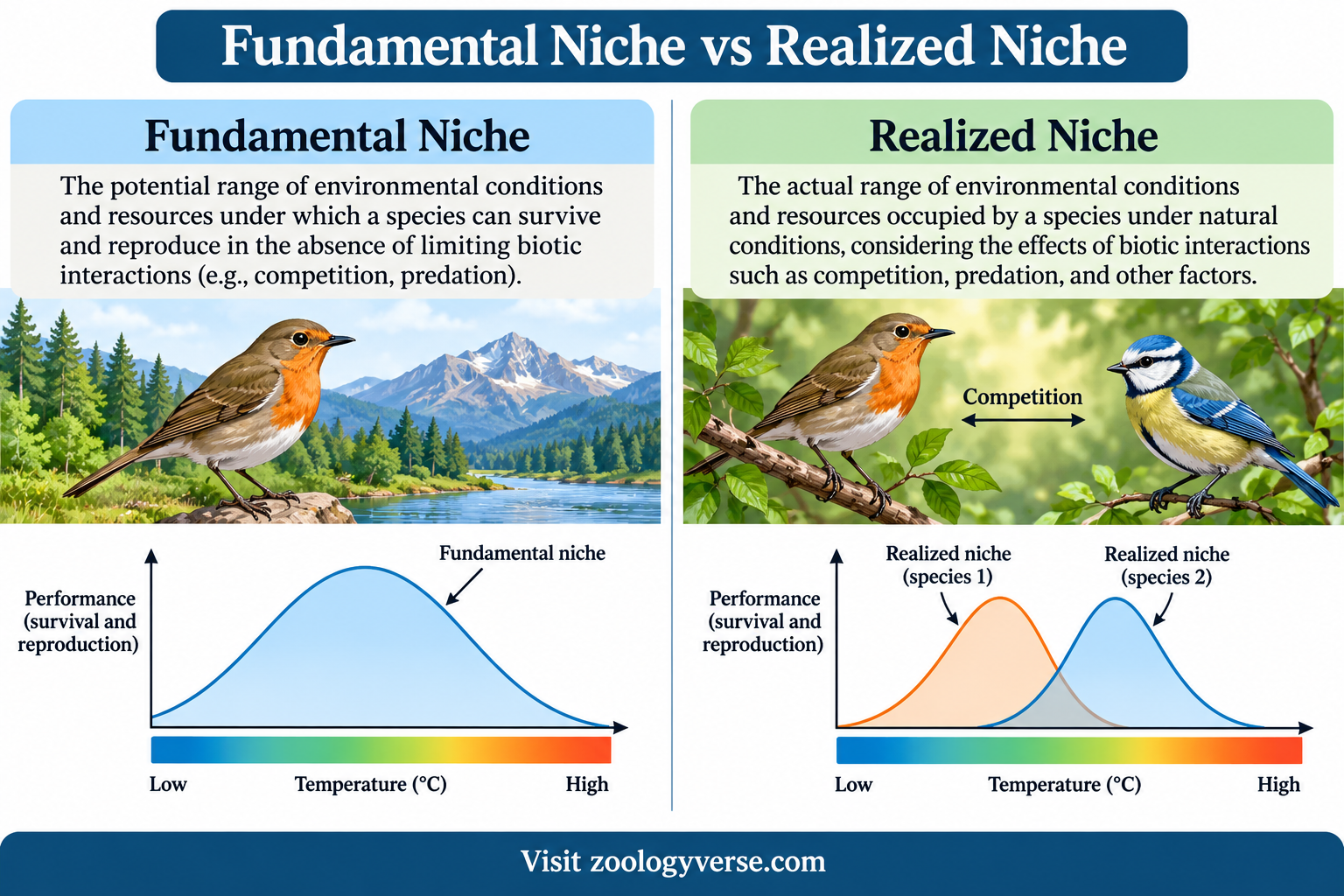
The distinction between a fundamental niche and a realized niche is central to understanding how species interact with their environment. Although a species may be capable of surviving under a wide range of environmental conditions, its actual distribution and resource use may be restricted by competition, predation, and other ecological factors.
Fundamental Niche
A fundamental niche is the complete range of environmental conditions and resources under which a species can survive, grow, and reproduce when limiting biological interactions are absent. It represents the potential ecological range of a species based on its physiological tolerances and resource requirements.
The fundamental niche is influenced by factors such as temperature, moisture, salinity, food availability, and suitable breeding conditions. It helps ecologists understand the environmental requirements that determine where a species could potentially establish a viable population.
For example, a plant species may be physiologically capable of growing in both sunny and partially shaded environments. If competition is absent, both environments may fall within its fundamental niche.
Realized Niche
A realized niche is the portion of the fundamental niche that a species actually occupies under natural conditions. It reflects the combined effects of environmental conditions, resource availability, competition, predation, disease, and other ecological interactions.
For example, although a plant may tolerate both sunny and shaded environments, competition from other plants may prevent it from growing successfully in shaded areas. Its realized niche may therefore be restricted mainly to sunny locations.
In many ecological situations, the realized niche is narrower than the fundamental niche because biological interactions limit access to otherwise suitable resources or habitats. However, the relationship can be more complex when interactions such as mutualism facilitate survival in particular conditions.
Differences Between Fundamental and Realized Niches
| Basis of comparison | Fundamental niche | Realized niche |
|---|---|---|
| Meaning | Potential range of conditions and resources a species can use | Range of conditions and resources actually used under existing ecological conditions |
| Biological interactions | Considered without limiting biotic interactions in the classical concept | Includes the effects of competition, predation, and other interactions |
| Extent | Often broader | Often narrower |
| Determining factors | Physiological tolerance and resource requirements | Environmental conditions, resource availability, and biological interactions |
| Species distribution | Indicates potential distribution under specified conditions | Helps explain actual distribution |
| Competition | Its limiting effects are excluded from the classical definition | Competition may restrict resource use or habitat occupancy |
| Example | A plant can grow across a range of light conditions in the absence of competitors | The plant grows mainly in sunny areas because competitors restrict it elsewhere |
Relationship Between the Two Niches
The fundamental and realized niches are closely related. The fundamental niche describes the potential conditions under which a species can maintain a viable population, whereas the realized niche reflects the conditions under which it persists in a particular ecological community.
This distinction is important in conservation biology, invasive-species management, and predicting species responses to environmental change. A species may be physiologically capable of surviving in a new habitat, but its establishment can still be prevented by competitors, predators, pathogens, or the absence of essential resources.
Habitat vs Ecological Niche
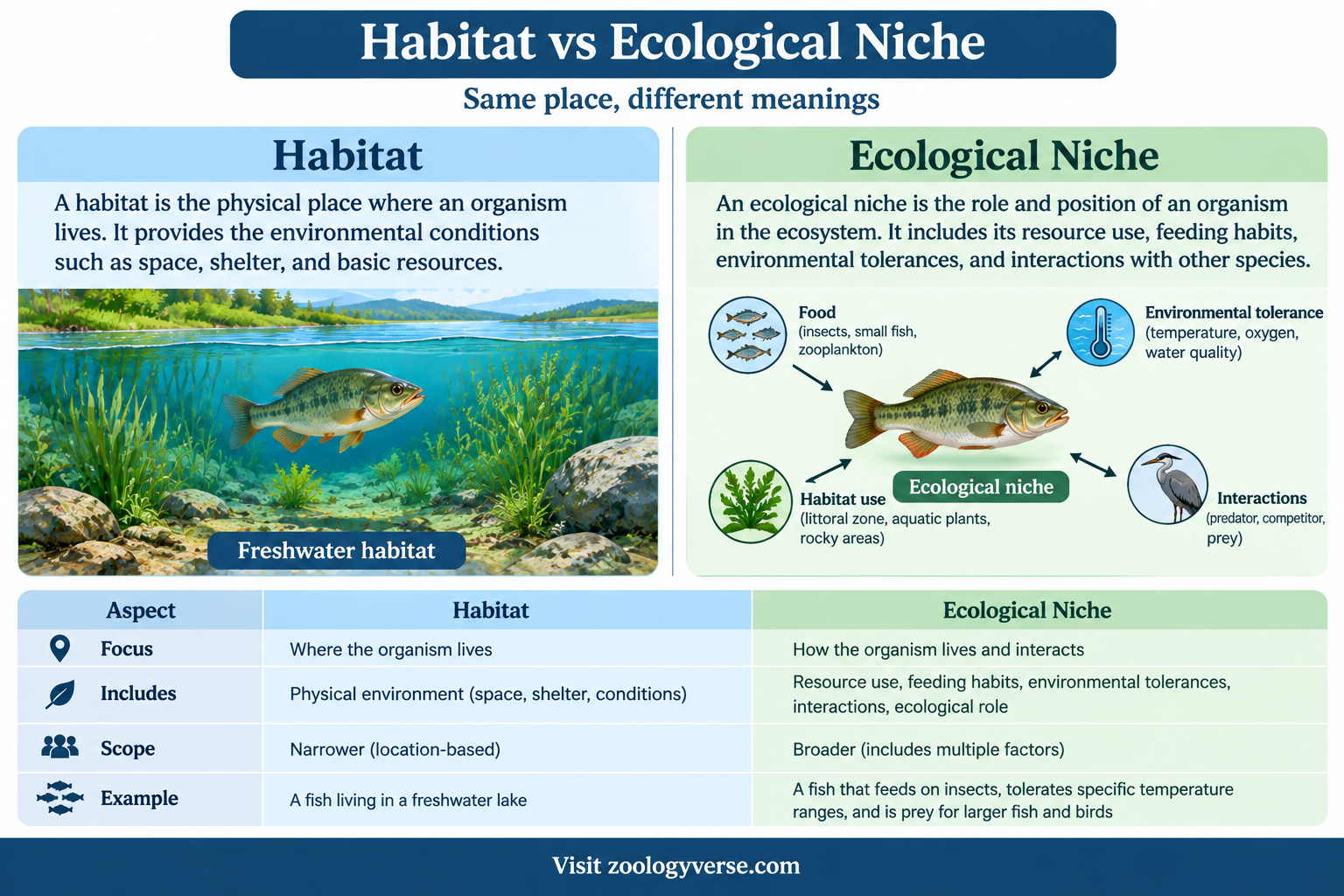
The terms habitat and ecological niche are closely related, but they describe different aspects of an organism’s relationship with its environment. A habitat refers to the place where an organism lives, whereas an ecological niche describes its ecological role, resource requirements, environmental tolerances, and interactions with other organisms.
Understanding the difference between habitat and ecological niche is essential for studying species distribution, competition, adaptation, and biodiversity.
What Is a Habitat?
A habitat is the natural environment in which an organism lives and obtains the resources necessary for survival and reproduction. It provides physical conditions and resources such as food, water, shelter, breeding sites, and suitable environmental conditions.
Habitats may be terrestrial, aquatic, or transitional. Forests, grasslands, deserts, ponds, rivers, coral reefs, and wetlands are examples of different habitats.
For example, a pond provides a habitat for fish, frogs, aquatic insects, algae, and many microorganisms. These organisms share the same general environment but may use its resources in different ways.
What Is an Ecological Niche?
An ecological niche describes how an organism lives within its environment and contributes to the functioning of its ecosystem. It includes the organism’s food requirements, feeding behaviour, activity patterns, environmental tolerances, reproductive requirements, and interactions with other species.
For example, within a pond habitat, a fish may feed on aquatic insects, a frog may consume insects near the water’s edge, and an aquatic insect larva may feed on algae or detritus. Their different resource-use patterns help distinguish their ecological niches.
Differences Between Habitat and Ecological Niche
| Basis of comparison | Habitat | Ecological niche |
|---|---|---|
| Definition | The place where an organism lives | The ecological role and requirements of an organism |
| Main focus | Physical environment | Resource use, environmental tolerances, and interactions |
| Nature | Primarily spatial | Multidimensional and functional |
| Components | Food, water, shelter, and suitable physical conditions | Feeding habits, resource requirements, competition, reproduction, and ecological interactions |
| Species sharing | Many species can share the same habitat | Species may occupy different niches within the same habitat |
| Change | May change through migration or environmental disturbance | May change with resource availability, interactions, or environmental conditions |
| Example | A pond is a habitat | Feeding on aquatic insects and serving as prey for larger fish are aspects of a species’ niche |
Example: Habitat and Niche of a Honeybee
A flowering meadow or garden may serve as a habitat for honeybees. Within this habitat, the honeybee occupies an ecological niche by collecting nectar for energy and pollen for nutrition, pollinating flowers, and contributing to plant reproduction.
This example illustrates that a habitat identifies the environment an organism occupies, while its ecological niche explains its resource use and functional role within that environment.
Relationship Between Habitat and Ecological Niche
Habitat and ecological niche are interdependent. A habitat provides the physical conditions and resources required by an organism, while its ecological niche describes how the organism uses those resources and interacts with other members of the ecosystem.
The availability of suitable habitats is therefore necessary for species survival, but the presence of a suitable habitat alone does not guarantee that a species can establish a population. Competition, predation, disease, and other ecological factors may prevent it from occupying the area.
Niche Differentiation and Resource Partitioning
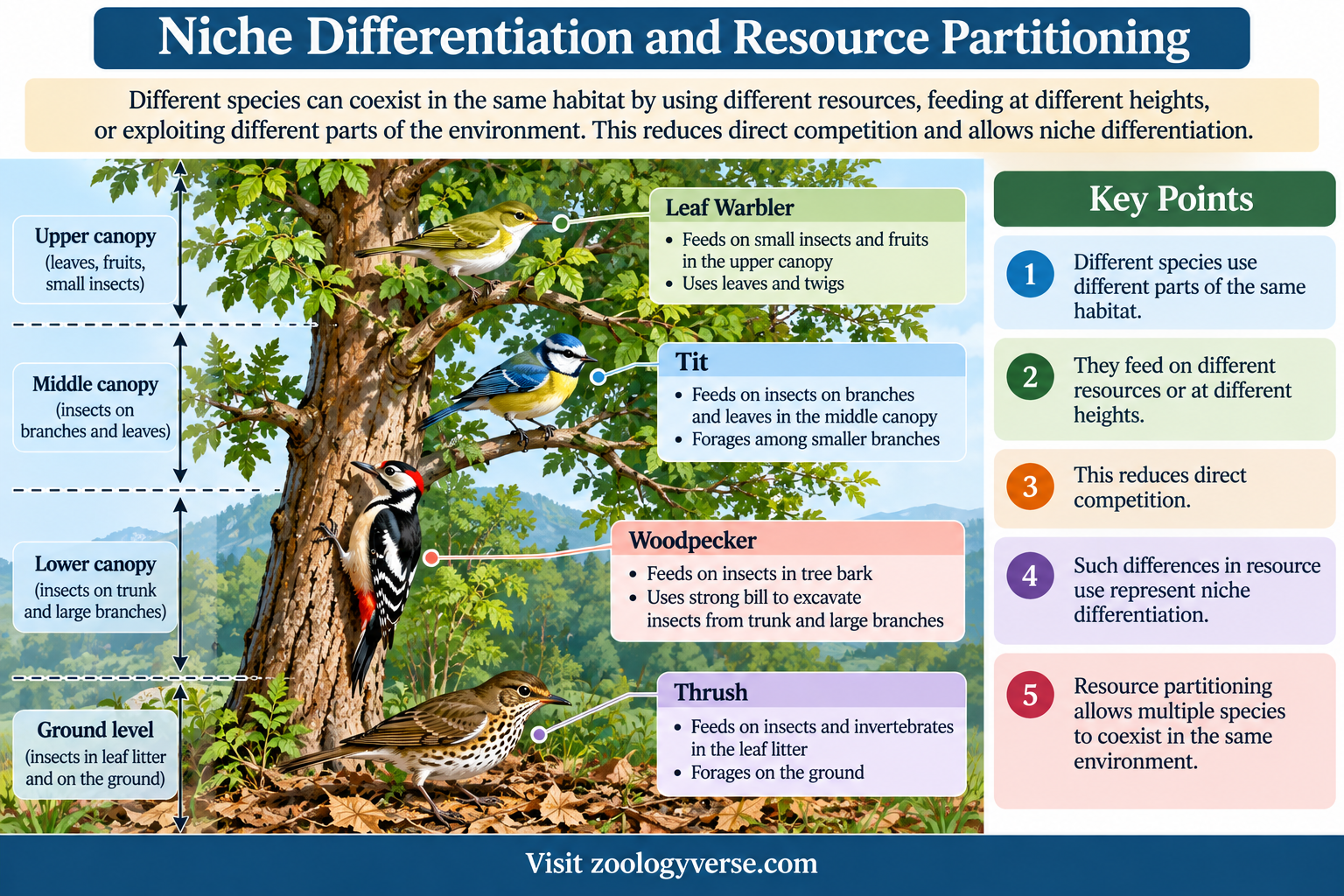
Niche differentiation and resource partitioning are important ecological processes that help explain how multiple species coexist within the same habitat. When organisms depend on similar resources, competition may occur, particularly when those resources are limited. Differences in resource use, feeding behaviour, habitat selection, or activity periods can reduce direct competition and promote coexistence.
Niche Differentiation
Niche differentiation is the process by which species develop or maintain differences in their ecological requirements, resource use, or interactions with the environment. These differences may arise through evolutionary adaptation or through behavioural and ecological flexibility.
Niche differentiation can involve several characteristics:
- Food selection: Species consume different types or sizes of food.
- Spatial separation: Species forage in different parts of the same habitat.
- Temporal separation: Species use resources at different times of the day or year.
- Feeding adaptations: Differences in body structures or feeding mechanisms allow species to exploit different resources.
- Microhabitat selection: Species occupy different local environmental conditions within a larger habitat.
For example, closely related bird species may feed on insects from different parts of a tree. One species may forage among the outer branches, while another searches for prey on the trunk. This difference can reduce competition for food.
Resource Partitioning
Resource partitioning is the division of limited resources among competing species through differences in how, where, or when those resources are used. It is an important mechanism through which niche differentiation can reduce interspecific competition.
Resource partitioning may occur in the following ways:
- Spatial partitioning: Species use different physical areas or microhabitats.
- Temporal partitioning: Species use the same resource at different times.
- Trophic partitioning: Species consume different food types or prey sizes.
- Morphological partitioning: Differences in body structures enable species to exploit distinct resources.
For example, different species of insect-eating birds may forage at different heights in a forest canopy. Although they share the same forest habitat, they exploit different feeding areas.
Examples of Niche Differentiation and Resource Partitioning
1. Darwin’s finches
Darwin’s finches on the Galápagos Islands exhibit differences in beak size and shape associated with the exploitation of different food resources. Some species are adapted to feeding on large seeds, while others consume smaller seeds or insects. These differences contribute to resource partitioning.
2. Anole lizards
Different species of anole lizards in the Caribbean often use different parts of vegetation, such as tree trunks, twigs, or upper branches. Differences in body size, limb structure, and habitat use are associated with their ecological niches.
3. Birds in a forest
Several bird species may inhabit the same forest but forage in different locations. Some feed on the ground, others among shrubs, and others in the canopy. This spatial separation can reduce competition when food resources overlap.
4. Nocturnal and diurnal animals
Some species exploit resources primarily at night, while others use them during the day. Different activity periods can reduce direct encounters and competition, although temporal separation does not always eliminate competition entirely.
Importance of Niche Differentiation
Niche differentiation and resource partitioning can help maintain species diversity by reducing competition for limited resources. They also influence community structure, patterns of species coexistence, and the use of available resources within ecosystems.
However, these processes do not guarantee coexistence in every situation. The outcome depends on resource availability, environmental conditions, the degree of niche overlap, and the strength of interactions among species.
Competitive Exclusion Principle
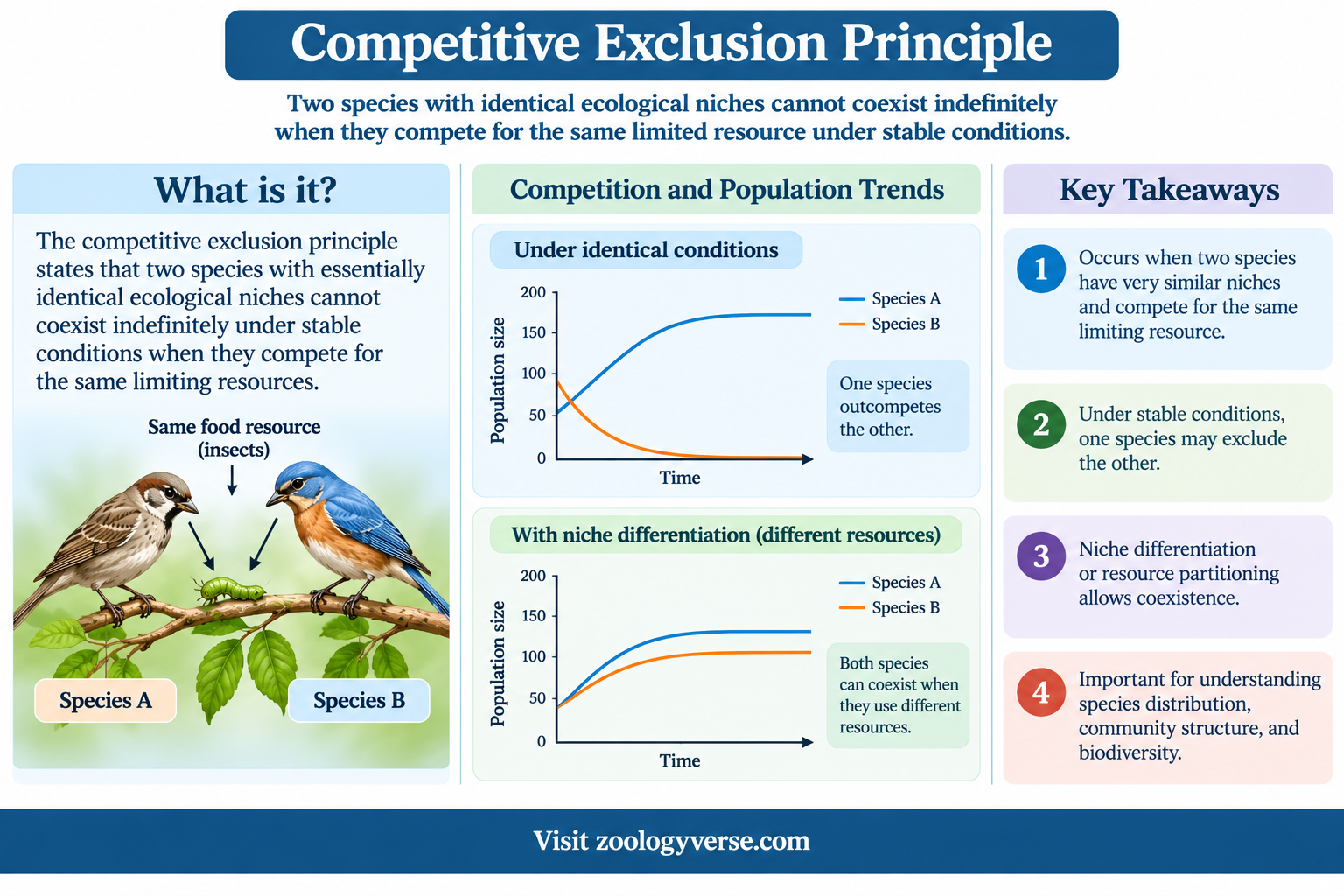
The competitive exclusion principle is a fundamental concept in ecology stating that two species competing for the same limiting resources cannot coexist indefinitely in a stable environment if they occupy essentially the same ecological niche. Over time, one species may outcompete the other, or the species may persist by differentiating their resource use.
This principle is closely associated with the Russian ecologist Georgy F. Gause, whose experiments with Paramecium species provided important evidence for competitive exclusion.
Gause’s Competitive Exclusion Experiments
Gause conducted laboratory experiments using two species of protozoans, Paramecium aurelia and Paramecium caudatum. When cultured separately under suitable conditions, both species grew and maintained populations.
However, when the two species were grown together with limited resources, P. aurelia outcompeted P. caudatum under the experimental conditions. The population of P. caudatum declined, while P. aurelia persisted.
These findings demonstrated that species with strongly overlapping resource requirements may not coexist when competition is sufficiently intense. The outcome depends on the environmental conditions and the particular organisms involved.
Conditions for Competitive Exclusion
Competitive exclusion is more likely when the following conditions occur:
- High niche overlap: Two species depend on essentially the same resources.
- Limited resources: Food, space, nutrients, or other essential resources are insufficient to support both populations at their required levels.
- Stable environmental conditions: The environment remains relatively consistent over the period in which competition occurs.
- Unequal competitive ability: One species uses the limiting resources more effectively or has a higher reproductive success under those conditions.
- Limited niche differentiation: The species cannot sufficiently reduce competition by using different resources, habitats, or activity periods.
Relationship Between Competitive Exclusion and Ecological Niches
The competitive exclusion principle helps explain why ecological niches are important in determining species coexistence. When two species have very similar resource requirements, competition may reduce the population of one species or force changes in resource use and habitat occupancy.
However, species with overlapping niches can coexist when differences in resource use, environmental fluctuations, predation, or other ecological processes prevent one species from consistently excluding the other.
For example, two bird species may consume similar insects but forage at different heights in a forest. This resource partitioning can reduce competition and allow both species to coexist.
Ecological Significance
The competitive exclusion principle has several important implications:
- It helps explain how competition influences species distribution and abundance.
- It provides a basis for understanding niche differentiation and resource partitioning.
- It helps explain why species diversity may depend on variation in resources and environmental conditions.
- It is relevant to invasive species, which may compete with native species for food, habitat, or breeding sites.
- It contributes to the scientific basis of conservation and ecosystem management.
The principle does not mean that species with overlapping niches must always exclude one another. Instead, it predicts exclusion under conditions where competition for limiting resources is sufficiently strong and persistent, and where effective mechanisms for coexistence are absent.
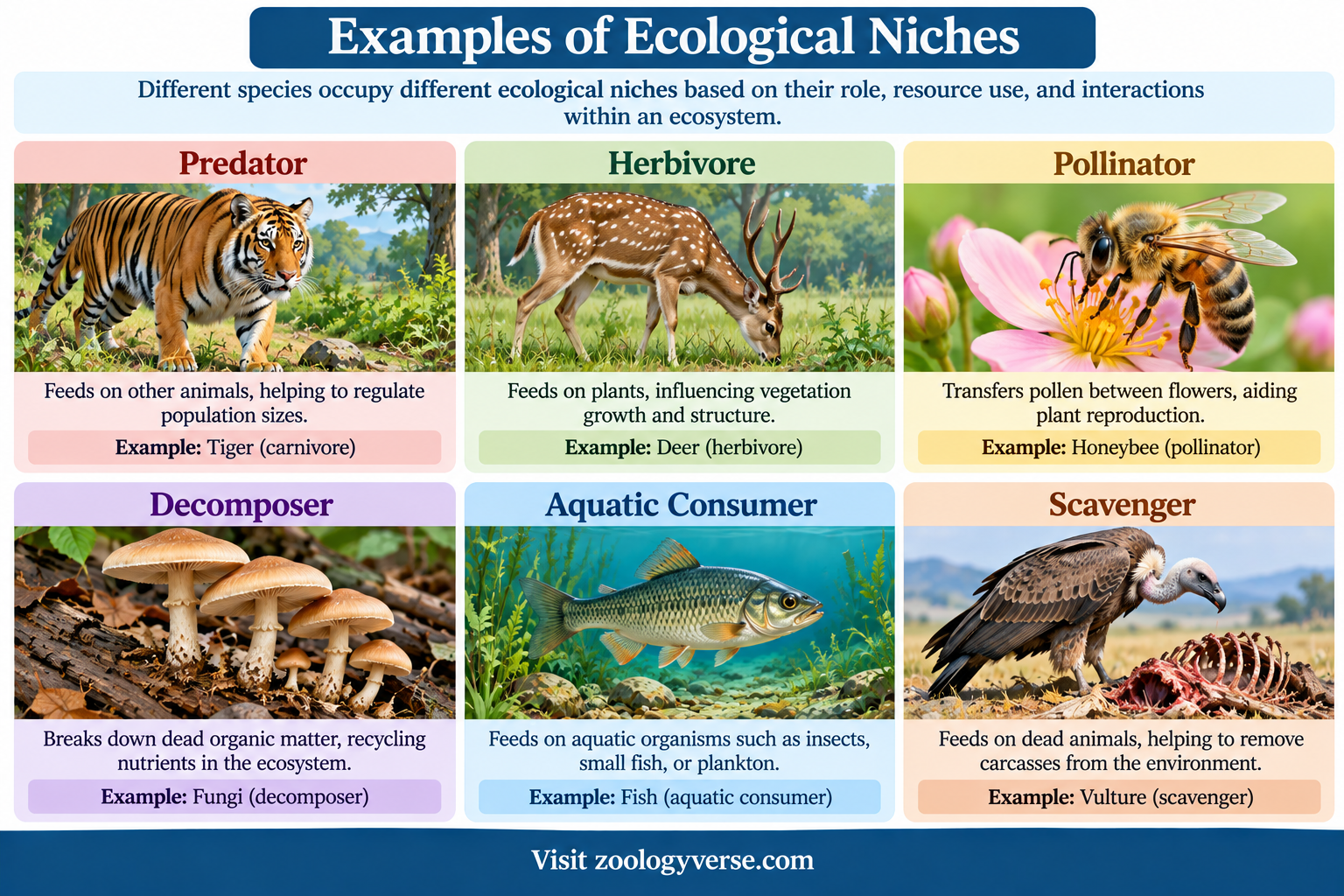
Examples of Ecological Niches
Ecological niches can be understood through the feeding habits, habitat requirements, environmental tolerances, and interactions of organisms in different ecosystems. The following examples illustrate how species use resources and perform distinct ecological roles.
1. Ecological Niche of a Honeybee
Honeybees (Apis species) occupy an ecological niche associated with nectar collection, pollen gathering, and pollination. Adult honeybees obtain carbohydrates from nectar and collect pollen as a source of protein and other nutrients.
During flower visits, they transfer pollen between flowers, contributing to the reproduction of many flowering plants. Honeybees also interact with other pollinators and may compete with them for floral resources.
Their niche therefore includes both resource collection and an important ecological service: pollination.
2. Ecological Niche of a Tiger
The tiger (Panthera tigris) occupies the niche of a large carnivorous predator in Asian forest and grassland ecosystems. It hunts prey such as deer and wild pigs, depending on habitat and prey availability.
By influencing prey populations and interacting with other predators, tigers form part of the food-web structure of their ecosystems. Their survival depends on suitable habitat, sufficient prey, access to water, and areas in which they can establish territories and reproduce.
3. Ecological Niche of an Earthworm
Earthworms occupy an ecological niche associated with the decomposition of organic matter and the modification of soil. They consume soil containing decaying plant material and contribute to the breakdown and redistribution of organic matter.
Their burrowing activity can improve soil aeration, water infiltration, and soil structure. Earthworms also serve as food for birds, amphibians, and other predators.
Their niche connects decomposition, soil processes, and food-web interactions.
4. Ecological Niche of a Woodpecker
Woodpeckers occupy a niche associated with searching for insects and other food in tree trunks and branches. Many species use specialised bills and elongated tongues to extract insects from bark and wood.
By feeding on wood-boring insects and excavating cavities, woodpeckers influence forest food webs. Their abandoned nesting cavities may later provide shelter or breeding sites for other animals.
This example demonstrates how feeding adaptations can shape an ecological niche and create resources used by other species.
5. Ecological Niche of a Vulture
Vultures occupy a scavenging niche because they feed primarily on the carcasses of dead animals. By consuming carrion, they help remove animal remains from the environment and contribute to nutrient recycling.
Vultures depend on the availability of carcasses and suitable nesting or roosting sites. Their populations can be affected by food availability, habitat changes, and exposure to toxic substances.
6. Ecological Niche of a Frog
Many frogs occupy a niche as predators of insects and other small invertebrates. They may also serve as prey for snakes, birds, fish, and mammals.
Depending on the species, frogs use aquatic, terrestrial, or arboreal habitats. Their life cycles often connect aquatic and terrestrial ecosystems because tadpoles and adults may use different resources and environments.
Frogs can also be sensitive to changes in moisture, water quality, temperature, and habitat structure.
7. Ecological Niche of a Mangrove Tree
Mangrove trees occupy a specialised niche in coastal intertidal environments, where they tolerate conditions such as saline water, waterlogged soils, and periodic tidal flooding.
Their roots help stabilise sediments and can reduce coastal erosion. Mangrove habitats also provide nursery areas, shelter, and feeding grounds for fish, crustaceans, and other organisms.
Their niche is shaped by specialised physiological adaptations and interactions with the surrounding coastal ecosystem.
8. Ecological Niche of a Decomposer Fungus
Decomposer fungi occupy a niche associated with breaking down dead organic matter, including fallen leaves, dead wood, and other plant remains. They release enzymes that help convert complex organic compounds into simpler substances.
This activity contributes to nutrient cycling and makes nutrients available for uptake by plants and other organisms. Decomposer fungi are therefore essential components of many terrestrial ecosystems.
These examples demonstrate that an ecological niche is not simply a place where an organism lives. It encompasses resource use, environmental requirements, adaptations, interactions, and the ecological functions performed by a species.
Importance of Ecological Niches
The ecological niche is an important concept in ecology because it explains how organisms survive, use resources, interact with other species, and contribute to ecosystem functioning. Studying ecological niches helps scientists understand biodiversity, species coexistence, community structure, and the effects of environmental change.
1. Understanding Species Distribution
An ecological niche helps explain the environmental conditions and resources required for a species to establish and maintain a population. Temperature, moisture, food availability, shelter, and reproductive requirements influence where organisms can survive.
For example, mangrove trees occur mainly in suitable coastal environments because they possess adaptations that allow them to tolerate saline conditions and periodic tidal flooding.
2. Explaining Competition
Ecological niches help ecologists understand competition between species that depend on similar resources. When food, space, nutrients, or breeding sites are limited, organisms with overlapping resource requirements may compete.
Studying niche overlap helps explain how competition influences population abundance, resource use, and species distribution.
3. Promoting Species Coexistence
Differences in resource use can reduce direct competition and allow multiple species to coexist in the same habitat. Species may differ in their feeding habits, preferred microhabitats, activity periods, or resource requirements.
For example, different bird species in a forest may feed at different heights in the vegetation, allowing them to exploit separate feeding areas.
4. Understanding Biodiversity
Ecological niches contribute to our understanding of biodiversity by explaining how species use different resources and perform different ecological functions. The presence of multiple niches can support diverse biological communities when resources and environmental conditions allow different species to persist.
Changes that eliminate important resources or simplify habitats may reduce opportunities for species coexistence and threaten biodiversity.
5. Explaining Adaptation and Evolution
Ecological niches are closely related to adaptation because organisms possess characteristics that influence their ability to survive under particular environmental conditions. Natural selection can favour traits that improve resource use, environmental tolerance, or reproductive success.
For example, differences in beak shape among Darwin’s finches are associated with the exploitation of different food resources. Such adaptations can contribute to niche differentiation.
6. Maintaining Ecosystem Functioning
Species perform different functions within ecosystems, including pollination, predation, herbivory, decomposition, and seed dispersal. Their ecological niches help explain how these functions are distributed among organisms.
For example, bees pollinate many flowering plants, while decomposer fungi break down dead organic matter and contribute to nutrient cycling. The loss of species performing important functions can alter ecosystem processes.
7. Supporting Conservation Biology
Knowledge of ecological niches helps conservationists identify the habitat conditions, resources, and biological interactions required by threatened species. Conservation programmes can use this information to protect critical habitats, restore degraded ecosystems, and improve species recovery efforts.
For example, protecting a tiger population requires more than preserving forest cover; suitable prey, sufficient territory, breeding opportunities, and reduced human-related threats are also important.
8. Managing Invasive Species
The ecological niche concept helps scientists assess whether an introduced species may establish itself in a new environment. If suitable resources and environmental conditions are available, and limiting biological interactions are weak, an introduced species may spread and affect native communities.
Niche information can therefore contribute to predicting invasion risks and developing appropriate management strategies.
9. Predicting Responses to Environmental Change
Climate change, pollution, habitat fragmentation, and land-use changes can modify the conditions and resources available to organisms. Understanding niche requirements helps researchers predict which species may lose suitable habitat, shift their distributions, or face increased competition.
Such predictions can support biodiversity monitoring and the development of conservation strategies under changing environmental conditions.
Factors Affecting an Ecological Niche
An ecological niche is influenced by environmental conditions, resource availability, biological interactions, and the adaptations of a species. These factors determine the conditions under which an organism can survive, reproduce, and maintain a population. Changes in any of these factors may alter its resource use, distribution, and ecological role.
1. Abiotic Factors
Abiotic factors are the non-living components of the environment that influence the ecological niche of an organism. They determine the physical and chemical conditions under which species can survive.
Important abiotic factors include:
- Temperature: Influences metabolism, growth, reproduction, and geographical distribution.
- Water availability: Determines the survival of organisms in deserts, grasslands, forests, and aquatic ecosystems.
- Light: Affects photosynthesis, plant growth, and the activity patterns of many animals.
- Soil conditions: Soil pH, texture, moisture, and nutrient content influence the distribution of plants and soil organisms.
- Salinity: Affects the distribution of aquatic organisms and plants in freshwater, marine, and coastal environments.
- Oxygen availability: Influences the survival of aquatic organisms and animals living in poorly ventilated habitats.
For example, mangrove plants possess adaptations that allow them to tolerate saline conditions and waterlogged soils, enabling them to occupy coastal habitats unsuitable for many other plant species.
2. Resource Availability
The availability of food, water, nutrients, shelter, breeding sites, and space strongly influences the ecological niche of a species. When essential resources become scarce, organisms may experience increased competition or shift their patterns of resource use.
For example, during periods of food scarcity, some birds expand their diets to include alternative food sources. Such changes may alter their interactions with other species and the resources they use.
3. Interspecific Competition
Interspecific competition occurs when individuals of different species use the same limited resources. Strong competition may restrict the distribution or resource use of one or both species.
For example, two bird species that feed on similar insects may compete when insect populations decline. Differences in feeding locations or prey preferences can reduce this competition.
4. Predation and Herbivory
Predators influence the ecological niches of their prey by affecting their abundance, behaviour, and habitat use. Similarly, herbivores influence plant populations through grazing and browsing.
For example, the presence of predators may cause prey animals to avoid certain areas or change their feeding times. These behavioural responses can alter how prey species use their habitats.
5. Mutualism and Other Positive Interactions
Positive interactions can influence the conditions under which a species survives and reproduces. Mutualism occurs when both interacting species benefit, while other interactions may benefit one species without significantly affecting the other.
For example, flowering plants provide nectar and pollen to pollinating insects, while the insects transfer pollen between flowers. This interaction can influence the resources available to both groups and their ecological relationships.
6. Physiological and Morphological Adaptations
The physiological and structural characteristics of organisms influence the environmental conditions they can tolerate and the resources they can exploit.
Examples include:
- Thick, waxy cuticles and water-conserving features in desert plants.
- Specialised beaks in birds adapted to different food resources.
- Salt-excretion mechanisms in certain coastal plants.
- Body structures that help aquatic organisms move and feed efficiently.
These adaptations can enable species to occupy ecological niches with particular environmental conditions or resource opportunities.
7. Reproductive Requirements
The availability of suitable breeding sites, nesting materials, mates, and conditions for offspring development can limit the ecological niche of a species.
For example, some amphibians require suitable freshwater bodies for egg laying and larval development. Even if adults can survive in a terrestrial habitat, the absence of suitable breeding sites may prevent the establishment of a viable population.
8. Disease and Parasitism
Pathogens and parasites can influence population size, behaviour, survival, and reproductive success. These effects may alter species interactions and restrict the environments in which a species can maintain a stable population.
For example, a disease affecting a host species may reduce its abundance and indirectly influence predators or competitors that depend on it.
9. Climate Change and Human Activities
Climate change can alter temperature, precipitation, seasonal patterns, and the availability of suitable habitats. Human activities, including deforestation, pollution, urbanisation, and habitat fragmentation, can also modify the conditions and resources that determine ecological niches.
For example, rising temperatures may make some high-altitude habitats unsuitable for species adapted to cooler conditions. Habitat fragmentation may also prevent organisms from accessing food, breeding sites, or other essential resources.
These factors interact rather than acting independently. The ecological niche of a species reflects the combined influence of environmental conditions, resource availability, biological interactions, and its capacity to adapt to changing circumstances.
Frequently Asked Questions (FAQs)
What is an ecological niche?
Who introduced the concept of the ecological niche?
What are the main types of ecological niches?
What is the difference between a fundamental niche and a realized niche?
What is the difference between a habitat and an ecological niche?
What is niche differentiation?
What is resource partitioning?
What is the competitive exclusion principle?
Why is the ecological niche important?
Can an ecological niche change over time?
What is an example of an ecological niche?
How does the ecological niche help in conservation?
Conclusion
The ecological niche is a fundamental concept in ecology that explains how organisms survive, use resources, interact with other species, and contribute to ecosystem functioning. Unlike a habitat, which refers to the physical place where an organism lives, an ecological niche encompasses its environmental requirements, feeding habits, reproductive needs, and ecological relationships.
The distinction between fundamental and realized niches helps explain how environmental conditions and biological interactions influence species distribution. Similarly, niche differentiation and resource partitioning demonstrate how species may reduce competition by using different resources, habitats, or activity periods. The competitive exclusion principle further explains why species with very similar resource requirements may be unable to coexist indefinitely under certain conditions.
Understanding ecological niches is essential for studying biodiversity, adaptation, community structure, and ecosystem stability. It also has practical applications in wildlife conservation, invasive-species management, habitat restoration, and predicting the effects of climate change.
Therefore, studying ecological niches provides an important foundation for understanding the relationships between organisms and their environments and for developing effective strategies to conserve biodiversity and maintain healthy ecosystems.
References
- Grinnell, J. (1917). The niche-relationships of the California thrasher. The Auk, 34(4), 427–433. https://doi.org/10.2307/4072271
- Elton, C. (1927). Animal Ecology. Sidgwick & Jackson.
- Hutchinson, G. E. (1957). Concluding remarks. Cold Spring Harbor Symposia on Quantitative Biology, 22, 415–427. https://doi.org/10.1101/SQB.1957.022.01.039
- Gause, G. F. (1934). The Struggle for Existence. Williams & Wilkins.
- OpenStax. Biology 2e: Community Ecology. https://openstax.org/books/biology-2e/pages/45-6-community-ecology
- Khan Academy. Niches and Competition. https://en.khanacademy.org/science/biology/ecology/community-ecosystem-ecology/a/niches-competition
- Gibson-Reinemer, D. K. (2015). A vacant niche: How a central ecological concept emerged in the 19th century. The Quarterly Review of Biology. https://experts.illinois.edu/en/publications/a-vacant-niche-how-a-central-ecological-concept-emerged-in-the-19/
Discover more from Zoologyverse
Subscribe to get the latest posts sent to your email.