
ERYX (SAND BOA)
The genus Eryx, commonly known as sand boas, consists of non-venomous, burrowing snakes native to parts of Africa, the Middle East, Central Asia, and India. These snakes are small to medium-sized and are adapted to live in sandy or loose-soil environments, where they are expert hunters and elusive burrowers. Known for their docile nature and unique appearance, sand boas play a vital role in their ecosystems, controlling pest populations and maintaining ecological balance.
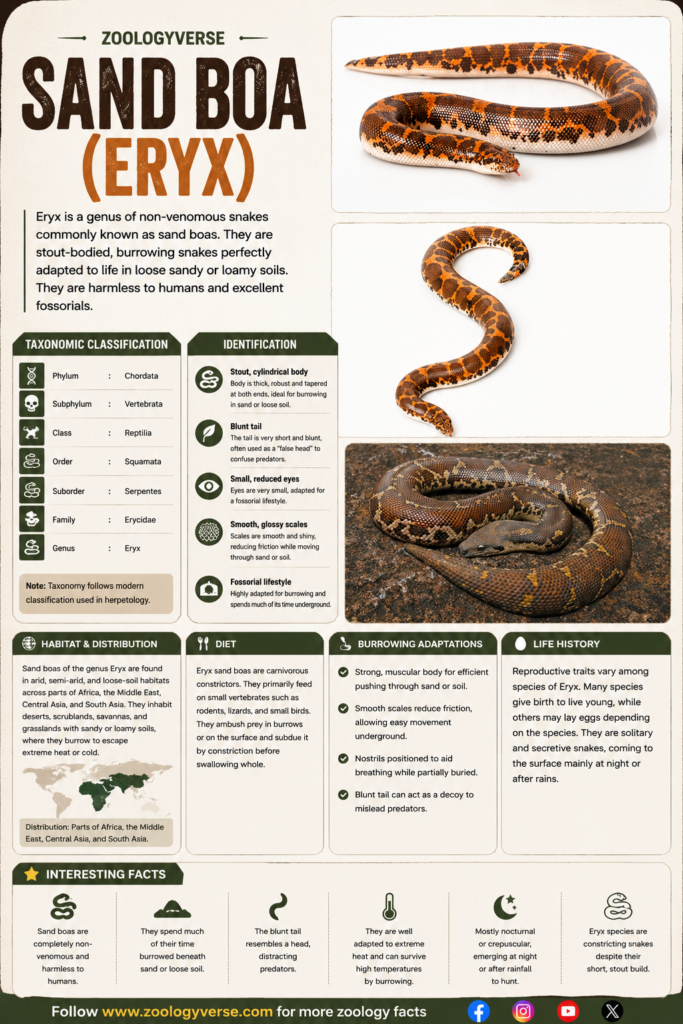
Classification of Eryx (Sand Boa)
- Phylum :- Chordata (Dorsal tubular nerve cord, notochord and gill-slits present.)
- Group :- Craniata (Definite head, Cranium with brain present.)
- Sub phylum :- Vertebrata (Vertebral column present.)
- Division :- Gnathostomata (Jaws and paired appendages present.)
- Super Class :- Tetrapoda (Paired limbs, lungs, cornified skin and bony skeleton.)
- Class :- Reptilia (Scaly vertebrates. Right and left aortic arches present. Single condyle. Pulmonary respiration. Embryo with amnion and allantois.)
- Sub Class :- Diapsida (Skull with two temporal openings separated by post-orbital and squamosal.)
- Order :- Squamata (Lizards and snakes with horny epidermal scales or shields. Quadrate bone movable. Vertebrae procoelous. Anal opening transverse.. Vertebrae amphicentrous.)
- Sub-order :- Ophidia (Snakes. Limbs, feet, ear openings sternum and urinary bladder absent. Mandibles jointed anteriorly by ligament. Tongue slender, bifid and protrusible. Left lung reduced.)
- Family :- Boidae (Vestiges of pelvic girdle and hind limb as 2 spurs on ventral sides)
- Genus :- Eryx
Geographical distribution
- They are found allover India, Sri Lanka, Africa and Asia.
Habit and habitat
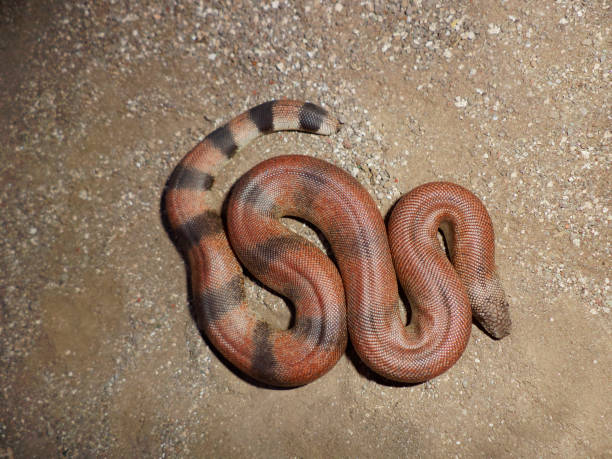
- They are found in sandy regions. It remains hidden in sand and feeds on lizards, frogs and mice.
General Characteristics of Eryx (Sand Boa)
- Commonly called as sand boa.
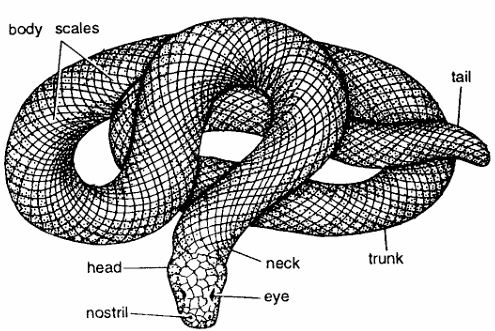
- It is snake elongated measuring one meter in length. Body divided into head, neck, trunk and tail. Head contains eyes and nostril.
- Pinkish grey dorsal surface has irregular brown patches while ventral surface is yellowish.
- Entire body is covered with 40-45 rows of small scales, sometimes keeled in tail region. Ventral scales do not run across the body.
- Head and neck indistinguishable. Head scales primitive and 3 scales enlarged.
- Eyes are small with vertical pupil and are reduced due to burrowing life.
- Nostrils are slit-like. Tympanum absent.
- Tail region is as thick and blunt as head.
Ecological Importance
- Predator Role:They primarily feed on rodents, lizards, and small birds, helping control pest populations and preventing agricultural damage.
- Soil Health: Their burrowing activities aerate the soil, promoting better water penetration and nutrient cycling, which benefits plant life.
- Prey for Other Species: They serve as prey for larger predators such as birds of prey, monitor lizards, and carnivorous mammals, contributing to the food web.
- Indicator of Ecosystem Health: Their presence is often an indicator of a healthy, undisturbed habitat.
Conservation Status
- Global Status: The conservation status of Eryx species varies:
- Eryx johnii (Indian Sand Boa): Least Concern (IUCN).
- Eryx tataricus (Tatar Sand Boa): Least Concern (IUCN).
- While most species are not currently threatened, localized populations face risks.
- Threats:
- Habitat loss due to urbanization, agriculture, and deforestation.
- Illegal trade for pet markets and traditional medicine.
- Human persecution due to misconceptions about their nature.
- Conservation Measures:
- Habitat protection and awareness campaigns to reduce human-wildlife conflict.
- Enforcement of laws against poaching and illegal trade.
Special features
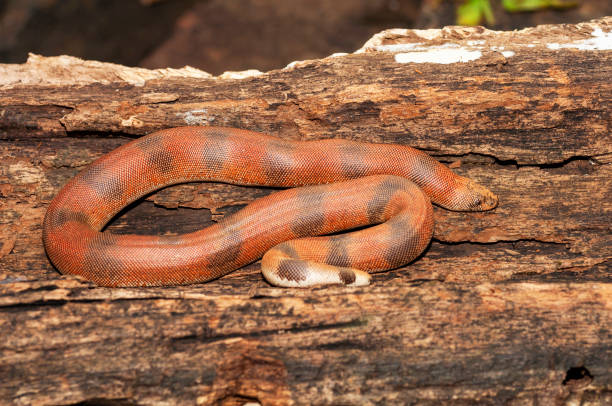
- It is characterized by the blunt tail end looking like head. Sometimes snake crawls back and hence it is called as double-headed snake but actually there are no second mouth and head. It kills the prey by constriction.
- Adaptation to Burrowing: They have a stout, cylindrical body and a blunt tail that aids in burrowing through loose soil.
- Ambush Predators: They are skilled ambush hunters, lying in wait beneath the sand for unsuspecting prey.
- Non-Venomous Nature: They kill their prey by constriction, making them harmless to humans.
- Coloration and Camouflage: Their sandy or mottled coloration provides excellent camouflage in desert or scrubland environments.
- Docile Temperament: Sand boas are known for their calm behavior, making them popular in the pet trade (though this poses conservation challenges).
Identification
- Since this snake has blunt tail and above features, hence it is Eryx.
Discover more from Zoologyverse
Subscribe to get the latest posts sent to your email.
Your article helped me a lot, is there any more related content? Thanks! https://accounts.binance.com/register/person?ref=IXBIAFVY
I don’t think the title of your article matches the content lol. Just kidding, mainly because I had some doubts after reading the article.