
Cells continuously produce new molecules while breaking down old, damaged, or unnecessary materials. To keep this process organized, cells need specialized structures that can digest and recycle cellular materials. One of the most important structures involved in this process is the lysosome.
A lysosome is a small, membrane-bound organelle found mainly in animal cells. It contains a variety of digestive enzymes that break down proteins, lipids, carbohydrates, nucleic acids, and other biological materials. Lysosomes therefore act as important centers for intracellular digestion and recycling.
Lysosomes also participate in processes such as autophagy, removal of damaged cellular components, and the breakdown of materials taken into the cell. Their activities help maintain cellular cleanliness and normal cell function.
Understanding lysosome structure and functions is important for learning how cells digest, recycle, and manage unwanted materials.
What is a Lysosome?
A lysosome is a membrane-bound organelle containing hydrolytic enzymes that digest various biological materials inside the cell.
Lysosomes are surrounded by a single membrane that separates their acidic interior from the cytoplasm. The enzymes inside lysosomes work best at an acidic pH, which is maintained by specialized proteins in the lysosomal membrane.
The materials digested by lysosomes can come from different sources. They may originate from inside the cell, from damaged organelles, or from substances taken up from outside the cell.
Lysosomes are particularly prominent in animal cells and are closely associated with the endomembrane system, which includes structures such as the endoplasmic reticulum and Golgi apparatus.
Lysosome = single membrane + digestive enzymes + acidic interior + intracellular digestion and recycling
Structure of Lysosome
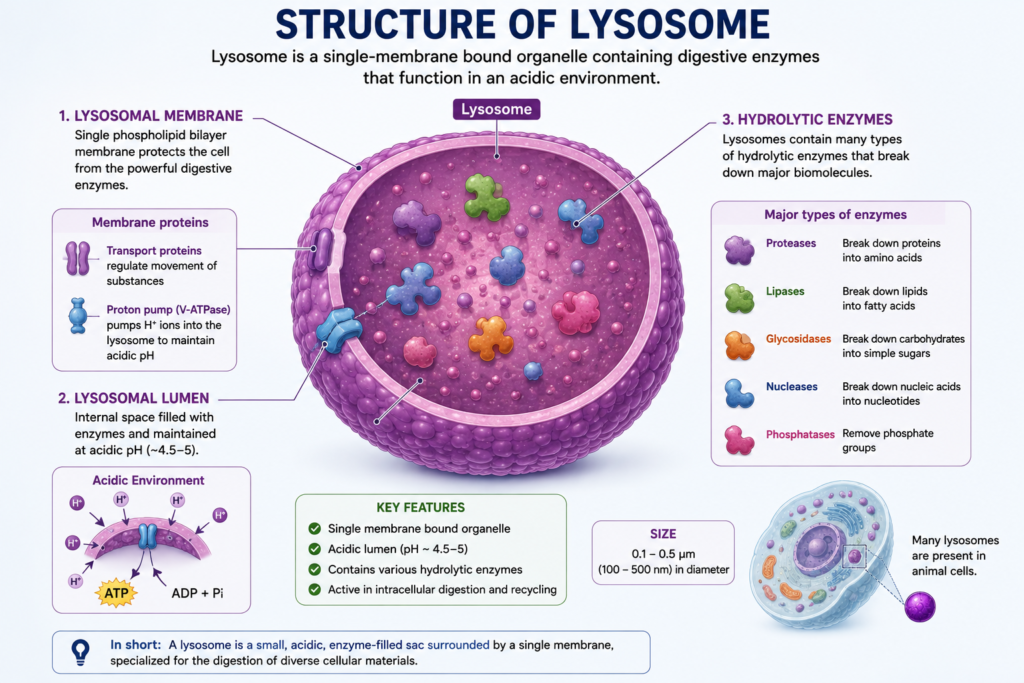
Lysosomes are generally small, spherical or irregularly shaped membrane-bound organelles. Their size, shape, and contents can vary depending on the cell type and its functional state.
1. Lysosomal Membrane
A lysosome is surrounded by a single phospholipid membrane.
This membrane separates the digestive enzymes from the rest of the cytoplasm and contains proteins that control the movement of substances into and out of the lysosome.
The membrane also helps maintain the acidic environment required for lysosomal enzymes.
2. Lysosomal Lumen
The internal space of the lysosome is called the lumen.
It contains digestive enzymes and provides the acidic environment in which these enzymes function.
The lysosomal lumen is maintained at a much lower pH than the surrounding cytoplasm. This acidic environment is important for the proper activity of many lysosomal enzymes.
3. Hydrolytic Enzymes
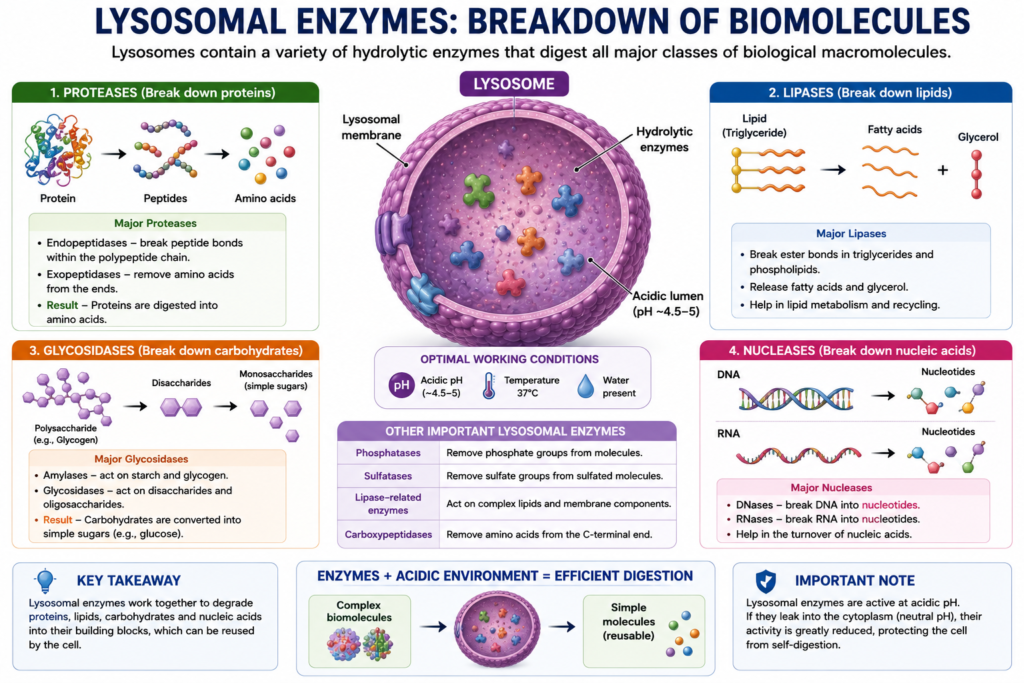
Lysosomes contain many types of hydrolytic enzymes.
These enzymes can break down different classes of biological molecules, including:
- Proteins
- Lipids
- Carbohydrates
- Nucleic acids
Examples include proteases, lipases, glycosidases, and nucleases.
Because different enzymes act on different substrates, lysosomes can digest a wide range of cellular materials.
4. Acidic Environment
Lysosomal enzymes function optimally in an acidic environment, generally around pH 4.5–5.
The acidic pH is maintained by proton pumps in the lysosomal membrane that transport hydrogen ions into the lysosome.
This acidic environment is essential for efficient digestion and also helps limit the activity of many lysosomal enzymes if they escape into the near-neutral cytosol.
Functions of Lysosome
Lysosomes perform several important functions that help maintain the health and organization of cells.
1. Intracellular Digestion
The primary function of lysosomes is intracellular digestion.
Lysosomal enzymes break down complex substances into smaller molecules that can be reused or eliminated.
For example, proteins can be broken down into amino acids, while other macromolecules can be converted into smaller components.
These breakdown products may then become available for further cellular metabolism.
2. Breakdown of Cellular Waste
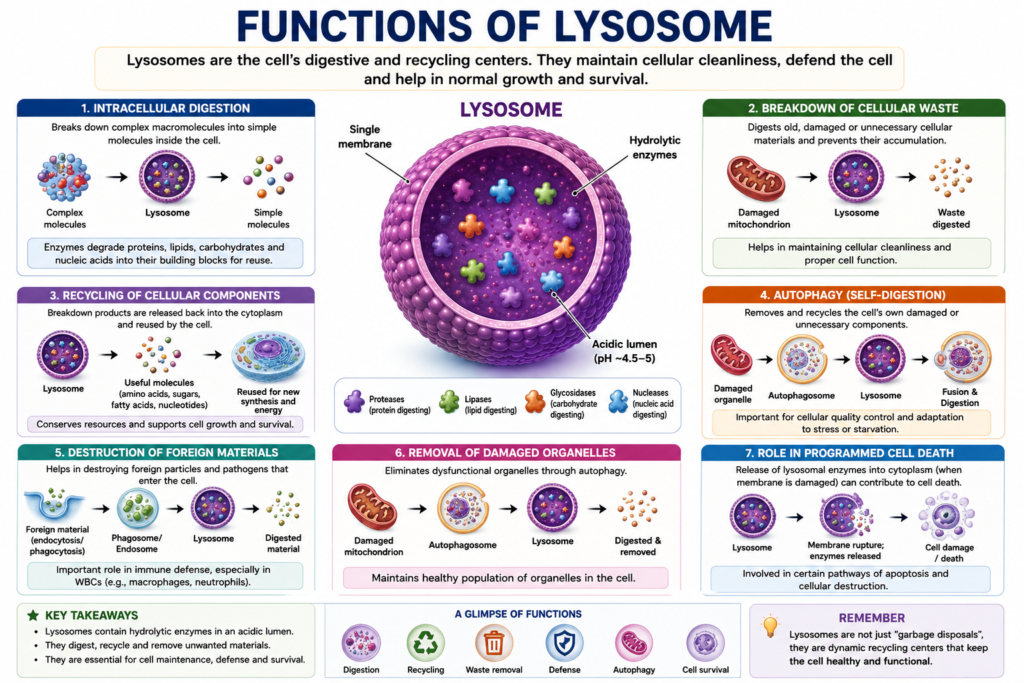
Lysosomes help break down unwanted and damaged cellular materials.
Cells constantly produce molecules and structures that eventually become old or defective. Lysosomes digest these materials and help prevent their accumulation.
This process contributes to cellular maintenance and organization.
3. Recycling of Cellular Components
Lysosomes do more than simply destroy materials. They also help the cell recycle useful molecules.
When large biological molecules are broken down, their smaller components can be returned to the cytoplasm and reused.
For example, amino acids released from protein degradation may be used to synthesize new proteins.
Thus, lysosomes contribute to the efficient use of cellular resources.
4. Autophagy
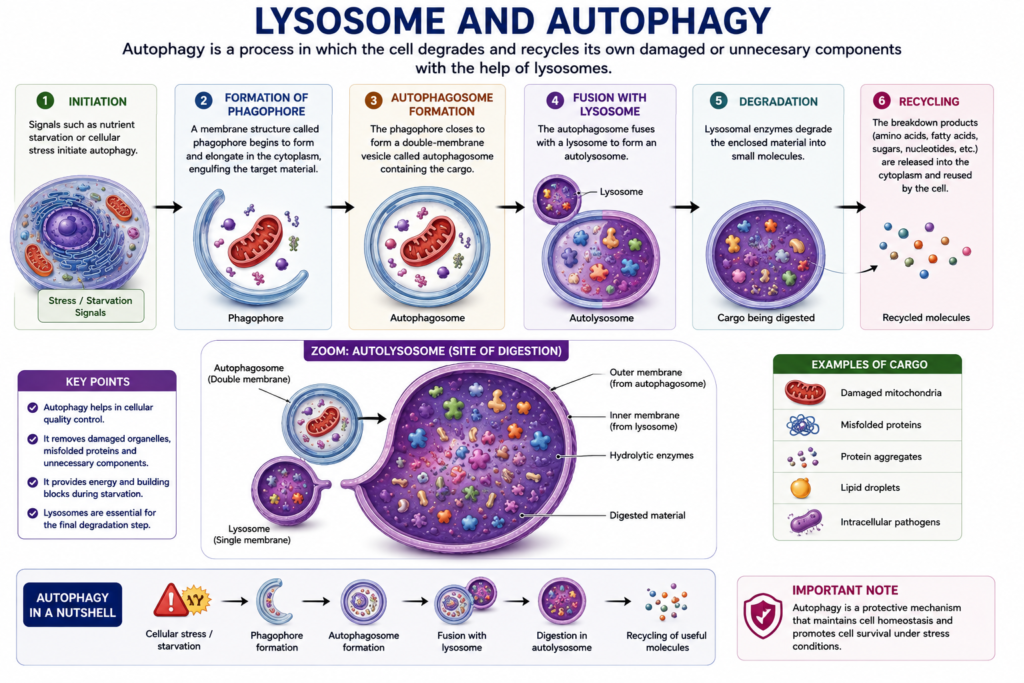
Lysosomes play a central role in autophagy, a process in which cells degrade and recycle their own damaged or unnecessary components.
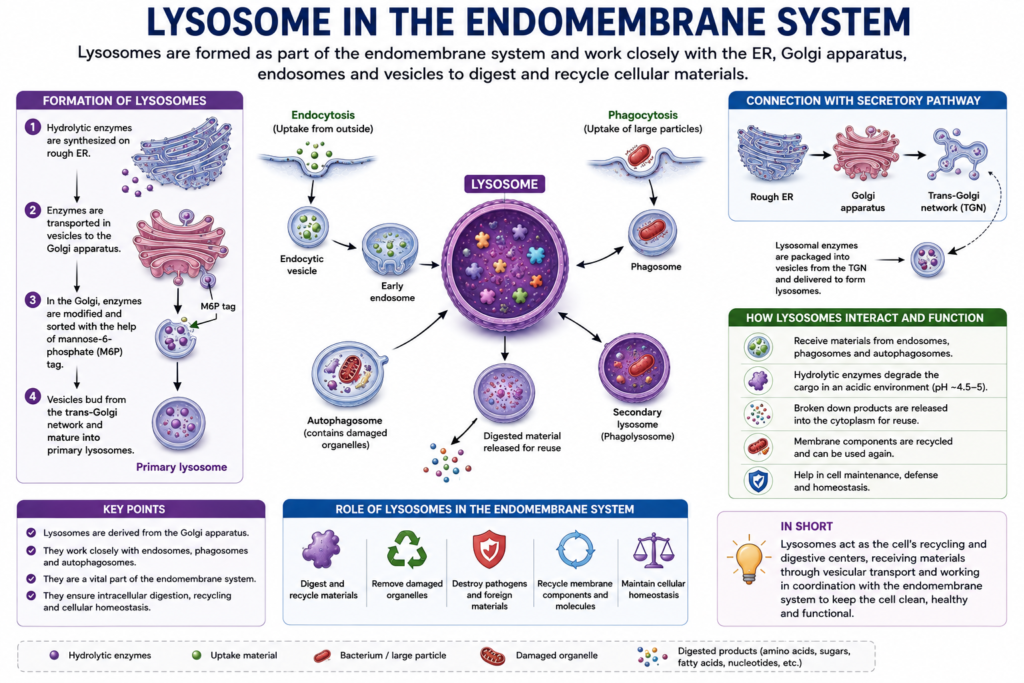
During autophagy, cellular material is enclosed within a membrane-bound structure called an autophagosome. The autophagosome subsequently fuses with a lysosome, allowing lysosomal enzymes to digest its contents.
Autophagy is important for cellular quality control and adaptation to changing conditions.
5. Destruction of Foreign Materials
Lysosomes can participate in the breakdown of materials that enter cells through processes such as endocytosis and phagocytosis.
For example, immune cells can engulf foreign particles or microorganisms. Digestive compartments containing lysosomal enzymes can then break down these materials.
Lysosomal digestion therefore contributes to cellular defense.
6. Removal of Damaged Organelles
Cells must regularly remove damaged organelles to maintain normal function.
Through autophagy and related pathways, damaged organelles can be delivered to lysosomes for degradation.
This process helps maintain cellular quality control.
7. Role in Programmed Cell Death
Lysosomes can also participate in pathways associated with cell death.
Changes in lysosomal membrane integrity can release lysosomal enzymes into the cytoplasm and contribute to cellular damage under certain conditions.
However, lysosomes should not simply be described as the “suicide bags” of the cell. This older textbook description is an oversimplification because lysosomes perform many normal functions essential for cell survival.
Lysosome and Autophagy
Autophagy literally refers to cellular self-digestion, but it is better understood as a controlled system for removing and recycling cellular components.
During autophagy, unwanted or damaged material is enclosed within a double-membrane structure called an autophagosome. The autophagosome then delivers its contents to lysosomal compartments.
After fusion and digestion, useful molecules can be released and reused by the cell.
Autophagy is particularly important during periods of cellular stress, nutrient limitation, and normal cellular maintenance.
Therefore, lysosomes are an essential part of the cell’s recycling system.
Importance of Lysosomes in Cells
Lysosomes are essential for maintaining cellular homeostasis.
Without efficient lysosomal degradation, damaged organelles, unwanted proteins, lipids, and other materials could accumulate inside cells.
Their ability to digest and recycle cellular components allows cells to conserve resources while continuously removing materials that are no longer required.
Lysosomes also work closely with other components of the endomembrane system. Materials can be delivered to lysosomes through pathways involving endosomes and vesicles, while lysosomal enzymes themselves are produced through the secretory pathway involving the rough endoplasmic reticulum and Golgi apparatus.
This makes the lysosome an important part of a larger cellular transport and recycling network.
Conclusion
The lysosome is a specialized membrane-bound organelle that plays a major role in intracellular digestion, recycling, and cellular quality control. Its single membrane encloses an acidic lumen containing hydrolytic enzymes capable of breaking down many types of biological molecules.
Lysosomes digest materials taken up by the cell, remove damaged cellular components, recycle useful molecules, and participate in autophagy. They also contribute to the breakdown of foreign materials and can influence certain cell-death pathways.
Rather than simply acting as cellular waste-disposal units, lysosomes are better understood as dynamic recycling centers that help maintain cellular homeostasis.
Key Takeaways
- Lysosomes are single-membrane-bound organelles containing digestive enzymes.
- They are particularly prominent in animal cells.
- Their internal lumen is maintained at an acidic pH.
- Lysosomal enzymes digest proteins, lipids, carbohydrates, nucleic acids, and other materials.
- Lysosomes perform intracellular digestion.
- They help remove damaged and unwanted cellular components.
- Lysosomes recycle useful molecules back to the cell.
- They play an essential role in autophagy.
- Lysosomes can digest materials taken into cells through endocytosis and phagocytosis.
- Lysosomes are part of the broader endomembrane system.
- The traditional term “suicide bag” is an oversimplification of lysosome function.
Frequently Asked Questions
What is a lysosome?
A lysosome is a membrane-bound organelle containing hydrolytic enzymes that digest and recycle cellular materials.
What is the main function of lysosome?
The main function of lysosomes is intracellular digestion and recycling of unwanted, damaged, or externally acquired materials.
What enzymes are present in lysosomes?
Lysosomes contain many hydrolytic enzymes, including proteases, lipases, glycosidases, and nucleases, which break down proteins, lipids, carbohydrates, and nucleic acids.
Why are lysosomes acidic?
Lysosomes maintain an acidic internal environment because many of their digestive enzymes work most efficiently at low pH.
What is the role of lysosomes in autophagy?
Lysosomes digest the contents delivered by autophagosomes during autophagy, allowing damaged or unnecessary cellular components to be degraded and recycled.
Are lysosomes present in plant cells?
Plant cells generally do not have the same prominent lysosome system found in animal cells. Instead, lytic vacuoles perform many lysosome-like digestive and recycling functions.
Why are lysosomes called the recycling centers of the cell?
Lysosomes break down unwanted cellular materials into smaller molecules that can be reused by the cell, making them important recycling centers.
Are lysosomes membrane-bound?
Yes. A lysosome is surrounded by a single membrane.
What is the lysosomal lumen?
The lysosomal lumen is the internal space enclosed by the lysosomal membrane. It contains digestive enzymes and has an acidic environment.
Why are lysosomes sometimes called suicide bags?
The term “suicide bag” comes from the older idea that lysosomal enzymes could cause cell destruction if released. However, this description is an oversimplification because lysosomes normally perform many essential functions that support cell survival.
References
- Alberts, B. et al. Molecular Biology of the Cell. Garland Science.
- Cooper, G. M. The Cell: A Molecular Approach.
- Biology 2e. Chapter on Eukaryotic Cells and Cellular Organelles.
- Settembre, C., Fraldi, A., Medina, D. L., & Ballabio, A. (2013). Signals from the lysosome: a control centre for cellular clearance and energy metabolism. Nature Reviews Molecular Cell Biology, 14, 283–296.
PubMed - Parzych, K. R., & Klionsky, D. J. (2014). An overview of autophagy: morphology, mechanism, and regulation. Antioxidants & Redox Signaling, 20(3), 460–473.
PubMed - de Duve, C. (1963). The lysosome. Scientific American, 208(5), 64–72.
Discover more from Zoologyverse
Subscribe to get the latest posts sent to your email.