
1. Fertilization in Animals: An Overview
Fertilization in Animals is a fundamental biological event in sexual reproduction in which a male gamete (sperm) fuses with a female gamete (ovum or egg) to initiate the development of a new individual. This process combines genetic material from two parents and usually results in the formation of a diploid zygote.
The Fertilization Process involves several coordinated events, including the encounter of gametes, recognition between sperm and egg, penetration of the egg coverings and fusion of their genetic material. These events ensure successful reproduction and initiate embryonic development.
Fertilization in Animals occurs through different reproductive mechanisms depending on the species and its environment. In some animals, gametes meet outside the body through external fertilization, whereas in others, sperm are transferred into the female reproductive tract through internal fertilization.
The Types of Fertilization show considerable diversity among animal groups. Aquatic animals such as many fishes and amphibians commonly exhibit external fertilization, while mammals, birds, reptiles and many terrestrial invertebrates generally use internal fertilization.
Fertilization in Animals is important because it restores the diploid chromosome number, combines hereditary information and initiates the developmental events that lead to the formation of a new organism.
2. Definition and General Characteristics of Fertilization
2.1 Definition of Fertilization
Fertilization in Animals is the biological process in which a male gamete (sperm) and a female gamete (ovum or egg) unite to form a zygote. It is a fundamental event of sexual reproduction that combines the genetic material of two parents and initiates embryonic development.
The fusion of gametes is commonly called syngamy. It involves the interaction and fusion of the gamete cell membranes, followed by the union of their haploid genetic material to establish the diploid chromosome complement in the zygote.
The Fertilization Process involves several coordinated stages, including gamete recognition, sperm attachment, penetration of egg coverings, membrane fusion and activation of the egg. These events ensure that fertilization occurs successfully and that development can begin.
2.2 Fusion of Male and Female Gametes
The most important characteristic of Fertilization in Animals is the union of male and female gametes.
The male gamete, or sperm, is generally small and motile. It carries the paternal genetic material and is specialised for reaching and interacting with the female gamete.
The female gamete is generally larger and contains maternal genetic material, cytoplasm, organelles and stored substances that support early development.
During fertilization, the sperm interacts with the egg coverings and eventually fuses with the egg plasma membrane. This allows the paternal genetic material to enter the egg and participate in zygote formation.
2.3 Restoration of the Diploid Chromosome Number
In most sexually reproducing animals, gametes are haploid (n), meaning that they contain one set of chromosomes. They are produced through meiosis during gametogenesis.
During Fertilization in Animals, the haploid genetic contributions of the male and female gametes combine to restore the diploid chromosome number (2n).
For example, in humans, each gamete normally contains 23 chromosomes. Their union produces a zygote containing 46 chromosomes.
The restoration of diploidy maintains the characteristic chromosome number of a species across successive generations.
2.4 Species-Specific Recognition of Gametes
Another important characteristic of Fertilization in Animals is species-specific recognition between sperm and egg.
Gametes possess specialised surface molecules that help them recognise and interact with compatible gametes. These molecular interactions increase the likelihood of successful fertilization between members of the same species.
The recognition mechanisms differ among animal groups. In mammals, sperm undergo capacitation within the female reproductive tract before acquiring the ability to fertilize the egg. In other animals, specific proteins on sperm and egg surfaces participate directly in gamete recognition and binding.
Species-specific recognition helps maintain reproductive compatibility and reduces inappropriate interactions between gametes of different species.
2.5 Activation of the Egg
Before fertilization, the egg is generally in a developmentally inactive or arrested state. The interaction and fusion of sperm with the egg trigger a series of biochemical and physiological changes collectively called egg activation.
One of the major events involved in egg activation is an increase in intracellular calcium concentration. In many animals, this occurs through calcium oscillations or a calcium wave, depending on the species.
These calcium signals initiate several important responses:
- Resumption or completion of meiotic events in species where the egg is arrested.
- Activation of metabolic and cellular processes required for development.
- Release of cortical granule contents in many animals.
- Changes in the egg coverings that help prevent additional sperm from entering.
- Initiation of early embryonic developmental activities.
Egg activation therefore converts the fertilized egg into a developmentally active cell capable of beginning embryogenesis.
2.6 Formation of the Zygote
Following gamete fusion, the maternal and paternal genetic material becomes organised within the fertilized egg. In many animals, the male and female pronuclei form separately before their genetic material is brought together during the first embryonic cell division.
The resulting zygote represents the first cell of the developing organism. It contains genetic information inherited from both parents and has the potential to undergo repeated mitotic divisions during cleavage.
2.7 Other General Characteristics of Fertilization
The major characteristics of Fertilization in Animals can be summarised as follows:
- It involves the union of male and female gametes.
- It combines genetic material from two parents.
- It usually restores the diploid chromosome number.
- It involves recognition and interaction between compatible gametes.
- It activates the egg and initiates embryonic development.
- It commonly involves mechanisms that prevent polyspermy.
- It produces a zygote that undergoes subsequent embryonic development.
Fertilization in Animals is therefore not simply the physical union of two reproductive cells. It is a highly coordinated cellular and molecular process involving gamete recognition, membrane fusion, genetic combination and egg activation. These events establish the foundation for the development of a new individual.
These core features apply to every type of fertilization described in the sections below, so they are the foundation for understanding Fertilization in Animals.
3. Preconditions for Fertilization
Before successful fertilization can occur, several biological and physiological conditions must be fulfilled. The male and female gametes must be mature, viable and capable of interacting with each other. Suitable environmental conditions and specific molecular recognition mechanisms are also necessary.
These requirements vary among animal groups, particularly between species that use external and internal fertilization.
3.1 Maturity of Male and Female Gametes
The maturity of both gametes is an essential requirement for successful Fertilization in Animals. Male and female gametes must complete the necessary stages of development before they can participate in fertilization.
The male gamete, or sperm, is produced through spermatogenesis. During this process, spermatogenic cells undergo meiosis and differentiation to form mature spermatozoa. In mammals, sperm acquire progressive motility and fertilizing capacity through further maturation in the epididymis and capacitation within the female reproductive tract.
The female gamete develops through oogenesis. In humans, the secondary oocyte is released during ovulation and remains arrested at metaphase II until fertilization occurs. It completes the second meiotic division following sperm entry.
Thus, proper gamete development ensures that both reproductive cells possess the structural and genetic characteristics required for successful fertilization.
3.2 Sperm Motility and Fertilizing Capacity
Sperm motility is particularly important in animals where sperm must travel through water or the female reproductive tract to reach the egg.
Most animal sperm possess a flagellum that generates movement through coordinated beating. This movement enables sperm to approach the egg and interact with its protective coverings.
In mammals, sperm undergo capacitation after entering the female reproductive tract. Capacitation involves biochemical and membrane changes that prepare sperm for fertilization and enable them to undergo the acrosome reaction.
In species with external fertilization, sperm motility helps them move through the surrounding water towards the released eggs. Therefore, appropriate motility and functional competence are important conditions for Fertilization in Animals.
3.3 Viability of the Egg
The female gamete must remain viable and physiologically competent until fertilization occurs. Egg viability refers to its ability to participate in fertilization and support the initial stages of embryonic development.
The duration of egg viability varies considerably among animal species. In humans, the released secondary oocyte generally remains capable of fertilization for approximately 12–24 hours after ovulation.
In externally fertilizing animals, eggs must encounter sperm within a suitable period after their release. Environmental conditions such as temperature, water quality and pH can influence egg survival and fertilizing capacity.
A viable egg must also possess functional cellular structures and the necessary molecular components for sperm interaction, egg activation and early development.
3.4 Suitable Environmental Conditions
Environmental conditions strongly influence Fertilization in Animals, particularly in species that reproduce through external fertilization.
Important environmental factors include:
- Temperature: Suitable temperatures support normal gamete activity, sperm movement and egg viability.
- pH: Appropriate acidity or alkalinity helps maintain the physiological condition of gametes.
- Water availability: Aquatic environments provide a medium for sperm movement and the encounter of gametes in many externally fertilizing species.
- Salinity: Suitable salt concentrations are important for maintaining osmotic balance in marine and freshwater organisms.
- Oxygen availability: Adequate oxygen conditions may support gamete viability and early developmental processes.
In internally fertilizing animals, the reproductive tract provides a more controlled environment for gamete interaction. However, physiological conditions within the reproductive tract must also remain suitable for sperm survival and fertilization.
3.5 Compatibility and Recognition Between Gametes
Successful Fertilization in Animals requires appropriate recognition and interaction between male and female gametes.
The surfaces of sperm and eggs contain specific molecules that participate in gamete recognition, attachment and membrane interaction. These molecular interactions help ensure that compatible gametes can recognise and interact with each other.
In many animal species, sperm and egg recognition involves specialised proteins and receptors. In mammals, interactions between sperm and the zona pellucida, together with subsequent membrane recognition mechanisms, contribute to successful fertilization.
Species-specific recognition is important because it helps maintain reproductive compatibility and reduces the possibility of fertilization between unrelated species.
3.6 Appropriate Timing and Synchronisation
The male and female gametes must meet while both remain capable of successful fertilization. This requires appropriate timing of sperm availability and egg release.
In internally fertilizing animals, reproductive behaviour, sperm transfer, ovulation and sperm transport must be sufficiently coordinated. In mammals, sperm may remain viable within the female reproductive tract for several days, allowing fertilization to occur after mating.
In externally fertilizing animals, the release of sperm and eggs into the surrounding environment often needs to occur at approximately the same time. Some aquatic species coordinate gamete release through environmental signals and reproductive behaviour.
3.7 Summary of Preconditions for Fertilization
| Preconditions | Biological importance |
|---|---|
| Gamete maturity | Ensures that sperm and egg are developmentally competent |
| Sperm motility | Helps sperm reach and interact with the egg |
| Egg viability | Maintains the egg’s ability to undergo fertilization and early development |
| Suitable environmental conditions | Support gamete survival and normal physiological activity |
| Gamete compatibility | Enables appropriate recognition and interaction |
| Proper timing | Increases the likelihood that viable sperm and eggs meet |
The successful occurrence of Fertilization in Animals depends on the combined fulfilment of these conditions. Even when mature gametes are produced, fertilization may fail if sperm are unable to reach the egg, the egg loses viability or environmental conditions become unsuitable. These requirements establish the biological foundation for the different types and mechanisms of fertilization.
4. What Are the Types of Fertilization in Animals?
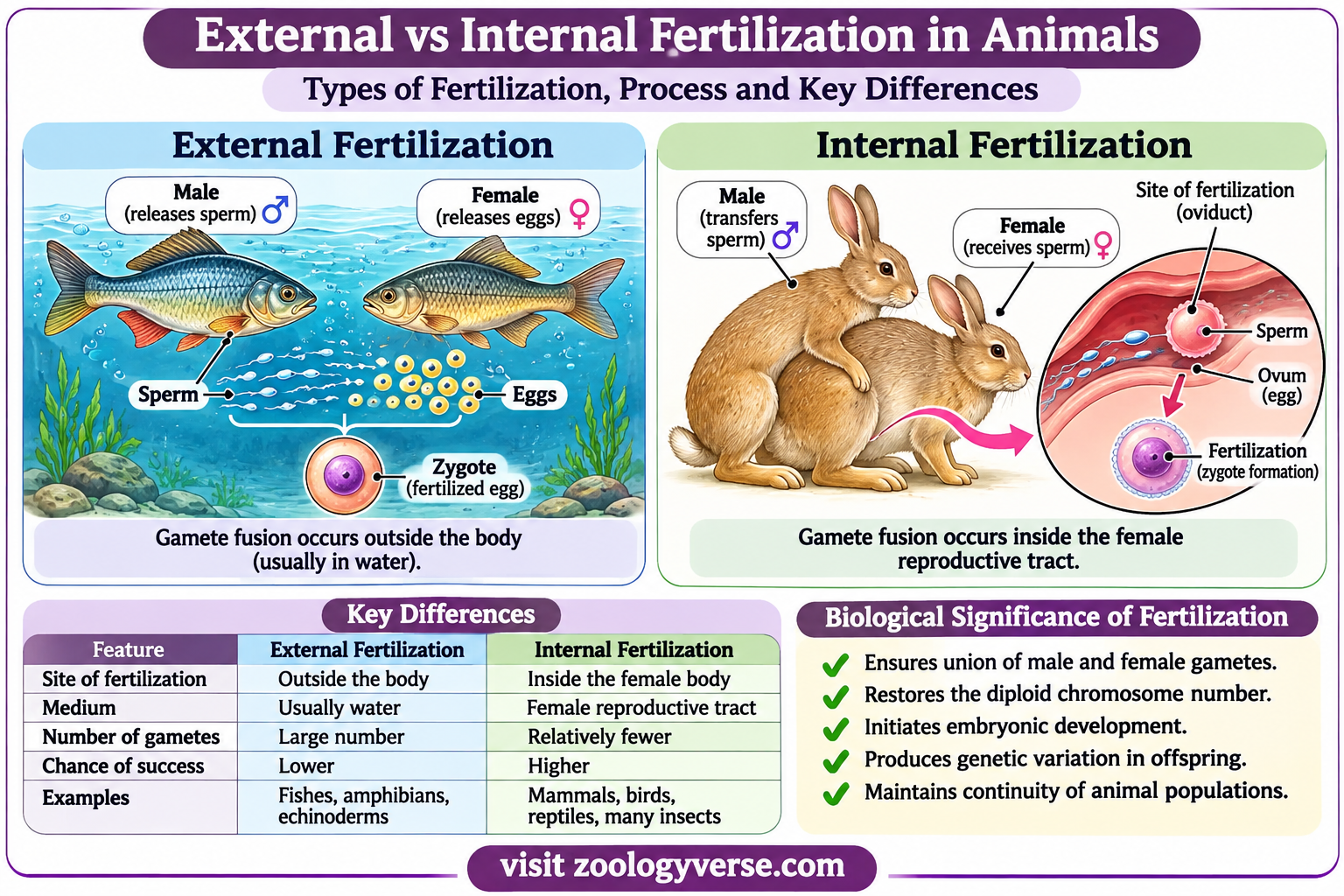
Fertilization in Animals occurs through different reproductive mechanisms depending on the species, habitat and reproductive adaptations. Based on the location where sperm and egg unite, fertilization is broadly classified into two major types: external fertilization and internal fertilization.
In external fertilization, the fusion of male and female gametes takes place outside the body, usually in an aquatic environment. In internal fertilization, the sperm reaches the female reproductive tract, where fertilization takes place inside the body.
These two Types of Fertilization differ in the location of gamete fusion, reproductive behaviour, environmental requirements and the probability of successful fertilization.
4.1 External Fertilization
External fertilization is a reproductive mechanism in which sperm and eggs are released into the surrounding environment, where their fusion occurs outside the parental bodies.
It is commonly observed in aquatic animals, particularly many fishes, amphibians and echinoderms. Water provides a medium for sperm movement and helps prevent the gametes from drying out.
In many externally fertilizing species, males and females release their gametes into the water through a process called spawning. Successful fertilization depends on the timing and proximity of gamete release.
Characteristics:
- Fertilization occurs outside the body of the female.
- Gametes are generally released into the surrounding environment.
- Water is usually required as a medium for gamete movement.
- Large numbers of eggs and sperm may be released.
- Fertilization success depends on environmental conditions and synchronised gamete release.
- Embryonic development commonly begins outside the parental body.
Examples:
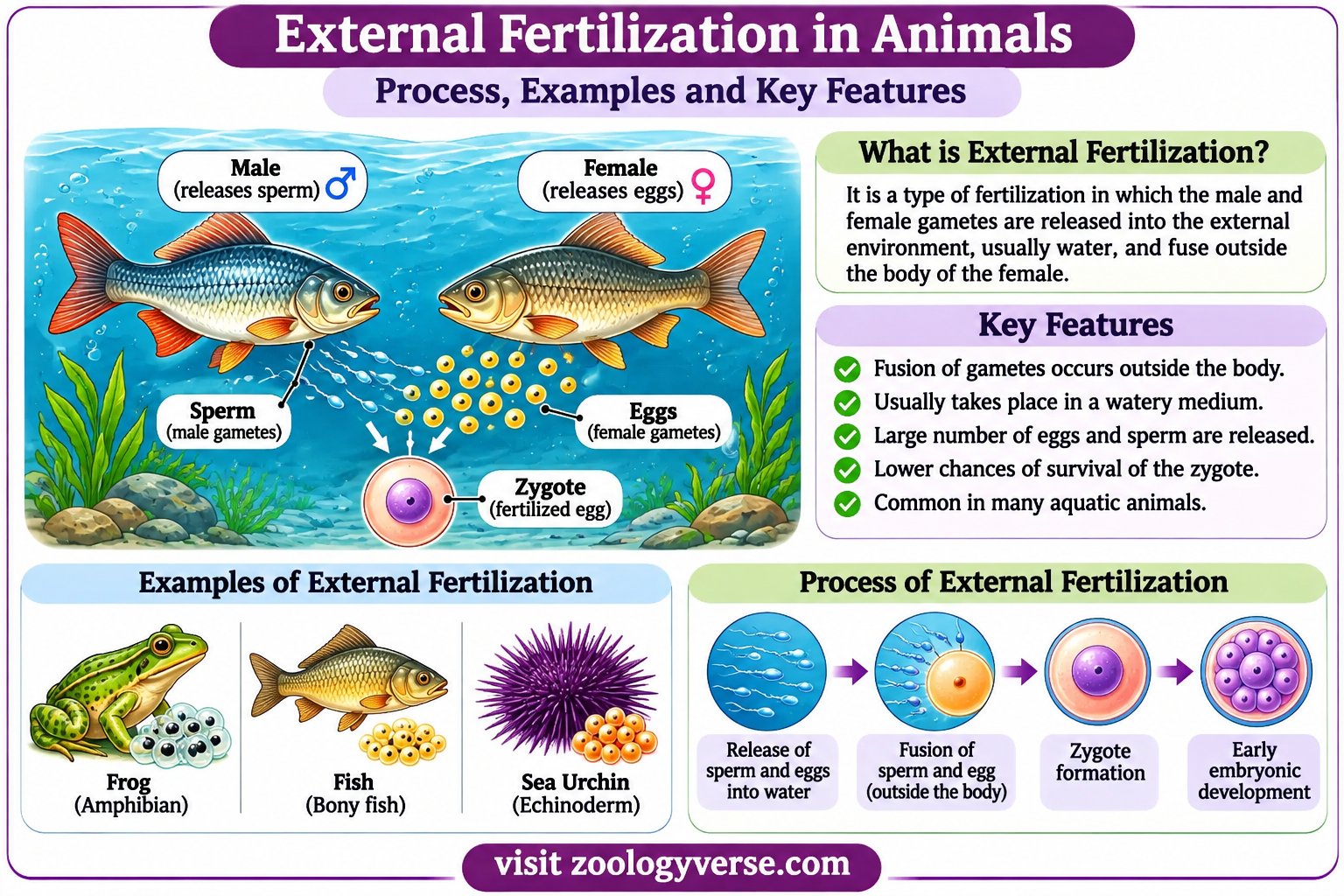
- Many bony fishes, such as salmon and carp.
- Amphibians, such as frogs and toads.
- Echinoderms, such as sea urchins and starfish.
4.2 Internal Fertilization
Internal fertilization is a reproductive mechanism in which sperm and egg unite inside the female reproductive tract. The sperm is transferred into the female reproductive system through copulation or other specialised sperm-transfer mechanisms.
It is commonly found in mammals, birds, reptiles and many terrestrial invertebrates. It also occurs in certain aquatic animals, including sharks and rays.
During internal fertilization, sperm are deposited or transferred into the female reproductive system. They travel towards the site where the egg is present, and one sperm generally fuses with the egg to initiate development.
Characteristics:
- Fertilization occurs inside the female reproductive system.
- Sperm transfer takes place through copulation or specialised reproductive structures.
- A large number of eggs need not be produced.
- Gametes are protected from many external environmental conditions.
- The reproductive tract provides a suitable environment for sperm transport and gamete interaction.
- Embryonic development may occur inside or outside the mother’s body, depending on the reproductive strategy.
Examples:
- Mammals, such as humans, dogs and elephants.
- Birds, such as hens and pigeons.
- Reptiles, such as snakes and lizards.
- Terrestrial arthropods, such as insects and spiders.
- Cartilaginous fishes, such as sharks and rays.
4.3 Comparison Between External and Internal Fertilization
The two Types of Fertilization differ in several important characteristics.
| Characteristic | External Fertilization | Internal Fertilization |
|---|---|---|
| Location | Outside the parental bodies | Inside the female reproductive tract |
| Common habitat | Mainly aquatic environments | Aquatic and terrestrial environments |
| Gamete release | Gametes are generally released into the environment | Sperm is transferred into the female reproductive tract |
| Number of gametes | Usually large numbers | Generally fewer gametes are required |
| Environmental dependence | Strong dependence on suitable external conditions | Greater protection from external conditions |
| Probability of fertilization | Often lower because gametes may be lost | Generally higher because gametes are brought closer together |
| Embryonic development | Commonly occurs outside the parental body | May occur internally or externally |
| Parental investment | Often relatively low per gamete, although exceptions occur | Often associated with greater investment in gamete transfer and reproductive protection |
| Examples | Many fishes, frogs and sea urchins | Mammals, birds, reptiles and insects |
4.4 Advantages of External Fertilization
External fertilization offers several reproductive advantages, particularly for aquatic animals.
- Production of numerous offspring: Large numbers of eggs and sperm can be released, increasing the possibility that some offspring survive.
- Wide distribution: Gametes and developing embryos may be dispersed through the surrounding water.
- Reduced need for specialised sperm-transfer organs: Many species can reproduce through the release of gametes into the environment.
- Development outside the parental body: Embryos can develop independently in suitable external conditions.
4.5 Limitations of External Fertilization
Despite these advantages, external fertilization has certain limitations.
- A large proportion of gametes may fail to meet or undergo successful fusion.
- Eggs and embryos are exposed to predators and environmental fluctuations.
- Fertilization depends heavily on suitable environmental conditions.
- Gametes may be dispersed away from each other by water currents.
- Desiccation can prevent successful reproduction if suitable aquatic conditions are unavailable.
4.6 Advantages of Internal Fertilization
Internal fertilization provides several advantages, especially for animals living in terrestrial environments.
- Protection of gametes: Sperm and eggs are less exposed to external environmental fluctuations during fertilization.
- Higher probability of gamete encounter: Sperm is transferred directly into the female reproductive tract.
- Reduced gamete loss: Fewer eggs and sperm may be required compared with many externally fertilizing species.
- Reproduction on land: It allows fertilization without requiring the release of gametes into external water.
- Controlled reproductive conditions: The female reproductive tract provides a relatively regulated environment for sperm transport and fertilization.
4.7 Limitations of Internal Fertilization
Internal fertilization also involves certain biological and reproductive limitations.
- It generally requires specialised reproductive behaviour or sperm-transfer mechanisms.
- Reproductive structures and physiological processes may be more complex.
- Finding and mating with a suitable partner may require additional energy and time.
- Embryonic development and parental care may involve considerable reproductive investment in some animal groups.
- Reproductive success may depend on successful mating, sperm transport and appropriate female reproductive conditions.
4.8 Biological Significance of the Two Types
The two Types of Fertilization represent different reproductive adaptations to environmental conditions and animal lifestyles.
External fertilization is particularly successful in aquatic environments, where water allows gametes to move and encounter one another. Internal fertilization provides an alternative mechanism that protects gametes and supports reproduction in terrestrial environments.
Both mechanisms ultimately achieve the same biological objective: the union of male and female genetic material to form a zygote and initiate embryonic development.
In short, the two Types of Fertilization are external fertilization and internal fertilization, and each shapes how the Fertilization Process unfolds in animals.
5. External Fertilization
External fertilization is a reproductive mechanism in which male and female gametes unite outside the bodies of the parents, usually in an aquatic environment. It is particularly common in many fishes, amphibians and aquatic invertebrates.
In this reproductive strategy, successful Fertilization in Animals depends on the release of viable gametes, suitable environmental conditions and coordination between reproductive individuals. Different animal groups have developed specialised reproductive behaviours and adaptations to increase the probability of gamete fusion.
5.1 Mechanism of External Fertilization
External fertilization generally involves the following sequence of events:
- Gamete maturation: Male and female reproductive organs produce mature sperm and eggs through spermatogenesis and oogenesis.
- Gamete release: The female releases eggs into the surrounding environment, while the male releases sperm near the eggs.
- Sperm activation: Contact with the external aquatic environment activates sperm motility in many externally fertilizing fishes.
- Sperm movement: Motile sperm swim through the surrounding water towards the eggs.
- Gamete recognition: Sperm interact with specialised molecules present on the egg coverings.
- Sperm entry: A compatible sperm penetrates the egg coverings and reaches the egg plasma membrane.
- Gamete fusion: The sperm and egg membranes fuse, allowing the paternal genetic material to enter the egg.
- Egg activation: Biochemical changes occur within the egg, initiating the processes required for embryonic development.
The precise molecular mechanisms differ among animal groups, but the overall objective of Fertilization in Animals remains the same: successful fusion of compatible gametes and formation of a zygote.
5.2 Reproductive Patterns in External Fertilization
Animals exhibit different reproductive behaviours to improve the chances of sperm and egg encountering each other.
1. Spawning
Spawning involves the release of eggs and sperm into the surrounding environment. It is common in many fishes and aquatic invertebrates.
In several species, males and females release their gametes simultaneously. This synchronisation increases the possibility of fertilization before gametes lose their viability.
2. Broadcast Spawning
Broadcast spawning occurs when large numbers of eggs and sperm are released directly into the surrounding water.
It is commonly observed in sea urchins, corals and several marine invertebrates. Environmental signals such as temperature, light and chemical cues may help coordinate reproductive activity.
3. Pair Spawning
In pair spawning, a male and female reproduce together and release their gametes in close proximity.
This behaviour reduces the distance between sperm and eggs and can improve fertilization efficiency.
4. Group Spawning
In group spawning, several individuals release their gametes within the same reproductive area. Multiple males may release sperm around eggs deposited by one or more females.
This reproductive pattern occurs in several fish species and may involve competition among males for access to freshly released eggs.
5.3 External Fertilization in Fishes
External fertilization is widespread among bony fishes, particularly many teleosts. During reproduction, females release eggs into water while males release sperm, commonly called milt, near the eggs.
In many freshwater fishes, sperm are activated when they come into contact with the surrounding water. Their motility is generally short-lived, so sperm must reach the egg quickly.
Fish eggs possess a protective outer covering called the chorion. A specialised opening known as the micropyle allows sperm entry.
The micropyle is particularly important because it provides a restricted route through which a sperm can reach the egg. This adaptation helps regulate sperm entry and contributes to the prevention of polyspermy.
Examples:
- Salmon: Males and females gather at spawning grounds. Females deposit eggs in gravel nests, while males release milt over them.
- Carp: Eggs and sperm are released into water, often during coordinated spawning activity.
- Trout: Gametes are released near spawning sites, frequently in gravel beds where fertilized eggs can develop.
These reproductive behaviours improve the probability of successful Fertilization in Animals despite the dilution and dispersal of gametes in water.
5.4 External Fertilization in Amphibians
External fertilization is common in many amphibians, particularly frogs and toads. Reproductive activity generally takes place in or near water, where eggs remain moist and sperm can move towards them.
In many frogs, reproduction involves a characteristic behaviour called amplexus. During amplexus, the male holds the female around the body, usually near the trunk or pelvic region, while she releases eggs.
The male simultaneously releases sperm over the eggs, allowing fertilization to occur externally.
The eggs are commonly surrounded by a gelatinous covering that provides protection and helps maintain moisture.
Examples:
- Rana: In many species, the male and female perform amplexus, and sperm are released over the eggs during spawning.
- Bufo: Many toads exhibit amplexus, during which the male fertilizes eggs released by the female.
- Duttaphrynus: The female deposits eggs in long gelatinous strings, while the male releases sperm over them.
After fertilization, the embryos develop into aquatic larvae called tadpoles in many frogs and toads.
5.5 Adaptations for Successful External Fertilization
Because gametes are released into the surrounding environment, externally fertilizing animals possess several adaptations that improve reproductive success.
1. Synchronised Gamete Release
Many species coordinate the release of sperm and eggs through reproductive behaviour or environmental signals. This reduces the time between gamete release and increases the probability of fertilization.
2. Production of Numerous Gametes
Many externally fertilizing animals produce large numbers of eggs and sperm. This compensates for the loss of gametes through dispersal, predation and unsuitable environmental conditions.
3. Sperm Motility
Sperm flagella generate movement that helps sperm reach the eggs. In many fishes, changes in osmotic conditions and ionic composition of the surrounding water activate sperm motility.
4. Protective Egg Coverings
Egg coverings such as the chorion in fishes and gelatinous envelopes in amphibians provide physical protection. They also contain structures and molecules involved in sperm interaction.
5. Micropyle Formation
In many externally fertilizing fishes, the micropyle provides a specialised opening through the chorion. It allows sperm to enter the egg through a restricted passage.
6. Chemical Guidance and Gamete Recognition
In certain marine invertebrates, eggs release chemical substances that influence sperm movement towards them. Specific molecules on sperm and egg surfaces also contribute to compatible gamete recognition.
7. Suitable Spawning Environments
Many animals release their gametes in protected or favourable locations, such as shallow water, gravel beds, aquatic vegetation or suitable spawning grounds. These environments can improve fertilization and subsequent embryo survival.
5.6 Advantages of External Fertilization
External fertilization provides several reproductive advantages:
- Large numbers of offspring can be produced during a single reproductive event.
- Gametes can be released without requiring specialised sperm-transfer organs.
- Embryonic development can occur outside the parental body.
- Gametes and offspring may be dispersed into new habitats.
- Aquatic environments provide a medium for sperm movement and gamete interaction.
5.7 Limitations of External Fertilization
Despite its advantages, external fertilization has certain limitations:
- A considerable proportion of gametes may fail to encounter one another.
- Gametes can be dispersed by water currents, reducing fertilization probability.
- Fertilization success depends on suitable environmental conditions.
- Eggs and developing embryos may be exposed to predators.
- Many externally released embryos receive limited protection from parental organisms.
5.8 Biological Significance
External fertilization represents an important reproductive adaptation among aquatic animals. It allows gametes to unite outside the parental body and supports reproduction in environments where water provides a suitable medium for sperm movement.
The reproductive behaviours of fishes and amphibians, together with adaptations such as synchronised spawning, sperm motility, protective egg coverings and micropyles, increase the probability of successful Fertilization in Animals.
These adaptations demonstrate how different animal groups have evolved reproductive strategies that improve gamete encounter, fertilization and early embryonic survival.
External Fertilization is therefore best suited to aquatic habitats, where water supports the Fertilization Process from gamete release to zygote formation.
6. Internal Fertilization
Internal fertilization is a reproductive process in which the male and female gametes unite inside the reproductive tract of an animal. It is common in terrestrial vertebrates, including mammals, birds and reptiles, but it also occurs in several aquatic animals and invertebrates. Unlike external fertilization, internal fertilization does not require sperm and eggs to meet in the surrounding water.
In this process, sperm are transferred into or near the female reproductive tract, where they move towards the mature egg. Their union results in the formation of a diploid zygote. Internal fertilization increases the likelihood of successful gamete fusion by bringing sperm and eggs into a relatively protected environment.
6.1 Mechanism of Internal Fertilization
The mechanism of internal fertilization involves several coordinated events. Although the basic principle is similar across animal groups, the reproductive structures and exact mechanisms vary considerably.
The major steps are:
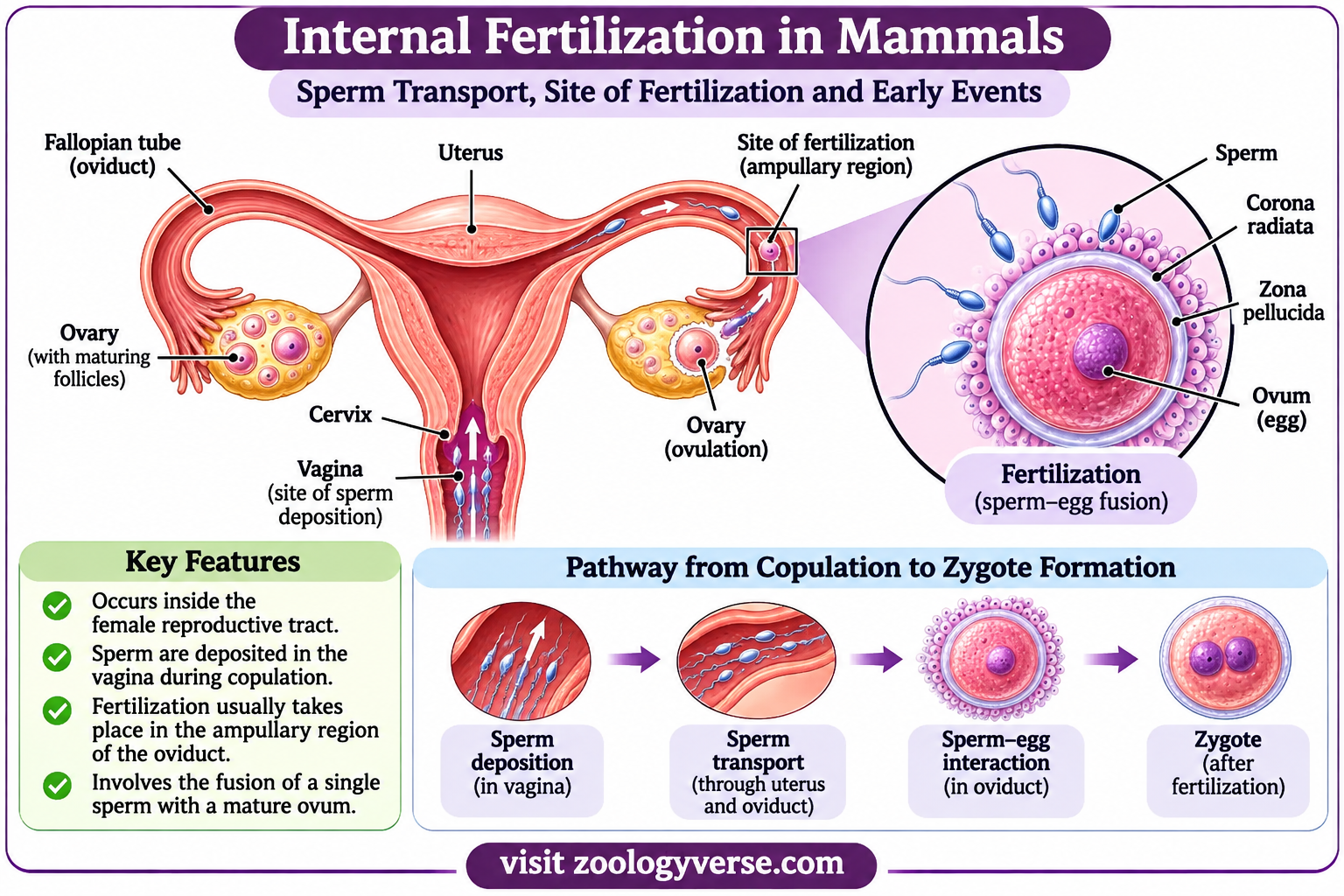
- Mating and sperm transfer: The male transfers sperm into the female reproductive tract through copulation or another specialised sperm-transfer mechanism. In some invertebrates, sperm are transferred through spermatophores, which are packets containing sperm.
- Sperm transport: After transfer, sperm move through the female reproductive tract towards the site where the egg is present. Their movement may be supported by flagellar activity, muscular contractions and fluid movement within the reproductive passages.
- Sperm maturation and preparation: In mammals, sperm undergo a physiological process called capacitation within the female reproductive tract. This process prepares sperm for fertilization and enables them to undergo the acrosome reaction.
- Recognition of the egg: Sperm interact with the egg’s surrounding coverings and molecular recognition systems. These interactions help ensure that fertilization generally occurs between compatible gametes of the same species.
- Penetration of egg coverings: The sperm passes through the protective layers surrounding the egg. In mammals, this involves interactions with the cumulus cells and zona pellucida, followed by the acrosome reaction.
- Fusion of gamete membranes: The sperm membrane fuses with the egg plasma membrane. This triggers egg activation and initiates changes that help prevent the entry of additional sperm.
- Formation of the zygote: The male and female genetic material ultimately combines, restoring the diploid chromosome number and establishing the first cell of the developing organism.
The precise site of fertilization differs among animal groups. For example, in humans and many other mammals, fertilization normally occurs in the ampullary region of the oviduct. The female reproductive tract also helps regulate sperm transport, survival and arrival at the fertilization site.
6.2 Reproductive Adaptations for Internal Fertilization
Internal fertilization is supported by specialised anatomical, physiological and behavioural adaptations. These adaptations increase the probability of sperm transfer, protect gametes and improve the chances of successful reproduction.
Important reproductive adaptations include:
- Copulatory organs: Many animals possess specialised structures that facilitate sperm transfer. Examples include the penis in most mammals, hemipenes in many male reptiles and the aedeagus in many male insects.
- Specialised reproductive passages: The female reproductive tract provides a pathway for sperm movement and, in some species, contains structures that support sperm survival and storage.
- Sperm storage organs: Some females possess specialised structures that retain sperm until fertilization can occur. These include the spermatheca in many insects and sperm-storage tubules in birds.
- Protective egg coverings: Eggs of many internally fertilizing animals develop protective coverings. Reptile eggs commonly have leathery shells, while bird eggs generally possess hard, calcium-rich shells.
- Reproductive synchronisation: Hormonal and behavioural changes help coordinate mating, ovulation and the availability of mature gametes.
- Internal embryonic development: In viviparous animals, embryos develop inside the female’s reproductive system, where they receive protection and, depending on the species, maternal nourishment.
These adaptations differ among animal groups. For example, sperm storage in birds can maintain viable sperm in specialised tubules for extended periods, allowing fertilization to occur after mating.
6.3 Internal Fertilization in Mammals
Mammals generally exhibit internal fertilization. During copulation, sperm are deposited into the female reproductive tract, usually through the penis. In many mammals, semen is deposited in the vagina, although the exact site and reproductive anatomy vary among species.
Sperm travel through the cervix and uterus towards the oviduct. In species such as humans, fertilization normally occurs in the ampullary region of the oviduct. Capacitation and the acrosome reaction prepare sperm for penetration and fusion with the egg.
Following fertilization, the zygote undergoes cleavage and early embryonic development. The embryo subsequently reaches the uterus, where implantation occurs in mammals that possess this reproductive pattern.
Mammals demonstrate different modes of development after internal fertilization:
- Oviparous mammals: Monotremes, such as the platypus and echidna, lay eggs after internal fertilization.
- Viviparous mammals: Most mammals retain the developing embryo inside the uterus and give birth to young ones. In placental mammals, the placenta supports the exchange of nutrients, gases and waste products between maternal and fetal systems.
Thus, internal fertilization in mammals is associated with different reproductive strategies, even though fertilization itself takes place inside the female reproductive tract.
6.4 Internal Fertilization in Birds
All living birds reproduce through internal fertilization. During mating, the male transfers sperm into the female reproductive tract. In many bird species, sperm transfer occurs through brief contact between the male and female cloacae, commonly called the cloacal kiss.
However, some birds, including ducks, geese and ostriches, possess a well-developed phallus that facilitates sperm transfer.
After entering the female reproductive tract, sperm may move towards specialised sperm-storage tubules located near the junction of the vagina and uterus. These structures can retain viable sperm and release them for fertilization when an ovulated ovum becomes available.
Fertilization generally takes place in the upper region of the oviduct, before the egg acquires most of its albumen, shell membranes and hard outer shell. As the developing egg passes through the oviduct, these protective coverings are added.
Birds therefore demonstrate an important combination of internal fertilization and external egg development. The embryo develops outside the mother’s body after the fertilized egg is laid, receiving nourishment primarily from the yolk.
6.5 Internal Fertilization in Reptiles
Internal fertilization is characteristic of reptiles, including snakes, lizards, turtles and crocodilians. Male reptiles transfer sperm into the female reproductive tract using specialised copulatory structures.
In snakes and lizards, males generally possess paired copulatory organs called hemipenes. These organs are usually stored within the base of the tail and are used during mating. Turtles and crocodilians possess a single phallus.
After sperm transfer, fertilization occurs inside the female reproductive tract. In many reptiles, fertilized eggs are subsequently laid and develop outside the mother’s body. Their shells are generally leathery or flexible, although shell structure varies among groups.
Some reptiles retain developing embryos within the female reproductive tract. Depending on the species, embryos may obtain nourishment mainly from the yolk or receive additional maternal support.
Certain female reptiles can also store sperm for extended periods. This allows fertilization to occur after mating rather than immediately following sperm transfer.
6.6 Internal Fertilization in Invertebrates
Internal fertilization also occurs in several invertebrate groups. Their reproductive mechanisms are diverse and may involve direct sperm transfer, specialised appendages or spermatophores.
1. Insects
Many insects exhibit internal fertilization. The male generally transfers sperm into the female reproductive tract using a copulatory organ called the aedeagus. In some species, sperm are transferred within a spermatophore.
The female reproductive system may contain a spermatheca, a specialised organ that stores sperm. Stored sperm can remain viable for varying periods and may be used to fertilize eggs during subsequent egg-laying events.
2. Spiders
In spiders, males transfer sperm using specialised structures called pedipalps. The male first deposits sperm onto a small sperm web and then collects it into the pedipalps.
During mating, sperm are transferred from the pedipalps into the female genital opening and stored in specialised internal structures called spermathecae.
3. Cephalopods
Several cephalopods, including squids, cuttlefish and octopuses, use internal fertilization. Males transfer sperm packets called spermatophores to the female using specialised reproductive structures.
In many cephalopods, a modified arm called the hectocotylus helps transfer spermatophores. The exact transfer mechanism and location vary among species.
4. Scorpions
Scorpions use an indirect sperm-transfer mechanism. The male deposits a spermatophore on a suitable surface and guides the female over it so that sperm can enter her reproductive tract.
This process allows sperm transfer without direct deposition through a penis-like organ.
These examples demonstrate that internal fertilization does not always require direct copulation or a conventional copulatory organ. In some invertebrates, specialised sperm packets and reproductive appendages perform the same general function.
6.7 Advantages of Internal Fertilization
Internal fertilization offers several reproductive advantages, particularly for animals living in terrestrial environments.
- Protection of gametes: Sperm and eggs meet inside the reproductive system, reducing their exposure to environmental hazards.
- Reduced dependence on external water: Unlike external fertilization, the gametes do not need to be released into surrounding water for fusion.
- Higher probability of fertilization: Sperm are transferred closer to the egg, increasing the likelihood of successful gamete union.
- Protection from dehydration: Fertilization occurs in a moist internal environment, which is particularly important for terrestrial animals.
- Controlled sperm transfer: The female reproductive tract receives sperm directly or through specialised transfer mechanisms, reducing gamete loss.
- Possibility of sperm storage: In some animals, sperm can be stored until eggs become available, reducing the need for immediate mating and fertilization.
- Greater protection of developing embryos: In viviparous animals, embryos remain within the maternal reproductive system, where they receive protection and may obtain nourishment.
Internal fertilization is therefore an important reproductive adaptation in many terrestrial animals. However, it does not necessarily mean that embryos develop inside the mother, because birds and many reptiles lay fertilized eggs.
6.8 Limitations of Internal Fertilization
Despite its advantages, internal fertilization also has certain limitations.
- High energy expenditure: Mating behaviour, copulatory structures and the production of reproductive secretions may require considerable energy.
- Need for specialised reproductive organs: Successful sperm transfer often depends on specialised reproductive structures and coordinated reproductive behaviour.
- Production of fewer gametes: Compared with many broadcast-spawning animals, internally fertilizing species often produce fewer eggs or offspring at a time.
- Risk of reproductive injury or infection: Direct reproductive contact may expose animals to physical injury and sexually transmitted pathogens.
- Dependence on successful mating: In species that require copulation, reproduction may be limited when suitable mates are unavailable.
- Maternal investment: In viviparous animals, pregnancy and embryonic development can impose substantial energetic and physiological demands on the mother.
- Complex reproductive timing: Sperm transfer, sperm survival, ovulation and fertilization must be coordinated. Although sperm storage can reduce this timing problem, it does not eliminate it.
6.9 Comparison of Internal and External Fertilization
| Feature | Internal Fertilization | External Fertilization |
|---|---|---|
| Site of gamete fusion | Inside the reproductive tract | Outside the body |
| Sperm transfer | Directly or through specialised structures | Usually released into the surrounding environment |
| Dependence on water | Not essential for gamete fusion | Usually requires an aquatic or moist environment |
| Number of gametes | Often fewer | Often produced in large numbers |
| Gamete protection | Relatively high | Generally lower |
| Fertilization success | Usually higher per released egg | Often lower because many gametes are lost |
| Examples | Mammals, birds, reptiles, many insects | Many fishes, amphibians and echinoderms |
The distinction between these two methods concerns the location of gamete fusion, not the location of embryonic development. Internal fertilization may be followed by egg laying or live birth, depending on the animal.
In short, Internal Fertilization protects the gametes inside the body, while External Fertilization relies on water, and both are central to Fertilization in Animals.
7. How Does the Fertilization Process Work in Animals?
The mechanism of fertilization involves a series of coordinated cellular and molecular events through which male and female gametes unite to form a zygote. It is one of the most important processes in sexual reproduction because it combines genetic material from two parents and initiates embryonic development.
Although the basic outcome is similar in different animals, the exact mechanism varies according to the species and its reproductive strategy. In externally fertilizing animals, sperm and eggs meet in the surrounding environment, whereas in internally fertilizing animals, sperm reach the egg within the female reproductive tract.
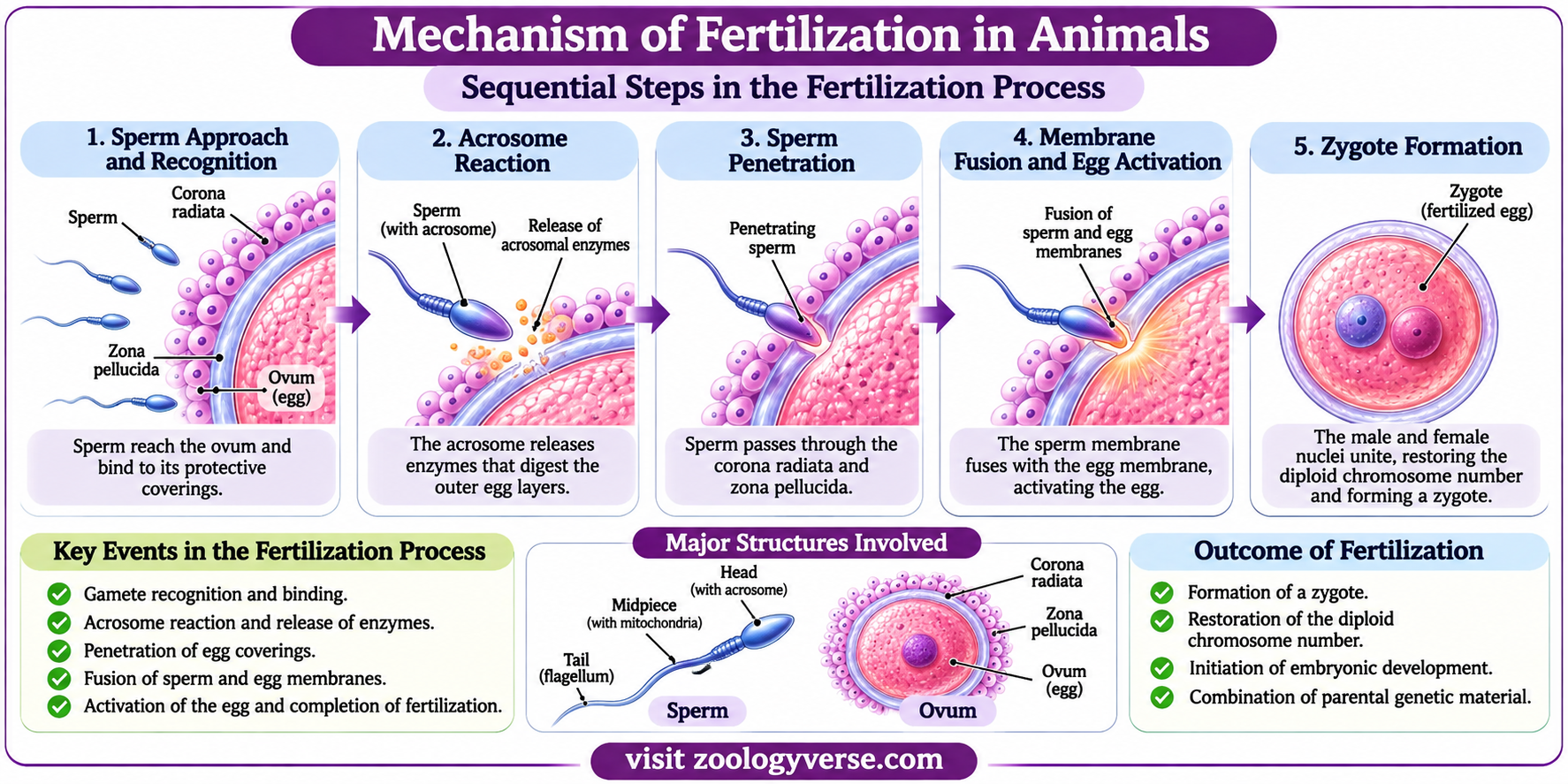
The major stages of the fertilization process include the approach of sperm towards the egg, recognition between compatible gametes, penetration of egg coverings, fusion of gamete membranes, egg activation and the formation of the zygote.
7.1 Approach of Sperm Towards the Egg
The first major event in the fertilization process is the movement of sperm towards the egg. Successful fertilization depends on the ability of sperm to reach the egg while retaining their functional capacity.
In many animals, sperm movement is supported by the flagellum, which produces the movement required for swimming. In internally fertilizing animals, sperm travel through the female reproductive tract, whereas in externally fertilizing animals, they move through the surrounding aquatic medium.
Several factors influence sperm movement:
- Sperm motility: The flagellum provides movement that helps sperm approach the egg.
- Environmental conditions: Temperature, pH, ionic composition and osmotic conditions can influence sperm activity.
- Chemical signals: In certain animals, substances released by eggs or surrounding reproductive tissues guide sperm towards the egg.
- Female reproductive tract: In internally fertilizing animals, muscular contractions and reproductive fluids may assist sperm transport.
- Sperm viability: Sperm must remain alive and functionally active long enough to reach the egg.
In mammals, sperm also undergo capacitation within the female reproductive tract. This physiological preparation is necessary for the sperm to acquire the ability to fertilize the egg.
7.2 Recognition Between Male and Female Gametes
After reaching the egg, sperm must interact with its surrounding coverings and recognise the appropriate egg. This interaction is an important step in the fertilization process because it helps ensure compatibility between male and female gametes.
The egg is generally surrounded by protective extracellular coverings. Their composition varies among animal groups. For example, mammalian eggs are surrounded by the zona pellucida, while many sea urchin eggs possess a vitelline layer.
Molecular interactions between sperm and egg-associated molecules contribute to species-specific recognition. These interactions help sperm attach to the egg and initiate subsequent fertilization events.
7.3 Penetration of Egg Coverings
Before the sperm can fuse with the egg plasma membrane, it must pass through the protective layers surrounding the egg.
The mechanisms of penetration differ among animals. In many externally fertilizing animals, sperm interact with specialised egg coverings and may use enzymes or specialised structures to pass through them.
In mammals, sperm must pass through the cumulus cell layer and interact with the zona pellucida. The acrosome reaction plays an important role in the fertilization process by enabling sperm to interact with and penetrate the egg’s surrounding layers.
Successful penetration allows the sperm to reach the egg plasma membrane.
7.4 Fusion of Sperm and Egg Membranes
After reaching the egg surface, the sperm plasma membrane interacts with the egg plasma membrane. Their fusion allows sperm components, including the paternal genetic material, to enter the egg.
This event is essential because it establishes the cellular connection between the two gametes. It also initiates signalling events within the egg that contribute to egg activation.
Membrane fusion involves specialised proteins present on the sperm and egg surfaces. These molecules help regulate the recognition and fusion of compatible gametes.
7.5 Activation of the Egg
Egg activation refers to a series of biochemical and physiological changes that occur after sperm entry or gamete fusion. These changes transform the egg into a cell capable of initiating embryonic development.
One of the most important events is an increase in intracellular calcium concentration. In many animals, calcium signals spread through the egg and activate several cellular processes.
Major changes associated with egg activation include:
- Resumption or completion of meiotic cell division, depending on the animal.
- Changes in the egg’s plasma membrane and surrounding coverings.
- Initiation of metabolic activities required for early development.
- Activation of proteins and molecular pathways involved in embryonic development.
- Preparation of the egg for the formation and union of the parental genetic material.
In mammals, the secondary oocyte is normally arrested at metaphase II of meiosis. Sperm entry triggers events that lead to the completion of meiosis II and the formation of the female pronucleus.
7.6 Prevention of Polyspermy
Polyspermy refers to the entry of more than one sperm into an egg. Normally, only one sperm is required to contribute the paternal genetic material.
If multiple sperm enter the egg, the resulting embryo may receive an abnormal number of chromosome sets. This can interfere with normal embryonic development.
Therefore, fertilized eggs possess mechanisms that help prevent additional sperm from entering. These mechanisms vary among animal groups and may involve rapid changes in the egg membrane or modifications of the extracellular egg coverings.
The prevention of polyspermy is an essential part of successful fertilization and helps maintain the correct chromosome number in the developing embryo.
7.7 Formation and Union of Pronuclei
After sperm entry and egg activation, the male and female genetic materials undergo changes that prepare them for the first embryonic division.
In many animals, the male and female genetic material forms separate structures called pronuclei. The male pronucleus contains the paternal chromosomes, while the female pronucleus contains the maternal chromosomes.
The pronuclei move towards one another and prepare for the first mitotic division. In mammals, their nuclear envelopes break down before the chromosomes are organised on the first mitotic spindle. Thus, the parental chromosomes come together during the first embryonic mitosis rather than through permanent fusion of two intact pronuclei.
The restoration of the diploid chromosome complement establishes the genetic constitution of the zygote.
7.8 Formation of the Zygote
The final outcome of fertilization is the formation of a zygote, the first cell of a new organism. It contains genetic material contributed by both parents and is capable of undergoing repeated cell divisions.
Following fertilization, the zygote begins cleavage, a series of rapid mitotic divisions that produce smaller cells called blastomeres. These early divisions initiate embryonic development.
The subsequent developmental stages vary among animal groups. Depending on the species, the embryo may develop inside the female reproductive tract or within an egg laid outside the mother’s body.
Thus, fertilization establishes the genetic and cellular foundation for the development of a new individual.
7.9 General Sequence of the Fertilization Process
The major events of fertilization can be summarised in the following sequence:
- Approach of sperm towards the egg.
- Recognition and attachment of compatible gametes.
- Penetration of the egg’s protective coverings.
- Fusion of sperm and egg plasma membranes.
- Entry of sperm components into the egg.
- Activation of the egg and prevention of polyspermy.
- Formation and organisation of male and female genetic material.
- Establishment of the diploid zygote.
- Initiation of cleavage and embryonic development.
The sequence provides a general overview of fertilization in animals. However, the molecular details, timing and cellular structures involved differ among species.
This general sequence describes the Fertilization Process in most animals, although Fertilization in Animals varies in detail from species to species.
8. Recognition and Interaction Between Gametes
Recognition and interaction between male and female gametes are essential events in sexual reproduction. Before fertilization can occur, sperm and eggs must identify and interact with compatible partners. This process involves specialised molecules present on the surfaces of gametes and their surrounding extracellular coverings.
Gamete recognition helps maintain reproductive compatibility and contributes to species-specific fertilization. It also initiates cellular events that allow sperm to attach to and interact with the egg. Although the basic principle is common across animals, the molecular mechanisms differ considerably among species.
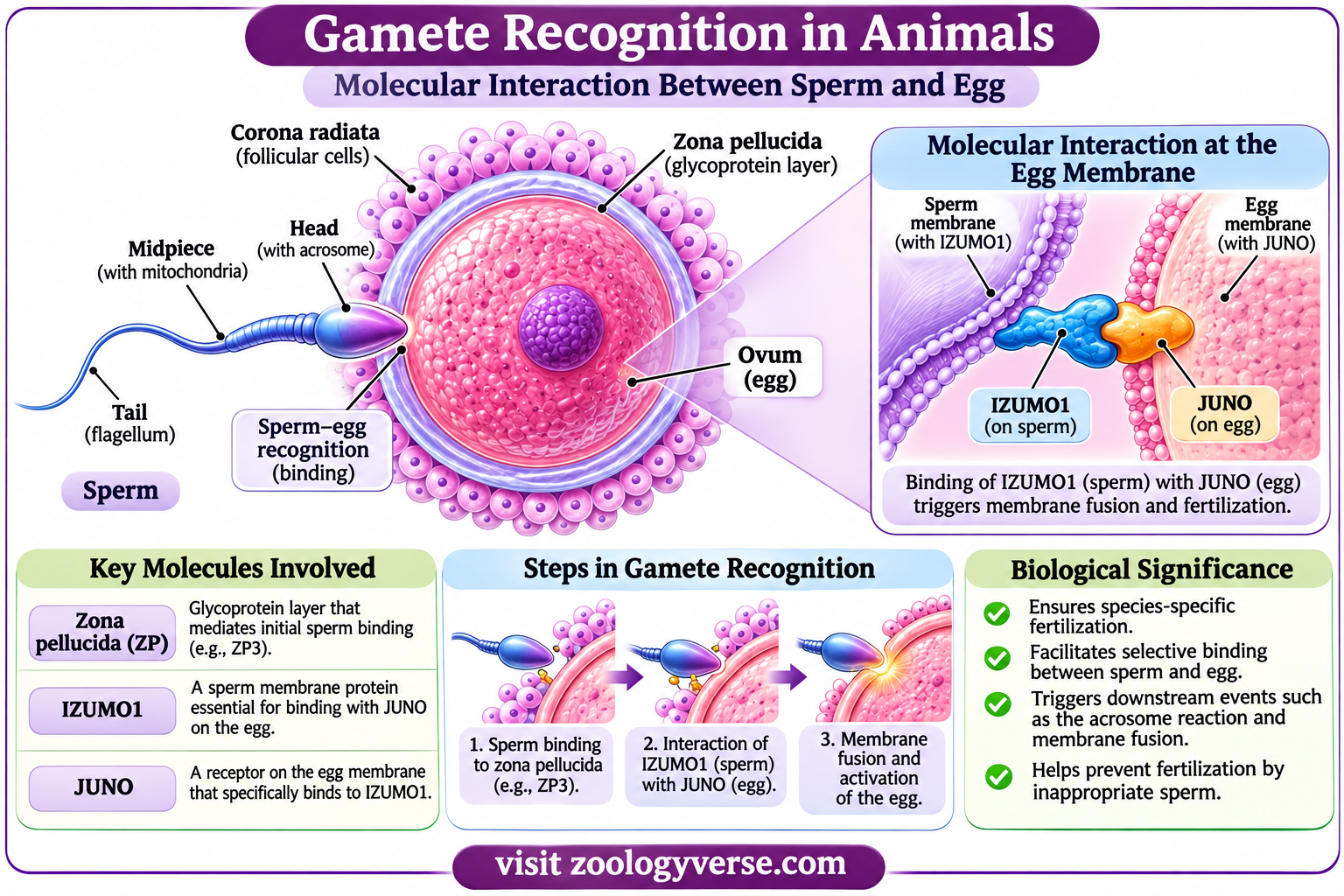
8.1 Concept of Gamete Recognition
Gamete recognition is the process through which sperm and eggs identify compatible partners before their membranes fuse. It involves interactions between specific molecules present on the sperm surface and molecules associated with the egg or its surrounding coverings.
These molecular interactions are important for several reasons:
- Species specificity: They help prevent fertilization between gametes belonging to different species.
- Gamete attachment: They allow sperm to bind to the egg or its extracellular coverings.
- Fertilization compatibility: They support interactions between structurally and molecularly compatible gametes.
- Initiation of fertilization events: They help trigger subsequent processes, including sperm activation, the acrosome reaction and membrane fusion.
- Reproductive isolation: Differences in recognition molecules can contribute to reproductive barriers between closely related species.
Gamete recognition is therefore not simply physical contact between sperm and egg. It is a coordinated molecular process that helps regulate successful fertilization.
8.2 Role of the Egg’s Extracellular Coverings
In many animals, the egg is surrounded by one or more extracellular coverings. These structures protect the egg and provide sites for sperm attachment and interaction.
The composition and organisation of these coverings vary among animal groups.
1. Zona Pellucida in Mammals
The mammalian egg is surrounded by a glycoprotein-rich extracellular layer called the zona pellucida. It lies outside the egg plasma membrane and is involved in sperm–egg interactions.
The zona pellucida contains specialised glycoproteins, including ZP1, ZP2, ZP3 and ZP4 in certain mammalian groups. Their composition and functions vary among species.
These proteins contribute to the structural organisation of the zona pellucida and participate in sperm interaction. Following fertilization, changes in the zona pellucida help reduce the likelihood of additional sperm binding and penetration.
2. Vitelline Envelope in Echinoderms
In sea urchins and other echinoderms, the egg is surrounded by an extracellular covering called the vitelline layer or vitelline envelope.
This layer participates in sperm attachment and contributes to the events that follow fertilization. In sea urchins, interactions between sperm proteins and egg-associated molecules help regulate species-specific recognition.
3. Egg Envelopes in Other Animals
Egg coverings also occur in several other animal groups. Depending on the species, these may include jelly coats, chorionic layers and specialised extracellular matrices.
Such coverings can provide protection, assist sperm attachment and regulate the interaction between male and female gametes.
8.3 Molecular Basis of Sperm–Egg Recognition
Sperm–egg recognition depends on specialised proteins and other molecular components present on the surfaces of gametes.
These molecules interact through specific binding mechanisms. Their molecular structures and distribution help determine whether sperm can successfully recognise and attach to an egg.
Important molecular components include:
- Sperm surface proteins: These molecules participate in sperm attachment and interaction with egg coverings.
- Egg-associated glycoproteins: These molecules form part of the egg’s extracellular coverings and provide sites for sperm interaction.
- Receptor proteins: Specific proteins on sperm or egg surfaces help regulate molecular recognition and attachment.
- Membrane-associated proteins: These molecules participate in the later stages of sperm–egg membrane interaction and fusion.
The molecular basis of recognition is not identical in all animals. Different species may use different proteins and binding systems to achieve the same general reproductive function.
8.4 Species-Specific Recognition in Animals
Species-specific recognition is an important feature of fertilization. It increases the likelihood that sperm will interact successfully with eggs belonging to the same species.
This is particularly important in animals that release large numbers of gametes into the surrounding environment, where sperm may encounter eggs from several species.
1. Sea Urchins
Sea urchins provide a well-studied example of species-specific gamete recognition. Their eggs possess extracellular coverings containing molecules involved in sperm attachment.
A specialised sperm protein called bindin plays an important role in sperm–egg recognition in sea urchins. Bindin is present in the acrosomal region of sperm and participates in binding to the egg’s vitelline layer.
Differences in bindin and its egg-binding partners among species contribute to reproductive compatibility and help reduce interspecific fertilization.
2. Mammals
In mammals, sperm interact with the egg’s surrounding cumulus cells and zona pellucida before reaching the egg plasma membrane.
Zona pellucida proteins and sperm-associated molecules participate in these interactions. Their functions vary among mammalian species, and the molecular mechanisms are more complex than a single receptor–ligand interaction.
Following penetration of the egg coverings, sperm interact with the egg plasma membrane through specialised proteins that contribute to gamete fusion.
3. Marine Invertebrates
Several marine invertebrates release sperm and eggs into seawater. Their gametes may encounter one another over a relatively short period.
Species-specific recognition molecules help sperm distinguish compatible eggs from those of other species. This reduces the possibility of unsuccessful or inappropriate fertilization when multiple species reproduce in the same environment.
8.5 Chemical Signals and Sperm Attraction
In certain animals, chemical substances released by eggs or surrounding reproductive tissues influence sperm movement. This phenomenon is known as chemotaxis.
Chemotaxis involves the movement of sperm in response to a chemical concentration gradient. Sperm detect chemical signals and alter their movement, increasing the probability of reaching an egg.
For example, some marine invertebrates release egg-associated chemical attractants that influence sperm swimming behaviour. In mammals, chemical and physical signals within the female reproductive tract may also contribute to sperm guidance, although sperm transport involves several interacting mechanisms.
Chemical attraction is not universal across all animals. Its importance and the molecules involved vary according to the species and reproductive environment.
8.6 Interaction Between Sperm and Egg Membranes
After sperm reach the egg and pass through its extracellular coverings, they must interact with the egg plasma membrane.
This interaction involves specialised proteins that facilitate attachment and membrane fusion.
In mammals, two important proteins involved in gamete fusion are:
- IZUMO1: A protein located on the sperm surface that becomes available for interaction during fertilization.
- JUNO: A receptor protein present on the egg plasma membrane that binds to IZUMO1.
The interaction between IZUMO1 and JUNO contributes to sperm–egg adhesion. However, this interaction alone is not sufficient to explain the entire membrane-fusion process. Other proteins and cellular mechanisms are also involved.
Following successful membrane fusion, sperm components enter the egg and initiate egg activation.
8.7 Factors Affecting Gamete Recognition
Several biological and environmental factors influence the recognition and interaction of male and female gametes.
1. Molecular Compatibility
Recognition depends on the presence of compatible molecular structures on sperm and eggs. Changes in these molecules may affect sperm attachment and successful fertilization.
2. Species Differences
Gamete recognition molecules differ among species. These differences contribute to species-specific fertilization and reproductive isolation.
3. Gamete Maturity
Immature or functionally inactive gametes may be unable to participate successfully in recognition and fertilization.
4. Environmental Conditions
In externally fertilizing animals, temperature, pH, salinity and ionic composition can influence sperm movement and gamete interactions.
5. Timing of Gamete Release
Successful fertilization depends on the availability of viable sperm and eggs at the same time. In many species, reproductive behaviour and environmental cues help synchronise gamete release.
6. Physiological Conditions of the Female Reproductive Tract
In internally fertilizing animals, reproductive secretions, sperm transport and the physiological condition of the female reproductive tract influence the ability of sperm to reach and interact with the egg.
8.8 Biological Significance of Gamete Recognition
Gamete recognition is essential for maintaining reproductive compatibility and ensuring successful fertilization.
Its major biological functions include:
- Ensuring compatibility: It helps sperm recognise eggs with appropriate molecular characteristics.
- Supporting species-specific fertilization: It reduces the possibility of fertilization between unrelated or incompatible species.
- Facilitating sperm attachment: It allows sperm to interact with the egg’s extracellular coverings and plasma membrane.
- Regulating fertilization events: It contributes to the sequence of molecular and cellular changes leading to gamete fusion.
- Maintaining reproductive isolation: Differences in recognition molecules can prevent successful reproduction between distinct species.
- Supporting genetic continuity: Successful recognition and fertilization contribute to the formation of a zygote containing genetic material from both parents.
Gamete recognition is therefore a fundamental molecular step in sexual reproduction. It links the initial encounter between sperm and egg with the later events of membrane fusion, egg activation and zygote formation.
9. Acrosome Reaction and Sperm Penetration
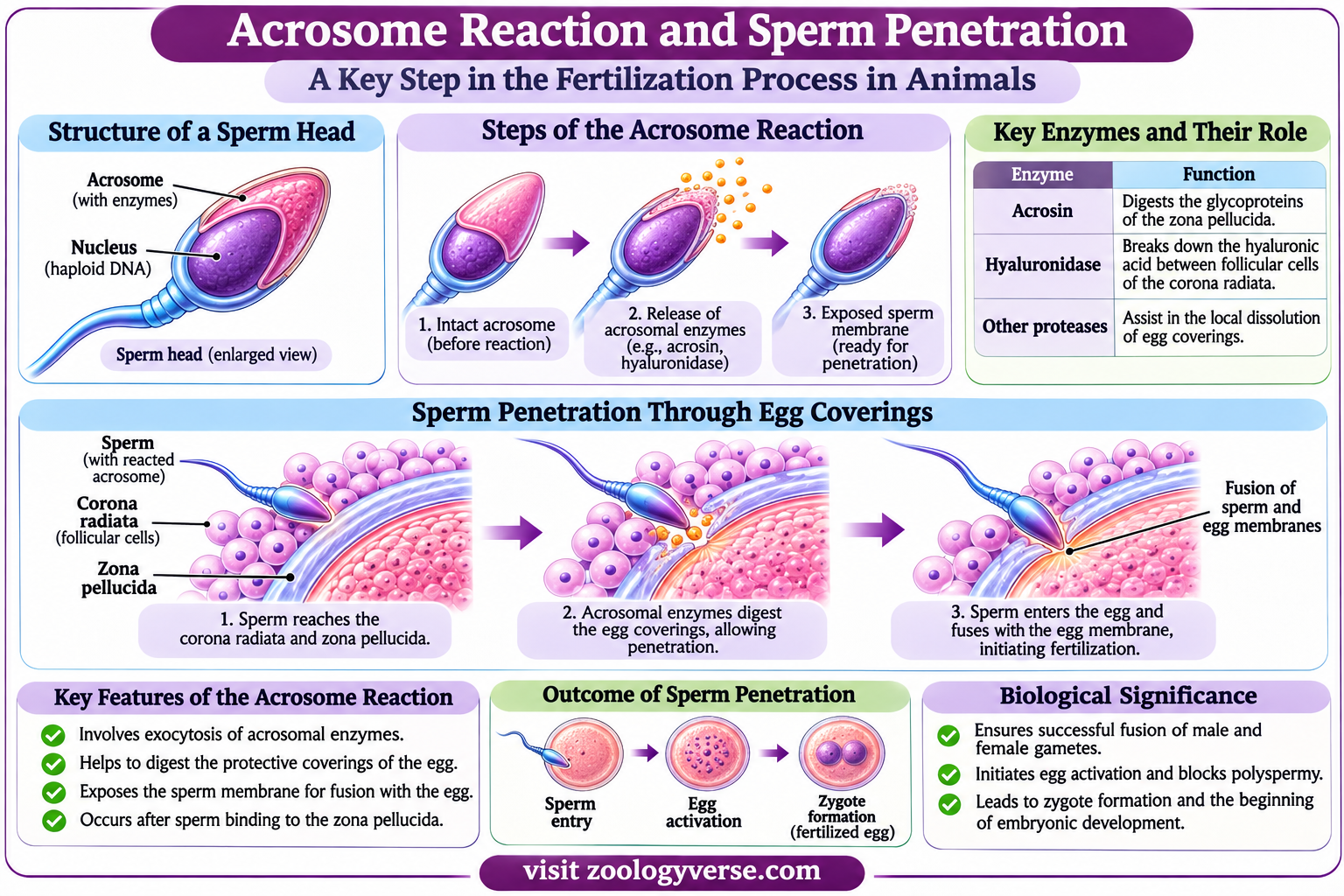
The acrosome reaction is an essential event in the fertilization process of many animals. It involves changes in the acrosome, a specialised membrane-bound structure present at the anterior end of the sperm head. These changes help sperm interact with and pass through the egg’s protective coverings.
In Fertilization in Animals, sperm penetration is an important step connecting gamete recognition with the eventual fusion of sperm and egg membranes. The acrosome reaction is particularly well studied in mammals and marine invertebrates, although its exact mechanism varies among animal groups.
9.1 Structure of the Acrosome
The acrosome is a cap-like organelle located at the anterior region of the sperm head. It develops from the Golgi apparatus during spermiogenesis, the process through which spermatids differentiate into mature spermatozoa.
The acrosome contains several hydrolytic enzymes and other proteins involved in sperm–egg interactions. These substances help sperm interact with the extracellular coverings of the egg.
Important structural features include:
- Acrosomal cap: A specialised covering over the anterior portion of the sperm nucleus.
- Acrosomal membrane: A membrane system that surrounds the acrosomal contents.
- Acrosomal enzymes: Enzymes that contribute to the modification or penetration of egg coverings in certain animals.
- Acrosomal proteins: Molecules involved in sperm recognition and interaction with egg-associated structures.
The acrosome is therefore an important specialised structure for Fertilization in Animals, particularly in species where sperm must cross substantial extracellular egg coverings.
9.2 Definition of the Acrosome Reaction
The acrosome reaction is a series of structural and biochemical changes in the sperm head that occur during interaction with the egg or its surrounding environment.
It involves changes in the acrosomal and sperm plasma membranes. In many animals, these membranes fuse at multiple points, producing vesicles and allowing the release or exposure of acrosomal contents.
The acrosome reaction helps sperm interact with egg coverings and exposes molecules required for later sperm–egg interactions. Its timing and triggering signals differ among species.
In mammals, sperm generally undergo capacitation before becoming capable of the acrosome reaction. This preparation involves changes in the sperm membrane, intracellular signalling and motility.
9.3 Mechanism of the Acrosome Reaction
The mechanism of the acrosome reaction involves several coordinated events. The exact sequence varies among animal groups, but the general process includes the following stages.
1. Sperm Activation and Preparation
Before the acrosome reaction, sperm undergo physiological changes that prepare them for interaction with the egg.
In mammals, capacitation occurs within the female reproductive tract. It involves changes in membrane organisation, ion movement and intracellular signalling. These changes make sperm capable of responding to signals associated with the egg and its surrounding cells.
2. Recognition of Egg-Associated Signals
Sperm interact with molecules present in the egg’s surrounding environment. Depending on the species, these signals may originate from egg coverings, surrounding cells or reproductive fluids.
Such interactions help regulate the timing of the acrosome reaction.
3. Changes in Intracellular Calcium
An increase in intracellular calcium concentration is an important component of acrosomal signalling in many animals. Calcium-dependent pathways contribute to changes in the sperm membranes and the initiation of the reaction.
4. Membrane Fusion and Vesicle Formation
The sperm plasma membrane fuses with the outer acrosomal membrane at multiple points. This produces small vesicles and allows acrosomal contents to become exposed or released.
5. Exposure of Acrosomal Components
Following the reaction, molecules previously located within or beneath the acrosomal membranes become accessible. These components contribute to sperm interaction with the egg’s extracellular coverings.
6. Preparation for Further Sperm–Egg Interaction
The reacted sperm continues towards the egg plasma membrane. It may expose or reorganise proteins required for subsequent attachment and membrane fusion.
Thus, the acrosome reaction is a regulated cellular event rather than simply the release of digestive enzymes.
9.4 Role of Acrosomal Enzymes in Sperm Penetration
Acrosomal enzymes contribute to sperm interaction with egg coverings. Their functions and importance differ among animal groups.
Some acrosomal enzymes include:
- Acrosin: A proteolytic enzyme found in the acrosome of many animals. It can participate in interactions with egg coverings and the modification of extracellular proteins.
- Hyaluronidase: An enzyme associated with sperm that helps disperse the cumulus cell matrix surrounding mammalian eggs.
- Other proteolytic enzymes: These may contribute to the modification of extracellular structures during sperm passage.
In mammals, sperm penetration is not explained by enzymatic digestion alone. Sperm movement, membrane interactions, the physical properties of egg coverings and other molecular mechanisms all contribute to successful penetration.
The role of individual enzymes also varies among species. Therefore, Fertilization in Animals should not be described as a single universal process in which acrosomal enzymes simply dissolve the egg covering.
9.5 Sperm Penetration in Mammals
In mammals, the egg is surrounded by cumulus cells and an extracellular glycoprotein layer called the zona pellucida. Sperm must pass through these structures before reaching the egg plasma membrane.
The major events include:
- Passage through cumulus cells: Sperm move through the cumulus cell mass surrounding the egg. Enzymes and vigorous sperm movement help facilitate this passage.
- Interaction with the zona pellucida: Sperm interact with the zona pellucida through specialised molecular mechanisms.
- Acrosome reaction: Capacitated sperm undergo the acrosome reaction, exposing molecules involved in further interactions with the egg coverings.
- Zona penetration: Sperm pass through the zona pellucida through a combination of motility and molecular interactions.
- Approach to the egg membrane: After crossing the zona pellucida, sperm reach the perivitelline space and approach the egg plasma membrane.
The sequence and molecular details of these events are more complex than a simple enzyme-driven penetration mechanism. In particular, the timing of the acrosome reaction and its relationship with zona interaction can vary among mammals.
9.6 Acrosome Reaction in Marine Invertebrates
The acrosome reaction is also well studied in marine invertebrates, particularly sea urchins.
In sea urchins, sperm encounter egg-associated jelly layers after being released into seawater. Molecules present in the egg jelly stimulate sperm signalling and help initiate the acrosome reaction.
During this process, the acrosomal vesicle undergoes membrane changes and releases its contents. An actin-based acrosomal process forms at the anterior end of the sperm. This structure helps the sperm interact with the egg’s vitelline layer.
A sperm protein called bindin becomes exposed on the acrosomal process and participates in species-specific binding to the egg surface.
This example demonstrates that the acrosome reaction is not identical in all animals. Sea urchins use a distinctive acrosomal process and bindin-mediated interaction, whereas mammals follow a different set of molecular and cellular events.
9.7 Biological Significance of the Acrosome Reaction
The acrosome reaction plays several important roles in successful fertilization.
- Facilitates sperm penetration: It helps sperm interact with and pass through egg coverings.
- Exposes specialised proteins: It makes important sperm proteins available for subsequent egg interactions.
- Supports gamete recognition: In certain animals, acrosomal proteins participate in species-specific sperm–egg binding.
- Regulates fertilization: The reaction is controlled by physiological and molecular signals, helping coordinate sperm interaction with the egg.
- Contributes to membrane fusion: Acrosomal changes prepare sperm for later interactions with the egg plasma membrane.
The acrosome reaction is therefore an important part of Fertilization in Animals, but its precise role and mechanism must be understood in relation to the reproductive biology of each animal group.
10. Fusion of Male and Female Gametes
Fusion of male and female gametes is a crucial event in sexual reproduction. It involves the union of a sperm and an egg, resulting in the formation of a zygote. In Fertilization in Animals, this event establishes the genetic contribution of both parents and initiates the developmental processes that produce a new individual.
The fusion process involves several coordinated cellular and molecular events. These include the attachment of sperm to the egg, recognition of compatible membrane proteins, fusion of the gamete membranes and activation of the egg. Although the basic outcome is similar across animal groups, the molecular mechanisms of Fertilization in Animals vary considerably among species.
10.1 Meaning of Gamete Fusion
Gamete fusion is the process in which the plasma membranes of male and female gametes unite, allowing sperm components to enter the egg. This event is different from the earlier attachment of sperm to the egg’s extracellular coverings.
During Fertilization in Animals, sperm first reach the egg and interact with its surrounding structures. After passing through these coverings, sperm approach the egg plasma membrane. Specific proteins on the surfaces of both gametes help regulate their attachment and fusion.
The fusion event allows the paternal genetic material to enter the egg, where it participates in the formation of the zygote. Thus, gamete fusion represents a major cellular step in the Fertilization Process.
10.2 Attachment of Sperm to the Egg Plasma Membrane
After penetrating the egg’s protective coverings, sperm reach the egg plasma membrane. At this stage, specialised molecules on the sperm and egg surfaces participate in their interaction.
In mammals, the sperm protein IZUMO1 and the egg receptor JUNO play important roles in sperm–egg adhesion. Their interaction helps the two gametes recognise and attach to one another before membrane fusion.
Other proteins and membrane-associated factors also contribute to the process. Therefore, Fertilization in Animals involves a coordinated molecular system rather than a single protein acting independently.
The attachment of sperm to the egg membrane prepares the gametes for the subsequent fusion event.
10.3 Molecular Mechanism of Gamete Membrane Fusion
Gamete membrane fusion involves the close interaction and eventual union of the sperm and egg plasma membranes.
In mammals, several proteins participate in this process. IZUMO1 on the sperm surface interacts with JUNO on the egg surface, while other sperm proteins, including SPACA6 and TMEM95, contribute to successful gamete fusion.
The general events can be described as follows:
- Sperm attachment: The sperm attaches to the egg plasma membrane through specific molecular interactions.
- Membrane recognition: Proteins on the sperm and egg surfaces participate in compatible molecular interactions.
- Membrane reorganisation: The membranes undergo local changes that prepare them for fusion.
- Membrane fusion: The sperm and egg plasma membranes unite at the site of interaction.
- Sperm entry: Sperm components enter the egg cytoplasm.
- Egg activation: Intracellular signalling begins, preparing the egg for further developmental events.
The exact molecular steps are still being investigated in several animal groups. Different species use different molecular components to achieve successful gamete fusion.
10.4 Entry of Sperm Components into the Egg
Following membrane fusion, sperm components enter the egg cytoplasm. These components include the paternal genetic material and other cellular structures required for subsequent events.
The sperm nucleus undergoes changes that prepare it for the formation of the male pronucleus in animals where distinct pronuclei are formed.
The sperm also contributes a centriole in many mammals, which participates in organising the structures required for the first embryonic division. However, the contribution and role of sperm centrioles differ among animal groups.
In Fertilization in Animals, sperm entry therefore involves more than the transfer of genetic material. It also introduces cellular components that participate in egg activation and early embryonic development.
10.5 Egg Activation Following Gamete Fusion
Gamete fusion triggers a series of biochemical changes inside the egg. These changes are collectively known as egg activation.
One of the most important events is an increase in intracellular calcium concentration. In mammals, sperm entry introduces a sperm-associated factor, phospholipase C zeta (PLCζ), which initiates calcium oscillations in the egg.
These calcium signals activate several cellular processes, including:
- Resumption and completion of meiosis in species where the egg is arrested at a particular meiotic stage.
- Modification of the egg’s surrounding coverings to help prevent additional sperm entry.
- Activation of metabolic and biochemical pathways.
- Preparation of the egg for pronuclear development and the first embryonic division.
Egg activation is therefore closely connected with gamete fusion and is essential for successful Fertilization in Animals.
10.6 Formation of Male and Female Pronuclei
After sperm entry and egg activation, the genetic material contributed by both parents undergoes changes that prepare it for the first embryonic division.
In mammals, the sperm nucleus undergoes structural reorganisation and forms the male pronucleus. The egg completes meiosis II and forms the female pronucleus.
The two pronuclei contain the paternal and maternal genetic material, respectively. They move towards one another within the egg cytoplasm.
In mammals, the pronuclear envelopes subsequently break down, and the parental chromosomes become organised on the first mitotic spindle. This allows the genetic material from both parents to participate in the first embryonic division.
The process restores the diploid chromosome complement and establishes the genetic constitution of the developing zygote.
10.7 Differences in Gamete Fusion Among Animals
Although gamete fusion has the same general purpose across animals, its mechanism varies among different groups.
1. Mammals
In mammals, sperm pass through the cumulus cells and zona pellucida before reaching the egg plasma membrane. Specific sperm and egg proteins contribute to adhesion and membrane fusion. Sperm entry also triggers calcium signalling and egg activation.
2. Sea Urchins
In sea urchins, sperm interact with the egg’s extracellular coverings through specialised molecular mechanisms. Following sperm attachment and penetration of the egg envelope, the sperm and egg plasma membranes fuse. Calcium signalling then contributes to egg activation and the prevention of polyspermy.
3. Other Marine Invertebrates
Several marine invertebrates exhibit specialised sperm–egg recognition and fusion mechanisms. These mechanisms are adapted to their reproductive environments and the molecular composition of their gametes.
These examples show that Fertilization in Animals is a conserved reproductive event with considerable molecular diversity.
10.8 Biological Significance of Gamete Fusion
Fusion of male and female gametes has several important biological functions:
- Combines parental genetic material: It brings together genetic contributions from two parents.
- Restores diploidy: In typical sexual reproduction, it restores the diploid chromosome complement after the union of haploid gametes.
- Initiates egg activation: It triggers biochemical changes that prepare the egg for development.
- Establishes the zygote: It produces the first cell of the developing organism.
- Promotes genetic variation: It contributes to genetic diversity through the combination of parental genetic material.
- Initiates embryonic development: It prepares the fertilized egg for cleavage and subsequent developmental stages.
Thus, fusion of male and female gametes is a fundamental event in Fertilization in Animals. It connects sperm–egg recognition with egg activation, pronuclear development and the formation of the zygote.
11. Prevention of Polyspermy
Polyspermy refers to the entry of more than one sperm into a single egg. Under normal conditions, only one sperm should contribute its genetic material to the egg. The entry of additional sperm can disturb the normal chromosome complement and interfere with embryonic development.
In Fertilization in Animals, prevention of polyspermy is an essential regulatory mechanism that helps maintain successful fertilization. It ensures that the egg normally receives genetic material from only one sperm, supporting the formation of a viable zygote.
The mechanisms preventing polyspermy differ among animal groups. Some animals use rapid changes in the egg plasma membrane, while others depend on slower modifications of the extracellular egg coverings.
11.1 Meaning and Causes of Polyspermy
Polyspermy occurs when two or more sperm enter the same egg. It may happen when several sperm reach an egg simultaneously and the egg fails to prevent additional sperm entry.
The major forms include:
- Dispermy: Entry of two sperm into one egg.
- Polyspermy: Entry of more than one sperm into an egg; the term includes dispermy.
- Physiological polyspermy: Multiple sperm enter the egg, but only one sperm nucleus contributes to the embryo’s genetic constitution. This occurs naturally in certain animals, such as some birds and reptiles.
- Pathological polyspermy: Additional sperm enter an egg in a manner that disrupts normal development.
In most mammals, including humans, normal development requires monospermy, meaning entry of only one sperm. Therefore, the prevention of polyspermy is a critical part of Fertilization in Animals.
11.2 Why Polyspermy Must Be Prevented
The egg and sperm are generally haploid gametes. Each contributes one set of chromosomes during normal sexual reproduction.
When multiple sperm enter an egg, additional paternal chromosome sets may be introduced. This can produce an abnormal chromosome number and disturb the normal organisation of the developing embryo.
Major consequences of pathological polyspermy include:
- Abnormal chromosome number: Additional sperm may introduce extra paternal chromosome sets.
- Abnormal spindle formation: Multiple sperm-derived centrosomal contributions in some animals can disturb the organisation of the first mitotic spindle.
- Irregular cell division: Abnormal chromosome distribution may interfere with cleavage.
- Developmental failure: Severe chromosomal and cellular abnormalities can prevent normal embryonic development.
Thus, Fertilization in Animals requires effective regulation of sperm entry to maintain the correct genetic contribution from both parents.
11.3 Mechanisms of Prevention of Polyspermy
Animals have evolved different mechanisms to prevent the entry of additional sperm. The two major mechanisms commonly described are the fast block and the slow block to polyspermy.
11.3.1 Fast Block to Polyspermy
The fast block is a rapid change in the electrical properties of the egg plasma membrane following the entry of the first sperm.
It has been studied particularly in externally fertilizing marine animals, such as sea urchins.
The general events include:
- The first sperm fuses with the egg plasma membrane.
- Ion movements across the egg membrane produce a rapid change in membrane potential.
- The egg membrane becomes temporarily less favourable for the fusion of additional sperm.
- Additional sperm are prevented from fusing with the egg during this period.
This mechanism acts within seconds in animals where it occurs. However, the fast electrical block is not a universal feature of Fertilization in Animals and is absent or differs in several groups, including mammals.
11.3.2 Slow Block to Polyspermy
The slow block involves biochemical and structural changes in the egg’s extracellular coverings after sperm entry.
In sea urchins, sperm fusion triggers an increase in intracellular calcium concentration. This calcium signal initiates the cortical reaction, in which cortical granules release their contents into the space surrounding the egg.
The released substances modify the egg’s extracellular coverings, making them less suitable for additional sperm attachment and penetration.
The major events are:
- Sperm entry triggers calcium signalling inside the egg.
- Calcium signals stimulate cortical granule exocytosis.
- Cortical granules release enzymes and other substances.
- These substances modify the extracellular egg coverings.
- The modified coverings prevent additional sperm from entering.
The slow block provides a more sustained defence against polyspermy than the rapid electrical response.
11.4 Cortical Reaction
The cortical reaction is an important mechanism involved in preventing polyspermy in several animals.
Cortical granules are small secretory vesicles located beneath the egg plasma membrane. Following sperm entry, an increase in intracellular calcium triggers these granules to release their contents outside the egg.
In sea urchins, the cortical reaction causes structural changes in the egg coverings. The vitelline layer separates from the egg plasma membrane and is modified to form a fertilization envelope.
This envelope acts as a physical barrier that prevents additional sperm from reaching the egg membrane.
The cortical reaction is therefore a major component of the slow block to polyspermy in several externally fertilizing animals.
11.5 Prevention of Polyspermy in Mammals
In mammals, including humans, prevention of polyspermy mainly involves changes in the egg’s extracellular coverings and plasma membrane after sperm fusion.
Following sperm entry, calcium oscillations activate the egg and stimulate cortical granule exocytosis. The released enzymes modify the zona pellucida, reducing its ability to support further sperm binding and penetration.
This process is commonly called the zona reaction.
In addition, the egg receptor JUNO is rapidly lost from the egg surface following fertilization in mammals studied. This contributes to preventing additional sperm–egg interactions.
Unlike the classic fast electrical block described in sea urchins, mammals do not depend on a rapid membrane depolarisation mechanism to prevent polyspermy.
These mechanisms help ensure that Fertilization in Animals normally results in the entry of only one sperm into a mammalian egg.
11.6 Physiological Polyspermy in Certain Animals
Although monospermy is the usual pattern in mammals, multiple sperm entry is a normal feature of reproduction in certain animal groups. This is called physiological polyspermy.
For example, in many birds, several sperm may enter the egg, but only one sperm nucleus normally participates in the formation of the developing embryo. The additional sperm do not contribute their genetic material to the embryo.
Similar patterns occur in some reptiles and other animals. Their eggs possess specialised mechanisms that allow multiple sperm entry without producing the same developmental consequences seen in pathological polyspermy.
This distinction is important when studying Fertilization in Animals, because the entry of multiple sperm is not always abnormal. Its biological consequences depend on the species and the way its egg regulates sperm contributions.
11.7 Comparison of Fast and Slow Blocks to Polyspermy
| Feature | Fast Block | Slow Block |
|---|---|---|
| Nature | Electrical change in egg membrane | Biochemical and structural changes |
| Main event | Change in membrane potential | Cortical granule exocytosis |
| Speed | Very rapid | Develops more slowly |
| Duration | Generally temporary | More sustained |
| Main effect | Reduces additional sperm fusion | Modifies egg coverings to prevent further sperm entry |
| Example | Sea urchins | Sea urchins and other animals with cortical reactions |
The fast and slow blocks are complementary mechanisms in animals that possess both. However, their presence and importance vary among species.
11.8 Biological Significance of Prevention of Polyspermy
Prevention of polyspermy is essential for maintaining normal fertilization and embryonic development.
Its major functions include:
- Maintaining chromosome balance: It prevents the contribution of excess paternal chromosome sets in species that normally require monospermy.
- Supporting normal cleavage: It helps maintain the cellular organisation required for early embryonic divisions.
- Ensuring normal zygote formation: It supports the formation of a zygote with the appropriate genetic constitution.
- Protecting embryonic development: It reduces the likelihood of developmental abnormalities caused by abnormal sperm entry.
- Regulating sperm entry: It ensures that sperm fusion is controlled rather than occurring continuously.
Therefore, prevention of polyspermy is a fundamental regulatory event in Fertilization in Animals. The mechanisms differ across species, but their general purpose is to regulate sperm entry and support successful embryonic development.
12. Events Following Fertilization
Fertilization marks the beginning of embryonic development. After the male and female gametes unite, the newly formed zygote undergoes a series of cellular and developmental changes that ultimately produce a new organism. These changes are collectively known as post-fertilization events.
In Fertilization in Animals, the formation of the zygote is followed by cleavage, blastulation, gastrulation and organogenesis. Although these stages represent a general pattern of animal development, their timing, organisation and specific characteristics vary among animal groups.
12.1 Formation of the Zygote
The first major event following fertilization is the establishment of the zygote. It is a diploid cell formed through the union of the male and female genetic material.
The zygote contains genetic contributions from both parents. It also possesses cytoplasmic components, organelles and stored molecules that support the initial stages of development.
During Fertilization in Animals, the zygote becomes developmentally activated and prepares for its first mitotic division. The organisation of parental chromosomes and the timing of the first division differ among species.
12.2 Cleavage
Cleavage is the series of rapid mitotic divisions that occur in the zygote without a corresponding increase in the overall size of the embryo. These divisions produce smaller cells called blastomeres.
The major characteristics of cleavage include:
- Repeated mitotic divisions of the zygote.
- Progressive increase in the number of blastomeres.
- Reduction in the size of individual blastomeres.
- Limited or no increase in the overall volume of the embryo.
- Distribution of cytoplasmic components among developing cells.
Cleavage patterns are influenced by the amount and distribution of yolk in the egg. For example, eggs with little yolk generally undergo complete cleavage, whereas eggs containing large quantities of yolk may undergo incomplete cleavage.
In Fertilization in Animals, cleavage is an essential transition from a single-celled zygote to a multicellular embryo.
12.3 Formation of the Morula
Following repeated cleavage divisions, the blastomeres form a compact group of cells called the morula.
The morula generally resembles a solid ball of cells. Its appearance and the number of blastomeres may vary among animal species.
In mammals, the morula develops as the early embryo undergoes cleavage during its movement through the oviduct towards the uterus. Subsequent cellular changes lead to the formation of the blastocyst.
The morula represents an important early developmental stage between cleavage and blastulation.
12.4 Blastulation and Formation of the Blastula
Blastulation is the process through which a blastula develops from the morula. The blastula is an early embryonic stage characterised by the organisation of blastomeres around or within a fluid-filled cavity called the blastocoel.
The formation and structure of the blastula vary according to the type of egg and cleavage pattern.
In many animals, the blastula consists of an outer layer of cells surrounding the blastocoel. In mammals, the corresponding developmental stage is called the blastocyst, which contains an outer trophoblast layer, an inner cell mass and a fluid-filled cavity.
The blastula or blastocyst stage establishes the cellular organisation required for subsequent embryonic development.
12.5 Gastrulation
Gastrulation is a major developmental process in which the blastula undergoes extensive cell movements and rearrangements to establish the primary germ layers.
The three primary germ layers are:
- Ectoderm: The outer germ layer, which gives rise to the epidermis and nervous system, along with several other structures.
- Mesoderm: The middle germ layer, which contributes to muscles, connective tissues, the circulatory system, kidneys and reproductive structures.
- Endoderm: The inner germ layer, which forms the epithelial lining of the digestive tract and respiratory tract, along with associated organs.
The movements involved in gastrulation may include invagination, involution, ingression, delamination and epiboly. Their patterns differ among animal groups.
Gastrulation is particularly important because it establishes the basic body plan of the developing embryo.
12.6 Neurulation
Neurulation is the developmental process through which the neural tube forms in chordate embryos. It generally follows gastrulation and involves interactions between the ectoderm and underlying embryonic tissues.
In vertebrates, a region of ectoderm becomes specialised as the neural plate. The neural plate bends and folds to form the neural groove and neural folds, which subsequently fuse to produce the neural tube.
The neural tube develops into the central nervous system, including the brain and spinal cord.
Neurulation is a characteristic stage of vertebrate embryonic development and does not occur in the same form in all animals.
12.7 Organogenesis
Organogenesis is the process through which organs and organ systems develop from the primary germ layers.
During this stage, embryonic cells differentiate, migrate and organise into specialised tissues and organs.
Examples include:
- Development of the nervous system from ectoderm.
- Formation of muscles and the circulatory system from mesoderm.
- Development of the digestive tract lining from endoderm.
- Formation of specialised organs through interactions between different embryonic tissues.
Organogenesis gradually establishes the structural organisation of the developing animal. The duration and sequence of organ formation vary considerably among species.
12.8 Early Development in Different Animal Groups
Post-fertilization development differs according to reproductive strategy, egg structure and embryonic environment.
1. Mammals
After fertilization, the mammalian zygote undergoes cleavage and forms a morula. It subsequently develops into a blastocyst, which contains an inner cell mass and an outer trophoblast layer.
In most placental mammals, the blastocyst reaches the uterus and undergoes implantation. Further embryonic development occurs with support from maternal tissues and, later, the placenta.
2. Birds
In birds, cleavage occurs in the blastodisc, a small region of cytoplasm located above the yolk. The developing embryo remains associated with the yolk, which provides nourishment.
The embryo undergoes gastrulation and subsequent organ development while enclosed within the egg coverings.
3. Amphibians
Amphibian embryos generally undergo holoblastic cleavage, although the cleavage pattern is unequal because of yolk distribution. Gastrulation involves extensive cell movements that establish the three germ layers.
The embryo subsequently undergoes neurulation and organogenesis.
4. Reptiles
Reptilian embryos develop within eggs containing substantial yolk. Cleavage is generally meroblastic and discoidal, occurring in the blastodisc.
The embryo undergoes gastrulation and organogenesis while receiving nourishment from the yolk.
These examples show that Fertilization in Animals initiates a common developmental sequence, but the details of embryonic development are adapted to the reproductive biology of each group.
12.9 Significance of Post-Fertilization Events
Post-fertilization events transform a single-celled zygote into a multicellular and increasingly organised embryo.
Their major functions include:
- Cell multiplication: Cleavage increases the number of embryonic cells.
- Cell differentiation: Cells acquire specialised structures and functions.
- Germ-layer formation: Gastrulation establishes the primary embryonic tissue layers.
- Body-plan organisation: Embryonic movements establish the basic arrangement of tissues and organs.
- Organ development: Organogenesis produces the structures required for the functioning of the developing animal.
Thus, Fertilization in Animals is not an isolated event but the starting point of a continuous developmental process. The zygote undergoes coordinated cellular and morphological changes that ultimately lead to the formation of a new individual.
13. Factors Affecting Fertilization
Successful fertilization depends on several biological, physiological and environmental factors. These factors influence gamete production, sperm movement, egg viability, gamete recognition and the fusion of male and female gametes.
In Fertilization in Animals, even when mature sperm and eggs are available, fertilization may not occur if the conditions required for their interaction are unsuitable. The factors affecting Fertilization in Animals differ between species and depend partly on whether reproduction involves external or internal fertilization.
13.1 Gamete Maturity and Quality
The maturity and quality of male and female gametes are fundamental requirements for successful fertilization.
- Sperm maturity: Sperm must undergo proper development during spermatogenesis and acquire the functional characteristics required for fertilization.
- Egg maturity: The egg must reach an appropriate stage of development and possess the ability to undergo activation after sperm entry.
- Sperm viability: Sperm must remain alive and functionally active until they reach the egg.
- Egg viability: Eggs must retain their developmental capacity during the period in which fertilization can occur.
In mammals, sperm undergo capacitation within the female reproductive tract before becoming fully capable of fertilization. In other animals, sperm activation may depend on environmental conditions, particularly in externally fertilizing species.
Therefore, gamete maturity and quality strongly influence the success of Fertilization in Animals.
13.2 Sperm Motility and Transport
Sperm motility is the ability of sperm to move effectively towards the egg. It is particularly important in animals where sperm must travel through water or the female reproductive tract.
Several factors influence sperm movement:
- Flagellar activity: Proper flagellar movement provides the force required for sperm swimming.
- Energy availability: ATP production supports sperm movement and other cellular activities.
- Temperature: Temperature influences sperm metabolism and motility, although the optimal range varies among species.
- pH: Changes in acidity or alkalinity can affect sperm movement and survival.
- Ionic composition: Calcium, potassium and other ions participate in the regulation of sperm motility.
In External Fertilization, sperm must move through the surrounding aquatic environment to reach the eggs. In Internal Fertilization, sperm must travel through the female reproductive passages. Consequently, the requirements for sperm transport differ between these two Types of Fertilization.
13.3 Timing of Gamete Availability
The availability of mature sperm and eggs at the same time is essential for successful fertilization.
In many externally fertilizing animals, reproductive activities are synchronised so that males and females release their gametes within a suitable period. Environmental cues, seasonal changes and reproductive behaviour may coordinate this process.
In internally fertilizing animals, successful fertilization depends on the relationship between sperm survival, ovulation and the availability of a mature egg.
For example, in humans, the secondary oocyte generally remains capable of fertilization for approximately 12–24 hours after ovulation. Sperm can survive longer within favourable conditions of the female reproductive tract.
The timing of gamete availability is therefore an important factor affecting the Fertilization Process.
13.4 Environmental Factors
Environmental conditions have a particularly important influence on Fertilization in Animals that reproduce through external fertilization.
1. Temperature
Temperature affects sperm motility, egg viability, metabolic activity and the biochemical reactions involved in fertilization. Extremely high or low temperatures may reduce the probability of successful gamete fusion.
2. pH
The pH of water or reproductive fluids can influence sperm activity and the stability of egg coverings. Conditions outside the suitable range may interfere with sperm movement and gamete interactions.
3. Salinity
Salinity influences osmotic balance in aquatic animals. Sudden changes in salinity may affect sperm activation, egg integrity and fertilization success.
4. Dissolved Oxygen
Oxygen availability influences the physiological condition of aquatic environments. Low oxygen levels may indirectly affect reproductive performance and the survival of gametes and embryos.
5. Water Quality
Pollutants, heavy metals, pesticides and other contaminants may interfere with gamete development, sperm motility and egg viability.
Environmental conditions are therefore especially important in aquatic species that depend on suitable external conditions for gamete fusion.
13.5 Gamete Recognition and Compatibility
Successful fertilization requires appropriate molecular interactions between sperm and eggs.
Specific proteins and other molecules on the surfaces of gametes participate in recognition, attachment and membrane fusion. Differences in these molecules may prevent sperm from successfully interacting with eggs belonging to incompatible species.
In Fertilization in Animals, species-specific recognition is particularly important when different species reproduce in the same environment. It helps maintain reproductive compatibility and reduces unsuccessful interspecific fertilization.
13.6 Hormonal Regulation
Hormones regulate several reproductive processes that influence fertilization. They control gamete production, reproductive organ activity, ovulation and reproductive behaviour.
See our article on Hormonal Regulation of Reproduction in Animals
Important hormones include:
- Follicle-stimulating hormone (FSH): Supports gamete development through its actions on the gonads.
- Luteinising hormone (LH): Plays an important role in ovulation and reproductive hormone production.
- Oestrogen: Regulates female reproductive tract changes and contributes to the control of reproductive cycles.
- Progesterone: Supports changes in the female reproductive tract associated with pregnancy and reproductive function.
- Testosterone: Supports male reproductive development and functions, including sperm production.
Also Check Article on Reproductive Hormones and Their Functions
Hormonal imbalance may disturb gamete maturation, ovulation and reproductive function, thereby reducing the likelihood of successful Fertilization in Animals.
13.7 Anatomical and Physiological Conditions
The structure and functional condition of reproductive organs influence the movement and interaction of gametes.
In internally fertilizing animals, abnormalities or damage involving the reproductive passages may interfere with sperm transport or prevent sperm from reaching the egg.
In mammals, factors such as obstruction of the oviducts, abnormal reproductive secretions and disturbances in sperm function may reduce fertilization success.
In externally fertilizing animals, the condition of reproductive organs and the ability to release healthy gametes influence the chances of successful fertilization.
13.8 Age and Reproductive Health
Age can influence reproductive capacity in many animals. Changes in gamete quality, reproductive hormone levels and the functioning of reproductive organs may affect fertilization success.
In females, increasing age may be associated with changes in egg quality and reproductive function. In males, age-related changes may affect sperm production, motility and genetic integrity.
Diseases, infections, nutritional deficiencies and physiological stress can also influence reproductive health. Their effects vary according to the animal species and the underlying condition.
13.9 Nutritional Status and Energy Availability
Adequate nutrition supports normal reproductive development and gamete production. Proteins, essential fatty acids, vitamins and minerals contribute to reproductive health.
Insufficient nutrition may disturb hormonal regulation, reduce gamete quality and affect reproductive behaviour. Severe nutritional deficiencies can also interfere with normal reproductive cycles.
Energy availability is particularly important in animals that invest considerable resources in mating, gamete production, pregnancy or parental care.
13.10 Summary of Factors Affecting Fertilization
| Factor | Influence on Fertilization |
|---|---|
| Gamete maturity | Determines whether sperm and eggs are functionally ready |
| Sperm motility | Helps sperm reach the egg |
| Egg viability | Determines the egg’s ability to be fertilized and develop |
| Timing | Ensures sperm and eggs are available together |
| Temperature | Influences gamete activity and survival |
| pH and salinity | Affect sperm movement and egg stability |
| Gamete compatibility | Supports species-specific recognition and fusion |
| Hormonal regulation | Controls gamete production and reproductive cycles |
| Reproductive anatomy | Supports gamete transport and interaction |
| Nutrition | Maintains reproductive health and gamete quality |
The success of Fertilization in Animals depends on the combined action of these factors rather than a single condition. Their relative importance varies among species and reproductive environments. Understanding these factors also helps explain differences in reproductive success between animals exhibiting External Fertilization and those exhibiting Internal Fertilization.
14. Biological Significance of Fertilization
Fertilization is one of the most important biological events in sexual reproduction. It brings together the genetic material of male and female gametes and establishes the first cell of a new organism. Fertilization in Animals is essential for maintaining continuity between generations, promoting genetic variation and initiating embryonic development.
The biological significance of Fertilization in Animals extends beyond the formation of a zygote. It includes the restoration of chromosome number, activation of the egg, initiation of development and transmission of hereditary information. The importance of Fertilization in Animals can be understood through the following functions.
14.1 Restoration of the Diploid Chromosome Number
One of the major functions of fertilization is the restoration of the diploid chromosome number.
During gamete formation, meiosis reduces the chromosome number by half, producing haploid sperm and eggs. During Fertilization in Animals, the male and female genetic material unite, restoring the diploid chromosome complement in the zygote.
For example, in humans, each gamete contains 23 chromosomes. Their union normally produces a zygote containing 46 chromosomes.
This restoration maintains chromosome number across successive generations and is a fundamental feature of sexual reproduction.
14.2 Combination of Parental Genetic Material
Fertilization in Animals brings together genetic information from two parents. The zygote receives a maternal contribution from the egg and a paternal contribution from the sperm.
This combination produces a new genetic constitution. The offspring therefore inherits characteristics from both parents, although the expression of these characteristics depends on complex genetic and environmental interactions.
14.3 Promotion of Genetic Variation
Genetic variation is essential for the diversity and evolution of animal populations. Fertilization in Animals contributes to genetic variation by combining different parental alleles in the zygote.
The genetic diversity produced through sexual reproduction is further influenced by crossing over and independent assortment during meiosis. Random fertilization brings together different combinations of genetically distinct gametes.
Such variation provides the raw material on which natural selection can act and contributes to the evolutionary adaptation of populations.
14.4 Initiation of Embryonic Development
Another major significance of Fertilization in Animals is the activation of the egg and initiation of embryonic development.
Sperm entry triggers biochemical changes within the egg. These changes activate cellular processes required for the first mitotic division and subsequent embryonic development.
The zygote undergoes cleavage, followed by stages such as blastulation, gastrulation and organogenesis. These developmental processes gradually establish the tissues, organs and body organisation of the animal.
14.5 Maintenance of Continuity Between Generations
Fertilization in Animals maintains continuity between successive generations by producing a new individual from the union of reproductive cells.
Parents transfer hereditary information to their offspring through their gametes. The zygote carries this genetic information and develops into an individual capable of participating in reproduction when it reaches reproductive maturity.
Thus, fertilization connects parental generations with their offspring and supports the continuation of animal populations.
14.6 Contribution to Sex Determination
In many animals, fertilization also plays a role in determining the genetic sex of the offspring.
In humans, the egg normally contributes an X chromosome, whereas the sperm contributes either an X or a Y chromosome. An XX chromosome combination usually develops as female, while an XY combination usually develops as male.
However, sex determination mechanisms differ among animals. Some species use environmental factors, such as incubation temperature, while others possess different genetic systems.
Therefore, Fertilization in Animals contributes to sex determination in species with chromosomal sex determination, but it is not the universal mechanism of sex determination across all animal groups.
14.7 Regulation of Reproductive Success
Successful fertilization depends on gamete maturity, compatibility, timing and suitable physiological or environmental conditions.
The differences between External Fertilization and Internal Fertilization demonstrate how animals have evolved different reproductive strategies to achieve gamete union. External fertilization often involves the release of large numbers of gametes, whereas internal fertilization generally involves sperm transfer into the female reproductive tract.
Both Types of Fertilization contribute to reproductive success through mechanisms adapted to the animal’s habitat and reproductive biology.
14.8 Evolutionary Significance
Fertilization in Animals has considerable evolutionary importance because it supports genetic recombination and variation in sexually reproducing populations.
Different fertilization mechanisms have evolved in response to environmental conditions, reproductive structures and patterns of animal development. These adaptations influence how efficiently gametes meet and how reproductive success is achieved.
The diversity of Fertilization in Animals, including external and internal mechanisms, illustrates the evolutionary flexibility of sexual reproduction.
14.9 Overall Biological Importance
The major biological functions of fertilization can be summarised as follows:
- Restores the diploid chromosome number after the union of haploid gametes.
- Combines genetic material from two parents.
- Contributes to genetic variation in offspring.
- Activates the egg and initiates embryonic development.
- Maintains continuity between successive generations.
- Contributes to genetic sex determination in certain animals.
- Supports reproductive success through species-specific mechanisms.
- Provides genetic variation that contributes to evolution and adaptation.
Therefore, Fertilization in Animals is a fundamental biological process that connects gamete formation, inheritance, embryonic development and the continuity of animal life.
15. Conclusion
Fertilization in Animals is a fundamental biological process in which male and female gametes unite to form a zygote. It establishes the genetic foundation of a new individual and initiates embryonic development.
The process involves several coordinated stages, including gamete recognition, sperm penetration, membrane fusion, egg activation and the prevention of polyspermy. These events ensure that fertilization occurs successfully and that the appropriate genetic material is contributed to the developing embryo.
The two major Types of Fertilization, External Fertilization and Internal Fertilization, demonstrate the reproductive diversity of the animal kingdom. External fertilization generally occurs in aquatic environments, whereas internal fertilization allows gamete fusion within the female reproductive tract. Both strategies have evolved adaptations that improve reproductive success under different environmental conditions.
Overall, Fertilization in Animals maintains continuity between generations, restores the diploid chromosome number, combines parental genetic material and contributes to genetic variation. Understanding Fertilization in Animals therefore provides an important foundation for studying animal reproduction, inheritance, embryology and evolutionary biology.
16. Frequently Asked Questions (FAQs)
What is fertilization in animals?
What are the two main types of fertilization in animals?
What is the difference between external and internal fertilization?
Which animals show external fertilization?
Which animals show internal fertilization?
What is the site of fertilization in humans?
What is the acrosome reaction?
What is capacitation?
What is polyspermy?
How is polyspermy prevented?
What is the role of the zona pellucida in fertilization?
What happens immediately after fertilization?
Does internal fertilization always result in live birth?
Why is fertilization important in sexual reproduction?
Can fertilization occur without water?
17. References
- OpenStax. (2018). 43.2 Fertilization. Biology 2e. Rice University.
https://openstax.org/books/biology-2e/pages/43-2-fertilization - OpenStax. (2018). 43.6 Fertilization and Early Embryonic Development. Biology 2e. Rice University.
https://openstax.org/books/biology-2e/pages/43-6-fertilization-and-early-embryonic-development - Alberts, B., Johnson, A., Lewis, J., et al. (2002). Fertilization. In Molecular Biology of the Cell (4th ed.). Garland Science. NCBI Bookshelf.
https://www.ncbi.nlm.nih.gov/books/NBK26843/ - Gilbert, S. F. (2000). Recognition of Egg and Sperm. In Developmental Biology (6th ed.). Sinauer Associates. NCBI Bookshelf.
https://www.ncbi.nlm.nih.gov/books/NBK10010/ - Gilbert, S. F. (2000). Gamete Fusion and the Prevention of Polyspermy. In Developmental Biology (6th ed.). Sinauer Associates. NCBI Bookshelf.
https://www.ncbi.nlm.nih.gov/books/NBK10033/ - OpenStax. (2022). 28.1 Fertilization. Anatomy and Physiology 2e. Rice University.
https://openstax.org/books/anatomy-and-physiology-2e/pages/28-1-fertilization - Georgia Institute of Technology. Animal Development I: Fertilization and Cleavage. Organismal Biology.
https://organismalbio.biosci.gatech.edu/growth-and-reproduction/animal-development-i/ - Molecular Events That Regulate Mammalian Fertilization. (2011). PubMed.
https://pubmed.ncbi.nlm.nih.gov/21508901/ - StatPearls Publishing. Embryology, Fertilization. NCBI Bookshelf.
https://www.ncbi.nlm.nih.gov/books/NBK542186/ - OpenStax. (2018). 18.2 Development and Organogenesis. Concepts of Biology. Rice University.
https://openstax.org/books/concepts-biology/pages/18-2-development-and-organogenesis
Discover more from Zoologyverse
Subscribe to get the latest posts sent to your email.