
1. Menstrual Cycle: An Overview of Reproductive Changes
The Menstrual Cycle is a coordinated series of physiological and hormonal changes that occur in the female reproductive system during the reproductive years. These changes involve the ovaries, uterus, hypothalamus and pituitary gland. Their combined activities prepare the reproductive system for the possibility of fertilisation and pregnancy.
The Menstrual Cycle involves the periodic development of ovarian follicles, the release of an oocyte through ovulation and changes in the uterine endometrium. If pregnancy does not occur, the thickened functional layer of the endometrium breaks down and is discharged through menstrual bleeding.
The Menstrual Cycle is controlled by a complex interaction of reproductive hormones. Gonadotropin-releasing hormone (GnRH), follicle-stimulating hormone (FSH), luteinising hormone (LH), oestrogen and progesterone regulate the development of ovarian follicles, ovulation and changes in the uterine lining.
The Menstrual Cycle is commonly described using an average duration of 28 days, although cycle length varies among individuals. Its events are generally studied through ovarian and uterine phases, which occur in a coordinated manner.
Understanding the Menstrual Cycle provides an important foundation for studying female reproductive physiology, hormonal feedback mechanisms, ovulation and the preparation of the uterus for implantation.
2. Definition and General Characteristics of the Menstrual Cycle
The Menstrual Cycle is a recurring sequence of hormonal, ovarian and uterine changes that takes place in the female reproductive system during the reproductive years. These changes coordinate the development of an ovarian follicle, the release of an oocyte and the preparation of the uterine lining for a possible pregnancy.
2.1 Definition of the Menstrual Cycle
The Menstrual Cycle is regulated through interactions among the hypothalamus, anterior pituitary gland and ovaries. Hormones released by these organs coordinate follicular development, ovulation and changes in the endometrium. If pregnancy does not occur, ovarian hormone levels decline and the functional layer of the endometrium is shed.
2.2 Day 1 of the Menstrual Cycle
The first day of menstrual bleeding is designated as Day 1 of the Menstrual Cycle. It is the standard starting point used to calculate cycle length and describe the timing of reproductive events.
The cycle is counted from the first day of one menstrual period to the day before the next period begins. It is not counted from the day bleeding ends or from the day of ovulation. This convention makes it possible to compare cycle timing across different individuals and successive cycles.
2.3 Menstruation
Menstruation, commonly called a period, is the discharge of blood, endometrial tissue and fluid from the uterus through the cervix and vagina. It occurs when the functional layer of the endometrium breaks down following a decline in progesterone and oestrogen, usually because pregnancy has not occurred.
Menstruation is the visible bleeding phase of the Menstrual Cycle, but it is only one part of a larger reproductive process. Ovarian activity and hormonal changes continue to regulate the events that follow the bleeding phase.
Menstrual bleeding commonly lasts about 2–7 days, although duration and flow vary among individuals. A change from an individual’s usual pattern may be worth discussing with a healthcare professional, particularly if bleeding is very heavy, prolonged or accompanied by severe pain.
2.4 Duration of the Menstrual Cycle
A 28-day Menstrual Cycle is often used as a teaching example, but it is an average rather than a requirement. Cycle length differs between individuals and can also vary from one cycle to another.
Clinical reference ranges are not identical across guidelines. For example, the American College of Obstetricians and Gynecologists (ACOG) commonly describes adult menstrual cycles as occurring every 21–35 days, while the International Federation of Gynecology and Obstetrics (FIGO) uses a frequency range of 24–38 days for reproductive-age individuals. These ranges come from different clinical frameworks and should not be combined into a single universal cutoff.
| Characteristic | General description |
|---|---|
| Common teaching example | 28 days |
| Adult cycle frequency | 21–35 days in ACOG guidance; 24–38 days in FIGO terminology |
| Duration of menstrual bleeding | Commonly about 2–7 days |
| Day 1 | First day of menstrual bleeding |
| Cycle endpoint | Day before the next menstrual bleeding begins |
2.5 Normal Variation in the Menstrual Cycle
The Menstrual Cycle does not have exactly the same duration or pattern in every person. Age, reproductive stage, hormonal function, stress, illness, changes in body weight, intense physical activity and some medications can influence cycle timing.
During the first years after menarche, cycles may be irregular while communication between the hypothalamus, pituitary gland and ovaries matures. Patterns often become more predictable over time, although some variation remains normal.
During the reproductive years, the interval between periods may change modestly. Pregnancy and breastfeeding alter normal ovarian and uterine activity, while the transition towards menopause is often associated with increasingly variable cycle timing.
A 28-day pattern should therefore not be treated as the only normal pattern. The frequency, regularity, bleeding duration and changes from an individual’s usual pattern all help describe menstrual health.
2.6 General Characteristics
The major characteristics of the Menstrual Cycle include:
- It is a recurring reproductive process during the reproductive years.
- It is regulated by coordinated hormonal signals involving the hypothalamus, pituitary gland and ovaries.
- It includes cyclic development of ovarian follicles and changes in the uterine endometrium.
- Ovulation generally occurs once during a cycle, although its timing varies.
- Oestrogen and progesterone are major ovarian hormones involved in regulating reproductive changes.
- The endometrium undergoes changes that prepare it for possible implantation.
- If pregnancy does not occur, the functional endometrial layer is shed during menstruation.
The Menstrual Cycle is therefore more than a monthly episode of bleeding. It is an integrated process involving ovarian activity, hormonal regulation and uterine changes. These general characteristics provide the foundation for understanding its phases and the coordination between ovarian and uterine events.
3. Phases of the Menstrual Cycle
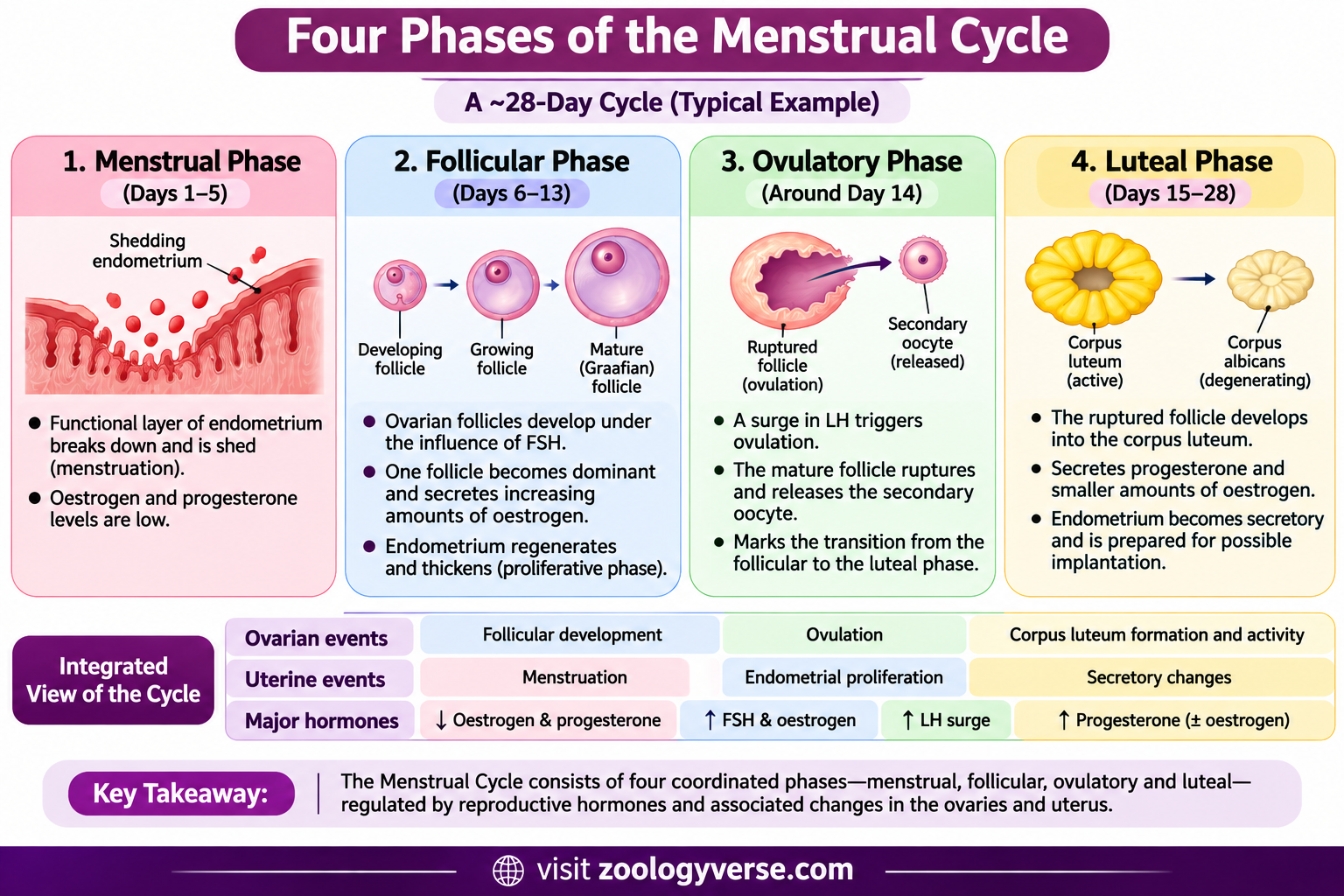
The Menstrual Cycle is divided into four major phases: menstrual, follicular, ovulatory and luteal. Each phase is associated with characteristic hormonal changes and reproductive events involving the ovaries and uterus.
The Phases of Menstrual Cycle are closely coordinated. The ovarian events involve follicular development, ovulation and corpus luteum formation, while the uterine events involve shedding, regeneration and preparation of the endometrium.
Although these phases are commonly described using a 28-day cycle, their actual timing varies among individuals. Ovulation does not necessarily occur on Day 14 in every cycle.
3.1 Menstrual Phase
The menstrual phase begins on Day 1 of the Menstrual Cycle and involves the shedding of the functional layer of the uterine endometrium.
When fertilisation and implantation do not occur, the corpus luteum degenerates. Consequently, progesterone and oestrogen concentrations decline, causing changes in the blood vessels and supporting tissues of the endometrium.
The functional layer breaks down and is discharged through the vagina as menstrual bleeding. This phase commonly lasts about 2–7 days, although its duration varies.
At the same time, follicle-stimulating hormone (FSH) begins supporting the development of a new group of ovarian follicles.
3.2 Follicular Phase
The follicular phase begins on the first day of menstruation and continues until ovulation. Therefore, it overlaps with the menstrual phase during its early part.
During this phase, FSH stimulates the growth and development of ovarian follicles. Several follicles may initially begin developing, but usually one becomes dominant and continues towards maturity.
The developing follicles produce increasing amounts of oestrogen. This hormone promotes the repair and growth of the endometrium after menstruation.
The follicular phase has variable duration and accounts for much of the variation in overall cycle length. Its events are important for preparing a mature follicle for the release of an oocyte.
3.3 Ovulatory Phase
The ovulatory phase is the stage during which a mature ovarian follicle releases an oocyte. It is triggered by a rapid increase in luteinising hormone (LH), commonly known as the LH surge.
The LH surge occurs following sustained high oestrogen levels produced by the dominant follicle. This hormonal signal causes final maturation of the follicle and its rupture, releasing the oocyte from the ovary.
In a typical 28-day example, ovulation is often placed around Day 14. However, the timing differs according to individual cycle length and hormonal patterns.
The released oocyte enters the uterine tube, where fertilisation may occur if viable sperm are present.
3.4 Luteal Phase
The luteal phase begins after ovulation and continues until the beginning of the next menstrual bleeding. During this phase, the ruptured ovarian follicle transforms into a temporary endocrine structure called the corpus luteum.
The corpus luteum secretes progesterone and smaller amounts of oestrogen. Progesterone supports the secretory transformation of the endometrium, making it suitable for possible implantation.
If fertilisation and implantation do not occur, the corpus luteum gradually degenerates. The resulting decline in progesterone and oestrogen contributes to the breakdown of the functional endometrium and the beginning of another cycle.
If pregnancy occurs, human chorionic gonadotropin (hCG) produced by the developing conceptus helps maintain the corpus luteum during early pregnancy.
The luteal phase is generally more consistent in duration than the follicular phase, commonly lasting approximately 12–14 days, although variation occurs.
3.5 Summary of the Four Phases
| Phase | Main events | Major hormonal pattern |
|---|---|---|
| Menstrual | Shedding of the functional endometrium | Declining progesterone and oestrogen |
| Follicular | Growth and maturation of ovarian follicles | FSH stimulation and increasing oestrogen |
| Ovulatory | Release of the oocyte from the mature follicle | LH surge |
| Luteal | Corpus luteum formation and secretory endometrial changes | Increased progesterone |
The four phases represent connected events rather than completely separate processes. The menstrual and follicular phases overlap, while ovarian and uterine changes occur simultaneously throughout the Menstrual Cycle. Their coordination ensures that follicular development, ovulation and endometrial preparation take place in an organised sequence.
4. Hormonal Regulation of the Menstrual Cycle
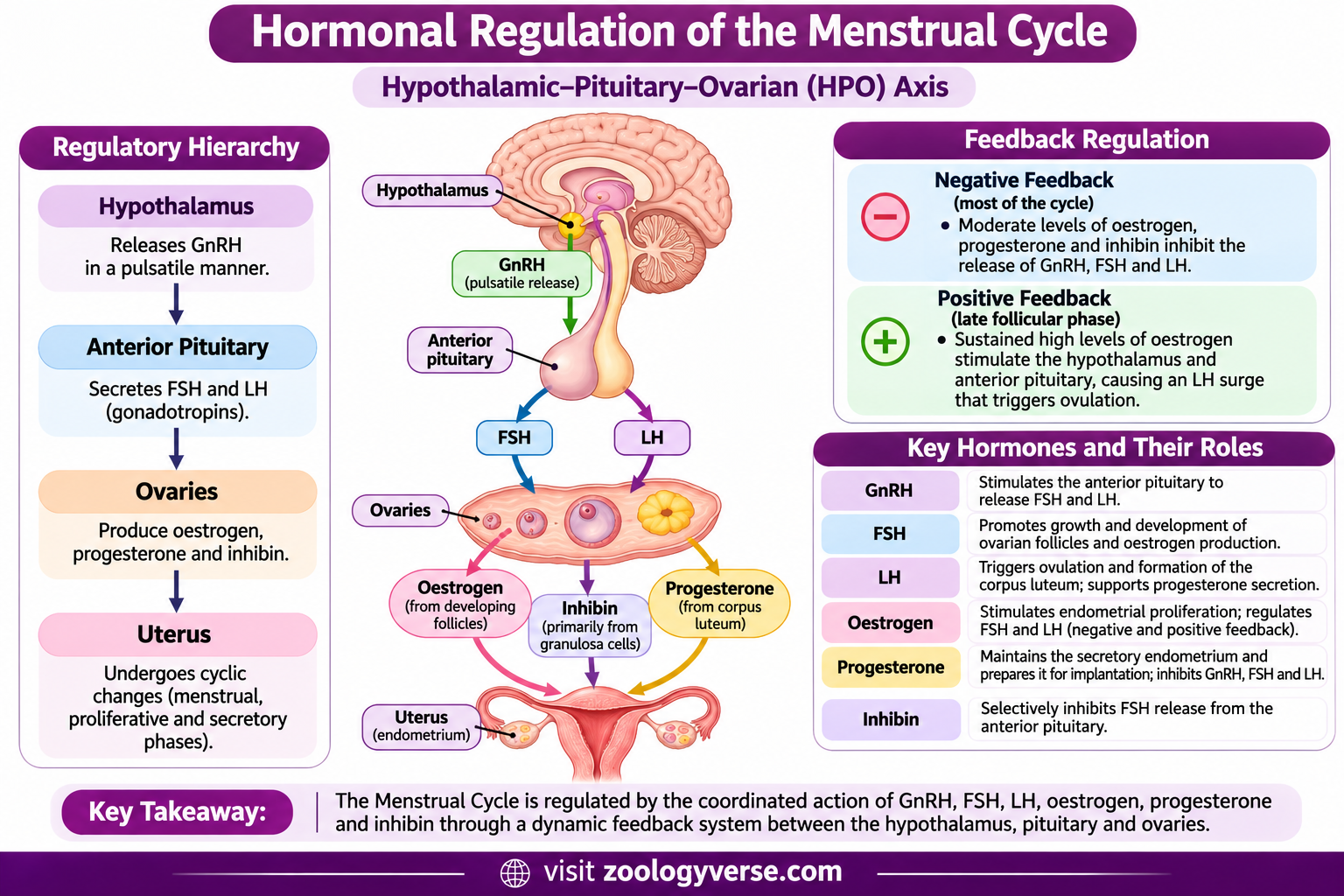
The Menstrual Cycle is regulated by a coordinated hormonal system involving the hypothalamus, anterior pituitary gland and ovaries. These organs communicate through chemical messengers that control follicular development, ovulation and changes in the uterine endometrium.
The Hormonal Regulation of Menstrual Cycle depends mainly on the hypothalamic-pituitary-ovarian (HPO) axis. This system maintains reproductive coordination through the release of gonadotropin-releasing hormone (GnRH), follicle-stimulating hormone (FSH), luteinising hormone (LH), oestrogen and progesterone.
Hormonal concentrations change throughout the cycle. These changes regulate ovarian activity and ensure that the uterus undergoes appropriate modifications for possible pregnancy.
4.1 Role of the Hypothalamus
The hypothalamus is a region of the brain that controls several endocrine activities, including reproductive functions. It regulates the beginning of the hormonal events involved in the Menstrual Cycle by releasing gonadotropin-releasing hormone (GnRH).
GnRH is released in a pulsatile manner into the hypophyseal portal circulation. It reaches the anterior pituitary gland and stimulates the secretion of FSH and LH.
The frequency and amplitude of GnRH pulses influence the secretion of these gonadotropins. Therefore, the hypothalamus plays an essential role in controlling ovarian activity.
4.2 Role of the Anterior Pituitary Gland
The anterior pituitary gland responds to GnRH by releasing two important gonadotropic hormones: FSH and LH.
Follicle-stimulating hormone (FSH):
- Stimulates the growth and development of ovarian follicles.
- Supports the activity of granulosa cells within developing follicles.
- Promotes the production of oestrogen through follicular activity.
- Helps select and support the development of a dominant follicle.
Luteinising hormone (LH):
- Supports ovarian steroid hormone production.
- Participates in the final maturation of the dominant follicle.
- Produces the LH surge that triggers ovulation.
- Promotes the formation and functioning of the corpus luteum after ovulation.
FSH and LH therefore regulate different but interconnected stages of ovarian activity.
4.3 Role of the Ovaries
The ovaries are the primary reproductive organs responsible for producing oocytes and secreting steroid hormones. Their hormonal activity changes throughout the Menstrual Cycle.
Developing ovarian follicles produce oestrogen, particularly oestradiol. Its concentration generally increases during the follicular phase as the dominant follicle develops.
After ovulation, the ruptured follicle develops into the corpus luteum. This temporary endocrine structure secretes progesterone and smaller amounts of oestrogen.
These ovarian hormones act on the reproductive organs and also influence the hypothalamus and anterior pituitary through feedback mechanisms.
4.4 Negative Feedback Mechanism
Negative feedback is an important mechanism controlling the Menstrual Cycle. It occurs when a hormone reduces the further secretion of hormones that stimulated its production.
During most of the follicular phase, moderate concentrations of oestrogen exert negative feedback on the hypothalamus and anterior pituitary. This helps regulate GnRH, FSH and LH secretion.
Inhibin, produced by ovarian granulosa cells, also suppresses FSH secretion. This contributes to the regulation of follicular development and helps prevent excessive recruitment of ovarian follicles.
During the luteal phase, progesterone, together with oestrogen, exerts negative feedback on the hypothalamus and pituitary gland. This reduces gonadotropin secretion and prevents the development of another dominant follicle during the same cycle.
4.5 Positive Feedback and the LH Surge
An important feature of the Menstrual Cycle is the temporary shift from negative to positive feedback before ovulation.
As the dominant follicle develops, it produces increasing amounts of oestradiol. When oestradiol remains at a sufficiently high concentration for an appropriate period, it stimulates rather than suppresses the hypothalamus and anterior pituitary.
This positive feedback produces a rapid increase in LH secretion, known as the LH surge. A smaller rise in FSH may also occur.
The LH surge initiates the final events leading to follicular rupture and oocyte release. It is therefore the major hormonal trigger for ovulation.
4.6 Hormonal Changes After Ovulation
Following ovulation, the ruptured follicle becomes the corpus luteum under the influence of LH. The corpus luteum secretes progesterone, which supports the secretory development of the endometrium.
Progesterone also contributes to negative feedback on GnRH, FSH and LH secretion. Oestrogen produced by the corpus luteum participates in this feedback regulation.
If pregnancy does not occur, the corpus luteum degenerates and progesterone and oestrogen levels decline. This hormonal withdrawal contributes to endometrial shedding and the beginning of another Menstrual Cycle.
If pregnancy occurs, hCG from the developing conceptus supports the corpus luteum during early pregnancy, maintaining progesterone production until placental hormone production becomes sufficient.
4.7 Summary of Hormonal Regulation
| Hormone | Main source | Major reproductive function |
|---|---|---|
| GnRH | Hypothalamus | Stimulates pituitary release of FSH and LH |
| FSH | Anterior pituitary | Promotes ovarian follicular development |
| LH | Anterior pituitary | Triggers ovulation and supports corpus luteum formation |
| Oestrogen | Developing follicles and corpus luteum | Promotes endometrial growth and regulates feedback |
| Progesterone | Corpus luteum | Supports secretory endometrial changes |
| Inhibin | Ovarian granulosa cells and corpus luteum | Suppresses FSH secretion |
| hCG | Developing conceptus and later placenta | Maintains the corpus luteum in early pregnancy |
The hormonal regulation of the Menstrual Cycle depends on continuous communication between the brain, pituitary gland and ovaries. Negative and positive feedback mechanisms ensure that follicular development, ovulation and endometrial preparation occur in a coordinated sequence.
5. Role of Individual Hormones in Menstrual Regulation
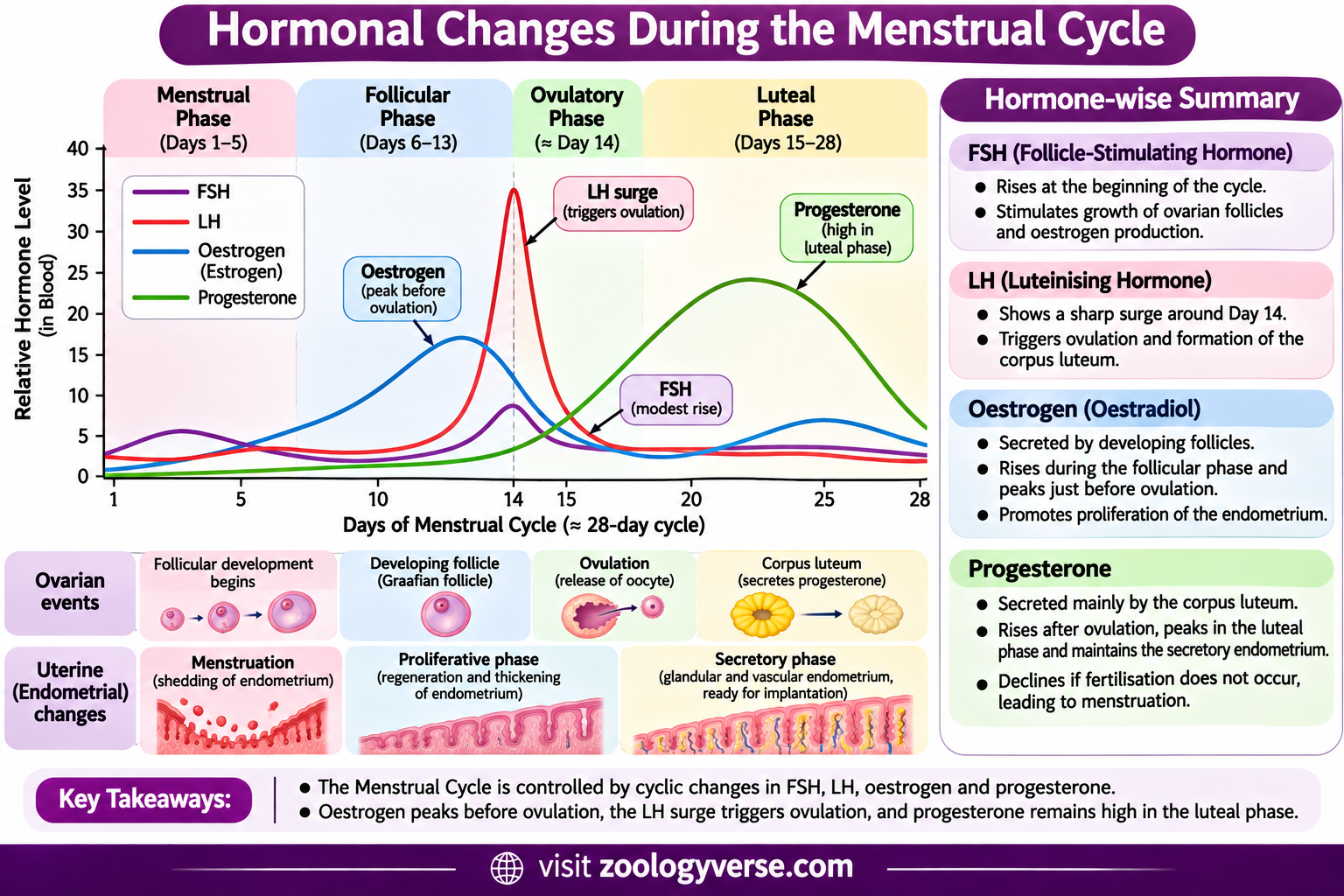
The Menstrual Cycle is controlled by several hormones that regulate ovarian activity and changes in the uterus. Each hormone performs a specific function, but their actions are closely interconnected. Together, they control follicular development, ovulation, corpus luteum formation and endometrial preparation.
The major Menstrual Cycle Hormones include gonadotropin-releasing hormone (GnRH), follicle-stimulating hormone (FSH), luteinising hormone (LH), oestrogen and progesterone. Inhibin and human chorionic gonadotropin (hCG) also contribute to reproductive regulation under specific conditions.
5.1 Gonadotropin-Releasing Hormone (GnRH)
GnRH is a peptide hormone secreted by specialised neurons of the hypothalamus. It regulates the release of gonadotropins from the anterior pituitary gland.
GnRH is released in pulses rather than continuously. These pulses stimulate the anterior pituitary to secrete FSH and LH, which act on the ovaries during different stages of the Menstrual Cycle.
The frequency and amplitude of GnRH pulses influence gonadotropin secretion. Changes in this pulsatile activity are important for normal reproductive function.
5.2 Follicle-Stimulating Hormone (FSH)
FSH is a glycoprotein hormone secreted by the anterior pituitary gland. It plays a major role in the growth and development of ovarian follicles.
Its important functions include:
- Stimulating the growth of a group of ovarian follicles during the early follicular phase.
- Promoting the proliferation and activity of granulosa cells.
- Supporting the production of oestrogen by developing follicles.
- Contributing to the selection and development of a dominant follicle.
FSH secretion is regulated by GnRH, ovarian hormones and inhibin. As follicular development progresses, rising oestrogen and inhibin levels help reduce FSH secretion, allowing one follicle usually to become dominant.
5.3 Luteinising Hormone (LH)
LH is another glycoprotein hormone released by the anterior pituitary gland. It acts on ovarian theca cells and plays an essential role in ovulation and corpus luteum development.
Its major functions include:
- Stimulating androgen production by theca cells, which granulosa cells convert into oestrogens.
- Participating in the final maturation of the dominant follicle.
- Triggering ovulation through the mid-cycle LH surge.
- Promoting luteinisation of the ruptured follicle.
- Supporting progesterone secretion by the corpus luteum.
The LH surge is one of the most important hormonal events in the Menstrual Cycle because it triggers the processes leading to the release of the oocyte.
5.4 Oestrogen
Oestrogen is a steroid hormone produced mainly by developing ovarian follicles. Oestradiol is the principal and most biologically active oestrogen during the reproductive years.
During the follicular phase, increasing oestradiol promotes the proliferation and regeneration of the endometrium after menstruation. It also influences cervical mucus, making it more favourable for sperm transport around the time of ovulation.
Oestrogen has two important feedback effects:
- Negative feedback: Moderate oestrogen concentrations generally suppress GnRH, FSH and LH secretion.
- Positive feedback: Sustained high oestradiol concentrations before ovulation stimulate the LH surge.
Oestrogen also contributes to the maintenance of reproductive tissues and the regulation of several physiological processes.
5.5 Progesterone
Progesterone is a steroid hormone produced mainly by the corpus luteum after ovulation. It is particularly important during the luteal phase of the Menstrual Cycle.
Its major functions include:
- Converting the proliferative endometrium into a secretory endometrium.
- Supporting the development of uterine glands and their secretions.
- Reducing uterine contractility and promoting conditions favourable for early pregnancy.
- Thickening cervical mucus after ovulation.
- Exerting negative feedback on GnRH, FSH and LH secretion.
If pregnancy does not occur, the corpus luteum degenerates and progesterone concentrations decline. This withdrawal contributes to the breakdown and shedding of the functional endometrial layer.
If pregnancy occurs, hCG helps maintain the corpus luteum and its progesterone production during early pregnancy.
5.6 Inhibin
Inhibin is a glycoprotein hormone produced by ovarian granulosa cells. It helps regulate the secretion of FSH from the anterior pituitary gland.
During follicular development, inhibin B is produced mainly by developing follicles. In the luteal phase, inhibin A is associated with corpus luteum activity.
By suppressing FSH secretion, inhibin contributes to the regulation of follicular development and helps coordinate the selection of a dominant follicle.
5.7 Human Chorionic Gonadotropin (hCG)
hCG is a glycoprotein hormone produced by the developing conceptus after implantation and subsequently by the placenta. It is not a regular hormone responsible for initiating the normal Menstrual Cycle.
Its main reproductive function is to maintain the corpus luteum during early pregnancy. hCG acts on LH receptors and supports continued progesterone secretion, helping maintain the endometrium until placental hormone production becomes sufficient.
The presence of hCG in blood or urine is also the basis of most pregnancy tests.
5.8 Summary of Major Reproductive Hormones
| Hormone | Main source | Principal function |
|---|---|---|
| GnRH | Hypothalamus | Stimulates FSH and LH secretion |
| FSH | Anterior pituitary | Promotes follicular development |
| LH | Anterior pituitary | Triggers ovulation and supports corpus luteum formation |
| Oestrogen | Developing ovarian follicles; corpus luteum | Promotes endometrial proliferation and regulates feedback |
| Progesterone | Corpus luteum | Supports secretory endometrial development |
| Inhibin | Ovarian granulosa cells and corpus luteum | Suppresses FSH secretion |
| hCG | Developing conceptus and placenta | Maintains the corpus luteum during early pregnancy |
The Menstrual Cycle Hormones work together through feedback mechanisms rather than acting independently. Their changing concentrations coordinate ovarian and uterine events, ensuring that follicular development, ovulation and endometrial preparation occur in an organised sequence.
6. Ovarian Changes During the Menstrual Cycle
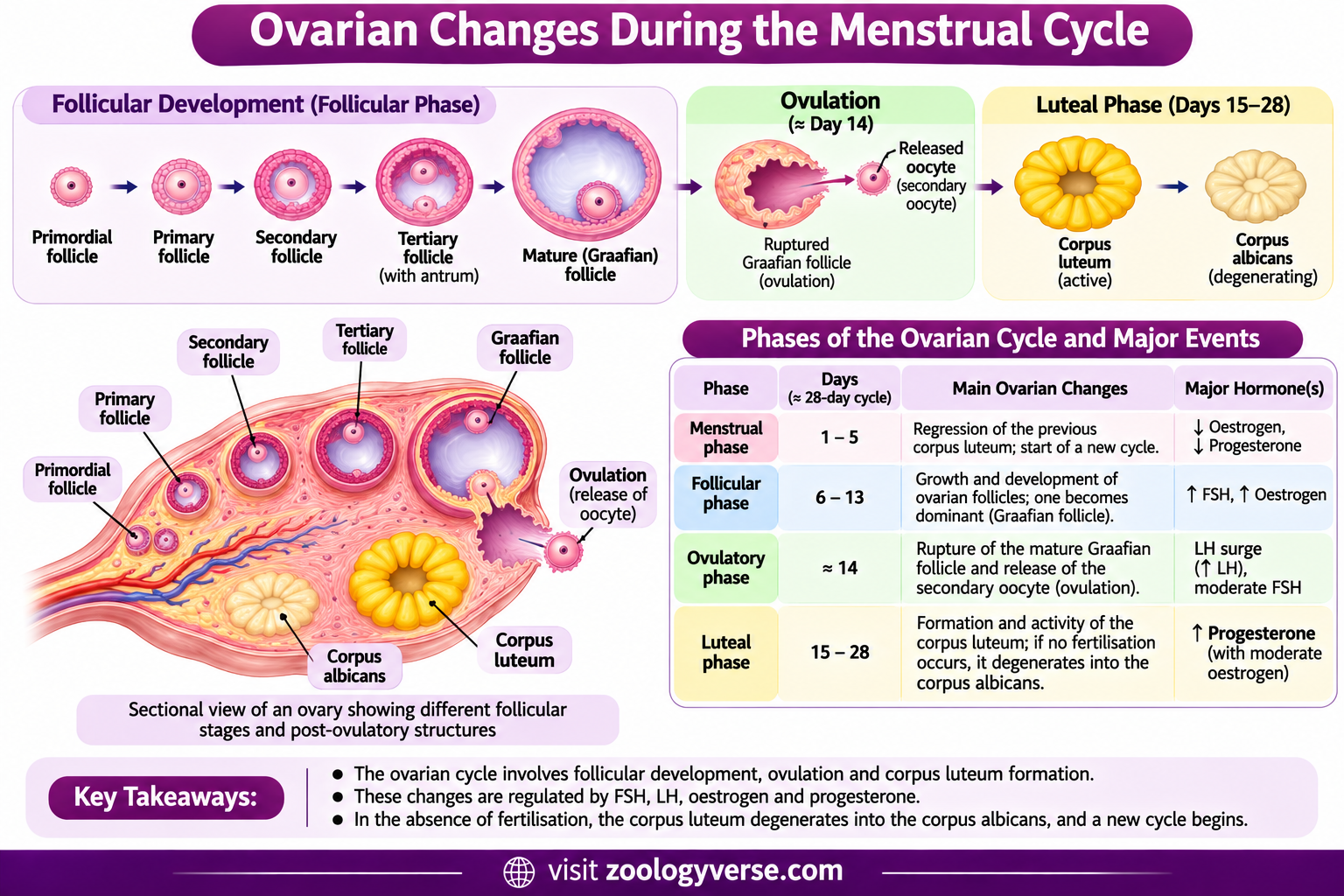
The ovaries undergo a series of structural and functional changes during the Menstrual Cycle. These changes include the development of ovarian follicles, maturation of a dominant follicle, release of an oocyte through ovulation and formation of the corpus luteum.
These ovarian events are controlled mainly by follicle-stimulating hormone (FSH), luteinising hormone (LH), oestrogen and progesterone. The Menstrual Cycle therefore involves coordinated changes in ovarian structures and hormone secretion.
6.1 Follicular Development
At the beginning of the Menstrual Cycle, several ovarian follicles may begin developing under the influence of FSH. Each developing follicle contains an immature oocyte surrounded by specialised supporting cells.
Follicular development generally progresses through the following stages:
- Primordial follicle: Contains a primary oocyte surrounded by a single layer of flattened follicular cells.
- Primary follicle: Follicular cells become cuboidal and begin multiplying. The zona pellucida develops around the oocyte.
- Secondary follicle: Granulosa cells form several layers, and the surrounding theca develops.
- Antral follicle: A fluid-filled cavity called the antrum appears within the follicle.
- Mature Graafian follicle: The follicle becomes fully developed and is prepared for ovulation.
Although follicular development begins much earlier, the final stages of maturation are coordinated with the hormonal events of the current Menstrual Cycle.
6.2 Selection of the Dominant Follicle
During the early follicular phase, FSH stimulates a group of developing follicles. As these follicles grow, they produce increasing amounts of oestrogen and inhibin.
The rising concentrations of these hormones reduce FSH secretion through negative feedback. Most developing follicles cannot continue growing under the reduced FSH stimulation and undergo degeneration through a process called atresia.
Usually, one follicle becomes dominant. It has greater sensitivity to FSH and develops further than the other follicles. In some cycles, more than one follicle may become dominant, which can result in the release of multiple oocytes.
6.3 Final Maturation of the Oocyte
As the dominant follicle approaches maturity, the oocyte undergoes important developmental changes.
In humans, the primary oocyte completes the first meiotic division shortly before ovulation. This produces a secondary oocyte and the first polar body.
The secondary oocyte begins the second meiotic division but becomes arrested at metaphase II. It is released in this stage during ovulation and completes meiosis II only if fertilisation occurs.
These events ensure that the released oocyte is developmentally prepared for possible fertilisation.
6.4 Ovulation
Ovulation is the process through which the mature ovarian follicle ruptures and releases the secondary oocyte. It usually occurs in response to the LH surge during the middle portion of the Menstrual Cycle.
The LH surge causes several changes within the mature follicle, including increased enzymatic activity, changes in follicular tissue and weakening of the follicular wall. These processes contribute to follicular rupture.
The secondary oocyte, surrounded by the zona pellucida and corona radiata, is released from the ovary. It is subsequently captured by the fimbriae of the uterine tube.
Although ovulation is often illustrated as occurring on Day 14 of a 28-day cycle, its actual timing varies. It is generally more closely related to the length of the follicular phase than to a fixed calendar day.
6.5 Formation of the Corpus Luteum
After ovulation, the ruptured follicle undergoes a process called luteinisation. Granulosa and theca cells transform into luteal cells, forming a temporary endocrine structure known as the corpus luteum.
The corpus luteum is an important structure during the luteal phase of the Menstrual Cycle. It secretes progesterone and smaller amounts of oestrogen.
Progesterone promotes secretory changes in the endometrium and helps maintain conditions suitable for possible implantation. The corpus luteum therefore connects ovarian activity with uterine preparation.
6.6 Fate of the Corpus Luteum
If fertilisation and implantation do not occur, the corpus luteum gradually degenerates. It is then replaced by a fibrous structure called the corpus albicans.
As the corpus luteum degenerates, progesterone and oestrogen concentrations decline. This hormonal withdrawal contributes to the breakdown of the functional endometrial layer and the onset of menstruation.
If pregnancy occurs, human chorionic gonadotropin (hCG) maintains the corpus luteum during early pregnancy. Continued progesterone secretion supports the endometrium until the placenta becomes capable of producing sufficient progesterone.
6.7 Summary of Ovarian Changes
| Stage | Ovarian event | Main outcome |
|---|---|---|
| Follicular development | Growth of ovarian follicles | Development of a dominant follicle |
| Follicle selection | One follicle usually becomes dominant | Continued follicular maturation |
| Final oocyte maturation | Completion of meiosis I | Formation of a secondary oocyte |
| Ovulation | Rupture of the mature follicle | Release of the secondary oocyte |
| Luteinisation | Transformation of follicular cells | Formation of the corpus luteum |
| Luteal regression | Degeneration of the corpus luteum if pregnancy does not occur | Formation of the corpus albicans |
The ovarian changes of the Menstrual Cycle demonstrate how follicular development, ovulation and luteal activity are linked through hormonal regulation. These events occur alongside corresponding changes in the uterus, which prepare the endometrium for possible implantation.
7. Uterine and Endometrial Changes During the Menstrual Cycle
The uterus undergoes regular structural and functional changes during the Menstrual Cycle. These changes mainly involve the endometrium, the inner lining of the uterus, which prepares for the possible implantation of a fertilised embryo.
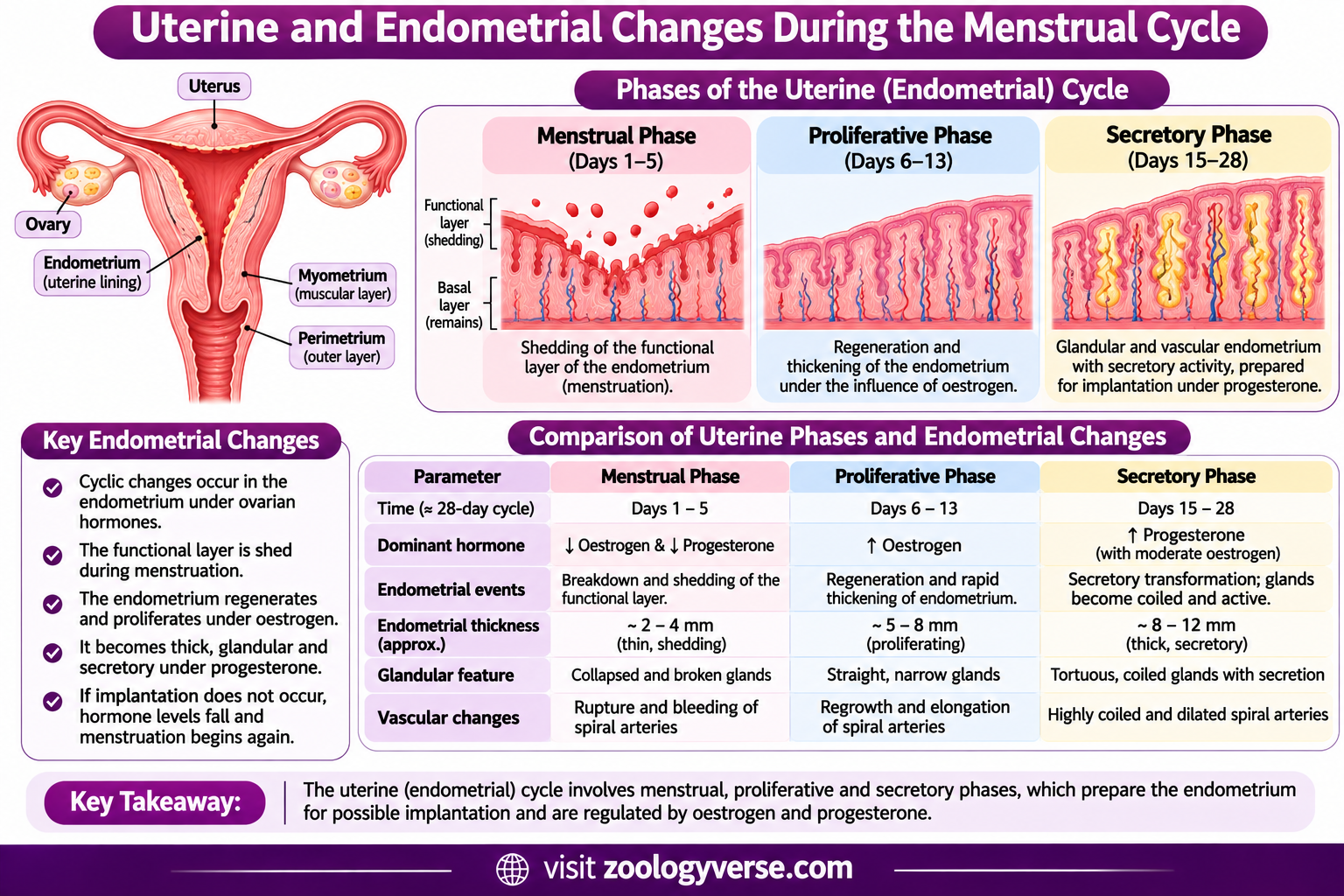
The uterine changes are controlled primarily by oestrogen and progesterone secreted by the ovaries. Based on the changes occurring in the endometrium, the uterine cycle is divided into three major phases: menstrual, proliferative and secretory.
7.1 Structure of the Endometrium
The endometrium is the innermost layer of the uterine wall. It consists of an epithelial lining, uterine glands, connective tissue and an extensive network of blood vessels.
It is broadly divided into two layers:
- Stratum functionalis: The superficial functional layer that undergoes cyclic growth, differentiation and shedding.
- Stratum basalis: The deeper basal layer that remains relatively intact during menstruation and provides cells for regeneration of the functional layer.
The stratum functionalis responds to changing ovarian hormone concentrations throughout the Menstrual Cycle. Its development and shedding are essential features of the uterine cycle.
7.2 Menstrual Phase
The menstrual phase begins with the onset of menstrual bleeding. It occurs when the corpus luteum degenerates in the absence of pregnancy, resulting in a decline in progesterone and oestrogen concentrations.
This hormonal withdrawal causes changes in the spiral arteries supplying the functional endometrium. Intermittent vasoconstriction, tissue breakdown and inflammatory processes contribute to the shedding of the superficial endometrial layer.
The discharged material contains blood, endometrial tissue fragments, mucus and other cellular components. The basal layer remains largely intact and provides the foundation for subsequent regeneration.
Menstrual bleeding commonly lasts approximately 2–7 days, although its duration and amount vary among individuals.
7.3 Proliferative Phase
The proliferative phase begins after menstruation and continues until ovulation. It is primarily controlled by oestrogen secreted by developing ovarian follicles.
During this phase, the endometrium is restored and gradually increases in thickness. The epithelial cells proliferate, uterine glands lengthen and the supporting connective tissue undergoes growth.
The spiral arteries also develop and extend towards the regenerating functional layer. These changes prepare the uterine lining for the next stage of the uterine cycle.
The proliferative phase therefore represents the rebuilding of the endometrium following menstrual shedding.
7.4 Secretory Phase
The secretory phase begins after ovulation and continues until the next menstruation if pregnancy does not occur. It is mainly regulated by progesterone secreted by the corpus luteum.
Under the influence of progesterone, the endometrial glands become more developed, coiled and secretory. They produce glycogen-rich secretions and other substances that help create a suitable environment for a developing embryo.
The endometrial stroma becomes more vascular and undergoes further differentiation. These changes prepare the functional layer for possible implantation.
The secretory endometrium is therefore more structurally and functionally specialised than the proliferative endometrium.
7.5 Endometrial Changes When Pregnancy Does Not Occur
If fertilisation and implantation do not occur, the corpus luteum regresses towards the end of the luteal phase. Consequently, progesterone and oestrogen concentrations decline.
The withdrawal of these hormones initiates inflammatory and vascular changes in the functional endometrium. Tissue breakdown follows, and the superficial layer is shed during menstruation.
The remaining basal layer supports regeneration of the endometrium in the next cycle. This process allows the uterine lining to undergo repeated growth and shedding during the reproductive years.
7.6 Endometrial Changes When Pregnancy Occurs
If implantation occurs, the developing conceptus produces human chorionic gonadotropin (hCG). This hormone supports the corpus luteum during early pregnancy and maintains progesterone secretion.
Progesterone helps preserve the endometrium and prevents the normal hormonal withdrawal associated with menstruation. The endometrial stromal cells undergo decidualisation, forming specialised tissue that supports early embryonic development.
The endometrium therefore becomes part of the maternal environment required for implantation and early pregnancy.
7.7 Comparison of Uterine Phases
| Uterine phase | Approximate timing in a 28-day example | Main hormone | Major endometrial changes |
|---|---|---|---|
| Menstrual | Days 1–5 | Declining progesterone and oestrogen | Shedding of the functional layer |
| Proliferative | Days 6–14 | Oestrogen | Regeneration and thickening of the endometrium |
| Secretory | Days 15–28 | Progesterone | Glandular secretion and preparation for implantation |
Note: These day ranges are illustrative. Actual timing varies with individual cycle length and ovulation.
The uterine changes during the Menstrual Cycle are closely connected with ovarian hormone secretion. The menstrual phase removes the previous functional lining, the proliferative phase rebuilds it, and the secretory phase prepares it for possible implantation.
8. Relationship Between the Ovarian and Uterine Cycles
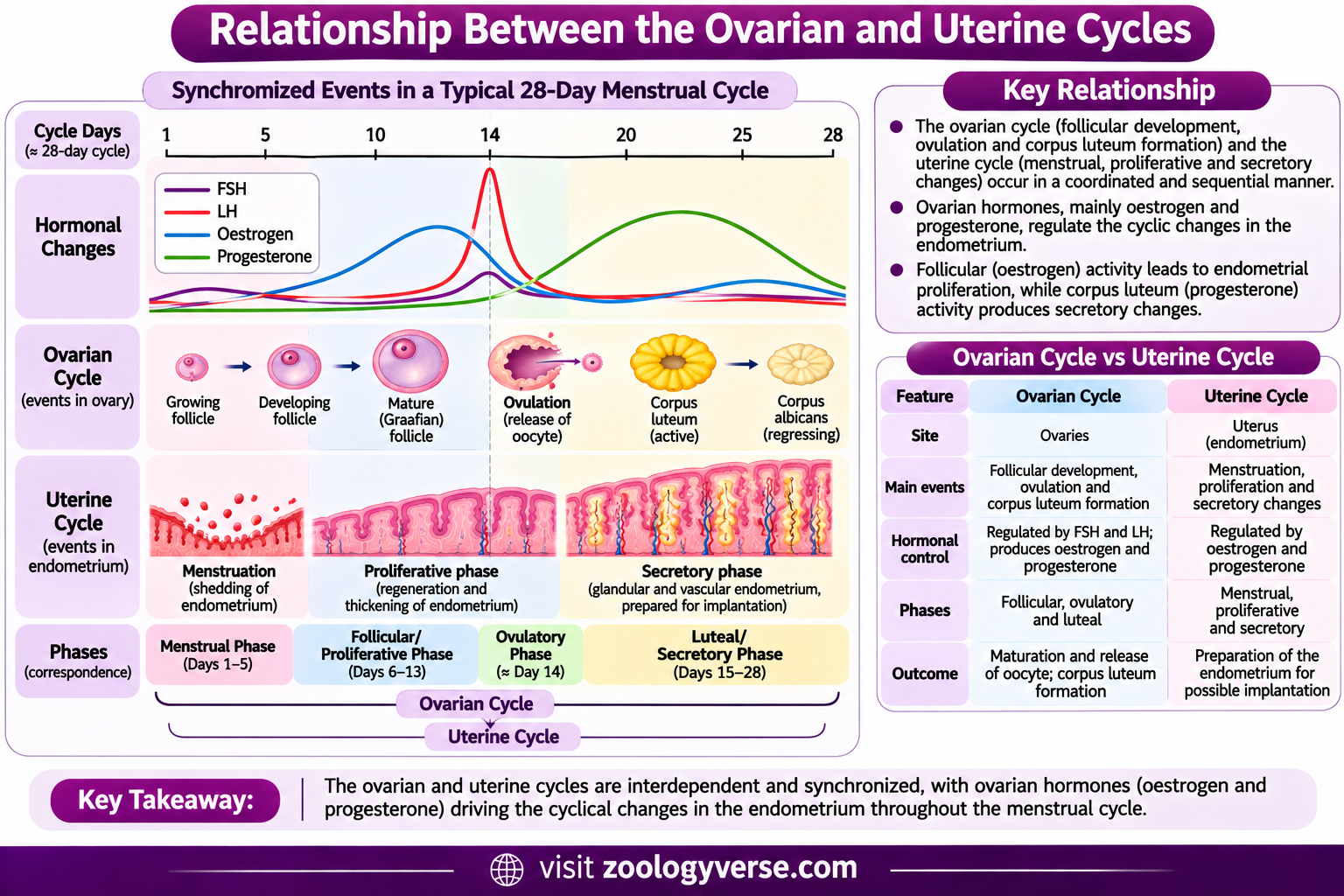
The Menstrual Cycle involves two closely coordinated processes: the ovarian cycle and the uterine cycle. The ovarian cycle describes the changes occurring in the ovaries, whereas the uterine cycle describes the cyclic changes in the endometrium.
Both processes are regulated by reproductive hormones and occur simultaneously. Ovarian hormones, particularly oestrogen and progesterone, coordinate the development of ovarian follicles with the preparation of the uterine lining for possible implantation.
8.1 Meaning of the Ovarian Cycle
The ovarian cycle refers to the sequence of structural and functional changes occurring in the ovaries during the reproductive cycle.
It is divided into three main phases:
- Follicular phase: Ovarian follicles develop under the influence of FSH. Usually, one follicle becomes dominant and produces increasing amounts of oestrogen.
- Ovulatory phase: The LH surge causes the mature follicle to rupture and release the secondary oocyte.
- Luteal phase: The ruptured follicle develops into the corpus luteum, which secretes progesterone and smaller amounts of oestrogen.
These ovarian events regulate the hormonal environment required for corresponding changes in the uterus.
8.2 Meaning of the Uterine Cycle
The uterine cycle refers to the cyclic structural and functional changes occurring in the endometrium.
It consists of three main phases:
- Menstrual phase: The functional layer of the endometrium is shed when ovarian hormone concentrations decline.
- Proliferative phase: Oestrogen stimulates regeneration and thickening of the endometrium.
- Secretory phase: Progesterone promotes glandular development and secretory activity, preparing the endometrium for possible implantation.
The uterine cycle is therefore closely dependent on the hormonal changes produced by the ovaries.
8.3 Coordination During the Follicular and Proliferative Phases
During the follicular phase of the ovarian cycle, FSH stimulates the development of ovarian follicles. The growing follicles secrete increasing amounts of oestrogen.
At the same time, the uterine endometrium enters the proliferative phase. Oestrogen stimulates the regeneration of the functional layer, promotes cell proliferation and supports the development of uterine glands and blood vessels.
Thus, ovarian follicular development and endometrial proliferation occur together through the action of oestrogen.
8.4 Coordination During Ovulation
As the dominant follicle matures, it produces sustained high concentrations of oestradiol. This produces positive feedback on the hypothalamus and anterior pituitary, resulting in the LH surge.
The LH surge triggers ovulation, releasing the secondary oocyte from the mature follicle. Around this time, the endometrium has generally completed much of its proliferative development.
Ovulation therefore marks the transition from the follicular to the luteal phase of the ovarian cycle and from the proliferative to the secretory phase of the uterine cycle.
8.5 Coordination During the Luteal and Secretory Phases
After ovulation, the ruptured follicle develops into the corpus luteum. It secretes progesterone, which acts on the endometrium and stimulates secretory transformation.
The uterine glands become more developed and release nutrient-rich secretions. The endometrial stroma becomes more vascular and undergoes differentiation, creating conditions suitable for possible implantation.
The luteal phase of the ovarian cycle therefore corresponds to the secretory phase of the uterine cycle.
8.6 Events When Pregnancy Does Not Occur
If fertilisation and implantation do not occur, the corpus luteum gradually degenerates. Progesterone and oestrogen concentrations consequently decline.
The endometrium can no longer maintain its secretory structure. The functional layer breaks down and is shed during menstruation.
This marks the beginning of a new uterine cycle and another round of coordinated ovarian and uterine changes.
8.7 Comparison of Ovarian and Uterine Cycles
| Ovarian cycle | Corresponding uterine cycle | Main hormonal influence |
|---|---|---|
| Follicular phase | Menstrual and proliferative phases | FSH and increasing oestrogen |
| Ovulatory phase | Late proliferative period | LH surge and high oestradiol |
| Luteal phase | Secretory phase | Progesterone and oestrogen |
Note: The follicular phase overlaps with menstruation at the beginning of the cycle. The ovarian and uterine phases are not completely separate; they are simultaneous processes.
8.8 Integrated View of Both Cycles
The relationship between the ovarian and uterine cycles demonstrates how reproductive events are coordinated through hormonal communication.
| Ovarian event | Hormonal change | Uterine response |
|---|---|---|
| Follicular development | Increasing oestrogen | Endometrial regeneration and proliferation |
| Dominant follicle maturation | Sustained high oestradiol | Endometrium continues proliferating |
| Ovulation | LH surge | Transition towards secretory preparation |
| Corpus luteum formation | Increased progesterone | Endometrial secretory transformation |
| Corpus luteum degeneration | Declining progesterone and oestrogen | Breakdown and shedding of the functional layer |
The ovarian and uterine cycles are therefore functionally integrated components of the Menstrual Cycle. The ovaries provide the hormonal signals, while the uterus responds through cyclic changes in its endometrium. This coordination prepares the reproductive system for possible fertilisation and implantation.
9. Menstrual Cycle: A Day-by-Day Overview
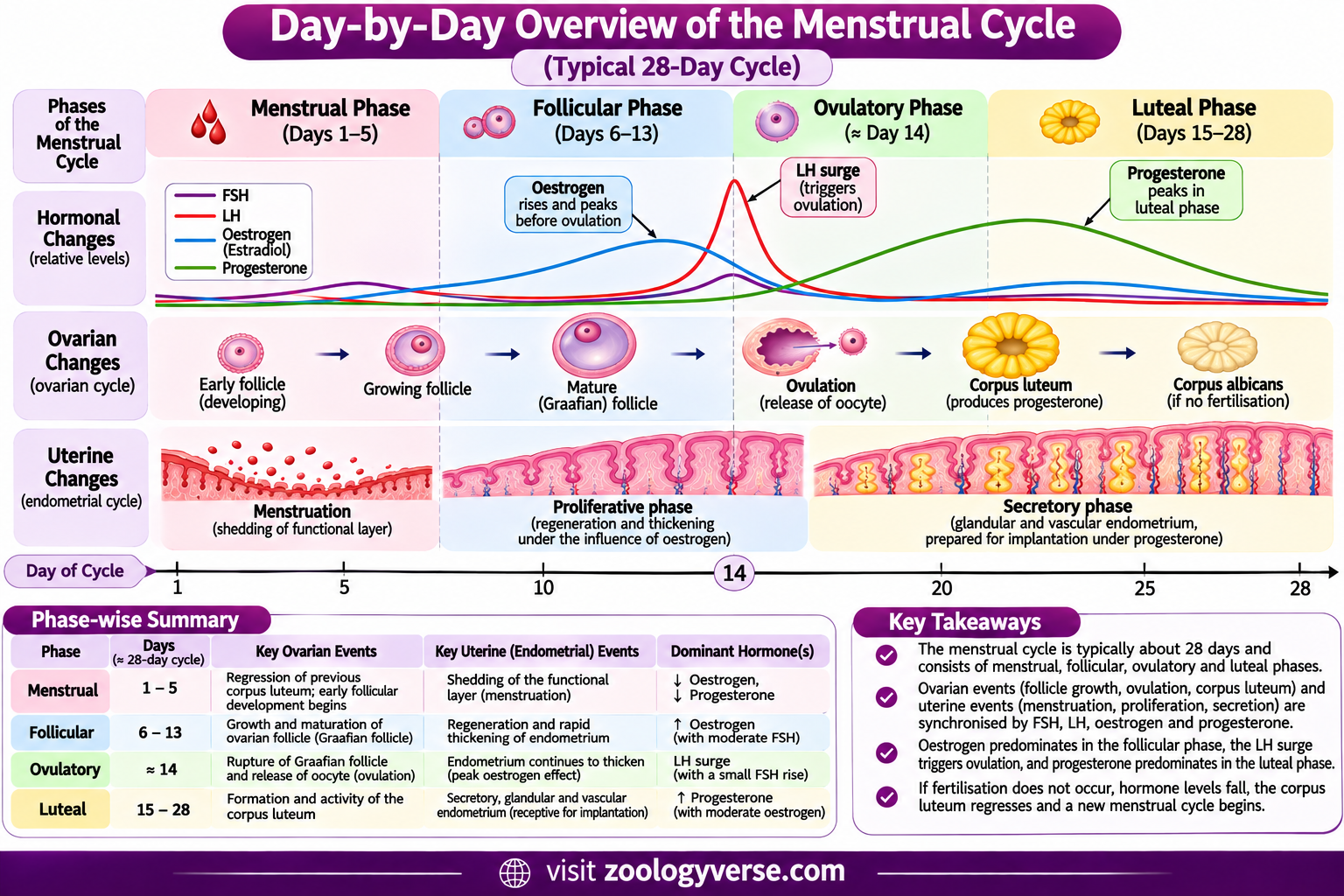
The Menstrual Cycle involves a sequence of ovarian, uterine and hormonal events that occur in a coordinated manner. A 28-day cycle is commonly used as a teaching model to explain these changes, although actual cycle length and the timing of ovulation vary among individuals.
The following timeline describes the major events in a typical 28-day example. It connects follicular development, ovulation, corpus luteum activity and endometrial changes.
9.1 Days 1–5: Menstrual Phase
The cycle begins on Day 1 with menstrual bleeding. The functional layer of the endometrium breaks down and is discharged through the vagina.
This occurs because the corpus luteum from the previous cycle has degenerated, causing progesterone and oestrogen concentrations to decline.
Meanwhile, FSH begins stimulating the development of a new group of ovarian follicles. Thus, ovarian follicular development starts while menstruation is occurring.
9.2 Days 6–13: Follicular and Proliferative Changes
During this period, ovarian follicles continue developing under the influence of FSH. Usually, one follicle becomes dominant and produces increasing amounts of oestrogen.
Oestrogen stimulates the regeneration and thickening of the endometrium. Uterine glands and supporting tissues grow, while the blood supply to the functional layer develops.
As oestrogen levels rise, FSH secretion is regulated through negative feedback. The dominant follicle continues maturing in preparation for ovulation.
9.3 Around Day 14: Ovulation
In a typical 28-day example, ovulation is often illustrated around Day 14. It is triggered by the LH surge following sustained high oestradiol concentrations.
The mature Graafian follicle ruptures and releases a secondary oocyte surrounded by its zona pellucida and corona radiata.
The oocyte is captured by the fimbriae of the uterine tube, where fertilisation may occur if viable sperm are present.
However, ovulation does not always occur on Day 14. Its timing depends mainly on the length of the follicular phase and can vary between cycles.
9.4 Days 15–21: Early Luteal and Secretory Changes
After ovulation, the ruptured follicle transforms into the corpus luteum. This structure secretes progesterone and smaller amounts of oestrogen.
Progesterone stimulates secretory changes in the endometrium. Uterine glands become more developed and begin producing secretions, while the endometrial stroma becomes more vascular.
These changes prepare the uterus for possible implantation of a fertilised embryo.
9.5 Days 22–28: Late Luteal Phase
During the later part of a typical cycle, the corpus luteum continues producing progesterone and oestrogen if pregnancy has not occurred.
If implantation does not take place, the corpus luteum begins to regress. Progesterone and oestrogen concentrations subsequently decline.
This hormonal withdrawal initiates changes that lead to breakdown of the functional endometrium. The next menstrual bleeding then begins, marking Day 1 of a new cycle.
If pregnancy occurs, hCG produced by the developing conceptus helps maintain the corpus luteum during early pregnancy.
9.6 Summary of a Typical 28-Day Cycle
| Approximate days | Ovarian events | Uterine events | Major hormonal pattern |
|---|---|---|---|
| 1–5 | Early follicular development | Menstrual shedding | Low progesterone and oestrogen; FSH begins rising |
| 6–13 | Follicular growth and dominant follicle maturation | Proliferative phase | Increasing oestrogen |
| Around 14 | Ovulation | Late proliferative period | LH surge |
| 15–21 | Corpus luteum formation and activity | Secretory phase | Increased progesterone |
| 22–28 | Luteal activity followed by regression if pregnancy does not occur | Late secretory changes followed by preparation for menstruation | Declining progesterone and oestrogen towards the end |
Note: This is an illustrative 28-day model, not a fixed timetable. Ovulation and the duration of individual phases vary among individuals.
9.7 Importance of Understanding the Timeline
The day-by-day overview helps explain how ovarian and uterine events are connected. Follicular development is associated with endometrial growth, ovulation occurs near the transition between the proliferative and secretory phases, and corpus luteum activity supports the secretory endometrium.
The Menstrual Cycle should therefore be understood as a continuous process rather than a sequence of rigid calendar dates. Hormonal changes determine the timing of reproductive events, and individual cycles may differ considerably from the standard 28-day example.
10. Factors Affecting the Menstrual Cycle
The Menstrual Cycle is regulated by interactions between the hypothalamus, pituitary gland and ovaries. However, several internal and external factors can influence this hormonal system and affect cycle length, regularity, ovulation and menstrual bleeding.
Some factors produce temporary changes, whereas others may cause persistent disturbances in reproductive function. Understanding these influences helps explain why the Menstrual Cycle may differ between individuals and may change during different stages of life.
10.1 Age and Reproductive Stage
Age is an important factor influencing menstrual regularity. The reproductive hormonal system undergoes developmental changes during adolescence and gradually changes again as menopause approaches.
During the first few years after menarche, the hypothalamic-pituitary-ovarian axis is still maturing. Ovulation may not occur regularly in every cycle, resulting in variations in cycle length and menstrual bleeding.
During the reproductive years, cycles generally become more predictable. However, individual variation remains normal.
As menopause approaches, ovarian follicular activity declines and reproductive hormone concentrations become increasingly variable. Consequently, cycles may become irregular, with changes in bleeding frequency and duration.
10.2 Psychological Stress
Psychological stress can influence the hormonal regulation of the reproductive system. Stress activates the hypothalamic-pituitary-adrenal (HPA) axis and increases the secretion of stress-related hormones, particularly cortisol.
Changes in stress-related signalling can interfere with the normal pulsatile release of GnRH from the hypothalamus. This may affect FSH and LH secretion, follicular development and ovulation.
Severe or prolonged stress may therefore contribute to delayed menstruation, irregular cycles or temporary absence of menstrual bleeding.
10.3 Nutrition and Dietary Factors
Adequate nutrition is essential for normal reproductive function. The body requires sufficient energy, proteins, fats, vitamins and minerals to maintain hormonal activities.
Severe dietary restriction, nutritional deficiencies and inadequate energy intake may disrupt hypothalamic signalling. This can reduce reproductive hormone secretion and interfere with normal ovulation.
A balanced diet supports general endocrine function, whereas prolonged undernutrition may contribute to irregular menstruation or functional hypothalamic amenorrhea.
10.4 Body Weight and Body Fat
Body weight and body composition can influence reproductive hormone regulation. Both very low body fat and excess adipose tissue may be associated with menstrual disturbances.
Insufficient body fat and low energy availability can suppress hypothalamic GnRH secretion. This may reduce FSH and LH activity and interfere with follicular development and ovulation.
Excess adipose tissue can also influence oestrogen production, insulin sensitivity and other metabolic signals. These changes may contribute to irregular menstrual cycles, particularly in individuals with certain endocrine conditions.
10.5 Physical Exercise and Energy Availability
Regular physical activity generally supports overall health. However, excessive exercise combined with inadequate energy intake may disturb reproductive function.
Intense training, insufficient recovery and low energy availability can alter hypothalamic hormone signalling. This may delay ovulation, lengthen cycle intervals or cause the absence of menstruation.
Such disturbances are observed in some athletes and individuals undertaking strenuous physical training without adequate nutritional support.
10.6 Endocrine and Hormonal Disorders
Several endocrine disorders can affect the hormonal mechanisms controlling the Menstrual Cycle.
Important examples include:
- Polycystic ovary syndrome (PCOS): May involve irregular ovulation, altered androgen levels and irregular or absent menstrual periods.
- Thyroid disorders: Both hypothyroidism and hyperthyroidism can influence reproductive hormone activity and menstrual regularity.
- Hyperprolactinemia: Increased prolactin levels can suppress GnRH secretion and interfere with ovulation.
- Hypothalamic dysfunction: Disturbances in hypothalamic signalling may affect gonadotropin release and ovarian activity.
- Premature ovarian insufficiency: Reduced ovarian function before the age of 40 can cause irregular or absent menstrual periods.
These conditions demonstrate the importance of normal endocrine communication for reproductive health.
10.7 Illness and Medication
Acute illness, chronic disease and certain medications may temporarily or persistently influence menstrual function.
Severe illness can affect energy balance, stress hormone secretion and hypothalamic activity. Chronic conditions may also influence reproductive function through metabolic or endocrine changes.
Hormonal contraceptives, some psychiatric medications, chemotherapy drugs and other treatments can alter bleeding patterns or suppress ovulation. The effects depend on the medication, dosage and individual response.
10.8 Breastfeeding and Pregnancy
Pregnancy naturally stops the normal pattern of menstruation. During pregnancy, hormonal signals maintain the endometrium and prevent the usual cyclic shedding.
Breastfeeding can also influence menstrual activity. Suckling stimulates prolactin secretion, which may suppress hypothalamic GnRH activity and delay the return of ovulation and menstruation.
The timing of menstrual recovery after childbirth varies considerably. It depends on breastfeeding frequency, individual hormonal responses and other reproductive factors.
10.9 Environmental and Lifestyle Factors
Environmental conditions and lifestyle habits may also influence reproductive hormone regulation.
Irregular sleep schedules, shift work, disruption of circadian rhythms and exposure to certain environmental chemicals have been associated with changes in reproductive function. However, the strength of evidence differs among these factors, and their effects are not identical in every individual.
Maintaining adequate sleep, balanced nutrition, appropriate physical activity and effective stress management supports general health and may help maintain normal reproductive function.
10.10 Summary of Factors Affecting the Menstrual Cycle
| Factor | Possible effect |
|---|---|
| Age | Changes in cycle regularity during adolescence and the transition to menopause |
| Psychological stress | Altered GnRH signalling and delayed ovulation |
| Poor nutrition | Disruption of reproductive hormone production |
| Very low body weight | Reduced hypothalamic reproductive activity |
| Excess body weight | Altered metabolic and hormonal regulation |
| Excessive exercise | Delayed ovulation or absence of menstruation |
| Endocrine disorders | Disturbances in ovarian function and hormone secretion |
| Illness and medication | Temporary or persistent changes in bleeding patterns |
| Breastfeeding | Suppression or delay of ovulation |
| Sleep and circadian disruption | Possible changes in reproductive hormone regulation |
The Menstrual Cycle is influenced by a combination of biological, hormonal, nutritional and environmental factors. These influences can modify reproductive hormone activity and affect the timing of ovulation and menstruation. Persistent irregularity or unusually heavy bleeding should be evaluated by a qualified healthcare professional rather than automatically attributed to lifestyle changes.
11. Biological Significance of the Menstrual Cycle
The Menstrual Cycle is an important physiological process that coordinates ovarian activity with changes in the uterus. Its primary biological role is to prepare the female reproductive system for possible fertilisation and implantation.
Through cyclic hormonal changes, the ovaries develop and release an oocyte, while the uterus undergoes structural and functional modifications. These events maintain reproductive coordination and contribute to normal female reproductive physiology.
11.1 Preparation for Fertilisation
One of the major functions of the Menstrual Cycle is to coordinate ovarian follicular development and ovulation.
During the follicular phase, ovarian follicles develop and usually one becomes dominant. The mature follicle releases a secondary oocyte during ovulation, making it available for possible fertilisation.
The timing of ovulation is also associated with changes in cervical mucus. Under the influence of oestrogen, cervical mucus generally becomes thinner and more favourable for sperm movement around the fertile period.
11.2 Preparation of the Uterus for Implantation
The Menstrual Cycle prepares the uterine endometrium for possible implantation of a fertilised embryo.
During the proliferative phase, oestrogen stimulates the regeneration and growth of the functional endometrial layer. Following ovulation, progesterone promotes secretory changes in the endometrium.
The uterine glands become more developed and the endometrial tissue undergoes further differentiation. These changes create a suitable environment for implantation if fertilisation occurs.
11.3 Coordination of Ovarian and Uterine Activities
The Menstrual Cycle maintains coordination between the ovaries and uterus through hormonal communication.
Ovarian follicles produce oestrogen, which promotes endometrial proliferation. After ovulation, the corpus luteum produces progesterone, which supports secretory transformation of the endometrium.
This relationship ensures that ovarian events and uterine preparation occur in an organised sequence.
11.4 Regulation of Reproductive Hormones
The Menstrual Cycle demonstrates the importance of hormonal feedback mechanisms in reproductive physiology.
GnRH from the hypothalamus regulates FSH and LH secretion from the anterior pituitary gland. These gonadotropins control ovarian follicular development, ovulation and corpus luteum activity.
Oestrogen and progesterone also regulate hypothalamic and pituitary activity through negative and positive feedback mechanisms. This hormonal communication helps maintain the timing and coordination of reproductive events.
11.5 Renewal of the Endometrium
Another important biological feature of the Menstrual Cycle is the repeated renewal of the uterine endometrium.
When pregnancy does not occur, the functional layer of the endometrium is shed during menstruation. The basal layer remains and supports the regeneration of the functional layer during the next proliferative phase.
This repeated process allows the uterus to undergo cyclic preparation for possible implantation.
11.6 Role in Reproductive Health Assessment
The Menstrual Cycle provides useful information about reproductive and endocrine function.
Changes in cycle frequency, regularity, bleeding duration and flow may provide clues about hormonal disturbances or underlying reproductive conditions.
For example, irregular menstruation may be associated with PCOS, thyroid disorders, hypothalamic dysfunction or other conditions affecting reproductive hormone regulation. However, menstrual patterns alone cannot establish a diagnosis.
Understanding normal cycle variation is therefore important in recognising changes that may require clinical evaluation.
11.7 Importance in Human Reproductive Biology
The Menstrual Cycle is an important topic in human reproductive biology because it illustrates the relationship between the nervous system, endocrine glands and reproductive organs.
It provides a model for studying:
- The hypothalamic-pituitary-ovarian axis.
- Hormonal feedback mechanisms.
- Follicular development and ovulation.
- Corpus luteum formation and function.
- Endometrial proliferation and secretory transformation.
- Menstruation and reproductive health.
The Menstrual Cycle therefore represents an integrated reproductive process in which hormonal signals coordinate ovarian and uterine changes. Its biological significance extends beyond menstruation because it supports the reproductive events required for possible fertilisation and pregnancy.
12. Conclusion
The Menstrual Cycle is a complex physiological process involving coordinated hormonal, ovarian and uterine changes in the female reproductive system. It prepares the reproductive organs for possible fertilisation and implantation through a carefully regulated sequence of events.
The cycle consists of four major ovarian phases: follicular, ovulatory and luteal events, together with the menstrual phase. From the uterine perspective, the endometrium passes through menstrual, proliferative and secretory phases. These changes occur simultaneously and are closely connected through ovarian hormone secretion.
The hypothalamic-pituitary-ovarian axis plays a central role in regulating the cycle. GnRH stimulates the release of FSH and LH, while oestrogen and progesterone regulate follicular development, ovulation and endometrial preparation through feedback mechanisms.
If pregnancy does not occur, the corpus luteum degenerates and ovarian hormone concentrations decline. This leads to shedding of the functional endometrial layer and the beginning of another cycle.
Thus, the Menstrual Cycle demonstrates the integrated functioning of the endocrine and reproductive systems. Understanding its phases, hormonal regulation and associated changes is essential for studying human reproductive physiology and reproductive health.
13. Frequently Asked Questions (FAQs)
What is the Menstrual Cycle?
What is the average duration of the Menstrual Cycle?
What are the four phases of the Menstrual Cycle?
Menstrual phase
Follicular phase
Ovulatory phase
Luteal phase
These phases describe the major events associated with ovarian activity and menstruation.
Which hormones regulate the Menstrual Cycle?
What is the role of FSH in the Menstrual Cycle?
What triggers ovulation?
What is the role of progesterone?
What happens to the endometrium during menstruation?
What is the difference between the ovarian cycle and the uterine cycle?
Does ovulation always occur on Day 14?
What happens if fertilisation does not occur?
Why is the Menstrual Cycle important?
14. References
- Thiyagarajan, D. K., Basit, H., & Jeanmonod, R. (2024). Physiology, Menstrual Cycle. StatPearls Publishing, NCBI Bookshelf.
https://www.ncbi.nlm.nih.gov/books/NBK500020/ - Munro, M. G., Critchley, H. O. D., & Fraser, I. S. (2018). The two FIGO systems for normal and abnormal uterine bleeding symptoms and classification of causes of abnormal uterine bleeding in the reproductive years: 2018 revisions. International Journal of Gynecology & Obstetrics, 143(3), 393–408.
https://doi.org/10.1002/ijgo.12666 - American College of Obstetricians and Gynecologists (ACOG). Amenorrhea: Absence of Periods.
https://www.acog.org/womens-health/faqs/amenorrhea-absence-of-periods - American College of Obstetricians and Gynecologists (ACOG). Abnormal Uterine Bleeding.
https://www.acog.org/womens-health/faqs/abnormal-uterine-bleeding - American College of Obstetricians and Gynecologists (ACOG). (2015). Menstruation in Girls and Adolescents: Using the Menstrual Cycle as a Vital Sign. Obstetrics & Gynecology, 126(6), e143–e146.
https://pubmed.ncbi.nlm.nih.gov/26595586/ - Herbison, A. E. (2020). A simple model of estrous cycle negative and positive feedback regulation of GnRH secretion. Frontiers in Neuroendocrinology, 57, 100837.
https://doi.org/10.1016/j.yfrne.2020.100837 - Pan, B., & Li, J. (2019). The art of oocyte meiotic arrest regulation. Reproductive Biology and Endocrinology, 17, Article 8.
https://doi.org/10.1186/s12958-018-0445-8 - Yang, H., Zhou, B., Prinz, M., & Siegel, D. (2012). Proteomic analysis of menstrual blood. Molecular & Cellular Proteomics, 11(10), 1024–1035.
https://doi.org/10.1074/mcp.M112.018069 - Carlson, L. J., & Shaw, N. D. (2019). Development of Ovulatory Menstrual Cycles in Adolescent Girls. Journal of Pediatric and Adolescent Gynecology, 32(3), 249–253.
https://pubmed.ncbi.nlm.nih.gov/30772499/ - Gunn, H. M., Tsai, M. C., McRae, A., & Steinbeck, K. S. (2018). Menstrual Patterns in the First Gynecological Year: A Systematic Review. Journal of Pediatric and Adolescent Gynecology, 31(6), 557–565.e6.
https://pubmed.ncbi.nlm.nih.gov/30064002/
Discover more from Zoologyverse
Subscribe to get the latest posts sent to your email.