
Nutrient cycling in ecosystems is an essential ecological process that ensures the continuous movement and reuse of nutrients between living organisms and their physical environment. Nutrients such as carbon, nitrogen, phosphorus, and sulfur are necessary for growth, metabolism, reproduction, and other biological activities. Unlike energy, which flows through an ecosystem in one direction, nutrients are continually recycled through biological, geological, and chemical processes.
Plants absorb essential nutrients from soil, water, and, in some cases, the atmosphere. These nutrients pass to herbivores and carnivores through feeding relationships. When organisms produce waste or die, decomposers such as bacteria and fungi break down organic matter and release nutrients back into the environment, making them available for reuse.
Nutrient cycling in ecosystems maintains soil fertility, supports primary productivity, regulates nutrient availability, and contributes to ecosystem stability. Understanding this process helps explain how organisms depend on one another and how natural ecosystems maintain their functioning over time.
Definition of Nutrient Cycling in Ecosystems
Nutrient cycling in ecosystems is the continuous movement and recycling of essential chemical elements between living organisms and the non-living components of the environment, such as soil, water, and atmosphere.
This process involves nutrient absorption, feeding, excretion, death, decomposition, and the return of nutrients to the environment. Plants take up inorganic nutrients from their surroundings, animals obtain nutrients by consuming plants or other animals, and decomposers break down dead organisms and organic waste, releasing nutrients that can be reused.
Nutrient cycling helps maintain the availability of essential elements and supports the long-term functioning of ecosystems. The major nutrient cycles include the carbon, nitrogen, phosphorus, sulfur, and water cycles, each of which contributes to the movement of materials through the environment.
The major pathways through which essential elements move between organisms and the environment are explained in our guide to biogeochemical cycles: types and examples.
Major Components of Nutrient Cycling in Ecosystems
Nutrient cycling in ecosystems involves interactions between living organisms and the physical environment. Several components work together to transfer nutrients, break down organic matter, and make essential elements available for reuse.
1. Abiotic Nutrient Reservoirs
Abiotic reservoirs are the non-living components of an ecosystem in which nutrients are stored. These include soil, water bodies, rocks, sediments, and the atmosphere. Nutrients may enter these reservoirs through weathering, decomposition, atmospheric deposition, and other natural processes.
2. Producers
Producers, particularly green plants and algae, absorb inorganic nutrients from soil or water and incorporate them into organic compounds. Through photosynthesis and nutrient assimilation, they support the transfer of nutrients to other organisms in the ecosystem.
3. Consumers
Consumers obtain nutrients by feeding on plants, algae, or other animals. Herbivores acquire nutrients from producers, while carnivores obtain them by consuming other animals. In this way, nutrients move through food chains and food webs.
4. Decomposers
Decomposers, mainly bacteria and fungi, break down dead organisms and organic waste. This process releases nutrients from complex organic matter into simpler forms that can return to soil or water and become available for reuse.
5. Detritivores
Detritivores, such as earthworms, millipedes, and woodlice, feed on dead organic material called detritus. They fragment this material into smaller particles, increasing the surface area available for microbial decomposition and helping nutrients return to the environment.
6. Microorganisms Involved in Nutrient Transformation
Certain microorganisms carry out specialized chemical transformations that influence nutrient availability. For example, nitrogen-fixing bacteria convert atmospheric nitrogen into biologically usable forms, while nitrifying bacteria convert ammonium into nitrite and nitrate under suitable conditions.
Together, these components maintain the movement of nutrients between organisms and the environment. Their interactions support ecosystem productivity and help prevent essential nutrients from remaining permanently locked in dead organic matter.
Major Processes Involved in Nutrient Cycling
Nutrient cycling in ecosystems occurs through a series of interconnected biological, chemical, and physical processes. These processes transfer nutrients between the environment and living organisms, allowing essential elements to be reused.
1. Nutrient Uptake and Assimilation
Nutrient uptake is the absorption of essential elements from soil, water, or the atmosphere by organisms. Plants absorb mineral nutrients such as nitrates, phosphates, and potassium ions through their roots. Aquatic plants and algae obtain dissolved nutrients from water.
Assimilation occurs when absorbed nutrients are incorporated into organic compounds such as proteins, nucleic acids, and other cellular materials. This makes nutrients available to organisms at higher trophic levels.
2. Feeding and Nutrient Transfer
Nutrients move from one organism to another through feeding relationships. Herbivores obtain nutrients by consuming plants, while carnivores acquire them by feeding on other animals. Omnivores obtain nutrients from both plant and animal sources.
This transfer connects nutrient cycling with food chains and food webs, distributing essential elements throughout an ecosystem.
These feeding relationships connect organisms and allow nutrients to pass through food chains and food webs.
3. Excretion and Waste Production
Organisms release waste products during metabolism and digestion. These materials may contain nitrogen, phosphorus, carbon, and other elements. For example, animal urine contains nitrogenous waste, while faeces contain undigested organic matter and nutrients.
These waste materials enter the environment, where microorganisms and other decomposers process them and facilitate nutrient recycling.
4. Death and Detritus Formation
When plants, animals, and microorganisms die, their remains become part of the detritus. Fallen leaves, dead roots, animal remains, and other organic materials contain nutrients that were previously incorporated into living tissues.
Detritus provides an important source of organic matter for decomposers and detritivores.
5. Decomposition and Mineralization
Decomposition is the breakdown of dead organic matter by decomposers, particularly bacteria and fungi. During this process, complex organic compounds are converted into simpler substances.
Mineralization is the conversion of organically bound nutrients into inorganic forms that organisms, especially plants, can absorb. For example, organic nitrogen may be released as ammonium during the decomposition of organic matter.
The rate of decomposition depends on factors such as temperature, moisture, oxygen availability, soil conditions, and the chemical composition of the material.
6. Weathering and Nutrient Release
Weathering breaks down rocks and minerals through physical, chemical, and biological processes. This releases mineral nutrients, including phosphorus and potassium, into soil and water.
Weathering is particularly important in sedimentary nutrient cycles, where rocks and sediments act as long-term nutrient reservoirs.
7. Leaching and Runoff
Leaching occurs when water moves through soil and carries dissolved nutrients into deeper soil layers or groundwater. Runoff transports dissolved nutrients and soil particles across the land surface into streams, rivers, lakes, and oceans.
Although these processes redistribute nutrients, excessive leaching and runoff can reduce soil fertility and contribute to water pollution and eutrophication.
8. Nutrient Storage and Sedimentation
Some nutrients accumulate in soils, sediments, rocks, and organic matter. In aquatic ecosystems, nutrient-containing particles may settle to the bottom and become part of the sediment.
Sedimentation can store nutrients for long periods, reducing their immediate availability to organisms. Geological processes may eventually return some stored nutrients to the surface.
9. Microbial Nutrient Transformations
Microorganisms regulate the chemical forms and availability of many nutrients. In the nitrogen cycle, for example, nitrogen fixation, nitrification, ammonification, and denitrification transform nitrogen between different compounds.
Similar microbial activities influence the cycling of carbon, sulfur, and phosphorus. These transformations are essential for maintaining nutrient availability and ecosystem functioning.
Together, these processes ensure that nutrients move continuously through living organisms and their environment. Their combined activity maintains nutrient availability, supports biological productivity, and sustains ecosystem processes.
Types of Nutrient Cycling in Ecosystems
Nutrient cycling in ecosystems is commonly classified according to the major reservoir in which a nutrient is stored and the pathway through which it circulates. The two principal types are gaseous and sedimentary cycles. The water cycle is also important in nutrient movement because water transports dissolved substances through ecosystems.
1. Gaseous Nutrient Cycles
Gaseous cycles are those in which the atmosphere or, in some cases, water serves as a major reservoir of the element. Nutrients move between the atmosphere, organisms, soil, and water through biological, chemical, and physical processes.
Examples include:
- Carbon cycle: Carbon moves among the atmosphere, living organisms, oceans, soil, and geological reservoirs.
- Nitrogen cycle: Nitrogen circulates between the atmosphere, soil, water, and organisms through processes such as nitrogen fixation and denitrification.
- Oxygen cycle: Oxygen moves through atmospheric, biological, and aquatic processes, including photosynthesis, respiration, and decomposition.
- Sulfur cycle: Sulfur circulates through rocks, soil, water, organisms, and the atmosphere, with gaseous compounds contributing to some pathways.
Gaseous cycles can often respond relatively quickly to biological and atmospheric processes. However, their rates and timescales vary considerably.
2. Sedimentary Nutrient Cycles
Sedimentary cycles are characterized by rocks, soil, and sediments acting as major long-term reservoirs of nutrients. Nutrients are released through weathering, absorbed by organisms, transferred through food webs, and returned to the environment through waste production and decomposition.
Examples include:
- Phosphorus cycle: Phosphorus is released from phosphate-containing rocks through weathering and moves through soil, water, and living organisms. Some phosphorus eventually accumulates in aquatic sediments.
- Calcium cycle: Calcium moves among rocks, soil, water, and organisms. It is important for bones, teeth, shells, and other biological structures.
Sedimentary cycles often operate more slowly than many biological and atmospheric processes because the release of nutrients from rocks and their return through geological processes can take long periods.
3. Water Cycle and Nutrient Transport
The water cycle describes the continuous movement of water through evaporation, transpiration, condensation, precipitation, infiltration, and runoff. Although it is not a nutrient cycle in the strict sense of an elemental nutrient cycle, it plays a major role in transporting nutrients through ecosystems.
Water dissolves and carries nutrients from soil to plant roots, transports dissolved substances through rivers, and moves nutrients between terrestrial and aquatic environments. Excessive runoff and leaching, however, can remove nutrients from soil and transport them into water bodies.
Difference Between Gaseous and Sedimentary Cycles
| Feature | Gaseous cycles | Sedimentary cycles |
|---|---|---|
| Major reservoir | Atmosphere or water | Rocks, soil, and sediments |
| Main release processes | Biological and atmospheric exchanges | Weathering and erosion |
| Typical timescale | Often relatively rapid, but variable | Often slower due to geological processes |
| Examples | Carbon and nitrogen cycles | Phosphorus and calcium cycles |
These classifications are useful for understanding how nutrients are stored, released, and redistributed. In nature, however, many nutrient cycles include both gaseous and sedimentary components, so the categories are not completely separate.
Importance of Nutrient Cycling in Ecosystems
Nutrient cycling in ecosystems is essential for maintaining the availability of chemical elements required by living organisms. By transferring and recycling nutrients between organisms and their environment, this process supports ecosystem productivity, soil fertility, biodiversity, and long-term ecological stability.
1. Maintains Nutrient Availability
Essential elements such as carbon, nitrogen, phosphorus, and sulfur are required for biological activities. Nutrient cycling returns these elements to the environment after organisms die or release waste, allowing them to be reused rather than remaining permanently locked in organic matter.
2. Maintains Soil Fertility
Decomposition and mineralization release nutrients from dead plants, animals, and organic waste into the soil. These nutrients support plant growth and help maintain soil fertility. Nutrient recycling is particularly important in ecosystems where plants depend heavily on the nutrients released from organic matter.
3. Supports Primary Productivity
Plants and algae require mineral nutrients to grow, produce cellular materials, and carry out photosynthesis. Adequate nutrient availability supports primary productivity, which determines the amount of organic matter produced by primary producers and available to other organisms.
When essential nutrients become limited, plant growth and ecosystem productivity may decline.
4. Supports Food Chains and Food Webs
Nutrients enter food chains when producers absorb them and incorporate them into their tissues. Herbivores obtain these nutrients by feeding on plants, while carnivores acquire them by consuming other animals.
Nutrient cycling helps sustain these feeding relationships by making essential elements available to organisms at different trophic levels.
The distribution of organisms and available energy across trophic levels can be explored further through ecological pyramids and their types.
5. Promotes Decomposition and Waste Recycling
Dead organisms and biological waste contain valuable nutrients. Decomposers, particularly bacteria and fungi, break down this organic material and release nutrients into the environment.
This process reduces the accumulation of undecomposed organic matter and returns nutrients to forms that can be used by other organisms.
6. Maintains Ecosystem Stability
Ecosystems depend on the continuous availability of essential nutrients. Efficient nutrient recycling helps maintain biological productivity and supports interactions among producers, consumers, and decomposers.
Disruptions to nutrient cycling, such as excessive nutrient loss or pollution, can alter species composition and reduce ecosystem stability.
7. Supports Biodiversity
Different organisms depend on different nutrients and nutrient conditions. Nutrient cycling influences soil properties, water quality, plant growth, and habitat conditions, thereby affecting which species can survive in an ecosystem.
Balanced nutrient availability can support diverse communities, although excessive nutrient enrichment may favor a small number of rapidly growing species and reduce biodiversity.
8. Regulates Aquatic Ecosystems
Nutrient cycling controls the availability of elements such as nitrogen and phosphorus in lakes, rivers, wetlands, and oceans. These nutrients support the growth of aquatic plants, algae, and phytoplankton, which form the foundation of many aquatic food webs.
However, excessive nutrient inputs can cause eutrophication, leading to algal blooms, oxygen depletion, and harm to aquatic organisms.
9. Contributes to Climate Regulation
The cycling of carbon and other elements influences the exchange and storage of materials between the atmosphere, oceans, soils, and living organisms. Photosynthesis removes carbon dioxide from the atmosphere, while respiration, decomposition, and combustion can release it.
Changes in these processes can influence atmospheric greenhouse gas concentrations and affect climate regulation.
10. Supports Sustainable Agriculture
Nutrient cycling helps maintain soil fertility by returning nutrients through crop residues, compost, animal manure, and other organic materials. Understanding these processes allows farmers to manage fertilizers more efficiently, reduce nutrient losses, and maintain productive soils.
Sustainable nutrient management can also help reduce the risk of groundwater contamination and nutrient pollution in nearby water bodies.
In summary, nutrient cycling in ecosystems connects biological activity with the physical environment. By supporting nutrient availability, productivity, decomposition, biodiversity, and environmental regulation, it helps maintain the functioning of terrestrial and aquatic ecosystems.
Factors Affecting Nutrient Cycling in Ecosystems
Nutrient cycling in ecosystems is influenced by environmental conditions, biological activity, soil properties, and human activities. These factors determine how quickly nutrients are released, absorbed, transported, stored, and recycled.
1. Temperature
Temperature affects the activity of decomposers and the rate of chemical reactions in soil and water. Warm conditions generally promote microbial activity and decomposition when moisture and other conditions are suitable. Cold environments usually slow these processes, allowing organic matter to accumulate.
For example, decomposition is often slower in cold tundra ecosystems than in warm, moist tropical environments.
2. Moisture Availability
Water is necessary for microbial activity, nutrient dissolution, and the movement of dissolved substances through soil. Adequate moisture often supports decomposition and nutrient mineralization.
However, excessive waterlogging can limit oxygen availability and change microbial processes, while very dry conditions can suppress decomposition. Heavy rainfall may also increase nutrient loss through leaching and runoff.
3. Soil pH
Soil pH influences microbial activity, nutrient solubility, and the availability of mineral elements to plants. Extremely acidic or alkaline conditions can limit the availability of certain nutrients and affect the organisms responsible for decomposition and nutrient transformations.
For example, soil pH influences the availability of phosphorus and the activity of many soil microorganisms.
4. Soil Texture and Structure
Soil texture refers to the relative proportions of sand, silt, and clay, while soil structure describes how soil particles are arranged into aggregates. These properties influence water retention, drainage, aeration, and nutrient retention.
Clay-rich soils often retain many nutrients more effectively than sandy soils, whereas sandy soils may allow dissolved nutrients to leach more rapidly.
5. Activity of Decomposers
Bacteria, fungi, and other decomposers play a major role in breaking down dead organic matter and releasing nutrients. Their activity depends on temperature, moisture, oxygen availability, pH, and the chemical composition of the material being decomposed.
When decomposer activity declines, nutrient release may slow and organic matter may accumulate.
6. Availability and Quality of Organic Matter
The quantity and chemical composition of dead plant material, animal remains, and organic waste affect decomposition rates. Materials rich in easily degradable compounds generally decompose faster than those containing large amounts of lignin or other resistant substances.
The carbon-to-nitrogen ratio of organic matter can also influence the rate at which nitrogen becomes available to plants. Microorganisms may temporarily immobilize available nitrogen while decomposing carbon-rich materials.
7. Vegetation and Root Activity
Plants absorb nutrients from soil and water and return them through fallen leaves, dead roots, and other organic residues. Root systems can also influence nutrient availability by releasing organic compounds and interacting with soil microorganisms.
Different plant communities produce litter of different quantities and chemical compositions, leading to differences in nutrient cycling.
8. Topography and Drainage
Slope, elevation, and drainage conditions influence the movement of water, soil particles, and dissolved nutrients. Steep slopes may experience greater erosion and runoff, while low-lying areas may accumulate sediments and nutrients.
Poor drainage can create oxygen-deficient conditions that change decomposition and microbial nutrient transformations.
9. Human Activities
Agriculture, deforestation, urbanization, mining, and industrial activities can substantially alter natural nutrient cycles. Fertilizer use can increase nitrogen and phosphorus inputs, while harvesting and erosion may remove nutrients from soil.
Wastewater discharge and agricultural runoff can transport excess nutrients into lakes and rivers, potentially causing eutrophication. Sustainable land management can reduce these disturbances and support more balanced nutrient cycling.
10. Disturbances and Climate Change
Wildfires, floods, droughts, and other disturbances can rapidly alter nutrient storage and movement. Fires may release nutrients into the atmosphere or leave ash that temporarily increases the availability of certain minerals. Floods can deposit nutrient-rich sediments but may also transport nutrients away from their original locations.
Climate change can affect nutrient cycling by changing temperature, precipitation, soil moisture, decomposition rates, and the frequency of extreme events.
Overall, nutrient cycling depends on the interaction of biological, chemical, and physical factors. Changes in any of these factors can alter nutrient availability and influence ecosystem productivity and stability.
Difference Between Nutrient Cycling and Energy Flow in Ecosystems
Nutrient cycling and energy flow are two fundamental ecological processes that support the functioning of ecosystems. Both involve transfers between organisms and their environment, but they differ in the way materials and energy move through ecological systems.
Nutrient cycling involves the repeated movement and reuse of chemical elements, whereas energy flow involves the transfer of energy from one organism to another and its eventual dissipation as heat.
Comparison Between Nutrient Cycling and Energy Flow
| Feature | Nutrient Cycling | Energy Flow |
|---|---|---|
| Meaning | Movement and reuse of nutrients between organisms and the environment | Transfer of energy through organisms and trophic levels |
| Nature of process | Cyclic | Unidirectional |
| Main source or reservoir | Soil, water, atmosphere, rocks, and sediments | Primarily sunlight for most ecosystems |
| Role of producers | Absorb nutrients and incorporate them into organic matter | Capture solar energy through photosynthesis |
| Role of consumers | Transfer nutrients through feeding | Transfer chemical energy through feeding |
| Role of decomposers | Release nutrients from dead organic matter and waste | Obtain energy from organic matter and release much of it as heat |
| Recycling | Chemical elements can be reused repeatedly | Energy is not recycled in the same way; it is progressively dissipated as heat |
| Major controlling processes | Decomposition, mineralization, weathering, uptake, and microbial transformations | Photosynthesis, feeding, respiration, and heat loss |
| Ecological significance | Maintains nutrient availability and supports productivity | Supplies energy for metabolism, growth, and ecosystem activities |
| Examples | Carbon cycle, nitrogen cycle, and phosphorus cycle | Energy transfer from plants to herbivores and carnivores |
Relationship Between Nutrient Cycling and Energy Flow
Although nutrient cycling and energy flow are different, they are closely connected. Producers require both energy and nutrients to build organic matter. Consumers obtain nutrients and chemical energy by feeding, while decomposers break down dead organisms and return nutrients to the environment.
Energy is transferred through these processes but progressively dissipates as heat. Nutrients, by contrast, can return to the environment and be incorporated into new organisms.
Therefore, energy flows through ecosystems, whereas nutrients are recycled. Both processes are essential for maintaining ecosystem productivity and long-term functioning.
Role of Decomposers in Nutrient Cycling
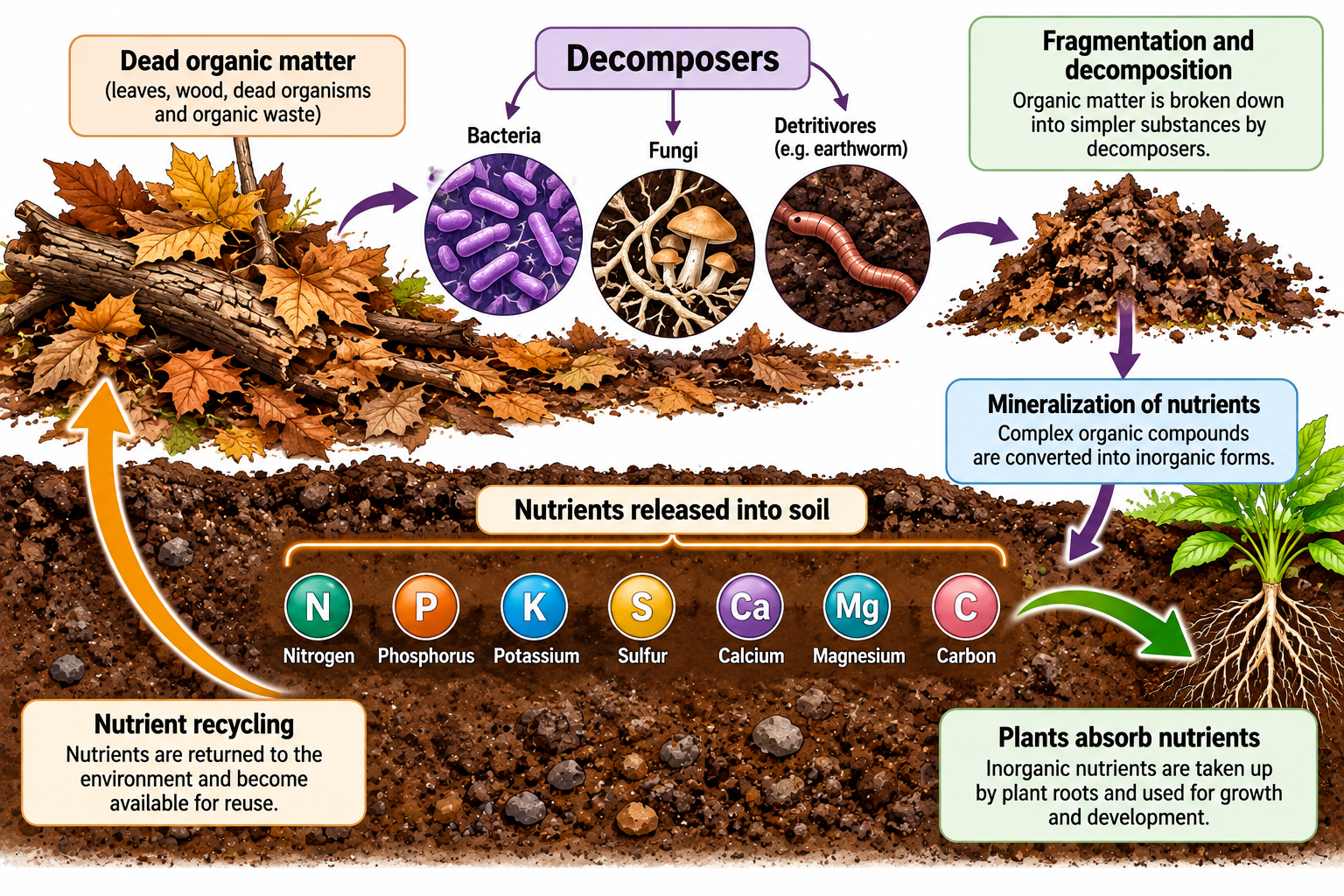
Decomposers play a vital role in nutrient cycling in ecosystems by breaking down dead organisms, fallen leaves, animal remains, and organic waste. They convert complex organic materials into simpler substances, helping nutrients return to soil and water, where they can become available for reuse.
The principal decomposers are bacteria and fungi, although many other organisms contribute to the breakdown and transformation of organic matter.
1. Breakdown of Dead Organic Matter
When plants and animals die, their tissues contain nutrients such as carbon, nitrogen, phosphorus, and sulfur. Decomposer organisms produce enzymes that break down complex organic compounds, including proteins, carbohydrates, and lipids, into simpler substances.
This process reduces the accumulation of dead organic matter and makes its constituents available for further transformation.
2. Mineralization of Nutrients
During decomposition, microorganisms convert organically bound nutrients into inorganic forms through mineralization. For example, organic nitrogen may be converted into ammonium, while phosphorus-containing compounds can release inorganic phosphate.
Plants and other organisms can then absorb or use these nutrients, depending on their chemical form and environmental conditions.
3. Formation of Humus and Soil Organic Matter
Some decomposed organic materials contribute to soil organic matter, including relatively stable substances traditionally described as humus. Soil organic matter helps improve soil structure, water retention, and nutrient-holding capacity.
It also serves as a reservoir from which nutrients can gradually become available through further decomposition and mineralization.
4. Recycling of Carbon
Decomposers use organic matter as a source of energy and carbon. Through cellular respiration, they release some of its carbon as carbon dioxide. Under oxygen-limited conditions, other microbial processes may produce gases such as methane.
These processes connect decomposition with the broader carbon cycle and influence the movement of carbon between organisms, soil, and the atmosphere.
5. Support for Plant Growth
Nutrients released during decomposition can be absorbed by plant roots and incorporated into new tissues. This supports plant growth and primary productivity, allowing nutrients to pass through food chains once again.
The rate of nutrient release depends on environmental conditions, the type of organic matter, and the organisms involved.
6. Support for Detritus-Based Food Chains
Decomposers also support detritus-based food chains by processing dead organic matter. Detritivores, such as earthworms and woodlice, fragment organic material, while microorganisms continue its chemical breakdown.
Together, these organisms help transfer energy and nutrients through decomposer communities and return nutrients to the environment.
7. Maintaining Ecosystem Functioning
Without effective decomposition, nutrients could remain locked in dead organic matter for longer periods, reducing their immediate availability to producers. Decomposers therefore help maintain nutrient availability, soil fertility, and the functioning of terrestrial and aquatic ecosystems.
In summary, decomposers act as essential agents of nutrient recycling. By breaking down organic matter and transforming nutrients into reusable forms, they connect the death of organisms with the growth of new life.
Examples of Nutrient Cycling in Terrestrial and Aquatic Ecosystems
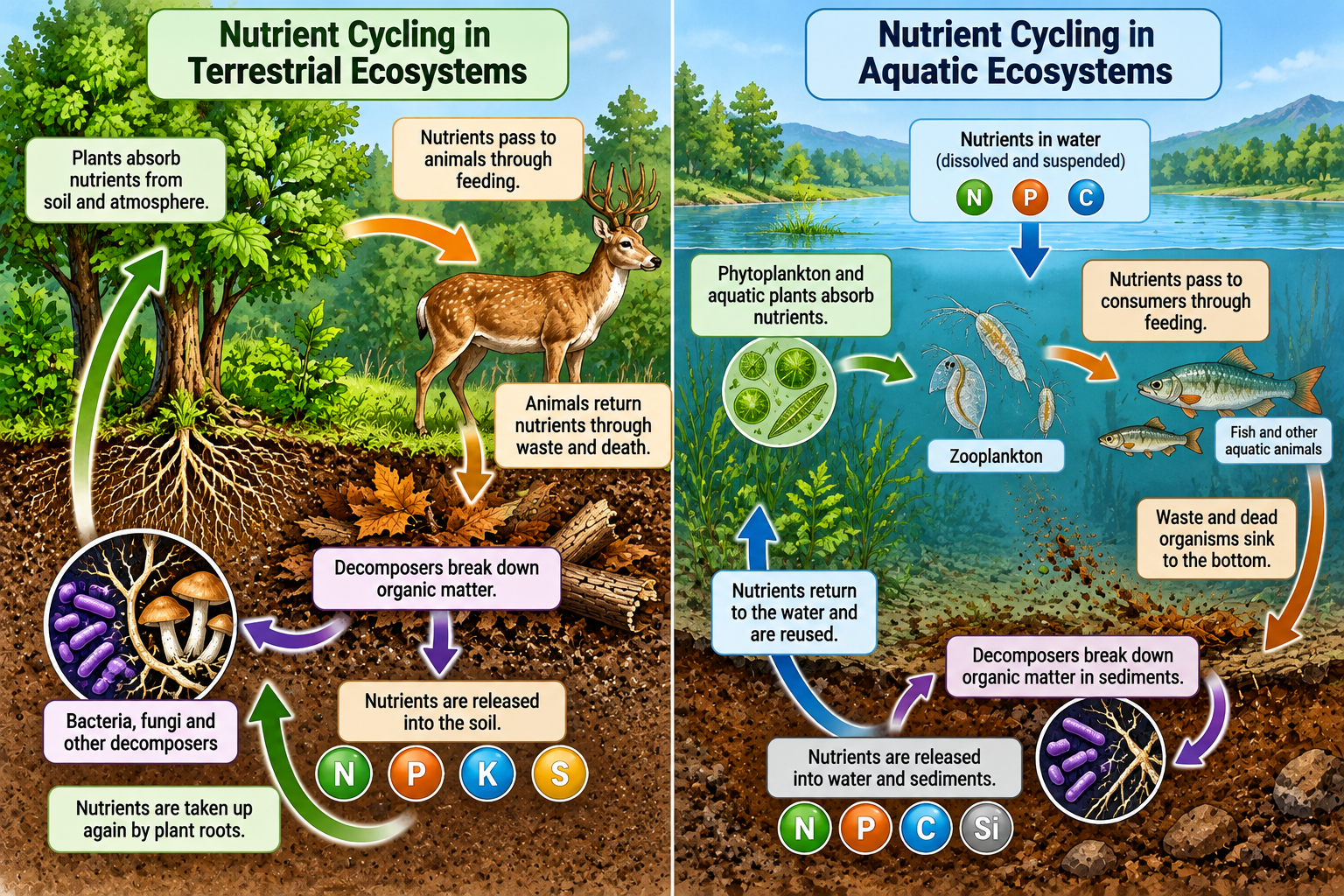
Nutrient cycling occurs in all ecosystems, but the pathways and rates of nutrient movement vary according to environmental conditions, organisms, and the availability of nutrients. Terrestrial ecosystems rely heavily on soil and organic matter, whereas aquatic ecosystems depend on nutrient exchange between water, organisms, and sediments.
1. Nutrient Cycling in Forest Ecosystems
Forest ecosystems contain large amounts of nutrients stored in living vegetation, dead leaves, branches, roots, and soil organic matter.
Trees absorb mineral nutrients through their roots and incorporate them into leaves, stems, and other tissues. When leaves fall and organisms die, decomposers such as fungi and bacteria break down the organic material and release nutrients into the soil. These nutrients can then be absorbed by plant roots again.
Warm, moist forest conditions often promote rapid decomposition, although nutrient availability varies with climate, soil type, and forest characteristics.
2. Nutrient Cycling in Grassland Ecosystems
In grasslands, a substantial proportion of plant biomass and nutrients is stored below ground in roots. Dead roots, fallen leaves, animal waste, and decomposing organisms return nutrients to the soil.
Soil microorganisms and detritivores process this organic material, releasing nutrients that support the growth of grasses and other plants. Grazing animals transfer nutrients through the food web and return some of them through excretion.
Fire, grazing intensity, and soil moisture can influence the rates of nutrient loss and recycling in grasslands.
3. Nutrient Cycling in Agricultural Ecosystems
Agricultural ecosystems depend on nutrient cycling to maintain soil fertility and crop productivity. Crops absorb nutrients from the soil and incorporate them into leaves, stems, roots, fruits, and seeds.
After harvest, crop residues may be returned to the soil, where they decompose and release nutrients. Compost, animal manure, and suitable cover crops can also contribute to nutrient recycling.
However, harvesting removes nutrients from the field, while erosion, leaching, and runoff may cause additional losses. Fertilizers are often applied to replace nutrients that are not adequately replenished through natural cycling and other inputs.
4. Nutrient Cycling in Freshwater Ecosystems
In lakes, ponds, and rivers, nutrients such as nitrogen and phosphorus occur in dissolved forms, suspended particles, living organisms, and bottom sediments.
Phytoplankton and aquatic plants absorb dissolved nutrients and use them to produce organic matter. Zooplankton and other consumers obtain nutrients by feeding on producers or other organisms. When organisms die or release waste, decomposition returns nutrients to the water or sediments.
In some lakes, nutrients stored in bottom sediments can be released back into the water under particular environmental conditions. Excessive nutrient inputs, especially nitrogen and phosphorus, may promote eutrophication and harmful algal blooms.
5. Nutrient Cycling in Marine Ecosystems
Marine nutrient cycling involves exchanges among seawater, phytoplankton, zooplankton, fish, microorganisms, and ocean sediments.
Phytoplankton absorb dissolved nutrients from seawater and form the base of many marine food webs. Nutrients pass to consumers through feeding and return to the water through excretion, respiration-related processes, and decomposition.
Some organic matter sinks into deeper water, where it is decomposed or becomes incorporated into sediments. Ocean currents and upwelling can bring nutrient-rich deep water toward the surface, supporting phytoplankton growth in productive marine regions.
6. Nutrient Cycling in Wetland Ecosystems
Wetlands, including marshes and swamps, are important sites of nutrient storage and transformation. Their soils often contain large amounts of organic matter, while periodic flooding influences oxygen availability and microbial activity.
Decomposers release nutrients from organic material, and wetland plants absorb them from soil and water. Microorganisms can also transform nitrogen through processes such as nitrification and denitrification, depending on local oxygen conditions.
Wetlands can retain nutrients from surrounding landscapes and help reduce the movement of some pollutants into downstream water bodies. Their effectiveness depends on hydrology, vegetation, soil conditions, and nutrient loading.
These examples show that nutrient cycling follows the same general principle across ecosystems: nutrients move between organisms and their environment and are reused through biological, chemical, and physical processes. However, the dominant pathways and rates differ according to climate, soil properties, water movement, vegetation, microbial communities, and human activities.
Human Impact on Nutrient Cycling in Ecosystems
Human activities can significantly alter nutrient cycling by changing the amount, movement, storage, and availability of essential elements in the environment. Although nutrient cycling is a natural process, activities such as intensive agriculture, deforestation, fossil fuel combustion, and waste disposal can disrupt its balance and affect ecosystem health.
1. Excessive Use of Chemical Fertilizers
Chemical fertilizers supply nutrients such as nitrogen, phosphorus, and potassium to agricultural soils. However, applying more fertilizer than crops can use may increase nutrient losses through leaching and runoff.
Excess nitrogen and phosphorus entering rivers and lakes can stimulate excessive algal growth, leading to eutrophication. This may cause oxygen depletion and harm aquatic organisms.
2. Deforestation
Deforestation removes vegetation that absorbs nutrients and protects soil from erosion. When trees and other plants are removed, nutrients stored in plant biomass may be lost from the ecosystem.
Exposed soil is more vulnerable to erosion and runoff, while the reduction in leaf litter and root residues can alter soil organic matter and nutrient recycling. These changes may reduce soil fertility and affect ecosystem recovery.
3. Fossil Fuel Combustion
The burning of coal, oil, and natural gas releases carbon dioxide into the atmosphere, altering the global carbon cycle. Combustion also releases nitrogen oxides and, depending on the fuel and pollution controls, sulfur dioxide.
These gases contribute to atmospheric pollution. Nitrogen and sulfur compounds can return to land and water through atmospheric deposition, changing soil chemistry and nutrient availability.
4. Industrialization and Urbanization
Industrial activities and urban development can change natural nutrient pathways through land clearing, soil sealing, wastewater discharge, and the release of pollutants.
Urban stormwater can carry nutrients, organic waste, and soil particles into aquatic environments. When wastewater is inadequately treated, it can add excessive nutrients to rivers, lakes, and coastal waters.
5. Intensive Agriculture and Livestock Farming
Intensive farming may accelerate nutrient removal through repeated harvesting. Concentrated livestock production can generate large amounts of manure, and poorly managed manure can release excess nitrogen and phosphorus into soil and water.
Tillage and the removal of crop residues may also increase erosion or reduce soil organic matter under some conditions. Appropriate crop rotation, cover cropping, and manure management can help reduce these effects.
6. Mining and Land Disturbance
Mining and construction expose rocks and soil that may contain stored nutrients or sulfur-bearing minerals. Excavation, erosion, and drainage can change the movement of dissolved substances and sediments into nearby ecosystems.
Depending on the minerals involved, mining may also contribute to acidic drainage, which can alter water chemistry and affect nutrient availability and aquatic life.
7. Climate Change
Human-driven climate change can influence nutrient cycling by changing temperature, precipitation, drought frequency, wildfire activity, and ocean conditions.
Warmer conditions may accelerate decomposition in some environments, while drought can suppress microbial activity and plant growth. Intense rainfall may increase nutrient runoff and erosion. Changes in ocean temperature and circulation can also affect the supply of nutrients to surface waters.
8. Consequences of Disrupted Nutrient Cycling
Major consequences include:
- Reduced soil fertility and agricultural productivity.
- Eutrophication and oxygen depletion in aquatic ecosystems.
- Changes in soil and water chemistry.
- Increased greenhouse gas emissions from altered carbon and nitrogen processes.
- Loss of biodiversity and changes in ecosystem composition.
- Greater nutrient losses through erosion, leaching, and runoff.
Measures to Maintain Balanced Nutrient Cycling
Nutrient cycling can be supported through sustainable land and resource management practices, including:
- Balanced fertilizer application: Match fertilizer type and quantity to crop needs and soil conditions.
- Organic matter recycling: Use compost, crop residues, and appropriately managed animal manure.
- Soil conservation: Apply cover cropping, reduced tillage where suitable, and erosion-control measures.
- Vegetation protection: Conserve forests, grasslands, wetlands, and riparian buffer zones.
- Wastewater treatment: Remove excess nutrients from sewage and industrial wastewater before discharge.
- Efficient livestock management: Store and apply manure carefully to reduce nutrient losses.
- Pollution control: Reduce emissions and prevent nutrient-rich runoff from entering water bodies.
Human activities can either disrupt or support nutrient cycling. Sustainable management helps conserve essential nutrients, protect soil and water quality, and maintain the productivity and stability of ecosystems.
Frequently Asked Questions (FAQs)
What is nutrient cycling in ecosystems?
Why is nutrient cycling important?
What are the main types of nutrient cycling?
What are some examples of nutrient cycles?
What is the role of decomposers in nutrient cycling?
What is the difference between nutrient cycling and energy flow?
How do plants participate in nutrient cycling?
How do animals contribute to nutrient cycling?
What factors affect nutrient cycling?
How does nutrient cycling occur in aquatic ecosystems?
What is the role of microorganisms in nutrient cycling?
How do humans disturb nutrient cycling?
What is eutrophication, and how is it related to nutrient cycling?
How can nutrient cycling be improved in agricultural ecosystems?
Why is nutrient cycling essential for ecosystem sustainability?
Conclusion
Nutrient cycling in ecosystems is a fundamental ecological process that ensures the continuous movement and reuse of essential chemical elements between living organisms and their physical environment. Through nutrient uptake, feeding, excretion, decomposition, mineralization, weathering, and microbial transformations, nutrients remain available to support biological activities.
Producers, consumers, decomposers, and microorganisms work together to maintain nutrient circulation in terrestrial and aquatic ecosystems. Environmental factors such as temperature, moisture, soil conditions, and human activities influence the rate and efficiency of these processes.
Human disturbances, including excessive fertilizer use, deforestation, and pollution, can disrupt natural nutrient pathways and damage ecosystem health. Sustainable agricultural practices, soil conservation, vegetation protection, and proper waste management can help maintain balanced nutrient cycling.
Ultimately, nutrient cycling in ecosystems supports soil fertility, primary productivity, biodiversity, and long-term ecosystem stability, making it essential for the sustainability of life on Earth.
References
- OpenStax. Biology 2e: Biogeochemical Cycles.
https://openstax.org/books/biology-2e/pages/46-3-biogeochemical-cycles - OpenStax. Concepts of Biology: Biogeochemical Cycles.
https://openstax.org/books/concepts-biology/pages/20-2-biogeochemical-cycles - U.S. Geological Survey (USGS). Biogeochemical Cycling.
https://www.usgs.gov/programs/ecosystems-land-change-science-program/science/science-topics/biogeochemical-cycling - U.S. Environmental Protection Agency (EPA). Ecological Processes.
https://www.epa.gov/report-environment/ecological-processes - University of Maryland Extension. Soil Health.
https://extension.umd.edu/resource/soil-health-fs-2025-0754 - OpenStax. Biology 2e: Ecology of Ecosystems.
https://openstax.org/books/biology-2e/pages/46-1-ecology-of-ecosystems
Discover more from Zoologyverse
Subscribe to get the latest posts sent to your email.