
An antibody is a specialized protein of the adaptive immune system that recognizes and binds specific molecular structures called antigens. Antibodies are also known as immunoglobulins (Ig) and are produced mainly by plasma cells derived from activated B lymphocytes.
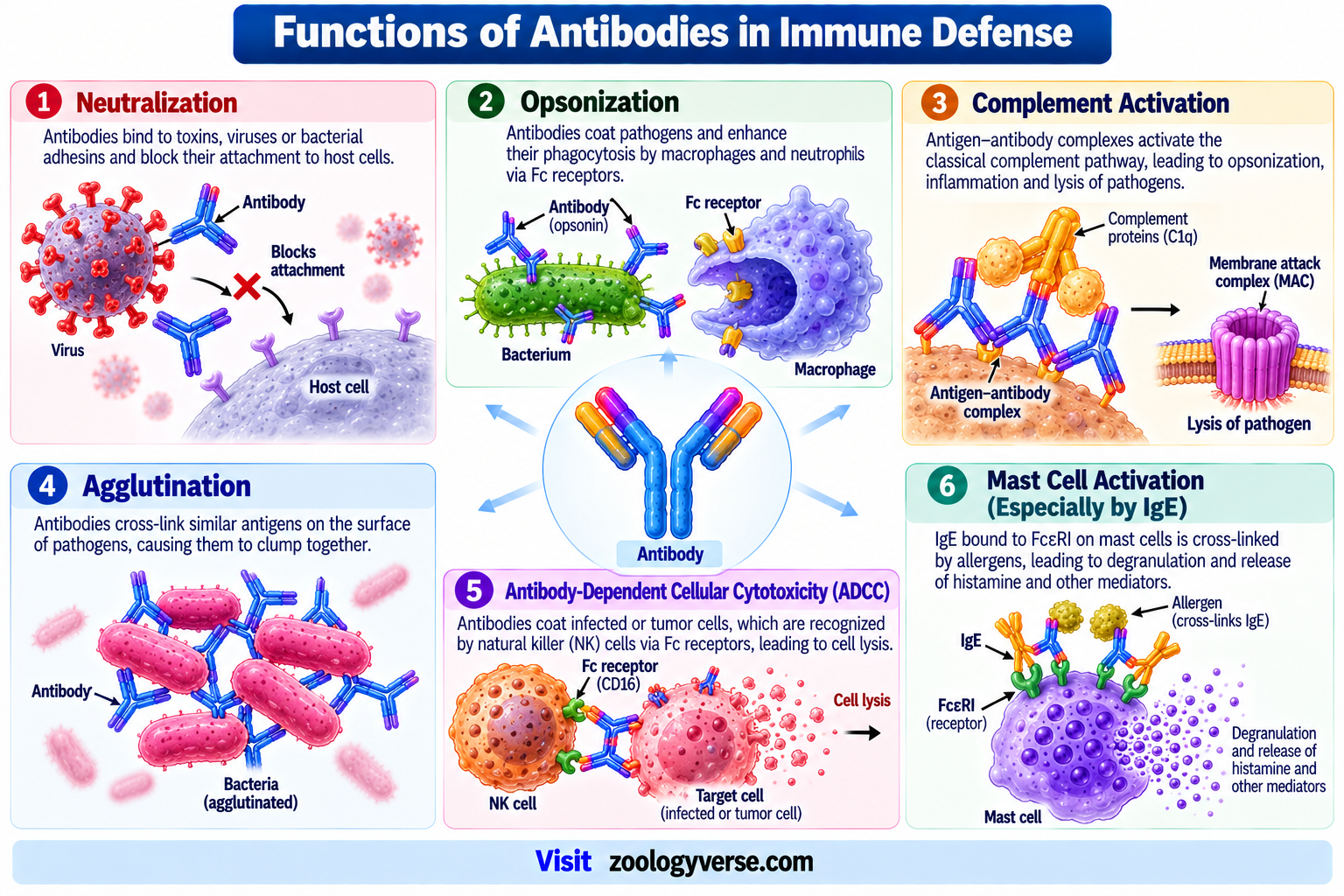
Antibodies play a central role in humoral immunity. They can neutralize toxins and viruses, prevent microorganisms from attaching to host cells, promote phagocytosis, activate the complement system, and participate in other immune-defense mechanisms.
The structure of an antibody is closely related to its function. A typical antibody has a Y-shaped structure consisting of two identical heavy chains and two identical light chains. The tips of the molecule contain antigen-binding sites, whereas the Fc region interacts with immune cells and effector molecules.
There are five major classes of immunoglobulins:
- IgG
- IgM
- IgA
- IgE
- IgD
Each class has a characteristic heavy chain and performs different functions in the immune system.
Understanding antibody structure and function is essential for studying antigen-antibody interactions, vaccination, allergy, autoimmune diseases, immunodeficiency and immunological techniques.
What Is an Antibody?
An antibody is an antigen-specific immunoglobulin produced by B cells, particularly plasma cells, in response to immune stimulation.
Antibodies recognize specific molecular structures called epitopes on antigens. The antigen-binding portion of an antibody is highly variable, allowing the immune system to produce antibodies with enormous diversity.
An antibody can exist in two major forms:
- Membrane-bound immunoglobulin – functions as a B-cell receptor (BCR).
- Secreted immunoglobulin – released by plasma cells and circulates through blood, lymph, tissues or mucosal secretions.
Thus, the same basic immunoglobulin system participates in both antigen recognition by B cells and antibody-mediated defense.
Definition of Antibody
Antibody definition
An antibody is a specific immunoglobulin protein produced by B cells and plasma cells that recognizes and binds an antigen or its epitope.
Antibodies are glycoproteins belonging to the immunoglobulin superfamily.
They have two major functional regions:
- Fab region – responsible primarily for antigen recognition and binding.
- Fc region – responsible for many biological effector functions.
The antigen-binding properties are mainly determined by the variable regions of the heavy and light chains, while the heavy-chain constant region determines the antibody class and many of its effector functions.
Antibody Structure
A typical antibody molecule has a characteristic Y-shaped structure.
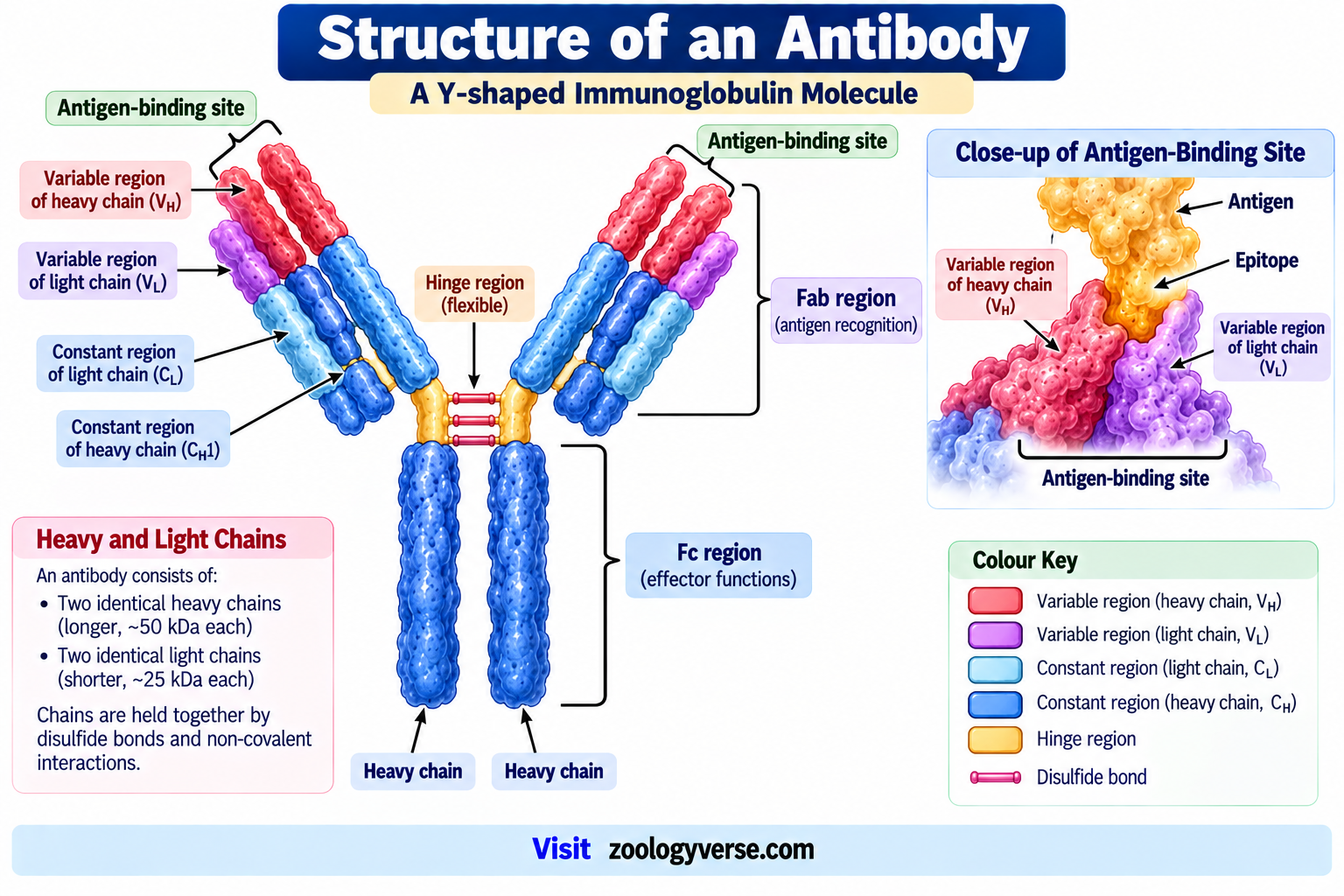
It consists of:
- Two identical heavy chains
- Two identical light chains
- Variable regions
- Constant regions
- Hinge region
- Fab regions
- Fc region
- Antigen-binding sites
The four chains are held together by disulfide bonds and non-covalent interactions.
Basic structure: Two heavy chains + two light chains → Y-shaped immunoglobulin molecule
Each arm contains an antigen-binding site.
Therefore, a typical antibody has two antigen-binding sites.
Heavy Chains
The two heavy chains are identical within an individual antibody molecule.
The type of heavy chain determines the immunoglobulin class.
The five major heavy-chain types are:
| Antibody class | Heavy chain |
|---|---|
| IgG | γ (gamma) |
| IgM | μ (mu) |
| IgA | α (alpha) |
| IgE | ε (epsilon) |
| IgD | δ (delta) |
The heavy-chain constant region contributes to the biological properties of each antibody class.
Light Chains
Each antibody contains two identical light chains.
There are two types of immunoglobulin light chains:
- Kappa (κ)
- Lambda (λ)
A particular antibody molecule contains either two κ light chains or two λ light chains; it does not normally contain one of each.
The light chains contribute to the antigen-binding site together with the variable regions of the heavy chains.
Variable Region
The variable region is located near the amino-terminal end of the heavy and light chains.
Its amino-acid sequence varies greatly among antibodies.
The variable regions of the heavy and light chains come together to form the antigen-binding site.
Within these variable regions are highly variable loops known as complementarity-determining regions (CDRs).
These regions make important contacts with the antigenic epitope.
Therefore:
Variable region → antigen recognition → specificity
Constant Region
The constant region has a relatively conserved amino-acid sequence within a particular immunoglobulin class.
The constant region of the heavy chain determines the antibody’s isotype and contributes to its effector functions.
For example:
- IgG has a γ heavy chain.
- IgM has a μ heavy chain.
- IgA has an α heavy chain.
- IgE has an ε heavy chain.
- IgD has a δ heavy chain.
The constant region therefore helps determine what happens after an antibody binds its antigen.
Hinge Region
The hinge region is a flexible region connecting the Fab arms to the Fc portion in antibodies that possess a conventional hinge.
It allows movement of the antigen-binding arms and contributes to the ability of the antibody to interact with antigens at different distances and orientations.
The structure of the hinge region varies among immunoglobulin classes.
Antigen-Binding Site
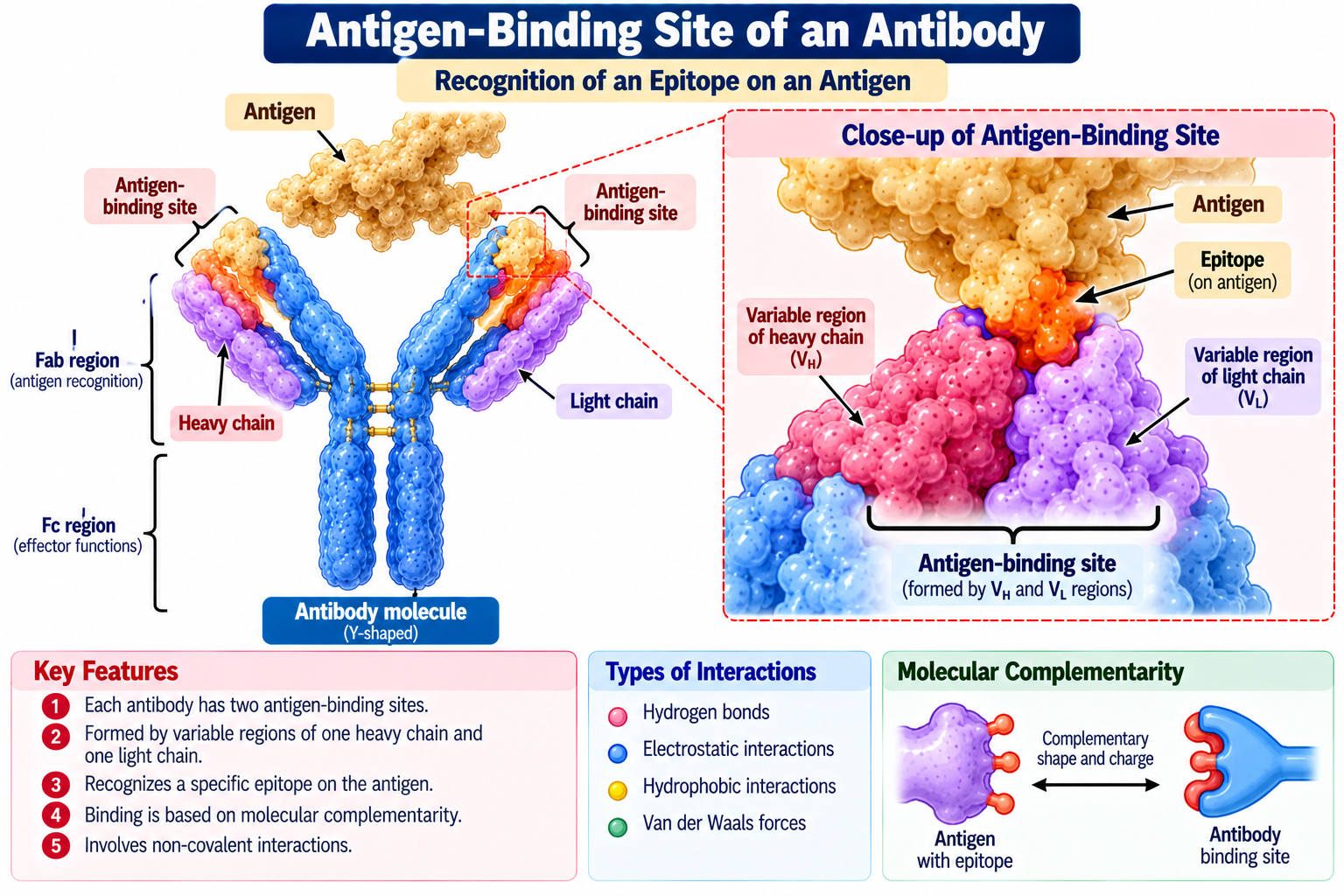
The antigen-binding site is the region of an antibody that specifically recognizes an epitope on an antigen.
Each typical antibody molecule has two antigen-binding sites.
The binding site is formed by the variable domains of:
- One heavy chain
- One light chain
The shape and chemical properties of the binding site are complementary to those of the epitope.
Antigen-antibody binding is generally based on non-covalent interactions such as:
- Hydrogen bonds
- Electrostatic interactions
- Hydrophobic interactions
- Van der Waals forces
The specificity of an antibody depends on the molecular complementarity between its antigen-binding site and the epitope.
Fab and Fc Regions
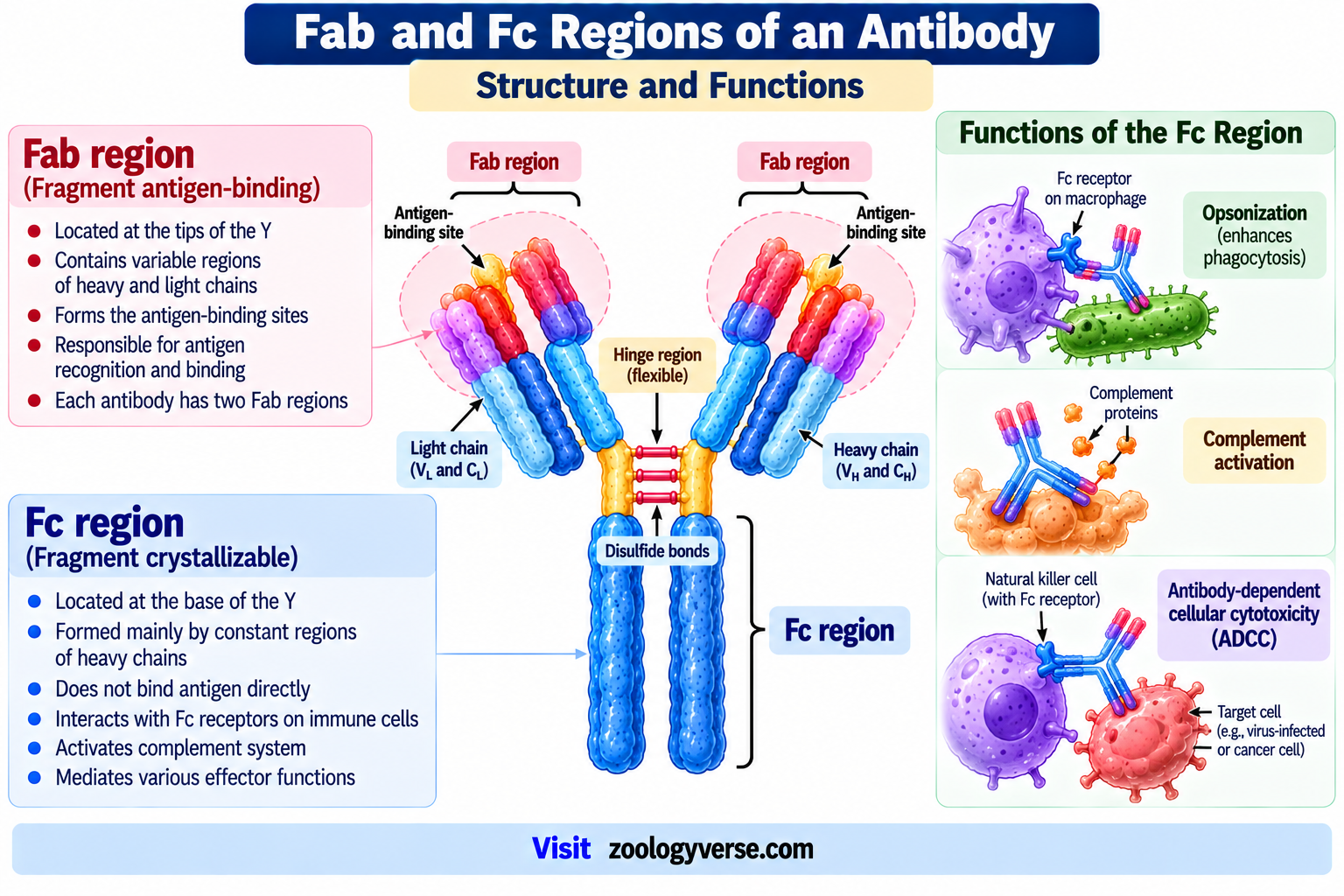
An antibody can be broadly divided into Fab and Fc portions.
Fab Region
Fab stands for Fragment antigen-binding.
The Fab region contains the variable domains responsible for recognizing antigen.
Each antibody molecule has two Fab arms.
The Fab portion therefore determines much of the antibody’s antigen specificity.
Fc Region
Fc stands for Fragment crystallizable.
The Fc region is formed mainly by the constant regions of the heavy chains.
It does not directly recognize the antigenic epitope.
Instead, it interacts with:
- Fc receptors on immune cells
- Complement components
- Other effector molecules
The Fc region therefore helps determine what biological response follows antigen binding.
Fab vs Fc
| Feature | Fab region | Fc region |
|---|---|---|
| Full name | Fragment antigen-binding | Fragment crystallizable |
| Main role | Antigen recognition and binding | Effector functions |
| Contains variable region | Yes | No |
| Antigen-binding site | Yes | No |
| Interacts with Fc receptors | No | Yes |
| Determines immunoglobulin class | No | Mainly through heavy-chain constant region |
Types of Antibodies
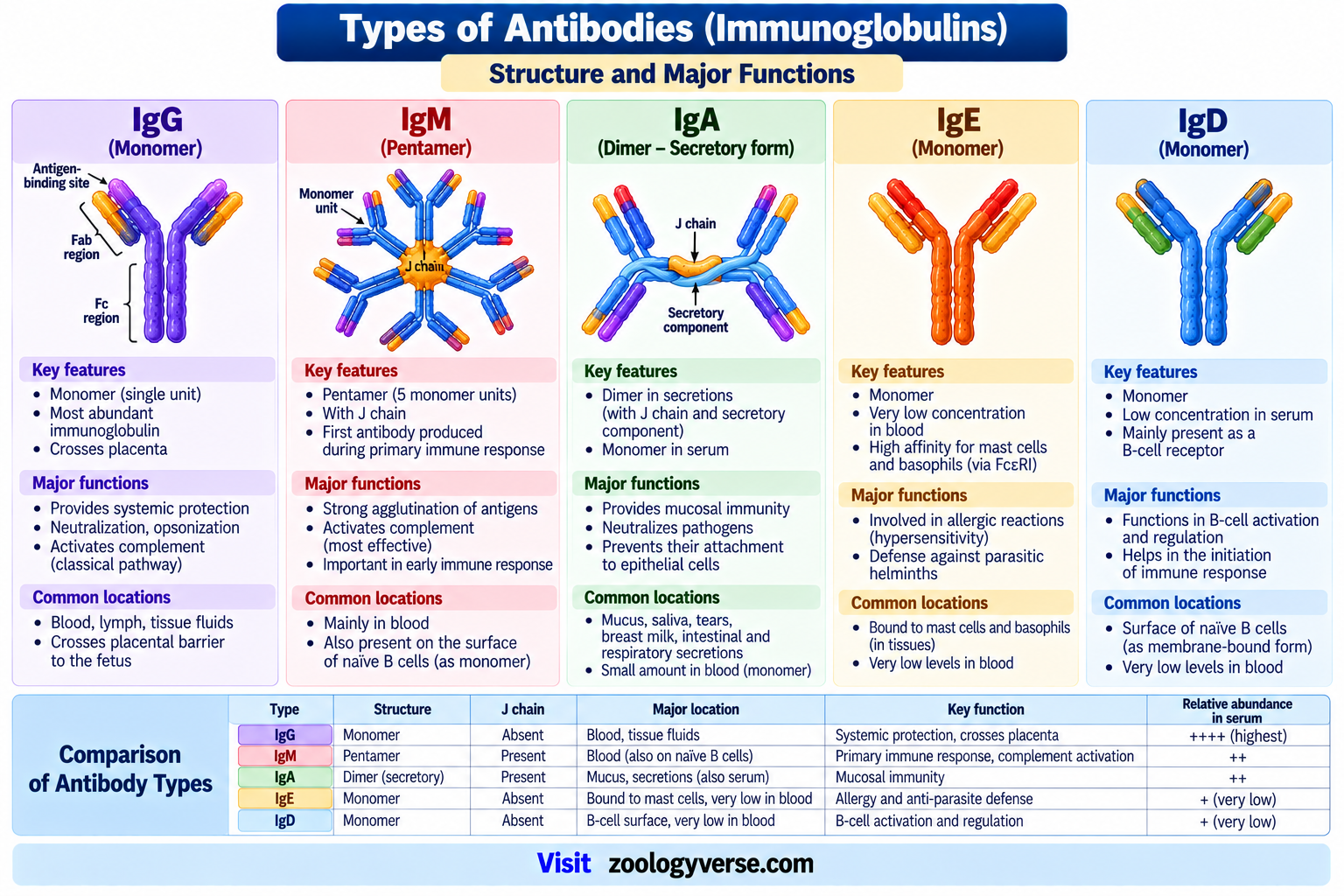
The five major classes of immunoglobulins are:
- IgG
- IgM
- IgA
- IgE
- IgD
They differ mainly in their heavy-chain constant regions and consequently have different distributions and functions.
IgG
IgG is the most abundant immunoglobulin class in human plasma.
It is a monomeric antibody and has important functions in systemic immune defense.
Major functions of IgG
- Neutralization of toxins and viruses
- Opsonization of microorganisms
- Complement activation by certain IgG subclasses
- Protection against extracellular pathogens
- Participation in secondary immune responses
- Passive transfer of maternal immunity across the placenta
IgG is the major antibody class in many secondary immune responses.
It is also the only major immunoglobulin class that normally crosses the human placenta in significant amounts, providing passive protection to the fetus and newborn.
IgM
IgM is the first antibody class generally produced during a primary response to a new antigen.
Secreted IgM is commonly present as a pentamer, with the individual units linked by a J chain.
Because of its multivalent structure, IgM is highly effective at:
- Agglutination
- Complement activation
- Binding repetitive antigenic structures
Membrane-bound IgM is also an important B-cell receptor on developing and mature naïve B cells.
Major functions of IgM
- Early antibody response
- Strong agglutination
- Efficient activation of the classical complement pathway
- Recognition of microbial antigens
IgM is particularly important during the early phase of a primary humoral immune response.
IgA
IgA is particularly important in protection of mucosal surfaces.
It occurs in:
- Respiratory secretions
- Saliva
- Tears
- Intestinal secretions
- Colostrum and breast milk
Secretory IgA is commonly present as a dimer associated with a J chain and secretory component.
Major functions of IgA
- Protects mucosal surfaces
- Prevents attachment of microorganisms
- Neutralizes pathogens and toxins
- Provides passive mucosal protection to infants through breast milk
IgA is therefore particularly important at body surfaces exposed to the external environment.
IgE
IgE is present in very small concentrations in the circulation but has powerful biological effects.
It binds with high affinity to receptors on:
- Mast cells
- Basophils
When an allergen cross-links IgE molecules attached to these cells, the cells can degranulate and release inflammatory mediators.
Major functions of IgE
- Immediate hypersensitivity reactions
- Allergic responses
- Defense against certain helminthic parasites
IgE therefore has important roles in both allergy and antiparasitic immunity.
IgD
IgD is found mainly as a membrane-bound immunoglobulin on naïve B cells.
It is co-expressed with IgM on many naïve B cells and participates in B-cell antigen recognition and regulation.
Only small quantities of IgD are present in serum, and the functions of circulating IgD are less clearly defined than those of the other major immunoglobulin classes.
Functions of Antibodies
Antibodies perform several important immune functions.
Neutralization
Antibodies can bind toxins or viral particles and prevent them from interacting with host-cell receptors.
This process is called neutralization.
Opsonization
Antibodies can coat microbial surfaces and facilitate their recognition and uptake by phagocytic cells.
This process is called opsonization.
Agglutination
Antibodies can cross-link particulate antigens such as bacterial cells or red blood cells.
This causes them to form visible or larger aggregates called agglutinates.
IgM is particularly effective at agglutination because of its multivalent structure.
Complement Activation
Certain antibody-antigen complexes can activate the classical complement pathway.
This can contribute to:
- Opsonization
- Inflammation
- Enhanced phagocytosis
- Membrane attack complex formation
Antibody-Dependent Cellular Cytotoxicity
In antibody-dependent cellular cytotoxicity (ADCC), immune cells recognize antibody-coated target cells through Fc receptors.
Natural killer cells are particularly important in this mechanism.
Prevention of Microbial Attachment
Antibodies can prevent microorganisms from attaching to host-cell surfaces.
This is particularly important at mucosal surfaces where IgA contributes to immune exclusion.
Passive Immunity
Transferred antibodies can provide temporary protection without the recipient having to generate the antibodies themselves.
Examples include:
- Maternal IgG transferred across the placenta
- Maternal IgA transferred through breast milk
Antibody-mediated passive immunity is one reason why understanding Types of Immunity is important when studying immunoglobulins.
Antigen-Antibody Interaction
An antigen-antibody interaction occurs when the antigen-binding site of an antibody binds specifically to an epitope on an antigen.
The interaction depends on structural and chemical complementarity.
Major characteristics
- High specificity
- Reversible binding
- Non-covalent interactions
- Dependence on molecular complementarity
- Possible cross-reactivity
The binding site does not usually recognize the entire antigen equally. Instead, it interacts with a specific epitope.
An antibody can sometimes bind a structurally related antigen if its epitope resembles the original target sufficiently. This phenomenon is called cross-reactivity.
Antibody Specificity and Affinity
Specificity
Antibody specificity refers to the ability of an antibody to preferentially recognize a particular epitope or related set of epitopes.
The variable region is primarily responsible for this specificity.
Affinity
Affinity refers to the strength of interaction between one antigen-binding site and one epitope.
A high-affinity antibody generally binds its target more strongly than a low-affinity antibody under comparable conditions.
Affinity maturation
During an adaptive immune response, activated B cells can undergo somatic hypermutation followed by selection of cells producing antibodies with improved affinity for the antigen.
This process is called affinity maturation.
Antibody Production by B Cells
Antibody production begins with the activation of antigen-specific B cells.
A simplified sequence is:
Antigen recognition → B-cell activation → clonal expansion → differentiation → plasma cells → antibody secretion
Depending on the antigen and immune context, B-cell activation may involve helper T cells.
For many protein antigens, interaction with helper T cells provides important signals for B-cell proliferation, differentiation, class switching and affinity maturation.
B cells are therefore a major component of the adaptive immune system.
For a broader discussion of these cells, see Cells of the Immune System.
Plasma Cells and Antibody Secretion
After activation and differentiation, some B cells become plasma cells.
Plasma cells are specialized cells that produce and secrete large quantities of antibodies.
The secreted antibodies enter:
- Blood
- Lymph
- Tissue fluids
- Mucosal secretions, depending on the immunoglobulin class
Some activated B cells instead become memory B cells, which persist and can respond rapidly if the same antigen is encountered again.
This cellular differentiation explains why antibody responses can be faster and stronger after repeated exposure to the same antigen.
Antibody Class Switching
Class switching, also called isotype switching, is the process by which an activated B cell changes the class of antibody it produces while retaining the same antigen-binding specificity.
For example:
IgM → IgG
or
IgM → IgA
or
IgM → IgE
The important point is that class switching changes the constant region of the heavy chain, not the antigen-binding variable region.
Therefore, the antibody continues to recognize the same antigenic specificity while acquiring different effector properties.
Class switching is associated with DNA recombination in the immunoglobulin heavy-chain locus and is promoted by signals received during B-cell activation.
Why is class switching important?
It allows the immune system to use the same antigen specificity in different biological locations and defense mechanisms.
For example:
- IgG is effective in systemic tissues and blood.
- IgA is specialized for mucosal protection.
- IgE participates in allergic and antiparasitic responses.
Antibodies in Humoral Immunity
Humoral immunity is the branch of adaptive immunity in which antibodies play the major effector role.
The general sequence is:
Antigen → B-cell activation → plasma-cell formation → antibody secretion → antigen elimination
Antibodies can then:
- Neutralize toxins
- Neutralize viruses
- Opsonize microorganisms
- Activate complement
- Promote agglutination
- Facilitate elimination of antigen
Humoral immunity is particularly important against many extracellular microorganisms and their toxins.
It works together with cellular immune mechanisms rather than functioning independently.
Antibody-Mediated Defense Mechanisms
Neutralization
Antibodies bind microbial structures or toxins and block their interaction with host cells.
Opsonization
Antibody-coated microorganisms can be more efficiently recognized and engulfed by phagocytes.
Agglutination
Antibodies cross-link particulate antigens, causing them to aggregate.
Complement Activation
Certain antibody classes, especially IgM and some IgG subclasses, can activate the classical complement pathway after binding antigen.
Antibody-Dependent Cellular Cytotoxicity
Antibody-coated target cells can be recognized by Fc receptor-bearing immune cells such as natural killer cells.
These mechanisms demonstrate that an antibody does more than simply bind an antigen. Antigen binding can recruit additional components of the immune system to eliminate the target.
Monoclonal and Polyclonal Antibodies
Antibodies can also be classified according to whether they originate from one or many B-cell clones.
Monoclonal Antibodies
Monoclonal antibodies are antibodies derived from a single B-cell clone and therefore recognize the same specific antigenic determinant or epitope.
They are widely used in:
- Diagnostic tests
- Research
- Cancer therapy
- Autoimmune disease treatment
- Targeted biological therapies
Polyclonal Antibodies
Polyclonal antibodies are produced by multiple B-cell clones and recognize multiple epitopes on the same antigen.
Therefore, a polyclonal antibody preparation can contain antibodies with different specificities against different regions of an antigen.
Monoclonal vs polyclonal antibodies
| Feature | Monoclonal antibodies | Polyclonal antibodies |
|---|---|---|
| Origin | Single B-cell clone | Multiple B-cell clones |
| Epitope recognition | Usually one dominant epitope | Multiple epitopes |
| Specificity | Highly uniform | Mixed |
| Applications | Targeted diagnostics and therapy | Research and detection assays |
| Antibody population | Homogeneous | Heterogeneous |
Antibody vs Antigen
| Feature | Antibody | Antigen |
|---|---|---|
| Nature | Immunoglobulin protein | Molecular structure/substance recognized by immunity |
| Main role | Recognizes antigen | Target of immune recognition |
| Produced by | B cells/plasma cells | May originate from pathogens, environment, altered cells or self |
| Specific region | Antigen-binding site | Epitope |
| Function | Binding and immune effector activity | Provides target for immune recognition |
| Example | Anti-viral IgG | Viral surface protein |
The relationship can be summarized as:
Antigen = target
Antibody = specific immune-binding molecule
Antibody vs Immunoglobulin
The terms antibody and immunoglobulin are closely related but are sometimes used in slightly different contexts.
Immunoglobulin refers to the protein family and includes both membrane-bound and secreted forms.
A secreted immunoglobulin with specificity for an antigen functions as an antibody.
Thus:
Antibodies are immunoglobulins, but immunoglobulin can also refer to membrane-bound B-cell receptor forms.
This distinction is useful when discussing B-cell development and antibody structure.
Importance of Antibodies
Antibodies are important in both natural immunity and medical applications.
Protection Against Infection
Antibodies help protect against bacteria, viruses, fungi and certain parasites.
Vaccination
Vaccines stimulate adaptive immune responses that can generate antigen-specific memory and antibodies.
Diagnostic Tests
Antibodies are extensively used to detect:
- Microbial antigens
- Hormones
- Proteins
- Biomarkers
- Disease-associated molecules
Passive Immunization
Preformed antibodies can provide temporary protection against specific infections or toxins.
Therapeutic Antibodies
Monoclonal antibodies are used in the treatment of several:
- Cancers
- Autoimmune diseases
- Inflammatory disorders
- Other immune-mediated conditions
Research
Antibodies are essential laboratory tools for detecting and studying specific proteins and cellular structures.
Techniques such as ELISA, immunoblotting and immunohistochemistry depend heavily on antibody-antigen recognition.
Frequently Asked Questions
What is an antibody?
What are the five major types of antibodies?
Which antibody is produced first during a primary immune response?
Which antibody is produced first during a primary immune response?
Which antibody is mainly associated with mucosal immunity?
Which antibody is involved in allergy?
Which antibody crosses the placenta?
What is the difference between Fab and Fc?
What is class switching?
What is an antibody-antigen interaction?
Key Takeaways
- Antibodies are immunoglobulins involved in adaptive humoral immunity.
- Antibodies are produced mainly by plasma cells.
- A typical antibody contains two identical heavy chains and two identical light chains.
- The molecule has a characteristic Y-shaped structure.
- Each typical antibody has two antigen-binding sites.
- The variable region determines antigen specificity.
- The Fab region is responsible primarily for antigen binding.
- The Fc region mediates many effector functions.
- The five major antibody classes are IgG, IgM, IgA, IgE and IgD.
- IgG is the most abundant immunoglobulin in human plasma.
- IgM is generally the first major antibody produced in a primary response.
- IgA is important in mucosal immunity.
- IgE is important in allergic reactions and defense against some helminths.
- IgD is mainly associated with naïve B-cell surfaces.
- Antibodies can cause neutralization, opsonization, agglutination and complement activation.
- Class switching changes the heavy-chain constant region while preserving antigen-binding specificity.
- Monoclonal antibodies arise from a single B-cell clone.
- Polyclonal antibodies arise from multiple B-cell clones.
- Antibody affinity can increase during affinity maturation.
Conclusion
An antibody is a highly specialized immunoglobulin that provides specific recognition and defense against antigens. Its Y-shaped structure allows the molecule to combine highly specific antigen recognition with powerful effector functions.
The Fab region recognizes antigen, while the Fc region interacts with immune cells and effector molecules. Differences in the heavy-chain constant region give rise to the five major immunoglobulin classes—IgG, IgM, IgA, IgE and IgD—each adapted to particular biological functions.
Antibodies protect the body through neutralization, opsonization, agglutination, complement activation and other mechanisms. Their production by plasma cells, together with B-cell memory and class switching, allows the adaptive immune system to produce increasingly effective and appropriately localized responses.
For this reason, antibodies are fundamental to understanding humoral immunity, vaccination, immune protection, allergy, autoimmunity, transplantation, diagnostic immunology and therapeutic immunology.
References
- Janeway CA Jr, Travers P, Walport M, Shlomchik MJ. Immunobiology: The Immune System in Health and Disease. NCBI Bookshelf.
- Alberts B, et al. Molecular Biology of the Cell. NCBI Bookshelf.
- Merck Manual Professional Edition. Molecular Components of the Immune System.
- NCBI Bookshelf. The Structure of a Typical Antibody Molecule.
- NCBI Bookshelf. B Cells and Antibodies.
- NCBI Bookshelf. The Generation of Antibody Diversity.
Discover more from Zoologyverse
Subscribe to get the latest posts sent to your email.