
Gryllus Species in this genus often look similar to species from other genera. They can often only be distinguished by the male genitalia. The epithallus typically consists of three lobes, the middle one being longer and more slender than the rest, in American and European species. African species, however, show more variability, making it more difficult to assign species to a genus with the same degree of certainty as there is more overlap with closely related genera.
Classification of Gryllus
Phylum – Arthropoda (Jointed Appendages)
Class – Insecta (3 pairs of legs.)
Sub-class – Pterygota (Winged insects.)
Division – Exopterygota (Wings develop externally.)
Order – Orthoptera (Straight wings.)
Genus – Gryllus
Habit and habitat
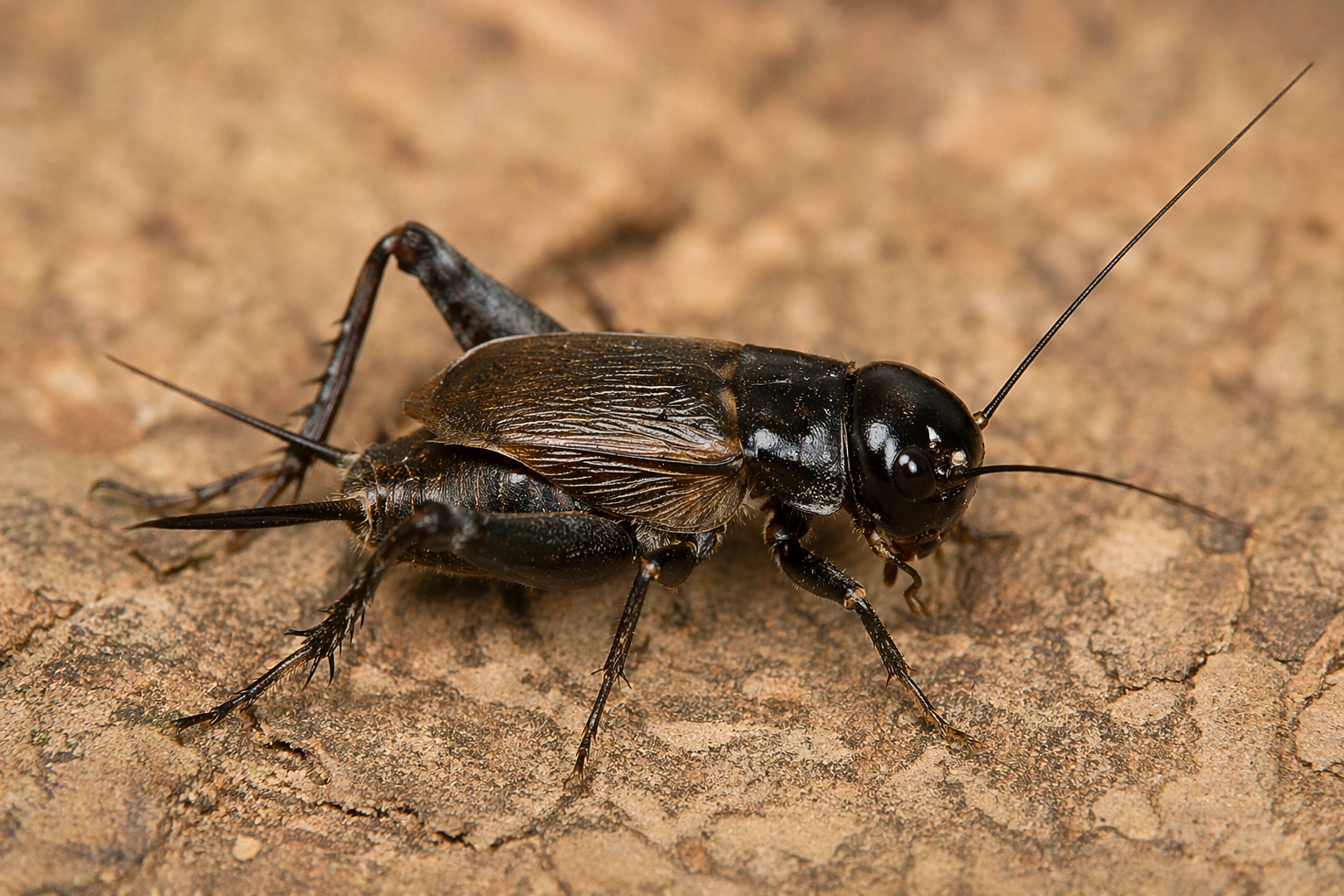
Gryllus is commonly found during rainy seasons under walls and crevices in kitchens. It is omnivorous
Distribution
It is found in India, Srilanka, Myanmar, Asia, Europe, U.K., U.S.A. and Canada.
Comments on Gryllus
- Commonly called as cricket.
- It is a solitary insect differing from locust and grasshopper in having longer antennae.
- It betrays its presence by the familiar, monotonous and intensely shrill chirping.
- The male cricket chirps by rubbing its front wings together during courtship.
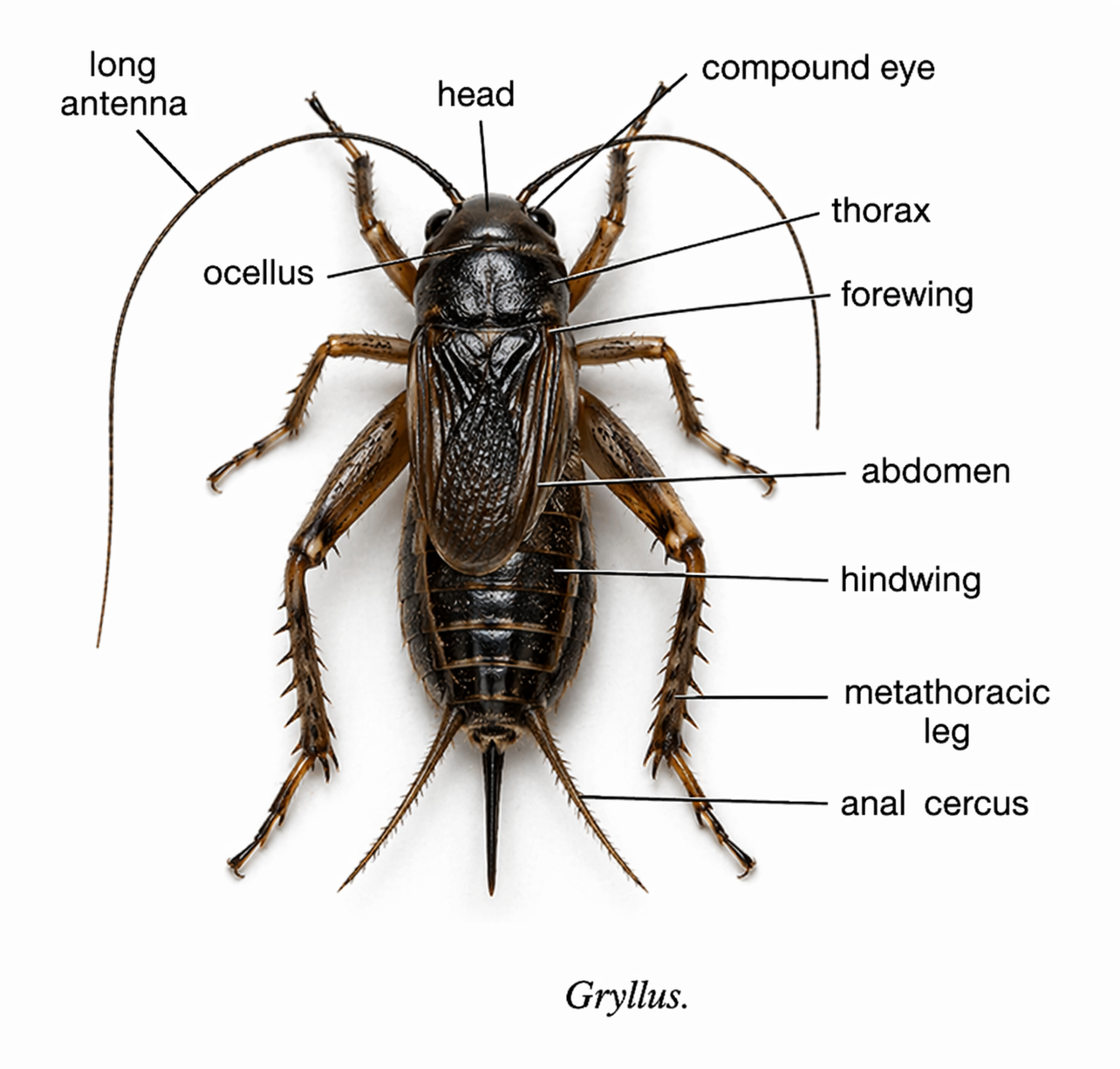
- Body is divisible into head, thorax and abdomen.
- Head has eyes and antennae.
- Thorax contains wings and 3 pairs of walking legs.
- Last abdominal segment contains a pair of anal cerci.
- Wings are exopterygotes.
- Female has a long ovipositor, which serves for depositing the eggs in soil.
Economic Status
Harmful insect. It destroys clothing, fruits, vegetables, etc.
Identification
Since the specimen contains long antennae and all above characters hence it is Gryllus.
See other posts also
- EXCRETION IN HIGHER TERRESTRIAL INVERTEBRATES
- Terebella
- Pinctada vulgaris
- Larval Forms in Echinodermata
- Larval Forms of Crustaceans
Discover more from Zoologyverse
Subscribe to get the latest posts sent to your email.