
A dragonfly is a flying insect that is a member of the Anisoptera infraorder, which is subordinate to the Odonata order. There are currently about 3,000 species of dragonflies. There are fewer species in temperate climates, and the majority are tropical. Dragonfly populations worldwide are under risk due to the loss of wetland habitat. Adult dragonflies have two sets of powerful, translucent wings, occasionally with colored patches, an elongated body, and two enormous, multifaceted compound eyes. Because of their structural coloration, many dragonflies have vivid iridescent or metallic colors that let them stand out when flying. The compound eyes of an adult dragonfly include around 24,000 ommatidia.
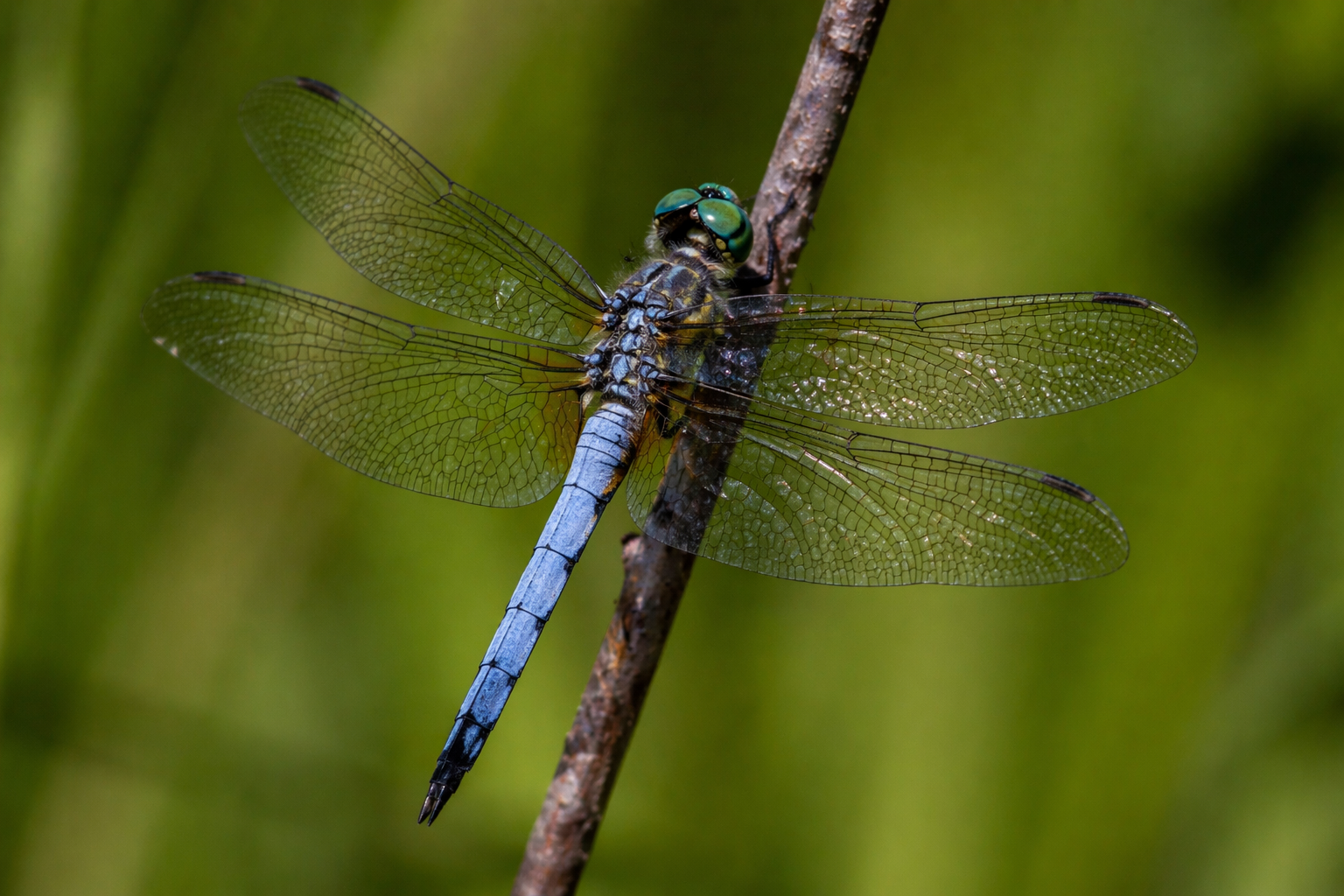
Classification of DragonFly
Phylum – Arthropoda (Jointed Appendages)
Class – Insecta (3 pairs of legs.)
Sub-class – Pterygota (Winged insects.)
Division – Exopterygota (Wings develop externally.)
Order – Odonata (Incomplete metamorphosis.)
Habit and habitat
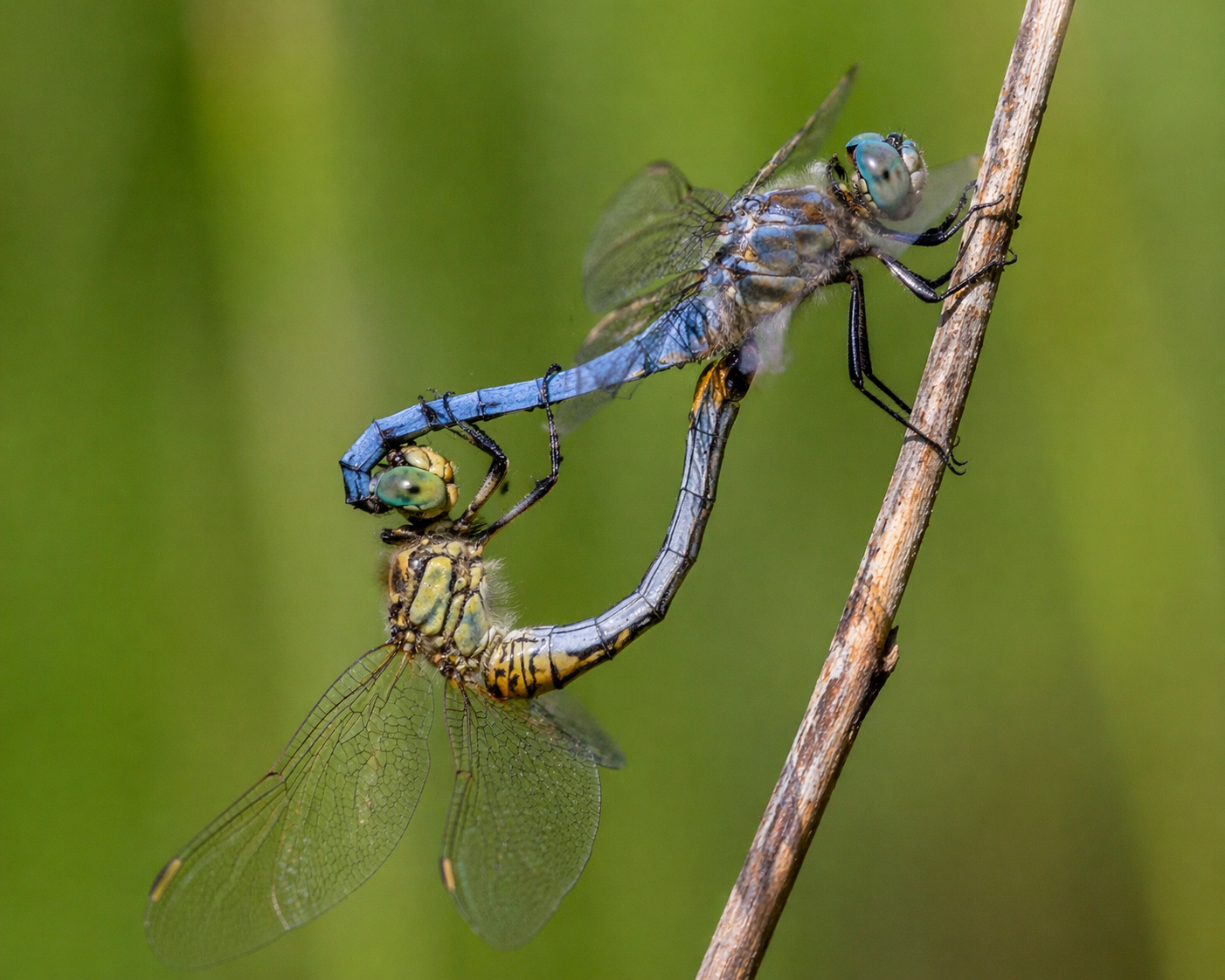
Dragon flies are abundantly found during rainy season resting on twigs, leaves or grass stalks
Distribution
It has cosmopolitan distribution especially found in India, Myanmar, Srilanka, Malaysia, Asia, Europe and U.S.A.
Comments on DragonFly
- Dragon fly is an elegant insect, famous for its beauty and brilliancy of its pigmentary and structural colours.
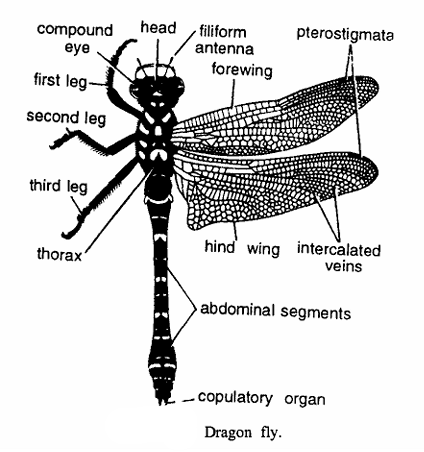
- Body is divided into head, thorax and abdomen.
- Head is exceptionally mobile and is attached to an exceedingly slender neck.
- Head possesses large compound eyes, filiform antennae and biting and masticatory mouth parts.
- Thorax indistinctly divided into reduced prothorax and fused mesothorax and metathorax.
- Thoracic legs 3 pairs, namely foreleg, mid leg and hind leg.
- Wings are large, membranous and almost of equal size, frequently narrowing at the base and with venation only slightly reduced.
- A pterostigma is present and also enlargement of the veins known as ‘arculus’ and the ‘nodus’.
- When at rest the wings may be held either vertically (damsel flies) or horizontally (dragon flies) wings have intercalated veins.
- Abdomen contains 10 elongated segments with vestiges of 11th and 12th segments. 12th segment contains a pair of caudal furca or copulatory organs.
- Oviposition endophytic or exophytic. Metamorphosis is incomplete.
- Nymphs are aquatic and respire by means of rectal or caudal gills.
- Labium in the nymphs is modified to form a prehensile grasping organ, the mask.
Special Features
The adult members especially the larger ones are great favourites, with the out-of-door enthusiasts. Each dragonfly has a regular beat up and down in search of flying insect. When insect is sighted the dragon fly wheels from its course to capture the prey. When the insect is captured the dragon fly wheels back to its regular beat.
Identification
Since the specimen contains whitish membranous wings and all above features, hence it is Dragonfly.
See other posts also
- Crayfish vs Lobster : Differences Explained
- Holocephali – General organization and affinities
- Species Concept
- THEORIES OF ORIGIN OF METAZOANS
- Environmental Limiting Factors
Discover more from Zoologyverse
Subscribe to get the latest posts sent to your email.