
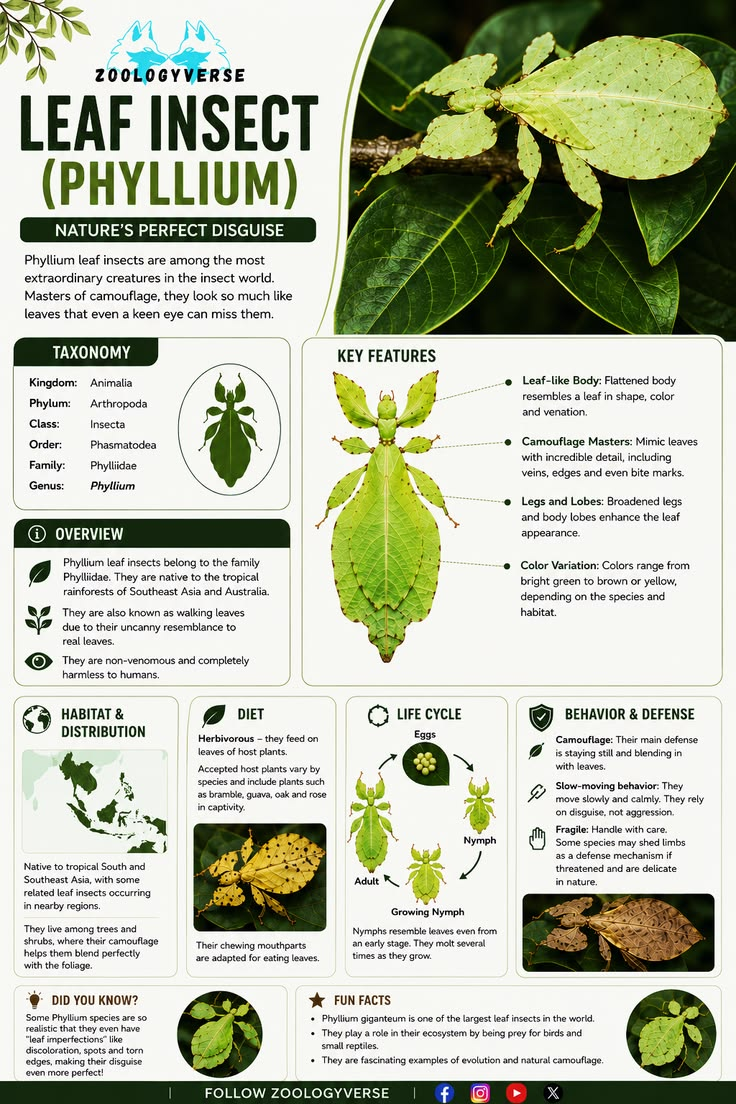
Within the family Phylliidae (Phasmatodea), Phyllium is the largest and most common genus of leaf insects. They are found in Australasia, Wallacea, Sundaland, and the Philippine Islands.
Classification of Phyllium (Leaf Insect)
Phylum – Arthropoda (Jointed Appendages)
Class – Insecta (3 pairs of legs.)
Sub-class – Pterygota (Winged insects.)
Division – Exopterygota (Wings develop externally.)
Order – Orthoptera (Straight wings.)
Genus – Phyllium (Leaf Insect)
Habit and habitat
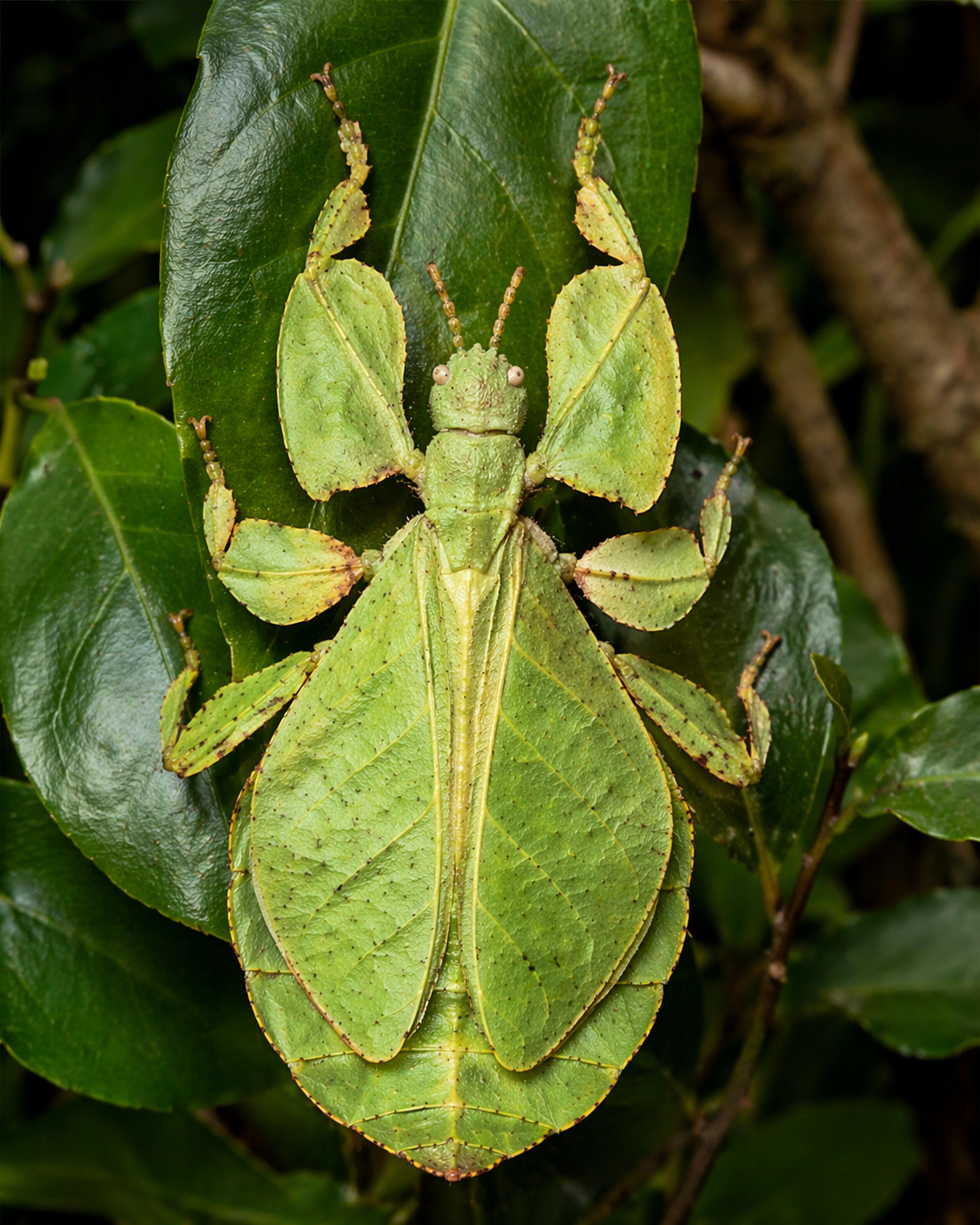
Phyllium is found in the forests.
Distribution
It is almost entirely confined to the moist parts of the Oriental Region, islands of the Indian Ocean and forests of Assam
Comments on Phyllium (Leaf Insect)
- Commonly called as leaf insect.
- It shows extreme degree of mimicry or camouflage, because its body, wings and even legs are flattened and green coloured like plants.
- They resemble and match so much with the foliage on which they feed that they become invisible.
- Even the wings become veined like leaf veins.
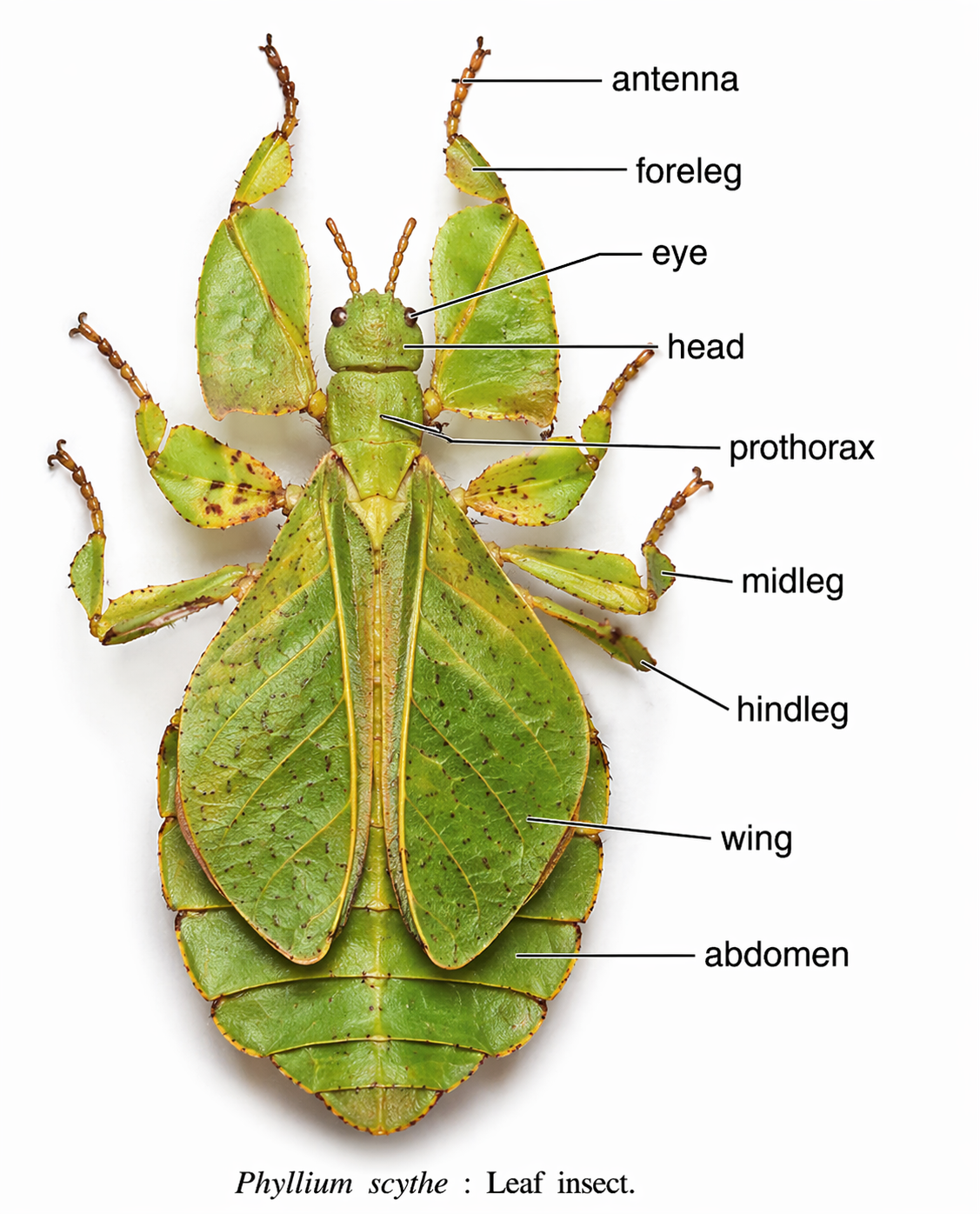
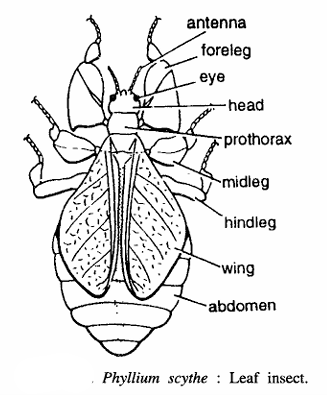
- Body is divided into head, thorax and abdomen. Head contains compound eyes and filiform antennae.
- Thorax is also small, containing 3 pairs of flattened leaf-coloured legs.
- Abdomen has 10 segments. also short.
- Prothorax short, mesothorax and metathorax elongated and tergum of prothorax called as pronotum is Males have small, tegmina, well-developed wings and relatively narrow bodies.
- In females the tegmina are extensi.ve leaf-like expansions, the wings are vestigial and the body is very much expanded.
Special features
Leaf insect shows mimicry which is a protective device from enemies.
Identification
Since the specimen has expanded wings and all above features, hence it is leaf insect.
See other posts also
- Schistocerca (Locust)
- Melanoplus (Grasshopper)
- Periplaneta americana (Cockroach)
- Carausius (Stick Insect)
- Larval Forms of Crustaceans
Discover more from Zoologyverse
Subscribe to get the latest posts sent to your email.