
Helix: Classification, Habitat, Anatomy, Ecology, and Identification
The genus Helix comprises large, air-breathing land snails native to the western Palaearctic region. Members of this genus are best known for their relatively large, globular to conical shells and their considerable ecological and cultural importance. Among them, Helix pomatia—the Roman snail or Burgundy snail—is widely appreciated as an edible delicacy, with significance in gastronomy and traditional practices. Helix is the type genus of the family Helicidae and was one of the first animal genera described by Carl Linnaeus at the dawn of modern zoological nomenclature. Fossil records show that they have existed since the Miocene, highlighting their evolutionary resilience.
Classification of Helix
| Rank | Taxon | Characteristic |
|---|---|---|
| Domain | Eukaryota | Organisms with membrane-bound nuclei and organelles |
| Kingdom | Animalia | Multicellular heterotrophic organisms |
| Phylum | Mollusca | Soft-bodied animals, usually with calcareous shells |
| Class | Gastropoda | Muscular foot, head with tentacles, undergo torsion |
| Order | Stylommatophora | Terrestrial air-breathing snails with eyes at tentacle tips |
| Family | Helicidae | Large land snails with generally globular or conical shells |
| Genus | Helix | Large terrestrial snails with globular shells and dark bands |
Habit and Habitat
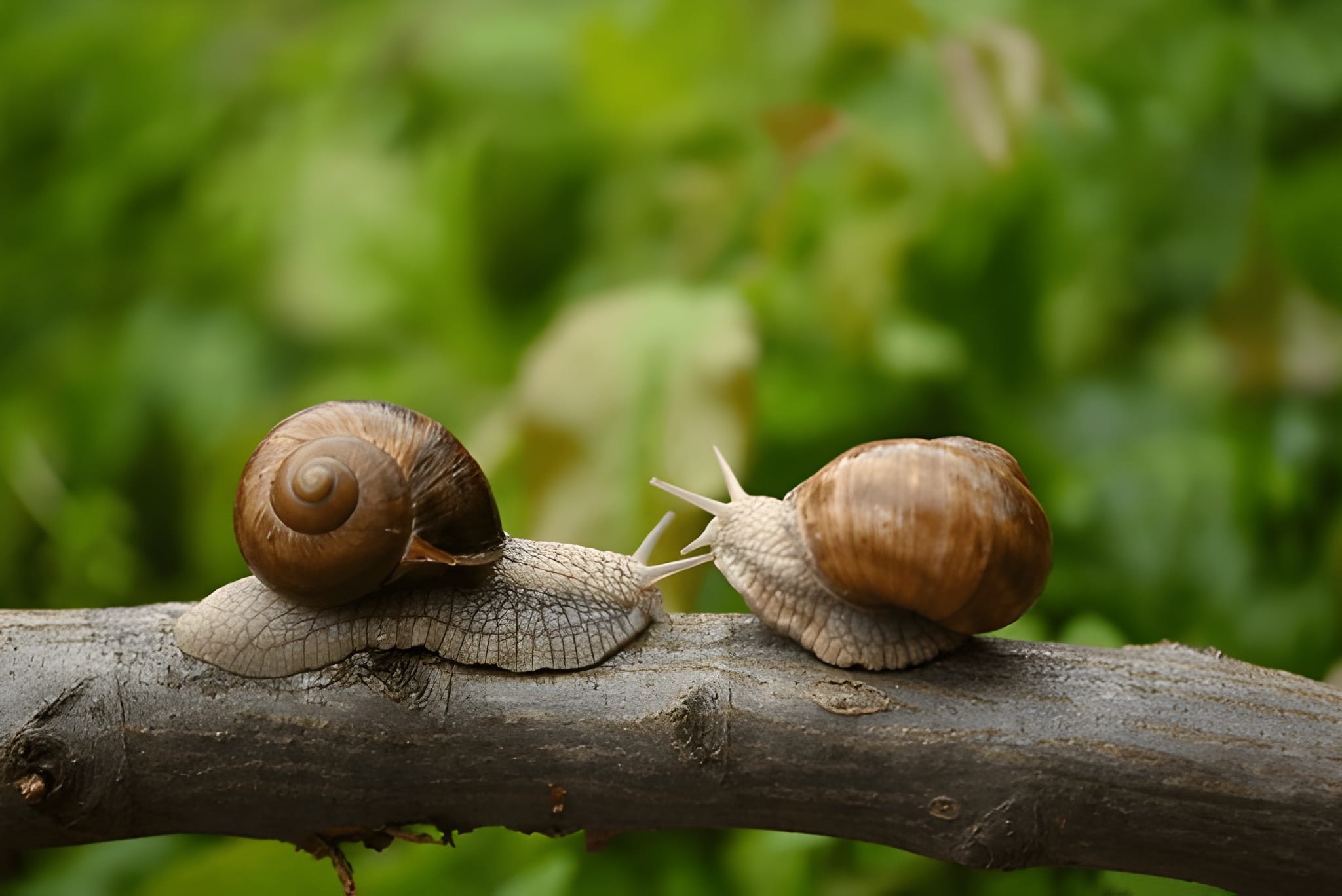
Helix species inhabit a wide variety of terrestrial environments across temperate Europe and neighboring regions. These snails are commonly found in forests, shrublands, grasslands, limestone areas, vineyards, gardens, hedgerows, and urban parks. They tolerate diverse substrates including calcareous soils but some species adapt to acidic or sandy grounds. They favor humid microclimates with moderate temperatures and shelter under rocks, leaf litter, or vegetation during dry and cold periods.
Species like Helix pomatia prefer deciduous and mixed woodlands, often on chalk or limestone soils, while others show flexibility ranging from Mediterranean-type scrublands to temperate broadleaf forests. Activity is typically nocturnal or crepuscular, with snails seeking shelter during daylight hours.
Geographical Distribution
Species are native mainly to the western Palaearctic, including most of Europe, North Africa, and parts of western Asia. Helix pomatia is widespread in Central and Southeast Europe and has been introduced in many regions beyond its natural range, including North America. Another species, Helix lucorum (Turkish snail), inhabits parts of the Balkans and Turkey and has been expanding its range. Distribution patterns show species-specific preferences but many land snails have broad, sometimes discontinuous ranges with local endemism.
General Characteristics of Helix
- Commonly called as garden snail.
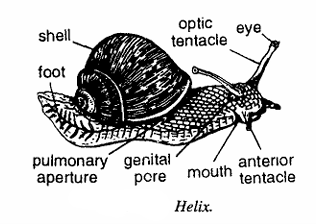
- Shell is thin, external and heliciform with a low conical spire, measuring 4 cm in length.
- Shell has a smooth aperture and prominent lines of growth. Body consists of head, foot and visceral hump.
- Head comprises of two pairs of tentacles and mouth. The posterior pair of tentacles bears eyes (oculiferous).
- The mouth is provided with three prominent lips.
- Anterior pair of tentacles small while posterior pair of tentacles are large which bear oculiferous eyes.
- Genital aperture opens above the right lateral lip.
- The gonads contain 4-angled dart and multified digitiform glands.
- Gills are absent, foot is undivided longitudinally and radula is well developed with several rows of curved teeth.
- Shell Morphology: Helix snails possess relatively large (>3 cm) globular to conical shells composed of 4–5 tightly coiled whorls. The shell surface may show distinct darker bands or blotches on a lighter background, typical of this genus. Shell coloration varies from light cream and brown tones to olive and reddish shades.
- Shell Structure: The shell surface is usually finely ribbed with transverse lines but lacks malleation. The umbilicus may be completely closed or narrow, depending on species and maturity.
- Body and Foot: The foot is broad and muscular, with varied coloration. The foot and mantle edge can range from pale grey to brown or black, usually darker on the dorsal surface.
- Shell Coiling: The shells are mostly dextral, with occasional rare sinistral (left-coiled) individuals documented in species such as H. pomatia.
- Genital Anatomy: Helix genitalia possess two papillae within the penis and multiple branched mucous glands adjacent to the dart sac—a feature used as a genus-level diagnostic character.
Ecology and Behaviour of Helix
These snails are primarily nocturnal feeders, emerging mostly during night or moist weather conditions, especially following rains. They consume a variety of plant material including live and decaying leaves, fruits, and bark, sometimes showing preferences for particular species. For example, juveniles and adults of H. pomatia have been recorded feeding intensively on nettles (Urtica dioica).
These snails exhibit interesting behavioural traits such as homing, showing fidelity to specific hibernation and feeding areas, and seasonal migrations between feeding grounds and egg-laying sites. Despite being largely terrestrial, Helix species are sensitive to harsh conditions and retreat into their shells to conserve moisture during droughts or cold periods.
Reproductively, they are hermaphroditic and engage in complex courtship behaviours involving mucus exchange, followed by the laying of eggs in shallow pits dug in moist soil. Juveniles develop directly from eggs without larval stages and begin feeding after hatching.
Special Features of Helix
- Homing Ability: Helix snails demonstrate the ability to return to specific home sites, such as hibernation shelters, even after excursions during the active season.
- Edible Value: Helix pomatia is well known as escargot; it is commercially harvested and farmed for culinary use. Its favorable flavor and large size make it culturally valuable.
- Longevity: Some species may live for several years, with H. pomatia individuals reaching ages over 20 years in the wild.
- Physiological Adaptations: Helix species have adaptations to retain water and avoid desiccation such as producing an epiphragm during estivation or hibernation.
- Conservation Status: Although common in many areas, some species face habitat loss and degradation, making monitoring important for biodiversity conservation.
Identification
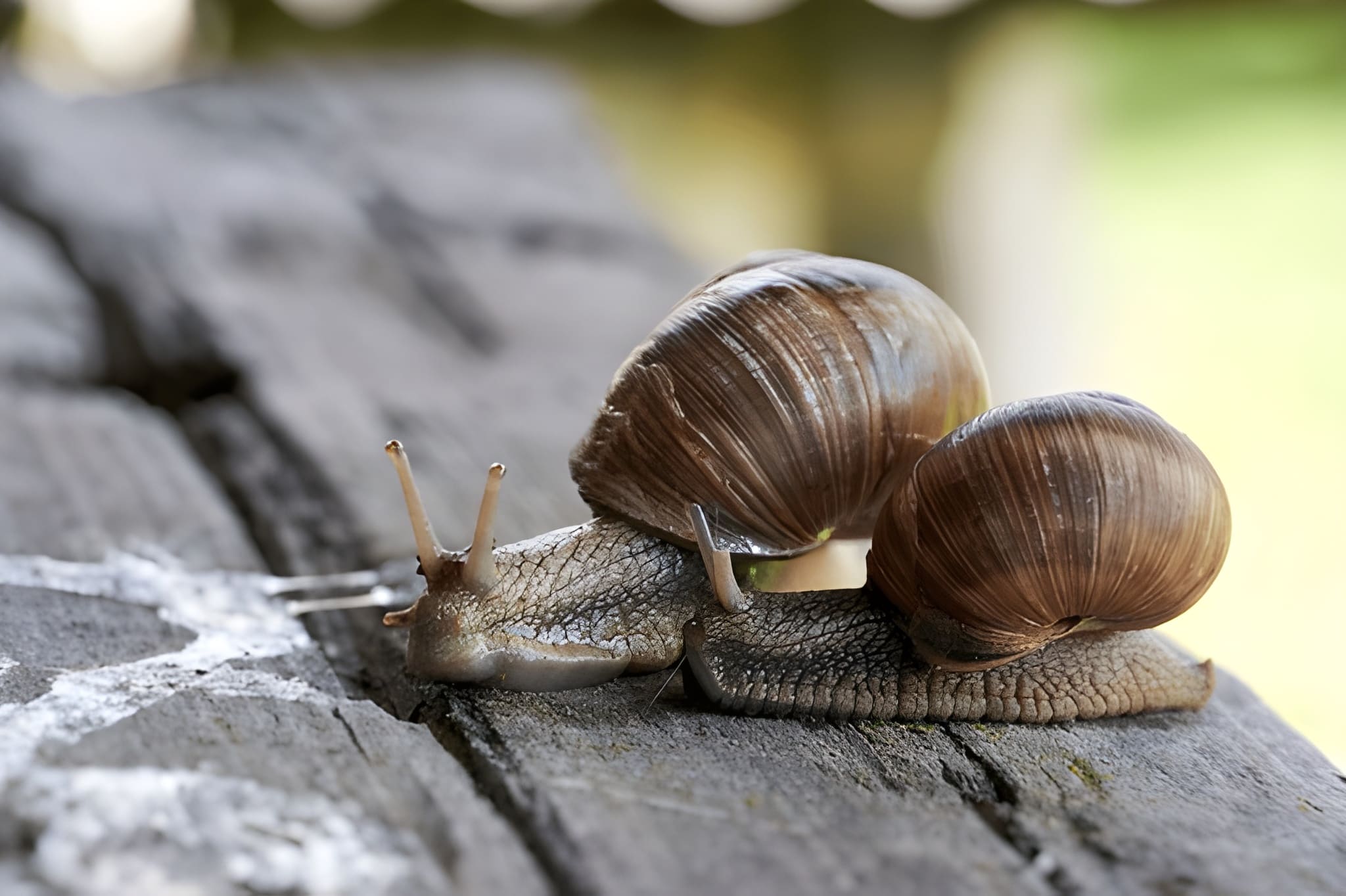
Identification of Helix species involves examination of:
- Shell size, shape, and banding patterns.
- Shape and size of the umbilicus.
- Radial and spiral shell sculpture.
- Soft part coloration.
- Anatomical characters of copulatory organs (genital tube, mucous glands).
- Geographic location and habitat preferences.
For example, Helix pomatia is larger and more globular with a closed umbilicus and light brown bands, while Helix lucorum tends to be more conical with distinct dark bands and a generally darker foot.
References
- https://en.wikipedia.org/wiki/Helix_(gastropod)
- https://www.sciencedirect.com/science/article/pii/S1055790316000610
- https://zookeys.pensoft.net/article/143635/
- https://pmc.ncbi.nlm.nih.gov/articles/PMC12378413/
- http://www.isez.pan.krakow.pl/journals/folia/pdf/71(3)/71(3)_03.pdf
- https://animaldiversity.org/accounts/Helix_pomatia/
- https://en.wikipedia.org/wiki/Gastropoda
- http://invertebratezoologycollection.weebly.com/helix.html
- https://agresearch.montana.edu/wtarc/producerinfo/entomology-insect-ecology/EasternHeathSnail/GermanFactSheet.pdf
- https://en.wikipedia.org/wiki/Helix_pomatia
- https://www.iucngisd.org/gisd/species.php?sc=1638
- https://www.molluscs.at/gastropoda/terrestrial/helix_lucorum.html
- https://www.naturespot.org/species/garden-snail
- https://www.sciencedirect.com/science/article/pii/S1470160X21009547
Discover more from Zoologyverse
Subscribe to get the latest posts sent to your email.