
1. Hypothalamic-Pituitary-Gonadal Axis in Animals
1. Introduction
The Hypothalamic-Pituitary-Gonadal Axis in Animals is an important neuroendocrine system. It coordinates reproductive activities through interactions between the brain, pituitary gland and gonads.
This system connects the nervous system with the endocrine system. It helps regulate sexual maturation, gamete production and reproductive cycles.
The Hypothalamic-Pituitary-Gonadal Axis in Animals works through a sequence of hormonal signals. The process begins in the hypothalamus, which releases gonadotropin-releasing hormone (GnRH).
GnRH stimulates the anterior pituitary gland to release two important hormones: follicle-stimulating hormone (FSH) and luteinizing hormone (LH). These hormones act on the testes and ovaries to regulate reproductive functions.
The gonads also produce sex hormones, including testosterone, oestrogen and progesterone. These hormones influence reproductive development and help regulate the activity of the HPG Axis.
The Hypothalamic-Pituitary-Gonadal Axis in Animals is also controlled by feedback mechanisms. These mechanisms help maintain hormonal balance and coordinate reproductive activity.
Although the basic organisation is similar in many vertebrates, its activity varies among animal groups. Age, sex, reproductive stage and environmental conditions can influence its functioning.
Studying the Hypothalamic-Pituitary-Gonadal Axis in Animals helps explain reproductive endocrinology and fertility. It also provides a foundation for understanding how hormones control reproduction in different animal species.
2. Definition and Overview of the HPG Axis
The Hypothalamic-Pituitary-Gonadal Axis in Animals is a hormonal communication system involving three major organs: the hypothalamus, anterior pituitary gland and gonads. These organs work together to control reproductive development and activity.
The term HPG Axis refers to the interaction between the hypothalamus, pituitary gland and gonads. It is one of the most important regulatory systems in vertebrate reproductive endocrinology.
2.1 Definition
The Hypothalamic-Pituitary-Gonadal Axis in Animals can be defined as a neuroendocrine pathway through which the hypothalamus regulates pituitary hormone secretion, and the pituitary controls gonadal activity.
The system operates through chemical messengers called hormones. These hormones coordinate reproductive processes in males and females.
2.2 Basic Organisation of the HPG Axis
The Hypothalamic-Pituitary-Gonadal Axis in Animals consists of three major components.
- Hypothalamus: Produces gonadotropin-releasing hormone (GnRH), which stimulates the anterior pituitary gland.
- Anterior pituitary gland: Releases follicle-stimulating hormone (FSH) and luteinizing hormone (LH) in response to GnRH.
- Gonads: The testes in males and ovaries in females respond to pituitary hormones. They produce gametes and secrete sex hormones.
2.3 Basic Hormonal Pathway
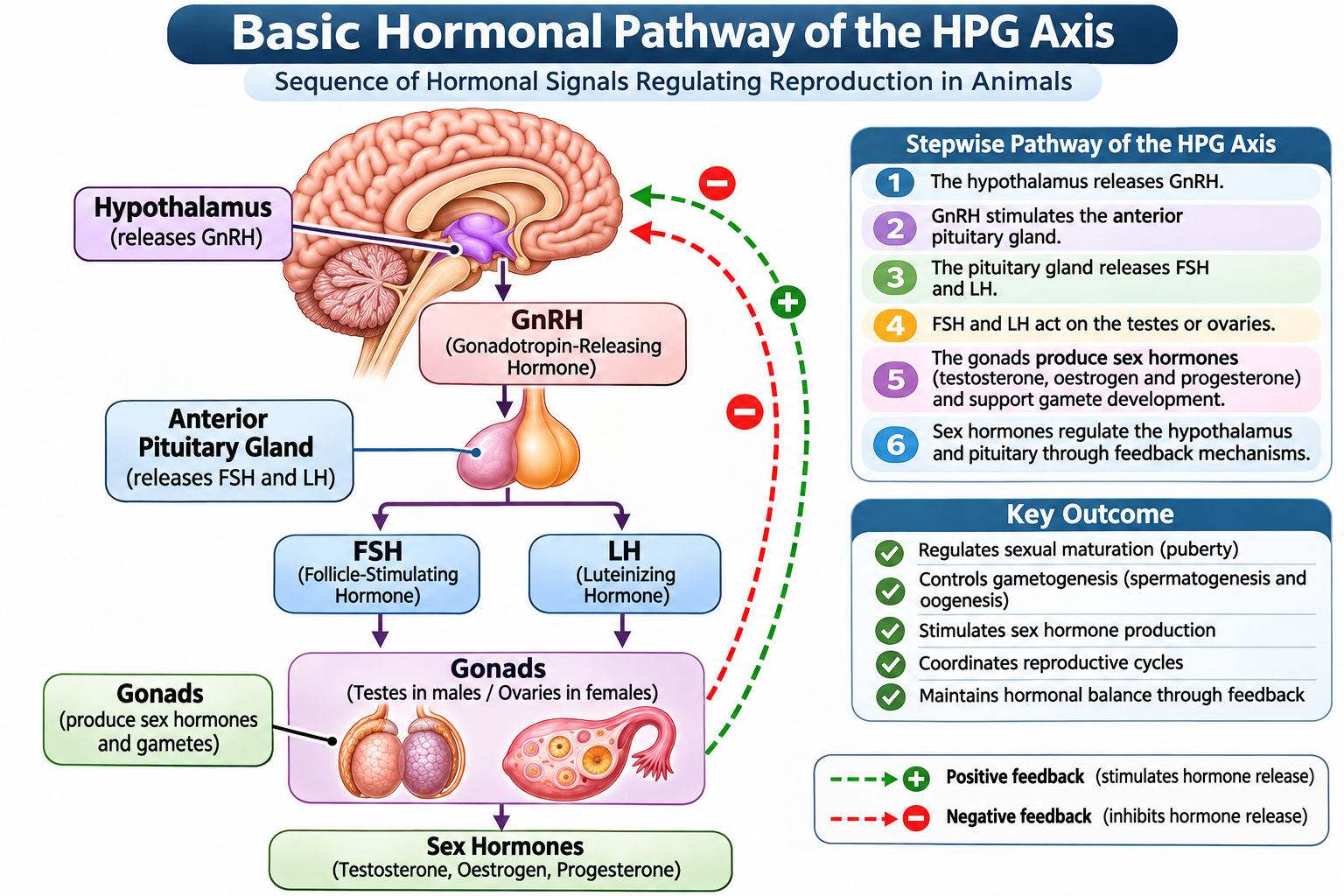
The HPG Axis functions through a sequence of hormonal signals.
- The hypothalamus releases GnRH.
- GnRH stimulates the anterior pituitary gland.
- The pituitary gland releases FSH and LH.
- These hormones act on the testes or ovaries.
- The gonads produce sex hormones and support gamete development.
- Sex hormones regulate the hypothalamus and pituitary through feedback mechanisms.
This sequence forms the basic mechanism of the Hypothalamic-Pituitary-Gonadal Axis in Animals.
2.4 Major Functions
The HPG Axis performs several important reproductive functions.
- Sexual maturation: Helps initiate puberty and reproductive maturity.
- Gametogenesis: Regulates sperm and egg production.
- Sex hormone secretion: Controls the production of testosterone, oestrogen and progesterone.
- Reproductive cycles: Coordinates ovarian and other reproductive cycles.
- Fertility: Supports normal reproductive function in males and females.
- Seasonal breeding: Responds to environmental signals that influence reproductive activity in seasonal breeders.
The Hypothalamic-Pituitary-Gonadal Axis in Animals also responds to feedback from the gonads. This allows hormone secretion to adjust according to reproductive requirements.
2.5 Importance in Vertebrates
The basic HPG Axis is found across many vertebrate groups, including fishes, amphibians, reptiles, birds and mammals. However, the timing and pattern of hormone secretion differ among these groups.
For example, seasonal breeders may show changes in gonadotropin secretion according to environmental conditions. In mammals, the system also coordinates reproductive cycles, ovulation and sperm production.
The Hypothalamic-Pituitary-Gonadal Axis in Animals therefore provides a common hormonal framework for understanding reproduction across vertebrates.
3. Anatomical Components of the HPG Axis
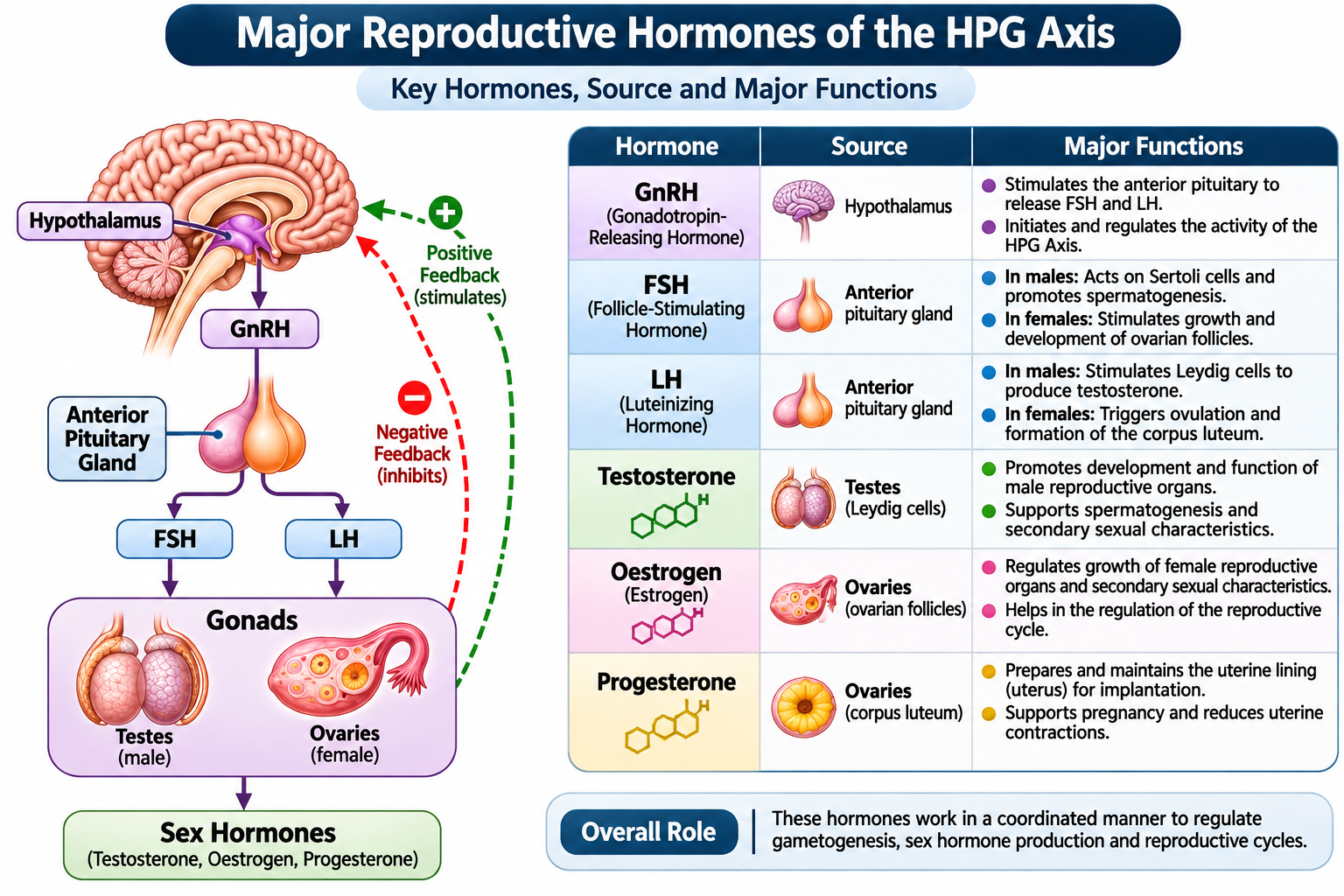
The Hypothalamic-Pituitary-Gonadal Axis in Animals consists of three major anatomical components. These are the hypothalamus, anterior pituitary gland and gonads.
Each component has a specific role in reproductive regulation. Their coordinated activity allows the Hypothalamic-Pituitary-Gonadal Axis in Animals to control reproductive development and hormone secretion.
3.1 Hypothalamus
The hypothalamus is a small but important region located at the base of the brain. It forms part of the diencephalon and lies below the thalamus.
It contains specialised neurosecretory cells called hypothalamic neurons. These neurons produce gonadotropin-releasing hormone (GnRH).
GnRH is released into the hypophyseal portal blood circulation. It travels to the anterior pituitary gland and stimulates the secretion of FSH and LH.
The hypothalamus also receives signals from the nervous system and circulating hormones. These signals help regulate reproductive activity according to the animal’s physiological condition.
3.2 Pituitary Gland
The pituitary gland is an endocrine gland located beneath the hypothalamus. It is connected to the hypothalamus through the pituitary stalk, also called the infundibulum.
The gland has two major divisions:
- Anterior pituitary (adenohypophysis): Produces FSH and LH in response to GnRH.
- Posterior pituitary (neurohypophysis): Stores and releases hormones produced by hypothalamic neurons. It does not directly secrete FSH or LH.
The anterior pituitary is particularly important in the Hypothalamic-Pituitary-Gonadal Axis in Animals. Its gonadotropins regulate the activities of the testes and ovaries.
3.3 Gonads
Gonads are the primary reproductive organs. They produce gametes and secrete hormones involved in reproductive development and function.
There are two main types of gonads.
A. Testes
Testes are the male reproductive glands. They produce sperm through spermatogenesis and secrete testosterone.
FSH acts mainly on Sertoli cells, which support developing sperm cells. LH stimulates Leydig cells to produce testosterone.
Testosterone supports male reproductive development and the maintenance of reproductive functions.
B. Ovaries
Ovaries are the female reproductive glands. They produce ova and secrete hormones such as oestrogen and progesterone.
FSH promotes ovarian follicular development, while LH contributes to ovulation and corpus luteum formation.
Oestrogen and progesterone regulate reproductive cycles and prepare the reproductive tract for pregnancy.
3.4 Connection Between the Three Components
The three components communicate through hormonal signals.
The hypothalamus releases GnRH, which stimulates the anterior pituitary. The pituitary then releases FSH and LH into the bloodstream.
These gonadotropins travel to the gonads and regulate gamete production and sex hormone secretion.
The gonads also release hormones that act on the hypothalamus and pituitary. This communication forms feedback loops that regulate the activity of the Hypothalamic-Pituitary-Gonadal Axis in Animals.
3.5 Anatomical Organisation in Different Vertebrates
The basic organisation of the Hypothalamic-Pituitary-Gonadal Axis in Animals is conserved across vertebrates. However, anatomical details and reproductive adaptations vary among groups.
- Fishes: The hypothalamus, pituitary gland and gonads regulate gamete development and spawning.
- Amphibians: The axis coordinates seasonal reproductive activity and gonadal development.
- Reptiles: It regulates reproductive functions and interacts with environmental signals.
- Birds: It controls gonadal development, gamete production and seasonal breeding.
- Mammals: It regulates puberty, reproductive cycles, gametogenesis and sex hormone secretion.
These anatomical components work together to maintain reproductive coordination in vertebrate animals.
4. Role of the Hypothalamus
The hypothalamus is the central control region of the Hypothalamic-Pituitary-Gonadal Axis in Animals. It initiates key signals within the Hypothalamic-Pituitary-Gonadal Axis in Animals.
It links information from the nervous system with endocrine signals. This helps adjust reproductive activity according to the animal’s physiological condition.
4.1 Location and Structure
The hypothalamus is located at the base of the brain, below the thalamus. It contains groups of specialised neurons that produce hormones and regulate pituitary gland activity.
Some hypothalamic neurons produce gonadotropin-releasing hormone (GnRH). Their nerve endings release GnRH into blood vessels of the hypophyseal portal system, which carries it to the anterior pituitary.
4.2 Secretion of GnRH
GnRH is the main hypothalamic signal controlling pituitary gonadotropin secretion. It stimulates pituitary cells called gonadotrophs to release follicle-stimulating hormone (FSH) and luteinizing hormone (LH).
GnRH is generally released in pulses rather than as a continuous signal. The frequency and amplitude of these pulses influence gonadotropin secretion and help regulate the Hypothalamic-Pituitary-Gonadal Axis in Animals.
This pulsatile pattern is a defining feature of the Hypothalamic-Pituitary-Gonadal Axis in Animals.
4.3 Regulation of Reproductive Activity
The hypothalamus receives information from several sources that influence the Hypothalamic-Pituitary-Gonadal Axis in Animals. These include circulating sex hormones, neural pathways, nutritional status, stress signals and environmental cues.
By integrating these signals, the hypothalamus can alter GnRH secretion. For example, changes in day length can influence reproductive activity in many seasonal breeders through neural and hormonal pathways.
The Hypothalamic-Pituitary-Gonadal Axis in Animals therefore responds to both internal and external conditions. This coordination helps match reproductive activity with periods when successful breeding is more likely.
It supports the timing of the Hypothalamic-Pituitary-Gonadal Axis in Animals.
4.4 Role in Male Reproduction
In males, hypothalamic GnRH stimulates the anterior pituitary to release FSH and LH. These hormones act on the testes to support sperm production and testosterone secretion.
Testosterone and inhibin provide feedback to the hypothalamus and pituitary. This feedback helps regulate further hormone release and maintain reproductive function.
4.5 Role in Female Reproduction
In females, hypothalamic GnRH controls the pituitary release of FSH and LH. These hormones regulate ovarian follicle development, ovulation and corpus luteum activity.
In many mammals, sustained high oestrogen levels before ovulation can produce positive feedback. This leads to a surge of GnRH and LH that helps trigger ovulation.
4.6 Importance of Hypothalamic Control
The hypothalamus coordinates the Hypothalamic-Pituitary-Gonadal Axis in Animals with growth, energy balance, stress and environmental conditions. Disruption of its function can interfere with puberty, reproductive cycles and fertility.
Through its control of GnRH, the hypothalamus provides the initiating signal for the Hypothalamic-Pituitary-Gonadal Axis in Animals. This makes hypothalamic regulation central to the Hypothalamic-Pituitary-Gonadal Axis in Animals.
Its activity is therefore essential for normal reproductive function in vertebrates.
5. Gonadotropin-Releasing Hormone (GnRH)
Gonadotropin-releasing hormone (GnRH) is a peptide hormone produced by specialised neurons in the hypothalamus. It is the main signal connecting the hypothalamus with the anterior pituitary gland.
In the Hypothalamic-Pituitary-Gonadal Axis in Animals, GnRH controls the release of two major pituitary gonadotropins: follicle-stimulating hormone (FSH) and luteinizing hormone (LH).
5.1 Structure and Production of GnRH
GnRH is a small peptide consisting of ten amino acids. It is synthesised by specialised hypothalamic neurons and transported to their nerve endings.
These nerve endings release the hormone into the hypophyseal portal blood vessels. This circulation carries GnRH directly to the anterior pituitary gland.
5.2 Mechanism of Action
GnRH binds to specific receptors on gonadotroph cells of the anterior pituitary. Receptor activation triggers intracellular signalling pathways.
These pathways stimulate the synthesis and release of FSH and LH. The gonadotropins then enter the bloodstream and travel to the gonads.
Their actions support gamete development and sex hormone secretion. This signalling sequence is a central step in the Hypothalamic-Pituitary-Gonadal Axis in Animals.
5.3 Pulsatile Secretion of GnRH
GnRH is normally released in pulses rather than continuously. The frequency and strength of these pulses influence the relative secretion of FSH and LH.
A change in pulse frequency can alter pituitary responses. Continuous exposure to GnRH, in contrast, can reduce receptor responsiveness and suppress gonadotropin secretion after an initial stimulation.
This principle is used in some clinical and veterinary treatments. Pulsatile secretion is essential for normal functioning of the Hypothalamic-Pituitary-Gonadal Axis in Animals.
5.4 Role in Male Reproduction
In males, GnRH stimulates the anterior pituitary to release FSH and LH.
FSH acts mainly on Sertoli cells and supports spermatogenesis. LH stimulates Leydig cells to produce testosterone.
Testosterone supports the development and maintenance of male reproductive organs. It also contributes to sperm production.
Feedback from testosterone and inhibin helps regulate further hormone secretion through the Hypothalamic-Pituitary-Gonadal Axis in Animals.
5.5 Role in Female Reproduction
In females, GnRH controls the pituitary release of FSH and LH. FSH supports ovarian follicle growth, while LH contributes to final follicular maturation, ovulation and corpus luteum formation.
The pattern of GnRH secretion changes during the reproductive cycle. In many mammals, sustained high oestrogen levels produce positive feedback and contribute to the preovulatory LH surge.
These events demonstrate the importance of GnRH in the Hypothalamic-Pituitary-Gonadal Axis in Animals.
5.6 Regulation of GnRH Secretion
GnRH secretion is influenced by sex steroids, inhibin-related signals, metabolic status, stress and environmental cues. Neural networks in the hypothalamus integrate these signals and adjust GnRH pulse patterns.
In seasonal breeders, changes in day length can influence reproductive activity through pathways involving melatonin and hypothalamic signalling. However, the response differs among species.
GnRH therefore acts as a key regulatory signal in the Hypothalamic-Pituitary-Gonadal Axis in Animals. Its controlled release allows the pituitary and gonads to coordinate reproductive functions.
6. Role of the Anterior Pituitary Gland
The anterior pituitary gland is a major endocrine component of the Hypothalamic-Pituitary-Gonadal Axis in Animals. It serves as the hormonal link between brain signals and gonadal responses.
It receives GnRH signals from the hypothalamus. It then releases hormones that act on the testes and ovaries.
6.1 Location and Structure
The anterior pituitary, also called the adenohypophysis, forms the front portion of the pituitary gland. It is connected to the hypothalamus by the pituitary stalk.
It receives hypothalamic signals through the hypophyseal portal blood system. This specialised circulation carries GnRH directly to the anterior pituitary.
Its hormone-producing cells include gonadotrophs. These specialised cells respond to GnRH by synthesising and releasing follicle-stimulating hormone (FSH) and luteinizing hormone (LH).
6.2 Secretion of Gonadotropins
FSH and LH are known as gonadotropins because they act on the gonads. Their secretion is controlled by the amount and pattern of GnRH reaching the anterior pituitary.
FSH supports gamete development, while LH stimulates sex hormone production and other reproductive events. These actions allow the Hypothalamic-Pituitary-Gonadal Axis in Animals to coordinate gonadal activity.
Together, these hormones connect pituitary activity with gonadal function. This is a central task of the Hypothalamic-Pituitary-Gonadal Axis in Animals.
6.3 Role of FSH
In males, FSH acts mainly on Sertoli cells in the seminiferous tubules. It supports the environment needed for sperm development and works with testosterone to maintain spermatogenesis.
In females, FSH stimulates the growth and development of ovarian follicles. It also supports oestrogen production by the developing follicles.
6.4 Role of LH
In males, LH acts on Leydig cells in the testes. These cells produce testosterone, which supports male reproductive development and function.
In females, LH contributes to final follicular maturation and triggers ovulation through a surge in its secretion. It also supports formation and function of the corpus luteum, which produces progesterone.
6.5 Regulation of Pituitary Activity
The anterior pituitary does not act independently. Its relationship with the hypothalamus is central to the Hypothalamic-Pituitary-Gonadal Axis in Animals.
GnRH from the hypothalamus stimulates gonadotropin secretion, while hormones from the gonads provide feedback. Testosterone, oestrogen, progesterone and inhibin can modify pituitary activity.
These signals help adjust FSH and LH secretion to the reproductive needs of the animal. This regulation keeps the Hypothalamic-Pituitary-Gonadal Axis in Animals appropriately balanced.
6.6 Importance in Reproductive Regulation
The anterior pituitary translates hypothalamic signals into hormonal messages that reach the gonads. Without appropriate FSH and LH secretion, normal gamete production and sex hormone secretion cannot be maintained.
Through gonadotropin release, the anterior pituitary forms the central link between the brain and the gonads. This makes it a key control centre within the Hypothalamic-Pituitary-Gonadal Axis in Animals.
The anterior pituitary is therefore indispensable to the Hypothalamic-Pituitary-Gonadal Axis in Animals. Its coordinated hormone release sustains the Hypothalamic-Pituitary-Gonadal Axis in Animals.
7. Follicle-Stimulating Hormone (FSH)
Follicle-stimulating hormone (FSH) is an important gonadotropin secreted by the anterior pituitary gland. It regulates reproductive functions in both males and females.
Within the Hypothalamic-Pituitary-Gonadal Axis in Animals, FSH connects pituitary activity with gonadal development and gamete production. Its effects differ according to the sex and reproductive stage of the animal.
7.1 Structure and Secretion of FSH
FSH is a glycoprotein hormone composed of two protein subunits: alpha and beta. The alpha subunit is shared with LH, while the beta subunit gives FSH its specific biological activity.
FSH is produced by gonadotroph cells of the anterior pituitary. Its secretion is stimulated by GnRH released from the hypothalamus.
The pattern of GnRH pulses and feedback from the gonads influence FSH secretion. Inhibin is particularly important because it selectively suppresses FSH release.
7.2 Role of FSH in Male Reproduction
In males, FSH acts mainly on Sertoli cells located inside the seminiferous tubules of the testes.
Sertoli cells provide nutritional and structural support to developing sperm cells. FSH stimulates their activity and helps maintain the conditions required for spermatogenesis.
FSH also promotes the production of androgen-binding protein (ABP) by Sertoli cells. ABP helps maintain a high local concentration of testosterone within the seminiferous tubules.
Normal sperm production requires the combined action of FSH and testosterone. Therefore, FSH is an important regulator of male fertility.
7.3 Role of FSH in Female Reproduction
In females, FSH stimulates the growth and development of ovarian follicles. It supports the development of granulosa cells surrounding the growing oocyte.
FSH also promotes the activity of aromatase enzymes in granulosa cells. These enzymes convert androgens into oestrogens, particularly oestradiol.
During the ovarian cycle, FSH supports the selection and development of follicles. The exact pattern of follicular growth varies among animal species.
7.4 Regulation of FSH Secretion
FSH secretion is controlled by several hormonal signals.
- GnRH: Stimulates FSH synthesis and secretion by the anterior pituitary.
- Inhibin: Suppresses FSH secretion through negative feedback.
- Activin: Promotes FSH synthesis and secretion.
- Sex steroids: Oestrogen and testosterone influence pituitary activity through feedback mechanisms.
These signals help maintain appropriate gonadotropin levels within the Hypothalamic-Pituitary-Gonadal Axis in Animals.
7.5 Biological Significance of FSH
FSH is essential for normal reproductive development and fertility. In males, it supports Sertoli cell function and sperm production.
In females, it promotes follicular growth and oestrogen synthesis. These functions help coordinate ovarian development and reproductive cycles.
Changes in FSH secretion can affect fertility and reproductive performance. Its regulation is therefore an important feature of the Hypothalamic-Pituitary-Gonadal Axis in Animals.
8. Luteinizing Hormone (LH)
Luteinizing hormone (LH) is a gonadotropin secreted by the anterior pituitary gland. It plays an important role in reproductive development and gonadal activity in both males and females.
Within the Hypothalamic-Pituitary-Gonadal Axis in Animals, LH stimulates sex hormone production and regulates important reproductive events. Its functions differ between the testes and ovaries.
8.1 Structure and Secretion of LH
LH is a glycoprotein hormone composed of two subunits: alpha and beta. Its alpha subunit is shared with FSH, while its beta subunit determines its specific biological activity.
LH is produced by gonadotroph cells of the anterior pituitary. Its secretion is stimulated by GnRH released from the hypothalamus.
The frequency of GnRH pulses influences LH secretion. Feedback from gonadal hormones also helps regulate its release.
8.2 Role of LH in Male Reproduction
In males, LH acts on Leydig cells located in the interstitial tissue of the testes. These cells produce testosterone in response to LH stimulation.
Testosterone supports the development and maintenance of male reproductive organs. It also contributes to secondary sexual characteristics and normal sperm production.
LH therefore plays an important role in maintaining testicular endocrine activity. Its action is essential for normal male reproductive function.
8.3 Role of LH in Female Reproduction
In females, LH regulates several important events during the ovarian cycle.
Its major functions include:
- Follicular maturation: Supports the final stages of ovarian follicle development.
- Ovulation: A sudden increase in LH secretion triggers the release of the mature oocyte in many mammals.
- Corpus luteum formation: Stimulates the transformation of the ruptured follicle into the corpus luteum.
- Progesterone secretion: Supports progesterone production by the corpus luteum.
These actions help coordinate ovulation and the luteal phase of the reproductive cycle.
8.4 LH Surge and Ovulation
In many mammals, a large preovulatory increase in LH secretion is known as the LH surge. It occurs when sustained high oestrogen levels produce positive feedback on the hypothalamus and pituitary.
The surge causes final changes in the mature ovarian follicle. It promotes follicular rupture and the release of the oocyte.
After ovulation, LH supports corpus luteum development. The corpus luteum then secretes progesterone, which prepares the reproductive tract for possible pregnancy.
8.5 Regulation of LH Secretion
LH secretion is controlled by several hormonal signals.
- GnRH: Stimulates LH synthesis and release from the anterior pituitary.
- Testosterone: Provides negative feedback in males.
- Oestrogen: Usually provides negative feedback, but sustained high levels can trigger positive feedback before ovulation in many mammals.
- Progesterone: Influences hypothalamic and pituitary activity during the reproductive cycle.
These mechanisms help regulate LH secretion within the Hypothalamic-Pituitary-Gonadal Axis in Animals.
8.6 Biological Significance of LH
LH is essential for normal reproductive function. In males, it maintains testosterone production by Leydig cells.
In females, it supports ovulation, corpus luteum formation and progesterone secretion. These functions are important for fertility and reproductive cycle regulation.
The coordinated secretion of LH and FSH allows the Hypothalamic-Pituitary-Gonadal Axis in Animals to regulate gonadal activity. Disturbances in LH secretion can interfere with normal reproductive processes.
9. Role of Gonads in the HPG Axis
Gonads are the reproductive glands that produce gametes and sex hormones. They form the final major component of the Hypothalamic-Pituitary-Gonadal Axis in Animals.
The two main types of gonads are testes in males and ovaries in females. Both respond to pituitary gonadotropins and release hormones that regulate reproductive functions.
9.1 General Functions of Gonads
Gonads perform two major functions:
- Gamete production: Testes produce sperm, while ovaries produce ova.
- Hormone secretion: Testes mainly produce testosterone, while ovaries produce oestrogen and progesterone.
These functions connect reproductive development with endocrine regulation. The gonads also send hormonal feedback to the hypothalamus and pituitary gland.
9.2 Role of Testes
The testes are the male gonads. They contain seminiferous tubules, where sperm production takes place, and interstitial tissue containing Leydig cells.
FSH acts on Sertoli cells within the seminiferous tubules. These cells support developing sperm and help maintain spermatogenesis.
LH stimulates Leydig cells to produce testosterone. This hormone supports male reproductive organs, secondary sexual characteristics and sperm production.
Testosterone and inhibin also provide feedback to the brain and pituitary. These signals help regulate the Hypothalamic-Pituitary-Gonadal Axis in Animals.
9.3 Role of Ovaries
The ovaries are the female gonads. They contain ovarian follicles at different stages of development.
FSH stimulates follicular growth and supports oestrogen production. LH contributes to final follicular maturation, ovulation and corpus luteum formation.
The developing follicles produce oestrogen, while the corpus luteum mainly secretes progesterone. These hormones regulate the reproductive cycle and prepare the uterus for possible pregnancy.
Ovarian hormones also influence hypothalamic and pituitary activity. Their feedback is an important part of the Hypothalamic-Pituitary-Gonadal Axis in Animals.
9.4 Gonadal Feedback Regulation
Gonads do not simply respond to pituitary hormones. They also regulate the secretion of these hormones through feedback mechanisms.
Testosterone, oestrogen and progesterone generally provide negative feedback under many physiological conditions. Inhibin selectively reduces FSH secretion.
In females, sustained high oestrogen levels before ovulation can produce positive feedback. This contributes to the LH surge.
9.5 Importance of Gonadal Activity
Normal gonadal function is necessary for fertility and reproductive development. Changes in gonadal hormone production can affect gametogenesis, reproductive cycles and sexual maturation.
The Hypothalamic-Pituitary-Gonadal Axis in Animals maintains coordination between the brain, pituitary gland and gonads. This interaction allows reproductive activity to respond to changing physiological requirements.
10. HPG Axis in Male Reproduction
The Hypothalamic-Pituitary-Gonadal Axis in Animals regulates male reproductive functions through communication between the hypothalamus, anterior pituitary gland and testes. It controls testosterone secretion and supports sperm production.
10.1 Hormonal Pathway
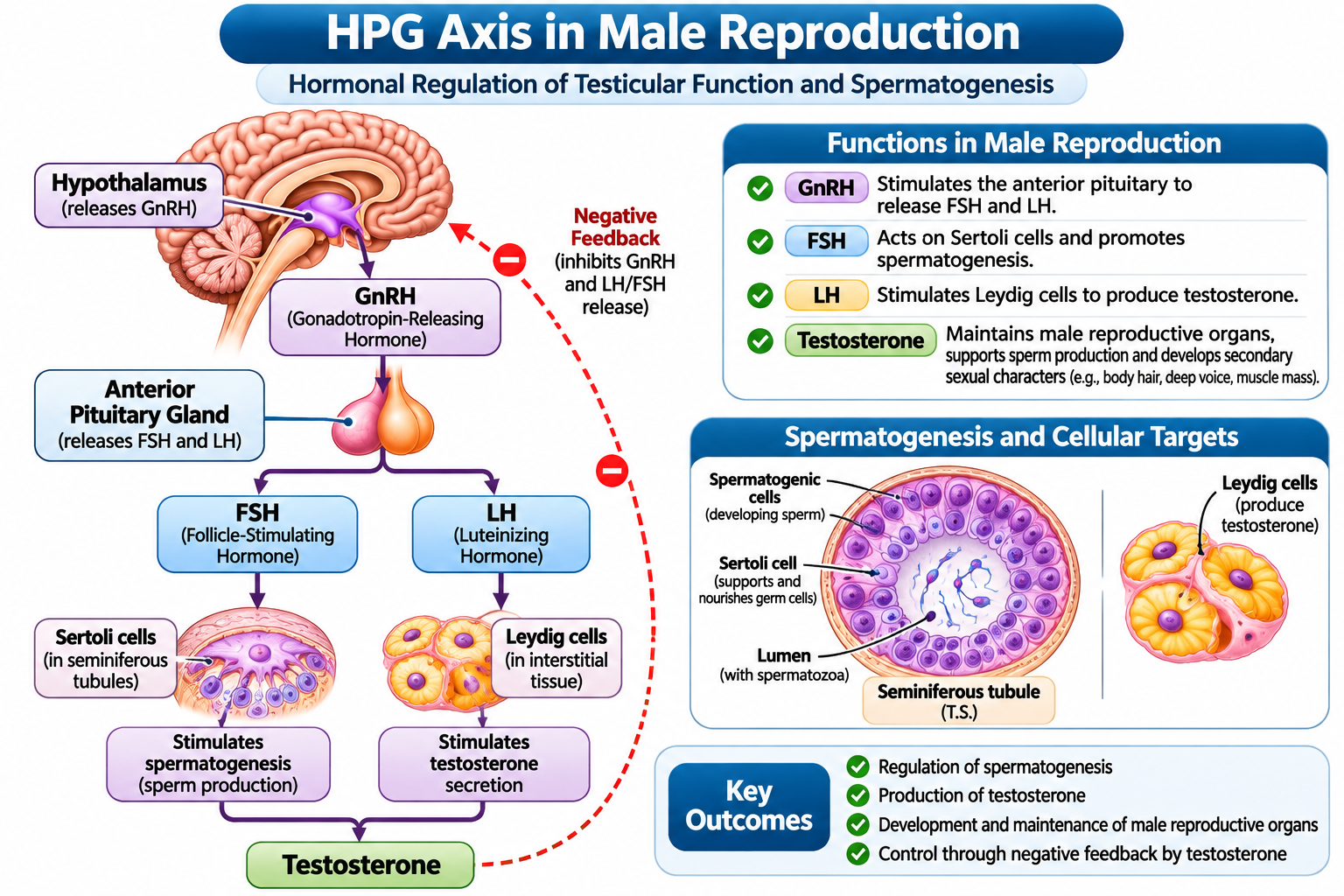
The process begins when hypothalamic neurons release gonadotropin-releasing hormone (GnRH). GnRH travels through the hypophyseal portal system and stimulates the anterior pituitary gland.
The pituitary releases two gonadotropins: follicle-stimulating hormone (FSH) and luteinizing hormone (LH). These hormones enter the bloodstream and act on different cells in the testes.
This hormonal sequence is a major part of the Hypothalamic-Pituitary-Gonadal Axis in Animals.
10.2 Action of FSH on Sertoli Cells
FSH acts mainly on Sertoli cells in the seminiferous tubules. These cells nourish and protect developing germ cells and support the stages of spermatogenesis.
FSH also promotes the production of androgen-binding protein. This protein helps maintain a high local concentration of testosterone within the seminiferous tubules.
10.3 Action of LH on Leydig Cells
LH stimulates Leydig cells, which are located between the seminiferous tubules. These cells produce testosterone in response to LH.
Testosterone supports the development and maintenance of male reproductive organs. It also works with FSH to maintain normal sperm production and contributes to male secondary sexual characteristics.
10.4 Role of Testosterone
Testosterone is the principal androgen in most male vertebrates. It supports reproductive organ development, libido and the maintenance of spermatogenesis.
Its effects are not limited to the reproductive system. Testosterone can also influence muscle development, bone growth and other sex-related characteristics.
The Hypothalamic-Pituitary-Gonadal Axis in Animals coordinates these effects through interactions between pituitary hormones and testicular hormones.
10.5 Feedback Regulation
Testosterone provides negative feedback to the hypothalamus and pituitary, reducing GnRH and LH secretion. Sertoli cells also produce inhibin, which selectively suppresses FSH secretion.
These feedback signals help maintain hormonal balance. Through this regulation, the Hypothalamic-Pituitary-Gonadal Axis in Animals adjusts testicular activity to the body’s reproductive requirements.
10.6 Significance in Male Fertility
Normal male fertility depends on coordinated GnRH, FSH and LH secretion, healthy testicular cells and adequate testosterone levels. Disruption at any level can impair sperm production or reproductive function.
The Hypothalamic-Pituitary-Gonadal Axis in Animals therefore provides the hormonal coordination needed for male sexual development and fertility. Its activity links brain signals with testicular function throughout reproductive life.
11. HPG Axis in Female Reproduction
The Hypothalamic-Pituitary-Gonadal Axis in Animals regulates female reproductive functions through coordinated hormonal interactions. It controls ovarian follicular development, ovulation, corpus luteum formation and reproductive cycles.
The system involves communication between the hypothalamus, anterior pituitary gland and ovaries. Its activity changes throughout the reproductive cycle according to hormonal requirements.
11.1 Hormonal Pathway in Females
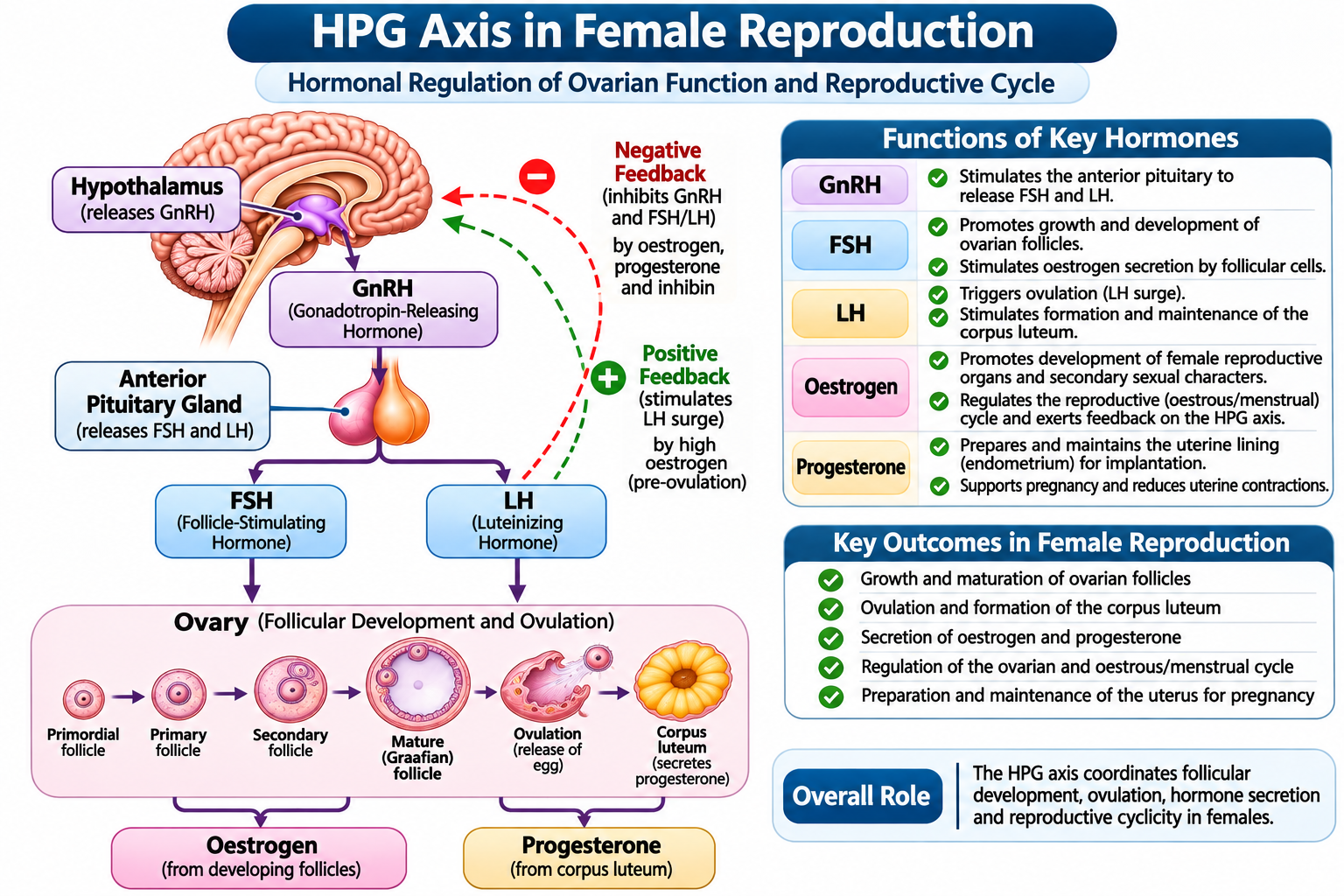
The process begins with the release of gonadotropin-releasing hormone (GnRH) from the hypothalamus. GnRH stimulates the anterior pituitary gland to release FSH and LH.
These gonadotropins travel through the bloodstream and act on the ovaries. They regulate follicular development, oestrogen production and ovulation.
The Hypothalamic-Pituitary-Gonadal Axis in Animals coordinates these hormonal events throughout the reproductive cycle.
11.2 Role of FSH in Follicular Development
FSH stimulates the growth and development of ovarian follicles. It acts mainly on granulosa cells surrounding the developing oocyte.
These cells support follicular growth and produce oestrogen. As follicles develop, one or more may become dominant, depending on the species.
Oestrogen secretion increases as the follicles mature. This hormone helps regulate the reproductive tract and influences pituitary activity.
11.3 Role of LH in Ovulation
LH supports the final stages of follicular maturation. In many mammals, a sudden increase in LH secretion produces the preovulatory LH surge.
This surge triggers a series of changes in the mature follicle. These changes lead to follicular rupture and the release of the oocyte, a process known as ovulation.
LH also supports the transformation of the ruptured follicle into the corpus luteum.
11.4 Formation and Function of the Corpus Luteum
After ovulation, the remaining follicular cells develop into the corpus luteum. This temporary endocrine structure secretes progesterone and, in many species, some oestrogen.
Progesterone prepares the uterine lining for possible implantation. It also helps maintain conditions suitable for early pregnancy.
If pregnancy does not occur, the corpus luteum usually regresses. The resulting decline in progesterone contributes to the next reproductive cycle.
11.5 Role of Oestrogen and Progesterone
Oestrogen is produced mainly by developing ovarian follicles. It supports reproductive tract development, influences female secondary sexual characteristics and regulates reproductive cycle activity.
Progesterone is produced mainly by the corpus luteum after ovulation. It prepares the uterus for pregnancy and helps maintain the uterine environment.
These hormones also regulate hypothalamic and pituitary activity through feedback mechanisms. Their effects are central to the Hypothalamic-Pituitary-Gonadal Axis in Animals.
11.6 Feedback Regulation in Females
During much of the reproductive cycle, oestrogen and progesterone exert negative feedback on GnRH, FSH and LH secretion.
Before ovulation in many mammals, sustained high oestrogen levels produce positive feedback. This stimulates the preovulatory LH surge.
After ovulation, progesterone from the corpus luteum helps suppress further ovulatory activity. These feedback mechanisms coordinate the different phases of the reproductive cycle.
11.7 Significance in Female Fertility
Normal female fertility depends on coordinated follicular development, ovulation and luteal function. These processes require appropriate communication between the brain, pituitary gland and ovaries.
Disruption of hormonal secretion can interfere with ovarian cycles and fertility. The Hypothalamic-Pituitary-Gonadal Axis in Animals therefore plays an essential role in female reproductive health and successful reproduction.
12. Hormonal Feedback Mechanisms
Hormonal feedback mechanisms regulate hormone secretion and maintain reproductive balance. They control communication between the hypothalamus, pituitary gland and gonads.
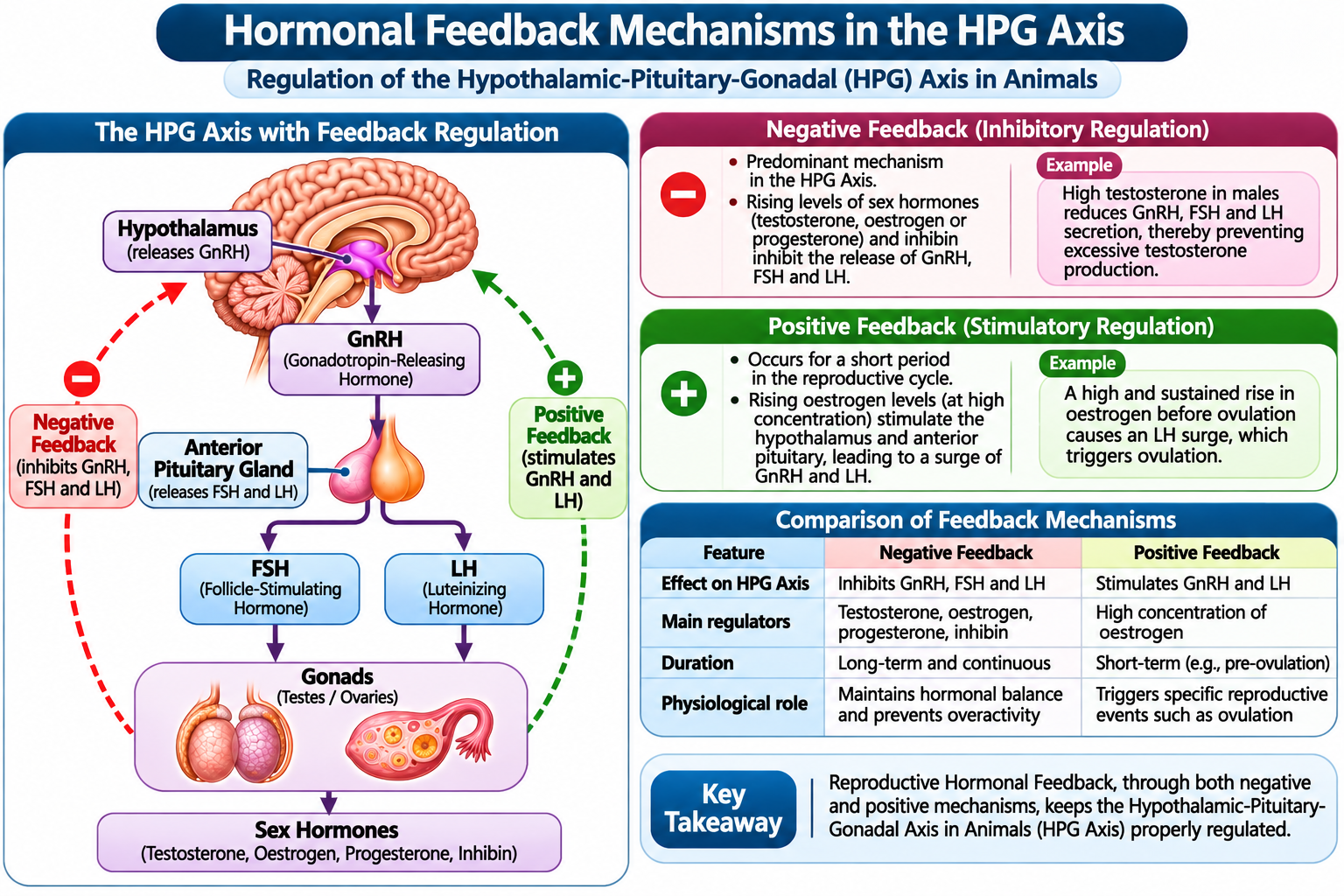
The Hypothalamic-Pituitary-Gonadal Axis in Animals mainly operates through negative and positive feedback. These mechanisms adjust reproductive hormone levels according to physiological requirements.
12.1 Negative Feedback Mechanism
Negative feedback is the most common mechanism regulating reproductive hormone secretion. It occurs when increased hormone levels reduce further hormone release.
In males, testosterone produced by Leydig cells suppresses GnRH and LH secretion. Inhibin released by Sertoli cells selectively reduces FSH secretion.
In females, oestrogen and progesterone generally suppress GnRH and gonadotropin secretion during much of the reproductive cycle. This prevents excessive hormonal stimulation.
Negative feedback helps maintain stability in the Hypothalamic-Pituitary-Gonadal Axis in Animals.
12.2 Positive Feedback Mechanism
Positive feedback occurs when a hormone stimulates further hormone secretion. Unlike negative feedback, it amplifies the hormonal response.
A major example occurs before ovulation in many mammals. Sustained high levels of oestrogen from the developing ovarian follicle stimulate the hypothalamus and anterior pituitary.
This produces a sudden increase in LH secretion, known as the LH surge. The surge triggers ovulation and supports subsequent corpus luteum formation.
This temporary positive feedback response is an important feature of the Hypothalamic-Pituitary-Gonadal Axis in Animals.
12.3 Role of Testosterone in Feedback Regulation
Testosterone is the principal androgen produced by Leydig cells in the testes. It provides negative feedback to the hypothalamus and anterior pituitary.
Increased testosterone levels generally reduce GnRH and LH secretion. This helps regulate further testosterone production and maintain endocrine balance.
12.4 Role of Inhibin
Inhibin is produced mainly by Sertoli cells in males and granulosa cells in females. It selectively suppresses FSH secretion from the anterior pituitary.
This action helps regulate sperm production and ovarian follicular development. Inhibin therefore contributes to feedback regulation within the Hypothalamic-Pituitary-Gonadal Axis in Animals.
12.5 Role of Oestrogen and Progesterone
Oestrogen and progesterone regulate reproductive hormone secretion in females. Their effects depend on hormone concentration and the stage of the reproductive cycle.
Oestrogen generally produces negative feedback. However, sustained high oestrogen levels before ovulation can trigger positive feedback and the LH surge.
Progesterone mainly provides negative feedback after ovulation. It helps regulate further gonadotropin secretion during the luteal phase.
12.6 Biological Significance of Feedback Mechanisms
Feedback mechanisms maintain appropriate reproductive hormone levels. They coordinate gamete production, ovarian cycles, ovulation and sex hormone secretion.
Disruption of these mechanisms can affect puberty, fertility and normal reproductive cycles. Proper feedback regulation is therefore essential for the functioning of the Hypothalamic-Pituitary-Gonadal Axis in Animals.
13. Regulation of the HPG Axis During Reproductive Cycles
The Hypothalamic-Pituitary-Gonadal Axis in Animals changes its activity during reproductive cycles. Hormone secretion rises and falls to coordinate follicular development, ovulation, sperm production and reproductive readiness.
13.1 Reproductive Cycles and Hormonal Changes
Reproductive cycles involve regular changes in gonadal activity and hormone levels. The Hypothalamic-Pituitary-Gonadal Axis in Animals coordinates these changes through GnRH, FSH, LH and gonadal hormones.
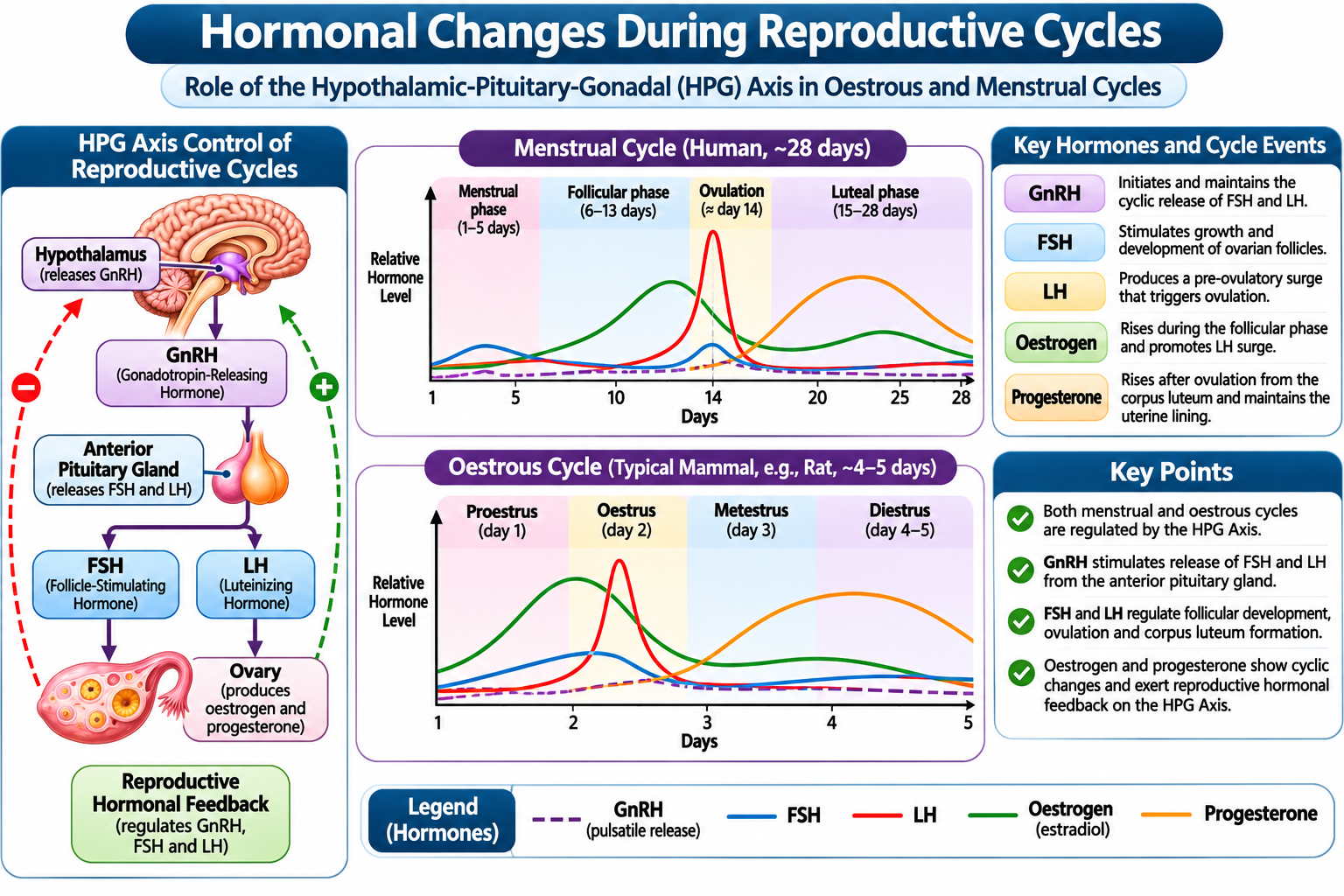
13.2 Ovarian Cycle
During the follicular phase, FSH stimulates ovarian follicle growth. Developing follicles produce oestrogen, which supports reproductive tract changes and influences pituitary activity.
In many mammals, sustained high oestrogen levels trigger positive feedback. This produces the LH surge and ovulation. After ovulation, the corpus luteum secretes progesterone during the luteal phase.
If pregnancy does not occur, the corpus luteum regresses. Progesterone levels fall, allowing another cycle to begin. These events depend on the Hypothalamic-Pituitary-Gonadal Axis in Animals.
13.3 Oestrous Cycle
In many non-primate mammals, reproductive activity follows an oestrous cycle. Its stages are commonly described as proestrus, oestrus, metoestrus and dioestrus, although details vary among species.
Changes in FSH, LH, oestrogen and progesterone regulate follicular development, ovulation and uterine conditions. The Hypothalamic-Pituitary-Gonadal Axis in Animals coordinates these hormonal changes with the animal’s reproductive state.
13.4 Seasonal Reproductive Cycles
Some animals breed during particular seasons. Changes in day length can influence melatonin secretion and hypothalamic pathways, altering GnRH activity and gonadotropin release.
This seasonal adjustment helps coordinate breeding with favourable environmental conditions. The timing and mechanisms differ among species.
13.5 Male Reproductive Activity
In males, the axis supports ongoing testicular function rather than a monthly reproductive cycle. GnRH, FSH and LH regulate testosterone secretion and spermatogenesis.
Hormone levels can still vary with age, season, nutrition and health. The Hypothalamic-Pituitary-Gonadal Axis in Animals adjusts testicular activity in response to these influences.
13.6 Importance of Cycle Regulation
Coordinated hormonal changes support fertility and successful reproduction. Disruption of the Hypothalamic-Pituitary-Gonadal Axis in Animals can interfere with ovulation, gamete production and reproductive timing.
The Hypothalamic-Pituitary-Gonadal Axis in Animals therefore helps synchronise reproductive processes with the physiological and environmental conditions of different animal species.
14. HPG Axis in Different Animal Groups
The Hypothalamic-Pituitary-Gonadal Axis in Animals regulates reproduction across vertebrate groups. Its basic organisation involves communication between the hypothalamus, pituitary gland and gonads.
However, reproductive patterns and hormonal responses differ among fishes, amphibians, reptiles, birds and mammals. These differences reflect adaptations to their reproductive strategies and environments.
14.1 HPG Axis in Fishes
In fishes, the HPG Axis regulates gonadal development, gamete production and spawning. The hypothalamus releases GnRH, which stimulates the pituitary gland to secrete gonadotropins.
These hormones act on the testes and ovaries. They regulate spermatogenesis, oocyte development and the production of sex steroids.
Many fishes show seasonal reproductive activity. Environmental factors such as water temperature, rainfall and photoperiod can influence the Hypothalamic-Pituitary-Gonadal Axis in Animals.
14.2 HPG Axis in Amphibians
In amphibians, the HPG Axis controls gonadal maturation and reproductive activity. GnRH stimulates pituitary gonadotropin secretion, which regulates testicular and ovarian functions.
FSH and LH support gamete development and sex hormone production. These hormones also contribute to seasonal reproductive changes.
In many amphibians, rainfall, temperature and water availability influence breeding activity. These environmental signals interact with the Hypothalamic-Pituitary-Gonadal Axis in Animals.
14.3 HPG Axis in Reptiles
In reptiles, the HPG Axis regulates gametogenesis and reproductive hormone secretion. The pituitary gonadotropins act on the testes and ovaries to control gonadal activity.
Reproductive patterns vary considerably among reptilian species. Temperature, photoperiod and food availability can influence seasonal reproductive activity.
In some reptiles, environmental temperature also affects sex determination during embryonic development. This process is distinct from hormonal regulation of adult gonadal activity through the Hypothalamic-Pituitary-Gonadal Axis in Animals.
14.4 HPG Axis in Birds
In birds, the HPG Axis plays an important role in seasonal breeding. Changes in day length are detected through specialised photoreceptive pathways and influence hypothalamic reproductive signalling.
The hypothalamus regulates GnRH secretion, which stimulates pituitary gonadotropin release. FSH and LH then regulate gonadal growth, gamete production and sex steroid secretion.
In many seasonal birds, reproductive activity increases during favourable breeding seasons. The Hypothalamic-Pituitary-Gonadal Axis in Animals helps coordinate these changes with environmental conditions.
14.5 HPG Axis in Mammals
In mammals, the HPG Axis regulates puberty, gametogenesis, reproductive cycles and sex hormone production. The hypothalamus releases GnRH, which stimulates FSH and LH secretion from the anterior pituitary.
In males, FSH supports Sertoli cell activity, while LH stimulates testosterone production by Leydig cells. In females, FSH supports follicular development, while LH contributes to ovulation and corpus luteum formation.
Mammalian reproductive patterns include oestrous cycles, menstrual cycles and seasonal breeding. The Hypothalamic-Pituitary-Gonadal Axis in Animals coordinates these processes through hormonal feedback.
14.6 Comparative Overview
| Animal group | Major reproductive functions | Important influences |
|---|---|---|
| Fishes | Gametogenesis and spawning | Water temperature, rainfall and photoperiod |
| Amphibians | Gonadal maturation and breeding | Rainfall, temperature and water availability |
| Reptiles | Gametogenesis and seasonal reproduction | Temperature, photoperiod and food availability |
| Birds | Gonadal development and seasonal breeding | Day length and environmental conditions |
| Mammals | Puberty, gametogenesis and reproductive cycles | Age, nutrition, hormones and seasonal signals |
14.7 Comparative Significance
The basic hormonal organisation is conserved across vertebrates, but its activity differs according to species and reproductive strategy.
The Hypothalamic-Pituitary-Gonadal Axis in Animals allows reproductive functions to respond to environmental and physiological conditions. Understanding these differences helps explain the diversity of reproductive patterns across the animal kingdom.
15. Factors Affecting HPG Axis Activity
The activity of the Hypothalamic-Pituitary-Gonadal Axis in Animals is influenced by several internal and external factors. These factors affect hormone secretion, gonadal function and reproductive performance.
The Hypothalamic-Pituitary-Gonadal Axis in Animals responds to changes in the animal’s age, nutritional condition, health and environment. These influences help coordinate reproduction with the body’s physiological requirements.
15.1 Age and Sexual Maturity
Age is an important factor affecting reproductive hormone secretion. During early development, the activity of the reproductive axis is generally low.
At puberty, increased GnRH secretion stimulates the release of FSH and LH. These hormones promote gonadal development and the onset of reproductive functions.
Age-related changes can also influence reproductive activity in adult and older animals. These changes may affect fertility and hormone production.
15.2 Nutrition and Energy Balance
Adequate nutrition is essential for normal reproductive function. Animals require sufficient energy, proteins, vitamins and minerals for gonadal development and gamete production.
Poor nutrition or prolonged energy deficiency can suppress hypothalamic GnRH secretion. This may reduce gonadotropin release and interfere with reproductive cycles.
Excessive body fat can also disturb reproductive hormone balance in some species. Therefore, nutritional status strongly influences the Hypothalamic-Pituitary-Gonadal Axis in Animals.
15.3 Stress and Environmental Conditions
Physical and psychological stress can affect reproductive hormone secretion. Stress activates the hypothalamic-pituitary-adrenal axis and increases the release of glucocorticoids.
Elevated stress hormones may interfere with GnRH secretion and gonadotropin release. This can affect fertility and reproductive activity.
Environmental conditions such as extreme temperatures and unsuitable living conditions may also contribute to reproductive disturbances.
15.4 Photoperiod and Seasonal Changes
Photoperiod refers to the duration of daylight during a 24-hour period. It is an important environmental signal for seasonal breeders.
Changes in day length influence melatonin secretion by the pineal gland. Melatonin-related pathways can alter hypothalamic reproductive signalling and GnRH activity.
These changes affect gonadotropin secretion and gonadal development. The response may differ between long-day and short-day breeders.
15.5 Hormonal Feedback
Sex hormones regulate reproductive activity through feedback mechanisms. Testosterone, oestrogen and progesterone generally provide negative feedback under many physiological conditions.
Inhibin also suppresses FSH secretion. In females, sustained high oestrogen levels before ovulation can produce positive feedback and trigger the LH surge.
Changes in these feedback signals can alter the activity of the Hypothalamic-Pituitary-Gonadal Axis in Animals.
15.6 Disease and Health Conditions
Certain diseases can interfere with reproductive hormone secretion. Disorders affecting the hypothalamus, pituitary gland or gonads may disturb normal hormonal communication.
Chronic illness, infections and metabolic disorders can also reduce reproductive performance. In some animals, reproductive infections directly damage gonadal tissues.
Maintaining good health is therefore important for normal reproductive function.
15.7 Genetic Factors
Genetic factors influence reproductive development, hormone production and fertility. Differences in genes involved in hormone synthesis and receptor activity can affect reproductive characteristics.
Inherited disorders may also interfere with gonadal development or endocrine function. These effects can alter the normal functioning of the Hypothalamic-Pituitary-Gonadal Axis in Animals.
15.8 Age, Environment and Reproductive Performance
Reproductive activity depends on the combined effects of physiological and environmental conditions. No single factor acts independently in all situations.
The Hypothalamic-Pituitary-Gonadal Axis in Animals integrates these influences through hormonal and neural signals. This coordination helps determine the timing and efficiency of reproductive processes.
16. Biological Significance of the HPG Axis
The Hypothalamic-Pituitary-Gonadal Axis in Animals is essential for maintaining normal reproductive functions. It coordinates communication between the brain, pituitary gland and gonads through hormonal signals.
The Hypothalamic-Pituitary-Gonadal Axis in Animals regulates several biological processes that support sexual development, fertility and successful reproduction.
16.1 Regulation of Sexual Maturation
The HPG Axis plays an important role in the onset of puberty. Increased GnRH secretion stimulates the anterior pituitary to release FSH and LH.
These hormones activate the gonads and promote sex hormone production. This supports reproductive organ maturation and the development of secondary sexual characteristics.
16.2 Control of Gametogenesis
The Hypothalamic-Pituitary-Gonadal Axis in Animals regulates the production of male and female gametes.
In males, FSH supports Sertoli cell activity, while LH stimulates testosterone production. These hormones work together to maintain spermatogenesis.
In females, FSH promotes ovarian follicular development, while LH contributes to final follicular maturation and ovulation. These processes support the production and release of mature oocytes.
16.3 Regulation of Sex Hormone Production
The HPG Axis controls the secretion of important sex hormones. The testes mainly produce testosterone, while the ovaries produce oestrogen and progesterone.
These hormones regulate reproductive organs, sexual development and reproductive behaviour. They also participate in feedback mechanisms that maintain endocrine balance.
16.4 Maintenance of Reproductive Cycles
The Hypothalamic-Pituitary-Gonadal Axis in Animals coordinates changes in reproductive hormone levels during ovarian and oestrous cycles.
FSH, LH, oestrogen and progesterone regulate follicular development, ovulation and corpus luteum activity. Their coordinated actions help maintain reproductive cycles in different animal species.
16.5 Support of Fertility
Normal fertility depends on appropriate hormone secretion and gonadal function. The HPG Axis supports sperm production, ovarian activity and the release of mature gametes.
Disturbances in hypothalamic, pituitary or gonadal activity can interfere with fertility. Proper functioning of this system is therefore important for successful reproduction.
16.6 Coordination with Environmental Conditions
Many animals adjust reproductive activity according to environmental conditions. Photoperiod, temperature, nutrition and stress can influence reproductive hormone secretion.
The Hypothalamic-Pituitary-Gonadal Axis in Animals integrates these signals and adjusts reproductive activity accordingly. This is particularly important in species that breed during specific seasons.
16.7 Importance in Animal Breeding and Conservation
Understanding the HPG Axis is useful in livestock breeding and veterinary reproductive management. Hormonal information can help assess reproductive maturity, fertility and reproductive disorders.
It also supports wildlife conservation programmes. Knowledge of reproductive endocrinology helps researchers understand breeding seasons and reproductive patterns in wild animal populations.
16.8 Importance in Comparative Endocrinology
The HPG Axis provides a common framework for studying reproductive regulation in vertebrates. Although its basic organisation is conserved, hormonal patterns differ among animal groups.
Comparative study of the Hypothalamic-Pituitary-Gonadal Axis in Animals helps explain evolutionary adaptations in reproductive physiology. It also improves our understanding of the relationship between hormones, environmental conditions and reproductive strategies.
17. Conclusion
The Hypothalamic-Pituitary-Gonadal Axis in Animals is an essential neuroendocrine system that regulates reproductive functions. It connects the hypothalamus, anterior pituitary gland and gonads through coordinated hormonal signals.
GnRH stimulates the pituitary gland to release FSH and LH. These gonadotropins regulate gamete production, gonadal development and sex hormone secretion. Testosterone, oestrogen and progesterone further coordinate reproductive activities.
The Hypothalamic-Pituitary-Gonadal Axis in Animals also operates through positive and negative feedback mechanisms. These mechanisms maintain hormonal balance and regulate reproductive cycles, ovulation and sperm production.
Although its basic organisation is similar across vertebrates, the Hypothalamic-Pituitary-Gonadal Axis in Animals shows variations among different animal groups. Age, nutrition, stress and environmental conditions can influence its activity.
Overall, the Hypothalamic-Pituitary-Gonadal Axis in Animals provides the hormonal coordination necessary for sexual maturation, fertility and successful reproduction. Its study is important in reproductive physiology, veterinary science, animal breeding and wildlife conservation.
18. Frequently Asked Questions (FAQs)
What is the HPG axis?
What are the three main components of the HPG axis?
Hypothalamus: Releases GnRH.
Anterior pituitary gland: Releases FSH and LH.
Gonads: Produce gametes and sex hormones.
These organs work together to coordinate reproductive functions.
What is the role of GnRH?
What are gonadotropins?
What is the function of FSH in males?
What is the function of LH in males?
How does the HPG axis regulate female reproduction?
What is negative feedback in the HPG axis?
What is positive feedback in female reproduction?
Does the HPG axis occur in all vertebrates?
Which factors influence HPG axis activity?
Age and sexual maturity
Nutrition and energy balance
Stress and health conditions
Photoperiod and seasonal changes
Genetic factors
Hormonal feedback
These factors can alter reproductive hormone secretion and fertility.
Why is the HPG axis important?
19. References
- Marques, P., Lages, A. D. S., Skorupskaite, K., Rozario, K. S., Anderson, R. A., & George, J. T. (2024). Physiology of GnRH and Gonadotrophin Secretion. Endotext, NCBI Bookshelf.
https://www.ncbi.nlm.nih.gov/books/NBK279070/ - Huhtaniemi, I., & colleagues. (2018). The hypothalamus-pituitary-gonad axis: Tales of mice and men. Molecular and Cellular Endocrinology.
https://pubmed.ncbi.nlm.nih.gov/29223677/ - Plant, T. M., & Zeleznik, A. J. (Eds.). (2015). Knobil and Neill’s Physiology of Reproduction (4th ed.). Academic Press.
- Merck Veterinary Manual. (2025). The Gonads and Tubular Genital Tract in Animals.
https://www.merckvetmanual.com/reproductive-system/reproductive-system-introduction/the-gonads-and-tubular-genital-tract-in-animals - de Kretser, D. M., & colleagues. The Endocrine Regulation of the Testis and Spermatogenesis. Endotext, NCBI Bookshelf.
https://www.ncbi.nlm.nih.gov/books/NBK279031/ - McLaughlin, J. E. (2025). Female Reproductive Endocrinology. Merck Manual Professional Edition.
https://www.merckmanuals.com/professional/gynecology-and-obstetrics/female-reproductive-endocrinology/female-reproductive-endocrinology - Hormonal Regulation of Female Reproduction. (2013). Cold Spring Harbor Perspectives in Biology.
https://pmc.ncbi.nlm.nih.gov/articles/PMC3647363/ - Orlowski, M., & Sarao, M. S. (2023). Physiology, Follicle Stimulating Hormone. StatPearls, NCBI Bookshelf.
https://www.ncbi.nlm.nih.gov/books/NBK535442/ - Gonadotropins and Their Analogs: Current and Potential Clinical Applications. (2018). Endocrine Reviews, Oxford Academic.
https://academic.oup.com/edrv/article/39/6/911/5047286 - Merck Veterinary Manual. Reproductive Management of the Female Small Animal.
https://www.merckvetmanual.com/reproductive-system/reproductive-diseases-of-the-female-small-animal/reproductive-management-of-the-female-small-animal
Discover more from Zoologyverse
Subscribe to get the latest posts sent to your email.