
In-situ Conservation and Ex-situ Conservation are two major approaches used to protect biodiversity. The in-situ and ex-situ methods differ mainly in where organisms are protected: in-situ conservation protects organisms within their natural habitats, allowing them to survive, reproduce, and interact with other organisms in their ecosystems.
National parks, wildlife sanctuaries, and biosphere reserves are important examples of this approach.
Biodiversity is essential for maintaining ecological balance, ecosystem stability, and the survival of living organisms. However, habitat destruction, pollution, climate change, overexploitation, invasive species, and illegal wildlife trade threaten many plant and animal species. Conservation strategies are therefore necessary to protect biodiversity and prevent the extinction of endangered organisms.
In contrast, ex-situ conservation protects organisms outside their natural habitats under managed conditions. Zoological parks, botanical gardens, seed banks, gene banks, and captive-breeding programmes are commonly used methods. These approaches are particularly valuable when species face severe threats in the wild.
Both in-situ and ex-situ methods aim to maintain biodiversity, protect threatened species, and preserve genetic diversity. Although they differ in their methods and settings, in-situ conservation and ex-situ conservation often complement each other in modern conservation programmes.
This article explains the definitions, in-situ and ex-situ methods, examples, advantages, and limitations of in-situ conservation and ex-situ conservation, followed by a detailed comparison of their roles in biodiversity conservation.
What Is Biodiversity Conservation?
Biodiversity conservation refers to the protection, management, and sustainable use of biological diversity at the genetic, species, and ecosystem levels. Its primary objective is to prevent the loss of species, maintain ecological processes, preserve genetic variation, and ensure that natural resources remain available for future generations.
Biodiversity includes the variety of living organisms, the genetic differences within species, and the ecosystems in which they live. Forests, grasslands, wetlands, rivers, oceans, and deserts all support diverse biological communities that contribute to ecosystem functioning.
Biodiversity is influenced by biotic and abiotic factors, which shape the distribution and survival of organisms in different ecosystems.
1. Levels of Biodiversity
Biodiversity is commonly studied at three main levels.
A. Genetic diversity
Genetic diversity refers to variations in genes among individuals and populations of the same species. It enables populations to adapt to environmental changes and may improve their ability to withstand diseases.
B. Species diversity
Species diversity refers to the variety of species present in a particular habitat or region. Conserving species diversity helps maintain ecological relationships, including predation, pollination, competition, and decomposition.
C. Ecosystem diversity
Ecosystem diversity refers to the variety of habitats, ecological communities, and environmental processes found in a region. Protecting forests, wetlands, coral reefs, and grasslands helps preserve the organisms and interactions associated with these ecosystems.
2. Why Is Biodiversity Conservation Necessary?
Biodiversity conservation is important for several reasons:
- Prevention of extinction: It helps protect threatened and endangered species from disappearing.
- Maintenance of ecological balance: It supports food webs, nutrient cycling, pollination, and other essential ecological processes.
- Preservation of genetic resources: It maintains genetic variation that may be valuable for adaptation, research, agriculture, and medicine.
- Protection of natural habitats: It helps maintain forests, wetlands, grasslands, and aquatic ecosystems.
- Sustainable use of resources: It encourages responsible management of biological resources for present and future generations.
- Climate resilience: Healthy ecosystems can contribute to carbon storage, water regulation, and resilience to environmental disturbances.
3. Major Approaches to Biodiversity Conservation
Two major approaches are in-situ conservation and ex-situ conservation.
In-situ conservation protects organisms within their natural habitats and maintains the ecological processes on which they depend. Ex-situ conservation protects organisms outside their natural habitats through managed facilities and specialised techniques.
For example, protecting wild tigers within a national park is an in-situ approach, whereas maintaining threatened plant seeds in a seed bank is an ex-situ approach.
Both in-situ and ex-situ methods are important because no single conservation strategy is suitable for every species or situation.
Biodiversity conservation aims to protect genetic diversity, species diversity, and ecosystem diversity. In-situ and ex-situ methods provide complementary ways to achieve this goal.
What Is In-situ Conservation?
In-situ conservation is the method of protecting and maintaining species within their natural habitats, where they live, reproduce, and interact with other organisms under natural environmental conditions. It aims to conserve not only individual species but also their habitats, ecological relationships, and evolutionary processes.
The term in-situ means “in the original place.” In this approach, organisms are protected in the ecosystems where they naturally occur rather than being transferred to artificial or managed environments.
In-situ conservation is particularly important for maintaining wild populations, preserving genetic diversity, and protecting the ecological processes necessary for the long-term survival of species.
1. Characteristics of In-situ Conservation
The major characteristics of in-situ conservation include:
- Protection of natural habitats: Species are conserved within their original ecosystems, such as forests, grasslands, wetlands, and oceans.
- Conservation of entire ecosystems: This approach protects multiple species and their ecological relationships rather than focusing exclusively on one organism.
- Natural reproduction: Organisms can reproduce, disperse, and interact under natural environmental conditions.
- Maintenance of genetic diversity: Wild populations can retain genetic variation through natural reproduction and gene flow between populations.
- Protection of ecological processes: Food webs, nutrient cycling, pollination, predator–prey interactions, and other ecological processes can continue.
- Long-term habitat management: Conservation measures may include habitat restoration, anti-poaching activities, pollution control, and regulation of human activities.
2. Objectives of In-situ Conservation
The main objectives of in-situ conservation are:
- To protect endangered, vulnerable, and threatened species in their natural habitats.
- To prevent habitat destruction and fragmentation.
- To maintain genetic diversity within wild populations.
- To preserve ecosystem structure, functioning, and stability.
- To support natural adaptation and evolutionary processes.
- To promote sustainable use of biological resources where appropriate.
- To reduce threats such as poaching, illegal wildlife trade, and destructive land-use practices.
3. How Does In-situ Conservation Work?
In-situ conservation involves identifying important habitats, establishing protected areas where appropriate, enforcing conservation laws, monitoring wildlife populations, and managing threats to biodiversity.
For example, protecting a forest habitat for tigers also benefits prey species, plants, birds, insects, and microorganisms living in the same ecosystem. Maintaining the forest’s ecological condition supports the wider community rather than protecting tigers in isolation.
Similarly, conserving a wetland can protect fish, amphibians, aquatic plants, migratory birds, and the ecological processes that sustain them.
The effectiveness of in-situ conservation depends on habitat quality, the size and connectivity of protected areas, enforcement of conservation measures, and cooperation with local communities.
Methods of In-situ Conservation
In-situ conservation is carried out through different approaches that protect species within their natural habitats. These approaches include protected areas, habitat management, community-based conservation, and the restoration of degraded ecosystems.
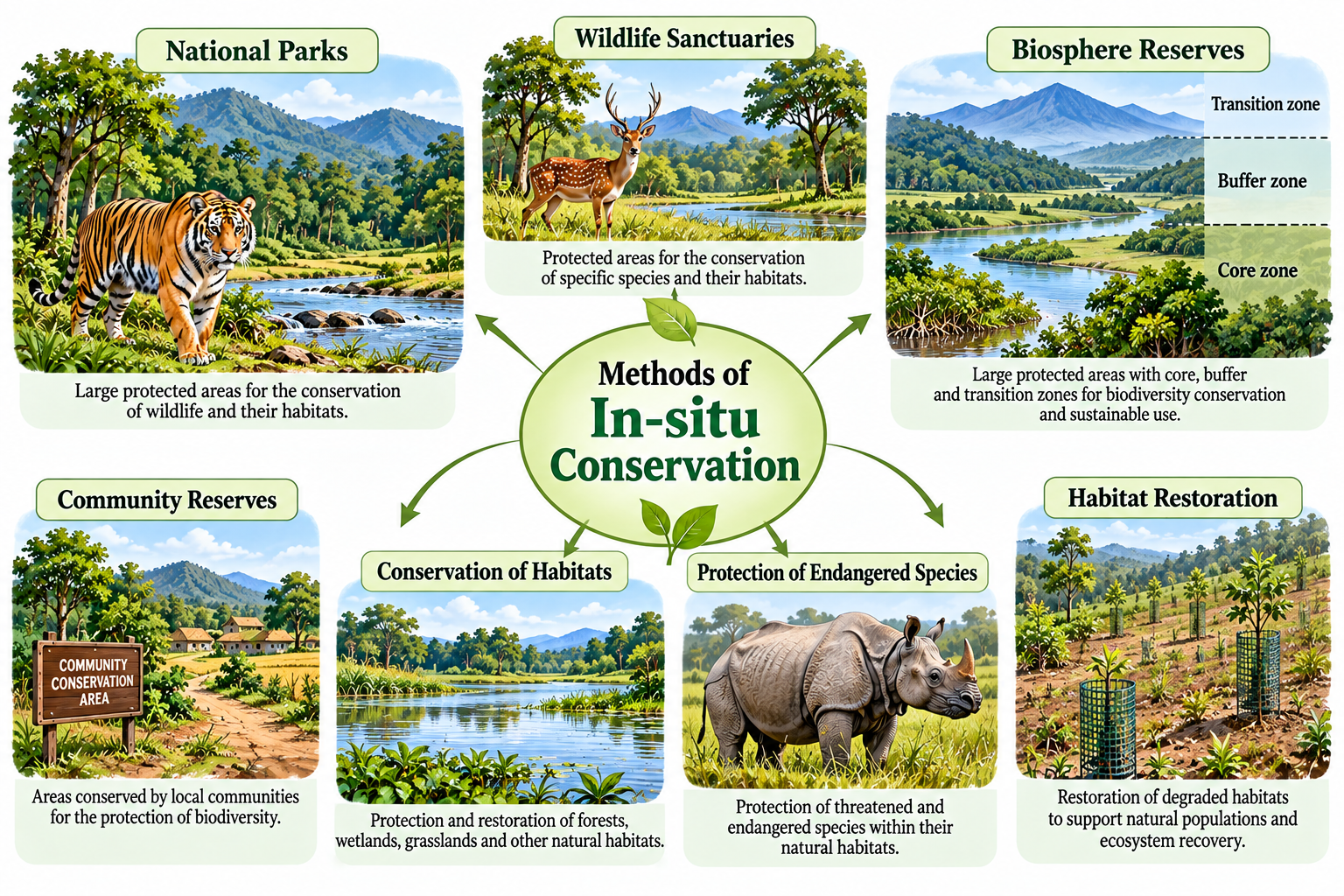
1. National Parks
National parks are protected areas established to conserve wildlife, natural habitats, and ecological processes. Human activities that may damage ecosystems, such as hunting and unauthorised resource extraction, are generally prohibited or strictly regulated under applicable laws.
National parks protect a wide range of organisms and their habitats, including forests, grasslands, mountains, and wetlands.
Examples:
- Jim Corbett National Park, Uttarakhand: Known for its Bengal tiger population and diverse forest ecosystems.
- Kaziranga National Park, Assam: Famous for the Indian one-horned rhinoceros.
- Gir National Park and Wildlife Sanctuary, Gujarat: Important for the conservation of Asiatic lions.
2. Wildlife Sanctuaries
Wildlife sanctuaries are protected areas established primarily to conserve wild animals and their habitats. Certain human activities may be permitted or regulated according to the applicable legal framework and management plan.
These areas provide shelter, breeding grounds, feeding sites, and movement corridors for wildlife.
Examples:
- National Chambal Sanctuary: Protects the gharial, Gangetic river dolphin, and other aquatic wildlife.
- Vedanthangal Bird Sanctuary, Tamil Nadu: An important habitat for resident and migratory birds.
- Wayanad Wildlife Sanctuary, Kerala: Supports elephants, tigers, and numerous other species.
3. Biosphere Reserves
Biosphere reserves are designated areas that aim to reconcile biodiversity conservation with sustainable human use and scientific research. They commonly include three zones.
- Core zone: A strictly protected area devoted primarily to conservation.
- Buffer zone: An area surrounding or adjoining the core where activities such as research, education, and compatible management may take place.
- Transition zone: An area where communities may practise sustainable economic and social activities.
Examples:
- Nilgiri Biosphere Reserve: Spans parts of Tamil Nadu, Kerala, and Karnataka and supports diverse Western Ghats ecosystems.
- Sundarbans Biosphere Reserve: Protects mangrove ecosystems and their associated wildlife.
- Nanda Devi Biosphere Reserve: Conserves Himalayan ecosystems and distinctive mountain biodiversity.
4. Sacred Groves
Sacred groves are patches of natural vegetation protected by local communities because of religious, cultural, or traditional beliefs. These areas can preserve native plants, animals, and microorganisms, particularly where surrounding landscapes have been modified.
Sacred groves occur in several parts of India, including the Western Ghats, Meghalaya, Rajasthan, and other regions. Their conservation often depends on community traditions and local stewardship.
5. Habitat Restoration
Habitat restoration involves assisting the recovery of ecosystems that have been damaged or degraded by human activities or natural disturbances.
Examples include:
- Replanting native vegetation in degraded forests.
- Restoring wetlands and mangrove ecosystems.
- Rehabilitating grasslands for native wildlife.
- Removing invasive species where appropriate.
- Reconnecting fragmented habitats through wildlife corridors.
Restoration improves habitat quality and can help threatened populations recover within their natural ranges.
Habitat restoration can also encourage ecological succession, helping degraded ecosystems recover their structure and biological communities.
6. Community-Based Conservation
Community-based conservation involves local and Indigenous communities in protecting biodiversity and managing natural resources. Local knowledge, participation, and appropriate incentives can improve conservation outcomes.
Examples include community forest management, protection of nesting sites, sustainable grazing practices, and local initiatives to reduce poaching or habitat destruction.
7. On-site Conservation of Agricultural Biodiversity
In-situ conservation can also protect traditional crop varieties and their wild relatives in the environments where they naturally grow or are traditionally cultivated. This helps maintain genetic diversity and supports the continued adaptation of plants to local environmental conditions.
For example, farmers may continue cultivating traditional rice varieties in their regions, preserving genetic resources that may be valuable for future crop improvement.
The choice of in-situ conservation method depends on the species, habitat, conservation objectives, legal framework, and the needs of local communities.
Examples of In-situ Conservation
In-situ conservation protects organisms within their natural habitats, allowing wild populations and ecological communities to continue functioning under natural conditions. India has several important conservation areas that protect threatened animals, plants, and entire ecosystems.
1. Conservation of Bengal Tigers
The Bengal tiger (Panthera tigris tigris) is protected through national parks, tiger reserves, and other wildlife conservation areas in India.
Example: Jim Corbett Tiger Reserve, Uttarakhand
Jim Corbett is one of India’s best-known tiger conservation areas. Protection of forest habitats, monitoring of tiger populations, anti-poaching measures, and conservation of prey species support tiger survival in the wild.
This is an example of in-situ conservation because tigers are protected within their natural forest ecosystems.
2. Conservation of the Asiatic Lion
The Asiatic lion (Panthera leo persica) survives in the wild in and around the Gir landscape of Gujarat, India.
Example: Gir National Park and Wildlife Sanctuary, Gujarat
Conservation efforts include habitat protection, monitoring, veterinary support where needed, and management of human–wildlife interactions. Protecting the wider landscape also benefits other species that share the habitat.
3. Conservation of the Indian One-Horned Rhinoceros
The Indian one-horned rhinoceros (Rhinoceros unicornis) is a threatened large mammal associated with grasslands and floodplain habitats.
Example: Kaziranga National Park, Assam
Kaziranga protects important rhinoceros populations and their wetland and grassland habitats. Anti-poaching measures, habitat management, and wildlife monitoring contribute to conservation.
4. Conservation of the Gharial
The gharial (Gavialis gangeticus) is a critically endangered crocodilian associated with freshwater river systems.
Example: National Chambal Sanctuary
The sanctuary protects river habitats used by gharials and other aquatic wildlife. Conservation activities focus on reducing threats such as accidental capture in fishing equipment, disturbance of nesting sites, and degradation of river habitats.
5. Conservation of the Olive Ridley Sea Turtle
The olive ridley sea turtle (Lepidochelys olivacea) nests on beaches along parts of India’s coastline.
Example: Gahirmatha Marine Wildlife Sanctuary, Odisha
Protection of nesting beaches, monitoring of nesting activity, and measures to reduce fishing-related mortality help conserve sea turtles in their natural coastal and marine environments.
6. Conservation of the Nilgiri Tahr
The Nilgiri tahr (Nilgiritragus hylocrius) is a mountain ungulate endemic to the Western Ghats of southern India.
Example: Eravikulam National Park, Kerala
The park protects montane grasslands and associated habitats used by Nilgiri tahrs. Habitat conservation and monitoring help support wild populations of this species.
7. Conservation of Mangrove Ecosystems
Mangrove forests provide breeding and nursery habitats for many aquatic organisms and help protect coastlines from erosion and storm impacts.
Example: Sundarbans
The Sundarbans, shared by India and Bangladesh, contain extensive mangrove ecosystems that support diverse wildlife, including the Bengal tiger. Protecting this habitat conserves numerous species and the ecological processes that connect them.
8. Conservation of Sacred Groves
Sacred groves are naturally vegetated areas protected through local cultural traditions and community practices.
In parts of Meghalaya, for example, sacred forests conserve native vegetation and provide habitats for numerous organisms. These areas demonstrate how community traditions can contribute to the protection of biodiversity within natural ecosystems.
Advantages and Limitations of In-situ Conservation
In-situ conservation protects species within their natural habitats and maintains the ecological relationships that support their survival. Although this approach is essential for long-term biodiversity conservation, its effectiveness depends on habitat quality, environmental conditions, and the management of threats.
1. Advantages of In-situ Conservation
A. Protection of natural habitats
In-situ conservation protects the habitats in which organisms naturally live, including forests, grasslands, wetlands, rivers, and marine ecosystems. This helps preserve the environmental conditions necessary for survival and reproduction.
B. Conservation of multiple species
Protecting an ecosystem can benefit numerous species simultaneously. For example, conserving a forest for tigers also protects prey animals, birds, plants, insects, and microorganisms associated with the forest.
C. Maintenance of natural ecological processes
Organisms can continue to interact through predation, competition, pollination, decomposition, and nutrient cycling. These interactions contribute to the functioning of ecosystems.
D. Preservation of genetic diversity
Wild populations can maintain genetic variation through natural reproduction, mutation, and gene flow between populations when suitable habitat connectivity exists. This variation may support adaptation to changing environmental conditions.
E. Support for natural evolution and adaptation
Species remain exposed to natural selection and changing environmental conditions. These processes can influence the long-term adaptation and evolution of populations.
F. Conservation at ecosystem scale
In-situ conservation can protect entire landscapes and ecological communities rather than focusing exclusively on selected species. Large protected areas and wildlife corridors can help maintain habitat connectivity.
G. Opportunities for research and education
Protected areas provide opportunities to study animal behaviour, population dynamics, ecosystem functioning, and conservation biology under natural conditions.
2. Limitations of In-situ Conservation
A. Vulnerability to natural disasters
Wild populations may be affected by floods, droughts, forest fires, cyclones, and other environmental disturbances. Severe events can damage habitats and reduce population size even within protected areas.
B. Continued threats from human activities
Poaching, illegal wildlife trade, pollution, encroachment, and habitat fragmentation may continue to threaten species despite legal protection.
C. Large habitat requirements
Some species require extensive territories or connected habitats. Protecting sufficiently large areas can be difficult where human settlements, agriculture, roads, and other land uses fragment natural landscapes.
D. Conflicts between humans and wildlife
Wild animals may damage crops, prey on livestock, or enter settlements when their habitats overlap with human activities. Such conflicts can create challenges for conservation authorities and local communities.
E. Difficulty protecting critically endangered populations
When a species has very few surviving individuals, disease, inbreeding, accidental mortality, or sudden environmental changes may threaten its survival even in a protected habitat.
F. Management and funding requirements
Effective conservation requires regular monitoring, trained personnel, law enforcement, habitat management, scientific research, and cooperation with local communities. Limited funding or administrative capacity can reduce effectiveness.
G. Slow recovery of degraded ecosystems
Restoring habitats and rebuilding wild populations may take many years. Some ecosystems may be difficult to restore fully after severe degradation.
The limitations of in-situ conservation do not reduce its importance; rather, they demonstrate why habitat protection sometimes needs to be supported by additional conservation measures, including ex-situ methods.
What Is Ex-situ Conservation?
Ex-situ conservation is the method of protecting and maintaining species outside their natural habitats under controlled or managed conditions. It is particularly useful when organisms face severe threats in the wild, their habitats have been destroyed, or their populations have declined to dangerously low levels.
The term ex-situ means “outside the original place.” Unlike in-situ conservation, which protects organisms within their natural ecosystems, ex-situ conservation involves transferring organisms or preserving their biological material in specialised facilities.
Examples include zoological parks, botanical gardens, seed banks, gene banks, tissue culture laboratories, and captive-breeding programmes.
1. Characteristics of Ex-situ Conservation
The main characteristics of ex-situ conservation include:
- Protection outside natural habitats: Organisms are maintained in facilities or environments different from their original habitats.
- Controlled environmental conditions: Temperature, humidity, nutrition, light, and other conditions may be regulated according to the needs of the species.
- Specialised care: Threatened organisms may receive veterinary treatment, assisted reproduction, nutritional support, and protection from predators.
- Captive breeding: Individuals may be bred under managed conditions to increase population size and preserve genetic diversity.
- Preservation of genetic material: Seeds, sperm, eggs, embryos, tissues, and other biological materials may be stored for future use.
- Research and education: Ex-situ facilities support scientific research, conservation education, and public awareness.
- Support for species recovery: Organisms bred or propagated outside their natural habitats may sometimes be reintroduced into suitable habitats after appropriate assessment.
2. Objectives of Ex-situ Conservation
The major objectives of ex-situ conservation are:
- To prevent the extinction of threatened and endangered species.
- To maintain individuals of species whose natural habitats are severely degraded.
- To preserve genetic diversity through breeding programmes and genetic-resource storage.
- To support scientific research on reproduction, genetics, disease, and species biology.
- To produce plants or animals for carefully planned reintroduction programmes.
- To preserve valuable agricultural and wild genetic resources.
- To educate the public about biodiversity loss and conservation.
3. How Does Ex-situ Conservation Work?
Ex-situ conservation begins with identifying the species or genetic resources requiring protection. Conservation specialists then select an appropriate method based on the organism’s biology, conservation status, and available resources.
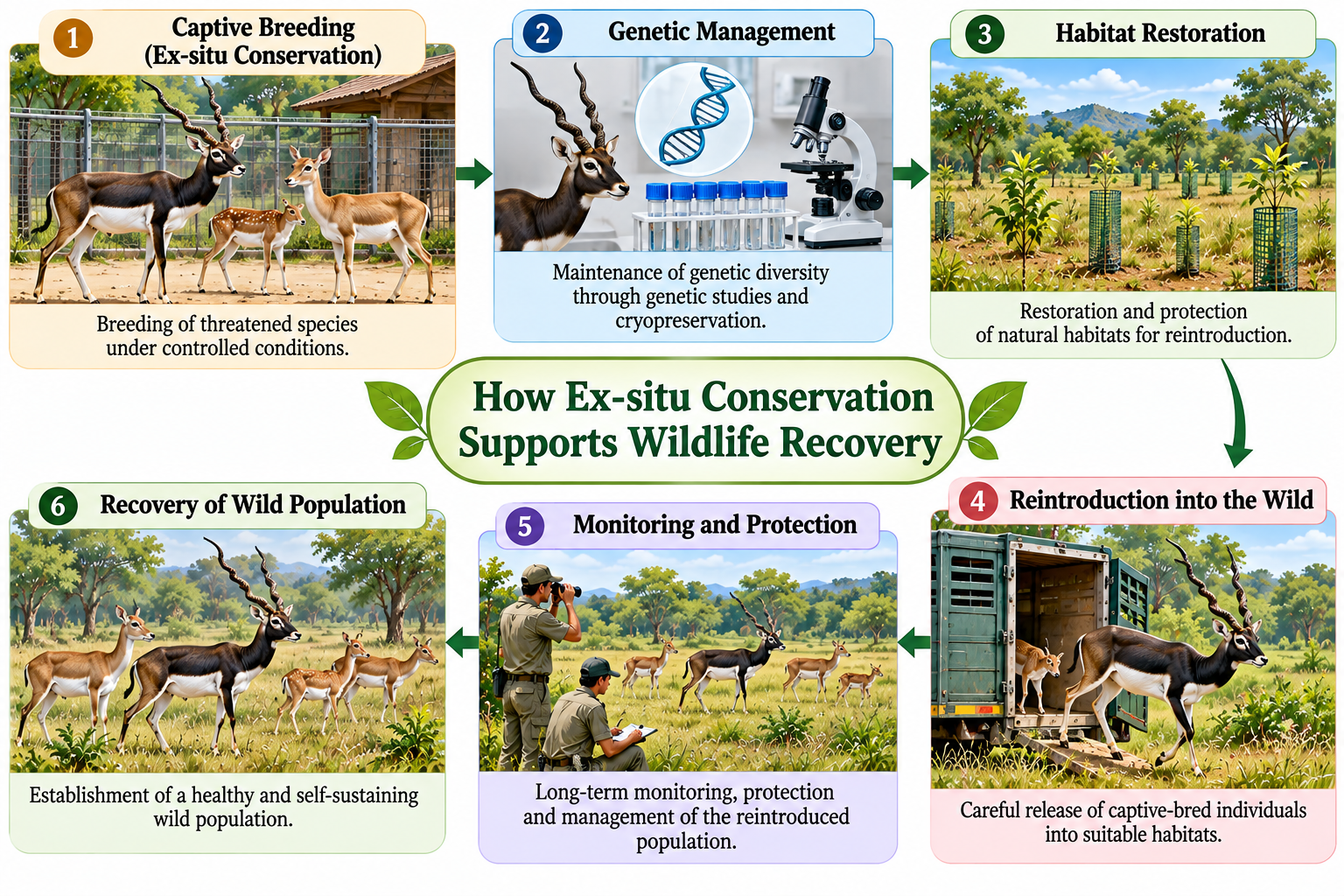
For example, a threatened animal may be maintained in a zoological institution and bred under a carefully managed programme. Genetic records can help reduce inbreeding and maintain genetic diversity. If suitable habitat remains available and the causes of decline have been addressed, selected individuals may eventually be considered for release into the wild.
For plants, seeds may be collected and stored in seed banks under conditions that preserve their viability. Species with seeds that cannot tolerate conventional storage may require specialised techniques, such as tissue culture or cryopreservation.
Ex-situ conservation therefore requires scientific planning, appropriate facilities, genetic management, and long-term monitoring. Its success depends not only on maintaining organisms in captivity or storage but also on achieving clear conservation objectives.
Methods of Ex-situ Conservation
Ex-situ conservation uses specialised facilities and scientific techniques to protect threatened organisms and preserve their genetic resources outside their natural habitats. The method selected depends on the species, its reproductive biology, conservation status, and the purpose of the programme.
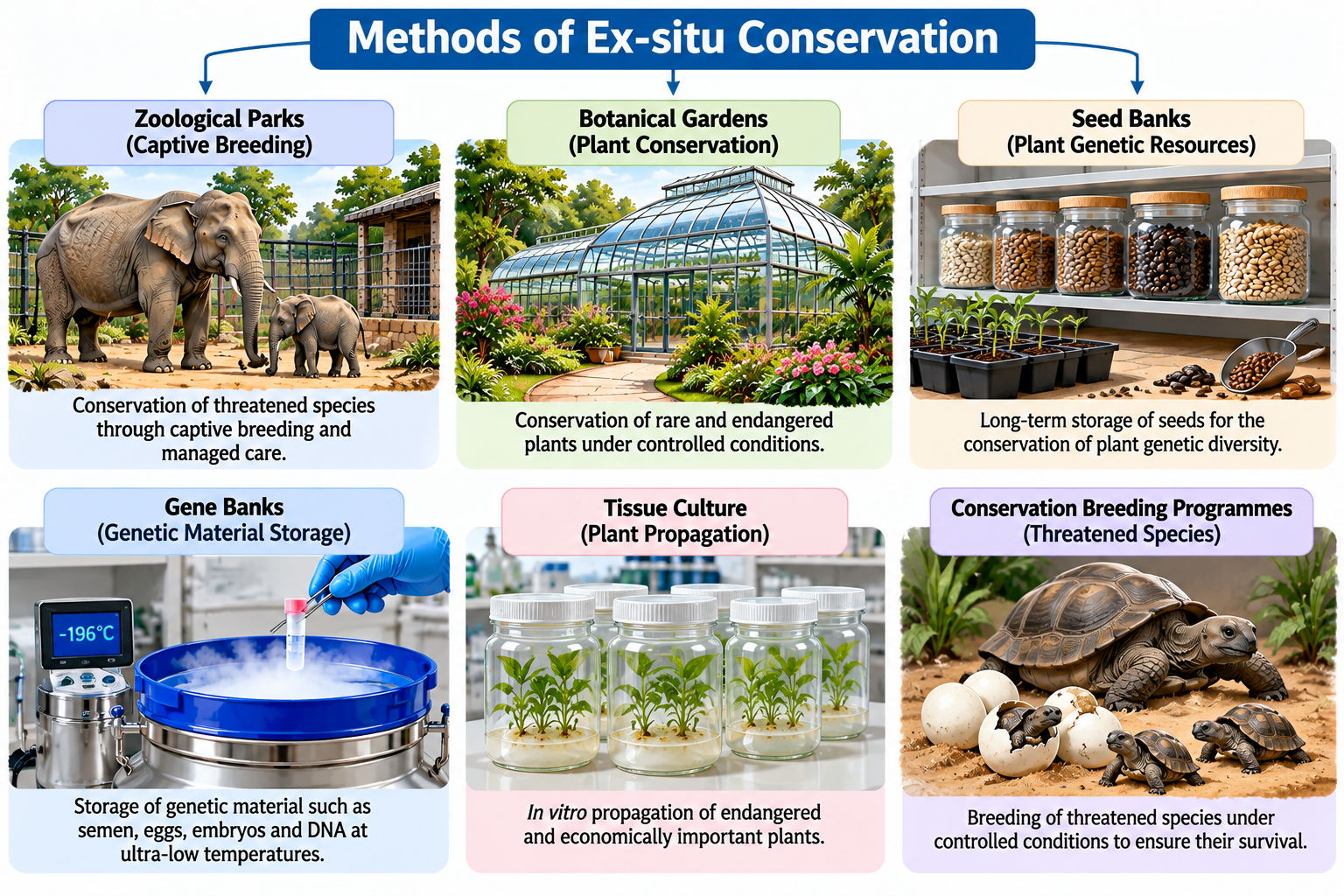
1. Zoological Parks
Zoological parks, commonly called zoos, maintain wild animals under managed conditions for conservation, research, education, and public awareness. Modern conservation-focused zoos may participate in coordinated breeding programmes for threatened species.
Examples:
- National Zoological Park, New Delhi: Maintains a variety of wild animal species and supports public education.
- Padmaja Naidu Himalayan Zoological Park, Darjeeling: Known for conservation work involving Himalayan species, including red pandas and snow leopards.
Zoological parks can contribute to species conservation through veterinary care, genetic management, captive breeding, and collaboration with field conservation programmes.
2. Botanical Gardens
Botanical gardens maintain living collections of plants outside their natural habitats. They may conserve rare and threatened species, support plant research, and provide material for propagation and restoration projects.
Examples:
- Acharya Jagadish Chandra Bose Indian Botanic Garden, Howrah: Houses diverse plant collections, including important tree specimens.
- Lalbagh Botanical Garden, Bengaluru: Maintains a wide variety of plant species and supports botanical education and conservation awareness.
Botanical gardens can propagate threatened plants and provide material for restoration projects when suitable habitats and conservation plans are available.
3. Seed Banks
Seed banks preserve seeds under controlled conditions to maintain their viability for future use. Seeds are generally dried and stored at low temperatures when the species can tolerate these conditions.
Seed banks help preserve genetic diversity in crop plants, their wild relatives, and certain threatened plant species. Stored seeds may be used for research, plant breeding, restoration, and recovery programmes.
However, not all seeds tolerate conventional storage. Species with recalcitrant seeds, which are sensitive to drying and low temperatures, may require alternative conservation methods.
4. Gene Banks
Gene banks preserve genetic material from plants, animals, and microorganisms. Depending on the organism, stored material may include seeds, pollen, sperm, eggs, embryos, tissues, or DNA samples.
Animal genetic-resource banks may preserve reproductive material for future breeding programmes. Plant gene banks may maintain seeds or living collections of valuable genetic resources.
Gene banks are particularly important for preserving genetic variation that might otherwise be lost through extinction, habitat destruction, or the replacement of traditional crop varieties.
5. Captive-Breeding Programmes
Captive breeding involves reproducing threatened animals under managed conditions to increase population size or maintain genetic diversity.
Successful programmes require knowledge of reproductive behaviour, nutrition, veterinary care, mating compatibility, and population genetics. Coordinated breeding records can help minimise inbreeding and retain genetic variation.
Example: Conservation-breeding programmes for the California condor have helped increase the species’ numbers, alongside continued habitat protection and other recovery measures.
Captive breeding does not automatically ensure long-term survival. Reintroduction requires suitable habitat, attention to the original threats, and post-release monitoring.
6. Tissue Culture and Micropropagation
Plant tissue culture involves growing plant cells, tissues, or organs under sterile conditions on a suitable nutrient medium. Micropropagation uses these techniques to produce multiple plants from a small amount of starting material.
These methods can be valuable for rare plants that reproduce slowly, have limited seed production, or require specialised propagation techniques.
Tissue culture is also used in research and the multiplication of plants for botanical collections and restoration programmes. Genetic stability must be monitored because some tissue-culture methods can produce unintended variation.
7. Cryopreservation
Cryopreservation involves storing biological material at extremely low temperatures, commonly using liquid nitrogen at approximately −196°C. At these temperatures, cellular metabolism is greatly reduced or effectively halted.
Depending on the species and protocol, material such as sperm, eggs, embryos, plant tissues, and other biological samples may be preserved.
Cryopreservation can support long-term genetic-resource conservation, but success depends on appropriate preparation, cooling and warming procedures, and the ability to recover viable material.
8. Aquaria and Specialised Aquatic Facilities
Aquaria and specialised aquatic conservation facilities maintain aquatic organisms under managed conditions. Water temperature, salinity, dissolved oxygen, nutrition, and water quality must be controlled according to the species’ requirements.
Such facilities may support research, education, captive breeding, and conservation programmes for selected freshwater and marine organisms.
However, maintaining aquatic species outside their natural habitats can be technically demanding, and not every species can be bred successfully in captivity.
9. Field Gene Banks
Field gene banks maintain living plants in cultivated collections rather than storing only seeds or tissues. They are useful for species that produce seeds that are difficult to store conventionally or for crops that are commonly propagated vegetatively.
Examples include collections of fruit trees, banana varieties, and other plants whose genetic resources may be maintained as living specimens.
Field gene banks require land, maintenance, protection against pests and diseases, and careful documentation. They can be vulnerable to extreme weather and other local threats.
10. DNA and Tissue Collections
DNA and tissue collections preserve samples for genetic analysis, taxonomic research, and studies of population diversity. Such collections can help researchers identify genetic relationships and investigate variation within and between populations.
However, preserving DNA alone does not preserve a living population or guarantee that a species can later be recreated. These collections are most effective when integrated with broader conservation strategies.
The choice of ex-situ method depends on whether the goal is to maintain living organisms, support reproduction, preserve genetic material, or provide resources for future research and species recovery.
Examples of Ex-situ Conservation
Ex-situ conservation is used worldwide to protect threatened animals, preserve rare plants, maintain genetic resources, and support species recovery. The following examples illustrate how different facilities and techniques contribute to biodiversity conservation.
1. Conservation of the Red Panda
The red panda (Ailurus fulgens) is an endangered mammal native to the eastern Himalayas and neighbouring regions. Habitat loss, fragmentation, and other human pressures threaten its survival.
Example: Padmaja Naidu Himalayan Zoological Park, Darjeeling, India
The zoological park has been associated with conservation-breeding efforts for red pandas. Managed care, veterinary support, reproductive management, and scientific monitoring can help maintain populations outside their natural habitats.
This is an example of ex-situ conservation because the animals are maintained under managed conditions rather than solely in their natural forest habitats.
2. Conservation of the California Condor
The California condor (Gymnogyps californianus) is a critically endangered scavenging bird native to North America. Its population declined severely because of factors including lead poisoning, habitat-related pressures, and other threats.
Example: Captive-breeding programmes in the United States
Captive breeding has played a major role in the species’ recovery. Birds bred in managed facilities have been released into suitable habitats as part of coordinated recovery programmes.
The programme demonstrates how ex-situ breeding can support the recovery of a species when combined with habitat protection, threat reduction, and long-term monitoring.
3. Conservation of Rare Plants in Botanical Gardens
Botanical gardens maintain living collections of plant species that may be rare, threatened, or difficult to conserve through conventional methods.
Example: Indian Botanic Garden, Howrah
Botanical gardens support plant identification, research, propagation, and conservation education. Living collections can help safeguard selected plant species and provide material for scientific study and restoration initiatives.
Plants maintained outside their natural habitats are an example of ex-situ conservation.
4. Conservation of Crop Diversity in Seed Banks
Seed banks preserve seeds from crop varieties, wild relatives, and other plants to maintain genetic resources for future use.
Example: National Bureau of Plant Genetic Resources (NBPGR), India
NBPGR maintains plant genetic resources and supports their collection, conservation, documentation, and use. Seed storage can help preserve crop diversity that may be important for future agricultural research and breeding.
Seed banks are particularly valuable when stored seeds remain viable under the selected storage conditions.
5. Conservation of Animal Genetic Resources
Genetic-resource banks may preserve sperm, eggs, embryos, tissues, or other biological materials from selected animals.
Such collections can support future breeding programmes, research, and the maintenance of genetic diversity. Their usefulness depends on the quality of stored material, the availability of suitable reproductive techniques, and the biological requirements of the species.
6. Conservation of Threatened Plants Through Tissue Culture
Some threatened plants reproduce slowly, produce few seeds, or are difficult to propagate using conventional methods.
Tissue culture allows plant cells, tissues, or organs to grow under sterile conditions on suitable nutrient media. Micropropagation can produce many plants from a small amount of starting material.
These techniques may support the multiplication of rare plants for botanical collections, research, and carefully planned habitat-restoration projects.
7. Cryopreservation of Genetic Material
Cryopreservation preserves biological material at extremely low temperatures, commonly in liquid nitrogen. Depending on the species and protocol, sperm, eggs, embryos, tissues, or plant material may be stored for long periods.
This approach can preserve valuable genetic resources for future research and conservation breeding. Successful recovery depends on the material being stored and the specialised procedures used.
8. Conservation of Amphibians in Captive Facilities
Many amphibians are threatened by habitat loss, pollution, infectious diseases, invasive species, and climate change. Specialised conservation facilities may maintain selected threatened species in carefully managed environments.
These programmes can support breeding, veterinary research, and the development of methods for future recovery. However, maintaining amphibians outside their natural habitats requires careful control of temperature, humidity, water quality, nutrition, and disease transmission.
Captive populations are most useful when their conservation purpose is clearly defined and the causes of decline in the wild are addressed alongside ex-situ efforts.
Advantages and Limitations of Ex-situ Conservation
Ex-situ conservation protects threatened organisms and their genetic resources outside their natural habitats. It provides specialised care, controlled breeding, and long-term storage of biological material. However, its effectiveness depends on the species, available facilities, genetic management, and the conservation objectives of the programme.
1. Advantages of Ex-situ Conservation
A. Protection from immediate threats
Organisms maintained in managed facilities may receive protection from poaching, predators, habitat destruction, and some environmental hazards. This can be particularly valuable for species with very small wild populations.
B. Controlled breeding
Captive-breeding programmes can help increase the number of individuals in threatened populations. Careful management of mating and reproduction can also help reduce inbreeding and retain genetic diversity.
C. Preservation of genetic material
Seed banks, gene banks, and cryopreservation facilities can preserve biological material for future research, breeding, and conservation programmes. These methods are especially important when wild populations decline or valuable genetic resources are at risk of being lost.
D. Scientific research
Ex-situ facilities allow researchers to study reproduction, behaviour, genetics, nutrition, diseases, and development under managed conditions. This knowledge can contribute to species recovery and improve conservation practices.
E. Support for reintroduction programmes
Animals bred in captivity and plants propagated in specialised facilities may be used in carefully planned reintroduction or restoration programmes. Such efforts require suitable habitats, assessment of risks, and monitoring after release or planting.
F. Conservation of rare plants
Botanical gardens, tissue-culture laboratories, and field gene banks can maintain and propagate plant species that are difficult to conserve through conventional methods. They can also provide material for research and habitat restoration.
G. Education and public awareness
Zoological parks, botanical gardens, and conservation centres can educate the public about endangered species, habitat loss, biodiversity, and the importance of conservation.
2. Limitations of Ex-situ Conservation
A. High cost of maintenance
Specialised facilities require funding for infrastructure, trained personnel, veterinary care, nutrition, environmental control, and long-term monitoring. These costs can limit the number of species that can be maintained.
B. Limited space and population size
Facilities cannot accommodate all threatened species or maintain every wild population at an appropriate scale. Small captive populations may also be vulnerable to demographic fluctuations and loss of genetic diversity.
C. Loss of natural behaviour
Animals raised in captivity may have limited opportunities to develop natural foraging, predator-avoidance, migration, or social behaviours. These limitations can reduce their suitability for release into the wild.
D. Risk of inbreeding and genetic change
Small captive populations may experience inbreeding and genetic drift. Adaptation to captive conditions can also occur over generations, potentially reducing the fitness of individuals in natural environments.
E. Incomplete protection of ecosystems
Ex-situ conservation generally focuses on selected organisms or biological material rather than maintaining entire ecosystems. It cannot independently preserve all natural ecological relationships, such as food webs, migration routes, and species interactions.
F. Disease risks
Disease can spread among organisms kept in close contact. Quarantine, hygiene, veterinary monitoring, and appropriate facility management are necessary to reduce these risks.
G. Difficulties in reintroduction
Releasing captive-bred organisms does not guarantee successful establishment in the wild. Habitat destruction, poaching, disease, competition, and other original threats may continue to affect survival.
H. Storage limitations for biological material
Not all seeds, tissues, or reproductive cells tolerate long-term storage under the same conditions. Some materials require specialised techniques, and successful recovery may be difficult or impossible if preservation procedures are unsuitable.
Ex-situ conservation is therefore most effective when supported by sound scientific management and, where possible, coordinated with the protection and restoration of natural habitats.
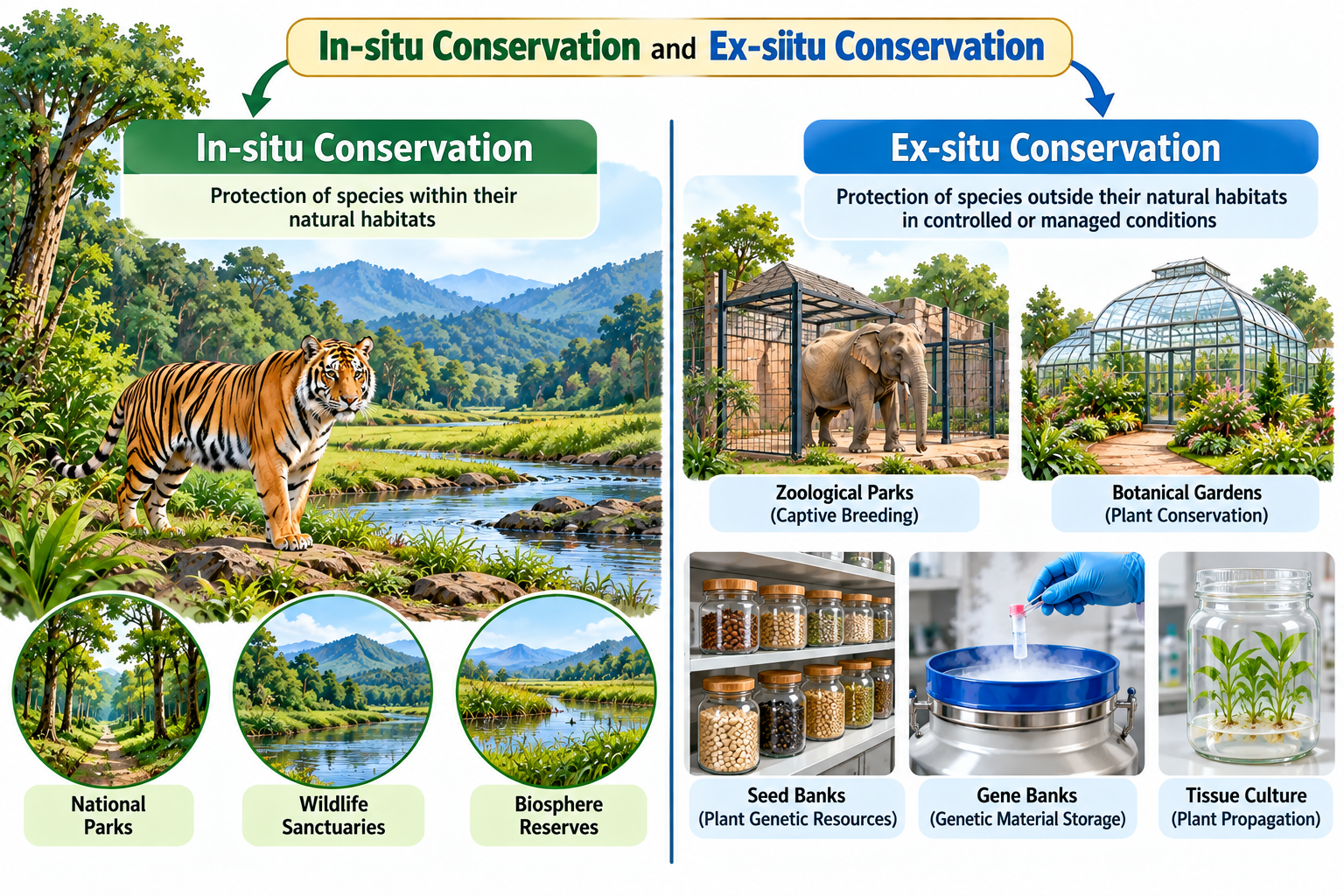
In-situ Conservation and Ex-situ Conservation: Comparison Table
In-situ conservation and ex-situ conservation are complementary approaches used to protect biodiversity. The primary difference is that in-situ conservation protects organisms within their natural habitats, whereas ex-situ conservation maintains organisms or their genetic material outside their natural habitats.
Differences Between In-situ Conservation and Ex-situ Conservation
| Basis of Comparison | In-situ Conservation | Ex-situ Conservation |
|---|---|---|
| Meaning | Conservation of organisms within their natural habitats. | Conservation of organisms or genetic material outside their natural habitats. |
| Location | Natural ecosystems. | Managed facilities or specialised storage systems. |
| Main objective | Protect species, habitats, and ecological processes. | Protect selected species, individuals, and genetic resources. |
| Environmental conditions | Organisms experience natural environmental conditions. | Conditions may be controlled or managed according to the species’ needs. |
| Scope | Can protect entire ecosystems and many species together. | Usually focuses on selected species or biological material. |
| Natural reproduction | Organisms reproduce naturally within their habitats. | Reproduction may occur under managed conditions. |
| Genetic diversity | Can maintain natural gene flow when populations and habitats remain connected. | Requires careful genetic management to reduce inbreeding and genetic loss. |
| Evolutionary processes | Natural selection and ecological interactions continue in the wild. | Natural ecological interactions are limited or altered by managed conditions. |
| Human intervention | May involve habitat management, monitoring, and law enforcement. | Usually requires direct management, specialised facilities, or preservation techniques. |
| Cost | Costs vary with habitat size, monitoring, enforcement, and management needs. | Often requires specialised infrastructure, trained staff, and ongoing maintenance. |
| Examples | National parks, wildlife sanctuaries, biosphere reserves, and sacred groves. | Zoological parks, botanical gardens, seed banks, gene banks, and captive-breeding facilities. |
| Major advantage | Conserves species in their natural ecological settings. | Provides specialised protection and can preserve genetic material. |
| Major limitation | Species may remain exposed to environmental disturbances and threats in the wild. | May not preserve entire ecosystems or natural ecological relationships. |
| Role in species recovery | Protects wild populations and their habitats. | Can support breeding, genetic-resource preservation, and reintroduction programmes. |
Similarities Between In-situ and Ex-situ Conservation
Despite their differences, both approaches share several objectives:
- Both aim to prevent the extinction of species and reduce biodiversity loss.
- Both can help preserve genetic diversity.
- Both support scientific research and conservation planning.
- Both can contribute to the recovery of threatened species.
- Both require appropriate planning, monitoring, resources, and long-term management.
- Both may be used together within an integrated conservation programme.
Which Is Better: In-situ and Ex-situ Methods?
Neither of the in-situ and ex-situ methods is universally better. The appropriate approach depends on the species, the severity of threats, the condition of its natural habitat, and the available conservation resources.
In-situ conservation is generally central to long-term biodiversity protection because it maintains organisms within their ecological settings. Ex-situ conservation is especially valuable when a species requires immediate protection, when its population is critically small, or when genetic material must be preserved.
For example, protecting wild tiger populations and their forest habitats can be supported by ex-situ research or carefully managed breeding programmes where appropriate. Combining suitable methods can strengthen conservation efforts when each addresses a specific need.
Importance of In-situ Conservation and Ex-situ Conservation
In-situ conservation and ex-situ conservation play important roles in protecting biodiversity, maintaining genetic resources, and preventing species extinction. Each method addresses different conservation challenges, and their combined use can improve the prospects of threatened species.
1. Prevention of Species Extinction
Both methods can help reduce the risk of extinction. In-situ conservation protects wild populations by maintaining suitable habitats and reducing threats such as poaching and habitat destruction. Ex-situ conservation can provide additional protection to selected threatened species through managed breeding and the preservation of biological material.
For example, protecting rhinoceros populations in national parks can be supported by veterinary care, scientific research, and other specialised conservation measures.
2. Maintenance of Genetic Diversity
Genetic diversity enables populations to respond to environmental changes and may improve their capacity to withstand diseases.
In-situ conservation can maintain genetic variation through natural reproduction and gene flow among connected populations. Ex-situ conservation can preserve selected genetic resources in seed banks, gene banks, and cryopreservation facilities.
Together, these approaches can reduce the risk of losing valuable genetic variation.
3. Protection of Natural Habitats and Ecosystems
In-situ conservation is essential for protecting habitats and ecological processes. National parks, wildlife sanctuaries, biosphere reserves, and other protected areas can conserve multiple species within functioning ecosystems.
Ex-situ conservation supports these efforts by maintaining selected organisms or genetic material outside their original habitats. However, it cannot independently replace the ecological functions of a complete natural ecosystem.
Healthy ecosystems depend on interconnected processes such as energy flow in ecosystems, which supports food webs and ecological stability.
4. Recovery of Threatened Species
Some threatened species require several conservation measures to recover successfully.
In-situ conservation addresses threats in the wild, including habitat degradation, poaching, and human–wildlife conflict. Ex-situ conservation may provide captive-bred individuals, propagation material, or genetic resources for carefully planned recovery programmes.
Reintroduction is most likely to succeed when suitable habitats are available and the original causes of population decline have been reduced.
5. Support for Scientific Research
Both approaches contribute to conservation science.
Natural habitats allow researchers to study animal behaviour, population dynamics, ecological interactions, and adaptation under natural conditions. Ex-situ facilities provide opportunities to investigate reproduction, genetics, nutrition, disease, and developmental biology under managed conditions.
Information from both settings can improve conservation planning and management decisions.
6. Conservation of Plant Genetic Resources
Traditional crop varieties, wild relatives of cultivated plants, and threatened wild plants contain genetic resources that may be valuable for agriculture, research, and ecosystem restoration.
In-situ conservation can protect wild plant populations and traditional cultivation systems. Ex-situ conservation can preserve seeds, living collections, tissues, and other biological material for future use.
7. Sustainable Management of Natural Resources
In-situ conservation can help maintain ecosystems that provide water regulation, soil protection, pollination, fisheries, and other essential services. Ex-situ collections can preserve genetic resources that may support future agricultural research and conservation programmes.
The sustainable use of these resources requires appropriate management and attention to ecological limits.
8. Response to Environmental Change
Climate change, habitat fragmentation, emerging diseases, and other environmental pressures can threaten species across their natural ranges.
In-situ conservation can protect habitat networks and support movement between suitable areas. Ex-situ conservation can provide additional safeguards for selected species and genetic resources that are at risk of being lost.
The most appropriate strategy depends on the species’ biology, the nature of the threat, and the feasibility of protecting or restoring its natural habitat.
Frequently Asked Questions (FAQs)
What is the main difference between in-situ conservation and ex-situ conservation?
What are the main methods of in-situ conservation?
What are the main methods of ex-situ conservation?
Which method is better: in-situ conservation or ex-situ conservation?
Give two examples of in-situ conservation in India.
Gir National Park and Wildlife Sanctuary: Protects the remaining wild population of Asiatic lions.
Kaziranga National Park: Provides important habitat for the greater one-horned rhinoceros.
Give two examples of ex-situ conservation.
Seed banks: Store seeds of crop plants and other plant species to preserve genetic diversity.
Captive breeding programmes: Breed threatened animals in managed facilities to support population recovery and, where suitable, reintroduction into the wild.
How do seed banks help in biodiversity conservation?
What is the role of national parks in in-situ conservation?
Can ex-situ conservation help in the reintroduction of endangered species?
Why are both in-situ and ex-situ conservation important?
Conclusion
In-situ conservation and ex-situ conservation are two complementary approaches to biodiversity conservation. In-situ conservation protects organisms within their natural habitats, maintaining ecological relationships, natural evolutionary processes, and ecosystem stability. National parks, wildlife sanctuaries, and biosphere reserves are important examples of this approach.
Ex-situ conservation protects threatened species and genetic resources outside their natural habitats through methods such as captive breeding, zoological parks, botanical gardens, seed banks, gene banks, and cryopreservation. It is particularly valuable when species face severe threats in the wild or require specialised care and management.
Although both methods have certain limitations, their combined application can improve the survival prospects of endangered species and help preserve genetic diversity. Effective conservation also requires habitat restoration, scientific research, public awareness, community participation, and strong environmental protection measures.
Therefore, in-situ conservation and ex-situ conservation should be regarded as complementary strategies rather than competing alternatives. Their coordinated use is essential for protecting biodiversity and ensuring that biological resources remain available for future generations.
References
- Convention on Biological Diversity (CBD). Text of the Convention on Biological Diversity.
https://www.cbd.int/convention/text/ - International Union for Conservation of Nature (IUCN). The IUCN Red List of Threatened Species.
https://www.iucnredlist.org/ - International Union for Conservation of Nature (IUCN). Guidelines for Reintroductions and Other Conservation Translocations.
https://portals.iucn.org/library/ - Food and Agriculture Organization of the United Nations (FAO). Genetic Resources.
https://www.fao.org/genetic-resources/en/ - Botanical Survey of India (BSI). Official Website and Botanical Research Resources.
https://bsi.gov.in/ - National Bureau of Plant Genetic Resources (NBPGR), Indian Council of Agricultural Research (ICAR). Plant Genetic Resources Conservation and Management.
https://nbpgr.icar.gov.in/ - Ministry of Environment, Forest and Climate Change (MoEFCC), Government of India. Biodiversity and Wildlife Conservation Resources.
https://moef.gov.in/ - National Biodiversity Authority (NBA), Government of India. Biodiversity Conservation in India.
https://nbaindia.org/ - Primack, R. B. Essentials of Conservation Biology. Sinauer Associates.
- Groom, M. J., Meffe, G. K., and Carroll, C. R. Principles of Conservation Biology. Sinauer Associates.
Discover more from Zoologyverse
Subscribe to get the latest posts sent to your email.