
Innate Immunity vs Adaptive Immunity
Understanding Innate Immunity vs Adaptive Immunity is important because both systems cooperate to provide effective protection against infection.
The immune system is a complex defense system that protects the body against infectious microorganisms, harmful substances and abnormal cells. It recognizes potential threats, activates appropriate defense mechanisms and helps eliminate the source of infection or damage.
The two major components of this defense system are innate immunity and adaptive immunity. Although these two systems differ in their recognition mechanisms, cellular components, response characteristics and memory, they do not work independently.
Innate Immunity vs Adaptive Immunity can be broadly understood as the difference between rapid pattern-based defense and highly specific antigen-based defense. Innate mechanisms provide immediate protection, while adaptive responses provide highly specific recognition and classical immunological memory.
What Is Innate Immunity?
Innate immunity is the body’s rapid defense system against microorganisms and tissue damage. Its major mechanisms are available before exposure to a particular pathogen and can respond quickly when infection or tissue injury occurs.
Innate immune cells use pattern-recognition receptors (PRRs) to detect conserved molecular structures. These structures may be associated with microorganisms and are called pathogen-associated molecular patterns (PAMPs). Innate immune cells can also detect molecules associated with damaged or stressed host cells, called damage-associated molecular patterns (DAMPs).
Innate immunity is sometimes called “nonspecific immunity.” However, this description is an oversimplification. Innate immune recognition is not random. Instead, it is based on defined receptors that recognize particular classes of molecular patterns.
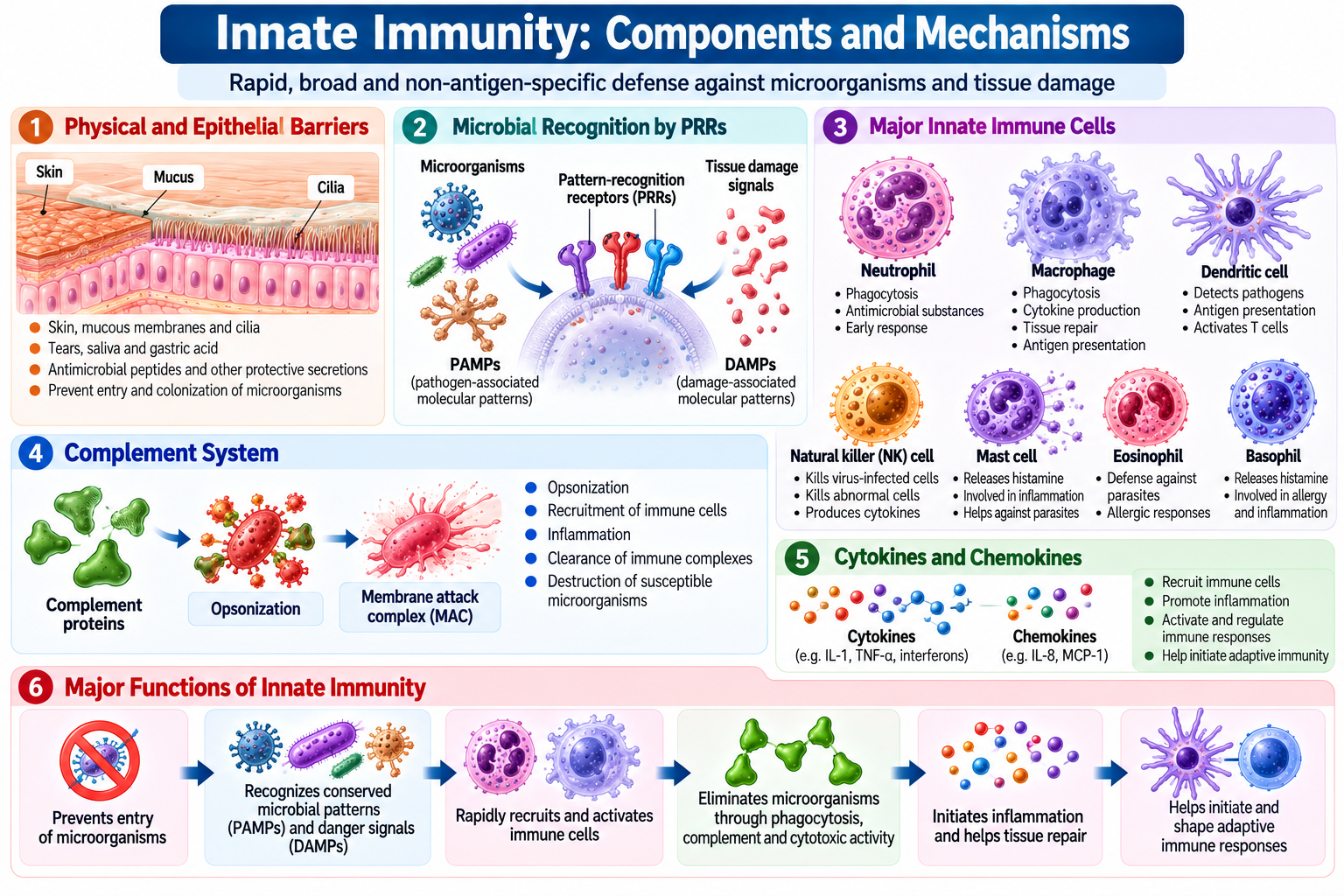
Important components of innate immunity include:
- Physical and epithelial barriers
- Neutrophils
- Macrophages
- Dendritic cells
- Natural killer cells
- Mast cells
- Eosinophils
- Basophils
- Complement proteins
- Cytokines and chemokines
- Antimicrobial substances
- Inflammatory responses
- Type I interferons
Major Components of Innate Immunity
Physical and Epithelial Barriers
The body’s external and internal epithelial surfaces provide the first physical protection against microorganisms.
Examples include:
- Skin
- Mucus
- Cilia
- Tears
- Saliva
- Gastric acid
- Antimicrobial peptides
- Protective epithelial secretions
These barriers reduce the ability of microorganisms to enter or colonize deeper tissues.
Neutrophils
Neutrophils are important phagocytic cells of innate immunity. They rapidly migrate from the bloodstream to sites of infection and inflammation.
Their functions include:
- Phagocytosis
- Destruction of microorganisms
- Release of antimicrobial substances
- Production of reactive oxygen species
- Participation in inflammatory responses
Macrophages
Macrophages are tissue-resident phagocytic cells that recognize and engulf microorganisms, dead cells and cellular debris.
Their functions include:
- Phagocytosis
- Microbial destruction
- Production of inflammatory mediators
- Removal of damaged cells
- Participation in tissue repair
- Antigen presentation under appropriate conditions
Macrophages therefore contribute to both innate defense and communication with adaptive immune responses.
Dendritic Cells
Dendritic cells are important antigen-presenting cells and form a major connection between innate and adaptive immunity.
They detect microbial and tissue-damage signals and can process antigen and present peptide fragments to T cells.
Dendritic cells are particularly important for activating naïve T cells during primary adaptive immune responses.
Natural Killer Cells
Natural killer (NK) cells are lymphoid cells that belong to the innate immune system.
They can kill certain virus-infected and abnormal cells without requiring the antigen-specific receptor rearrangement characteristic of conventional B and T cells.
NK cells can release cytotoxic molecules such as perforin and granzymes and can produce cytokines such as interferon-gamma.
Complement System
The complement system consists of plasma and cell-associated proteins that participate in a series of immune reactions.
Complement contributes to:
- Opsonization
- Inflammation
- Recruitment of immune cells
- Clearance of immune complexes
- Destruction of susceptible target cells through the membrane attack complex
Complement is strongly associated with innate immunity, but it is not exclusively an innate mechanism. Antibodies can activate the classical complement pathway, providing an important connection between innate and adaptive immune responses.
What Is Adaptive Immunity?
Adaptive immunity, also called acquired or specific immunity, is primarily mediated by B and T lymphocytes.
The most important feature of adaptive immunity is its ability to recognize specific antigens through highly diverse antigen receptors.
B lymphocytes express B-cell receptors (BCRs), while T lymphocytes express T-cell receptors (TCRs).
When an appropriate antigen activates antigen-specific lymphocytes, the cells undergo clonal expansion and differentiate into effector cells. Some activated lymphocytes also develop into memory cells.
The primary adaptive immune response generally takes longer to develop than the immediate mechanisms of innate immunity. However, subsequent exposure to the same antigen can produce a faster and often stronger response because of immunological memory.
This difference is one of the most important points when studying Innate Immunity vs Adaptive Immunity.
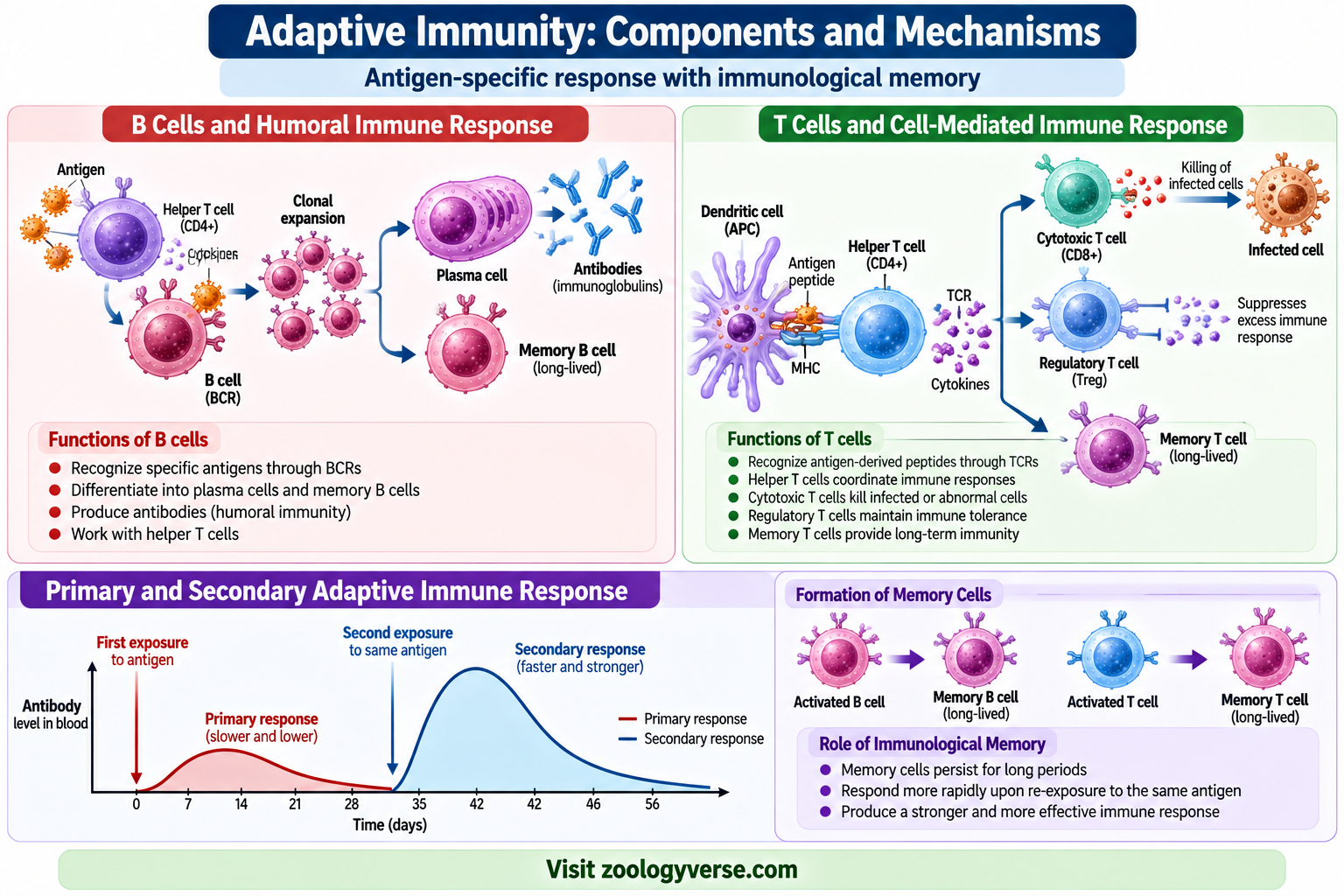
Major Components of Adaptive Immunity
B Lymphocytes
B lymphocytes or B cells are major components of humoral adaptive immunity.
Each mature B cell expresses a B-cell receptor with a particular antigen-recognition specificity.
Following appropriate activation, B cells can differentiate into:
- Plasma cells
- Memory B cells
Plasma cells produce antibodies, while memory B cells contribute to long-term adaptive immune memory.
T Lymphocytes
T lymphocytes or T cells are central to cell-mediated immunity.
Conventional T-cell receptors recognize antigen-derived peptides presented by major histocompatibility complex (MHC) molecules.
Important T-cell populations include:
- Helper T cells
- Cytotoxic T cells
- Regulatory T cells
- Memory T cells
Helper T cells coordinate immune responses and assist other immune cells. Cytotoxic T cells can kill appropriate infected or abnormal target cells. Regulatory T cells help control immune responses and maintain immune tolerance.
Innate Immunity vs Adaptive Immunity
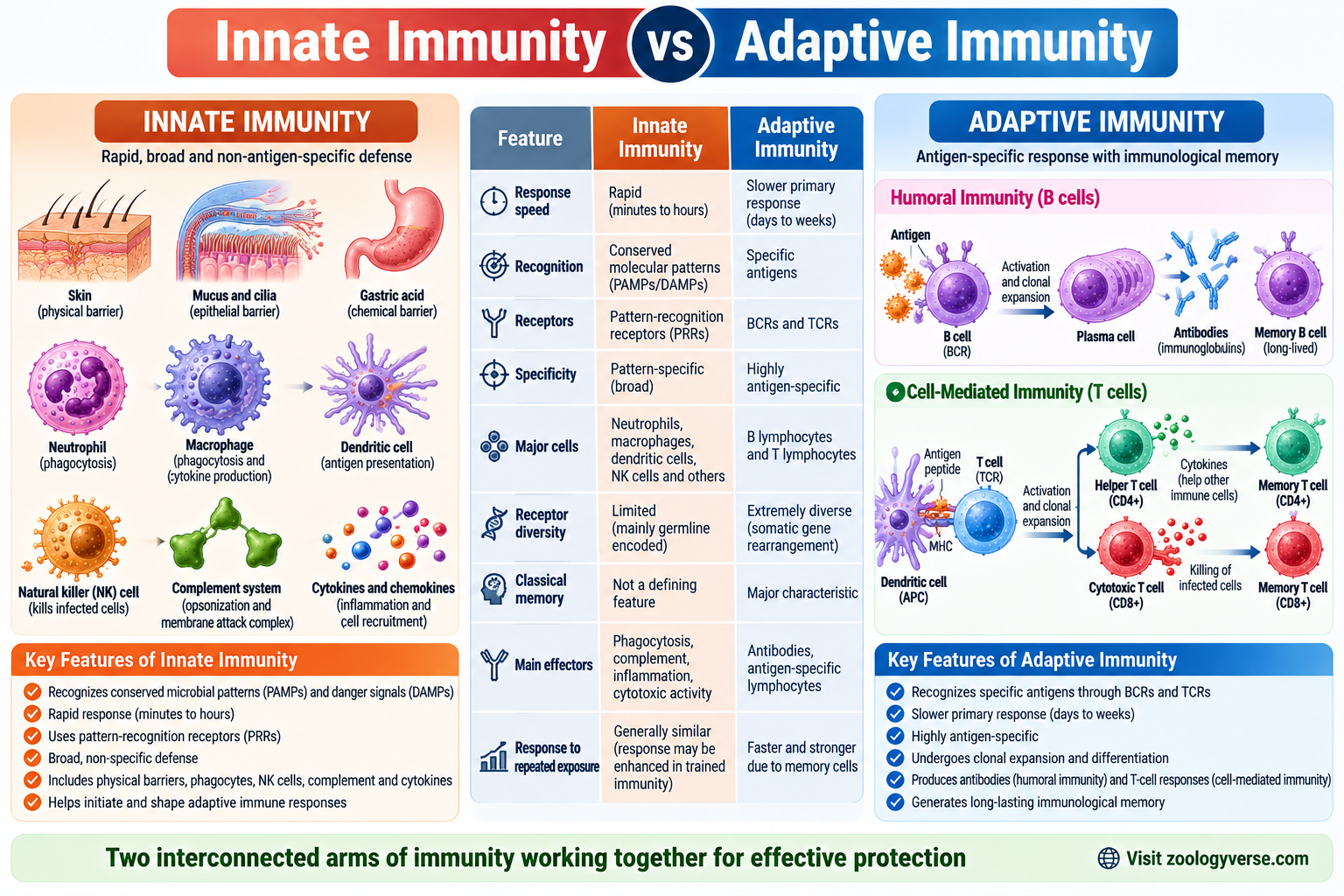
The major differences between innate and adaptive immunity involve their recognition mechanisms, response speed, specificity, receptors, cellular components and memory.
| Feature | Innate Immunity | Adaptive Immunity |
|---|---|---|
| Response | Rapid initial response | Primary response generally develops more slowly |
| Recognition | Conserved molecular patterns | Specific antigens |
| Receptors | Pattern-recognition receptors | BCRs and TCRs |
| Specificity | Pattern-specific | Highly antigen-specific |
| Major cells | Neutrophils, macrophages, dendritic cells, NK cells and others | B cells and T cells |
| Receptor diversity | Relatively limited and mainly germline encoded | Extremely diverse through somatic gene rearrangement |
| Classical memory | Not a defining feature | Major characteristic |
| Main effectors | Phagocytes, NK cells, complement and inflammatory mediators | Antibodies and antigen-specific lymphocytes |
| Repeated exposure | Does not normally produce classical antigen-specific memory | Memory responses are generally faster and stronger |
Difference in Recognition
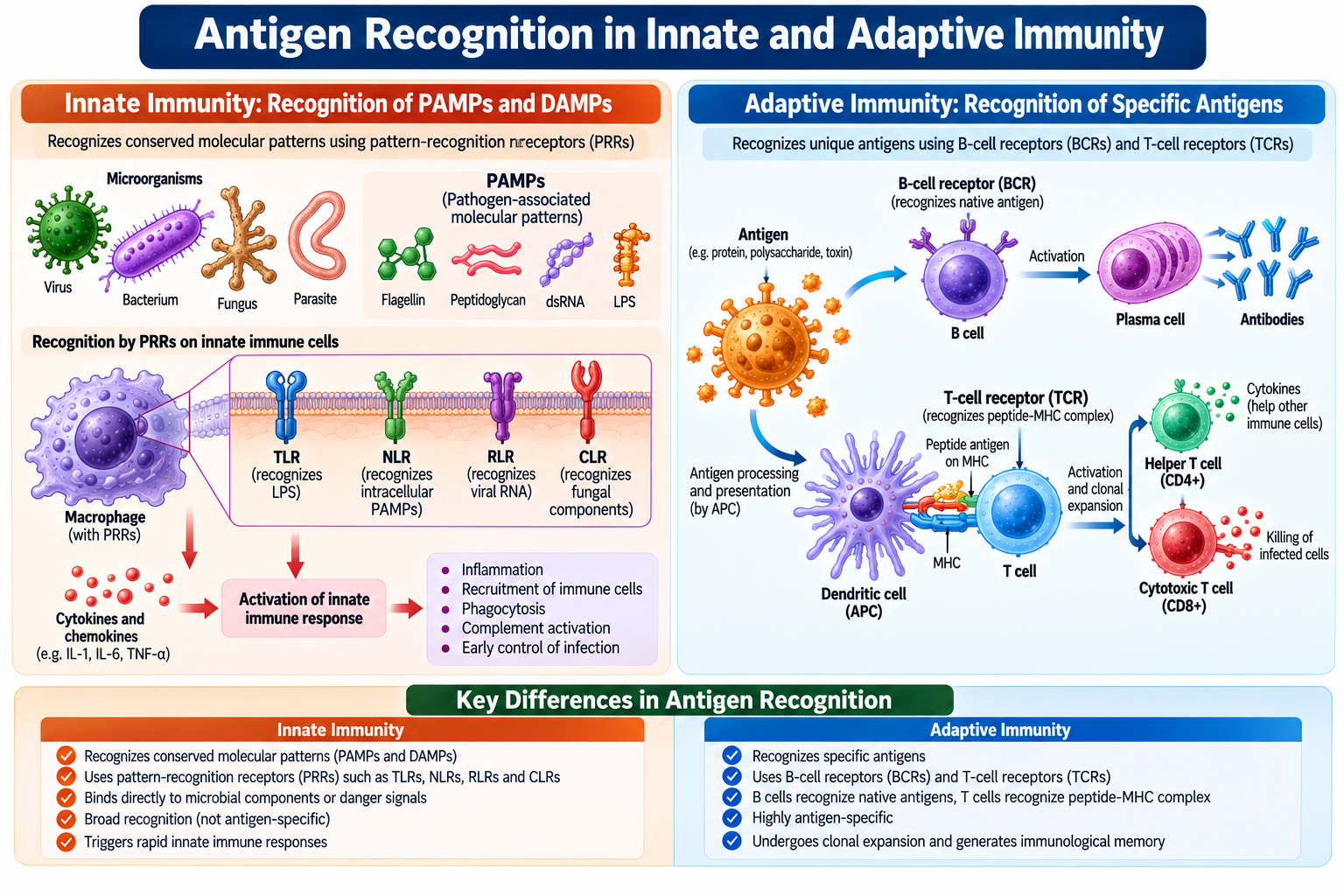
Recognition is one of the most important differences between innate and adaptive immunity.
Recognition by Innate Immunity
Innate immune cells use pattern-recognition receptors to detect conserved molecular structures.
Examples include:
- Components of bacterial cell walls
- Microbial nucleic acids
- Certain fungal structures
- Molecules released by damaged cells
These signals allow the innate immune system to respond rapidly without generating a new receptor for every individual microorganism.
Recognition by Adaptive Immunity
Adaptive immune cells use highly diverse antigen receptors.
B-cell receptors can recognize appropriate molecular structures on antigens, while conventional T-cell receptors generally recognize antigen-derived peptides presented by MHC molecules.
This highly diverse receptor system allows adaptive immunity to recognize a very large variety of antigenic structures.
Therefore, one of the central differences in Innate Immunity vs Adaptive Immunity is the way threats are recognized.
Difference in Response Speed
Innate immunity generally responds rapidly because its major recognition and effector mechanisms are already available.
For example, neutrophils and macrophages can respond quickly to inflammatory signals generated during infection.
The primary adaptive immune response usually takes longer because antigen-specific lymphocytes must be activated, undergo clonal expansion and differentiate into effector cells.
However, adaptive memory cells can respond rapidly during subsequent exposure to the same antigen.
Thus, it is more accurate to say that innate immunity provides rapid initial defense, while the primary adaptive response generally develops more slowly and produces immunological memory.
Difference in Specificity
Innate immunity recognizes conserved molecular patterns rather than using a separate highly specific receptor for every antigen.
Adaptive immunity has much greater antigen specificity. Individual B- and T-cell clones possess receptors with particular recognition specificities.
This receptor diversity allows adaptive immunity to distinguish among a very large number of antigenic structures.
The difference in specificity is therefore another major point in Innate Immunity vs Adaptive Immunity.
Difference in Major Immune Cells
Cells of Innate Immunity
Important innate immune cells include:
- Neutrophils
- Monocytes
- Macrophages
- Dendritic cells
- Natural killer cells
- Mast cells
- Eosinophils
- Basophils
- Other innate lymphoid cells
Cells of Adaptive Immunity
The principal adaptive immune cells are:
- B lymphocytes
- T lymphocytes
Some cells, particularly dendritic cells, are involved in communication between innate and adaptive immune mechanisms.
Role of Antigen-Presenting Cells
Antigen-presenting cells process antigen and present peptide fragments to T cells.
Important professional antigen-presenting cells include:
- Dendritic cells
- Macrophages
- B lymphocytes
Dendritic cells are particularly important for activating naïve T cells and initiating primary adaptive immune responses.
MHC Class I
MHC class I molecules present peptides to CD8-positive T cells in the conventional pathway.
MHC Class II
MHC class II molecules present peptides to CD4-positive T cells.
Antigen presentation is an important mechanism connecting innate recognition with adaptive immune activation.
Difference in Immunological Memory
One of the defining characteristics of adaptive immunity is classical antigen-specific immunological memory.
During an adaptive immune response, some activated B and T lymphocytes become memory cells.
During subsequent exposure to the same antigen:
- Memory cells recognize the antigen.
- They can respond more rapidly.
- They can expand and differentiate efficiently.
- The resulting response can be stronger and more effective.
This principle is important in vaccination and long-term immune protection.
Does Innate Immunity Have Memory?
It is no longer scientifically accurate to state that innate immunity has absolutely no memory.
Classical antigen-specific memory is a defining feature of adaptive immunity. However, some innate immune cells can undergo functional changes after an initial stimulus, resulting in altered responses to subsequent stimulation.
This phenomenon is called trained immunity.
Trained immunity is mechanistically different from classical adaptive immune memory and does not involve the same antigen-specific receptor-based mechanism used by B and T lymphocytes.
Therefore, when discussing Innate Immunity vs Adaptive Immunity, it is better to say that classical antigen-specific memory is characteristic of adaptive immunity rather than simply saying that innate immunity has “no memory.”
Clonal Selection and Adaptive Immunity
Clonal selection is a fundamental principle explaining antigen specificity in adaptive immunity.
The body contains large numbers of B and T lymphocytes, each carrying receptors with different specificities.
When an antigen activates a lymphocyte with a suitable receptor:
- The lymphocyte becomes activated.
- It undergoes clonal expansion.
- Effector cells are produced.
- Some cells develop into memory cells.
Activated B cells can differentiate into antibody-producing plasma cells, while activated T cells can differentiate into appropriate effector T-cell populations.
Clonal selection therefore helps explain the specificity and memory associated with adaptive immunity.
How Innate Immunity and Adaptive Immunity Work Together
Innate and adaptive immunity are closely interconnected.
A typical immune response can involve the following sequence:
1. Initial Recognition
Innate immune cells detect microbial or tissue-damage signals through pattern-recognition receptors.
2. Innate Response
Inflammation, phagocytosis, complement activation and cytokine production help control the threat.
3. Antigen Presentation
Dendritic cells and other appropriate antigen-presenting cells process antigen and present peptides to T cells.
4. Adaptive Activation
Antigen-specific B and T lymphocytes become activated and undergo clonal expansion.
5. Effector Response
Antibodies, effector T cells and other immune mechanisms participate in elimination of the pathogen.
6. Memory
Some B and T cells become memory cells and can respond more rapidly to future exposure.
Thus, Innate Immunity vs Adaptive Immunity should not be understood as a competition between two separate systems. They are interconnected components of one coordinated immune defense system.
Examples of Innate Immunity and Adaptive Immunity Working Together
Example 1: Bacterial Infection
When bacteria enter damaged tissue, innate immune mechanisms respond rapidly.
Neutrophils and macrophages can recognize and engulf bacteria. Complement can promote opsonization and inflammation.
Dendritic cells can process microbial antigens and contribute to activation of adaptive immune responses.
B cells can subsequently produce antibodies against specific bacterial antigens, while T cells help coordinate the immune response.
Thus, innate and adaptive mechanisms cooperate to eliminate the bacteria.
Example 2: Viral Infection
During viral infection, infected cells and immune cells generate signals that activate innate antiviral mechanisms.
Important innate mechanisms include:
- Type I interferons
- Natural killer cells
- Inflammatory cytokines
Adaptive immunity can then generate virus-specific antibodies and T-cell responses.
Antibodies can neutralize extracellular virus particles, while cytotoxic T cells can kill infected cells displaying appropriate viral peptides.
Memory B and T cells can contribute to protection during subsequent exposure.
Key Differences Between Innate Immunity and Adaptive Immunity
The most important differences between innate and adaptive immunity are:
- Innate immunity provides rapid initial protection.
- Adaptive immunity provides highly specific antigen recognition.
- Innate immune cells use pattern-recognition receptors.
- Adaptive lymphocytes use highly diverse B-cell and T-cell receptors.
- Neutrophils, macrophages, dendritic cells and NK cells are important components of innate immunity.
- B cells and T cells are the principal lymphocytes of adaptive immunity.
- Conventional T cells generally recognize peptide-MHC complexes.
- The primary adaptive response generally develops more slowly than the immediate innate response.
- Classical antigen-specific immunological memory is a defining feature of adaptive immunity.
- Trained immunity can produce enhanced innate responses but differs from classical adaptive memory.
- Dendritic cells connect innate recognition with adaptive T-cell activation.
- Complement participates in both innate and adaptive immune mechanisms.
- Innate and adaptive immunity cooperate during infection.
What is the main difference between innate and adaptive immunity?
Which is faster: innate immunity or adaptive immunity?
What are the major cells of innate immunity?
What are the major cells of adaptive immunity?
Do T cells recognize free antigens?
Does innate immunity have memory?
What is the role of dendritic cells?
Is complement part of innate or adaptive immunity?
Why is adaptive immunity important?
Key Takeaways
- Innate immunity provides rapid initial protection.
- Innate immune recognition involves pattern-recognition receptors (PRRs).
- PAMPs are pathogen-associated molecular patterns.
- DAMPs are damage-associated molecular patterns.
- Major innate cells include neutrophils, macrophages, dendritic cells and NK cells.
- Adaptive immunity is mediated mainly by B and T lymphocytes.
- B cells are central to humoral immunity.
- T cells are central to cell-mediated immunity.
- BCRs and TCRs provide highly diverse antigen recognition.
- Conventional T cells generally recognize peptide-MHC complexes.
- The primary adaptive response is generally slower than the immediate innate response.
- Classical antigen-specific immunological memory is a defining feature of adaptive immunity.
- Trained immunity represents altered innate immune responsiveness and differs from classical adaptive memory.
- Dendritic cells are important antigen-presenting cells and connect innate and adaptive immunity.
- Complement participates in both innate and adaptive immune mechanisms.
- Innate and adaptive immunity function together to provide effective immune protection.
Conclusion
The comparison of Innate Immunity vs Adaptive Immunity is fundamental to understanding how the immune system protects the body.
Innate immunity provides rapid protection through physical barriers, phagocytic cells, natural killer cells, complement, inflammatory mechanisms and pattern-recognition receptors. Its recognition system focuses mainly on conserved molecular patterns associated with microorganisms or tissue damage.
Adaptive immunity is mediated mainly by B and T lymphocytes. It provides highly specific antigen recognition through diverse receptors, produces effector responses and generates classical antigen-specific immunological memory.
The major differences between innate and adaptive immunity therefore involve their recognition mechanisms, receptor diversity, specificity, response speed, cellular components and memory.
Importantly, innate and adaptive immunity do not function as completely separate systems. Dendritic cells, cytokines, complement, antibodies and other immune mechanisms allow extensive communication between them.
A proper understanding of Innate Immunity vs Adaptive Immunity therefore requires studying both systems individually as well as their coordinated interaction during infection.
References
- Merck Manual Professional Edition. Overview of the Immune System.
- Merck Manual Professional Edition. Complement System.
- National Center for Biotechnology Information (NCBI) Bookshelf. Principles of Innate and Adaptive Immunity.
- National Center for Biotechnology Information (NCBI) Bookshelf. Antigen Recognition by B-cell and T-cell Receptors.
- National Center for Biotechnology Information (NCBI) Bookshelf. The Recognition and Effector Mechanisms of Adaptive Immunity.
- National Center for Biotechnology Information (NCBI) Bookshelf. Immunological Memory.
- Abbas, A. K., Lichtman, A. H., & Pillai, S. Cellular and Molecular Immunology.
- Murphy, K. & Weaver, C. Janeway’s Immunobiology.
Discover more from Zoologyverse
Subscribe to get the latest posts sent to your email.