
Classification of Pheretima (Earthworm)
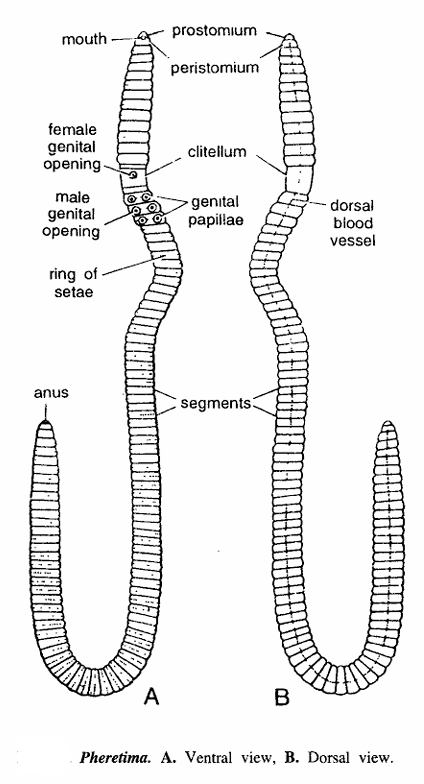
Earthworms in the genus Pheretima are primarily found in portions of Southeast Asia and New Guinea. The clitellum, a ring of glandular tissue found on segments 14 to 16, is characteristic of species of the genus Pheretima. Humans are hermaphrodites, and they can reproduce sexually or parthenogenetically. The ventral surface of segment 14 contains the female genital pores. On segment 18, there are two male genital pores located ventrally. Additionally, genital papillae may exist ventrally. Like all earthworms, juveniles develop in cocoons and do not go through a larval stage.
Kingdom :- Animalia (Multicellular eukaryotic organisms)
Phylum :- Annelida (Segmented worms with true coelom and metamerism)
Class :- Oligochaeta (Few setae)
Order :- Neo-oligochaeta (Modem and terrestrial forms)
Genus :- Pheretima (Earthworm)
Habit and habitat of Pheretima (Earthworm)
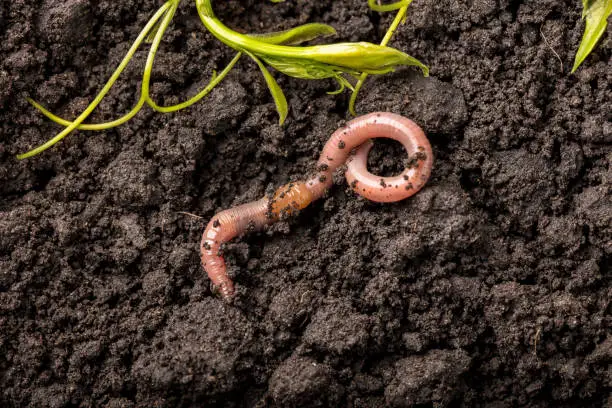
Pheretima is found in the soil but absent in sandy and humus deficient soil. They are found in mountains, clayey and acidic soils. They live usually in the upper layers of slightly damp soils, lawns, gardens and up to the depth of 30 to 45 cm in burrows for protection against enemies and under unfavourable condition. According to Darwin one acre of land may contain 63,000 earthworms. It is nocturnal. The earthworm is hermaphroditic (monoecious)
Distribution
Cosmopolitan
Comments of Pheretima (Earthworm)
- Commonly called as Earthworm.
- Body consists of 100 to 120 ring like segments depicting true metamerism approximately 150 mm. and measuring Both external and internal segmentations are distinct.
- The worm is glistening deep brown or clay-coloured.
- Anterior end is somewhat narrowly pointed, while posterior end is bluntly pointed.
- Except the first and last segment, each segment contains a row of setae in the ventral body wall.
- Dorsal surface is dark brown in colour and it is easily recognized by dark median line of dorsal blood vessel.
- First segment is called as prostomium which contains ventral mouth. The last segments is called as anal segment containing anus.
- A portion of the body is thickened and is called as clitellum around 14 to 16 segments.
- Spermathecal pores are found in the inter-segmental grooves of 5/6, 6/7, 7/8 and 8/9 segments.
- The female genital pore on the 14th segment and male-genital pores on the 18th segment.
- Two pairs of genital papillae lie on the ventral surface in the 17th and 19th segments.
- Cross-fertilization, but copulation has not been studied in P. posthuma. Development takes place in cocoons.
Special features
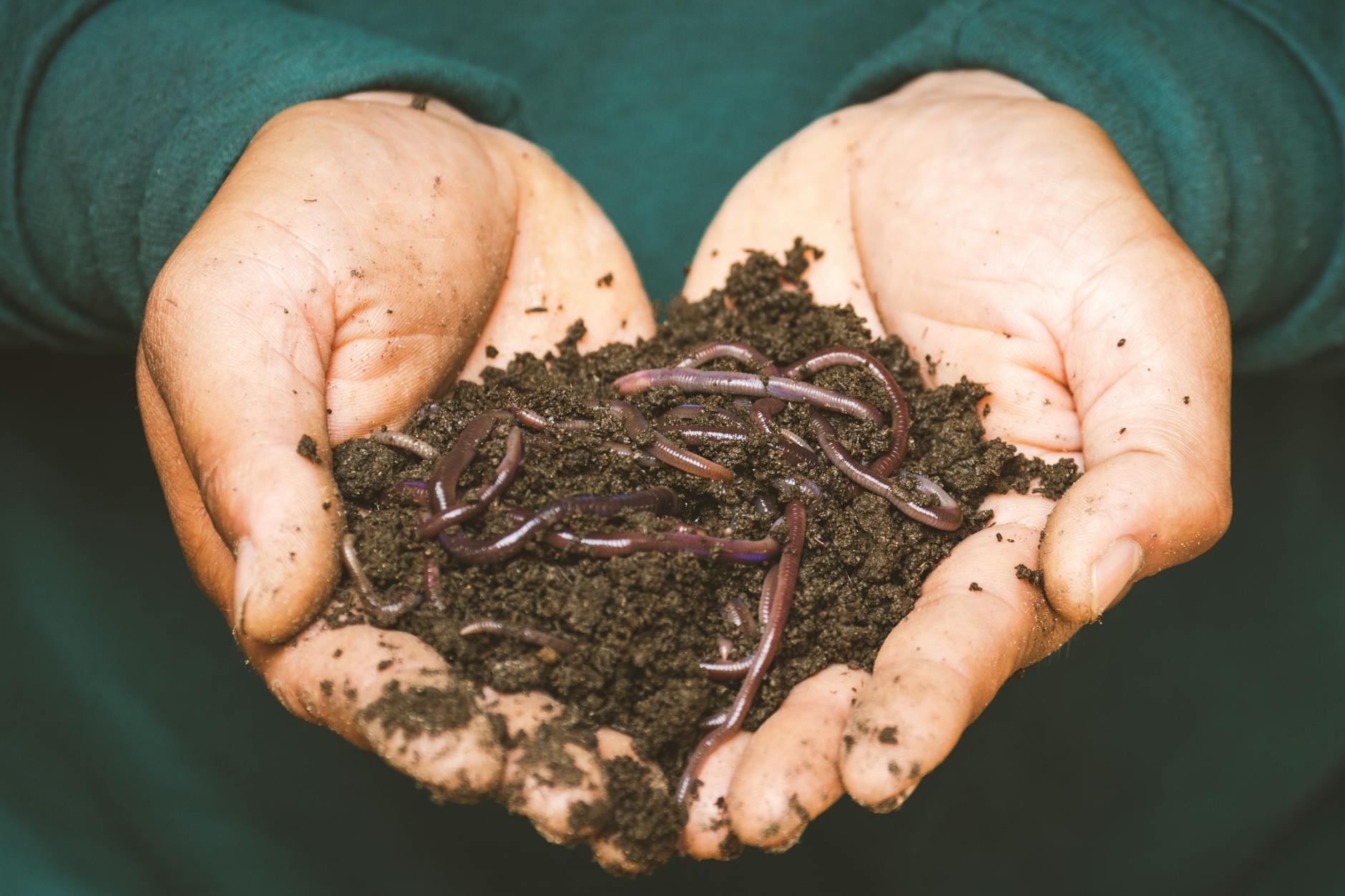
Earthworm is economically very important as (i) It is used as fishing bait, (ii) It has medicinal, educational and experimental value, (iii) The earthworms are beneficial to agriculture. They are important agent in the conditioning of soil and pennit water to enter easily du.ring rain. The constant mixing of soild and organic debris contributes to development of good humus. Earthwonns are very good fertilizers and are cultured.
Identification
Since the specimen contains clitellum in 14 to 16 mm segments and all above features, hence, it is Pheretima.
See other posts also
- HYDROSTATIC MOVEMENT
- ROTIFERA – STRUCTURE,LIFE HISTORY AND AFFINITIES
- Holocephali – General organization and affinities
- ORGANIZATION OF COELOM
- ORGANS AND MECHANISM OF RESPIRATION IN HIGHER INVERTEBRATES
Discover more from Zoologyverse
Subscribe to get the latest posts sent to your email.