
1. Overview of Capacitation of Sperm and Acrosome Reaction
Sperm capacitation refers to the physiological process through which ejaculated sperm acquire the functional ability to fertilize an ovum. Although sperm may be morphologically mature and motile before entering the female reproductive tract, they are generally not immediately capable of fertilization. Capacitation involves changes in the sperm plasma membrane, intracellular signalling pathways, motility patterns, and responsiveness to signals associated with the egg and its surrounding structures.
Successful fertilization requires more than the production and release of mature spermatozoa. After ejaculation, sperm undergo a series of physiological and biochemical changes that enable them to recognize, interact with, and fertilize the female gamete. Capacitation of Sperm and Acrosome Reaction are two closely associated events that play essential roles in preparing sperm for successful fertilization.
The Capacitation of Sperm and Acrosome Reaction are closely connected but distinct processes. Capacitation prepares sperm for fertilization, whereas the acrosome reaction involves the release of substances from the acrosome, a specialized structure located in the sperm head. These substances facilitate interaction with and penetration of the egg’s surrounding coverings in species where such enzymatic assistance is involved.
During sperm capacitation, changes in membrane composition, intracellular calcium regulation, protein phosphorylation, and motility contribute to sperm activation. Capacitated sperm may also exhibit hyperactivated motility, characterized by vigorous and asymmetrical flagellar movements that help facilitate their movement through the female reproductive tract and interaction with the egg.
The acrosome reaction generally occurs after sperm undergo capacitation and interact with appropriate signals associated with the egg or its surrounding environment. Together, these processes increase the functional competence of sperm and contribute to the successful completion of fertilization in many animals.
2. Definition of Sperm Capacitation
Sperm capacitation is a physiological process involving biochemical, molecular, and functional changes that occur in spermatozoa after they enter the female reproductive tract or an appropriate capacitating environment in vitro. These changes enable sperm to acquire the ability to fertilize an ovum. The Capacitation of Sperm and Acrosome Reaction represents an essential sequence of events in mammalian fertilization, although capacitation and the acrosome reaction are distinct processes.
Freshly ejaculated sperm are generally motile, but motility alone does not indicate their ability to fertilize an egg. During capacitation, sperm undergo modifications in their plasma membrane, intracellular signalling pathways, and motility patterns. These modifications prepare them for interactions with the female gamete and facilitate subsequent fertilization-related events.
2.1 Definition and Functional Meaning
Sperm capacitation is commonly defined as the functional maturation of spermatozoa that occurs after ejaculation and enables them to undergo fertilization. It is not a process of sperm formation or morphological maturation, because spermatogenesis and spermiogenesis have already produced mature spermatozoa before ejaculation.
Instead, capacitation involves physiological changes that remove or modify certain inhibitory factors associated with the sperm membrane and activate signalling mechanisms necessary for fertilization.
The Capacitation of Sperm and Acrosome Reaction involves sequential events in which capacitation establishes the functional readiness of sperm, while the acrosome reaction subsequently facilitates interactions with the egg’s surrounding structures and contributes to sperm–egg fusion.
2.2 Capacitation as a Physiological Process
Capacitation is primarily associated with spermatozoa within the female reproductive tract in mammals. Conditions in the female tract provide an environment that supports changes in sperm membrane composition, intracellular calcium levels, protein phosphorylation, and motility.
During this process, cholesterol and other membrane-associated components may be redistributed or removed, increasing the functional responsiveness of the sperm membrane. These changes contribute to the activation of signalling pathways that support fertilization competence.
Capacitation is therefore considered a functional transformation rather than a structural transformation involving the formation of new sperm components.
2.3 Capacitation and Fertilization Competence
A capacitated sperm becomes capable of responding appropriately to signals associated with the egg and its surrounding structures. It may exhibit hyperactivated motility, which involves vigorous and asymmetrical flagellar movement.
These changes help sperm navigate through the female reproductive tract, interact with the egg’s extracellular coverings, and participate in the events leading to fertilization.
The Capacitation of Sperm and Acrosome Reaction are therefore essential components of reproductive physiology because they ensure that sperm undergo the necessary functional changes before participating in fertilization. Capacitation prepares the sperm, while the acrosome reaction represents a subsequent specialized event associated with successful fertilization in many animals.
3. Location of Sperm Capacitation
Sperm capacitation primarily occurs within the female reproductive tract in mammals, where spermatozoa encounter physiological conditions that promote the biochemical and functional changes necessary for fertilization. The female reproductive tract provides an environment that supports Capacitation of Sperm and Acrosome Reaction, allowing sperm to become capable of interacting effectively with the ovum.
Although capacitation is commonly associated with the female reproductive tract, it can also be induced under controlled laboratory conditions using capacitating media. This has made it possible to study the mechanisms of capacitation and fertilization in vitro.
3.1 Capacitation in the Female Reproductive Tract
Following ejaculation, spermatozoa enter the female reproductive tract and encounter a series of physiological environments. In mammals, capacitation is generally associated with sperm that have entered the uterus and subsequently move toward the oviduct.
The uterine and oviductal environments contain ions, proteins, and other substances that contribute to sperm physiological changes. These conditions facilitate modifications in the sperm plasma membrane and intracellular signalling pathways that support the acquisition of fertilization competence.
The female reproductive tract also helps regulate sperm transport, survival, and selection. Only a proportion of spermatozoa successfully reach the region of the oviduct where fertilization generally occurs.
3.2 Capacitation in the Uterus
In many mammals, spermatozoa pass through the uterus after ejaculation. The uterine environment contributes to sperm transport and provides conditions that support the continuation of physiological changes associated with capacitation.
Sperm may undergo changes in membrane composition and signalling activity as they move through the reproductive tract. However, capacitation is not necessarily completed in the uterus, and its progression varies among species.
The uterus therefore serves as an important environment in sperm transport and the early stages of physiological preparation.
3.3 Capacitation in the Oviduct
The oviduct is an important site associated with sperm capacitation and fertilization in mammals. Spermatozoa that reach the oviduct may interact with the oviductal epithelium, particularly within regions where sperm storage and gradual release occur.
In several mammals, sperm can temporarily bind to oviductal epithelial cells, forming a sperm reservoir. This interaction helps maintain sperm viability and may delay capacitation until sperm are released from the reservoir.
As sperm become released and progress toward the site of fertilization, they undergo changes associated with capacitation, including modifications in motility and membrane properties.
In many mammals, fertilization generally occurs in the ampullary region or near the ampullary–isthmic junction of the oviduct, depending on the species. Capacitation prepares sperm for the events that occur in this region.
3.4 Capacitation Under Laboratory Conditions
Capacitation can also be induced outside the female reproductive tract under appropriate laboratory conditions. This process is known as in vitro capacitation and is widely used in reproductive biology research and assisted reproductive technologies.
Capacitating media may contain substances such as bicarbonate ions, calcium ions, and albumin, which contribute to changes in sperm membrane composition and intracellular signalling.
These conditions can stimulate pathways associated with protein phosphorylation, membrane modifications, and hyperactivated motility. Laboratory-induced capacitation allows researchers to investigate the physiological mechanisms involved in sperm activation and fertilization.
3.5 Variation in the Location and Timing of Capacitation
The location, duration, and physiological conditions associated with capacitation vary among animal species. In mammals, capacitation is closely associated with the female reproductive tract, but the exact region and timing depend on species-specific reproductive physiology.
The Capacitation of Sperm and Acrosome Reaction should therefore not be considered identical in all animals. Although these processes share functional similarities, the mechanisms, timing, and environmental conditions involved may differ among species.
4. Physiological Changes During Sperm Capacitation
During capacitation, spermatozoa undergo a series of coordinated physiological and biochemical changes that transform them from motile cells into sperm capable of participating in fertilization. These changes primarily involve the sperm plasma membrane, intracellular signalling systems, ion regulation, protein phosphorylation, and flagellar movement.
Capacitation is not a single event but a collection of interconnected processes. These physiological modifications are essential for the functional progression of Capacitation of Sperm and Acrosome Reaction, ultimately enabling sperm to respond to signals associated with the egg and participate in fertilization.
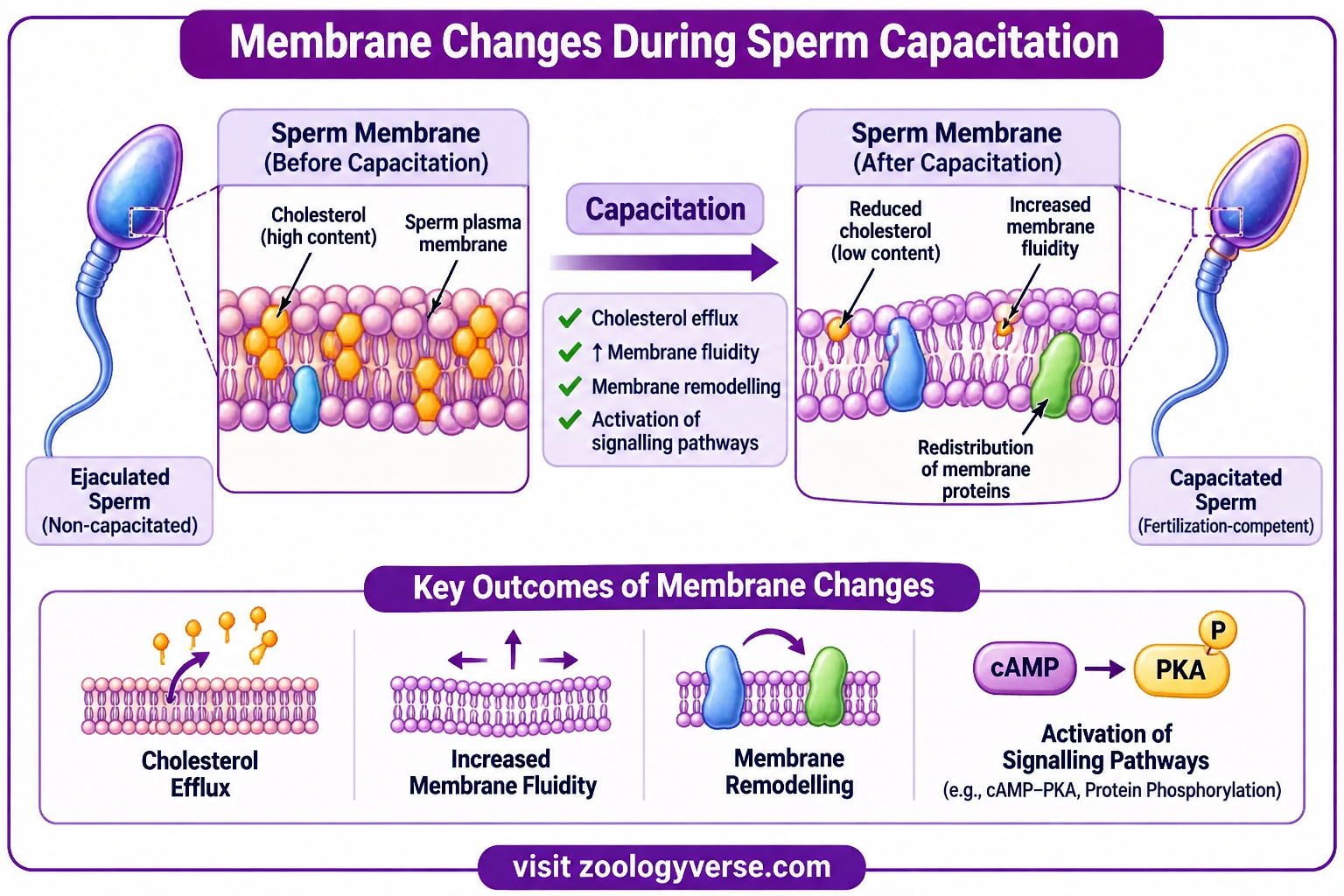
4.1 Changes in the Sperm Plasma Membrane
One of the major changes during capacitation involves modifications in the sperm plasma membrane. The membrane of freshly ejaculated sperm contains cholesterol and various proteins, lipids, and glycoproteins that influence membrane stability and sperm function.
During capacitation, cholesterol may be removed or redistributed from the sperm plasma membrane. This process increases membrane fluidity and promotes changes that facilitate the activation of fertilization-related signalling pathways.
The removal or modification of certain surface-associated proteins and glycoproteins also contributes to the functional transformation of sperm. These changes help expose or modify molecular components involved in interactions with the egg and its surrounding structures.
4.2 Increased Membrane Fluidity
The plasma membrane becomes more dynamically organized during capacitation. Changes in lipid composition, particularly cholesterol reduction, influence membrane fluidity and the distribution of membrane proteins.
Increased membrane fluidity facilitates the rearrangement of membrane-associated molecules and supports processes such as signalling, interaction with egg coverings, and subsequent membrane fusion.
These modifications are important because sperm must undergo controlled changes in their membrane properties to acquire fertilization competence.
4.3 Changes in Ion Concentration
Ion regulation plays a significant role during sperm capacitation. Changes in intracellular concentrations of calcium, bicarbonate, and other ions activate signalling pathways that influence sperm physiology.
Bicarbonate ions contribute to the activation of soluble adenylyl cyclase, which increases cyclic AMP (cAMP) levels within sperm. This signalling pathway promotes protein phosphorylation and other physiological changes associated with capacitation.
Calcium ions also participate in the regulation of sperm motility, signalling, and fertilization-related events. Their intracellular levels are carefully regulated through membrane transport systems and intracellular mechanisms.
4.4 Activation of Intracellular Signalling Pathways
Capacitation involves the activation of intracellular signalling pathways that regulate sperm function. Bicarbonate-mediated activation of soluble adenylyl cyclase leads to increased cAMP production.
cAMP activates protein kinase A (PKA), which contributes to the phosphorylation of proteins involved in sperm physiology. Subsequent signalling events, including changes in protein phosphorylation, help regulate sperm motility, membrane properties, and fertilization competence.
These signalling pathways are closely interconnected and contribute to the functional transformation of sperm during capacitation.
4.5 Protein Phosphorylation
Protein phosphorylation is an important biochemical feature of capacitation. During this process, several sperm proteins undergo phosphorylation, particularly through pathways associated with cAMP and protein kinase A.
Changes in phosphorylation patterns influence sperm motility, intracellular signalling, and the functional properties of the sperm membrane. Protein phosphorylation is therefore considered an important indicator of capacitation-associated biochemical activity, although it is not the sole indicator of successful capacitation.
4.6 Development of Hyperactivated Motility
One of the major functional changes associated with capacitation is the development of hyperactivated motility. Hyperactivation is characterized by vigorous, asymmetrical, and high-amplitude flagellar beating.
Unlike ordinary progressive motility, hyperactivated movement involves stronger and more irregular flagellar movements. This pattern helps sperm navigate through the female reproductive tract and may assist in overcoming physical barriers associated with the egg’s surrounding structures.
Hyperactivation is particularly important in mammals and is associated with the functional progression of Capacitation of Sperm and Acrosome Reaction.
4.7 Increased Responsiveness to Fertilization-Related Signals
Capacitated sperm become more responsive to signals associated with the egg and its surrounding environment. These changes prepare sperm for subsequent events, including interactions with egg coverings and the acrosome reaction.
Capacitation does not itself represent the acrosome reaction. Instead, it establishes the physiological conditions that enable sperm to undergo appropriate fertilization-related responses.
The coordinated physiological changes during capacitation increase the functional competence of spermatozoa and help ensure that fertilization-related events occur at an appropriate stage of sperm transport and interaction with the female gamete.
5. Molecular Mechanisms of Sperm Capacitation
Sperm capacitation involves a complex network of molecular events that regulate membrane composition, intracellular signalling, protein phosphorylation, ion movement, and sperm motility. These mechanisms are coordinated to prepare spermatozoa for fertilization.
The molecular basis of Capacitation of Sperm and Acrosome Reaction is particularly important because sperm must undergo controlled biochemical changes rather than simply increase their movement. These molecular changes establish the functional state required for fertilization-related interactions.
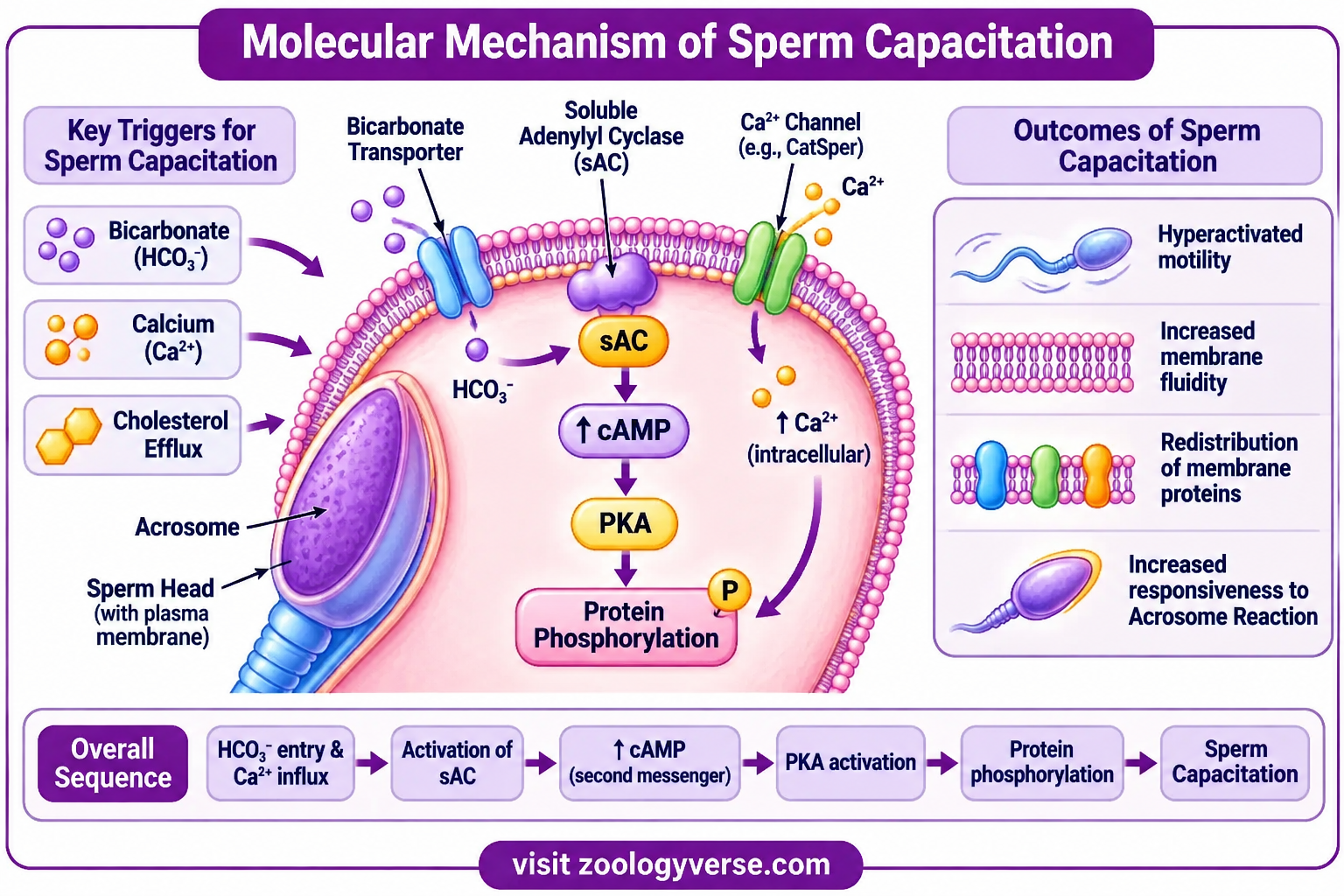
5.1 Cholesterol Efflux from the Sperm Plasma Membrane
Cholesterol efflux is one of the major molecular events associated with sperm capacitation. Cholesterol contributes to the stability and organization of the sperm plasma membrane. Its removal or redistribution alters membrane properties and facilitates subsequent signalling events.
In the female reproductive tract or capacitating laboratory media, cholesterol acceptors such as albumin can facilitate cholesterol removal from the sperm membrane. This process increases membrane fluidity and promotes the rearrangement of membrane-associated proteins and lipids.
Cholesterol efflux is therefore an important early event in the molecular progression of capacitation.
5.2 Bicarbonate Activation of Soluble Adenylyl Cyclase
Bicarbonate ions play a major role in activating intracellular signalling during sperm capacitation. They stimulate soluble adenylyl cyclase, an enzyme that produces cyclic adenosine monophosphate (cAMP).
Increased cAMP levels activate protein kinase A (PKA), which initiates a cascade of phosphorylation events. This signalling pathway contributes to the regulation of sperm motility, membrane changes, and other physiological processes associated with capacitation.
The bicarbonate–cAMP pathway is considered one of the central molecular mechanisms involved in sperm functional activation.
5.3 Role of cAMP and Protein Kinase A
cAMP acts as an intracellular signalling molecule that regulates several sperm physiological processes. During capacitation, increased cAMP activates PKA, which promotes the phosphorylation of various proteins.
These phosphorylation events influence sperm motility, metabolic activity, intracellular signalling, and the functional organization of the sperm cell. They also contribute to the development of conditions necessary for fertilization competence.
The cAMP–PKA pathway therefore links environmental signals to intracellular molecular responses during capacitation.
5.4 Protein Tyrosine Phosphorylation
Protein tyrosine phosphorylation is commonly associated with molecular changes occurring during sperm capacitation, particularly in mammalian sperm.
The activation of signalling pathways involving cAMP and PKA contributes to changes in protein phosphorylation. These changes may involve proteins associated with the flagellum, membrane organization, and intracellular signalling.
Increased protein tyrosine phosphorylation is frequently used as a biochemical indicator of capacitation in experimental studies. However, capacitation involves multiple molecular processes, and phosphorylation alone does not establish that sperm are fully fertilization-competent.
5.5 Role of Calcium Signalling
Calcium ions are essential regulators of sperm physiology. During capacitation, changes in intracellular calcium levels influence signalling pathways, flagellar movement, and sperm responsiveness to fertilization-related stimuli.
Calcium signalling contributes to the regulation of sperm motility and hyperactivation. It also participates in subsequent events associated with the acrosome reaction and sperm–egg interaction.
Calcium regulation is therefore an important component of the molecular mechanisms underlying Capacitation of Sperm and Acrosome Reaction.
5.6 Molecular Regulation of Sperm Hyperactivation
Hyperactivation results from changes in flagellar movement regulated by intracellular signalling and ion transport. Calcium-dependent mechanisms influence the activity of proteins involved in flagellar bending and movement.
These molecular changes produce vigorous, asymmetrical flagellar beating, which may help sperm move through the female reproductive tract and interact with the egg’s surrounding structures.
Hyperactivation is not simply an increase in sperm speed. It represents a distinct motility pattern associated with functional changes during capacitation.
5.7 Integration of Molecular Events
The molecular mechanisms of sperm capacitation are interconnected. Cholesterol efflux, bicarbonate activation, cAMP production, protein phosphorylation, calcium signalling, and motility regulation collectively contribute to sperm functional maturation.
These mechanisms prepare spermatozoa for subsequent fertilization-related events, including interactions with egg coverings and the acrosome reaction. Their coordinated regulation is essential for the functional progression of Capacitation of Sperm and Acrosome Reaction in mammals.
6. Hyperactivation of Sperm
Hyperactivation is a specialized motility pattern that develops in sperm during capacitation, particularly in mammals. It is characterized by vigorous, high-amplitude, and asymmetrical flagellar movements that differ from the relatively linear swimming pattern of sperm before hyperactivation.
Hyperactivation is an important functional change associated with Capacitation of Sperm and Acrosome Reaction because it helps sperm navigate through the female reproductive tract, interact with the egg’s surrounding structures, and overcome physical barriers during fertilization.
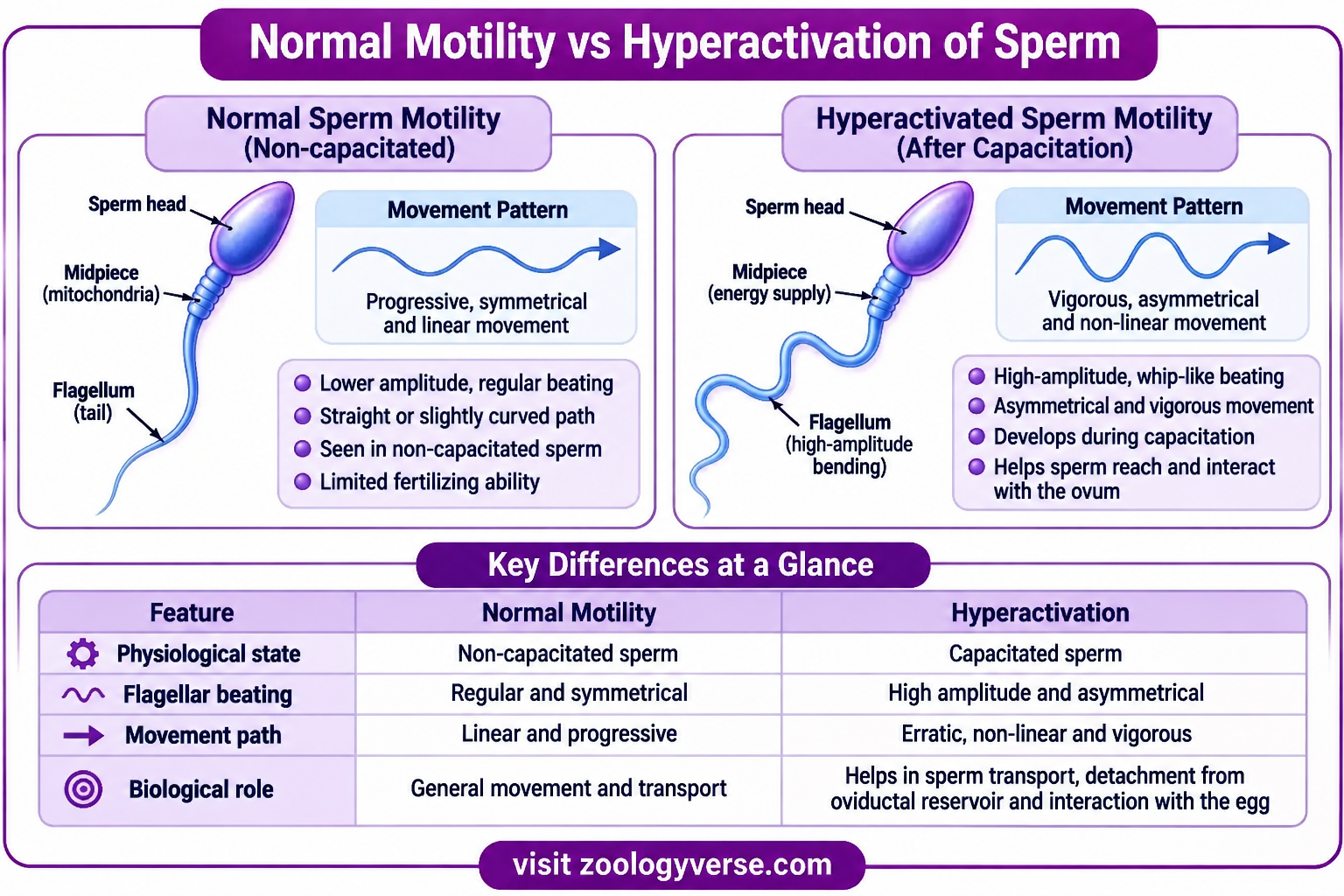
6.1 Definition of Hyperactivation
Hyperactivation refers to a specialized pattern of sperm movement characterized by increased flagellar amplitude, asymmetrical bending, and vigorous motility. It is associated with physiological changes that occur during sperm capacitation.
Unlike ordinary progressive motility, in which sperm generally move forward through relatively symmetrical flagellar beating, hyperactivated sperm exhibit pronounced bending movements that produce more vigorous and less linear swimming patterns.
Hyperactivation is therefore a functional modification of sperm motility rather than simply an increase in swimming speed.
6.2 Characteristics of Hyperactivated Sperm
Hyperactivated sperm exhibit several distinctive characteristics:
- High-amplitude flagellar beating: The sperm flagellum produces wider and more vigorous bending movements.
- Asymmetrical flagellar movement: Flagellar bending becomes more pronounced on one side, producing an irregular swimming trajectory.
- Increased force of movement: Vigorous flagellar activity generates stronger mechanical movement.
- Reduced linearity: Sperm movement may become less straight and more oscillatory.
- Functional association with capacitation: Hyperactivation is associated with physiological changes that prepare sperm for fertilization.
These characteristics distinguish hyperactivated sperm from sperm exhibiting ordinary progressive motility.
6.3 Mechanism of Sperm Hyperactivation
Hyperactivation is regulated by intracellular signalling pathways and ion-dependent mechanisms that influence flagellar activity. Calcium ions play a particularly important role in regulating the movement of the sperm flagellum.
During capacitation, changes in intracellular calcium regulation influence flagellar bending and motility patterns. Calcium-dependent mechanisms contribute to the development of asymmetrical and high-amplitude flagellar movements.
Changes in intracellular signalling, including pathways associated with cAMP and protein phosphorylation, also contribute to the regulation of sperm motility during capacitation.
The coordinated activity of these mechanisms allows sperm to develop the motility pattern associated with hyperactivation.
6.4 Role of Calcium in Hyperactivation
Calcium ions are essential regulators of sperm flagellar movement. Changes in intracellular calcium concentrations influence the activity of proteins involved in flagellar bending and movement.
In mammalian sperm, calcium entry through specialised ion channels, including CatSper channels, contributes to the regulation of flagellar activity. CatSper channels are located in the sperm flagellum and are particularly important for calcium-dependent regulation of sperm motility.
Calcium signalling helps generate the vigorous and asymmetrical flagellar movements characteristic of hyperactivation. This process is an important functional component of Capacitation of Sperm and Acrosome Reaction.
6.5 Biological Significance of Hyperactivation
Hyperactivation provides sperm with a specialized movement pattern that contributes to their reproductive function.
- Navigation through the female reproductive tract: Vigorous movement may help sperm progress through complex reproductive environments.
- Interaction with egg coverings: Strong flagellar movements may help sperm interact with and traverse the extracellular coverings of the ovum.
- Release from the oviductal sperm reservoir: Hyperactivation may contribute to sperm detachment from oviductal epithelial cells in mammals.
- Facilitation of fertilization: Hyperactivated motility contributes to the functional preparation of sperm for interactions leading to fertilization.
Hyperactivation is therefore an important functional change associated with capacitation. It enables sperm to develop a specialized motility pattern that supports their reproductive role and contributes to the successful progression of Capacitation of Sperm and Acrosome Reaction.
6.6 Hyperactivation and Ordinary Progressive Motility
| Feature | Ordinary Progressive Motility | Hyperactivated Motility |
|---|---|---|
| Flagellar movement | Relatively symmetrical | High-amplitude and asymmetrical |
| Swimming pattern | More linear | More vigorous and less linear |
| Flagellar bending | Moderate | Pronounced |
| Functional association | Sperm transport | Capacitation-associated functional motility |
| Calcium regulation | Basal motility regulation | Calcium-dependent regulation of specialized flagellar activity |
| Reproductive role | Movement through reproductive tract | Helps overcome barriers and supports fertilization-related interactions |
Hyperactivation is not an independent process unrelated to capacitation. It is a functional motility change closely associated with capacitation and contributes to the reproductive competence of sperm in many mammals.
7. Definition of the Acrosome Reaction
The acrosome reaction is a specialized cellular event in which the acrosome of a spermatozoon undergoes membrane changes and releases or exposes molecules that facilitate interaction with the egg’s surrounding structures. It is an important event during fertilization in many animals and is closely associated with sperm preparation and egg interaction.
Although capacitation prepares sperm for fertilization, the acrosome reaction involves a distinct set of cellular events. Understanding both processes is essential for studying Capacitation of Sperm and Acrosome Reaction and their roles in successful gamete interaction.
7.1 Definition of the Acrosome Reaction
The acrosome reaction is a process involving the fusion of the sperm plasma membrane with the outer acrosomal membrane, followed by vesiculation and the release or exposure of acrosomal contents. It occurs in response to appropriate stimuli and facilitates interactions between sperm and the egg’s surrounding structures.
The acrosome is a specialized, membrane-bound organelle located at the anterior region of the sperm head. It contains enzymes and other molecules that participate in sperm interaction with egg coverings.
The acrosome reaction is therefore an important fertilization-related event that allows sperm to undergo structural and functional modifications necessary for subsequent interactions with the female gamete.
7.2 Structure of the Acrosome
The acrosome is derived from the Golgi apparatus during sperm development and forms a cap-like structure covering the anterior portion of the sperm nucleus.
It contains various enzymes and molecules involved in sperm–egg interaction. Its structural organization enables the sperm to undergo controlled membrane changes during the acrosome reaction.
The acrosome is particularly important because sperm must interact with the extracellular coverings of the ovum before sperm–egg membrane fusion can occur in many animals.
7.3 Major Features of the Acrosome Reaction
The acrosome reaction involves several important features:
- Membrane fusion: The sperm plasma membrane and outer acrosomal membrane undergo fusion at multiple sites.
- Vesiculation: The fused membranes form vesicles and undergo structural reorganization.
- Release of acrosomal contents: Enzymes and other acrosomal molecules become released or exposed.
- Modification of sperm surface: The sperm surface undergoes changes that facilitate subsequent interactions with egg coverings.
- Fertilization-related function: The process contributes to sperm interaction with the ovum and its surrounding structures.
These changes represent a specialized cellular response rather than a simple discharge of enzymes.
7.4 Acrosome Reaction and Sperm Capacitation
The acrosome reaction and sperm capacitation are closely related but distinct processes. Capacitation involves physiological changes that enable sperm to acquire fertilization competence, whereas the acrosome reaction involves specific membrane changes associated with acrosomal contents and sperm interaction with the egg.
The Capacitation of Sperm and Acrosome Reaction therefore represents two coordinated aspects of sperm physiology. Capacitation prepares sperm to respond to fertilization-related stimuli, while the acrosome reaction contributes to subsequent interactions with the egg’s surrounding structures.
In mammals, capacitation is generally associated with the female reproductive tract, and the acrosome reaction occurs during sperm interaction with appropriate stimuli associated with the egg and its surrounding environment. The timing and triggering mechanisms vary among species.
7.5 Biological Importance of the Acrosome Reaction
The acrosome reaction is important because it facilitates sperm interaction with the egg’s extracellular coverings and contributes to the progression of fertilization.
Its major functions include:
- Facilitating sperm interaction with the egg’s surrounding structures.
- Releasing or exposing acrosomal molecules involved in sperm–egg interaction.
- Supporting sperm penetration through certain egg coverings, depending on the species.
- Contributing to subsequent sperm–egg interaction and fertilization.
The acrosome reaction is an essential part of the fertilization process in many animals, although its precise mechanisms and functional requirements vary among species.
7.6 Acrosome Reaction in Different Animals
The acrosome reaction is not identical in all animal groups. In marine invertebrates such as sea urchins, specific environmental and egg-associated signals can trigger the acrosome reaction, which is involved in sperm interaction with the egg.
In mammals, the acrosome reaction is associated with sperm interaction with the egg and its surrounding structures. The mechanisms involved differ from those observed in many externally fertilizing marine animals.
These differences demonstrate that the Capacitation of Sperm and Acrosome Reaction are influenced by species-specific reproductive mechanisms, even though they serve broadly related functions in fertilization.
8. Mechanism of the Acrosome Reaction
The acrosome reaction involves a sequence of coordinated membrane and biochemical events that transform the sperm head and facilitate its interaction with the egg’s surrounding structures. The process is regulated by cellular signalling, ion movements, membrane fusion, and the release or exposure of acrosomal components.
The mechanism of the acrosome reaction forms an important part of Capacitation of Sperm and Acrosome Reaction, although the precise triggering signals and sequence of events vary among animal species. In mammals, the reaction is associated with sperm that have undergone capacitation and become responsive to fertilization-related stimuli.
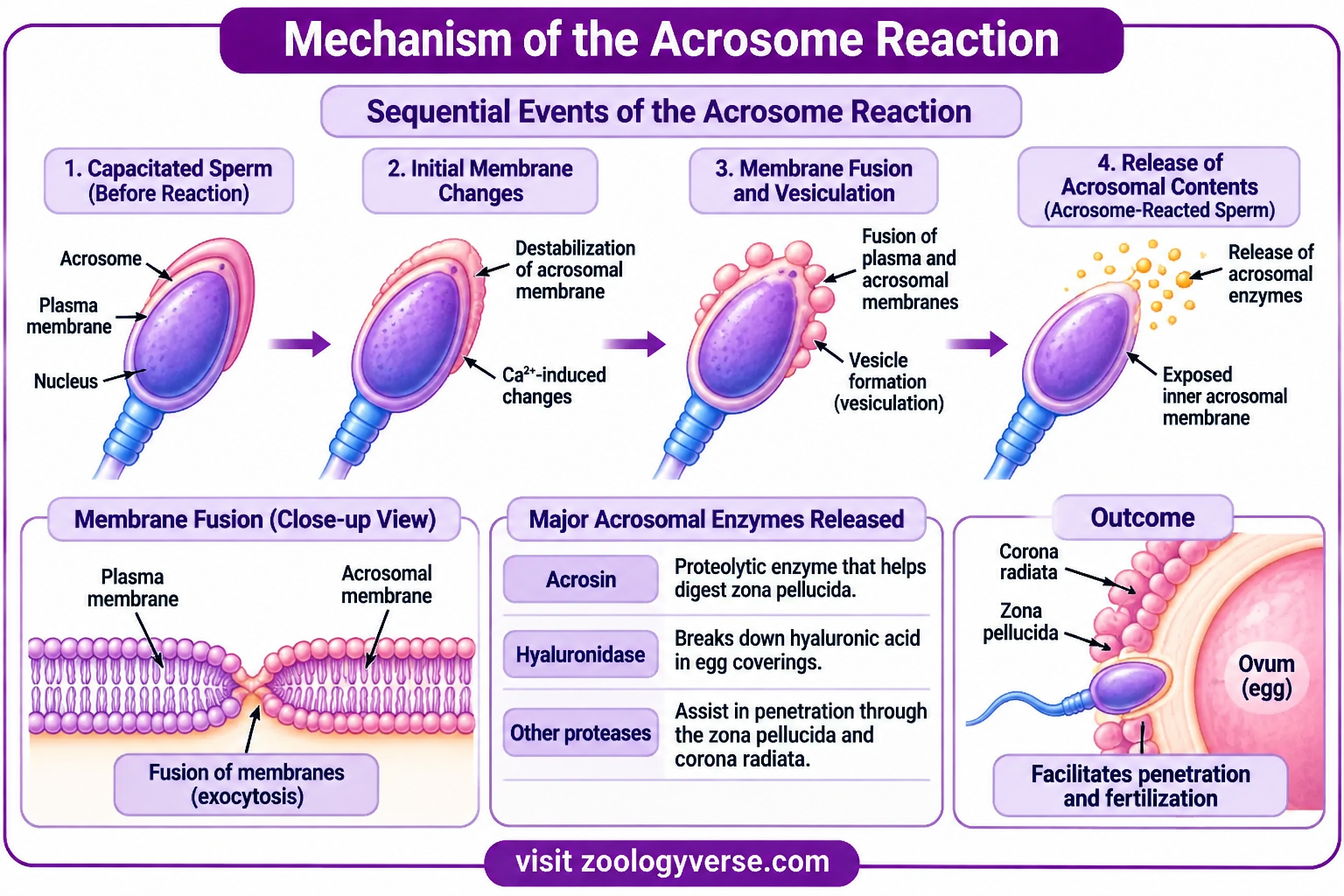
8.1 Initiation of the Acrosome Reaction
The acrosome reaction is initiated when sperm encounter appropriate signals that stimulate changes in the sperm plasma membrane and intracellular signalling systems. These signals may originate from the egg or its surrounding environment, depending on the animal species.
In mammalian sperm, capacitation increases the sperm’s responsiveness to physiological stimuli. Changes in membrane composition, ion regulation, and intracellular signalling contribute to the conditions required for the acrosome reaction.
The initiation of this process involves the activation of cellular mechanisms that promote calcium signalling and membrane fusion.
8.2 Calcium Entry into the Sperm
Calcium ions play a major role in regulating the acrosome reaction. Changes in intracellular calcium concentration contribute to the activation of signalling pathways involved in membrane fusion and acrosomal exocytosis.
Calcium entry and intracellular calcium regulation influence the cellular events that lead to fusion between the sperm plasma membrane and the outer acrosomal membrane.
The precise calcium signalling mechanisms involved vary among species, but calcium is an important regulator of the acrosome reaction in many animals.
8.3 Fusion of the Sperm Plasma Membrane and Outer Acrosomal Membrane
Following activation of the appropriate signalling pathways, the sperm plasma membrane undergoes fusion with the outer acrosomal membrane at multiple sites.
These membrane fusion events result in the formation of vesicles through a process known as vesiculation. The membrane organization of the sperm head changes, allowing acrosomal contents to become released or exposed.
This membrane fusion is a defining structural event of the acrosome reaction.
8.4 Release and Exposure of Acrosomal Contents
As membrane fusion and vesiculation progress, acrosomal contents are released or exposed. These contents include enzymes and other molecules that contribute to sperm interaction with egg coverings.
Acrosomal enzymes may facilitate the modification or penetration of extracellular structures surrounding the ovum, depending on the species and the nature of the egg coverings.
The release or exposure of these molecules helps sperm continue their interaction with the egg and its surrounding structures.
8.5 Changes in the Sperm Head
The acrosome reaction produces structural and functional changes in the sperm head. The acrosomal membranes undergo reorganization, and parts of the sperm surface become modified.
These changes may expose additional sperm membrane components involved in subsequent interactions with the egg. The sperm head undergoes a specialized transformation that facilitates progression toward subsequent fertilization-related events.
8.6 Subsequent Interaction with the Egg
Following the acrosome reaction, sperm may continue interacting with the egg’s extracellular coverings and subsequently with the egg plasma membrane.
The sperm’s ability to proceed through these events depends on the species, egg structure, and the timing of the acrosome reaction. The reaction is therefore not simply an enzyme-release event but a coordinated cellular transformation.
The Capacitation of Sperm and Acrosome Reaction represents a sequence of functionally connected processes in which capacitation prepares sperm for fertilization-related responses and the acrosome reaction contributes to subsequent sperm–egg interaction.
8.7 Sequence of Events in the Acrosome Reaction
| Stage | Event |
|---|---|
| 1 | Sperm encounters appropriate fertilization-related stimuli |
| 2 | Intracellular signalling pathways become activated |
| 3 | Calcium signalling contributes to acrosome reaction initiation |
| 4 | Sperm plasma membrane and outer acrosomal membrane undergo fusion |
| 5 | Membrane vesiculation occurs |
| 6 | Acrosomal contents are released or exposed |
| 7 | Sperm undergoes further interaction with egg coverings and subsequent fertilization-related structures |
The acrosome reaction is a highly coordinated process involving signalling, membrane fusion, vesiculation, and molecular exposure. These events contribute to sperm–egg interaction and the progression of fertilization in many animal species.
9. Role of Calcium in Capacitation and Acrosome Reaction
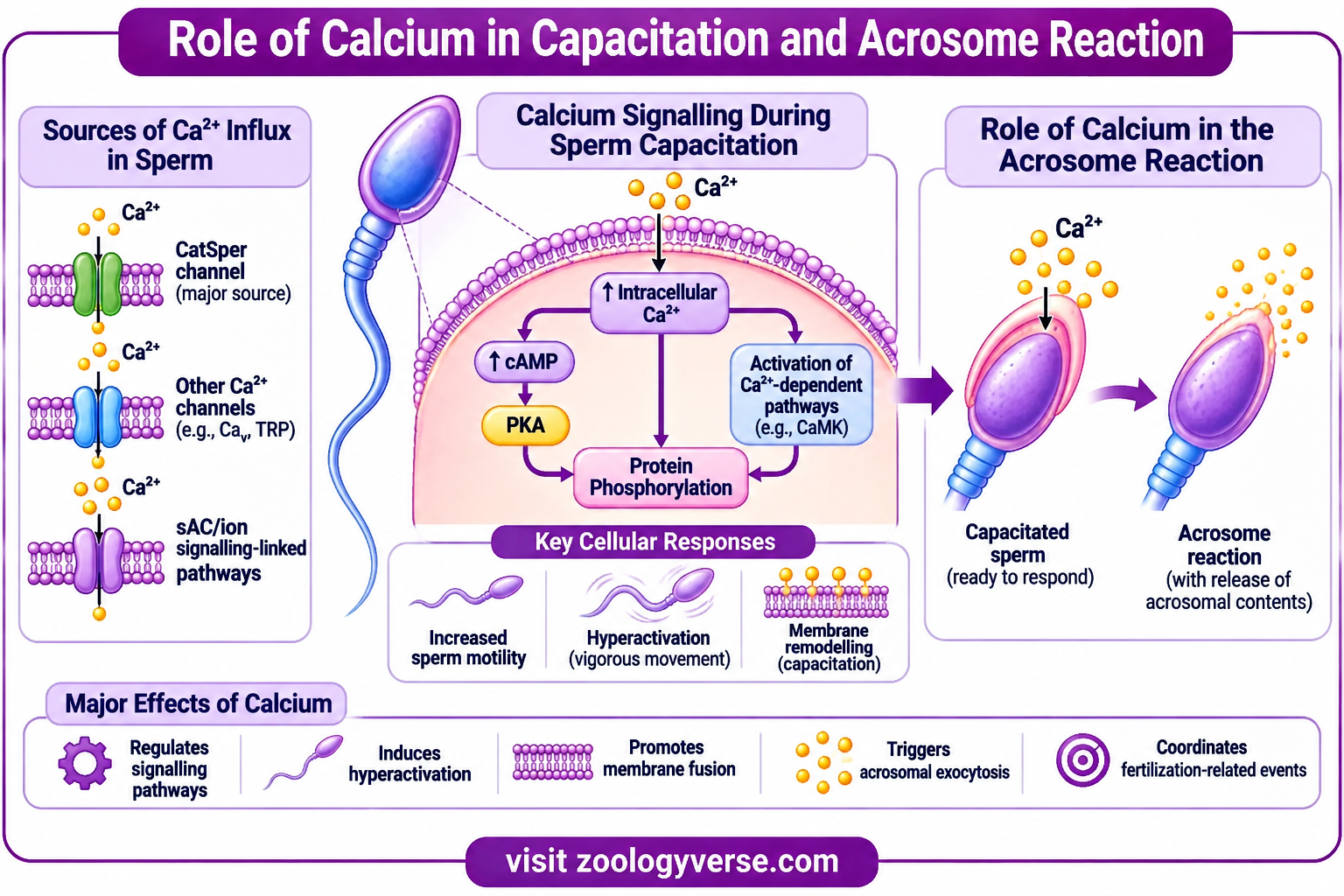
Calcium ions (Ca2+) play a central role in regulating sperm physiology, including motility, capacitation, hyperactivation, and the acrosome reaction. Calcium signalling influences several cellular mechanisms that prepare spermatozoa for fertilization and regulate their responses to the reproductive environment.
The Capacitation of Sperm and Acrosome Reaction involves calcium-dependent mechanisms at different stages, although calcium does not act alone. Its effects are integrated with bicarbonate signalling, cAMP production, protein phosphorylation, membrane changes, and other intracellular regulatory systems.
9.1 Calcium in Sperm Physiology
Calcium is an important intracellular signalling ion in spermatozoa. Its concentration within the sperm cell is carefully regulated through calcium channels, transporters, and intracellular mechanisms.
Changes in intracellular calcium levels influence sperm flagellar activity, motility patterns, signalling pathways, and responses to fertilization-related stimuli.
Calcium is therefore essential for coordinating several physiological activities that contribute to sperm functional competence.
9.2 Role of Calcium During Sperm Capacitation
Calcium contributes to the physiological changes associated with sperm capacitation. During capacitation, spermatozoa experience changes in intracellular signalling and membrane properties that prepare them for fertilization.
Calcium interacts with other signalling pathways, including those associated with bicarbonate, cAMP, and protein kinase A. These signalling mechanisms collectively influence sperm function and contribute to capacitation-associated changes.
Calcium regulation also contributes to the development of hyperactivated motility, which is associated with vigorous and asymmetrical flagellar movement.
9.3 Calcium and CatSper Channels
CatSper channels are specialized calcium channels located in the sperm flagellum of many mammals. These channels play a major role in regulating calcium entry into spermatozoa.
Calcium entry through CatSper channels influences flagellar activity and is particularly important in the regulation of sperm hyperactivation. CatSper channel activity is also influenced by the reproductive environment and signalling mechanisms that vary among species.
The regulation of CatSper channels contributes to the physiological changes associated with capacitation and sperm motility.
9.4 Calcium and Sperm Hyperactivation
Hyperactivation involves vigorous, high-amplitude, and asymmetrical flagellar beating. Calcium is an important regulator of this specialized motility pattern.
Changes in intracellular calcium influence the activity of proteins involved in flagellar movement. These calcium-dependent mechanisms contribute to the development of the motility pattern that helps sperm navigate through the female reproductive tract and interact with egg coverings.
Calcium signalling is therefore an important component of the functional transformation of sperm during capacitation.
9.5 Calcium in the Acrosome Reaction
Calcium is a major regulator of the acrosome reaction. An increase in intracellular calcium contributes to the activation of mechanisms involved in membrane fusion between the sperm plasma membrane and the outer acrosomal membrane.
These membrane fusion events lead to vesiculation and the release or exposure of acrosomal contents. Calcium-dependent signalling therefore helps regulate the cellular events that occur during the acrosome reaction.
The role of calcium in the acrosome reaction is particularly important because membrane fusion requires coordinated cellular regulation rather than uncontrolled membrane disruption.
9.6 Calcium-Dependent Membrane Fusion
The acrosome reaction involves fusion of the sperm plasma membrane with the outer acrosomal membrane at multiple sites. Calcium signalling contributes to the regulation of membrane fusion mechanisms involved in this process.
The resulting membrane vesiculation allows acrosomal contents to become released or exposed. These molecules contribute to sperm interaction with the egg’s surrounding structures, depending on the animal species.
Calcium therefore helps regulate the membrane-related events that occur during the acrosome reaction.
9.7 Calcium Signalling in Fertilization
Calcium also plays an important role after sperm–egg fusion. In many animals, sperm–egg interaction triggers calcium signals within the egg that contribute to egg activation.
In mammals, sperm-associated factors contribute to calcium oscillations in the egg following sperm–egg fusion. These calcium signals help initiate processes associated with the completion of meiosis, cortical granule exocytosis, and the initiation of embryonic development.
Thus, calcium signalling is involved not only in sperm capacitation and the acrosome reaction but also in subsequent events associated with fertilization and egg activation.
9.8 Summary of Calcium-Dependent Functions
| Reproductive event | Role of calcium |
|---|---|
| Sperm motility | Regulates flagellar activity |
| Capacitation | Contributes to signalling and physiological changes |
| Hyperactivation | Regulates vigorous and asymmetrical flagellar movement |
| Acrosome reaction | Contributes to signalling and membrane fusion |
| Sperm–egg interaction | Participates in subsequent fertilization-related signalling |
| Egg activation | Regulates calcium signals associated with activation and early developmental events |
Calcium acts as an important regulatory molecule throughout reproductive processes. Its coordinated regulation contributes to sperm functional maturation, hyperactivation, the acrosome reaction, and subsequent egg activation, making it an essential component of the physiological mechanisms underlying Capacitation of Sperm and Acrosome Reaction.
10. Relationship Between Sperm Capacitation and Acrosome Reaction
Sperm capacitation and the acrosome reaction are two closely associated physiological processes that contribute to successful fertilization in many animals, particularly mammals. Although they are interconnected, they represent distinct events with different mechanisms and functions.
Capacitation of Sperm and Acrosome Reaction are often discussed together because capacitation prepares spermatozoa to respond to fertilization-related stimuli, while the acrosome reaction involves specialized membrane changes and the release or exposure of acrosomal contents. Their coordination is important for sperm–egg interaction and the progression of fertilization.
10.1 Capacitation Prepares Sperm for Fertilization
Capacitation is a physiological process that occurs after sperm enter the female reproductive tract or an appropriate capacitating environment. It involves changes in the sperm plasma membrane, intracellular signalling pathways, ion regulation, and motility.
These changes increase sperm responsiveness to fertilization-related stimuli. Capacitated sperm may exhibit hyperactivated motility and become functionally prepared for interaction with the egg and its surrounding structures.
Capacitation is therefore a preparatory process that establishes the physiological conditions necessary for subsequent fertilization-related events.
10.2 The Acrosome Reaction Is a Subsequent Specialized Event
The acrosome reaction involves fusion between the sperm plasma membrane and the outer acrosomal membrane, followed by membrane vesiculation and the release or exposure of acrosomal contents.
This process contributes to sperm interaction with the egg’s extracellular coverings and subsequent fertilization-related events. The acrosome reaction is distinct from capacitation because it involves specific structural and membrane changes rather than the broader physiological preparation of sperm.
In many mammals, capacitation is associated with the acquisition of responsiveness to stimuli that can promote the acrosome reaction.
10.3 Functional Relationship Between the Two Processes
The functional relationship between capacitation and the acrosome reaction can be understood through their sequential roles in sperm physiology.
- Capacitation: Establishes fertilization competence through physiological and biochemical changes.
- Hyperactivation: Develops a specialized flagellar motility pattern associated with capacitation.
- Acrosome reaction: Involves membrane fusion, vesiculation, and release or exposure of acrosomal contents.
- Subsequent sperm–egg interaction: Allows sperm to continue interacting with the egg and its surrounding structures.
These processes are interconnected but are not interchangeable. Capacitation does not itself constitute the acrosome reaction, and the acrosome reaction does not replace the physiological changes associated with capacitation.
10.4 Differences Between Sperm Capacitation and the Acrosome Reaction
| Feature | Sperm Capacitation | Acrosome Reaction |
|---|---|---|
| Definition | Physiological preparation of sperm for fertilization | Membrane fusion and vesiculation involving the acrosome |
| Main changes | Membrane modification, signalling, ion regulation and motility changes | Fusion of sperm plasma membrane with outer acrosomal membrane |
| Location in mammals | Primarily associated with the female reproductive tract | Occurs in response to appropriate fertilization-related stimuli |
| Major molecular events | Cholesterol efflux, cAMP signalling, phosphorylation and calcium regulation | Calcium-dependent signalling, membrane fusion and vesiculation |
| Motility association | Associated with hyperactivation | May occur alongside changes in sperm function, but is not defined by motility |
| Functional role | Prepares sperm for fertilization | Facilitates subsequent interaction with egg coverings |
| Relationship | Preparatory physiological process | Specialized fertilization-related membrane event |
10.5 Coordination and Timing
The coordination of capacitation and the acrosome reaction is important for successful fertilization. Sperm must acquire the appropriate physiological state before responding effectively to fertilization-related stimuli.
In mammals, capacitation generally occurs during sperm transport through the female reproductive tract. The timing and triggering of the acrosome reaction vary among species and depend on the sperm’s physiological state and its interactions with the egg and surrounding environment.
The processes are therefore coordinated rather than identical or universally occurring at a fixed time.
10.6 Biological Significance of Their Relationship
The relationship between Capacitation of Sperm and Acrosome Reaction ensures that sperm undergo appropriate physiological preparation followed by specialized fertilization-related responses.
Capacitation contributes to sperm functional competence, including the development of hyperactivated motility and responsiveness to fertilization-related signals. The acrosome reaction subsequently contributes to sperm interaction with the egg’s extracellular coverings and other structures involved in fertilization.
Together, these processes help regulate sperm function and support the progression of fertilization in many animals.
11. Biological Significance of Capacitation and Acrosome Reaction
Sperm capacitation and the acrosome reaction are essential physiological processes that contribute to the functional preparation of sperm and successful fertilization in many animals. These processes enable spermatozoa to undergo specific biochemical, physiological, and structural changes required for interaction with the female gamete.
The biological significance of Capacitation of Sperm and Acrosome Reaction lies in their coordinated roles in sperm activation, specialized motility, sperm–egg interaction, and the progression of fertilization. Although their mechanisms differ, both processes contribute to reproductive success.
11.1 Acquisition of Fertilization Competence
Capacitation enables spermatozoa to acquire the functional ability to fertilize an ovum. Sperm may be motile before capacitation, but they generally require additional physiological changes to become capable of successful fertilization in mammals.
Changes in membrane composition, intracellular signalling, ion regulation, and protein phosphorylation contribute to the acquisition of fertilization competence.
This functional preparation is one of the most important biological roles of capacitation.
11.2 Facilitation of Sperm Transport
Capacitation is associated with changes in sperm motility, including the development of hyperactivated movement in many mammals. Hyperactivation involves vigorous and asymmetrical flagellar beating.
These movements may help sperm progress through the female reproductive tract, detach from oviductal reservoirs, and interact with the egg’s surrounding structures.
The motility changes associated with capacitation therefore contribute to the ability of sperm to reach and interact with the ovum.
11.3 Facilitation of Sperm–Egg Interaction
The acrosome reaction contributes to sperm interaction with the egg’s extracellular coverings. During this process, the sperm plasma membrane and outer acrosomal membrane undergo fusion and vesiculation, allowing acrosomal contents to be released or exposed.
These changes facilitate subsequent interactions between sperm and egg structures, depending on the species.
The acrosome reaction therefore plays an important role in the progression of fertilization in many animals.
11.4 Regulation of Fertilization-Related Responses
Capacitation prepares sperm to respond to appropriate fertilization-related stimuli. Changes in membrane properties and intracellular signalling contribute to sperm responsiveness.
The acrosome reaction is a specialized response involving membrane fusion and acrosomal changes. Its regulation helps coordinate sperm interaction with the egg’s surrounding structures.
The coordinated regulation of these processes contributes to the controlled progression of fertilization rather than indiscriminate sperm activation.
11.5 Contribution to Successful Gamete Fusion
Capacitation and the acrosome reaction contribute to the sequence of events that precedes and facilitates sperm–egg fusion in many animals.
Capacitation prepares sperm physiologically, while the acrosome reaction facilitates subsequent interactions with egg coverings and other structures involved in fertilization. Additional molecular interactions between sperm and egg membranes are required for gamete fusion.
These processes therefore contribute to the successful progression of fertilization, although neither alone guarantees gamete fusion.
11.6 Importance in Reproductive Biology and Assisted Reproductive Technologies
Understanding Capacitation of Sperm and Acrosome Reaction is important in reproductive biology, fertility research, and assisted reproductive technologies.
Laboratory studies of capacitation help researchers understand sperm physiology, fertilization mechanisms, and factors affecting reproductive success. Capacitation can also be induced under controlled laboratory conditions to study sperm function.
Knowledge of the acrosome reaction helps investigators examine sperm–egg interactions and identify abnormalities associated with fertilization-related processes.
These concepts are particularly important in reproductive physiology, embryology, veterinary reproduction, infertility research, and assisted reproduction.
11.7 Biological Significance in Evolutionary and Comparative Contexts
Sperm capacitation and the acrosome reaction exhibit variation among animal species. Their mechanisms are influenced by reproductive strategies, gamete structure, fertilization environments, and species-specific molecular interactions.
In externally fertilizing animals, sperm–egg interactions may involve different mechanisms and environmental signals compared with those observed in mammals. The acrosome reaction is also adapted to the structure of the egg coverings and the reproductive environment of different species.
These variations demonstrate how fertilization mechanisms have evolved in association with diverse reproductive strategies.
The biological significance of Capacitation of Sperm and Acrosome Reaction therefore extends beyond individual fertilization events. These processes represent specialized physiological mechanisms that contribute to sperm function, gamete interaction, reproductive success, and the diversity of animal reproductive biology.
12. Comparative Aspects of Capacitation of Sperm and Acrosome Reaction in Different Animals
12.1 Capacitation and Acrosome Reaction in Mammals
In mammals, sperm generally undergo Sperm Capacitation within the female reproductive tract or under suitable laboratory conditions. During this process, sperm undergo biochemical and physiological modifications that enable them to acquire fertilizing ability.
These changes include cholesterol removal from the sperm plasma membrane, altered membrane fluidity, increased intracellular signalling, protein phosphorylation and the development of hyperactivated motility. Capacitated sperm become more responsive to signals associated with fertilization and may subsequently undergo the Acrosome Reaction.
The Acrosome Reaction involves membrane changes and exocytotic events that expose or release acrosomal components and facilitate interactions with the egg’s surrounding structures. The timing and precise triggering mechanisms of this reaction can vary among mammalian species.
12.2 Capacitation in Humans and Other Primates
In humans and other primates, sperm capacitation occurs primarily within the female reproductive tract, particularly through interactions with the uterine and oviductal environments.
During Sperm Capacitation, cholesterol is removed from the sperm membrane, intracellular signalling pathways are activated and sperm motility patterns change. These modifications increase sperm responsiveness to the physiological conditions encountered near the fertilization site.
The Acrosome Reaction is associated with changes in sperm membrane organization and calcium signalling. However, it is not necessarily initiated only after sperm directly bind the zona pellucida. Research indicates that acrosomal changes may begin at different stages of sperm movement and interaction with the female reproductive tract.
12.3 Capacitation in Rodents
In rodents such as mice and rats, sperm capacitation has been extensively studied experimentally. The process involves cholesterol efflux, bicarbonate-dependent signalling, activation of cyclic AMP pathways and changes in protein phosphorylation.
Capacitated sperm exhibit hyperactivated motility, characterized by vigorous and asymmetrical flagellar movements. These movements help sperm navigate the complex environment of the female reproductive tract and interact with the egg’s surrounding structures.
The Acrosome Reaction in rodents involves calcium-dependent signalling and membrane fusion events. Mouse sperm studies have also contributed significantly to understanding molecular mechanisms of sperm–egg recognition and membrane fusion.
12.4 Capacitation in Domestic Mammals
In domestic mammals such as cattle, sheep, goats, pigs and horses, sperm capacitation is influenced by the reproductive tract environment and species-specific sperm physiology.
Sperm may undergo capacitation-associated changes during their passage through the female reproductive tract, including membrane remodelling, altered motility and changes in intracellular signalling. In some species, sperm can remain temporarily associated with particular regions of the female tract, contributing to the formation of a sperm reservoir.
The timing of capacitation and the responsiveness of sperm to acrosomal reaction-inducing signals differ among species. These differences are important in natural reproduction and in assisted reproductive technologies such as artificial insemination and in vitro fertilization.
12.5 Sperm Activation in External Fertilizing Animals
In many externally fertilizing animals, sperm activation occurs after sperm are released into the external environment rather than through the classical mammalian capacitation process.
In fish, amphibians and many marine invertebrates, sperm activation may be influenced by changes in the surrounding environment, including ionic composition, osmotic conditions, pH and the presence of egg-derived signalling molecules.
For example, sperm motility in some fish is activated rapidly after sperm contact the aquatic environment. These activation mechanisms differ from mammalian capacitation, which involves a more prolonged physiological transformation within the female reproductive tract.
Therefore, sperm activation in externally fertilizing animals should not automatically be considered equivalent to mammalian Sperm Capacitation.
12.6 Acrosome Reaction in Marine Invertebrates
The Acrosome Reaction is particularly important in many marine invertebrates, including sea urchins and certain molluscs, where sperm interact with eggs in the surrounding seawater.
In sea urchins, egg-associated chemical signals can stimulate sperm responses, including changes in flagellar activity and acrosomal membrane organization. The Acrosome Reaction is associated with the exposure of structures and molecules involved in sperm attachment and interaction with the egg surface.
In some marine invertebrates, the acrosome contains specialized structures that contribute to sperm attachment and penetration through egg coverings. The mechanisms and triggering signals differ considerably from those observed in mammals.
These adaptations reflect the need for sperm to recognize and fertilize eggs in an aquatic environment where gametes may encounter one another without direct contact between reproductive organs.
12.7 Comparative Table of Capacitation and Acrosome Reaction
| Animal group | Sperm activation or capacitation | Acrosome Reaction | Fertilization environment |
|---|---|---|---|
| Humans and other primates | Capacitation occurs primarily within the female reproductive tract | Calcium-associated acrosomal exocytosis and membrane remodelling | Internal |
| Rodents | Cholesterol efflux, signalling activation and hyperactivation | Acrosomal membrane changes and exocytosis | Internal |
| Cattle and sheep | Capacitation-associated membrane and motility changes | Species-dependent acrosomal response | Internal |
| Pigs | Capacitation-associated signalling and motility changes | Acrosomal changes associated with sperm–egg interaction | Internal |
| Horses | Capacitation involves membrane and signalling modifications | Acrosomal response varies with physiological conditions | Internal |
| Teleost fish | Often rapid environmental sperm activation; classical mammalian capacitation is generally absent | Species-dependent acrosomal responses | Usually external |
| Amphibians | Sperm activation depends on species-specific environmental and reproductive conditions | Acrosomal responses vary among species | Often external |
| Sea urchins | Sperm activation occurs in seawater through environmental and egg-associated signals | Acrosome Reaction contributes to egg recognition and interaction | External |
| Molluscs | Sperm activation and acrosomal mechanisms vary widely among species | Specialized acrosomal responses in many species | Often external |
12.8 Evolutionary Significance of Comparative Sperm Mechanisms
The variation in Capacitation of Sperm and Acrosome Reaction reflects the evolutionary adaptation of reproductive mechanisms to different fertilization environments.
In mammals, capacitation provides a mechanism through which sperm acquire fertilizing competence during their journey through the female reproductive tract. In many externally fertilizing animals, sperm activation is instead closely associated with environmental conditions and signals released by eggs.
The Acrosome Reaction has evolved in different forms to support sperm–egg recognition, attachment and interaction. Its molecular components and triggering mechanisms may vary considerably among animal groups.
These comparative differences demonstrate that fertilization is not governed by a single universal sperm activation mechanism. Rather, reproductive processes have evolved diverse physiological and molecular strategies to ensure successful gamete interaction across the animal kingdom.
13. Factors Affecting Capacitation and Acrosome Reaction
13.1 Cholesterol Content of the Sperm Membrane
Cholesterol plays an important role in maintaining sperm plasma membrane stability and organization. During Sperm Capacitation, cholesterol is gradually removed from the sperm membrane through interactions with components of the female reproductive tract or capacitation medium.
Cholesterol efflux increases membrane fluidity and facilitates the redistribution of membrane proteins and signalling molecules. These changes help prepare the sperm membrane for subsequent physiological responses, including the Acrosome Reaction.
Excessive membrane cholesterol or insufficient cholesterol removal may interfere with capacitation-associated membrane changes. Conversely, excessive membrane destabilization may damage sperm and impair their viability.
13.2 Bicarbonate Ions
Bicarbonate ions (HCO₃⁻) are important regulators of sperm capacitation. They activate soluble adenylyl cyclase, which promotes the production of cyclic AMP (cAMP).
The increase in cAMP activates protein kinase A (PKA), initiating signalling pathways associated with sperm capacitation. These pathways contribute to protein phosphorylation, changes in sperm motility and the acquisition of fertilizing competence.
The availability of bicarbonate therefore influences the biochemical processes involved in Sperm Capacitation.
13.3 Calcium Ions
Calcium ions (Ca²⁺) are essential for several sperm physiological functions, including motility regulation, hyperactivation, capacitation-associated signalling and the Acrosome Reaction.
Calcium entry into sperm is regulated by specific ion channels and intracellular signalling mechanisms. Changes in intracellular calcium concentration can influence flagellar activity, membrane interactions and acrosomal exocytosis.
The timing, concentration and regulation of calcium signals are important because inappropriate calcium changes may disrupt sperm function.
13.4 pH of the Environment
The pH of the sperm environment influences sperm metabolism, membrane properties, ion transport and motility.
Changes in intracellular pH are associated with sperm activation and capacitation-related signalling. Alkalinization of the sperm cytoplasm can influence ion channel activity and flagellar movement.
Suitable pH conditions support the physiological changes required for sperm capacitation, whereas excessively acidic or alkaline conditions may negatively affect sperm viability and functional responses.
13.5 Female Reproductive Tract Secretions
The female reproductive tract provides a specialized environment that supports sperm transport, survival and capacitation.
Secretions from the uterus and oviduct contain ions, proteins, lipids and other molecules that influence sperm physiology. These components can contribute to membrane remodelling, sperm transport, signalling and interactions with the reproductive tract epithelium.
The female reproductive tract may also regulate sperm availability by maintaining temporary sperm reservoirs and influencing the timing of sperm release and capacitation.
13.6 Temperature
Temperature affects sperm metabolism, membrane fluidity, enzymatic activity and motility.
Sperm capacitation and the Acrosome Reaction depend on physiological conditions that support cellular signalling and membrane processes. Temperature variations may alter these mechanisms, particularly during laboratory handling and assisted reproductive procedures.
Maintaining appropriate temperature conditions is therefore important for preserving sperm function and facilitating physiological capacitation.
13.7 Reactive Oxygen Species
Reactive oxygen species (ROS) have both physiological and pathological roles in sperm function.
At controlled concentrations, ROS participate in signalling pathways associated with Sperm Capacitation, including changes in protein phosphorylation and membrane-associated processes. However, excessive ROS production can cause oxidative stress.
Oxidative stress may damage sperm membrane lipids, proteins and DNA, impair motility and interfere with sperm fertilizing ability. Therefore, the balance between ROS production and antioxidant protection is important for normal sperm function.
13.8 Egg-Associated Signals
Eggs and their surrounding structures release or contain molecules that can influence sperm behaviour and interactions.
Depending on the animal species, egg-associated signals may affect sperm motility, chemotactic responses, acrosomal changes and sperm–egg recognition. In some animals, these signals are particularly important in stimulating the Acrosome Reaction.
The nature of egg-associated signals and their effects differ among animal groups, reflecting differences in reproductive mechanisms and fertilization environments.
13.9 Sperm Motility and Hyperactivation
Sperm motility is closely associated with capacitation and fertilization competence.
During capacitation, sperm may develop hyperactivated motility, characterized by high-amplitude and asymmetrical flagellar movements. This motility pattern is particularly important in mammals for movement through the female reproductive tract and interaction with egg coverings.
Factors affecting calcium signalling, energy metabolism, ion transport and flagellar function may influence hyperactivation and therefore affect the physiological events associated with capacitation and fertilization.
13.10 Laboratory and Assisted Reproductive Conditions
The conditions used during sperm handling, incubation and assisted reproductive procedures can influence Capacitation of Sperm and Acrosome Reaction.
Factors such as incubation time, medium composition, ionic concentrations, pH, temperature, oxidative stress and sperm concentration may affect sperm physiology.
In vitro capacitation requires an appropriate combination of physiological conditions to promote sperm functional changes while maintaining viability. Unfavourable laboratory conditions may result in incomplete capacitation, premature acrosomal changes or reduced fertilizing competence.
13.11 Summary of Factors Affecting Capacitation and Acrosome Reaction
| Factor | Effect on sperm physiology |
|---|---|
| Cholesterol efflux | Promotes membrane remodelling and increased membrane fluidity |
| Bicarbonate ions | Activate cAMP-related signalling pathways |
| Calcium ions | Regulate motility, hyperactivation and acrosomal responses |
| pH | Influences metabolism, ion transport and signalling |
| Female reproductive tract secretions | Support sperm survival, transport and capacitation |
| Temperature | Influences membrane properties, metabolism and physiological responses |
| Reactive oxygen species | Participate in signalling at controlled levels but cause damage when excessive |
| Egg-associated signals | Influence sperm behaviour and species-specific sperm–egg interactions |
| Hyperactivated motility | Facilitates sperm movement and fertilization-related interactions |
| Laboratory conditions | Influence sperm viability, capacitation and acrosomal responses |
The regulation of these factors is essential for the successful completion of Capacitation of Sperm and Acrosome Reaction. Their coordinated action ensures that sperm undergo appropriate physiological changes, maintain functional integrity and become capable of participating in fertilization.
14: Conclusion
The Capacitation of Sperm and Acrosome Reaction are two closely associated physiological processes that play essential roles in successful fertilization, particularly in mammals. Capacitation prepares spermatozoa through biochemical, molecular and physiological modifications, while the acrosome reaction involves specialized membrane changes and exocytotic events that facilitate sperm interactions with the egg and its surrounding structures.
These processes involve cholesterol efflux, ionic changes, cAMP–PKA signalling, calcium regulation, altered protein phosphorylation and hyperactivated motility. Their regulation is influenced by the female reproductive tract, environmental conditions and species-specific reproductive mechanisms.
Although mammalian capacitation follows characteristic physiological pathways, sperm activation and acrosomal mechanisms differ considerably among animals. These differences reflect evolutionary adaptations to internal and external fertilization.
Understanding the Capacitation of Sperm and Acrosome Reaction is important not only for reproductive physiology and developmental biology but also for veterinary reproduction, infertility research and assisted reproductive technologies.
15. Frequently Asked Questions (FAQs)
What is sperm capacitation?
Where does sperm capacitation occur?
What is the Acrosome Reaction?
What is the difference between capacitation and the acrosome reaction?
What is the role of calcium in sperm capacitation?
What is hyperactivation of sperm?
Does sperm capacitation occur in all animals?
Why are capacitation and the Acrosome Reaction important for fertilization?
Can sperm capacitation occur outside the female reproductive tract?
What factors affect sperm capacitation and the Acrosome Reaction?
16. References
- Ickowicz, D., Finkelstein, M., & Breitbart, H. (2012). Mechanism of sperm capacitation and the acrosome reaction: Role of protein kinases. Asian Journal of Andrology, 14(6), 816–821. https://pmc.ncbi.nlm.nih.gov/articles/PMC3720105/
- Visconti, P. E., & colleagues. (2017). Factors and pathways involved in capacitation: How are they regulated? Frontiers in Cell and Developmental Biology. https://pmc.ncbi.nlm.nih.gov/articles/PMC5356907/
- Stival, C., et al. (2016). Sperm capacitation and acrosome reaction in mammalian sperm. In Advances in Experimental Medicine and Biology. https://pubmed.ncbi.nlm.nih.gov/27194351/
- Darszon, A., Nishigaki, T., López-González, I., Visconti, P. E., & Treviño, C. L. (2020). Differences and similarities: The richness of comparative sperm physiology. Physiology, 35(3), 196–208. https://pmc.ncbi.nlm.nih.gov/articles/PMC11960811/
- Gervasi, M. G., & Visconti, P. E. (2016). Molecular basis of human sperm capacitation. https://pmc.ncbi.nlm.nih.gov/articles/PMC6078053/
- Austin, C. R. (1951). Observations on the penetration of the sperm into the mammalian egg. Australian Journal of Scientific Research.
- Chang, M. C. (1951). Fertilization of rabbit ova in vitro. Nature.
- Guraya, S. S. (2000). Cellular and molecular biology of capacitation and acrosome reaction in spermatozoa. International Review of Cytology, 199, 1–64. https://pubmed.ncbi.nlm.nih.gov/10874576/
- Molecular mechanisms of mammalian sperm capacitation, and its regulation by sodium-dependent secondary active transporters. (2024). Reproductive Medicine and Biology. https://pmc.ncbi.nlm.nih.gov/articles/PMC11480905/
- Post-ejaculatory modifications to sperm (PEMS). (2020). https://pmc.ncbi.nlm.nih.gov/articles/PMC7643048/
Discover more from Zoologyverse
Subscribe to get the latest posts sent to your email.