
1. Introduction to Taxonomy and Systematics
The living world consists of an enormous diversity of organisms that differ in their structure, morphology, physiology, behaviour, genetic composition and evolutionary history. To study this diversity scientifically, biologists require organised methods for identifying, naming, describing and classifying organisms. Taxonomy and Systematics are two closely related branches of biological science that provide the foundation for understanding and organising biodiversity. Read also: Origin of Life: Theories, Chemical Evolution and RNA World.
Taxonomy is concerned primarily with the identification, nomenclature and classification of organisms. It establishes standard scientific names and arranges organisms into hierarchical categories according to their similarities and differences. Through taxonomic classification, organisms can be recognised and studied using a common scientific framework.
Systematics has a broader scope. It investigates biological diversity and the evolutionary relationships among organisms. It considers not only observable characteristics but also genetic, molecular, ecological, developmental and palaeontological evidence. Therefore, Taxonomy and Systematics together help scientists understand both the organisation of biodiversity and the evolutionary processes responsible for its development.
The relationship between these disciplines is particularly important in modern biology. Taxonomic classification provides a structured arrangement of organisms, whereas systematics examines whether that arrangement accurately reflects their evolutionary relationships. Modern Taxonomy and Systematics increasingly use molecular techniques, DNA sequencing, computational analysis and phylogenetic methods to improve the accuracy of biological classification.
The importance of Taxonomy and Systematics extends beyond naming organisms. These disciplines support biodiversity assessment, conservation planning, ecological research, agriculture, medicine, evolutionary biology and the discovery of previously unknown species. They also provide a universal scientific language that allows researchers across different regions and disciplines to communicate accurately about living organisms.
Thus, the study of Taxonomy and Systematics is essential for understanding the diversity, classification, relationships and evolutionary history of life on Earth.
2. Historical Development of Taxonomy
The development of Taxonomy and Systematics reflects the gradual growth of biological knowledge, from early attempts to group familiar organisms to modern classifications based on evolutionary relationships and molecular evidence. Different historical periods introduced new principles and methods that transformed the study of biodiversity. The history of Taxonomy and Systematics therefore illustrates how classification has changed as scientific knowledge has expanded.
2.1 Early Attempts at Classification
Ancient Greek philosophers made some of the earliest recorded efforts to organise living organisms. Aristotle (384–322 BCE) classified animals using observable features such as habitat, body structure and reproductive characteristics. He distinguished animals with blood from those without blood, an arrangement that does not correspond exactly to modern vertebrate and invertebrate groups but represents an important early attempt at systematic classification. These early groupings were not evolutionary, yet they contributed to the comparative approach later used in Taxonomy and Systematics.
Theophrastus (c. 371–287 BCE), often regarded as the father of botany, described and grouped plants according to their growth forms and other visible features. These early approaches were limited by the knowledge and tools available at the time, but they established the idea that biological diversity could be studied through organised comparison. Such descriptive work became an important foundation for later Taxonomy and Systematics.
2.2 Development of Scientific Taxonomy
During the sixteenth and seventeenth centuries, exploration and the discovery of many previously unfamiliar organisms increased the need for consistent methods of description and naming. Naturalists began preparing detailed catalogues and comparing organisms using more carefully defined characteristics. This growing need helped shape the practical foundations of Taxonomy and Systematics.
A major advance came through Carl Linnaeus (1707–1778), who formalised the hierarchical arrangement of organisms and popularised binomial nomenclature. In this system, each species is assigned a two-part scientific name consisting of a genus name and a specific epithet. His works, particularly Systema Naturae, provided an influential framework for modern classification. Linnaeus is widely known as the father of modern taxonomy. His contribution established a lasting naming framework that continues to influence Taxonomy and Systematics.
2.3 Influence of Evolutionary Theory
The publication of Charles Darwin’s On the Origin of Species in 1859 changed the interpretation of biological classification. Similarities among organisms could now be understood in terms of common ancestry and evolutionary descent, rather than resemblance alone. This evolutionary perspective became central to the development of Taxonomy and Systematics because classification increasingly aimed to represent natural evolutionary relationships.
Later, Ernst Haeckel introduced evolutionary trees to represent relationships among organisms, while advances in genetics during the twentieth century provided new evidence for studying heredity and variation. The modern evolutionary synthesis further connected genetics with natural selection and population-level evolutionary change. These developments broadened the scope of Taxonomy and Systematics beyond the description of visible similarities.
2.4 Modern Development of Systematics
In the twentieth century, systematics developed increasingly rigorous approaches to reconstructing evolutionary relationships. Willi Hennig’s work on phylogenetic systematics, especially Phylogenetic Systematics (1966; originally published in German in 1950), emphasised the use of shared derived characters, known as synapomorphies, to recognise groups that represent common ancestry. This approach provided an explicit evolutionary framework for Taxonomy and Systematics.
The development of biochemical techniques, DNA sequencing and computational methods later transformed Taxonomy and Systematics. Researchers could compare protein and nucleic acid sequences, estimate genetic differences and construct phylogenetic hypotheses using molecular data. These approaches contributed to major revisions in classification, including the three-domain proposal by Carl Woese and colleagues in 1990, based largely on comparisons of ribosomal RNA sequences.
Today, Taxonomy and Systematics combine morphology, anatomy, embryology, ecology, fossils, genetics and molecular phylogenetics. This integrative approach allows scientists to describe biodiversity more accurately and develop classifications that increasingly reflect the evolutionary history of organisms. Modern research continues to refine Taxonomy and Systematics as new organisms, technologies and evolutionary evidence become available.
3. Meaning, Scope and Objectives of Taxonomy
Taxonomy is a fundamental branch of biology concerned with the identification, description, naming and classification of organisms. It provides an organised framework for studying the enormous diversity of living organisms and establishing their similarities and differences. In biological science, Taxonomy and Systematics are closely associated because both contribute to understanding biodiversity, although their primary objectives and scope are not identical.
The term taxonomy is derived from the Greek words taxis, meaning arrangement, and nomos, meaning law or method. It was introduced by the Swiss botanist Augustin Pyramus de Candolle in his work Théorie élémentaire de la botanique (1813). Taxonomy provides standard procedures through which organisms are recognised, scientifically named and placed into appropriate taxonomic groups.
3.1 Meaning of Taxonomy
Taxonomy involves three major activities:
- Identification: Determining the identity of an organism by comparing its characteristics with those of previously described organisms and using taxonomic keys, descriptions and reference collections.
- Nomenclature: Assigning scientific names to organisms according to internationally accepted rules. Zoological names are governed by the International Code of Zoological Nomenclature (ICZN), while botanical, fungal and algal names are governed by the International Code of Nomenclature for algae, fungi, and plants (ICN).
- Classification: Arranging organisms into groups or taxa based on shared characteristics and accepted relationships. These groups are organised into hierarchical categories such as species, genus, family, order, class, phylum and kingdom.
These activities provide a standardised framework for communicating biological information. Within Taxonomy and Systematics, accurate identification and nomenclature are especially important because errors in recognising or naming organisms can affect biodiversity records, ecological studies and conservation decisions.
3.2 Scope of Taxonomy
The scope of taxonomy extends across almost every area of biological research. Its major areas include:
- Organismal diversity: Studying the variety of animals, plants, fungi, microorganisms and other biological entities.
- Species identification: Recognising and distinguishing species using morphological, anatomical, physiological and molecular characteristics.
- Scientific nomenclature: Establishing stable and universally accepted scientific names.
- Classification: Organising organisms into taxonomic categories according to their characteristics and relationships.
- Biodiversity documentation: Preparing inventories, catalogues, monographs and identification guides.
- Conservation biology: Identifying threatened, rare, endemic and newly discovered species.
- Evolutionary studies: Providing correctly identified organisms for investigations of adaptation, divergence and common ancestry.
Modern Taxonomy and Systematics also incorporate DNA barcoding, molecular phylogenetics, bioinformatics and computer-based databases to improve species identification and classification.
3.3 Objectives of Taxonomy
The principal objectives of taxonomy are:
- To discover, identify and describe biological diversity.
- To provide every recognised organism with an appropriate scientific name.
- To establish a standard system of classification.
- To distinguish closely related and morphologically similar species.
- To document the geographical distribution and biological characteristics of organisms.
- To provide reliable information for ecological, evolutionary and conservation research.
- To make biological information accessible and comparable to researchers throughout the world.
3.4 Difference Between Taxonomy and Systematics
Although the terms are often used together, they are not completely interchangeable. Taxonomy primarily deals with identification, nomenclature and classification, whereas systematics investigates biological diversity and the evolutionary relationships among organisms. Therefore, Taxonomy and Systematics have overlapping but distinct responsibilities in modern biology.
Taxonomic classification can describe how organisms are grouped, while systematic research evaluates whether those groups reflect their evolutionary history. Together, these disciplines provide a scientific foundation for understanding the organisation and evolution of biodiversity.
4. Principles of Biological Classification
Biological classification is the scientific process of arranging organisms into groups based on their shared characteristics, differences and evolutionary relationships. It provides an organised representation of biodiversity and makes the study of organisms more systematic. The principles of classification form an essential foundation of Taxonomy and Systematics, because they determine how organisms are compared, recognised and placed into different taxonomic groups.
A reliable classification system should reflect meaningful biological relationships rather than superficial similarities alone. Modern classification therefore considers morphological, anatomical, embryological, physiological, cytological, biochemical, ecological and molecular evidence. These sources of information help scientists develop classifications that are consistent with the evolutionary history of organisms.
4.1 Identification of Taxonomic Characters
A taxonomic character is any observable or measurable feature of an organism that can be used to distinguish, compare or classify it. Characters may be structural, physiological, behavioural, developmental or molecular.
Important categories of taxonomic characters include:
- Morphological characters: External features such as body shape, colour, size, appendages, wings and body segmentation.
- Anatomical characters: Internal structural features such as the arrangement of organs, skeletal structure and organisation of tissues.
- Embryological characters: Features of embryonic development, including cleavage patterns, germ layers and developmental sequences.
- Cytological characters: Cellular features such as chromosome number, chromosome structure and cell organisation.
- Physiological characters: Functional properties such as metabolic pathways, respiratory mechanisms and osmoregulation.
- Biochemical characters: Differences in proteins, enzymes, pigments and other biological molecules.
- Molecular characters: Variations in DNA, RNA and protein sequences that can reveal genetic similarities and evolutionary relationships.
- Ecological characters: Habitat preferences, feeding habits, reproductive strategies and ecological interactions.
The selection of appropriate characters is important in Taxonomy and Systematics, because unreliable or misleading characters may result in incorrect identification or classification.
4.2 Homologous and Analogous Characters
The distinction between homologous and analogous characters is particularly important when interpreting similarities among organisms.
Homologous characters are structures or features that share a common evolutionary origin, even when they perform different functions. For example, the forelimbs of humans, whales, bats and horses have a similar basic skeletal arrangement but are adapted for different activities. These similarities provide evidence of common ancestry.
Analogous characters perform similar functions but have evolved independently in different evolutionary lineages. For example, the wings of birds and insects both enable flight, but they differ considerably in their structural organisation and evolutionary origin. Such similarities commonly arise through convergent evolution.
In evolutionary classification, homologous characters are generally more informative about common ancestry than analogous similarities. Therefore, distinguishing between them is an important principle of Taxonomy and Systematics.
4.3 Primitive and Derived Characters
Characters can also be interpreted according to their evolutionary condition.
- Primitive character (plesiomorphy): An ancestral feature inherited from an earlier ancestor.
- Derived character (apomorphy): A feature that evolved in a particular lineage relative to its ancestors.
- Shared derived character (synapomorphy): A derived feature shared by two or more groups because it was inherited from their most recent common ancestor.
Shared derived characters are especially useful in cladistic classification because they help identify monophyletic groups. A monophyletic group includes a common ancestor and all of its descendants.
For example, the presence of feathers is a defining derived characteristic of birds and provides important evidence for recognising the group Aves. Such evolutionary interpretation makes classification more informative than simply grouping organisms according to general resemblance.
4.4 Natural and Phylogenetic Classification
Classification systems have developed from simple arrangements based on a few visible characters to approaches that consider overall biological relationships and evolutionary history.
Natural classification groups organisms using a broad range of characteristics, allowing their overall similarities and differences to be considered. It is more informative than artificial classification based on a limited number of superficial features.
Phylogenetic classification arranges organisms according to their evolutionary relationships and common ancestry. It uses homologous characters, molecular sequences and other evidence to reconstruct evolutionary history. Cladistics is an important approach to phylogenetic classification.
Modern Taxonomy and Systematics increasingly favour phylogenetic classification because it aims to represent evolutionary relationships explicitly. However, the reliability of any classification depends on the quality of the evidence, appropriate character selection and the methods used to interpret evolutionary history.
4.5 Hierarchical Arrangement of Organisms
Biological classification follows a hierarchical arrangement in which smaller groups are included within progressively larger groups. Species are placed within genera, genera within families, families within orders and so on.
This hierarchical organisation makes biodiversity easier to study and compare. It also provides a standard framework for recording and communicating information about organisms. The major taxonomic categories and their relationships are discussed in detail in the next section.
4.6 Stability and Scientific Revision of Classification
A useful classification system should provide stability and consistency in scientific communication. Scientific names are regulated by internationally accepted nomenclatural codes, which establish rules for naming organisms and resolving naming problems.
However, classification is not permanently fixed. New fossil discoveries, improved morphological observations, genetic evidence and molecular phylogenetic analyses may reveal that earlier groupings do not accurately represent evolutionary relationships. Consequently, taxonomic arrangements may be revised when stronger scientific evidence becomes available.
The principles of Taxonomy and Systematics therefore combine standardisation with scientific flexibility. The objective is not simply to preserve traditional classifications but to develop increasingly accurate and evidence-based representations of biological diversity.
5. Taxonomic Hierarchy and Categories
The taxonomic hierarchy is the ordered arrangement of organisms into successive levels of classification, ranging from smaller, more specific groups to larger, more inclusive groups. It provides a systematic framework for organising biological diversity and understanding the relationships among organisms. In Taxonomy and Systematics, hierarchical classification helps scientists identify organisms, compare their characteristics and communicate their biological relationships through universally recognised categories.
The Swedish naturalist Carl Linnaeus established the foundation of the hierarchical classification system used in modern taxonomy. His approach arranged organisms into nested groups based on shared characteristics. Although modern classifications increasingly incorporate evolutionary and molecular evidence, the hierarchical framework remains an important component of biological classification.
5.1 Meaning of Taxonomic Category and Taxon
A taxonomic category is a particular rank or level within the classification hierarchy. Examples include species, genus, family, order, class, phylum and kingdom.
A taxon (plural: taxa) is an actual group of organisms recognised at any taxonomic rank. For example, Mammalia is a taxon at the class level, whereas Panthera is a taxon at the genus level.
The distinction is important: category refers to the rank, while taxon refers to the biological group assigned to that rank. These concepts provide the basic terminology used in Taxonomy and Systematics.
5.2 Major Taxonomic Categories
The major taxonomic categories are arranged in a hierarchical sequence.
- Species: The basic and most specific traditional unit of classification. In sexually reproducing organisms, a species is commonly defined as a group of natural populations whose members can interbreed and produce fertile offspring, while remaining reproductively isolated from other such groups (For a detailed explanation, read our article on the Species Concept). This biological species concept is not universally applicable, particularly to asexual organisms and many fossil species.
- Genus: A group of closely related species that share important characteristics and are considered to have a relatively recent common ancestor. For example, Panthera includes the lion (Panthera leo), tiger (Panthera tigris) and leopard (Panthera pardus).
- Family: A category containing one or more related genera. For example, Felidae includes the genera Panthera, Felis and several other cat genera.
- Order: A category that includes related families. For example, Carnivora includes the families Felidae, Canidae and Ursidae.
- Class: A category consisting of related orders. For example, Mammalia includes orders such as Primates, Carnivora, Chiroptera and Rodentia.
- Phylum: A major category that groups related classes according to fundamental organisational characteristics and evolutionary relationships. For example, Chordata includes vertebrates and other chordates.
- Kingdom: A broad category containing several related phyla. Animalia includes multicellular animals, while Plantae includes plants.
- Domain: The highest widely used category in the three-domain system. The three domains are Bacteria, Archaea and Eukarya.
5.3 Hierarchical Arrangement of Taxonomic Categories
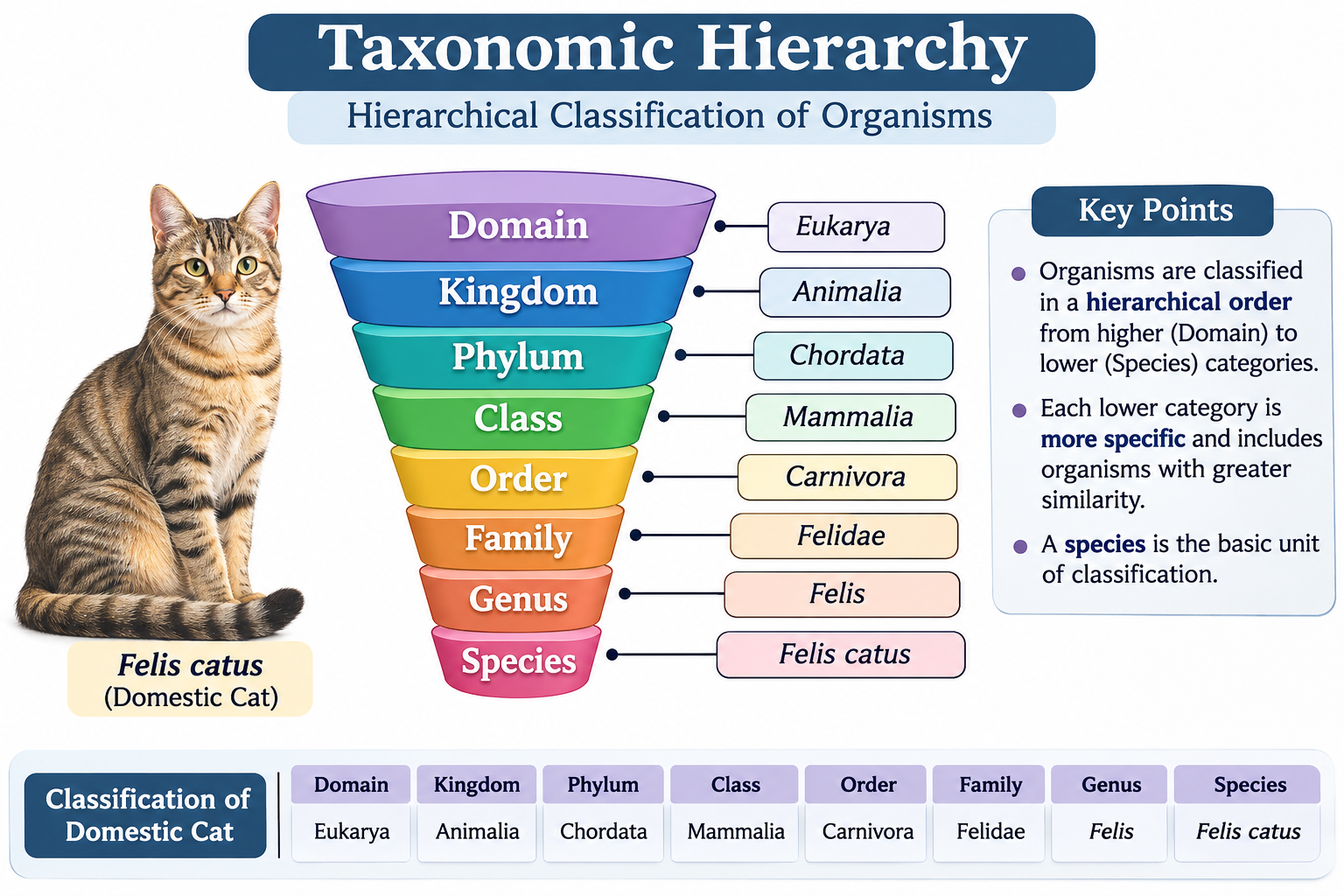
The following table illustrates the classification of the domestic cat, Felis catus.
| Taxonomic category | Classification |
|---|---|
| Domain | Eukarya |
| Kingdom | Animalia |
| Phylum | Chordata |
| Subphylum | Vertebrata |
| Class | Mammalia |
| Order | Carnivora |
| Family | Felidae |
| Genus | Felis |
| Species | Felis catus |
This example demonstrates how a particular organism is placed within progressively broader taxonomic groups. Each higher category contains a larger number of organisms that share more general characteristics.
5.4 Intermediate Taxonomic Categories
In addition to the principal ranks, several intermediate categories are used to provide greater precision in classification. These include:
- Subspecies
- Subgenus
- Subfamily
- Superfamily
- Suborder
- Superorder
- Subclass
- Superclass
- Subphylum
- Superphylum
These intermediate ranks are useful when the diversity within a major category is too extensive to be represented adequately by the principal hierarchy alone.
For example, the family Felidae is divided into subfamilies, including Pantherinae and Felinae. Such subdivisions help represent relationships among groups in greater detail.
5.5 Importance of Taxonomic Hierarchy
The taxonomic hierarchy has several important functions:
- It provides an organised arrangement of the enormous diversity of organisms.
- It facilitates the identification and comparison of related organisms.
- It establishes a common framework for biological communication.
- It helps researchers understand patterns of similarity and evolutionary divergence.
- It supports biodiversity inventories and conservation programmes.
- It provides a structured basis for recording scientific information in biological databases.
In modern Taxonomy and Systematics, hierarchical categories remain useful for presenting classification, while phylogenetic analyses help determine whether the recognised groups accurately represent common ancestry.
5.6 Limitations of Traditional Hierarchical Classification
Traditional hierarchical classification is useful, but it has certain limitations. The same taxonomic rank does not necessarily represent the same amount of evolutionary time or genetic diversity across different groups. Furthermore, some historical classifications were based primarily on superficial similarities and may not reflect evolutionary relationships.
Modern phylogenetic approaches address these limitations by examining common ancestry and evolutionary branching patterns. Molecular evidence can also reveal that organisms previously placed together based on morphology belong to separate evolutionary lineages.
Thus, the taxonomic hierarchy remains a practical system for organising biodiversity, while modern Taxonomy and Systematics continually refine the placement and relationships of organisms using new scientific evidence.
6. Taxonomic Aids and Tools
Taxonomic aids are specialised resources, collections and techniques that help scientists identify, describe, compare and classify organisms. They provide reliable information about biological diversity and support the systematic study of plants, animals and microorganisms. These resources are particularly important in Taxonomy and Systematics, where accurate identification and the availability of authentic reference material are essential for scientific research.
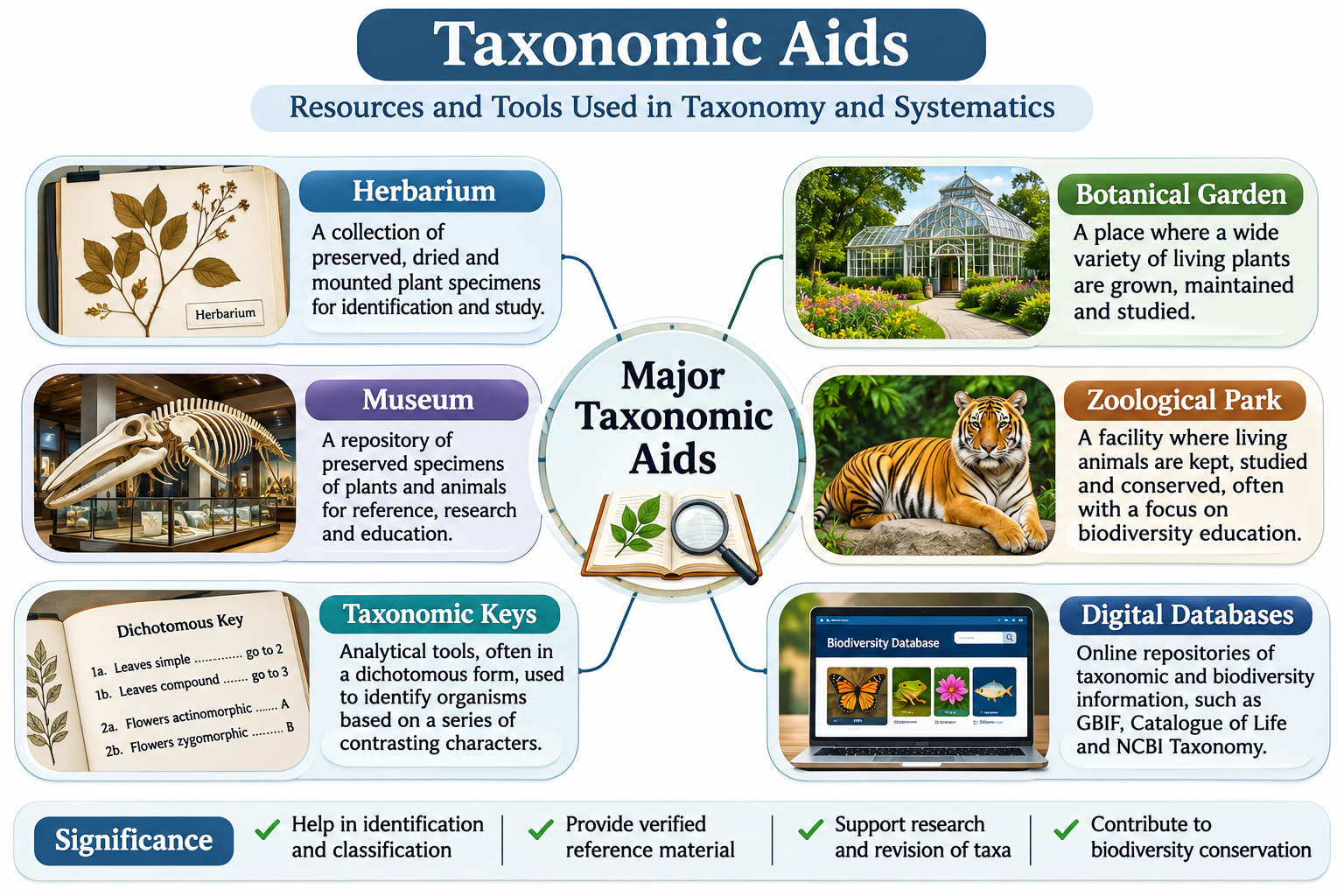
Taxonomic aids include preserved specimens, botanical gardens, zoological parks, museums, herbaria, taxonomic keys, scientific publications and digital databases. Each resource serves a particular purpose and contributes to the documentation and understanding of biodiversity.
6.1 Herbarium
A herbarium is a scientific collection of preserved plant specimens arranged systematically for identification and research. Plant specimens are generally collected, pressed, dried, mounted on sheets and labelled with important information.
A herbarium label usually contains:
- Scientific name of the plant.
- Family and other relevant taxonomic information.
- Locality and geographical coordinates.
- Date of collection.
- Habitat information.
- Name of the collector.
- Identification details and relevant observations.
Herbaria provide permanent reference material for studying plant diversity, geographical distribution, morphology and changes in vegetation over time. They are particularly useful when comparing newly collected plants with previously identified specimens.
6.2 Botanical Gardens
Botanical gardens are institutions where living plants are cultivated, maintained and labelled for scientific study, education and conservation. They contain collections of plants from different geographical regions and ecological habitats.
Major functions of botanical gardens include:
- Maintaining living collections of identified plant species.
- Providing material for botanical research and education.
- Supporting the conservation and propagation of rare and threatened plants.
- Facilitating the study of plant morphology, growth and reproductive biology.
- Promoting public awareness of plant diversity.
Botanical gardens are valuable because they provide access to living material, allowing scientists to examine characteristics that may be difficult to observe in dried herbarium specimens.
6.3 Museums
Biological museums preserve specimens of animals, plants and other biological materials for research, teaching and reference. Zoological museums commonly contain preserved insects, shells, skeletons, skins, mounted specimens and specimens stored in preservative solutions.
Museum collections are important for comparative morphology, anatomical studies, taxonomic identification and biodiversity documentation. They also preserve historical specimens that allow researchers to investigate changes in species distribution and biological characteristics over long periods.
Type specimens are particularly significant in zoological and botanical collections. A type specimen is the name-bearing reference specimen associated with the scientific name of a taxon. It provides an objective reference for the application of that name.
6.4 Zoological Parks
Zoological parks maintain living collections of wild animals under managed conditions for education, research, conservation and public awareness.
They provide opportunities to observe animal behaviour, feeding habits, locomotion, reproductive activities and social interactions. Such observations may contribute to the identification and comparison of animal species.
Zoological parks also participate in conservation breeding programmes and research on threatened species. However, captive observations must be interpreted carefully because behaviour and physiology may differ from those observed under natural conditions.
6.5 Taxonomic Keys
Taxonomic keys are identification tools used to recognise unknown organisms through a sequence of choices based on observable characteristics. They help users narrow down possible identities by comparing the features of a specimen with defined alternatives.
The most common form is the dichotomous key, which presents two contrasting statements at each step. The user selects the statement that best describes the specimen and follows the indicated direction until an identification is reached.
For example, an animal identification key may begin with distinctions such as:
- Body with vertebral column present.
- Body without vertebral column.
Further choices may involve characteristics such as body covering, number of limbs, respiratory structures and reproductive features.
Taxonomic keys are widely used in field studies, laboratory practicals and biodiversity surveys. Their accuracy depends on clear descriptions, correctly selected characters and reliable specimen observations.
6.6 Manuals, Monographs and Floras
Scientific publications provide detailed information about organisms and their classification.
Manuals contain identification information, descriptions and classification details for organisms found in a particular region or group.
Monographs provide comprehensive scientific treatments of a particular taxonomic group, often including its history, morphology, classification, distribution and relationships.
Floras are publications that describe the plant species of a particular geographical region. They commonly include identification keys, descriptions, distribution records and ecological information.
These publications serve as important references for taxonomists and help maintain consistency in species identification.
6.7 Digital Taxonomic Databases
Modern taxonomy increasingly depends on digital databases that store scientific names, descriptions, specimen records, geographical distributions, images and molecular information.
Examples include:
- Catalogue of Life.
- World Register of Marine Species (WoRMS).
- Integrated Taxonomic Information System (ITIS).
- Global Biodiversity Information Facility (GBIF).
- International Plant Names Index (IPNI).
- National Center for Biotechnology Information (NCBI) Taxonomy.
Digital databases allow researchers to retrieve taxonomic information, compare records and access biodiversity data from different parts of the world. However, database entries may differ in their taxonomic treatments, and researchers should consult the relevant authoritative sources and nomenclatural codes when resolving discrepancies.
6.8 Importance of Taxonomic Aids in Modern Research
Taxonomic aids make the identification and classification of organisms more accurate, reproducible and accessible. They support biodiversity surveys, ecological monitoring, conservation planning, evolutionary research and the discovery of new species.
The integration of traditional resources with DNA sequencing, digital imaging and bioinformatics has significantly expanded the capabilities of Taxonomy and Systematics. While molecular techniques provide additional evidence, preserved specimens, type collections and detailed morphological descriptions remain essential for verifying scientific identifications.
Together, these resources provide the practical foundation for documenting biodiversity and maintaining reliable taxonomic information.
7. Systematics: Meaning, Scope and Importance
Systematics is a major branch of biological science concerned with the study of organismal diversity and the evolutionary relationships among living and extinct organisms. It investigates how organisms are related through common ancestry and how biological diversity has developed over evolutionary time. While taxonomy focuses primarily on identification, nomenclature and classification, systematics examines the broader patterns and processes that explain the diversity and relationships of organisms.
The term systematics is derived from the Greek word systema, referring to an organised arrangement. In biology, it involves the study of biodiversity through the integration of morphological, anatomical, embryological, ecological, genetic, molecular and palaeontological evidence. The combined use of these sources makes Taxonomy and Systematics essential for understanding the organisation and evolutionary history of life.
7.1 Meaning of Systematics
Systematics is the scientific study of biological diversity and the evolutionary relationships among organisms. It aims to identify patterns of common ancestry, reconstruct evolutionary history and develop classifications that represent these relationships.
Unlike classification based only on external similarities, systematics attempts to distinguish similarities inherited from common ancestors from those that have evolved independently. For example, the wings of birds and bats perform similar functions, but their underlying skeletal structures indicate that they evolved from different ancestral forelimbs.
Systematics uses this evolutionary evidence to understand relationships and construct phylogenetic hypotheses. Consequently, it provides an evolutionary framework within which organisms can be classified.
7.2 Scope of Systematics
The scope of systematics is broad and includes several important areas of biological investigation.
1. Study of biodiversity: Systematics documents the diversity of organisms and investigates their distribution, variation and relationships.
2. Evolutionary relationships: It examines common ancestry and evolutionary divergence among organisms using morphological and molecular evidence.
3. Phylogenetic reconstruction: It uses comparative data and analytical methods to develop phylogenetic trees representing hypotheses of evolutionary relationships.
4. Comparative biology: It compares structural, developmental, physiological and genetic characteristics to identify similarities and differences among organisms.
5. Historical biogeography: It investigates how geographical distribution, migration, isolation and geological events have influenced the evolution and diversification of organisms.
6. Species delimitation: It evaluates evidence to determine whether populations represent separate species or belong to the same species.
7. Classification: It contributes to the development and revision of classifications that reflect evolutionary relationships.
These areas demonstrate that Taxonomy and Systematics are not restricted to naming organisms but also contribute to understanding the origin and organisation of biological diversity.
7.3 Major Approaches in Systematics
Several approaches have been developed to study relationships among organisms.
1. Classical or evolutionary systematics
Classical evolutionary systematics considers overall similarities, differences and evolutionary history when grouping organisms. It attempts to represent both patterns of descent and the degree of evolutionary divergence.
2. Phenetics or numerical taxonomy
Phenetics classifies organisms according to overall observable similarity. It uses multiple characters and numerical methods to calculate similarity or distance among organisms. This approach does not necessarily distinguish ancestral from derived characters and therefore may not always reflect evolutionary ancestry.
3. Cladistics or phylogenetic systematics
Cladistics groups organisms according to shared derived characters, known as synapomorphies. It aims to identify monophyletic groups, each containing a common ancestor and all its descendants. Willi Hennig made a major contribution to the development of this approach.
4. Molecular systematics
Molecular systematics compares DNA, RNA and protein sequences to investigate genetic similarities, evolutionary divergence and common ancestry. It has become particularly important in resolving relationships that are difficult to determine through morphology alone.
7.4 Phylogenetic Trees in Systematics
A phylogenetic tree is a branching diagram that represents a hypothesis about the evolutionary relationships among organisms or groups of organisms.
Its major components include:
- Branches: Represent evolutionary lineages.
- Nodes: Represent inferred common ancestors or divergence points.
- Terminal taxa: Represent the organisms or groups included in the analysis.
- Clades: Represent a common ancestor and all its descendants.
Phylogenetic trees can be constructed using morphological characteristics, molecular sequences or combined datasets. Different analytical methods may produce different trees, particularly when the available evidence is incomplete or conflicting.
A phylogenetic tree is therefore a scientific hypothesis that can be revised when new evidence becomes available. In modern Taxonomy and Systematics, such trees provide an important basis for interpreting evolutionary relationships and evaluating classifications.
7.5 Importance of Systematics
Systematics has considerable importance in biological research and practical applications.
- Understanding evolution: It helps reconstruct the evolutionary history of organisms and identify patterns of common ancestry.
- Biodiversity conservation: Reliable identification and evolutionary information help prioritise conservation efforts and recognise distinct evolutionary lineages.
- Species discovery: Comparative and molecular studies can reveal previously unrecognised species and hidden biodiversity.
- Biogeography: It helps explain the geographical distribution and diversification of organisms.
- Agriculture and medicine: Understanding the relationships of pests, pathogens and beneficial organisms supports research and management strategies.
- Comparative genomics: It provides an evolutionary framework for comparing genes and genomes across different organisms.
- Scientific classification: It helps evaluate and improve classifications so that they better represent evolutionary relationships.
7.6 Systematics and Evolutionary Biology
Systematics is closely connected with evolutionary biology because both investigate the origin, diversification and relationships of organisms. Evolutionary biology studies the mechanisms and patterns of evolutionary change, whereas systematics uses biological evidence to reconstruct the historical relationships resulting from those changes.
For example, comparisons of DNA sequences among humans, chimpanzees, gorillas and orangutans help researchers investigate their evolutionary relationships. Similarly, fossil evidence combined with anatomical and molecular data can provide insights into the diversification of major animal groups.
The integration of evolutionary theory, comparative biology and molecular research has made Taxonomy and Systematics central to modern biological science. Systematics provides a framework for interpreting biodiversity not merely as a collection of different organisms, but as the result of a long and branching evolutionary history.
8. Relationship Between Taxonomy and Systematics
Taxonomy and systematics are closely related branches of biological science that contribute to the study, organisation and understanding of biodiversity. Although their objectives overlap, they differ in their primary focus. Taxonomy is mainly concerned with the identification, nomenclature and classification of organisms, whereas systematics investigates biological diversity and the evolutionary relationships among organisms. Together, Taxonomy and Systematics provide a comprehensive framework for studying the diversity and evolutionary history of life.
8.1 How Taxonomy and Systematics Are Connected
Taxonomy provides the practical framework for recognising, naming and classifying organisms. Systematics provides the broader evolutionary context in which these organisms and their relationships are investigated.
For example, a newly discovered animal must first be examined and compared with known organisms. Its distinguishing characteristics are documented, its taxonomic identity is evaluated and an appropriate scientific name may be established. These activities belong primarily to taxonomy.
However, determining how the newly discovered animal is related to other groups requires further investigation. Researchers may compare its anatomical structures, embryological development, genetic sequences and fossil relationships. This broader analysis belongs to systematics.
Thus, taxonomy and systematics are complementary rather than competing disciplines. Taxonomy supplies correctly identified and named organisms, while systematics helps determine how those organisms are related through evolutionary history.
8.2 Major Differences Between Taxonomy and Systematics
| Basis of comparison | Taxonomy | Systematics |
|---|---|---|
| Primary focus | Identification, nomenclature and classification | Biological diversity and evolutionary relationships |
| Main objective | Recognising and naming organisms | Understanding patterns of diversity and common ancestry |
| Scope | Comparatively focused on taxonomic operations | Broader, incorporating evolutionary investigations |
| Major activities | Description, identification, naming and classification | Phylogenetic analysis, evolutionary reconstruction and classification |
| Evidence used | Morphological, anatomical, physiological and molecular characters | Morphological, molecular, ecological, developmental and fossil evidence |
| Main outcome | Scientific names and taxonomic arrangements | Hypotheses of evolutionary relationships and classifications |
| Evolutionary emphasis | May use evolutionary evidence in classification | Explicitly investigates evolutionary history and relationships |
The distinction is useful for understanding the separate contributions of these disciplines, although their practical work frequently overlaps.
8.3 Role of Taxonomy in Systematics
Taxonomy provides the essential foundation for systematic research. Accurate identification and scientific naming are necessary before meaningful comparisons can be made among organisms.
Its contributions include:
- Providing correctly identified specimens for comparative studies.
- Establishing standard scientific names for organisms.
- Maintaining taxonomic records and reference collections.
- Describing new species and documenting their distinguishing characters.
- Providing a recognised classification framework for evolutionary investigations.
Without reliable taxonomic information, systematic studies may compare incorrectly identified organisms or use inconsistent names, resulting in misleading conclusions.
8.4 Role of Systematics in Taxonomy
Systematics improves taxonomy by providing evidence about evolutionary relationships and common ancestry. Traditional classifications based mainly on visible similarities may sometimes group unrelated organisms together or separate organisms that share a recent common ancestor.
Systematic research helps evaluate such classifications through:
- Comparative morphology and anatomy.
- Embryological and developmental evidence.
- Chromosomal and cytological studies.
- Biochemical and protein comparisons.
- DNA and RNA sequence analysis.
- Fossil evidence and evolutionary reconstruction.
For example, molecular studies have contributed to major changes in the classification of organisms by revealing evolutionary relationships that were not apparent from external morphology alone.
8.5 Integration of Taxonomy and Systematics in Modern Biology
Modern biological research increasingly combines taxonomic identification with systematic analysis. A species may be identified using morphological characters, examined through DNA sequencing and placed within an evolutionary tree using phylogenetic methods.
This integrated approach is particularly valuable when studying cryptic species, which are distinct evolutionary species that are difficult to distinguish using external morphology alone. Molecular evidence, ecological information and reproductive characteristics may help resolve their identities and relationships.
Similarly, biodiversity conservation depends on both accurate taxonomic identification and an understanding of evolutionary distinctiveness. Conservation decisions become more informed when researchers know not only which species are present but also how they are related and how much unique evolutionary history they represent.
Therefore, Taxonomy and Systematics function together as interconnected disciplines. Their integration provides a more complete understanding of biodiversity, supports scientific communication and helps develop classifications that are increasingly consistent with evolutionary evidence.
9. Biosystematics: Concept and Development
Biosystematics is an important branch of biological classification that investigates the diversity and relationships of organisms using evidence from their biology, genetics, ecology, reproduction and evolution. Unlike approaches that depend mainly on external morphological similarities, biosystematics examines organisms through multiple biological characteristics to understand their natural relationships and evolutionary history.
The term biosystematics emphasises the integration of biological information into the study of classification. It connects traditional taxonomy with genetics, cytology, ecology, reproductive biology and evolutionary research. Consequently, biosystematics has become an important component of modern Taxonomy and Systematics, particularly in the identification of closely related species and the study of variation within populations.
9.1 Meaning and Definition of Biosystematics
Biosystematics can be defined as the scientific study of biological diversity and evolutionary relationships through the investigation of organisms’ genetic, cytological, reproductive, ecological, physiological and other biological characteristics.
Its major objective is to understand the natural relationships among organisms by studying their variation within and between populations. It considers not only structural similarities but also reproductive compatibility, chromosome organisation, genetic differences and ecological adaptations.
For example, two plant populations may appear morphologically similar but differ in chromosome number, reproductive behaviour or genetic composition. Biosystematic investigations can help determine whether these populations represent varieties, subspecies or distinct species.
9.2 Historical Development of Biosystematics
The development of biosystematics was influenced by advances in evolutionary biology, genetics and experimental biology.
The publication of Darwin’s theory of evolution in 1859 established the importance of common ancestry and evolutionary change in understanding biological diversity. Later developments in Mendelian genetics provided explanations for inheritance and variation, creating opportunities to investigate relationships at the population and genetic levels. Related reading: Modern Synthetic Theory, Microevolution and Macroevolution.
During the twentieth century, researchers increasingly used experimental hybridisation, chromosome studies, ecological observations and population genetics to investigate species relationships.
The work of Julian Huxley and other evolutionary biologists helped establish the broader framework of the modern evolutionary synthesis. In 1940, Huxley popularised the term new systematics through his book The New Systematics, which emphasised the importance of studying variation within species and integrating several biological disciplines into classification.
The development of molecular biology and DNA sequencing subsequently expanded biosystematic research. Today, genetic markers, genome comparisons and phylogenetic methods provide additional evidence for understanding biodiversity and evolutionary relationships.
9.3 Major Characteristics of Biosystematics
Biosystematics has several distinctive characteristics:
- Population-based approach: It studies variation among individuals and populations rather than relying exclusively on a few representative specimens.
- Multidisciplinary investigation: It integrates morphology, genetics, cytology, ecology, physiology and reproductive biology.
- Experimental approach: It may use controlled breeding, hybridisation and other experiments to investigate biological relationships.
- Evolutionary perspective: It examines how variation, natural selection, genetic drift and reproductive isolation contribute to evolutionary divergence.
- Genetic evidence: It uses chromosome studies, genetic markers and DNA sequence comparisons to investigate relationships.
- Species delimitation: It evaluates multiple sources of evidence to determine the boundaries and relationships of species.
These characteristics distinguish biosystematics from classification approaches that depend primarily on external appearance.
9.4 Importance of Biosystematics in Species Identification
Biosystematics is especially valuable when organisms are difficult to distinguish through morphology alone. Closely related species may share many visible characteristics but differ in their genetic composition, reproductive biology or ecological requirements.
For example, some plant species are morphologically similar but possess different chromosome numbers or show reproductive incompatibility. Such differences may indicate separate evolutionary lineages.
Biosystematic investigations can therefore help:
- Recognise cryptic and closely related species.
- Identify natural variation within populations.
- Distinguish species from varieties and subspecies.
- Investigate hybridisation and reproductive isolation.
- Understand the evolutionary origin of new species.
- Improve the accuracy of biological classification.
9.5 Biosystematics and Modern Classification
Modern biosystematics combines traditional taxonomic evidence with experimental and molecular methods. Morphological observations are evaluated alongside chromosome studies, reproductive evidence, ecological data and DNA sequence comparisons.
This integrated approach is useful in plant taxonomy, animal systematics, microbial diversity research and conservation biology. It also contributes to the development of phylogenetic classifications by providing additional evidence about evolutionary relationships.
Biosystematics demonstrates how biological classification has progressed from simple descriptions of organisms towards an integrated investigation of biodiversity. Within modern Taxonomy and Systematics, it provides an important link between the study of organismal variation, species boundaries and evolutionary history.
10. Approaches and Methods of Biosystematics
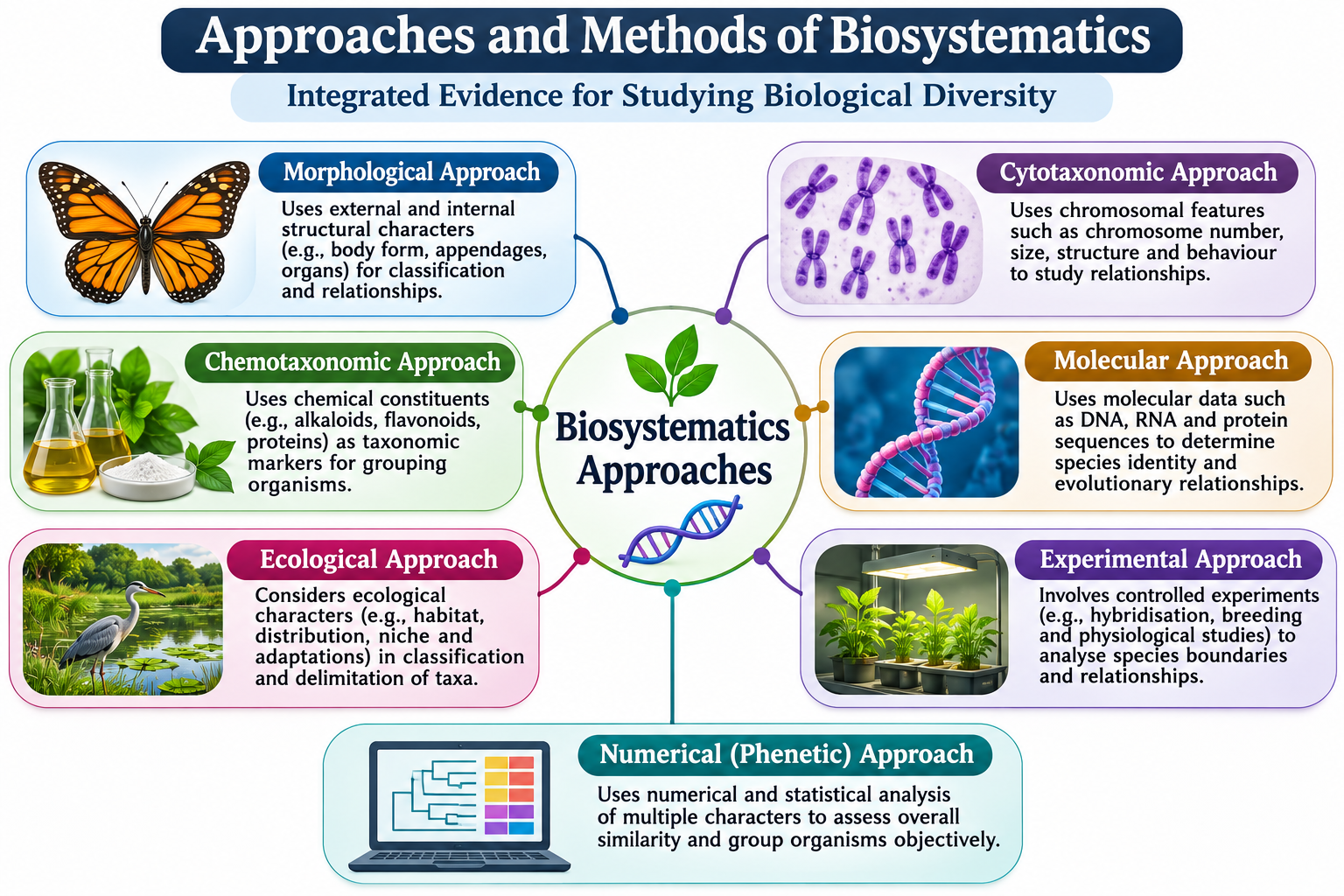
Biosystematics uses different scientific approaches to investigate biological variation, species boundaries and evolutionary relationships. These approaches involve the examination of organisms at morphological, cytological, genetic, reproductive, ecological and molecular levels. By combining different sources of evidence, biosystematic research provides a more comprehensive understanding of biodiversity than classification based on a limited number of external characters.
In modern Taxonomy and Systematics, these methods are particularly useful for distinguishing closely related species, identifying evolutionary lineages and investigating the processes responsible for biological diversification.
10.1 Morphological Approach
The morphological approach involves the study of external and internal structural characteristics of organisms. It remains one of the oldest and most widely used methods in biological classification.
Important morphological characters include:
- Body shape and size.
- Colour and body markings.
- Arrangement of appendages.
- Structure of reproductive organs.
- Skeletal and anatomical features.
- Leaf shape, floral structure and seed characteristics in plants.
Morphological studies are useful for identifying organisms, preparing taxonomic descriptions and comparing related species. However, environmental influences, sexual dimorphism, developmental stages and convergent evolution may sometimes produce misleading similarities or differences.
10.2 Cytotaxonomic Approach
Cytotaxonomy involves the use of cellular and chromosomal characteristics in classification. It examines chromosome number, size, shape, structure, arrangement and behaviour during cell division.
Important cytological features include:
- Chromosome number: Differences in chromosome number may help distinguish related species.
- Karyotype: The number and morphological characteristics of chromosomes in a cell.
- Polyploidy: The presence of more than two complete sets of chromosomes, particularly important in plant evolution and speciation.
- Chromosomal rearrangements: Changes such as inversions, translocations and fusions that may contribute to differences between populations.
- Meiotic behaviour: Chromosome pairing and segregation during meiosis can provide evidence about genetic relationships and reproductive compatibility.
For example, chromosome studies have been particularly useful in understanding the evolution of plant groups such as wheat, in which polyploidy has played an important role.
10.3 Chemotaxonomic Approach
Chemotaxonomy is the classification of organisms using their chemical constituents and biochemical characteristics. It is based on the observation that certain groups of organisms possess characteristic chemical compounds that may help distinguish them from related groups.
Important chemotaxonomic characters include:
- Proteins and amino acid sequences.
- Enzymes and isoenzymes.
- Alkaloids.
- Flavonoids.
- Terpenoids.
- Pigments and other secondary metabolites.
For example, the distribution of specific alkaloids and flavonoids may provide useful information for distinguishing plant groups. Similarly, protein and enzyme comparisons can help investigate similarities among organisms.
Chemotaxonomic evidence is especially valuable when morphological characteristics are insufficient for resolving relationships.
10.4 Experimental Taxonomy
Experimental taxonomy uses controlled experiments to investigate variation, inheritance, reproductive compatibility and relationships among populations or species.
Important methods include:
- Hybridisation experiments: Crossing individuals or populations to examine whether they produce viable and fertile offspring.
- Common-garden experiments: Growing organisms from different populations under similar environmental conditions to distinguish inherited differences from environmentally induced variation.
- Reciprocal transplant experiments: Growing organisms in different native environments to investigate local adaptation and ecological differentiation.
- Breeding studies: Examining reproductive behaviour and compatibility among populations.
These experiments help determine whether observed differences are genetically inherited or primarily caused by environmental conditions.
10.5 Ecological Taxonomy
Ecological taxonomy uses ecological characteristics to investigate the relationships and differentiation of organisms.
Important ecological features include habitat preference, geographical distribution, food requirements, tolerance to environmental conditions, seasonal activity and interactions with other organisms.
For example, populations of a species living in different habitats may develop distinct adaptations. Studying their ecological requirements alongside morphological and genetic characteristics can help explain their differentiation.
Ecological evidence is particularly useful in understanding local adaptation, ecological speciation and the maintenance of biodiversity.
10.6 Numerical Taxonomy
Numerical taxonomy, also known as phenetics, uses numerical methods to compare organisms based on a large number of characters.
In this approach, characters are recorded, coded and analysed to calculate overall similarity or dissimilarity among organisms. Mathematical and computational techniques are then used to group organisms into clusters.
Major steps include:
- Selection of suitable characters.
- Recording and coding of character states.
- Construction of a data matrix.
- Calculation of similarity or distance coefficients.
- Application of clustering techniques.
- Preparation and interpretation of phenograms or similarity-based groupings.
Numerical taxonomy provides an objective way to compare large datasets. However, overall similarity does not necessarily indicate common ancestry because the method may not adequately distinguish homologous characters from analogous ones.
10.7 Molecular Approach
Molecular systematics investigates relationships among organisms through comparisons of DNA, RNA and protein sequences. It has greatly expanded the ability of researchers to examine genetic variation and reconstruct evolutionary relationships.
Common molecular methods include:
- DNA sequencing.
- DNA barcoding.
- Polymerase chain reaction (PCR).
- Restriction fragment analysis.
- Microsatellite analysis.
- Single nucleotide polymorphism (SNP) analysis.
- Comparative genome analysis.
Molecular data are especially useful for identifying cryptic species, investigating population relationships and testing hypotheses based on morphological evidence.
However, molecular analyses require appropriate sampling, reliable sequence data and suitable evolutionary models. Gene trees may also differ from species trees because of processes such as incomplete lineage sorting, hybridisation and horizontal gene transfer.
10.8 Integrative Approach in Biosystematics
No single method provides sufficient information for every taxonomic problem. Modern biosystematic research therefore combines several independent sources of evidence.
For example, when investigating two closely related animal populations, researchers may examine their external morphology, chromosome structure, reproductive compatibility, ecological preferences and DNA sequences. Agreement among these independent sources can strengthen the evidence that the populations represent separate evolutionary lineages.
This integrative approach improves species delimitation and reduces the risk of relying on misleading characters. It also strengthens modern Taxonomy and Systematics by connecting organismal diversity with genetic variation and evolutionary history.
11. Types of Taxonomic Systems
A taxonomic system is an organised method of classifying organisms into groups according to their similarities, differences and relationships. Over time, several classification systems have been developed to represent biological diversity. Early systems relied mainly on a limited number of observable characteristics, whereas later approaches incorporated multiple biological features and evolutionary evidence.
The development of these systems reflects the progress of Taxonomy and Systematics from simple identification and grouping towards classifications that aim to represent natural relationships and common ancestry.
11.1 Artificial System of Classification
An artificial system of classification groups organisms using a limited number of easily observable characteristics. These may include habitat, body size, colour, growth form, number of stamens or other selected features.
For example, early plant classifications sometimes grouped plants according to their growth forms, such as herbs, shrubs and trees. Although such arrangements are convenient for preliminary identification, they may place unrelated organisms together because they share only a few superficial characteristics.
Characteristics of artificial classification:
- Uses a small number of selected characters.
- Emphasises easily observable features.
- Provides a relatively simple method of identification.
- May group unrelated organisms together.
- Does not necessarily represent evolutionary relationships.
Artificial classification is useful for practical identification but has limited value for explaining the natural relationships among organisms.
11.2 Natural System of Classification
A natural system of classification groups organisms using a large number of characteristics to represent their overall similarities and differences. It considers several features rather than depending on a single character.
In plants, natural classification may consider floral structure, reproductive organs, seeds, leaves and other morphological characteristics. In animals, it may include anatomical organisation, skeletal features, organ systems and developmental characteristics.
Characteristics of natural classification:
- Uses numerous taxonomic characters.
- Considers both external and internal structures.
- Provides a more comprehensive comparison of organisms.
- Attempts to recognise natural affinities among organisms.
- Is more informative than classification based on a few superficial features.
Natural classification improved biological classification considerably, although overall similarity alone does not always reveal evolutionary ancestry.
11.3 Phylogenetic System of Classification
A phylogenetic system of classification arranges organisms according to their evolutionary relationships and common ancestry. It attempts to represent the branching pattern of evolution using evidence from morphology, anatomy, embryology, fossils and molecular biology.
Charles Darwin’s theory of evolution provided an important foundation for evolutionary classification. Later, Willi Hennig developed a rigorous approach known as phylogenetic systematics or cladistics.
Phylogenetic classification focuses particularly on shared derived characters, known as synapomorphies. These characters help identify monophyletic groups, which contain a common ancestor and all its descendants.
Characteristics of phylogenetic classification:
- Emphasises common ancestry and evolutionary relationships.
- Uses homologous characters to infer relationships.
- Distinguishes ancestral and derived character states.
- Uses cladograms and phylogenetic trees.
- Incorporates molecular and fossil evidence.
- Aims to recognise evolutionary lineages and monophyletic groups.
Modern Taxonomy and Systematics increasingly use phylogenetic evidence to evaluate traditional classifications and improve the representation of evolutionary relationships.
11.4 Comparison of Major Taxonomic Systems
| Basis | Artificial system | Natural system | Phylogenetic system |
|---|---|---|---|
| Main basis | Selected characters | Numerous shared characteristics | Common ancestry and evolutionary relationships |
| Number of characters | Limited | Broad range | Characters selected for evolutionary analysis |
| Main emphasis | Convenience and identification | Overall natural similarities | Evolutionary history |
| Ancestry | Not necessarily considered | May be considered indirectly | Central to classification |
| Common methods | Simple character-based grouping | Comparative morphology and anatomy | Cladistics and molecular phylogenetics |
| Major limitation | May group unrelated organisms | Overall similarity may be misleading | Depends on data quality and phylogenetic methods |
11.5 Evolution of Taxonomic Systems
The development of classification systems represents a gradual improvement in the methods used to understand biological diversity.
Artificial systems provided simple ways to recognise organisms but often relied on superficial similarities. Natural systems improved classification by incorporating a broader range of characters. Phylogenetic systems introduced an evolutionary perspective and attempted to represent the historical relationships among organisms.
Modern classification frequently combines morphological, anatomical, ecological, fossil and molecular evidence. Although phylogenetic approaches are central to contemporary evolutionary classification, traditional taxonomic descriptions and identification tools remain essential.
Therefore, the different taxonomic systems should be understood as stages in the development of biological classification rather than completely unrelated approaches. Their historical development explains how Taxonomy and Systematics have evolved into evidence-based disciplines for studying biodiversity.
12. Modern Trends in Taxonomy and Systematics
The rapid development of molecular biology, genetics, computational science and advanced imaging techniques has transformed the study of biological classification. Traditional taxonomy relied heavily on morphological and anatomical characteristics, but modern research increasingly combines multiple sources of evidence to investigate organismal diversity and evolutionary relationships.
Modern Taxonomy and Systematics use an integrative approach in which morphological observations are examined alongside molecular sequences, genomic information, ecological data and evolutionary analyses. These developments have improved species identification, revealed previously unrecognised biodiversity and contributed to more accurate classifications.
12.1 Molecular Taxonomy
Molecular taxonomy uses information from DNA, RNA and proteins to identify and classify organisms. It is particularly valuable when morphological characteristics are insufficient to distinguish closely related species.
DNA sequencing allows researchers to compare genetic sequences among organisms and identify similarities and differences. Molecular evidence can also reveal relationships that are not obvious from external appearance.
For example, molecular comparisons have helped clarify the evolutionary relationships among many animal groups and identify cryptic species that were previously considered members of a single species.
12.2 DNA Barcoding
DNA barcoding is a method of species identification based on a short, standardised DNA sequence from a particular genetic region.
In animals, a commonly used barcode region is a portion of the mitochondrial cytochrome c oxidase subunit I (COI) gene. Different genetic markers may be required for plants, fungi and microorganisms.
Major applications of DNA barcoding include:
- Identification of morphologically similar species.
- Detection of cryptic biodiversity.
- Identification of organisms at different life stages.
- Monitoring of illegal wildlife trade.
- Assessment of biodiversity in ecological surveys.
- Identification of food products and biological materials.
DNA barcoding is an identification tool rather than an infallible species test. Its effectiveness depends on the availability of reliable reference sequences, suitable genetic markers and accurate taxonomic records.
12.3 Genomics and Comparative Genomics
Genomics involves the study of the complete genetic material of an organism, including its genes and non-coding regions. Comparative genomics examines similarities and differences among the genomes of different organisms.
These approaches provide valuable information about evolutionary relationships, gene duplication, genome organisation and the genetic basis of adaptation.
Comparative genomic studies can identify conserved genes, evolutionary changes and genetic events that have contributed to the diversification of organisms. They are increasingly important in modern Taxonomy and Systematics because they provide large datasets for investigating evolutionary history. Learn more: RNA Synthesis
12.4 Bioinformatics and Computational Taxonomy
Bioinformatics combines biology, computer science, mathematics and statistics to analyse large biological datasets.
In taxonomy and systematics, bioinformatics is used for:
- DNA and protein sequence alignment.
- Genetic similarity and distance analysis.
- Phylogenetic tree reconstruction.
- Genome comparison.
- Management of taxonomic databases.
- Analysis of biodiversity and evolutionary datasets.
Computational methods make it possible to analyse large numbers of sequences and compare organisms across broad evolutionary groups. However, the reliability of computational results depends on accurate data, appropriate analytical methods and careful biological interpretation.
12.5 Phylogenomics
Phylogenomics combines phylogenetic analysis with genomic data to reconstruct evolutionary relationships.
Instead of examining only one or a few genes, phylogenomic studies may analyse hundreds or thousands of genes or large portions of genomes. This can provide stronger evidence for resolving difficult evolutionary relationships.
Phylogenomics is particularly useful when traditional morphological evidence and individual gene sequences produce conflicting results. However, differences between gene histories and species histories must be considered when interpreting the resulting trees.
12.6 Environmental DNA and Metabarcoding
Environmental DNA (eDNA) refers to genetic material collected directly from environmental samples such as water, soil or sediment. It may originate from skin cells, mucus, faeces, reproductive material or other biological sources released by organisms.
Environmental DNA analysis allows researchers to detect the presence of organisms without necessarily capturing or directly observing them.
Metabarcoding combines DNA barcoding with high-throughput sequencing to identify multiple species from a mixed environmental sample.
These methods are useful for:
- Monitoring aquatic biodiversity.
- Detecting rare or invasive species.
- Surveying microbial communities.
- Studying species in difficult-to-access habitats.
- Monitoring changes in biological communities over time.
Although eDNA and metabarcoding are valuable biodiversity assessment tools, they require careful interpretation because DNA detection does not always establish the abundance, precise location or current reproductive status of an organism.
12.7 Integrative Taxonomy
Integrative taxonomy combines multiple independent sources of evidence to identify and delimit species.
It may incorporate morphology, genetics, ecology, behaviour, reproductive biology, geography and developmental characteristics.
For example, two populations may show slight morphological differences but possess distinct genetic sequences and occupy separate ecological niches. By combining these observations, researchers can evaluate whether the populations represent separate species or variations within a single species.
Integrative taxonomy is particularly important for resolving difficult species boundaries and improving the reliability of biological classification.
12.8 Digital Taxonomy and Global Biodiversity Databases
Digital technologies have made taxonomic information increasingly accessible through online databases, digital specimen collections and biodiversity information platforms.
Examples include the Global Biodiversity Information Facility (GBIF), Catalogue of Life, World Register of Marine Species (WoRMS), Integrated Taxonomic Information System (ITIS) and International Plant Names Index (IPNI).
These resources provide information about scientific names, geographical distributions, specimen records, classification and biodiversity observations.
Digital taxonomy facilitates international collaboration, data sharing and biodiversity research. However, database records must be evaluated carefully because taxonomic opinions and accepted names may change as new scientific evidence becomes available.
12.9 Artificial Intelligence and Machine Learning in Taxonomy
Artificial intelligence and machine learning are increasingly being explored for the analysis of biological images, sounds, genetic sequences and biodiversity records.
Image-recognition systems can assist in identifying organisms from photographs, while machine-learning algorithms can help detect patterns in large molecular datasets.
Potential applications include:
- Automated recognition of insects and plants.
- Identification of species from digital images.
- Detection of patterns in DNA sequences.
- Analysis of animal calls and acoustic recordings.
- Processing large biodiversity datasets.
These technologies can support taxonomic research but should not replace expert verification. Incorrect training data, incomplete reference collections and similarities among species can produce misidentifications.
12.10 Future Directions
The future of Taxonomy and Systematics will increasingly depend on the integration of traditional biological knowledge with advanced molecular, computational and imaging technologies.
Long-read sequencing, single-cell approaches, environmental DNA, large-scale phylogenomics and improved biodiversity databases are expanding the range of questions researchers can investigate.
Despite these advances, traditional taxonomic expertise remains essential. Accurate specimen identification, careful descriptions, reliable reference collections and compliance with nomenclatural rules continue to provide the foundation for scientific classification.
The most effective modern approach is therefore integrative: combining technological innovation with established taxonomic principles to produce reliable and scientifically meaningful representations of biodiversity.
13. Importance and Applications of Taxonomy and Systematics
The study of biological diversity is essential for understanding the organisation, evolution and conservation of life on Earth. Taxonomy and systematics provide the scientific methods required to identify organisms, establish their relationships and organise biological information. Their applications extend across biodiversity conservation, agriculture, medicine, ecology, evolutionary biology and environmental management.
The importance of Taxonomy and Systematics has increased considerably with the discovery of new species, environmental changes and the growing need to document and protect biological diversity. These disciplines provide the foundation for recognising species and understanding their ecological and evolutionary significance.
13.1 Biodiversity Assessment and Documentation
One of the most important applications of taxonomy is the identification and documentation of biological diversity. Scientists use taxonomic methods to prepare inventories of plants, animals, fungi and microorganisms in different geographical regions.
Accurate identification is necessary for determining how many species occur in an ecosystem, understanding their distribution and monitoring changes in biodiversity.
Systematic investigations further help identify evolutionary relationships among these species. Therefore, Taxonomy and Systematics provide essential information for biodiversity surveys, ecological research and biological databases.
13.2 Conservation of Endangered Species
Conservation programmes depend on accurate identification of species and knowledge of their biological characteristics.
Taxonomy helps recognise threatened, rare, endemic and newly discovered organisms. Systematics provides additional information about their evolutionary distinctiveness and relationships with other species.
These findings are useful for:
- Identifying species requiring conservation attention.
- Recognising genetically distinct populations.
- Detecting cryptic species that may require separate protection.
- Understanding the evolutionary uniqueness of threatened lineages.
- Supporting the selection and management of protected areas.
- Monitoring biodiversity changes over time.
For example, taxonomic and genetic studies can help conservationists distinguish different populations of endangered mammals and determine whether they represent separate management units.
13.3 Agriculture and Crop Improvement
Taxonomy and systematics are important in agriculture because accurate identification of crop plants, wild relatives, pests and pathogens is necessary for agricultural research.
Wild relatives of cultivated plants may possess valuable genetic characteristics such as disease resistance, drought tolerance and adaptation to different environmental conditions.
Their identification and classification help plant breeders select suitable genetic resources for crop improvement.
Major agricultural applications include:
- Identification of crop varieties and wild relatives.
- Recognition of agricultural pests and pathogens.
- Conservation of plant genetic resources.
- Investigation of plant diversity.
- Selection of organisms useful in biological pest control.
- Understanding the evolutionary relationships of cultivated plants.
13.4 Medicine and Pharmaceutical Research
Taxonomic identification is important in medicine and pharmaceutical research because many organisms produce biologically active compounds.
Plants, fungi, bacteria and marine organisms are sources of substances that may have medicinal or pharmaceutical applications. Correct identification is necessary to ensure that biological materials are obtained from the intended species.
Systematic studies can also help identify relationships among organisms that produce similar biochemical compounds. This information may guide the investigation of additional species with potential pharmaceutical value.
Furthermore, accurate classification of disease-causing organisms is essential for understanding pathogen diversity and supporting research on infectious diseases.
13.5 Environmental Monitoring and Ecological Research
Taxonomic identification is essential for studying ecological communities and monitoring environmental conditions.
Certain organisms are used as bioindicators because their presence, absence or abundance may provide information about environmental quality.
For example, the diversity and composition of aquatic macroinvertebrates can help researchers assess changes in freshwater ecosystem conditions.
Applications include:
- Monitoring freshwater and marine ecosystems.
- Assessing habitat degradation.
- Detecting invasive species.
- Studying changes in species distribution.
- Investigating ecological relationships.
- Evaluating the effects of pollution and climate change.
13.6 Evolutionary Biology and Comparative Research
Systematics provides the framework for reconstructing evolutionary relationships among organisms. By comparing morphological and molecular characteristics, scientists can investigate common ancestry, evolutionary divergence and patterns of adaptation.
Phylogenetic relationships are also useful in comparative biology. Researchers can examine how particular characteristics have evolved across different lineages and investigate whether similar adaptations arose independently.
For example, comparisons of skeletal structures and genetic sequences among vertebrates help scientists understand the evolution of limbs, locomotion and other adaptations.
13.7 Forensic Science and Wildlife Protection
Taxonomic and molecular identification methods have applications in forensic investigations involving biological materials.
DNA-based identification can help determine the species from which biological samples originate. This is particularly useful in investigations involving illegal wildlife trade, poaching and the trafficking of protected species.
DNA barcoding and sequence comparisons can assist in identifying animal products, meat samples, processed materials and biological remains when morphological identification is difficult.
These methods support wildlife law enforcement and the protection of threatened organisms.
13.8 Discovery of New Species
Many organisms remain undescribed, particularly in tropical forests, deep-sea environments, soil ecosystems and poorly explored habitats.
Taxonomists investigate these organisms through detailed morphological examinations, molecular comparisons and ecological observations.
The discovery and formal description of new species increase scientific knowledge of biodiversity. Systematic analysis further helps determine their evolutionary relationships and appropriate classification.
The continuous discovery of new species demonstrates the importance of maintaining taxonomic research and supporting the development of scientific reference collections.
13.9 Public Health and Disease Management
Accurate identification of pathogens and disease vectors is important for public health research.
Closely related microorganisms may differ in their pathogenicity, host range, transmission mechanisms and responses to control measures. Molecular identification and systematic analysis help distinguish these organisms and investigate their evolutionary relationships.
Taxonomic research is also useful for identifying disease-carrying insects, ticks and other vectors, supporting surveillance and management programmes.
13.10 Importance in Biological Education and Scientific Communication
Scientific classification provides a common language for describing organisms and sharing biological information.
Standardised scientific names reduce confusion caused by regional and common names, which may vary between languages and geographical locations.
Taxonomic descriptions, identification keys, specimen collections and classification systems are widely used in school, university and research education.
Through these resources, Taxonomy and Systematics help students and researchers understand biological diversity, evolutionary relationships and the organisation of living organisms.
14. Conclusion
Taxonomy and Systematics are fundamental branches of biological science that provide the foundation for understanding and organising the diversity of life. Taxonomy focuses on the identification, description, nomenclature and classification of organisms, whereas systematics investigates biological diversity and the evolutionary relationships among organisms. Together, they provide a comprehensive framework for studying biodiversity and its evolutionary history.
The development of biological classification has progressed from early artificial systems to natural and phylogenetic approaches. Contributions from Aristotle, Theophrastus, Carl Linnaeus, Charles Darwin and Willi Hennig helped establish the principles and evolutionary foundations of modern classification. The development of biosystematics further expanded this field by incorporating genetics, cytology, ecology, reproductive biology and experimental approaches.
Modern Taxonomy and Systematics have been transformed by DNA sequencing, DNA barcoding, comparative genomics, phylogenomics, bioinformatics and digital biodiversity databases. These techniques have improved species identification, revealed previously unrecognised diversity and provided new evidence for reconstructing evolutionary relationships. Nevertheless, traditional morphological studies, specimen collections, taxonomic descriptions and nomenclatural rules remain essential.
The importance of these disciplines extends to biodiversity conservation, agriculture, medicine, environmental monitoring, evolutionary research and wildlife protection. As new organisms are discovered and scientific technologies continue to advance, the classification of life will require continuous investigation and refinement.
Thus, Taxonomy and Systematics are not merely concerned with naming and grouping organisms; they are essential scientific disciplines for understanding the origin, organisation, relationships and conservation of biological diversity on Earth.
15. Frequently Asked Questions (FAQs)
What is taxonomy in biology?
What is systematics in biology?
What is the difference between taxonomy and systematics?
Who is known as the father of modern taxonomy?
What is binomial nomenclature?
What is a taxonomic hierarchy?
What is biosystematics?
What are the major types of taxonomic systems?
What is DNA barcoding?
What is a phylogenetic tree?
What are taxonomic aids?
Why are taxonomy and systematics important?
What is the difference between a taxon and a taxonomic category?
What is integrative taxonomy?
16. References
- de Candolle, A. P. (1813). Théorie élémentaire de la botanique. Déterville, Paris. Biodiversity Heritage Library.
- Linnaeus, C. (1758). Systema Naturae per Regna Tria Naturae, 10th edition. Stockholm.
- Darwin, C. (1859). On the Origin of Species by Means of Natural Selection. John Murray, London.
- Huxley, J. (Ed.). (1940). The New Systematics. Oxford University Press, London.
- Simpson, G. G. (1961). Principles of Animal Taxonomy. Columbia University Press. Publisher reference.
- Hennig, W. (1966). Phylogenetic Systematics. University of Illinois Press. Publisher reference.
- Mayr, E., & Ashlock, P. D. (1991). Principles of Systematic Zoology (2nd ed.). McGraw-Hill.
- Woese, C. R., Kandler, O., & Wheelis, M. L. (1990). Towards a natural system of organisms: Proposal for the domains Archaea, Bacteria, and Eucarya. Proceedings of the National Academy of Sciences, 87(12), 4576–4579. https://doi.org/10.1073/pnas.87.12.4576
- Hebert, P. D. N., Cywinska, A., Ball, S. L., & deWaard, J. R. (2003). Biological identifications through DNA barcodes. Proceedings of the Royal Society B: Biological Sciences, 270(1512), 313–321. https://doi.org/10.1098/rspb.2002.2218
- Judd, W. S., Campbell, C. S., Kellogg, E. A., Stevens, P. F., & Donoghue, M. J. (2016). Plant Systematics: A Phylogenetic Approach (4th ed.). Sinauer Associates.
- International Commission on Zoological Nomenclature (ICZN). International Code of Zoological Nomenclature. https://www.iczn.org/the-code/the-international-code-of-zoological-nomenclature/
- International Association for Plant Taxonomy (IAPT). International Code of Nomenclature for Algae, Fungi, and Plants. https://www.iaptglobal.org/icn
- Global Biodiversity Information Facility (GBIF). Global Biodiversity Information Facility. https://www.gbif.org/
- Catalogue of Life. Global Checklist of Species. https://www.catalogueoflife.org/
- World Register of Marine Species (WoRMS). World Register of Marine Species. https://www.marinespecies.org/
- National Center for Biotechnology Information (NCBI). NCBI Taxonomy Database. https://www.ncbi.nlm.nih.gov/taxonomy
Discover more from Zoologyverse
Subscribe to get the latest posts sent to your email.