
1. Introduction to Molecular Evolution
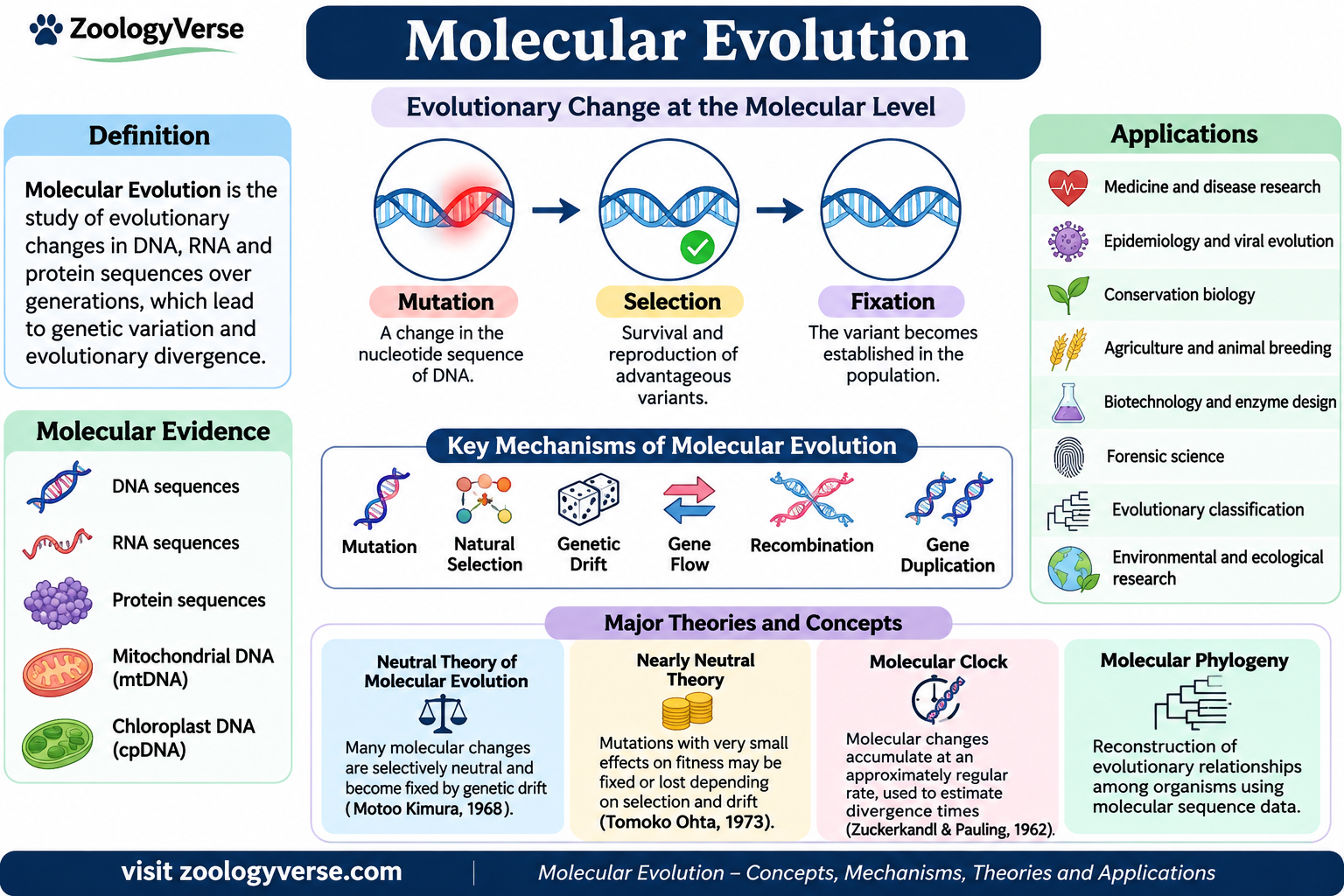
Molecular Evolution refers to the study of evolutionary changes occurring in the genetic material (DNA and RNA) and proteins of organisms over successive generations and throughout evolutionary history. It investigates how mutations arise, how genetic variations accumulate, and how evolutionary forces influence the genetic composition of populations and species.
Evolution is a fundamental biological process responsible for the origin, diversification and adaptation of living organisms. It involves changes in heritable characteristics of populations over successive generations. Traditionally, evolutionary studies have focused on morphological, anatomical, embryological and fossil evidence. However, advances in molecular biology and genetics have revealed that some of the most significant evidence of evolutionary relationships is preserved within the genetic material of organisms.
The genetic material of all cellular organisms contains hereditary information that determines their structural and functional characteristics. Although organisms belonging to different species may exhibit considerable morphological differences, they often possess similarities in their molecular composition. These similarities arise because living organisms share common evolutionary ancestors. By comparing nucleotide sequences of DNA and RNA or amino acid sequences of proteins, scientists can identify evolutionary relationships among organisms and estimate how closely different species are related.
At the molecular level, evolution occurs through several processes, including mutation, recombination, natural selection, genetic drift, gene duplication and gene flow. These processes generate and modify genetic variation, leading to molecular differences among individuals, populations and species. Over long evolutionary periods, the accumulation of such differences may contribute to adaptation, evolutionary divergence and speciation.
The development of DNA sequencing technologies, molecular genetics and computational biology has significantly expanded the scope of evolutionary research. Scientists can now compare complete genomes, identify conserved genes, investigate genetic mutations and reconstruct evolutionary histories using molecular data. Molecular studies have also contributed to understanding the evolutionary relationships among major groups of organisms, including bacteria, archaea, plants, animals and fungi.
An important contribution of molecular studies is the development of concepts such as the Neutral Theory of Molecular Evolution, the Molecular Clock Hypothesis and molecular phylogenetics. These concepts explain how genetic changes accumulate over time, why certain molecular variations become established in populations and how sequence differences can be used to estimate evolutionary divergence.
Furthermore, molecular evolution has important applications in biodiversity research, conservation genetics, comparative genomics, medical research, evolutionary developmental biology and the study of emerging infectious diseases.
Thus, Molecular Evolution provides a genetic and biochemical perspective on the evolutionary process. It connects molecular changes with population genetics, adaptation, speciation and the broader history of biological diversity.
Explore the broader scientific evidence supporting evolution in our article on Theories of Evolution: Lamarckism, Darwinism & More and learn how life may have originated in Origin of Life: Theories, Chemical Evolution & RNA World.
2. Historical Development of Molecular Evolution
The development of molecular evolution as a scientific discipline was closely associated with advances in molecular biology, biochemistry, genetics and evolutionary theory. Before the discovery of DNA as the hereditary material and the development of modern sequencing techniques, evolutionary relationships were primarily investigated through comparative anatomy, morphology, embryology and fossil evidence. However, scientists gradually recognized that similarities and differences in biological molecules could provide a more direct understanding of evolutionary relationships.
The emergence of molecular biology during the twentieth century made it possible to investigate evolutionary changes at the level of DNA, RNA and proteins. Comparative studies of protein sequences, the development of the molecular clock hypothesis, the formulation of the Neutral Theory and the use of ribosomal RNA in evolutionary classification were particularly important milestones.
2.1 Early Development of Molecular Biology and Comparative Biochemistry
During the early twentieth century, advances in biochemistry helped scientists understand the chemical composition and functions of biological molecules. The identification of nucleic acids, amino acids and proteins provided the foundation for investigating hereditary information at the molecular level.
In 1944, Oswald Avery, Colin MacLeod and Maclyn McCarty demonstrated that DNA was responsible for the transformation of bacterial characteristics, providing strong evidence that DNA carries hereditary information.
In 1953, James Watson and Francis Crick proposed the double-helical structure of DNA, using important experimental findings from Rosalind Franklin and Maurice Wilkins. This discovery provided a structural explanation for the storage and transmission of genetic information.
The development of molecular genetics made it possible to understand how changes in nucleotide sequences could produce heritable variations and contribute to evolutionary processes.
2.2 Discovery of Molecular Differences in Proteins
One of the earliest important developments in molecular evolutionary research involved the comparison of amino acid sequences in proteins from different organisms.
In the 1950s, Frederick Sanger and his colleagues determined the amino acid sequence of insulin. This achievement demonstrated that proteins possess specific, identifiable sequences that could be compared among organisms.
Later, scientists began comparing proteins such as haemoglobin and cytochrome c from different species. These comparisons revealed that organisms sharing closer evolutionary relationships generally possessed greater similarities in their protein sequences.
Cytochrome c became particularly important because it is a protein involved in cellular respiration and is present in a wide variety of organisms. Its amino acid sequence could therefore be compared across different evolutionary groups.
These studies established that molecular similarities could be used as evidence of common ancestry and evolutionary divergence.
2.3 Contribution of Emile Zuckerkandl and Linus Pauling
Emile Zuckerkandl and Linus Pauling made major contributions to the development of molecular evolution.
In 1962, they published their influential work on molecular disease, evolution and genetic heterogeneity. They demonstrated how comparisons of haemoglobin sequences could reveal evolutionary relationships among organisms.
Their research introduced an important concept: biological molecules preserve a historical record of evolutionary changes.
They proposed that the accumulation of amino acid substitutions in proteins could be related to the evolutionary time separating different species. This idea contributed to the development of the molecular clock hypothesis.
Their work established molecular comparisons as an important approach to evolutionary research and helped create the foundation for molecular phylogenetics.
2.4 Development of Molecular Phylogenetic Methods
During the 1960s, scientists began developing mathematical and computational methods to reconstruct evolutionary relationships using molecular sequence data.
In 1967, Walter M. Fitch and Emanuel Margoliash published an important study using cytochrome c amino acid sequences to reconstruct evolutionary relationships among organisms.
Their work demonstrated that evolutionary trees could be constructed by comparing differences in protein sequences.
This approach represented an important advancement because it allowed scientists to investigate evolutionary relationships using measurable molecular differences rather than relying exclusively on morphological characteristics.
2.5 Development of the Neutral Theory of Molecular Evolution
In 1968, Japanese geneticist Motoo Kimura proposed the Neutral Theory of Molecular Evolution in his influential paper, Evolutionary Rate at the Molecular Level.
According to this theory, a large proportion of evolutionary changes at the molecular level are selectively neutral. Such changes neither significantly increase nor decrease the reproductive fitness of organisms.
Kimura emphasized that the fixation of many neutral mutations occurs through random genetic drift rather than natural selection.
In 1969, Jack Lester King and Thomas H. Jukes independently developed related arguments in their paper, Non-Darwinian Evolution, published in the journal Science.
These contributions stimulated extensive scientific debate about the relative roles of natural selection and genetic drift in molecular evolution.
2.6 Contribution of Carl Woese and the Use of Ribosomal RNA
Another major advancement occurred through the work of Carl Woese and his collaborators.
During the 1970s, Carl Woese investigated ribosomal RNA (rRNA) sequences to determine evolutionary relationships among microorganisms.
Ribosomal RNA was particularly suitable for evolutionary comparisons because it is present in all cellular organisms and performs an essential role in protein synthesis. Its sequences contain both conserved and variable regions, allowing comparisons among distantly related organisms.
In 1977, Carl Woese and George E. Fox published important research demonstrating that certain microorganisms, previously classified as bacteria, represented a fundamentally distinct evolutionary group.
This research contributed to the recognition of three major domains of cellular life:
- Bacteria
- Archaea
- Eukarya
The use of rRNA sequences transformed biological classification and demonstrated the importance of molecular evidence in reconstructing the evolutionary history of life.
2.7 Development of the Nearly Neutral Theory
In 1973, Tomoko Ohta proposed the Nearly Neutral Theory of Molecular Evolution.
This theory extended the ideas of Kimura by emphasizing the importance of mutations that have very small effects on fitness.
According to this theory, the evolutionary fate of slightly deleterious or slightly advantageous mutations depends partly on population size and the influence of genetic drift.
The Nearly Neutral Theory helped explain why molecular evolutionary patterns may differ among organisms with different effective population sizes.
2.8 Development of DNA Sequencing and Molecular Techniques
The development of DNA sequencing technologies greatly increased the amount of molecular information available for evolutionary research.
In 1977, Frederick Sanger and his colleagues introduced the chain-termination method of DNA sequencing. This technique made it possible to determine the nucleotide sequence of DNA molecules with greater accuracy.
Later developments, including polymerase chain reaction (PCR), automated DNA sequencing and next-generation sequencing, made molecular comparisons faster and more accessible.
Modern genomic technologies allow scientists to compare entire genomes, identify genetic variations, investigate gene duplication and reconstruct evolutionary relationships with increasing precision.
2.9 Major Historical Milestones in Molecular Evolution
The following table summarizes important discoveries and their contributions to the development of molecular evolutionary studies.
| Year | Scientist(s) | Major contribution |
|---|---|---|
| 1944 | Avery, MacLeod and McCarty | Demonstrated the hereditary role of DNA in bacterial transformation. |
| 1953 | Watson and Crick, with important contributions from Franklin and Wilkins | Established the double-helical structure of DNA. |
| 1955 | Frederick Sanger and colleagues | Determined the amino acid sequence of insulin. |
| 1962 | Emile Zuckerkandl and Linus Pauling | Established the importance of molecular comparisons in evolutionary studies. |
| 1967 | Walter Fitch and Emanuel Margoliash | Developed molecular approaches to reconstructing evolutionary relationships using protein sequences. |
| 1968 | Motoo Kimura | Proposed the Neutral Theory of Molecular Evolution. |
| 1969 | Jack L. King and Thomas H. Jukes | Published the concept of Non-Darwinian Evolution. |
| 1973 | Tomoko Ohta | Proposed the Nearly Neutral Theory. |
| 1977 | Carl Woese and George E. Fox | Used rRNA comparisons to reveal major evolutionary divisions among microorganisms. |
| 1977 | Frederick Sanger and colleagues | Developed the chain-termination DNA sequencing method. |
| 1983 | Kary Mullis | Developed the polymerase chain reaction (PCR) technique. |
| 2000–2003 | International Human Genome Project collaborators | Produced the draft and completed reference sequence of the human genome. |
| 2005 onwards | Multiple research groups | Advanced next-generation sequencing and large-scale comparative genomics. |
The historical development of molecular evolution demonstrates how discoveries in genetics, biochemistry and molecular biology gradually transformed the study of evolutionary relationships. Modern molecular approaches now provide powerful tools for investigating genetic diversity, evolutionary divergence, common ancestry and the origin of biological complexity.
3. Molecular Basis of Evolution
Molecular Evolution is based on heritable changes in the sequences and organization of DNA, RNA and proteins. These molecules store, transmit and express genetic information, and their variation provides the raw material for evolutionary change. To understand Molecular Evolution, it is necessary to examine how genetic information is organized and how molecular differences arise, are inherited and change in frequency within populations.
3.1 DNA, Genes and Genomes
DNA (deoxyribonucleic acid) is the principal hereditary material in most organisms. It consists of two complementary nucleotide strands, with each nucleotide containing a sugar, a phosphate group and a nitrogenous base. The sequence of adenine, thymine, guanine and cytosine carries genetic information.
A gene is a region of DNA that contributes to the production of a functional RNA molecule or protein. The complete genetic material of an organism is called its genome. Differences among genomes may involve single nucleotide changes, insertions, deletions, gene duplications and larger chromosomal rearrangements. Comparative study of these differences is a central part of Molecular Evolution because it helps reveal how genes and genomes have changed in different lineages. At this level, Molecular Evolution examines the relationship between sequence variation and inherited biological characteristics. Accordingly, Molecular Evolution considers both the stability of genetic information and the changes that occur in it.
3.2 RNA and Protein Sequences
RNA (ribonucleic acid) participates in the expression and regulation of genetic information. Messenger RNA carries coding information, transfer RNA helps translate codons into amino acids, and ribosomal RNA forms part of the ribosome and contributes to protein synthesis. Because RNA molecules perform essential functions, some regions are highly conserved, while other regions accumulate sequence differences.
Proteins are chains of amino acids whose sequences are ultimately specified by genes. Changes in coding DNA may alter amino acid sequences and influence protein structure or function. Comparing homologous DNA, RNA and protein sequences allows researchers to identify conserved regions and variable sites. Such comparisons provide evidence for common ancestry and are widely used in Molecular Evolution. These comparisons allow Molecular Evolution to distinguish ancient shared features from more recent sequence changes. Protein comparisons are therefore another important source of evidence in Molecular Evolution.
3.3 Mutations as the Source of Molecular Variation
A mutation is a heritable change in genetic material. Mutations may arise through errors during DNA replication, spontaneous chemical changes or exposure to mutagens. They include base substitutions, insertions and deletions, as well as larger changes affecting genes or chromosomes.
A substitution may be synonymous, meaning that it does not change the encoded amino acid, or nonsynonymous, meaning that it changes an amino acid. Mutations in regulatory regions may alter when, where or how strongly a gene is expressed. Their effects can be neutral, harmful or beneficial depending on the genetic and environmental context.
Mutation introduces new variants, but it does not by itself determine which variants become common. Natural selection, genetic drift, gene flow and recombination influence their fate. These Molecular Evolutionary Mechanisms operate together, shaping patterns of genetic diversity within and between populations. Mutation is essential to Molecular Evolution because it supplies new sequence variants on which evolutionary forces can act. These interacting processes explain why Molecular Evolution cannot be understood by considering mutation alone.
3.4 From Molecular Variation to Evolutionary Change
Within a population, a genetic variant may be rare or common. Its frequency can change over generations. Natural selection can increase the frequency of variants that improve reproductive success in a particular environment, while genetic drift causes random changes, especially in small populations. Gene flow transfers variants between populations, and recombination creates new combinations of existing alleles.
When populations become separated, their genetic composition may change independently. Mutations accumulate, and differences in selection and drift can increase divergence. Over long periods, these changes may contribute to reproductive isolation and speciation. Molecular Evolution therefore links changes in DNA and proteins with population-level processes and large-scale evolutionary patterns.
3.5 Conserved and Variable Molecular Regions
Not all parts of genetic material evolve at the same rate. Functionally important regions, such as many ribosomal RNA sequences or essential protein domains, may be strongly conserved because major changes can disrupt vital functions. Other regions tolerate more variation and may evolve relatively rapidly.
Conserved sequences are useful for comparing distantly related organisms, whereas rapidly evolving sequences can help distinguish closely related species or populations. The choice of molecular marker depends on the evolutionary question being investigated. This principle is important in Molecular Phylogeny, where sequence data are used to infer relationships and construct evolutionary trees. Patterns of conservation and variation help Molecular Evolution select suitable genes for comparisons at different evolutionary depths.
3.6 Molecular Evidence and Evolutionary History
Molecular data provide evidence that complements fossils, anatomy, embryology and biogeography. Similarities in homologous sequences can indicate shared ancestry, while the number and pattern of differences can help estimate the degree of evolutionary divergence. However, sequence similarity must be interpreted carefully because different genes may have different histories, and processes such as gene duplication, horizontal gene transfer and incomplete lineage sorting can complicate the reconstruction.
The study of Molecular Evolution uses these molecular patterns to investigate how life diversified. By combining sequence evidence with other biological information, Molecular Evolution provides a framework for reconstructing the history of organisms. A central question in Molecular Evolution is how molecular changes accumulate along separate evolutionary lineages. Molecular Evolution also investigates why some sequence changes persist while others are lost. Molecular Evolution connects molecular data with evolutionary explanations.
The study of these molecular changes provides the foundation for understanding the Neutral Theory of Molecular Evolution, the Molecular Clock and molecular phylogenetic methods. Together, these approaches help explain how genetic changes arise, spread and leave a record of evolutionary history.
4. Molecular Evolutionary Mechanisms
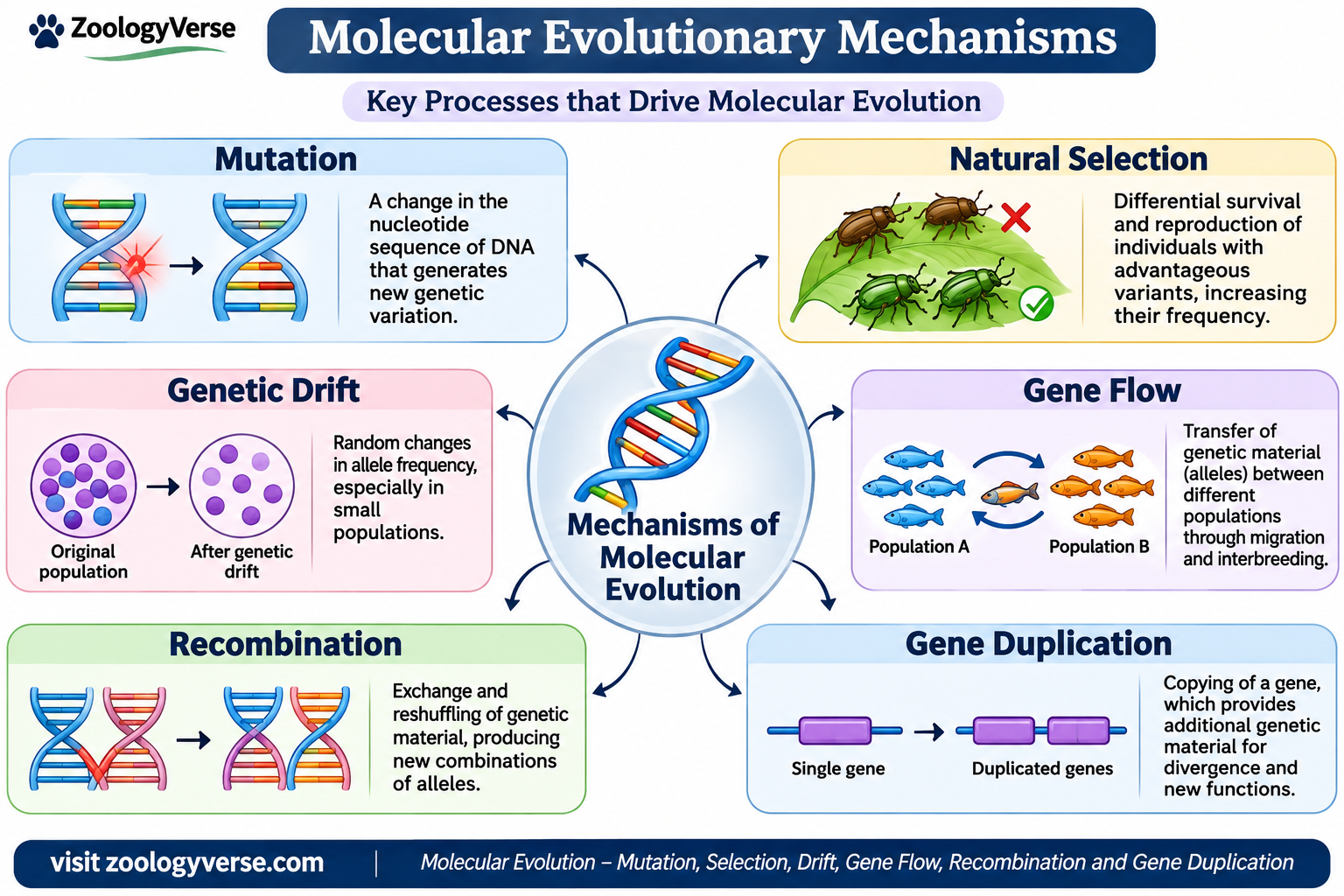
Molecular Evolution is driven by processes that introduce genetic variation, change the frequencies of variants, and alter the genetic composition of populations over generations. In Molecular Evolution, these processes do not act independently. Mutation creates new sequence variants, while natural selection, genetic drift and gene flow influence their persistence and distribution. Recombination reshuffles existing variants, and gene duplication can provide additional genetic material for the evolution of new functions. Together, these processes explain how molecular differences arise within populations and accumulate between evolutionary lineages. This is the central subject of Molecular Evolution.
4.1 Mutation
Mutation is a heritable alteration in the nucleotide sequence of DNA. It is the ultimate source of new alleles and therefore supplies the raw material for Molecular Evolution. Mutation is consequently a starting point for many patterns studied in Molecular Evolution. Mutations may occur spontaneously during DNA replication or as a result of chemical agents, radiation and other mutagens.
The major forms considered in Molecular Evolution include:
- Base substitution: One nucleotide is replaced by another. A transition replaces a purine with another purine or a pyrimidine with another pyrimidine; a transversion replaces a purine with a pyrimidine or vice versa.
- Insertion and deletion: One or more nucleotides are added to or removed from a sequence. In coding regions, changes not divisible by three may cause a frameshift and alter the downstream amino acid sequence.
- Gene or segment duplication: A DNA region is copied, creating an additional sequence that may retain the original function or later diverge.
- Regulatory mutation: A change in a promoter, enhancer or other regulatory sequence can modify the timing, location or level of gene expression.
The consequences of a mutation depend on its location and biological context. In Molecular Evolution, the consequences of a mutation depend on its location and biological context. A mutation may be neutral, deleterious or beneficial. Mutations in somatic cells generally are not inherited by offspring in organisms with a separated germ line, whereas mutations in germ cells can be transmitted to the next generation. Mutation rates also differ among genes, organisms and genomic regions.
Mutation introduces new variants, but it does not by itself determine which variants become common. This distinction is fundamental to Molecular Evolution. Natural selection, genetic drift, gene flow and recombination influence their fate. These Molecular Evolutionary Mechanisms operate together, shaping patterns of genetic diversity within and between populations. Mutation is essential to Molecular Evolution because it supplies new sequence variants on which evolutionary forces can act. These interacting processes explain why Molecular Evolution cannot be understood by considering mutation alone.
4.2 Natural Selection
In Molecular Evolution, natural selection occurs when heritable variants differ in their contribution to survival and reproduction. If a molecular variant increases reproductive success in a particular environment, the allele carrying it may become more frequent over generations. Conversely, harmful variants may be removed by purifying selection.
At the molecular level, Molecular Evolution examines selection acting on changes that alter protein structure, enzyme activity, binding interactions or gene expression. Positive selection favours advantageous changes; purifying selection removes changes that impair function; and balancing selection can maintain more than one allele in a population. Selection is context-dependent: a variant that is advantageous in one environment may be neutral or harmful in another.
The effects of selection in Molecular Evolution can be studied by comparing synonymous and nonsynonymous substitutions. An excess of nonsynonymous change in an appropriate comparison may indicate positive selection, whereas a relative scarcity can indicate purifying selection. These patterns must be interpreted with suitable models and adequate sampling.
4.3 Genetic Drift
In Molecular Evolution, genetic drift is the random change in allele frequencies caused by sampling effects from one generation to the next. It is strongest in populations with small effective population sizes. Unlike natural selection, drift does not favour variants because they improve adaptation; an allele may increase, decrease or become fixed simply by chance.
Two important examples are the founder effect and the population bottleneck. The founder effect occurs when a new population is established by a small number of individuals and carries only a subset of the source population’s genetic variation. A bottleneck occurs when population size is sharply reduced, potentially causing the loss of alleles and a change in genetic diversity.
Genetic drift is central to the Neutral Theory of Molecular Evolution because neutral mutations can become fixed through random processes. This connection is a major theme in Molecular Evolution. The probability that a newly arisen neutral allele becomes fixed is, under standard assumptions, equal to its initial frequency. For a single new copy in a diploid population of size N, that probability is 1/(2N).
4.4 Gene Flow
Gene flow is the movement of alleles between populations through the migration and reproduction of individuals, or through the transfer of genetic material. Molecular Evolution considers how this movement changes population-level sequence variation. In Molecular Evolution, the evolutionary effect of gene flow depends on its extent and on the differences between source and recipient populations.
It may increase genetic variation within a population, oppose divergence caused by selection or drift, or spread an advantageous allele across a species. In some microorganisms, horizontal gene transfer allows genetic material to move between organisms without parent-to-offspring inheritance. This process is particularly important in the evolution of bacteria and archaea.
4.5 Recombination
Recombination produces new combinations of genetic variants, an important source of genomic patterns examined in Molecular Evolution. In sexually reproducing organisms, crossing over between homologous chromosomes during meiosis exchanges DNA segments, while independent assortment distributes maternal and paternal chromosomes into gametes. Fertilization further combines genetic material from two parents.
In Molecular Evolution, recombination usually does not create new alleles by itself; instead, it reshuffles existing alleles into new combinations. It can separate beneficial mutations from harmful ones, bring advantageous variants together and reduce the effects of linkage between nearby sites. Consequently, recombination influences how selection and genetic drift shape patterns of variation across genomes.
For a broader explanation of how these processes shape evolutionary change, read Modern Synthetic Theory, Microevolution & Macroevolution.
4.6 Gene Duplication and Divergence
Gene duplication creates an additional copy of a gene and is a major source of novelty considered in Molecular Evolution. Duplications may arise through unequal crossing over, replication errors, retrotransposition or larger chromosomal and genome-level events. Because one copy may continue performing the original function, the other copy can accumulate changes with less constraint.
In Molecular Evolution, duplicated genes may follow different evolutionary paths. One copy may acquire a new function, a process called neofunctionalization. The copies may divide the original function between them, known as subfunctionalization, or one copy may become inactive and form a pseudogene. Gene duplication has contributed to the evolution of gene families, including globins and olfactory receptors, and has played an important role in the diversification of biological functions.
4.7 Interaction of Evolutionary Mechanisms
In Molecular Evolution, mutation, selection, drift, gene flow and recombination operate together in natural populations. Mutation supplies new variants, recombination generates new combinations, and selection and drift alter their frequencies. Gene flow moves variants between populations, potentially changing local patterns of adaptation and divergence.
The relative importance of each process in Molecular Evolution varies with population size, reproductive system, mutation rate, environmental conditions and demographic history. For example, selection may efficiently favour a beneficial mutation in a large population, whereas random drift can have a greater influence in a small population. Gene flow may slow divergence between neighbouring populations, while restricted gene flow can allow their genetic differences to accumulate.
Molecular Evolution therefore cannot be explained by a single mechanism. A complete account of Molecular Evolution considers the combined effects of all these forces. Understanding their interaction provides the foundation for studying the Neutral Theory of Molecular Evolution, estimating rates of sequence change with a Molecular Clock, and reconstructing relationships through Molecular Phylogeny. These linked approaches make Molecular Evolution a central framework for interpreting genetic history.
5. Neutral Theory of Molecular Evolution
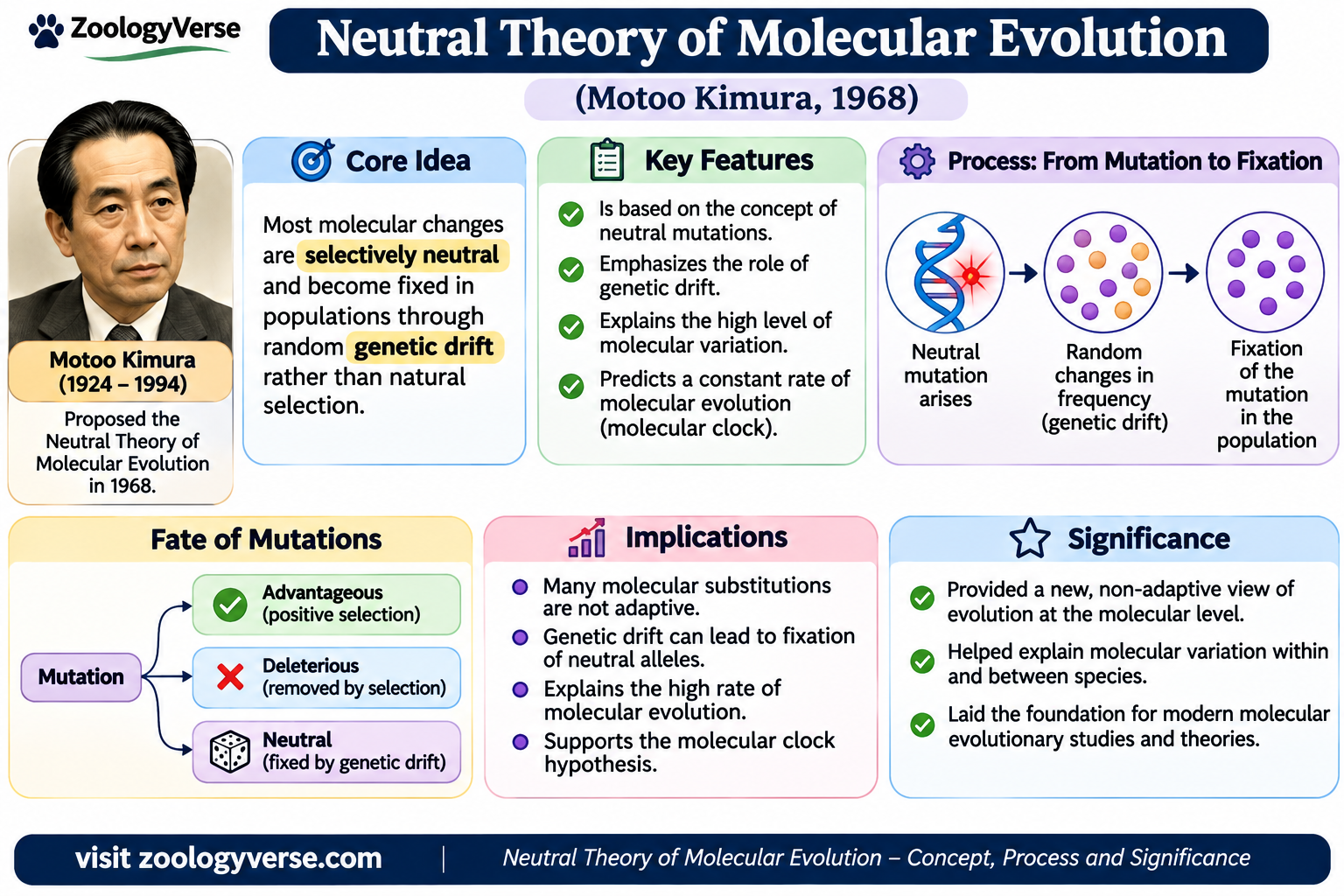
The Neutral Theory of Molecular Evolution is one of the most influential theories developed to explain genetic changes at the molecular level. It was proposed by the Japanese geneticist Motoo Kimura in 1968 to explain the evolutionary behaviour of mutations that do not significantly affect the reproductive fitness of organisms. The theory emphasizes that many molecular changes become established in populations through random genetic drift rather than natural selection.
Before the development of this theory, evolutionary changes were commonly interpreted through the framework of Darwinian natural selection. Although natural selection remains essential for explaining adaptation, the growing evidence from comparisons of DNA and protein sequences suggested that many molecular substitutions did not produce significant functional advantages or disadvantages.
The Neutral Theory of Molecular Evolution provided an alternative explanation for these observations. It proposed that a considerable proportion of molecular variations are selectively neutral and that their fixation occurs primarily through random genetic drift. This theory helped explain the relatively regular accumulation of molecular substitutions in certain genes and proteins over evolutionary time.
5.1 Historical Background of the Neutral Theory
During the 1960s, advances in protein sequencing allowed scientists to compare the amino acid sequences of homologous proteins from different organisms. These comparisons revealed that molecular differences accumulated in a manner that could not always be explained by adaptive natural selection.
Scientists observed that many amino acid substitutions occurred in proteins without producing noticeable changes in their biological functions. This raised an important question: If every molecular change is not necessarily advantageous, how do such changes become established during evolution?
In 1968, Motoo Kimura published his influential paper, Evolutionary Rate at the Molecular Level, in the journal Nature. He proposed that most evolutionary changes at the molecular level, particularly those involving protein sequences, were caused by the random fixation of selectively neutral mutations.
In 1969, Jack Lester King and Thomas H. Jukes independently supported similar arguments in their paper Non-Darwinian Evolution. Their work further emphasized the importance of neutral mutations in explaining molecular evolutionary patterns.
The theory generated considerable scientific discussion because it challenged the assumption that adaptive natural selection was responsible for every evolutionary substitution. It did not reject Darwinian evolution; instead, it highlighted the additional importance of random genetic processes.
5.2 Fundamental Principles of the Neutral Theory
The Neutral Theory of Molecular Evolution is based on several fundamental principles.
1. Occurrence of Neutral Mutations
Not all mutations affect the fitness of organisms. Some mutations produce changes in DNA or protein sequences without significantly influencing survival or reproductive success. Such mutations are called neutral mutations.
For example, a synonymous substitution in a protein-coding gene changes a nucleotide without changing the amino acid encoded by the codon. Although synonymous substitutions are not necessarily neutral in every biological context, many have little or no measurable effect on fitness.
2. Random Fixation of Neutral Mutations
Neutral mutations do not provide a selective advantage or disadvantage. Therefore, their frequencies change primarily through genetic drift.
A neutral allele may gradually disappear from a population or become fixed through random fluctuations in allele frequencies. When it becomes fixed, it is present in all members of the population at that genetic position.
3. Genetic Drift as an Important Evolutionary Force
Genetic drift plays a central role in the Neutral Theory of Molecular Evolution. It refers to random changes in allele frequencies between generations due to chance sampling.
The probability that a neutral mutation becomes fixed depends on its initial frequency rather than on any selective advantage.
In a diploid population containing N individuals, a newly arising neutral mutation represented by a single copy has an initial frequency of 1/(2N). Under the standard neutral model, its probability of eventual fixation is therefore also 1/(2N).
4. Molecular Evolution Does Not Always Indicate Adaptation
An important principle of the theory is that not every molecular substitution represents an adaptive improvement. Many sequence changes may become established without increasing the fitness of an organism.
Consequently, molecular differences between species may reflect random evolutionary processes as well as adaptive changes produced by natural selection.
5. Molecular Evolutionary Rates and Mutation Rates
Under the standard neutral model, the rate of neutral substitutions per generation is determined by the neutral mutation rate. In a diploid population, if the neutral mutation rate per gene copy per generation is μ, the population produces approximately 2Nμ new neutral mutations per generation.
Each new mutation has a fixation probability of 1/(2N). Therefore:
Rate of neutral substitution = 2Nμ × 1/(2N)
Rate of neutral substitution = μ
This relationship is one of the most important mathematical results of the Neutral Theory of Molecular Evolution. It demonstrates that, under the assumptions of the model, the neutral substitution rate is independent of population size.
5.3 Mathematical Explanation of Neutral Mutation Fixation
The fixation of neutral mutations can be explained using basic principles of population genetics.
Consider a diploid population containing 1,000 individuals. The total number of gene copies at a particular autosomal locus is:
2N = 2 × 1,000 = 2,000
Suppose a new neutral mutation appears in one gene copy.
Its initial frequency is:
p = 1/2,000
The probability of fixation of a selectively neutral mutation is equal to its initial frequency.
Therefore:
P(fixation) = 1/2,000 = 0.0005
This means that the probability of fixation of this particular mutation is 0.05%.
Although the probability of fixation of an individual neutral mutation is small, many neutral mutations arise over evolutionary time. Some disappear, whereas others eventually become fixed. Their accumulation contributes to molecular differences between evolutionary lineages.
5.4 Role of Genetic Drift in Neutral Evolution
Genetic drift is the principal mechanism responsible for the fixation of neutral mutations under the classical Neutral Theory.
Unlike natural selection, genetic drift operates through random changes in allele frequencies. Its influence is particularly strong in populations with small effective population sizes.
For example, a neutral mutation may become more frequent in one generation simply because individuals carrying that mutation happen to produce more offspring. This increase does not necessarily indicate that the mutation improves survival or reproduction.
Over successive generations, random changes may eventually result in the disappearance or fixation of the mutation.
The rate at which neutral substitutions accumulate is therefore related to the neutral mutation rate under the standard model. However, the time required for a particular mutation to become fixed can vary considerably.
5.5 Examples of Neutral Molecular Changes
Several types of molecular changes may behave approximately neutrally.
Synonymous nucleotide substitutions: These substitutions alter a nucleotide in a codon without changing the amino acid encoded. They are often used in molecular evolutionary studies, although some may influence translation efficiency, RNA stability or gene regulation.
Mutations in non-functional or weakly constrained DNA regions: Changes in DNA regions with little detectable functional constraint may have limited effects on organismal fitness and can accumulate through genetic drift.
Conservative amino acid substitutions: Some amino acid replacements involve chemically similar amino acids and may have little effect on protein structure or function. Their neutrality depends on the specific protein and the position of the substitution.
These examples demonstrate why molecular changes must be evaluated in their functional and evolutionary context rather than automatically being considered adaptive.
5.6 Significance of the Neutral Theory
The Neutral Theory of Molecular Evolution has made several important contributions to evolutionary biology.
- Explanation of Molecular Variation: It provides an explanation for the accumulation of molecular differences that cannot be attributed directly to adaptive natural selection.
- Understanding Genetic Drift: It established random genetic drift as an important mechanism influencing molecular evolution.
- Foundation for Molecular Clock Studies: It helped explain why neutral substitutions may accumulate at approximately regular rates under certain conditions, providing a theoretical basis for molecular clock applications.
- Interpretation of DNA Sequence Differences: It provides a framework for distinguishing potentially adaptive molecular changes from changes that may be selectively neutral.
- Development of Population Genetics: It strengthened the connection between molecular biology and population genetics by explaining how mutations become established within populations.
- Understanding Evolutionary Relationships: It contributed to the interpretation of molecular sequence differences used in evolutionary comparisons and molecular phylogeny.
The Neutral Theory remains an important framework for understanding molecular variation. However, it does not suggest that natural selection is unimportant. Instead, it recognizes that both selective and non-selective processes contribute to the evolutionary history of genetic material.
6. Nearly Neutral Theory of Molecular Evolution
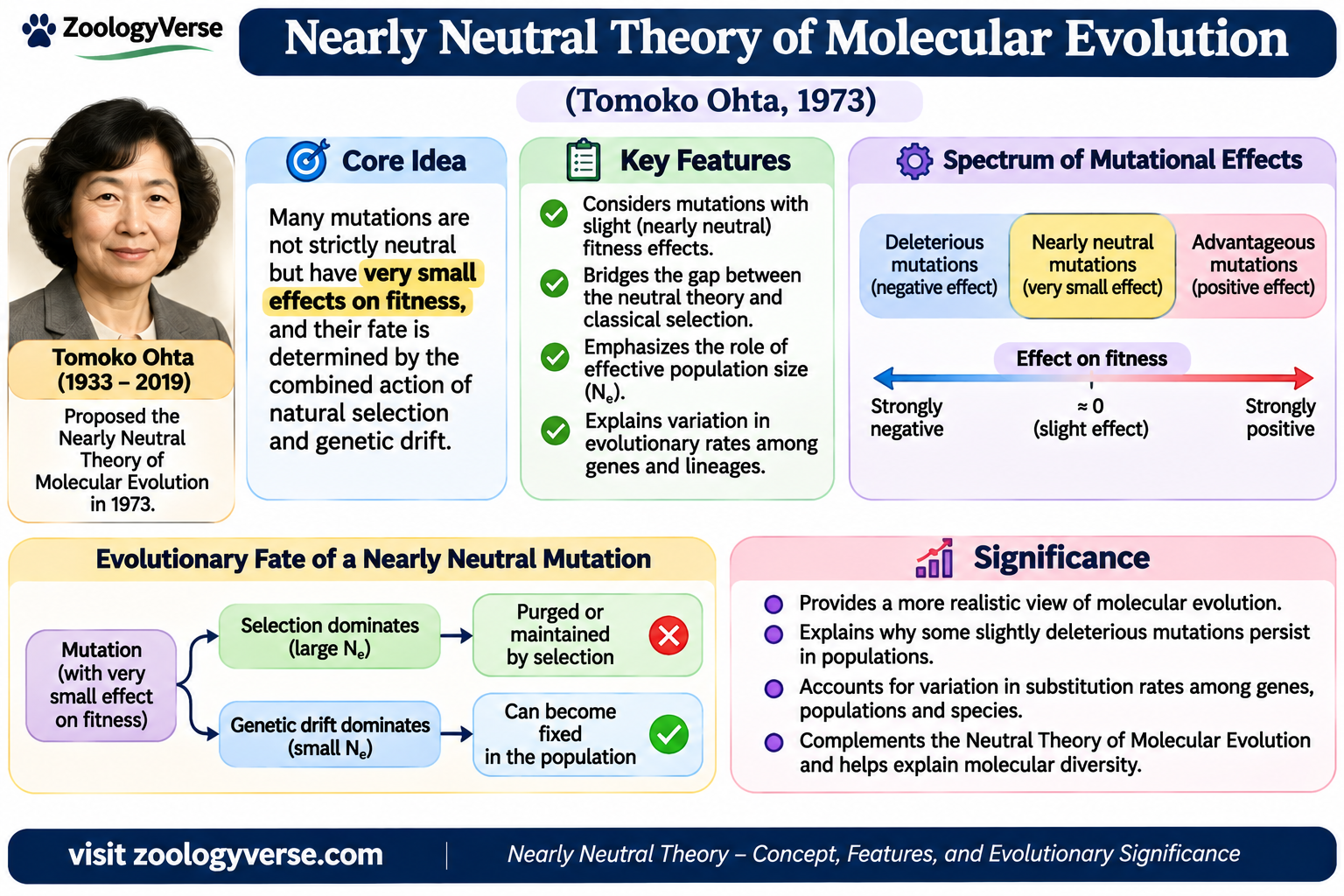
The Nearly Neutral Theory of Molecular Evolution was proposed by Japanese evolutionary geneticist Tomoko Ohta in 1973. It developed the ideas of Motoo Kimura by recognizing that many mutations are not completely neutral or strongly harmful but have very small effects on reproductive fitness. The theory explains how such slightly deleterious or slightly advantageous mutations may behave differently in populations of different effective sizes. In this way, Molecular Evolution can be understood in relation to both mutation effects and population-level processes.
The Nearly Neutral Theory of Molecular Evolution is an extension of the classical Neutral Theory. While the classical model focuses on mutations with no effect on fitness, Ohta emphasized mutations whose selective effects are weak enough that random genetic drift can influence their evolutionary fate. Thus, the balance between natural selection and genetic drift is central to this theory and to understanding Molecular Evolution.
6.1 Historical Background
Motoo Kimura’s Neutral Theory, published in 1968, proposed that many molecular substitutions arise through the fixation of selectively neutral mutations. Subsequent molecular and population-genetic studies raised questions about mutations that have small but non-zero effects on fitness.
In 1973, Tomoko Ohta introduced the Nearly Neutral Theory to address this category of mutations. Her work showed that the influence of selection depends not only on the fitness effect of a mutation but also on the effective population size. This insight became important for interpreting molecular patterns in Molecular Evolution. This provided a way to understand why molecular evolutionary patterns may differ between large and small populations. It also expanded the interpretation of Molecular Evolution beyond strictly neutral substitutions.
6.2 Basic Principles
The Nearly Neutral Theory of Molecular Evolution is based on several principles:
- Mutations can have very small fitness effects. Some mutations are neither completely neutral nor strongly deleterious. Their effects may be weakly harmful or, less commonly, weakly advantageous.
- Genetic drift can overpower weak selection. When a mutation’s selective effect is sufficiently small relative to random sampling effects, its fate may be largely determined by drift.
- Effective population size matters. The same mutation may behave nearly neutrally in a small population but be efficiently selected against in a large population.
- Molecular substitution patterns vary among lineages. Differences in effective population size and selection efficacy can contribute to variation in the accumulation of molecular changes.
The theory therefore links molecular evolution with population size and the strength of selection, a key relationship in Molecular Evolution. This relationship is important when comparing Molecular Evolution across species. It does not claim that all mutations are neutral; rather, it emphasizes the evolutionary importance of mutations with small fitness effects.
6.3 Role of Effective Population Size
Effective population size (Ne) is the size of an idealized population that would experience the same level of genetic drift as the real population. It is often smaller than the actual census population because reproductive success, sex ratio and population history are not perfectly uniform.
In a small effective population, random genetic drift is relatively strong. Slightly deleterious mutations may therefore persist or even become fixed by chance. In a large effective population, selection is generally more effective at removing harmful mutations and favouring beneficial ones.
A useful way to express the interaction is through the product Ne × s, where s represents the selection coefficient. When the magnitude of this product is small, drift can be important relative to selection. When it is large, selection is more likely to dominate. The precise boundary depends on the population-genetic model and assumptions. These considerations help explain variation in Molecular Evolution among populations.
6.4 Comparison with the Neutral Theory
The classical Neutral Theory and the Nearly Neutral Theory are closely related, but they differ in the kinds of mutations they emphasize.
| Feature | Neutral Theory | Nearly Neutral Theory |
|---|---|---|
| Main contributor | Motoo Kimura | Tomoko Ohta |
| Development | 1968 | 1973 |
| Mutations considered | Selectively neutral mutations | Mutations with very small fitness effects |
| Role of selection | No direct effect on strictly neutral mutations | Weak selection may act, but drift can overwhelm it |
| Role of population size | Neutral fixation probability depends on initial frequency | Effective population size influences the efficacy of selection |
| Main emphasis | Random fixation of neutral mutations | Interaction between weak selection and genetic drift |
6.5 Significance of the Nearly Neutral Theory
The Nearly Neutral Theory of Molecular Evolution helps explain why the effectiveness of natural selection differs among populations and evolutionary lineages. It is particularly useful when interpreting molecular differences among organisms with different effective population sizes.
The theory also helps explain why slightly harmful mutations may accumulate in some lineages, while being removed more efficiently in others. Such differences are central questions in Molecular Evolution. It provides a bridge between molecular sequence evolution and population-level processes.
In modern evolutionary research, the Nearly Neutral Theory is considered alongside the classical Neutral Theory, positive selection and purifying selection. These perspectives together strengthen the study of Molecular Evolution. Together, these frameworks help researchers interpret patterns of DNA and protein variation without assuming that every molecular substitution is adaptive. They provide a balanced framework for studying Molecular Evolution at both population and lineage levels. Molecular Evolution is therefore understood through the combined effects of weak selection, drift and mutation.
7. Molecular Clock Hypothesis
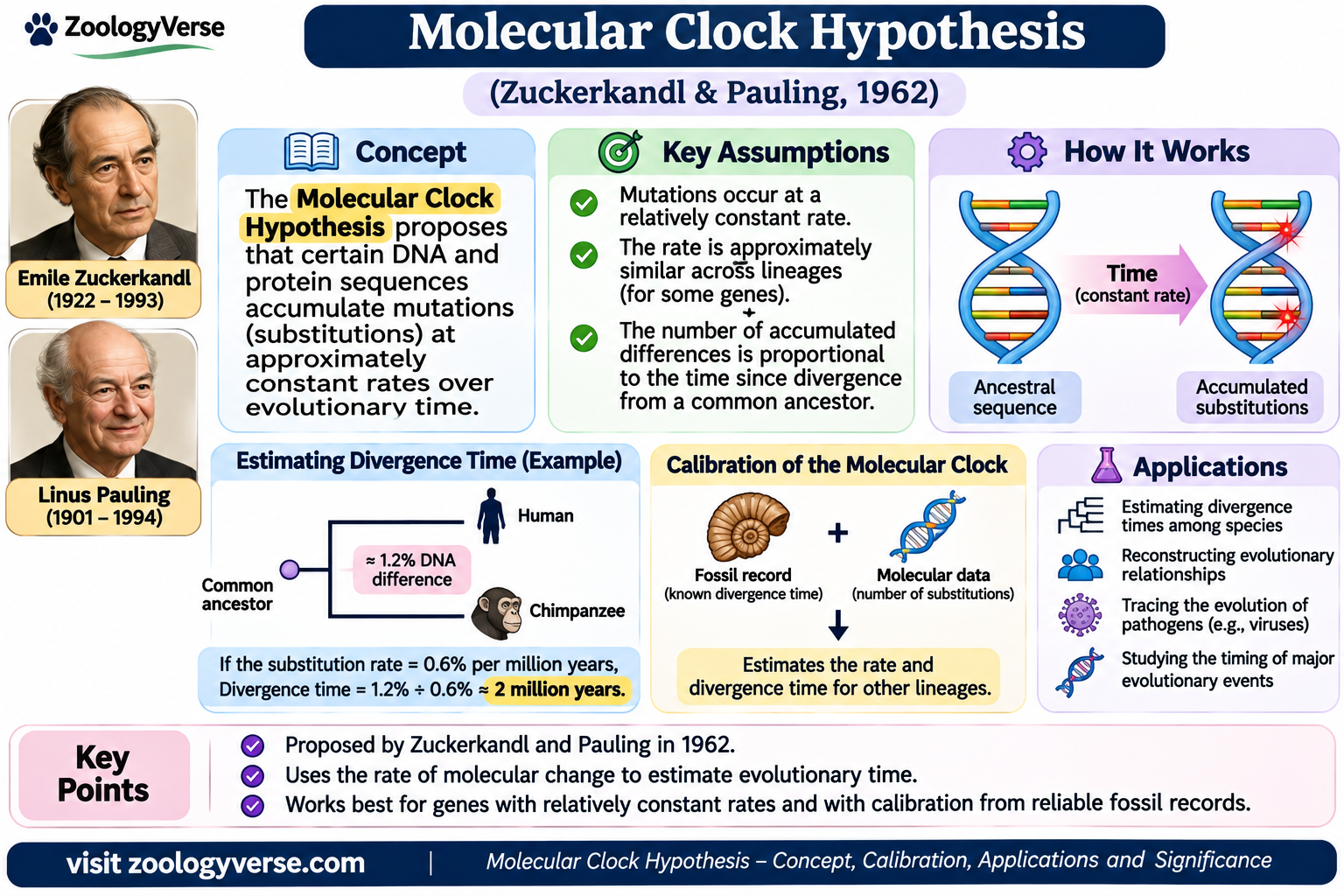
The Molecular Clock Hypothesis is an important concept in evolutionary biology that explains how genetic changes accumulate over time and can be used to estimate the evolutionary divergence of organisms. It is based on the observation that certain DNA and protein sequences accumulate substitutions at approximately regular rates over evolutionary periods. These rates can provide a molecular measure of time when appropriately calibrated.
The Molecular Clock Hypothesis is closely associated with the development of Molecular Evolution. It was proposed by Emile Zuckerkandl and Linus Pauling in 1962, based on their comparative studies of haemoglobin and other proteins. They suggested that the accumulation of amino acid substitutions in proteins could be related to the time elapsed since two evolutionary lineages separated from a common ancestor.
The concept became an important tool for studying evolutionary relationships because it allowed scientists to estimate divergence times using molecular evidence, even when fossil records were incomplete or unavailable.
7.1 Historical Development of the Molecular Clock
The development of the Molecular Clock Hypothesis was based on comparative studies of protein sequences from different organisms.
In 1962, Emile Zuckerkandl and Linus Pauling published their work on molecular disease, evolution and genetic heterogeneity. Their comparisons of haemoglobin sequences demonstrated that molecular differences could reflect evolutionary divergence.
They proposed that certain proteins accumulate amino acid substitutions at approximately regular rates over time. This observation provided the foundation for using molecular changes as an evolutionary clock.
Later, Motoo Kimura’s Neutral Theory of Molecular Evolution provided a population-genetic explanation for the approximately constant accumulation of neutral substitutions under certain conditions. According to the theory, the neutral substitution rate is related to the neutral mutation rate rather than directly to population size.
These developments established the Molecular Clock as an important approach for estimating evolutionary divergence and investigating the history of biological lineages.
7.2 Basic Principles of the Molecular Clock Hypothesis
The Molecular Clock Hypothesis is based on the following principles:
1. Accumulation of Molecular Substitutions
Genetic mutations arise continuously in populations. Some mutations become established as substitutions through natural selection or genetic drift. The accumulation of these substitutions produces molecular differences between evolutionary lineages.
2. Approximately Constant Evolutionary Rates
Certain genes and proteins accumulate substitutions at relatively regular rates over particular evolutionary periods. This regularity makes it possible to estimate the time separating evolutionary lineages.
However, molecular evolutionary rates are not identical in all organisms or genes. They may vary because of differences in mutation rates, generation times, selection pressures and population histories.
3. Relationship Between Molecular Divergence and Time
When two populations separate from a common ancestor, their genetic sequences begin accumulating differences independently. The longer the period since their divergence, the greater the expected number of accumulated substitutions, provided that the evolutionary rate remains sufficiently stable.
4. Calibration Using Independent Evidence
A molecular clock requires calibration using independent information, such as fossil evidence, geological events or well-established evolutionary dates. Calibration connects the observed number of molecular differences with an estimate of elapsed evolutionary time.
5. Use of Homologous Molecular Sequences
The comparison must involve homologous sequences that originated from a common ancestral sequence. Comparing unrelated genes or sequences with different evolutionary histories may produce misleading estimates.
7.3 Molecular Clock and Evolutionary Divergence
The Molecular Clock is used to estimate the time at which two evolutionary lineages separated from a common ancestor.
After divergence, mutations accumulate independently in the two lineages. Differences between their homologous sequences can therefore provide information about the time elapsed since separation.
For example, suppose two species possess homologous DNA sequences that differ by a measurable proportion of nucleotide substitutions. If the evolutionary rate of that sequence is known, scientists can estimate the approximate time of divergence.
The simplest relationship can be expressed as:
[
D = 2rt
]
Where:
- D = Genetic divergence between two lineages.
- r = Substitution rate per lineage per unit of time.
- t = Time since divergence.
Rearranging the equation:
[
t = \frac{D}{2r}
]
The factor of two is included because substitutions accumulate independently in both evolutionary lineages after their separation.
This simplified equation assumes a constant rate and an appropriate measure of divergence. More sophisticated models are required when substitution rates vary or when multiple substitutions occur at the same nucleotide position.
7.4 Types of Molecular Clocks
Molecular clocks can be broadly classified according to how evolutionary rates are treated.
1. Strict Molecular Clock
A strict molecular clock assumes that the rate of molecular substitution remains constant across all evolutionary lineages being examined.
Under this model, genetic differences accumulate at approximately equal rates in different branches of an evolutionary tree.
It is useful when the selected molecular sequences show relatively consistent evolutionary rates.
2. Relaxed Molecular Clock
A relaxed molecular clock allows evolutionary rates to vary among branches of a phylogenetic tree.
It is useful when different organisms or genes have experienced different mutation rates, generation times or selective pressures.
Relaxed-clock models are widely used in modern molecular dating studies because evolutionary rates are rarely perfectly constant across all lineages.
7.5 Calibration of the Molecular Clock
Calibration is essential for converting molecular differences into estimates of evolutionary time.
The major methods include:
Fossil Calibration: Fossils provide minimum or, in some cases, bounded estimates for the ages of evolutionary divergences. Fossils are assigned to appropriate branches of an evolutionary tree based on anatomical and phylogenetic evidence.
Geological Calibration: Geological events, such as the formation of islands or the separation of landmasses, may provide independent temporal information about population divergence. However, geological separation does not always coincide exactly with speciation.
Biogeographical Calibration: The known distribution and historical separation of organisms can sometimes provide additional information for estimating evolutionary divergence.
Calibration Using Previously Dated Lineages: Molecular data from lineages with independently established divergence estimates can help calibrate evolutionary rates in related groups.
Reliable calibration is important because inaccurate dates or incorrect assumptions can produce misleading molecular-clock estimates.
7.6 Applications of the Molecular Clock
The Molecular Clock has several important applications in evolutionary biology.
- Estimating Divergence Times: It helps estimate when different species or evolutionary lineages separated from common ancestors.
- Reconstructing Evolutionary History: It provides temporal information for interpreting phylogenetic trees.
- Studying Adaptive Radiations: It helps investigate the timing of diversification events in groups such as mammals, birds and fishes.
- Understanding Human Evolution: Molecular dating has been used to investigate the divergence and evolutionary history of human and other primate lineages.
- Studying Viral Evolution: Molecular-clock methods help estimate the timing of viral lineage diversification and investigate the historical spread of viral populations.
- Biodiversity Research: It helps researchers understand the historical development of biological diversity and identify periods of rapid evolutionary diversification.
7.7 Limitations of the Molecular Clock Hypothesis
Despite its usefulness, the Molecular Clock Hypothesis has several limitations.
- Variation in Mutation Rates: Different genes and organisms may accumulate mutations at different rates.
- Natural Selection: Selection can accelerate or slow the fixation of particular molecular substitutions.
- Generation Time Differences: Organisms with different generation times may show different patterns of molecular change.
- Multiple Substitutions: A nucleotide position may undergo several substitutions over time, causing observed sequence differences to underestimate the actual number of changes.
- Incomplete Fossil Records: Limited fossil evidence can make accurate calibration difficult.
- Uncertain Divergence Events: Population separation and speciation may occur gradually, making the exact time of divergence difficult to identify.
Therefore, molecular-clock estimates should be interpreted as model-based estimates rather than exact historical dates. Modern studies often use multiple genes, fossil calibrations and statistical models to improve the reliability of evolutionary dating.
8. Molecular Phylogeny and Evolutionary Relationships
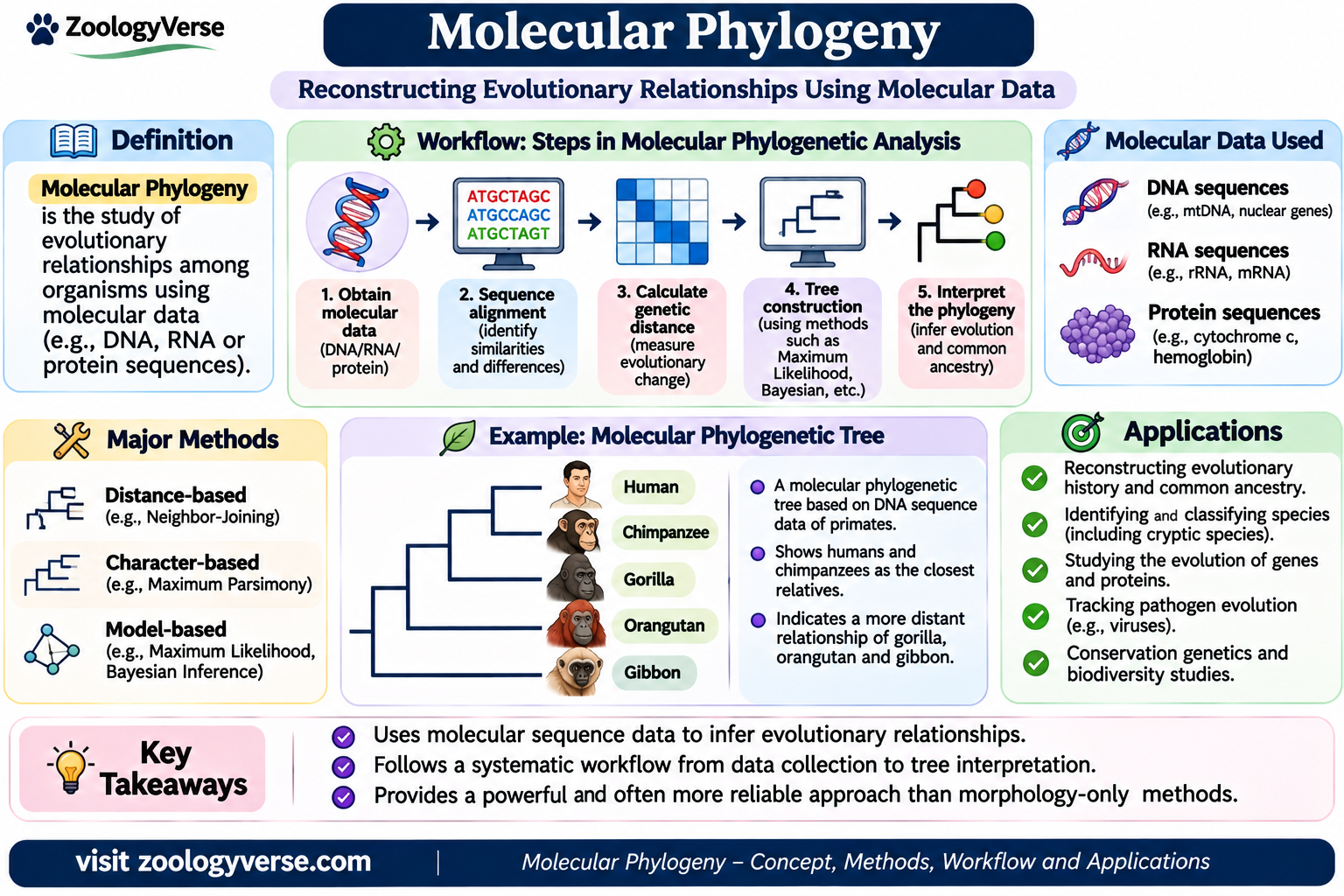
Molecular phylogeny is the study of evolutionary relationships among organisms using molecular information obtained from DNA, RNA and protein sequences. It is an important component of Molecular Evolution because it helps reconstruct the evolutionary history of organisms by comparing similarities and differences in their genetic material.
Organisms that share a relatively recent common ancestor generally possess greater similarities in homologous molecular sequences than organisms that diverged from one another much earlier. These similarities and differences provide evidence for common ancestry and evolutionary divergence.
Molecular phylogeny combines molecular biology, genetics, evolutionary theory and computational methods to construct phylogenetic trees. These trees represent hypotheses about the evolutionary relationships among organisms and help scientists investigate the origin and diversification of different biological groups.
Understanding how species are defined and distinguished is also important when interpreting evolutionary relationships. Read our article on Species Concept.
8.1 Concept of Molecular Phylogeny
Molecular phylogeny involves comparing homologous DNA, RNA or protein sequences obtained from different organisms to determine their evolutionary relationships.
The basic principle is that genetic sequences inherited from a common ancestor retain similarities over evolutionary time. After populations diverge, mutations and other evolutionary processes gradually produce differences in their sequences.
By analysing these differences, researchers can estimate the evolutionary relatedness of organisms and reconstruct their probable ancestral relationships.
For example, comparisons of mitochondrial DNA sequences among mammals can help investigate relationships among closely related species and populations. Similarly, ribosomal RNA sequences are useful for studying relationships among distantly related organisms, including bacteria, archaea and eukaryotes.
Molecular phylogeny therefore provides an important approach for reconstructing evolutionary history using molecular evidence.
8.2 Molecular Markers Used in Phylogenetic Studies
Molecular markers are identifiable DNA, RNA or protein sequences used to investigate genetic variation and evolutionary relationships.
Different molecular markers are selected depending on the evolutionary distance and the organisms being studied.
1. Ribosomal RNA (rRNA)
Ribosomal RNA is widely used in molecular phylogenetic studies because it performs an essential role in protein synthesis and is present in all cellular organisms.
The 16S rRNA gene is commonly used to investigate evolutionary relationships among bacteria and archaea, while 18S rRNA is frequently used in studies involving eukaryotic organisms.
These sequences contain conserved and variable regions, making them useful for comparisons across different evolutionary distances.
2. Mitochondrial DNA (mtDNA)
Mitochondrial DNA is commonly used in evolutionary studies involving animals because it is relatively small and contains genes that can be compared among species.
The cytochrome c oxidase subunit I (COI) gene is widely used in animal DNA barcoding. It helps identify species and investigate relationships among closely related organisms.
However, mitochondrial DNA generally represents a single linked genetic history and may not always reflect the complete evolutionary history of a species.
3. Nuclear DNA
Nuclear DNA contains a large number of genes that can provide information about evolutionary relationships.
Researchers compare nuclear genes to investigate relationships among populations, species and major evolutionary groups.
Because nuclear genes are inherited through both parental lineages in sexually reproducing organisms, they can provide information that complements mitochondrial DNA studies.
4. Protein Sequences
Protein sequences are also important molecular markers. Comparisons of conserved proteins, such as cytochrome c and haemoglobin, have historically contributed to the development of molecular evolutionary research.
Protein comparisons are especially useful when investigating evolutionary relationships involving genes that have remained sufficiently conserved across different organisms.
8.3 Sequence Alignment
Sequence alignment is an essential step in molecular phylogenetic analysis. It involves arranging DNA, RNA or protein sequences to identify corresponding positions that may have originated from the same ancestral sequence.
The purpose of alignment is to identify similarities, substitutions, insertions and deletions among homologous sequences.
There are two major types of sequence alignment:
1. Pairwise Alignment
Pairwise alignment compares two molecular sequences to identify matching and differing positions.
It is useful for examining sequence similarity between two organisms or genes.
2. Multiple Sequence Alignment
Multiple sequence alignment compares three or more sequences simultaneously.
It helps identify conserved regions, variable positions and patterns of molecular divergence among several organisms.
Commonly used sequence-alignment tools include Clustal Omega, MUSCLE and MAFFT.
Accurate alignment is important because incorrect alignment can produce misleading evolutionary relationships.
8.4 Phylogenetic Trees
A phylogenetic tree is a branching diagram representing the hypothesized evolutionary relationships among organisms or genetic sequences.
In molecular phylogeny, trees are constructed by analysing sequence differences and estimating the relationships among the organisms being studied.
The major components of a phylogenetic tree include:
- Root: Represents the ancestral lineage from which the included lineages evolved.
- Branch: Represents an evolutionary lineage.
- Node: Represents a branching point or inferred common ancestor.
- Terminal taxa: Represent the organisms, species or sequences included in the analysis.
- Clade: A group consisting of a common ancestor and all its descendants.
The arrangement of branches provides information about the evolutionary relationships among the organisms.
A phylogenetic tree is a scientific hypothesis based on available evidence and analytical assumptions. It may be revised when additional molecular data become available.
8.5 Major Methods of Phylogenetic Reconstruction
Several computational methods are used to reconstruct phylogenetic relationships from molecular sequences.
1. Distance-Based Methods
Distance-based methods calculate genetic distances between pairs of sequences and use these values to construct evolutionary trees.
The Unweighted Pair Group Method with Arithmetic Mean (UPGMA) is one example. It assumes a constant evolutionary rate across lineages, making it appropriate only when this assumption is reasonably satisfied.
Neighbour-Joining is another distance-based method that constructs a tree using estimated evolutionary distances without requiring a strict molecular clock.
2. Maximum Parsimony Method
Maximum parsimony selects the phylogenetic tree that requires the smallest number of evolutionary changes to explain the observed sequence differences.
The method follows the principle that the simplest explanation, in terms of the minimum number of character-state changes, is preferred.
However, it may be affected by long-branch attraction and other limitations when evolutionary rates vary substantially.
3. Maximum Likelihood Method
Maximum likelihood evaluates alternative phylogenetic trees using an explicit model of molecular sequence evolution.
It identifies the tree that gives the highest likelihood of producing the observed sequence data under the selected evolutionary model.
This method is widely used because it can account for differences in substitution rates and nucleotide frequencies.
4. Bayesian Inference
Bayesian phylogenetic analysis estimates the probability of alternative evolutionary trees using molecular data, an evolutionary model and prior information.
It generates posterior probabilities for phylogenetic relationships and can incorporate uncertainty in tree reconstruction.
8.6 Importance of Molecular Phylogeny in Evolutionary Biology
Molecular phylogeny has significantly improved the understanding of evolutionary relationships and biological classification.
Its major applications include:
- Reconstruction of Common Ancestry: Molecular comparisons help identify shared ancestry among organisms.
- Species Identification: DNA barcoding assists in identifying organisms, particularly those with similar morphological characteristics.
- Classification of Organisms: Molecular evidence has contributed to the revision of traditional biological classifications.
- Study of Evolutionary Divergence: Sequence differences help investigate when and how evolutionary lineages separated.
- Conservation Biology: Molecular phylogenetic information helps identify genetically distinct and evolutionarily important populations.
- Study of Pathogen Evolution: Molecular phylogeny helps trace the evolutionary relationships and diversification of viruses, bacteria and other pathogens.
8.7 Molecular Phylogeny and Traditional Classification
Traditional classification primarily uses morphological, anatomical, embryological and physiological characteristics to establish relationships among organisms.
Molecular phylogeny adds genetic and biochemical evidence to these approaches.
| Basis | Traditional classification | Molecular phylogeny |
|---|---|---|
| Main evidence | Morphological and anatomical characteristics | DNA, RNA and protein sequences |
| Major approach | Comparison of observable characters | Comparison of molecular sequences |
| Data analysis | Primarily comparative and descriptive | Statistical and computational |
| Cryptic species | May be difficult to distinguish | Molecular differences may reveal hidden diversity |
| Evolutionary relationships | Inferred from shared characteristics | Inferred from molecular sequence evidence |
| Limitations | Convergent evolution may mislead comparisons | Gene histories may differ from species histories |
Modern evolutionary classification generally benefits from combining molecular evidence with morphology, fossils, embryology and other independent sources of information.
Molecular phylogeny therefore represents a major application of Molecular Evolution. By examining sequence similarities and differences, scientists can reconstruct evolutionary relationships, investigate common ancestry and understand the diversification of living organisms.
9. Evolution of Genes and Genomes
The evolution of genes and genomes is a major component of Molecular Evolution that explains how hereditary information changes in structure, organization and function over evolutionary time. Genes are the functional units of hereditary information, whereas genomes represent the complete genetic material of an organism. Changes in genes and genomes contribute to genetic diversity, biological adaptation and the emergence of new biological functions.
Molecular Evolution investigates how genes originate, duplicate, diverge and sometimes become inactive. Similarly, genome evolution involves changes in genome size, gene content, chromosome organization, repetitive DNA sequences and regulatory elements. These changes have played an important role in the diversification of organisms and the development of biological complexity.
Comparative genomic studies have demonstrated that different organisms may share many homologous genes despite considerable differences in their morphology and physiology. Such similarities provide evidence of common ancestry and help reconstruct the evolutionary history of living organisms.
9.1 Origin and Evolution of Genes
Genes are regions of DNA that encode functional RNA molecules or provide instructions for protein synthesis. Their sequences may undergo changes through mutation, recombination, duplication and other molecular processes.
During evolution, genes may acquire new functions, lose their original functions or become modified to perform specialized biological activities.
The origin and diversification of genes can occur through several processes:
- Duplication of existing genes.
- Divergence of duplicated gene copies.
- Modification of existing gene sequences.
- Recombination between different genetic regions.
- Formation of new genes through changes in previously non-coding sequences.
- Horizontal transfer of genetic material between organisms.
These processes contribute to the expansion and diversification of genetic information. Molecular Evolution uses comparative sequence analysis to investigate the relationships between ancestral and derived genes.
9.2 Gene Duplication and Its Evolutionary Importance
Gene duplication is one of the most important mechanisms responsible for the evolution of new genetic functions. It occurs when an additional copy of an existing gene is produced within the genome.
Gene duplication may occur through unequal crossing over, replication errors, retrotransposition or large-scale chromosome duplication.
Following duplication, the original gene may retain its function, while the additional copy accumulates mutations and may develop a modified or entirely new function.
The major evolutionary outcomes of gene duplication include:
1. Neofunctionalization
Neofunctionalization occurs when one duplicated gene copy acquires a new function through the accumulation of mutations.
For example, the evolution of different globin genes has contributed to the development of haemoglobin proteins with specialized functions at different developmental stages.
2. Subfunctionalization
Subfunctionalization occurs when the original functions of an ancestral gene are divided between two duplicated copies.
Each copy retains only part of the original gene’s functional role. Together, they may perform the functions previously carried out by a single ancestral gene.
3. Non-functionalization
Sometimes, one duplicated gene copy accumulates mutations that disrupt its function. Such a copy may eventually become a pseudogene.
Gene duplication therefore provides additional genetic material on which evolutionary changes can act, contributing to functional specialization and biological diversity.
9.3 Evolution of Gene Families
A gene family consists of a group of related genes that have originated through duplication and subsequent divergence from an ancestral gene.
Members of a gene family often share sequence similarities but may perform different functions or show different expression patterns.
Important examples include:
- Globin gene family: Includes genes encoding different haemoglobin and myoglobin proteins involved in oxygen transport and storage.
- Hox gene family: Contains regulatory genes involved in determining body patterning and developmental organization in animals.
- Olfactory receptor gene family: Includes genes encoding proteins involved in the detection of chemical signals and odours.
- Immunoglobulin gene family: Includes genes encoding proteins involved in immune recognition and antibody-related functions.
The evolution of gene families demonstrates how duplication and divergence can produce genetic complexity and functional diversity.
9.4 Pseudogenes and Their Evolutionary Significance
Pseudogenes are DNA sequences that resemble functional genes but have lost their original protein-coding or other biological functions through accumulated mutations.
They may originate through gene duplication or through the insertion of reverse-transcribed messenger RNA into the genome.
Pseudogenes generally contain changes such as premature stop codons, frameshift mutations or alterations in regulatory sequences that prevent normal gene function.
Although many pseudogenes are non-functional, some may have regulatory roles or influence the expression of other genes.
Pseudogenes are useful in evolutionary research because their sequence similarities with functional genes can provide evidence of common ancestry and gene duplication events.
For example, comparisons of pseudogenes among related organisms can help reconstruct the evolutionary history of particular gene families.
9.5 Evolution of Genome Organization
A genome is the complete set of genetic material present in an organism. Genome evolution involves changes in the arrangement, composition and size of this genetic material over successive generations.
Major changes in genome organization include:
1. Gene Duplication: Produces additional gene copies and may contribute to new biological functions.
2. Chromosomal Rearrangements: Inversions, translocations, deletions and duplications can alter chromosome structure and organization.
3. Polyploidy: The presence of more than two complete chromosome sets is particularly important in plant evolution. Whole-genome duplication can increase genetic material and provide opportunities for evolutionary diversification.
4. Repetitive DNA Expansion: Repeated sequences, including transposable elements, can influence genome size and organization.
5. Gene Loss: Genes may be lost when they become unnecessary or when alternative biological pathways replace their functions.
These changes contribute to differences in genome organization among organisms and provide important evidence for Molecular Evolution.
9.6 Horizontal Gene Transfer
Horizontal gene transfer refers to the movement of genetic material between organisms other than through direct parent-to-offspring inheritance.
It is particularly important in bacteria and archaea, where genetic information can move between unrelated organisms.
The major mechanisms of horizontal gene transfer in bacteria include:
1. Transformation: Uptake of free DNA from the surrounding environment by a bacterial cell.
2. Transduction: Transfer of bacterial DNA from one bacterium to another through bacteriophages.
3. Conjugation: Transfer of genetic material between bacterial cells through direct cell-to-cell contact, commonly involving plasmids.
Horizontal gene transfer can spread useful genetic characteristics, including antibiotic resistance and metabolic capabilities.
It also complicates the reconstruction of evolutionary relationships because genes transferred between organisms may have different evolutionary histories from the organisms themselves.
9.7 Comparative Genomics and Genome Evolution
Comparative genomics is the study of similarities and differences among the genomes of different organisms.
It involves comparing DNA sequences, gene content, chromosome organization and regulatory regions to identify conserved and divergent genetic features.
Comparative genomic studies help scientists investigate:
- Evolutionary conservation of genes.
- Gene duplication and gene loss.
- Genome rearrangements.
- Evolution of gene families.
- Genetic adaptations to different environments.
- Evolutionary relationships among organisms.
For example, comparisons between human and chimpanzee genomes reveal extensive similarities in their genetic sequences, reflecting their relatively recent common ancestry.
Similarly, comparisons of genomes among different vertebrates help identify conserved developmental genes and investigate the evolutionary origin of complex biological structures.
9.8 Significance of Gene and Genome Evolution
The study of gene and genome evolution has several important contributions to biological sciences.
- Understanding Genetic Diversity: It explains how changes in hereditary material contribute to variation among organisms.
- Evolution of New Functions: Gene duplication and divergence provide opportunities for the development of new biological activities.
- Understanding Development: The evolution of regulatory and developmental genes helps explain differences in body organization among organisms.
- Reconstruction of Evolutionary History: Comparative genomic evidence helps identify ancestral genes and evolutionary relationships.
- Medical Research: Understanding genome evolution helps investigate genetic diseases, gene families and the evolution of pathogens.
- Conservation Genetics: Comparative genomic studies help identify genetically distinct populations and preserve evolutionary diversity.
The evolution of genes and genomes demonstrates that biological diversity is closely connected with changes in hereditary information. Through mutation, duplication, recombination, gene transfer and genome rearrangement, genetic systems have continuously changed throughout evolutionary history. These processes form an essential part of Molecular Evolution and help explain the genetic foundations of organismal diversification.
10. Molecular Evolution in Different Groups of Organisms
Molecular Evolution occurs in every major group of living organisms, although the molecular changes and evolutionary pressures differ among lineages. Comparisons of DNA, RNA and protein sequences reveal both shared ancestry and adaptations to different environments. Studying Molecular Evolution across bacteria, archaea, viruses, plants and animals helps explain the diversity of genetic systems and the history of life.
10.1 Molecular Evolution in Bacteria
Bacteria are prokaryotic organisms with diverse metabolic capacities and rapid generation times in many species. Their populations can accumulate genetic variation through mutation, recombination and horizontal gene transfer. These processes make bacterial genomes particularly dynamic and provide important examples for Molecular Evolution.
The 16S ribosomal RNA gene is widely used to investigate bacterial relationships because it contains conserved regions suitable for comparisons across broad groups, together with variable regions that help distinguish lineages. Comparative analysis of this gene has contributed to bacterial identification and the reconstruction of deep evolutionary relationships.
Horizontal gene transfer is especially significant in bacteria. Transformation, transduction and conjugation can move genes between cells, sometimes across distantly related lineages. The spread of antibiotic-resistance genes is an important contemporary example. Such transfers can complicate phylogenetic reconstruction because the history of an individual gene may differ from the history of the bacterial species carrying it.
10.2 Molecular Evolution in Archaea
Archaea are prokaryotic organisms that form a domain distinct from Bacteria. Molecular comparisons, especially of ribosomal RNA and conserved proteins, were central to recognizing their distinct evolutionary position. Archaeal molecular systems also share several features with eukaryotes, particularly in information-processing processes such as transcription and translation.
Molecular Evolution in archaea is shaped by mutation, selection, drift and gene exchange. Many archaea inhabit environments with extreme temperatures, salinity, acidity or other challenging conditions, although they also occur in ordinary marine, soil and host-associated environments. Comparisons among archaeal genomes help identify adaptations involving membrane lipids, enzymes and cellular stress responses.
10.3 Molecular Evolution in Viruses
Viruses have genetic material composed of DNA or RNA and depend on host cells for replication. Their evolutionary patterns vary according to genome type, replication strategy, mutation rate, recombination and reassortment. Many RNA viruses show rapid sequence change because some viral RNA polymerases have limited proofreading ability.
Molecular Evolution is used to trace viral lineages, investigate transmission patterns and estimate the timing of lineage diversification. Sequence comparisons can identify mutations associated with altered host range, immune escape or drug resistance, although the biological effect of any mutation requires experimental and epidemiological evidence.
Some viruses, particularly those with segmented genomes, can undergo reassortment when different viral strains infect the same cell. Recombination can also generate mosaic genomes. These processes mean that different parts of a viral genome may have distinct evolutionary histories, so analyses should use appropriate genomic regions and models.
10.4 Molecular Evolution in Plants
Plant genomes show a wide range of evolutionary changes, including gene duplication, whole-genome duplication, polyploidy, gene loss and changes in chloroplast and mitochondrial DNA. Whole-genome duplication has been especially important in plant diversification because duplicated genes may acquire new functions or divide ancestral functions.
Chloroplast DNA is commonly used in plant systematics because many chloroplast genes are conserved and can be compared across species. Nuclear and mitochondrial sequences provide additional evidence, although inheritance patterns and rates of change differ among genomic compartments.
Molecular Evolution helps explain the origin of plant adaptations, including changes associated with photosynthesis, flowering, drought tolerance and defence against herbivores. Comparative genomic studies of flowering plants, gymnosperms, ferns and other groups reveal both ancient shared genes and lineage-specific innovations.
10.5 Molecular Evolution in Animals
Animal evolution has involved changes in genes controlling development, physiology, immunity, sensory systems and reproduction. Comparisons of nuclear and mitochondrial DNA, ribosomal RNA and protein sequences are widely used to investigate relationships among animal groups.
The mitochondrial COI gene is frequently used in DNA barcoding to support species identification, particularly when external morphological features are difficult to distinguish. However, a single mitochondrial marker may not represent the complete species history, and it is often useful to combine it with nuclear markers and morphological evidence.
Molecular Evolution has also helped investigate the evolution of developmental genes, including Hox genes, which play important roles in body patterning. Comparisons among animals show that many developmental genes are conserved, while changes in their regulation and expression can contribute to differences in body form.
10.6 Comparative Overview
Different groups of organisms provide different opportunities for studying molecular change. The following comparison summarizes commonly used evidence and notable evolutionary processes.
| Group | Common molecular evidence | Important evolutionary processes |
|---|---|---|
| Bacteria | 16S rRNA, whole-genome sequences | Horizontal gene transfer, mutation, recombination |
| Archaea | rRNA and conserved protein sequences | Gene exchange, adaptation, genome change |
| Viruses | DNA or RNA genome sequences | Mutation, recombination, reassortment |
| Plants | Nuclear, chloroplast and mitochondrial DNA | Polyploidy, gene duplication, gene loss |
| Animals | Nuclear DNA, mitochondrial DNA, protein sequences | Gene duplication, regulatory change, selection |
10.7 Importance of Comparative Molecular Studies
Comparing molecular data across groups helps distinguish ancient conserved features from lineage-specific changes. Conserved sequences can reveal deep relationships, while rapidly evolving regions may help resolve relationships among closely related species. Molecular evidence must nevertheless be interpreted in the context of gene history, population history and possible horizontal transfer.
Molecular Evolution therefore provides a unifying framework for comparing the genetic histories of diverse organisms. It shows how shared molecular systems reflect common ancestry, while differences in mutation, selection, drift, gene exchange and genome organization contribute to biological diversity.
Molecular Evolution also compares how different genetic systems respond to similar environmental challenges. In bacteria, Molecular Evolution can be especially rapid when short generation times and gene exchange alter the spread of variants. In archaea, Molecular Evolution provides clues about the early diversification of cellular life. Viral Molecular Evolution is monitored using sequence data collected through time. In plants, Molecular Evolution helps explain the consequences of genome duplication. In animals, Molecular Evolution links changes in developmental genes with diversification of body plans. These examples show why Molecular Evolution requires methods suited to each lineage.
These comparisons also help researchers evaluate the Neutral Theory of Molecular Evolution and compare Molecular Evolutionary Mechanisms across lineages. They also supply data for Molecular Phylogeny and, when suitable rates and calibrations are available, for estimates based on a Molecular Clock.
11. Molecular Evolution and Human Evolution
Molecular Evolution has made important contributions to understanding human origins and the evolutionary relationships between humans and other primates. Comparisons of DNA sequences, protein structures, mitochondrial genomes and nuclear genes provide evidence of common ancestry and help reconstruct the evolutionary history of the human lineage.
Traditional studies of human evolution relied heavily on fossil evidence, comparative anatomy and archaeological discoveries. However, molecular biology has introduced additional methods for investigating relationships among modern humans, extinct hominins and other primates. By examining genetic similarities and differences, scientists can estimate evolutionary divergence, identify ancestral relationships and investigate patterns of migration and population diversification.
Molecular Evolution is particularly important in human evolutionary studies because genetic material preserves information about ancestral populations and evolutionary changes that may not be directly visible in the fossil record.
11.1 Molecular Evidence of Human–Primate Relationships
Humans belong to the order Primates and share evolutionary ancestry with other primates, including chimpanzees, bonobos, gorillas and orangutans.
Comparative genomic studies demonstrate extensive similarities between human and chimpanzee DNA sequences. Humans and chimpanzees share a relatively recent common ancestor compared with their relationships to other living primates.
Molecular comparisons of nuclear genes, mitochondrial DNA and conserved proteins support the evolutionary relationships established through comparative anatomy and fossil evidence.
The similarities in their genetic material reflect inheritance from common ancestral populations, while accumulated molecular differences reveal the subsequent divergence of evolutionary lineages.
11.2 Molecular Evidence from Mitochondrial DNA
Mitochondrial DNA (mtDNA) is frequently used in studies of human evolutionary history because it is generally inherited through the maternal lineage in humans and undergoes relatively limited recombination.
By comparing mitochondrial DNA sequences among individuals from different geographical populations, scientists can investigate maternal ancestry and population relationships.
One important concept arising from these studies is mitochondrial Eve.
Mitochondrial Eve refers to the most recent woman from whom all living humans inherited their mitochondrial DNA through an unbroken maternal line. She was not the only woman alive during her lifetime, nor was she the first human woman. Other maternal lineages from her time may have disappeared through the extinction of particular lineages.
Mitochondrial DNA studies have provided important evidence concerning the African origin of modern human maternal lineages and subsequent population dispersal.
11.3 Molecular Evidence from Y-Chromosomal DNA
The Y chromosome is generally transmitted from father to son. Most of its male-specific region does not undergo recombination with the X chromosome, allowing particular Y-chromosomal lineages to be traced across generations.
Comparative analysis of Y-chromosomal sequences helps investigate paternal ancestry and relationships among human populations.
The term Y-chromosomal Adam refers to the most recent male ancestor from whom all living men inherited their Y chromosomes through an unbroken paternal line.
Like mitochondrial Eve, Y-chromosomal Adam was not necessarily the first human male or the only man living during his lifetime. Both represent the most recent common ancestors of particular uniparental genetic lineages, and their estimated dates need not coincide.
11.4 Molecular Evidence from the Human Genome
The human genome contains approximately 3.2 billion base pairs of DNA arranged across 23 pairs of chromosomes in most somatic cells.
Comparative genomic studies have revealed extensive similarities between humans and other primates. These similarities are found in protein-coding genes, regulatory sequences and many non-coding regions.
The study of human genomic evolution has identified several important changes:
- Gene duplications and gene losses.
- Changes in gene regulation and expression.
- Chromosomal rearrangements.
- Mutations associated with physiological adaptations.
- Genetic variations related to immunity, metabolism and brain development.
One important example is human chromosome 2. Comparative genomic evidence indicates that it originated through the fusion of two ancestral chromosomes that remain separate in other great apes. This provides an important molecular and chromosomal example of shared ancestry.
11.5 Molecular Evidence from Ancient DNA
Ancient DNA refers to genetic material recovered from archaeological remains, fossils and other historical biological samples.
Advances in DNA extraction and sequencing have made it possible to investigate the genomes of extinct human relatives, including Neanderthals and Denisovans.
Genome comparisons have demonstrated that modern humans and some ancient human populations interbred. Consequently, many present-day human populations outside Africa carry a proportion of Neanderthal ancestry, while Denisovan ancestry is especially evident in some populations of Oceania and parts of Asia.
Ancient DNA has therefore expanded our understanding of human evolution beyond simple branching relationships by revealing gene flow and interbreeding among different human lineages.
11.6 Molecular Clock and Human Evolution
Molecular-clock methods are used to estimate the divergence times of evolutionary lineages by comparing accumulated molecular differences.
In human evolutionary research, these methods have been applied to investigate the divergence of humans and other living primates, the diversification of human populations and the relationships among ancient and modern human lineages.
Such estimates require appropriate molecular data, evolutionary models and independent calibration points, including fossil evidence.
Molecular-clock estimates are not exact dates. They depend on assumptions about substitution rates, generation times, demographic history and the calibration evidence used.
11.7 Significance of Molecular Evidence in Human Evolution
Molecular studies have significantly improved the understanding of human evolutionary history.
- Establishing Common Ancestry: Genetic similarities provide evidence of shared ancestry between humans and other primates.
- Understanding Human Origins: Mitochondrial and nuclear DNA studies support the African origin of modern humans.
- Tracing Population Migrations: Genetic variations help reconstruct the movement and diversification of human populations.
- Identifying Ancient Interbreeding: Ancient DNA reveals genetic exchanges between modern humans and extinct hominin groups.
- Investigating Human Adaptation: Genomic studies identify genetic changes associated with environmental adaptation, disease resistance and physiological characteristics.
- Reconstructing Evolutionary Relationships: Molecular phylogenetic methods help establish relationships among living and extinct human lineages.
Molecular evidence has therefore transformed the study of human evolution. By combining DNA comparisons, ancient genomes, fossil discoveries and archaeological information, scientists can reconstruct a more detailed picture of human ancestry and population history. Molecular Evolution provides the genetic framework for understanding how the human lineage diversified from its ancestral primate populations.
12. Applications of Molecular Evolution
Molecular Evolution has become an important area of modern biological research because it provides information about genetic variation, evolutionary relationships and the history of living organisms. By studying changes in DNA, RNA and protein sequences, scientists can investigate biological processes and apply evolutionary principles to medicine, agriculture, biotechnology, conservation and environmental research.
The development of DNA sequencing, comparative genomics and computational biology has significantly expanded the practical applications of Molecular Evolution. These approaches help researchers understand the genetic basis of diseases, trace the spread of infectious agents, identify endangered species and investigate the evolution of economically important organisms.
The major applications of Molecular Evolution are discussed below.
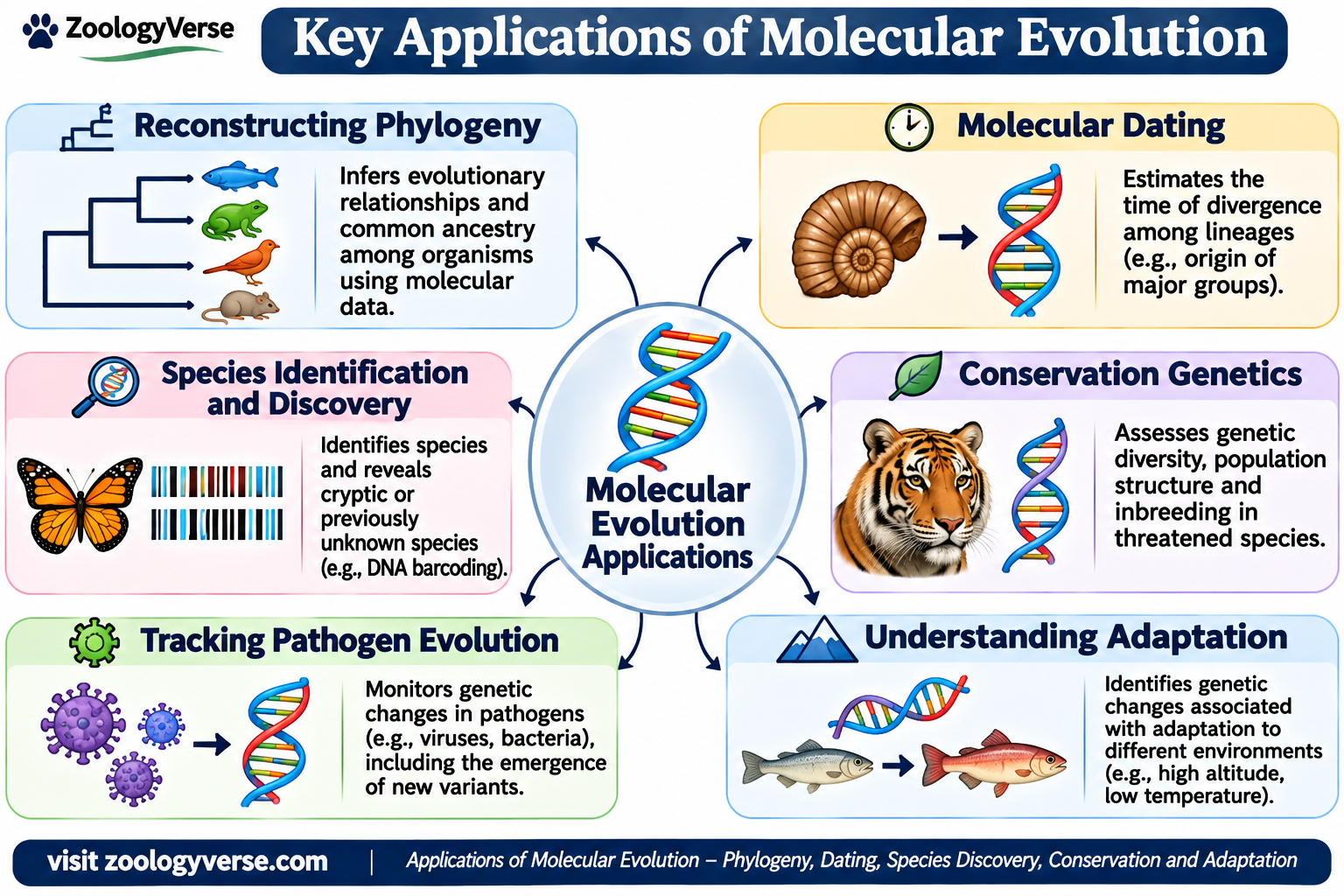
12.1 Applications in Medicine and Medical Research
Molecular Evolution plays an important role in understanding the genetic basis of diseases and the evolutionary changes affecting disease-causing organisms.
Comparative analysis of DNA and protein sequences helps identify genetic mutations associated with inherited disorders, cancer and other diseases. By studying how genes and proteins change over time, researchers can investigate the evolutionary conservation of important biological functions.
One important application is the study of antibiotic resistance in bacteria. Genetic changes and horizontal gene transfer can contribute to the development and spread of antibiotic-resistance genes. Molecular evolutionary analysis helps identify the origins and relationships of resistant bacterial lineages.
Similarly, the evolution of viruses can be investigated through genomic sequencing. Changes in viral genomes help scientists track viral lineages, identify mutations and monitor the emergence of new variants.
12.2 Applications in Epidemiology and Infectious Disease Research
Molecular Evolution is widely used in molecular epidemiology to investigate the origin, transmission and diversification of infectious agents.
By comparing genetic sequences obtained from infected individuals or environmental samples, scientists can reconstruct relationships among pathogen lineages.
These approaches help in:
- Tracking the geographical spread of infectious diseases.
- Identifying genetic relationships among pathogen strains.
- Investigating the emergence of new viral variants.
- Monitoring mutations associated with drug resistance.
- Understanding the evolutionary history of disease outbreaks.
For example, genomic surveillance of influenza viruses helps researchers monitor genetic changes and identify circulating lineages. Similarly, sequencing-based studies of SARS-CoV-2 have been used to investigate viral diversification and transmission patterns during the COVID-19 pandemic.
12.3 Applications in Conservation Biology
Molecular Evolution contributes significantly to biodiversity conservation by providing information about genetic variation and evolutionary relationships among species and populations.
Genetic diversity is important because it provides populations with the variation needed to respond to environmental changes and disease pressures.
Molecular techniques help conservation biologists:
- Identify genetically distinct populations.
- Measure genetic diversity within endangered species.
- Detect inbreeding and loss of genetic variation.
- Identify cryptic species that are difficult to distinguish morphologically.
- Investigate migration and gene flow between fragmented populations.
- Identify evolutionarily distinct lineages requiring conservation attention.
For example, molecular studies of endangered tigers, elephants and other threatened animals help researchers understand population structure, genetic diversity and relationships among geographically separated populations.
12.4 Applications in Agriculture and Animal Breeding
Molecular Evolution has applications in improving agricultural productivity and understanding the genetic diversity of domesticated plants and animals.
Comparative genomic studies help identify genes associated with economically important characteristics such as growth, yield, disease resistance and environmental tolerance.
In plant breeding, molecular markers can be used to identify genetic variations associated with desirable characteristics. These markers assist in selecting plants carrying useful alleles.
In animal breeding, genomic information helps investigate inherited traits, genetic diversity and relationships among livestock breeds.
The study of evolutionary relationships between wild ancestors and domesticated organisms also provides information about domestication, artificial selection and the origin of agricultural biodiversity.
12.5 Applications in Biotechnology and Genetic Engineering
Molecular Evolution provides a foundation for understanding how proteins and enzymes change their structures and functions through mutations.
This knowledge is used in directed evolution, a biotechnology technique in which genetic variants are generated and selected to obtain proteins with desired properties.
Directed evolution can be used to develop enzymes with:
- Increased catalytic efficiency.
- Greater temperature stability.
- Improved activity under different pH conditions.
- Better resistance to chemical substances.
- Modified substrate specificity.
For example, engineered enzymes are used in industrial processes, pharmaceutical production, food processing and environmental biotechnology.
Thus, knowledge of molecular evolutionary processes can be applied to improve the biological functions of commercially important proteins.
12.6 Applications in Forensic Science
Molecular genetic techniques are widely used in forensic science for individual identification and biological relationship analysis.
DNA profiling involves comparing specific genetic markers obtained from biological samples such as blood, hair roots, saliva and other tissues.
Mitochondrial DNA analysis is particularly useful when nuclear DNA is highly degraded or when samples contain very small amounts of biological material.
Although forensic DNA profiling is not itself a direct measurement of long-term evolutionary change, knowledge of genetic variation, mutation and population relationships provides an important foundation for interpreting DNA evidence.
12.7 Applications in Evolutionary Classification and Systematics
Molecular Evolution has significantly improved biological classification by providing genetic evidence for evolutionary relationships.
DNA, RNA and protein sequence comparisons are used to identify common ancestry and reconstruct phylogenetic relationships among organisms.
Molecular phylogenetic approaches are particularly useful when organisms possess similar morphological characteristics due to convergent evolution or when their external structures provide insufficient information for classification.
For example, ribosomal RNA sequences have contributed to the classification of microorganisms and the recognition of the three domains of cellular life: Bacteria, Archaea and Eukarya.
Molecular evidence therefore supports modern systematics by helping scientists establish evolutionary relationships more accurately.
12.8 Applications in Environmental and Ecological Research
Molecular Evolution is useful in investigating the genetic responses of organisms to changing environmental conditions.
Researchers can compare genetic sequences among populations exposed to different environmental conditions to identify patterns of adaptation and evolutionary divergence.
Environmental DNA (eDNA) analysis is another important molecular approach. It involves detecting genetic material released by organisms into their surroundings, such as water, soil or sediment.
Environmental DNA is used to monitor aquatic biodiversity, detect rare or invasive species and investigate changes in ecological communities.
Comparative genomic studies can also help identify genes associated with environmental stress tolerance, such as heat resistance, salinity tolerance and resistance to pollutants.
12.9 Summary of Major Applications
| Field | Application of Molecular Evolution |
|---|---|
| Medicine | Understanding genetic diseases and pathogen evolution |
| Epidemiology | Tracking infectious agents and emerging variants |
| Conservation biology | Assessing genetic diversity and identifying distinct populations |
| Agriculture | Improving crop varieties and livestock breeding |
| Biotechnology | Developing proteins and enzymes through directed evolution |
| Forensic science | Genetic identification and biological relationship analysis |
| Systematics | Reconstructing evolutionary relationships and classification |
| Ecology | Monitoring biodiversity and investigating environmental adaptation |
The applications of Molecular Evolution demonstrate its importance beyond theoretical evolutionary biology. It connects genetic research with practical problems involving human health, biodiversity, food production and environmental management. As sequencing technologies and computational methods continue to develop, Molecular Evolution will remain an essential tool for understanding biological diversity and addressing challenges in modern life sciences.
13. Limitations and Challenges in the Study of Molecular Evolution
Although Molecular Evolution has transformed the understanding of evolutionary relationships and genetic diversity, its investigation involves several scientific and methodological challenges. Molecular data provide valuable evidence about common ancestry and evolutionary divergence, but interpreting these data requires careful consideration of mutation rates, natural selection, genetic drift, population history and the limitations of analytical methods.
Molecular Evolution relies heavily on comparisons of DNA, RNA and protein sequences. However, molecular sequences do not always preserve a complete or straightforward record of evolutionary history. Different genes may evolve at different rates, and evolutionary processes such as recombination, gene duplication and horizontal gene transfer can produce complex patterns of genetic relationships.
The major limitations and challenges associated with Molecular Evolution are discussed below.
13.1 Variation in Mutation and Substitution Rates
One important challenge in Molecular Evolution is that mutation and substitution rates are not constant across all organisms, genes or genomic regions.
Different organisms may exhibit different mutation rates because of differences in DNA replication, DNA repair mechanisms, generation times and metabolic processes.
Similarly, different genes may accumulate substitutions at different rates depending on their biological functions and the strength of natural selection acting on them.
For example, genes involved in essential cellular processes are often highly conserved because harmful mutations are removed through purifying selection. In contrast, some less constrained regions may accumulate substitutions relatively rapidly.
Such variations make it difficult to apply a single evolutionary rate to all organisms and molecular sequences.
13.2 Influence of Natural Selection
Molecular Evolution is influenced by natural selection, which may favour, eliminate or maintain particular genetic variants.
Positive selection can increase the frequency of advantageous mutations, whereas purifying selection removes harmful mutations. Balancing selection may maintain multiple alleles within a population.
These processes affect the rate and pattern of molecular substitutions.
Consequently, sequence differences do not always reflect the same evolutionary process. Some substitutions may be selectively neutral, while others may represent adaptive changes.
Distinguishing these possibilities requires appropriate population-genetic models and comparative sequence analysis.
13.3 Genetic Drift and Population History
Genetic drift introduces randomness into changes in allele frequencies. Its effects are particularly important in populations with small effective population sizes.
Population bottlenecks, founder effects and fluctuations in population size can influence the amount and distribution of molecular variation.
For example, a population that experiences a severe reduction in size may lose many genetic variants even if those variants were previously common.
These demographic events can complicate the interpretation of molecular data because observed genetic differences may reflect historical population changes rather than adaptation alone.
13.4 Multiple Substitutions and Saturation
An important limitation of molecular sequence comparison is substitution saturation.
Substitution saturation occurs when multiple nucleotide substitutions accumulate at the same sequence position over evolutionary time.
For example, a nucleotide position may initially contain adenine, later change to guanine and subsequently change to cytosine.
If only the final sequences are compared, some of the earlier changes may remain undetected.
As a result, the observed sequence difference may underestimate the actual number of substitutions that occurred during evolutionary history.
This problem is particularly important when comparing distantly related organisms or rapidly evolving molecular sequences.
Statistical models of sequence evolution are used to account for multiple substitutions and improve estimates of evolutionary distance.
13.5 Limitations of the Molecular Clock
The Molecular Clock Hypothesis is useful for estimating evolutionary divergence times, but its application involves several limitations.
First, evolutionary rates may vary among genes and lineages. Second, natural selection can influence substitution rates. Third, inaccurate fossil calibrations may produce misleading divergence estimates.
Additional difficulties arise because the fossil record is incomplete and the timing of population separation may not correspond exactly to the origin of reproductive isolation.
Therefore, molecular-clock estimates should be interpreted as approximate estimates rather than exact historical dates.
Modern studies often use relaxed molecular-clock models, multiple calibration points and statistical approaches to account for evolutionary-rate variation.
13.6 Horizontal Gene Transfer and Complex Evolutionary Histories
Horizontal gene transfer creates additional challenges in reconstructing evolutionary relationships.
It allows genetic material to move between organisms without direct parent-to-offspring inheritance.
This process is particularly common in bacteria and archaea.
As a result, the evolutionary history of an individual gene may differ from the evolutionary history of the organism carrying it.
For example, a bacterial species may acquire an antibiotic-resistance gene from another bacterial lineage through horizontal gene transfer.
Consequently, a phylogenetic tree constructed using that particular gene may not accurately represent the evolutionary history of the entire organism.
13.7 Gene Duplication and Gene Loss
Gene duplication and gene loss can complicate the identification of homologous sequences.
After duplication, two related gene copies may evolve independently and acquire different functions.
When researchers compare genes from different organisms, it is important to distinguish between orthologous genes, which diverged through speciation, and paralogous genes, which originated through gene duplication.
Failure to distinguish these relationships can produce incorrect interpretations of evolutionary history.
13.8 Limitations of Molecular Phylogenetic Analysis
Molecular phylogenetic reconstruction depends on the quality of sequence data, sequence alignment, evolutionary models and analytical methods.
Incorrect sequence alignment can introduce errors into the identification of homologous positions.
Similarly, inappropriate evolutionary models may produce misleading phylogenetic relationships.
Long-branch attraction is another problem in which rapidly evolving lineages may appear more closely related than they actually are under certain tree-building methods.
The use of multiple genes, suitable evolutionary models and independent morphological or fossil evidence can improve the reliability of phylogenetic reconstruction.
13.9 Incomplete Lineage Sorting
Incomplete lineage sorting occurs when ancestral genetic variations persist through successive speciation events and are inherited differently by descendant species.
As a result, the evolutionary history of a particular gene may not match the actual species branching history.
This phenomenon is particularly important when species diverge within a relatively short evolutionary period.
Therefore, a single gene sequence may provide an incomplete picture of the evolutionary relationships among organisms.
Researchers often examine multiple independent genetic regions and use species-tree methods to address this problem.
13.10 Limitations of Available Molecular Data
The accuracy of Molecular Evolution studies also depends on the availability and quality of molecular information.
Several organisms remain poorly represented in genomic databases, particularly rare species, microorganisms and organisms from difficult-to-sample environments.
DNA extracted from fossils and ancient biological remains may also be degraded or contaminated.
In addition, sequencing errors, incomplete genome assemblies and incorrect database annotations can influence evolutionary interpretations.
Continuous improvements in sequencing technologies, data validation and computational methods are helping reduce these limitations.
13.11 Summary of Major Challenges
| Challenge | Effect on evolutionary interpretation |
|---|---|
| Variation in mutation rates | Makes evolutionary-rate comparisons difficult |
| Natural selection | Alters the frequency of molecular substitutions |
| Genetic drift | Produces random changes in genetic variation |
| Substitution saturation | Causes underestimation of evolutionary divergence |
| Molecular-clock limitations | Creates uncertainty in divergence-time estimates |
| Horizontal gene transfer | Complicates reconstruction of organismal relationships |
| Gene duplication and loss | Makes homologous gene identification difficult |
| Long-branch attraction | May produce misleading phylogenetic trees |
| Incomplete lineage sorting | Creates differences between gene trees and species trees |
| Incomplete molecular databases | Limits the accuracy and coverage of comparative studies |
Despite these limitations, Molecular Evolution remains a powerful approach for investigating genetic diversity, common ancestry and evolutionary relationships. The reliability of its conclusions improves when molecular evidence is combined with fossil records, comparative anatomy, population genetics and other independent sources of evolutionary information.
14. Conclusion
Molecular Evolution provides a genetic explanation for the origin, diversification and relationships of living organisms. By examining changes in DNA, RNA and proteins, Molecular Evolution connects molecular variation with mutation, natural selection, genetic drift, gene flow and other evolutionary processes. These Molecular Evolutionary Mechanisms influence how genetic variants arise, spread and become established in populations.
The Neutral Theory of Molecular Evolution explains how selectively neutral changes may become fixed through genetic drift, while the Nearly Neutral Theory considers mutations with very small effects on fitness. The Molecular Clock uses patterns of molecular substitutions, together with suitable calibration, to estimate evolutionary divergence times. Molecular Phylogeny uses sequence comparisons to reconstruct relationships and investigate common ancestry.
Comparative studies of genes and genomes have expanded knowledge of the evolution of microorganisms, plants, animals and humans. They also support applications in medicine, conservation, agriculture, biotechnology and epidemiology. Although differences in evolutionary rates, gene histories and available data create challenges, combining molecular evidence with fossils, anatomy and population genetics improves interpretation. Molecular Evolution therefore remains an essential framework for understanding biological diversity and the history of life.
Frequently Asked Questions (FAQs)
What is Molecular Evolution?
Who proposed the Neutral Theory of Molecular Evolution?
What is the Molecular Clock Hypothesis?
Who proposed the Molecular Clock Hypothesis?
What is the difference between Neutral Theory and Nearly Neutral Theory?
What is molecular phylogeny?
What are the major mechanisms of Molecular Evolution?
Why is Molecular Evolution important?
What is the role of DNA sequencing in Molecular Evolution?
What is the difference between mutation and substitution?
What is the relationship between Molecular Evolution and human evolution?
What are the major limitations of Molecular Evolution?
15. References
- Kimura, M. (1968). Evolutionary rate at the molecular level. Nature, 217, 624–626. https://doi.org/10.1038/217624a0
- King, J. L., & Jukes, T. H. (1969). Non-Darwinian evolution. Science, 164(3881), 788–798. https://doi.org/10.1126/science.164.3881.788
- Ohta, T. (1973). Slightly deleterious mutant substitutions in evolution. Nature, 246, 96–98. https://doi.org/10.1038/246096a0
- Kimura, M., & Ohta, T. (1974). On some principles governing molecular evolution. Proceedings of the National Academy of Sciences, 71(7), 2848–2852. https://doi.org/10.1073/pnas.71.7.2848
- Fitch, W. M., & Margoliash, E. (1967). Construction of phylogenetic trees. Science, 155(3760), 279–284. https://doi.org/10.1126/science.155.3760.279
- Felsenstein, J. (1981). Evolutionary trees from DNA sequences: A maximum likelihood approach. Journal of Molecular Evolution, 17, 368–376. https://doi.org/10.1007/BF01734359
- Nei, M., & Kumar, S. (2000). Molecular Evolution and Phylogenetics. Oxford University Press. https://doi.org/10.1093/oso/9780195135848.001.0001
- Graur, D., & Li, W.-H. (2000). Fundamentals of Molecular Evolution (2nd ed.). Sinauer Associates.
- Li, W.-H. (1997). Molecular Evolution. Sinauer Associates.
- Lee, M. S. Y., & Ho, S. Y. W. (2016). Molecular clocks. Current Biology, 26(10), R399–R402. https://doi.org/10.1016/j.cub.2016.03.071
- Takahata, N. (2007). Molecular clock: An anti-neo-Darwinian legacy. Genetics, 176(1), 1–6. https://doi.org/10.1534/genetics.104.75135
Discover more from Zoologyverse
Subscribe to get the latest posts sent to your email.