
1. Introduction to Origin of Life
The origin of life is one of the most fundamental and fascinating subjects in evolutionary biology. It refers to the natural processes through which the earliest living systems emerged from non-living chemical substances on primitive Earth. Understanding how life began provides the foundation for studying biological evolution, cellular organization, genetic inheritance and the diversity of organisms that exist today.
Earth formed approximately 4.54 billion years ago, while geological evidence indicates that life existed at least 3.5 billion years ago, with some studies suggesting an even earlier emergence. During this enormous interval, the planet underwent major physical and chemical transformations, including the formation of its atmosphere, oceans and stable crust. These changes created environments in which simple inorganic and organic molecules could participate in increasingly complex chemical reactions.
The scientific investigation of the origin of life is commonly known as abiogenesis. It examines how non-living chemical systems may have gradually developed characteristics associated with living organisms, such as metabolism, molecular replication, compartmentalization and heredity. Unlike biological evolution, which explains changes in existing populations over generations, abiogenesis focuses on the processes that preceded the appearance of the first living cells.
Several hypotheses have been proposed to explain the emergence of life. Early philosophical explanations were gradually replaced by scientific models based on chemistry, geology and experimental biology. Among these, the Oparin–Haldane theory proposed that organic molecules accumulated through chemical reactions on primitive Earth, eventually contributing to the formation of increasingly complex systems.
The concept of chemical evolution gained experimental support from the famous Miller–Urey experiment of 1953, which demonstrated that amino acids and other organic compounds could form from simple gases under certain simulated prebiotic conditions. However, the experiment did not produce life or establish the exact composition of Earth’s primitive atmosphere.
Modern research has expanded these ideas through the RNA World Hypothesis, which suggests that RNA or RNA-like molecules may have played an essential role in early biological systems by functioning as both genetic information carriers and catalysts. Other scientific models investigate hydrothermal vents, mineral surfaces, lipid membranes and alternative chemical pathways that may have contributed to the emergence of primitive cellular structures.
The study of the origin of life is therefore interdisciplinary, integrating evolutionary biology, biochemistry, molecular biology, genetics, geology and astrobiology. Although scientists have not yet established a complete explanation of how the first living organisms originated, experimental discoveries continue to improve our understanding of the transition from non-living chemical matter to the earliest biological systems.
2. Early Earth Conditions and Primitive Atmosphere
Understanding the early Earth conditions is essential for explaining the Origin of Life and the development of the first biological systems. Before living organisms appeared, Earth underwent major geological, atmospheric and chemical changes. These changes created different environments in which simple inorganic substances could interact and produce organic compounds through processes associated with Chemical Evolution.
The physical and chemical conditions of primitive Earth are therefore important for understanding how non-living substances may have gradually contributed to the formation of increasingly complex molecular systems.
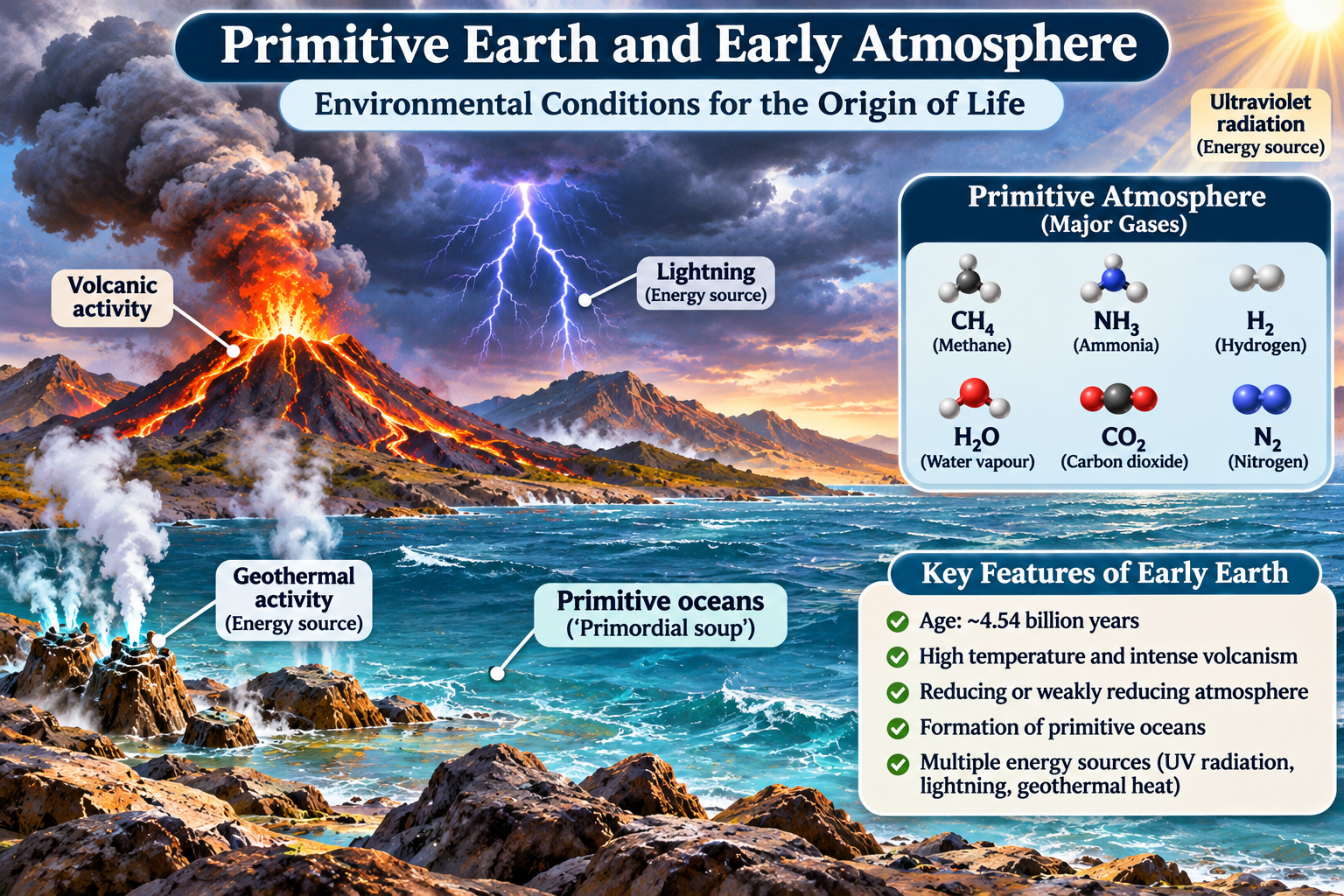
2.1 Formation of Primitive Earth
Earth formed approximately 4.54 billion years ago through the gravitational accumulation of dust, rocky particles and planetesimals present in the early Solar System. During its initial stages, frequent collisions, radioactive decay and gravitational compression generated enormous amounts of heat.
As a result, the early Earth was extremely hot, and much of its surface was initially molten. Dense metallic materials, particularly iron and nickel, gradually moved towards the centre to form the core, while lighter silicate materials formed the mantle and early crust.
As the planet gradually cooled, its surface began to solidify. Volcanic activity released large quantities of gases through a process known as volcanic outgassing, contributing to the development of the primitive atmosphere. Water vapour released through volcanic activity eventually condensed as temperatures decreased, contributing to the formation of primitive oceans.
These geological developments established several environmental conditions in which prebiotic chemical reactions could occur.
2.2 Primitive Atmosphere of Earth
The primitive atmosphere was significantly different from the present atmosphere. It developed mainly through volcanic outgassing and interactions between Earth’s surface and its internal materials.
According to the classical Oparin-Haldane Theory, the early atmosphere was considered strongly reducing and contained gases such as methane, ammonia, hydrogen and water vapour. These substances were thought to participate in chemical reactions that could produce simple organic compounds.
However, modern geological research suggests that Earth’s early atmosphere may have had a more complex composition, potentially containing substantial quantities of carbon dioxide and nitrogen. The exact atmospheric composition during the earliest stages of Earth’s history remains debated.
The following substances are important when discussing the primitive atmosphere:
| Atmospheric component | Possible source or significance |
|---|---|
| Water vapour (H₂O) | Volcanic outgassing and evaporation |
| Carbon dioxide (CO₂) | Volcanic emissions |
| Nitrogen (N₂) | Volcanic outgassing and atmospheric chemical processes |
| Methane (CH₄) | Possible volcanic and chemical sources |
| Ammonia (NH₃) | Possible atmospheric and chemical sources |
| Hydrogen (H₂) | Early atmospheric and volcanic processes |
In the classical Oparin-Haldane Theory, a reducing atmosphere was considered favourable for the formation of organic molecules. Energy supplied by lightning, ultraviolet radiation and other natural sources could promote chemical reactions among simple compounds.
These ideas became an important foundation for the study of Chemical Evolution and the possible development of organic molecules on primitive Earth.
2.3 Absence of Free Oxygen
One important feature of the early atmosphere was the extremely low concentration of free molecular oxygen compared with modern atmospheric conditions.
Today, oxygen makes up approximately 21% of Earth’s atmosphere. However, during the earliest stages of life, free atmospheric oxygen was scarce.
The limited availability of free oxygen had several important consequences:
- It reduced the rate of oxidation of newly formed organic molecules in certain environments.
- It allowed some reduced chemical compounds to persist.
- It influenced the chemical conditions under which early anaerobic organisms could survive.
- It affected the types of chemical reactions possible in prebiotic environments.
The development of oxygen-producing photosynthesis by early cyanobacteria eventually contributed to the Great Oxidation Event, approximately 2.4 billion years ago.
2.4 Formation of Primitive Oceans
As Earth gradually cooled, water vapour present in the atmosphere condensed and accumulated on the planet’s surface. Additional water may also have been delivered through water-rich asteroids and other extraterrestrial materials.
Over geological time, large water bodies developed and formed the primitive oceans.
Water was important for the Origin of Life because it acts as a solvent for many chemical and biological compounds. It provides a medium in which dissolved molecules can move, interact and undergo chemical reactions.
The primitive oceans contained various inorganic substances, including:
- Carbon dioxide and dissolved carbonates.
- Phosphate compounds.
- Metal ions such as iron and magnesium.
- Sulphur-containing compounds.
- Other dissolved mineral substances.
According to the classical Oparin-Haldane Theory, organic compounds gradually accumulated in primitive water bodies, contributing to what was popularly described as the primordial soup.
The primordial soup concept is closely associated with early ideas about Chemical Evolution. However, modern research also considers localized environments, including hydrothermal systems, geothermal pools and mineral-rich surfaces, as possible sites for prebiotic chemical reactions.
2.5 Sources of Energy on Primitive Earth
Energy was essential for driving the chemical reactions involved in prebiotic chemistry. Several natural energy sources were available on early Earth and may have contributed to the formation of organic compounds.
| Energy source | Role in prebiotic chemistry |
|---|---|
| Ultraviolet radiation | Promoted photochemical reactions in atmospheric and surface environments |
| Lightning | Provided electrical energy for atmospheric chemical reactions |
| Volcanic heat | Supported high-temperature chemical reactions |
| Geothermal energy | Maintained chemical gradients in hydrothermal environments |
| Radioactive decay | Contributed to internal heating and potentially radiation-driven chemistry |
These energy sources could help convert simple chemical substances into more complex compounds through different prebiotic pathways.
The Miller-Urey Experiment later demonstrated that electrical discharge could promote the formation of amino acids under a particular simulated early-Earth atmospheric mixture. It provided experimental support for the possibility of organic synthesis, although it did not establish the exact composition of Earth’s primitive atmosphere.
2.6 Importance of Early Earth Conditions in Chemical Evolution
The physical and chemical environment of primitive Earth provided several opportunities for prebiotic reactions. The interaction of simple atmospheric gases, water, minerals and natural energy sources may have contributed to the formation and accumulation of organic compounds.
The following conditions are particularly important for understanding Chemical Evolution:
- Availability of simple inorganic chemical substances.
- Presence of liquid water in suitable environments.
- Natural sources of energy, including ultraviolet radiation, lightning and geothermal heat.
- Formation and accumulation of organic molecules.
- Availability of mineral surfaces that could facilitate chemical reactions.
- Development of environments with suitable chemical gradients.
These conditions provide an important foundation for studying the Origin of Life. Nevertheless, scientists have not established one definitive environment or sequence of chemical reactions that produced the first living organisms.
3. Theories of Origin of Life
The Origin of Life has been explained through several theories proposed at different stages in the development of biological science. These theories reflect the changing understanding of how living organisms appeared on Earth and how non-living matter may have given rise to the earliest biological systems.
Some explanations were based on philosophical or religious beliefs, whereas others developed through scientific observations and experimental investigations. Modern scientific research primarily focuses on natural chemical processes, particularly Chemical Evolution, to investigate the emergence of the first living systems.
The major theories associated with the Origin of Life are discussed below.
3.1 Theory of Special Creation
The theory of special creation is one of the earliest explanations proposed for the Origin of Life. According to this theory, all living organisms were created by a supernatural power or divine creator.
The theory suggests that:
- All living organisms were created independently.
- Different kinds of organisms appeared in their present forms.
- Living organisms were created for a specific purpose.
- Species were considered fixed and unchanging.
This explanation was historically associated with religious and philosophical traditions rather than experimental scientific investigation.
Limitations: The theory does not provide a testable scientific mechanism for the appearance of life or explain the evolutionary relationships among organisms. It is therefore not accepted as a scientific explanation of biological origins.
3.2 Theory of Spontaneous Generation (Historical Abiogenesis)
The theory of spontaneous generation proposed that living organisms could arise directly and spontaneously from non-living substances under ordinary environmental conditions.
According to this historical belief, organisms such as insects, worms and microorganisms could develop from decaying organic matter, mud or other non-living materials.
For example, it was commonly believed that:
- Maggots developed spontaneously from decaying meat.
- Frogs originated from mud.
- Microorganisms appeared naturally in nutrient-rich substances.
Several scientists conducted experiments to investigate these claims.
Important Scientists and Their Contributions
1. Aristotle (384–322 BCE)
Aristotle supported the idea that certain living organisms could arise from non-living materials. His observations contributed to the historical acceptance of spontaneous generation.
2. Jan Baptista van Helmont (1579–1644)
Van Helmont proposed that mice could develop from a combination of dirty clothing and wheat grains kept under suitable conditions. His explanation reflected the widespread belief in spontaneous generation.
3. John Needham (1713–1781)
John Needham conducted experiments using nutrient broth. He briefly boiled the broth, sealed the containers and later observed microbial growth. He interpreted this observation as evidence supporting spontaneous generation.
However, inadequate sterilization and contamination affected his experimental results.
Limitations: The theory of spontaneous generation was eventually rejected through carefully controlled experiments demonstrating that microorganisms arise from pre-existing microorganisms under ordinary conditions.
3.3 Theory of Biogenesis
The theory of biogenesis states that living organisms arise from pre-existing living organisms rather than appearing spontaneously from non-living matter under present-day environmental conditions.
This principle was established through several important experiments.
Important Scientists and Their Experiments
1. Francesco Redi (1668)
Francesco Redi performed an experiment using meat placed in different jars. Some jars were left open, some were covered with gauze and others were completely sealed.
He observed that maggots appeared on the meat in open jars, while in gauze-covered jars, maggots developed on the gauze where flies deposited their eggs.
His experiment demonstrated that maggots originated from fly eggs rather than directly from decaying meat.
2. Lazzaro Spallanzani (1765–1767)
Spallanzani conducted experiments using nutrient broth that was boiled for sufficient time and sealed properly.
He observed that microorganisms did not develop in the sealed, adequately heated broth, whereas microbial growth occurred in broth exposed to the environment.
His findings challenged the idea of spontaneous generation.
3. Louis Pasteur (1861)
Louis Pasteur performed the famous swan-neck flask experiment, which provided strong experimental evidence against spontaneous generation.
He boiled nutrient broth inside flasks having long, curved necks. Air could enter the flasks, but dust particles and microorganisms were trapped in the curved portions of the necks.
The broth remained free from microbial growth as long as the flask remained undisturbed. When the flask was tilted or its neck was broken, microorganisms could reach the broth and microbial growth appeared.
Pasteur’s experiment demonstrated that microorganisms arise from pre-existing microorganisms rather than spontaneously developing in sterilized nutrient broth.
Importance of Biogenesis
- It established the principle that existing life produces new life under present-day biological conditions.
- It contributed to the development of microbiology.
- It helped establish the importance of sterilization and contamination control.
- It provided a foundation for modern germ theory.
Limitation: Biogenesis explains how life originates from existing life, but it does not explain how the first living organism originated on primitive Earth. This question is addressed by modern research into abiogenesis and Chemical Evolution.
3.4 Cosmozoic Theory or Panspermia Hypothesis
The Cosmozoic Theory, commonly associated with the Panspermia Hypothesis, suggests that life or its biological precursors may have originated outside Earth and reached our planet through extraterrestrial materials.
According to this hypothesis, microscopic organisms, spores or organic compounds could have been transported through space by meteorites, comets or cosmic dust.
The hypothesis has several proposed forms:
- Radiopanspermia: Suggests that microscopic organisms could be transported through space by radiation pressure.
- Lithopanspermia: Proposes that microorganisms could travel between planetary bodies inside rocks ejected by meteorite impacts.
- Directed panspermia: Suggests that living organisms or biological materials may have been deliberately transported through space by an intelligent civilization.
Supporting Observations
- Organic compounds, including amino acids, have been detected in certain meteorites.
- Carbon-rich meteorites contain a variety of organic molecules.
- Some microorganisms on Earth can survive extreme environmental conditions, although survival during interplanetary transfer remains challenging.
Limitations: Panspermia does not explain how life originated initially. It only suggests a possible mechanism through which life or its precursors could have reached Earth. There is currently no conclusive evidence that extraterrestrial organisms established life on our planet.
3.5 Chemical Evolution Theory
The Chemical Evolution Theory is one of the most important scientific frameworks for investigating the Origin of Life.
It proposes that life emerged gradually through a series of chemical reactions involving simple inorganic and organic substances present on primitive Earth.
According to this theory, environmental energy sources such as ultraviolet radiation, lightning and geothermal activity contributed to the formation of organic molecules from simpler chemical substances.
These organic molecules may subsequently have undergone further chemical transformations, producing more complex molecular structures and organized systems that eventually contributed to the emergence of primitive cellular life.
The Chemical Evolution Theory was independently proposed by Alexander I. Oparin and J. B. S. Haldane during the 1920s.
Major Stages of Chemical Evolution
- Formation of simple inorganic compounds on primitive Earth.
- Synthesis of simple organic molecules.
- Formation of complex organic molecules such as proteins and nucleic acid precursors.
- Development of organized molecular aggregates and protocell-like structures.
- Emergence of self-sustaining and self-replicating biological systems.
The Miller-Urey Experiment provided experimental support for the possibility of prebiotic organic synthesis under particular simulated conditions.
Importance of Chemical Evolution Theory
- It provides a natural scientific framework for investigating the emergence of life.
- It connects chemistry with biological evolution.
- It explains how simple chemical compounds may have contributed to the formation of complex organic molecules.
- It forms the basis of several modern research approaches, including the RNA World Hypothesis and hydrothermal vent hypotheses.
Unlike historical spontaneous generation, modern Chemical Evolution does not propose that complex organisms suddenly appear from non-living matter. Instead, it investigates gradual chemical processes that may have occurred over geological timescales before the first cells emerged.
3.6 Comparison of Major Theories of Origin of Life
| Theory | Main concept | Scientific status |
|---|---|---|
| Special Creation | Life was created by a supernatural power. | Religious and philosophical explanation |
| Spontaneous Generation | Life develops directly from non-living matter under ordinary conditions. | Experimentally rejected |
| Biogenesis | Life originates from pre-existing life. | Supported under present-day biological conditions |
| Panspermia | Life or its precursors may have arrived from space. | Unproven hypothesis |
| Chemical Evolution | Life emerged through gradual prebiotic chemical processes. | Major scientific research framework |
3.7 Modern Scientific View of the Origin of Life
Modern biology distinguishes between the historical concept of spontaneous generation and scientific investigations into abiogenesis.
Spontaneous generation suggested that living organisms could appear directly from non-living substances under ordinary conditions. In contrast, abiogenesis investigates how the first biological systems could have emerged through gradual chemical processes under the unique environmental conditions of primitive Earth.
Chemical Evolution provides an important foundation for this investigation. Current research examines several possible pathways, including the formation of organic molecules, RNA-based information systems, lipid membranes, mineral-catalysed reactions and hydrothermal environments.
The RNA World Hypothesis is particularly significant because RNA molecules can perform both informational and catalytic functions. However, the precise sequence of events leading from prebiotic chemistry to the first cells remains an active area of scientific investigation.
Understanding molecular evolution also helps explain how genetic material changes over time. Read more about Trends in Evolution: Types, Examples & Mechanisms
4. Chemical Evolution Theory
The Chemical Evolution Theory is one of the most important scientific explanations proposed to understand the Origin of Life on primitive Earth. It suggests that the earliest living systems developed gradually through a series of chemical reactions involving simple inorganic and organic substances.
According to this theory, life did not appear suddenly in its present form. Instead, simple molecules present in the primitive environment underwent chemical transformations and gradually produced increasingly complex organic compounds. These compounds eventually contributed to the formation of organized molecular systems and primitive cellular structures.
The Chemical Evolution Theory was independently proposed by two scientists, Alexander Ivanovich Oparin and J. B. S. Haldane, during the 1920s. Their ideas established an important foundation for modern research into the Origin of Life.
4.1 Historical Development of Chemical Evolution Theory
The development of the Chemical Evolution Theory involved several important scientific contributions.
Alexander I. Oparin (1924)
Russian biochemist Alexander I. Oparin proposed that life originated through gradual chemical transformations on primitive Earth. He suggested that the early atmosphere contained simple substances that could react under suitable environmental conditions to produce organic compounds.
According to Oparin, these organic substances accumulated in primitive water bodies and gradually formed more complex molecular aggregates called coacervates. He considered these structures possible precursors of primitive living systems.
His ideas were presented in his work The Origin of Life, initially published in Russian in 1924.
J. B. S. Haldane (1929)
British scientist J. B. S. Haldane independently proposed a similar explanation for the Origin of Life in 1929.
Haldane suggested that ultraviolet radiation acting on the primitive atmosphere could have contributed to the formation of organic molecules. These substances accumulated in the early oceans, producing what he described as a hot dilute soup of organic compounds.
According to Haldane, this chemically rich environment provided opportunities for increasingly complex reactions that eventually contributed to the emergence of primitive biological systems.
Although Oparin and Haldane developed their explanations independently, their ideas are collectively known as the Oparin-Haldane Hypothesis.
4.2 Main Principles of Chemical Evolution Theory
The Chemical Evolution Theory is based on several fundamental principles that explain the possible transition from simple chemical substances to primitive biological systems.
Gradual Chemical Development
Life originated through a gradual progression from simple chemical substances to increasingly complex molecular systems rather than appearing suddenly.
Formation of Organic Molecules
Simple inorganic substances present in the primitive environment underwent chemical reactions that produced organic compounds such as amino acids and other molecular precursors.
Accumulation of Organic Compounds
The organic molecules formed through prebiotic reactions accumulated in suitable environments, including primitive oceans and other localized chemical systems.
Increasing Molecular Complexity
Simple organic molecules participated in further reactions, producing more complex compounds such as peptides, nucleic acid components and other biologically important molecules.
Development of Organized Systems
Some molecules became organized into aggregates and compartment-like structures. Such systems may have provided conditions necessary for the development of primitive cellular organization.
Emergence of Biological Processes
Over time, chemical systems capable of maintaining organization, processing energy and transmitting molecular information may have developed, eventually leading to the earliest living organisms.
4.3 Stages of Chemical Evolution
The Chemical Evolution Theory describes a sequence of possible stages through which non-living chemical substances may have developed into primitive biological systems.
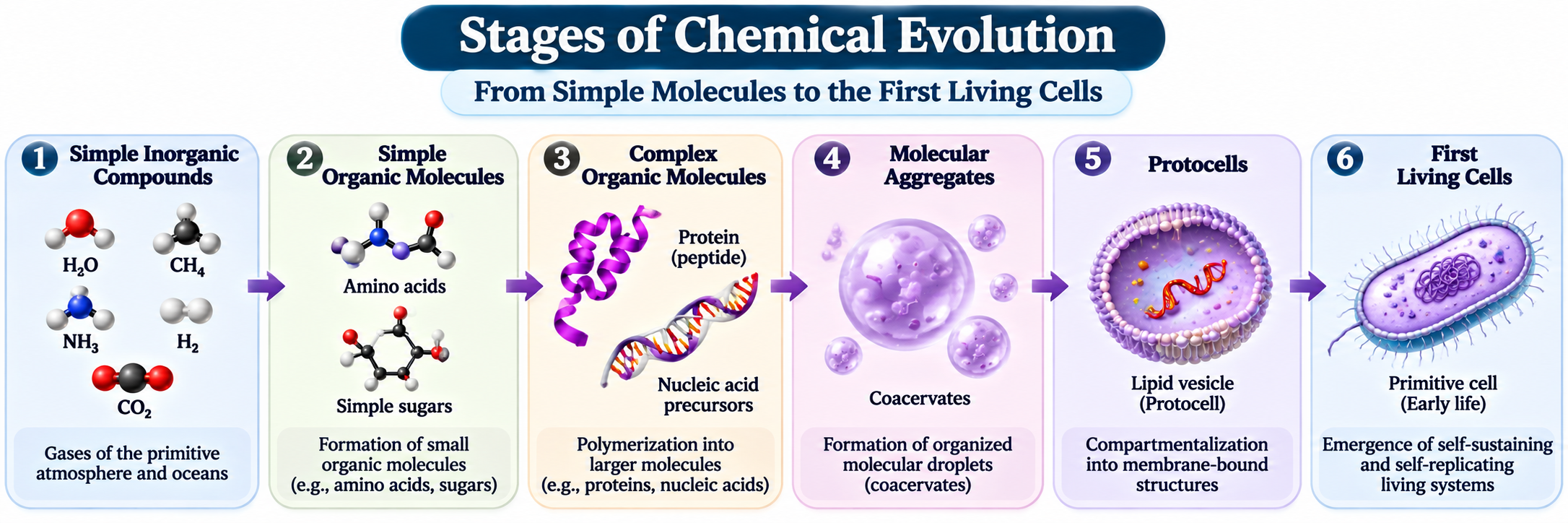
Stage 1: Formation of Simple Inorganic Compounds
During the early history of Earth, simple inorganic substances were present in the atmosphere, oceans and geological environments.
These included water vapour, carbon dioxide, nitrogen, hydrogen and other compounds released through volcanic activity and geological processes.
The interaction of these substances under different environmental conditions provided the chemical starting materials for prebiotic reactions.
Stage 2: Formation of Simple Organic Molecules
Energy from ultraviolet radiation, lightning, geothermal activity and other natural sources could drive chemical reactions involving simple substances.
These reactions may have produced small organic molecules such as:
- Amino acids
- Simple sugars
- Organic acids
- Nitrogen-containing compounds
- Components of nucleic acids
The formation of these substances represents an important stage in the Chemical Evolution Theory because organic molecules are essential components of modern living organisms.
Stage 3: Formation of Complex Organic Molecules
Simple organic molecules could undergo further chemical reactions to form larger and more complex compounds.
For example, amino acids can combine through peptide bonds to form peptides and proteins, while nucleotides can participate in the formation of nucleic acid chains.
The development of such molecules was important because proteins and nucleic acids perform essential structural, catalytic and informational functions in modern biological systems.
However, the precise prebiotic pathways through which these complex molecules formed remain under investigation.
Stage 4: Formation of Molecular Aggregates and Protocells
As molecular complexity increased, certain organic substances may have formed organized aggregates or compartment-like structures.
Oparin proposed the formation of coacervates, which are microscopic droplets produced through the association of certain organic molecules in aqueous solutions.
These structures could concentrate molecules within a limited space and provide localized environments for chemical reactions.
Other models of protocell formation involve lipid vesicles, which can develop through the self-organization of amphiphilic molecules in water.
Such compartment-like structures are considered important models for understanding the possible transition from prebiotic chemistry to primitive cellular organization.
Stage 5: Emergence of Self-Replicating Molecular Systems
One of the most significant steps in the Origin of Life was the emergence of molecules capable of storing and transmitting genetic information.
Modern research suggests that RNA may have played an important role during this stage.
RNA molecules can store genetic information and, in certain forms, catalyse biochemical reactions. This dual functionality provides the basis of the RNA World Hypothesis.
The emergence of molecular replication, variation and inheritance would have created opportunities for early biological systems to undergo evolutionary changes.
Stage 6: Development of Primitive Cells
The final major stage involved the development of more organized systems with membrane boundaries, metabolic reactions and mechanisms for transmitting hereditary information.
These systems eventually gave rise to the earliest cellular organisms.
The exact nature of the first cells and the sequence of molecular events leading to their development remain unresolved scientific questions.
4.4 Experimental Support for Chemical Evolution Theory
Several scientific investigations have contributed to our understanding of prebiotic chemistry and the possible pathways involved in the Origin of Life.
The Miller-Urey Experiment of 1953 was particularly important because it demonstrated that amino acids and other organic compounds could be produced under certain simulated early-Earth conditions.
Later research involving organic compounds in meteorites, mineral-catalysed reactions, lipid vesicles and RNA catalysis further expanded scientific understanding of prebiotic chemical processes.
These findings do not establish the complete pathway through which life originated, but they demonstrate that several important steps proposed in Chemical Evolution can be investigated experimentally.
4.5 Significance of Chemical Evolution Theory
The Chemical Evolution Theory has major importance in evolutionary biology, molecular biology and biochemistry.
It provides a scientific framework for investigating the transition from non-living chemical substances to primitive biological systems.
Its significance includes:
- Explaining how simple chemical compounds may have contributed to the formation of organic molecules.
- Establishing a connection between chemistry and the biological Origin of Life.
- Providing a foundation for research into the formation of proteins and nucleic acids.
- Encouraging experimental investigations into prebiotic chemical reactions.
- Helping scientists understand the possible development of protocells and primitive cellular organization.
- Providing a framework for studying the early stages of biological evolution.
4.6 Limitations and Unresolved Questions
Although the Chemical Evolution Theory provides an important framework for understanding the Origin of Life, several questions remain unanswered.
Uncertainty About Primitive Atmospheric Composition
The exact composition of Earth’s earliest atmosphere is still debated, and the classical reducing-atmosphere model may not fully represent actual early-Earth conditions.
Formation of Complex Organic Molecules
Scientists continue to investigate how organic molecules became sufficiently concentrated to undergo complex reactions in natural environments.
Origin of Self-Replicating Molecules
Another major question concerns the emergence of the first self-replicating molecular systems. Although RNA provides an important model, the exact pathway through which RNA or other informational molecules first developed remains uncertain.
Transition from Chemical Systems to Living Cells
The transition from prebiotic chemical systems to the earliest cells has not yet been completely explained. Scientists are still investigating how molecular replication, metabolism and membrane-based organization became integrated into early biological systems.
Despite these limitations, the Chemical Evolution Theory remains a central scientific framework for investigating how life may have emerged from non-living matter on primitive Earth.
5. Oparin–Haldane Hypothesis
The Oparin–Haldane Hypothesis is one of the most influential scientific explanations of the Origin of Life through chemical evolution. It proposes that the earliest living systems developed gradually from simple chemical substances present on primitive Earth through a series of chemical reactions.
This hypothesis was independently proposed by Russian biochemist Alexander Ivanovich Oparin in 1924 and British scientist J. B. S. Haldane in 1929. Both scientists suggested that the primitive atmosphere and oceans provided suitable conditions for the formation and accumulation of organic molecules.
According to the hypothesis, energy from ultraviolet radiation, lightning and other natural sources promoted chemical reactions that converted simple substances into organic compounds. These compounds accumulated in primitive water bodies and gradually developed into increasingly complex molecular systems.
The hypothesis is particularly important because it provided a scientific explanation for how non-living chemical substances could have contributed to the emergence of the first living organisms.
5.1 Alexander Oparin’s Contribution
Alexander Ivanovich Oparin was a Russian biochemist who proposed that life originated through gradual chemical evolution on primitive Earth.
In his book The Origin of Life, published in Russian in 1924, Oparin explained that the primitive atmosphere contained simple chemical substances that could react under suitable environmental conditions.
According to Oparin, the major stages involved in the Origin of Life were:
- Simple inorganic substances were present in the primitive atmosphere.
- Energy from environmental sources promoted chemical reactions among these substances.
- Simple organic compounds were gradually formed.
- Organic compounds accumulated in primitive oceans.
- Increasing molecular complexity resulted in the formation of organized molecular aggregates.
- These aggregates may have contributed to the development of primitive living systems.
Oparin proposed that certain organic molecules could associate in aqueous environments to form microscopic droplets known as coacervates.
These structures were considered possible precursors of primitive cellular organization.
5.2 J. B. S. Haldane’s Contribution
J. B. S. Haldane independently proposed a chemical explanation for the Origin of Life in 1929.
Haldane suggested that the primitive Earth had an atmosphere containing substances such as methane, ammonia, hydrogen and water vapour. He proposed that ultraviolet radiation from the Sun could drive reactions among these substances, producing organic compounds.
According to Haldane, these organic compounds accumulated in the primitive oceans and formed a chemically rich environment that he described as a hot dilute soup.
Over time, the accumulation and interaction of organic molecules could have contributed to the formation of increasingly complex chemical systems.
Haldane also emphasized the importance of the gradual development of molecular organization before the appearance of the first living organisms.
5.3 Main Stages of the Oparin–Haldane Hypothesis
The Oparin–Haldane Hypothesis describes the possible development of life through a sequence of chemical and molecular changes.
Formation of Primitive Atmosphere
The early atmosphere developed through volcanic outgassing and other geological processes. According to the classical hypothesis, it contained gases such as methane, ammonia, hydrogen and water vapour.
Synthesis of Organic Molecules
Ultraviolet radiation, lightning and geothermal energy promoted chemical reactions among simple substances. These reactions could produce small organic molecules, including amino acids and other biologically important compounds.
Accumulation of Organic Compounds
Organic molecules formed through prebiotic reactions accumulated in primitive oceans and other suitable environments. This chemical accumulation contributed to the concept of primordial soup.
Formation of Complex Organic Compounds
Simple organic molecules underwent further chemical reactions and formed more complex substances, including peptides and other molecular structures.
Development of Coacervates
Oparin proposed that certain organic molecules could aggregate into microscopic droplets called coacervates. These structures could concentrate substances and provide localized environments for chemical reactions.
Emergence of Primitive Living Systems
Over time, increasingly organized molecular systems may have developed mechanisms for maintaining chemical organization, processing energy and transmitting hereditary information. Such developments may eventually have contributed to the emergence of the first cells.
5.4 Coacervates and Their Role in the Oparin Hypothesis
Coacervates are microscopic droplets formed through the association of certain organic molecules in aqueous solutions.
They were studied extensively by Oparin as possible models of primitive pre-cellular organization.
Coacervates can form when macromolecules, such as proteins and polysaccharides, associate and separate from the surrounding solution into concentrated liquid droplets.
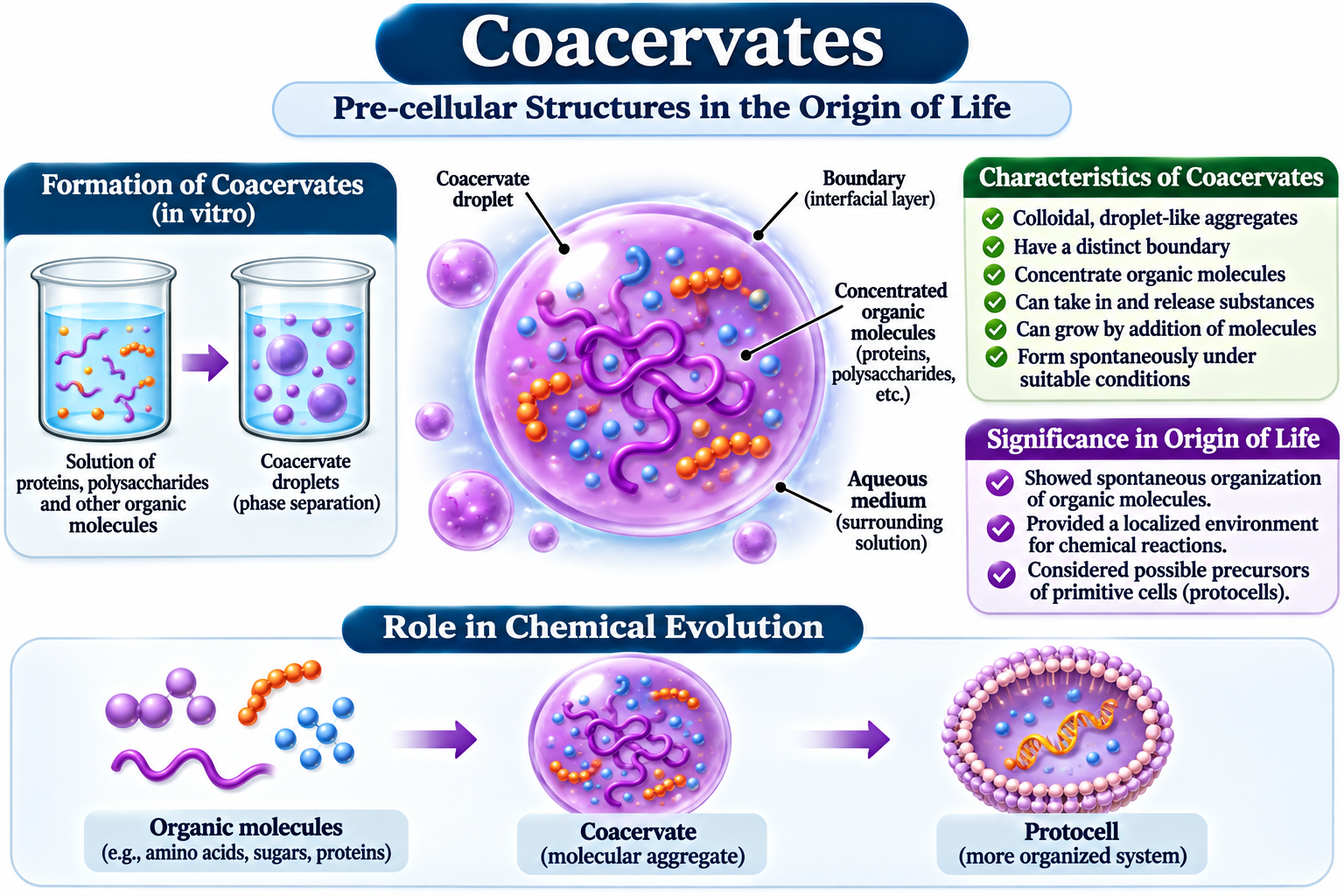
Their important characteristics include:
- They have a distinct boundary separating the concentrated internal phase from the surrounding solution.
- They can concentrate organic molecules within a small volume.
- They allow certain substances to enter and leave through exchange with the surrounding environment.
- They can grow through the incorporation of additional molecules.
- They may provide localized conditions that support chemical reactions.
However, coacervates are not living cells. They lack the complete genetic and metabolic machinery required for autonomous reproduction and biological inheritance.
Their importance lies in demonstrating how organic molecules can spontaneously organize into compartment-like structures.
5.5 Experimental Support: Miller–Urey Experiment
The Oparin–Haldane Hypothesis received important experimental support from the Miller–Urey experiment conducted in 1953 by American scientists Stanley Miller and Harold Urey.
They designed an apparatus to simulate certain conditions proposed for the primitive atmosphere.
The apparatus contained water, methane, ammonia and hydrogen. Water was heated to produce vapour, while electrical sparks were passed through the gas mixture to simulate lightning.
After several days, the experimental system contained different organic compounds, including amino acids.
The experiment demonstrated that biologically important organic molecules could form from simple substances under particular simulated early-Earth conditions.
However, it did not produce living organisms or demonstrate the complete pathway from chemical compounds to the first cells.
5.6 Differences Between Oparin’s and Haldane’s Ideas
Although Oparin and Haldane independently proposed chemical explanations for the Origin of Life, their approaches contained some differences.
| Basis | Alexander Oparin | J. B. S. Haldane |
| Year of proposal | 1924 | 1929 |
| Main contribution | Chemical evolution and coacervates | Chemical evolution and primordial soup |
| Emphasis | Formation of organized molecular aggregates | Accumulation of organic compounds in primitive oceans |
| Energy source | Environmental energy supporting chemical reactions | Particularly emphasized ultraviolet radiation |
| Important concept | Coacervates | Hot dilute soup |
5.7 Limitations of the Oparin–Haldane Hypothesis
Despite its historical importance, the Oparin–Haldane Hypothesis has certain limitations.
Uncertainty about primitive atmospheric composition
The classical hypothesis assumed a strongly reducing atmosphere containing methane, ammonia and hydrogen. Modern geological evidence suggests that the early atmosphere may have contained substantial carbon dioxide and nitrogen, making its exact composition uncertain.
Incomplete explanation of molecular formation
The hypothesis does not fully explain how simple organic molecules developed into complex biological macromolecules under natural conditions.
Unresolved origin of genetic information
The mechanism through which the first self-replicating molecules emerged remains uncertain. The RNA World Hypothesis provides one possible explanation, but the complete process has not been established.
Uncertain transition to living cells
Coacervates demonstrate molecular organization but are not living cells. The development of genetic systems, metabolism and membrane-based cellular organization requires additional explanations.
5.8 Significance of the Oparin–Haldane Hypothesis
The Oparin–Haldane Hypothesis occupies an important position in evolutionary biology because it introduced a systematic scientific framework for investigating the Origin of Life.
Its major contributions include:
- Establishing chemical evolution as an important approach to studying the emergence of life.
- Connecting prebiotic chemistry with biological evolution.
- Introducing the concept of primordial soup.
- Highlighting the possible importance of coacervates in pre-cellular organization.
- Providing a theoretical foundation for experimental research, including the Miller–Urey experiment.
- Encouraging modern investigations into protocells, molecular replication and the RNA World Hypothesis.
The hypothesis remains historically significant, although modern research has expanded and revised several of its original assumptions. The exact pathway through which non-living chemical systems developed into the earliest living organisms remains an open scientific question.
6. Miller–Urey Experiment (1953)
The Miller–Urey Experiment was one of the most important experiments in the history of origin-of-life research. It provided experimental evidence that simple organic molecules could be formed from inorganic substances under laboratory conditions designed to simulate certain aspects of the primitive Earth’s environment.
The experiment was conducted in 1953 by American scientists Stanley L. Miller and Harold C. Urey at the University of Chicago. It was designed to test the chemical evolution ideas proposed independently by Alexander Oparin and J. B. S. Haldane.
According to the classical Oparin-Haldane Theory, the primitive atmosphere contained simple gases that could undergo chemical reactions in the presence of energy sources such as lightning and ultraviolet radiation. These reactions could produce organic compounds that accumulated in primitive oceans.
The Miller–Urey Experiment demonstrated that amino acids and other organic compounds could form abiotically from simpler chemical substances under a particular simulated atmospheric composition. It therefore provided important experimental support for the possibility of Chemical Evolution.
6.1 Objectives of the Miller–Urey Experiment
The major objective of the Miller–Urey Experiment was to investigate whether organic molecules could be produced naturally from simple inorganic substances under conditions proposed for primitive Earth.
The specific objectives were:
- To simulate certain atmospheric conditions believed to have existed on primitive Earth.
- To investigate the formation of organic compounds from simple gases.
- To examine the role of electrical energy in prebiotic chemical reactions.
- To test an important prediction of the Oparin–Haldane Hypothesis.
- To provide experimental evidence for the chemical processes that may have contributed to the origin of biological molecules.
6.2 Scientists Involved in the Experiment
Stanley Lloyd Miller (1930–2007)
Stanley Miller was an American chemist who performed the experiment under the supervision of Harold Urey. He designed the experimental apparatus and investigated the organic compounds produced during the chemical reactions.
His work demonstrated that amino acids could be synthesized under simulated early-Earth conditions.
Harold Clayton Urey (1893–1981)
Harold Urey was an American physical chemist and Nobel Prize-winning scientist. He was interested in the chemical conditions of early Earth and supported experimental investigations into the origin of organic molecules.
He supervised Stanley Miller’s research and contributed to the development of the experiment.
6.3 Principle of the Miller–Urey Experiment
The Miller–Urey Experiment was based on the principle that simple inorganic gases could undergo chemical reactions when supplied with sufficient energy, producing organic compounds.
The experimental apparatus simulated a simplified model of the primitive atmosphere and hydrological cycle.
The researchers used a mixture of methane (CH₄), ammonia (NH₃), hydrogen (H₂) and water vapour (H₂O). Electrical sparks were passed through the gas mixture to simulate lightning.
The resulting chemical products were cooled, condensed and collected in a liquid chamber. The experiment demonstrated that some organic molecules, particularly amino acids, could form through non-biological chemical reactions.
6.4 Apparatus Used in the Miller–Urey Experiment
The experimental apparatus consisted of a closed glass system containing several interconnected components.
1. Boiling Water Flask
A flask containing water represented the primitive ocean. Water was heated continuously to produce water vapour.
2. Gas Chamber
The gas chamber contained methane, ammonia and hydrogen along with water vapour. This mixture represented the classical model of the primitive atmosphere.
3. Electrodes
Two electrodes were placed inside the gas chamber. Electrical sparks were passed between them to simulate lightning in the primitive atmosphere.
4. Condenser
The condenser cooled the hot gases and converted water vapour into liquid water. This represented the condensation of atmospheric water vapour.
5. Collection Trap
A collection trap accumulated the liquid containing newly formed chemical compounds. It also helped prevent the continuous exposure of the collected products to electrical discharge.
6. Circulation System
The apparatus allowed water and gases to circulate continuously, creating repeated opportunities for chemical reactions.
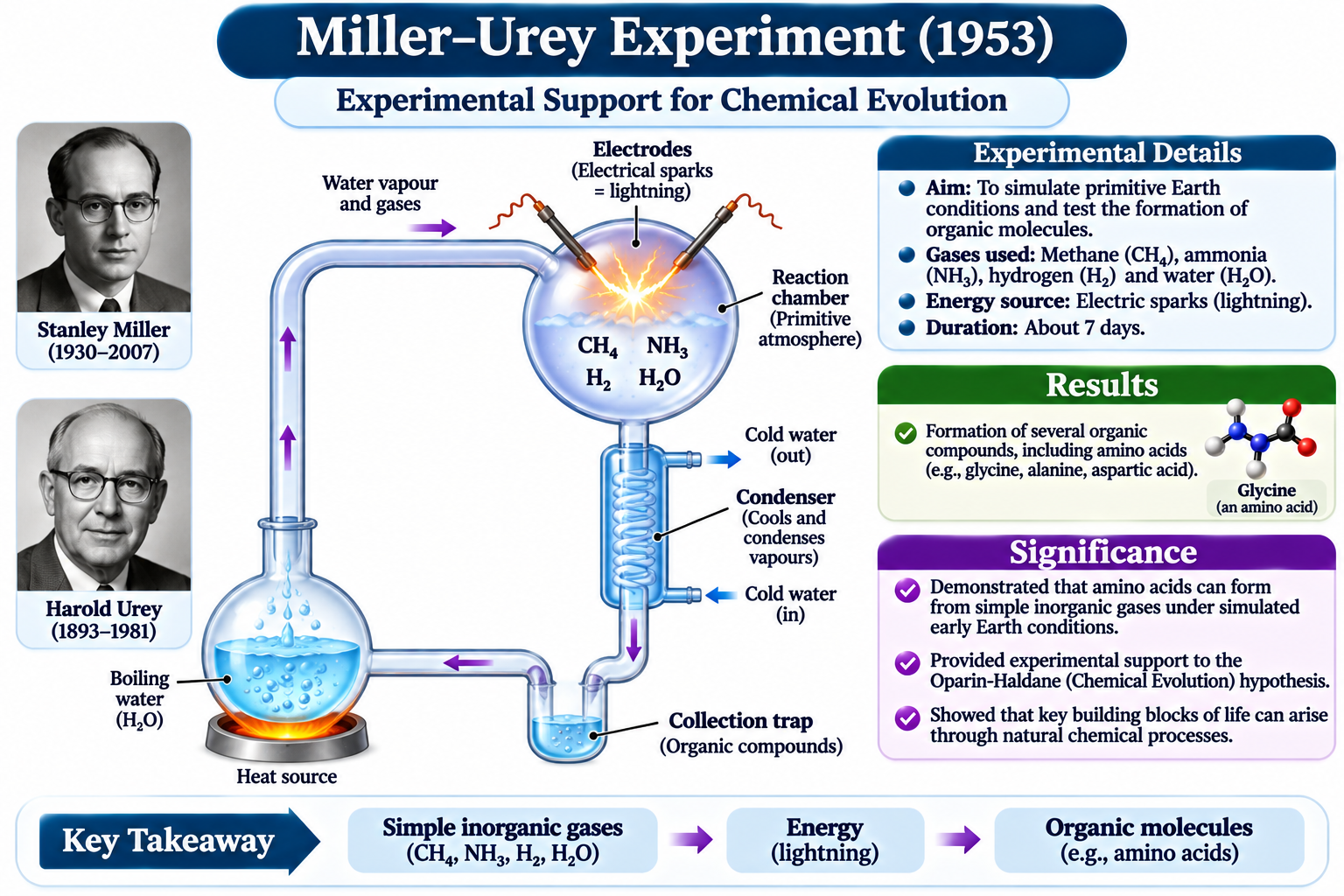
6.5 Experimental Procedure
The Miller–Urey Experiment was conducted through a continuous series of chemical and physical processes.
Step 1: Preparation of the Gas Mixture
Water, methane, ammonia and hydrogen were introduced into the closed experimental apparatus. The gases represented the reducing atmospheric conditions assumed in the classical Oparin–Haldane model.
Step 2: Heating of Water
The water flask was heated to produce water vapour. This simulated evaporation from primitive oceans.
Step 3: Electrical Discharge
Electrical sparks were passed through the gas mixture using electrodes. This simulated lightning and supplied energy for chemical reactions.
Step 4: Cooling and Condensation
The heated gases entered the condenser, where they cooled and condensed into liquid water.
Step 5: Collection of Chemical Products
The condensed liquid carried newly formed organic compounds into the collection trap.
Step 6: Continuous Circulation
The water and gases continued circulating through the apparatus, allowing chemical reactions to occur repeatedly.
The experiment was conducted for approximately one week, after which the collected solution was chemically analysed.
6.6 Results of the Miller–Urey Experiment
The experiment produced several organic compounds, including amino acids, which are essential building blocks of proteins.
The important products included:
- Glycine
- Alanine
- Aspartic acid
- Glutamic acid
- Other organic compounds, including organic acids and nitrogen-containing substances
The formation of amino acids was particularly significant because these molecules are fundamental components of proteins in living organisms.
The experiment demonstrated that biologically important organic molecules could be synthesized without the involvement of living organisms.
However, the experiment did not produce proteins, living cells or self-replicating biological systems.
6.7 Significance of the Miller–Urey Experiment
The Miller–Urey Experiment made several important contributions to the scientific investigation of the Origin of Life.
Experimental support for chemical evolution
It demonstrated that simple chemical substances could produce organic molecules through non-biological reactions under suitable conditions.
Formation of amino acids
It established that amino acids could be synthesized experimentally from simple gases and water under a simulated early-Earth environment.
Development of prebiotic chemistry
The experiment encouraged further investigations into the chemical processes responsible for the formation of biologically important molecules.
Support for the Oparin–Haldane Hypothesis
It provided experimental support for one important prediction of the classical chemical evolution model.
Foundation for modern origin-of-life research
It stimulated research into nucleotides, sugars, lipid molecules, organic synthesis and the possible development of primitive cellular systems.
6.8 Limitations of the Miller–Urey Experiment
Although the experiment was a major scientific achievement, it had certain limitations.
Uncertainty about primitive atmospheric composition
The experiment used methane, ammonia and hydrogen in a strongly reducing gas mixture. Modern geological evidence suggests that the early atmosphere may have contained greater amounts of carbon dioxide and nitrogen.
Limited simulation of early Earth
The apparatus represented only a simplified model of the primitive environment. It did not reproduce all the geological, chemical and environmental conditions present on early Earth.
Formation of a limited range of biological molecules
Although several amino acids and other organic compounds were produced, the experiment did not demonstrate the formation of complete proteins, functional nucleic acids or living cells.
No demonstration of biological reproduction
The experiment produced organic compounds but did not generate self-replicating molecular systems or organisms.
Possibility of alternative environments
Modern research suggests that organic molecules may also have formed in environments such as hydrothermal vents, mineral-rich surfaces and other localized chemical systems.
6.9 Later Developments and Modifications
The original Miller–Urey Experiment stimulated several subsequent investigations into prebiotic chemistry.
In later studies, researchers explored different atmospheric compositions, energy sources and environmental conditions to investigate the formation of organic molecules.
In 2008, researchers reanalysed samples from Miller’s archived experiments using more sensitive analytical techniques. They identified additional amino acids and other organic compounds that had not been detected in the original analysis.
These findings demonstrated the importance of improved analytical methods in understanding the chemical products of prebiotic reactions.
Further research has also investigated the formation of organic compounds through ultraviolet radiation, mineral-catalysed reactions and hydrothermal processes.
6.10 Conclusion of the Miller–Urey Experiment
The Miller–Urey Experiment established an important experimental foundation for studying the chemical processes that may have contributed to the Origin of Life.
It demonstrated that amino acids and other organic molecules could form from simple substances under certain simulated early-Earth conditions. However, it did not explain the complete transition from organic molecules to living cells.
Despite its limitations, the experiment remains a landmark contribution to evolutionary biology, biochemistry and modern research on chemical evolution.
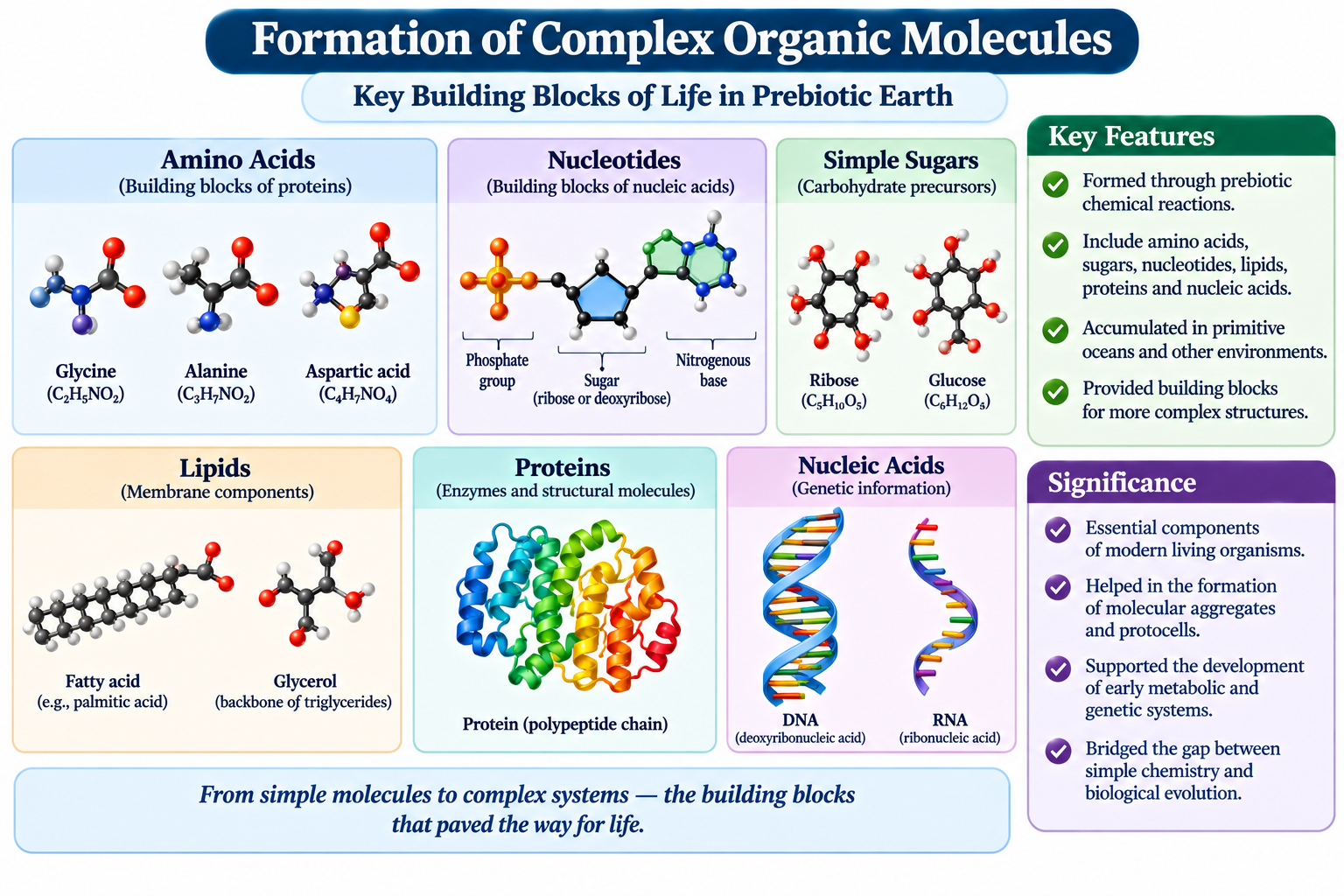
7. Formation of Complex Organic Molecules
The formation of complex organic molecules represents an important stage in the Origin of Life and the process of Chemical Evolution. After the formation of simple organic compounds on primitive Earth, these molecules may have undergone further chemical reactions to produce larger and more complex molecular structures.
Simple organic molecules such as amino acids, sugars, fatty acids and nucleotides are important because they serve as building blocks of biological macromolecules. Their chemical interactions eventually contributed to the development of proteins, nucleic acids, lipids and carbohydrate-based structures.
The development of complex organic molecules was essential for the emergence of molecular systems capable of performing important biological functions, including catalysis, information storage and molecular organization.
7.1 Formation of Amino Acids and Peptides
Amino acids are organic compounds containing both amino (-NH₂) and carboxyl (-COOH) functional groups. They are the fundamental building blocks of proteins.
During prebiotic chemical evolution, amino acids could have formed through reactions involving simple carbon-containing and nitrogen-containing compounds.
The Miller–Urey Experiment demonstrated that several amino acids, including glycine and alanine, could be produced under simulated early-Earth conditions.
After their formation, amino acids could combine through chemical reactions to produce short chains called peptides.
The linkage between two amino acids is known as a peptide bond. It forms through a condensation reaction involving the amino group of one amino acid and the carboxyl group of another.
The general reaction can be represented as:
\[ \text{Amino acid}+\text{Amino acid} \rightarrow \text{Dipeptide}+\text{H}_2\text{O} \]
Repeated peptide-bond formation produces longer polypeptide chains.
However, the formation of long, functional proteins under primitive Earth conditions remains an important challenge in origin-of-life research. Scientists investigate possible pathways involving mineral surfaces, wet-dry cycles and other environmental conditions that may facilitate peptide formation.
7.2 Formation of Nucleotides and Nucleic Acids
Nucleic acids are essential biological molecules responsible for storing, transmitting and expressing genetic information.
The two major types of nucleic acids found in modern organisms are DNA (Deoxyribonucleic Acid) and RNA (Ribonucleic Acid).
Their basic structural units are called nucleotides. Each nucleotide consists of three components:
- A nitrogenous base.
- A five-carbon sugar.
- A phosphate group.
Nitrogenous bases include adenine, guanine, cytosine, thymine and uracil.
During prebiotic chemical evolution, the formation of nucleotide components and their subsequent assembly into nucleotides would have been important steps towards the emergence of genetic systems.
The formation of RNA is particularly significant because RNA can store genetic information and catalyse certain chemical reactions.
The RNA World Hypothesis proposes that RNA-based systems may have existed before the development of modern DNA-based genetic systems and protein-based enzymes.
However, the complete prebiotic pathway for producing nucleotides and assembling them into functional RNA molecules remains unresolved.
For a detailed explanation of nucleotide components and their classification, see Nucleotide Structure and Types Explained.
7.3 Formation of Lipids and Membrane-Like Structures
Lipids are organic molecules that play important roles in the formation of biological membranes.
Certain lipid molecules, particularly amphiphilic molecules, contain both hydrophilic and hydrophobic regions.
When amphiphilic molecules are placed in water, they can spontaneously organize into structures such as micelles and vesicles.
A vesicle is a spherical structure surrounded by a lipid bilayer or related molecular membrane.
These structures are important in origin-of-life research because they demonstrate how simple organic molecules can spontaneously form compartments.
Membrane-like structures could have provided several advantages to primitive molecular systems:
- They could separate internal chemical reactions from the external environment.
- They could concentrate important molecules within a limited space.
- They could support the development of chemical gradients.
- They could help maintain localized chemical conditions.
- They could provide a structural basis for primitive cellular organization.
The formation of membrane-bound compartments is considered an important step in several models of protocell development.
7.4 Formation of Carbohydrates and Other Organic Compounds
Carbohydrates are organic compounds composed mainly of carbon, hydrogen and oxygen. They perform important functions in modern organisms, including energy storage and structural support.
Simple sugars such as ribose and other sugar molecules are particularly relevant to origin-of-life research.
Ribose is an essential component of RNA nucleotides, while other sugars participate in the structure of DNA and cellular metabolism.
One possible route for sugar formation involves the formose reaction, in which formaldehyde molecules undergo chemical reactions to produce a mixture of sugars under suitable conditions.
The formation of carbohydrates would have contributed to the availability of important molecular building blocks for early biochemical systems.
7.5 Role of Mineral Surfaces in Molecular Formation
Minerals may have played an important role in the formation and organization of complex organic molecules on primitive Earth.
Certain mineral surfaces can adsorb organic compounds and bring them into close proximity, increasing the possibility of chemical interactions.
Clay minerals, iron sulphide minerals and other geological materials have been investigated for their potential roles in prebiotic chemistry.
Their possible functions include:
- Concentrating organic molecules from dilute solutions.
- Providing surfaces for chemical reactions.
- Facilitating certain polymerization reactions.
- Influencing the organization of organic molecules.
- Supporting localized chemical environments.
For example, some clay minerals have been investigated for their ability to promote the formation of short RNA-like polymers under experimental conditions.
However, the exact importance of mineral surfaces in the actual emergence of life remains under investigation.
7.6 Importance of Wet-Dry Cycles in Prebiotic Chemistry
Wet-dry cycles are considered one possible mechanism for promoting the formation of complex organic molecules.
In certain environments, water evaporates during dry periods and returns during wet periods. These repeated changes can influence the concentration of dissolved organic compounds and promote condensation reactions.
During drying, molecules become concentrated, increasing opportunities for reactions that join smaller compounds into larger molecular structures.
During wet periods, the resulting molecules can dissolve, move and interact with other substances.
Researchers have investigated wet-dry cycles as possible mechanisms for:
- Promoting peptide-bond formation.
- Supporting the assembly of nucleotide polymers.
- Concentrating organic molecules.
- Encouraging the formation of membrane-like structures.
- Facilitating interactions between different classes of organic compounds.
Such environments may have existed around volcanic regions, geothermal pools and other periodically drying water bodies.
7.7 Development of Molecular Complexity
The increasing complexity of organic molecules was important because modern living organisms depend on interactions between several classes of biological macromolecules.
| Organic molecules | Basic building blocks | Major biological importance |
|---|---|---|
| Proteins | Amino acids | Catalysis, structure and transport |
| Nucleic acids | Nucleotides | Genetic information storage and transfer |
| Lipids | Fatty acids and other lipid components | Membrane formation and compartmentalization |
| Carbohydrates | Monosaccharides | Energy storage and structural functions |
The development of these molecular systems may have contributed to the emergence of primitive chemical networks.
Such networks could have involved reactions that supported molecular synthesis, energy transformations and the maintenance of chemical organization.
However, the exact sequence in which proteins, nucleic acids, lipids and metabolic systems emerged is not yet established.
7.8 Significance in the Origin of Life
The formation of complex organic molecules represents an essential area of research into the Origin of Life because living organisms depend on highly organized molecular systems.
The study of prebiotic molecular formation helps scientists understand how simple substances may have contributed to the development of biological macromolecules.
It also provides an important connection between the Chemical Evolution Theory, the Oparin–Haldane Hypothesis and the RNA World Hypothesis.
Although several experimental studies have demonstrated possible pathways for forming individual biological molecules, the complete transition from prebiotic chemistry to the first living cells remains one of the major unanswered questions in evolutionary biology.
8. RNA World Hypothesis
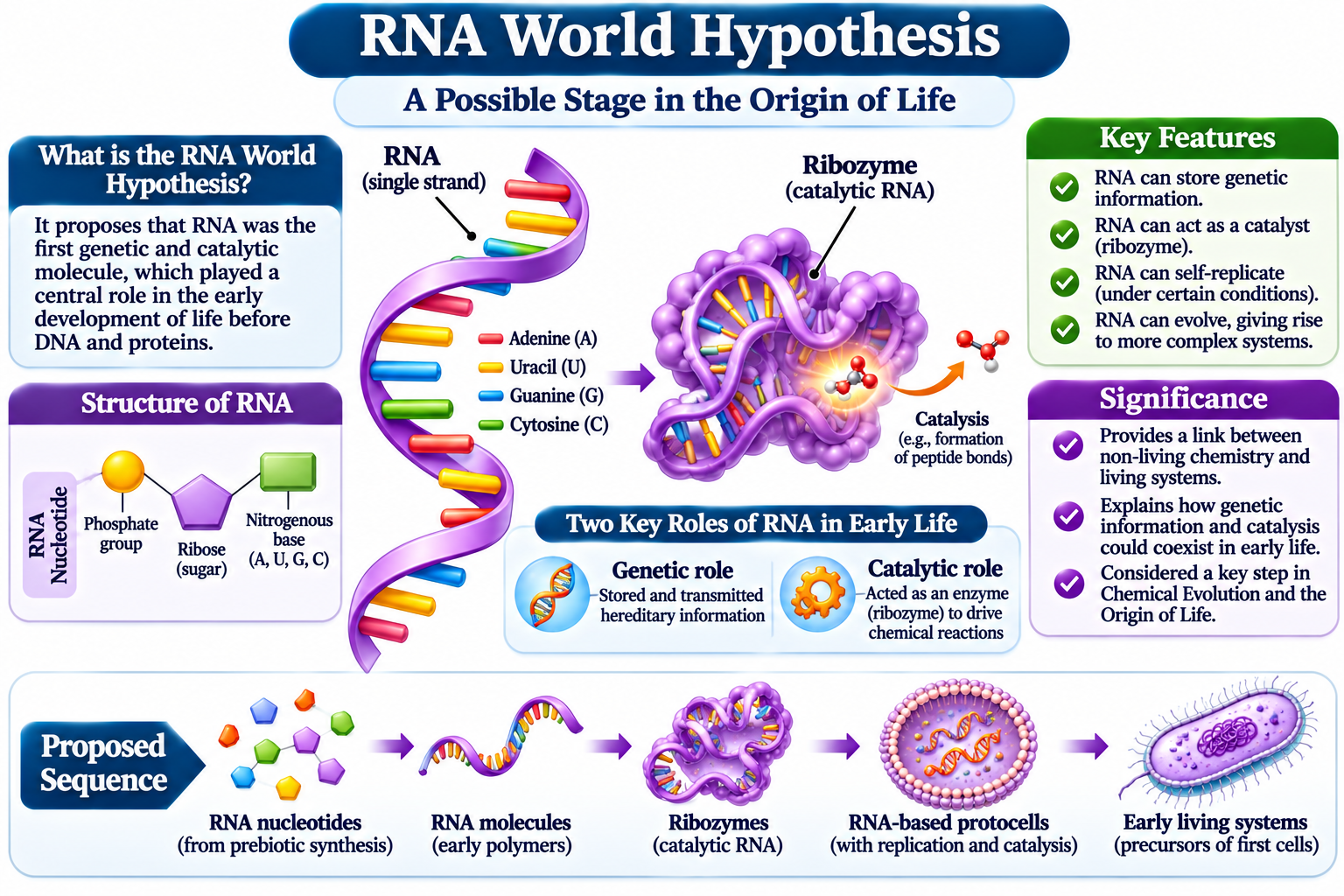
The RNA World Hypothesis is an important scientific hypothesis proposed to explain the early stages of molecular evolution and the Origin of Life. It suggests that RNA (Ribonucleic Acid) may have played a central role in the earliest biological systems before the development of modern DNA-based genetic storage and protein-based enzymatic systems.
In modern organisms, DNA primarily stores genetic information, while proteins perform most enzymatic functions. RNA generally acts as an intermediary in gene expression and also performs several regulatory and catalytic functions.
However, RNA possesses two important properties that make it particularly significant in origin-of-life research. It can store genetic information through its nucleotide sequence and can catalyse certain chemical reactions through specialized structures called ribozymes.
According to the RNA World Hypothesis, early biological systems may have relied on RNA molecules for both information storage and chemical catalysis. Over evolutionary time, DNA may have become the primary genetic material, while proteins evolved into the major biological catalysts.
The concept of an RNA-based early biological world was developed through ideas proposed by several scientists. The term RNA world was popularized by Nobel Prize-winning scientist Walter Gilbert in 1986.
8.1 What is RNA?
RNA, or Ribonucleic Acid, is a nucleic acid composed of repeating nucleotide units. Each nucleotide consists of a ribose sugar, a phosphate group and a nitrogenous base.
The four major nitrogenous bases found in RNA are:
- Adenine (A)
- Guanine (G)
- Cytosine (C)
- Uracil (U)
RNA is generally single-stranded, although it can fold into complex three-dimensional structures through complementary base pairing.
These structures allow RNA molecules to perform several biological functions, including genetic information transfer, molecular recognition and catalytic activity.
The ability of RNA to perform both informational and catalytic functions is the central basis of the RNA World Hypothesis.
To understand RNA structure, different RNA types and their biological functions, explore Structure and Function of RNA
8.2 Basic Concept of the RNA World Hypothesis
The RNA World Hypothesis proposes that RNA-based molecular systems existed before the emergence of modern DNA and protein-based biological systems.
According to this hypothesis, primitive RNA molecules may have performed two major functions:
Genetic information storage
RNA molecules could store hereditary information in their nucleotide sequences. Changes in these sequences could produce variations that might be inherited during molecular replication.
Catalytic activity
Certain RNA molecules can catalyse chemical reactions. These catalytic RNA molecules are called ribozymes.
The combination of information storage and catalytic activity could have allowed early RNA-based systems to undergo molecular replication and evolutionary change.
Over time, more complex biological systems may have developed in which DNA became the primary genetic material and proteins became the dominant catalysts.
8.3 Evidence Supporting the RNA World Hypothesis
Several discoveries in molecular biology and biochemistry support the possibility that RNA played an important role in early biological evolution.
Discovery of Ribozymes
One of the strongest pieces of evidence supporting the RNA World Hypothesis was the discovery that RNA molecules can act as biological catalysts.
In 1982, Thomas R. Cech and his colleagues demonstrated that the RNA molecule involved in the splicing of Tetrahymena thermophila ribosomal RNA could catalyse its own processing without requiring protein enzymes.
This discovery demonstrated that RNA is not merely a carrier of genetic information but can also perform catalytic functions.
Catalytic Activity of Ribosomal RNA
The ribosome is responsible for protein synthesis in all living organisms. Its catalytic activity is largely associated with ribosomal RNA rather than ribosomal proteins.
The peptidyl transferase centre of the ribosome is formed by ribosomal RNA, which catalyses peptide-bond formation during protein synthesis.
This provides important evidence that RNA can perform essential catalytic functions in modern biological systems.
Role of RNA in Genetic Information Transfer
RNA plays a central role in the expression of genetic information in modern organisms.
Messenger RNA carries genetic instructions from DNA to ribosomes, transfer RNA brings amino acids during protein synthesis, and ribosomal RNA forms the structural and catalytic core of ribosomes.
These functions demonstrate the versatility of RNA in biological systems.
RNA-Based Genetic Systems in Viruses
Several viruses use RNA as their genetic material instead of DNA.
Examples include influenza virus, poliovirus and coronaviruses.
Although viruses are not considered evidence of an ancient RNA world by themselves, they demonstrate that RNA can serve as a stable hereditary information system in biological evolution.
The discovery of catalytic RNA transformed our understanding of molecular biology. Learn more about this process in RNA Splicing: Process, Mechanism and Types
8.4 Ribozymes and Their Importance
Ribozymes are RNA molecules capable of catalysing specific biochemical reactions.
Before the discovery of ribozymes, biological catalysis was generally associated with protein enzymes. The discovery of catalytic RNA changed this understanding and provided important support for the RNA World Hypothesis.
Important characteristics of ribozymes include:
- They are composed of RNA nucleotides.
- They fold into specific three-dimensional structures.
- They can catalyse chemical reactions.
- Some ribozymes participate in RNA processing.
- Certain ribozymes can catalyse RNA cleavage and joining reactions.
Examples of ribozymes
| Ribozyme | Function |
|---|---|
| Group I introns | Catalyse their own excision from RNA molecules |
| Group II introns | Catalyse self-splicing reactions |
| RNase P RNA | Catalyses processing of precursor transfer RNA |
| Hammerhead ribozyme | Catalyses RNA cleavage |
| Ribosomal RNA | Catalyses peptide-bond formation during protein synthesis |
The catalytic properties of these RNA molecules demonstrate that RNA can perform functions that are otherwise commonly associated with protein enzymes.
8.5 Proposed Stages in the Development of the RNA World
The RNA World Hypothesis suggests a possible sequence of molecular developments before the emergence of modern cellular life.
Formation of RNA Building Blocks
Simple organic compounds formed through prebiotic chemical reactions may have contributed to the formation of nucleotide components.
The synthesis of ribose, nitrogenous bases and phosphate-containing compounds is an important area of research into the prebiotic formation of RNA.
However, the complete natural pathway for producing all RNA building blocks under early-Earth conditions remains unresolved.
Formation of RNA Molecules
Nucleotide components may have undergone chemical reactions to produce nucleotide chains.
The formation of RNA-like polymers would have been essential for the development of molecules capable of storing genetic information.
Development of Catalytic RNA
Some RNA molecules may have developed structures capable of catalysing chemical reactions.
Such molecules could have supported reactions involved in RNA processing, molecular assembly and replication.
Emergence of RNA Replication
The development of RNA molecules capable of promoting their own replication or the replication of other RNA molecules would have been a major evolutionary development.
Replication accompanied by variation and inheritance could have allowed RNA-based systems to undergo molecular evolution.
However, a complete RNA system capable of autonomous replication under realistic prebiotic conditions has not yet been demonstrated.
Development of Protein Synthesis
As molecular systems became increasingly complex, interactions between RNA and amino acids may have contributed to the development of primitive protein synthesis.
The ribosome represents an important modern example of an RNA-centred molecular system involved in protein production.
Transition from RNA to DNA-Based Genetic Systems
Over evolutionary time, DNA may have developed as the primary genetic storage molecule because of its greater chemical stability.
Proteins also became increasingly important as catalysts because their wide range of structures and chemical properties allows them to perform diverse enzymatic functions.
RNA continued to perform essential roles in genetic information transfer, protein synthesis and cellular regulation.
The development of protein synthesis was an important step in the evolution of modern biological systems. Read Protein Synthesis: Steps, Process, Genetic Code and Translation
8.6 Differences Between RNA and DNA
The RNA World Hypothesis proposes that RNA-based systems may have preceded modern DNA-based genetic systems. Understanding the differences between these nucleic acids is therefore important.
| Characteristic | RNA | DNA |
|---|---|---|
| Full form | Ribonucleic Acid | Deoxyribonucleic Acid |
| Sugar | Ribose | Deoxyribose |
| Nitrogenous bases | A, G, C, U | A, G, C, T |
| General structure | Usually single-stranded | Usually double-stranded |
| Chemical stability | Comparatively less stable | Comparatively more stable |
| Major function | Information transfer, regulation and catalysis | Long-term genetic information storage |
| Catalytic activity | Certain RNA molecules act as ribozymes | No comparable general catalytic role in modern cells |
8.7 Importance of the RNA World Hypothesis
The RNA World Hypothesis has major significance in molecular evolution and origin-of-life research.
Its importance includes:
- It provides a possible explanation for the development of genetic information before modern DNA-based systems.
- It explains how a single type of molecule could perform both informational and catalytic functions.
- It connects prebiotic chemistry with molecular biology.
- It helps explain the evolutionary importance of ribosomal RNA.
- It provides a framework for investigating the development of genetic replication and protein synthesis.
- It supports research into the early evolution of biological systems.
8.8 Limitations of the RNA World Hypothesis
Despite its importance, several questions remain unresolved.
Prebiotic synthesis of RNA
The natural formation of all RNA building blocks under primitive Earth conditions remains a major scientific challenge.
Chemical instability of RNA
RNA is chemically less stable than DNA and can undergo degradation, particularly under certain environmental conditions.
Origin of RNA replication
Scientists have not yet demonstrated a complete RNA-based system capable of sustained autonomous replication under realistic prebiotic conditions.
Formation of the first functional ribozymes
The process through which RNA molecules developed complex catalytic structures remains uncertain.
Transition to DNA and proteins
The precise evolutionary mechanisms through which DNA became the primary genetic material and proteins became the major biological catalysts are still being investigated.
8.9 Modern Research and the RNA World
Modern research into the RNA World Hypothesis focuses on understanding how RNA molecules could have formed, replicated and evolved under prebiotic conditions.
Scientists investigate ribozyme activity, non-enzymatic RNA replication, nucleotide synthesis and the interactions between RNA molecules and primitive membrane structures.
Research into RNA-based molecular systems also helps explain the evolutionary importance of ribosomes and the central role of RNA in modern biological processes.
Although the RNA World Hypothesis has not been conclusively proven, it remains one of the leading scientific models for explaining the molecular stages preceding the development of the first cells.
9. Origin of the First Cells
The emergence of the first cells represents one of the most important stages in the Origin of Life. After the development of organic molecules, molecular aggregates and primitive compartment-like structures, increasingly complex chemical systems may have evolved into the earliest cellular organisms.
According to the Chemical Evolution framework, the transition from non-living chemical systems to living cells involved several important developments, including the formation of membranes, the emergence of genetic information, the development of metabolic reactions and the ability to reproduce.
The Oparin-Haldane Theory proposed that life developed gradually through chemical transformations on primitive Earth. Modern research has expanded this idea by investigating protocells, RNA-based genetic systems and possible pathways for the development of primitive metabolism.
Although the exact nature of the first cells remains unknown, scientific evidence suggests that the earliest organisms were structurally simple and lived billions of years before the appearance of complex eukaryotic cells.
9.1 Development of Protocells
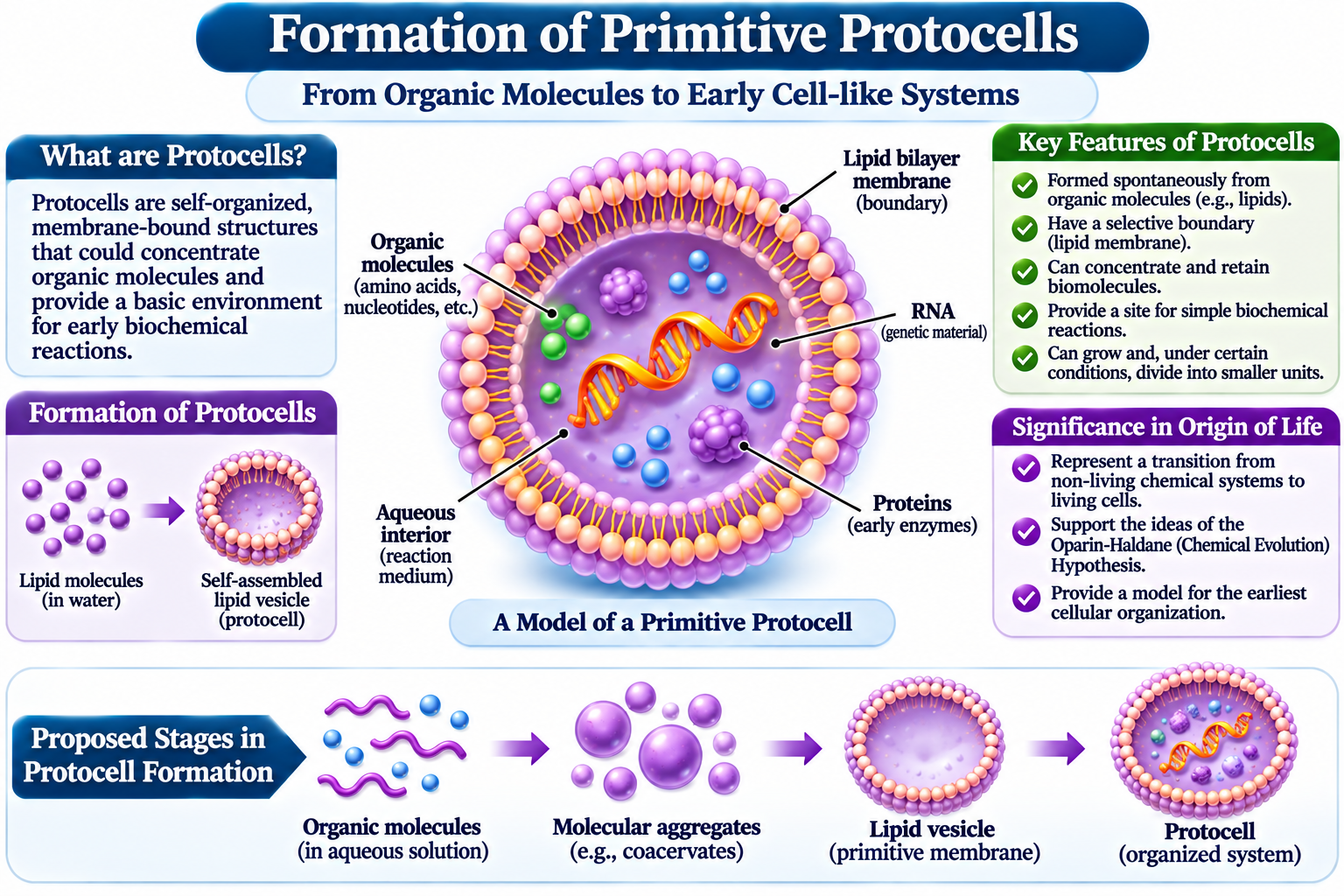
Protocells are simple, experimentally studied models of cell-like structures that demonstrate how non-living chemical components can organize into compartment-like systems.
They are considered important in research on the Origin of Life because cellular organization provides a means of separating internal chemical reactions from the external environment.
Several types of molecular structures may have contributed to protocell development.
Lipid Vesicles
Lipid vesicles are spherical structures formed when amphiphilic molecules organize into membrane-like boundaries in water.
They can enclose substances within an internal compartment and provide a physical boundary between the internal and external environments.
Their possible functions include:
- Concentrating organic molecules within a confined space.
- Separating internal chemical reactions from the surrounding environment.
- Maintaining localized chemical conditions.
- Providing a possible structural foundation for primitive cellular membranes.
Coacervates
Coacervates are microscopic droplets formed through the association of certain organic molecules in aqueous solutions.
Oparin proposed that coacervates might represent possible precursors of primitive cellular organization.
They can concentrate different molecules within droplets and provide localized environments for chemical reactions. However, they lack the complete membrane, genetic and metabolic systems required for autonomous cellular life.
Mineral-Associated Compartments
Certain mineral environments have also been investigated as possible locations for early chemical organization.
Mineral surfaces can concentrate organic molecules and facilitate interactions between chemical substances. Porous mineral structures may also provide confined environments in which chemical reactions can occur.
9.2 Development of Primitive Cell Membranes
The development of a membrane boundary was an important step towards cellular organization.
Modern biological membranes consist mainly of phospholipid bilayers containing proteins and other molecules. However, the earliest membrane systems may have been chemically simpler.
Amphiphilic molecules can spontaneously assemble into vesicles under suitable conditions because their hydrophilic regions interact with water while their hydrophobic regions avoid direct contact with it.
Primitive membrane-like structures may have provided several advantages:
- They separated internal chemical reactions from the surrounding environment.
- They helped concentrate important organic compounds.
- They allowed selective interactions with external substances.
- They provided a basis for maintaining chemical gradients.
- They supported the development of increasingly organized molecular systems.
Membrane formation was therefore an important component of the transition from prebiotic chemistry to primitive cellular organization.
9.3 Development of Genetic Information
Another essential step in the Origin of Life was the emergence of molecules capable of storing and transmitting hereditary information.
Modern organisms use DNA as their primary genetic material, while RNA performs several important roles in gene expression and cellular regulation.
However, the RNA World Hypothesis proposes that RNA-based molecular systems may have existed before the emergence of modern DNA- and protein-based biological systems.
RNA is particularly important because it possesses two major properties:
Information Storage
RNA can store genetic information in the sequence of its nucleotides. Changes in these sequences can produce molecular variations.
Catalytic Activity
Certain RNA molecules, called ribozymes, can catalyse chemical reactions. This property suggests that early RNA-based systems may have performed both genetic and catalytic functions.
The development of molecules capable of replication, variation and inheritance would have been essential for the emergence of early biological evolution.
9.4 Development of Primitive Metabolism
Metabolism refers to the complete set of chemical reactions that occur within living organisms to maintain life.
Modern cells possess complex metabolic pathways involving enzymes, energy-carrying molecules and organized biochemical reactions.
The earliest cellular systems may have possessed much simpler metabolic processes.
Scientists have proposed several possible mechanisms for the development of primitive metabolism.
Surface Metabolism Hypothesis
This hypothesis suggests that early metabolic reactions may have occurred on mineral surfaces, where inorganic compounds and organic molecules could interact.
Iron-sulphur minerals and other geological materials have been investigated for their potential roles in facilitating chemical reactions.
Hydrothermal Vent Hypothesis
Hydrothermal vents are openings on the ocean floor through which heated, mineral-rich water enters the surrounding seawater.
These environments provide chemical gradients, mineral surfaces and sources of energy that may have supported prebiotic reactions.
Some researchers propose that alkaline hydrothermal vents could have provided suitable conditions for the development of early metabolic systems.
Autotrophic Origin Hypothesis
Some models suggest that the earliest biological systems may have used inorganic carbon compounds as a source of carbon and inorganic chemical reactions as sources of energy.
However, whether the first organisms were autotrophic or heterotrophic remains an unresolved question.
9.5 Characteristics of the First Living Cells
The earliest cellular organisms are generally considered to have been structurally simple compared with modern eukaryotic cells.
Although their exact characteristics cannot be directly established, several features are inferred from geological evidence and comparative biological studies.
Prokaryotic Organization
The earliest known organisms were likely simple prokaryotic cells lacking a membrane-bound nucleus and other complex membrane-bound organelles.
Simple Genetic Systems
Early organisms possessed hereditary systems capable of transmitting genetic information to subsequent generations.
The exact nature of their earliest genetic material remains uncertain.
Anaerobic Metabolism
Because free atmospheric oxygen was extremely limited during the early history of life, the earliest organisms may have relied on anaerobic metabolic processes.
Simple Cellular Structure
The earliest organisms were probably microscopic and possessed relatively simple cellular organization.
Ability to Reproduce
The development of mechanisms for replication and inheritance allowed early cellular populations to increase and undergo evolutionary changes.
9.6 Evidence for the Earliest Life on Earth
Scientific evidence for early life comes mainly from geological formations, ancient microbial structures and chemical signatures preserved in rocks.
Ancient Microfossils
Microfossils are microscopic remains or structures interpreted as evidence of ancient organisms.
Some ancient rocks contain microscopic structures that have been interpreted as possible remains of early microbial life.
However, the biological origin of some very ancient structures remains debated.
Stromatolites
Stromatolites are layered sedimentary structures formed through the activity of microbial communities, particularly photosynthetic microorganisms.
They are among the most important geological indicators of ancient microbial activity.
Some of the oldest widely discussed stromatolite evidence dates back approximately 3.5 billion years.
Carbon Isotope Evidence
Biological processes can produce characteristic differences in the proportions of carbon isotopes.
Certain ancient rocks contain carbon isotope signatures interpreted as possible evidence of early biological activity.
However, isotope evidence must be evaluated carefully because some non-biological geological processes can also produce isotopic variations.
Ancient Geological Formations
Researchers study ancient sedimentary rocks and other geological formations to investigate the environmental conditions and possible biological activity of early Earth.
Together, these findings provide important evidence that microbial life existed billions of years ago.
9.7 Transition from Primitive Cells to Modern Cellular Life
After the emergence of early cellular organisms, biological evolution gradually produced increasingly complex cellular systems.
The earliest organisms were probably prokaryotic in organization. Over geological time, different microbial lineages developed diverse metabolic processes and adapted to a wide range of environmental conditions.
One of the most significant developments was the emergence of oxygen-producing photosynthesis.
Cyanobacteria evolved the ability to use water during photosynthesis and release molecular oxygen. Over time, this contributed to the Great Oxidation Event, approximately 2.4 billion years ago.
The increasing availability of oxygen influenced Earth’s atmosphere and created new possibilities for aerobic metabolism.
Another major evolutionary development was the emergence of eukaryotic cells.
According to the endosymbiotic theory, mitochondria and chloroplasts originated from bacteria that became incorporated into ancestral host cells and established permanent symbiotic relationships.
These developments contributed to the evolution of increasingly complex cellular organization.
9.8 Relationship Between Chemical Evolution and the First Cells
The emergence of the first cells represents a possible transition from prebiotic chemical systems to biological organization.
The Chemical Evolution framework investigates how simple substances could have contributed to the formation of organic molecules, complex molecular systems and protocells.
The classical Oparin-Haldane Theory provided an important foundation for this explanation, while modern investigations into RNA-based systems and membrane formation have expanded our understanding of possible pathways.
The Miller-Urey Experiment demonstrated the abiotic formation of organic compounds under particular simulated conditions, while the RNA World Hypothesis provides a possible model for the development of early genetic and catalytic systems.
However, none of these hypotheses or experiments independently explains the complete emergence of the first living cells.
9.9 Significance of the Origin of the First Cells
The emergence of the first cells was a major turning point in the history of life.
It established the foundation for biological inheritance, cellular metabolism, reproduction and subsequent evolutionary diversification.
The development of cellular life made it possible for organisms to maintain internal chemical environments, interact with their surroundings and pass hereditary information to future generations.
The study of early cellular evolution therefore connects the Origin of Life with molecular biology, genetics, biochemistry, microbiology and evolutionary biology.
The precise pathway through which the first cells emerged remains an important and active area of scientific research.
10. Evolution from Prokaryotic to Eukaryotic Cells
The evolution from prokaryotic to eukaryotic cells represents one of the most significant developments in the history of life. It involved the emergence of complex cellular organization, including a membrane-bound nucleus, mitochondria, endoplasmic reticulum and other specialized cellular structures.
The earliest known organisms were prokaryotic microorganisms with relatively simple cellular organization. Over geological time, cellular evolution produced increasingly complex organisms with specialized intracellular compartments.
The development of eukaryotic cells was particularly important because it established the cellular foundation for the evolution of unicellular and multicellular organisms, including animals, plants and fungi.
One of the most widely accepted explanations for the origin of important eukaryotic organelles is the Endosymbiotic Theory, which proposes that mitochondria and chloroplasts originated from free-living bacteria that established permanent symbiotic relationships within ancestral host cells.
10.1 Prokaryotic Cells: Early Cellular Organization
Prokaryotic cells represent a major type of cellular organization found in the domains Bacteria and Archaea.
They generally lack a membrane-bound nucleus and membrane-bound organelles. Their genetic material is located in a region called the nucleoid.
Important characteristics of prokaryotic cells include:
- Absence of a membrane-bound nucleus.
- Genetic material generally organized as circular DNA.
- Absence of mitochondria, chloroplasts and other membrane-bound organelles.
- Presence of 70S ribosomes.
- Relatively simple internal organization.
- Reproduction mainly through binary fission.
Prokaryotic organisms developed diverse metabolic pathways, including fermentation, anaerobic respiration, aerobic respiration and photosynthesis.
Their evolutionary diversification played an important role in transforming Earth’s biological and environmental conditions.
10.2 Origin of Eukaryotic Cells
Eukaryotic cells possess a complex internal organization characterized by a membrane-bound nucleus and specialized organelles.
The origin of eukaryotic cells involved major evolutionary changes in cellular structure and function.
The development of internal membrane systems, nuclear organization and endosymbiotic relationships contributed to the emergence of modern eukaryotic cellular organization.
The exact sequence of events responsible for eukaryotic cell evolution remains under investigation.
However, modern evidence strongly supports the involvement of an archaeal-related host lineage and bacterial endosymbionts in the evolutionary origin of eukaryotes.
10.3 Endosymbiotic Theory
The Endosymbiotic Theory explains the origin of mitochondria and chloroplasts in eukaryotic cells.
According to this theory, certain free-living bacteria entered into close associations with ancestral host cells. Instead of being digested, these bacteria established mutually beneficial relationships and gradually became permanent components of the host cells.
Over evolutionary time, the endosymbiotic bacteria lost many of their independent functions and developed into specialized organelles.
The theory is particularly associated with the work of American biologist Lynn Margulis, who strongly developed and popularized the modern endosymbiotic explanation in the twentieth century.
Origin of Mitochondria
Mitochondria are believed to have originated from an alphaproteobacterial lineage.
The ancestral host cell established a symbiotic relationship with an aerobic bacterium capable of producing energy through oxidative phosphorylation.
Over time, the bacterium became integrated into the host cell and evolved into the mitochondrion.
Mitochondria are therefore considered essential organelles involved in cellular energy metabolism.
Origin of Chloroplasts
Chloroplasts are believed to have originated from photosynthetic cyanobacteria.
An ancestral eukaryotic cell established an endosymbiotic relationship with a cyanobacterium capable of photosynthesis.
The cyanobacterium gradually became integrated into the host cell and developed into the chloroplast.
This evolutionary event contributed to the development of photosynthetic eukaryotic organisms, including algae and plants.
10.4 Evidence Supporting the Endosymbiotic Theory
Several structural, biochemical and molecular characteristics of mitochondria and chloroplasts support their bacterial ancestry.
Double Membrane
Both mitochondria and chloroplasts are surrounded by two membranes.
This arrangement is consistent with their proposed origin through the incorporation of bacterial ancestors into host cells, although membrane evolution is more complex than a simple engulfment model.
Independent DNA
Mitochondria and chloroplasts contain their own genetic material.
Their DNA is generally circular, resembling the chromosome organization found in many bacteria.
70S Ribosomes
Both organelles contain ribosomes that are more similar to bacterial ribosomes than to the 80S cytoplasmic ribosomes of eukaryotic cells.
Binary Fission
Mitochondria and chloroplasts multiply through division processes related to bacterial cell division.
However, their replication is coordinated with the host cell and they cannot generally survive independently.
Molecular and Phylogenetic Evidence
Comparative analysis of DNA and ribosomal RNA sequences has revealed evolutionary relationships between mitochondria and alphaproteobacteria, and between chloroplasts and cyanobacteria.
Sensitivity to Antibiotics
Certain antibiotics that inhibit bacterial protein synthesis can also affect protein synthesis within mitochondria and chloroplasts. This provides additional evidence of their bacterial evolutionary ancestry.
10.5 Comparison Between Prokaryotic and Eukaryotic Cells
| Characteristic | Prokaryotic Cells | Eukaryotic Cells |
|---|---|---|
| Nucleus | Absent | Present |
| Genetic material | Generally circular DNA | Nuclear DNA organized into linear chromosomes |
| Membrane-bound organelles | Absent | Present |
| Ribosomes | 70S | 80S in cytoplasm |
| Mitochondria | Absent | Present in most eukaryotes |
| Cell division | Mainly binary fission | Mitosis and meiosis |
| Cellular organization | Relatively simple | Complex and compartmentalized |
| Examples | Bacteria and Archaea | Animals, plants, fungi and protists |
10.6 Evolutionary Significance of Eukaryotic Cells
The emergence of eukaryotic cells had major consequences for the subsequent evolution of life.
Development of Cellular Compartmentalization
The formation of specialized organelles allowed different biochemical processes to occur in separate intracellular environments.
Improved Energy Metabolism
The evolution of mitochondria provided an efficient system for aerobic energy production, although the energetic consequences of eukaryotic evolution involve several interacting factors.
Development of Cytoskeletal Organization
The evolution of complex cytoskeletal systems contributed to changes in cell shape, intracellular transport, movement and cell division.
Evolution of Multicellularity
Eukaryotic cellular organization provided an important foundation for the evolution of multicellular organisms through cellular specialization and coordinated biological functions.
Evolutionary Diversification
The emergence of eukaryotic lineages eventually contributed to the diversity of animals, plants, fungi and numerous unicellular organisms.
10.7 Modern Understanding of Eukaryotic Evolution
Modern molecular and phylogenetic studies have significantly improved our understanding of eukaryotic evolution.
Evidence indicates that the host lineage involved in eukaryotic origins was related to Archaea, while mitochondria originated from a bacterial lineage.
The discovery of Asgard archaea has provided important insights into the evolutionary relationships between archaea and eukaryotes.
Current models suggest that the emergence of eukaryotic cells involved complex interactions between archaeal and bacterial lineages, followed by the development of cellular compartmentalization and other eukaryotic characteristics.
The precise order and mechanisms of these evolutionary events remain active subjects of scientific investigation.
10.8 Significance of the Evolution from Prokaryotic to Eukaryotic Cells
The evolution of eukaryotic cells represents a major transition in the history of life. It established the cellular organization necessary for the development of increasingly complex biological systems.
The study of this transition connects the Origin of Life with cellular evolution, molecular biology, genetics, phylogenetics and evolutionary systematics.
It also demonstrates how endosymbiotic relationships can produce major evolutionary innovations and contribute to the diversification of life on Earth.
11. Modern Understanding of the Origin of Life
Modern scientific research into the Origin of Life has expanded significantly with advances in molecular biology, biochemistry, microbiology, genetics and geochemistry. Earlier explanations mainly focused on the formation of organic molecules in primitive oceans, whereas modern research investigates several interconnected processes that may have contributed to the emergence of the first living systems.
The Chemical Evolution Theory and the Oparin-Haldane Theory established important foundations for understanding how non-living chemical substances could have developed into increasingly complex molecular systems. However, modern scientists recognize that the Origin of Life may have involved multiple chemical pathways operating in different environments rather than one simple sequence of reactions.
Current research focuses on the formation of biological molecules, molecular replication, membrane development, primitive metabolism and the emergence of cellular organization.
11.1 Hydrothermal Vent Hypothesis
The hydrothermal vent hypothesis proposes that life may have originated in or around hydrothermal systems present on the ocean floor.
Hydrothermal vents are openings in the oceanic crust through which heated, mineral-rich water enters the surrounding seawater. These environments contain various dissolved minerals and provide chemical energy through differences in temperature, pH and chemical composition.
Alkaline hydrothermal vents are particularly interesting because they can produce natural proton gradients across mineral structures. Such gradients are important because modern living organisms use electrochemical gradients to support energy production.
The possible importance of hydrothermal vents includes:
- Availability of hydrogen and other reduced chemical compounds.
- Presence of mineral surfaces that may facilitate chemical reactions.
- Natural chemical and temperature gradients.
- Opportunities for concentrating organic molecules.
- Availability of porous mineral structures that may provide confined reaction environments.
Some researchers propose that these conditions could have supported the development of primitive metabolic networks.
However, the hydrothermal vent hypothesis does not establish the exact sequence through which genetic systems and the first cells originated.
11.2 Metabolism-First Hypothesis
The metabolism-first hypothesis suggests that organized networks of chemical reactions may have developed before the emergence of modern genetic systems.
According to this model, primitive metabolic reactions occurred through interactions between inorganic substances, minerals and simple organic molecules.
Iron-sulphur minerals and other catalytic surfaces may have facilitated reactions involving carbon compounds and energy transformations.
The hypothesis proposes that increasingly organized chemical networks gradually developed the ability to maintain and reproduce certain patterns of chemical activity.
This model differs from the RNA World Hypothesis, which places greater emphasis on the early development of self-replicating informational molecules.
However, metabolism-first models and RNA-based models are not necessarily mutually exclusive. Early biological systems may have developed through interactions between metabolic networks, informational molecules and membrane structures.
11.3 Lipid World Hypothesis
The lipid world hypothesis emphasizes the possible importance of lipids and other amphiphilic molecules in the early development of cellular organization.
Certain amphiphilic molecules can spontaneously assemble into vesicles and other membrane-like structures when placed in water.
These structures can enclose chemical substances and create compartments separated from the external environment.
The formation of such compartments may have provided several advantages to early molecular systems.
Compartmentalization: Membrane-like structures could concentrate organic molecules within a restricted space.
Protection: Compartments could partially protect internal chemical reactions from external environmental disturbances.
Molecular Interaction: Concentrated molecules could interact more frequently, potentially supporting chemical reactions.
Growth and Division: Some experimental lipid vesicles can grow through the incorporation of additional amphiphilic molecules and undergo division under suitable conditions.
These properties make lipid vesicles important experimental models for studying protocell development.
However, membrane formation alone cannot explain the emergence of genetic inheritance, metabolism and autonomous reproduction.
11.4 RNA World and Its Modern Significance
The RNA World Hypothesis remains one of the leading models for explaining the emergence of early genetic systems.
RNA is particularly important because it can perform both informational and catalytic functions.
Modern research has demonstrated that certain RNA molecules can catalyse chemical reactions, while other RNA molecules participate in genetic information transfer and protein synthesis.
The catalytic activity of ribosomal RNA is especially significant because the formation of peptide bonds during protein synthesis is associated with the RNA component of the ribosome.
Scientists are also investigating non-enzymatic RNA replication, nucleotide synthesis and the possibility of RNA-based molecular evolution under prebiotic conditions.
Nevertheless, the complete natural pathway through which functional RNA systems originated has not yet been established.
11.5 Role of Meteorites and Extraterrestrial Organic Molecules
The study of meteorites and extraterrestrial materials has provided additional information about the availability of organic compounds in the early Solar System.
Certain carbon-rich meteorites contain amino acids, organic acids and other carbon-containing compounds.
The Murchison meteorite, which fell in Australia in 1969, is particularly important because researchers identified numerous organic compounds within it, including several amino acids.
These findings demonstrate that organic molecules can form through non-biological processes in extraterrestrial environments.
Such discoveries are relevant to the Origin of Life because meteorites and other extraterrestrial materials may have delivered additional organic compounds to primitive Earth.
However, the presence of organic molecules in meteorites does not demonstrate that life itself originated in space.
11.6 Systems Chemistry and Self-Organization
Systems chemistry is an interdisciplinary field that investigates how different chemical components interact to produce complex and organized chemical systems.
It is increasingly important in modern research into the Origin of Life because living organisms depend on interconnected networks of molecular reactions.
Research in this field examines:
- Interactions between different organic molecules.
- Formation of self-organizing molecular structures.
- Development of chemical reaction networks.
- Molecular cooperation and competition.
- Formation of compartment-based chemical systems.
- Emergence of properties that are not present in individual molecules.
One important concept is chemical self-organization, in which molecules spontaneously form organized structures through their chemical properties and interactions.
Such processes may have contributed to the development of primitive molecular systems before the emergence of fully developed cellular life.
11.7 Artificial Protocells and Experimental Research
Scientists are developing artificial protocells in laboratories to investigate how simple chemical components can form cell-like systems.
These experimental models generally combine membrane-forming molecules, genetic materials and chemical reaction systems.
Research focuses on understanding how protocells can acquire important properties associated with living systems.
Important areas of investigation include:
Membrane Formation: Studying how lipid molecules assemble into compartments.
Molecular Replication: Investigating the copying of genetic polymers under experimental conditions.
Energy Transformation: Exploring how chemical energy can support reactions within primitive compartments.
Growth and Division: Studying how protocell models can grow and divide through physical and chemical processes.
Molecular Cooperation: Investigating interactions between genetic molecules, catalytic molecules and membrane components.
Artificial protocells provide useful experimental models, although they should not be considered equivalent to naturally evolved living organisms.
11.8 Comparison of Major Modern Hypotheses
| Hypothesis | Main concept | Major research focus |
|---|---|---|
| RNA World Hypothesis | RNA performed early informational and catalytic functions | Genetic systems and ribozymes |
| Hydrothermal Vent Hypothesis | Life may have emerged in mineral-rich hydrothermal environments | Chemical gradients and mineral catalysis |
| Metabolism-First Hypothesis | Chemical reaction networks developed before modern genetic systems | Primitive metabolic pathways |
| Lipid World Hypothesis | Amphiphilic molecules contributed to early compartment formation | Membrane formation and protocells |
| Systems Chemistry Approach | Interacting molecules produced increasingly organized chemical systems | Chemical networks and self-organization |
11.9 Unresolved Questions in Modern Origin-of-Life Research
Despite major advances in experimental and theoretical research, several fundamental questions remain unanswered.
Exact Environmental Conditions
The precise atmospheric composition, ocean chemistry and geological environments present when life first emerged are not completely known.
Origin of Genetic Information
Scientists have not established the complete pathway through which the first self-replicating genetic molecules developed.
Relationship Between Metabolism and Genetics
It remains uncertain whether primitive metabolic systems or genetic information systems developed first, or whether both emerged through interconnected processes.
Formation of the First Cell Membranes
The transition from simple membrane-like compartments to functional biological membranes requires further investigation.
Emergence of Biological Evolution
The precise transition from prebiotic chemical systems to systems capable of sustained replication, inheritance and Darwinian evolution remains an important scientific challenge.
11.10 Importance of Modern Research
Modern research into the Origin of Life connects evolutionary biology with several other scientific disciplines, including molecular biology, biochemistry, geochemistry, microbiology and astrobiology.
The Chemical Evolution Theory provides the historical scientific foundation, while the Oparin-Haldane Theory, Miller-Urey Experiment and RNA World Hypothesis have contributed important concepts and experimental approaches.
Current investigations into hydrothermal vents, lipid vesicles, molecular self-organization and artificial protocells are expanding our understanding of possible pathways through which non-living chemical systems could have developed into the earliest biological systems.
Although no single hypothesis has completely explained the Origin of Life, the combination of experimental evidence, molecular research and geological investigations continues to improve our understanding of one of biology’s most fundamental questions.
12. Conclusion
The Origin of Life is a fundamental subject in evolutionary biology that explains how the earliest living systems may have emerged from non-living chemical substances on primitive Earth. Scientific investigations suggest that the development of life involved a gradual transition from simple chemical compounds to increasingly complex molecular systems and eventually to primitive cellular organisms.
The Chemical Evolution Theory, proposed independently by Alexander Oparin and J. B. S. Haldane, established an important scientific framework for understanding this process. Their ideas suggested that simple substances present in the primitive atmosphere and oceans could undergo chemical reactions to produce organic molecules, which subsequently contributed to the development of more complex biological systems.
The Miller–Urey Experiment provided experimental evidence that amino acids and other organic compounds could form under certain simulated early-Earth conditions. Similarly, the RNA World Hypothesis proposed that RNA may have played an important role in early biological systems because of its ability to store genetic information and catalyse chemical reactions.
Further investigations into coacervates, lipid vesicles, hydrothermal vents, primitive metabolism and molecular self-organization have expanded scientific understanding of the possible pathways involved in the emergence of the first cells.
Although considerable progress has been made, the exact sequence of chemical and biological events responsible for the Origin of Life remains uncertain. Continued research in molecular biology, biochemistry, genetics and astrobiology is helping scientists investigate this fundamental question.
The study of the Origin of Life therefore provides an essential foundation for understanding the beginning of biological evolution, the development of cellular organization and the evolutionary diversity of living organisms on Earth.
14. References and Further Reading
The following academic references can be used to support the scientific information presented in this article on the Origin of Life, Chemical Evolution, the Oparin–Haldane Hypothesis, the Miller–Urey Experiment and the RNA World Hypothesis.
Books
- Oparin, A. I. (1953). The Origin of Life. Dover Publications.
- Miller, S. L., and Orgel, L. E. (1974). The Origins of Life on the Earth. Prentice-Hall.
- Ponnamperuma, C. (1972). The Origins of Life. E. P. Dutton.
- Campbell, N. A. et al. Campbell Biology. Pearson Education.
Research Papers and Scientific Publications
5. Miller, S. L. (1953). A production of amino acids under possible primitive Earth conditions. Science, 117(3046), 528–529.
https://doi.org/10.1126/science.117.3046.528
6. Gilbert, W. (1986). The RNA World. Nature, 319, 618.
https://doi.org/10.1038/319618a0
7. Cech, T. R. (1986). The generality of self-splicing RNA: Relationships to nuclear mRNA splicing. Cell, 44(2), 207–210.
https://doi.org/10.1016/0092-8674(86)90752-6
8. Martin, W., Baross, J., Kelley, D. and Russell, M. J. (2008). Hydrothermal vents and the origin of life. Nature Reviews Microbiology, 6, 805–814.
https://doi.org/10.1038/nrmicro1991
9. Patel, B. H., Percivalle, C., Ritson, D. J., Duffy, C. D. and Sutherland, J. D. (2015). Common origins of RNA, protein and lipid precursors in a cyanosulfidic protometabolism. Nature Chemistry, 7, 301–307.
https://doi.org/10.1038/nchem.2202
Reliable Online Resources
10. NASA Astrobiology – Research on the origin and evolution of life.
11. Nature – Scientific research on chemical evolution and the origin of life.
12. Encyclopaedia Britannica – Background information on the origin of life and evolutionary biology.
Frequently Asked Questions (FAQs)
What is the origin of life?
What is the Chemical Evolution Theory?
Who proposed the Oparin–Haldane Hypothesis?
What was the Miller–Urey Experiment?
What is the RNA World Hypothesis?
What are coacervates?
What is the difference between abiogenesis and biogenesis?
What is the primordial soup hypothesis?
What were the characteristics of the first living organisms?
What is the importance of hydrothermal vents in the origin of life?
Did the Miller–Urey Experiment produce life?
Is the origin of life completely understood?
Discover more from Zoologyverse
Subscribe to get the latest posts sent to your email.