
The Indian honey bee, Apis indica, is a subspecies of the Asian honey bee. In India, Pakistan, Nepal, Myanmar, Bangladesh, Sri Lanka, Thailand, and mainland Asia, it is one of the most common bees encountered and domesticated. It is perfect for beekeeping because it is generally non-aggressive and seldom displays swarming behavior. It resembles the European honeybee (Apis mellifera), which is immediately identifiable and tends to be slightly larger.
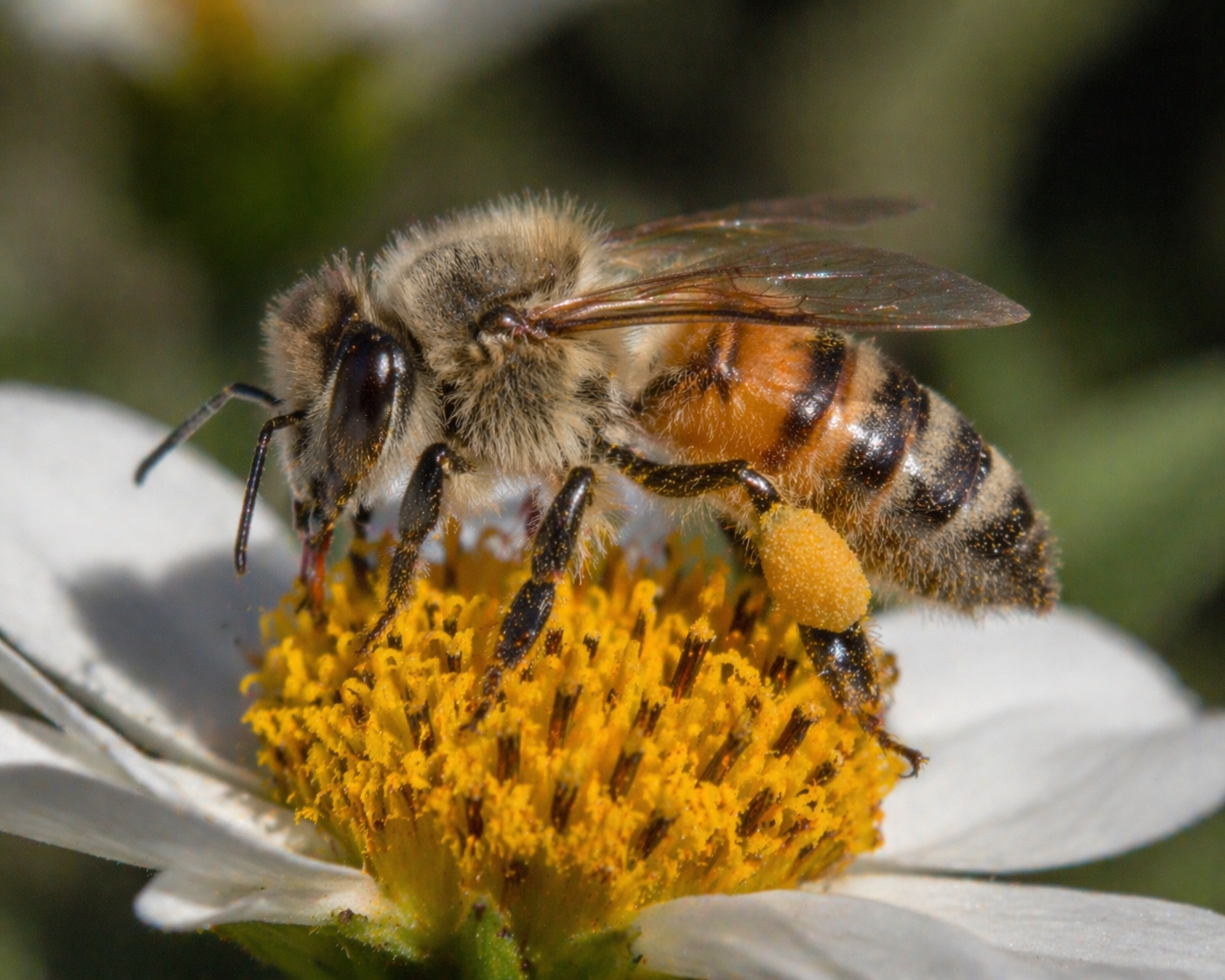
Classification of Apis indica (Honey Bee)
Phylum – Arthropoda (Jointed Appendages)
Class – Insecta (3 pairs of legs.)
Sub-class – Pterygota (Winged insects.)
Division – Exopterygota (Wings develop externally.)
Order – Hymenoptera (2 pairs of wings.)
Genus – Apis
Species – indica
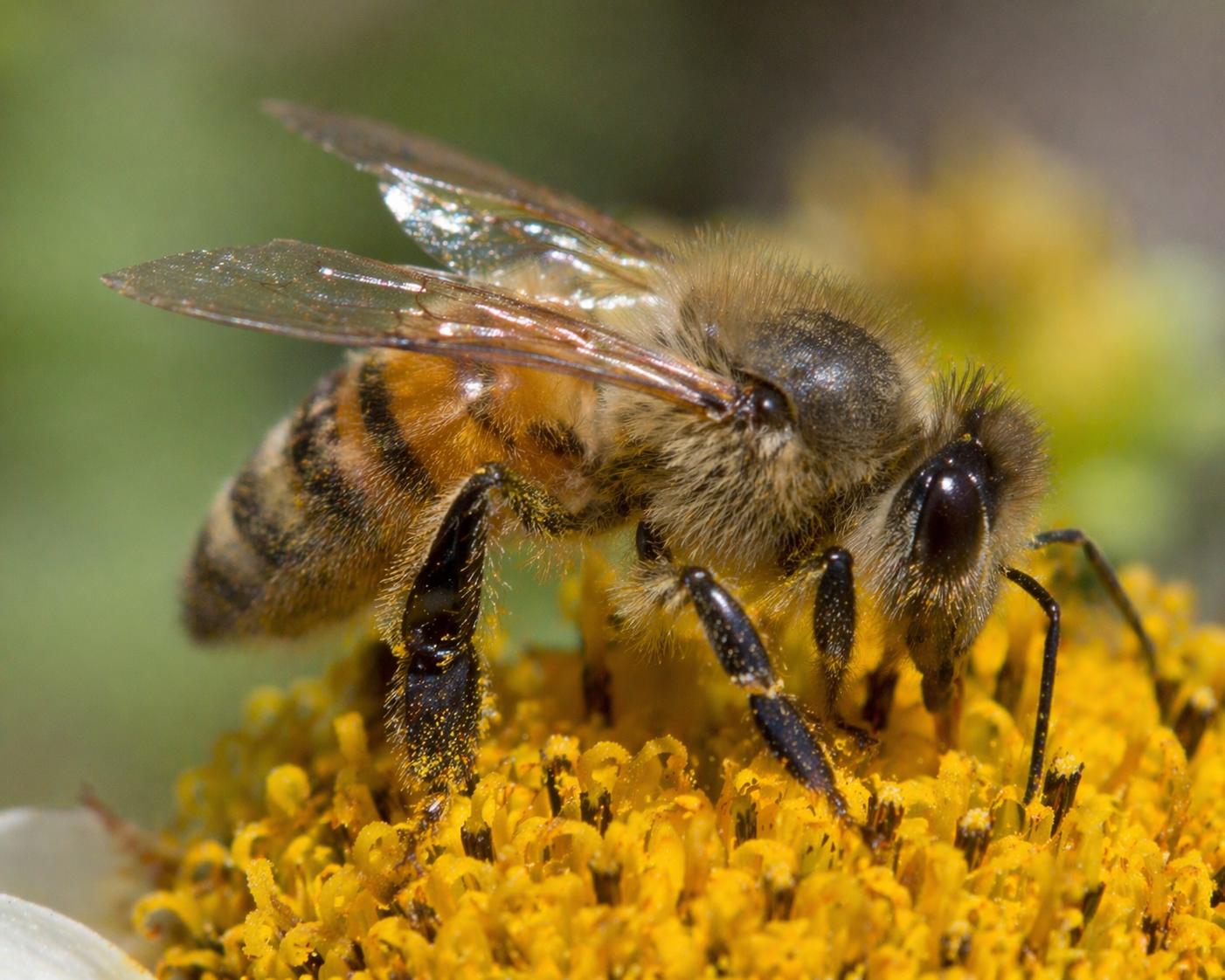
Habit and habitat
Honey bee is a social and colonial insect living nests or bee hives. It is a polymorphic insect existing in worker, queen and drove. One hive contains 50,000 to 80,000 individuals. It shows caste system mentioned above.
Distribution
It has wide distribution but specially occurs in India, Malaysia, Myanmar, Srilanka.
Comments on Apis indica (Honey Bee)
- Commonly called as Indian Honey bee.
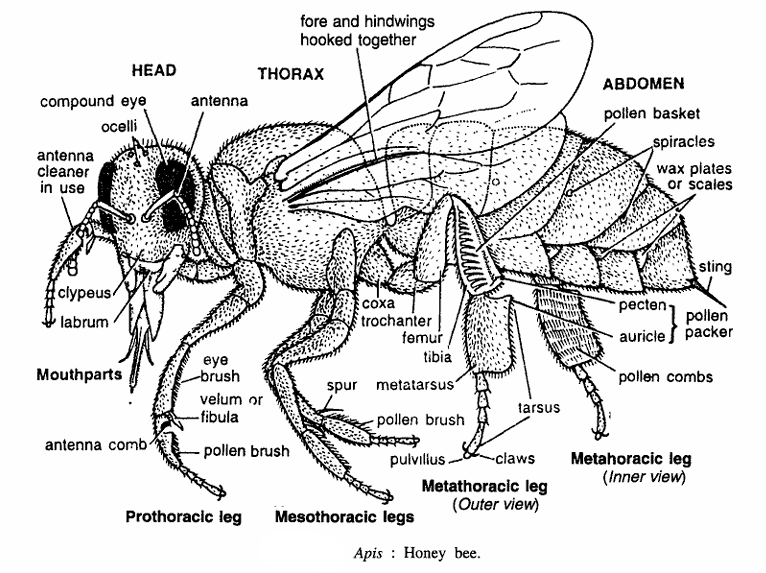
- Body divisible into head, thorax and abdomen in all castes.
- Queen is largest and fertile. Worker is smallest – Head triangular, containing compound eyes in dorsolateral position and many jointed antennae besides ocelli.
- Clypeus, labrum and other mouth parts visible in lateral position.
- Mouth parts are rasping and lapping type.
- Thorax is divided into prothorax, mesothorax and metathorax each containing a pair of legs.
- Prothoracic leg contains eye brush, velum or fibula, antennae comb and pollen brush.
- Mesothoracic leg contains spur, pollen brush and pulvillus.
- Metathoracic leg contains pollen basket, pollen comb.
- Thorax contains a pairs of wings. Abdomen has 6 segments.
- Last segment contain sting. Ventral surface of last four segments contains wax plates and wax glands.
- Spiracles are found over abdomen.
- Workers act as repairers, store keepers, cleaners, nector (honey) collectors and defenders.
- Drones are male members. They fertilize the eggs laid by queen. They do not do any work.
Economic status
Apis produces honey and wax for various useful purposes. Honey has medical importance.
Identification
Insect is polymorphic, worker has pollen basket and all above features, hence it is Apis.
See other posts also
Discover more from Zoologyverse
Subscribe to get the latest posts sent to your email.