
Many of the grasshoppers in the genus Schistocerca, also known as bird grasshoppers, swarm like locusts. The desert locust (S. gregaria) is arguably the most well-known species, and some locust species’ biogeography may be explained via transatlantic travel.
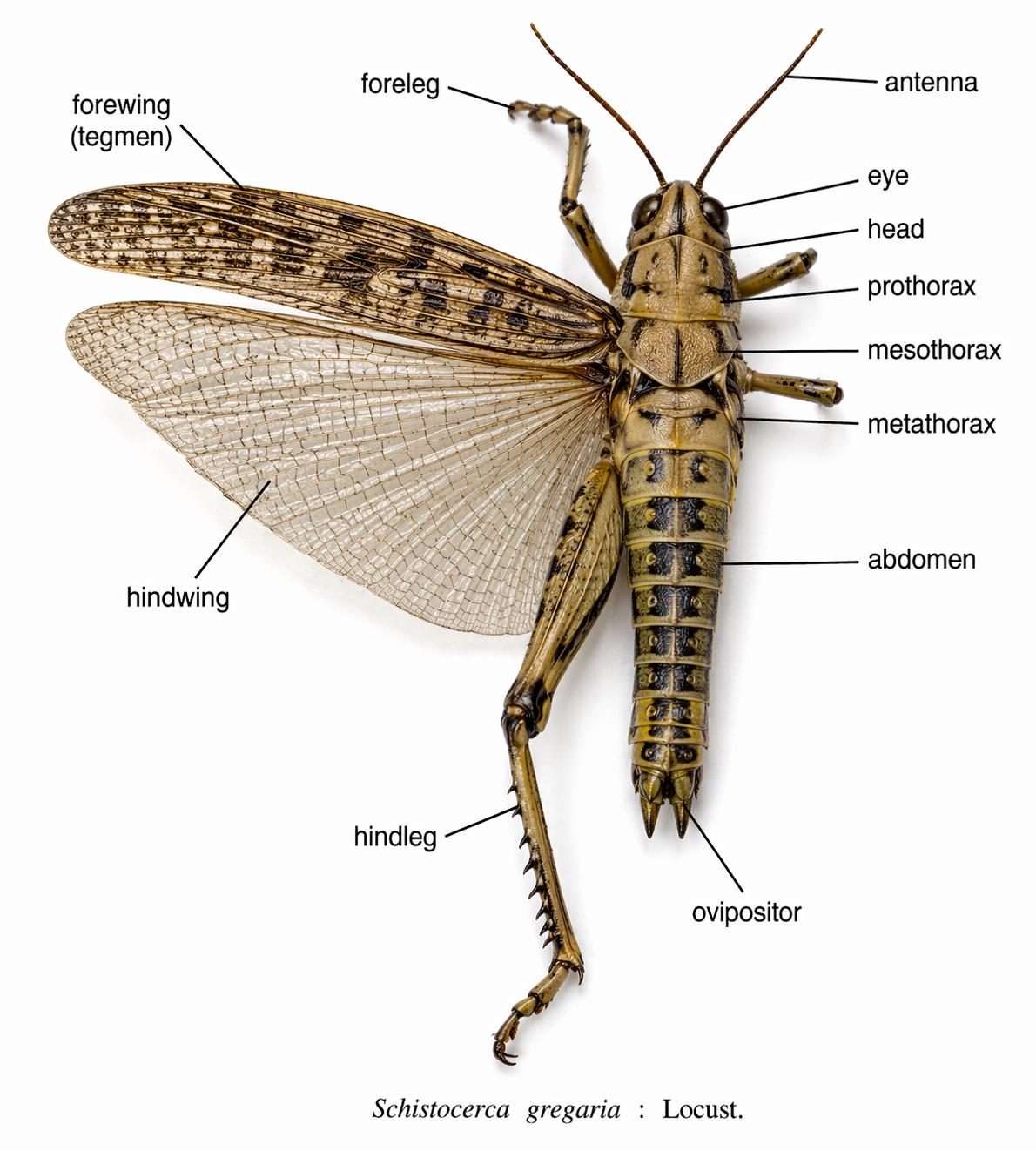
Classification of Schistocerca (Locust)
Phylum – Arthropoda (Jointed Appendages)
Class – Insecta (3 pairs of legs.)
Sub-class – Pterygota (Winged insects.)
Division – Exopterygota (Wings develop externally.)
Order – Orthoptera (Straight wings.)
Genus – Schistocerca (Locust)
Habit and habitat
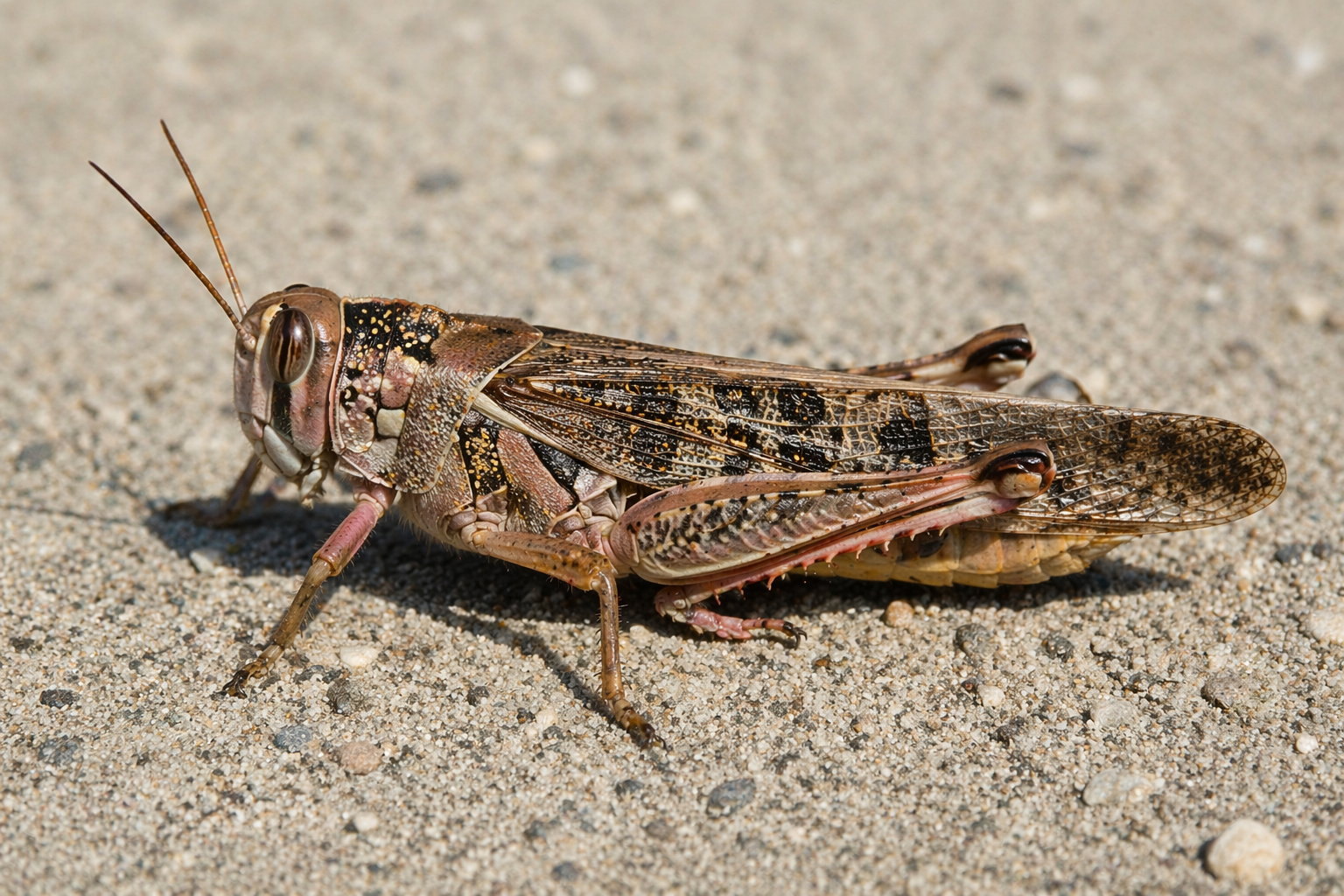
Schistocerca is solitary, herbivorous insect found abundantly in the green vegetation. It feeds on the grass or leafy vegetation.
Distribution
It is commonly found in Africa, Arabia, India, Mexico, Japan, Philippines. Afghanistan and U.S.A.
Comments on Schistocerca (Locust)
- Commonly called as the desert locust
- Their colour and form blending with the grass or vegetation among which they live.
- Body is differentiated into head, thorax and abdomen.
- Head lies into prothorax with mouth bent downwards.
- It contains chewing and biting mouth parts with large compound eyes and short antennae.
- Walking legs are three pairs, adapted for crawling.
- Posterior legs are modified for crawling.
- Tarsi 3 or 4 jointed cerci show little segmentation.
- Wings are two pairs; forewings are leathery, while hind wings are membranous and have well developed anal field.
- Abdomen has 11 cylindrical segments and each segment contains a pair of spiracle in ventrolateral position.
- Sexes are separate. Male has anal styles and female is provided with indistinct ovipositor.
- They have stridulating organs and organs of hearing.
- Desert locusts have two phases-(i) solitary or non-migratory phase with yellow colour, and (ii) migratory phase with pinkish body. During migratory phase they migrate towards plain green fields.
Economic Status
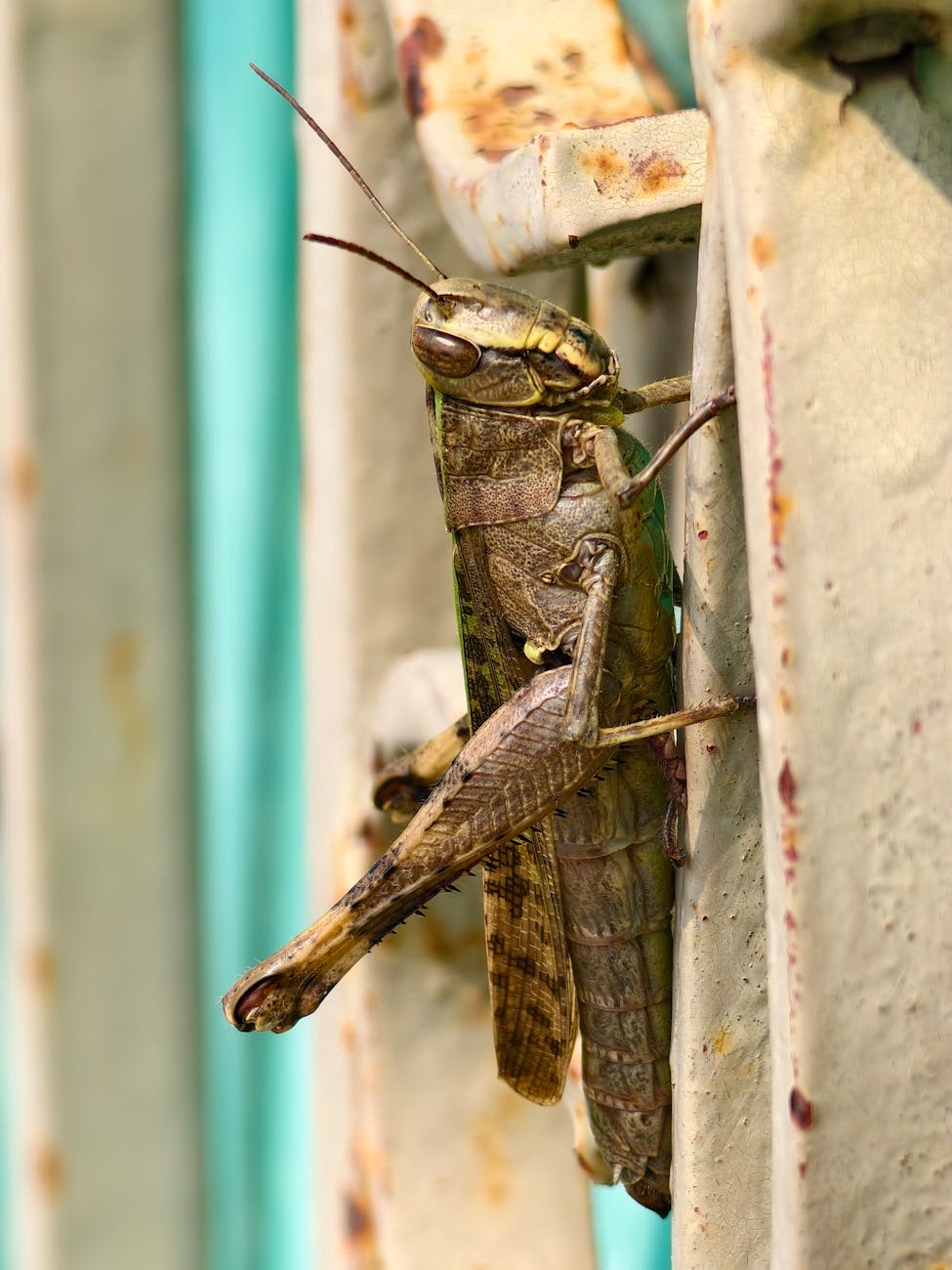
Harmful insect in 3 ways : As crop pest : Grasshoppers always move into new feeding grounds damaging crop and green plantation. Both adults and nymphs destroy succulent vegetation.
As intermediate host : Locust acts as intermediate hosts for helminth parasites.
Useful insect : Locust provides food as eggs, nymphs and adults are eaten as food by predatory insects, birds, reptiles, mammals and even man.
Identification
Since the specimen has membranous wings and all above characters, hence it is Locust
See other posts also
- HYDROSTATIC MOVEMENT
- LOCOMOTION IN PROTOZOA
- ORGANIZATION OF COELOM
- PHORONIDA – STRUCTURE, AFFINITY AND LIFE HISTORY
- Larval Forms of Crustaceans
Discover more from Zoologyverse
Subscribe to get the latest posts sent to your email.