
Grantia

Grantia

Grantia Grantia is a genus of small marine sponges belonging to the class Calcarea, which are characterized by spicules made of calcium carbonate. These sponges are usually found in shallow coastal waters attached to hard surfaces such as rocks and shells. Grantia has a simple tubular body structure with numerous pores that allow water to […]

Grantia Read More »

Leucosolenia

Leucosolenia

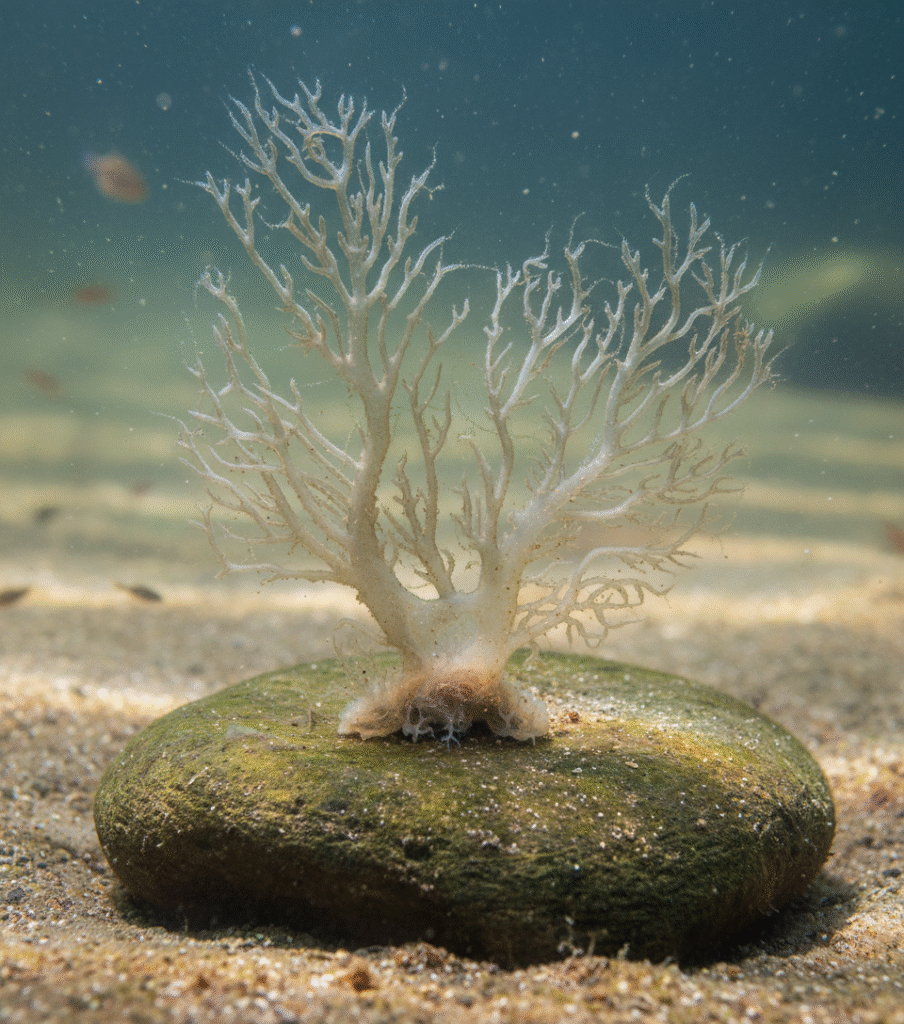
Leucosolenia Leucosolenia is a genus of simple calcareous sponges belonging to the class Calcarea. These small, tube-shaped sponges are usually found in shallow marine waters attached to rocks, shells, or other submerged surfaces. Their bodies contain calcium carbonate spicules and a basic canal system that allows water to flow through for filter feeding on microscopic

Leucosolenia Read More »

Phylum Porifera

What is Phylum Porifera?

Phylum Porifera Phylum Porifera, commonly known as sponges, might seem unassuming at first glance—decorating aquariums, inhabiting the silence of ocean floors—but beneath that simplicity lies a group of animals that changed the course of life’s evolution and are central to unlocking the mysteries of multicellularity. In a world rushing toward complexity, these quiet, ancient beings

What is Phylum Porifera? Read More »

Frogfish (Antennariidae)

Frogfish Facts, Species, Behavior, Reproduction

Introduction to Frogfish Frogfish (Antennariidae) are some of the most enigmatic and well-camouflaged fish in the marine world. Their unique hunting techniques, ability to blend seamlessly into their surroundings, and bizarre appearance make them one of the most fascinating predators in the ocean. Unlike most fish that rely on speed or agility, frogfish are ambush

Frogfish Facts, Species, Behavior, Reproduction Read More »

Tarsiers Explained : Facts| Habitat| Diet

Tarsiers : Facts| Habitat| Diet

Eyes of the Night: The Fascinating World of Tarsiers Tarsiers are small, nocturnal primates known for their enormous eyes, remarkable jumping abilities, and distinctive calls. These fascinating creatures belong to the family Tarsiidae and are primarily found in Southeast Asia, particularly in countries like the Philippines, Indonesia, and Malaysia. Due to their unique physical characteristics

Tarsiers : Facts| Habitat| Diet Read More »

Tree kangaroos (Dendrolagus)

Tree kangaroos (Dendrolagus)

Tree kangaroos (Dendrolagus) Tree kangaroos (Dendrolagus) are one of the most fascinating and unique marsupials on Earth. Unlike their terrestrial kangaroo relatives that bound across the open plains of Australia, tree kangaroos have evolved to thrive in the dense canopies of rainforests. These remarkable creatures exhibit a striking combination of adaptations suited for an arboreal

Tree kangaroos (Dendrolagus) Read More »

red-shanked douc langur (Pygathrix nemaeus) (2)

The Red-Shanked Douc Langur: Primate of Southeast Asia

Red-shanked douc langur (Pygathrix nemaeus) In the lush, dense forests of Southeast Asia, an extraordinary primate swings gracefully from branch to branch, captivating all who catch a glimpse of its vibrant, multicolored fur. The red-shanked douc langur (Pygathrix nemaeus), often referred to as the “costumed monkey” due to its striking appearance, is one of nature’s

The Red-Shanked Douc Langur: Primate of Southeast Asia Read More »

Greater Bird-of-Paradise (Paradisaea apoda) – Facts, Habitat, Behavior & Conservation

Greater Bird-of-Paradise (Paradisaea apoda)

Greater Bird-of-Paradise (Paradisaea apoda) – A Living Masterpiece of Nature 🦜✨ The Greater Bird-of-Paradise (Paradisaea apoda) is one of nature’s most spectacular avian wonders, known for its vibrant plumage and elaborate courtship displays. Native to the rainforests of New Guinea and nearby islands, this bird has fascinated scientists, birdwatchers, and wildlife enthusiasts for centuries. Deep

Greater Bird-of-Paradise (Paradisaea apoda) Read More »

Spotted Cuscus (Spilocuscus maculatus): The ghost of the rainforest

Spotted Cuscus (Spilocuscus maculatus)

Introduction The spotted cuscus (Spilocuscus maculatus) is a fascinating and elusive marsupial native to northern Australia, New Guinea, and nearby islands. With its slow movements, striking fur patterns, and arboreal lifestyle, this nocturnal creature has captivated wildlife enthusiasts and researchers alike. Despite its relatively low profile compared to other marsupials like kangaroos or koalas, the

Spotted Cuscus (Spilocuscus maculatus) Read More »