
Types of Feet in Birds
The types of feet in birds are also modified variously in accordance with the character of the environment and the manner of locomotion
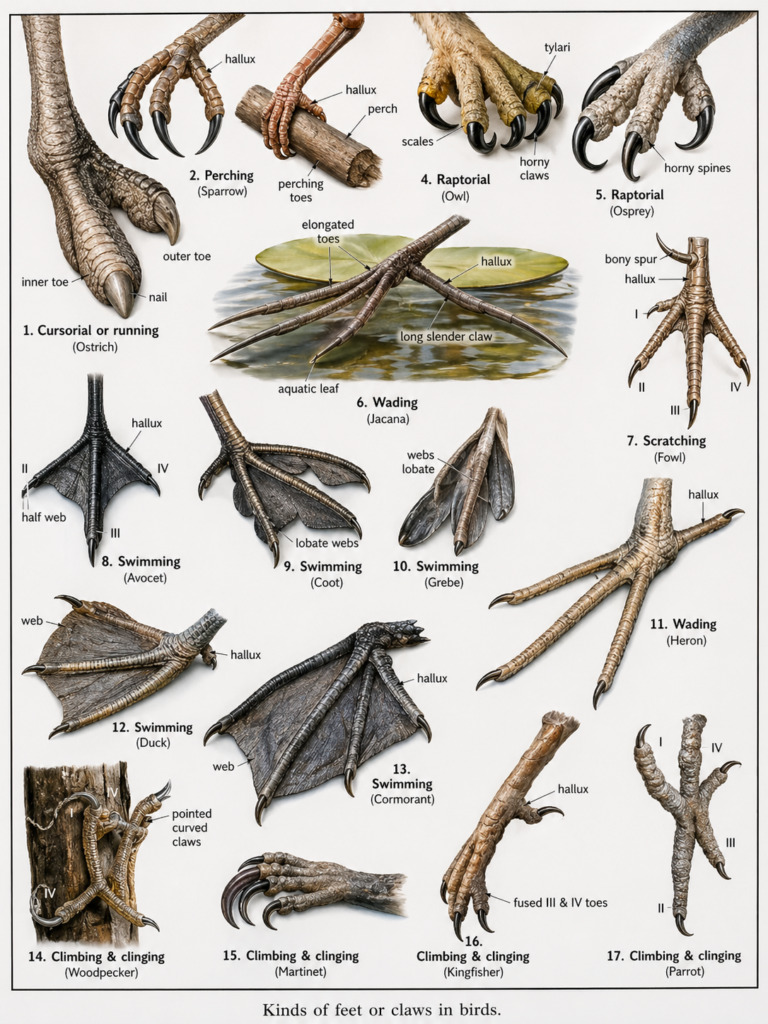
1.Cursorial or running feet :-In running birds, the legs are powerful and the number of toes is reduced. The hind toe may be elevated, reduced or absent. In bustards, coursers and ratites such as emu, rhea and cassowary, only 3 toes, directed forwards are present. Ostrich has only 2 toes, of which the outer one is smaller and without a nail.
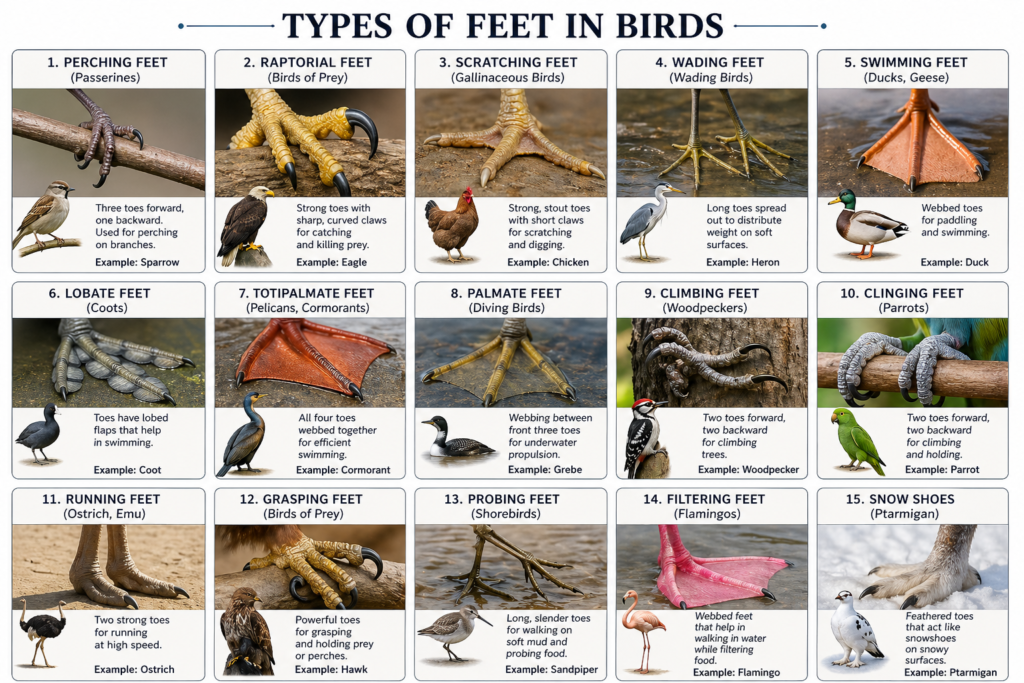
2. Perching feet :- The majority of birds belong to the category of perching birds or passers, such as sparrows, crows, bulbuls, robins, mynahs, etc. Three toes are anterior and slender, while one toe or hallux is posterior, strongly built and opposable, so that they can securely fasten the foot to a branch or a perch.
3. Scratching feet :- The feet of fowls, quails, pheasants, etc. are stout, with strongly-developed claws and well adapted for running as well as scratching the earth. The foot of male bird is usually provided with a pointed bony spur for offence and defense.
4. Raptorial feet :- Predatory or carnivorous birds, such as eagles, kites, vultures, owls, etc. have strongly taloned feet for striking and grasping their prey. The toes have strongly-developed, sharp and curved claws. Large and fleshy bulbs, called tylari, are found on the undersurface of the toes, especially developed in the sparrow-hawk. In osprey and Ketupa, tylari are absent but horny spines are present, which help in gripping slippery preys such as fish.
5. Wading feet :- The legs and toes are exceptionally long and slender in wading or marshy birds such as herons, snipes, jacana, lapwing, etc. These serve to walk over aquatic vegetation or marshes. The web is absent or feebly developed.
6. Swimming feet :- In swimming birds, the toes are webbed, partially or completely. In diving birds, like coots and grebes, the web is lobate and the toes are free. In swimming and paddling birds, such as ducks and teals, only the anterior three toes are united in a web. In pelican and cormorant, all web. the four toes are enclosed in the web.
7. Climbing feet :- In parrots and woodpeckers the feet are used as grasping organs and especially adapted for climbing vertical surfaces. The second and third toes point in front, while the first and the fourth toes point backwards.
8. Clinging feet :- In swifts, martinets and humming-birds, all quails, the four toes point forwards and serve to cling to steep faces of cliffs or under caves of houses, etc.
9. Other modifications of feet :- The pectinate claw (comb) on the middle toe of the poorwill serves to scratch the feathers of head, to straighten the disarranged rictal bristles, and probably to comb out lice. Fleshy fringes of skin develop on the sides of toes of the snowshoe-like feet of the ruffled grouse, during winter only, for walking on the snow. The long hind claw of larks and certain fringillids may significance.
Discover more from Zoologyverse
Subscribe to get the latest posts sent to your email.