
The genus Nepa is a member of the Nepidae family, which includes water scorpions. In the Northern Hemisphere, species can be found in freshwater environments.
They are aquatic insects with oval bodies and raptorial front legs. They are easily distinguished from the Belostomatidae by having two nonretractable cerci-like breathing tubes on the terminal abdominal segment, just like other Nepidae members. Other insects and small aquatic vertebrates are their main food sources. When handled, they can bite you painfully.
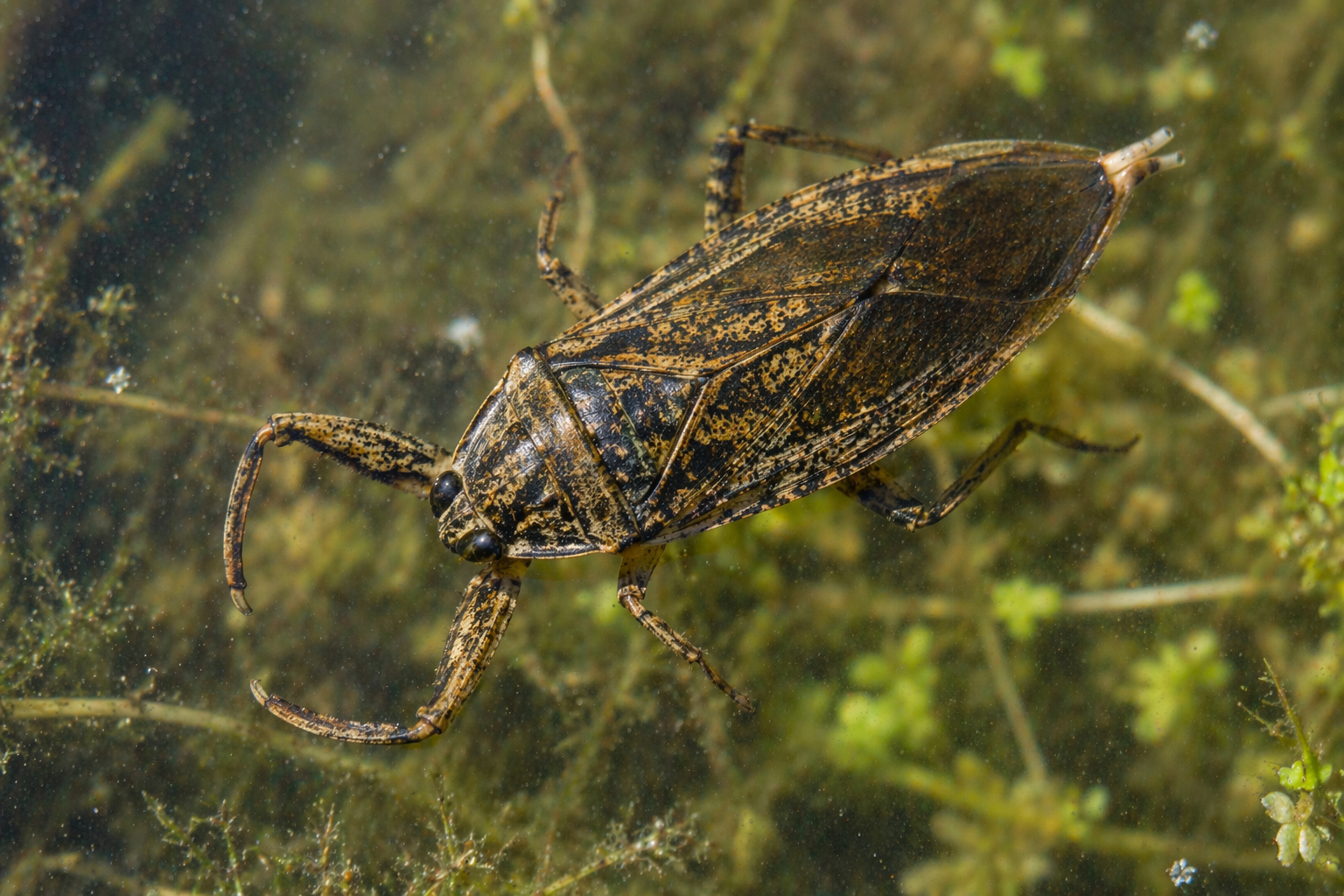
Classification of Nepa (Water Scorpion)
Phylum – Arthropoda (Jointed Appendages)
Class – Insecta (3 pairs of legs.)
Sub-class – Pterygota (Winged insects.)
Division – Exopterygota (Wings develop externally.)
Order – Hemiptera (Metamorphosis gradual.)
Genus :- Nepa (Water scorpion)
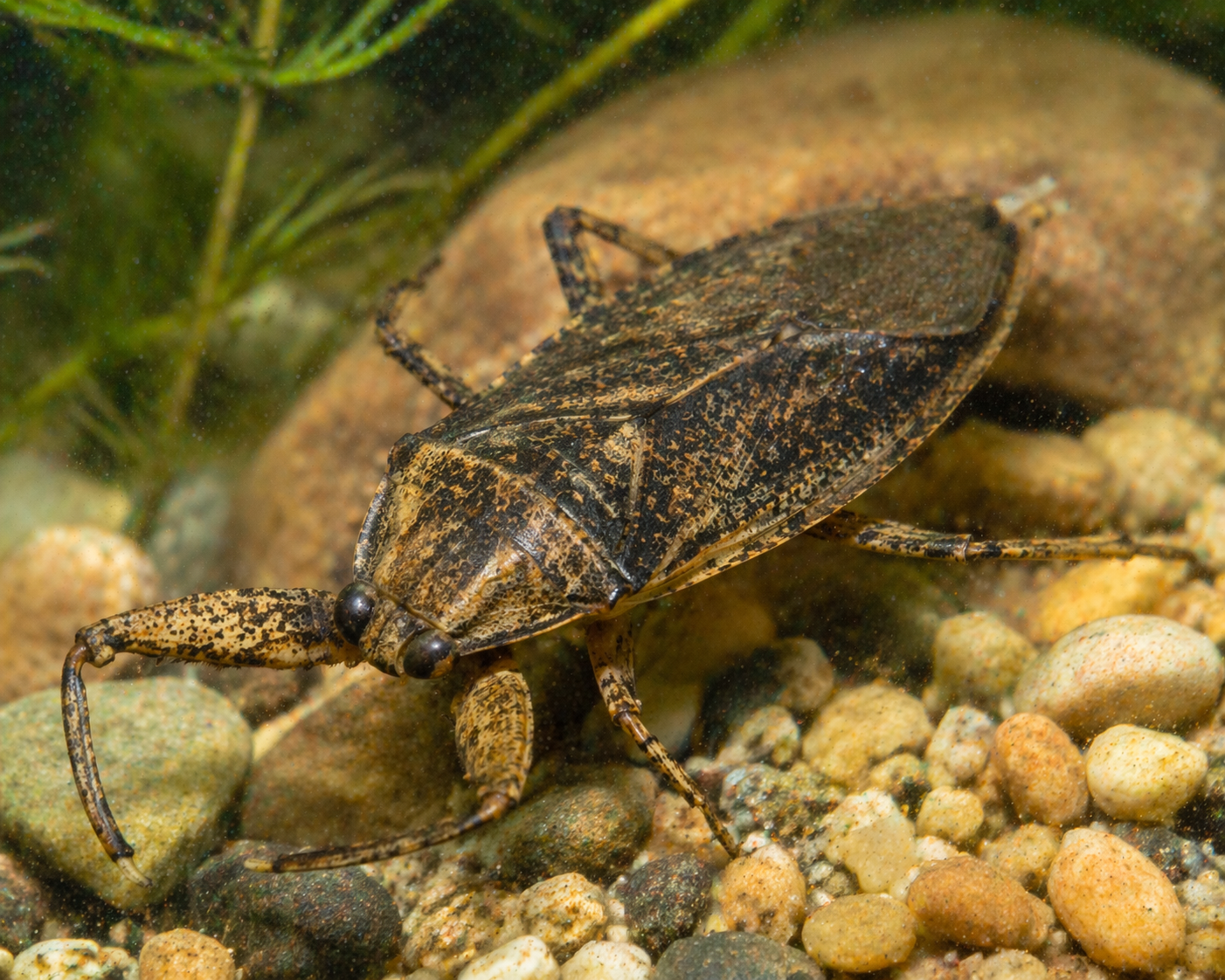
Habit and habitat
Nepa is commonly found in shallow waters.
Distribution
It has cosmopolitan distribution
Comments on Nepa (Water Scorpion)
- Commonly called as water scorpion.
- Body is short dorsoventrally compressed, and divisible into head, thorax and abdomen.
- Head contains 3-jointed antennae and eyes.
- Mouth parts form a long rostrum adapted for piercing and sucking.
- The pronotum is large.
- Respiratory tube is most striking and consists of two spine line processes.
- Three pairs of false spiracles are situated respectively on 3rd, 4th and 5th ventral abdominal segments.
- False spiracles consist of sieve-like structures with the perforations occluded by a delicate membrane.
- Forewings are not uniform.
- The proximal portion is hardened and distal portion membranous.
- At rest the wings overlap and lie flat above the abdomen. Just below thorax is scutellum. Female is provided with a pointed, toothed ovipositor.
- Sexes separate.
- Thorax contains walking legs.
- The tarsi usually 3-jointed. Eggs are deposited in chains, the ova adhering to one another by means of seven long filaments, radiating from one extremity.
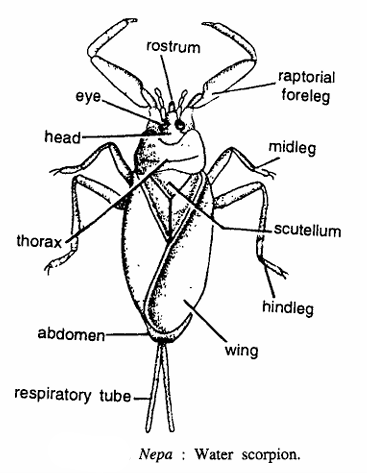
Identification
Since it has 3-jointed antennae and above features, hence it is Nepa.
See other posts also
- Crayfish vs Lobster : Differences Explained
- Holocephali – General organization and affinities
- Species Concept
- THEORIES OF ORIGIN OF METAZOANS
- Environmental Limiting Factors
Discover more from Zoologyverse
Subscribe to get the latest posts sent to your email.