
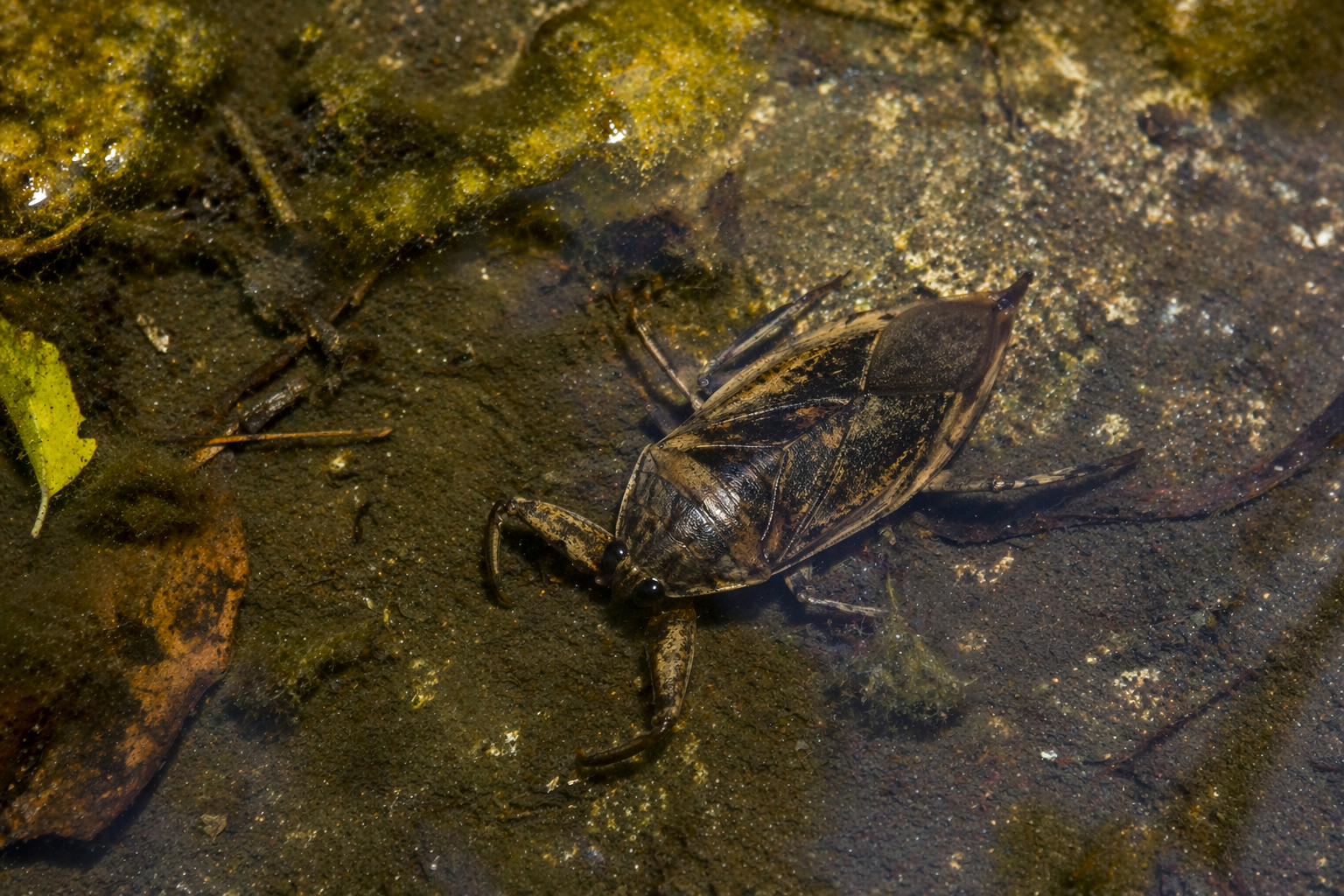
Belostoma, also referred to as huge water bugs, is a genus of insects belonging to the hemipteran family Belostomatidae. This genus’s members are indigenous to freshwater environments throughout the Americas, with tropical South America having the highest species richness.Although Belostoma is still a genus with a large number of members, the majority of species in the family Belostomatidae have historically been placed in Belostoma; nevertheless, some of these species have been transferred to other genera. Although the genus Belostoma is actually split into 16 subgroups with over 70 species, nine species are said to exist in Northern America.
Classification of Belostoma
Phylum – Arthropoda (Jointed Appendages)
Class – Insecta (3 pairs of legs.)
Sub-class – Pterygota (Winged insects.)
Division – Exopterygota (Wings develop externally.)
Order – Hemiptera (Metamorphosis gradual.)
Genus :- Belostoma
Habit and habitat
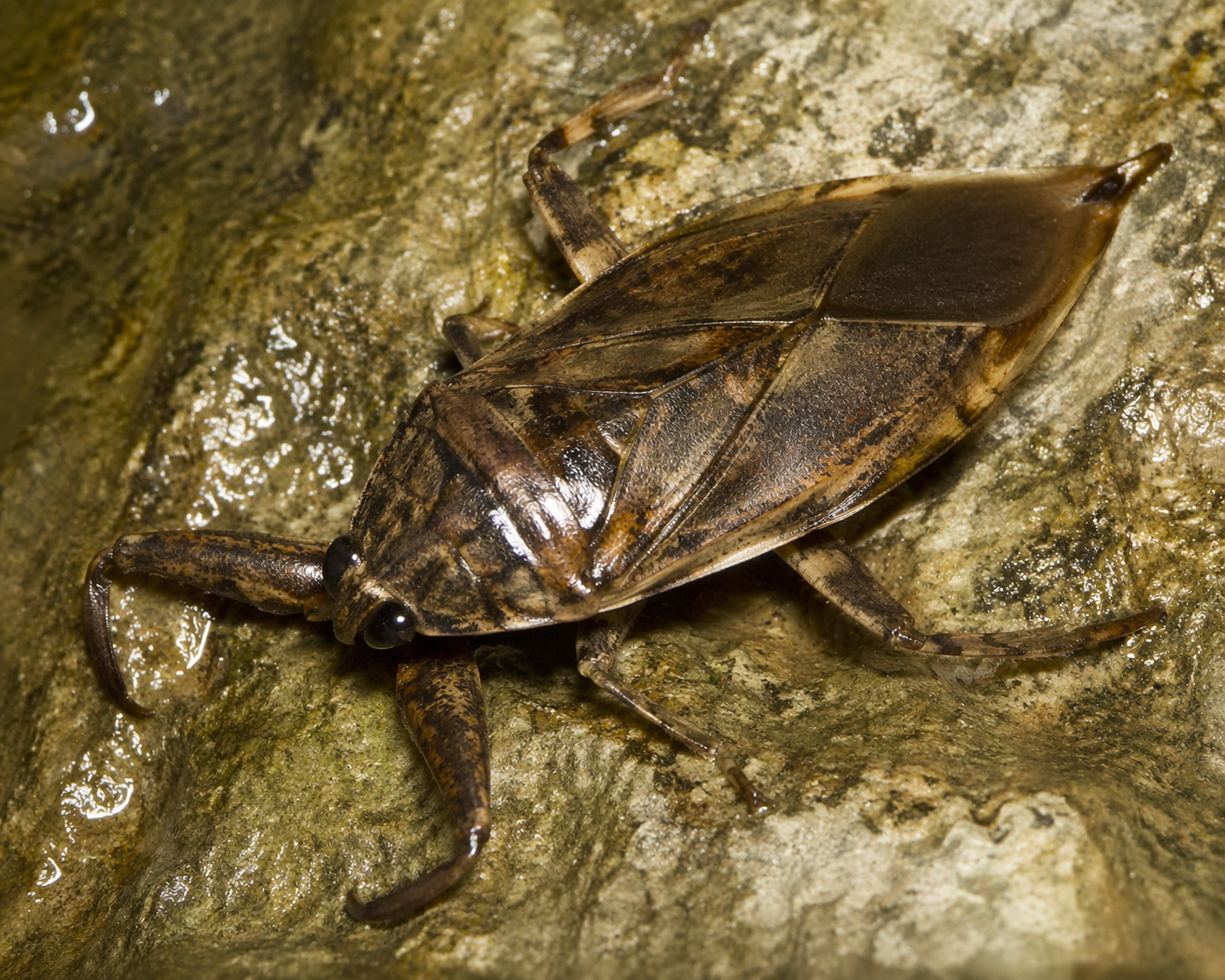
Belostoma is the largest insect found in the rivers, ponds and lakes. They are rapacious feeding on insects. tadpoles, snails and small flies.
Distribution
Belostoma is found in U.K., North America, South Africa and India.
Comments on Belostoma
- Common called as giant water-bug.
- This is large insect, measuring 10 cm in length and is adapted for swimming and crawling.
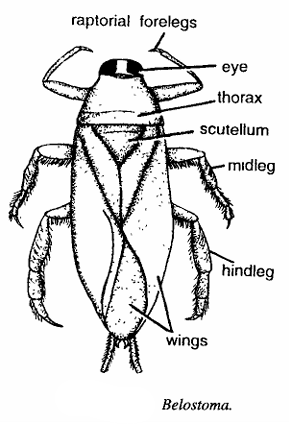
- Body is dorsoventrally compressed and has usually three parts, namely head, thorax and abdomen.
- Pronotum large. Head has large compound eyes.
- Antennae 4-jointed. Mouth parts adapted for piercing and sucking.
- Mouth parts adapted for piercing and sucking.
- Thorax contains walking legs. Posterior legs adapted for swimming Tarsi 3-jointed.
- Tibia flattened and fringed with hairs. Just below thorax is scutellum.
- Wings membranous. Forewings are not uniform. Distal portion membranous while distal part hardened.
- At rest the wings lie flat over the abdomen in overlapping manner.
- Abdomen is provided with two retractile apical appendages.
- In certain species female deposits its eggs on the back of the male where they are carried till hatching. Ovipositor well developed.
Special features
Legs inflict injuries on prey. It also inflicts heavy wound on man which is very painful.
Identification
Since the specimen contains 4-jointed antennae and all above features hence it is Belostoma.
See other posts also
- Crayfish vs Lobster : Differences Explained
- Holocephali – General organization and affinities
- Species Concept
- THEORIES OF ORIGIN OF METAZOANS
- Environmental Limiting Factors
Discover more from Zoologyverse
Subscribe to get the latest posts sent to your email.