
On this page
Introduction
Hydrophis is a diverse genus of highly venomous sea snakes found throughout the warm coastal waters of the Indian and Pacific Oceans. These snakes are fully adapted to marine life, with paddle-shaped tails, compressed bodies, and specialized lungs that allow extended dives. Hydrophis species possess potent neurotoxic venom used to immobilize fish and eels, their primary prey. Although they are dangerous, sea snakes are generally non-aggressive and play a crucial ecological role in maintaining healthy marine food webs. Their unique adaptations make them important subjects in marine biology and evolutionary studies.
Classification of Hydrophis (Sea Snake)
- Phylum :- Chordata (Dorsal tubular nerve cord, notochord and gill-slits present.)
- Group :- Craniata (Definite head, Cranium with brain present.)
- Sub phylum :- Vertebrata (Vertebral column present.)
- Division :- Gnathostomata (Jaws and paired appendages present.)
- Super Class :- Tetrapoda (Paired limbs, lungs, cornified skin and bony skeleton.)
- Class :- Reptilia (Scaly vertebrates. Right and left aortic arches present. Single condyle. Pulmonary respiration. Embryo with amnion and allantois.)
- Sub Class :- Diapsida (Skull with two temporal openings separated by post-orbital and squamosal.)
- Order :- Squamata (Lizards and snakes with horny epidermal scales or shields. Quadrate bone movable. Vertebrae procoelous. Anal opening transverse.. Vertebrae amphicentrous.)
- Sub-order :- Ophidia (Snakes. Limbs, feet, ear openings sternum and urinary bladder absent. Mandibles jointed anteriorly by ligament. Tongue slender, bifid and protrusible. Left lung reduced.)
- Family :- Hydrophiinae (Tail compressed used for swimming.)
- Genus :- Hydrophis
Geographical distribution
- They are found in India, along the Pacific coast from southern Mexico to northern South America, in the Bay of Bengal and Malaysia Archipelago.
Habit and habitat
- It inhabits water, feeding on fishes.
General Characteristics of Hydrophis (Sea Snake)
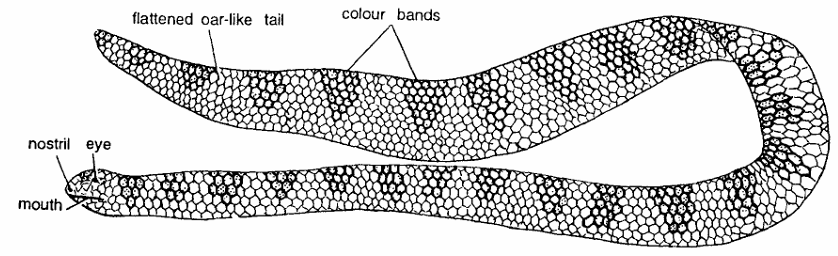
- Commonly called as sea snake. Body divided into head, neck, trunk and tail.
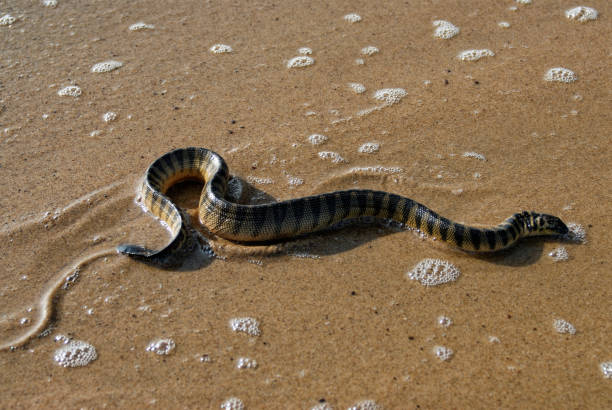
- Body is elongated, laterally compressed, about 2 meters in length, and covered with small scales.
- General pigmentation is dark olive green above with yellowish cross bars and whitish area below.
- Head is indistinct and covered by large shields. Head contains nostril, mouth and eye.
- Ventral scales are small. Loreal shield is absent. One pre-ocular, 2 post-oculars and 7-8 supra-labials present. 3rd and 4th supra-labials touch the eyes.
- Maxillary teeth 14-18 behind the poison fangs.
- Eyes small with rounded pupil.
- Sea snakes are oviparous and they come out of water for egg laying.
Ecological Importance of Hydrophis (Sea Snake)
- Pest Control: Sea snakes primarily feed on fish, eels, and invertebrates, helping to control the population dynamics of these species.
- Marine Food Web Contribution:
- As both predators and prey, sea snakes are an integral part of the marine food web. They are preyed upon by sharks, larger fish, and sea birds.
- Indicator of Ocean Health: The presence of snakes can indicate the health of coral reef ecosystems, as they rely on abundant fish and clean habitats.
- Nutrient Cycling: By predating on smaller organisms, they contribute to nutrient cycling within marine ecosystems.
Conservation Status of Hydrophis (Sea Snake)
- Conservation Status: Many species are classified as Least Concern by the IUCN, but some species face threats and are listed as Vulnerable or Near Threatened.
- Threats:
- Habitat destruction due to coral reef degradation and marine pollution.
- Accidental bycatch in fishing operations.
- Climate change impacts, such as ocean warming and acidification.
- Conservation Measures:
- Protecting coral reefs and marine ecosystems through sustainable practices.
- Reducing bycatch with modified fishing techniques.
- Monitoring populations and conducting research on less-studied species.
Special features
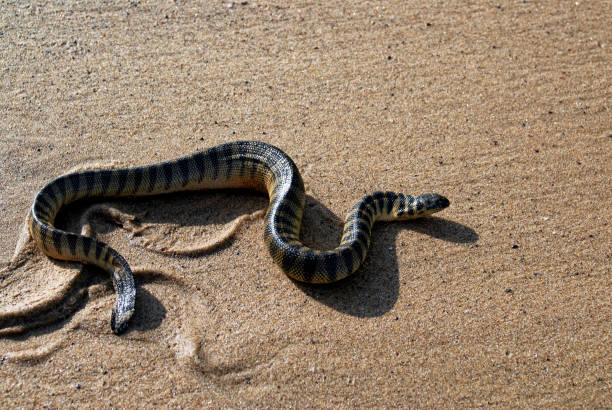
- Hydrophis is deadly poisonous or venomous snake and very dangerous to mankind. Its venom is neurotoxic. The tail is compressed and adapted for swimming. Tail in oar like.
- Aquatic Adaptations: Paddle-like tails and laterally compressed bodies enable efficient swimming.
- Breath-Holding Ability: Sea snakes can remain submerged for extended periods, relying on their ability to extract oxygen through their skin.
- Venom Potency: Many Hydrophis species produce potent venom, used to immobilize prey quickly.
- Salt Regulation: Specialized glands near their tongues excrete excess salt, allowing them to thrive in marine environments.
- Reproductive Adaptations: Most species give live birth (viviparous) in the water, eliminating the need to return to land.
Identification
- Since the animal has compressed tail and above features, hence it is Hydrophis.
Discover more from Zoologyverse
Subscribe to get the latest posts sent to your email.
Can you be more specific about the content of your article? After reading it, I still have some doubts. Hope you can help me. https://www.binance.bh/register?ref=IXBIAFVY