
Both Polygordius and Protodrilus live in sand, but Protodrilus may move by using the bands of cilia encircling its segments and the longitudinal ciliated ventral groove, whereas Both Polygordius and Protodrilus live in sand, but Protodrilus may move by using the bands of cilia encircling its segments and the longitudinal ciliated moves by contracting its body-wall muscles. The sand-dwelling Saccocirrus, which has a closer resemblance to the Polychaeta, has two short, uniramous parapodia with a number of simple setae on each segment of its body. There are no known traces of setae or parapodia in any other member of the group at any developmental stage.
Classification of Protodrilus
Kingdom :- Animalia (Multicellular eukaryotic organisms)
Phylum :- Annelida (Segmented worms with true coelom and metamerism)
Class :- Archiannelida (Primitive annelids.)
Family :- Polygordiidae (Short tentacles.)
Genus :- Protodrilus
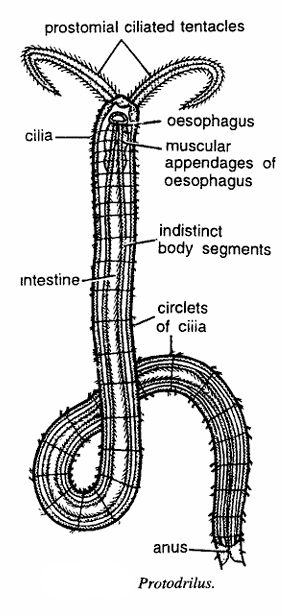
Habit and habitat
It is a small marine worm.
Distribution
It is found in inland sea, lake at Faro near Messina, U.S.A.
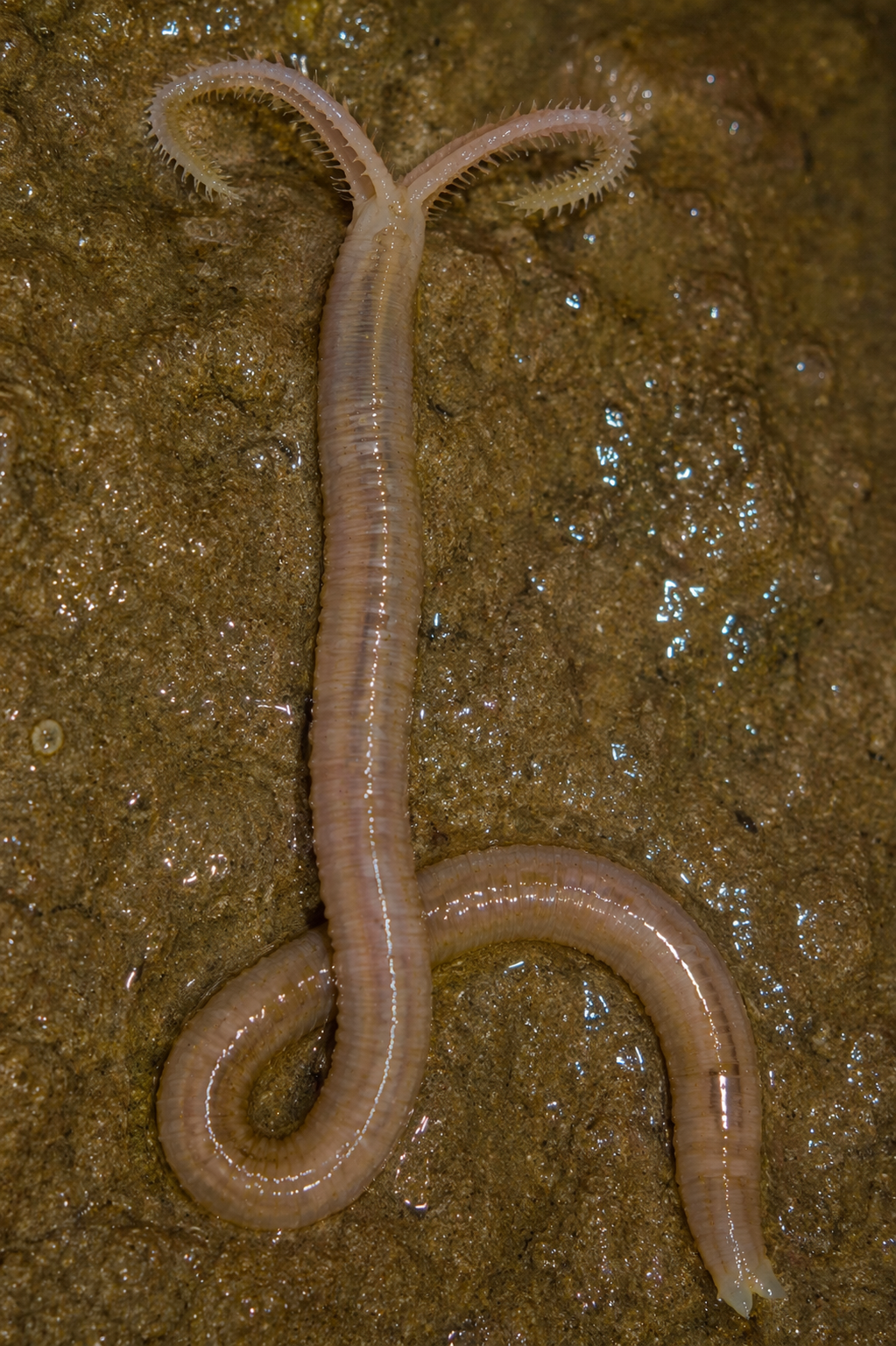
Comments of Protodrilus
- Animals live in sand.
- Body is narrow, elongated, cylindrical and thread-like.
- Prostomium of head is small and bears a pair of long tentacles called as prostomial ciliated tentacles.
- Peristomium is large and contains a pair of sensory ciliated pits.
- External segmentation is marked by ciliated rings bearing circlet of cilia.
- Setae, parapodia and gills are absent.
- Protodrilus is hermaphroditic.
- Development is direct.
Identification
Since the specimen contains a pair of ciliated tentacles arid all above features, hence it is Protodrilus
See other posts also
- Aphrodite (Sea Mouse)
- Larval forms of Mollusca
- PRIMITIVE NERVOUS SYSTEM OF COELeNTERATES AND ECHINODERMS
- ORGANS AND MECHANISM OF RESPIRATION IN HIGHER INVERTEBRATES
- PATTERN OF FEEDING AND DIGESTION IN HIGHER INVERTEBRATES
Discover more from Zoologyverse
Subscribe to get the latest posts sent to your email.