
There are eleven known species of leeches in the genus Haemopis, which is a member of the Haemopidae family and is found throughout the Holarctic region, which includes North America and Eurasia. Unlike the more well-known blood-sucking hirudiniform leeches, these leeches are mostly carnivorous and macrophagous, feeding on a range of freshwater invertebrates like earthworms and small fish food items.Haemopis leeches have strong jaws to catch and devour their prey whole or in huge chunks, in contrast to sanguivorous species.
With species like H. grandis reaching lengths of up to 300 mm, members of this genus are among the largest leeches known to science. This allows them to live a predatory lifestyle in watery habitats. While the majority of Haemopis species live in freshwater environments like lakes, ponds, and slow-moving streams, others have adapted to be amphibious or even terrestrial, living under damp leaf litter, behind logs, or along shorelines in humid environments.For example, the troglobitic species Haemopis caeca, which inhabits cave systems in eastern Europe, has developed mechanoreception and chemoreception to find prey in total darkness.
Classification of Haemopis
Kingdom :- Animalia (Multicellular eukaryotic organisms)
Phylum :- Annelida (Segmented worms with true coelom and metamerism)
Class :- Hirudinea (Annelids with fixed segments, without parapodia and with anterior and posterior suckers)
Order :- Rhynchobdellida or gnathobdellia (Proboscis protrusible; jaws and setae absent.)
Genus :- Haemopis
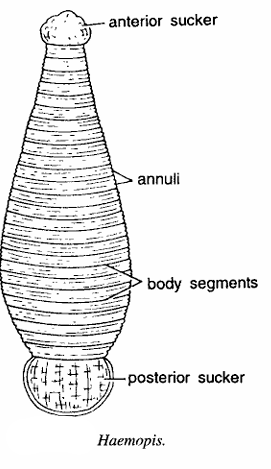
Habit and habitat
Haemopis is found in ponds, streams and swampy meadows and leads a lethargic life in autumn by burrowing itself in marshy ground. It is carnivorous, swallowing freshwater worms, insects, larvae, tadpoles and small fish. Late Professor K.N. Bahl recorded Haemopis from Kashmere.
Distribution
It has cosmopolitan distribution. Found in India, Myanmar, U.K. and U.S.A.
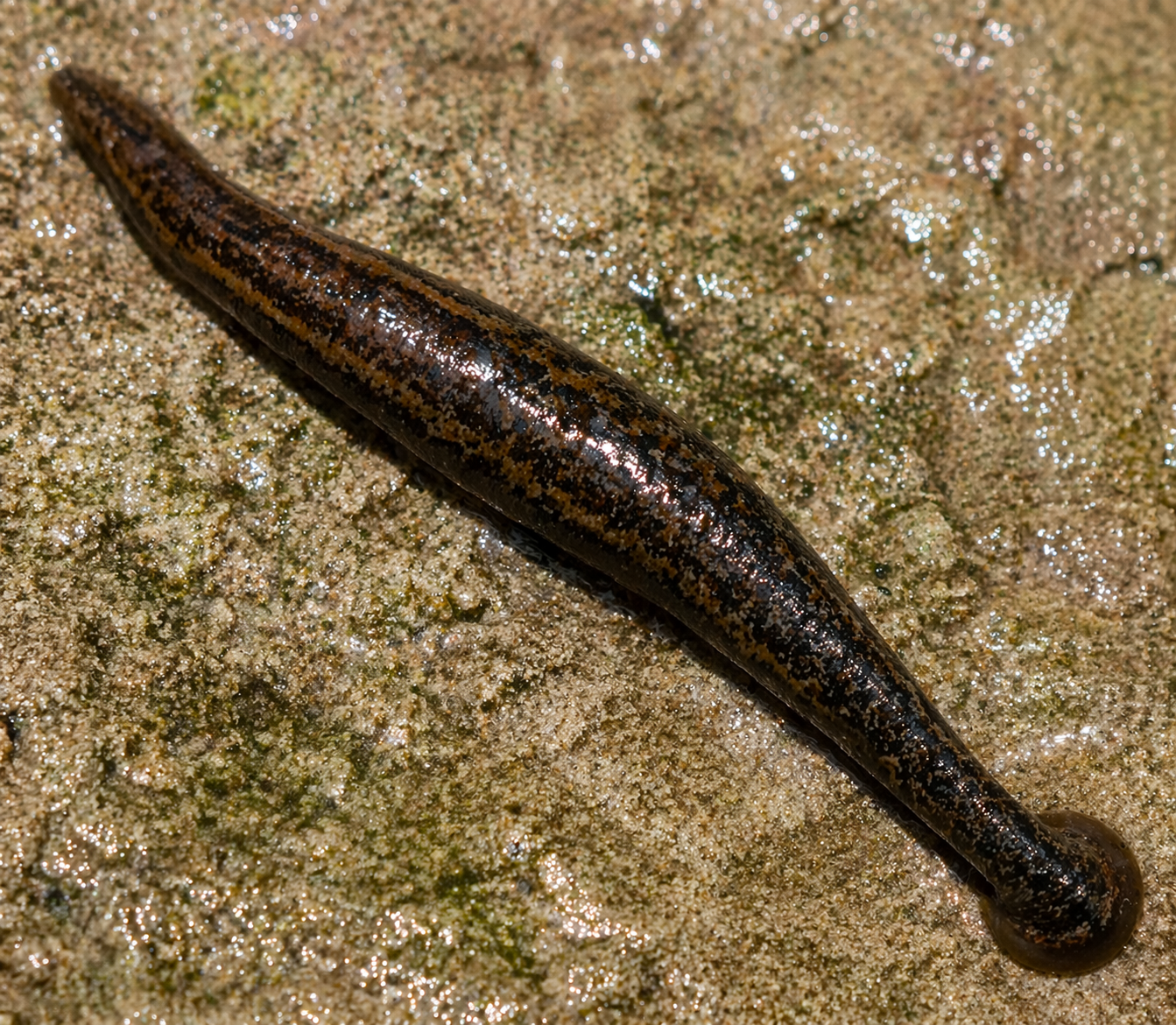
Comments of Haemopis
- Commonly called as hungry horse leech.
- Body is elongated and cylindrical with pairs of eyes.
- There are 5 annuli between gonopores.
- Jaws are rounded with large blunt teeth in two rows.
- Copulatory glands are absent and crop bears a single caecum.
- Development takes place in cocoons.
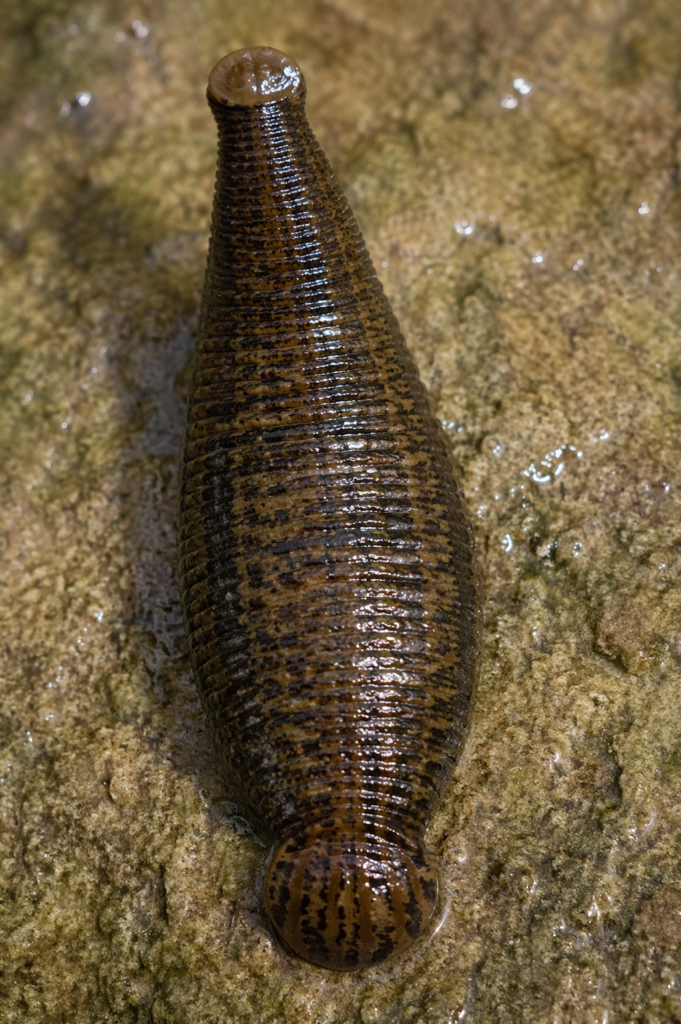
Identification
Since the specimen contains 5 annuli between gonophores and all above features, hence it is Haemopis.
See other posts also
- OSMOREGULATION OF FRESHWATER AND MARINE INVERTEBRATES
- PRIMITIVE NERVOUS SYSTEM OF COELeNTERATES AND ECHINODERMS
- Larval Forms of Crustaceans
- Larval forms of Mollusca
- Larval Forms in Echinodermata
Discover more from Zoologyverse
Subscribe to get the latest posts sent to your email.